It Doesn't Have To Be Right…

… it just has to sound plausible


4 Comments

Moving pictures, #39

Trying to get the last of these out of the way before Christmas. It doesn’t help that I’ve been watching a couple of films a night, more on the weekend. And it’s not as though I mention every film I’ve watched in these posts – some because they’re rewatches, but mostly because they’re some rubbish I stumbled across on TV, Amazon Prime or charity shop DVD… Anyway, here’s the latest batch…

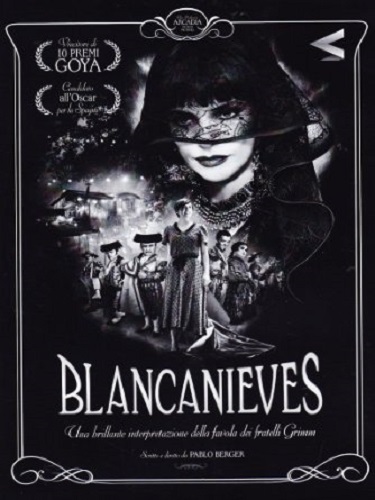
blancanievesBlancanieves, Pablo Berger (2012, Spain). Back in 2011, The Artist was released, a silent film produced in France, which went on to win a raft of awards. This was a bit of a blow to the makers of Blancanieves, who had decided to make a silent black-and-white film several years before but didn’t make it into production soon enough to beat The Artist to release. To be fair, The Artist is a very good film, but you have to wonder how many of its awards were a result of the novelty of a silent B&W film in the 21st century. But then we have Blancanieves, also a silent B&W 21st century film, against which to compare it. And, sadly, Blancanieves does not compare too favourably. It’s good, but it’s doubtful it would have beaten The Artist to any awards. Not in Blancanieves‘ favour is that it’s about bull fighting, a sport (and I use the term loosely) that only the Spanish seem to think is not barbaric. The plot is apparently based on ‘Snow White’, albeit transplanted to Spain and, er, matadors. It’s certainly a nice-looking film, and it works quite well as silent and B&W. And, but for inevitable comparisons to the Oscar-winning The Artist, it would likely count as a good film. But comparisons are inevitable, and it loses out to them. All the same, worth seeing.

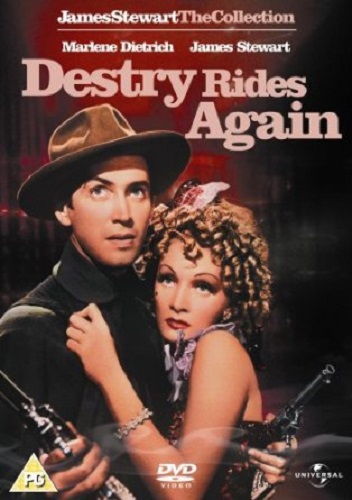
destryDestry Rides Again*, George Marshall (1939, USA). If there’s one story which appears again and again in Western films, it’s the lone hero who cleans up a town under the corrupt thumb of the local cattle baron. Given the bad name cattle barons have in Western literature – which is the nearest the US gets to a native mythos (native to its colonisers, that is) – it’s surprising unfettered capitalism is still seen as admirable. Maybe everyone is just waiting around for the lawman to turn up and clean up the town… although I wouldn’t go looking to that gallery of clowns the GOP is currently fielding as they’re so deep in the cattle barons’ pockets they’ve forgotten what daylight looks like… Ahem. Anyway, wild west town is dominated by criminal sorts, led by owner of the local saloon, at which Marlene Dietrich performs nightly. Villain has been cheating people at cards in order to get their land, and now owns the route needed by ranchers on their drives – and he’s going to charge them a fee per head to cross his land. When this leads to the sheriff’s murder, the corrupt mayor gives the tin star to the town drunk… who promptly sends off for Jimmy Stewart. In the past, the drunk had been deputy to Jimmy’s dad, the original Destry, a much respected lawman, and the drunk hopes the son has followed in the father’s footsteps… Except, it seems, he hasn’t. He doesn’t wear a gun. He lets the villains make fun of him. He even upholds the eviction of a homesteader who had lost the title to his land in a crooked card game. But, of course, Destry is playing a long game, and it all comes right in the end. Of course. This is a Hollywood western, after all. Even Dietrich, the saloon singer and accomplice of the saloon owner, proves to have a heart of gold. The best of the film, however, is when the women of the town, the wives and girlfriends, decide to intervene in the big fight between the forces of law and the villain’s henchman, and march straight in with various blunt instruments and proceed to hammer the shit out of the bad guys. That’s not something that normally appears in the mythos. And, perhaps, given more focus in the narrative, it might have made something special of Destry Rides Again. As it is, it’s a good western – though more for its breaking from the template than its slavish following of it – but there are a number of good westerns on the 1001 Movies You Must See Before You Die list, compared to the vast number of ordinary and just plain bad westerns that Hollywood made. Worth seeing.

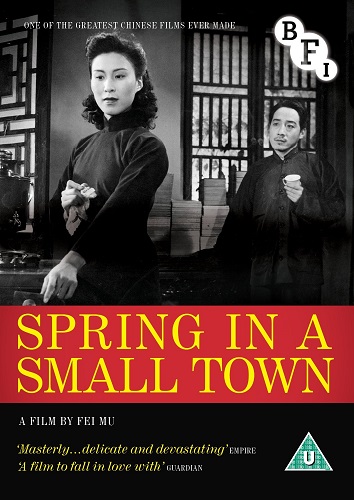
spring_small_townSpring in a Small Town*, Mu Fei (1948, China). This is generally reckoned to be one of the greatest Chinese films ever made – which is quite an encomium given the size of Chinese-language cinema (yes, I know “Chinese” is a language family, not a language, but you know what I mean – the film is actually in Mandarin). A classic piece of cinema it certainly is, not only because of its age. It is also a really good film, a film I watched on rental DVD but would like to pick up my own copy so I can rewatch it. A woman’s life post-WWII is interrupted when a suitor prior to her marriage arrives in town. The film takes its time telling its story, but that actually works to its advantage because it allows for a nuanced presentation of the various relationships – wife and her husband, wife and old boyfriend, wife’s younger sister and the old boyfriend… To be fair, there’s not a great deal of subtlety in who the characters are intended to represent – the husband, for example, spends his time pining for the past and complaining about his various illnesses. And the wife is the heart of the film, and whose heart is torn. I really need to be get my own copy of this. Incidentally, the film was remade in 1993 by Zhuangzhuang Tian. I’ve not seen the remake, but I’m definitely intrigued…

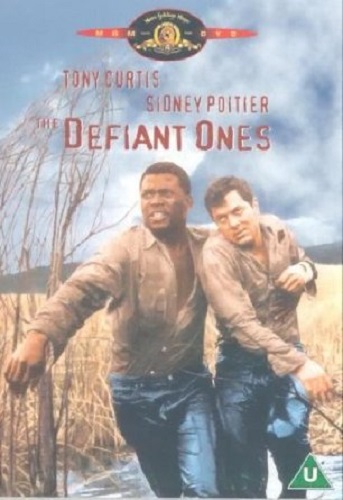
defiantThe Defiant Ones*, Stanley Kramer (1958, USA). It is horrible to think this film may well owe its position on the 1001 Mosvies You Must See Before You Die list because back in 1958 it was considered transgressive, perhaps even shocking. Because it’s about two cons who escape a chain gang while chained to each other. One is Tony Curtis, the other is Sidney Poitier. A white man chained to a black man. Curtis coasts, as well he might given his role, but Poitier is good (both were nominated for Oscars, but neither won – the award went to David Niven for Separate Tables). The two struggle through the swamps before stumbling into a company town, where they are captured and about to be lynched. But one of the residents argues against such vigilante “justice” and later helps them escape. They come across a boy, who takes them home to his mother, who has been abandoned by her husband. And she uses race to drive a wedge between the two, because she needs a man to look after her. There is not much, it must be admitted, in this film to like. The central premise should not be shocking or transgressive, and the responses of others to the two main characters throughout the film is deeply racist. True, the movies does comment – is itself a commentary – on those racist attitudes, but showing such things without actively presenting consequences seems to me a waste of time. Because, you know, there are people out there stupid enough not to see something bad in what they’re watching. All together, probably a film not worthy of the 1001 Movies You Must See Before you Die list.

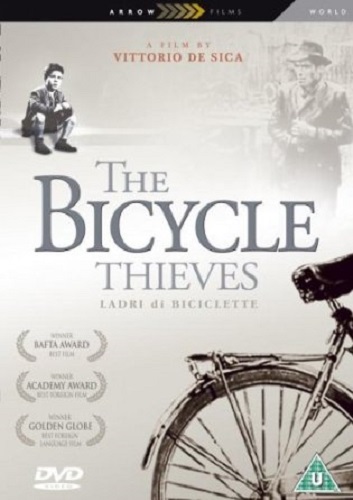
bike_thievesBicycle Thieves*, Vittorio De Sica (1948, Italy). I do like Italian Neorealist films, and this is considered an important work in the genre – an important work in Italian cinema, in fact – but I have to admit I didn’t much enjoy watching it. Chiefly because of its plot. An out-of-work man in post-WWII Rome is offered a job putting up posters, but he needs a bicycle to get the job. So his wife pawns the family heirloom linen to raise the money. But on his first day on the job, the man’s bike is stolen. And he spends the rest of the day trying to find it and its thief. Without success. Grinding poverty is a problem, but it is a structural problem in society. Certainly it’s fertile ground for drama, but such stories always to me imply that such conditions are either normal, inevitable or inescapable – and I disagree with all three conclusions. True, Italy after WWII was not in the best of places economically – but neither was the UK and it managed to create the NHS. The US, of course, was in a much better place – it profited from WWII – and it still treats its citizens like shit. Worse, certain of its citizens kill other ones if they try improve things for those who are not well off. All of which, however, has nothing to do with Bicycle Thieves. As mentioned previously, I like Italian Neorealist cinema, but I didn’t enjoy this particular example. Worth seeing, definitely, and certainly it belongs on the 1001 Movies You Must See Before You Die list, but that’s as far as it goes.

1001 Movies You Must See Before You Die count: 692


1 Comment

Awards time again

This is not a post listing what 2015 works of mine are eligible for genre awards. I disagree with the practice, I think it badly distorts the award-space, and it’s bending the entire field out of shape thanks to the stupid wrangling over who and what each of the awards actually represent. I’ve refused to post lists of my eligible works in the past, and I see even less of a reason to start doing it now.

However, I do vote in awards – well, one of them: the British Science Fiction Association Award. And I’ve been doing so for over twenty years. This year, there’s been a change to the process. Voters have until 31 December to nominate four works in each of the categories – novel, short fiction, non-fiction and art – in order to make up a long list. During January, voters will get to nominate four works from that long list to generate the short lists. Which will be voted on, and awarded, at the Eastercon in Manchester on the weekend of 25 to 28 March 2016.

Eligible works must have been published during 2015. Novels must have been published in the UK – unless they’re ebook only, in which case country of publication is irrelevant. There are no geographical restrictions on short fiction, non-fiction or art.

5_05_lrg

According to my records, I have read only nine genre novels published during 2015. One of them I would like to nominate – Carolyn Ives Gilman’s Dark Orbit – but it has yet to be published in the UK and so is ineligible. Of course, there’s no reason why I can’t nominate a book I’ve not read – I have until the end of January to read it, after all.

One novel I suspect will appear on a lot of ballots is Kim Stanley Robinson’s Aurora. It’s certainly been one of 2015’s high-profile releases. And Kim Stanley Robinson is one of the genre’s best authors. The book has received a great deal of praise. But. It didn’t work for me. For all the work he put into designing the ecology of his generation starship, the characters were completely flat and, despite the interesting commentary on narratology in the AI narrative, it all read to me like Californians in Spaaace. However, there was another generation starship novel published during 2015, by an author better known for writing epic fantasy: Children of Time by Adrian Tchaikovsky. While the narrative set aboard the spaceship was a little too trad to me, the spider-based civilisation which forms the core of the novel’s story was fascinating and brilliantly done. Children of Time will be taking one of my slots.

Then there’s Ancillary Mercy, the final novel in the Imperial Radch trilogy. I found this disappointing. I liked the first book, Ancillary Justice, very much – but it seems that was pretty much a prologue to the actual plot. Which, as resolved in Ancillary Mercy, was unsatisfyingly small-scale. There was also far too much talking about each character’s emotional state, to the extent it often overwhelmed the narrative. I won’t be nominating it.

David Mitchell’s Slade House was Mitchell being clever, which he does well, but was pretty slight – not to mention deploying a few too many horror clichés, or indeed being structured such that one entire section was pure exposition. Ilka Tampke’s Skin had much to recommend it, particularly its depiction of Roman Britain, but although not marketed as YA it read like it had been put together following YA story patterns – to its detriment. The less said about Christopher Fowler’s The Sand Men, the better. Claire North’s Touch was based on an appealing premise – so appealing, in fact, it seems to have spontaneously appeared half a dozen times in the past couple of years; something in the water? – but its weak plot scuppered it. The First Fifteen Lives of Harry August was much, much better.

Among the 2015 books on my TBR are Justina Robson’s Glorious Angels, the final book in Alastair Reynold’s Poseidon’s Children trilogy, Poseidon’s Wake, Dave Hutchinson’s Europe at Midnight, and Chris Beckett’s Mother of Eden. I also plan to keep an eye on the recommendations of several other people, and if anything they mention takes my fancy then I’ll read it. For this first round of the BSFA Award at least, it’s worth putting in a speculative vote – ie, for a book you’ve not read but think might be award-worthy – rather than letting the vote go to waste.

As for short fiction… Every year, it gets to this time of year and I realise I’ve not been reading the short fiction published in various places, so I go and skim-read all the various magazines until I find something which takes my fancy. This year, however, I have at least one dead cert: A Day in Deep Freeze by Lisa Shapter, a novella published by Aqueduct Press. That will be getting one of my slots. There’s also a David Herter story on tor.com, ‘Islands off the Coast of Capitola, 1978‘, and I’m a big fan of Herter’s fiction. But we’ll see what comes of my high-speed trawl through 2015’s genre fiction over the next week or so…

I have two candidates for non-fiction – My Fair Ladies by Julie Wosk, a study of “female androids, robots and other artificial Eves”; and Adam Roberts’s Rave and Let Die, if only because I don’t want him to give up his genre criticism. Jonathan McClamont has written some excellent ‘Future Interrupted’ columns in Interzone during the year. Likewise Nina Allan and her ‘Time Pieces’ column. And there was an extended conversation back in July across the blogosphere, about science fiction and criticism and the history of science fiction, prompted by an article by Renay published by Strange Horizons, ‘Communities: Weight of History‘… which then led to ‘The Weight of History‘ by Nina Allan… which then intersected with Jonathan McCalmont’s ‘What Price Your Critical Agency?‘ and resulted in Maureen Kincaid Speller’s ‘{and then} a writing life beyond reviews‘. In a genre space in which corporate marketing and support network advocacy is bending fandom out of shape, this is an important sequence of articles, and some, if not all, deserve nominations.

Finally, there’s art… another category I tend to look for suitable nominees at the last minute. One of my nominations will go to Kay Sales for the cover art to All That Outer Space Allows, not only because it’s a lovely piece of design but because I think the cover designs for all four books (the second editions of the first two, plus three and four) are striking and worthy of an award. Interzone has continued to publish some excellent interior illustrations for its stories. I particularly liked Richard Wagner’s illustration for ‘The Worshipful Company of Milliners’ by Tendai Huchu and Vincent Sammy’s illustration for ‘Songbird’ by Fadzlishah Johanabas, both in #257. I’ve had a quick look at my bookshelves, and online, for cover art from genre books published in 2015… and failed to find any which particularly stood out. Except, perhaps, the cover art to Hannu Rajaniemi’s Collected Fiction, which is by Luis Lasahido. But I shall continue to look, in the hope I find enough candidates for my ballot before the end of the year.


1 Comment

Moving pictures, #38

There’s probably another two or three of these posts to come before the year is out. I’ve yet to decide if I’ll carry on with them next year – I might choose to just write about a single film in a post, as I’ve done in previous years. We’ll see. Of course, there’s still a good 300+ films on the 1001 Movies You Must See Before You Die list. But meanwhile…
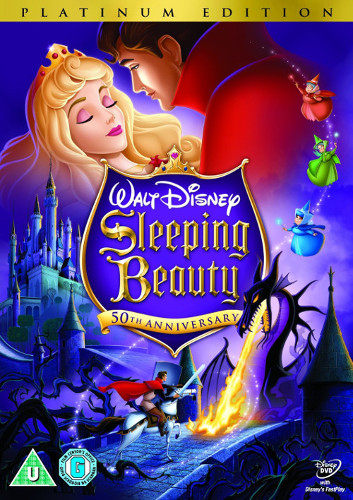
sleep_bSleeping Beauty, Clyde Geronimi (1959, USA). There was a trailer for this on a rental DVD, I seem to remember, and something about it persuaded me it would be worth watching. I might well have seen the film as a child, but I have no memory of it. A Blu-ray copy appeared in Amazon’s Black Friday sales, so I bought it. And… it’s probably one of the most Technicolor movies I’ve ever watched, second only to The Adventures Of Robin Hood. So, of course, I loved that about it. I also liked that the songs weren’t intrusive – the cast didn’t break into singing per se, the songs sort of grew out of the background music. And the style of the animation is that sort of stylised 1950s, er, style which I find much more appealing than the normal Disney style. So, despite the over-done Disney DVD cover, Sleeping Beauty is actually a gorgeous piece of animation. But, interestingly, it’s an odd take on the story, because it’s told through the viewpoints of three meddling middle-aged women, the good fairies, Flora, Fauna and Merryweather. They hide Princess Aurora from bad witch Maleficent, although, of course, fairy tale curses have a way of coming true… But that sleeping bit, it’s only like part of the final act, it’s the shape of Aurora’s life which is the backbone of the film. And it works really well. As does Maleficient’s actually quite scary transformation into a dragon when she tries to prevent Prince Philip from reaching the sleeping Aurora. Without watching all the other Disney animated features films, and going only on what I remember of them, I think I can safely say Sleeping Beauty is the best of them. Although I would like to watch The Jungle Book again…

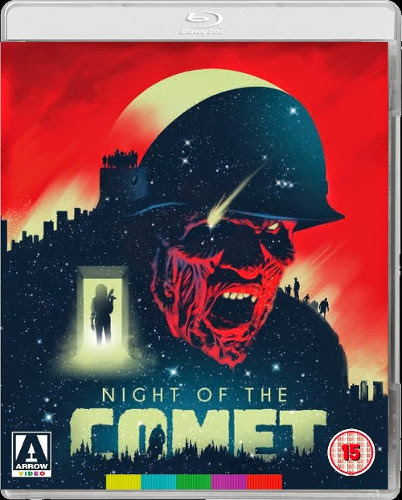
nightofthecomet-bdNight of the Comet, Thom Eberhardt (1984, USA). I suspect this may be the most eighties film made during the eighties. I remember first seeing it in the mid-eighties on television – it was introduced by either Jonathan Ross or Alex Cox, as part of a cult film series, I forget which; but I’ve always fancied a copy of it… and then late last year Arrow released a dual-format edition. So I bought it. And… it’s pretty much how I remembered it and, as I mentioned earlier, so very eighties. It’s not just the soundtrack – little of which was actually familiar to me even though I remember much of the decade, although the songs did sound very much of the time. Nor the clothing. But I seem to remember Valley Girls appearing in several cult films at the time – the other one that springs to mind is Julien Temple’s Earth Girls are Easy – and the two main characters of this, played by Catherine Mary Stewart and Kelli Maroney, are pretty much perfect casting. There’s a sequence in the film which more or less defines it for me – and certainly proved the most memorable – and yet has nothing to do with zombies. (Oh yes, the plot is: a comet flies close to Earth, all those who did not spend the night in something with steel walls turned into dust… or a zombie.) Anyway, the two girls decide that since they’re now apparently the only inhabitants of Los Angeles they can do what they like… which includes trying out everything which takes their fancy in a department store – all to, of course, the strains of Cyndi Lauper’s ‘Girls Just Wanna Fun’. Anyway, the pair have their ups and downs, their moments of jeopardy, being rescued and as well as rescuing others – they’re good strong female leads… and it’s a shame films like Night of the Comet are not bettered remembered. Worth getting hold of.

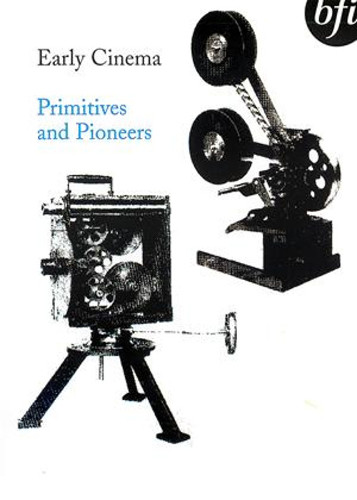
early_cinemaThe Great Train Robbery*, Edison Manufacturing Company (1903, USA). To be honest, I don’t remember much about this – it was one of about twenty or so films on a DVD collection of early cinema, Primitives and Pioneers – a mixture of US, French and British movies, all of which were identified by the company which made them rather than the person who directed them. Some of them were quite good – ‘Explosion of a Motor Car’ by the Hepworth Manufacturing Company was pretty good, if surprisingly, and comically, gruesome. Some of the others were mere fragments. However, one thing which did stand out – and I suppose The Great Train Robbery is as good an example as any – was the desire by the film-makers to tell stories using this new medium. So rather than documenting the world around them, they staged little vignettes and scenarios. A train being robbed, a woman’s baby being stolen from its pram, even the use of fantasy (hand-coloured too) in some of the early French films. In fact, while there’s little to say about the movie which appears on the 1001 Movies You Must See Before You Die list, the actual collection itself is totally worth watching.

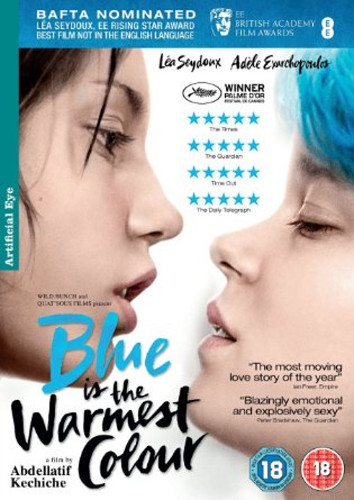
blueBlue is the Warmest Colour, Abdellatif Kechiche (2013, France). There was apparently some fuss when this won the Palme d’or at Cannes, although I was not aware of that until after I watched it. But having now read some of the criticisms of the film, I can understand what the critics meant. The film is based on a well-regarded French bande dessinée about a young woman’s sexual awakening and subsequent lesbian relationship with a blue-haired artist. And, of course, the homophobia she experiences – from family as well as school friends. Much has been made of the sex scenes in this film, and it’s certainly true they play far too… straight to be convincing. It’s hard to explain, and I’m no real position to judge the veracity (although plenty who are have said what I am about to), but they don’t ring true, in the same sort of way that sexual encounters in pornographic films don’t ring true as real sex. The two leads, Léa Seydoux and Adèle Exarchopoulos, are excellent, but the whole films still feels like a mistreatment of its source material and the lifestyle on which its source material – Julie Maroh’s 2010 Le bleu est une couleur chaude – is based. I can understand why the film has proven controversial, and I can’t help but agree with those who find fault with it. I’ve seen it now, but, you know, it wouldn’t have bothered me if I never had… and I can’t really recommend it to anyone.

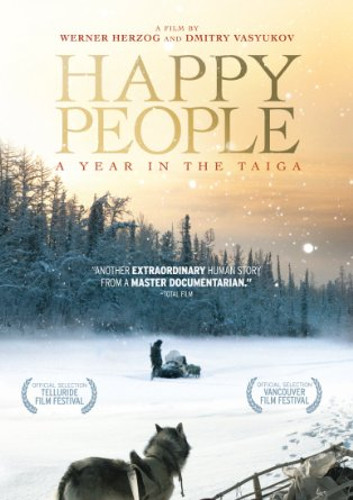
happyHappy People, Werner Herzog & Dmitry Vasyukov (2010, Germany). The subtitle of this film, “A Year in the Taiga”, pretty much tells you all you need to know about this documentary. Assuming, of course, you know what “taiga” means. I admit it, I think Herzog is a genius, and while not all of his films are great, he’s never made a dull film. And that’s as true of Happy People as it is of any film he’s made, even if it’s just a documentary about the inhabitants of Bakhta, a small village in the middle of Siberia, which can only be reached by air or river (and the latter only during the summer when the river isn’t frozen solid). It’s a hard life that Herzog and Vasyukov document, but appealingly simple. True, the values and attitudes of the village’s residents are equally simple, but they seem to suit the lifestyle. There is, for example, one moment where one of the native Ket people accidentally burns down his house because he’d been drunk and left a cigarette burning. But he and his mother are more concerned about the loss of their home’s fetishes than anything else. There’s a sad overtone to much of the proceedings inasmuch as the Ket’s traditional lifestlye has been overwritten by the USSR, but the film’s title is no lie and all those involved seem to be inspiringly happy despite the hardship of their lives. Another charity shop find that’ll be a keeper, I think.

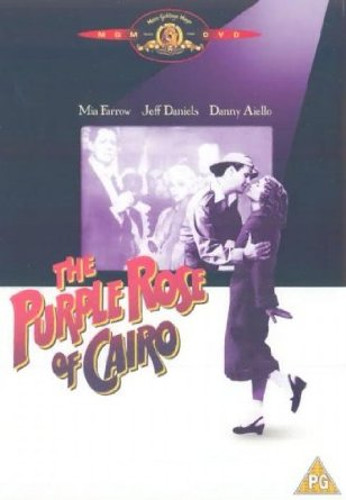
purpleThe Purple Rose of Cairo*, Woody Allen (1985, USA). I am not a fan of Woody Allen’s films. Actually, I can’t stand them. But this one was on the 1001 Movies You Must See Before You Die list, so I sort of had to watch it. (He has several – and far too many – films on the list.) From what I knew of the film, I guessed it would be less irritating than most of his oeuvre – he’s not in it, for a start. And the central premise sounded quite good: a character from a film steps out of a cinema screen and runs away with a lonely woman, only for the actor who plays the character to come searching for the pair. That description, however, proved somewhat incomplete. The woman, played by Mia Farrow, is a battered spouse. And she goes to the cinema to escape her husband as much as she does to watch movies. On the plus side, the idea of a character stepping out of a film, leaving the remainder of the movie’s cast to figure out how to proceed, is handled well and proves mildly amusing. The fish-out-of-water romance by the film character and Farrow is less amusing and trades a little on cliché. And when the actual actor turns up and proves to be self-centred and career-minded, well, that is an actual cliché. My opinion of Allen’s films remains completely unchanged having seen The Purple Rose of Cairo, and I still don’t understand why so many of his movies are on the 1001 Movies You Must See Before You Die list.

1001 Movies You Must See Before You Die count: 688


2 Comments

2015, the best of the year

On balance, 2015 wasn’t a bad year for me. Things improved in $dayjob, goodish things happened in my little corner of genre, and I read a number of excellent books and watched lots of excellent films. Music-wise, it was both successful and not so successful: I discovered some more new bands on Bandcamp, and this year we went VIP for Bloodstock and it really was worth the extra money; but I saw fewer bands live than in previous years, and none of my favourite ones toured the UK – and if they did, it was only in the big cities, like London, Birmingham or Glasgow. But, like I said, some excellent books and films – so much so, I had trouble picking my top five in each. But I did finally manage it.

Oh, and I got a new cat. Oscar. He’s two years old, and I’d forgotten how much of a pain young cats can be.

books
A strange year of reading, on reflection, and I’m not entirely sure why. I read some books as research for All That Outer Space Allows (which was published this year), I read some other non-fiction books (on space and aircraft and submersibles, mostly), I read some sf novels for SF Mistressworks and some more recent genre works… And I decided to widen my reading to include more classic literature. While I like to think of myself primarily as a science fiction fan, of late I’ve found it hard to generate much enthusiasm for recent sf. In part, that’s due to the way fandom is changing as a result of social media and online promotion, but also because a lot of current sf seems to me more interested in style rather than content. I like sf ideas and sense of wonder, but I also like good writing, sophisticated themes and a willingness to experiment with form and structure. While some works which meet those criteria were indeed published in 2015, those I came across didn’t feel especially progressive. Which is why you’ll notice a few notable titles missing from my top five below (and I have only one, in fact, that was actually published in 2015).

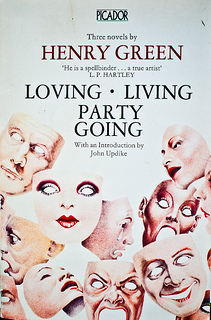
loving1 Loving, Henry Green (1945).
An author new to me in 2015, and despite being about a subject – life belowstairs in the Irish country house of an English nob during WWII – that doesn’t interest me in the slightest, Green’s writing was wonderful and his narrative technique amazing. I will be reading more by him – hell, I plan to read everything he ever wrote.

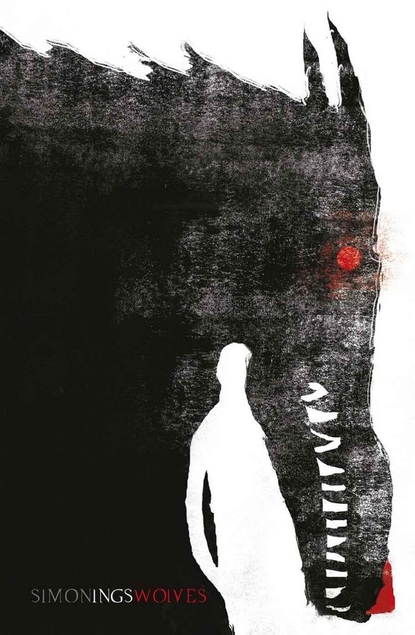
wolves2 Wolves, Simon Ings (2014).
There was some small fuss when this appeared in early 2014, but by the time awards came around it had been forgotten. Which was a shame. And I wished I’d read it in time to nominate it last year – because this is plainly one of the best sf novels of 2014. The focus of his novel tends to drift a little as the story progresses, but Ings has still managed to produce one of the smartest works of sf – if not the smartest work of sf – of the last few years.

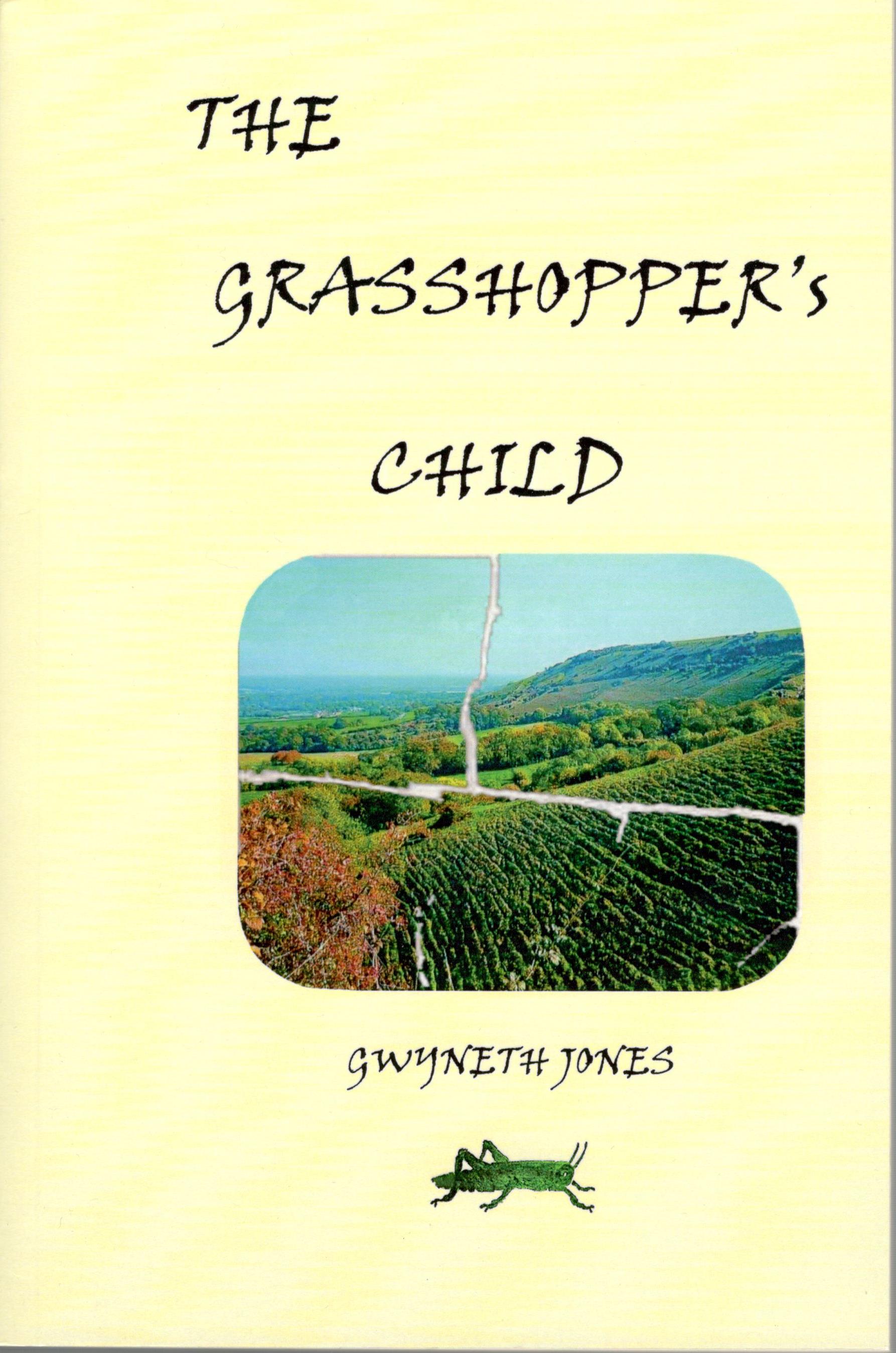
grasshopperschild3 The Grasshopper’s Child, Gwyneth Jones (2014).
A new Gwyneth Jones novel is cause for celebration, even if it’s a YA addendum to the non-YA Bold as Love quintet. But there’s a reason Jones is my favourite science fiction writer, and they’re all evident in this short novel. On the one hand, this is a smart YA novel and I’m no fan of YA fiction; on the other, it’s Gwyneth Jones and her Bold as Love world. But it’s also self-published, so it needs to be on as many best-of lists as possible so that Jones keeps on writing. (And why was it self-published? Do the major UK genre imprints not want to publish new work by the country’s best sf writer?)

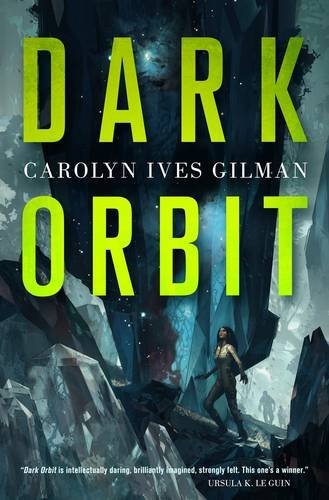
darkoribt4 Dark Orbit, Carolyn Ives Gilman (2015).
I’ve been saying for years that Gilman is a name to watch, and she has at last been given the opportunity to demonstrate it to a wider audience. (She amply demonstrated it with her fantasy diptych from ChiZine Publications back in 2011/2012, but genre commentators can only apparently see what appears from major imprints – which is, if you’ll forgive me, fucking short-sighted). Anyway, Dark Orbit deservedly received a lot of positive reviews, and though to me it didn’t quite feel like Gilman firing on all cylinders, it showed great promise. More from her, please.

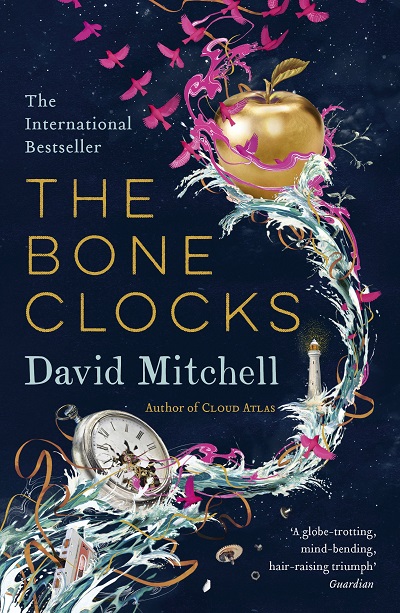
bone_clocks5 The Bone Clocks, David Mitchell (2014).
Friends have been singing the praises of Mitchell for years, but I’ve never really understood why. I mean, I enjoyed Cloud Atlas, and I thought it was clever… but it did seem a little over-praised. But The Bone Clocks is the novel that all the praise had led me to believe Cloud Atlas was. It’s his most insightful yet – and also his most genre.

Honourable mentions: a few titles got bumped from best of the half-year top five, although they were excellent books and probably didn’t deserve to be demoted – namely, The Leopard, Giuseppe Tomasi di Lampedusa (1958), a classic of Italian twentieth-century literature (a bloody good film too); A Division Of The Spoils, Paul Scott (1975), the final book of the Raj Quartet and as beautifully written as the other three; and What the Doctor Ordered, Michael Blumlein (2013), wich showcases why he remains one of my favourite genre short story writers. Also read and noteworthy were: Strange Bodies, Marcel Theroux (2013), a literate mystery based on an interestingly odd premise; Pale Fire, Vladimir Nabokov (1962), my first by him and, though perhaps overly prissy, excellent; One Thousand and One Nights, Hanan Al-Shaykh (2011), a bawdy, and multiply-nested retelling of some of its title’s stories; Housekeeping, Marilynne Robinson (1981), her beautifully-written debut novel; and Galactic Suburbia, Lisa Yaszek (2008), used for research and a fascinating read.

films
I went all-out on the 1001 Movies you Must See Before You Die list in 2015. So much so, in fact, that I signed up with a second DVD rental service, Cinema Paradiso, because they had some films from the list that weren’t available on Amazon’s Lovefilm by Post. And I bought an Amazon Fire TV Stick too, which gave me access to even more movies. Meanwhile, I purged my DVD collection of all the superhero films (why did I buy them in the first place?) and the shit sf movies (why did I buy them in the first place?), not to mention lots of other films I’d bought over the years. My collection is now looking very different, much more of cineaste’s collection (even though I say so myself), with lots of works by Sokurov, Dreyer, Murnau and Benning – and from earlier years, Bergman, Tarkovsky, Kieslowski and Haneke, among many others.

The 1001 Movies You Must See Before You Die challenge has been… interesting. It introduced me to the works of James Benning. I’ve also seen a lot of not very good films that really didn’t belong on the list (mostly from Hollywood, it has to be said). And I’ve seen a lot of early cinema, most of which proved quite interesting. Only one of the five films in my top five was not a “discovery” from the 1001 Movies You Must See Before You Die list.

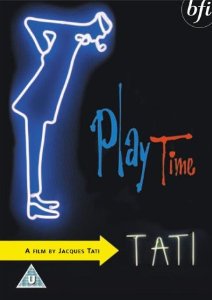
playtime1 Playtime, Jacques Tati (1967)
How could this not be my number one choice? It certainly was halfway back in June, and it remains so now at the end of the year. I loved its Brutalist production design, its situational humour, its wit… it is a work of cinematic genius. I’d watched a rental DVD but I loved it so much I bought a Blu-ray copy for myself… and then bought a boxed set of Blu-rays of Tati’s entire oeuvre. A film that went straight into my personal top ten best films of all time.

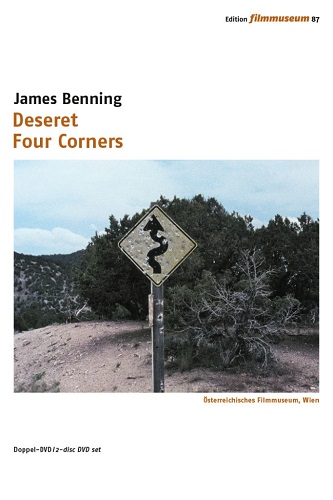
deseret2 Deseret, James Benning (1995)
Ever loved a film so much you went out and bought every DVD you could find by that director? Oh wait, I did that for Tati. But I also did it for Benning. Fortunately, Östereichesichen Filmmuseum have been releasing Benning’s films on DVDs the last couple of years, so there were a few for me to get. And yet… Deseret is static shots of Utah landscape, and later cityscape, while a voice reads out stories from the New York Times from 1895 to the present day. It is cinema as art installation. And I loved it. I am now a huge Benning fan. And I have all of the DVDs that Östereichesichen Filmmuseum have released. And am eagerly awaiting more.

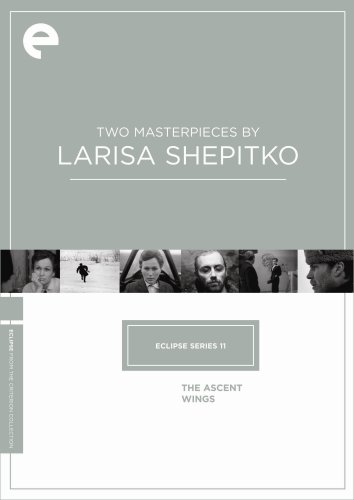
shepitko3 Wings, Larisa Shepitko (1966)
Shepitko’s Ascent is on 1001 Movies You Must See Before You Die list, but the only copy of it I could find was a Criterion double with Wings. I bought it. I watched Ascent. It was good. But then I watched Wings. And it was so much better. A female fighter pilot of the Great Patriotic War, and Hero of the Soviet Union, is now the principal of a school. It’s an artful juxtaposition, more so because the protagonist is female. And it was Shepitko’s debut film. War films, like Ascent, strike me as too easy as choices for assorted lists, but the social drama versus war of Wings is much more interesting. This film should have been on the 1001 Movies You Must See Before You Die list. I’d also like to see more by Shepitko.

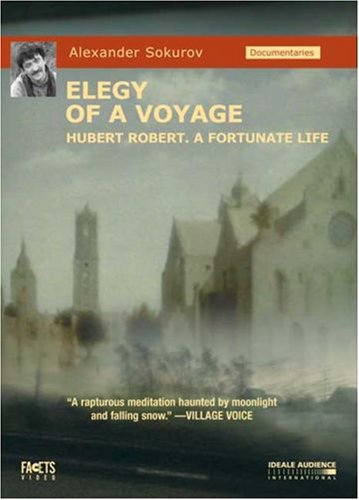
elegy_voyage4 Elegy of a Voyage, Aleksandr Sokurov (2001)
Come on, you didn’t expect me not to have a Sokurov film on this list, did you? I’m being nice by not putting five on it. Well, okay, five maybe could have made it, but one was a rewatch from previous years and so didn’t count. But four could have done. (Yes, the other three are in my honourable mentions below.) Elegy of a Voyage is one of Sokurov’s documentaries, but it’s more of a meditation than an informational film, in which Sokurov muses on journeys and art, particularly ‘The Tower of Babel’ by Bruegel.

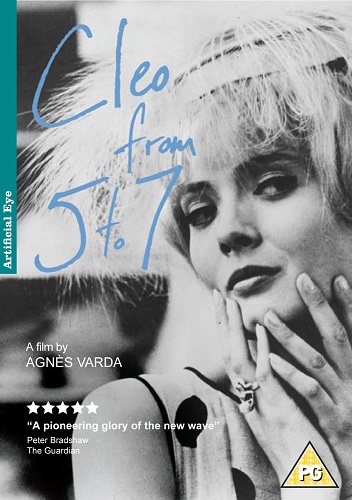
cleo5 Cleo from 5 to 7, Agnès Varda (1962). I have found the Nouvelle Vague to be something of a mixed bag – in fact, I’ve found the oeuvres of Nouvelle Vague directors to be something of a mixed bag. But the only Varda I’d seen prior to Cleo from 5 to 7 was a documentary from 2000. Cleo from 5 to 7 may have covered similar ground to some of Godard’s 1960s films, but it does it so much better. Loved it.

Honourable mentions: two films were dropped from my best of the half year list, one a Sokurov, one a documentary: Jodorowskys Dune (2013) is a fascinating look at a major sf film that never happened, but still left its fingerprints all over sf cinema; Stone (1992) is a typically enigmatic drama from Sokurov… but I could just as easily mention Whispering Pages (1994; which he knocked together after his financing fell apart, but it still manages to hit all those Sokurovian notes), or Spiritual Voices (1995; a documentary about Russian soldiers on the Afghanistan border whose first 40 minutes are a static shot of a Siberian wood). But there’s also Tati’s Mon oncle (1958), nearly as good as Playtime; James Cameron’s Deepsea Challenge (2014), an excellent documentary on his visit to Challenger Deep, only the third person to do so; American Dreams (lost and found) (1984), another Benning piece with an unconventional narrative; Salt of the Earth, Herbert J Biberman (1954), an astonishing piece of social realism drama that deserves to be better known; Sleeping Beauty, Clyde Geronimi (1959), easily the best of the Disney feature films. Day Of Wrath (1943) was another excellent film from Dreyer, Effi Briest (1974) was I thought the best of the Rainer Werner Fassbinder box set I watched, and 2 or 3 Things I Know About Her (1967) was a Jean-Luc Godard that I was surprised to find I liked very much.

albums
I spent much of the year further exploring Bandcamp, and so stumbled across yet more excellent music. I did not, however, see much music live this year – Sólstafir were excellent back in February, Voices and Winterfylleth were very good in September, and highlights of this year’s Bloodstock included Ne Obliviscaris, Sumer, Opeth and Agalloch.

1 Sidereus Nuncius, Apocynthion (2013)
Spanish progressive death metal, not unlike NahemaH (also Spanish, and a favourite band… although they disbanded last year). It seems a little unfair to describe a group’s sound by how much like another band’s it is, but metal these days is such a wide and diverse genre labels are often next to useless. Apocynthion play prgressive metal with clean and growl vocals, some death metal song structures, sound effects and samples, a heavy post-metal influence and a great deal of technical ability.

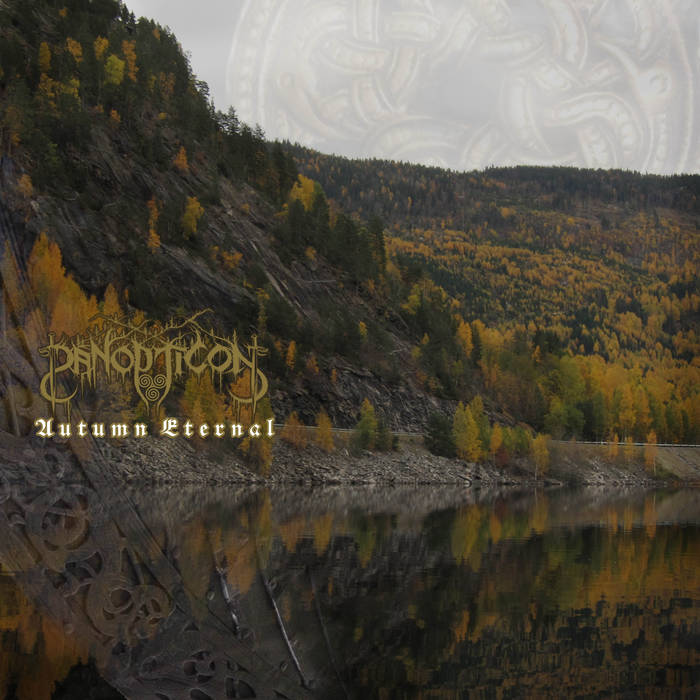
panopticon2 Autumn Eternal, Panopticon (2015)
Panopticon’s Kentucky from 2013, with its mix of black metal and bluegrass, is an astonishing album… but I picked it for my best of last year. Their new album (I say “their” but it’s a one-man show) mixes folky acoustic parts with intense black metal, and it works really well.

3 Ghostwood, Navigator (2013)
This is polished progressive rock with a little bit of djent thrown into the mix, with solid riffs and some catchy hooks. They described themselves as “for fans of Porcupine Tree”, although I think this album is better than most of that band’s albums.

grorr4 Anthill, Grorr (2012)
A relatively recent discovery this one, Grorr play progressive death metal, but more like Gojira than, say, Opeth. There’s all sorts in here – bagpipes, sitar, various types of drums. It’s a wonderfully varied album, but still coherent.

5 An Act of Name Giving, Butterfly Trajectory (2015)
Anothe rrecent discovery. Butterfly Trajectory also play progressive death metal – there seems to be a common theme to this top five… They’re from Poland, and while their sound is quite Opeth-ish, they’re a good deal better than fellow countrymen Gwynbleidd who play similar material. Butterfly Trajectory seem to like their progressive bits a tad more than their death metal bits, which works really well.

Honourable mentions: Worst Case Scenario, Synesthesia (2015), French progessive death metal with plenty of other musical styles thrown in, excellent stuff; Kyrr, Kontinuum (2015), Icelandic post-metal, a little more commercial than fellow countrymen Sólstafir… whose Ótta (2015) and Svartir Sandar (2011) are excellent heavy post-metal albums; Cold and the Silence, Martriden (2015), yet more shredding from excellent medlodic death metal group, who seem to have gone a bit funkily progressive with this new album, and it works really well; and finally, RAMA, RAMA (2015), which is a weird mix of doom, stoner, psychedelic and desert rock all in a three-song EP.


2 Comments

Moving pictures, #37

Only 315 movies to go and I’m done with the list. Unfortunately, not every film on it seems to be actually available – and the list does evolve – so it’s not like finishing it is, well, a death sentence. I should have a go at putting together my own, I suppose – although, to be fair, 1001 movies is a lot of movies – since I can think of a couple of dozen films which belong on the list much more than some of the Hollywood crap which actually does appear on it. (Quick plug here for my list 101 Films for a cineaste, and I really ought to do a part two and part three…)

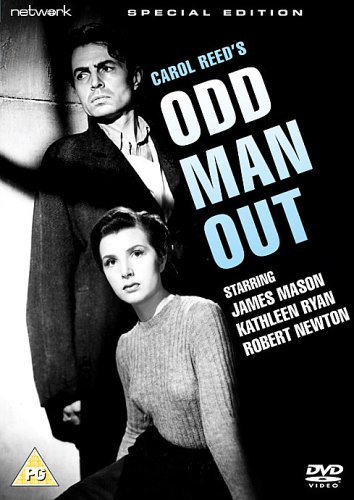
odd_man_outOdd Man Out*, Carol Reed (1947, UK). This was an odd one (no pun intended). It was probably a Quota Quickie – it starred James Mason, who made his career in Quota Quickies during WWII (he was a conscientious objector as he was a Quaker) and is black-and-white. It is also about the IRA. Of course, the organisation is never named, and even the city in which the film takes place remains nameless (although a bus appears at one point with “Falls Road” on its sign). Mason plays the leader of a cell, who has been ordered to rob a mill. The robbery goes wrong, and the men are forced to hide out. Mason is shot and separated from the others, and tries to head back his girlfriend’s house, where he had been hiding for the past six months. In pretty much all respects, Odd Man Out is a straightforward noir film – except for the political angle. It makes for an odd disconnect. While the cast are presented as criminals, and they perform criminal acts, as is fairly common in noir, the fact they’re IRA gives their actions added weight. To be fair, the film doesn’t belabour the point, and while it makes much of its setting, Belfast, the sectarian angle is played down, probably wisely. Apparently Odd Man Out received a BAFTA for Best British Film in its year of release. On balance, it probably deserves to be on the 1001 Movies You Must See Before You Die list.

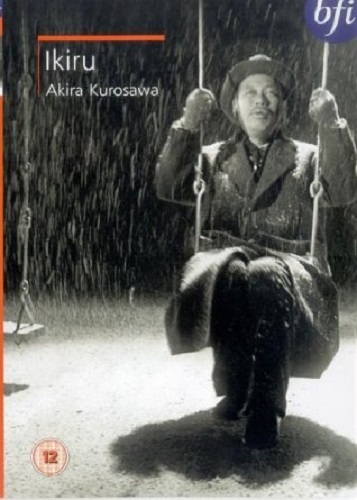
ikuruIkiru*, Akira Kurosawa (1952, Japan). Ask anyone who knows very little abut Japanese cinema to name a Japanese director, and Kurosawa will probably be the most popular answer (so don’t go picking it on Pointless). I have over the years watched a number of Kurosawa’s films and, perversely, still like his Russian one best. I hadn’t really expected to like Ikiru, an early work, especially given the plot summary. A minor bureacrat, Watanabe, is given 12 months to live after being diagnosed with bowel cancer. Impressed by the enthusiasm of his department’s sole female member, a young woman, he starts spending time with her. But she resigns from the ministry, and soon after tires of his company. She tells Watanabe he needs to find a hobby. He decides to take a petition to convert an urban rubbish tip into a playground, and push it through all the government departments and get all the backing and signatures it needs, to make it happen. There’s a quite horrible scene at his funeral during which the local deputy mayor takes full credit for the playground, totally downplaying Watanabe’s contribution. A good film.

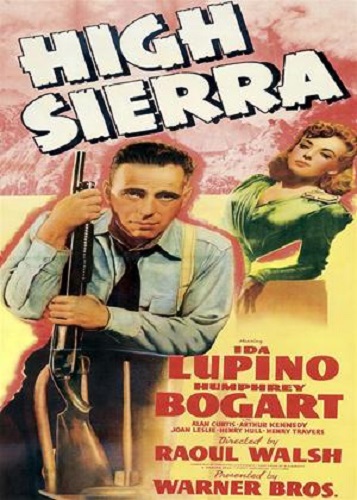
high_sierraHigh Sierra*, Raoul Walsh (1941, USA). I started watching this and wondered if I’d accidentally stuck a film on my rental list I’d already watched earlier in the year… but no, that earlier film was The Treasure of Sierra Madre which, like High Sierra, stars Humphrey Bogart, is in black-and-white, but otherwise bears no resemblance to it at all. On the other hand, I could have been confusing it with Angels with Dirty Faces, which stars the Humph as a bent lawyer, but I suspect it’s just all these noir films are beginning to blur together a bit… In this one, the Humph plays an ex-con who leads a robbery on a resort hotel. Though they plan it to the smallest detail, it all goes horribly wrong. Ida Lupino is good as the femme fatale. She had a fascinating career, incidentally – a Brit who moved to Hollywood, played in a number of noir films, before becoming one of Hollywood’s first female directors. (And Hedy Lamarr, a contemporary, held a patent for the maths used by torpedo guidance systems. Just compare those two with the current crop of Hollwood actresses…). The 1001 Movies You Must See Before You Die could do with having some noir trimmed from it.

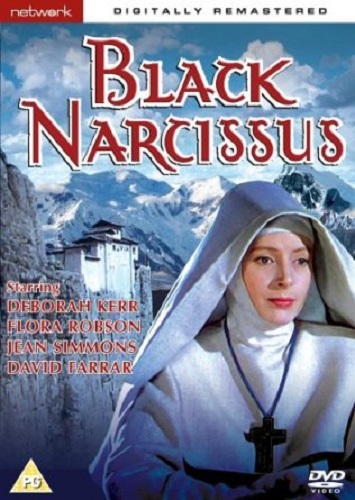
black_narcussisBlack Narcissus*, Michael Powell & Emeric Pressburger (1946, UK). I’ve been a fan of the Archers for many years, and thought I had seen Black Narcissus years before – at least, I’m pretty sure I had – but I stuck on my rental list for a rewatch as it’s on the 1001 Movies You Must See Before You Die list. And… yes, it’s the film I thought it was, and it’s also very much not the film I thought it was. It is deeply problematical – Jean Simmons in blackface as a young Indian woman; the whole colonialist attitude to the locals – but it is also a gorgeous-looking film, which is especially surprising as it was filmed entirely in a studio (even the model of the mountain-top monastery looks gorgeous). I recently rewatched the Archer’s The Red Shoes, but didn’t enjoy it as much as I had on previous viewings – and I expected much the same for Black Narcissus, a film I could admire, with very much an Archers’ look and feel, but something of a Sunday afternoon movie and soon forgotten… Except I actually really did find myself liking it. It’s pure melodrama, it’s colonialist melodrama, it is, as I’ve said, deeply problematical… but there’s also a faint whiff of knowingness to it, and a definite series of hints that its viewpoint is skewed (the local British agent, for example, is very much sceptical view of his role). It all adds up to something considerably more than a Sunday afternoon movie, and I wouldn’t mind watching it again…

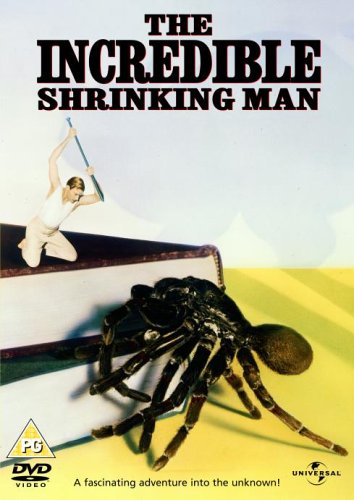
shrinkingmanThe Incredible Shrinking Man*, Jack Arnold (1957, USA). I was taken to task for not liking this film much by a friend on FB. But I really couldn’t get excited about it. Not only does it have that B-movie moralistic voice-over, in which the whole film is presented as an object lesson because no one involved in making the film had enough confidence in the audience to get the point of it all, but the special effects may have been shocking in 1957 but seemed relatively humdrum in 2015. The Incredible Shrinking Man is a B-movie and nothing more, and its presence on the 1001 Movies You Must See Before You Die list is either an acknowledgement that some B-movies have transcended their origins, or a completely mystery. I acknowledge the former, but incline to the latter in this case. The moralistic posturing in The Incredible Shrinking Man actually spoiled it for me, whereas I suspect a reliance on the pure visceral thrill of a tiny little man fighting a GIANT SPIDER might have given the film more authority in its central premise. Despite it s appearance on the list, this is a B-movie, it looked like a B-movie, it played like a B-movie, and its presence on the list is not enough for it to magically transcend its B-movie origins.

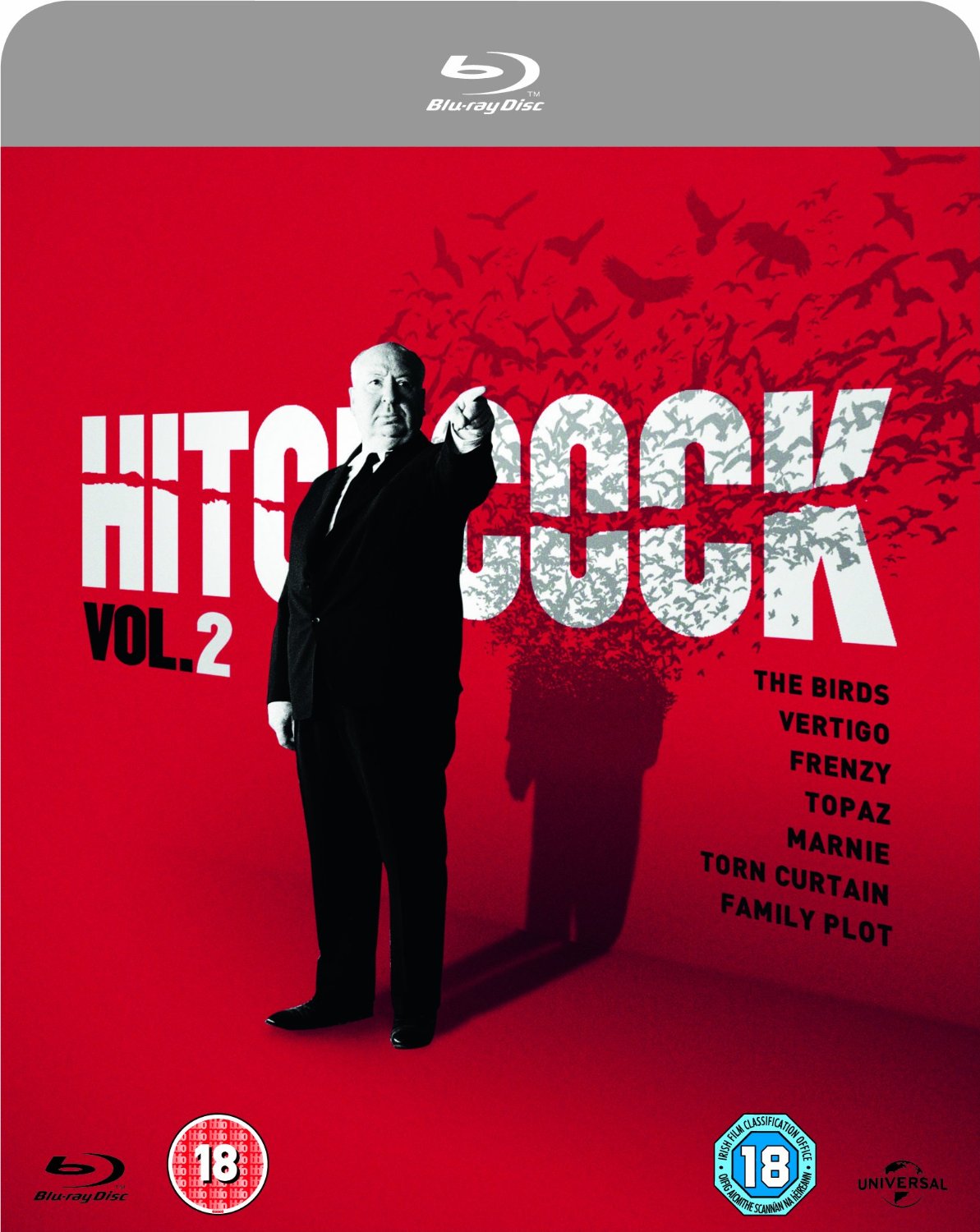
hitchcock2Torn Curtain, Alfred Hitchcock (1966, USA). Among the first DVDs I bought when the format appeared was a pair of Alfred Hitchcock collections. I replaced both of these with Blu-ray editions during a recent Amazon Prime Day, and have been slowly working my way through them – rewatches all, of course. I’ve not bothered mentioning them in these Moving pictures posts because they’re films I first saw decades ago, and have rewatched several times since. But I thought it worth writing about Torn Curtain for a number of reasons. It’s considered minor Hitchcock despite its high-powered stars (who were apparently forced on Hitch by the studio), but it’s also an odd film even within Hitch’s oeuvre. It’s set mostly in Europe – I was dead chuffed, for example, on my first visit to Copenhagen when I spotted the Hotel’d’Angleterre, which appears in this film – and it is a surprisingly European film for a major Hollywood player. Paul Newman is a US scientist who fakes a defection to the East so he can steal some formulae from an East German rocket scientist; Julie Andrews plays his wife, who inadvertently gets herself involved in the whole plot. I had forgotten how wonderfully Technicolor Torn Curtain is, and how surprisingly unpretentious it is. The fight scene between the Stasi agent and Paul Newman, which takes place in total silence, I pastiched in one of my novels I liked it so much. The pair’s trip across East Germany to a contact who will smuggle them into the West is resolutely ordinary, with weird moments of humour interrupting the jeopardy. I actually liked the film a lot more than I had done afterprevious viewings. And yes, it was totally worth replacing my DVD copies with Blu-ray ones.

1001 Movies You Must See Before You Die count: 686


5 Comments

Reading diary, #18

My reading seems to have picked up a little of late, likely because I’ve been choosing shorter books to read… Mind you, three of them were literary classics – and not just according to the one list I’ve been following. Admittedly, I’ve been a fan of Marilynne Robinson’s writing since reading Gilead several years ago (and now have three of her books in signed first editions) – but the other two classics I was aware of but had never actually read. Now I can say I have done…

maeveMaeve, Jo Clayton (1979). I’ve been working my way through Clayton’s Diadem from the Stars series for SF Mistressworks. I wasn’t impressed with the first three books, which had super-special-snowflake heroine Aleytys, with special powers coming out of the wazoo, subjected to rape, slavery, sexual slavery and rape. But this book is a complete change of pace and tone – Aleytys is now a straight-up space opera heroine, helping out the alien inhabitants of a planet against a rapacious corporation. Let’s hope the series keeps up this new direction. My full review is on SF Mistressworks here.

oldmanseaThe Old Man and the Sea*, Ernest Hemingway (1952). I tried reading Hemingway’s For Whom The Bell Tolls a few years ago but gave up about halfway in. You’d think his fiction would appeal to me – Hemingway believed in factual writing, and that’s something I’ve been doing with my own fiction. But, to be honest, I’ve never understood why he’s held in such high regard. And that’s even more so after reading The Old Man and the Sea, the (very short) novel which apparently re-invigorated his career and was likely instrumental in him being awarded the Nobel Prize for Literature. Go figure. Given Hemingway’s penchant for factual writing, this should really be titled The Old Man and the Big Fish, as that’s what the story is actually about – an old Cuban fisherman who wages a war of endurance against a giant marlin. He wins eventually, but sharks rob him of his prize. The writing is simple and declarative, and on occasion quite striking. It is also often repetitive and its simplicity can hinder as much as it helps. It is a book which lingers in memory – possibly a result of its simplicity – and though I didn’t much enjoy reading it, and certainly wasn’t impressed by its prose, it does make me think more favourably about Hemingway than I did previously. So much so, in fact, that I may try actually reading something else by him…

ivanOne Day in the Life of Ivan Denisovich*, Aleksandr Solzhenitsyn (1962). I have Sokurov’s Dialogues With Solzhenitsyn waiting to be watched (and it wasn’t an easy DVD to find at a reasonable price), and while I knew of One Day in the Life of Ivan Denisovich, Solzhenitsyn’s most famous work, and roughly what it was about, I’d never actually read it. So when I stumbled across a copy in a local charity shop, I bought it. Given its content, I can sort of understand why it was considered so shocking when it was first published – it is, after all, an actual description of life in an actual Soviet prison camp. However, there’s a curious sort of acceptance to the life displayed by narrator Shukhov. Much of the book is a flat description of his activities during the day in question – waking up, the struggle for breakfast, laying bricks during the day, the evening meal, various errands he runs – with some detail of the accommodations Shukhov has made in order to survive his sentence. That the conditions in the camp are brutal is a given – and even the most idiotic Westerner must know how bad the camps were (hint: conditions may have been much worse than Gitmo, but at least they didn’t get tortured – but both were/are travesties of the legal process). There’s a nice level of detail, and Solzhenitsyn succeeds in getting across the appalling climate… but it all felt a bit too fatalistic, a bit too complicit, to me. I’m glad I read it, and it’s clearly an important novel, but I shan’t be rushing out to find more Solzhenitsyn novels – although I may feel differently after watching Dialogues With Solzhenitsyn

dayindeepfreezeA Day in Deep Freeze, Lisa Shapter (2015). I added this Conversation Pieces novella to a recent order from Aqueduct Press based solely on the description on the website. As the title states, the story covers a single day in the life of the narrator. During WWII, he was employed in a secret underground factory which manufactured a truth drug, but the drug affected all those working in the factory – which was sealed and its workforce were not allowed to leave. But some – including the narrator – later escaped, but now many years afterwards the factory has closed down, its workforce let go, and they’re now integrated into the local town’s population. But the drug changed them. It made them form near-telepathic relationships with each, a “bond” between two men, which, of course, they have to hide as it’s considered “inversion”. Shapter has written that she writes sf in which she uses male characters to tell women’s stories, and if A Day in Deep Freeze is any indication it’s an effective technique. The novella makes no concessions to the reader – it’s a puzzle to figure out what is happening just as much as it is to figure out why – but the end result is a strong piece of writing that takes a interesting premise in an unexpected direction.  I think I’ll be nominating this for the BSFA. Incidentally, Shapter is currently writing a series of military sf stories with all-male casts based on a similar philosophy (see here for a list), and it seems an exercise worth investigating. (Although I would like to see more about the world of A Day in Deep Freeze).

spaceshotsSpaceshots & Snapshots of Mercury & Gemini, John Bisney & JL Pickering (2015). As the title suggests, this is a collection of photographs from the Mercury and Gemini programmes. As glossy coffee-table books about the space programme go, it’s a good one. The photos are not the usual suspects, the accompanying text is short but informative, and it will certainly appeal to those fascinated by those two space projects. There’s a companion volume for the Apollo programme, of course. And yes, I bought it too.

housekeepingHousekeeping*, Marilynne Robinson (1981). Robinson has to date published four novels. Having read two of them, and knowing that the fourth was linked to those two, I had thought I knew what to expect with her debut, Housekeeping. It seems I was wrong. It’s set in the town of Fingerbone, Idaho, sometime during the late 1940s or early 1950s, and is about two young girls whose mother commits suicide, and their grandmother then dies of old age, so they end up being looked after by their aunt, who has plainly spent many years travelling the US on trains as a hobo (the novel describes her as a “transient”, but also features men called hoboes; although from her behaviour she may well be suffering from a mental illness). So in story terms, there’s no overlap with Robinson’s later novels. But there’s certainly that lovely clarity of prose which distinguishes her writing, although some of the prose in Housekeeping is perhaps even better than in her later novels – perhaps because I’m a sucker for landscape writing, and there’s so much more of that in Housekeeping. To be honest, the writing throughout is wonderful. Sylvie is something of a cipher, but the two girls, Ruthie (the narrator) and Lucille, are beautifully drawn. Although a charity shop find, this book is definitely a keeper (sadly, first editions are out of my price range). It was also apparently made into a film. I shall have to see if I can track down a copy.

loversLovers of their Time and Other Stories, William Trevor (1978). I forget where I first heard Trevor’s name, but wherever it was it must have been enough for me to buy this book when I stumbled across it. And… well, it’s lit fic of the type which seems to give lit fic a bad name. The stories are good, varied in subject, and show a fine eye for detail and observation. But they are also either domestic or turn on tiny changes of circumstance, and often prove to be the sort of story which seems to rely on fine prose to impress rather than observation, insight or plot – and in most of the stories, the prose is good, without being especially so. According to Wikipedia, Trevor is “widely regarded as one of the greatest contemporary writers of short stories in the English language”. So that’s me told off. Doubtless the stories in Lovers of their Time and Other Stories have much to offer to readers of contemporary short stories, but I found little in there to make them stand out especially for me. And I do like lit fic. But I like it a little more adventurous than Trevor writes, or with more landscape (see above). Having said that, Trevor is good at period detail – although I wonder how intentional this is in the stories set in the 1970s – which does give an added layer of much-needed charm. Another writer whose oeuvre, I suspect, I will not be exploring…

1001 Books You Must Read Before You Die count: 121


3 Comments

Moving pictures, #36

Of the 1001 Movies You Must see Before You Die, 533 are from the US. That’s not an exact figure, of course – these days, with film production companies from different nations often doing deals to back a movie, it makes it difficult to say a movie is categorically from one nation or another. Even so, for over half of the list – which, admittedly, is clearly aimed at Anglophone film-goers – to be from a single country is a bit much. And, as I’ve discovered, a lot of the US movies just aren’t really that good.

For the record, France scores next highest, with 102 movies; then it’s the UK at 82; then Italy at 42; Germany at 33; Japan 26; USSR/Russia 19; Australia and Sweden 13 each; Hong Kong 12; and Spain and India with 10 apiece. The countries of the rest of the world have less than ten films each on the list.

Think about that: India, which Wikipedia describes as “the largest producer of films in the world”, provides only 1% of the list – and of those ten movies, four are by Satyajit Ray and two by Ritwik Ghatak (both of whom have been critically lauded in the West), one is a silent (and actually by German director Franz Osten), and only three are Bollywood. There is also a single film from Egypt – the largest film producer of the Arabic-speaking world (three-quarters of all Arabic-language films were made in Egypt). While I will admit the only Bollywood films I have seen are two of the three on the list – and I really liked Dilwale Dulhania le Jayenge – but I have seen a number of Arabic films – I’m a big fan of Palestinian director Elia Sulieman – though not very many from Egypt.

But then the 1001 Movies You Must See Before You Die list seems to be a weird mix of populist movies and popular auteur films. Some directors appear far too often, some not often enough. There are some films which are historically important, and some which display innovative cinematic techniques. But a good many of the movies on the list really don’t deserve to be on it, and there are far better, and more important, choices the list-makers could have chosen…

And as if in illustration, this post features four US movies from the list, none of which rightly belongs on it.

phantom_carriageThe Phantom Carriage*, Victor Sjöström (1921, Sweden). I can appreciate films that are clearly important in the development of cinema, and while they may prove difficult viewing to present-day audiences, it does not usually take too much of a leap of imagination to realise how the film might have played to a contemporary audience. And so to The Phantom Carriage. I suspect “Pepper’s ghost” was an illusion not unfamiliar to audiences in the 1920s, but to see the cinematic equivalent – double exposure – no doubt impressed because of the newness of the medium. And it’s certainly used to good effect in this film. The story itself is a typical piece of Gothic hokum, although it makes extensive use of flashbacks – which is certainly daring in a silent film. I suspect this is a movie which will need a couple of watches to fully appreciate. Worth seeing.

orphicTestament of Orpheus, Jean Cocteau (1960, France). I really like Cocteau’s Orpheus, the middle film of his Orphic Trilogy, although I wonder how coherent a trilogy the three films make. Testament of Orpheus, for example, is actually Cocteau revisiting the themes and motifs of Orpheus, but without actually bothering with plot, characters or anything else so bourgeois. None of which is especially a bad thing. But Orpheus has the advantage of subtext – one that the film actually makes text at certain points – which is the German Occupation of France. And Testament of Orpheus often turns to the surrealist imagery of The Blood of a Poet, and fails to make good use of it in the context of its story. Cocteau has been travelling through time, but materialises in 1959 and persuades a scientist to kill him with a special gun so that he can remain permanently in that time. But it doesn’t go as planned, and Cocteau finds himself halfway between the real world and a fantasy world in which elements of Orpheus appear – including its characters. There’s plenty of dream-logic at work, which is heightened by the use of camera tricks such as filming in reverse. The use of a sound-stage and assorted ruins as sets only adds to the meta-fictional nature of the film. It’s a talky movie, more concerned with philosophy than drama, which makes for slow viewing. But it’s also a clever film, and makes some witty points about the medium of film and even poetry. I still prefer Orpheus, but this one comes a close second.
glenn_gouldThirty-Two Short Films about Glenn Gould*, François Girard (1993, Canada). I knew nothing about this film or its subject before watching it. I don’t listen to classical music, and wouldn’t know one eighteenth century composer’s works from another’s. But good documentaries make you care for their subject irrespective of any actual interest you might have had previously. And in that respect Thirty-Two Short Films about Glenn Gould succeeds admirably. It is helped by two factors: one, its subject is actually an interesting person, and two, it has chosen to document its topic in an unusual mannner. Glenn Gould was a renowned concert pianist from Canada, but also an insightful and prolific commentator on a number of topics. The film is structured, as its title suggests, as a series of short movies about Gould, ranging from fly-on-the-wall to talking heads to weird animation. And it totally works. Hunt down a copy and watch it.

ballad_narayamThe Ballad of Narayama*, Shohei Imamura (1983, Japan). There are some films that are clearly well-made, admirable even, but something about the story prevents you from liking them. Such is the case with The Ballad of Narayama. It is a nasty, horrible film. Albeit a well-made one. It’s set in a small village in nineteenth century Japan. It is the practice in the village for old people when they reach the age of seventy to walk to a nearby mountain and remain there until they starve to death. And if they won’t go voluntarily… One old woman is approaching her seventieth birthday, and much of the film is about her family as they scrabble to survive in poverty. She has decided she will go with dignity, and so spends her last year arranging her affairs. The various characters are mostly mean and despicable. One smells so bad, no one will have anything to do with him. A young woman with a burn scar on her face will happily sleep with any man, and is treated badly them by all as a result. One man has already tried starving his old father, in an effort to encourage him to head for the mountain. I really didn’t like this film, and I have no desire to ever watch it again.

short_cutsShort Cuts*, Robert Altman (1993, USA). Altman appears on the 1001 Movies You Must See Before You Die list six times – as well as Short Cuts, there’s The Player, Nashville, The Long Goodbye, McCabe And Mrs Miller and M*A*S*H. There’s perhaps one that actually belongs there – I’d vote for McCabe And Mrs Miller. Short Cuts, however, is one of those films were a number of intersecting stories sort of, er, intersect and er, prove, well, nothing really. The cast list is impressive, as is indeed the case for most Altman films. The plot, such as it is, involves a series of small stories which cross and intersect , which seems to be an Altman thing, but I can’t barely remember the details – and I suspect some of them I’ve confused with The Player. The problem is that all the stories seem little more than scenes in a larger story, when in fact there is no larger story. So you’ve no real idea what the point of the film is, or what happened to beginning, middle and end. I am all for non-traditional narrative structures, but a braided narrative is hardly non-traditional and for it  to be effective it really needs to be put to good use. Meh.

how_greenHow Green Was My Valley*, John Ford (1941, USA). Because of a little thing called World War II, this movie about a small mining village in Wales was actually filmed in California. And in black and white – so the difference wouldn’t be too obvious. Hollywood apparently also had a problem casting actors who could manage a Welsh accent, as most of the cast sound more Irish than Welsh. Except for male lead Walter Pidgeon. He didn’t even try, he just sounds American. Unbelievably, How Green Was My Valley swept the Oscars in its year of release, beating out Citizen Kane, The Maltese Falcon and Suspicion to Best Picture, Orson Welles and Howard Hawks to Best Director, and also taking home Best Supporting Actor, Best Black-and-White Cinematography and Best Black-and-White Art Direction. And yet it’s sentimental tosh. It reminded me in many ways of The Quiet Man – another John Ford film starring Maureen O’Hara – whose high regard I find mystifying. I’ve no idea what How Green Was My Valley‘s source novel is like – I imagine it has plenty of social commentary, which Hollywood has buried beneath layers of schmaltz. And yes, there’s lots of singing…

Artists___ModelsArtists and Models*, Frank Tashlin (1955, USA). I don’t believe this is actually available on DVD – I ended up buying a ripped version of it on eBay for a couple of quid (the seller sent me You’re Never Too Young, another Martin & Lewis film, by mistake, then told me to keep it and sent the right movie). There are many films – and this is becoming an all too common refrain – whose presence on the 1001 Movies You Must See Before You Die list is a complete mystery to me. It’s possible to make a case for Jerry Lewis’s The Ladies Man – it’s an awful comedy, but the way the camera pulls back and reveals the set as a giant doll’s house is innovative. But I can see nothing in Artists and Models which makes the film in any way interesting or important. Martin plays an out-of-work artist, and Lewis is his comicbook-fan friend. It turns out the artist responsible for Lewis’s favourite character, Bat Lady, lives in their apartment building (her friend, Shirley MacLaine, is the model for Bat Lady). When the artist resigns, Martin applies for the job, using a character invented by Lewis – who dreams the stories, and describes them aloud while sleeping. I find Lewis’s OTT gurning hard to take at the best of times, and he’s in full flow in this movie. Martin is much more watchable – but stick to the Matt Helm films if you want to see him in action. Not a good film.

cabaretCabaret*, Bob Fosse (1972, USA). Fosse’s All That Jazz had taken me by surprise – I had not expected to like it as much as I did. Cabaret, I thought I knew more about. I am fairly sure, for one thing, that I have seen the film before, although most likely only in snippets over the past few decades. Sadly, despite my familiarity with bits of it I didn’t take to Cabaret very much. Possibly because Liza Minelli’s character I found annoying, and because it’s impossible to take Michael York seriously as an actor. The musical scenes at the Kit Kat Club were well-staged, although Joel Grey’s emcee was creepily over-the-top. One of All That Jazz‘s strengths was its meta-fictionality, the fact it was a film about making a film, based quite heavily on Fosse’s own experiences – and the final extended dance sequence was the perfect capstone to the high-intensity story which had preceded it. Cabaret, on the other hand, is a straightforward drama enlivened by musical numbers, and not even Minelli, the movie’s setting or its score lifted it for me above other films of its ilk. All That Jazz rightly belongs on the 1001 Movies You Must See Before You Die list, but I’m less convinced Cabaret does.

1001 Movies You Must see Before You Die count: 681


Leave a comment

Reading diary, #17

I still haven’t sorted out my reading, and while I suspect I will complete the 150 book challenge on Goodreads – I have to read 17 books in December to make it, but I usually read a book a day over Christmas week – it still feels like there are more books sitting around my house that I want to read right now than in previous years. Maybe it’s just been a good year for new books – or indeed old ones that I’ve bought. In fact, I’ve read fourteen books published for the first time in 2015, which is I suspect not much different a figure from previous years’ reading.

trappedTrapped Under the Sea, Neil Swidey (2014). I seem to recall stumbling across this book while searching for books on something else on eBay. But it sounded interesting, so I checked out the author’s website, and then ended up adding a copy to my next order with Amazon. And after it had arrived, I flicked through it, found myself sucked in… and finished it a couple of days later. Until recently, Boston harbour was apparently one of the dirtiest harbours in the US, thanks to millions of gallons of untreated sewage being pumped directly into it. So the city built a state-of-the-art sewage treatment plant on Deer Island, part of which included an outfall tunnel stretching ten miles out to sea under the ocean bed, and through which treated effluent can be dispersed into the surrounding water. The diffuser heads on the ocean floor, however, had been sealed during construction to protect the workers, but once the tunnel was completed all electricity and ventilation was removed… leaving those diffuser heads still sealed. So the contractors hired a diving company to send five men along the ten-mile tunnel to remove those seals. They would have to be divers because without ventilation, the ten-mile tunnel no longer contained a breathable atmosphere, even though it was still empty. The diving company came up with what it thought was an innovative solution. Since they couldn’t carry enough bottled air to last the journey and the hours they would be working (they used two specially adapted Hummers to travel to the end of the tunnel), the divers would be fed blended oxygen and nitrogen from tanks of liquid gas, mixed using a special piece of equipment imported from Denmark. But it all went horribly wrong and two of the divers died of asphyxiation. Because the equipment was never designed to be used to feed oxygen and nitrogen to human beings, its safety features had been disabled through ignorance, and the man running the job refused to admit his plan was unworkable or even dangerous. A fascinating read.

conscienceThe Conscience Of The Rich, CP Snow (1958). I like British postwar fiction, and among its more celebrated examples CP Snow’s – he of the “two cultures” thing – Strangers and Brothers series of eleven novels seemed like it might appeal. So I decided to read them – but not in order of publication, in order of internal chronology. The Conscience Of The Rich is the third book in the series, but was written and published seventh. It’s the late 1920s, Lewis Eliot has moved to London and joined an inn of court, under Herbert Getliffe. He meets a fellow trainee barrister, Charles March, the eldest son of a wealthy Jewish family, and is slowly drawn into their fold. Eliot is there when Charles gives up the law for medicine; and when he decides to marry a distant cousin with ties to the communists, Eliot is also there. Much of the novel is taken up with the March family’s domestic crises – not just Charles’s career and marriage, but also his sister’s marriage to a gentile, Getliffe’s younger brother. The two sort of come together in the final third of the book, in the late 1930s, when some shady dealing by barrister Getliffe seems to incriminate the March family patriarch, a Whitehall mandarin and Charles’s uncle, and a communist-backed magazine to which Charles’s wife contributes intends to publish details of it all. There’s a considered, and mannered, voice to Snow’s prose, more evident I felt in this novel than the earlier two I’ve read, and while the plot is not exactly gripping, the characters are well-drawn and engaging, and the whole is an interesting window on an earlier time.

geminiOwners’ Workshop Manual: Gemini, David Woods & David M Harland (2015). Like Haynes’s earlier Owners’ Workshop Manual on Soyuz, this is not a how-to-fix-it guide to NASA’s Gemini spacecraft. It is instead a detailed exploration of the Gemini program and spacecraft. Perhaps it doesn’t boast the number of diagrams of NASA’s own technical documentation, but it comes pretty close. It’s also very readable. And very interesting. I hadn’t known, for example, about the difficulties experienced by Gene Cernan during the US’s second spacewalk during Gemini IX-A. Good stuff.

The Sand Men, Christopher Fowler (2015). I read this book for review in Interzone. I’d been intrigued by it since first hearing of it, since it’s set in Dubai, a place I know well (although my knowledge is now some ten years out of date). I grew up in the Gulf states – including living twice in Dubai – and later spent a decade working in Abu Dhabi. Sadly, I was not impressed.

changing_planesChanging Planes, Ursula K LeGuin (2003). There’s a cunning pun in that title there. It goes like this: a person waiting one day in an airport to catch a connecting flight accidentally discovered a way to visiting other worlds, or, as Le Guin has it in this collection, other planes. Get it? Aeroplanes and alternate universes/planes. And hence this collection of, well, fables, all based on other planes visited by a narrator from Earth. I am not a big fan, I must admit, of fables, though I am certainly a fan of Le Guin’s fiction. So while I can appreciate the art and cleverness with which Changing Planes is put together, I didn’t much enjoy the stories. Meh.

xy_conspiracyThe XY Conspiracy, Lori Selke (2013). I’d been planning to buy a couple of Aqueduct Press books for a while – Necessary Ill and Elysium – and browsing their site one evening, I saw the description of Flesh & Wires and that sounded interesting too… So I placed an order, and bunged a couple of Conversation Pieces novellas into my basket as well – The XY Conspiracy and A Day in Deep Freeze. Jyn is am exotic dancer (stripper) and a UFO nut. When she spots a Man in Black lurking outside the San Francisco club where she works, she panics and decides to leave town. And since she’s doing that, she decides to tour all the important UFO sites as she heads north to Washington, across to Montana and then south through Colorado and Texas into New Mexico and, er, Roswell. Jyn also has a theory that the Y chromosome is a mutation, part of an experiment by aliens to prevent parthenogenesis in mammals. An interesting and sympathetic narrator and good use of UFO mythology. Worth reading.

1001 Books You Must Read Before You Die count: 118


6 Comments

Wonderbook, Jeff VanderMeer

wonderbookThey say everyone has a book inside them. Some people, it seems, even have a book about writing books inside them. While many of the latter have been written by people whose only published work appears to be a book about writing a publishable novel, there are a large number by authors with long and illustrious careers. This is especially true in science fiction and fantasy, a mode of fiction which as been curiously self-fertilising since its inception in the pages of Amazing Stories in 1926. Names from the letters pages of the pulp magazines soon had stories appearing in those same titles. There is a long list of successful science fiction and fantasy writers who have published “how to write” books, from Bob Shaw to Ben Bova, from Lisa Tuttle to Damon Knight, and from Stephen King to Ray Bradbury. And yet, despite the marquee names on the covers, such books are not always useful. Shaw’s How to Write Science Fiction (1993) may be an entertaining read, but its advice can be distilled down to “read lots of books”. The best, despite its age, is probably Knight’s Creating Short Fiction (1981). Bova’s The Craft of Writing Science Fiction that Sells (1994) is simplistic, and the stories – his own, of course – he uses to illustrate his points do the book no favours. However, Bova did go on to edit a series of books on specific aspects of writing science fiction for Writer’s Digest Books and, while necessarily specialist in the topics they cover, they can be helpful.

All of which is a roundabout way of introducing Wonderbook by Jeff Vandermeer. Vandermeer is no stranger to genre fiction – he is an award-winning writer and anthologist, and he also runs a highly-regarded small press, Cheeky Frawg Books. Wonderbook, subtitled “the illustrated guide to creating imaginative fiction”, has apparently been several years in the making. Given the book’s size, and its copious illustrations, that’s a boast it’s easy to believe. In fact, as an object, Wonderbook is pretty impressive, which is not something that can be said of most “how to write” books.

And yet… There’s something in the whole concept of a “how to write” book which seems vaguely antithetical to the process of creating fiction. The axiom that writing is a craft, that it is a skill set which can be taught, appears to suggest there is a right way and a wrong way to do it. As a result, “how to write” books often come across as prescriptive – “this is what fiction should be”, “this is what genre fiction should be”… And this can lead to a blanding out of literature written in a science fiction or fantasy mode.

If the recent self-publishing boom has taught us anything, it’s not just that everyone has a book in them, but that most of those books really should have never seen the light of day. It’s not simply an inability to tell a compelling story, it’s that many self-published writers simply do not have the language skills – their books are replete with typos, grammatical errors and malapropisms.

But is a facility with written language all that’s required? Certainly, a writer should know what they are doing before they make a deliberate choice not to do it. It’s not that there’s a need for rules, or even accepted ways of doing things… but expectations certainly exist – from editors to readers, from publishers to reviewers…

Wonderbook scores higher in this regard than other books of its ilk – the clue is there in the subtitle. This is a book designed to catalyse the creative process, and then show how to shape that creative impulse. Vandermeer is also clear on Wonderbook’s audience: “although of use to beginner and intermediate writers working in any genre, Wonderbook’s default setting is fantasy rather than realism” (p xiv). The book covers its subject in seven chapters, titled: Inspiration and the Creative Life, The Ecosystem of Story, Beginnings and Endings, Narrative Design, Characterization, Worldbuilding, and Revision. Each chapter contains numerous illustration – some instructional, some merely decorative. There are also a number of sidebar essays by established genre writers, such as Kim Stanley Robinson, Lauren Beukes, Karen Lord, Ursula K Le Guin, Nick Mamatas and Neil Gaiman. And a detailed analysis of Vandermeer’s own novel, Finch.

The sidebar essays demonstrate that asking ten different writers how to write will result in ten different answers, many of which will be either contradictory or too specific to be of much use. Authors with successful careers have by definition experience at writing publishable fiction, but what worked for them is not necessarily transferable. Nor should it be.

There are plenty of examples given of the narrative techniques covered in Wonderbook, but unfortunately some of the details are just plain wrong. The love affair in Kim Stanley Robinson’s 2312 is between Swan and Wahram, not Waltham (p 87). Iain M Banks’s Culture novels do not “postulate a far future in which humankind has spread out across the galaxy”, but are set during our present day – see the novella ‘State of the Art’ (p 147).

Despite all that, if you’re looking for insights into writing for publication successfully, a “how to write” book is not necessarily the best place to look. Shaw’s advice – “read lots of books” – may be trite, but it’s still the best way to learn how to write. Some “how to write” books may present novel-writing as a “get rich quick” scheme, but anyone with any sense knows it’s anything but. Wonderbook makes no such claims: its lessons are clear, its analyses are mostly unobjectionable, the illustrations add welcome texture, and it’s a poor reader who will walk away from the book without learning something. For the “beginner or intermediate writer”, it’s certainly one of the best books available of its type. For the seasoned writer, perhaps not so much – there’s just a little too much which feels restrictive.

But that’s the nature of writing about writing fiction.

This review originally appeared in Interzone #250, January-February 2014.


64 Comments

10 things I learnt writing space opera

The following may read as pure cynicism, but it’s actually meant to be tongue-in-cheek. I thought it best to mention that before some redditor sees it and starts frothing at the mouth…

1. There is nothing to be learned from analysing other space operas
Why are some space operas successful, and some not? It’s no good looking for a magic ingredient or a magic formula – there isn’t one. This also applies to epic fantasy, another resolutely commercial form of genre fiction. I read Robert Jordan’s Wheel of Time series to see what made its books bestsellers. I couldn’t figure it out. They were terrible and derivative, and often astonishingly dull. They also sold by the boatload. Go figure.

2. Yes, you can be too clever
Space opera is a commercial subgenre of science fiction and has proven wildly successful on television and in the cinema. It is broad-brush literature. Yes, you can get clever with it, but the sort of people who enjoy space opera are unlikely to appreciate it, and the sort of people who like clever fiction are unlikely to pick up a space opera in the first place. This doesn’t mean there aren’t successful exceptions, of course. But. M John Harrison’s Light had his name on the cover, so readers knew exactly what they were getting. And Leckie’s Imperial Radch trilogy judged the amount of cleverness to include pretty much perfectly.

3. In a trilogy or series, never put off the resolution of minor plot threads or mysteries until the next book
It’s one thing to draw out a plot over the length of a trilogy or series, but that’s the meta-story – no one expects that to be resolved in the first book. But if you’ve included a bunch of minor plot threads, or even a couple of mysteries, you need to resolve them before the end of the book in which they appear. Readers will either conclude the plot thread doesn’t work, the author has forgotten about it, or won’t remember it when you do resolve it in the book following. See above re too clever…

4. Readers will swallow anything… as long as it’s a trope
As Joe Abercrombie tweeted several weeks ago: “Always surprises me the things people find utterly unbelievable in a fantasy. Giant winged lizard? Fine. Female smith? BEYOND RIDICULOUS.” In space opera, that would be: Faster-Than-Light travel? No problem. A society that never developed gunpowder? I DON’T BELIEVE IT. Guess what – it’s all fucking made-up. Every bit of it. Dragons are not real, FTL is not real. So if the author wants to posit a star-faring society without guns, then why the hell not? Um, see above re too clever…

5. Familiarity does not breed contempt, it breeds the moneys
Commercial fiction of any genre trades on the familiar. It exists mostly to be comfort reading, and most people don’t like to have their likes and prejudices questioned. See Puppygate, see Lovecraftgate, see anybody who uses the term “political correctness” or “social justice warrior” unironically. Space opera is big spaceships, big battles, derring-do and as much colour as can be reasonably squeezed into 700 action-packed pages. Themes are big and bold and simple: good people win, bad people lose; evil empires are evil; one man (it’s always a man, of course) with a stout heart can topple the biggest of empires; if you can’t map Middle America values onto a fictional universe, then it is clearly wrong.

6. Unless your space opera is military sf, don’t package it to look anything like military science fiction
If you put a GIANT SPACE BATTLESHIP on the cover of your space opera, most readers will expect to find something inside which is all about the GIANT SPACE BATTLESHIP and nothing else. Manly man human space fleets battling nasty reptile aliens, for example. And when that’s not what’s in there… When people buy a meat pie, they expect to get a pastry shell filled with some sort of flavoured flesh. If it was filled entirely with, say, aubergine, they would be rightly disappointed. Of course, books are not meat pies, and it may well be that a military-sounding book title and a GIANT SPACE BATTLESHIP on the cover are actually relevant to the story, which is, despite all that, not at all military science fiction. But that, of course, is why we have blurbs – and why Kindle books let you read an excerpt.

7. Too much description is a bad thing
Descriptive prose gets in the way of action. Though how immersion is supposed to work without descriptive prose is beyond me– oh wait, clichés. Of course… And you could always stick it in dialogue. Readers like dialogue – it explains things. You know that writers’ maxim: show, don’t tell? It should really be: don’t show, tell it in dialogue. Fact.

8. It’s impossible to know what needs to be explained
Some readers will complain because a space opera’s particular flavour of FTL is not backed up by an info-dump. Others will be unwilling to suspend their disbelief regarding the book’s social set-up without some sort of history lesson to “explain” it. There is no way of knowing what level of exposition is appropriate, or what elements actually require exposition – it varies from reader to reader, from story to story. Personally, I tend to go for “less is more”, but readers seem to trust authors far less these days than they used to.

9. There needs to be a Poe’s Law type thing for pastiches
Science fiction, they say, is a genre in conversation with itself. It might be better to consider it as some sort of colony creature, which passes its genes – ie, tropes – from one generation to the next, slowly evolving, often mutating, as it goes. A GIANT SPACE JELLYFISH. Conversation, after all, it implies some sort of intellectual engagement, and if tropes are what genre uses to propagate itself, you wouldn’t expect them to be used so uncritically so often. So when tropes are indeed pastiched, it’s often impossible to tell if it’s being done ironically or uncritically.

10. You can overthrow the universe as long as you put it back how you found it
Nothing ever really changes in space opera – or in epic fantasy, for that matter. Different uniforms but the same old jackboots. You can only take progression so far. See earlier re female smith. Start putting too much progression in there and you put the entire genre at risk – you get Puppygate. Still it’s hardly surprising that a subgenre based on autocratic political models is regressive, it’s written into its DNA. And if you change that, well, you haven’t really got space opera, have you? So keep your universe tidy and put things back where you found them. You know it’s the “right” thing to do…

Chrysaora-sp-1

Of course, for every point made above, someone is going to name a particular space opera which disproves the point. Which, er, pretty much proves point 1. But when you look at a genre which exists in two distinct markets, one of which is driven by marketing spend (proper published books), and one by weird sales algorithms (self-published Kindle books), it tends to be the more traditional fare which succeeds best in the latter market. Besides, the points made above are not actually meant seriously…

Or are they?