In my review of Katherine Kurtz’s The Legacy of Lehr, a 1986 science fiction novel, for SF Mistressworks – the review will appear on Wednesday – I use the phrase “Ruritanian sf” as a description of the novel’s type of genre fiction. There is, of course, already a genre of “Ruritanian romance”, in which an invented European country is used as the setting for a swashbuckling adventure, “centred on the ruling classes, almost always aristocracy and royalty”, as Wikipedia has it. The Wikipedia entry goes on to point out that Ruritanian romances have colonised genre fiction, naming Andre Norton as an early proponent. And yet…
Fiction, especially romance, has been all too happy to use invented royal and aristocratic houses in existing countries for its stories. There’s no need to invent an entire nation. Actual literature, on the other hand, can’t seem to make up its mind – for example, the plot of Nabokov’s Pale Fire, hidden though it is, revolves around the royal house of an invented country, and Boyd’s A Good Man in Africa is set in the invented country of Kinjanja; but Greene’s The Heart of the Matter is set in… Sierra Leone. So why use an invented country? What is it about the story that it must be set in a fictional nation? The most obvious explanation appears to be that no existing nation has the characteristics required by the story, whether they are geographic, historical, or social. Which neatly leads into science fiction and “Ruritanian sf”…
… because the settings of sf novels, especially “heartland sf”, are by definition entirely invented. They are the future, or an alien world, or an interstellar empire. But where a Ruritanian romance allows an author to tell a story that would not be plausible in a real place, Ruritanian sf allows an author to tell a story that is plausible but happens to boast an invented setting. And it does that by pretty much transposing elements of the real world into a science fiction setting. So cruise liners become spaceships, airliners becomes shuttles, assault rifles become blasters, and so on… Everything is an analogue of something in the real world with which the reader is familiar. There’s no need to explain the workings of the VanGriff Mk 29 Magnum Blaster because it works, in effect, in story terms, just like a Colt .45. There’s no need to describe the layout of a spaceship, because it uses the familiar terminology of ships that sail the oceans – bridge, cabin, engine room… (Of course, it goes without saying that real-world spacecraft are nothing like this.)
The end result is a setting built up from well-understood and commonly-accepted tropes that need no explanation, or scaffolding, in the text itself. There’s no need to explain how FTL works because it’s so prevalent in sf its effects in story terms are more important than its (invented) workings. It gets characters from A to B, where A and B are interstellar distances apart. Far too many sf tropes have become “black boxes” in this fashion. And a story which uses them uncritically, which simply slots them together like Lego, is Ruritanian sf. It’s telling a present-day story in an invented setting, but a setting that is as familiar as the reader’s world. It’s only science fiction because of the furniture and vocabulary.
That’s the essence of Ruritanian science fiction. It is genre fiction which builds an invented setting out of elements which might as well not be invented. The labels are different but the objects are the same, or fulfil the same function. It’s not a failure of imagination, because imagination doesn’t feature in the process. And it’s only a failure of craft if the author is attempting something more than Ruritanian sf. If all they want is a science-fictional setting the reader can parse, one that’s uncoupled from the real world but close enough to it that few explanations are required, then if they’ve produced Ruritanian sf they’ve succeeded. Info-dumps are a given, but they’re usually “historical”, inasmuch as they attempt to give the invented world solidity and depth through exposition – but shifting the burden of exposition onto the setting’s own narrative only demonstrates how little exposition the tropes in the story actually need.
Needless to say, I think such forms of science fiction are low on invention and make poor use of the tools at the genre’s disposal. They can be entertaining, there’s no doubt about that; but their uncritical use of tropes, and their failure to interrogate the form, means they have little or nothing to add to the genre conversation. This doesn’t mean they can’t be commercially successful – because, after all, their chief characteristic is that they confirm readers’ prejudices (even when they seem to be challenging them – or rather, it’s the challenge itself that the reader wants). Ruritanian sf is comfort reading, it is unadventurous and unlikely to promote critical discussion.
It also forms the bulk of science fiction being published today (and yes, I’m including self-published sf).
Trust*, Hal Hartley (1990, USA). Hartley has two films on the 1001 Movies You Must See Before You Die list, and I can’t honestly see why he even has one. I can only guess he was the US independent film-making scene’s darling in the 1980s. He doesn’t translate to the UK. Or perhaps it’s just me. Maria is dumped by her jock boyfriend when she tells him she is pregnant, and the news causes her father to die of heart failure. Matthew is an electronics genius who thinks he’s some kind of alpha male. The two become involved. And, er, that’s it. Everything is resolutely amateur, the characters are not at all believable, and the central story – the relationship – is neither engaging nor dramatic. I really don’t see the appeal of Hartley’s movies. I thought his The Unbelievable Truth was singularly unimpressive, and wondered at its presence on the 1001 Movies you Must See Before You Die list, and I can only say the same of Trust. I will say, however, that Trust is very 1980s – but that’s hardly a compliment. Still, at least I can cross it off the list.
Capsule, Andrew Martin (2015, UK). Someone mentioned this film to me assuming I’d already know of it given its subject. But I hadn’t. So I checked it out, the DVD was cheap, so I ordered a copy… The story mostly takes place inside the first British spacecraft, which is supposed to have beaten both the US and the USSR into space. Now, I know all about bending the history of the space race, I have won awards for doing as much, after all – kof kof – and I’m fully on board with a British astronaut orbiting the Earth in 1959 in advance of both the USA and USSR. (Stephen Baxter and Simon Bradshaw wrote an excellent short story, ‘Prospero One’, on the same subject.) Unfortunately, I’m not in the slightest bit convinced by Capsule’s alternate history. Just look at the DVD cover, it looks like a Mercury capsule. Why would the British design a space craft that looked just like a Mercury capsule? And if they did, you’d expect the interior to resemble a Mercury spacecraft, where as the one in Capsule looks like the sort of interior designed by someone who doesn’t know much about spacecraft. And then there’s the story itself. By it’s very nature, it’s going to consist mostly of a camera focused on a single bloke in a pressure suit crammed inside said spacecraft. The plot of Capsule is about his dealings with the people on the ground through his radio – UK, USA and USSR. There is, I admit, a clever twist in the tale; but the journey to that point is not convincing and sadly lacking in drama. Disappointing.
Nuummioq, Otto Rosing & Torben Bech (2009, Greenland). One weekend, I tried to work out the countries from which I’d seen at least one film and, by extension, which nations’ movies I had yet to see. And Greenland was one of those countries on the not-seen list. So I went looking for some, discovered the Greenlanders had made several over the decades, and bought Nuummioq, AKA The Man from Nuuk, because it sounded interesting. A Greenlandic casual labourer finds his view of life changing when he is diagnosed with testicular cancer. He could get treatment, but in Denmark. Meanwhile, an ex-lover has returned, and the two rekindle their relationship. One of his two friends has an idea for selling glacier ice to gullible Westerners (don’t laugh, there’s already a brand of bottle water that boasts it’s made from glacier water), and he persuades the man from Nuuk to help him film a commercial. So they take their boat up the fjord into the country, where they normally hunt… and go stay with the sheep farmer, who has a complicated history with them and their families… And this is solid Nordic drama, well-written and well-acted, with some amazing Greenlandic scenery. I’m surprised it’s a not better known. I had to buy a DVD copy in order to see it, but it was by no means a wasted purchase. And I plan to watch more Greenlandic films too. Recommended.
Le boucher*, Claude Chabrol (1970, France). I’ve seen half a dozen films by Chabrol, and I know he’s highly-regarded, but every film I’ve seen by him has felt somewhat meh. Le boucher was, I admit, much better than the others I’d seen. A man and a woman meet at a wedding in their village – he is the butcher of the title, she is the school mistress. They begin seeing each other. Meanwhile, someone has been murdering young women in the area. The school mistress’s suspicions gradually fasten onto the butcher, and when she finds his lighter at one of the crime scenes… The film plays the thriller plot very much as a social drama, and is far more concerned with the relationship between the two than it is the crimes being committed. For a start, the murders are off-stage, and second, the police are not presented in a flattering light – it is, not after all, about them and their investigation. Unfortunately, this does mean the final act, when the butcher realises he’s been rumbled, comes across like a cut-price The Shining. What most people are likely to remember of the film, however, is the school trip to the Grottes de Cougnac, a large cave system – althoughly, I suspect, chiefly from the weird scenery more than anything else. Le boucher takes an interesting approach to its story, and if it feels a more solid than innovative it’s probably because time hasn’t been especially kind to it. But on balance, I think it probably belongs on the 1001 Movies You Must See Before You Die list.
Bridge of Spies, Steven Spielberg (2015, USA). In 1957, the FBI catches a Soviet spy. When it comes to prosecuting the man, a lawyer specialising in insurance law is asked to defend him. Rather than do the perfunctory job expected of him – because this is Tom Hanks, in a Steven Spielberg film – he is determined to see his client treated with fairness and dignity, and due process, and also avoid the death penalty. Which he manages, chiefly by suggesting the Soviet spy would then be available to trade in the future should the USSR catch a US spy. Which proves pretty damn handy when the Soviets shoot down Gary Powers in his U-2 and goes on trial in Moscow for spying. And so the two sides arrange a swap, but this turns complicated when the East Germans grab a US student studying in Berlin, and while the US government is happy to let him rot in prison, Hanks insists he’s included in the exchange. While it’s certainly true that governments don’t seem to much care about the human cost when in pursuit of goals – especially those for the millitary-industrial complex or intelligence community – Spielberg’s career-long insistence that one good man can mitigate that tendency is getting both tiresome and damaging. Hanks specialises in playing an Everyman, and yet in all his films he is quite clearly something special to achieve what he achieves. It’s completely disingenuous. It’s like celebrating a billionaire for being a patron of the arts, when in fact society should not be relying on the largesse of the wealthy to fund the arts. Charity does not begin at home; it should be systemic. And interesting though historical incidents such as that in Bridge of Spies are, and no matter how well Spielberg evokes the era in his production design and photography, you’ve still got a film which presents the wrong message (look it up on Wikipedia – the film takes liberties with history; and Abel, the Soviet spy, was a fascinating man). Meh.
A River Called Titas, Ritwik Ghatak (1973, India). For the last couple of months, I’ve been putting A River Called Titas on when I’ve had a little too much to drink and I just want to sit back and just look at pretty pictures without having my intelligence beaten to a pulp. In the past, I’ve used All That Heaven Allows, Sokurov’s The Second Circle or Whispering Pages, or the first episode of Sokurov’s Spiritual Voices, or one of James Benning’s California Trilogy… but of late, I’ve been using A River Called Titas instead. Unlike those other films, it is black-and-white, and while it has a beginning, middle and end, it’s more a series of linked stories than an actual plot. It opens with two young girls, who live in a Malo village on the banks of the Titas River in what is now Bangladesh, discussing which of the village’s fishermen they will marry. Some fishermen from a village across the river visit the village during a festival, during which it is attacked. Kishore, one of those visiting fishermen, saves Rajar Jhi, and a marriage is arranged between the two. But on their journey to Kishore’s village, their boat is attacked by pirates, who kidnap Rajar. She manages to escape them and is taken in by some villagers. Unfortunately, she doesn’t know her husband’s name, only the village from which he came. The story jumps ahead ten years. Kishore has lost his mind after losing his wife. Rajar now has a ten-year-old son, Ananta. She sets off to find her husband, and arrives at his village. But he does not recognise her. A young widow, Basanti, one of the two girls in the film’s opening, helps her. During a festival, Kishore and Rajar meet up. He carries her away, but is set upon by the villagers and beaten to death. Before he dies, he recognises Rajar as his wife. In trying to save him, she drowns. Basanti takes care of Ananta. This is by no means a cheerful story, and I’m not entirely sure what draws me to it. The photography of the river is beautiful, and the way the characters’ stories loop in and out of each other is cleverly done. (The film is based on a novel, of the same title, by Adwaita Mallabarman.) Like Satyajit Ray’s films, this is Indian realist cinema – although at least one of the cast seems a bit more Bollywood than everyone else – and the focus is very much on presenting Malo village life as it really existed. I’m not entirely sure what it is that draws me to A River Called Titas – and although I find the only other two films by Ghatak I’ve managed to source on DVD, The Cloud-Capped Star and Subarnarekha, equally excellent, they don’t draw me quite as strongly. Ghatak made eight feature-length films before dying of tuberculosis at fifty-eight; he also made a number of short films, and even wrote seven books… Only the three films mentioned above are available in the Anglophone world. This is very annoying – he has become one of my favourite directors. Even more annoying, the BFI version of A River Called Titas I own was made from a poor print. There is a Criterion box set which includes a restored version of the film. I want it. And I just know I will love a proper restored print of A River Called Titas so much more than I do my current copy.
1001 Movies You Must See Before You Die count: 807
There have been too many movies of late – typically Hollywood action or thriller movies – which I’ve started to watch on Amazon Prime, only to give up ten minutes in because of their macho stupidity and lack of resemblance to anything approaching the real world. So I guess in that respect the service is proving useful, since I haven’t wasted rental DVDs on those films. Unfortunately, it does mean I have to look further afield for the sort of films I do want to watch – and I was already watching pretty obscure ones… It’s also proving annoying how few non-Anglophone movies are released on DVD in the UK – and some are released in such low numbers, they’re deleted less than a year later. Several years ago, I used to operate what I called “The Rule of DVD” – ie, don’t buy a DVD unless it was priced under £10. At the time, it made sense since most DVDs were released at £19.99 or £16.99. Unfortunately, the cheapest ones were generally the big Hollywood blockbusters, so it meant waiting for a sale or picking up second-hand ones on eBay… Nowadays, DVDs under £5 are pretty common, but again it’s the blockbusters (or really shit straight-to-DVD films). And the ones I now want are even more expensive than they were. Argh.
Having said all that, this bunch of films is mostly obscure – with one glaring exception, which, unbelievably, I’d never seen before (I thought I had but, watching it, nothing was familiar).
Kumiko, the Treasure Hunter, David Zellner (2014, USA). I think this was a recommendation from David Tallerman. It’s certainly not a film I’d have put on my rental list. And despite the first half being set in Japan. and entirely in Japanese, it’s an American film. It’s based on an urban legend, that a young Japanese woman who was found dead in Minnesota in 2001 had been searching for the ransom money buried in the snow by Steve Buscemi in the Coen brothers’ Fargo. Kumiko, an introverted office lady, finds a videotape hidden in a cave on the shore. It’s a copy of Fargo, but she convinces herself it’s real, uses her employer’s credit card to buy a plane ticket to the US, but the card is cancelled, so she starts walking toward Fargo. She’s picked up en route by a friendly sheriff, but her English is poor and when he learns her purpose he can’t get across to her that Fargo is fiction. An odd film. Zellner manages to get across Kumiko’s alienation pretty effectively – both in Japan and in the US – and Rinko Kikuchi’s slightly-bewildered but blank-faced expression throughout convinces you she is precisely the sort of person who would fixate on something fictional as fact. Worth seeing.
The Assassin, Hou Hsiao-Tsien (2015, China). And another recommendation from David Tallerman. I’m not entirely sure what to make of this film. I’m not an especially big fan of wu xia, although many of those I’ve watched have been gorgeous spectacles. The Assassin, however, takes a different approach – it’s very slow, very quiet, and a lot of it takes place indoors. Shu Qi plays the title role, who after failing to kill her target (because he had his baby son in his arms), is sent to the province of Weibo to kill the governor… to whom she was once betrothed. While The Assassin doesn’t have the colourful and kinetic cinematography found in a lot of wu xia, it is beautifully shot, and makes a great deal of use of stillness – which is only emphasised by the cast’s deliberate lack of affect in playing their parts, and which also makes the sudden eruptions of violence all the more visually shocking. Definitely worth seeing.
It Rains on Our Love, Ingmar Bergman (1949, Sweden). This was the second film Bergman directed, with a script co-written by himself and based on a Norwegian play by Oskar Braaten. A young woman runs away to a provincial town after becoming pregnant, and a young man, fresh out of prison, is looking for a new life. The woman misses her train and bumps into the young man. They decide that since luck brought them together then they are fated to be together. After leaving their train, they stumble along a lane during a downpour, and end up breaking into a small house for shelter. But the owner catches them. He offers to rent it to them. The young man goes looking for a job, finds one, and the two settle down. But every time good luck comes their way, it’s followed by bad. Fortunately, there is a man with an umbrella, who appears every now and again and speaks to camera, who helps them out of their difficulties. I can’t say this was especially memorable – it was interesting seeing how Swedes lived in the country back in the 1940s, but the whole thing felt like a somewhat unsubtle play. One for fans only, I suspect.
A Star is Born*, George Cukor (1954, USA). I was pretty sure I’d seen this before – as I mention above – but perhaps I just thought I had because I knew the story from the Barbra Streisand / Kris Kristofferson version, which I definitely remember seeing. Oh, and I’ve seen the Janet Gaynor / Fredric March version too – this time last year, in fact. The story is simple enough: matinee idol on the way down spots young talent and helps her to become a star, and as their careers head in opposite directions so their relationship suffers. In this version, the upwardly-mobile star is Judy Garland in a comeback role, although apparently still suffering from chemical dependencies, and the star heading downwards is James Mason, who was not the first choice by any means but despite being a little too urbane for the role proves capable of a surprisingly good drunk. The film was shot in glorious Technicolor, and Cukor makes good use of it. But it was by all accounts an unhappy shoot, and the studio then butchered Cukor’s cut in an effort to chop it down to a “more commercial” length. The version I watched is the 176-minute restored version from 1983, which uses still photos and voice-over dialogue to fill in the scenes lost on the cutting-room floor. And judging by which scenes were cut, I’m surprised the theatrical release made any sense at all. I’m not a Garland fan, and this film is pretty obviously her star-vehicle, nor did I think the musical numbers all that good – the overly-long ‘Born in a Trunk’ number, filmed after Cukor had left the production, was especially self-indulgent. Still, at least I can cross it off the list.
Détective, Jean-Luc Godard (1985, France). I am mostly indifferent to French cinema, I have discovered, except for a handful of exceptions – Ozon, of course; and some Renoir; Demy; Rivette, perhaps; Tati, obviously; Denis, Assayas, assorted migrant directors like Kieślowski and Żuławski; and, I’m surprised to discover, quite a bit of Godard. I had a theory that I liked colour Godard but not black-and-white Godard, but what I hadn’t expected was that I’d like colour Godard so much. True, I count Le Mépris as a favourite film, but it’s his “commercial” film and not typical of his oeuvre. But I’ve found myself liking, and admiring, some of Godard’s later work, like Two or Three Things I Know About Her, Weekend, Film Socialisme and Goodbye to Language. I find him… interesting. In the positive sense of the word (as it’s used by Brits). Détective is a case in point. It’s ostensibly several thriller plot lines entangled together, all of which revolve around a single hotel in Paris. But it’s also almost impossible to parse in a single sitting. I’m going to have to get a copy of my own, because I want to watch it again – it’s a film that demands rewatching. And to make a film that can’t be parsed with a single viewing is such an astonishingly arrogant thing to do that I can’t help admiring Godard for doing it.
The Return, Andrey Zvyagintsev (2003, Russia). I’d seen Zvyagintsev’s Leviathan last year, and thought it very good – although I did prefer Lungin’s Ostrov, but Zvyagintsev’s earlier films are easier to get on DVD in the UK (in fact, all of Zvyagintsev’s feature films are available for rental, none of Lungin’s are) – so I added The Return, The Banishment and Elena to my rental list… and The Return duly arrived. And… it is bloody good. I liked it more, I think, than Leviathan. Two boys return home one day to discover that their father, who disappeared twelve years before, has returned. He takes the two on a fishing trip in an attempt to reconnect with them, but his methods are harsh and brutal. He stands by, for instance, when the two boys are mugged for the wallet of cash he has just given them. When the muggers escape, he goes after them, and brings the ringleader back for his sons to have revenge on – but they can do nothing. One son is keen to earn the father’s approval, the other is resistant. The trip ends in disaster, when the younger son climbs a decrepit watch tower, echoing the opening scene of the film in which the boy is too scared to climb down from a similar tower, and the father climbs up to fetch him down but falls to his death. The film is beautifully photographed, with a a washed-out colour palette that suits its story and setting. An excellent film.
1001 Movies You Must See Before You Die count: 805
I’ve actually been quite good of late and have cut down on the number of book purchases per month. Admittedly, it does seem to happen in phases. It’s not only that a book I’ve been after for a while suddenly appears on eBay – as was the case here – but I occasionally go a little mad and buy a bunch of books that I sort of feel like I want a copy of my own…
For the space books collection. I’ve been after a hardback copy of On The Shoulders of Titans, a history of the Gemini programme for several years, since I have the equivalent volumes in that format for the Mercury and Apollo programmes. Shortly after I bought the first two, NASA decided to publish new paperback editions, so all three are now readily available from Amazon. But I had to have the same edition for all three, of course. Apollo: the Panoramas I stumbled across recently, and went and bought a copy. It is a very pretty book – if, you, er, find the Moon’s “magnificent desolation” pretty…
My Fantasycon purchases. Yes, only three books. The Beauty and The Arrival of Missives were on offer – the two novellas for £15 – and I was keen to read Whitely after being named in a tweet as an under-appreciated author along with her. I’ve already read The Arrival of Missives and it’s good. Thirty Years of Rains I was browbeaten into buying by one of the editors (only joking, Neil).
The … Aircraft since [year] collection is coming along quite well, with these three – Westland, Boeing and the RAF – picked up on eBay for cheapness.
Finally, some of yer actual fiction (not purchased at a convention). I decided to upgrade my copy of The Golden to the slipcased edition and found a cheap copy on eBay. Revenger I bought when Alastair Reynolds and Peter F Hamilton were at the local Waterstone’s signing copies. I decided to promote Jenny Erpenbeck to hardback status – hence Visitation – and fortunately it turns out there are plenty of copies of her books available on eBay for very reasonable prices. Expect to see more over the next couple of months. A Romantic Hero I bought in a charity shop – Manning is on the list of authors whose books I always buy if I stumble across one I’ve not read in a charity shop.
Another odd selection this time around. None, sadly, from the 1001 Movies list, not even the Disney.
The Kingdom II, Lars von Trier (1997, Denmark). The Kingdom is a great piece of television (the original Danish version, of course; I’ve not seen the US remake), and though it was about as subtle as a punch in the face it worked really well (that’s part of von Trier’s genius, of course: punching you in the face and making you wonder why you never saw the punch coming). The title refers to Copenhagen’s most prestigious hospital, which was built on a bleaching pond and is haunted by the people who died in it. The first series revolved an old woman who refused to be discharged because she was in contact with a ghost, and needed to save the hospital from malicious ghosts. There was also a pathologist who wanted to research a patient’s cancerous liver, but could not get permission to do so from the patient’s family… so ends up having the liver transplanted into him temporarily after the patient’s death but it goes wrong and he ends up stuck with it. And there was a Swedish consultant who hated all the Danes in the hospital, and in fact the entire country. The Kingdom II is pretty much more of the same. One of the first series’ weirder plot threads was a pregnant doctor whose embryo grew at fantastic speed (and was apparently a reincarnation of one of the hospital’s ghosts), but the foetus was taken over by an evil spirit… who turned out to be Udo Kier. And in series 2, the baby has grown bigger and bigger and is now some weird human giant creature. The’Swedish consultant is back, and just as obnoxious as ever – although a seeming change of heart doesn’t last long. And there are weird ghosts and even weirder ways of dealing with them. The Kingdom II doesn’t quite have the shine of the first series, perhaps because the first series seemed genuinely weird and comparisons between the two are inevitable. There’s no rule that says sequels are always inferior – indeed, there are some that are superior to their predecessor. The Kingdom II doesn’t match the heights of The Kingdom, but it’s still worth seeing.
Dad’s Army, Oliver Parker (2016, UK). Sometimes, everything in a movie is understandable except the reason why it was made. This film is a case in point. Did we really need a new version of Dad’s Army, given that the television series regularly pops up on television? Obviously, we need to show the world that the UK is really a very pleasant and admirable country, full of tea and jam and bumbling old soldiers and everyone pulls together and we’re still the upright hardy folk who saw off the Nazis – although if you’re a dirty foreigner we apparently don’t want you, at least that’s the message coming out of the Conservative Conference, who seemed to have actually turned into the Nazis. Oops. But, I hear you say, it’s only a comedy, a remake of a much-loved sitcom from forty years ago. And why shouldn’t the British film industry recycle its past successes, since Hollywood seems to do it all the time? But, you know, just because Hollywood does it, that doesn’t mean it’s a good idea. And no matter how polished this version of Dad’s Army is, or how polished its cast (there’s some serious thesping chops in there), and one or two of the jokes might evince a smile and perhaps even a chuckle or two, it’s still peddling the same old Little England shit, the land of jam and scones and those old Routemasters and and everything so fucking quaint. Which is total bullshit. And it’s one thing to see Angela Lansbury turning up and causing murder in Ye Olde Englande, another to spend millions of Pounds Sterling advertising the same lie in a pathetic globally-distributed comedy movie, and even worse for a government to base their entire policy for their term in office on the same shameful xenophobic bullshit.
One for the Money, Julie Ann Robinson (2012, USA). I saw a trailer for this on another rental DVD and it looked like it was worth watching, so I stuck it on my rental list. It’s an adaptation of a Janet Evanovich novel, which is probably why it feels a bit like an Elmore Leonard film (not that she copies his style, just that they both write comedy crime/thriller novels). Katherine Heigl plays a young woman in need of cash who becomes a bail bond agent to earn some money. And the big fish she plans to land is a cop on the run, who’s wanted for murder, and who she dated in high school. Of course, he’s innocent – it’s why he did a runner, so he could prove his innocence. Of course. And her fruitless attempts to take him into custody help flush out the villains who stitched him up, so it sorts of turns into a buddy cop movie, with that extra frisson of will-they-won’t-they romance (of course they will, have you ever known them not to?). It’s a smart sassy thiller, with more sass than smarts (in film-land, a “smart” film is one that’s not irredeemably dumb… which I guess limits it to about 5% of Hollywood’s output then…). I enjoyed this film… but not enough to want to read the novel it was adapted from, despite being a big fan of Sara Paretsky and enjoying crime novels featuring female leads.
Q Planes, Tim Whelan & Arthur B Woods (1939, UK). This was an odd film – a comedy-thriller – a “mighty spy thriller” indeed – starring Ralph Richardson and Laurence Olivier, about agents from an unnamed country, where everyone speaks with German accents, trying to steal British aircraft-engine technology by using some sort of science-fictional ray to blow up the planes’ radios and cause their engines to stop working. But it’s not Germany. Honest. Richardson plays the eccentric head of the intelligence services – who allows himself to be arrested in the opening scenes for apparently murdering someone – and Olivier is a somewhat earnest test pilot who doesn’t get the good flights because he’s mouthy and unapologetic and usually right. And there’s Valerie Hobson, who plays Richardson’s sister, she’s a journalist working undercover at the aircraft factory who helps unravel the conspiracy despite publishing everything she learns on the front page of her newspaper. Oh, and Richardson’s girlfriend, who keeps on ringing up to arrange dates but he never manages to make them, and when they finally get together she admits she’s married someone else. Very odd. But weirdly entertaining. It was pretty much complete nonsense from start to finish – and, surprisingly, Olivier and Richardson didn’t over-power their roles (well, okay, maybe Richardson did; but he did it well), although to be fair Hobson was probably the best of the three. Worth seeing.
Make Mine Music, Kinney, Geronimi, Luske, Meador & Cormack (1946, USA). This is one of six “package films” Disney made during WWII to keep its feature film division active despite the loss of personnel to the armed services. It’s basically a series of unrelated cartoons strung together, each of which was inspired by a piece of music. Make Mine Music has ten segments, opening with a joke song about two hillbilly families, then covers, among others, ‘Peter and the Wolf’, a couple of Benny Goodman pieces, a story about two romantic, er, hats, and a tale of an opera-singing, er, sperm whale. Bits and pieces of the film have appeared over the decades as discrete cartoons, either released independently or as part of a television programme. It was… fun. Some of the anmiation was particularly good, reminding me of Sleeping Beauty, some was more like you’d expect to find in a five-minute Disney cartoon. I’m glad I watched it, and I did enjoy it, but I doubt I’ll be rushing out to buy my own copy on DVD…
Noroît, Jacques Rivette (1976, France). Twice now I’ve watched this and I still can’t make head nor tail of it. It opens with Geraldine Chapman weeping over the dead body of her brother on a beach. He was killed by pirates who inhabit a nearby castle. But they don’t look like your average pirates, as they seem to prefer wearing flares and sequinned waistcoats. The pirates are also mostly women, and it all feels a bit Shakespearean, particularly a Shakespeare play that has been “modernised” to the, er, 1970s. It even quotes from ‘The Revenger’s Tragedy’ – “it is the Judas of the hours, wherein honest salvation is betray’d to sin” – so not quite the Bard, but certainly around his time. (I’m not sure if the plot of Noroît maps onto that of ‘The Revenger’s Tragedy’.) There’s still something odd about the films in this box set, they feel like polished rehearsals of incomplete plays – despite the windswept castle at which most of the action in Noroît takes place, despite the often lovely landscape photography, Noroît still feels like it’s on a stage…. and that’s right from the start, when the film opens with Chapman raging over the dead body of her brother on a beach. The various staged fights only increase the likeness. Of course, it doesn’t help that the cast also put on a play for the pirate leader. A movie staged like a play is hardly unusual – there’s even a movie of a “black box” play, von Trier’s Dogville – but Rivette’s movies, the three from this box set I’ve seen so far, don’t feel like they were deliberately filmed to resembled stage plays. It makes for a weird disconnect, which means the films require quite a bit of concentration to follow. And that at least means the box set wasn’t a wasted purchase, as I’ll be rewatching the movies in it several times…
1001 Movies You Must See Before You Die count: 805
How about that? A single Hollywood movie… and it was a rewatch (although, to be honest, I couldn’t tell you when I last watched Westworld – sometime during the early 1980s, I suspect). Meanwhile, we have just one film on the 1001 Movies you Must See Before You Die list too, and that was a rewatch as well (another Tarkovsky on Blu-ray, in fact). But, on the whole, it’s a pretty good half-dozen movies – and some of them are very good indeed.
Kandahar, Mohsen Makhalbaf (2001, Iran). Although one of the first Iranian directors to come to international prominence, I know Makhalbaf best from his appearance in Kiarostami’s Close-Up. So Kandahar was sort of but not quite new territory for me in more ways than one, as it’s also set in Afghanistan (although I’ve seen Osama, also set in Afghanistan). I certainly had very little idea what to expect since it’s not a film that seems to be discussed, or mentioned, much in reference to “best of” lists. Which is a shame. It’s very well-made, has an appealing streak of black humour a mile wide, and makes a series of important points about the world in which it’s set. An Afghani expat now resident in Canada returns to Afghanistan to see her sister. She’s smuggled over the border in a Red Cross helicopter, but has to travel by foot to the titular city to find her sibling. En route she runs into Red Cross workers who deal with Afghanis injured by mines and who need prosthetic limbs… leading to a scene in which a horde of one-legged Afghanis chase after false legs dropped by parachute from Red Cross helicopters. There’s a simplicity to Makhalbaf’s direction that’s a refreshing change to Kiarostami’s films, although the black humour is of a different order too. (To be fair, I’m not sure why I’m comparing the two directors as their shared nationality is not enough to do so.) Kandahar is also noted for featuring Dawud Salahuddin, an American who converted to Islam and then murdered an Iranian dissident. I can’t quite figure how that it supposed to affect my viewing of this film, because I thought it very good, and I thought it him effective in his role. Recommended.
Victoria, Sebastian Schipper (2015, Germany). Let’s get the obvious thing out of the way first – Victoria was shot as a single take. The other famous single-take movie is Sokurov’s Russian Ark, and I am a huge fan of Sokurov’s films. In both, that single-take is a gimmick (and, it must be admitted, was considerably harder to accomplish in 2002 than in 2015), but… To be honest, it’s not actually all that noticeable in Victoria. I remember the first time I watched Russian Ark back in 2004 and I felt almost light-headed watching it, almost as if I could only breathe when there were cuts (of which, of course, there were none). And this despite having seen, several times, Hitchcock’s Rope, which famously he tried to film with as few cuts as possible. But I had none of that watching Victoria. Perhaps it was because the story flowed more organically than Russian Ark‘s – whatever the cause, Victoria‘s gimmick seemed much less of an issue. The title refers to a young woman from Spain who is working as a waitress in Berlin. At a Berlin night-club, she falls in with a quartet of young male Berliners and so is sucked into their plot to rob a bank to appease a ganglord who protected one of their number during a recent stint in prison. It’s a very good film and there are some blinding moments – such as when Berliner Sonne mucks about on the piano at the café where Victoria works and she responds by playing ten or so minutes of hideously difficult classical music (one of Liszt’s Mephisto Waltzes, apparently). Recommended.
Pépé le Moko*, Julien Duvivier (1937, France). The title character is a gangster who lives in the Casbah in Algiers, and is wanted by the French police, who have sent an inspecteur from France to arrest him. But first, they have to entice him out of the Casbah. Which they do using his attraction for socialite Mireille Balin. I’ve said before I have a blind spot for early French cinema (actually, I think it spreads across quite a few decades…), and while I can see that Pépé le Moko presages noir film in many respects, I enjoyed it most for its depiction of the Casbah, a part of the world I know only from The Battle of Algiers. I can understand why the film was regarded so highly in its time, and perhaps for a decade or two afterwards, but there’s little enough there to wow a twenty-first century viewer. On the one hand, it feels like an historical document; on the other, its notability as a historical document is not immediately obvious. It’s a fun thriller, in French, set in Algiers. But it’s hard to see it as more than that because whatever importance it may have once had is no longer true. Worth seeing at least once, I suppose, but I’m not sure why it belongs on the 1001 Movies you Must See Before You Die list as its appeal doesn’t seem abiding.
April and the Extraordinary World, Christian Desmares & Franck Ekinci (2015, France). I know Tardi’s work, in fact I have all of the English translations of his bandes dessinées as published by Fantagraphics, and I’m keen to get more when they eventually appear. But I didn’t know about this film – although I did know about, and have watched (twice), Besson’s adaptation of Tardi’s The Extraordinary Adventures of Adèle Blanc-Sec… So stumbling across this on Amazon Prime one weekend was a happy moment. And the film did not disappoint. The DVD’s cover art says it all: a pair of Eiffel Towers, serving as the main Paris station for a monorail to Berlin. Science-fiction-wise, the film is crude: a voice-over describes the world and how it came to be. In this case, WWI never happened, steam power was not replaced by internal combustion, and April grows up in a world denuded of trees. Her grandfather was trying to create an invincibility forum, and her parents continued the hunt – in a hidden laboratory, because scientists had been disappearing, and those remaining were being co-opted by the government. When the cops raid their lab, April manages to escape, and goes into hiding in Paris, where she continues parents’ researches. Years later, a street urchin hired by a disgraced police inspector tracks down April and so kicks off an adventure that sees her eventually reunited with her parents at a secret installation run by… well, that would be giving it away. Bits of the film, despite the Tardi graphics, reminded me of Sky Captain and the World of Tomorrow, a film I really like, but April and the Extraordinary World had the advantage of a bande dessinée narrative rather than a pulp one. I shouldn’t have been suprised how good this was, but then even French cinema can screw up a property when adapting it for the screen sometimes (tries hard to think of an example; fails). Definitely worth seeing.
Westworld, Michael Crichton (1973, USA). I was pretty sure I’d seen this before, but it was clearly so long ago that I’d long forgotten details and what I did remember may well have been from what I’d read about the film. In other words, I might actually have never seen it before and only known of it from writings about it. It’s possible. It may also be true of other sf films. But now I have a date against my viewing of the film, a date when I actually watched it from start to finish. Of course, I already knew what to expect: expensive and sophisticated theme-park with mostly android staff, one goes rogue and shoots all the guests. The same scenario was used in the sequel, Futureworld, which I’d seen a few weeks before. But Westworld was the first and, more than that, the first film directed by Michael Crichton. Many might not see the relevance of that, but Crichton was an odd figure – a right-wing anti-science polemicist who created a series of pro-science properties that continue to resonate, and a man who abused his privilege to convince political figures of complete bollocks. Obviously, there’s an anti-science message to Westworld – robots bad! – although, to be fair, the “capitalism will make money out of absolutely anything” message comes across a lot louder. I was surprised at the quality of the print Amazon Prime streamed, and although the reference to an ekranoplan as a “hovercraft” (seriously, how can anyone make mistake like that?) did not bode too well, it was all looking quite good… But it didn’t take long to fall apart. Okay, so Mediaeval World bore more resemblance to The Adventures of Robin Hood (a great film) than it did actual history, and even the dumbest ass knows the Romans did more than eat to excess and have orgies… And yet, perversely, the Hollywood version of the Wild West seemed perfectly acceptable (perhaps because it’s that version you’d expect tourists to want to visit). I actually enjoyed Westworld more than I thought I would, and it’s certainly a better film than Futureworld, but it was still no classic. I’ve seen it now, so no need to ever watch it again.
Andrei Rublev*, Andrei Tarkovsky (1966, Russia). Andrei Rublev is a series of excellent short films that are, ostensibly, episodes from the life of a famous painter of ikons strung into one 205-minute movie. Except a lot if it is invented because little is actually known about Rublev’s life. So what we have is, essentially, a drama anthology, comprising a series of high-quality vignettes – and high-quality not only in terms of cinematography, such as, for example, the balloon ride prologue, which does something pretty clever with a camera pointing down from the gondola. Then there’s the sequence about bell-making, which actually ends the film, and has nothing to do with Rublev’s life but is still astonishing. In fact, all things considered, Andrei Rublev is a hard film to write about, because it consists of multiple episodes. I’ve said before that part of Tarkovsky’s genius was the ability to lend coherence to disparate incidents – and while the life of the title character is about as concrete a link as you can get, Tarkovsky takes it more as a guideline than a plot in Andrei Rublev. There are eight chapters, not all of which feature Rublev, each of which illustrates some characteristic Tarkovsky has chosen to apply to Rublev. Some are amusing, such as when the Tatars mock the Christian paintings in a chruch; some are horrible, like when the Grand Prince has his men waylay the masons who worked on his palace and has them blinded. (This is one thing about history I’ve never understood – given how easy it was to kill people, why did such brutal rulers ever last more than five minutes?). Watching Andrei Rublev is an ordeal – it’s three hours long and your brain is fully engaged for the entire length (okay, yes, I have fallen asleep watching it on at least one occasion), and while it’s not my favourite Tarkovsky film I certainly consider a film that belongs in any self-respecting cineaste’s collection.
1001 Movies You Must See Before You Die count: 805
Nerds of a feather have been running a series of posts by its members on “books that shaped me”, and I wondered what books I’d choose myself for such a post. And I started out doing just that but then it stopped being a listicle and more of a narrative, so I just went with it…
These will not be recent books – or, at least, the bulk of them won’t be. Because while people’s attitudes, sensibilities and tastes evolve over the years, some of the books I read back when I was a young teen obviously had more of an impact on me than a book I read, say, last week. Some of the following have in part shaped my taste in fiction, while some have inspired and shaped my writing. Some I read because they seemed a natural progression in my reading, some were books I read because they covered a subject that interest me, some I read because they were out of my comfort zone and I felt I needed to broaden my horizons…
Early explorations in sf
I read my first actual science fiction novel around 1976. Prior to that I’d been reading Dr Who novelisations, but a lad in my class at school lent me a copy of Robert Heinlein’s Starman Jones. After that, another boy lent me some EE ‘Doc’ Smith, the Lensman books, I seem to recall (and probably some Asimov, although I don’t actually remember which ones). But during my early years exploring the genre I cottoned onto three particular authors: AE Van Vogt, James Blish and Clifford Simak. And the first books by those authors I recall reading were The Universe Maker, Jack of Eagles and Why Call Them Back From Heaven?. Actually, I may have read The Voyage of the Space Beagle before The Universe Maker, but something about the latter appealed to me more. Sadly, no women writers. A few years later I started reading Cherryh and Tiptree (and yes, I’ve always known Tiptree was a woman), but I suspect my choices were more a matter of availability – Cherryh was pretty much ubiquitous in UK book shops during the early 1980s.
Growing up the sf way
I remember a lad in the year below me at school reading Dune – that would be in 1978, I think – and it looked interesting, but it wasn’t until a few years later that I read it for myself. And immediately loved it. These days, my thoughts on Dune are somewhat different – it’s not Frank Herbert’s best novel, it’s not even the best novel in the Dune series (and we won’t mention the execrable sequels by his son and Kevin J Anderson)… but what Dune is, is probably the best piece of world-building the science fiction genre has ever produced. And then there’s Dhalgren, which I still love and is probably the sf novel I’ve reread the most times. It wasn’t my first Delany, but it remains my favourite. I still see it as a beacon of literary sensibilities in science fiction. Another discovery of this period was John Varley, whose stories pushed a lot of my buttons. His The Barbie Murders remains a favourite collection, and the title story is still a favourite story. Around this time one of the most important books to come into my hands was The Complete Book of Science Fiction and Fantasy Lists by Malcolm Edwards and Maxim Jakubowski. It’s exactly what the title says – lists of sf and fantasy books and stories. But it was also a map to exploring the genre and, in an effort to find books and stories it mentioned, I started actively hunting down specific things I wanted to read. I was no longer browsing in WH Smith (back in the day when it was a major book seller) and grabbing something off the shelf that looked appealing. This was directed reading, and it’s pretty much how I’ve approached my reading ever since.
Explorations outside science fiction
The school I went to had a book shop that opened every Wednesday afternoon, and I bought loads of sf novels there (well, my parents bought them, as they were the ones paying the bills). But when I was on holiday, especially out in the Middle East, I was limited to reading what was available – which included the likes of Nelson De Mille, Eric Van Lustbader, Judith Krantz and Shirley Conran. I think it was my mother who’d been reading Sara Paretsky and it was from her I borrowed Guardian Angel, and so became a lifelong fan of Paretsky’s books. And after graduating from university and going to work in Abu Dhabi, the Daly Community Library, the subscription library I joined within a month or two of arriving, had I poor sf selection so I had to widen my reading. One of the books I borrowed was Anthony Burgess’s A Dead Man in Deptford, and that turned me into a fan of his writing (although, to be honest, while my admiration of his writing remains undimmed, I’m no longer so keen on his novels… although I still have most of them in first edition). I also borrowed Lawrence Durrell’s The Alexandria Quartet from the Daly Community Library, but had it take back before I’d even started it. So I bought paperbacks copies of the four books during a trip to Dubai, and subsequently fell in love with Durrell’s writing. So much so that I began collecting his works – and now I have pretty much everything he wrote. Perversely, his lush prose has stopped me from trying it for myself – possibly because I know I couldn’t pull it off. Much as I treasure Durrell’s prose, it’s not what I write… but his occasional simple turns of phrase I find inspiring. Finally, two non-fiction works which have helped define my taste in non-fiction. While I was in Abu Dhabi, I borrowed Milton O Thompson’s At the Edge of Space from the Abu Dhabi Men’s College library. It’s a dry recitation of the various flights flown by the North American X-15 – and yes, I now own my own copy – but I found it fascinating. It wasn’t, however, until I read Andrew Smith’s Moondust, in which he tracks down and interviews the surviving nine people who walked on the Moon, that I really started collecting books about the Space Race. And then I decided it would be interesting to write fiction about it…
Ingredients for a writing life
When I originally started writing sf short stories, they were pretty well, er, generic. I’d read plenty of short fiction, and so I turned what I thought were neat ideas into neat little stories. None of them sold. So I spent several years having a bash at novels – A Prospect of War and A Conflict of Orders are products of those years, as well as a couple of trunk novels – and didn’t return to writing short fiction until 2008. It took a few goes before I found the kind of short fiction that worked for me, but it wasn’t until I wrote ‘The Old Man of the Sea of Dreams’ (see here) that I realised I’d found a, er, space I wanted to explore further in ficiton. I’d been partly inspired by Jed Mercurio’s Ascent, because its obsessive attention to detail really appealed to me – and when I started working on Adrift on the Sea of Rains, I wanted it to be like that. But I’d also read some Cormac McCarthy – The Road and All The Pretty Horses – and that gave me a handle for the prose style. I’ve jokingly referred to Adrift on the Sea of Rains as “Cormac McCarthy on the Moon” but that was always in my mind while I was writing it. And for the flashback sequences, I wanted a more discursive and roundabout style, so I turned to a book I’d recently read, Austerlitz by WG Sebald, and used that as my inspiration. And finally, there’s a point in astronaut Thomas Stafford’s autobiography, We Have Capture, in which he discusses the deaths of the three cosmonauts in the Soyuz 11 mission – Georgy Dobrovolsky, Vladislav Volkov and Viktor Patsayev – and he mentions the 19 turns needed to manually close the valve which evacuated the air from their spacecraft, and that figure became sort of emblematic of my approach to writing Adrift on the Sea of Rains. It’s odd DNA for a science fiction novella – Stafford, Mercurio, McCarthy and Sebald – but there you go…
The next two books of the Apollo Quartet were driven by the their plots, inasmuch as their inspirations were plot-related, and the only books which fed into them were the books I read for research. But I should definitely mention Malcolm Lowry, who I’d started reading around the time I launched Adrift on the Sea of Rains, and the titles of some of his books – Hear Us O Lord from Heaven Thy Dwelling Place, Dark as the Grave Wherein My Friend is Laid – inspired the titles of books two and three of the Apollo Quartet. But when it comes to book four, All That Outer Space Allows, well, obviously, Sirk’s movie All That Heaven Allows was a major influence, but so too was Laurent Binet’s HHhH, which showed me that breaking the fourth wall was a really interesting narrative technique to explore. But there’s also Michael Haneke’s film Funny Games, which inspired the whole breaking the fourth wall thing in the first place, and which led to me using art house films as inspiration for short stories, so that ‘Red Desert’ in Dreams of the Space Age and Space – Houston We Have A Problem was inspired by François Ozon’s Under the Sand, and I’m currently working on a story inspired by Lars von Trier’s Melancholia titled, er, ‘Melancholia’, and in which I take great pleasure in destroying the Earth.
Reading for pleasure
Despite all that above, there are authors whose works I read purely because I enjoy doing so. It’s true there might be a bit of DH Lawrence in All That Outer Space Allows, but if I had to pick a favourite Lawrence novel out of those I’ve read I’d be hard pressed to do so. I’ve mentioned Lowry already – for him, the one work I treasure is his novella ‘Through the Panama’ which appears in his collection Hear Us O Lord from Heaven Thy Dwelling Place. And with Karen Blixen, AKA Isak Dinesen, a new discovery for me and becoming a favourite, it’s her novella ‘Tempest’. But I don’t think she’s going to influence my writing much. Neither do I think the writings of Helen Simpson or Marilynne Robinson will do so either, although Simpson has paddled in genre. And much as I admire the writings of Gwyneth Jones, Paul Park and DG Compton, their writing is so unlike my own, their books are just a pure reading pleasure. Jenny Erpenbeck, on the other hand, I think might influence my writing, as I love her distant tone. And while I love the deep personal focus of Hanan al-Shaykh’s novels, she’s reading for pleasure.
To some extent, I think, I treat books like movies. There are the disposable ones – commercial sf, in other words; and you can find many examples on the SF Masterwork list, which is more a reflection on the genre as a whole than it is on the SF Masterwork list. But I much prefer movies from other cultures, and while science fiction scratched that itch to some extent, even though its cultures were invented… the level of such invention wasn’t especially deep – and if I get more of a sense of estrangment out of a novel by Erpenbeck, a German woman, than I do from any random US sf writer, I see that as more a flaw of the genre than of its practitioners. Happily, things are changing, and a wider spectrum of voices are being heard in genre fiction. Not all of them will appeal to me, not all of them will earn my admiration. But I wholeheartedly support the fact of their existence. I do enjoy reading books like that but in the past I’ve had to read mainstream fiction – Mariama Bâ, Abdelrahman Munif, Magda Szabó, Elfriede Jelineck, Leila Aboulela, Chyngyz Aitmatov… as well as those mentioned previously. These are the books and movies which join my collection, and for which I am forever struggling to find shelf space.
Only two out of the six are US movies this time, so I’m definitely getting better at this… Although a recent check through which countries’ cinema I’ve watched revealed there are a number of gaps in my viewing. Which I plan to rectify. For now, it’s two French, two Russian and two American. Two were also rewatches.
Live and Become, Radu Mihǎleanu (2005, France). I found this on an alternative 1001 Movies list and it looked interesting enough to add to my rental list. And I’m glad I did. In 1984, some 12,000 Ethiopian Jews walked to refugee camps in Sudan, where the 8,000 who had survived the march were airlifted to Israel. Live and Become follows a Christian Ethiopian boy whose mother persuades him to pretend to be a Jewish woman’s son so that he might have a chance at a new life. His new mother dies soon after arrival in Israel, and the boy proves too difficult for the orphanage to manage. He’s a adopted by a French Jewish family who have settled in Israel, and the film then follows him through his teen years into his early twenties, as he masquerades as Jewish, tries to find out what happened to his birth mother, and becomes a victim of a racial backlash against the Ethiopian Jews. Although the film implies the 1984 airlift – Operation Moses – was a one-off and well-planned coup by the Israelis, it was actually one of several attempts to patriate African Jews to Israel, beginning in 1961 and culminating with Operation Solomon in 1991. But that’s a minor quibble – it’s a heart-breaking piece of history and deserves to be better-known. Mihǎleanu uses different actors for his lead character at different stages of his life but keeps the continuity strong between them. I had not expected to find Live and Become as gripping as I did. Recommended.
Faust, Aleksandr Sokurov (2011, Russia). Sokurov’s films are hardly easy viewing, but I find this one among the more difficult of his – possibly because it seems at first to be relatively straightforward. Faust, a doctor in a mediaeval town in what is now Germany, is studying human anatomy, trying to find the seat of the “soul”; but his clandestine researches means he has little or no money. While trying to pawn something, he meets a moneylender called Mauricius, who seems not quite human. They spend time together and, in a large bathhouse/laundry, Faust spots a young woman and begins to obsess about her. She refuses his blandishments, a situation not helped when Faust accidentally kills her brother in a pub brawl. This is when Mauricius offers Faust a, er, Faustian bargain – his soul for a night with the young woman. Faust signs. However, he fails to act on his desires, and so Mauricius leads him to a strange land of stone and geysers where, in a rage, Faust kills Mauricius by burying him under rocks. But now Faust cannot find his way home. For a Sokurov film, Faust is played almost straight – there are occasional moments of distorted picture, much like he does in Mother and Son, but if there was a logic to them I didn’t spot it. The colours are pale and washed out, but that only gives the setting a more mediaeval feel. Even the occasional oddness – Faust’s assistant drops a bottle containing a foetus in formaldehyde and it proves to still be alive, for instance – only seem to amplify quite how strange Mauricius is… And he is odd – in the bathhouse scene, when he strips to bathe, all the women remark he “has nothing in front” and yet he appears to have something at his rear… which is far stranger than the earlier scene where he drinks a vial of poison and appears to enjoy it. I’ve seen Faust described as a German story told with Russian sensibilities, and there’s certainly a Sokurovian feel to the story – I’m tempted to describe it as having a certain identifiable philosophy, but then isn’t the Faust story itself a philosophical story? I’m unsure where I’d place Faust in Sokurov’s oeuvre. It has considerably higher production values than much of his output, and it’s evident in every frame… And the story is less elliptical than many of his other films… But it’s also less personal – the relationship between Faust and Mauricius, or Faust and Gretchen, is in no way as close as that between mother and son or father and son or grandmother and grandson… But then the relationship between body and soul is either the closest relationship of all, or no relationship at all… and that’s what Faust opens the film exploring…
Diary of a Country Priest*, Robert Bresson (1951, France). There are five films by Robert Bresson on the 1001 Movies You Must See Before You Die list, and I’ve now seen them all… and everyone one of them has left me cold. The huge regard in which he’s held, I just can’t see it. And this one, Diary of a Country Priest, apparently Claude Laydu’s performance in the title role is, according to Wikipedia, considered “one of the greatest in the history of cinema”. Um, right. Now, I like that Bresson treats his material with a straight face – even a stone-face, perhaps – and the deadpan delivery is presented with remarkable clarity and economy. But I still don’t get why Bresson is so revered – and I say that knowing that my favourite director, Aleksandr Sokurov, is a fan of Bresson’s films. Furthermore, I cannot for the life of me see why Laydu’s performance in this film should attract such accolades. He plays a priest whose performance of his duties draws the criticism of his parishioners, and who also happens to be quite ill. There’s no thematic link between his illness and his actions – although not being a Catholic – or, indeed, the slightest bit religious – perhaps that’s a distinction lost on me. I have mentioned in the past that one of my apparent blindspots is French cinema prior to the Nouvelle Vague (bar the odd exception, such as Renoir’s films), and if so then Bresson sits squarely in it. I’m loath to say that Diary of a Country Priest does not belong on the 1001 Movies You Must See Before You Die list, but I’d be hard-pressed to explain why it does belong on the list.
Mirror*, Andrei Tarkovsky (1975, Russia). If you’d asked me a year ago what my favourite Tarkovsky film was, I’d probably have said Mirror. Having now watched it one more time – on Blu-ray this time – I found myself…conflicted. It frequently looks gorgeous – there’s a lambent quality to the cinematography in the scenes set on the farm that is absolutely stunning. And the black-and-white sections have that sort of concreteness which makes the space station in Solaris looks so much like a real place. But despite having watched the film several times, I’m still no clearer as to its actual story, and at times it seems like little more than fantastic moving wallpaper. It feels like a hot mess, but one that hovers on the edge of understanding. Tarkovsky’s genius was, in part, that he could make something feel like a coherent whole despite the lack of overt links between sections – as in Andrei Rublev. Mirror is supposed to present the memories of a dying poet, and indeed it has a stream-of-consciousness look and feel (the slow motion bath falling through the ceiling? WTF?), but while there’s a plain sense of thematic unity I’m not convinced the narrative hangs together in any real meaningful sense. But the genius of Tarkovsky is also that his films are eminently rewatchable, and each rewatch will reveal something new to appreciate and admire. There are films I admire hugely, and directors I admire hugely although none of their films make the first list… but Tarkovsky plainly belongs on both. I don’t know that anyone has ever equalled him, and much as I love Sokurov’s films it’s as much for his contradictions, whereas Tarkovsky is a director with remarkably few contradictions. If that makes sense. I opened this “review” wondering which of Tarkovsky’s film I liked best… At the moment, I’m tending toward The Sacrifice… but I have yet to rewatch it as the Blu-ray version has not yet been released. However, there’s still Ivan’s Childhood, Stalker and Nostalgia to rewatch; and probably further rewatches of Andrei Rublev, Solaris and Mirror… and the fact I can even consider watching these films again and again is one reason why I consider Tarkovsky a hugely important and favourite director.
The Wolf Man*, George Waggner (1941, USA). An American, Lon Chaney Jr, learns of the death of his brother and so returns to the ancestral home in, er, Wales, to patch it up with his father, Claude Rains. The people in the Welsh village speak with English or American accents – among the former is the young woman who runs a local antiqiue shop, and among the latter is the local chief constable. While out walking in a swampy wood with the young lady, Chaney saves a woman being attacked by a wolf, but the wolf manages to bite him. Later, the police find a dead man, but no wolf’s corpse. Then there are the gypsies, who all dress like flamenco dancers or something, not to mention Chaney as a werewolf looks more like Puppyman, about to advertise Andrex, than he does a fearsome creatures from horror’s bag of fearsome tropes… and it all feels a bit risible. It’s an early Hollywood horror movie, and while it may have done something new, seventy-five years later it’s hard to spot exactly what. It feels like one of those films that are only on the 1001 Movies you Must See Before You Die list because the listmaker has fond memories of it from late-night showings on obscure cable channels or in seedy fleapit cinemas. I don’t see that appeal myself. Meh.
To the Wonder, Terrence Malick (2012, USA). I’ve no idea why I rented this. Perhaps it was in the vain hope that Malick might at some point produce a great film instead of ones that bounce between occasional moments of great beauty and the much longer moments of pretentious self-indulgent twaddle. The first third of this film, for example, resembles nothing so much as perfume commercial. And the stream-of-consciousness voice-over, which in The New World felt like an idea that could have worked really well, here only heightens the likeness to that sort of bullshit world in which perfume adverts make sense and are legitimate tools for selling a product. Ben Affleck plays an American in Paris who falls in love with Ukrainian divorcée Olga Kurylenko (who has a young daughter), marries her and takes her back to Oklahoma. But she doesn’t fit in there, and returns to Paris. Malick reportedly told his cast to keep on moving while he was shooting them, and their endlessly spinning and jumping about wears thin very quickly (and heightens the likeness to the aforementioned commercials). I have now watched most of Malick’s oeuvre and can happily admit I don’t get him. I don’t understand why he is so admired. His cinematography is frequently absolutely gorgeous, this is true; but there is more to movie-making than a stunning sunset caught just right. He also has a well-documented tendency to basically recreate his films in editing, such that half the cast end up on the cutting-room floor. In To the Wonder, that means Jessica Chastain, Rachel Weisz, Amanda Peet, Barry Pepper and Michael Sheen all had their parts cut completely from the film. (Why would you work with someone who did that to you? For the money? Is there some sort of weird Hollywood prestige in ending up on the floor of Malick’s editing suite?) Malick feels like a director with a lot of interesting ideas but whose slightest whim is happily indulged by Hollywood. Some people need reining in, some people only produce good work when limited. I’m increasingly starting to think Malick is one such person.
1001 Movies You Must See Before you Die count: 804
At least half of my movie-watching is not from the US, but I still need to increase the number of non-Anglophone films I watch. (To be fair, the bulk of those I actually purchase these days are non-Anglophone; in fact, it’s been a couple of years since I last bought a Hollywood film on DVD or Blu-ray… at least to keep, rather than a £1 purchase from a charity shop to watch and then take back afterwards…). Anyway, a typical mix this time around: three from the US (although one is silent), and one apiece from Argentine, Germany and Japan.
The Hateful Eight, Quentin Tarantino (2015, USA). Tarantino is a bit of a Hollywood darling, not to mention completely full of himself. His films are hardly typical Hollywood product – although their stories are very much set in those spaces colonised by Hollywood stories – but they still get major releases, with massive marketing campaigns and countless column-inches of approving reviews. The Hateful Eight is apparently a “revisionist Western”, although whether that means revisionist in respect to actual history or Hollywood’s depiction of the Wild West I’ve no idea. Because, let’s face it, Shane or Rio Bravo can hardly be considered historically accurate, much as I love them. The Hateful Eight is basically Tarantino showing off about Westerns – all of his films are about him showing off in some respect – which in this case means a bunch of people trapped at a remote trading post during a fierce Wyoming winter, some years after the American Civil War, while en route to a nearby town. Two are bounty hunters, one is a prisoner of one of the bounty hunters, another is a newbie sheriff on his way to take up his silver star, one is an old Confederate general, one is a gruff cowboy, one is an English hangman, and the last is the Mexican assistant who has been left in charge of the trading post by its owner (he claims…). There then follows lots of dialogue, a deal of which is expositional, a minor mystery which is quickly disposed of, and a good deal of gory gunfighting. For a movie that’s 168 minutes long and mostly in a single indoor set, The Hateful Eight proved surprisingly gripping. Some of the photography was also very nice indeed, which is just as well since the characters are mostly stereotypes, and the story goes into this lengthy narrated flashback sequence to explain the entire plot of the movie which is dumb. Tarantino carries his films with wit, which is just as well as he can’t plot for shit and he’s just about capable of handling archetypes rather than real characters. But archetypes are very Hollywood – more than that, they’re classy Hollywood (stereotypes are just commercial Hollywood). A Tarantino film is never less than entertaining; and as Hollywood auteurs go (it should be an oxymoron, to be fair), he’s among the top rank. I just wish everything he did wasn’t polluted by that air of insufferable smugness he carries around with him.
The Official Story*, Luis Puenzo (1985, Argentina). One of the joys of having your viewing directed by a list is sitting down to watch a film you know nothing about it and discovering it’s really good. And, it has to be said, of late I’ve found myself more drawn to documentary dramas than I have sfx-heavy fantastical bullshit. The Official Story hints at, but does not plainly state, its topic, although the country of origin and year should be some clue. It’s about the Disappeared. (For an excellent documentary on a similar topic, I recommend Patricio Guzmán’s Nostalgia for the Light.) A well-off couple – he’s something high up in the junta’s government, she’s a teacher – welcome a friend who fled the country shortly after the military seized power. She e’plains why she left – an ex-boyfriend was considered anti-junta and, although she’d not seen him for two or more years, she was arrested and tortured – but the teacher seems unconvinced, while the husband has his own cross to bear in the form of the deals he’s made to prosper during an oppressive regime. There’s a classic scene where the wives – all well-off, all untouched by the regime’s excesses – meet for lunch and the returned woman lays into one of them with an impressive savagery. Driving the plot is the dawning realisation that the teacher’s adopted daughter may be the child of a Disappeared woman, and when she starts looking into it she somes across a woman who may be the grandmother of the adopted daughter. The husband is far from happy when the wife tries to introduce the woman to the daughter, because the guilt of having another woman’s child, of having prospered, child-wise, at the expense of the real mother, and of the mothers’ movement to which the biological mother and grandmother belonged is anathema to him but is also… something new and uncomfortable for her, as mediated partly through her experiences in the classroom as a history teacher for rebellious teen boys, and also informed by the history of her friend who has recently returned. While this is an excellent film, and tells a story that needs to be told, the astonishing thing about it is that it was planned while the junta was in power – but the junta fell just as the screenplay was completed. Nonetheless, to plan a film so critical during the regime… Recommended.
Scream of Stone, Werner Herzog (1991, Germany). Apparently Herzog himself disowns this one, and it’s certainly true that it doesn’t feel 100% like a Herzog film. Which is weird, because he directed it, he just didn’t write the script. Which, to be honest, seems to sit pretty much in the same space as most of Herzog’s films. There’s a mountain in Patagonia called Cerro Torre which is notoriously difficult to climb because it is both needle-shaped and its top features a mushroom of ice. A mountain climber challenges a championship indoor climber to accompany him on a climb to the top of Cerro Torre. And, er, that’s pretty much the plot. Donald Sutherland plays a television producer who kicks off the rivalry, and then cynically feeds it, in order to get something he can make a TV programme about. The script isn’t great, much of the story is a bit cliché, but there’s some lovely photography… and while it’s easy enough to declare it second-string Herzog, it’s still Herzog and so superior to many other directors’ output. So, not a great film, and not one for the Herzog collection, but, I think, still worth seeing.
Queen of Earth, Alex Ross Perry (2015, USA). I must have seen a positive mention of this somewhere, which is why, I assume, I added it to my rental list. In the event… there’s a type of American independent movie which seems to rub me up the wrong way. Uusually, they’re talky, and trying to be clever, and mostly reliant on the acting chops of the central cast. I’ve seen a number of films which fit this description and can think of only a handful which make the grade (and most of those starred Brit Marling, who’s definitely going to be something big one day). But. Queen of Earth. Which stars Elisabeth Moss, who I know chiefly from Mad Men. I watched it from start to finish, and there were lots of close-ups in cars; and Wikipedia describes it as a “psychological thriller” but I’m buggered if I can remember an actual story never mind anything as crass as a plot. It’s one of those films where the dullness of the script is not enlivened by some nice landscape cinematography because remains tightly focused on the cast and the no doubt bon mots they are so artfully enuniciating. The movie was, unfortunately, a rental, so I can’t watch it again and re-evaluate it; but on the one showing, I was less than impressed- although that, I suspect, may be due to it more being a type of film I don’t like rather than the film itself. (It’s an entirely different matter, for example, when a film covers a type of story I like but does it badly – it so much easier to a) see that it’s bad and b) that I don’t like it.) So, when all’s said and done, there’s a definite element of YMMV to Queen of Earth…
Good Morning, Yasujiro Ozu (1959, Japan). And speaking of YMMV, I do like these Ozu films and I’d never really expected too. Perhaps it’s that his stories seem to work for me in colour so much more than they do in black and white. I don’t know; I’ll have to re-watch Tokyo Story, or some other early film, to find out. And I probably will… since I seem to be in the habit of buying these excellent BFI editions of Ozu’s films. Good Morning is, like the other Ozus I’ve enjoyed, a domestic drama, and in this case centres around a neighbourhood club in which some funds have apparently gone missing. But it’s just as much about the Hatashi family, who are sort of at the centre of the missing funds mystery and have problematic relationships with their neighbours for a number of different reasons. It is, I suspect, pointless to relate the plot of an Ozu film, because they’re chiefly a series of domestic observations strung together and ostensibly applied to a single family, And that’s just as much the case here, especially the whole sequence in which the two young boys spend time at their neighbour’s house because they have a television. But there’ a clarity to Ozu’s framing and a stark simplicity to his blocking which reminds me more of Hergé’s ligne claire style of artwork than it does any cinema movement. It works beautifully well and, as I’ve said before, it frames uchi and soto in such a clear an unambiguous way that when it re-styles one as the other, it actually suggests an additional dimension to the scene which is not stated but still subtley changes its import (I’m thinking of the framing of the street shots as interior shots in An Autumn Afternoon here, which manages to beautifully define the character dynamics despite the dialogue only baldly stating the relationships). I’ve never been a big fan of Far Eastern cinema, although I’ve watched and enjoyed lots of Hong Kong action movies over the years. But – despite not liking Tokyo Story when I watched it several years ago – I’ve found myself becoming a bit of an Ozu convert. More, please.
The Eagle*, Clarence Brown (1925, USA). I have in other posts about my movie watching remarked that following the 1001 Movies You Must See Before You Die list has introduced me to excellent films I might otherwise have missed – and not just silent films since I already had a few in my collection… But it’s not an area of cinema I’d choose to explore without prompting… Although having done so, I’ve seen some excellent movies made before sound… Sadly, this is not one of them. I’m not sure what The Eagle‘s actual claim to fame is. It’s not Rudolph Valentino’s most popular film, because that would The Son of the Sheik (and it’s pronounced shay-kh, with a “kh” like a softer version of the “ch” in loch; and not sheek, which is an entirely different word from another language altogether). Anyway, Valentino plays a lieutentant in Czarina Catherine the Great’s Imperial Guard. After rescuing a runaway coach – inadvertently taking the empress’s horse in the process – he comes to the czarina’s notice. She offers him a general’s rank, but he’s not willing to pay the price (sexual favours, basically). So he runs away with a price on his head. And ends up as a Robin Hood-type outlaw, the Black Eagle of the, er, title… and he bumps into the nubile young woman from the runaway carriage earlier, who it is the daughter of the local grandee who tricked Valentino’s father out of his estate, and so he pretends to be a French tutor in order to get close to her and win her love as well as conduct his Robin-Hood-ish campaign against her father… Yes, only in a silent film, but it sort of works… even if California makes a piss-poor stand-in for central Russia, and assorted Hollywood mansions make for unconvincing Russian castles. There are silent films that are still astonishingly good even now in 2016, but this isn’t one of them. It may well be the first appearance of a number of heavily-soiled tropes and clichés, but that’s not enough in my book to make the 1001 Movies you Must See Before You Die list… especially when it doesn’t appear to be genuinely new at the time it was made. Missable.
1001 Movies You Must See Before You Die count: 802
My reading seems to have slowed a little, perhaps because I’m choosing books which aren’t quite such easy reads. On the other hand, it could just be that I’ve been quite busy. Anyway, an odd mix this time: two category genre books, one borderline and two classic twentieth century literature; three women, two men; two novels, three collections; three Americans, one Brit and a Dane. I really need to address that latter category a little more – I have a number of translated works on my bookshelves that I plan to tackle, such as Bolaño, Munif, Høeg, Myckle, Vargas Llosa, Gogol, Mallo… All I have to do is schedule them in. It’s easy to read diversely if you plan your reading, after all. Anyway, the five books in this post were all bloody good ones, so perhaps avoiding “easy reads” was worth it. Duchamp and Park are probably two of the best US writers currently working in genre and very much under-appreciated; Green and Dinesen may be from the first half of last century, but they wrote some bloody good stuff; and while LeGui many not always click with me, there’s no denying her importance or the fact she has writing chops we lesser mortals can only dream to possess. In all, a highly recommended handful of books.
Lavinia, Ursula K LeGuin (2008). Who doesn’t love LeGuin’s fiction? It’s almost impossible not to, because it’s so wide-ranging, so clever and so beautifully written. Personally, I prefer her science fiction, and while I’ve enjoyed her high fantasies I’m not so enamoured of her literary fantasies like Orsinian Tales or Searoad. Lavinia, however, is more of an historical fantasy, and falls somewhere between the two stools of genre fantasy and literary fantasy. I have no especial interest in the period it covers, pre-Roman Italy, although a good book would, you’d hope, make me interested (after reading George Mackay Brown’s Beside the Ocean of Time, for example, I spent several hours looking up brochs online, and nearly even bought a book on the topic). Nor am I trained classicist and so familiar with the sources texts uses in Lavinia – chiefly Virgil’s Aeneid. In fact, to be honest, I know very little about Bronze Age Europe – it’s not an era I’ve read much about. The title character is mentioned in passing in the Aeneid as the wife of Aeneas, a Trojan hero who survived the fall of Troy. LeGuin takes Lavinia’s brief mention and runs with it, opening with Lavinia’s childhood, then there’s arrival of Aeneas and his Trojans, their marriage, the founding of Lavinium, war… Throughout, Lavinia visits a sacred grove, where she talks to the ghost of “the poet”, who is clearly Virgil (who lived over a thousand years later – some of the references by him to “the future” do initially suggest something a little more science-fictional, but no). I know some people were very taken with the novel, but it never quite clicked with, although there was no denying its quality.
Never at Home, L Timmel Duchamp (2011). I bought this a couple of years ago after being much impressed by Duchamp’s Marq’ssan Cycle – which, incidentally, is one of the best sf series about first contact ever written – but had never got around to reading it for some reason. Which I have now rectified. Partly, I admit, prompted by the superb story by Duchamp which opens the VanderMeers’ feminist sf anthology, Sisters of the Revolution. That story is not in Never at Home, but those that are range from the merely good to the bloody excellent. It’s been a while since I’ve come across a genre collection as strong as this one, and yet looking at the stories I’m not entirely sure why. They’re not bursting with ideas or “eyeball kicks” – that’s not what Duchamp does – but they’re certainly fascinating, and extremely well-written, explorations of very carefully explored ideas. In ‘A Question of Grammar’, for example, a woman taken from her family (who, it is implied, are considered unpersons by the galactic authorities) is bonded chemically to an alien to act as interpreter. I’m tempted to describe the story as “very”Gwyneth Jones”, high praise indeed from me, but I think that’s probably unfair to Duchamp. Either way, this was the best story in the collection and deserves to be much more widely known. ‘The Nones of Quintilis, Somewhere on the Southwest Slope of Monte Albano’ manages that very difficult balancing trick of being genre but not reading like genre. ‘Sadness Ineffable, Desire Ineluctable’ (Duchamp’s strong point clearly doesn’t lie in titling her short fiction) manages to evoke something like Area X half a decade before VanderMeer’s novels, and do so with more mystery and less fungi (both, it must be said, pluses in my book). This is a superior collection, probably the best genre collection I’m likely to read this year (yes, I think it just edges out Other Stories below). Not only do I recommend it, but I think everyone should also read Duchamp’s Marq’ssan Cycle; and, of course, Duchamp’s Aqueduct Press does sterling work and has published some blinding works of fiction since its founding in 2004.
Blindness, Henry Green (1926). The authors you love, I’ve found, do not come about due to wide or deep reading of their oeuvre, but from a single piece of work, usually in the first half dozen or so by that author you’ve read. It blows you away… and it colours all your other encounters with that author’s works. With Lowry, it was his novella ‘Through the Panama’, with Durrell it was The Alexandria Quartet, with Blixen it was her story ‘Tempest’… and with Green it was the first novel by him I read, Loving. A pitch-perfect control of voice, a refusal to tell the story using normal narrative techniques, and an excellent eye for detail… what’s not to love? Blindness is Green’s first novel, and concerns a public schoolboy whose bright future is snatched from him in an accident which blinds him (a kid throws a stone at a passing train, smashing a window through which the protagonist is looking). The story is told firstly through letters, then through semi-stream-of-consciousness narratives by the young man and his mother and the young woman (of an unsuitable family) whose company he enjoys… It’s very much a story of privilege and deprivation – the main character is the scion of a wealthy family, with a country seat boasting a large staff (members of which which the mother complains about repeatedly); but the young woman is the daughter of an alcoholic vicar fallen on hard times and, if anything, reads more like a DH Lawrence character (on his good days, that is) than a fit companion for the blind boy. Green had a reputation as “a writer’s writer”, which is generally taken to mean he was much admired but sold few copies. It’s true that there’s a dazzling level of technique on display in Blindness, a facility with prose no writer can fail to admire. And it’s Green’s writing prowess I certainly admire, rather than his choice of subjects or the stories he chooses to tell. But there’s a profound pleasure to be found in reading prose that is just put together so well, and that’s why I treasure Green’s writing.
Winter’s Tales, Isak Dinesen (1942). As mentioned earlier, Blixen impressed me with her story ‘Tempests’ in Anecdotes of Destiny (AKA Babette’s Feast and Other Stories), and so resolved to read more by her. (I’d also enjoyed the three films made of her works: Out of Africa, Babette’s Feast and The Immortal Story.) Winter’s Tales contains 11 stories, some of which are better than others, but all of which are good and all of which have an almost mythical feel to them. In some it’s quite overt – ‘The Fish’, for example, reads like mannered high fantasy but is about an actual king of Denmark. Most of the stories are historical, typically set in the eighteenth or nineteenth centuries. Some are twist-in-the-tale type stories, such as ‘The Young Man with the Carnation’, in which a young husband reconsiders the future of his marriage after the eponymous person appears in the middle of the night at the door of the hotel room he is sharing with his wife. Only later, does the young husband realise he had been in the wrong room (whoops, spoiler). ‘The Heroine’ is a cautionary tale in which a French woman saves a group of travellers from being shot by Prussian soldiers (during the Franco-Prussian War) by refusing the Prussian commander’s offer. There was something quite DH Lawrence about the story. ‘The Pearls’ reminded me of Blixen’s own ‘The Immortal Story’, although its plot was very different. A woman marries a fearless man and her own sense of adventure is abruptly threatened when she realises the two of them skirt much too closely to danger – a realisation embodied in a string of pearls he gives her and which she inadvertently breaks… There is, as I’ve said, a near-mythical to these stories, almost as if they’re parables. It’s a type of story that seems to have mostly fallen out of favour; and while that does make the contents seem of their time, there’s also a timelessness to them because they’re set in earlier decades and centuries. I’ll be reading more Dinesen/Blixen.
Other Stories, Paul Park (2015). I’ve been a fan of Park’s fiction since reading Coelestis back in the mid-1990s, and I still think it’s one of the best sf novels ever written. Like LeGuin, Park’s career has been somewhat varied, albeit considerably less prolific, and his last novel, a metafictional piece that straddles science fiction, fantasy, alternate history and autobiography, All Those Vanished Engines, was for me one of the best novels of 2014. (It didn’t win any awards, of course.) So when PS Publishing announced they were publishing a collection of Parks stories, I was keen to get my hands on it… and it took a while to appear. But it was totally worth it. Some of the stories I’d read before – ‘No Traveller Returns’ was originally published as a signed limited novella by PS Publishing and, yes, I own a copy; ‘Three Visits to a Nursing Home’ forms part of Park’s excellent novel, All Those Vanished Engines. Two stories appeared in Postscripts anthologies in which I also had stories – one of which, I – kof kof – provided the title story (#20/21 Edison’s Frankenstein and #32/33 Far Voyager). As for the rest… they’re slippery things, sliding between fantasy, alternate history and mimetic fiction, and even, in some cases, autobiography. ‘A Family History’ posits an alternate history in which the French Revolution fails and parts of North America remain in French control in the late nineteenth centiry… and the deconstructs the concept of alternate history. ‘Watchers at the Living Gate’ is straight-up fantasy, and while it owes more to Hope Hodgson than Tolkein, it still presents a singular vision. ‘Ragnarok’ is posta-apocalyspe fiction presented as epic poetry (not, to my mind, an experiment that works especially well). ‘Abduction’ is a frankly baffling story about what might, or might not be, alien abductions. But everything in the book is beautifully-written. Park and Duchamp are both massively under-rated US genre writers, and should be much more widely-read.
1001 Books You Must Read Before You Die count: 126

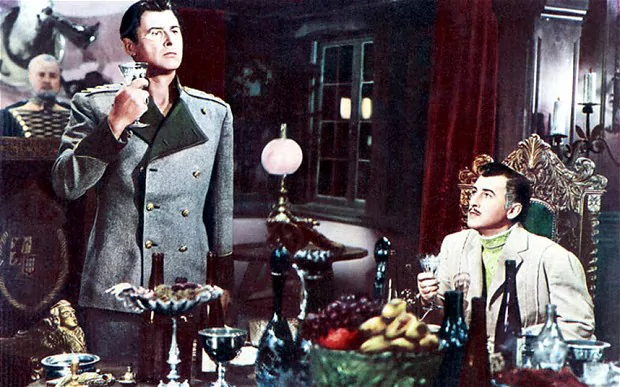
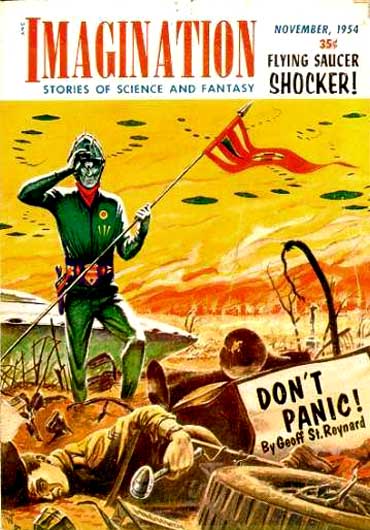
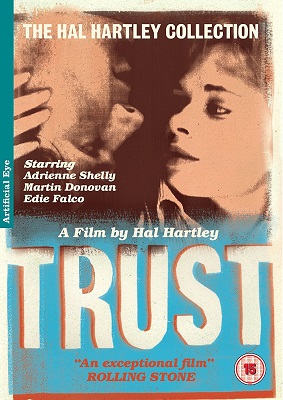
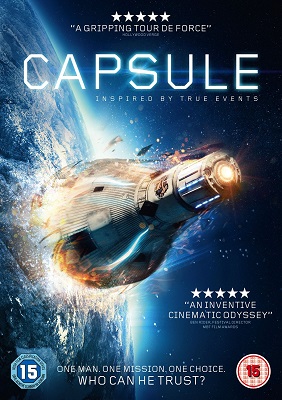
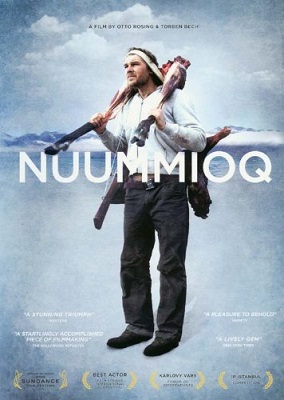
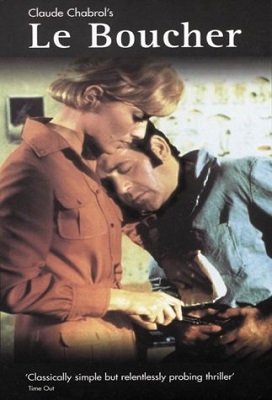
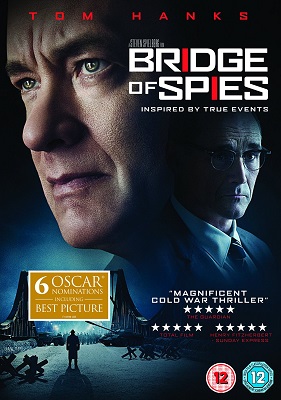
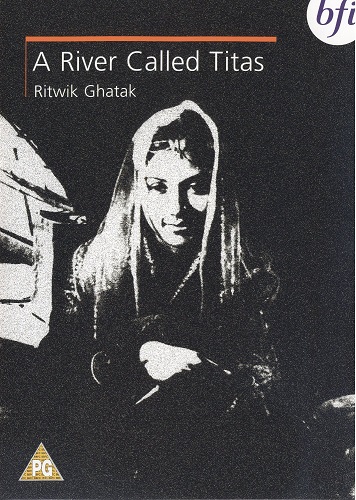

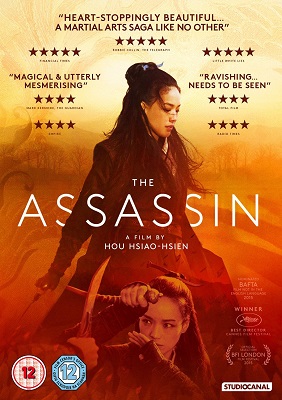
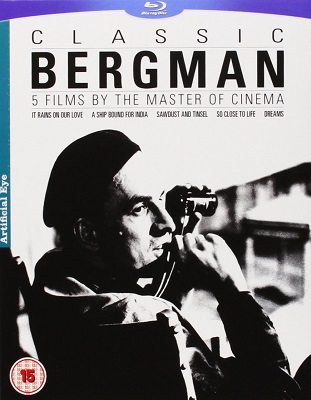
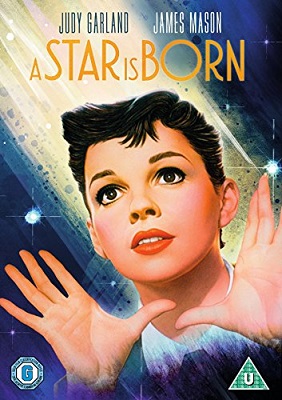
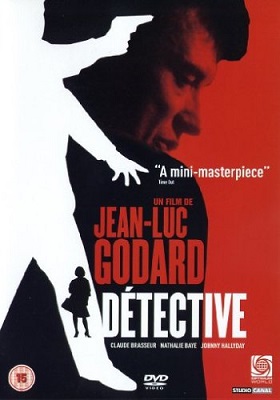
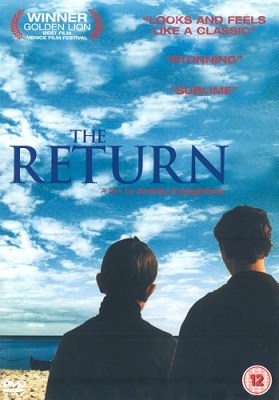
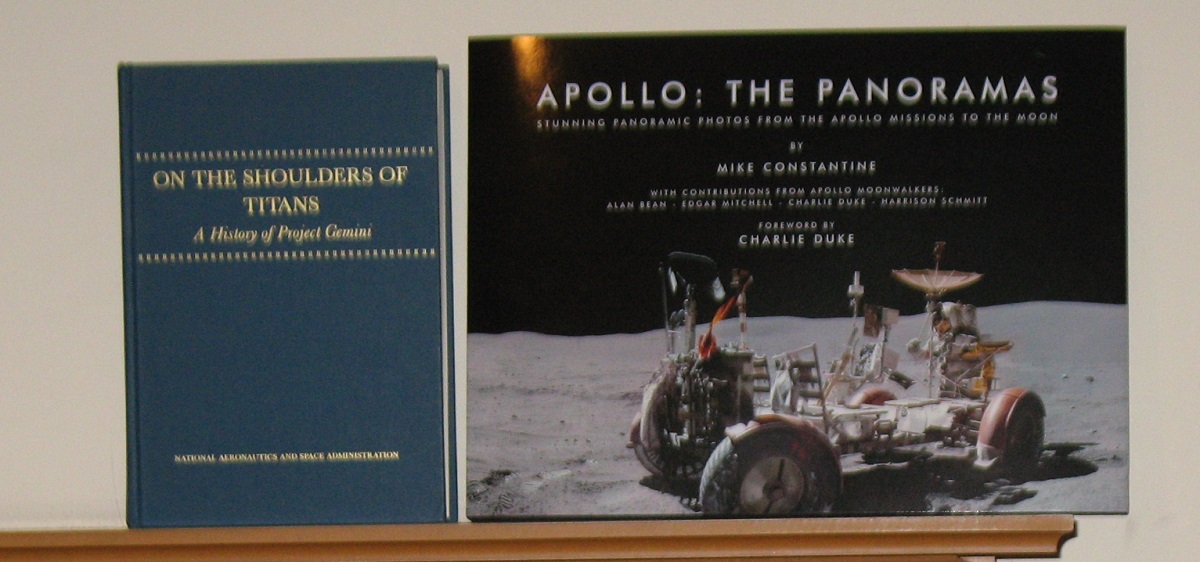
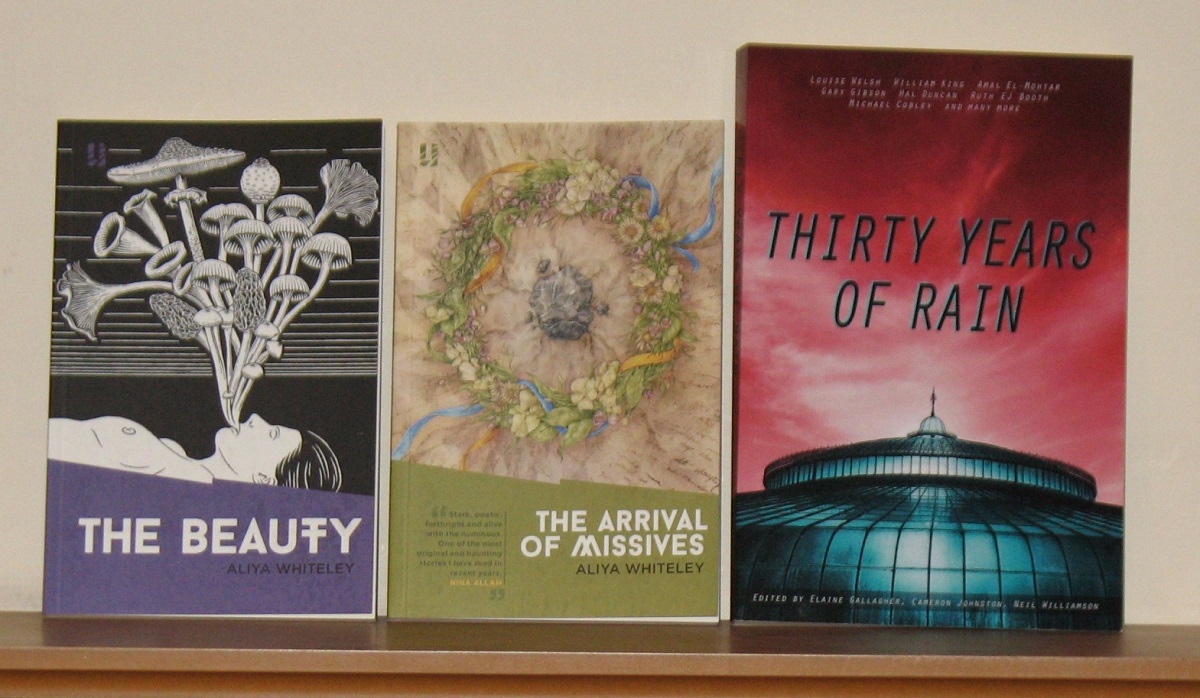

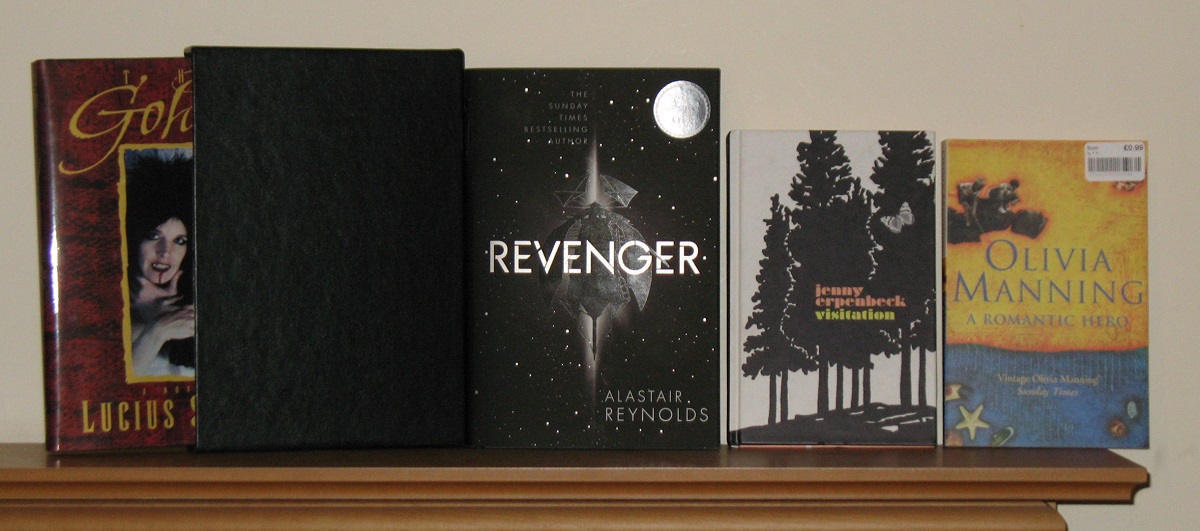
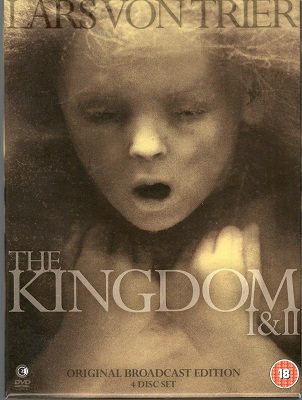
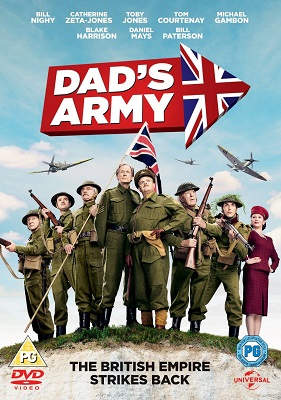
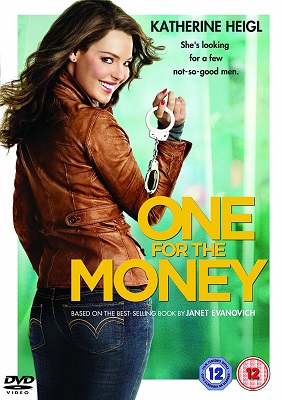
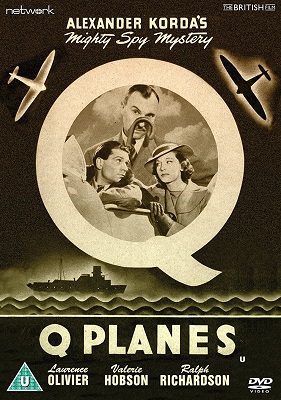
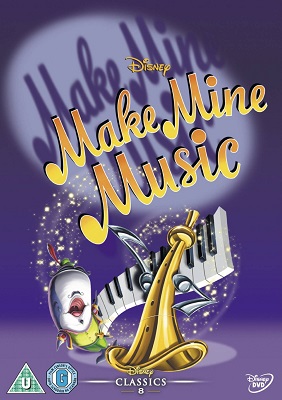
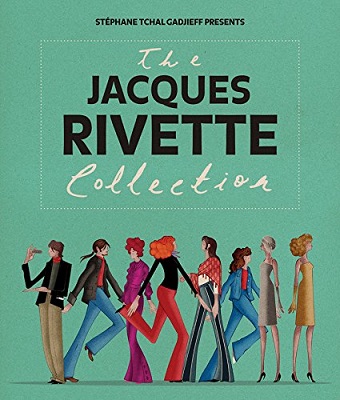
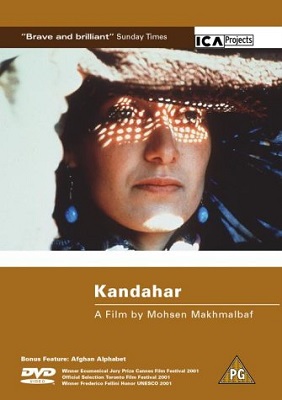
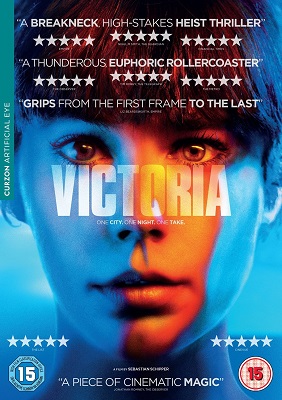
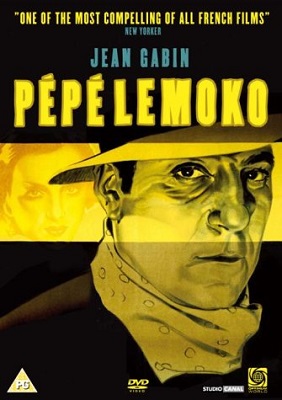
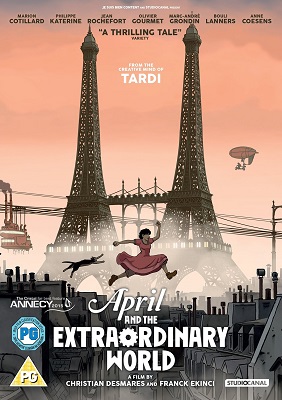
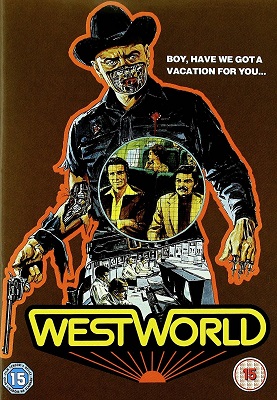
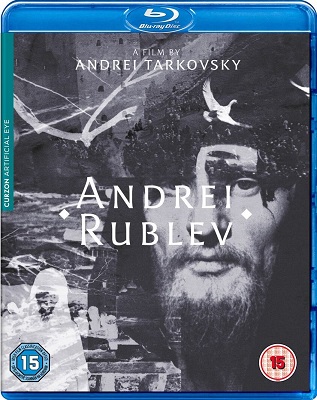
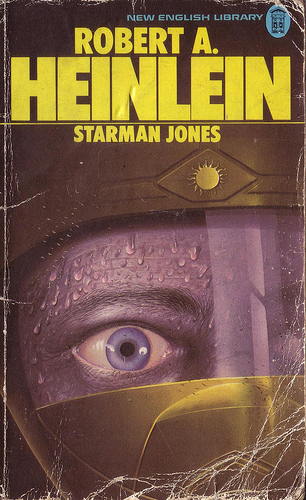

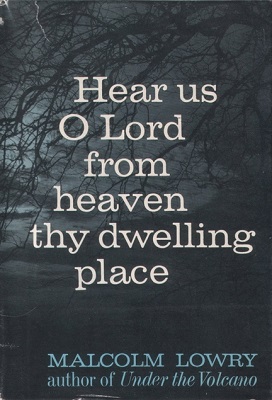
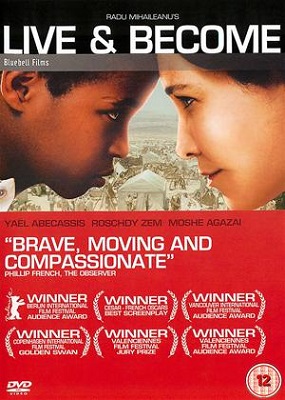
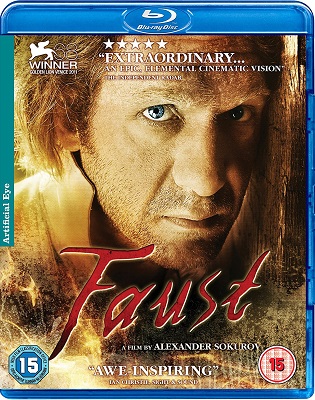
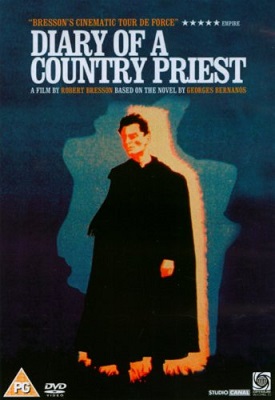
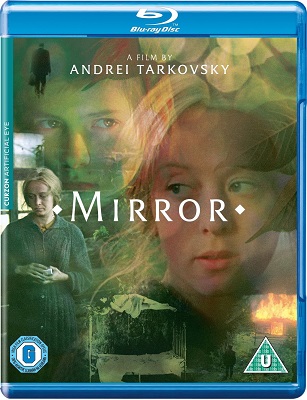
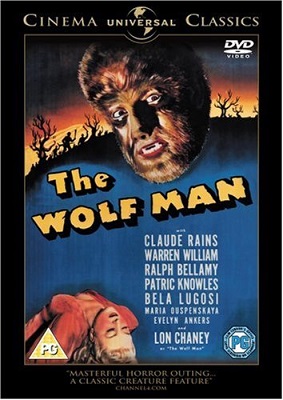
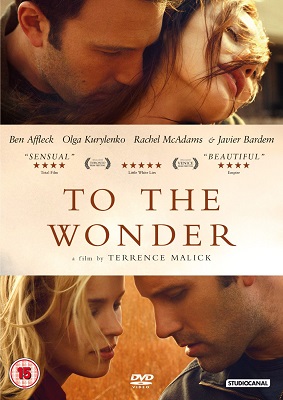
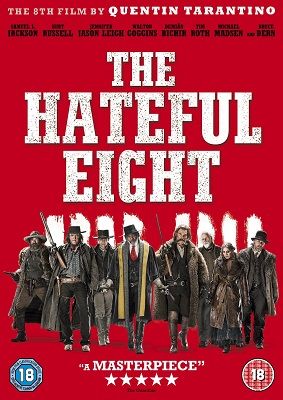
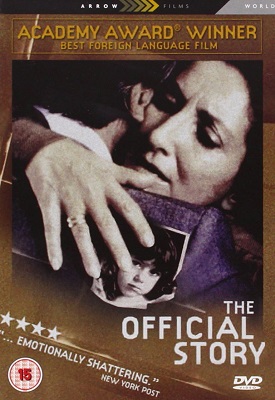
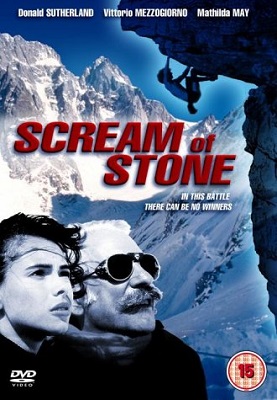
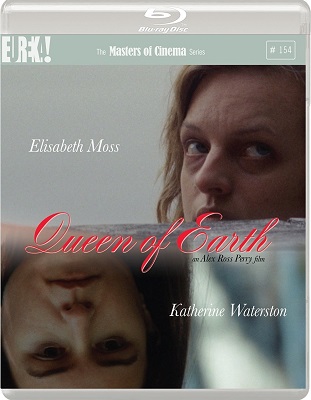
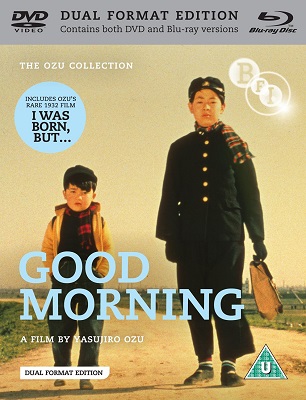
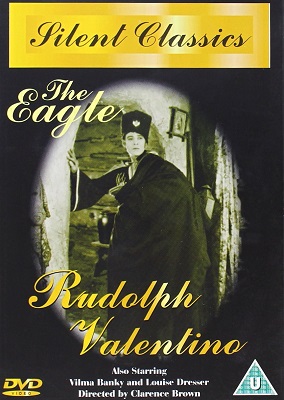
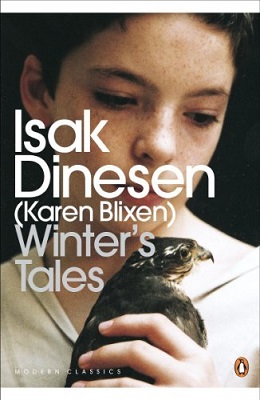
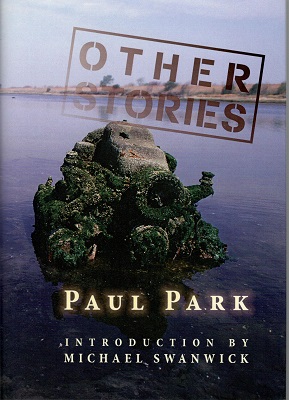
 It Doesn't Have To Be Right...