Gosh, only thirty-three Moving pictures posts and less than a fortnight left in the year. Last year, I hit post #33 in early June and finished the year on post #69. Which I guess means I’ve watched a third as many films in 2019 as I did in 2018. My move to the far north is not entirely responsible, although it did result in something of a life-style change (for the better, I hasten to add). But I’ve also been watching more television series box sets than in previous years, because of, er, reasons. I don’t know; perhaps it was too easy previously to find the sort of movies I wanted to watch – I was, after all, subscribed to two postal DVD services…
The Girl on a Motorcycle, Jack Cardiff (1968, UK). I have seen many films made in the 1960s, that could only have been made during the 1960s – and some of them also starred Alain Delon or Marianne Faithfull – but The Girl on a Motorcycle must be a top contender for the most 1960s film I’ve ever seen. And, astonishingly, it’s a British film. Faithfull plays the nubile daughter of a bookshop owner in rural Alsace. She’s engaged to be married to the local school-teacher, but then Delon, whole lives over the border in Germany, walks into the bookshop. A friendship that is clearly not innocent, although apparently no one can see it, sees Faithfull and Delon doing the rumpy-pumpy, and enjoying the freedom of the roads on Delon’s motorbike. He even teaches her how to ride a motorbike. And then buys her a motorbike as a wedding present. The film opens with Faithfull leaving her husband, and riding her motorbike into Germany to visit Delon. The story is mostly told in flashback, with voiceover by Faithfull. There are several psychedelic dream sequences. And the film ends with Faithfull dying in a pretty gruesome road accident. It’s all very 1960s, and while both Faithfull and Delon both smoulder on screen, there seems to be little chemistry between them. The shots of Faithfull riding are also patently fake, which does not help, although that may not have been such a hurdle back in 1968. But the film fails chiefly, unlike French films of the period, because it feels too calculated. There’s a feeling of rejection of commercial cinematic values evident in most Nouvelle Vague movies, and while The Girl on a Motorcycle seems superficially similar to them, it doesn’t exhibit that attitude. Which, perversely, makes it feel like more of an historical document then they do. Still worth seeing, however.
The Red Monks, Gianni Martucci (1989, Italy). I had thought this was another of the many gialli made available on Amazon Prime by Shameless, but when I went looking for the DVD cover art I discovered it wasn’t. It is, of course, giallo, and if it wasn’t directed by Lucio Fulci, it might as well have been. Which is somewhat ironic, as the makers went out of their way to associate Fulci’s name with it, first by crediting him as “director of special effects”, when he had never set foot on set, and then later marketing it as a movie “by Lucio Fulci”, which was only dropped when Fulci threatened to sue… There may well be a signature style to various giallo directors’ movies, but at present I see giallo itself as more of a signature style. In other words, I could identify a giallo movie, but whether it was directed by Fulci, Miraglia, Bazzoni or Petri I’ve no idea, although I think I might be able to spot a Bava or Argento… The Red Monks seems fairly representative, and somewhat average, for gialli. A young man inherits a mysterious castle, moves in, and has various strange encounters, which seems to involve lots of expository flashbacks, none of which in total actually make much sense. One for fans of giallo only.
Eva, Kike Maíllo (2011, Spain). I should not be surprised when I see an actor performing in a language other than their native tongue, and I say that as someone who speaks several languages (to varying degrees), but my upbringing has been mostly English-language and the Anglophone world is a dismayingly monoglot one… Which is a long-winded way of saying I should not have found Daniel Brühl’s presence in this film at all remarkable. Especially since, as I discovered on looking him up on Wikipedia, he was born in Spain and his mother is Spanish. But I knew him as a German actor, with several English-language roles under his belt, so there was a moment when he began speaking Spanish, with apparently native fluency – not that I would be able to tell the difference – that caused a moment of cognitive dissonance. Which is soft of appropriate to Eva. Brühl plays a robotics researcher in a near-future Spain, who returns home several years after walking out on a project to build a robot with real emotions. He picks up where he left off, but needs a source for the emotional model he plans to create for the robot he abandoned, a robot child. He spots a young girl and recruits her. It turns out she’s the daughter of his girlfriend, who was also a robotics researcher, who married Brühl’s best friend after he left. Except, it then turns out – slight spoiler here – the young girl is in fact a successful prototype of Brühl’s original robot, except she does not know it. Eva was one of those near-future films which treats its setting with a matter-of-factness that does more to ground the story than any amount of flashy effects. And with its top-drawer cast – not just Brühl, but the actors playing Eva herself and Brühl’s robot, Max, are really good. And, it all looked really good too. I wouldn’t be surprised if this film makes my best of year list.
The New York Ripper, Lucio Fulci (1982, Italy). Apparently this is the only film by Fulci which is still censored in the UK. I am horribly squeamish, and refuse to watch any film that has at some point been described as “torture porn”, and don’t really enjoy watching modern horror films, but I didn’t have any problems with The New York Ripper. For a start, it’s a 1982 film, so the effects, while gruesome, are patently special effects. They don’t look real enough to trigger my squeam. They are, however, pretty gross and brutal. It’s the usual giallo serial killer stuff, which means a string of seemingly unrelated, but vicious murders, usually of attractive women while undressing, but the plot which knits together the murders and the investigation often doesn’t make much sense when you think about it. I mean, you look up a giallo film on Wikipedia, and it usually takes a couple of thousand words to summarise their plots. Not because they’re complicated, but because they’re not entirely logical. To be honest, I’m not sure why The New York Ripper continues to be censored. It’s pretty tame by modern horror effects standards. Its sensibilities are early 1980s and Italian, which is likely to offend twenty-first century viewers more. Fans of giallo, and Fulci, are probably the only people likely to enjoy the film, but I still think Shameless are doing a marvellous job releasing these movies on DVD (and Amazon Prime).
The Arrow, Don McBrearty (1996, Canada). The UK had the TSR.2 and Canada had the Arrow. Both were prototype high-performance military aircraft, years ahead of anything produced by the US or USSR. Both projects were cancelled after a change of government, and everything to do with the aircraft was completely destroyed. Neither project managed to stay within budget or meet the original deadlines, but then neither has any military aircraft the UK has bought from the US. In fact, after the cancellation of TSR.2, the UK government was forced to buy the General Dynamics F-111 – but had to cancel the order due to significant cost and development time overruns. The Avro Arrow was a Mach 2 interceptor, designed to meet encroaching Soviet bombers over the Arctic and shoot them down with missiles, before they could drop nuclear bombs on either Canada or the US. The requirements were ambitious, but the eventual design promised to meet them. Unfortunately, that ambition turned the Arrow into a bit of a money-pit, and by the time the project was cancelled Avro had bought so many suppliers, in order to ensure it had parts and materials it needed for the aircraft, that it was one of the largest companies in Canada. There’s little doubt the Arrow was a ground-breaking aircraft but, given the Soviets never sent a fleet of nuclear bombers over the pole to North America, in hindsight it seems it was a solution for a problem that never manifested – or at least could be avoided by other, less expensive, means. (Well, “less expensive” in financial terms, definitely not cheaper in political terms, given the US’s hegemonic drive.) The Arrow, a straight-to-TV docu-drama hits all the main points of the story, although it takes several notable liberties, such as suggesting the Canadians invented the delta-wing and area-rule, or that one Arrow escaped the scrapyard. Dan Aykroyd plays Crawford Gordon, the industrialist brought in to make the Arrow reality, like, well, like every other Aykroyd character, but the real Crawford Gordon was actually a fascinating person. As drama, The Arrow doesn’t really stand out, but it’s of interest to aviation buffs because of its subject. Incidentally, after the cancellation of the Avro Arrow, most of the engineers who had worked on it – many of whom were British – were recruited by US aviation companies and were instrumental in putting the Americans on the Moon.
Gemini Man, Ang Lee (2019, USA). I must admit I’ve never been that much of a Lee fan. He’s a name I know, but I couldn’t tell you what he brought to his movies that any other director might not have brought. He’s certainly had a go at pretty much everything – Jane Austen, wu xia, MCU, literary adaptation… well, lots of literary adaptations, pretty much all North American, from Annie Proulx to Daniel Woodrell… And now we have Gemini Man, a high-concept thriller. Which incidentally bears no resemblance to the TV series of the same name starring Ben Murphy… The twist premise of Lee’s Gemini Man, kept carefully hidden for the first third of the movie but given away on the movie poster (doh), is that star Will Smith is an assassin, the most accuratest that evah lived, but he’s getting old and wants to retire, so his masters decide to “retire” (ho ho) him using their new young super-talented assassin, who happens to be… a clone of Will Smith. So you have like a cat-and-mouse chase movie where the hunter and hunted are equally matched because they’re the same person. Sort of. There’s an impressive amount of dumb in the premise, and the fact the film was actually made gives you little confidence in the collective intelligence of Hollywood. But even stories that are bad on paper can occasionally make good films, and Lee is a relatively good pair of hands… But even he can’t make Gemini Man into more than just a tired CGI-heavy thriller. It doesn’t help that Smith (old) opens the film by shooting a man in a fast-moving train from at least a kilometre away, an astonishing if somewhat implausible feat, but then spends pretty much the rest of the movie missing everything he shoots at. Because plot. I would be surprised if there such a thing as an “Ang Lee fan”, and if there were, their lives must be a rollercoaster ride of elation and disappointment. Gemini Man is definitely the latter. Even for them.
1001 Movies You Must See Before You Die count: 942
100 books that “shaped your world”… Sounds easy enough. Until you start thinking about titles. I could have just banged out a list, and not worry about whether some of the books actually deserved to be on it. But no, I had to put together an annotated list – which meant I had to give a reason why each book made my 100. You can find the earlier parts of my list at: part 1, part 2, part 3 and part 4. But I’ve also included a full list of the 100 Books That Shaped My World at the end of this post. Because this is the last post on the topic, and it covers…
The 2010s
I spent all but the last ten months of the decade living in South Yorkshire, buying far too many books online and from local charity shops. It all got a bit out of hand. When I put everything in storage and moved, I filled 85 boxes, mostly with books. I also sold about 15 boxes of books, and gave away close on 100 paperbacks. The good thing about this was it actually financed my move north. Even so, I was still a little surprised at how much I’d amassed.
I did, however, read plenty of books this decade. Just shy of 1500, in fact. My reading tastes also changed. As the 1990s and 2000s had progressed, I’d found myself reading more and more “literary” fiction, although science fiction still formed the bulk of my reading. During the 2010s, I started reading more British postwar fiction, and treasuring the prose of a number of such writers.
But I wasn’t just drifting toward fiction that wasn’t genre, I was also starting to be put off by current genre writing. Twenty-first century science fiction, especially US sf, began to privilege sentiment over rigour. And then there was the somewhat florid prose, and the over-use of metaphors in an attempt to add invention to over-familiar sf tropes. Changes in the publishing industry also meant editors chased debuts – because at least debuts weren’t “categorically killers”… yet – and the decline of marketing budgets pushed most of the promotion online and onto the authors themselves, and reviewers, bloggers, fans and readers. Which made it all tribal as fuck. The growing dominance of fantasy also limited the science fiction considered commercially viable, and in recent years several popular works have melded the two genres.
Of course, writers whose works I liked and admired were still published, and I discovered new writers whose books I liked and admired, and, even though I’ve been reading science fiction for close on 45 years, there’s still plenty of old science fiction for me to explore (even if its appeal is often somewhat limited).
This is, of course, a purely personal perspective. The science fiction genre has changed – this is hardly surprising – not only artistically but also in the way the publishing industry treats it. Some of those changes have worked for me, some haven’t. But it’s probably telling that only three category sf books from the 2010s appear in the list below, and one of those is in a negative capacity.
Lady Chatterley’s Lover, DH Lawrence (1928). My father had been a big fan of Lawrence’s fiction for much of his life, even going so far as to drag my mother to Taos to visit Lawrence’s shrine during a visit to the US. I think perhaps because of my father’s reverence for Lawrence, and what I imagined 1920s prose to be like, I sort of avoided reading him. But for some reason I decided to give Lady Chatterley’s Lover a go, and immediately fell in love with the book and Lawrence’s prose. So much so, in fact, that I tracked down Lawrence’s other books. But even that wasn’t enough, and I spent a long time hunting down copies published in the 1970s by Penguin, with white covers and Lawrence’s name in orange, as shown to the left. I now have twenty-eight of them. I’m still working my way through Lawrence’s oeuvre.
Seven Miles Down, Jacques Piccard & Robert S Dietz (1961). I can’t remember what prompted it – possibly watching the terrible BBC TV series The Deep – but deep sea submersibles, particularly historical bathyscaphes, became another “enthusiasm”. It took me a while, and it wasn’t cheap, but I tracked down a copy of Seven Miles Down, the only book written about the record-breaking descent to Challenger Deep, some 11,000 metres deep, by the Trieste in January 1960. Two people have since equalled that dive – James Cameron in 2012 and Victor Vescovo in 2019. The enthusiasm fed into my fiction, and the Trieste appeared in a couple of short stories and the third novella of the Apollo Quartet. I also collected several books on submersible and undersea habitats.
Synthajoy, DG Compton (1968). I consider Compton one of the best prose stylists UK science fiction has produced. He was not one of UK science fiction’s best plotters (which, as I suggested in a recent Reading diary post, may be why he switched from writing crime to science fiction). But it’s not just Compton’s prose I find so impressive, he was also superb at writing characters and he liked to experiment with narrative structure. All of which are on display in abundance in Synthajoy. The book is told entirely from the POV of its protagonist, but her story drifts back and forth seamlessly in time, building up the story from both present and past. Compton’s best books all exhibit a very 1970s aesthetic, which I admit I also find appealing. Compton’s books led me to the works of other British sf authors of the 1970s, some of whom I had read in previous decades, but now I found myself appreciating them, especially those whose novels were explicitly British.
China Mountain Zhang, Maureen F McHugh (1992). This book makes my list not because it’s a good book – which it is – or because I’m a fan of the writer – I haven’t actually read all that much by her – no, it makes my list because it was the first book reviewed on SF Mistressworks. Back in 2010, there’d been a conversation online about the fact so few British women genre writers were in contract with publishers in the UK. So I put together a list of 100 science fiction novels by women writers that had been published prior to 2000, a sort of response to the SF Masterwork series published by Gollancz. And after the list, it seemed like a good idea to build a website which reviewed science fiction books by women writers published before 2000. So I did. And it certainly changed my reading. Not only did I seek out sf novels by women to review for SF Mistressworks, but I also made an effort to balance my reading between male and female writers, and not just in genre fiction.
Correspondence, Sue Thomas (1991). When I was at university in Coventry, I remember visiting a bookshop/cafe called The Wedge. They had a carousel filled with books published by The Women’s Press, most of which, I seem to recall, were the sf titles in their distinctive grey design. I didn’t buy any, I wasn’t into that sort of science fiction at that time. But after kicking off the SF Mistressworks website, it occurred to me The Women’s Press sf titles would be good books to review. I had a read a few in the years since graduating from university, but now I decided to collect them. And I built up quite a collection: 45 out of 52 titles (including the two YA titles), both the grey cover design (A and B format) and the ones with the black-and-white striped spines. Correspondence was the first title published by The Women’s Press I read specifically because it had been published by them. I went on to read many more – again, because they had been published in The Women’s Press sf series.
Ancillary Justice, Ann Leckie (2013) God’s War, Kameron Hurley (2011). I’m not sure it’s fair to say these two books “shaped” my world, but I bought and read them because of the social media buzz attending them. I thought them both good, but one better than the other, and I did read both trilogies through to the end. Of course, there have always been books published that generate excitement within fandom, but the ones I remember from the early 1990s were by authors with proven track records. Both Ancillary Justice and God’s War were debuts, and the buzz promised they were something different. They’re both space operas, of course, but very different in their approach to the subgenre. And, it had to be said, to me they felt like they were indeed doing something new with space opera, something interesting. There was nothing unique about that – Colin Greenland had done the same more than twenty years ago with Take Back Plenty, but his re-imagining of space opera seems to have ended with him. The success of Leckie’s and Hurley’s books – especially Leckie’s, which seemed to win every English-language sf award on the planet – promised real change in the subgenre. It could be argued Becky Chambers’s The Long Way to a Small Angry Planet also fit the same pattern, but its online buzz felt manufactured, and I hated the book and thought it badly-written, derivative and mostly cheap sentimentality. But the Hurley and Leckie showed the power of social media in genre fandom, and that still influences my reading to some (albeit diminishing) degree.
Evening’s Empire, David Herter (2002). Herter is an author I picked up on after reading his debut, Ceres Storm, published in 2000. He makes this list for two reasons. First, even though I bought Evening’s Empire when it was first published, it sat on my bookshelves for nine years before I eventually got around to reading it – and then I picked it as the best book I read that year. It’s not the book I’ve owned the longest without actually reading, but it’s a good example of one. The second reason is that Herter was quite open about his writing plans. He wrote an East European fantasy set in Czechoslovakia post-WW1, and a dark fantasy based on Something Wicked This Way Comes… but, sadly, the ambitious space operas he blogged about have yet to appear. It is, perhaps, one of the downsides of social media.
Spomeniks, Jan Kempenaers (2010). As I remember it, I stumbled across a website with photographs of Yugoslavian monuments to those who died in World War 2. Further research led me to an ad for Kempenaers’s exhibition of photographs of many of those monuments, not all of which had survived intact. The exhibition published a book of the photographs, which I bought. And that sort of sparked off another “enthusiasm”, this time for architecture, specifically East European and Soviet Modernism, and Oscar Niemeyer. To be honest, it was all pretty much eye candy to me. While the engineering of exploring space and underwater I find fascinating in a technical way, buildings and architecture not so much. But I do enjoy looking at pictures of the sort of buildings that seem to embody the enthusiasm for, a celebration of, the future that at some point around the middle of last century seemed humanity’s reward for its discoveries. Er, despite the Cold War and the threat of Mutually Assured Destruction.
The Member of the Wedding, Carson McCullers (1946). Among the things my father left behind when he died was a collection of about one hundred Penguin paperbacks he’d bought in the late 1960s and early 1970s, most of them directly from the publisher (there was a receipt in one). I’d read one or two of the books over the years, but few of the authors in the collection had appealed to me. But I took my pick of them, intending to give the authors I’d not read before a go. The Member of the Wedding was the first book I read of the ones I took. It wasn’t… to my taste. But it did not alter my plan to work my way through the collection. And that proved an excellent decision – as can be seen below. Twice.
Leviathan Wakes, James A Corey (2011). Like the Leckie and Hurley mentioned above, this book received a lot of online attention. And even more so when it was turned into a television series. Many people recommended it to me because, they felt, it was the sort of science fiction I liked: near-future hard sf. I fucking hated it. I thought the book was terrible, with deeply embedded, and unquestioned, right-wing sensibilities. The attempt at diversity struck me as little more than a thin glaze. And the plot hinged on an act so heinous it should have been unthinkable to any civilisation that claimed to be, well, civilised. It was also American as fuck. I tried watching the TV adaptation, but gave up after one too many mentions of torture. Leviathan Wakes made me realise I was no longer willing to put up with the right-wing bullshit endemic in space opera which science fiction fandom, and the general sf-reading public, seems happy to accept.
Hear Us O Lord from Heaven Thy Dwelling Place, Malcolm Lowry (1961). Among my father’s Penguin paperbacks were three by Malcolm Lowry – this collection, Under the Volcano and his debut, Ultramarine. I was aware of Under the Volcano, although I’d never read it; but I knew little about Lowry, his life or his other works. Hear Us O Lord from Heaven Thy Dwelling Place was… interesting. Until I got to the novella, ‘Through the Panama’. It blew me away. I read more Lowry, learnt of the semi-autobiographical nature of his fiction. I loved that. I loved his discursive prose style, his use of meta-narratives. He became a favourite author, and I began to collect his books – in first edition. I have now read all of his fiction, except his last unfinished novel, La Mordida.
Girl Reading, Katie Ward (2011). One of the things I dislike about the online culture surrounding books and fandom is that everything seems to be given five stars in reviews. It’s bad enough that many online reviews are indistinguishable from marketing hyperbole, but the tendency to give everything top marks has meant retailers’ ranking algorithms now count only the number of reviews, and don’t weight them by the number of stars given. Potentially, giving a book five stars is only setting up a future reader for disappointment. Which does not mean every now and again a book comes along that rightly deserves five stars. Girl Reading was one of those books. And, astonishingly, it was a debut. Sadly, Ward has yet to follow up on Girl Reading. I’ve been eagerly awaiting a second novel from her for eight years.
The Wall Around Eden, Joan Slonczewski (1989). I started collecting copies of the Women’s Press sf titles partly because some of the books interested me, but also partly because they were ideal material for the SF Mistressworks website. Slonczewski was not an author I had read before, although her name was known to me, chiefly from her novel A Door into Ocean (also in the Women’s Press sf series). I had not expected much of The Wall Around Eden, but I was delighted to find the novel was put together like a precision-built watch. Many of the books I read, I read critically; but this was the first time I found the actual craft present in a novel to be the most impressive thing about it.
Women of Wonder, Pamela Sargent, ed. (1974). Another read prompted by SF Mistressworks. Once I looked into it, I discovered there had been several female-only science fiction anthologies published over the years. Women of Wonder was not the first, but it was a prominent pioneer. And yet there are people who insist that women writing science fiction is a twenty-first century phenomenon. It’s a bullshit position. Women have been writing science fiction – very successfully – since it was invented. And there were many women who wrote novels and stories in early centuries which fed into what became science fiction. But, somehow, women sf authors were written out of the genre’s history, probably by the cyberpunks of the early 1980s. That rewriting of genre history was one of the inspirations behind SF Mistressworks. I went on to read – and review – several female-only sf anthologies, and found a number of authors whose longer works I then sought out.
HHhH, Laurent Binet (2012). This was a book that generated some small buzz among my circle of acquaintances on social media, despite not being genre – and most of my circle are genre writers and fans. It is, in fact, WWII history. And yet it’s also about the author and about the process of writing the history book. Its ostensible subject is Reinhard Heydrich, a Nazi bigwig and war criminal, one of the men responsible for the Holocaust, and, during the period covered by HHhH, Reich-Protector of Bohemia and Moravia. But it’s not Heydrich, or Operation Anthropoid, the attempt to assassinate him (which succeeded more by accident than design), that puts HHhH on this list. The Nazis have never been an “enthusiasm” of mine. But I have always been a fan of experimental narratives – not so much experimental prose, like stream-of-consciousness, but narrative structures other than straightforward linear. HHhH helped crystallise my interest in such narratives – and helped explain why some books I had read in previous years had appealed to me so much. It’s something I’ve continued to explore, both in my reading and my own writing.
The End of Days, Jenny Erpenbeck (2012). I think this was also a recommendation. Or perhaps I saw a review of it in a newspaper. There was another book with the same premise – a person who lives through several alternate variations of their life – which proved much more popular, particularly in genre circles, and that was Kate Atkinson’s Life After Life. But I fell in love with Erpenbeck’s dry reportage-like prose. If I had become disillusioned with genre’s turn to over-written and sentimental prose, then the clarity and emotional distance of Erpenbeck’s novel – albeit translated – was exactly the sort of fiction I wanted to read. And I went looking for it.
Party Going, Henry Green (1939). And speaking of clear prose, Henry Green is surely a master of it. I found this omnibus of three of his novels in a charity shop, but it was around six years before I got around to reading one of the novels. And then I was sorry I’d not read it much sooner. Green’s prose is among the best I’ve read. And, astonishingly, he makes no concessions towards his readers. Everything – the plot, the characterisation – is conveyed through dialogue. Coming from a science fiction background, a genre which feels a need to explain everything, a genre which has developed a number of techniques for lecturing the reader, not just in invented worlds and “facts”, but also in information the reader could easily find out for themselves, this was something to definitely striking. It might seem that mainstream fiction, or even crime fiction, or thrillers, do not use exposition, but of course they do, it just occupies a different place in the narrative. Green’s novels showed me that stripping back exposition to the bare minimum did not have to handicap a narrative.
Nocilla Dream, Agustín Fernández Mallo (2006). Nocilla Dream came to my attention via a review on a friend’s blog, and it sounded intriguing enough for me to give it a read. Like the Binet above, Nocilla Dream uses a non-standard narrative structure – in this case, short unrelated sections, only some of which are narrative. It is also pretty much the antithesis of Green’s fiction, in that some of the sections are pure exposition, pure dry reportage, not always related to the fictional narratives. There’s more, of course, to Mallo’s book, which is the first of a trilogy, and which spawned a literary movement, the Nocilla Generation, in Spain. I plan to explore the other Nocilla Generation writers, and have so far read only a novel by Álvaro Colomer, titled, coincidentally, Uppsala Woods, but few of the books have been translated into English, and Spanish is not a language I speak or read. Perhaps I should try learning it.
The Sound and the Fury, William Faulkner (1931). This was another book from my father’s Penguin collection. I knew of Faulkner, but knew nothing about the man or his fiction. An early twentieth-century US author – and while I had read one or two of them many years before, I couldn’t say any had really appealed to me. But The Sound and the Fury did something those other US novels had not done: it used an experimental narrative structure. It told its story through three limited POVs, none of which were actually central to the plot. I was hugely impressed. Books with complex narrative structures interest me, and it’s something I’m keen to explore in my reading. Faulkner’s prose is also wonderfully sharp. I have already read more Faulkner.
Here is the full list, for those of you like lists in, er, list form:
1 The Golden Bird, Jan Pieńkowski & Edith Brill (1970, UK) 2 The Weirdstone of Brisingamen, Alan Garner (1960, UK) 3 Destination Moon, Hergé (1950, Belgium) 4 Edgar Rice Burrough’s Tarzan of the Apes, Burne Hogarth (1972, USA) 5 Dan Dare: The Red Moon Mystery, Frank Hampson (1951, UK) 6 Doctor Who and the Zarbi, Bill Strutton (1965, UK) 7 Starman Jones, Robert A Heinlein (1953, USA) 8 Gray Lensman, EE Doc Smith (1951, USA) 9 The Trigan Empire, Don Lawrence & Mike Butterworth (1965, UK) 10 Jack of Eagles, James Blish (1952, USA) 10 Tactics of Mistake, Gordon R Dickson (1971, USA) 10 Time and Again, Clifford D Simak (1951, USA) 13 Final Stage, Edward L Ferman & Barry N Malzberg, eds. (1974, USA) 14 Dune, Frank Herbert (1966, USA) 15 Traveller: Characters & Combat, Marc Miller (1977, USA) 16 The Undercover Aliens, AE Van Vogt (1950, USA) 16 The Winds of Gath, EC Tubb (1967, UK) 18 The Book of Alien, Paul Scanlon & Michael Gross (1979, UK) 19 The Dune Encyclopedia, Willis E McNelly, ed. (1984, USA) 20 The Future Makers, Peter Haining, ed. (1968, UK) 21 Dhalgren, Samuel R Delany (1975, USA) 22 The Right Stuff, Tom Wolff (1979, USA) 23 The Far Pavilions, MM Kaye (1978, UK) 24 Iceberg, Clive Cussler (1975, USA) 25 The Complete Book of Science Fiction and Fantasy Lists, Malcolm Edwards & Maxim Jakubowski (1983, UK) 26 Radix, AA Attanasio (1981, USA) 27 The Barbie Murders, John Varley (1980, USA) 28 Serpent’s Reach, CJ Cherryh (1980, USA) 29 The Science Fiction Sourcebook, David Wingrove (1984, UK) 30 The War for Eternity, Christopher Rowley (1983, USA) 30 Under a Calculating Star, John Morressy (1975, USA) 30 Where Time Winds Blow, Robert Holdstock (1981, UK) 33 Knight Moves, Walter Jon Williams (1985, USA) 34 Kairos, Gwyneth Jones (1988, UK) 35 The Space Mavericks, Michael Kring (1980, USA) 36 The Female Man, Joanna Russ (1975, USA) 36 The Fith Head of Cerberus, Gene Wolfe (1972, USA) 36 The Five Gold Bands, Jack Vance (1950, USA) 36 The Left Hand of Darkness, Ursula K Le Guin (1969, USA) 40 The Innocent, Ian McEwan (1990, UK) 41 Use of Weapons, Iain M Banks (1990, UK) 42 Take Back Plenty, Colin Greenland (1990, UK) 43 Raft, Stephen Baxter (1991, UK) 44 Semiotext(e) SF, Rudy Rucker, Peter L Wilson & Robert A Wilson, eds. (1989, USA) 44 The Brains of Rats, Michael Blumlein (1989, USA) 46 Metrophage, Richard Kadrey (1988, USA) 47 Dreamside, Graham Joyce (1991, UK) 48 Iris, Wiliam Barton & Michael Capobianco (1990, USA) 49 A Vision of Battlements, Anthony Burgess (1965, UK) 49 How Far Can You Go?, David Lodge (1980, UK) 51 Angel at Apogee, SN Lewitt (1987, USA) 52 C is for Corpse, Sue Grafton (1986, USA) 52 Guardian Angel, Sara Paretsky (1992, USA) 54 The Alexandria Quartet, Lawrence Durrell (1957, UK) 55 An Exchange of Hostages, Susan R Matthews (1997, USA) 55 Bending the Landscape: Fantasy, Nicola Griffith & Stephen Pagel, eds. (1997, USA) 57 Coelestis, Paul Park (1993, USA) 58 Holy Fire, Bruce Sterling (1996, USA) 59 Cotillion, Georgette Heyer (1953, UK) 60 The Master Mariner, Nicholas Monsarrat (1978, UK) 61 The Second Angel, Philip Kerr (1998, UK) 62 The Children of Anthi, Jay D Blakeney (1985, USA) 63 The Forever War, Joe Haldeman (1974, USA) 64 The Mechanics of Wonder, Gary Westfahl (1998, USA) 65 The Eye of the World, Robert Jordan (1990, USA) 66 Watchmen, Alan Moore & Dave Gibbons (1987, UK) 67 The Incal, Alejandro Jodorowski & Moebius (1980, France) 67 Valérian and Laureline 4: Wlecome to Alflolol, Pierre Christin & Jean-Claude Mézières (1972, France) 69 The Levant Trilogy, Olivia Manning (1977 – 1980, UK) 70 Penguin Anthology of Classical Arabic Literature, Robert Irwin (1999, UK) 71 Ascent, Jed Mercurio (2007, UK) 72 Moondust, Andrew Smith (2005, UK) 73 Alanya to Alanya, L Timmel Duchamp (2005, USA) 74 Poems, John Jarmain (1945, UK) 75 Postwar Military 4: Avro Vulcan, Andrew Brookes (1985, UK) 76 The Raj Quartet, Paul Scott (1966 – 1975, UK) 77 The Stainless Steel Rat, Harry Harrison (1961, USA) 78 First Man: The Life of Neil A Armstrong, James R Hansen (2005, USA) 78 Carrying the Fire, Michael Collins (1974, USA) 78 Return to Earth, Buzz Aldrin (1973, USA) 81 Lady Chatterley’s Lover, DH Lawrence (1928, UK) 82 Seven Miles Down, Jacques Piccard & Robert S Dietz (1961, USA) 83 Synthajoy, DG Compton (1968, UK) 84 China Mountain Zhang, Maureen F McHugh (1992, USA) 85 Correspondence, Sue Thomas (1991, UK) 86 Ancillary Justice, Ann Leckie (2013, USA) 86 God’s War, Kameron Hurley (2011, USA) 88 Evening’s Empire, David Herter (2002, USA) 89 Spomeniks, Jan Kempenaers (2010, Belgium) 90 The Member of the Wedding, Carson McCullers (1946, USA) 91 Leviathan Wakes, James A Corey (2011, USA) 92 Hear Us O Lord from Heaven Thy Dwelling Place, Malcolm Lowry (1961, Canada) 93 Girl Reading, Katie Ward (2011, UK) 94 The Wall Around Eden, Joan Slonczewski (1989, USA) 95 Women of Wonder, Pamela Sargent, ed. (1974, USA) 96 HHhH, Laurent Binet (2012, France) 97 The End of Days, Jenny Erpenbeck (2012, Germany) 98 Nocilla Dream, Agustín Fernández Mallo (2006, Spain) 99 Party Going, Henry Green (1939, UK) 100 The Sound and the Fury, William Faulkner (1931, USA)
The 1990s had seen me expand my reading from purely genre fiction and read more widely within science fiction and fantasy. The former was chiefly from necessity – the only library I had access to possessed a limited genre collection. The latter was due to the members of the APA I was in discussing books that sounded like they were worth reading. The APA packed in shortly after the turn of the millennium, killed by the internet.
And the internet, ironically, made it much easier to purchase the books I wanted to read. No more poring through Andromeda’s monthly mailing catalogue to find interesting new books to buy. Now there was a certain humungous online retailer of books, and eBay for the out-of-print books. (This was not necessarily a good thing.) During the 1990s, I had bought books I wanted to own and read, but after my return to the UK in 2002 I started collecting them. Buying first edition copies, preferably signed, by my favourite authors. I returned to the UK with 45 boxes filled with books, of which around 80% were paperbacks. Over the next ten years, I would end up with five bookcases, double-stacked, of hardback books.
Which brings us to…
The 2000s
The Forever War, Joe Haldeman (1974). I’m not a fan of this book, or of Haldeman’s work in general, but this novel makes my list because it was the first book published in the SF Masterworks series. And the first book that really turned me into a collector of books. Originally, the SF Masterworks were numbered – although they managed to screw up the numbering… twice – and ran for ten years from 1999 to 2009, ending after 73 books. Naturally, I wanted them all. The series was relaunched in 2010 in a new yellow cover design, this time unnumbered, and with a much expanded list. I have all of the numbered versions – there was a rival Fantasy Masterwork series of 50 books, which I also collected – but have only dipped into the unnumbered series, some of which appeared in the original series anyway.
The Mechanics of Wonder, Gary Westfahl (1998). While I had read plenty of science fiction, I had read almost nothing about it. The previously mentioned APA often had discussions about the nature of the genre – there are as many theories of what it is as there are sf critics – which were formative in developing my own theories of science fiction, and where I often tried those theories out on my fellow APA members. The Mechanics of Wonder had a mixed response on publication, but I remember it being one of the first popular critical works on science fiction (rather than academic, that is; or collections of book reviews) I bought and read. I agree with Westfahl that the genre of science fiction as we now understand it was created in 1926 with the publication of the first issue of Amazing Stories… but I’ve pretty much forgotten what else Westfahl had to say in the book.
The Eye of the World, Robert Jordan (1990). Back in 2001, I bought the first six or so books of Jordan’s Wheel of Time series from a new bookshop in Abu Dhabi. I wanted to understand why they were so popular. I never did find out. It was the first instance I remember of reading a book (and its sequels) specifically to understand how they worked. They’re badly-written, bloated, and haphazardly plotted. The world-building is a hodge-podge of elements borrowed from other works, although it does seem to develop a character all its own as the series progresses. But it’s a mystery to me how the Wheel of Time ever became a best-seller. For some reason I have yet to work out, this year I decided to reread them all (to be fair, I’d never managed previously to make it to the final few volumes). Amusingly, people who had recommended the books twenty years ago now told me the books were rubbish. I knew that already.
Watchmen, Alan Moore & Dave Gibbons (1987). British comics tradition, unlike that of the US or France, has always been anthology-based – ie, each issue contains multiple strips, which may be standalone or part of a story spread across multiple issues. As a kid, I’d moved on from Beano and Dandy to war comics such as Warlord and Victory, which were popular then. Then 2000AD appeared, and that was the comic for me (plus Starlord and Tornado, which 2000AD later subsumed). I was never a big fan of US superhero comics, but growing up in the Middle East they were all that was available. The only superhero titles I remember reading from that time were The X-Men and Guardians of the Galaxy, but I undoubtedly read others. I forget where I heard about Watchmen, and, to be honest, until I came to write this post I had thought I’d read it much early than after the millennium… but apparently not. It wasn’t just the main narrative that impressed me, but also that Moore had buttressed it with other narratives: some comic strips, some prose. Watchmen made me look afresh at superhero comics, particularly those published as “graphic novels”. My renewed appreciation of superhero comics did not last long – I gave up on them a second time a few years later. Oh, and for the record, the film adaptation of Watchmen has its flaws, but its ending is superior to the comic’s.
The Incal, Alejandro Jodorowsky & Moebius (1980). Valérian and Laureline 4: Welcome to Alflolol, Pierre Christin & Jean-Claude Mézières (1972). One of the reasons I turned my back on superhero comics was the new easy availability of French/Belgian bandes dessinées – initially English-language translations published only in the US, but also original French copies, sold on eBay; but then from publisher Cinebooks, who introduced a number of popular and long-running bandes dessinées series to the UK market. Some of these were not new to me. During the 1980s, when flying out to the Middle East for the holidays we would transit through Schiphol Airport, and there I would often buy copies of Heavy Metal, 1984 and Epic magazines. In Abu Dhabi in the 1990s, I stumbled across a few volumes of Valérian and Laureline, as well as individual volumes of the Adventures of Blake and Mortimer, and Yoko Tsuno, all published as one-offs some time in the 1980s. But I didn’t start reading Valérian and Laureline (and Blake and Mortimer) in earnest until Cinebook began publishing them in the mid-2000s. Moebius, of course, I knew from Heavy Metal. Jodorowsky I discovered through his films, probably after hearing of his attempt at adapting Dune, and then learning he had written a highly-regard science fiction bande dessinée. Unlike superhero comics, I still read bandes dessinées, and there are a number of series I follow.
The Levant Trilogy, Olivia Manning (1977 – 1980). I think I set out to read this book, and its prequel, The Balkan Trilogy, specifically because Manning was in Egypt during World War 2 at the same time as Lawrence Durrell, and both were part of a community of British writers in North Africa. Which is partly where Durrell’s The Alexandria Quartet came from. But I loved both of Manning’s trilogies, and hunted round for more of her fiction. Her books also kindled an interest in British postwar fiction by women writers, and I sought out female authors who had been active between the 1930s and 1960s. It proved to be a larger project than I’d anticipated, and many of the books were long out of print, but I did find some interesting works by the likes of Storm Jameson, Pamela Frankau, Elizabeth Taylor (not the actress) and Susan Ertz, Taylor especially becoming a favourite writer.
The Penguin Anthology of Classical Arabic Literature, Robert Irwin (1999). I remember reading this in a hotel in Altrincham. I was in the city for a two-day training course. Despite growing up in the Middle East, I knew very little about early Arab history and culture – although I did know the history of the countries in which I’d lived, Qatar, Oman and the UAE, and to some extent, Saudi Arabia. But I knew nothing about the Abbasids and the Ummayads and so on. The Penguin Anthology of Classical Arabic Literature, originally published as Night and Horses and the Desert, proved fascinating stuff, and triggered an interest in mediaeval Arabic literature.
Ascent, Jed Mercurio (2007). My father had seen a review of Ascent in a newspaper and mentioned the book in passing. I found a review in another paper and, yes, it seemed very much a book I wanted to read. But then I promptly forgot about it… until a visit to Waterstone’s some months later where I saw piles of Ascent on one of the tables just inside the doors. I bought it, I read it, and I fell in love with the detail-oriented prose. I wanted to write like that. And Ascent did indeed become a touchstone work when I was writing the Apollo Quartet. It’s hard to overstate how much it inspired my writing of those books. I’ve kept an eye open for works by Mercurio ever since, although these days he’s better known for his TV work than his novels. I can certainly recommend An American Adulterer, but Bodies was a bit too gruesome for me (and I’m unlikely to ever watch the TV series). I’m eagerly awaiting more fiction from Mercurio, but meanwhile we have his Line of Duty TV series, which has proven to be one of the best thriller series on British television in recent years.
Moondust, Andrew Smith (2005). I don’t actually remember the Moon landings – I was only six when Apollo 17 landed in the Taurus-Littrow valley. I do, however, recall watching on television the ASTP orbital rendezvous in 1975. I forget why I read Moondust, possibly a copy I found in a charity shop. I’d bought a couple of the Apogee mission reports several years before after finding them in an Abu Dhabi bookshop, and was fascinated by the engineering involved in the Moon landings. But Moondust deepened my interest – so much so I started hunting for astronaut autobiographies and other books about the US space programme. I call these “enthusiasms”, an interest that takes you over so much you build up an extensive library on the subject. I even went so far as to start up a website, A Space About Books About Space, where I reviewed the books on the topic I read. Sadly, the site has been moribund since 2013. I really should start contributing to it again, but all my books are now in storage. The books I bought, incidentally, proved extremely useful when writing the Apollo Quartet.
Alanya to Alanya, L Timmel Duchamp (2005). I became aware of Duchamp’s Aqueduct Press, an explicitly feminist genre small press based in the US, when it published Gwyneth Jones’s Life. I think the first three books of Duchamp’s Marq’ssan Cycle were on sale, and they sounded interesting, so I ordered them. I read the first book and thought it was good. But it wasn’t until I had all five books that I read the rest – in fact, I reread Alanya to Alanya and then worked my way through the sequels. It is among the best first contact science fiction ever published. Elizabeth Weatherall is one of the genre’s great characters. The Marq’ssan Cycle made me a fan of Duchamp’s writing as well as her Aqueduct Press, and now I now buy her books as soon as they are published. Her work has also impacted how I read other science fiction works, due to its explicitly feminist approach, particularly those by female sf authors of the 1940s to the 1980s.
Poems, John Jarmain (1945). At one point in the decade, I frequented the Interzone forum online, and somehow or other found myself spending most of my time in its poetry forum. I’d been a fan of Wilfred Owen and his poetry since the early 1990s, had read several biographies of him, and could even quote two or three poems from memory. I had also explored other poetry of the Great War. The Durrell connection to Olivia Manning had led to an exploration of the Salamander and Personal Landscape groups of writers and poets based in North Africa during World War II. Which included John Jarmain. I tracked down a copy of his poetry collection, and even his sole novel, Priddy Barrows. He was killed in France in 1944. Neither of his books made it past their first printing – and copies of Priddy Barrows now go for around £200 – and he was mostly forgotten, until the publication of a book about him in 2012. Jarmain – and the Interzone forum – kicked off an interest in poetry, particularly that of the 1930s and 1940s, and I bought several anthologies published during that period – one even included a review slip – and discovered several poets who became favourites, such as Bernard Spencer and Terence Tiller.
Postwar Military Aircraft 4: Avro Vulcan, Andrew Brookes (1985). I forget what triggered it – perhaps it was a rewatch of the film Strategic Air Command, starring Jimmy Stewart – but in the late 2000s, I decided I wanted to read about jet bombers, especially Cold War ones; and this became another “enthusiasm”. Postwar Military Aircraft 4: Avro Vulcan was the first book on the subject I read (and I eventually picked up copies of all seven books in the series). I remembered the Avro Vulcan from my childhood and teen years, and I’d always thought it a fascinating aircraft. Over several years, I bought lots of books on various fighters and bombers from US, USSR and UK. Although not as long-lived an enthusiasm as my space one – and I never did really get to use Cold War supersonic bombers in my fiction writing, despite the joke coining of a new subgenre, jetpunk – I still ended up buying far too many books on the topic. A lot of them I had to get rid of when I moved.
The Raj Quartet, Paul Scott (1966 – 1975). Like pretty much every Brit of my age, I had seen The Jewel in the Crown television series back in the early 1980s, and was aware it was an adaptation of a series of books. I stumbled across paperback copies one day in a charity shop – 69p each, buy one get one free; so I got the full quartet for the princely sum of £1.38. As soon as I started reading the books, I loved them. Scott’s control of voice was amazing, and Barbara Batchelor is one of British Postwar fiction’s greatest characters. As someone who had grown up in the Middle East, the books spoke to me in other ways as well. I immediately started collecting Scott’s books, and even tracked down copies of his earlier works, most of which are long out of print.
The Stainless Steel Rat, Harry Harrison (1961). I first read this back in the early 1980s. I suspect I bought the book in the school bookshop mentioned in an earlier post. But in 2009, I set myself a reading challenge: to reread science fiction novels I’d loved as a teenager. And I had loved The Stainless Steel Rat – and, in fact, had bought and read the series throughout the 1980s – but, oh dear, the reread did not go well. I absolutely hated the book. It was piss-poor science fiction – you could have moved the plot to the 1960s, with only superficial changes needed – and the treatment of the villain, Angelina, was hugely offensive. I purged my bookshelves of all my Harry Harrison novels. Just because you loved a book as a teen, that does not make it a good book or worth recommending to other people. Reread the book. If you still like and admire it, fair enough. You probably won’t, though. They say the Golden Age of science fiction is thirteen, but my reread of The Stainless Steel Rat, and some of the other books in that same reading challenge, brought that aphorism rudely home.
First Man: The Life of Neil A Armstrong, James R Hansen (2005) Carrying the Fire, Michael Collins (1974) Return to Earth, Buzz Aldrin (1973). This year is the fiftieth anniversary of the Apollo 11 Moon landings, but back in 2009, as part of the fortieth anniversary celebrations, I decided to read the autobiographies – biography in Armstrong’s case – of the three Apollo 11 astronauts and review them on my A Space About Books About Space blog. Which I did. But I also wanted to write an alternate history story about the Apollo programme as part of my blog’s celebration. Unfortunately, I got stuck about 500 words in, and failed to finish it in time for the anniversary. Several months later, the writing group I was in put on a flash fiction competition and it occurred to me my alternate Apollo might work better as flash fiction. It did. I banged out an additional 500 words, titled the story ‘The Old Man of the Sea of Dreams’, and published it on A Space About Books About Space here. I had enjoyed the process of researching and writing the story so much I wanted to try something similar at a longer length… and that’s where Adrift on the Sea of Rains, and the Apollo Quartet, came from. I would subsequently read many more books on space exploration over the next few years as research for my writing.
Winter has definitely arrived and we’ve already had several days of snow. I’m a good deal further north than I used to be, although for much of the year so far that’s not really been apparent – it was hot during the summer, when it wasn’t wet and windy. But there’s definitely less daylight up here now that summer and autumn are over. After fifteen years in the UK, it’s nice to live somewhere that has clearly demarked seasons.
Greeks Bearing Gifts, Philip Kerr (2018, UK). I’ve been a fan of the Bernie Gunther series for many years – and indeed of most of Kerr’s fiction (although, to be honest, a few of his thrillers are complete potboilers). Greeks Bearing Gifts is the thirteenth Bernie Gunther book, and the one following it, Metropolis, is unfortunately the last, as Kerr died last year. (And yes, I do have them all in first edition hardback.) Gunther is working as a porter at a hospital in Munich when he’s recognised by a local cop and blackmailed into assisting with a shakedown of a local bigwig with Communist connections. It goes wrong but gets Gunther a job at a reputable insurance company as an investigator. Which is why he ends up in Athens, investigating a claim for a yacht owned by a German that sank while searching for sunken treasure. Except, of course, nothing is ever that simple in a Bernie Gunther novel: and not only are the circumstances surrounding the sinking dodgy, but so too is the treasure they’re hunting – it’s gold stolen from Jews, basically – but then the owner of the yacht is murdered, and Bernie is up to his neck in events resulting from wartime incidents which he himself experienced but which make him look like a war criminal when he’s actually not one. They’re cleverly done these books, they treat their subject seriously. Kerr does his research and backs it up, and they show – through the point of view of a slightly corrupted witness – the many atrocities the Nazis committed and which people are now all too happy to dismiss. It’s quite simple: anyone who defends the Nazis is a Nazi. They were evil scum, and as the years pass and we learn quite how evil they actually were, so sympathising with them becomes even less justifiable. Bernie Gunther is a sympathetic character, and he worked with many Nazis – including a number of well-known ones, as is thrown in his face at one point in this novel. But he was never a Nazi and never sympathised with their views. And Kerr has used him extensively to criticise Nazi thought and views. It’s just a shame the people most likely to promote Nazi views are too stupid to read Kerr’s novel. Or indeed read books.
Farewell, Earth’s Bliss, DG Compton (1966, UK). Mars has become a new Botany Bay, and convicts are transported there at regular intervals. Life is brutal on Mars – although not as brutal as it would have been had Compton’s Mars been anything like the real Mars – as the latest group of transportees discover on arrival. I consider Compton one of the best science fiction writers the UK has produced. His prose is astonishingly good. But his best work was published in the 1970s and 1980s, and those books are very much of their time – to an extent, in fact, that it becomes part of their appeal. Farewell, Earth’s Bliss was Compton’s second sf novel – he had previously written crime fiction as Guy Compton, and continued for a few more years after his first sf novel. I’ve no idea why he decided to change genre. Perhaps he thought it would be easier to sell novels – although he doesn’t seem to have been discovered by the US until 1969, when his third sf novel, The Silent Multitude (see here), was published in the first Ace SF Special series. Anyway, Farewell, Earth’s Bliss owes much to Rex Gordon’s No Man Friday (see here), at least in terms of its depiction of the Red Planet. The characters are well-drawn but a deeply unpleasant bunch. And there’s a low level everyday racism – although one viewpoint character is black, and his narrative is handled sensitively – that does not sit well with modern readers. But, in common with other novels by Compton, it’s hard to see where the story is going. He was never one for plotting – perhaps that’s why he swapped from crime to science fiction, he couldn’t plot and could disguise that lack in sf – and Farewell, Earth’s Bliss is fairly typical in that regard. It reads like a series of character studies, something Compton did really well, although they work better when they’re in service to a barebones plot, which this novel lacks. It is a rare writer who impresses you with every book in their oeuvre, especially the early ones. Compton remains, to my mind, one of the best prose writers science fiction has produced, but that does not mean every book he wrote was amazingly good. (If you give a book five stars, what if you read one that’s even better? For fuck’s sake, give up with the juvenile “everything is awesome”, you’re not in the marketing department, you’re not being paid to make it easier for some multinational to rip you off.)
Semiosis, Sue Burke (2018, USA). This was shortlisted for the Arthur C Clarke Award, and while I often disagree with the jury’s choices, there’s at least some expectation of quality in the books they pick. I mean, this is a national award. For science fiction. They might define the genre a little oddly every now and again, but they at least recognise good fiction when they see it. Except, well, maybe not last year. That was a really shit short list. Happily, the best book did indeed win. This year was quite an odd shortlist – the final book of a trilogy, a book of sf art, a horror novel, a debut novel, a mainstream novel that’s really sf, and… this, Semiosis. Which is certainly science fiction. It is, in fact, a first contact novel, and it says so on the cover. But it’s also surprisingly old-fashioned. I was reading sf like this back in the 1990s. The fact it’s done well doesn’t make it any more twenty-first century. The novel is structured as the diaries of members of a colony that has settled an alien world – a private venture, with very fixed ideas on minimising the colony’s impact on the alien world. The personal accounts follow on one generation from the next, first outlining the accommodations the colonists have made to survive, then the perversion of those accommodations in order to preserve ideals that no longer are relevant. Then the colonists learn there are others on the planet, descendants of colonists from an alien world. Where Semiosis differs from other first contact novels is that the major intelligence the colonists discover is a plant. And it more or less programmes the humans according to its own needs, which happily also result in some degree of success for the humans. That is until the humans meet the descendants of the prior alien colonists. There’s no denying Semiosis is done well, but there’s nothing I can see in it that makes it stand out from other well-crafted science fiction novels that privilege science. And while that may be a rarity in this day and age, it should not on its own be enough to merit appearance on a major genre award shortlist. Semiosis was good but I don’t think it deserved to be a Clarke finalist.
Throy, Jack Vance (1992, USA). So the Cadwal Chronicles comes to a close and it’s pretty much as expected, but this is Vance so it’s the journey that’s been the real source of entertainment. By the start of Throy, the conspiracy threatening Cadwal is pretty much understood. It seems to be driven chiefly by pique – the two sisters Spanchetta and Simonetta Clattuc couldn’t have Glawen Clattuc’s father, so they determined to destroy Cadwal’s society – in other words, the sort of brainless arrogance which seems to have been prevalent in British politics for the last fifteen years. Two factions want to open up Cadwal to exploitation – the LPF faction of the Naturalist Society, which owns Cadwal, wants a feudal society in which they lord it over vast estates of Yips, the planet’s servant race/class; while the two Clattuc sisters simply want to destroy the society in revenge. Unfortunately, the society’s ownership of Cadwal was safeguarded in the second book, Ecce and Old Earth (see here). Which means the two groups are forced to use more violent means to achieve their aims. Happily, the forces of good have a good idea of what is about to go down, and even though the novel is mostly a hunt for clues to resolve a couple of minor mysteries, and there’s a humongous atrocity which is pretty much passed over in a couple of paragraphs, everything works out pretty much as expected, and it’s all done very entertainingly. I’ve enjoyed these three books, more than I thought I would, and that’s despite being extremely familiar with Vance’s career. I’d happily recommend these above other better-known works by Vance.
Scoop, Evelyn Waugh (1933, UK). Well, if I’d thought Black Mischief (see here) was racist, it’s almost woke compared to Scoop. And yet Scoop is the Waugh novel which appears on so many best of lists, including “Best British Novels of All Time”. Of course, the people putting together these lists are not the ones who are troubled by the casual everyday racism embedded in them, but things have changed – for the better – and these works really should be re-evaluated in light of present-day sensibilities. And yes, I’m happy to call any right-winger a fascist, even if their views don’t fit the dictionary definition of fascism, let’s not forget taxonomy is a derailing technique and the only people who derail arguments are people who don’t want their views held up to public scrutiny. Because they’re probably fascist. Or racist. Like Scoop actually is. Its story is apparently inspired by real events, but it’s still a story about a white man – a hapless white man, it must be said – who goes to an “uncivilised” African country. Because all brown countries are, of course, uncivilised. At least to 1930s white people. But then, to add insult to injury, the text is filled with a number of racial slurs, not just spoken in dialogue, but in the actual descriptive prose. I lost count of them. The big joke is that a newspaper magnate has picked the wrong man – due to some confusion over names – to be his foreign correspondent covering a civil war in the invented African nation of Ishmaelia, but the Ishmaelians are too stupid and indolent to actually fight and all that happens is a series of contradictory communiques by government agencies. It’s a variation on Chesterton’s The Man Who Was Thursday, but written from a British colonialist perspective of the 1930s. Waugh was a terrible snob and a horrible person – it’s well-documented, he was deemed “officer most likely to be shot by his troops” during WWII – but he had a wonderful prose style. It’s a dilemma. His command of English is a joy to behold, but he wrote horribly racist and snobbish books (the latter allegedly presented as “comedy”). Read him and then throw his books away, that’s my strategy.
Planetfall, Emma Newman (2015, UK). These books have been recommended to me several times, although perhaps the third book, Before Mars, more than that others. And I’d had a vague ambition to give them a go, but then Planetfall was reduced to 99p for the ebook version so I though it worth a try. And I’m glad I did. From what I remember of the reviews, I had not thought it would appeal, but in actual fact it was much closer to my tastes in sf than I’d expected. There’s something in Planetfall that recalls a lot of older works – Rogue Moon is an obvious example – but also something very twenty-first century about the treatment. The narrator is member of a colony on an exoplanet. She is in charge of the colony’s 3D-printers, which has caused problems for her, as the novel slowly reveals. The colony is also sited juts outside an alien enigmatic and uninhabited city. The novel does not explain the alien city, but it uses it and its strange properties to open up the workings of the human colony. Planetfall is not only very readable, it also makes an excellent first of its premise. Perhaps I would have liked the alien city to be a little more explained, but Planetfall is the first in – to-date – a series of four books, and I plan to keep on reading, so how knows what will be revealed…
1001 Books You Must Read Before You Die count: 135
This is the third in a series of posts about the “100 Books That Shaped My World”, as inspired by the list published by the BBC. Parts one and two are here and here.
And so we come to…
The 1990s
The major event in the 1990s which impacted by reading habits was moving to the United Arab Emirates. One of the first things I did on arriving in Abu Dhabi was join a subscription library – the Daly Community Library, run by Jocelyn Henderson – which was a real life-saver… but did not have much of a genre collection. So I was forced to read further afield. I had started reading literary fiction (not a term I like) a few years earlier during my last year in Coventry, but that was more in the nature of exploration. In Abu Dhabi, I had no choice: if I wanted to take out four books a fortnight, I could not do so if they were only genre, the library simply didn’t have enough of them.
The Innocent, Ian McEwan (1990). I borrowed this book from Coventry Central Library, and it’s one of the first “literary fiction” novels I remember reading. I probably read others before The Innocent, and certainly there were books I studied at school that weren’t science fiction or fantasy, but I’m fairly sure this was the first novel I read I consciously identified as “literary fiction”. I continued reading McEwan for many years afterward, but eventually gave up on his books after reading Saturday and hating it.
Use of Weapons, Iain M Banks (1990). I first met Iain Banks at the second convention I attended, Prefab Trout in Glasgow in 1989, but at the 1990 Eastercon in Liverpool the editor of a magazine called Back Brain Recluse borrowed my hotel room for an interview with Banks. About a dozen of us sat in on it. As far as I know, the interview never saw print. Use of Weapons was also launched at the con, so I bought a copy and got it signed. I think I’d read a couple of Banks’s novels prior to that weekend, but after reading Use of Weapons I made sure to pick up each new book as it was published – both Iain M Banks and Iain Banks. In first edition.
Take Back Plenty, Colin Greenland (1990). I remember the fuss when this was published. Greenland had previously published three literate fantasies, was also known as a critic (and a co-editor of Interzone), and was a well-respected name in British sf. Take Back Plenty, word had it, was something very different, a literate science fiction novel that made knowing use of pulp sf tropes. Word was correct. Take Back Plenty showed me that tropes were not only the building-blocks of science fiction but they could also be interrogated. And they could be deployed in a narrative that used literary tricks not commonly found in science fiction. (Many years later on this blog, I would take a second look at the deployment of tropes in science fiction, and the unacknowledged baggage those tropes carried.) Take Back Plenty remains an important novel in British science fiction; and in my own approach to the genre. It’s no longer as popular as it once was, and its importance seems to have been lost in the success of Banks’s space operas. Banks wrote superior space opera, true, but it was less consciously literary than Greenland’s sf; and, of course, Banks published considerably more books.
Raft, Stephen Baxter (1991). I met Stephen Baxter at a convention in the late 1980s, and we would often hang out together. There was a group of us who hung out together at UK cons – some had been published, some hadn’t, but quite a few went on to have careers as science fiction writers and are still being published now. I’d read several of Baxter’s stories in British small press magazines – does anyone remember Dreams and New Moon Quarterly? At that time, a typical sf writer’s career progression went: publish short stories in small press magazines, publish short stories in Interzone, attract interest of genre imprint editor, submit novel or collection… I seem to remember Baxter’s debut was originally going to be a collection of Xeelee stories but his editor decided a novel was safer. Anyway, Baxter added me to a list at his publisher so I’d receive review copies (it wasn’t as easy for an individual to get review copies then as it is now). I was sent copies of his first four books as they were published, but then my parents sold their house and moved abroad. After that, I had to buy my own copies.
The Brains of Rats, Michael Blumlein (1989) Semiotext(e) SF, Rudy Rucker, Peter Lamborn Wilson & Robert Anton Wilson, eds. (1989). I’d been hugely impressed by Blumlein’s story, ‘Tissue Ablation and Variant Regeneration: A Case Report’, when I first came across it in, I think, an Interzone anthology. It was shocking but I loved its – no pun intended – clinically sharp prose. Naturally, I bought his first collection when it was published (I upgraded my copy to a signed slipcased edition a few years ago). I was not the only fan of the story among the people I hung out with at conventions at that time (a slightly different group to the one mentioned above). We were all into a particular group of US sf writers who appeared, or were discussed, in the magazine SF Eye and, later, Journal Wired, particularly the more gonzo science fiction writers. And you couldn’t get more gonzo than Semiotext(e) SF. It further helped shape my understanding of science fiction, a demonstration the genre wasn’t limited to the sort of heartland sf found in those books I’d bought from WH Smith and the like in the 1970s and 1980s…
Metrophage, Richard Kadrey (1988). Kadrey was one of the aforementioned SF Eye authors and Metrophage was his debut. I have long maintained its publication pretty much killed cyberpunk as a serious sf subgenre. The 1980s had seen me explore heartland sf widely, discovering new authors and notables works both old and new. During the 1990s, my definition of the genre expanded – well, perhaps not definition, more that my view of sf had been quite “trad” and I’d previously interpreted what I read in light of that view. I had, for example, read Tiptree in the very early 1980s (after she had been outed), but had not read her stories as feminist (feminism was not something I knew of as a thing at that time, although I agreed with its aims and had even internalised some of them). Metrophage was one of the first novels I read which gave me the beginnings of a critical framework for my appreciation of science fiction. I still think the novel is hugely under-rated.
Dreamside, Graham Joyce (1991). I met Graham Joyce at Mexicon 4 in Harrogate during a weekend in May 1991. He was there to help promote his first book, Dreamside. I offered to interview him for a magazine I co-edited, The Lyre, and pretty much read Dreamside in a single day as preparation. Unfortunately, the interview took place on the Sunday, after many of us had stayed up until about 4 am drinking the previous night, and neither Joyce nor myself were feeling particularly smart. Weeks later, I sent him a verbatim transcript, and he wrote back that he remembered the interview as “quite insightful… so who were those two fucking Martians on the tape?”. I lost touch with Joyce after I left the UK, and I was never much of a fan of the genre in which he wrote, although I did read several of his novels. When I first met him, I could not have predicted how important he would prove to British fantasy, but he was a force for good and is sorely missed.
Iris, William Barton & Michael Capobianco (1990). Prior to my departure for the UAE in 1994, I was part of a group of young UK sf fans and writers who attended conventions, were members of the BSFA, read and were published in UK small press magazines, and possessed a mostly homogeneous taste in fiction – which in no way mapped onto the tastes of fans of the previous generation. I had perhaps read more of the older stuff than many of the group, but we were all keen (mostly) on the same US and UK genre writers. Except for William Barton and Michael Capobianco (and, later, William Barton alone). I was the only fan among us of the pair’s books. I’d regularly recommend their books, but either my friends didn’t read them or, if they did, they weren’t as impressed as I had been. And this despite the fact Iris was approvingly reviewed in SF Eye. I suspect Barton and Capobianco were too much hard sf rather than flavour of sf du jour (which was sort of post-cyberpunk), and I’ve always been more hard sf than my friends in fandom. My own writing is no doubt proof of this. But Barton and Capobianco, and later Barton solo, have been for me a mini-fandom of my own within my fandom cohort. (Coincidentally, Barton wrote about Traveller for RPG magazines early in his career.)
A Vision of Battlements, Anthony Burgess (1965) How Far Can You Go?, David Lodge (1980). A pair of literary authors I started reading because of the Daly Community Library. Lodge I think I started reading because I remembered the TV adaptation of his novel Nice Work. I’m not so big on Burgess these days – he often seemed to obscure his story behind unnecessary linguistics tricks, although there’s no denying either his erudition or facility with prose and language. He just isn’t, in many of his novels, as readable as he could have been. Lodge’s novels I found interesting in terms of their narrative structure, which taught me about different ways of reading (and writing), but as Lodge moved his interest to fictionalising real people and dropped the structural experiments, so I lost interest in his fiction. How Far Can You Go?, his novel about Catholicism, is, I think, his best, perhaps because it’s his most personal. A Vision of Battlements, on the other hand, was a Burgess trunk novel, but it did kickstart my reading of his work, hence its appearance here.
Angel at Apogee, SN Lewitt (1987). Another thing I did during my first few weeks in Abu Dhabi was discover the location of the city’s few book shops, including one that sold remaindered books from the US and UK, less than a block away from my apartment. It was called Isam Bookshop. Many of the books it sold were science fiction and, at 5 Dirhams each, they were ridiculously cheap. I’m pretty sure I found Angel at Apogee in that shop, and liked it so much I tracked down the author’s other books. She unfortunately stopped writing about 20 years ago. They are solid mid-list US sf.
C is for Corpse, Sue Grafton (1986) Guardian Angel, Sara Paretsky (1992). Both of these books I borrowed from my mother, and subsequently became a fan of their authors. Grafton died in 2017, having only reached the letter Y in her Alphabet series. I didn’t read the first half dozen books in order – which is not really necessary – but I have read all twenty-five of the books. I’ve also read all of Paretsky’s novels, including her two non-VI Warshawski ones. She has a new Warshawski novel out next year. It’s on my wishlist. For some reason, I much prefer female-authored crime fiction, especially those with female protagonists. In the 1970s, when Grafton and Paretsky were beginning, it was a small field. Now it’s enormous, but I feel no urge to keep up. I tried a few other female crime writers during the 1990s – Liza Cody, for example – but never found one to match either Grafton or Paretsky (at least, not until the 2010s).
Alexandria Quartet, Lawrence Durrell (1957). I knew very little about Lawrence Durrell – I think I may have read a Gerald Durrell book at school – when I borrowed the omnibus of the Alexandria Quartet from the Daly Community Library. Unfortunately, I didn’t get round to reading it and to return it unread. But I still wanted to read it, so I bought a slipcased set of the four paperbacks during a trip to Dubai (the one pictured, in fact). When I read the books, I fell in love with Durrell’s prose and started collecting Durrell’s oeuvre. In first edition. I now have quite a large collection, including some rare books and chapbooks.
An Exchange of Hostages, Susan R Matthews (1997) Bending the Landscape: Fantasy, Nicola Griffith & Stephen Pagel (1997). I’m not sure these two books deserve to be lumped together, although I suspect I first read them around the same time. I can’t remember what clued me into Susan R Matthews’s novels – a review somewhere, I suspect – but I’ve remained a fan since reading An Exchange of Hostages. They’re not perfect, and what worked in 1997 doesn’t play as well in 2019, but it’s a remarkable series and worth reading. The Bending the Landscape series, on the other hand, only comprised three volumes – fantasy, science fiction and horror. The remit was simple: genre authors write LGBT genre stories, LGBT authors write LGBT genre stories. The results were… mixed. The idea now sounds seems somewhat quaint, which gives you an idea of the progress made in genre fiction. I value the series because it introduced me to authors I had not previously known. But science fiction as a genre has always been very hetero- and cis- and even in the late 1990s finding commercial fiction that was neither was difficult. The Bending the Landscape trilogy were important in redressing that balance.
Coelestis, Paul Park (1993). I know this was the first Park novel I ever read, and I know I bought it in Abu Dhabi. I suspect it was in All Prints, not Isam Bookshop, as it cost more than 5 Dirhams and was not remaindered. John Clute described it as “Third World sf”, but to me it’s one of the first post-colonial science fiction works. I’m surprised it hasn’t been properly studied. It deserves to be in the SF Masterworks series. It’s been a favourite sf novel for a couple of decades, and Park is a favourite writer. I have all of his books. In first edition.
Holy Fire, Bruce Sterling (1996). I’m not sure which Sterling novel I read first, possibly Schismatrix, but by the early 1990s, after the success of Mirrorshades, the 1986 cyberpunk anthology he co-edited with William Gibson, and the spread of awareness of “The Movement”, Sterling had become something of a cyberpunk guru. Among the group of fans mentioned above, he was known as “Chairman Bruce”. While I read and appreciated his novels, it wasn’t until Holy Fire – arguably post-cyberpunk – that I saw up and took notice. And later went on to buy his novels as they were published. In first edition. Holy Fire remained my favourite Sterling novel until 2009’s The Caryatids – and I was fortunate enough to interview Sterling for Interzone in connection with that novel. It is, I think, my best interview.
Cotillion, Georgette Heyer (1953). For much of the 1990s I was in an APA with a group of well-known UK science fiction fans. It was a bit like a postal forum or group blog. Each month, the members would write a contribution of one or more sides of A4 (you didn’t have to contribute every month, but were expected to do so a certain number of times a year), make 30 copies of it and then send them to the administrator. Who would then put together 30 envelopes containing a copy of each of the contributions for that month, which was then posted to each member. Although the APA was ostensibly about science fiction and fantasy, the discussion often ranged over a wide variety of topics, including other literary genres. I forget who recommended the novels of Georgette Heyer – I think it was after I’d read a Jane Austen novel – but I thoroughly enjoyed Cotillion, and slowly worked by way through Heyer’s historical romances. I still have all the ones I bought and occasionally reread them – they make excellent comfort reading.
The Master Mariner, Nicholas Monsarrat (1978). I remember reading Monsarrat’s The Cruel Sea at school as part of a reading group, but I didn’t discover Monsarrat had written other books until I joined the Daly Community Library and saw several of his books on their shelves. The Master Mariner, comprising two volumes, Running Proud and Darken Ship, was Monsarrat’s last work and is unfinished. Running Proud is complete, but Darken Ship consists only of a handful of chapters and notes. They’re excellent and I later began working my way through Monsarrat’s oeuvre, and even collecting them in first edition. I think Monsarrat’s oeuvre told against him, and the fact he’s best known for The Cruel Sea had him pegged as a WWII writer. He wrote across a number of genres, including science fiction. Although rarely mentioned in the same breath, the writer closest to him is probably Nevil Shute, whose profile is much higher. I will admit to a tendency to privilege the underdog (relatively speaking, of course), but that’s perhaps because I find lesser reputations are typically undeserved after reading the author’s works.
The Second Angel, Philip Kerr (1998). I’d come across Kerr very early in the 1990s when I read the first three Bernie Gunther novels, possibly borrowed from Coventry City Library. Kerr later returned to the Gunther series after a 15 year gap in 2006. But he also wrote other novels, some of which it has to be said are bit potboiler-ish, but among them is The Second Angel, which is pure science fiction. And very good too. I thought it so good I started reading the rest of Kerr’s books, and was especially glad he started writing Bernie Gunther novels again as they really are very good. Sadly, Kerr died in 2018. I’ve read all of his books except his last one, Metropolis, a Gunther novel, the children’s books he published as PB Kerr, and his “football detective Scott Manson trilogy.
The Children of Anthi, Jay D Blakeney (1985). The more observant among you will have noticed that most of the books in this post, and the two preceding, have been by male writers. I did not at that time note the gender of the authors whose books I read. I did read some female science fiction authors – and indeed some were favourites, such as Cherryh – but my reading was predominantly genre books by male writers. The Children of Anthi, and its sequel Requiem for Anthi, are not generally held up as great science fiction, although they’re much better than they should be. Blakeney is a pseudonym used by Deborah Chester for four sf novels published between 1985 and 1990. I’ve never read anything else by Chester other than her Blakeney books, and she used a number on pen-names. The Children of Anthi is an excellent exemplar of one stream of my science fiction reading during the decade, possibly inspired by Angel at Apogee: I actively sought out books by female US mid-list sf authors – at least in Isam Bookshop which, fortunately, seemed to have a good supply. This later fed into SF Mistressworks, a project I kicked off in 2010.
An interesting selection of films in this post, even if I say so myself: a giallo, a contemporary German comedy that demonstrates the country has a much better approach to refugees than almost all other European nations, a US movie from the 1001 Movies You Must See Before You Die list, a well-meaning but turgid biopic by a celebrated US director, and a brand-new Swedish science fiction film based on an epic poem from 1956 by a Swedish Nobel laureate. You won’t find that in an issue of Empire magazine.
Four Flies on Grey Velvet, Dario Argento (1972, Italy). Yet more giallo. I seem to have been on a bit of a run of giallo. Thanks to Shameless. It’s been fun, although gialli are not exactly known for making much sense. In this one, the drummer of a rock group is attacked by a stranger and accidentally stabs him to death. A mysterious man in a mask photographs the incident. But then it turns out the attacker is not dead, and he and the man in the mask blackmail the drummer. And then there’s a dream in which the drummer dreams he is being decapitated in an arena. And it’s all to do with someone who was committed to an insane asylum years before and now appears to be stalking the drummer with the intention of murdering him. But that somehow means just about every other character in the film has to be murdered first. Or something. The title refers to an image photographed from one of the victim’s retinas, which is supposed to be of the last thing they see, but which is of course complete and utter nonsense. I can’t remember what the “four flies on grey velvet” prove to be, but they’re instrumental in the drummer realising who the homicidal maniac is. Argento has made better films than this, although some of them made as little sense as this one. But, I think, is part of the appeal. Of course, it doesn’t always gel, and I don’t think it does here. Everything in gialli is pretty much broad brushstroke, but parts of Four Flies on Grey Velvet felt cartoonish. One for fans.
Wilkommen bei den Hartmanns, Simon Verhoeven (2016, Germany). The refugee/immigration question is one that has vexed many minds these last few years, and provided the foundation for several scumbag politicians’ careers. I have a simple philosophy: I cannot begrudge people wanting to improve their lives and I’m grateful that opportunities through immigration are possible – and I say that as an immigrant myself – but I also think that when you bomb people’s homes you can’t really complain about them moving into other countries. Germany has decided to interrogate immigration through its literature, films and television – to a much greater extent, it seems, than the UK, where it’s left in the realms of racist polemic. In Wilkommen bei den Hartmanns the titular family want to do something for a local refugee centre that is under threat and are persuaded to take in Diallo, a Nigerian. Diallo is a wide-eyed innocent, wise beyond his years, and the whole thing is played as a gentle comedy that plays as much on Diallo’s perception of German character as it does on the interactions between the Hartmanns and their friends and acquaintances. The father is a surgeon who refuses to admit he is ageing, the daughter is a perpetual student in search of love, and the son is a workaholic involved in some project in Shanghai which has resulted in him neglecting his young son. Diallo, of course, brings the family back together, helps the daughter find love, and the son reconnect with his son. This is feel-good family comedy/drama, but it’s also about a topic important to Europe and it handles that subject well. worth seeing.
Slacker*, Richard Linklater (1990, USA). Whenever film-makers turn their cameras on real people, they hit a problem. Real people are boring. That’s why most films are implausible narratives. Because they make for entertaining stories. Of course, the people in Slacker are actors – but they’re not playing characters so much as they’re playing archetypes. I can understand the artistic impulse that led to Linklater turning his camera away from a structured narrative based on characters with arcs and clear motivations, but the end result is depressingly dull. I also suspect time has not been all that kind to Slacker, as the characters he trails across the screen have since turned into stereotypes and clichés, and I’m not entirely convinced they weren’t stereotypes and clichés when the film was made. I’m not sure why the film was included on the 1001 Movies You Must See Before You Die list, but the list is US-heavy and Slacker is a good candidate for the chop so it can be replaced by a better non-Anglophone movie. But at least I can now cross it off the list.
Kundun, Martin Scorsese (1997, USA). I had not thought it possible until watching this film, and I’m still slightly boggled by the fact it was by Martin Scorsese, but how do you make a biopic of the Dalai Lama that is boring? Actually, I don’t need to know how – because Kundun is it. The film hits the main points of the life up to 19097 of Tenzin Gyatso, the 14th Dalai Lama – his reincarnation in a village near the Chinese border, the test given him to confirm his identity, his removal to Lhasa, his installation as Dalai Lama, the Chinese occupation, and the Dalai Lama’s eventual flight to India for safety. It’s all very episodic, which is hardly surprising given it’s a gallop through a person’s life from 1937 to 1959. And while the movie looks really nice, with some impressive cinematography, it wasn’t filmed on location in Tibet – for obvious reasons – and Morocco isn’t an entirely convincing stand-in. I’ve seen Kundun on some variations of the 1001 Movies list – if not that actual list in one of its yearly incarnations, then a rival list – but I don’t think it deserves a place. Scorsese has made better movies, and while Kundun tells an important story, it doesn’t tell it particularly well.
Aniara, Pella Kågerman & Hugo Lilja (2018, Sweden). A spacecraft en route to Mars on a relatively routine voyage is knocked off course and its passengers and crew attempt to adapt to a voyage that may be years longer than the weeks originally planned. The movie is based on an epic poem by Swedish Nobel laureate Harry Martinsson, originally published in 1956, so we’re not talking about your usual source material. I’ve heard some people complain the film borrows its visual aesthetic from movies such as 2001: A Space Odyssey and Solaris, but I don’t think that’s entirely fair. It shows the titular spacecraft as entirely ordinary, more like a hotel/shopping mall than a spacecraft, but that’s hardly an original idea – the RMS Titanic famously shared its interior decor, for the non-steerage passengers at least, with the Hotel Adelphi in Liverpool – and if there’s any style present in the production design in Aniara then’s a sort of generic Scandinavian style, which perhaps echoes the clean lines of 2001: A Space Odyssey‘s production design if not the Soviet modernism of Tarkovsky’s film. Aniara does, however, share a bleakness of vision with Solaris. First, the crew hide the true situation from the passengers. Then, as the ship’s systems begins to break down, so does the ship’s society. There is a brief respite when an alien object appears, and they work together to capture it, in the hope it contains fuel they can use to return to their course. There have been a couple of sf films like Aniara recently – well, maybe only Claire Denis’s High Life, and Amat Escalante’s The Untamed – art-house science fiction films that are as unlike tentpole genre movies as it s possible to be. I didn’t think High Life entirely successful, but it’s hard to tell with directors quite how immersed in genre they were prior to making the film in question. No matter. Aniara is excellent and is like to make my best of the year list.
1001 Movies You Must See Before You Die count: 942
This the second in a short series of posts about “100 Books that Shaped My World”, as inspired by a list of 100 books published by the BBC. The first post in the series is here.
The 1980s
During the 1980s, I further explored science fiction and fantasy. This was chiefly a result of three events. First, I started college (for non-UK readers, that’s not a university, but a secondary school or gymnasium, typically private), and the college had a bookshop. Second, I discovered Andromeda Bookshop, the biggest importer of US paperbacks – almost entirely science fiction and fantasy – at the time. Finally, in the late 1980s, I joined the British Science Fiction Association.
A word about that school bookshop: at the school, one afternoon a week was devoted to “activities, societies and hobbies”, and one of these activities was a bookshop, run by pupils, and at which other pupils could buy from a reasonable selection of titles. (I say “buy” but of course it was the parents who paid – any such “purchases” were added to the bill for the term.) The bookshop had a good sf section, although it was fairly typical for the time, not all that different to what you might find in a large WH Smith. All the usual names, in other words: Clarke, Smith, Asimov, van Vogt, Heinlein, Herbert, Le Guin, Cherryh…
The Undercover Aliens, AE Van Vogt (1950) The Winds of Gath, EC Tubb (1967). I’ve a feeling I may have read both of these books in the late 1970s… but it might also have been the early 1980s. Having looked up both titles while writing this post, I discovered the edition of The Undercover Aliens I own was originally published in 1976 (the Panther paperback to the left), but the Arrow reprint edition of The Winds of Gath, which is the one I have, only saw print in the UK in 1980. No matter. The Undercover Aliens remains a favourite sf novel, and the only van Vogt I hold in any regard. The Winds of Gath introduced me to Earl Dumarest – and the thirty-one novels Ted Tubb churned out for Donald Wolheim for as long as DAW was happy to publish them. Neither book is, to be honest, great literature, but while the van Vogt is likely forgotten by all but fans – its original title was The House That Stood Still – Tubb’s Dumarest series went on to influence a huge number of things, including GDW’s Traveller RPG…
The Book of Alien, Paul Scanlon & Michael Gross (1979). Alien is one of my favourite films, but at the time it was originally released I wasn’t old enough to see it in the cinema. But I learnt all I could of it through the available books. I suspect it was this particular one which kickstarted my love of the film because of the worldbuilding it documented. From the age of about twelve to fourteen I was really into designing spaceships, spending hours drawing up deckplans on graph paper. This is pretty normal behaviour. It also proved useful experience when I started playing Traveller. But I was deeply envious of professional illustrators, such as Ron Cobb, who could actually draw the interiors of the spaceships they designed; and there were a number of illustrations in The Book of Alien that generated both admiration and envy. I still have my copy of this book.
The Dune Encyclopedia, Willis E McNelly, ed. (1984). Speaking of worldbuilding, one of the premier examples in science fiction is Dune. While Frank Herbert did an excellent job, The Dune Encyclopedia – written by a variety of hands – expanded Herbert’s universe with an impressive degree of originality. Some of the entries show more invention than your average science fiction novel. The Dune Encyclopedia remains, in my opinion, one of the best books of the series, even if it has been labelled non-canon (no brains in jars, you see). I eventually tracked down a hardback edition of The Dune Encyclopedia. It is one of my most treasured books.
The Future Makers, Peter Haining, ed. (1968). From what I remember, by the mid-1980s bookshops in the UK, especially WH Smith, had extensive science fiction and fantasy sections, most of which seemed to comprise books featuring Chris Foss cover art, by authors such as Frank Herbert, CJ Cherryh, Robert A Heinlein, Isaac Asimov and Arthur C Clarke. But, for some reason, relatives often gifted me minor anthologies. Including this one. Whose contents are pretty unexceptional, both for 1968 and for the year of publication of the edition I (still) have, the 1979 Magnum paperback: Sheckley, Asimov, Sturgeon, Bradbury, Heinlein and Clarke. Lots of old white men. But it also includes ‘Equator’ by Brian W Aldiss, which has remained a favourite novella to this day. It makes this list because it’s a memorable re-packaging of mostly unmemorable material.
Dhalgren, Samuel R Delany (1975). I’m fairly sure the first copy of this book I bought – I own three or four copies, for various reasons – was at the aforementioned school bookshop. It’s a difficult book, but I’ve loved it since my first read. It probably remains the genre novel I’ve reread the most times. Yes, even more times than Dune. I’ve always appreciated Delany’s prose, and I recognise him as one of the most important figures science fiction has produced, but I’ve no real idea why I love this book so much.
The Right Stuff, Tom Wolfe (1979). I’m fairly sure I first read this during the 1980s, but I don’t remember when or where. I’d been interested in spaceflight and astronauts as a kid – I had posters of them on my bedroom walls – but it wasn’t until the 2010s I began to seriously research the topic. The Right Stuff was an early foray into the subject, and impressed because of its topic, not because of its prose or its author – although the prose was good. I have never read anything else by Wolfe, and have no real desire to do so.
The Far Pavilions, MM Kaye (1978). I didn’t always have access to my preferred choice of reading during the 1980s. While visiting my parents in the Middle East for Christmas and Easter, the only reading material was what they had on hand. Books like Lace and I’ll Take Manhattan. Which I did actually read. But also The Far Pavilions. Which I enjoyed so much, I tracked down everything else Kaye had written and read it. The TV adaptation of The Far Pavilions is… okay. True, The Far Pavilions is, like Dune, a white saviour narrative, but it’s also respectful of the cultures of the country in which it is set, which is more than can be said of Frank Herbert, who plundered a variety of cultures for his novel.
Iceberg, Clive Cussler (1975). I’ve a feeling the first Clive Cussler novel I read was Mayday, but the story of Iceberg has remained with me while that one’s story has not. I include a Cussler novel in this list for cautionary reasons. I was a big fan of his formula of readable techno-thrillers for many years. True, Dirk Pitt became increasingly implausible as a protagonist, turning almost superhuman sometime in the mid-1990s. That was sort of forgivable. But Cussler became so powerful a writer, he a) formed an atelier, in which others wrote novels to his instruction, and b) editors refused to touch his prose, which, unedited, was really very bad. Cussler has had an interesting career, but any book with his name on the cover published after 2000 is basically unreadable.
The Complete Book of Science Fiction and Fantasy Lists, Malcolm Edwards & Maxim Jakubowski (1983). I am an inveterate list-maker – like, er, this one – and an avid consumer of lists created by other people. The Complete Book of Science Fiction and Fantasy Lists is exactly what its title says, and it provided me with the titles of many books I could hunt for that I’d otherwise not known about. And then tick them off once I’d either bought a copy or read a copy. This is the stuff of life.
Radix, AA Attanasio (1981). The copy of this I own is the 1982 Corgi trade paperback, which I likely bought within a year or two of its release. The book made me a fan of Attanasio’s work, but he has had a varied career and I later stopped reading him so assiduously. A fairly recent reread of Radix proved… interesting. While the novel wasn’t as good as I remembered it, I found its ideas much more interesting. These days, I’d probably classify it as an undiscovered classic.
The Barbie Murders, John Varley (1980). This may well have been a purchase from the school bookshop. Or I may have bought it in a Nottingham bookshop. Ether way, I’ve been a fan of Varley’s fiction since first reading it, and the title story remains a favourite sf short story. I have read pretty much everything Varley has written, but I think his best years are behind him. A recent novel was definitely as good as anything he wrote back in the 1970s and 1980s, if not better, but it wasn’t set in the Eight Worlds, and that’s a universe I really love.
Serpent’s Reach, CJ Cherryh (1980). My memory says the first Cherryh novel I read was The Faded Sun omnibus but that wasn’t published until 1987 and I’m pretty certain I’d read her before then. I know Serpent’s Reach was an early read, and one that especially appealed to me. It’s a fairly common narrative for science fiction, and one that no doubt explains the genre’s appeal for many. An outsider proves to have a special talent – it’s always in-built, of course, never learned – that helps her save her world. I’ve been a fan of Cherryh’s books ever since.
The Science Fiction Sourcebook, David Wingrove (1984). The only thing better than a list is, of course, an annotated list. The Science Fiction Sourcebook is a run – well, more of a gallop – through the old and new classics of the genre, with commentary and even a scoring of stars against several criteria (my copy is in storage, so I can’t check what those criteria were, although I remember “literary merit” was one). The Science Fiction Sourcebook introduced me to a lot of sf I had not heard of previously. I’ve not looked at it recently, I admit, and I suspect I would disagree with many of its recommendation. But not all of them.
The War for Eternity, Christopher Rowley (1983) Under a Calculating Star, John Morressy (1975) Where Time Winds Blow, Robert Holdstock (1981). A mixed bunch, but I became a fan, to varying degrees of all three writers. Where Time Winds Blow remains a favourite sf novel, and I had the opportunity to tell Holdstock as much and get him to sign a copy. Rowley was never perhaps a favourite writer but one whose oeuvre I was keen to explore, but unfortunately the bulk of his work was published only in the US, not in the UK. So he was one of the first writers whose books I had to hunt for. Morressy, on the other hand, was published in the UK – at least his Sternverein novels were, and they’re the good ones. Under a Calculating Star is set in a universe Morressy used in several other novels, something which very much plugged into my love of Traveller and science fiction RPGs. (For the record, Morressy’s Frostworld and Dreamfire is a much better novel, and well worth reading.)
Knight Moves, Walter Jon Williams (1985). In the late 1980s, I joined the British Science Fiction Association, after learning of the organisation from an advert in the back of a CJ Cherryh paperback. One of the first things I did after joining was volunteer my services as a reviewer for the BSFA’s review magazine, Paperback Inferno. The editor asked me for a sample review. I’d just read Knight Moves and thought it was terrible, so I wrote a negative review of it. The review was good enough to get me the gig. Through the BSFA, I learnt about fandom and conventions. And also about a great many sf authors, mostly British and recently-published, I had not come across before. (For the record, I later read several other books by Williams, and they were much better. But I never became a fan of his writing.)
Kairos, Gwyneth Jones (1988). I don’t think this was the first Jones novel I read but it was certainly the first that made me sit up and take notice of her – to such an extent, in fact, she has been my favourite sf writer for a couple of decades now. And, in my opinion, she is probably one of the best sf writers the country has produced.
The Space Mavericks, Michael Kring (1980). Back in the day, Woolworths used to have bins of remaindered sf paperbacks for 99p each, or perhaps even less. They were usually by authors you had never heard of. One such book I picked up was Children of the Night by Michael Kring, which proved to be a sequel. I eventually tracked down a copy of the first book of the series, The Space Mavericks. There were no more. Possibly for good reason. The Space Mavericks is notable because on my entry to fandom at Mexicon 3 in 1989 I ended up hanging out with a group of Glaswegian writers (you know who you are) and someone had a copy of The Space Mavericks and several of them tried to act out the fight scenes as described in the book. To much hilarity. The Space Mavericks was also a major inspiration in the creation of the fanzine Turkey Shoot, which was briefly infamous in the early 1990s.
The Female Man, Joanna Russ (1975) The Fifth Head of Cerberus, Gene Wolfe (1972) The Five Gold Bands, Jack Vance (1950) The Left Hand of Darkness, Ursula K Le Guin (1969). I’m pretty sure I read these books in the 1980s and, for many years, I was a fan of their authors. Some, I still am. But it’s hard to be sure when I read them exactly – although I’m fairly certain they were the first works by those authors I read (at novel-length certainly; I’d read some of Russ’s short stories much earlier). Russ I didn’t rediscover until the 2010s. Wolfe I rated highly throughout the 1990s, but went off him several years ago when ti felt like he was more interested in writing tricks and not narratives. Vance’s oeuvre I explored thoroughly during the 1980s and 1990s, and found much to like; but his last few works were poor and I went off him – only to thoroughly enjoy my first read of his Cadwal Chronicles this year. Le Guin is, well, Le Guin. I have read a lot of her fiction; I should probably read some of her non-fiction. She is definitely in the top five of greatest writers the genre has produced, certainly more so than the likes of Asimov.
The 1980s saw my science fiction reading expand greatly, chiefly through the three reasons given above. I remember reading Neuromancer, and then wondering what all the fuss was about. I remember reading Robert A Heinlein’s late novels and enjoying them, while still recognising their faults. By 1990, I’d started at university, attended two conventions, been a member of the BSFA for a couple of years (and reviewed books for them during that period), and had even tried my hand at writing short stories (with no success). I identified as a science fiction fan and was a member of science fiction fandom.
About three weeks ago, the BBC published a list of “100 Books That Shaped Our World”, comprising titles chosen by a panel “of leading writers, curators and critics”, otherwise known as a radio presenter and literary supplement editor, a broadcaster, three authors and the director of a literary festival. As lists go, it’s a bit, well, establishment, choosing minor titles from contemporary fiction and clonking great bestsellers from genre fiction. A few days later, Nina Allan published a rival list on her blog, and called for others to do the same. Some of my friends have followed her lead.
I like lists. I’ve made no secret of the fact. I’m even responsible for creating one or two that have gone viral, such as the SF Mistressworks list, or the 100 Great Science Fiction Stories by Women list. So, of course, I decided to have a go myself. But putting together a list of 100 novels which have shaped a person’s reading is hard. Even if you have recorded pretty much everything you’ve read (or, for me, back to the start of the 1990s).
I decided instead to produce an annotated list. And I would organise the list by the decade – one decade per post – during which I encountered the books, giving a sort of history of my reading. While I’d stick to the one book per author “rule”, I wouldn’t limit myself to novels.
It still wasn’t easy. But I managed to put something together. It’s sort of in the order I encountered each book. For the 1970s and 1980s (see next post), it can’t be exact as I didn’t record my reading then. And my recall is good but not that good.
So here is the first installment:
The 1970s
The Golden Bird, Jan Pieńkowski & Edith Brill (1970). I don’t actually recall the books I read before the age of eight or nine, but I do have a vivid memory of this one, particularly its illustrations. Until looking up titles for this post I had, however, thought it was by Joan Aiken, who I do recall reading back then – but not which of her titles.
The Weirdstone of Brisingamen, Alan Garner (1960). This was a British children’s classic for many years and, like many of the books I encountered prior to my eleventh birthday, I read and loved it before understanding what science fiction or fantasy actually were.
Destination Moon, Hergé (1950). I can’t be the only sf fan who was influenced by this when they first read it? Hergé’s star has grown somewhat tarnished in the decades since he died – for the early racist stories, deservedly so – but Destination Moon introduced the iconic rocket that is still recognised the world over today.
Edgar Rice Burrough’s Tarzan of the Apes, Burne Hogarth (1972). I’ve no idea why I have such a strong memory of this book – it was the 1974 Pan paperback edition – but I was big on Tarzan around the age of eight or nine or ten. Perhaps because the Tarzan television series starring Ron Ely was a fixture on Dubai’s Channel 33 at the time. I also have a very strong memory of reading a Tarzan annual – I later tracked it down as the 1973 annual – in a hotel in London, probably because it was the day before I had an orthodontic brace fitted and that kind of gets seared into your memory.
The Red Moon Mystery, Frank Hampson (1951). One Christmas in the early 1970s, my parents bought me the Hamlyn Dan Dare 1974 annual, which contained ‘The Red Moon Mystery’ and ‘Safari in Space’. I loved it. And it made me a lifelong fan of the adventures of Colonel Daniel McGregor Dare. The book was badly damaged by mice or rats while in storage in the 1980s, but I still hung onto it for a couple of decades afterwards.
Doctor Who and the Zarbi, Bill Strutton (1965). This is the first of the two novels which, I think, led to me identifying as a science fiction fan. My parents bought it me for Christmas in, I think, 1975. I had seen very few episodes of Doctor Who because I only spent the summers in the UK. For several years after being given this book, my relatives would buy Doctor Who novelisations published by Target as birthday and Christmas presents.
Starman Jones, Robert A Heinlein (1953). In my first year at boarding-school – I was eleven – a boy in the same class lent me Starman Jones following a conversation. I had never read category sf before. As soon as I finished it, I wanted more…
Gray Lensman, EE Doc Smith (1951) … and, fortunately, there was another boy at the school – in the year below me – who was an actual sf fan, and lent me some of his books, which he kept in his locker. True, it was EE ‘Doc’ Smith and Asimov… I don’t remember if I read the Lensman books in the correct order… but Gray Lensman I recall being the most exciting of the novels. I also loved the Chris Foss cover art on the books.
The Trigan Empire, Don Lawrence & Mike Butterworth (1965). The same school had a subscription to Look & Learn, a “weekly educational magazine for children”, which included in each issue some pages from the The Trigan Empire sf comic strip. I also had a copy of the Hamlyn The Trigan Empire omnibus published in 1978, but that must have come a year or two later.
Jack of Eagles, James Blish (1952) Time and Again, Clifford D Simak (1951) Tactics of Mistake, Gordon R Dickson (1971). These three novels are ones I remember loving during the 1970s. Blish and Simak were also authors I collected then. I no longer read them, although the novels here by them I did reread this century. I’m not entirely sure what I originally saw in them. The Dickson survived an adult reread much better, perhaps because I was more forgiving of its flaws. I still sort of like the Dorsai books, but I wouldn’t hold them up as especially good novels. Fortunately, that’s not what this list is about.
Final Stage, Edward L Ferman & Barry N Malzberg (1974). I think I received this as a present. I don’t think the person who bought it knew what it contained, because some of the contents were a bit adult for a twelve year old. The anthology contains one of my favourite sf stories, Philip K Dick’s ‘A Little Something for Us Tempunauts’, and probably the only Harlan Ellison story I’ve ever really liked, ‘Catman’.
Dune, Frank Herbert (1966). I remember at boarding-school seeing another boy reading this and asking him about it. He told me it was good, I eventually got hold of a copy of my own and… well, every thirteen year old boy wants to be Paul Atreides. My opinion of the book has dimmed considerably in the decades since, but I still maintain it is one of the genre’s premier exercises in worldbuilding.
Traveller: Characters & Combat, Marc Miller (1977). I should really include all three books of the original Traveller RPG box set, especially since I count a few quartets as a single “book” later in this list. A friend at school had bought Dungeons & Dragons Basic Edition (the one in the blue box) and we planned to start up a school RPG society. So I asked for the Traveller basic set – the three Little Black Books in a box – for Christmas… and I’ve been a fan of the game ever since. Its world-building is a bit of a grab-bag, but as a collaborative project that’s been added to for over forty years, it has a depth few other science fiction universes can match.
I promised to catch up on these, and I’m determined to do so. True, the only person I’m really disappointing by not doing so is myself – don’t all shout out at once, legion of fans – because it’s not as if these are actual film reviews, more general rants about stuff inspired by the film in question. Sort of. I like to think I’m providing some sort of service in as much as I cover a wide variety of films from a wide variety of nations and cinematic traditions. Far too many actual film review sites are all about the Hollywood, and even the good ones are Anglophone plus the occasional critically-acclaimed non-English-language movie. I do not consider language a barrier – although lack of subtitles certainly is (although I could perhaps struggle through unsubtitled movies in three languages other than English…). My point being: I pride myself on watching, and documenting, movies from as many nations as I can lay my hands on – with, I admit, the hope of introducing these films to a wider audience. I like non-Anglophone movies, some more than others. I watch them and I document my watching of them.
And, after all that, somewhat disappointingly, the bulk of the movies in this post are either UK or US. Ah well.
Salome’s Last Dance, Ken Russell (1988, UK). Russell is perhaps the epitome of the creator whose output you want to like but whose individual works you often find you do not like. The idea of Ken Russell is more appealing than the works of Ken Russell, so to speak. Which is not entirely fair. He made a number of films of a very distinctive style, some of which garnered the approval of the cinematic critical establishment – with, I might add, good reason. But he also made some films, of very much the same style, which seem to have been disparaged by those selfsame critics. I am not the sort of person who discounts critics. Anyone who says, “critics are like arseholes…” is, to me, someone who is basically insecure about the quality of their output. It’s that anti-expert thing. Critics generally know what they’re talking about, and it’s at least worth checking the bona fides of any critic before slagging them off (and let’s not forget the creator’s opinion of a work is likely the least useful opinion of that work). But that’s an argument for another day, and a post all its own – celebrate our critics, because everything else is thinly-disguised marketing. But to return to the movie: Salome’s Last Dance was, for me, almost archetypal Russell, which was its chief appeal. It has the meta-fictional narrative, in which Oscar Wilde’s play Salome is performed before him; it has the 1980s UK counter-cultural aesthetic (sort of a gentrified Jarman): and it possesses an enthusiasm, both in the narrative and presented by the cast, that is completely at odds with mainstream Hollywood cinema of the time. And that, I think, is something worth admiring. To those used to Hollywood aesthetics and presentation, most of whom probably know no different, it’s too far from what they know to appreciate. I like Russell’s films, I’ve seen most of them. This struck me as one of the better ones and one of the more explicitly Russell ones.
Captain Lightfoot, Douglas Sirk (1955, USA). There are a handful of films made by Sirk during the 1950s that I count among the best Hollywood has ever made – indeed, All that Heaven Allows, a Douglas Sirk movie from 1955 is my favourite film of all time. Which does sort of present a problem – because directors, especially those who worked during the days of the studio system, were not auteurs, and their output can vary widely depending on the material and resources given to them. Sirk, for example, was at his best when subverting the material he’d been given. But when Sirk was given material not open to his brand of subversion… he struggled to find some way to tell the story other the obvious. Captain Lightfoot lies somewhere in between. It is, for a start, a very much romanticised view of its events, but that was hardly uncommon for Hollywood, or indeed for certain areas of popular culture both in the UK and US. On the other hand, it was partly filmed on location in Ireland, which was not always the case in Hollywood films set outside the US. Which is not to say that its cast convince as Irish, although star Rock Hudson makes a better fist of his Irish accent than I would have expected. (That may not be entirely fair: he was a bloody good actor, one of my favourites in fact, but I have the impression he was mostly viewed as beefcake.) Still, it doesn’t need to be said that Hollywood history is mostly romanticised bollocks, and certainly the British were completely bastards when it came to Ireland, but Hollywood’s weird fascination with Ireland and its history is not conducive to good historical drama. Hudson plays a pillar of the community who is secretly a highwayman. He has the best of both worlds, until a young woman catches his eye and he falls in love. Captain Lightfoot is a surprisingly good -looking film, given its topic and setting, but Sirk was good at working with what he had, and if Captain Lightfoot doesn’t really show his talent for subversion, it certainly demonstrates that technically he was an excellent director. Not one of his best, but worth seeing nonetheless.
Awarapan, Mohit Suri (2007, India). If there’s one thing my somewhat haphazard journey through Indian cinema – Bollywood, Kollywood and Tollywood – has taught me it’s that not all Indian films are boy-meets-girl with item numbers. Awarapan is a case in point. It’s a remake of a Korean thriller, but set in Hong Kong. Shivam is the right-hand man of gangster and hotelier Malik, and runs one of his hotels, successfully, for him. So successfully, in fact, that it earns him the enmity of Malik’s actual son. Not that the son is a fine and upstanding son – he’s a nasty piece of work, and the movie opens with him being upbraided by Shivam for allowing Malik’s dissipated nephew to kill a prostitute in his hotel. You can see where this is going. But this is a Bollywood film, and while it may only be 133 minutes long, that’s not enough plot for a Bollywood movie, and where the hell is the romance? It is, of course, in the subplot which gets most of the screentime. Malik asks Shivam to keep an eye on his beautiful young mistress because he suspects she’s having an affair. Which she is. But when Shivam learns she was sex-trafficked and is pretty much a slave, he helps the mistress and her boyfriend escape. Which brings him into conflict with Malik. And Malik’s brother. And their sons. It’s polished stuff. Emraan Hashmi does moody really well, but doesn’t have the physical presence a Westerner would expect in the role. And the villains are a bit pantomime. But Bollywood has always been good at making use of its locations, and Awarapan does an excellent job with Hong Kong. If you like thrillers, then this is a pretty good one.
Tell Me That You Love Me, Junie Moon, Otto Preminger (1970, USA). I’m not sure why but I formed a desire to see all the films Preminger had made, and while many of them are definitely worth seeing – his 1940s output is superior 1940s noir – such completism often ends up being less than useful. Especially with old school Hollywood directors, particularly European ones who had careers stretching from the 1920s and earlier. While they may have brought any number of innovative techniques to Hollywood, they tended to make a certain type of film for much of their career, before having the freedom to make movies you have to wonder why anyone would want to make… Like this one. I argued with a friend on Facebook – somewhat inconclusively, I must admit – over Preminger’s control over his choice of projects. This was not, I hope, a friendship-destroying argument, even if we never reached agreement – but I maintain that Tell Me That You Love Me, Junie Moon was a film Preminger himself chose to make, as he had enough clout by the late 1960s to do so, and had done before. My friend maintains he was a director for hire. The final result certainly argues for the latter. Because this is not an interesting movie. Liza Minnelli plays a somewhat dimwitted but happy-go-lucky young woman whose face was badly-scarred by an acid attack by her boyfriend. She leaves the institution where she has been recuperating, and sets up house with a gay man in a wheelchair and a man with severe epilepsy. And, er, that’s pretty much it. I didn’t get this film, I didn’t get why Preminger chose to make it. It’s based on a novel, which is hardly surprising, and you have to wonder if Minnelli was a such a fan of the novel she persuaded Preminger to film it. She was on a career high after her previous film, The Sterile Cuckoo, but if that was the case, it backfired as Tell Me That You Love Me, Junie Moon was a flop. Fortunately, Minnelli’s next film was Cabaret. Preminger went on to make three more films, none of which was especially successful.
Body Puzzle, Lamberto Bava (1992, Italy). Giallo does not have an especially good reputation in the Anglophone world, possibly because some of its titles were characterised as “video nasties” in the UK. I don’t know that Body Puzzle was one of those, but it wouldn’t surprised if it was. It’s only mentioned in passing on Bava’s Wikipedia page, for a start. And it is a pretty gruesome movie. A serial killer goes on a spree, and sends a body part from each victim to a young woman. There doesn’t seem to be any link between the victims and the woman. The detective in charge of the investigation finds himself drawn to the woman – which is pretty much a cliché in police procedurals – but eventually discovers the story behind the murders. It’s… original, but a bit silly. What most people will likely remember from this movie, however, are the gruesome murders. If Body Puzzle had been a twenty-first century film, with CGI and everything, I’d have found it unwatchable. I’m far too squeamish for torture porn. But because Body Puzzle is nearly thirty years old, and a giallo, its effects are far from state of the art. I mean, the murders are not pretty, but they look like they’re the products of special effects, and probably no different in level of sophistication to television shows of the time, albeit a lot gorier. Even for a giallo, Body Puzzle is, I think, more notorious than good. It has its moments, but it’s plain Bava was out to shock and that often gets in the way of the story and the central romantic relationship. Worth seeing at least once.
1001 Movies You Must See Before You Die count: 941
Wow. It’s been about three weeks since I last posted here. I could claim I’ve been busy the last couple of months – which I have – but one thing you hear about here quite a bit is vintertrötthet, winter tiredness, which no doubt explains the surprising number of energy drinks on sale in Swedish supermarkets… It’s not like it’s significantly colder here than in the UK, at least not in November – although it is somewhat darker: sunrise is about thirty minutes later, sunset is about an hour earlier. True, winter has barely begun, but the shorter day does take its toll, certainly by the time you get home after a day in the office.
I’m going to try catch up with my Moving pictures posts over the next week or so. Fortunately, I’m only four posts behind, because I’ve been mostly watching television series. (I’ve now finished Andromeda, it was a bit pants. And I’ve watched three seasons of Stargate SG-1, two seasons of True Detective, and a season of Modus.)
Anyway, on with the movies…
Fire over England, William K Howard (1937, UK). I couldn’t help thinking while watching Fire over England that it was the perfect Brexit film. It’s set during the reign of Queen Elizabeth I and is full of the sort of bombastic bullshit with no historical basis that is favoured by Brexiteers. Not that their bullshit about the present has any basis in fact, either. Fire over England hits all the main points of Good Queen Bess’s reign, even the invented and apocryphal ones. It’s told chiefly from the point of view of Laurence Olivier’s character, the son of Sir Richard Ingolby, an invented figure, who escapes capture when his father’s fleet is taken by the Spanish, nursed back to health on a Spanish estate, swears vengeance on the Spanish when he learns his father has been executed by them, and returns to England to urge Queen Elizabeth to fight Spain. Then there was something about a plot by traitors to kill the queen, a secret return to Spain, an encounter with the don’s nubile daughter who had nursed him back to health, and finally command of the fire ships which eventually do for the Spanish Armada. It’s all stirring stuff, and English exceptionalism from start to finish, but well-staged and well-played – hardly surprising, given its top-drawer cast – but some of us have a more nuanced view of history, and see it as more than just raw material to twist into facile justifications for present-day atrocities and political stupidities.
The Boy and the Beast, Mamoru Hosoda (2015, Japan). Sometimes, nothing in your watchlist seems to take your fancy, so you go looking for something new… which is how I found The Boy and the Beast. Anime is usually worth a go, even if, like some people I know, I’m not obsessed with it. But I have found that, while I’ve yet to take fully on board some of the form’s conventions, I’ve enjoyed many of them. So perhaps I’m learning a bit of the language – anime narrative language, that is; not Japanese. In The Boy and the Beast, Ren, a nine year old boy runs away from home when his mother dies and his absent father is not on hand. Meanwhile, in the Beast Kingdom, the current lord is about to transcend to godhood and has picked two successors. One is popular and a skilled fighter. The other, Kumatetsu, is disliked but has the potential to be a great fighter. Kumatetsu takes Ren to the Beast Kingdom and makes him his disciple, though neither really want it. And it is their relationship, and the grudging respect and love that grows between them, that drives the movie. Their relationship is also the making of both of them. Of course, that on its own would be too easy… Ren develops a “void in his heart”, because he has trouble reconnecting with his real father. And the adopted son of Kumatetsu’s rival – also a human – develops something similar, but more powerful, which threatens to destroy the Beast Kingdom. The Boy and the Beast looks similar in style to many recent internationally successful anime properties, and, it has to be said, its story runs along some well-travelled rails… But there’s a lot of heart in The Boy and the Beast, and that’s what it makes it a movie worth watching.
The Limehouse Golem, Juan Carlos Medina (2016, UK). Peter Ackroyd is not a novelist whose books are typically adapted for the cinema, in fact I think The Limehouse Golem, adapted from Dan Leno and the Limehouse Golem is his first. (Although apparently a movie based on The Casebook of Victor Frankenstein is in development.) And, to be honest, of the Ackroyd novels I’ve read, I doubt I would have chosen it as the most likely to be adapted. I should also read more Ackroyd. The Limehouse Golem is chiefly about an investigation into a series of gruesome murders in Victorian London, which are clearly the work of a single serial killer. The title of the source novel explicitly links the story to Dan Leno, a music-hall star, but the film chooses to open the story at a Leno show and then link the victims to Leno. (I don’t recall if the book did the same.) As a Victorian police procedural, comparisons with any movie about the Jack the Ripper are inevitable… and certainly Ackroyd’s murders are more inventive, and the crimes less ultimately inexplicable. On the other hand, the identity of the killer is not hard to guess, so the final act is hardly a total surprise. Unfortunately, police procedurals are somewhat dependent on the character of the chief investigator, and The Limehouse Golem has Bill Nighy in that role. He’s a good actor, but he plays everything flat – and that simply doesn’t work in this movie. (Alan Rickman was originally cast – and I can see him being much better in the role – but he left due to ill health.) The film looks good, and makes a good fist of its story, but at times it feels like just another retread of Jack the Ripper and Nighy is not enough of a presence to lift it above that. Worth seeing, but you’re probably better off reading the novel.
The Case of the Bloody Iris, Giuliano Carnimeo (1972, Italy). Shameless have been total stars with their policy of releasing some of their catalogue free to view on Amazon Prime. True, giallo is not everyone’s cup of tea, and the genre was never known for its quality, or indeed ever about quality, but I like them and I like the fact they were at their height during the 1970s because I like 1970s aesthetics. (But not actual 1970s materials – I mean, I remember nylon sheets, and they were fucking awful.) One of the appeals of gialli is that their simplistic plots were often so mangled, you have no idea what they’re supposed to be about. In The Case of the Bloody Iris (the original Italian title literally translates as Why those Strange Drops of Blood on Jennifer’s Body?), a young woman moves into a new apartment in London, and is subsequently stalked by a masked stranger who kills her friends and those who interact with her. The film spends the first half glorying in its gruesome murders, and the second half trailing obvious suspects in front of the viewer which never really convince. But then giallo never presented itself as a genre with any real commitment to sense, accuracy, logic, or indeed anything other than visuals. And the last is definitely something that doesn’t always travel – cf “Italian style”. In many respects, these 1970s giallo thrillers remind me of Hammer horror movies from the same decade: they’re cheaply-made, with an aesthetic very much embedded in the decade, and with stories that seem to have been put together with an eye on how they appear on screen rather than any narrative consistency. They are, I suppose, an acquired taste – but I seem to have acquired it, and Shameless have given sterling service in providing for it. If you like giallo, The Case of the Bloody Iris is, I would say, middle-tier: some good mise-en-scène in London, although that I suspect was more accident than design, plenty of less than convincing gore, and a plot that pretends to an intelligence it fails to present.
Theatre of Blood, Douglas Hickox (1973, UK). And speaking of Hammer horror films, which Theatre of Blood is not, but it seems to embody so many of the qualities that made Hammer films so much fun, particularly to a British viewer, that it might as well count as an exemplar of them. If you know what I mean. The plot is simple. Shakespearean actor Vincent Price fails to win a prestigious acting prize and commits suicide. Shortly thereafter, various critics die gruesome deaths inspired by the deaths of major characters in Shakespeare’s plays. This is not meant to be a mystery. It’s actually billed as a “horror comedy”, although it tends more to the former than the latter, and it is familiarity with its cast, the corpus of British horror films, Shakespeare, and UK cinema of the 1970s that definitely – defiantly? – informs the “comedy” aspect. I don’t pretend to know a great deal about any or all of those but… Theatre of Blood was almost a who’s who of UK B-list thespian talent of the 1970s. And seeing those familiar faces, often in unfamiliar roles, was part of the fun. The Shakespeare element is well-explained in the dialogue, but not obtrusively so. The whole thing came across as a spoof that actually played much cleverer than it was intended to be. If that makes sense. It sort of recapitulates Hammer films, without actually being one of them or partaking of them. Which is a good trick. I suspect the appeal of the movie is higher for Brit viewers, especially those who remember (some of) the 1970s, and I definitely fall into that group, but I found it all amusing and cleverly done – for that level of cleverness normally present in horror films of the period. Worth seeing.
1001 Movies You Must See Before You Die count: 941

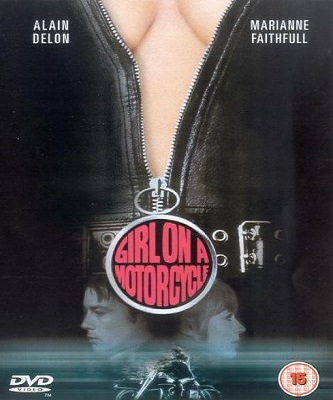 The Girl on a Motorcycle, Jack Cardiff (1968, UK). I have seen many films made in the 1960s, that could only have been made during the 1960s – and some of them also starred Alain Delon or Marianne Faithfull – but The Girl on a Motorcycle must be a top contender for the most 1960s film I’ve ever seen. And, astonishingly, it’s a British film. Faithfull plays the nubile daughter of a bookshop owner in rural Alsace. She’s engaged to be married to the local school-teacher, but then Delon, whole lives over the border in Germany, walks into the bookshop. A friendship that is clearly not innocent, although apparently no one can see it, sees Faithfull and Delon doing the rumpy-pumpy, and enjoying the freedom of the roads on Delon’s motorbike. He even teaches her how to ride a motorbike. And then buys her a motorbike as a wedding present. The film opens with Faithfull leaving her husband, and riding her motorbike into Germany to visit Delon. The story is mostly told in flashback, with voiceover by Faithfull. There are several psychedelic dream sequences. And the film ends with Faithfull dying in a pretty gruesome road accident. It’s all very 1960s, and while both Faithfull and Delon both smoulder on screen, there seems to be little chemistry between them. The shots of Faithfull riding are also patently fake, which does not help, although that may not have been such a hurdle back in 1968. But the film fails chiefly, unlike French films of the period, because it feels too calculated. There’s a feeling of rejection of commercial cinematic values evident in most Nouvelle Vague movies, and while The Girl on a Motorcycle seems superficially similar to them, it doesn’t exhibit that attitude. Which, perversely, makes it feel like more of an historical document then they do. Still worth seeing, however.
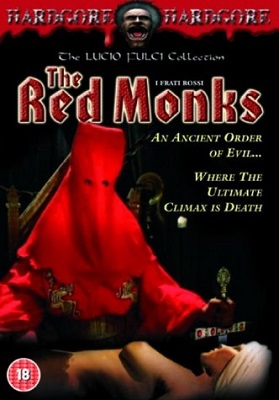 The Red Monks, Gianni Martucci (1989, Italy). I had thought this was another of the many gialli made available on Amazon Prime by Shameless, but when I went looking for the DVD cover art I discovered it wasn’t. It is, of course, giallo, and if it wasn’t directed by Lucio Fulci, it might as well have been. Which is somewhat ironic, as the makers went out of their way to associate Fulci’s name with it, first by crediting him as “director of special effects”, when he had never set foot on set, and then later marketing it as a movie “by Lucio Fulci”, which was only dropped when Fulci threatened to sue… There may well be a signature style to various giallo directors’ movies, but at present I see giallo itself as more of a signature style. In other words, I could identify a giallo movie, but whether it was directed by Fulci, Miraglia, Bazzoni or Petri I’ve no idea, although I think I might be able to spot a Bava or Argento… The Red Monks seems fairly representative, and somewhat average, for gialli. A young man inherits a mysterious castle, moves in, and has various strange encounters, which seems to involve lots of expository flashbacks, none of which in total actually make much sense. One for fans of giallo only.
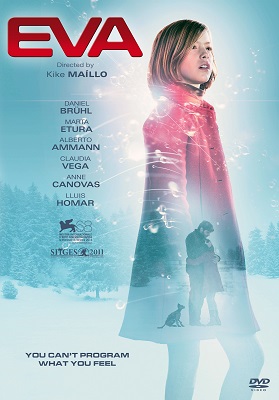 Eva, Kike Maíllo (2011, Spain). I should not be surprised when I see an actor performing in a language other than their native tongue, and I say that as someone who speaks several languages (to varying degrees), but my upbringing has been mostly English-language and the Anglophone world is a dismayingly monoglot one… Which is a long-winded way of saying I should not have found Daniel Brühl’s presence in this film at all remarkable. Especially since, as I discovered on looking him up on Wikipedia, he was born in Spain and his mother is Spanish. But I knew him as a German actor, with several English-language roles under his belt, so there was a moment when he began speaking Spanish, with apparently native fluency – not that I would be able to tell the difference – that caused a moment of cognitive dissonance. Which is soft of appropriate to Eva. Brühl plays a robotics researcher in a near-future Spain, who returns home several years after walking out on a project to build a robot with real emotions. He picks up where he left off, but needs a source for the emotional model he plans to create for the robot he abandoned, a robot child. He spots a young girl and recruits her. It turns out she’s the daughter of his girlfriend, who was also a robotics researcher, who married Brühl’s best friend after he left. Except, it then turns out – slight spoiler here – the young girl is in fact a successful prototype of Brühl’s original robot, except she does not know it. Eva was one of those near-future films which treats its setting with a matter-of-factness that does more to ground the story than any amount of flashy effects. And with its top-drawer cast – not just Brühl, but the actors playing Eva herself and Brühl’s robot, Max, are really good. And, it all looked really good too. I wouldn’t be surprised if this film makes my best of year list.
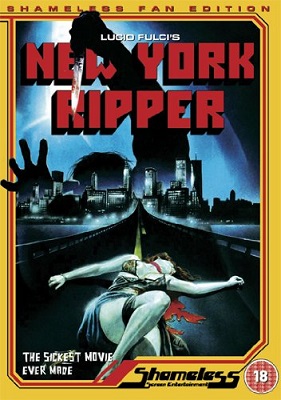 The New York Ripper, Lucio Fulci (1982, Italy). Apparently this is the only film by Fulci which is still censored in the UK. I am horribly squeamish, and refuse to watch any film that has at some point been described as “torture porn”, and don’t really enjoy watching modern horror films, but I didn’t have any problems with The New York Ripper. For a start, it’s a 1982 film, so the effects, while gruesome, are patently special effects. They don’t look real enough to trigger my squeam. They are, however, pretty gross and brutal. It’s the usual giallo serial killer stuff, which means a string of seemingly unrelated, but vicious murders, usually of attractive women while undressing, but the plot which knits together the murders and the investigation often doesn’t make much sense when you think about it. I mean, you look up a giallo film on Wikipedia, and it usually takes a couple of thousand words to summarise their plots. Not because they’re complicated, but because they’re not entirely logical. To be honest, I’m not sure why The New York Ripper continues to be censored. It’s pretty tame by modern horror effects standards. Its sensibilities are early 1980s and Italian, which is likely to offend twenty-first century viewers more. Fans of giallo, and Fulci, are probably the only people likely to enjoy the film, but I still think Shameless are doing a marvellous job releasing these movies on DVD (and Amazon Prime).
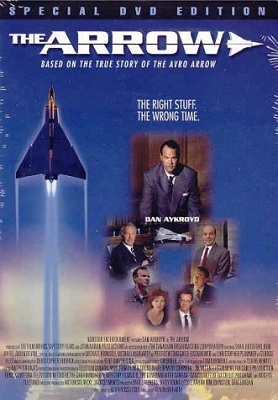 The Arrow, Don McBrearty (1996, Canada). The UK had the TSR.2 and Canada had the Arrow. Both were prototype high-performance military aircraft, years ahead of anything produced by the US or USSR. Both projects were cancelled after a change of government, and everything to do with the aircraft was completely destroyed. Neither project managed to stay within budget or meet the original deadlines, but then neither has any military aircraft the UK has bought from the US. In fact, after the cancellation of TSR.2, the UK government was forced to buy the General Dynamics F-111 – but had to cancel the order due to significant cost and development time overruns. The Avro Arrow was a Mach 2 interceptor, designed to meet encroaching Soviet bombers over the Arctic and shoot them down with missiles, before they could drop nuclear bombs on either Canada or the US. The requirements were ambitious, but the eventual design promised to meet them. Unfortunately, that ambition turned the Arrow into a bit of a money-pit, and by the time the project was cancelled Avro had bought so many suppliers, in order to ensure it had parts and materials it needed for the aircraft, that it was one of the largest companies in Canada. There’s little doubt the Arrow was a ground-breaking aircraft but, given the Soviets never sent a fleet of nuclear bombers over the pole to North America, in hindsight it seems it was a solution for a problem that never manifested – or at least could be avoided by other, less expensive, means. (Well, “less expensive” in financial terms, definitely not cheaper in political terms, given the US’s hegemonic drive.) The Arrow, a straight-to-TV docu-drama hits all the main points of the story, although it takes several notable liberties, such as suggesting the Canadians invented the delta-wing and area-rule, or that one Arrow escaped the scrapyard. Dan Aykroyd plays Crawford Gordon, the industrialist brought in to make the Arrow reality, like, well, like every other Aykroyd character, but the real Crawford Gordon was actually a fascinating person. As drama, The Arrow doesn’t really stand out, but it’s of interest to aviation buffs because of its subject. Incidentally, after the cancellation of the Avro Arrow, most of the engineers who had worked on it – many of whom were British – were recruited by US aviation companies and were instrumental in putting the Americans on the Moon.
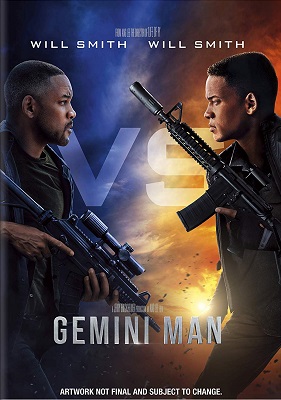 Gemini Man, Ang Lee (2019, USA). I must admit I’ve never been that much of a Lee fan. He’s a name I know, but I couldn’t tell you what he brought to his movies that any other director might not have brought. He’s certainly had a go at pretty much everything – Jane Austen, wu xia, MCU, literary adaptation… well, lots of literary adaptations, pretty much all North American, from Annie Proulx to Daniel Woodrell… And now we have Gemini Man, a high-concept thriller. Which incidentally bears no resemblance to the TV series of the same name starring Ben Murphy… The twist premise of Lee’s Gemini Man, kept carefully hidden for the first third of the movie but given away on the movie poster (doh), is that star Will Smith is an assassin, the most accuratest that evah lived, but he’s getting old and wants to retire, so his masters decide to “retire” (ho ho) him using their new young super-talented assassin, who happens to be… a clone of Will Smith. So you have like a cat-and-mouse chase movie where the hunter and hunted are equally matched because they’re the same person. Sort of. There’s an impressive amount of dumb in the premise, and the fact the film was actually made gives you little confidence in the collective intelligence of Hollywood. But even stories that are bad on paper can occasionally make good films, and Lee is a relatively good pair of hands… But even he can’t make Gemini Man into more than just a tired CGI-heavy thriller. It doesn’t help that Smith (old) opens the film by shooting a man in a fast-moving train from at least a kilometre away, an astonishing if somewhat implausible feat, but then spends pretty much the rest of the movie missing everything he shoots at. Because plot. I would be surprised if there such a thing as an “Ang Lee fan”, and if there were, their lives must be a rollercoaster ride of elation and disappointment. Gemini Man is definitely the latter. Even for them.


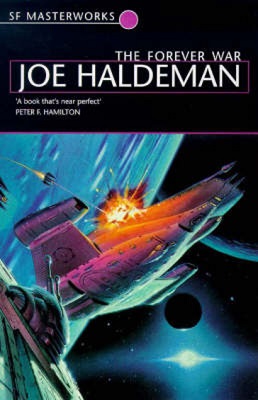
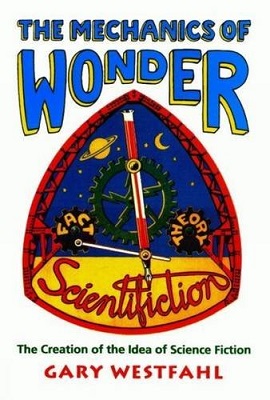
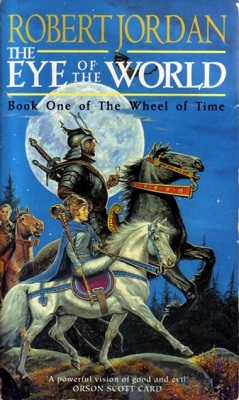
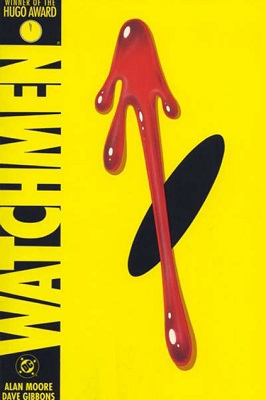
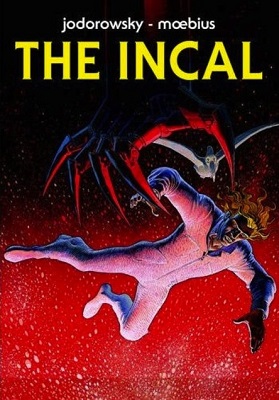

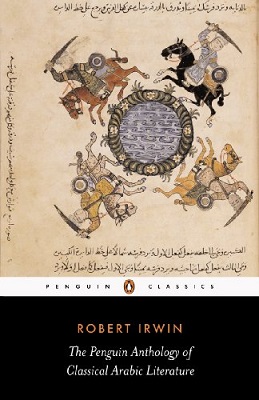
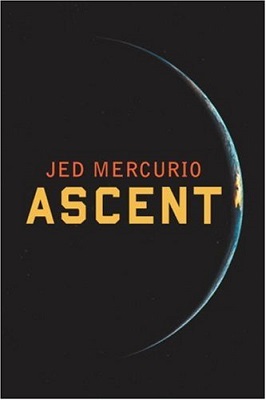
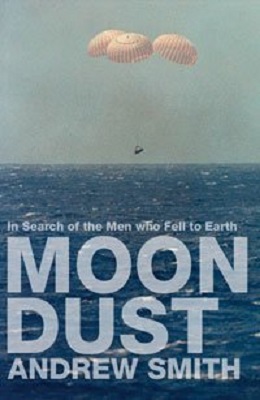
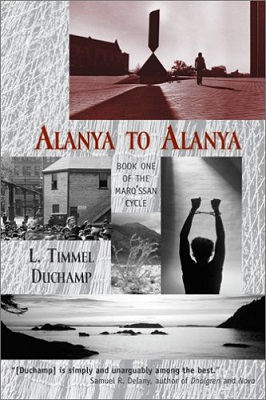
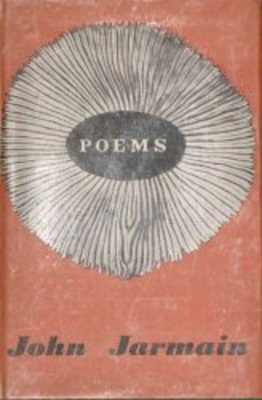
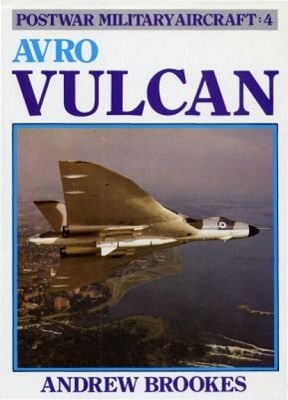
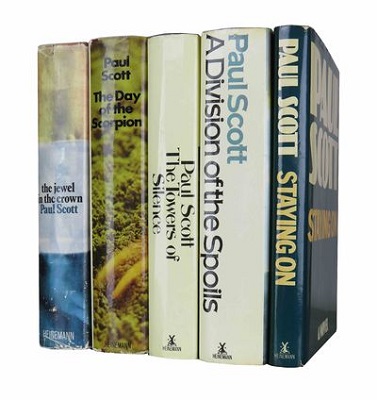
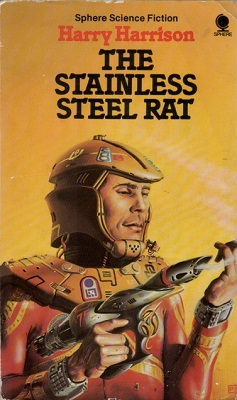
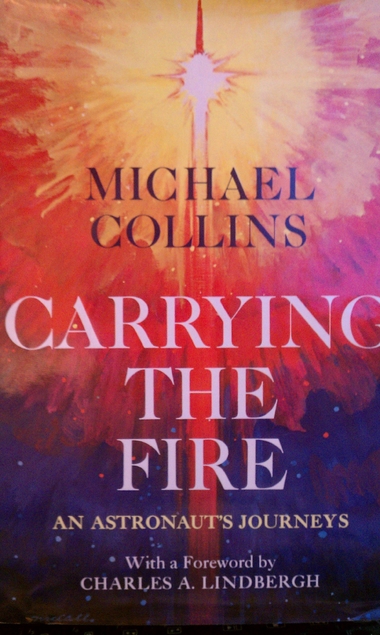

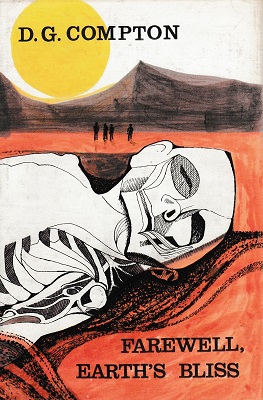
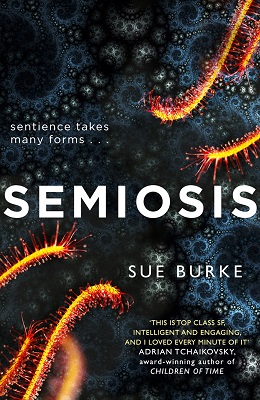
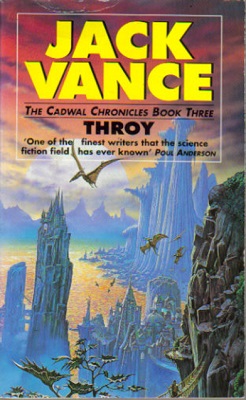
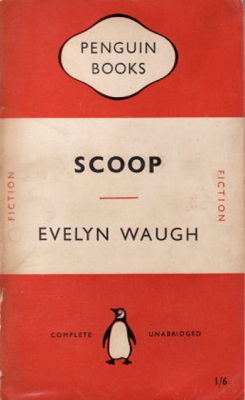
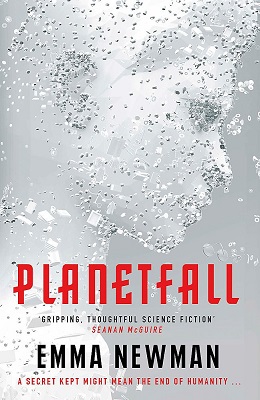
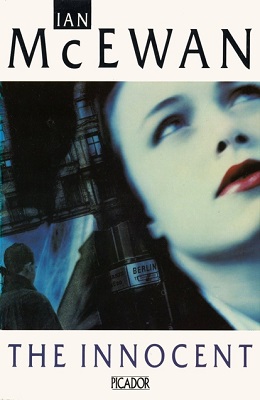
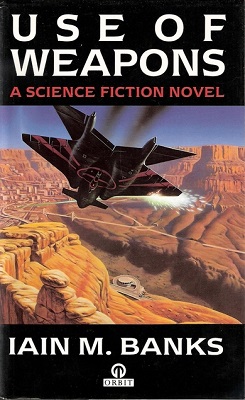
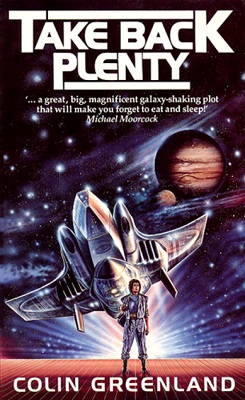
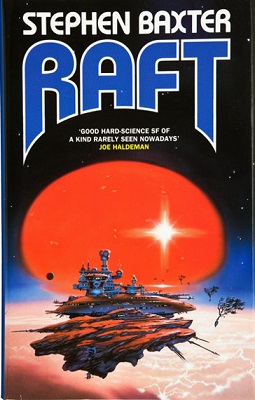
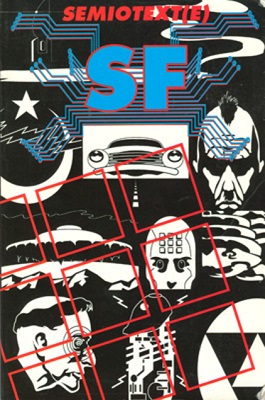

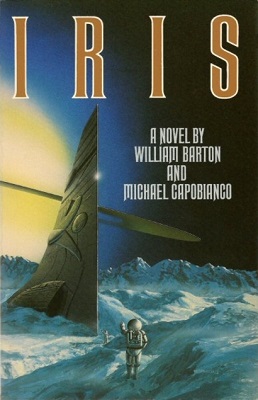

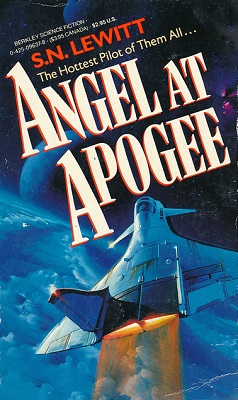


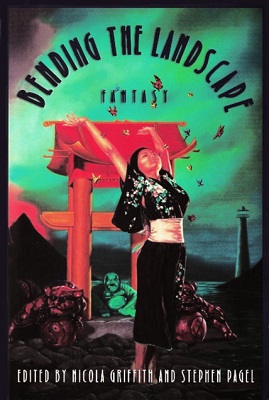
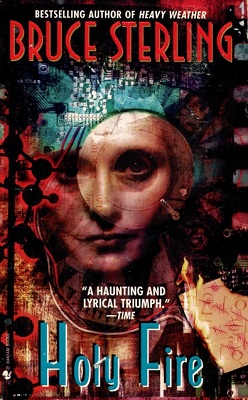


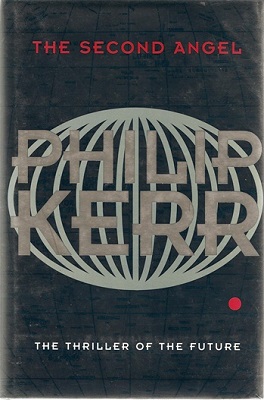
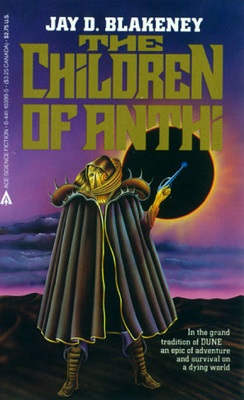
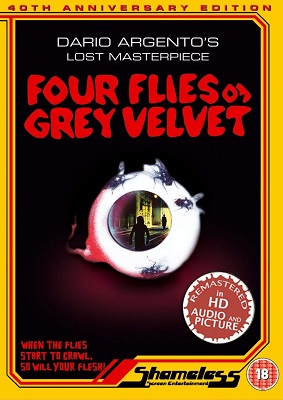



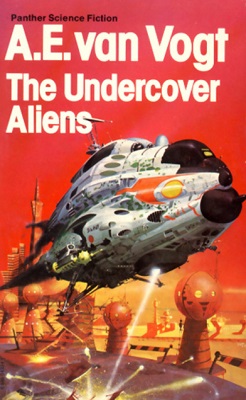
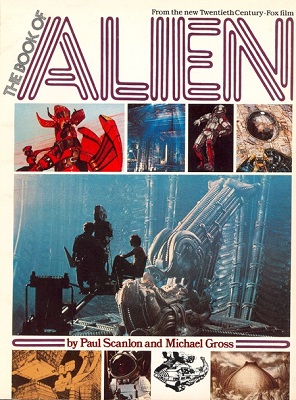
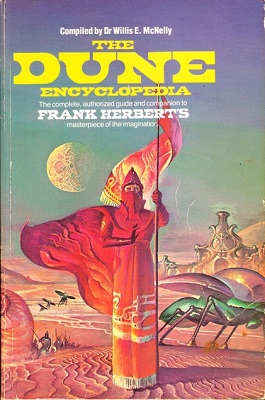
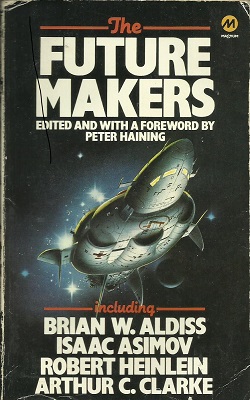
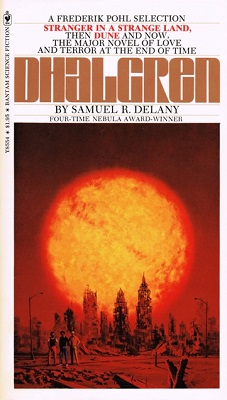
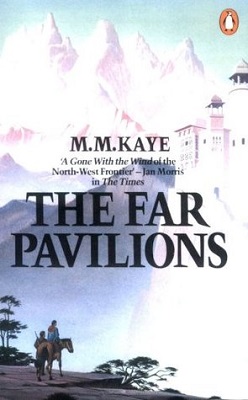
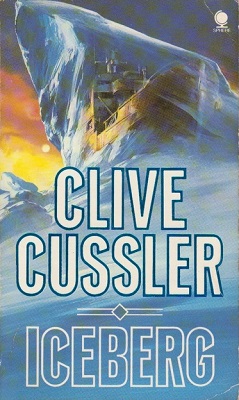
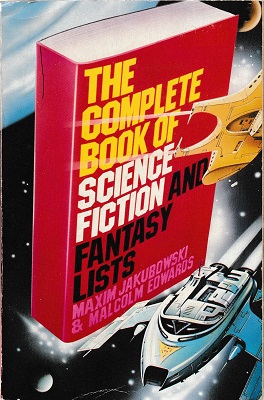
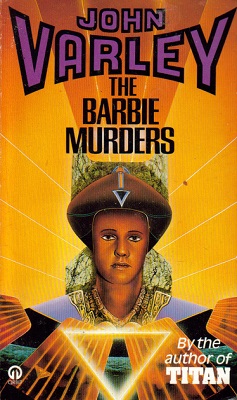
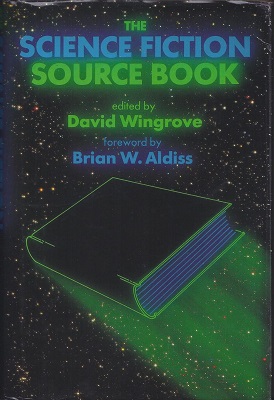

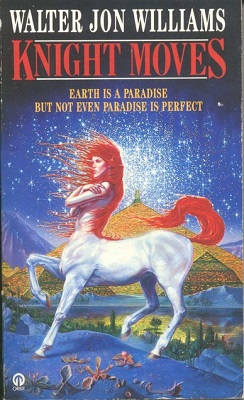
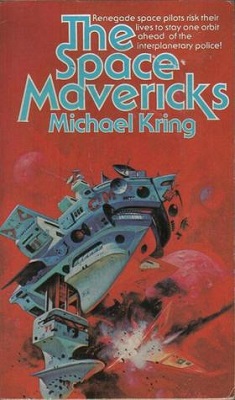
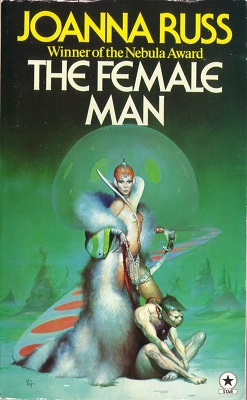
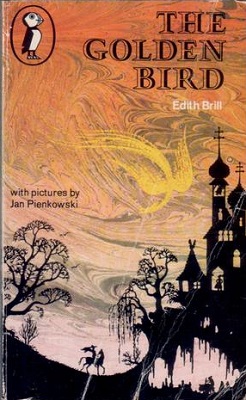
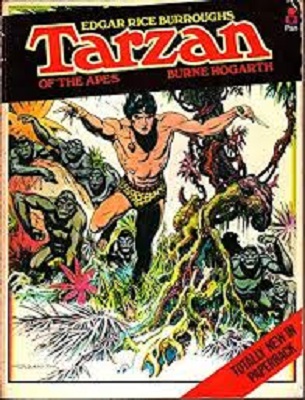
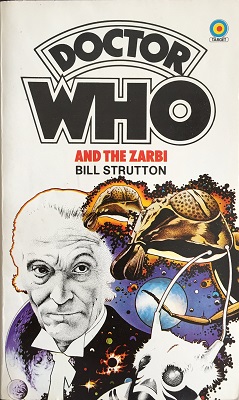
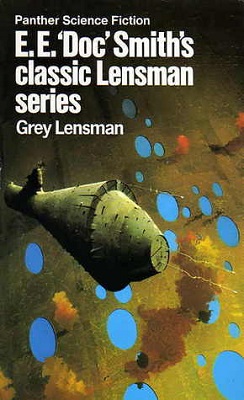
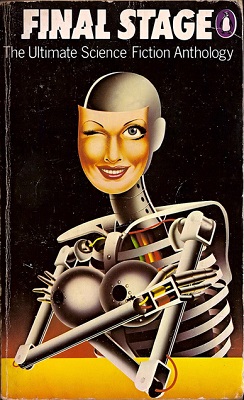
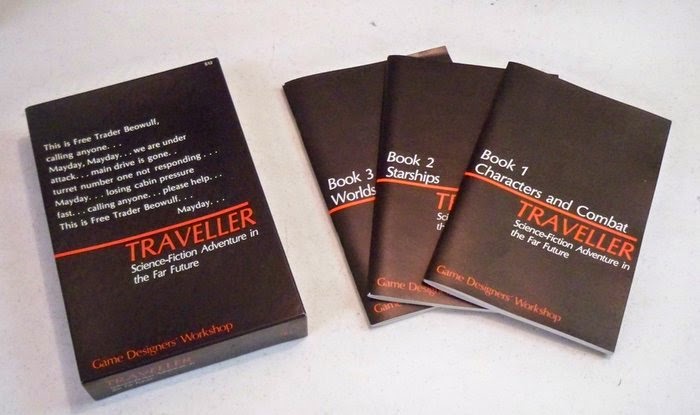
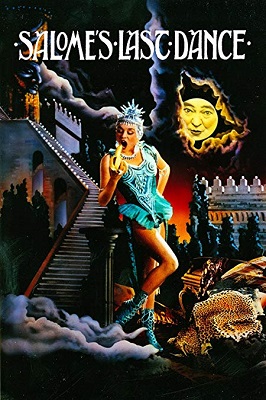
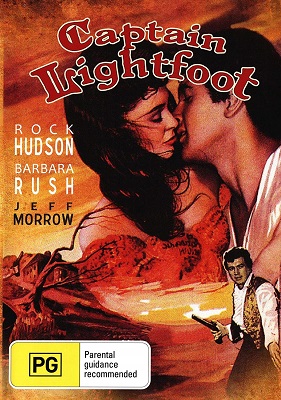
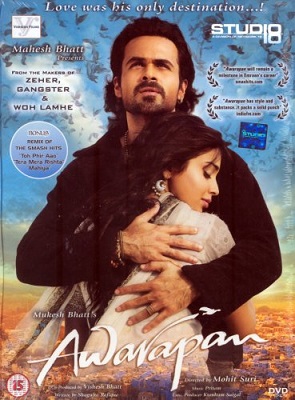
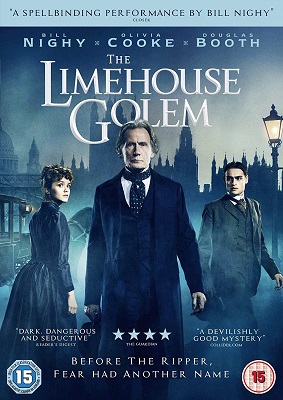

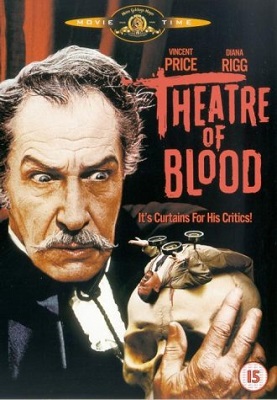
 It Doesn't Have To Be Right...