It Doesn't Have To Be Right…

… it just has to sound plausible


3 Comments

War, and the Pity of War…

At the beginning of this year, I bought an anthology of World War II poetry on eBay, Return to Oasis: War Poems and Recollections from the Middle East 1940 – 1946, edited by Victor Selwyn, Erik de Mauny, Ian Fletcher, GS Fraser and John Waller, and published in 1980. Unfortunately, I’d misread the description of the book on eBay and thought it contained poetry by Lawrence Durrell, but in fact he only provided the introduction. Return to Oasis was based on Oasis, an anthology published in Cairo during World War II, and used the same criteria for inclusion: “the poet must have served in the Forces in the Middle East theatre of war in the 1940s and have written his or her poems at that time.”

So I received the book, flicked through it, realised I’d made a mistake, and stuck it up on my book-shelves. Where it languished unread until today.

There is a poetry forum moderated by Marion Arnott on Interaction, the T3A Publications board. One of its threads is about war poetry and, being an admirer of Wilfred Owen‘s poetry, I’ve posted to the thread. But everyone knows Owen’s poems, so today I decided to contribute something a little different to the discussion. Remembering the copy of Return to Oasis on my book-shelves, I got it down, opened it at random… and discovered John Jarmain.

Like Wilfred Owen, Jarmain did not survive the war which formed the subject of his poetry. Unlike Owen, he seems to have been completely, and criminally, forgotten – a single collection published posthumously in 1945, and a single small press reissue of that collection in 1998. On the strength of the four poems by John Jarmain published in Return to Oasis, he certainly deserves to be remembered. Here is one of those poems:

At a War Grave
No grave is rich, the dust that herein lies
Beneath this white cross mixing with the sand
Was vital once, with skill of eye and hand
And speed of brain. These will not re-arise
These riches, nor will they be replaced;
They are lost and nothing now, and here is left
Only a worthless corpse of sense bereft,
Symbol of death, and sacrifice and waste.

So there you go. I’m now glad I “accidentally” bought Return to Oasis. And I think I might try and find myself a copy of Jarmain’s Poems from 1945. He also wrote a novel, Priddy Barrows, described as “with a Brontë-like atmosphere and a cast of vivid characters”. That sounds like it might be an interesting read, too…


Leave a comment

The Stars Look Very Different Today

For the last couple of days, I’ve been watching the latest Space Shuttle mission on the Nasa TV webfeed (via the Flame Trench). It’s not the most exciting television in the world – well, it’s in orbit about the world, but you know what I mean. But it is fascinating in a minor mind-boggling sort of way. I mean, that’s space. It’s not on Earth. It’s 240 miles straight up. When you think what’s needed merely to survive there… Then you start to realise quite how amazing an achievement were the Apollo missions to the Moon.

The US says it is going back to the Moon, although I wonder how long the enthusiasm will last. Given that China, Japan and India have also expressed similar intentions, perhaps the spirit of competitiveness will keep it on the political agenda. I think they should go. It’s a great idea. And yes, after Nasa has done that, of course they should go to Mars.

But why stop there? How about Ceres next? The moons of Saturn?

It doesn’t matter that we don’t have any real reason for going. We should do it because we can, because whatever challenges it presents are solvable. It’s something to aspire to, something achievable to aspire to. It’s not a waste of money, it’s not money that would be better spent on solving earthly problems. Because, let’s face it, if that money were made available, it wouldn’t be spent on earthly problems anyway. It’d go towards another “liberation” or “police action”. Or be used to further prop up an unwieldy government apparatus. Spending billions of dollars on sending four men to the Moon is a tangible, and very visible, objective. And no one has to die, either.

There might even be some spin-off technology that will prove useful or lucrative. But that’s just gravy. And the merchandising should make a bob or two. With a bit of help, a Nasa programme could even bootstrap commercial enterprises into space. It’ll never be routine or economical – or rather, the amount of up-front investment required to make it routine is politically and economically unfeasible. Local authorities in the UK won’t even invest in trams, so I don’t consider it likely that even a nation with a GDP of nearly $14,000,000,000,000,000 will invest in an orbital elevator. So it’s either spaceplanes or “Spam in a can“.

There is some scientific benefit to going back to the Moon, and then onwards to Mars. But that’s not important. Robots could do the job just as well. But sending robots is boring. We’ve been doing that for decades, and no one really cares. Send astronauts (or cosmonauts, or taikonauts), not robots.

Project Constellation is an excellent idea. Do it.


4 Comments

August and September Favourites

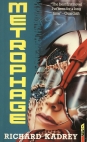
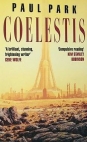
I’ve still been reading a favourite book each month. But I was a bit too busy in August to write up something on that month’s book, Metrophage by Richard Kadrey. So I decided to roll it into the write-up of September’s book, Paul Park’s Coelestis. And here they both are…

Richard Kadrey’s Metrophage has been described as “one of the quintessential 1980s cyberpunk novels”, and yet it seems to have slipped below the radar of most sf readers. It has neither the profile of William Gibson’s Neuromancer, nor Neal Stephenson’s Snow Crash, and yet I believe it is better than both. Neuromancer was the seminal cyberpunk novel, and that can’t be taken away from it. But I’d argue that Metrophage did something just as important.

Jonny Qabbala is a drug pusher in Los Angeles. He is also an ex-member of the Committee for Public Safety. When Jonny’s connection, Raquin, is murdered, Jonny heads off to confront the killer, Easy Money… and promptly finds himself caught in the middle of a battle for Los Angeles – between the Committee for Public Safety, drug lord Conover, and the anarchist Croakers. In this future, the US went bankrupt and was bought up by the Japanese. Who are now at war with the New Palestine Federation (shades of The Centauri Device).

Jonny spends time with each of the three factions – not always by choice – but is entirely powerless to prevent events from unfolding. There are puzzles embedded in the plot – the mysterious leprosy-like disease raging through the city, the Alpha Rats on the Moon… Metrophage resolves these by putting Jonny in position to have the truth explained to him. It helps that he has contacts in each of the three factions – and even more so that he is seen as important to the plans of at least two of the factions. Kadrey takes the reader on a wild ride through his Los Angeles – alternately wasteland and near-future neon-soaked wonderland. Clues dropped here and there help explain the resolution. There are a couple of points I couldn’t quite figure out – the game Conover plays with Jonny using a copy (or original) of Gainsborough’s Blue Boy, for example. But plenty of other elements of the novel have been subsequently become well-known tropes in the language of science fiction.

Despite that, Metrophage reads as fresh today as it did twenty years ago. Few books – even cyberpunk ones – can claim to have avoided dating over two decades. But then, Metrophage is more than just a cyberpunk novel. If Neuromancer folded noir into science fiction, then Metrophage folded cyberpunk back into science fiction. I’ve always maintained that cyberpunk effectively ended with the publication of Metrophage, and after my recent reread I see no reason to change my mind. Metrophage is cyberpunk – although it features no cyberspace or hackers. Metrophage is science fiction.

I didn’t expect Metrophage to lose its place on my list of favourites, and my reread not only proved that but reminded me why it was a favourite. It’s a great book.

And after Kadrey, another book I didn’t expect to be dislodged from the list. However, its appeal is, perhaps, more personal. Paul Park first appeared with the Starbridge Chronicles – Soldiers of Paradise, Sugar Rain and The Cult of Loving Kindness – an ambitious science fiction trilogy set on a world with seasons which last centuries, much like Brian Aldiss’ Helliconia trilogy. From the first page of that trilogy, it was clear that Park was a distinctive voice. And his follow-up, Coelestis, more than proved it. In some respects, Coelestis remains unique in the genre. And that’s not an easy accomplishment.

Simon Mayaram is attached to the British Consulate on the only colony world on which an alien race was discovered, homo coelestis. These aliens were actually two races – Demons, and the Aboriginals, who the Demons had telepathically enslaved. The humans hunted the Demons to extinction, and freed the Aboriginals. Who now ape humanity – the rich members of the race undergo comprehensive surgery, and require a strict regimen of drugs, in order to appear and behave human. Katharine Styreme is one such Aboriginal. To all intents and appearances, she is a beautiful young human woman.

Simon is invited to a party given by a prominent member of the human community. Katharine – whom he has admired from afar – is also there, with her father Junius, a wealthy merchant. During the party, Aboriginal rebels attack, kill almost everyone and kidnap Simon and Katharine. Without her drugs, Katharine begins to revert to her alien nature – a process that is exacerbated by the presence among the rebels of the last surviving Demon. When human vigilantes attack the rebels, Simon and Katharine are forced to flee… and Katharine’s meagre grip on humanity begins to erode even further.

Coelestis is one of those science fiction novels which follows a logic all its own. It is, in a sense, post-rational. Although the story is set an indeterminate time in the future, the community to which Simon belongs bears an uncanny, and deliberate, resemblance to early Twentieth Century colonial British and American. Even the Aboriginals themselves – particularly the Styremes, who are made to appear human, and show no alien side – are hardly convincing in any scientific sense. Earth is described as a dying planet, and the colony planet has been cut off from its nearest neighbour. If there is an interstellar federation or empire, then it bears no resemblance to any other in the genre.

John Clute described Coelestis as a “Third World SF novel”. It’s sheer hubris on my part, but I think this is wrong. Coelestis is a post-colonial sf novel. It is clearly inspired by Park’s own years in India. And to call India a member of the Third World is to ignore its long and deep cultural heritage – and the Aboriginals (or rather, the Demons) are implied to have an equally long cultural heritage in Coelestis. The novel is not about living in a Third World analogue, it is about the gentle wind-down from colonialism and its often bloody consequences. Park makes as much clear in events described in the book. Mayaram is of Indian extraction (although born in the UK), and during his abduction by the Aboriginals, he rapes Katharine. It’s perhaps a somewhat  blunt metaphor for John Company and the Raj, but it makes the point. Even the Aboriginals’ attempt to ape human ways is a reflection of the Indian adoption of some elements of British culture – and especially the English language. The Aboriginals’ ersatz humanity is little more than surface – Katharine may resemble a young human woman, but whatever gender she possesses is what’s attached to her mimicry (the Aboriginals are actually one-sexed). She is not a viewpoint on the alien – Coelestis is a description of her fall from humanity, not of her imitation of it.

Having grown up in the Middle East, I find a particular appeal in novels such as Lawrence Durrell’s The Alexandria Quartet and Park’s Coelestis. To some extent, they remind me of my childhood. Both also have the added advantage of being novels which can be read many times – and there is always something new to find, or to think about, in them. I certainly plan to reread Coelestis again some time. Its place on my list of favourites is secure.


Leave a comment

The "Beep" heard ’round the World

Today – October 4 – is the fiftieth anniversary of the launch of Sputnik, this planet’s first artificial satellite. And it seems all the promise of the early years of the “Space Age” hasn’t, well, hasn’t really been met. The last man on the Moon, Gene Cernan, climbed back into his Apollo 17 LM almost 35 years ago (on December 14, 1972). What happened? Why didn’t we go to Mars? We’re going to have to wait until 2020 before the US returns to the Moon. And it’s likely to get a little crowded up there – the Chinese, Japanese and Indians have all said they plan to send someone to the Moon around that time.


2 Comments

Getting There

Last year, I had every intention of spending a day at Fantasycon. It was only when a friend emailed me on (what I thought was) the Monday before, and asked me how it had gone… I’d got the weekend wrong, and missed the con. This year, I made certain I had the right date. And so, early on the morning of 22 September, I made my way to the railway station to catch a train to Nottingham…

The last time I caught the train to spend the day in a Midlands city was alt.fiction in Derby. My bank ruined that day for me by cancelling my debit card for no good reason (see here). This time it was Central Trains. My train was supposed to arrive in Nottingham at 10:45. It didn’t get in until 12:15. Signals apparently failed just outside Chesterfield, necessitating a wait of 90 minutes until the problem “resolved itself”.

So I wasn’t in too good a mood when I eventually entered the Britannia Hotel. This was the first time I’d attended Fantasycon, but not the first time I’d attended a convention in the Britannia Hotel. That had been nearly 20 years earlier – in 1989, when the hotel was called the Albany. Mexicon 3, my first ever convention. I was living near Nottingham at the time, and so I drove in each day to see what a sf convention was like. I enjoyed it enough that I kept on going to them.

The journey to Nottingham pretty much set the tone for the day. I rarely attend programme items at cons, and hadn’t planned to do so at Fantasycon. I was there to meet up with friends. Unfortunately, none of them were in evidence when I arrived. I had a wander round the dealers’ room, but it was on the small side and consisted almost entirely of small presses. So my book haul was a bit light – Eric Brown’s new novella from PS Publishing, Starship Summer; The Lost Art by Simon Morden; Postscripts issue 10, a thick hardback-book special issue of the magazine; and The Human Abstract by George Mann, published by Telos. Both Simon Morden and George Mann were at the con, so I got them to sign their books for me – well, George’s was already signed, so he just dedicated it.

I chatted with the Solaris gang, who admitted that British cons were now spoiled for them since they’d recently returned from Dragon*Con in Atlanta, Georgia, USA. Attendance 40,000! Around mid-afternoon, Neil Williamson and Hal Duncan appeared. I spoke to Jetse de Vries of Interzone, although mostly about music – I recommended he give Blind Ego a listen, a band I’d see play live several weekends before and thought he might like. I also had an interesting conversation with Stephane of French publishers Bragelonne.

And that was about it – a couple of wanders about the dealers’ room, a series of conversations in the bar. For lunch, I went into the city centre. There was a farmer’s market on, so I bought something to eat from a stall.

I left the con just after seven o’clock. When I reached the railway station, I discovered there were no trains running back home. A coach was laid on instead. So I spent a couple of hours on a coach, which of course avoided the most direct route, as far as Chesterfield. There, I changed to a double-decker bus because it was leaving twenty minutes before the coach. Oh, and I learnt that it’s difficult to use the toilets on those coaches. Perhaps it’s easier when on a motorway, but on B roads you get thrown about a bit.

Arriving back home, I rang friends who were out in town. They were in a new pub called The Old House. I jumped in a taxi and met them there. The bouncer stopped me as I was entering the pub, and asked me what was in the bag I was carrying. Books, I told him. He gave me a strange look, but let me in.

I didn’t go home until about midnight. It had been a long, and not entirely happy, day. Fantasycon had been a bust for me – not worth the hassle of getting to Nottingham. Perhaps it would have been if Central Trains hadn’t so thoroughly screwed up a simple journey there and back. But there were also less people I knew at the con than I’d expected, and the dealers’ room had been disappointing. I doubt I’ll bother going next year.


2 Comments

Hook, Line and Snicker…

Spoof and phishing emails are a fact of life in the Twenty-first Century. And most of us are savvy enough to spot them. Most of us, in fact, it seems are savvier than the people who actually create such emails – at least given their often poor command of English.

Sensible people delete these emails as soon as they spot them in their inbox. And normally, I do too. But when I saw the following phishing email, I had to share it:

Good day dear clients,

We are sorry to inform that the fraudulents with the accounts of our bank have recently increased. That is why our bank changes the security system, which will provide maximum security to our clients if the accounts are used by frauds. You will receive a special program to your e-mail this week, as well as the instruction how to use it. With its help you will have an opportunity to make payments. Without this program no one will be able to transfer money from your account. If you lose the program, you will have to pay $4,99 and we will send you the copy of it.

To confirm the registration of this anti-fraud program visit this web-site and complete the necessary forms:

We appreciate your business and hope to keep you as a customer for life. Citizens Bank Money Manager GPS Online is so easy, no wonder it’s number 1 !

I don’t know which is most amusing: the honesty of the email – “Without this program no one will be able to transfer money from your account”; or the concept of a phishing program you have to pay to replace should you “lose” it…


1 Comment

Metalheads

In the last two years I have seen more bands live than I did in the preceding two decades. Not all of those gigs were local – I travelled up to Glasgow to see Anathema and down to London to see Opeth. Almost all of the bands I’ve seen perform live were metal – it is, after all, the genre of music I like most. It’s not just bands whose output I know and like that I’ll go see, either. If any metal group which looks even remotely interesting is playing in town, I’ll go and watch them perform.

But I’d never been to a metal festival.

When I learnt that both Dark Tranquillity and Arch Enemy were on the bill of this year’s Bloodstock Open Air, I was determined to attend. Bloodstock Open Air (BOA) is a three-day metal festival, which takes place at Catton Hall in Derbyshire each year. And has done since 2005. It’s a relatively small festival – twenty-five signed bands, the same number of unsigned bands, and around 10,000 people attending. There’s also an indoor Bloodstock festival, which has been running since 2001. (Normally, BOA is in July, but this year it’d been postponed until August. Which resulted in the cancellation of the indoor Bloodstock.)

Anyway, Calin, a colleague from work, was also keen to attend. He even had camping gear. We made our plans – bought tickets, booked the days off work. Three of us were going: Calin, his girlfriend Angela, and myself. A few others were interested but, for one reason or another, decided they couldn’t make it. In the weeks leading up to BOA, I was both dreading it and looking forward to it. Seeing favourite bands perform live… but three days of chemical toilets and no showers. When the organisers announced that Scar Symmetry had joined the line-up, I was even more chuffed.

Calin had wanted to arrive early, insisting we needed to do so in order to get a good spot for the tent. I didn’t think we needed to get there until after lunch. The actual festival didn’t start until 4 o’clock, anyway. In the event, we left later than planned, stopped off en route at Morrison’s for beer, water and baby wipes, and arrived on-site around noon. Calin had been right. The field was already full of tents. Fortunately, we managed to find a good spot against the fence. As soon as we had the tent up, we went and checked out the “arena”. This was the site of the main stage, the unsigned bands tent, the beer tents, and various food and merchandising stalls. My first purchase was a Bloodstock cap to keep the sun off my head. Perhaps it wasn’t the best souvenir I could have chosen – several times over the weekend I was mistaken for festival staff because of it. The Metal Market stalls were mostly clothing – and mostly Goth clothing – but one or two did sell band T-shirts. But for me, it’s the music not the fashion. The stalls that sold CDs mostly had prog rock and classic metal. Even among metal fans, it seems my tastes are fringe. I didn’t see anyone sporting the same band T-shirts as myself the entire weekend. In fact, I was asked where I’d bought my Akercocke T-shirt by one of the blokes in the Earache Records stall, as he’d not seen it before. As for my Dark Tranquillity hoodie – referred to by my friends as my “death metal cardigan” – since Dark Tranquillity were on the bill, there were plenty of examples of the garment to be seen throughout the festival.

After a quick wander through the Metal Market, we hit the bar to try out the Bloodstock Ale. It wasn’t bad. And we weren’t the only ones to think that, since it ran out before the evening was finished. Bizarrely, all the paper cups in the bar were emblazoned with the Tuborg logo, and some of the bar staff also wore Tuborg T-shirts… but there was no Tuborg being served. Only Carlsberg.

The acts on the main stage were audible from pretty much anywhere in the arena. Some of the bands we went to watch perform, some we didn’t. Dark Tranquillity and Arch Enemy both put on excellent shows, although the sound could have been better. Lacuna Coil and In Flames gave slick polished performances. Scar Symmetry were… disappointing. Their set was ruined by bad sound, and it was only on the last song that they really shone. Several bands were afflicted by sound problems throughout the festival. The secret heroes of BOA, however, had to be Rise to Addiction, who played a solid set, sounded great, and got the crowd going. I bought their CD, A New Shade of Black for the Soul, afterwards.

Of all the genres of music, you’d have thought metal was well-suited to live performance. It’s aggressive and loud, both qualities more effective live than on a studio album. But a lot of the metal bands I listen to write songs with intricate guitar parts, and the subtlety and sophistication of those can be lost in a bad live mix. But when they riff, when the guitars start to chug, backed by the drummer’s inhumanly fast blastbeats… then it’s an intensely visceral experience, and has a presence no other musical genre can match.

Music festivals are ostensibly about, well, music. That’s what people attend for. But it’s also a three-day party. Getting drunk each day, crashing out in a tent… and, of course, having to steel yourself to use a chemical toilet. The toilets were particularly bad at BOA. I can’t understand why people would vandalise toilets they themselves have to use. It’s an almost literal example of the expression, “you don’t shit in your own backyard”. Several times during the event I was reminded of the Apollo astronaut who dosed himself with Imodium before his mission. He claims he currently holds the world record for distance travelled without going to the toilet – half a million miles. More than once, I wished I’d had the foresight to do the same…

No one expects to eat gourmet food during a music festival. While BOA was well served by food vendors, they sold pretty basic fare. I tried most of them. The fish and chips weren’t bad. The Mexican wrap, well, wasn’t – they left the tortilla open on a paper plate. Most of its contents ended up on the grass. The rice in the Chinese curry was like eating cavity wall insulation. The burgers… For an extra 50p, you could have a cheeseburger, the same as an ordinary burger but with a slice of processed cheese added. One food vendor, fortunately, did sell real food. It was just a small trailer, but it sold fresh-baked baguette and panini sandwiches. I did try their giant chocolate muffin for breakfast on the Saturday morning, but it was too much to eat in one go. There was also a coffee and doughnuts trailer. Calin bought Angela some doughnuts, and tried to wangle an extra one, on the perfectly reasonably assumption that those not sold would be thrown away. But the bloke behind the counter was having none of it. We Brits still haven’t got this customer service thing sussed, and it’s about time we did.

Toilets aside, the camping was fun. I’d bought a sleeping bag with a built-in air mattress from Argos the week before, and it was very comfortable. If there was a lot of noise at night – and there was always someone playing metal on a stereo somewhere – I never noticed it. One large boisterous group blocked one of the routes to the arena throughout the Saturday, and prevented people with cans of beer passing until they’d taken a swig. But it was all harmless fun.

On the Friday morning, the three of us tried walking to the nearest village, Walton-on-Trent. After a mile and a half, we decided to turn back. My ankles were killing me. Stupidly, I’d bought new boots for the festival only a couple of days before. I’ll know better next time. Calin took Angela to the village in the car, while I stayed to watch Scar Symmetry. Angela was not enjoying the camping as much as Calin and myself, although she’s a big fan of fellow countrymen Lacuna Coil. Since they were the last act on the Friday night, it was agreed she’d leave the next day, while Calin and I would stay to the end.

Early afternoon on the Saturday, we drove Angela to Tamworth railway station. The plan was to find somewhere in town to get a decent lunch – definitely needed after two days of bad burgers and hot dogs. But I was wearing wellies as they were more comfortable than my boots, and we both probably smelled a bit ripe… So we decided to go to the White Swan, the pub in Walton-on-Trent, which Calin and Angela had eaten at the day before. On the way back, we didn’t both with the GPS… and subseuqently got lost, and ended up driving down some narrow pot-holed roads that probably last saw traffic in the 1930s. The White Swan proved a surprise – excellent food and some nice beer. And full of people from BOA. So we didn’t feel, or smell, out of place.

By the time we got back to the festival, it was chucking it down. I no longer felt a bit daft walking around in wellies. We sat out some of the worst of the weather in the tent, finishing off the tinned lager we’d brought with us. Occasionally, we made forays into the arena to see what was happening. At one point, during Dream Evil’s set, I heard the singer say his band didn’t play “Swedish peasant metal; our songs have meaning”. And this from the band who wrote ‘The Book of Heavy Metal’, featuring such classic lines as “In life – I have no religion / Besides the heavy metal gods / Wear nothing but black skin tight leather / My skin’s clad with metal studs”

Several times during the afternoon, Calin and I considered leaving because of the weather. But I was keen to see Arch Enemy, and Calin to see In Flames. So we stuck it out. It was the right decision. The rain stopped shortly before Arch Enemy took to the stage, and both bands’ performances were worth the wait.

The next morning, we were up early, took down the tent, piled everything into the car, and left. I was home by 9:30. The first thing I did was spend half an hour on the toilet. Then I had a shower. Afterwards, I felt human again.

Several times during BOA, I found myself wanting it to be over. The festival was occasionally uncomfortable – and three days without a shower or access to a decent toilet is not much fun. The music, however, more than made up for it. I’m glad it’s over, but I’m also very glad I went. It was certainly an experience, and I learnt some valuable lessons:

  • don’t wear new boots at a music festival
  • buy a hat – it keeps off the sun and the rain, and also hides your manky hair
  • baby wipes are genius
  • a giant chocolate muffin is not the breakfast of champions
  • trying to carry three large coffees in thin paper cups is foolish, dangerous and futile
  • even if it’s the middle of a heat-wave, take wellies anyway
  • there’s a 1000% markup on slices of processed cheese

2 Comments

Words on Fire

A couple of nights ago, I sat down to watch François Truffaut’s Fahrenheit 451. I was fairly sure I’d seen it before – I may even have read the book. Knowing the story is no guarantee I had done either, however. The central conceit – firemen who burn books rather than put out fires – is pretty much known by everyone. In the event, it turned out I hadn’t seen the film before – whatever images I knew from it must have come from stills or clips I’d seen. Nor had I read the book – a featurette on the DVD mentions the novel’s Mechanical Hounds, which I have no memory of at all.

I’m not a fan of Ray Bradbury’s fiction, and when I watched Truffaut’s Jules et Jim I couldn’t see why it was considered a classic – so my expectations for the film of Fahrenheit 451 weren’t exactly high. It was released in 1966 (a good year, for many reasons), so I fully expected it to look somewhat dated. In fact, the more I thought about it, the more I wondered why I’d bought the DVD – even if it had been in the sale…

But then I only had to remember Divine Intervention – a film I took several months to get around to watching since I didn’t expect to enjoy it. And I was so impressed, the film became a favourite. So no matter what my expectations, there was always the chance that Fahrenheit 451 would confound them.

There was only one way to find out…

Fahrenheit 451‘s opening credits were… interesting. No text appears on the screen – the film’s title, cast and crew are spoken, while the camera zooms in and focuses on one television aerial after another. A bright red fire engine then appears, speeding along a country road. It’s not a serious-looking fire engine, but more like one patterned on a child’s toy from the 1930s. Its destination proves to be one of those horrible 1960s concrete housing blocks – although the building looks disconcertingly new. Later, we see the fire station, a bright red building on a street that looks vaguely futuristic and yet still manages to seem somewhat grim and British and 1960s.

Something curious began to happen as I watched Fahrenheit 451. Yes, it does look dated. It makes no real effort to present a future world with any conviction, but instead seems to take place in a 1960s of the imagination. The central premise doesn’t stand up to a moment’s scrutiny. The satire is so slight, it’s no more than a gentle poke in the ribs (although the cheap and nasty “interactive” television is amusing). Cyril Cusack’s avuncular Captain is disconcertingly, well, avuncular. And yet… I found myself drawn into the film. The mise-en-scène began to work for the film, rather than against it. Casting Julie Christie as Montag’s wife and as rebel Clarisse was a stroke of genius. The story seemed to forget its origins as a commentary on censorship (or apparently not), and instead turned into a paean to books and literature. By the time it had finished, I was a fan, and I’d decided that Fahrenheit 451 was a greatly under-rated film.

According to a documentary on the DVD, Fahrenheit 451 was a difficult project. It was Truffaut’s first English-language film, and he spoke the language poorly. It was filmed in colour and in England. The relationship between Truffaut and male star Oskar Werner also deteriorated as filming progressed – so much so that in the last few minutes of the film, Werner sports an entirely different haircut, which he’d had done to spite the director.

A remake of Fahrenheit 451 is apparently in production. According to IMDB, Frank Darabont (of The Green Mile) is directing and Tom Hanks is rumoured to have been cast as Montag. I think I’ll stick with the original…


8 Comments

What I’m Pointing To…

Science fiction was born in 1926, when Hugo Gernsback published the first issue of Amazing Stories. The first attempt at defining science fiction occurred several days later. In more than eighty years, no one has satisfactorily defined the genre – the most often quoted “definition” is Damon Knight’s, science fiction “means what we point to when we say it”, from 1956. However, it often seems people chiefly define science fiction by its readers. So PD James, Maggie Gee, Margaret Atwood, Cormac McCarthy – for example – can all write novels that are not science fiction, despite featuring tropes common to the genre. Or so they would have you believe…

I’ve yet to see anyone claim Jed Mercurio’s Ascent as science fiction. And yet… It’s set in the past, true: the book ends in 1969. It is also chiefly a fictionalisation of real events. But the final third of the novel certainly never took place. Which arguably makes Ascent alternate history, which is often considered a sub-genre of science fiction – sf author Stephen Baxter did something similar with NASA and a trip to Mars in Voyage. But there’s more to Ascent‘s science-fictional credentials than just that.

Yefgenii Yeremin is orphaned during the Siege of Stalingrad. Each year, a boy from the orphanage to which he is sent is awarded a cadetship in the air force. Yeremin wins that cadetship – by partially blinding his chief rival. During the Korean War, he becomes Ace of Aces. Known as “Ivan the Terrible”, he kills more enemy pilots than anyone else – despite not “officially” being in Korea. Unfortunately, his masters back in Moscow are not happy with his final escapade, and he is assigned to an air base in Franz Josef Land (an archipelago in the Arctic Ocean, north of Novaya Zemlya). Most Soviet pilots spend a year or two in Franz Josef Land, but Yeremin and his family spend nearly a decade there. Yeremin is then recruited for the Soviet space programme… and the last third of Ascent describes his one-man mission to beat the Americans to the Moon in 1969.

The technology that Mercurio describes for this fictional mission is real. There really was a LK Lunar landing module and a LOK Lunar orbital craft. The project, however, was abandoned following the death of Chief Designer Korolev and a series of catastrophic failures of the N1 booster. As is clear from the attention to detail (and the bilbiography at the end of the novel), Mercurio has not stinted on his research.

Reviews of the book in the national press made much of its heavy use of unglossed aeronautical jargon and the near-obsessive attention to detail. This, some critics decided, was a reflection of the protagonist’s own self-absorption and aloofness. Yeremin was so driven, they argued, that he was defined by his immersion in the technology he used and the ways in which he used it. The fact that Yeremin’s wife is referred to throughout as “the widow”, they saw as indicative of a protagonist who was so focused on his own ambitions that he could not relate to people – especially those closest to him. But Yeremin’s fellow pilots in Korea are all named, as are the cosmonauts he joins in Star City (Yuri Gagarin, Alexei Leonov, Vladimir Komarov). The only US pilots named during the Korean War dogfights, however, are those who later become astronauts – Neil Armstrong, Gus Grissom, John Glenn, Wally Schirra

To my mind, Mercurio’s jargon-heavy prose, and lack of a glossary, has much in common with a science fiction narrative. To aeronautical and astronautical buffs, Mercurio’s prose is detailed and accurate… but not baffling. To a science fiction reader, a story which references androids, FTL, Dyson Spheres, AIs, etc., is not impenetrable. In fiction, settings are defined by what they contain – in mainstream fiction, those objects are shared with the real world. We all know what a television set is, a mobile phone (or cell phone), Kalashnikov AK-47 assault rifle, turnip, casserole, marmoset, etc… In science fiction, the objects within the setting are either unique to the story or to the genre. In the latter case, no glossing is usually necessary (and is, incidentally, where mainstream authors writing sf usually fall flat on their faces). In the former, the better writers allow meaning to come from context, and so avoid the dreaded info-dump. True, some sf novels do use glossaries – Frank Herbert’s Dune is perhaps the premier example. Mercurio does not gloss (the amount of jargon understood depends on the reader’s familiarity with the technology described), but he also makes terms comprehensible through context and through info-dumps.

Reviewers unfamiliar with the language of science fiction found the privileging of technology in Ascent worthy of comment. They interpreted this as an aspect of Mercurio’s characterisation of Yeremin. Narrow, or flat, characterisation is often perceived as a defining characteristic of science fiction. In a literature where the idea, often in the form of technology or science, is foregrounded, then characterisation is often going to appear subservient. Because Mercurio does this in Ascent, I started thinking about what it was that made the novel science fiction, and what it is that makes any sf novel science fiction…

Let’s say that science fiction can be distinguished by its settings, or by its readers. To many, if a story is set in the future or in outer space, then it is science fiction. But Apollo 13 is not considered to be sf. Any book labelled by the publisher as science fiction is sf. But not all sf books are marketed as sf – William Gibson’s Spook Country or Cormac McCarthy’s The Road, for instance. Any book written by an author who identifies themselves as a sf writer, or identifies themselves as a member of the community of sf writers and readers, is science fiction. Again, not all sf books are written by sf writers – Orwell’s 1984, or Anthony Burgess’ A Clockwork Orange. So neither of these characteristics are distinguishing or useful.

Science fiction, unlike fantasy, is a modernist form of literature because it takes as axiomatic that the human condition and/or the human environment can be controlled – from cybernetic implants to genetic engineering, from colonies on Mars to re-engineering whole galaxies. Even the “unknown” can be subjected to reasoning and control, although it may not produce answers. Science fiction differs from mainstream modernist literature in that the tools used for control of the human condition and/or environment are figments. They either do not exist, do not operate in the real world as described in the text, or rely on science and/or technology which does not exist. Or their use presupposes, or leads to, a condition or situation which cannot or does not currently exist – such as a landing on Mars, or the Germans winning World War II. Or, in the case of Ascent, the Soviets sending a cosmonaut to the Moon.

So science fiction is more than just an invented setting. It is more than just squids in space. It is the process by which the figments are used, and it is the intent of that process. Not the intent of the author – we can’t know that from the text alone. But if the figments are instrumental in the control of the human condition and/or environment, and that is the intent of the figments in the text, then the text must be science fiction.

It’s a theory, anyway…

After all that, I should probably point out that I did enjoy Ascent. I’ve been fascinated by the Space Race since I was a child – The Right Stuff is both a favourite book and a favourite film – and I’m enough of a geek to find the technology fascinating. However, I do think Mercurio missed one trick in his book. One of the Apollo missions allegedly reported strange lights on the Moon’s surface during one of their orbits. Perhaps Mercurio should have tied this in – so Yeremin’s landing becomes a UFO myth of the Apollo programme. It would have provided an amusing link to the real world.