It Doesn't Have To Be Right…

… it just has to sound plausible


Leave a comment

Doing the Hugos 1

I did this last year, so why not again this year? Once again, I’m not a member of the Worldcon, so I didn’t nominate any of the works which appear on the various shortlists, nor will I be able to vote on them. But the shortlists are public, many of the novellas, novelettes and short stories are available online to read, and I have opinions which I am happy to share.

First up, the short stories. These are stories of less than 7,500 words, previously published in the US or online in the preceding year. The 2010 shortlist looks like this (click on the titles to read each story):

‘The Bride of Frankenstein’ (PDF), Mike Resnick (Asimov’s December 2009)
Nope. I don’t get it. After John Kessel’s clever Austen / Frankenstein pastiche, ‘Pride and Prometheus’, appeared on last year’s Hugo novelette shortlist, this year we have another entry riffing on Frankenstein. But this time it’s a simplistic short story by Mike Resnick. The narrator is married to Victor Frankenstein, but it is not a loving marriage. But, with the help of the monster, Frankenstein’s wife undergoes a change of heart. It’s hard to know when the story’s set – the narrator is married to Victor Frankenstein, but complains the castle has no electricity. So not the early 1800s, then. It’s implied that Gone with the Wind has just been published, so the story could be set in the late 1930s. Except the narrator uses the term “family unit”. ‘The Bride of Frankenstein’ works as a lightweight throwaway piece – and it’s a little better than last year’s dreadfully old-fashioned ‘Article of Faith’ – but are we seriously supposed to believe it’s one of the two best stories published in Asimov’s during 2009, and one of the five best stories published anywhere in 2009? I refuse to believe that science fiction is so moribund.

‘Bridesicle’ (PDF), Will McIntosh (Asimov’s January 2009)
In the future of this story, those who have died and been frozen are revived by lonely people looking for love. Which could be considered a neat commentary on immigrant brides. But McIntosh adds more. He makes his eponymous Mira gay, so even if a man does fall in love with her and pay for her to be brought back to life, she’s never going to return his sentiments. And, in this future, the personalities of dead people can be uploaded into living people’s minds – these are known as “hitchers”. Mira is woken at intervals over a couple of centuries, makes friends with a man who later admits he could never afford to revive her, and also learns that her lover is a corpsicle in the same facility. I wanted to like this story more than I did. It’s well-written – although one or two phrases were a tad too much: “her jaw squealed like a sea bird’s cry”, for example – and Mira is a well-drawn protagonist. But it feels too busy. Either the “bridesicle” idea or “hitchers” alone would be enough. Having both seems to me to weaken the story, and so it turns into a future romance. ‘Bridesicle’ is not an embarrassing choice for the shortlist, but it doesn’t feel strong enough to win a Hugo.

‘The Moment’, Lawrence M Schoen (Footprints, Hadley Rille Books)
I’ll admit to being surprised at seeing this on the shortlist. But only because it appeared in a themed anthology from a small press. I wouldn’t have thought such a book would have received a wide enough readership to generate enough nominations for one of its stories to be shortlisted. But it did. And the story is… Well, it’s not bad. It’s a series of linked vignettes, showing the history of the galaxy through visitors to a human footprint on the Moon. Given the last line of the story, I don’t think the footprint is meant to be Neil Armstrong’s (and, of course, the famous photograph was taken by Aldrin of his own bootprint), or indeed made by any of the Apollo astronauts. The story is a bit of smeerp overdose, full of silly made-up words. It’s also somewhat over-written. Having now read it, I’m still surprised to see it on the shortlist. I don’t actually think it’s good enough for an award.

‘Non-Zero Probabilities’, NK Jemisin (Clarkesworld September 2009)
This story is so much better than the preceding three that it feels like a much better story than I initially thought it was. In fact, prior to the Hugo nominations being announced last month, this and the Johnson story from Clarkesworld were the only two of the shortlist I’d actually read. Adele lives in a New York in which wildly improbably events – disasters, mostly – happen regularly. It’s a slice-of-life sort of story, with some lovely writing and a clever central conceit. It’s not the sort of genre fiction I normally choose to read, or enjoy all that much, so I wouldn’t have nominated it myself. But yes, it’s good enough to be on the shortlist.

‘Spar’, Kij Johnson (Clarkesworld October 2009)
And you’d think this story would be the sort of genre fiction I would read since it has aliens and spaceships in it. But. It’s a mood piece. It has no rigour. It feels like a writing exercise, not a story. I didn’t like it when I first read it, I don’t like it on rereading it. And I can’t understand why it was nominated, never mind received enough nominations to make it onto the shortlist. Johnson, of course, was on the Hugo short story shortlist last year – for ’26 Monkeys, Also the Abyss’ – so she clearly has her fans. I’m not one of them. Nor am I fan of the type of genre fiction she writes.

I thought last year’s Hugo shortlist for short stories was poor, and I’d hoped this year’s would be better. It isn’t. Two authors are back again – Resnick and Johnson – which only shows how incestuous the Hugo Awards are. I mean, there are a huge number of people writing genre short fiction, so I find it really sad that the same old names keep on appearing. This year, I think the Jemisin should win, with the McIntosh as runner-up. I expect the Johnson will win.

My take on the novelette shortlist will follow soon. It at least looks better than the above shortlist. Um, the same was true last year. Perhaps the best sf now being written is at novelette-length…


10 Comments

Readings & Watchings 5

Time to look in the bucket once again after another shift at the coalface of culture. You know how this works…

Books
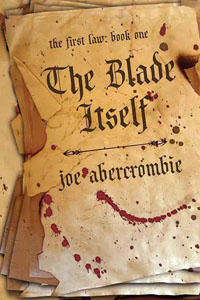
The Blade Itself, Joe Abercrombie (2006), was March’s book for my 2010 Reading Challenge. I reviewed it here.

A White Bird of Kinship trilogy, Richard Cowper, which comprises The Road to Corlay (1978), A Dream of Kinship (1981) and A Tapestry of Time (1982). These are set at the turn of the fourth millennium, a thousand years after global warming resulted in great floods, and the UK is an archipelago of seven kingdoms. Technology has fallen back to roughly mediaeval level, and a militant church runs much of the UK. Peter, a travelling story-teller, takes Tom, a young piper, to York to enroll him in the Minster school, but Tom is not all he seems. If he’s not the prophesied White Bird, then he is its prophet… Some years later, Tom’s death has resulted in a new religion, Kinship. A man is found floating in the sea off the island of Quantock (what were the Quantock Hills near Taunton), and put in the care of Jane, a potter’s daughter, who is huesh (she can see the future). Meanwhile, one thousand years earlier, Dr Mike Carver is in a coma following an experiment. Somehow he’s trapped in the mind of Thomas of Norwich, the man being cared for by Jane. The Road to Corlay, as the title suggests, covers the origin of the Kinship religion. By the second book, A Dream of Kinship, it’s reasonably well-established, albeit still a minority religion and considered heretical by Christianity. It’s also morphing into Christianity – accreting the creed and ceremony of the church it’s replacing. The story is told through Tom, son of Jane and Thomas of Norwich, as he grows up and studies at the religion’s centre, Corlay on the Isle of Brittany. The Christian Church plans to safeguard its stranglehold on the Seven Kingdoms by seizing control, but Tom manages to prevent this happening in the First Kingdom. In the final book, A Tapestry of Time, the parallels between Kinship’s history and Christianity’s history have become more marked. Tom travels about Europe with his girlfriend Witchet as an itinerant musician. There’s nasty incident in the French Alps, and Tom gives up on Kinship. But events lead him back to it – but in opposition to Brother Francis, who is Kinship’s St Paul. The final section of the book is set 800 years later, as two Oxford dons in a faux-Victorian/Edwardian English society, are “helped” to uncover the original Kinship, and not the church that has grown up around it. Again, Cowper’s clearly riffing off Pauline Christianity. They’re good books these three – well-written and interesting science fiction. Perhaps it’s a little implausible that British society would culturally repeat itself after the Drowning when the icecaps melted – mediaeval in 3000 AD, Victorian 800 years later. But that’s a minor quibble – Cowper makes it work.

The Lemur, Benjamin Black (2008). Black is better known as John Banville. This is the pseudonym he uses when he’s writing thrillers. Although, to be honest, The Lemur was not exactly a thrilling read. John Glass is an ex-reporter who married into a rich family. His father-in-law asks him to write a biography, so he hires a researcher, who Glass dubs “The Lemur” as he thinks he resembles one. A couple of days later, the researcher tries to blackmail Glass, and is subsequently murdered. Glass is worried that the murderer was his father-in-law, an ex-CIA telecoms billionaire, whose riches he resents (even while being kept by them). The Lemur isn’t a murder-mystery, it’s more of a character portrait of Glass. A quick read, but not a bad one.

The Magus, John Fowles (1977), I wasn’t expecting to finish so quickly – it’s a fat book: 656 pages in my Vintage paperback edition. But Fowles is an amazingly readable writer, which is one reason why I like his fiction so much. In The Magus, Nicholas Urfe accepts a position as teacher at a boarding school on the invented Greek island of Phraxos. There, he meets Maurice Conchis, a millionaire who owns a villa on the island. Conchis involves Urfe in a series of psychological games – few of which appear to make much sense. And that’s part of the appeal of The Magus: the promise that Conchis’s “experiments” on Urfe, the situations he devises, will be explained. And yet what little explanation does eventually come – when the motive is finally revealed – it stretches credulity. Urfe is also an unsympathetic narrator: he’s crass and arrogant. Conchis is little better, full of aphorisms that don’t submit to scrutiny. If Fowles’ Mantissa was a dirty old man’s book, then The Magus is definitely a young man’s book. Fowles himself describes it in the introduction to this 1977 revised edition as a “novel of adolescence written by a retarded adolescent”. Which is a bit harsh. It’s not as amazing a novel as The French Lieutenant’s Woman, or as good as A Maggot, and it’s probably a book best read when young; but neither is it not a very good book.

Lady Chatterley’s Lover, DH Lawrence (1928), surprised me. Obviously, I’m aware of Lawrence’s reputation but, given that my read of another highly-regarded author from the 1920s hadn’t been entirely successful (see here), I’d expected Lady Chatterley’s Lover to be a bit of a slog. Early indications were not good. The narrative opened very much as a story told to the reader, with no effort made to disguise its nature as a work of fiction – no attempt at immersion, in other words. The dialogue didn’t help either – too! many! exclamation marks! But then – and weirdly this echoed an identical moment in Pascale Ferran’s film adaptation of the book (see here) – the story seemed to settle down, and Lawrence pulled out some lovely writing about the countryside around Wragby, the Chatterley ancestral home in Derbyshire. Then the characters of Constance and Mellors began to gain depth, proving far more complex and rounded than I’d expected from the film adaptations I’d seen. In fact, they were very much unlike their cinematic counterparts. I was also amused to see my birth town of Mansfield described as “that once-romantic, now utterly disheartening colliery town” since I can’t imagine it ever having been romantic. I was going to put this book up on readitswapit.co.uk once I’d read it, but I’m going to hang on to it instead. It’s definitely worth a reread. And I think I’ll read me some more Lawrence as well at some point.

Majestrum, Matthew Hughes (2006), is another Vanceian tale from an author who has built a career out of writing Vanceian tales. This is no bad thing. Jack Vance is a singular talent, but Hughes has come the closest of anyone to emulating him – and, on occasion, even doing better perhaps. I’ve enjoyed other Hughes novels – I reviewed one, Template, for Interzone – but I wasn’t as keen on Majestrum. Like those others of his I’ve read, it’s set in Hughes’ Archonate universe, but it focuses on Henghis Hapthorn, a “discriminator” (sort of a private investigator). He’s recruited by Lord Arfe to uncover the background of the man wooing the aristocrat’s daughter. This then proves linked to a conspiracy directed at the Archon. And it’s all to do with a past age of magic trying to subvert the current age of reason. There are some really nice touches in Majestrum, and Hughes’s prose is very much like Vance’s… but I was put off a little by the mix of sf and magic.

Films
For All Mankind, dir. Al Reinert (1989). I should really do a proper review of this for my Space Books blog (and the same for In The Shadow Of The Moon too, which I also own). In fact, I think I will. So keep an eye open there for it.

The Curious Case Of Benjamin Button, dir. David Fincher (2008), was one of those films remarked on more on for a technical achievement than for anything else. Mind you, it was enough to see it nominated at the 2009 Oscars for Best Picture, Best Director, Best Actor, Best Supporting Actress, Best Adapted Screenplay, Best Original Score, Best Sound Mixing, Best Art Direction, Best Cinematography, Best Makeup, Best Costume, Best Film Editing and Best Visual Effects. It won Best Art Direction, Best Makeup and Best Visual Effects. Because, well, that’s all that’s really remarkable about The Curious Case Of Benjamin Button. In it, Brad Pitt plays the title character, who ages backwards. He’s born an old man (but baby-sized), and grows younger as he, er, ages. It’s based on a story by F Scott Fitzgerald. It’s also a “homily film”, sort of like Forrest Gump – you know, a life story in which someone learns a series of life lessons of the type which are found in fortune cookies or self-help books with asinine titles. The film looked really good, and the getting-younger-while-getting-older effect was cleverly done. Which is no doubt why it took the Oscars it did.

Harry Potter And The Philosopher’s Stone, and The Chamber Of Secrets, and The Prisoner Of Azkaban, and The Goblet Of Fire, dir. various hands (2001 – 2005). I read the first book many years ago and thought it remarkably ordinary. But I’d never seen the films. Despite the fact they’ve been on telly zillions of times. So I bagged cheap copies off eBay, and sat and watched them and… they’re not very good, are they? In those first two, the acting is definitely poor. The game of Quidditch makes no sense; nor does it feel like the sort of game that would be played at a public school. Things gets introduced into the world, with no back-story, just when they appear in the plot, which itself is nothing wildly original. Yes, the third film, Harry Potter and The Prisoner Of Azkaban, is better than the preceding two, but that’s no great achievement. The fourth film isn’t bad either, and is probably the best-plotted of the four. Mind you, its plot is a straightforward quest: win the competition! Anyway, I’ve seen them now. And the DVDs will be going back onto eBay.

Summer Hours, dir. Oliver Assayas (2008), is the fifth film by Assayas I’ve seen and, I think, the best one so far. It’s a French family drama. Two brothers and a sister – one brother lives in Paris, the other in Shanghai, and the sister in New York – meet up each summer. But then their mother dies, and circumstances preclude any future annual get-togethers, so they must pack up their mother’s house and the childhood memories they have of the place. A well-acted, well-scripted ensemble piece. Recommended.

Alien Hunter, dir. Ron Krauss (2003). James spader must be a science fiction fan. How else to explain all the crap sf films he appears in? He can’t be that desperate for work. In this one, an alien object is found under the ice in Antarctica, and taken to a corporate research facility on the continent. Spader, a cryptologist who used to work for SETI, is sent to investigate. But there’s an alien creature inside the object, and it breaks out and infects everyone with an alien virus which causes death in a matter of seconds. They should have titled the film Alien Rip-Off as there’s nothing original about the story. Best avoided.

X-Men Origins: Wolverine, dir. Gavin Hood (2009). So, after watching the three X-Men films, you thought you knew how Wolverine became like he is? Wrong. The title sequence to X-Men Origins: Wolverine is pretty good, showing Wolverine and his brother, Sabretooth, fighting in various wars. After an incident during the Vietnam War, the two are recruited by Colonel Stryker for his mutant task force, Team X. But Wolverine falls out with Stryker, and walks away. Some time later, his brother tracks him down, and kills his fiancée. Wolverine subsequently submits to have his skeleton coated with adamantium by Stryker, as only then will he be strong enough to kill Sabretooth. But it was all a cunning plot by Stryker in the first place… I thought the film was supposed to take place during the late 1960s / early 1970s, but you’d never have known from the production design. The film’s all a bit meh, possibly because Wolverine just isn’t an interesting enough character to carry a film on his own, and the supporting cast are pretty dull.

Top Hat, dir. Mark Sandrich (1936), is another one from one of those Top 100 Films lists – although I forget which list. Fred Astaire really was an odd-looking bloke. His head is a peculiar shape. And he had a horribly insipid singing voice. But, as was famously said, he “can dance a little”. This is arguably his best film which, to be honest, doesn’t say a great deal for his other films (and he made thirty-one). In Top Hat, Fred fancies Ginger, a friend of the wife of his producer. So he stalks her. Then she gets confused and thinks that Fred is his producer – i.e., married to her friend. The wife is not surprised that her husband is pursuing Ginger, and so the two plot to teach him a lesson. Except, of course, it’s not the producer, but Fred. The situation is well-handled and amusing, but the clomping wit leaves something to be desired. The musical numbers are everything you’d expect. Entertaining, but definitely rough around the edges.

Maroc 7, dir. Gerry O’Hara (1967), I watched for a review for VideoVista.

The Magus, dir. Guy Green (1968), I watched again after finishing the book (see above). Michael Caine has described the film as the worst he ever worked on because no one knew what it was about. Fowles wrote the screenplay himself, and he made changes to the story. Changing Alison, an Australian, into Anne, who is French, was, I imagine, necessary after Anna Karina was cast in the part. Other alterations were more substantial. The twins June and Judy (AKA Rose and Lily) have become a single person (played by Candice Bergen). Many of the games Conchis plays on Urfe have been cut – there simply wasn’t room for them, I assume – although the main ones are there. But the entire final section of the book, in which Urfe returns to the UK and tries to discover Conchis’ true identity has been completely cut. Having read the book, the film is an unsatisfactory adaptation, but it’s hard to imagine how Fowles could have adapted it anyway. Fowles appears in the film, incidentally – during the opening credits, he’s the deckhand who says, “Phraxos” to Michael Caine.

Ma Mère, dir. Christophe Honoré (2004), is another Isabelle Huppert film and is based on a 1966 novel by Georges Bataille of the same title. A young man, fresh out of Catholic school, visits his parents on Gran Canaria. His father, who he hates, dies in an accident shortly afterwards, and the young man is introduced to a life of sex and depravity – the Canary Islands night-life, in other words – by his mother. I really didn’t like this film. Thoroughly unlikeable characters doing unlikeable things, with a narcissistic self-regard which in no way makes their antics entertaining. It might make for a good novel, but it doesn’t make for a good film. Mind you, I wouldn’t have thought anyone could make an entertaining film out of Houellebecq’s Atomised, but Oskar Roehler did (see here).

16 Comments

Fantasy Challenge #3: The Blade Itself, Joe Abercrombie

Yes, I should have posted this last month. But with one thing and another, I didn’t actually get to the book until early April, and I only finished it a couple of days ago. And I still have April’s book for the fantasy challenge to read and review.

But, The Blade Itself… I had high expectations for this novel, as I’ve yet to see a bad review of it. Admittedly, most of those reviews are by people who are bigger fans of secondary-world fantasy than I am. I may have read my fair share, but it’s by no means my first choice of reading. Or second. Or even third or fourth. And for all that I’ve read many of the popular fantasy writers – Tolkien, Jordan, Erikson, Martin, Moorcock, Donaldson, etc. – I’ve never found them an especially satisfying read. The Blade Itself then, I hoped, given its reputation, might prove something different. After all, it was in part because of books such as The Blade Itself – and their reputations – that I chose to make this year’s reading challenge a fantasy challenge.

So if I’ve laden down Joe Abercrombie’s novel with great expectations, I’ve done no more than all those book bloggers and reviewers out there who praise it. And… you just know I’m going to bury it. Sort of.

As far as I can determine, The Blade Itself‘s reputation rests in part on its subverting of genre stereotypes. There’s no peasant hero, no hidden king, no dark lord, no plot coupons or quest. This is a book which rejects templates and The Tough Guide to Fantasyland. Mostly. The novel’s plot is a case in point. The barbarians in the north have finally organised under a king, Bethold, and are threatening to invade Angland, a northern territory belong to the Union (a united island kingdom). To the south, the city of Dagoska is about to be besieged by the Gurkish Empire, which occupies the continent from which it depends Gibraltar-like. This story is told through the viewpoints of a handful of disparate characters: Logen Ninefingers, an exiled northern barbarian; Inquisitor Glokta, a war hero who is now a despised cripple and torturer; and Captain Jezal dan Luthar, a lazy, arrogant, and not too intelligent officer in the King’s army.

Once upon a time, I thought writing a story featuring a cast of unlikeable characters would be an interesting exercise. Many novels, for example, have anti-heroes – indeed Moorcock created an entire canon of fantasy works featuring anti-heroes. But unlikeable characters and anti-heroes are not the same thing. Abercrombie’s characters are unlikeable – more than that, they’re often despicable. This may be bucking the stereotypes in secondary-world fantasy literature, but Warhammer and other RPGs have been doing it for years. And while it may be an interesting writing exercise, it’s a less interesting reading exercise. I didn’t like Luthar or Glokta; Ninefingers was Conan without the boasting. I didn’t understand why I should want to read their stories. I don’t want to read about prats and pillocks, I see enough of them in real life.

Having said that, the cast of The Blade Itself – and one or two of the secondary characters are actually quite sympathetic – wouldn’t have been so annoying if they had been properly characterised. But Abercrombie uses a technique common in secondary-world fantasy: characterisation by quirk. Each character has a distinctive speech pattern – and some are so distinctive they’re pretty much parodies. Or, in the case of Glokta, Abercrombie presents his thoughts italicised in the prose. And because only Glokta’s thoughts are presented to the reader, he often feels as though he escaped from another book.

The plot has in its favour that it’s not a quest. Having said that, the build up to a war on two fronts is not the most exciting of stories – especially given that The Blade Itself tells it only from the Union’s point of view, and we have only its upper echelons’ prejudiced view of the motives of the northern barbarians and the Gurkish Empire. And those upper echelons are even more of a parody than the central cast. Abercrombie adds to this meagre plot through the introduction of Bayaz, First of the Magi. Ages past, apparently – although exactly when is unclear; certainly several centuries ago – a group of wizards did something which entered legend. Bayaz was one of them, but now he has come back to the Union’s capital, Adua. Except they’re not convinced he is who he says he is…

The Blade Itself is a secondary-world fantasy, which means its world is important. I’m tempted to think a secondary world is more of a hygiene factor – a bad one won’t ruin a book, but a good one will improve it – but perhaps that’s because so many are based on the same models. The world of The Blade Itself is vaguer than most – there’s no map, for example – which actually works to its advantage. Nothing is especially original, and the various societies’ models are plain, but by refusing to treat his novel like a role-playing game supplement, Abercrombie has pushed his story onto his characters. Which would be both a clever move and admirable, if only the characters weren’t such caricatures. Nonetheless, it’s an improvement on many other secondary-world fantasies.

There are some interesting bits in there. But, as in other books of this type, they’re buried in the back-story and it’s only their effect on the narrative which is described. In The Blade Itself, it’s the story of the Maker, and the visit by Bayaz and a handful of others into the House of the Maker, a vast tower in the centre of Adua. That bit I did like.

If there’s a word I’ve heard most associated with The Blade Itself more than any other, it’s “gritty”. I’m not sure if this refers to the unlikeable characters or the level of violence. Because it is a violent book. The damage inflicted in each of the many fight scenes is very detailed. You’d expect a secondary-world fantasy to be violent – it’s in the nature of the genre, they have swords and battles and good versus evil – but none seem to revel in the blood and guts as much as The Blade Itself does. But violence, in fiction as in real life, should be used sparingly. Too much gore on the page, and the story turns into little more than a framing mechanism for one fight after another. A plot needs to be more than that. Thankfully, Abercrombie likes his fight scenes, but he doesn’t let them take over his story.

It occurred to me as I read The Blade Itself that one of the reasons I often find secondary-world fantasy so dissatisfying is because there’s little in it to impress me. In science fiction, you have “eyeball kicks”, or concepts which appeal directly to your sense of wonder; in literary fiction, you can find lovely prose, or an insight whose truth seems so self-evident you wonder why you didn’t think of it yourself, or perhaps an artfully-turned plot that causes you to question everything that has gone before. Secondary-world fantasy offers none of these. It is world-building and story. And the world-building is so often built on historical, or earlier fictional, models that little of it comes as a surprise. The story likewise often follows a tried and tested formula. There’s nothing in them to impress me; I don’t find them satisfying reads.

The Blade Itself is a case in point. It’s undoubtedly better than Pawn of Prophecy (see here). Its prose is not as assured as Assassin’s Apprentice – it is, in fact, often clumsy, although it does improve as it progresses – but its world-building is not as dull as in Hobb’s novel (see here). Its plot is certainly less clichéd, and its cast of characters so much anti-stereotype they’ve turned into parodies.

I approached The Blade Itself with high expectations. For a secondary-world fantasy. Which was somewhat unfair. But then, if you approach a book with low expectations and it exceeds them, that doesn’t mean it’s a good book. When people say science fiction should not be held to the same standard as other branches of fiction, that cardboard characters and plonking prose are fine because it’s science fiction… they’re talking crap. The same holds true for secondary-world fantasy. A good secondary-world fantasy should still be a good book. There should be no caveats, no special generic dispensations.

Will I read the next book in The First Law trilogy? Given the size of the TBR pile – not to mention the two cardboard boxes of books I “quite fancy” reading I have in the other room – no, it’s not going to happen. I don’t especially care what happens to the characters, and if the trilogy’s story-arc is simply a war on two fronts, then I don’t especially care how the trilogy ends. The Blade Itself is the best of the three fantasy novels I’ve read for this challenge so far, but it remains to be seen whether it’ll be the best of the year…


3 Comments

Readings & Watchings 4

I’m going to number these Reading & Watchings posts from now on. This year, they’re working out at sort of monthly, but I don’t want to keep to a regular schedule – as it depends on how much I’ve read and watched since the last post. Numbering them seems like an acceptable compromise. Anyway, since the last Reading & Watchings post – number 3, obviously – I have read the following books and watched the following films:

Books
Pashazade, Jon Courtenay Grimwood (2001), surprised me by holding up well for a book nearly a decade old. It’s cyberpunk, but it’s set in an alternate world – so that may be why. It provided enough of a spin on cyberpunk tropes for them not to feel like they were past their sell-by date (although the nine-year-old hacker did generate a small wince). But the novel is well-written, pacey, very good on place, and the world is put together well. I borrowed the copy I read, but I plan to keep an eye open for the remaining books in the trilogy. Incidentally, the edition I read wasn’t the one that had the back-to-front Arabic incorporated into the cover design…

Solaris, Stanislaw Lem (1961). I like Andrei Takovsky’s film adaptation of Solaris, although Lem apparently hated it. Steven Soderbergh’s more recent adaptation I found somewhat dull. And the book, now that I’ve finally read it… is surprisingly dull too. The writing is clunky – although I’m reliably informed that’s because it’s a bad translation (from the French, which was translated from the original Polish). Lem also goes off on these long info-dumps in which he references lots of made-up scientific papers, which have a tendency to make your eyes glaze. I’m glad I read Solaris, but I’ll stick to Tarkovsky’s film, I think.
One Giant Leap, Piers Bizony (2009), was a birthday present from my sister, and it’s excellent. I reviewed it on my Space Books blog here.

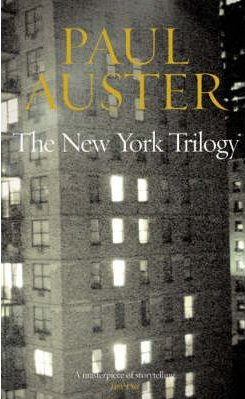
The New York Trilogy, Paul Auster (1985), was my first Auster. It is, as the title suggests, compromised of three linked novellas, all set in New York. In the first, “City of Glass”, a man is mistaken for a detective (called Paul Auster) and accepts a case to watch a recently-released felon, whose daughter-in-law is afraid will harm her husband. The ersatz detective, Quinn – actually a writer of mysteries – finds himself so wrapped up in the puzzle of the case that his identity begins to unravel. This story worked well… up to the point where Quinn meets Auster, which felt like the story’s theme blundering its way into the plot. “Ghosts”, the second novella, is less successful. Blue has been tasked by White with watching Black; and that’s all he does. Until his own life falls apart because of his monomaniac focus on Black. When – against White’s wishes – he engineers a meeting with Black, he discovers that the case is less straightforward than he had imagined. “The Locked Room” is the best of the three. The narrator is contacted by the wife of Fanshawe, a childhood friend. Fanshawe disappeared six months previously, and it was his wish that his wife contact the narrator in order to manage the many unpublished poems and novels he’d left behind. Fanshawe’s work proves to be excellent, and is subsequently published. The narrator also falls in love with Fanshawe’s wife. She divorces the missing man, and they marry. Then the narrator is commissioned to write a biography of Fanshawe, and begins to investigate what happened to him. Along the way, he tries to determine the identity, and eventual fate, of the man he is writing about. I liked this one and I liked its enigmatic ending. I might try more by Auster.

Empire of the Atom (1956) and The Wizard of Linn (1962), AE van Vogt. Of all the Grand Old Men of sf, the one I will still happily read is van Vogt. And yet he’s as bad as the others – and often worse. But his books are so bonkers, I often find their complete lack of coherence entertaining. That’s not true of all of them, of course. Many of them are just plain awful. Empire of the Atom and The Wizard of Linn fall somewhere in the middle, although a little towards the crap end of the scale. They’re set in 12,000 AD on an Earth reduced to barbarism. But it still has spaceships, and colonies on Mars and Venus. Science is the province of temples dedicated to the “atom gods”. A “mutation”, Clane, is born to the ruling family of the Linn Empire. Clane is allowed to live, and grows up to be extremely clever. There are assorted dynastic struggles, which, typically for van Vogt, are just thrown in as the author thinks of them. Empire of the Atom carries on in that vein for 150 pages, and then takes an abrupt turn into metaphysics. And then ends. The Wizard of Linn continues on where Empire of the Atom finished. Except the implied atomic war which reduced the Earth to barbarism turns out to have been an invasion by the alien Riss (which actually contradicts several scenes in the earlier book, but never mind). Clane, in a giant spaceship captured from the Riss, goes looking for their home world. He finds a pair of human planets, like “giant twin moons” (wtf?), where everyone can teleport and is telepathic; but they won’t help him. He continues on, and finds a Riss world, which is also home to an underground civilisation of humans. He then returns to Earth and persuades the Riss invaders to leave by threatening them with a mysterious doomsday weapon he’s had knocking around since the last third of Empire of the Atom. End of story. Like most of van Vogt’s novels, if these two were made into a film they’d be brilliant if you watched them when you were pissed.

Black Widow: Deadly Origin, Paul Cornell (2010). Yet another UK genre author tackles a Marvel property, and runs up a story which successfully manages to munge in all the previous – and often contradictory – incarnations of the character. Dan Abnett and Andy Lanning did with the Guardians of the Galaxy, and Cornell has done it here with the Black Widow. This is not a Black Widow story like the one written by Richard Morgan, this is much more embedded in the Marvel universe, more in tune with Marvel sensibilities. I liked it. Perhaps not as much as Morgan’s, but I did like it.

A Vision of Future Space Transportation, Tim McElyea (2003), proved a somewhat less detailed study of its subject than I’d expected. I reviewed it on my Space Books blog here.

The Worlds of Frank Herbert, Frank Herbert (1980), is the Gregg Press hardback edition of a paperback first published in 1971. The stories in this collection first appeared in Galaxy and Analog magazines, between 1958 and 1966. They show their age. Collection opener ‘The Tactful Saboteur’ is a Jorj X McKie story and not too bad. But some of the others have dated badly. ‘A-W-F Unlimited’ starts well enough as a sort of 1950s spoof of advertising, but then flops over into bad 1950s gender stereotypes. ‘Escape Felicity’ has an interesting premise, but the execution is dated, ‘Old Rambling House’ reminds me of a Heinlein story but seems to have a bit of van Vogt about it, and though ‘Mating Call’ shows its age it also is quite modern. The others are pretty forgettable. The book also has a good introduction by William M Schuyler, Jr.

Apollo – The Epic Journey to the Moon, David West Reynolds (2002), I reviewed on my Space Books blog – see here.

Space Stations – Base Camps to the Stars, Roger D Launius (2003), will be reviewed this month on my Space Books blog. I usually try to read one space book a month, but I seem to have splurged a bit on them in the last few weeks.

The Age of Zeus, James Lovegrove (2010), was a review book for Interzone.

Agent of Chaos, Norman Spinrad (1967). Poor old Spinrad has been getting some hate in the blogosphere recently after an ill-judged article on world sf in the April/May issue of Asimov’s. Which came as something of a surprise, as I’d never thought him the type to wedge his foot in his mouth so effectively. I’d also imagined him to be one of the stalwarts of the New Wave. So Agent of Chaos proved another surprise – it’s the sort of badly-written, badly-dated tripe sf authors churned out in the 1950s. It has all the rigour and inventiveness of a van Vogt novel, without the madcap plotting. There’s a Solar system-wide totalitarian state ruled by a council, a pro-democracy underground fighting the state, and a Brotherhood of Assassins who commit random acts of senseless violence as some sort of defence against social entropy. Or something. And in the end, they escape on a big spaceship to Alpha Centauri. Or somewhere. Best avoided.

Gilbert and Edgar on Mars, Eric Brown (2009), is great fun. GK Chesterton is leaving the Athenæum Club after dinner with HG Wells and GB Shaw, when he is accosted by a short gnome-like man… and whisked off to Mars. Where he finds himself in the clutches of the Six Philosophers. He’s rescued by an American, Ed, and together they flee for the city of Helium to seek the aid of John Carter. It doesn’t take much intelligence to work out who Ed is, or why Mars strangely resembles Barsoom. But Brown manages a convincing pastiche of Chesterton’s style, and the phrase “I am in need of sustenance of a hoppish nature” has become my new favourite euphemism for “I could murder a pint”.

The Proteus Sails Again, Thomas M Disch (2008), was, I believe, Disch’s last written work. It’s a novella from Subterranean Press, and a sequel of sorts to the earlier The Voyage of the Proteus. The narrator – Disch himself – is back in his New York apartment, and about to be evicted, after his adventures during the preceding novella. The Greek sailor Socrates from that book and Disch’s Reader appear, and they go on a jaunt through a post-apocalyptic New York in a yellow cab. And, well, any resemblance to reality is clearly intentional. As is any non-resemblance. Not a comfortable read, given what happened to Disch.

Films
Rescue Dawn, dir. Werner Herzog (2006), is based on a true story – a US naval aviator who was shot down over Laos in 1965, was taken prisoner by the Pathet Lao, tortured and then imprisoned at a camp somewhere in the jungle. But he managed to escape, becoming the first American to do so. His fellow prisoners – five in the film, six in real life – didn’t make it. Like many Herzog films, Rescue Dawn was clearly a logistically difficult film to make. It’s also quite harrowing in places. But Christian Bale, who plays Dengler, is just so annoying throughout, it’s hard to really care. Rescue Dawn apparently did quite well on release and had good reviews from critics, but I much prefer Herzog’s other films.

Star Trek: The Next Generation Season 2 (1988), or, as Adam Roberts told me he calls it, Star Trek: The Next Generation: The Nadir. And it is pretty dismal stuff. Having watched five seasons of Deep Space Nine, these early seasons of Next Generation seem crude sf telly by comparison – and Deep Space Nine is hardly the height of media sf sophistication. Some of the episodes in this season were embarrassingly bad. Like “The Outrageous Okona”, in which the Enterprise encounters a lovable interstellar rogue – Okona, O’Connor, geddit? – who proves to be secretly a Good Sort. Or “Up the Long Ladder”, with its lost colony of lovable Oirish rogues. Or “Pen Pals”, when Picard disobeys the Prime Directive yet again. Or “The Measure of a Man”, in which a hearing is convened to determine whether Data is a person or property, and in which the prosecution’s “killer” argument is that he has an off switch… These episodes are more than twenty years old now and they’ve not withstood the years well. I remember the excitement when they first came out – proper serious sf telly, not like Dr Who with its wobbly sets and wobbly scripts. In fact, it was a bit like the excitement new Who generated a few years ago. But watching season 2 and you can see how much anticipation made you overlook the episodes’ flaws, and how nostalgia had you remembering them as better than they actually are. Star Trek: The Next Generation did manage some good television sf drama during its seven seasons, but none of it is in season 2.

Murdoch Mysteries Season 2, ITV (2009), I reviewed for Videovista – see here.

Schindler’s List, dir. Stephen Spielberg (1993), I’d never actually seen before. Which is why I rented it. I’m not a fan of Spielberg’s films, and I can’t think of one less likely to appeal to me than his take on the Holocaust. In the event, I thought he handled the subject well. Ralph Fiennes came across as a bit like a comedy Nazi, Liam Neeson wasn’t too bad in the title role, and the supporting cast played their parts well. The decision to film in black and white worked, although the girl in red felt like a gimmick. Anyway, I’ve now seen it, so I can cross it off the list. But if you want to watch a film about the Holocaust, then Andrzej Munk’s Passenger is better.

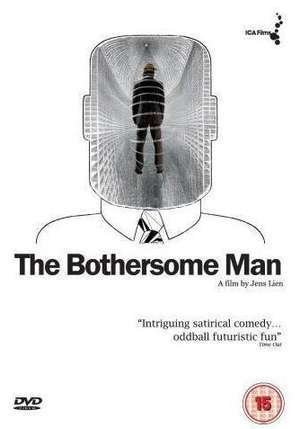
The Bothersome Man, dir. Jens Lien (2006), I rented, but when it arrived I couldn’t remember why I’d stuck it on my rental list. I don’t normally seek out Norwegian films, and the director and cast were unknown to me. Perhaps it was this review by Jonathan McAlmont that caused me to add it to my rental list. Whatever the reason, I’m glad I did. The Bothersome Man is an excellent film. Andreas jumps in front of an underground train. When he comes to, he is on a coach, which lets him off at a garage in the middle of nowhere. He’s welcomed by a man in a suit – who had even put up a welcome banner – and then driven to a city, where he is given a job and a flat to live in. But everything in the city seems flat and washed out. Andreas tries to live a normal life, but he can’t cope with the lack of emotion and sensation. He tries to commit suicide by jumping in front of an underground train – leading to one of the film’s funniest scenes. Eventually, in the cellar rooms of another man, he finds a crack in the wall from which issues beautiful music. So the two of them widen the crack and dig a tunnel to the source of the music… Recommended.

Taste Of Cherry, dir. Abbas Kiarostami (1997), is an Iranian black comedy like the excellent Secret Ballot. Mr Badi needs someone to do a job for him, and drives round Tehran and its environs looking for someone willing to do it. But no one will. The job is to bury Badi, in a grave he has already dug, after he commits suicide. Eventually, he finds someone who agrees to do the deed if he finds Badi dead in the grave the following morning. Badi lies down in the grave that night. A thunderstorm starts… And the film cuts to camcorder footage of Kiarostami filming Taste Of Cherry. A good film, but Secret Ballot was better.

Gabrielle, dir. Patrice Chéreau (2005), is an adaptation of a Joseph Conrad short story, ‘The Return’, which I have not read. I watched the film because it stars Isabelle Huppert. It’s set in late nineteenth-century Paris. A respected publisher’s wife leaves him for her lover, and then returns several hours later having been rejected. The film then dissects their life together. Gabrielle looked great, its cast were superb, and the dialogue was sharp. But dragging the story out to 90 minutes also made it really slow, and it was hard to stay interested and my mind wandered quite a bit as I watched it. Worth seeing, but I’ll not be dashing out to buy the DVD.


2 Comments

Little shiny things…

… given to people. AKA awards. It is the season for it. This weekend at the Eastercon, the winners of the BSFA Awards were announced, as were the shortlists for the Hugo Awards. And here they are – the fiction shortlists and winners – accompanied by some thoughts about them by Yours Truly.

BSFA Awards

Best Novel

And the winner is… The City & the City by China Miéville. I can’t say I’d have been embarrassed whichever book had won, although I think I would have preferred the Roberts. The City & the City has an intriguing central premise, but Miéville has always felt to me like the poster boy for a movement of one. Still, given the book’s ubiquity on shortlists this year, I think I shall give it a go.

Best Short Fiction

The winner is ‘The Beloved Time of Their Lives’, Ian Watson and Roberto Quaglia. That was quite an odd shortlist. I’ve heard the Hutchinson and McDonald are good, but the rest underwhelmed me.

Hugo Awards
Best Novel

With the exception of the Sawyer, about which I have heard nothing good, the others seem to be held in reasonably high regard – bar the odd dissenting voice. So, not too shabby a shortlist.

Best Novella

Kress, again. And Stross. The Scalzi I’ve heard described as “Warhammer 40k lite”, but I think I’d still like to read it. The only Baker I’ve read was in The New Space Opera and a) it wasn’t space opera and b) it featured British characters straight from Hollywood Central Casting.

Best Novelette

The Swirsky, Watts, Griffith and Foster have received quite a lot of bandwidth in the past couple of months, so I suppose their appearances are no real surprise. I thought the Swirsky done well but overly long. The Watts I didn’t even think was the best story in The New Space Opera 2. It’s a klaxon of a story – a long blaring one-note treatment of its premise and, despite the neatness of its eponymous idea, it did nothing for me.

Best Short Story

Oh dear, another Resnick. There must be some secret cabal somewhere that backs him and Sawyer. I can think of no other reason for their presence on the shortlists year in year out. I’ve read the two Clarkesworld stories. The Johnson was a mood piece; I didn’t get it. The Jemisin was neat but not especially memorable. I’m surprised at the Schoen – Footprints was published by small press Hadley Rille, its theme was so narrow it can’t have appealed to many, and I note Rich Horton didn’t even mention Schoen’s story in his roundup of the year’s short fiction here.

At some later date, before the Worldcon, I shall probably read the various short fiction shortlisted works – subject to availability – and write about them here. As I did last year. I shall also probably completely fail to pick the winner again as well.

Finally, this year I’m making more an effort to read short fiction – albeit not from the “Big Three” of Asimov’s, Analog and F&SF, as I subscribe to none of them. But at least in 2011 I’ll be in a position to nominate some short stories, novelettes and novellas, although I’m unlikely to buy a membership for the Worldcon (which will be in the US – in Reno, Nevada).


32 Comments

The Best Science Fiction Series

The gauntlet has been laid down, and I’m up for the challenge.

What do I think are the best science fiction series?

For this list, I’ve defined a series as more than a trilogy, or a series of standalone novels set in the same universe and sharing a linked chronology. I actually put together a list of twenty series I like a great deal – not all of which I will happily admit are good – so choosing a top ten was harder than I’d expected. But after much soul-searching, I managed to pick ten I not only like a great deal, but also have a high regard for. And which, I believe, show a reasonable spread across the many different types and styles of heartland science fiction.

So, in time-honoured reverse order:-

10 Dumarest Saga, EC Tubb
Over the course of thirty-three novels, Earl Dumarest travelled the galaxy, trying to find his home world, the mythical planet Earth. In each novel in this series, he landed on a new planet, had an adventure of some sort – which usually involved a) a beautiful woman, and b) a fight to the death – and discovered some clue which moved him one step closer to his home. He eventually reached it in book 32: The Return, which was originally published in French and later republished in English by a small press. The Dumarest saga was never intended as great literature – Tubb himself has said he was happy to churn them out as long as Donald Wollheim was happy to buy them for DAW – but that doesn’t mean they’re badly-written. There are no hamsters in wheels in this series. The Dumarest novels were formative books for me, and helped shape my view of science fiction. See here for the full list of books in the series.

9 Alliance-Union, CJ Cherryh
These books aren’t so much a series as a tapestry. In around thirty books, Cherryh has created a huge future history, stretching across thousands of years. Not every book is especially good, and Cherryh’s brusque prose can be an acquired taste. But there’s no denying the achievement such a future history represents, nor the rigorous internal consistency Cherryh has maintained throughout the books. This is truly immersive stuff, peopled by characters who aren’t cardboard cut-outs, and comprising stories which are not afraid to explore a variety of weighty topics. See here for the full list of books in the series.

8 Jurisdiction universe, Susan R Matthews
Andrej Kosciusko is a torturer for the Bench, a totalitarian interstellar regime. The first of these books, An Exchange of Hostages, appeared in 1997, but sadly all but the last book seem to be out of print now. Matthews created an interesting universe, peopled it with a well-drawn cast, and wasn’t afraid to tackle thorny moral dilemmas in her stories. I thought them very good; it’s a shame so few other people did. Books in the series: An Exchange of Hostages, Prisoner of Conscience, Hour of Judgment, Angel of Destruction, The Devil and Deep Space, Warring States.

7 The Book of the New Sun, Gene Wolfe
I reread this last year, and wasn’t as impressed with it as I’d expected to be. But it belongs on this list because it shows that science fiction can be clever and cleverly-written, without having to pretend not to be genre. The five books of this series are not easy reads – you need your wits about you – and there has probably been more words written about it than the Book of the New Sun itself contains. But this is a work likely to remain a classic for a long time. Books in the series: The Shadow of the Torturer, The Claw of the Conciliator, The Sword of the Lictor, The Citadel of the Autarch (my review of these four here), The Urth of the New Sun.

6 Eight Worlds, John Varley
The Invaders came and destroyed human civilisation to save the whales. The only survivors were those living off-planet at the time – on the Moon, Mars, the Saturnian and Jovian systems… Over the course of a number of stories and three novels, Varley fleshed out a future history in which humanity struggles to survive – using gifted alien technology – on the various inhospitable worlds of the Solar system. Most of the novels and short stories set in the Eight Worlds were written during the 1970s and 1980s, but they’ve held up pretty well. They were always, first and foremost, about people – yet Varley still managed to build a mostly convincing universe in which to place his characters. Books in the series: The Ophiuchi Hotline (my review here), Steel Beach, The Golden Globe, plus many of the stories collected in The Persistence of Vision, The Barbie Murders and Blue Champagne.

5 Revelation Space, Alastair Reynolds
Last year, Gollancz paid Reynolds £1,000,000, and with good reason. Few writers have managed the consistently high level of invention Reynolds has so far in his nine novels (five in the Revelation Space universe) and many short stories. He is, perhaps, the poster boy for New Space Opera, although his works are actually not all that much like New Space Opera as it’s now commonly understood. But the mix of Big Ideas and hard sf – something Stephen Baxter also does very well – is certainly representative of twenty-first science fiction. It’s the sort of sf which shows what the genre is capable of. Books in the series: Revelation Space, Chasm City, Redemption Ark, Absolution Gap, The Prefect, plus the novellas Diamond Dogs and Turquoise Days, and the stories collected in Galactic North.

4 Dune, Frank Herbert
Well, you knew it was going to appear on this list somewhere… Of the six books – we won’t mention the execrable seventh and eighth books by Kevin J Anderson and Brian Herbert – I actually think Dune contains the poorest writing. It has the most immediately-immersive story, but I consider the last two that Frank Herbert wrote the better books. God-Emperor of Dune is a bit of an obstacle, a massive tome plonked in the middle of the series, which seems to lecture more than it entertains, but it’s definitely worth reading. Herbert wasn’t the best sf writer of his generation, but he was certainly the most thoughtful. Books on the series: Dune (my review here), Dune Messiah, Children of Dune, God-Emperor of Dune, Heretics of Dune, Chapterhouse Dune, and some of the stories collected in Eye and The Road to Dune.

3 Hainish Cycle, Ursula K Le Guin
Some of the genre’s best novels belong to this informal series but, even so, together they form something that is greater than the sum of its parts. The early novels might be a little wobbly, but the later ones more than make up for it. Few sf writers can document cultures as convincingly as Le Guin, and she does it to great effect in each of these novels. These books, and those at #1 and #2 in this list, are very political books – and that’s proper politics: not good interstellar empire battling nasty evil aliens. Sf is as much about the real world as it is the invented world of the story. The best sf writers know this. Books in the series: Rocannon’s World, Planet of Exile, City of Illusions, The Left Hand of Darkness (my review here), The Dispossessed, The Word for World is Forest, Four Ways to Forgiveness, The Telling, plus a number of short stories.

2 RGB Mars, Kim Stanley Robinson
This one is only a little bit of a cheat. Yes, it’s a trilogy… but there’s also the coda volume, The Martians. Besides, it’s simply the best series of books ever written about colonising Mars. But it’s not all hardware and the Right Stuff – the story expands to include the early centuries of the colony, discusses politics, utopianism, history and the future, among many other topics. Few sf novels can make you feel like you’ve been to the real Red Planet – Red Mars does that, and then continues on from there. Books in the series: Red Mars, Green Mars, Blue Mars, The Martians.

1 The Culture, Iain M Banks
If Banks’ Culture novels occasionally disappoint, it’s only because he has set so high a standard he sometimes fails to meet it himself. But as a body of work the seven Culture novels know no equal. They are the space operas of space operas. They re-invigorated both space opera and sf, and they continue to show how it should be done. They have invention, wit, giant spaceships, shit that gets blown up, and excellent writing. Happily, Banks has not yet finished playing in his Culture universe – a new Culture novel will apparently be published next year.  I can’t wait. Books in the series: Consider Phlebas, The Player of Games, Use of Weapons, Excession, Inversions, Look to Windward, Matter (my review here).

Now, let’s see you argue about this list…


Leave a comment

Book pimpage

If I were at the Eastercon this weekend, then I’m sure Andy Remic would buy me a couple of beers for posting his promo video here on my blog, if he were at the Eastercon too. The short horrifying film below is to promote Andy’s latest novel, Soul Stealers, due to be published at the end of the month. It has clockwork vampires in it. Which is such a cool idea I’m convinced he stole it from me.

Andy says, “The film was a helluva lot of fun to make, you can see me grinning like an idiot on the sword-fighting scenes. It also stars Nicole Willis, a brill little actress, and my mate Ian Graham, author of Monument. Sword/axe fighting in the snow was a real giggle, right up to the point I nearly shoved my sword up through Ian’s lower jaw and thus skewered his brain (it was a real steel blade, incidentally). I really did nearly kill the guy! But then we should all suffer for our art, yes?”

Looks pretty damn cool, yes? Meanwhile, check out Andy’s website here.

You can buy me those beers the next time I see you, Andy…


8 Comments

Oops, I did it again

Long time readers of this blog may remember a piece I wrote back in 2008, in which I took apart Asimov’s ‘Nightfall’ and explained why I felt it wasn’t the greatest science fiction story ever – you can read it here. It received a lot hits. About two months’ worth in the space of a weekend, in fact. And it provoked quite a reaction.

So a couple of days ago, in response to a number of best sf series lists I’d seen, I posted a list of The Worst Science Fiction Series (here). It received a lot of hits. About four months’ worth in the space of two days. And the reaction this time was a bit more severe.

And yet that reaction was essentially for the same thing: I dared to suggest that Asimov was a crap sf writer.

There are other writers named in my Ten Worst SF Series post. Some people felt their inclusion was undeserved. Just as others felt they’d earned their place. But the biggest amount of bile was generated by those who were upset at my comments about Asimov.

For the record, I’ve been reading science fiction for thirty-five years. Yes, that includes Asimov and EE ‘Doc’ Smith. I also review books for Interzone (see the non-fiction tab above). So when I write about science fiction, I do know what I’m writing about. I’ve even written the odd bit of science fiction myself, and I plan to write more.

For those whose reading comprehension is clearly wanting, I shall say it again: Asimov owed his high place on my list because he so frequently appears in best of lists. “Best” means “of the highest quality”. It does not mean “seminal”. It does not mean “made a good fist of it for his debut”. Let me repeat that: “highest quality”. In other words, the writing is the best the genre has to offer, as is the invention, characterisation, world-building, etc.

Do you really think that’s true for Foundation, and its sequels and prequels and mid-quels and side-quels and inter-quels, etc.?

That’s why Asimov was at #2 in my list. Because it is not of the “highest quality” but is repeatedly claimed to be. Yes, the Mission Earth books are worse than the Foundation books – but no one is stupid enough to suggest they’re the best books in the genre.

I wish I could respond to all of the comments that were made about my Ten Worst SF Series list, but a great many were just too stupid. (There are one or two such in the comments thread to my actual post.) However, I do want to make one important point: I did not include the Wheel of Time, or David Eddings, or Terry Goodkind, because the list was “Ten Worst Science Fiction Series”. Not “Ten Worst Science Fiction and Fantasy Series”. I titled the piece The Worst Science Fiction Series because it was about science fiction.

I’d also like to point out that my list was intended to be light-hearted. There were clues in the phrases I used – “powered by a million hamsters running around a million wheels”, for example – which is not an expression typically used by critics or reviewers. I stand by my opinions – I have a low regard for Asimov’s writing – but my list was written to amuse.

Having said all that, I’d like to thank everyone who dropped by, and everyone who linked to my post. It’s clear to me that Asimov is some sort of sf sacred cow, and you tip him at your own peril. That kind of uncritical adulation is not good – for readers, or for the genre. We need more debate – proper debate, the sort that doesn’t involve calling the other person a moron, questioning their sexuality, or confusing opinion with fact (people do that all the time. Fact.).

Finally, for my next trick I will post articles here explaining why: a) the Dune series books actually increase in quality after Dune, b) Robert Heinlein is plainly a fascist, and c) The Search For Spock is the best of the Star Trek films… So don’t forget to come back often and read my posts… just in case I ever do get around to writing the articles.


113 Comments

The Worst Science Fiction Series

Yet another site puts together a list of the “greatest science fiction book series” and has Asimov’s Foundation series in the number one spot. (I won’t link to the site because my anti-virus software didn’t like it.) Sigh. Do people honestly think that’s the best the genre has to offer? A badly-dated trilogy with perfunctory world-building and cardboard characters, and written in prose which possesses all the charm of a dead badger? “Best” means “of the highest quality” – not something you remember enjoying when you were twelve and still believed in the tooth fairy. Foundation plainly isn’t “of the highest quality”, not by any sane or accepted yardstick.

However, in the spirit in which that original list posited Asimov’s lumpen opus as the best sf book series, I shall now present the very worst of the genre. The following are science fiction book series whose label as science fiction embarrasses me, whose continuing popularity puzzles me, and whose fans I feel deserve a smack upside the head with a very large and nail-studded cluebat.

10 Honor Harrington, David Weber
These start well enough but, like a well-known fantasy blockbuster series currently being demolished by Adam Roberts on his blog, they soon turn obese, turgid and dull. The title character also becomes increasingly implausible, and I would not be surprised if the final book in the series – should it ever appear – has Harrington magically transform into a goddess and create an entirely new universe using some wildly implausible authorial hand-waving. Read the first two or three by all means, but ignore the rest unless you want your will to live to be slowly drained from you.

9 Four Lords of the Diamond, Jack Chalker
I could have chosen any Chalker series, to be honest. They’re all pretty much the same. And every series feels like a novelette stretched out to fill three or four novels – with this happened and then that happened and then they all sat around and talked about it for a bit before that happened and this happened. The rambling plot usually leads to a weak resolution, which makes you wonder why you bothered reading the books in the first place.

8 Grand Tour, Ben Bova
I like the idea of these books: a series of hard sf novels about the gradual colonisation of the Solar system. But they’re a real slog to read. Bova’s prose is not so much workmanlike as bolted-together. If prose should be a sleek and powerful Italian sports car, then Bova’s is a great lumbering tank powered by a million hamsters running around a million wheels.

7 The Adventures of Dirk Pitt, Clive Cussler
Although sold as thrillers, these are pretty much science fiction – they’re set a few years ahead of their year of publication, and the plots often feature technology that doesn’t exist. To say Cussler is not a prose stylist would be an insult to writers everywhere. His prose was poor in the first few books, but the plots overshadowed it. Then Cussler’s writing got worse… and worse… By book ten or eleven, they’re all but unreadable. The series is now continued by his son, and has spun out an uncountable number of side-series by other hands, slowly drowning published literature in leaden prose, formulaic plotting and ever more risible characters…

6 Projekt Saucer, WA Harbinson
The central premise of this series is a well-documented conspiracy theory and quite loony. It goes like this: during World War II, the Nazis invented flying saucers and they used them to flee in 1945, and have, variously, either a base on the Moon or in Antarctica. In Harbinson’s series, written in the finest deathless prose, the saucers were actually invented by an American genius who went to work for the Nazis, and he is now the head of a secret scientific organisation with a hidden headquarters in the Andes. From there, he plans to take over the world, muahaha. Despite their cool premise, these books are painful to read.

5 Lensman, EE ‘Doc’ Smith
I could have picked any of Smith’s series, but the Lensman series – despite being out of print – still seems to be popular. It was written a long time ago. A long, long time ago. And it shows. Back in those days, sf was written by dirty old hacks or spotty teenagers. Women were either alien creatures or centre-folds. They certainly weren’t as clever or resourceful as men. A lot of them were naked too. These books are in no way representative of sf in the twenty-first century. They’re not even representative of sf as a genre.

4 Saga of the Seven Suns, Kevin J Anderson
Sadly, this series might well be representative of sf in the twenty-first century. Kevin J Anderson is a fiction machine. He churns out books by the metre. And his prose has all the wit and grace of prose written by a machine. Except he doesn’t actually write his books. He dictates them as he hikes around his backyard – otherwise known as the state of Colorado. It shows. These books do not contain carefully-chosen words, but the sort of words you pick as you scramble up a hill being chased by a goat.

3 Mission Earth, L Ron Hubbard
Anyone who thinks that Battlefield Earth is the greatest sf novel ever written is either a Scientologist or brain-damaged. Or perhaps both. But Battlefield Earth is, amazingly, better than the Mission Earth “drekology”. Rumour has it Elron was dead when he wrote the Mission Earth books. It shows.

2 Foundation, Isaac Asimov
This trilogy, while not as actually bad as some of those lower down this list, deserves its high place because it appears as number one in so many “greatest sf book series” lists. It’s not the greatest science fiction book series ever published. It’s not even very good. Asimov’s prose is like tofu – it is bland and tasteless, and when you find it in your food you’re never entirely sure what it is.

1 Legends of Dune, Kevin J Anderson & Brian Herbert
These books get the number one spot not only because they are badly-written, were cobbled together out of sf furniture stolen from 1930s pulp magazine covers and 1950s B-movies, and feature characterisation on a par with Dan Brown… No, they get the number one spot because they took a large dump from a very great height on a very good series of books. Frank Herbert’s Dune novels are excellent; I would happily include them in a list of the greatest science fiction series. But the Dune books were never completed – Frank Herbert died before starting work on “Dune 7”. So KJA & Herbert Jr wrote it for him. In order to bolt on their own ending – it was all the fault of a Giant Computer Brain, apparently – they first had to rewrite Dune‘s back-history. And they put brains in jars in there. That looked stupid back in the 1930s. It’s even more stupid now. There are many, many things wrong with these books – every single word in them, in fact.

Yes, there are worst books than those above – and some of those I picked are no longer in print for, one would hope, good reason. But whenever people promote science fiction, some of the series I’ve chosen are the ones they use. And I find that incomprehensible. When there’s so much good stuff out there, why push the badly-written crap you liked once upon a time. It may well have been your entry into the genre but you were a kid at the time. The ten series above are, I suppose, an anti-list. They are the books which should never appear on any “best of” or “greatest” list.


2 Comments

Those who don’t know their science fiction are doomed to repeat their history

While there are between three and thirty-six plots depending on your source, and no such thing as a new idea in science fiction… that’s not what this post is about. Those are topics for another day. Possibly.

Instead, consider this: if a One True Science Fiction FAQ existed, it would consist of a single question: “what if?” Of course, this pretty much holds true for all fiction. But there are two particular types of story, common in sf, that “what if?” inexorably leads to: the thought experiment and the cautionary tale. (Which is not to say that a story can’t be both types.)

The author posits a situation – an invented future, or an invented world – and then tells a story set in it. It might be what will happen, or what has happened. Whichever it is, the author is offering insight into the consequences of the fictionalised situation. The usefulness of that insight depends on whether or not you accept the author’s argument – even if the author’s sensibilities run counter to your own. At the very least, it should provoke thought.

Some people think fiction should be solely for entertainment. It should have no greater ambition than to keep the reader amused. Rubbish. No artform should be just bread and circuses. It needs to engage with the real world, not ignore it. “You watch your X-Factor while we assemble this police state around you.” Why on earth would an author encourage people to turn their backs on what’s happening around them? Good fiction has something to say, whether you agree or not with what is being said.

Science fiction, as a genre, was initially created to do more than merely amuse. Hugo Gernsback intended sf to be both didactic and predictive. It’s no longer either of those – which is not necessarily a bad thing. They were limiting. But that doesn’t mean sf readers should privilege escapism over “message stories”. Besides, there’s no such thing as a “message story”. There are stories that engage with the reader qua reader, and stories that don’t. It’s the ambition of fiction to do the former. Yes, entertainment is important, but it shouldn’t be the one and only aim of a piece of fiction.

Yet despite its infrequent moments of outspokenness, sf’s cautionary tales and thought experiments are often taken as nothing more than amusements. And they’re then pillaged for terms to label the very situation they cautioned against. But if readers are unwilling to attach real-world significance to a sf story, then it’s hardly surprising its concerns are only validated after the fact.

Perhaps sf needs an agenda once again. Perhaps the genre needs to shine a brighter light on the real world, and then document what it sees.