It Doesn't Have To Be Right…

… it just has to sound plausible


8 Comments

Calling occupants of interplanetary craft

I may have just destroyed my credibility by borrowing the title for this post from The Carpenters, but it does seem to fit the topic perfectly. To be fair, the song was written and originally recorded by Klaatu… and you can’t get more science-fictional a band-name than that. But, onwards…

There’s an excellent article on the New Scientist website Why space is the impossible frontier, which makes clear quite how hostile an environment outer space is. Space travellers can expect to suffer from atrophy of the heart (one week in space is quivalent to six weeks bed-ridden), loss of muscle volumne (six months in space leads to a loss of 32 percent of leg muscle power), and bone loss (about 1 to 2 percent per month). About one in ten space travellers can expect to develop cancer.

There are other hazards: micrometeroid strikes, solar flares, the fact that humans can only survive in a manufactured environment… And, to make matters worse, getting out of a gravity well is expensive, which means those environments must be as light as possible. The walls of the Apollo LM were famously thin – an engineer dropped a pencil in one while it was still at the Grumman factory; the pencil went straight through the wall. The entire craft weighed only 30,000 lb. That’s about as much as three African elephants. And two of those elephants were left behind on the Moon.

Charlie Stross has written in the past (see here; as have I here) how this shows the inappropriatness of the pioneer mentality when applied to outer space. Space is a new frontier; but it bears no resemblance to the old New Frontier of the Wild West. At present, the only means we have of colonising it is with our imaginations.

And sometimes those imaginations run a little too free. A lot of science fiction is set in outer space, or on worlds which orbit other stars. Or, indeed, other types of celestial objects, both natural and artificial. In these stories, much of the difficulties associated with space travel are blithely ignored. Spaceships magically travel out of gravity wells. Spaceships magically provide interior gravity. Spaceship hulls magically protect occupants from all manner of spaceborne hazards. And, of course, spaceships magically travel unimaginable distances within days or weeks.

Yet look here. It seems Panspermia as a theory has a serious hole in it. While life in some form, such as hardy microbes,  may be able to survive months or years in space, they’re not going to get very far in such timeframes. To travel between star systems could take millions of years. Not even a kevlar-coated microbe with an atomic pile for a nucleus is going to survive that journey. But its corpse might. And, providing radiation, etc, has not garbled too much of the information embedded in it, the microbe could be used as a template for life. So… zombie microbes. Zombie space travellers.

Some sf novels have suggested that only information – carefully safeguarded, of course – may be the only way to colonise the stars. The Orphans of Earth trilogy by Sean Williams and Shane Dix springs to mind. In it, AI constructs based on real people are sent to various stars with exoplanets, and they then use robot bodies on arrival. Then there’s William Barton’s Dark Sky Legion, in which the protagonist travels dead from star to star, and is resurrected at each destination.

These are ways of dealing with the distances. Because the distances are vast. Sf writers and readers often lose sight of that. Take, for example, the heliopause, the point where the solar wind is too weak to push against the stellar winds of others stars. It’s approximately 100 AU from the Sun. That’s nearly fifteen billion kilometres. Voyager 1 is not expected to reach the heliopause until 2015, and it’s been travelling at around 67,000 km/h since 1977. Interstellar distances are orders of magnitude greater. Intergalactic distances are simply mind-boggling. There is a wall-shaped structure of galaxies some 400 million light-years from Earth called the Sculptor Wall. It is 370 million light years long, 230 million light years wide and 45 million light years deep. Try and picture that. It can’t be done. It’s impossible to imagine how long it would take just to travel its length. Yes, space is big, as Douglas Adams famously wrote. Human beings cannot travel to other planetary systems – space is too big. It’s also lethal. Human beings cannot survive in it unaided. At least, living human beings cannot survive. Perhaps the only well-travelled human is a dead human.

But, however humanity makes it to the stars, imagination will lead the way, and I think there’s plenty of room in the noosphere for stories which explore such futures with a more-realistic bent. Not Mundane science fiction; just “less magical” science fiction. I can’t think of a single sf novel which does not trivialise that first difficult step out of a gravity well. Perhaps the rocket, the brute force approach, is the most effective means of throwing something into orbit. Perhaps weight will be the most important limiting factor in interplanetary or interstellar travel – assuming all journeys start and end at the bottoms of gravity wells, of course… Well, living in space is untenable over the long term.

Instead of fighting aliens, or other interstellar empires of humans, it’s a battle for survival. The only enemy is the universe. And it’s a common enemy. If there are aliens out there, then they too will be fighting the same war. Why can’t we have more science fiction that reflects this? As Sir Arthur Eddington, an astronomer, said, “Not only is the universe stranger than we imagine, it is stranger than we can imagine”. And yet sf writers seem content to refight historical wars in some sanitised and romanticised and safe imaginery place which is supposed to resemble the universe around us. They’re ignoring the unimaginable strangeness and the mind-boggling vastness of it all. They turned the Orion Arm into a shopping mall, and the Milky Way into Smallville. They’ve taken the wonder out of the real universe.

It’s time to put it back. Please.


4 Comments

Looking backward from the Year 3000

I sometimes wonder if in the future they’ll look back at the 20th century as something of an aberration. During the 20th century, efforts were made, precipitated by two huge wars, to create just and fair societies for all – some using methods and ideologies more extreme than others. But the Soviet Experiment went down the pan, and most developed nations seem to be sliding down the slippery slope after it. We’re slowly returning to a world in which the privileged few callously exploit the masses in order to further enrich themselves and extend their power. In the old days, it was the royalty and nobility; now it’s the plutocrats and power-mongers.

Once they could use religion to control the great unwashed – and it still works in some places – but for many it no longer has the power in their lives it once possessed. So now they use the law. They’re putting in place legislation which undoes all those steps forward made in the past hundred years. And with the sort of bare-faced cheek only available to those for whom irony is an alien concept, they insist they’re doing it for our own good.

Which is not to say we’re not complicit. Popular culture celebrates the immoral profligacy of the rich, and heaps scorn on the poor. We admire the greed of the wealthy, when we should be angry at their squandering of resources, or their plundering of that which should belong to all of us. It’s all very well dreaming that any one of us could join their hallowed ranks – if, as they claim, we “work” hard enough – but we’re much more likely to find ourselves at the opposite end of the scale.

Science fiction and fantasy are as guilty as any other mode of entertainment. If sf can be characterised as ordinary people doing extraordinary things in extraordinary worlds, then we too often fail at the “ordinary people” part. No one is Paul Atreides; no one can be Paul Atreides. We can only escape our humdrum lives by being what we are not: empowered. And in sf and fantasy, those powers are extraordinary. They might be technological in origin, they might be magical. But it’s not a utopia unless we have them.

You could argue that there’s no drama in ordinary lives; or that the drama simply isn’t big enough or, well, dramatic enough. No one wants to read about serfs when they can read about princes, no one wants to read about a cook’s mate 3rd class when they can read about the admiral of the space fleet. But this is patently bollocks. True enough, a serf can’t change the world – not unless they’re suddenly handed magical powers – but there’s certainly room for adventure. But then fantasy is not about changing the world, it’s about maintaining the powers of the few. There’s nothing consolatory in being a serf, and nothing admirable in perpetuating their condition. But as long as they have it good in the royal castle, that’s all right then.

So, where are the fantasy genre’s Robespierres and Marats? Why must every peasant-hero be privileged at the start of the story? It’s not even as if they “work” hard for it. It’s a gift, it’s like winning the lottery. And all they do with their new-found power is… keep the privileged few in power. Among which they now number.

Sf may have a slightly better record, but there are far too many tropes in the genre’s lexicon which fail to address societies’ imbalances. Sf should not be justifying prejudices. Celebrating individualism just means you think you’re better than everyone else. And you’re not; no one is. So why are there no stories in which the Great Social Experiment of the 20th century took root? Why must we all imagine that in the future corporations will be more rapacious than they are now? Where are the stories in which there’s no need for one group of people to slaughter millions of others simply to impose their will, or co-opt their resources? Where are the stories in which corporations are carefully regulated so that they can’t “accidentally” bring the Earth, or the Galaxy, to the brink of disaster? The stories in which sacrifice is a personal choice, not an imposed one?

Yes, many authors have tried. Kim Stanley Robinson’s Mars trilogy, for example. Iain Banks and his Culture, perhaps… Except the Culture is a post-scarcity society, and has not so much redressed any inequalities as rendered them moot. Which is not the same thing at all. There are other examples. But they’re still a minority.

It’s bad enough the history of the real world is a catalogue of actions by the privileged few extending and/or abusing their privileges. I seen no reason why we should perpetuate this in genre fiction.


4 Comments

One genre to rule them all

Apparently there was a discussion at the Cheltenham Literary Festival between John Mullan and China Miéville about the Man Booker, literary fiction and science fiction – as reported by Niall Harrison here and Gav here.

I’ve said before that consigning science fiction to the dustbin because much of it is written by semi-literate hacks is a foolish argument. The genre contains some very good writers indeed, and it shouldn’t be characterised by its lowest common denominators. After all, no one ignores John Le Carré because most spy fiction novels are disposable potboilers. Having said that, I suspect it’s an argument we can never win because detractors only have to point at any list of sf “favourites” or “classics”…

Another discussion, according to Niall, “strayed into what-next territory”. Which, to my mind, is related to the above. Science fiction is becoming increasingly constrained by the economic pressures of publishing. Only books which are likely to make a profit are being published, and the best yardstick is: is this new novel like an existing successful novel? It’s not that writers are not individual or producing individual works, nor that there aren’t surprise hits. But series and subgenres seem to be becoming more dominant. As a result, some of the most interesting sf of recent years has been written by non-genre writers. They’re bringing fresh eyes, and new techniques, to genre writing.

And one of those techniques – which, perversely, you’d have expected to have been in sf’s toolbox since the genre’s beginnings – is “rigour”. Literary fiction writers do not wave their hands around as much as science fiction writers. Partly, it’s the nature of the beast – to maintain the same level of rigour in a sf novel that is built into the real world is impossible. However, sf readers have also traditionally been willing to accept all manner of implausible bollocks in a story. Calling some of it “science” would be doing science a great disservice. The genre is now more rigorous than ever before, but there is still room for improvement.

And that’s where I think the Next Big Thing in sf is. I’m ignoring, of course, the hordes of adventure fiction in sf clothing which forms the bulk of the genre. That’ll continue to do what it’s doing, probably until the heat death of the universe. The potboilers are never going to go away. But the “good stuff”, that’s going to move away from the sort of science fiction where the author’s hands are a continual blur. It’s going to focus on the real things: the characters, a rigorously-applied central conceit, a universe in which we occupy an infinitesimally small place and which is not at all designed for us to exploit…

I see a more realistic slant to the best science fiction over the next few years, stories that distance themselves from the space operatics of the rest of the genre, that will in many respects resemble literary fiction as much as it resembles science fiction. It’s a form of assimilation, and the process has already begun. The lines between sf and everything else will never blur, but the area between them will become more permeable and amorphous. Because of the introduction of realism, because of cross-pollination from literary fiction.

And I think I’ve mixed up far too many metaphors there. So I shall stop now.


5 Comments

Anatomy of a Story: Through the Eye of a Needle

It’s been nearly a year since I dissected one of my stories and the creative process which led to it. I’ve had several stories published since my last ‘Anatomy of Story’ back in October 2009 (see here) – six in this year alone, in fact. But I’d sooner not write about one of my stories if people can’t read it, and though I may only have sold first serial rights to the magazines which published those stories, I feel it’s better to wait a suitable period before sticking the story up here on my blog.

Unless, of course, the story was published online. In which case I can just link to it.

Which brings us to ‘Through the Eye of a Needle’, which was published in M-Brane SF #19, and is available on the website as #19 is the sample issue for the magazine.

‘Through the Eye of a Needle’ is, I think, the first story I’ve ever written to a specific market. I wrote it to submit to Catastrophia, an anthology of post-catastrophe stories edited by Allen Ashley and published by PS Publishing. Usually, I have an idea – sometimes it includes a plot, other times not even that – I work on it until it’s a story, then I submit it to whichever venue I feel it best suits… and then the next best… and then the next… and so on.

The central idea of ‘Through the Eye of a Needle’ came from a couple of New Scientist articles. (I subscribe to their feed, rather than to the magazine itself. I especially like the Zoologger column – some of the creatures it describes are even more bizarre than any alien race invented by sf writers). Anyway, there were a couple of articles about creating an artificial sunshade high in the atmosphere using particulates which, it was hoped, would help alleviate global warming. Both articles were strongly against the idea, suggesting that the effects on the climate could be catastrophic. I filed the idea away for a possible story.

Around the same time, I’d read an article by Jonathan McCalmont on his blog about the fascism inherent in secondary-world fantasies, in particular George RR Martin’s A Game of Thrones. McCalmont mentions specifically the public execution by Lord Eddard Stark of an “oathbreaker”. That got me thinking – not so much about public executions, but the practice of displaying the body after an execution; and of a world in which doing something like that wouldn’t be fascist.

Then there was the current recession, caused by scumbag bankers, who continue to pocket ridiculous bonuses. Plus the likes of Fred Goodwin, ex-CEO of RBS, whose criminal mismanagement – a loss of £24.1 billion – was rewarded with a £700,000 a year pension. Clearly, the ever-increasing equity gap is grossly unfair and is only going to result in yet more financial disasters.

I put all the above together with the planetary sunshade idea from New Scientist. I’d have a billionaire put up a planetary sunshade on his own initiative, and it would all go horribly wrong. Which would lead to a backlash against wealth and the hoarding of riches… But I wouldn’t actually tell that story. I’d tell a story about a young couple living in this new post-wealth ice age world, and how they fell foul of these new laws.

I’d originally planned to call the central couple Peter and Pauline – as in “robbing Peter to pay Paul” – but decided that was a bit naff. So instead I called the husband Robin (robbing? geddit?), and the wife Petra. I wanted to describe a world which was only a few years ahead of our own, so I decided to keep the technological extrapolation light. People would use their phones for pretty much everything – as I think will probably become the case anyway. Robin reads books on his phone, listens to music on it, does his banking, and uses an app to follow his route on the bus. The roads are also heated, and the bus electric-powered.

There was a fuss in the news at the time I was writing ‘Through the Eye of a Needle’ about Muslim women wearing veils and the hijab (the wearing of veils in public has now been made illegal in France). Having grown up in the Arabian Gulf, and spent ten years working there after graduating from university, I’m used to the sight of women in veils, or even full abeya. Given that climate collapse could badly affect the ozone layer, greatly increasing UV to dangerous levels, it made sense to me for people in my invented post-wealth world to cover up completely when outside. Perhaps even wearing veils; which could then lead to them becoming fashion accessories. The scene in the kitchen at Robin’s work thus serves double-duty – laying out some of the story’s politics, but also commenting on the wearing of veils.

I think at one point I toyed with the idea of people wearing masks – not necessarily decorative masks, but ones that aped their actual features… or how they wanted their features to appear. But that struck me as a bit too fetishistic, so I stuck with veils.

In the event, Allen didn’t take ‘Through the Eye of a Needle’. He liked it, even described it as “beautifully written”, but he bounced it all the same. He had enough stories, he said, set in post-catastrophe worlds. He was now looking for stories set at the point of catastrophe. So I wrote another story, ‘In the Face of Disaster’, which describes the beginnings of a global epidemic of prosopagnosia, and he took that one.

‘Through the Eye of a Needle’, which is, I think, a little too literary for most sf venues, was subsequently bounced by a couple of magazines, spent several months each at a couple of literary magazines who never bothered to respond, before finding a home at M-Brane SF.

Chris Fletcher of M-Brane SF admitted when he took the story that he was a little unsure of its politics. To me, it’s quite clearly left-wing. But Chris was afraid some readers, especially US ones, might think the story was anti-socialist, that it painted a deliberately harsh portrait of a socialist society as a way of showing how “inimical” that political system is. Except, well, I don’t think ‘Through the Eye of a Needle’ actually depicts a dystopia. To my mind, there’s nothing Nineteen Eighty-four about it. A well-developed public infrastructure, free public transport, free public leisure facilities, no equity gap… Okay, so no one gets to save the money they earn. But why would they? If they lived to their means, what’s the point in wealth? It only leads to conspicuous consumption, which contains a multitude of traps for the careless.

‘Through the Eye of a Needle’ was a deliberate attempt by myself to write a sf story with a more literate feel than is common in the genre. I tried to keep the world-building to a minimum and avoid info-dumps. I told a story about a marriage which disintegrates, with a cause that is specific to the world of the story – and that’s why ‘Through the Eye of a Needle’ is definitely science fiction.

I hope you enjoyed it.


4 Comments

I’ve suffered for my research, now it’s your turn

I promised myself that during August I’d have a go at writing a space opera – you know, a proper one, with giant spaceships, aliens, awesome weaponry… that sort of thing. Not just because I enjoy reading such stories and would like to write one of my own, but also because I could make it all up. I mean, what would I need to research? The laws of physics? Most space opera stories ignore those pretty much, anyway. I could just take the story, and fly with it.

Sadly, I didn’t manage it. Instead, I wrote the first drafts of two stories – one set at the bottom of the Pacific Ocean, and the other about the exploration of Mars. (This was on top of ongoing work on a novelette and a novel.)

Both stories required a lot of research.

The Mars one was the easier of the two. There’s plenty of material online – there’s even a Google map of Mars. Plus, I have several books on the exploration of the Red Planet: Mission to Mars, Michael Collins (I reviewed it here); The Case for Mars, Robert Zubrin; Mars 1999, Brian O’Leary; and Mars Underground, William K Hartmann. So I had lots to read in order to make my fictional trip to Mars, and subsequent surface exploration, as accurate and authentic as possible.

The story set on the floor the Mariana Trench, which I’ve been referring to as my “bathypunk” story, was much harder to research. It seems bizarre that more information is available about Mars than about the bottom of the Pacific, but that does seem to be the case.

I forget where I first stumbled across mention of the bathyscaphe Trieste, which dived 35,767 feet to the floor of  Challenger Deep, the deepest part of the ocean on the planet, in January 1960. But the whole thing struck me as fascinating. Perhaps it was due in part to that recent, and terrible, BBC series, The Deep. However, what’s most astonishing about the Trieste‘s achievement is that it’s never been repeated. As one book says: hundreds of people have reached the summit of Everest, twelve men have walked on the Moon, but only two men have ever visited the deepest part of the ocean.
This January was the fiftieth anniversary of the Trieste‘s descent, but it’s been a curiously low-key celebration. There’s a very nice website here. But, while the fortieth anniversary of the Apollo 11 resulted in the publication of a number of books (see here), there’s been nothing about Jacques Piccard and Don Walsh’s trip 36,000 feet down, where the pressure is close to seven tons per square inch, on the floor of Challenger Deep. The best account I’ve found online is this, the Google Books scan of a contemporaneous article in Life Magazine, dated 15 February 1960 and written by Don Walsh himself.

This made researching my story a great deal harder than I’d expected. Yes, writing most varieties of science fiction requires research. Getting the details right in, for example, spacecore – I invented the term, so I’m going to damn well use it – is important. Happily, there’s plenty of information available online – the Apollo Lunar Surface Journals, for example – and I also have loads of books on the topic. But for my bathypunk story, I wanted to know the answer to a simple question: what are the actual physical dimensions of Challenger Deep? It’s described as a “bathtub-shaped slot” in the floor of the Mariana Trench; but I can’t find how deep that slot is, how long it is, or how wide. There’s even doubt as to whether it’s the deepest part of the Mariana Trench – the Wikipedia articles on it, Challenger Deep, and the Trieste all appear somewhat contradictory.

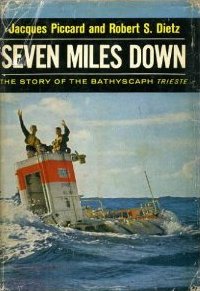
In the end, I had to resort to ordering a copy of Seven Miles Down, by Jacques Piccard and Robert S Dietz. It was published in 1961, and appears to never have been republished since – not even for the fiftieth anniversary of the Trieste‘s descent. There was a Scientific Book Club edition in 1963, but that apparently doesn’t include the photographs in the original. Seven Miles Down is pretty damn rare. And expensive. Admittedly, I really do want to read the book, even if my bathypunk story, er, sinks without trace (although I’d sooner it didn’t, of course).

They say you should write about what you know. But, let’s face it, that would make for pretty boring fiction. And not just by me. It also makes little sense if you’re writing science fiction. Unless “what you know” can be read as “shit you make up that no one else has ever made up before”. Which is much harder than it sounds, and not always effective. Because how do you know that something you’ve just made up isn’t, well, wrong? You’ve just dreamt up this great idea: it’s sort of like a planet, but it’s actually a humungous ribbon which goes all the way around a star and people live on the inside surface of it… It’s a ringworld. And then someone reads your book featuring this ringworld and works out that it’s inherently unstable as described… Oops. Should have researched it.

Admittedly, it’s easy to get bogged down in the research for a story. And I actually enjoy reading about the stuff around which I base my stories. Sometimes, I’m already interested in a subject when an idea for a story comes to me – all those books I collect for my Space Books blog have inspired a few ideas, not all of which have become stories. Other times, something I read sparks an idea, which in turn requires research before I can make a story of it – like my bathypunk story, or ‘The Amber Room’ (see here). Then there are the ones where the idea comes out of nowhere, sometimes fully-formed, but usually vague and incomplete…

When I started this post, I’d intended to write about my experience in researching two different short stories, but I seem to have drifted from the point. Nonetheless, having read back over what I’ve written here, I’m now more determined then ever to see if I can write that space opera story, one where I can just make it all up, one that requires no research at all. Wish me luck.


4 Comments

There’s something moving in sf

There’s an interesting Mind Meld this week on SFSignal about “The Next Big Trend/Movement in SF/F Literature”. You can find it here. I noticed that my jetpunk (see here) doesn’t get a mention – although it has here in a post by Dr Nader Elhefnawy, which I suppose means it’s sort of arrived…

To be honest, jetpunk wasn’t an entirely serious suggestion, and I wrote the post chiefly because I liked the title “Vulcan Bombers in Space” and I wanted to post some pictures of cool aeroplanes. But I do think there’s room for some interesting fiction to be written in there – especially given that retro sf usually either means visions of the future from the 1930s – 1940s, or, well, steampunk and dieselpunk. The 1950s and 1960s were, I think, more interesting technologically, and some of the futurism from those decades would make for excellent science fiction.

(Source: Douglas Holland's Aerospace Site)

All of which got me thinking about other “movements” and what inspires me to write science fiction and what I try to put into my stories. I like the hardware, I freely admit it – I have all those books about the Apollo programme because I find the spacecraft, and the way they work, fascinating – the technology, the engineering, the science… and how that does what it does for those who use it. The hardware I find inspirational, but it’s the people using it I try to write about it.

And all those books about Apollo I’ve read persuaded me to try writing sf which was as realistic as I could possibly make it. Not Mundane sf – because I want to still use some of the genre’s tropes, like faster-than-light travel or aliens. But I wanted to show that space is a hostile environment, that getting out of gravity wells is difficult, that human beings can only operate in space because of the science and technology and engineering. And since I’d been thinking about trends and movements, I decided this should be called… spacecore.

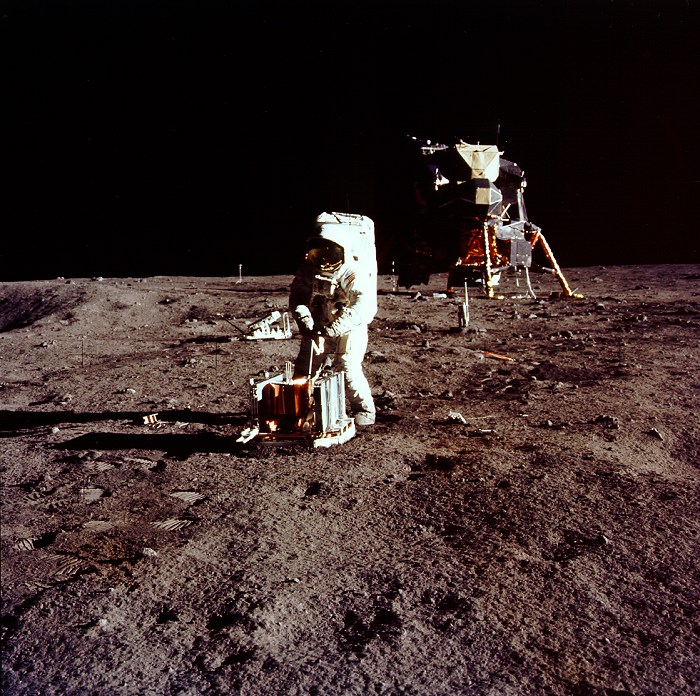
(Source: NASA)

Then I had an idea for another story, but this time set in the depths of the ocean – which again is as much about technology as it is about people since the ocean depths are as inimical an environment as space. I was going to title the story ‘Base Under Pressure’, but that really is the worst short story title ever. Anyway, I thought, stories set at the bottom of the sea need a name too. How about bathypunk?

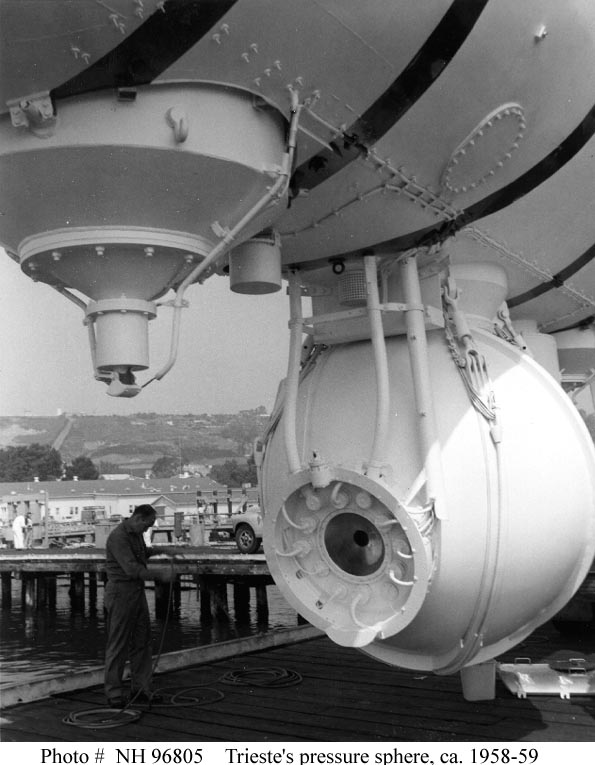
(Source: SEVEN MILES DOWN, Jacques Piccard & Robert S Dietz)

At which point, I decided – and had pointed out to me by friends – it was all getting a bit silly. To tell the truth, my sf stories are hardly written down a single line in the genre anyway: the Euripidean Space stories are near-future hard sf; ‘Killing the Dead’ is set in a generation starship; ‘The Amber Room’ features alternate universes; ‘Through the Eye of the Needle’ is near-future post-catastrophe… And the novels I’ve delivered to my agent are steampunk-ish space opera.

Also, movements and labels tend to be applied after the fact by commentators and critics. They point to a group of writings and decide they are enough alike to deserve a common term to describe them. Dreaming up a “-punk” or “-core” and then writing to it is apparently the wrong way to do it. Well, it is if you tell everyone that’s what you’ve done.

So I won’t. I’ll be thinking about jetpunk and spacecore and bathypunk and whatever other ones I dream up as I’m bashing out my stories. I’ll be thinking about the hardware and the people who use it. And if others do the same, if that means there’s a little less magic in sf and a bit more, well, science and technology, then I’ll consider that a good thing. But it’s not like a movement or a bandwagon or anything.

Unless you want it to be.


11 Comments

The Unreachable Frontier

Science fiction writers arguing about space exploration is a bit like fantasy writers arguing about which sword to use in a melee. The nearest the latter will have got to an edged-weapon is rolling a D20, and the former likely don’t know Max-Q from LOR. And there’s no reason why they should. Many sf writers, in fact, have no interest in the science and engineering of space exploration – by humans or by robots. It has no bearing on the stories they tell.

Some sf writers, of course, are actual working space scientists and engineers. Like Gregory Benford, who is a professor in the Department of Physics and Astronomy at the University of California, Irvine. Or Geoffrey A Landis, who works for NASA, and has presented his idea for living in dirigibles high in Venus’s atmosphere both on television and in fiction (in a recent issue of Asimov’s).

Myself, I’m no rocket scientist, but I’m interested in the subject and have read a number of books on it – see my other blog, A Space About Books About Space. Admittedly, I’m particularly interested in the hardware and engineering of the Apollo programme, which is pretty much a historical subject. Fascinating as the engineering solutions used by NASA were, progress has rendered many of them obsolete. Except for launch vehicles. The rocket engine has not substantially changed since the days of the Verein für Raumschiffahrt. Nonetheless, you can’t help pick up some of the relevant science when reading books by the likes of Tom Stafford (Gemini 6A, Gemini 9A, Apollo 10, ASTP), Harrison Schmitt (Apollo 17), or Michael Collins (Gemini 10, Apollo 11). Not to mention books about individual missions, or various aspects of human space exploration.

Sf writer Charles Stross recently posted an interesting piece about colonising space on his blog here. He argued that “space colonization is implicitly incompatible with both libertarian ideology and the myth of the American frontier”. The dream, he explained, is driven by nostalgia. And there’s an impedance mismatch between aspirations fuelled by the achievements of wild West pioneers and the reality of the inimical environment found outside the Earth’s atmosphere. In ye olde days, you could run away from what you felt was unwarranted interference in your affairs – sod society, I want to do what I want – and head out into the blue yonder. There was hardship and danger, but the environment those Randian pioneers were entering was an environment for which the human organism was adapted. That’s not true of space, or of worlds other than Earth.

S Andrew Swann, a libertarian sf writer, whose books I admit I’ve not read, took exception to this – see here. He counter-argued that the collective effort required to colonise space is not incompatible with libertarian ideology, “as long as the colony is a privately run enterprise and the inhabitants were all there by their own choice, and aren’t living off the threat of force to appropriate the resources needed for their survival”. Rubbish. In a privately-run enterprise, the inhabitants will not be there by choice, they will be there because they can afford to be there. And if they can no longer pay for the environment which keeps them alive, then… It’s a bit like health care. Can’t afford it? Whoops, sorry: you die. Unless, of course, you have a national health service.

The Apollo programme was a socialist programme, and deliberately so. James Webb spread throughout the country the money provided by the US Administration to meet Kennedy’s goal. By distributing the billions of dollars required to reach the Moon, he improved industry, education, and general standards of living in many parts of the US. Of course, there was a lot of wheeling and dealing taking place in Washington, such that some areas were chosen in preference to others.

Space is not an environment fit for human beings. You have to carry everything you need for life with you. One in ten space travellers is likely to catch cancer from cosmic radiation. If anything breaks down, you’re stuffed. The Apollo Lunar Module was one of the most reliable vehicles ever built. If it hadn’t worked, the astronauts it carried would have been stranded on the Moon; they could not be rescued.

But if libertarian politics are incompatible with the realities of space exploration and colonisation, they’re not apparently incompatible with space opera. But then most science fiction set in the Solar system, or on other planets, is essentially fantasy in that regard. It features magical drives which allow ships to travel faster than the speed of light, and magical devices to create a gravitic field inside the ship. Not to mention magical technology to create hulls which are not susceptible to meteoroids and space debris, magical closed-loop environment systems which function without any apparent maintenance or reprovisioning, magical navigation systems which can take a ship across distances measuring hundreds of light years with phenomenal accuracy… In science fiction, Clarke’s dictum would be better recast as “any sufficiently advanced technology is indistinguishable from wish fulfillment”.

There is little or no sf which engages realistically with the realities of living and working outside the sustaining envelope of Earth’s atmosphere. New Space Opera allegedly introduced some hard sf to space opera, but that chiefly seemed to be a recognition that the universe is a very big place. It’s possible technological quantum leaps in our future may make interstellar – or even interplanetary – travel a reality, but we have a fairly good understanding of the universe right now and there’s very little room to maneouvre in what we know.

There are those sf novels which describe a near-future in which humanity – well, the US – has spread out among the planets and moons of the Solar system. Even they skate over the difficulties of living and working in space; and they’re also predicated on the same sort of libertarian claptrap espoused by the likes of S Andrew Swann – “there’s gold in them thar ast’roids!”

That may well be why most sf – space opera or hard sf – uses magical wish-fulfillment technology to create an environment in which a story can be set. That environment need not be realistic – or rather, it need only create a sufficiently earth-like environment in which realistic stories can be set. The universe is, after all, the biggest canvas of all. Science and technology and engineering and politics and economics prevent us from writing on it. So we must use our imaginations. And if we must imagine away those hurdles in order to use that canvas, then why shouldn’t we?

But I’d still like to see some sf that makes a serious effort to depict humans in space realistically…


5 Comments

Vulcan Bombers in Space

Steampunk and dieselpunk have both entered mainstream culture. So they’re no longer cutting-edge, they’re now closer to blunt instrument. And that means it’s time for science fiction’s fertile minds to spunng! into creative action once again. We need a new movement, a new aesthetic, a new subgenre. And I have just the one. I call it:

Jetpunk

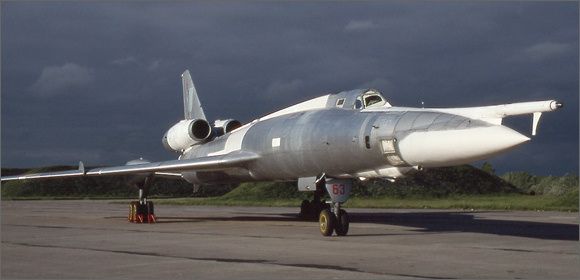
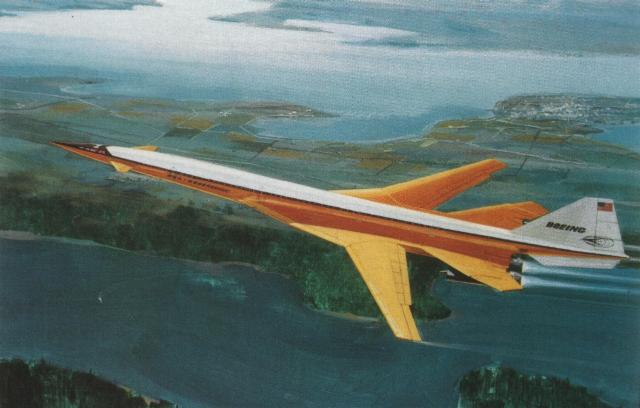
Hang on, I hear you say. Steampunk was alternate history, in which the world’s technology remained at Victorian levels. We have jets now. We have jets in the twenty-first century, we’ve had them for seventy years, in fact. What’s alternate about that? What’s sfnal about that? Well, yes, that’s true. But we don’t have all those amazing supersonic jets they had during the Cold War. Like, well, the Avro Vulcan Bomber. Or the Convair B-58 Hustler. North American XB-70 Valkyrie. TSR-2. Tupolev Tu-22. All those planned Supersonic Transports and spaceplanes.

(Source: BAe Systems, via avrovulcan.org.uk)

(Source: USAF, via wingweb.co.uk)

(Source: Carl Ehrlich, via The Space Review)

That was proper science fiction, that was. Not the pointy magic rockets they used to put in sf novels of the period. No, they were proper engineered aeroplanes made out of titanium that could fly at silly speeds like Mach 3.5. And jet-packs. Flying cars. Giant Computer Brains – er, giant mainframe computers in giant data processing centres. Jetpunk. It’s the future they were designing and building fifty years ago, when a base on the Moon by the end of the century looked like a very real prospect. It’s the future we might have had, the one where we wear silver jumpsuits and eat food-pills.

It was a time of progress and of austerity, of paranoia and of trust, of innocence and cynicism. And, let’s face, those supersonic jets and spaceplanes looked pretty damn cool. It’s not steam engine time, it’s jetpunk time.

So who’s going to write the first jetpunk sf story?


12 Comments

Why bother writing science fiction?

You want to be a writer, you want to write. But why science fiction? Of all the modes of fiction you could write, why choose sf?

You’re not going to be hip, you’re not going to be relevant. Even during the Apollo programme, sf wasn’t relevant. In 1969, Neil Armstrong was the first human being to step onto the Moon; the following year, the Hugo Award for best science fiction novel was awarded to… The Left Hand of Darkness by Ursula K Le Guin. It’s an excellent novel, but it has nothing to do with space travel. Even the year before, the Hugo went to Stand on Zanzibar by John Brunner, a novel about over-population.

You’ll not get any critical plaudits – not from outside the genre, anyway. Science fiction has been accused of cardboard characters, lumpen prose, in-yer-face exposition, and idiot plotting and, to be fair, it’s not an entirely unfair accusation. Nor is it wholly accurate. Those who claim characterisation and prose style are unimportant in sf because it’s all about the ideas, they’re nincompoops. That’s like saying eating food is not about the taste, it’s about the calories.

Sf doesn’t sell very well – in fact, you’ll probably never be able to give up the day job. And the nearest you’ll get to a jet-setting lifestyle is gazing longingly at contrails in the sky. You might get free trips every now and again, but it’s more likely to be to Derby than Rio de Janeiro. If you’re really lucky, you might be asked to appear on a television programme. It’ll be on BBC4, however, so no one will watch it.

Then there’s that blank look you’ll get when you tell people you’re a writer and they ask what sort of books you write. As soon as you say “science fiction”, the smile will congeal on their face and they’ll wander off to watch some paint dry. Unless it’s a sf fan who’s asked you, of course. In which case, they’ll probably tell you exactly what was wrong about your last story or novel. Assuming, that is, they’ve a) heard of you, and b) read it. Neither of which is guaranteed.

Then there’s all that stuff you need to be an expert in. Yes, you can just Make Shit Up, but readers’ credulity only stretches so far. And they all have different thresholds – some will just wow at the ringworld, others will (famously) work out that it’s inherently unstable. And there’s definitely a level of knowledge, especially in the sciences, below which you cannot drop. No -300 degrees Celsius on your icy moon, for example. No supernovas visible in nearby star systems at the exact moment they occur. No, er, breathable atmosphere and water oceans on Venus. The closer you get to the real world, the more you have to make sure it’s right (or, at the very least, highly plausible). Aliens, artificial intelligences, faster-than-light travel, time travel… they’re not real, so no one’s going to cavil if they don’t operate as they do in other authors’ novels. It’s often seen as an advantage if they don’t, if their workings are entirely original to your story.

Because you have to continually struggle to be original and inventive. You have to write as though everyone who reads your story or novel has read every other sf story or novel that’s ever been published. There are no shortcuts. You’ve got build an entire world, or universe, and it’s got to be entirely off the top of your head. Yes, there are tropes you can recycle, used furniture, characters from central casting, but unless you’re being deliberately knowing you won’t be forgiven for making use of them. Well, you might get away with using some, providing there’s plenty that is original in your story or novel.

But.

You probably want to write science fiction because you’ve been reading it since you were a kid. You’re a fan. You can’t even imagine writing anything else. That may well be the best reason in the world to write anything. But there are lots of other wonderful things science fiction can do. It’s a wide genre, there’s room for a whole universe of things. There’s even space in there for things that – ssh, don’t tell anyone – for things that are not really science fiction. You can pretty much set the boundaries yourself. There are all those sub-genres, for a start: space opera, cyberpunk, hard sf, alternate history… In fact, there are so many, people have been arguing about them since 1926.

Also, let’s face it, world-building is fun. You can do as much or as little as you like; you can show as much of it, or as little of it, as you like. You have a level of power over your creation no other genre can match. Many of the visuals are pretty cool too – all those eyeball kicks and special effects on the page. This is stuff you’re never going to see in real life. After all, sf is as big as your imagination. It’s only limited by what you, the writer, can’t conceive. Sort of like a reverse strong Sapir-Whorf Hypothesis. Writing sf, you not only broaden your readers’ horizons, you stretch your own as well. You can’t help it – it’s the nature of the genre.

Then there’s the whole community that comes attached. It’s a vocal community, and it can be as condemning as it can be approving. But on the whole sf readers are a friendly bunch, and they’re not afraid to make their opinions known. I don’t know if sf has the largest online presence of all the modes of fiction, but I suspect it has the largest in comparison to the size of its market.

On the whole, I think the pros outweigh the cons. It’s not just the vast canvas available for stories, but the breadth and variety of the genre itself. There’s not much you can’t do. There are no other modes of fiction which offer the same openness to different approaches or different styles. You can be as relevant as you desire. And sf has permeated popular culture so much you can even be hip, if that’s your thing.

As a writer, that kind of freedom is liberating.


2 Comments

Those who don’t know their science fiction are doomed to repeat their history

While there are between three and thirty-six plots depending on your source, and no such thing as a new idea in science fiction… that’s not what this post is about. Those are topics for another day. Possibly.

Instead, consider this: if a One True Science Fiction FAQ existed, it would consist of a single question: “what if?” Of course, this pretty much holds true for all fiction. But there are two particular types of story, common in sf, that “what if?” inexorably leads to: the thought experiment and the cautionary tale. (Which is not to say that a story can’t be both types.)

The author posits a situation – an invented future, or an invented world – and then tells a story set in it. It might be what will happen, or what has happened. Whichever it is, the author is offering insight into the consequences of the fictionalised situation. The usefulness of that insight depends on whether or not you accept the author’s argument – even if the author’s sensibilities run counter to your own. At the very least, it should provoke thought.

Some people think fiction should be solely for entertainment. It should have no greater ambition than to keep the reader amused. Rubbish. No artform should be just bread and circuses. It needs to engage with the real world, not ignore it. “You watch your X-Factor while we assemble this police state around you.” Why on earth would an author encourage people to turn their backs on what’s happening around them? Good fiction has something to say, whether you agree or not with what is being said.

Science fiction, as a genre, was initially created to do more than merely amuse. Hugo Gernsback intended sf to be both didactic and predictive. It’s no longer either of those – which is not necessarily a bad thing. They were limiting. But that doesn’t mean sf readers should privilege escapism over “message stories”. Besides, there’s no such thing as a “message story”. There are stories that engage with the reader qua reader, and stories that don’t. It’s the ambition of fiction to do the former. Yes, entertainment is important, but it shouldn’t be the one and only aim of a piece of fiction.

Yet despite its infrequent moments of outspokenness, sf’s cautionary tales and thought experiments are often taken as nothing more than amusements. And they’re then pillaged for terms to label the very situation they cautioned against. But if readers are unwilling to attach real-world significance to a sf story, then it’s hardly surprising its concerns are only validated after the fact.

Perhaps sf needs an agenda once again. Perhaps the genre needs to shine a brighter light on the real world, and then document what it sees.