It Doesn't Have To Be Right…

… it just has to sound plausible


5 Comments

SF Mistressworks: one week on

On the 1st June, in response to a call for action by Nicola Griffith, I set up the SF Mistressworks blog, a site devoted to reviews of science fiction books by women writers. I had no desire, nor did I think it was fair, to provide the content entirely by myself, so I put out a call for volunteers. And lots of people responded – over a dozen, at the last count. I also said I was happy to take previously-published reviews, and a number of people subsequently donated old reviews they had written. As a result, in the past seven days I’ve posted fourteen reviews by various hands to the site, and have several days’ worth scheduled. The blog has also been averaging 300 hits a day.

So the response has been very good – better, in fact, than I expected. But there’s a danger interest might fade away as the year progresses. And I don’t want that; I don’t think anyone wants that. So I’m always on the look-out for new reviews and reviewers, and happy to take either (there’s an FAQ on the blog, explaining the sort of thing I’m after). It’s also good if other people promote the blog – link to it, mention it in passing, encourage discussion regarding it, whatever you think is appropriate.

For the record, the following books have been reviewed on SF Mistressworks (each title links to the review):

China Mountain Zhang, Maureen F McHugh
Grass, Sheri S Tepper
Ammonite, Nicola Griffith
The Journal of Nicholas the American, Leigh Kennedy
The Left Hand of Darkness, Ursula K Le Guin
The Female Man, Joanna Russ
Where Late the Sweet Birds Sang, Kate Wilhelm
The Steerswoman, Rosemary Kirstein
The Dispossessed, Ursula K Le Guin
Pennterra, Judith Moffett
The Handmaid’s Tale, Margaret Atwood
Rebel Sutra, Shariann Lewitt
Escape Plans, Gwyneth Jones
Halfway Human, Carolyn Ives Gilman

Still to come, reviews of:

And Chaos Died, Joanna Russ
Hermetech, Storm Constantine
Doomtime, Doris Piserchia
Black Wine, Candas Jane Dorsey
Winterlong, Elizabeth Hand
Starmother, Sydney J Van Scyoc
The Sword of Rhiannon, Leigh Brackett
Queen City Jazz, Kathleen Ann Goonan
The City Long After, Pat Murphy

… plus several more. I also intend to link to the website of as many woman sf writers as I can find, and list those sf books by women writers which have won prizes.

So, keep watching the site.


3 Comments

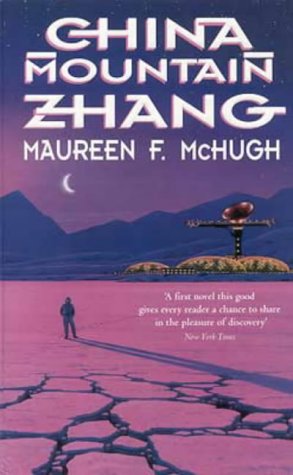
Women in sf reading challenge #5: China Mountain Zhang, Maureen F McHugh

China Mountain Zhang has been on my radar for a number of years – it’s one of those books I’ve heard many good things about, but have never really got around to buying or reading. Until now. And, in one of those moments of serendipity that confirm you’ve chosen the right time to do something, no sooner had I picked the book for my reading challenge then I found a copy in a local charity shop. It could simply be, of course, that I’d not been looking for it before, but since I’d been wanting to read it for many years I don’t think that’s the case.

Whatever. I’ve now read China Mountain Zhang. And I’m very glad I have done so. It is a very good novel. Zhang Zhong Shan is an ABC, American Born Chinese – except he is not really: his father is Chinese, but mother is Latino and he was genetically-engineered to appear pure Chinese. He is also gay. He works as a construction technician in New York in a United States dominated culturally, economically and politically by communist China. Zhong Shan translate roughly as “China Mountain” and is also the Mandarin equivalent of the Cantonese Sun Yat-sen. It is considered a name worth remarking on: as Zhang himself says, “To be named Zhang Zhong Shen is like being named George Washington Jones” (26).

China Mountain Zhang is the story of Zhang, opening in New York on a construction site, and finishing in New York with Zhang working as a freelance organic engineer. In between, he spends time on Baffin Island and at university in Nanjing. The narrative also breaks away from Zhang on several occasions to tell the stories of Angel, a kite-flyer in New York, and Martine, a settler on Mars. Though both narrative threads seem unrelated, by the end of the novel they have touched, or have been touched by, Zhang.

Not one of the characters changes the world though their lives do so. But neither is this a novel of accommodation – no one changes to in order to fit better. In fact, Zhang finds himself less employable, having qualified as a construction engineer, than he had been as a construction tech. And despite homosexuality being illegal in both the socialist USA and China, Zhang never questions his sexuality.

And yet he questions his racial identity repeatedly. He is not really Chinese, though he appears to be. His mother named him Rafael, and he still uses the name among some of his friends. As China Mountain Zhang opens he has been invited to the home of his foreman Qian to meet his daughter. Qian is Chinese but has fallen from grace and been exiled to the US. He does not know that Zhang is not wholly-Chinese, nor that he is gay. Trapped in the identity he presents to Qian, Zhang reluctantly meets Qian’s daughter, San-xiang, and takes her out. They become friends, of a sort – she imagines more to the relationship than is ever going to be the case.

In a later break-away narrative, Xan-siang, who is not attractive – “She is astonishingly ugly. More than ugly, there is something wrong with the bones of her face” (p12) – has cosmetic surgery to correct her appearance… only to fall victim to a predatory man. Her ugliness had protected her, and now she is pretty she does not have the social skills to cope with the attention her looks now cause. Her story is the one unhappy one in China Mountain Zhang.

But before that, Xan-siang runs away from her parents and goes to stay with Zhang. Her father tries use to this to force them into marriage, so Zhang reveals he is half-Hispanic. Qian fires him. Which is how Zhang ends up working on Baffin Island. There, Zhang’s identity – racial or otherwise – is mostly irrelevant. The scientists of the station are more interested in their jobs. However, Zhang’s six-month stint there does qualify him for special entry into a university in China. Which is where he qualifies as an organic engineer. The sections set in Nanjing don’t seem to quite gel as effectively as those set in New York or even on Mars. Zhang is a foreigner, though he does not look like one, and his personal interactions appear mostly limited to his tutor, also gay and with whom he has a relationship. Admittedly, China Mountain Zhang is Zhang’s story, told from his point of view, so perhaps that’s unfair. Perhaps too it’s because Nanjing follows Baffin Island, and Baffin is a very limited environment.

Martine’s narrative, set mostly in her holding on Mars, initially seems to belong to a different novel. A link with Zhang eventually appears, but it is peripheral. Martine is an ex-soldier, now land-owner, on a collectivist Mars. A chance encounter with a new settler and his young daughter – both are living in dorms and have no credit and so cannot afford a parcel of land – brings Martine out of her self-imposed seclusion. There’s actually little in the narrative thread which demands it be set on Mars, other than a need for a society on which China has little or no direct influence.

There is a strand of utopianism to China Mountain Zhang. The world McHugh has built is by no means perfect – homosexuality is illegal, for example – but neither is it as unfair or unequal as the real world. It is, however, mostly prosperous and advanced – I think the story is set somewhere near the middle of this century, though I don’t recall an exact decade being named – but the world of the book has settlers on Mars, and people can “jack” into tools and computer systems. Inasmuch as it carries the story,  I found it convincing; but then I’m not wedded to capitalist ideals so I will happily accept a world built on alternative principles.

China Mountain Zhang was very well regarded when it first appeared. It was short-listed for the Hugo and Nebula, and went onto win the James Tiptree Jr Award and Lambda Award. Not bad for a first novel (in fact, it came top in the Locus Poll that year for Best First Novel too). On the strength of China Mountain Zhang, I certainly plan to seek out and read more of McHugh’s fiction.

(This review has been cross-posted on the SF Mistressworks blog.)


13 Comments

The women sf writers men won’t see

A call on the Guardian for people’s favourite science fiction novels last Monday resulted in a list of over 500 titles (tellingly listed as best science fiction novels). The list prompted both Nicola Griffith and Cheryl Morgan to point out how few novels by women sf writers had been named. The Guardian then added to the debate with an article ‘The incredible shrinking presence of women sf writers‘, only for its comments thread to prove how shockingly bad the situation actually is.

And so Nicola Griffth has asked people to take the Russ Pledge, “to make a considerable and consistent effort to mention women’s work which, consciously or unconsciously, has been suppressed”. And while my reading challenge this year has been to read one book by a women sf writer each month, and blog about it, I decided to do more.

So I’ve set up the SF Mistressworks blog. Which will comprise reviews of classic and twentieth century science fiction by women writers. It will offset all those “classic sf” and “50 sf novels you must read” and “best sf novels” lists you see all over the internet which have few or no women writers on them. It will demonstrate that women have been writing sf since the genre’s beginnings, and that many of their books are as good as, if not better, than many sf “classics”.

A number of people have all ready volunteered to write reviews, but more are certainly welcome. I have no intention of providing the content alone. I also don’t mind if there are multiple reviews – by different hands, of course – of the same book.

The SF Mistressworks blog is part of the conversation about women sf writers; but it will never direct it.


2 Comments

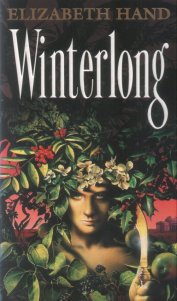
Women in sf reading challenge #4: Winterlong, Elizabeth Hand

You’d have thought that with two four-day weekends in April, I’d have had plenty of time to read that month’s book from my reading challenge. Unfortunately not. However, during April I did manage to pick up copies of China Mountain Zhang, Maureen F McHugh; The Year of Our War, Steph Swainston; and Zoo City, Lauren Beukes (which I’m going to read instead of the planned Moxyland) – so I’m all set for the next three months at least.

Which is just as well, as April’s book was the last from my list I could just pick off my shelves: Winterlong by Elizabeth Hand. I’ve no idea how long I’ve had the book – but the “£2.00” scribbled in pencil inside the cover suggests I bought it at a convention, probably during the early 1990s. This can’t have been all that long after it was published – Winterlong, Hand’s debut novel, first appeared as a Spectra Special Edition paperback in late 1990, and as a paperback original in the UK a year later. It’s the latter edition I own. I also own the sequel, Æstival Tide, but not the third book of the trilogy, Icarus Descending – which apparently was never actually published in the UK (don’t you hate that? when UK publishers only publish the first two books of a US trilogy, but not the third?).
This year’s reading challenge has given me a welcome excuse to finally read Winterlong (and perhaps its sequel), something I’d been meaning to do for a while. It has always been my impression that I would enjoy Hand’s writing. I’ve read some of her short stories, and around this time last year I read her novella Illyria, and I’ve always thought her writing very good. She writes with a very literary style, closer perhaps to fantasy than science fiction, low on rigour, but with lovely prose – much like a writer I admire very much, Paul Park. So I had expected to like Winterlong

Sadly, I didn’t. There is lush prose – and I like lush prose; I’m a fan of Lawrence Durrell’s writing, after all. But often it seems to tip into florid prose, and, unfortunately, in Winterlong it’s florid prose which dominates. As I read the novel, I couldn’t help thinking that if Hand had applied the writer’s phrase “kill your darlings”, the book would have been half its 440 pages in length. I mean, a sentence like “The black domino of a Persian malefeants with her whip pied the pastel train of a score of moth-winged children trying very hard to perform the steps of a salacious maxixe” (p 171) shouldn’t have made it through the editing process. Which is not say that Winterlong is a bad book or doesn’t have anything interesting to say. It simply reads like a first novel written by someone whose reach exceeded their grasp, who had yet to gain control over their style, whose focus lay too much on the individual word-choices and not enough on the cumulative effect of those choices.

Wendy Wanders is a subject at the Human Engineering Laboratory, a “neurologically augmented empath approved for emotive engram therapy”. She can “tap” patients’ memories and emotional states, ostensibly for therapeutic reasons. But she was autistic as a child, and though her neurological augmentations have “fixed” her – as well as making her empathic – she is still not entirely cured. The HEL is located just outside the City of Trees, which was destroyed hundreds of years in the past, left for nature to run riot over, and is now inhabited by remnant peoples unrelated to the mainstream Ascendant population of the country. From hints and clues in the text, I’m guessing the City is Washington DC.

Things go horribly wrong at the HEL and, during an attack by those for whom the HEL scientists were working, Wendy escapes with the help of a lab assistant, Justice Saint-Alaban, an inhabitant of the City. Once in the City, she disguises herself as a man and joins a troupe of actors. This troupe mostly performs Shakespeare’s plays and Wendy, as Aidan Arent, takes the female roles – yes, that’s a woman pretending to be a man who plays women on stage who, in many of Shakespeare’s plays, disguise themselves as men… (Hand studied drama and anthropology at university.)

Meanwhile, Raphael Miramar, a male prostitute, and one of the most beautiful and desired in the City, has chosen to go and live with his lover, leader of the Natural Historians, hoping to trade commitment for an education. The City is run by the Curators, descendants of various museum staff – the Natural Historians, the Botanists, the Zoologists, etc. There are also Houses of prostitutes, both male and female, who cater to the Curators, and seem to do little else except arrange sumptuous balls.

Raphael’s lover, however, is not so committed to the relationship,  now that Raphael no longer lives the pampered lifestyle of his House, and so is losing his looks. Raphael makes friends with a junior Natural Historian, but inadvertently kills her, and is forced to flee. He falls in with a group of lazars, children infected with diseases spread by viral rains dropped during “air raids” by Ascendant airships, is identified as their god, the Gaping One, and taken to meet their leader, the man who attacked the HEL – who has been resurrected after being tortured to death by the aardmen, genetically-engineered dog-humans, and is now quite mad.

Winterlong is structured as a series of nine parts, each written in the first-person from either Wendy’s or Raphael’s point of view. The opening part, ‘The Boy in the Tree’, was also published separately as a novella in Full Spectrum 2 a year before Winterlong‘s publication. Neither Wendy nor Raphael, it has to be admitted, are especially sympathetic characters. The novel hints at a greater world, with its references to “Ascensions” and a war with the “Balkhash Commonwealth”. However, the story is focused tightly on events within the City of Trees, which has something of the flavour of Delany’s Bellona, something of New Orleans, and something of a Shakespearean Venice or Forest of Arden.

In fact, it’s all very fin de siècle and decadent, perhaps even Gothic; which perhaps explains the prose style. It’s also strangely reluctant to engage too much with the world it describes. Everywhere is dirty, there is sex and death, but it all feels a little sanitised and innocent, perhaps because the prose focuses so much on the appearance and odours of things. It gives the environs of many of the scenes the feel of a set-dressing, rather than a vital, living place within which a story is occurring. When, for instance, Raphael rapes the assistant Curator he has just inadvertently murdered, it’s over and done with in a bland sentence: “Then I ravished her.”

Yet the City is unnatural. It’s not simply the life-style of those in the Houses. Much of the flora and fauna has also been altered – and are known by the term “geneslaves”. There are the aforementioned aardmen, but also willow trees which kill, and an intelligent talking chimpanzee (one of the Players in the troupe Wendy joins). It’s the sort of world which appeared quite often in science fiction during the late 1980s and early 1990s – I’m thinking of Geoff Ryman’s The Child Garden (1989), or Michael Swanwick’s Stations of the Tide (1991) – although Hand’s version is more dystopian and post-apocalyptic than most. The City is an interesting place, but the prose often works against the story, confusing what shouldn’t be difficult to parse.

In her review of the full trilogy in SF Eye #13 (reprinted in Deconstructing the Starships), Gwyneth Jones writes that Hand is “a writer who embraces gender difference – whether or not she notices where this embrace is leading her”. Certainly it’s true that there’s much that’s traditional in the gender roles played by the characters in Winterlong. Wendy becomes Aidan and discovers empowerment; Raphael stops being a sex toy and learns evil. The Shakespearean confusions and mistaken identities only work if you accept traditional gender roles. Given the world of Winterlong, it would not be unreasonable to expect some fluidity in this area – Wendy’s masquerade at least hints at the intent – but Hand fails to question the underlying assumptions with which she writes. And the opportunity is lost.

This review almost sounds as if I’m characterising Winterlong as a complete failure. Which is not the case. I thought it interesting, but overwritten. I have the sequel, but Winterlong has not really inspired me to read it, as Rosemary Kirstein’s The Steerswoman made me keen to seek out its sequels. But perhaps one day I will get round to reading Æstival Tide and, perhaps also, if I spot a paperback copy of Icarus Descending in a dealers’ room at a convention I might well buy it.
10 Comments

21st century sf mistressworks meme

As promised, here is a list of science fiction novels by women sf writers whose careers have been active chiefly during the past decade. The sharper-eyed among you will spot two authors who were also on the previous sf mistressworks list. I felt both books deserved to be on this list, and so they are. While researching this list, I discovered that many of the more recent women sf writers whose names I knew hadn’t actually had novels published so far – such as Rachel Swirsky, Kij Johnson, Jennifer Pelland, Theodora Goss, Vandana Singh… Or they had written only fantasy novels to date – eg, Aliette de Bodard, Mary Robinette Kowal, Vera Nazarian…

Same as before: science fiction only, no YA. Trilogies and series named in [square brackets]. I could have snuck in a collection or two (see above), but decided that might have been pushing it a bit. Bold for those you’ve read, italics for those you own but haven’t read. My own showing is a bit embarrassing on this list.

1 Solitaire, Kelley Eskridge (2002)
2 Warchild [Warchild], Karin Lowachee (2002)
3 Natural History, Justina Robson (2003)
4 Maul, Tricia Sullivan (2003)
5 The Time Traveller’s Wife, Audrey Niffenegger (2003)
6 Spin State, Chris Moriarty (2003)
7 Dante’s Equation, Jane Jensen (2003)
8 Steel Helix [Typhon], Ann Tonsor Zeddies (2003)
9 Life, Gwyneth Jones (2004)
10 Nylon Angel [Parrish Plessis], Marianne de Pierres (2004)
11 The Courtesan Prince [Oka-Rel Universe], Lynda Williams (2004)
12 Survival [Species Imperative], Julie E Czernada (2004)
13 Banner of Souls, Liz Williams (2004)
14 City of Pearl [Wess’har Wars], Karen Traviss (2004)
15 The Year of Our War, Steph Swainston (2004)
16 Bio Rescue, SL Viehl (2004)
17 Apocalypse Array [Archangel Protocol], Lyda Morehouse (2004)
18 The Child Goddess, Louise Marley (2004)
19 Alanya to Alanya [Marq’ssan Cycle], L Timmel Duchamp (2005)
20 Carnival, Elizabeth Bear (2006)
21 Mindscape, Andrea Hairston (2006)
22 Farthing [Small Change], Jo Walton (2006)
23 Half Life, Shelley Jackson (2006)
24 The Carhullan Army, Sarah Hall (2007)
25 Bright of the Sky [The Entire and the Rose], Kay Kenyon (2007)
26 Principles of Angels [Hidden Empire], Jainne Fenn (2008)
27 Watermind, MM Buckner (2008)
28 The Rapture, Liz Jensen (2009)
29 Zoo City, Lauren Beukes (2010)
30 Walking the Tree, Kaaron Warren (2010)
31 Birdbrain, Johanna Sinisalo (2010)
32 Who Fears Death, Nnedi Okorafor (2010)
33 Song of Scarabaeus, Sara Creasy (2010)

(Incidentally, I did start Bright of the Sky, but gave up halfway through.)

EDIT:
It has been pointed out to me that Steph Swainston’s The Year of Our War is more fantasy than it is sf. I’ll leave it on the list for the time-being – for one thing, it’s one of the books I picked for my 2011 reading challenge.

I’d also intended to include Kage Baker, but I’ve never read any of her books. The first of the Company series, In the Garden of Iden, was published in 1997 and so not eligible for this list. Which novel should I include?

And I’ve also added Louise Marley, a writer I’d missed, at #18.


1 Comment

Oops – not a mistress, then

It has just been pointed out to me that one of the writers on my sf mistressworks meme list isn’t actually, er, female. I forget where I got the name from, but I should have realised straight away – because if Francis Leslie Ashton was female, “her” name would be Frances Lesley Ashton. There aren’t many names in English which differ in spelling by gender, but Ashton has two of them… and I still failed to spot it. Oops. So thanks to Dave Post of Worlds without End for pointing it out.

Because the meme list has already spread, I won’t bother posting a corrected list, merely updating the original one. At some point, I hope a consensus meme list might be generated and, if so, the makers might take note of Ashton’s gender.

Meanwhile, I’m still working on putting together a list of 21st century women sf writers… and I’ll make sure they are all actually women.


2 Comments

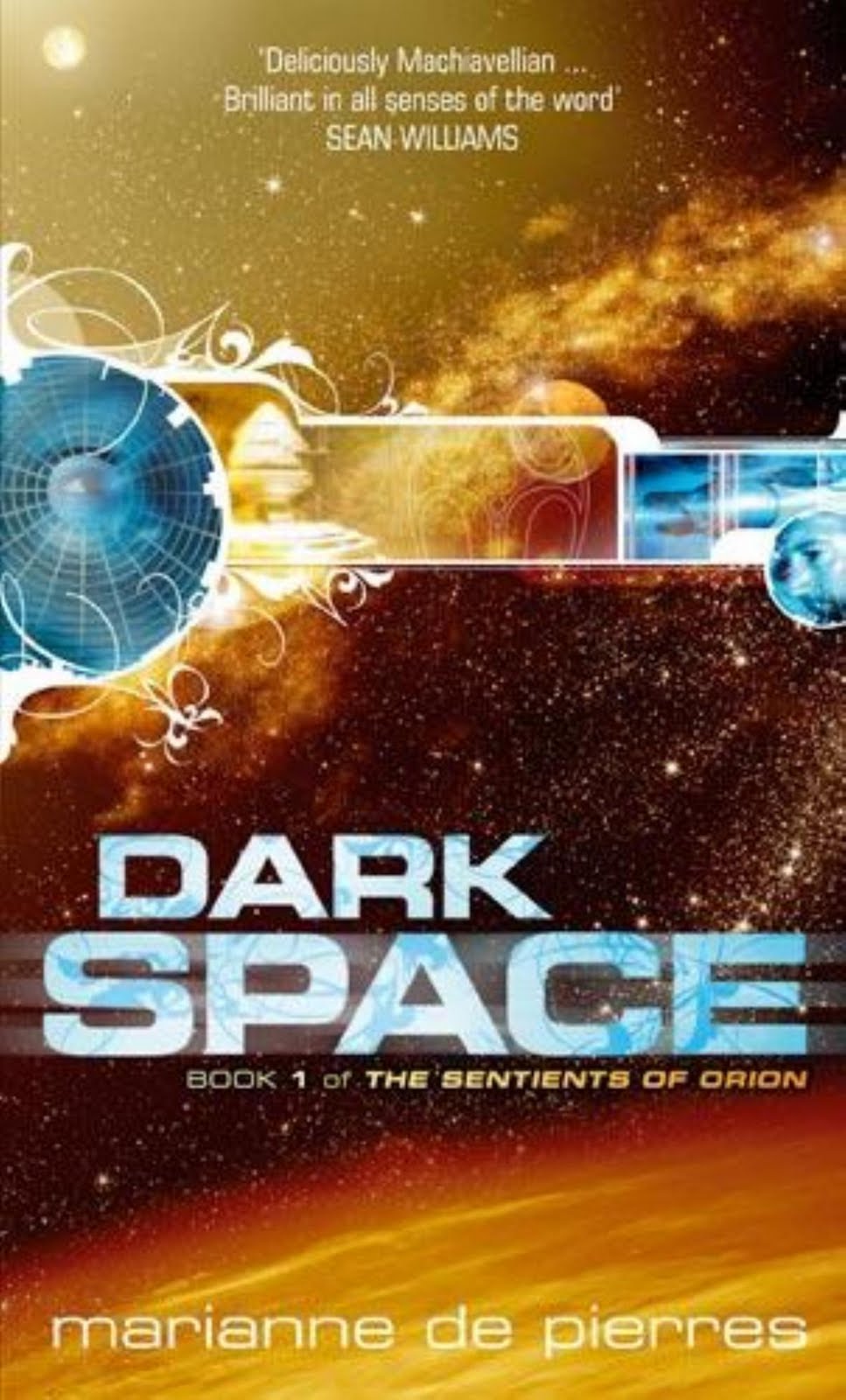
Women in sf reading challenge #3: Dark Space, Marianne de Pierres

Marianne de Pierries is one of several Australian authors published in the UK by Orbit. Her first book, Nylon Angel, the first of the Parrish Plessis cyberpunk trilogy, was published in 2004. Dark Space is the first book of her second series, The Sentients of Orion. It is space opera.

A lone mineral scout with less-than-appealing personal habits accidentally discovers a huge and mysterious alien which lives in the vacuum of space, and which appears to have near-divine powers – he dies, and it resurrects him. His discovery makes him rich, and an industry springs up around Sole, as the alien entity is named, in which applicants to “godhead” have their brain chemistry altered by it. Tekton, a “humanesque” from the planet Lostol, is one such applicant. He has politicked his way to Belle-Monde, the artificial world where candidates for godhead are tested.

Meanwhile, on the planet Araldis (with its unfortunate likeness to the name of brand of glue), Baronessa Mira Fedor has just learnt that she is not to be First Pilot. The heir apparent, Principe Trinder Pellegrino, is, even though he does not have the Inborn Talent which allows him to interface with the world’s sentient organic starship, Insignia. But on Araldis, the men are in charge, and the women are good for nothing but being wives or mistresses. Araldisian society is also strictly hierarchical, with a nobility, a hereditary servant class, and peasant miners. The world’s wealth is derived from its minerals. Its climate is hot and arid. Its culture is Italianate.

Mira runs away. Trinder offends his father by flirting with his new mistress, and is subsequently banished to a Carabiniere outpost in a remote town. And then someone invades the planet, sabotaging foodstocks and the mines, and loosing Saqr, rapacious barely-sentient aliens. Both Trin and Mira survive; they are the last of the nobility. With the help of Rast, a mercenary hired by Araldis’s ruler, Mira must take Insignia to the Orion League of Sentients to beg for help to repel the invasion. Dark Space ends with the launch of Insignia.

There is no “dark space” in this novel. In fact, the first line of the book is, “Dark space is not really dark”. Given that the phrase “dark space” is not common, in science or science fiction, it seems an odd choice for a title. Nor does the prologue into which that opening line leads instill confidence – it is crude exposition, cast as the testimony of Sole’s discoverer, a thoroughly unlikeable rogue.

Happily, the narrative set on Araldis is much better. Mira is an engaging protagonist, and the planet and its culture is interesting. However, the Italianised vocabulary is over-used. I can understand its use for titles, perhaps even for objects unique to the culture such as clothing. But I see no good reason why babies are referred to throughout as bambina and bambino, why children are called ragazza and ragazzo. It’s entirely unnecessary.

Tekton’s narrative is less satisfying. He dominates it and he is not at all sympathetic. He is arrogant and self-centred. His race display their naked bodies in much the same way as people on this planet display their wealth. But then Tekton is pretty much characteristic of all the male cast of Dark Space. I’m all for redressing the gender balance in genre fiction. But to me that means writing strong female characters, writing stories that pass the Bechdel Test. It doesn’t mean populating a story with male characters who are entirely shits. Even Trinder, the male protagonist of Dark Space, is far from sympathetic – and his relationship with Mira is symptomatic of his attitude. Of course, the culture of Araldis is chiefly to blame for the unlikeability of the men… except not all of the men are Araldisian. Tekton isn’t. The rogue who discovered Sole isn’t.

Perhaps I shouldn’t complain. After all, male genre writers of the past and present have treated their female characters as badly, or worse, since the days of Amazing Stories. But the correct response to an imbalance is balance, not a swing in the completely opposite direction.

Yet, despite all this, I actually enjoyed reading Dark Space. I have books two and three of the quartet, and will likely read them too. While I can rue de Pierres’ ham-fisted characterisation of her male cast, her clunky info-dumping, her bizarre choice of vocabulary to render into cod-Italian… none of these actually spoiled my enjoyment of the book.

So, not as successful a read as Rosemary Kirstein’s The Steerswoman, nor as interesting a novel as Liz Williams’ Winterstrike – but definitely a more enjoyable read than the latter.


Leave a comment

A few notes about the sf mistressworks meme

The meme has been out there now for a week, and a number of people have picked up on it. This is excellent. There have also been a few comments about the books which appear on the list. So here’s something of an apologia…

Yes, there are many authors I should have included but missed – Kit Reed, for example; or Wilhelmina Baird. Mea culpa. There are also a few I have read but didn’t feel were strong enough to appear on the list. Plus many who have written more, and better, books this century than last (in several cases, it’s only their debut novel which sneaks into the tail end of the twentieth century). In fact, it’s likely a few names will even appear on both the sf mistressworks list and the 21st century sf mistressworks list…

There are a couple of books which shouldn’t be on the list, as well. Jirel of Joiry, which I’ve not read myself, is apparently fantasy, not sf. The year given is the year it first appeared in book form, according to isfdb.org. Orlando… well, the central device is fantasy inasmuch as it’s unexplained and unexplainable. But the story feels more sfnal than fantastic. Ash: A Secret History is certainly science fiction, and was even shortlisted for the Arthur C Clarke Award.

In several cases, I perhaps didn’t pick the best-known or most highly-regarded book by an author, but instead chose one that I’d read myself. For example, Alison Sinclair’s Cavalcade was shortlisted for the Arthur C Clarke Award in 1999, but I’ve only read her Legacies. On the other hand, while I prefer Le Guin’s The Left Hand of Darkness to The Dispossessed, I think the latter is a more interesting novel.

This, I hope, helps explain some of the (seemingly) odd choices in the list. But at least the meme is getting out there, at least people are spreading it across the internet. It’s changing as it spreads, but I’m perfectly happy with that. It should evolve – it was, after all, put together partly from my own taste in science fiction (and my ignorance regarding some of the authors and titles).

And if you’ve not seen it yet, it’s here.


6 Comments

The Women’s Press science fiction

During the mid to late 1980s, The Women’s Press published a line of feminist science fiction novels by women writers. The books all boasted the same cover design: a grey border and spine, and distinctive cover-art. The books were a mixture of new works and older classic books. I remember the books quite well, and bought several of them. While I was researching my SF Mistressworks meme, I was reminded of The Women’s Press novels and it occurred to me that their list too made for a good meme.

So let’s do it again. Bold if you’ve read it, italics if you own it but haven’t read it. Obviously, it doesn’t have to be The Women’s Press edition, but bonus marks if it is…

As far as I can determine, this is the full list:

1. Kindred, Octavia Butler
2. Walk to the End of the World and Motherlines, Suzy McKee Charnas
3. The New Gulliver: Or The Adventures of Lemuel Gulliver, Jr. in Capovolta, Ésme Dodderidge
4. Machine Sex and Other Stories, Candas Jane Dorsey
5. Native Tongue, Suzette Haden Elgin
6. The Judas Rose, Suzette Haden Elgin
7. The Incomer, Margaret Elphinstone
8. Carmen Dog, Carol Emshwiller
9. The Fires of Bride: A Novel, Ellen Galford
10. The Wanderground, Sally Miller Gearhart
11. Herland, Charlotte Perkins Gilman
12. Despatches from the Frontiers of the Female Mind, Jen Green & Sarah LeFanu
13. The Godmothers, Sandi Hall
14. Women as Demons, Tanith Lee
15. The Book of the Night, Rhoda Lerman
16. Evolution Annie and Other Stories, Rosaleen Love
17. The Total Devotion Machine, Rosaleen Love
18. The Revolution of Saint Jone, Lorna Mitchell
19. Memoirs of a Spacewoman, Naomi Mitchison
20. The Mothers of Maya Diip, Suniti Namjoshi
21. Planet Dweller, Jane Palmer
22. The Watcher, Jane Palmer
23. Woman on the Edge of Time, Marge Piercy
24. Star Rider, Doris Piserchia
25. Extra(Ordinary) People, Joanna Russ
26. The Adventures of Alyx, Joanna Russ
27. The Female Man, Joanna Russ
28. The Hidden Side of the Moon, Joanna Russ
29. The Two of Them, Joanna Russ
30. We Who Are About To…, Joanna Russ
31. Queen of the States, Josephine Saxton
32. Travails of Jane Saint and Other Stories, Josephine Saxton
33. I, Vampire, Jody Scott
34. Passing for Human, Jody Scott
35. A Door Into Ocean, Joan Slonczewski
36. Correspondence, Sue Thomas
37. A Spaceship Built of Stone and Other Stories, Lisa Tuttle
38. Across the Acheron, Monique Wittig

Oh, well – I’ve not done so well on this one, although there are a number of titles I plan to read (as soon as I pick up copies).


40 Comments

The sf mistressworks meme

Pushing on with the Women in SF theme, I decided to have a go at a full-on meme-type list. And here it is…

A few things to bear in mind about the titles listed below: science fiction only, no fantasy; and no YA or children’s works. One work per author, because I wanted breadth (otherwise I’d have filled it up with my favourite authors). Arbitrary end date of 2000 – which will be addressed by a subsequent list of 21st Century SF Mistressworks. Some authors who have had more books published post-2000, I’ve missed off. I’ve used my own taste in novels, awards shortlists, recommendations by various folk, and some judicious online research to generate the list. I can’t guarantee I’ve picked a writer’s best book, or indeed that any of the books on the list that I’ve not read myself are in any way “classic”.

For trilogies or series, I’ve listed the first book but put the trilogy/series name in square brackets afterwards. Asterisked titles are in Gollancz’s SF Masterworks series. And if the Masterworks series is allowed an anthology, so am I: hence the inclusion of Despatches from the Frontiers of the Female Mind. I’ve also sneakily included one or two collections, for those writers best known for their short fiction.

The list is in order of year of publication.

You know how it works: bold those you’ve read, italicise those you own but have not read. (If you’ve read the entire named series, you can even emboldenize that as well.)

1 *Frankenstein, Mary Shelley (1818)
2 Herland, Charlotte Perkins Gilman (1915)
3 Orlando, Virginia Woolf (1928)
4 Lest Ye Die, Cicely Hamilton (1928)
5 Swastika Night, Katherine Burdekin (1937)
6 Wrong Side of the Moon, Francis Leslie Ashton (1951)
7 The Sword of Rhiannon, Leigh Brackett (1953)
8 Pilgrimage: The Book of the People, Zenna Henderson (1961)
9 Memoirs of a Spacewoman, Naomi Mitchison (1962)
10 Witch World, Andre Norton (1963)
11 Sunburst, Phyllis Gotlieb (1964)
12 Jirel of Joiry, CL Moore (1969)
13 Heroes and Villains, Angela Carter (1969)
14 Ten Thousand Light Years From Home, James Tiptree Jr (1973)
15 *The Dispossessed, Ursula K Le Guin (1974)
16 Walk to the End of the World, Suzy McKee Charnas (1974)
17 *The Female Man, Joanna Russ (1975)
18 Missing Man, Katherine MacLean (1975)
19 *Arslan, MJ Engh (1976)
20 *Floating Worlds, Cecelia Holland (1976)
21 *Where Late the Sweet Birds Sang, Kate Wilhelm (1976)
22 Islands, Marta Randall (1976)
23 Dreamsnake, Vonda N McIntyre (1978)
24 False Dawn, Chelsea Quinn Yarbro (1978)
25 Shikasta [Canopus in Argos: Archives], Doris Lessing (1979)
26 Kindred, Octavia Butler (1979)
27 Benefits, Zoe Fairbairns (1979)
28 The Snow Queen, Joan D Vinge (1980)
29 The Silent City, Élisabeth Vonarburg (1981)
30 The Silver Metal Lover, Tanith Lee (1981)
31 The Many-Coloured Land [Saga of the Exiles], Julian May (1981)
32 Darkchild [Daughters of the Sunstone], Sydney J van Scyoc (1982)
33 The Crystal Singer, Anne McCaffrey (1982)
34 Native Tongue, Suzette Haden Elgin (1984)
35 The Handmaid’s Tale, Margaret Atwood (1985)
36 Jerusalem Fire, RM Meluch (1985)
37 Children of Anthi, Jay D Blakeney (1985)
38 The Dream Years, Lisa Goldstein (1985)
39 Despatches from the Frontiers of the Female Mind, Sarah Lefanu & Jen Green (1985)
40 Queen of the States, Josephine Saxton (1986)
41 The Wave and the Flame [Lear’s Daughters], Marjorie Bradley Kellogg (1986)
42 The Journal of Nicholas the American, Leigh Kennedy (1986)
43 A Door into Ocean, Joan Slonczewski (1986)
44 Angel at Apogee, SN Lewitt (1987)
45 In Conquest Born, CS Friedman (1987)
46 Pennterra, Judith Moffett (1987)
47 Kairos, Gwyneth Jones (1988)
48 Cyteen , CJ Cherryh (1988)
49 Unquenchable Fire, Rachel Pollack (1988)
50 The City, Not Long After, Pat Murphy (1988)
51 The Steerswoman [Steerswoman series], Rosemary Kirstein (1989)
52 The Third Eagle, RA MacAvoy (1989)
53 *Grass, Sheri S Tepper (1989)
54 Heritage of Flight, Susan Shwartz (1989)
55 Falcon, Emma Bull (1989)
56 The Archivist, Gill Alderman (1989)
57 Winterlong [Winterlong trilogy], Elizabeth Hand (1990)
58 A Gift Upon the Shore, MK Wren (1990)
59 Red Spider, White Web, Misha (1990)
60 Polar City Blues, Katharine Kerr (1990)
61 Body of Glass (AKA He, She and It), Marge Piercy (1991)
62 Sarah Canary, Karen Joy Fowler (1991)
63 Beggars in Spain [Sleepless trilogy], Nancy Kress (1991)
64 A Woman of the Iron People, Eleanor Arnason (1991)
65 Hermetech, Storm Constantine (1991)
66 China Mountain Zhang, Maureen F McHugh (1992)
67 Fools, Pat Cadigan (1992)
68 Correspondence, Sue Thomas (1992)
69 Lost Futures, Lisa Tuttle (1992)
70 Doomsday Book, Connie Willis (1992)
71 Ammonite, Nicola Griffith (1993)
72 The Holder of the World, Bharati Mukherjee (1993)
73 Queen City Jazz, Kathleen Ann Goonan (1994)
74 Happy Policeman, Patricia Anthony (1994)
75 Shadow Man, Melissa Scott (1995)
76 Legacies, Alison Sinclair (1995)
77 Primary Inversion [Skolian Saga], Catherine Asaro (1995)
78 Alien Influences, Kristine Kathryn Rusch (1995)
79 The Sparrow, Mary Doria Russell (1996)
80 Memory [Vorkosigan series], Lois McMaster Bujold (1996)
81 Remnant Population, Elizabeth Moon (1996)
82 Looking for the Mahdi, N Lee Wood (1996)
83 An Exchange of Hostages [Jurisdiction series], Susan R Matthews (1997)
84 Fool’s War, Sarah Zettel (1997)
85 Black Wine, Candas Jane Dorsey (1997)
86 Halfway Human, Carolyn Ives Gilman (1998)
87 Vast, Linda Nagata (1998)
88 Hand of Prophecy, Severna Park (1998)
89 Brown Girl in the Ring, Nalo Hopkinson (1998)
90 Dreaming in Smoke, Tricia Sullivan (1999)
91 Ash: A Secret History, Mary Gentle (2000)

I wanted 100 titles, but couldn’t quite manage it. So feel free to suggest books that belong on the list (given the criteria outlined above).

Thanks to Kev McVeigh, Athena Andreadis, John Stevens, and others for suggestions.

EDIT: as I should have realised from the name, Francis Lesley Ashton is apparently not female.