It Doesn't Have To Be Right…

… it just has to sound plausible


44 Comments

Don’t Look Back in Awe

Here we go again. I’ve complained before about the undeserving admiration given to many science fiction novels and short stories of earlier decades. Such reverence frequently results in fans recommending these works to people wanting to try the genre. And that’s not a good thing. Readers new to the genre are not served well by recommendations to read Isaac Asimov, EE ‘Doc’ Smith, Robert Heinlein, or the like. Such fiction is no longer relevant, is often written with sensibilities offensive to modern readers, usually has painfully bad prose, and is mostly hard to find because it’s out of print. A better recommendation would be a current author – such as Alastair Reynolds, Iain M Banks, Ken MacLeod, Kim Stanley Robinson, Gwyneth Jones, Tricia Sullivan, Justina Robson, Jaine Fenn, and so on.

I can hear howls of outrage across the tinterweb.

And so I say again: holding up Foundation or Second Stage Lensman as good introductions to sf will no longer wash. They’re historical documents. In those days, science fiction was a different place; they did things differently. And many “classics” of those days do not fare well when compared to modern works.

I recently reread ‘Nightfall’ by Isaac Asimov, in the anthology A Science Fiction Omnibus. ‘Nightfall’ was first published in the September 1941 issue of Astounding Stories. In the story, the world of Lagash has six suns, and only ever experiences darkness once every 2,049 years. A group of astronomers have calculated that a “night” is imminent, and realise it’s the cause of their cyclical history.

I vaguely recall first reading the story when I was around eleven or twelve. I’ve long been aware of its status as a “classic”, of its reputation as one of Asimov’s best stories. So I was surprised on my recent reread to discover that it’s, well, it’s pretty bad. Asimov’s prose was clunky at best, and it’s not his best in ‘Nightfall’. The world-building is lacklustre and slipshod – characters have names like Sheerin 501 and Beenay 25, and that’s it. In all other respects, it could be set in 1940s USA. The ending – the darkness and resulting panic – is given away on the first page. Much of the “idea” is explained in conversation by the cast. The narration even pulls out of the story at one point, destroying the compact with the reader (ignore the bad grammar, a sentence fragment wodged onto a sentence with a semi-colon):

“Not Earth’s feeble thirty-six hundred Stars visible to the eye; Lagash was in the center of a giant cluster.”

By all criteria, ‘Nightfall’ fails as a good short story. And yet it’s still regarded as a classic. Some people will even suggest it’s a good example of science fiction. Rubbish. It’s built around a single, not very interesting idea – a world has never seen darkness… and then it gets dark. Wow. There’s a comment on the boom-bust nature of civilisations in there, but it’s pretty much thrown away. Asimov uses it in much more detail some ten years later in Foundation, anyway.

In part, this harkens back to my earlier post about the primacy of idea in science fiction. ‘Nightfall’ contains a very obvious idea and it appears to me that many think the sheer in-your-face nature of it overrides all the story’s faults. Which should not be the case. A story should be considered a classic for a number of reasons – continuing relevance, good writing, originality (in ideas and/or deployment), rigour (of world-building, of story), meaning, impact upon the genre, impact upon the reader…

Shining the spotlight upon idea leaves all else in darkness (seems an appropriate metaphor for a piece citing ‘Nightfall’). In fact, the more an idea or trope is used, the more polished it becomes, and so the higher its albedo.

The howling is becoming deafening now, so I’ll finish by saying I don’t think we should refuse to read old classic works, but we must recognise that they’re historical documents. And add that caveat to any such recommendations or commentary. Further, modern sf readers shouldn’t need to be aware of everything which has gone before, but modern sf writers certainly ought to.


3 Comments

Top 48 Films Based On A Book

Saw this on Mark Charan Newton‘s blog. No one tags me on these meme things, but I’m going to do it anyway. So there.

Below is a list of the top grossing 48 films based on science fiction novels. Apparently, the list is from Box Office Mojo, and it looks distinctly dodgy – at least one isn’t from a novel, and several are obscure straight-to-video films. And there are a lot of not very good ones there, too.

Anyway, the rules are: mark in bold those books you’ve read, italicise those films you’ve seen. I’ve also annotated it because, well, I wanted to.

1. Jurassic Park
2. War of the Worlds – seen all three versions, in fact.
3. The Lost World: Jurassic Park
4. I, Robot
5. Contact
6. Congo
7. Cocoon – nope, not based on a novel.
8. The Stepford Wives – seen both versions.
9. The Time Machine – seen both versions.
10. Starship Troopers – book bad, film good.
11. The Hitchhiker’s Guide to the Galaxy
12. K-PAX
13. 2010
14. The Running Man
15. Sphere
16. The Mothman Prophecies
17. Dreamcatcher
18. Blade Runner (Do Androids Dream of Electric Sheep?)
19. Dune – new film adaptation in production!
20. The Island of Dr. Moreau
21. Invasion of the Body Snatchers
22. The Iron Giant (The Iron Man)
23. Battlefield Earth – to my eternal shame, I have read the book. And it’s a toss-up which is worse, the book or the film.
24. The Incredible Shrinking Woman
25. Fire in the Sky – not novels, then: this is “based on a true story”. About a UFO abduction. Ah, so it is science fiction.
26. Altered States
27. Timeline
28. The Postman
29. Freejack (Immortality, Inc.)
30. Solaris – seen both. The Tarkovsky version is vastly superior. Lem apparently hated it.
31. Memoirs of an Invisible Man
32. The Thing (Who Goes There?) – seen both versions.
33. The Thirteenth Floor
34. Lifeforce (Space Vampires)
35. Deadly Friend – never even heard of this, looks like a straight-to-video.
36. The Puppet Masters
37. 1984
38. A Scanner Darkly
39. Creator – never heard of this one, either. These are supposed to be the 48 top grossing sf films?
40. Monkey Shines
41. Solo (Weapon)
42. The Handmaid’s Tale – I have the book, not read it yet though.
43. Communion
44. Carnosaur
45. From Beyond – apparently based on something by HP Lovecraft.
46. Nightflyers – another straight-to-video, although it seems the novel was by George RR Martin.
47. Watchers
48. Body Snatchers

I tag Jim Steel, Gary Gibson, Craig Andrews, and Mike Cobley.


4 Comments

Worth A Thousand Words…

Until recently, I’d never been much of a reader of comics or graphic novels. I used to read comics when I was a kid – in fact, I think there’s still a big pile of them in my parents’ garage. When in the Middle East, it was usually Marvel (which I much preferred to DC), but in the UK it was British comics – 2000AD, Starlord, Warlord, Tornado

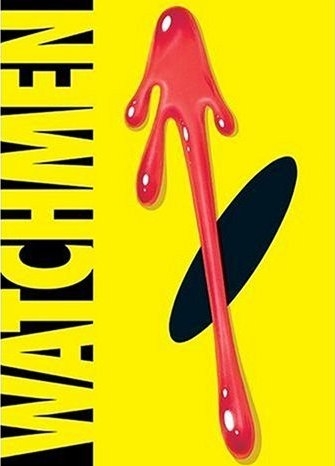
In the years since, I’d picked up the odd graphic novel, usually from word of mouth recommendations. Watchmen was superb, and enough to get me interested in the medium (and yes, I’m looking forward to the film). Unfortunately, my next purchase was Batman: Killing Joke, which was less good. I thought the same of Give Me Liberty. So I stopped buying them.

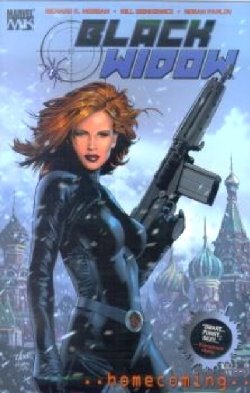
After returning to the UK in 2002, I bought and read The Adventures of Luther Arkwright and Heart of Empire, and was much impressed. After meeting Richard Morgan and reading his debut novel, Altered Carbon, I bought the two miniseries he wrote for Marvel’s Black Widow: Homecoming and The Things They Say About Her. They are excellent. Unfortunately, they didn’t go down so well with most readers of comics – one fan review said something like “if I want to read politics, I’ll read the speeches of George Bush”, which is just wrong in so many ways.

Not long afterwards, I purchased the X-Men: The Dark Phoenix Saga omnibus, having remembered reading and liking bits of when I was a kid. (That’ll date me.) Sadly, I wasn’t that impressed. It’s true that you can never go back.

Anyway, this year I’ve read more graphic novels than ever before. So here are some of the ones I really like:

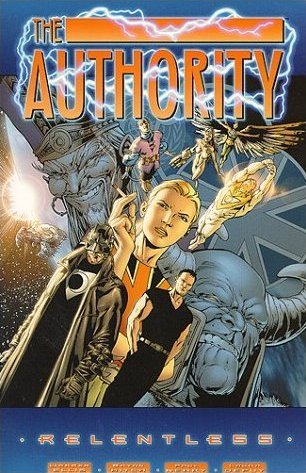
The Authority – I’ve only read the first five trade paperback collections in this series so far, and it’s both excellent and infuriating. Created in 1999 by Warren Ellis and Bryan Hitch, the Authority are a spin-off team from Stormwatch (which I find less good). Unlike most superhero groups, the Authority have taken it upon themselves to right all the world’s wrongs. An ambition that has not gone down well with existing governments – especially that of the US. And this is where it gets infuriating: in order to give the Authority the moral high ground, despite the death and destruction they frequently dish out, the writers often make the villains too evil to be entirely credible. (Well, yes, credible… superheroes… I know. But.)

Tom Strong – after Watchmen and Batman: Killing Joke, I don’t think I’d read any Alan Moore until I picked up the first trade paperback collection of this. And discovered that I loved it. Like much of Moore’s output, it’s post-modern, ironic and clever. Rather than being a superhero, Tom Strong is a “science hero” – and a very knowing take on the concepts and tropes of superhero comics. This is something Moore has done before – in Supreme and Promethea, for example – but I think the Tom Strong series is easily the most fun of them.

Identity Crisis – I’ve not read a lot of DC, much preferring the Marvel universe. But I saw several approving reviews of this one-off by thriller writer Brad Meltzer. So I picked up a copy and… it’s very good indeed. The Elongated Man’s wife, Sue, is murdered. While there’s no evidence at the scene of the crime, a group within the Justice League of America suspect villain Dr Light of the crime. Because years before he had raped Sue, and they had wiped his memory of the event to protect themselves. The DC universe has always struck me as a little bit corny when compared to Marvel, but Meltzger’s strong story handles it with an appealing knowingness – yes, even Batman and Superman. This one is definitely worth buying.

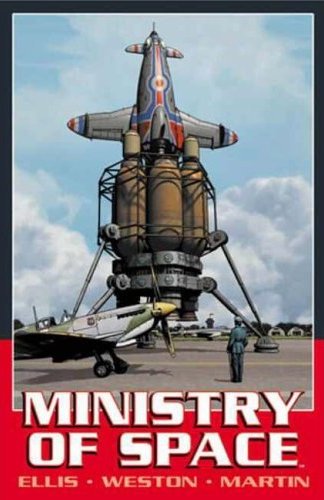
Ministry of Space – after Alan Moore, the comics writer I probably read most is Warren Ellis. And even then I’d be hard-pressed to say who is the better of the two. Ellis, at least, has a more varied output. As this alternate world tale of a British post-war space progamme shows. There’s something greatly appealing about all those old British designs – and we had some world-beating technology in those days: TSR-2, SR.177, Fairey Delta 2, Avro 730… in fact, just look at these. Then we threw it all away. Happily, we didn’t in the world of Ministry of Space. Oh, and there’s an excellent twist in the tale too.

Scarlet Traces – and speaking of alternate world Britains, Ian Edginton & D’Israeli’s Scarlet Traces is one of the best graphic novel takes on the subject. It’s a sequel to HG Wells’ War of the Worlds (which the pair later adapted). After the Martians’ defeat, Britain has reverse-engineered their technology. But there’s something rotten in the heart of Empire… Here’s a preview of Scarlet Traces, so you can see just how good it is. The sequel, Scarlet Traces: The Great Game, takes the story to Mars, which Britain is invading. I was hugely amused to spot Dan Dare and Digby making a cameo in this…

Dan Dare – because I’ve been a fan of Dan Dare since I was a kid. Admittedly, the stories were often poor, and their grasp of science was feeble at best. But Hampson’s artwork looked gorgeous, and I liked the world he’d created. Some of the stories are very good indeed – ‘The Red Moon Mystery’ and ‘Safari in Space’, in particular. Dare has been re-imagined several times, but none of them have really matched the original. 2000AD‘s take seemed to entirely miss the point (although I’d still like to see it collected). Grant Morrison’s revisionist Dare was probably the only successful re-imagining. The more recent version by Garth Ennis for Virgin Comics has been… disappointing.

Trigan Empire – here’s another sf series from my childhood. I remember reading it in Look & Learn, which the school I attended had on subscription. Like Dare, the stories were often terrible, but the artwork was beautiful. For the past few years, the Don Lawrence Collection has been issuing handsome leather-bound collections of the strip – or that version of it produced by original artist Don Lawrence. They’re expensive but definitely collectible.

There are several other graphic novels I like which I’ve not mentioned here – such as those by Alexandro Jodorowsky, or Christin and Mézières’ Valérian Spatio-Temporal Agent. I might write about them at some later date.


1 Comment

The Joy of Cartography

It’s Monday, so let’s ramble…

World-building is like the proverbial iceberg. It’s only the top ten percent you see in the story. Or rather, it’s only the top ten percent you should see in a story. For example, drawing up a map of your galactic empire or fantasy continent is useful when working out how your characters get about, but is there any real need to share it with your readers? If you create it with the intention of sharing it with your readers, you’re going to be filling it with detail. Drawing little mountains and planets. Dreaming up names for all the worlds and hamlets the characters don’t actually visit. All time-consuming tasks.

Time that would be better spent working on your story.

Plus, of course, you’ll get it wrong somewhere. Rivers that flow uphill, earthlike planets orbiting outside a star’s habitable zone. You could, of course, research – to make sure you get all the details right. That’s time-consuming too.

Time that would be better spent working on your story.

It seems de rigeur these days to open a high fantasy novel with a map, but what do they actually add to the story? Very little. However, they do increase the immersive quality of the story. And that’s what many readers seem to want these days. The plot is almost incidental – a group of archetypes doing archetypal things, or perhaps stereotypes doing stereotypical things. The plot, as such, is often just an excuse to bimble about the fantasy world. With a bit of derring-do and suspense thrown in for good measure. Not to mention a good sword-fight or battle as well.

Maps are less prevalent in science fiction novels. The Evergence trilogy by Sean Williams and Shane Dix features a galactic map in an appendix. I’m fairly sure one or two novels by CJ Cherryh also have maps. There are likely plenty more, but I can’t think of any off the top of my head. But, as a general rule, they’re rare.

There’s an expectation these days that a fantasy novel will open with a map – created, of course, by the genre’s exemplar, The Lord of the Rings. It’s become a convention. In fact, given that much of fantasy’s furniture is filched from various historical periods, it strikes me that the genre’s conventions are not so much plot enablers as they are attributes of the story… Map. Quest. Plot coupons. Peasant-Hero. Hidden King. Dark Lord.

Perhaps that’s the chief difference between science fiction and fantasy. In sf, ideas enable the plot; in fantasy they’re the story’s framework.


Leave a comment

Making Worlds…

Another Monday morning, another Monday morning ramble. When I posted my last ramble, and described it as such, I’d no intention of it being a regular thing. But what the hell. At least calling it a “ramble” means I don’t have to put forward a coherent argument. Or even make much sense.

And so, on that note…

Things work the way they do. And, in most cases, we know how that is. Not just physical laws, but society, politics, history, technology… An average reader is unlikely to be an expert in all these, but they know enough. So if, in a mainstream novel, the protagonist drives from London to Glasgow in an hour, we know the writer should go and check Google Maps again.

But in an sf novel, where the background consists chiefly of genre furniture and literary devices…

Much of the trappings of science fiction are convention, rather than any real attempt at constructing a scientifically rigorous future. (This is why sf is not prediction.) Stories set on galactic stages require an abundance of earth-like planets. Yes, exoplanets are more common than we had anticipated, but we’ve yet to find an habitable one. The worlds of the story exist because the story requires them. And, since our heroes need to travel from world to world to resolve the plot, some form of interstellar drive also becomes a necessity. It doesn’t have to be real, it doesn’t have to be based on real-world theorising – such as the Alcubierre Drive.

World-building is the art of choosing genre conventions which fit the story. And without which the story could not take place. That’s the important bit – no convention(s), no story. If the plot still works without the genre trappings, it’s not science fiction. It’s a western in space. Or a WWII story in space. Or the Napoleonic Wars in space. Or…

A purist would claim you use only those genre conventions necessary for the plot. After all, the plot is the thing. But the rest of the background, that’s chrome that’s the the bright shiny stuff the writer hopes will distinguish their novel from their rivals. That’s what readers look for when they want immersion. They want the story’s universe to give the appearance of life outside the story.

And this is where it gets difficult. The writer of a science fiction novel might well be an expert on the world of that novel. After all, they invented it. But that world has to convince on every level. The details have to be right. Earth needs to rotate the right way. No using parachutes to land on airless moons. No earthlike planets sailing gracefully through intergalactic space.

Conventions will only get you so far. And they only pass muster for the most part because they’ve been tested repeatedly during the past 80 years. Perhaps this is why such story mechanisms have changed little. Evolution is a slow process. Those which have survived the testing process have shown they work. They don’t need fixing.

But using conventions makes a novel conventional.

And the good ones are anything but that.


1 Comment

Searching for Coincidences While Travelling Faster-Than-Light

It’s self-evident that technology has made the job of writing much easier. The word-processor is a far more efficient and effective tool than the typewriter (although, with the advent of in-line spell-checking, you’d have thought the standard of spelling would improve). The Web has also provided a low-cost distribution channel, which gives even the meanest of scribblers access to a potential worldwide audience. And then there’s the access the Web gives to useful information. Of course, you need filters firmly in place – there’s a lot of crap out there masquerading as “fact”.

It occurred to me recently that it’s not just in the “business” of writing that technology has proven a boon. Yes, it has expanded the possibilities for plots, but it has also affected the mechanics of plots. A particular example of this came to mind. Take a story written, or set, for example, in the first half of the Twentieth Century…

In order to advance the plot, the protagonist has to track down the femme fatale. He’s met her, but suspects the name she gave him was false. He can either ask about at the location where he met her, in the hope that someone recognises his description and so provides her correct name. Or, and this is a common technique in stories of this ilk, he stumbles across a photograph of her in the local newspaper’s society pages. A lucky coincidence. And the plot moves on.

Let’s transpose our story to the Twenty-First Century – or even after. Our protagonist could still find his femme fatale using leg-work. Or…

He could search the Web.

It’s not unlikely that the woman should appear somewhere on the Internet. In fact, these days it’s almost certain. Almost everyone is there somewhere – especially a woman who would appear in a newspaper’s society pages… It’s only a matter of defining plausible search criteria for the protagonist to use – a visual search may not be commonplace at the moment, but soon it may well be trivial. Our plot no longer needs an incredible coincidence to advance. Technology has given us a much more plausible alternative. And if this is science fiction, then there’s nothing stopping us inventing even more useful tools. Providing, of course, they’re consistent within the universe of the story, and not too wildly implausible in and of themselves.

The Web itself may not have been foreseen forty years ago – Bill Gates himself famously predicted the CD-ROM would be the “next big thing” in personal computing in the first edition of The Road Ahead in 1995 – but the Web does not contradict what we currently know about our world and the universe. Well, not unless you’re looking it up on the Conservapedia, that is.

Science fiction, however… Well, these days, sf seems all too ready to throw the laws of physics out of the window. It’s not just the sort of stuff that’s been rejected by Mundane SF – i.e., anything that isn’t “a believable use of technology and science as it exists at the time the story is written”. Media sf – films and television – has given us, for example, spaceships that rumble (sound doesn’t carry in a vacuum), spaceships that swoop and bank in space (so much for Newton’s Laws), not to mention all those alien races which happen to bear a remarkable resemblance to humans.

But does sf really need to adhere so rigorously to the laws of physics? Okay, sound in space is just plain silly. But, to me, the faster-than-light drive is a literary device. It doesn’t have to be scientifically plausible, it only needs to get the characters from A to B, the plot from Y to Z.The distances involved in interstellar travel make most plots set outside the Solar system impossible. Some have tried: William Barton’s Dark Sky Legion posits a slower-than-light human empire held together by agents who travel for thousands of years from world to world, ensuring none stray too far from the imperial template. It’s an excellent novel. Also excellent are Alastair Reynolds’ Revelation Space novels, which feature slower-than-light travel. In both cases, the lack of FTL is a world-building choice by the authors.

And so back to my point about googling for the femme fatale. Most people don’t know how a Web search works. It’s black box technology. And there’s no need to explain its workings when it’s used in a story. It’s a plot enabler. It also happens to be real. FTL is not real, but it’s also chiefly there to enable the plot. The same can be said of other non-Mundane elements in a science fiction story. Time travel. Alien races. A statistically unlikely abundance of Earth-like worlds. Artificial Intelligence.

Technology has expanded the range of plot enablers available in science fiction. Or, at the very least, it has provided opportunities to conceive of new ones. We know more about the universe now than writers back in the 1940s did, and yet all many sf authors have done is trick up those old inventions – FTL, and ever more ludicrous weaponry, for example – in modern scientific jargon. Where’s the leap equivalent to society pages –> Google? Science fiction often seems to be a history of discrete ideas – time travel, FTL, the Singularity… And because the focus is on those ideas as ideas, their role in enabling the plot is ignored.

And so the plot mechanics remain unchanged – and the gloss gets glossier, the surface gets more polished, and science fiction turns yet more escapist and less relevant…

(This has been a Monday morning ramble, and may well be followed up at a later date when I’ve managed to construct a coherent argument out of the thoughts which resulted in the above.)


Leave a comment

Why Am I Still Doing This…? Part 2

I must be mad, I tell you, mad… Well, if I’m not now, I will be by the time I’ve finished my Nightmare Worlds 50-movie pack. The SciFi Classics one was bad enough, but this set is rapidly showing itself to be of even lower quality.

But, never mind. Without further ado, here’s the next batch of personality-wipingly bad films from the set:

Death Warmed Up – many years ago, Peter Jackson, director of the Lord of the Rings trilogy and King Kong, started out his career with a bad sf/horror spoof called Bad Taste. The director of Death Warmed Up clearly tried for something similar – but his film is crap.

Doomsday Machine – the Chinese have built the ultimate weapon, so the crew of a soon-to-launch mission to Venus is quickly reshuffled, replacing half the men with women. The ultimate weapon does exactly what it says on the tin, leaving our hardy space explorers as the last of the human race. But, of course, they bicker and fight until there’s none of them left. Not a film to watch if you’re feeling misanthropic, but actually not bad for an early 1970s sf B-movie (if that’s not over-qualifying it too much).

Embryo – Rock Hudson is a genetic scientist who manages to save a dog fetus after its mother was run over. The dog grows to term and proves entirely normal – for a savage Rottweiler guard-dog. So Hudson decides to up his game and try the experiment with a human fetus. He’s successful, and the baby grows – using some super-growth scientific thingummy – into the bright and beautiful Barbara Carrere. But, of course, it all goes horribly wrong in the end. Hudson made a couple of odd but strangely watchable genre films during his career – like this one and Seconds.

End of the World – Christopher Lee is a priest who runs a convent. And he’s also an alien double. The aliens are trying to take over the world, of course. A young couple get involved somehow. I remember some scenes set in a 1970s computer centre, although the computer was apparently capable of tasks even modern ones can’t do. And there were the nuns, who were really aliens. And a transdimensional gate, or something, which was the cause of the natural disasters which were destroying Earth. A very odd film.

Eternal Evil – a television director is taught how to astral project by a mysterious woman, and while he sleeps does just that. And kills lots of people. I must have been astral travelling when I watched this, because I can’t remember any of it.

Evil Brain from Outer Space – Starman saves the Earth again. Sigh. This one had a really strange monster in it – I mean, yes, it was obviously a man in a rubber costume. But it looked very weird. Oh, and the titular evil brain spent the entire film being carried round in an attaché case. I’ve seen plenty of maguffins, but it’s the first time I’ve seen a brain used as one.

Shadow of Chinatown – this is actually a serial from 1936, and it’s real pulp action. A mad Eurasian scientist (Bela Lugosi) plots to put the Chinese merchants of an unnamed West Coast American city out of business. There’s a plucky reporter, her manly boyfriend, fistfights, narrow escapes, bombs, and poison traps. It would have been really exciting if it weren’t so, well, dull…

The Disappearance of Flight 412 – and here’s another one which proved less exciting than its title or synopsis suggested. A USAF plane witnesses a UFO encounter, and is directed to land at a disused airbase. Where the crew are held and interrogated by government agents. Their commanding officer, meanwhile, wants to know where his men have vanished to. It’s all because the policy is to cover up UFO sightings and not to investigate them, you see.

Idaho Transfer – I’m not entirely sure what to make of this one. The transfer was terrible, which didn’t help. But its story, and the way it approached it, was actually quite good. A group of scientists have perfected a time machine, and regularly send people 56 years into future, when the Earth appears to have suffered some form of ecological collapse and humanity has died off. The nature of the time travel device means only people under the age of twenty can go, and when the military seizes the time travel facility, a group of young people maroon themselves in the future. Only the Earth isn’t entirely depopulated, and it does eventually recover. An odd, low-budget, low-tech time travel film, not unlike Primer (although nowhere near as confusing).

Good Against Evil – a pilot for a television series which was never (thankfully) made. It apparently stars a young Kim Cattrall of Sex & the City. I don’t actually recall seeing her in it. But then I don’t actually recall much about this film. Something about Satan trying to possess a woman, and a writer trying to exorcise her. The writer is played by Dack Rambo. Who apparently has a twin brother called Dirk Rambo. Dack and Dirk. You can’t make this sort of stuff up…

Alien Zone – a man is dropped off on the wrong street while trying to return to his hotel. It’s raining badly, so a mortician offers him shelter. As they do. To while away the time, the mortician tells the man stories about four of the bodies currently occupying his coffins. As they do. I don’t actually recall what those stories were, however. Or what they had to do with aliens.

So, a mixed bag this time. Embryo, End of the World and Idaho Transfer weren’t bad – and might even have been quite good, if the transfer hadn’t been so poor. The Disappearance of Flight 412 proved duller than it should have been. The rest were as expected.

Don’t forget part one of this recipe for insanity.


5 Comments

20 British SF Novels You Should Read

It seems to be the season to exhort people to read books, or watch films, from some list of what-appear-to-be-randomly-chosen titles. So, move on over up there on the bandwagon, I’m climbing aboard.

But.

Most of the lists floating about the tinterweb are, let’s face it, a bit Americocentric. Here are twenty science fiction novels by British authors you should read.

Take Back Plenty, Colin Greenland
Tabitha Jute is the captain of a space barge, and when she agrees to ferry a cabaret act, Contraband, from Mars to the alien space station Plenty, things go from bad to… well, to crashing her space barge on Venus. A seminal post-modern space opera, and a personal favourite (see here).

Use of Weapons, Iain M Banks
Cheradenine Zakalwe was an operative for Special Circumstances. While the drone Diziet Sma tries to persuade him to come out of retirement for one last job, a second narrative recounts Zakalwe’s career in reverse chronological order… leading to one of the most memorable revelations in science fiction. Probably the best of Banks’ Culture novels.

A Clockwork Orange, Anthony Burgess
Alex loves a bit of the old ultra-violence, but the authorities aren’t so keen on it. One such incident gets a bit out of hand, and Alex is arrested, tried and convicted. While in jail, he volunteers for a brainwashing experiment, designed to remove his urge for violence. A novel that’s famous for several reasons – its story, its invented language Nadsat, Stanley Kubrick’s film adaptation, and Kubrick banning his own film from being shown in the UK…

Ash: A Secret History, Mary Gentle
In an alternate past in which the mediaeval nation of Burgundy did not disappear, female mercenary captain Ash is battling against invading Visigoths from North Africa. Meanwhile, a present-day academic is researching the biography of the fictional Ash… only to discover his own world slowly changing to be more like hers.

Life, Gwyneth Jones
Anna Senoz is a genetics researcher, and this is her, well, her life. And her career. SFSite said of Life: “You can stop reading right now and go out and buy the book. Otherwise, you’ll have to endure yet another one of these diatribes about how science fiction doesn’t get any respect from the literary mainstream. Because you can’t read this book and not reflect on the fact that had this been written by, say, Margaret Atwood, Life would be receiving more of the widespread attention it deserves.”

Light, M John Harrison
Back in 1975, Harrison reinvented space opera with The Centauri Device. Twenty-seven years later, he did it again with Light. Physicist and serial killer Michael Kearney is haunted by the Shrander. He is also on the verge of breakthrough in theoretical physics which will allow humanity to spread into space… and so populate the edges of the Kefahuchi Tract, a region of space that obeys no known laws of physics. Which is where, in 2400 AD, K-ship captain Seria Mau Genlicher and ex-space pilot Ed Chianese now live.

Absolution Gap, Alastair Reynolds
This is one of those novels which has three separate narratives which seem to have no connection to each other. But, of course, they’re linked. The world of Ararat has found itself dragged into a war between humanity and the Inhibitors. Rashmika Els is looking for her brother, who has joined one of the “cathedrals” which perpetually travel across the face of the frozen moon, Hela. And the crew of the lighthugger Gnostic Ascension are desperately searching for something to improve their fortunes… Of Reynolds’ Revelation Space novels, this one shows the strangeness of his universe best.

Behold the Man, Michael Moorcock
Karl Glogauer travels back in time from Britain in 1970 to Judea in 28 AD. He is obsessed with meeting Jesus Christ… except the Jesus he meets is not the one described in the Bible. Britain in 1970 was a grim place, but Biblical Judea is little better. At least Glogauer finds the fate he was seeking, although it’s perhaps not the one he expected to find.

The Drowned World, JG Ballard
If we don’t get global warming sorted out soon, this might well turn not to be science fiction. Ballard’s second novel, and deservedly in the SF Masterworks series.

The Separation, Christopher Priest
The Second World War ended in 1941. Except it didn’t. It’s all because of identical twins Joe and Jack Sawyer. After competing in the 1936 Olympics, they fall out. One becomes a RAF bomber pilot, while the other is a conscientious objector. Priest rings the variations on their two lives, and the consequences of one or the other, or both, dying.

Somewhere East of Life, Brian W Aldiss
Someone has stolen ten years of Roy Burnell’s memories, and so he wanders about Central Asia hunting for the magic bullet which will restore them. This is one of those near-future sf novels which, now that its future has passed, bears an uncanny resemblance to mainstream fiction. And yet it’s still sf.

The Time Machine, HG Wells
A man invents a time machine and travels to the future. To the year 802,701 AD, in fact. But you probably knew that already.

The Time Ships, Stephen Baxter
This is the authorised sequel to The Time Machine – and in it the publication of Wells’ novel has changed the future. The Time Traveller can no longer rescue Weena from the Morlocks. So he goes back in time to prevent his earlier self from inventing the time machine. Only that changes the future yet again… Baxter manages to pull a happy ending out of his story, but you’ll have to read the novel to find out how.

1984, George Orwell
Some say this isn’t science fiction. I say that just because some governments are using techniques described in the book – left-wing doubleplusungood, right wing doubleplusgood; Christianity doubleplusgood, atheism doubleplusungood – that doesn’t mean 1984 isn’t science fiction. The UK might as well be Airstrip One, anyway. And not even George Orwell would have dared invent Gitmo and “extraordinary rendition” for his novel.

Pavane, Keith Roberts
Queen Elizabeth I was assassinated in 1588, and England remains Catholic. The stories in this fix-up novel are set in a 1968 following on from this, but it’s not a 1968 we’d recognise. Pavane is still one of the best alternate history novels ever written, and Keith Roberts deserves to be better known than he is.

The Road to Corlay, Richard Cowper
A thousand years in the future, the ice-caps have melted and the UK is now a series of small islands (it’s that global warming thing again). Modern technology has been mostly forgotten, and a Church Militant rules everything. But the prophesied White Bird of Dawning could break their rule. It all depends on Tom, whose pipe-playing has the power to stir minds. While this novel may sound like fantasy, it’s very definitely science fiction. It’s also very English.

Chronocules, DG Compton
This novel has one of the all-time great opening sentences: “About twenty years before this story begins—give or take a few years, the Simmons s.b. effect being untried and seriously (not that it mattered) inaccurate—the desolate silence on Penheniot Village, at the top of Penheniot Pill which is a creek off the small harbour of St. Kinnow in the county of Cornwall, was shattered by the practised farting of young Roses Varco.” But then it was originally published under the title Hot Wireless Sets, Aspirin Tablets, the Sandpaper sides of used Matchboxes, and something that might have been Castor Oil, so what do you expect?

Silver Screen, Justina Robson
Anjuli O’Connell is a psychologist working with the Artificial Intelligence 901. Just before his death, a colleague filed a petition with the World Court to emancipate the AI, but the company which built and owns it is resisting. Not many debut novels are shortlisted for the Arthur C Clarke Award, but Silver Screen was. And it also appeared on the shortlist for the BSFA Award.

Oracle, Ian Watson
A Roman centurion is dragged forward to the present day by an experiment and finds himself in, of all places, Milton Keynes (that’s the town with the concrete cows). He’s picked up by a British researcher… But then the security services get involved. And so do the IRA. And the book heads smartly into thriller territory.

The Star Fraction, Ken MacLeod
This was MacLeod’s debut novel, and takes place in a balkanised UK. Revolution is in the air, and three very different characters find themselves involved. And behind it all is the mysterious Star Fraction. And the rogue AI, the Watchmaker. An astonishing debut from MacLeod.

Now go and read them.

(Before you all start spluttering about various books I’ve missed off the list, I picked titles which are either set (mostly) in the UK, or at some point in the future at which nation states are irrelevant. So no Black Man or Brasyl. Or Rendezvous with Rama. They’re also books I’ve both read and enjoyed. So no John Wyndham (never read him). Nevertheless, I’ve probably missed an entire county’s worth of UK authors who deserve mention. If you can think of any, then feel free to name them in a comment.)

1 Comment

Best SF Films

Last week, the American Film Institute released several new lists of top 10 films, including one for science fiction. And on his blog on AMC, the always entertaining John Scalzi commented on the list, pointing out that the most recent film on it was released in 1991. So he decided to create a list of Top Ten SF Films Released since 1991, and asked people for suggestions. Here’s my list (in order of year of release)…

1. Delicatessen, dir. Jean-Pierre Jeunet & Marc Caro (1991) – it’s hard to imagine how a post-apocalyptic black comedy featuring cannibalism could be, well, funny. But this film certainly manages it. The inhabitants of an apartment block in a Paris after some unspecified disaster regularly invite new tenants to take empty flats… so they can kill and eat them. Ex-circus performer Dominique Pinon is the latest such victim… but he manages to evade his fate.

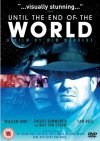
2. Until the End of the World, dir. Wim Wenders (1991) – when I first saw this back in 1992, I thought the 1999 it depicted was the most plausible I’d seen on film. Having watched it recently, I can see why I thought so and why it wasn’t so prophetic after all. Wenders has said he intended Until the End of the World to be the “ultimate road movie”, and that it is for much of its length. I blogged about it here. I still want to see the 4 hour 40 minute version, though.

3. Abre los Ojos, dir. Alejandro Amenábar (1997) – César, a wealthy playboy, is hideously disfigured in a car crash caused by a jealous ex-girlfriend. But doctors use a new surgical technique on his face, and he regains his former good looks. And the love of his life. Except everything seems a little different and not quite right… An unsettling film. It was remade by Cameron Crowe as Vanilla Sky, starring Tom Cruise. Beware of expensive Hollywood imitations; go for the original.

4. The Fifth Element, dir. Luc Besson (1997) – okay, this is a supremely silly film. Which is where much of its charm lies. A vividly technicolour space opera, it owes more to French sf comics such as Métal Hurlant than it does to Star Wars. This, of course, is actually a good thing. On the other hand, thinking too hard about The Fifth Element is probably not a good thing – although, to be fair, it holds up better in that department than Star Wars does.

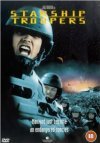
5. Starship Troopers, dir. Paul Verhoeven (1997) – the book is a thinly-disguised fascist political tract, so the only way to make a film of it would be as a satire. And that’s just what Verhoeven did. Perhaps it turns into a bit of a mindless bug hunt towards the end, but it skewers its satirical targets entertainingly – the adverts exhorting young people to sign up for the Mobile Infantry to kill bugs are a hoot.

6. Dark City, dir. Alex Proyas (1998) – a man wakes up in a bathtub, with no memory, and there’s a dead body in the other room. And the city outside is a dark and claustrophobic place which, bizarrely, changes each and every night. Despite initially appearing to be noir, Proyas piles on sufficient strangeness until the film can only be science fiction. It ends entirely appropriately.

7. Donnie Darko, dir. Richard Kelly (2001) – a troubled teenager survives a jet engine crashing onto his bedroom when a giant rabbit calls him outside and tells him the world will end in 28 days 6 hours 42 minutes and 12 seconds. The rabbit subsequently urges him to commit various acts of violence and vandalism. This is one of those films whose plot only becomes clear as the film progresses. But it all makes a clever kind of sense in the end.

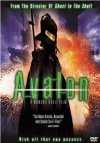
8. Avalon, dir. Mamoru Oshii (2003) – better known for animé, Oshii made this live-action film in, of all places, Poland. In Polish. With a Polish cast. It opens in a VR war game, and the special effects are jaw-dropping. The plot – a hunt for a “hidden level” in the game – is not as eye-opening as the visuals, but neither is it some dumb First Person Shooter.

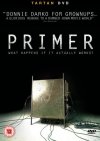
9. Primer, dir. Shane Carruthers (2004) – this starts off relatively straightforward: a pair of geeks inadvertently invent a time machine. But each time they go back in time, they’re co-existing with their earlier selves… and if they go back from that point… Two-thirds of the way into the film and there are several pairs wandering around, and several narrative threads following their exploits. A very clever film, and not a little mind-bending.

10. Sky Captain & the World of Tomorrow, dir. Kerry Conran (2004) – this was one of the first films released with entirely CGI-generated sets and backgrounds, but that’s not what makes it so remarkable. Sky Captain & the World of Tomorrow is an homage to old pulp science fiction and Saturday morning serials – not just the H Rider Haggard / Edward Bulmer Lytton plot, or the fantastic future of the past production design, but also all those shots so familiar from noir films: the policeman blowing his whistle, the heroine in the telephone booth, the running shadows thrown across buildings…


1 Comment

Why Am I Still Doing This…? Part 1

Well, I’ve now had a couple of weeks to regain my sanity after I finished watching the 50 films in the Sci Fi Classics 50-movie pack… So it’s on to the second 50-movie pack, Nightmare Worlds.

Alien Contamination – this Italian film pretty much transplants the plot of Ridley Scott’s Alien to Earth. A tramp freighter from South America drifts into New York harbour, its crew all dead. In the hold are strange alien eggs… which cause people to explode messily. The detective in charge, with the help of a secret government organisation of scientists, tracks down the surviving astronaut from a Mars mission. Together, they travel to the ship’s origin… and discover the other Mars astronaut, who had faked his own death and is now growing and distributing alien eggs for his alien masters on Mars. This film was entirely ordinary.

Alien Species – a trio of prisoners are being transported by sheriffs, when a fleet of UFOs attack Earth and force them off the road. The prisoners escape, and hide out in a nearby cave. Which proves to be the headquarters of the invading aliens. Initially watchable, this film quickly descended into silliness. The cave sets look fake, the aliens looks fake, and ten minutes in, the story began shedding plausibility and intelligence by the second.

Atomic Rulers of the World – a Japanese Starman film, and as such resembles all the other Starman films. The alien council of the Emerald Planet look like the deranged imaginings of the insane brother of the inventor of Teletubbies. The plot: Starman saves the Earth from human invaders from the planet Mirapolia.

The Alpha Incident – A space probe returns to Earth and brings with it a dangerous micro-organism. While being transported by train, a sample of this micro-organism is inadvertently released by a criminally stupid train guard. Five people are exposed, and promptly confined at a remote train stop while scientists rush to find a cure. This was as dull as it sounds.

Attack from Space – another Starman film. This time the Spherions are out to conquer Earth. Of course, Starman defeats them. Happily, they don’t make films like this any more.

Beast of the Yellow Night – a man sells his soul to the Devil after being saved from certain death. As a result, he turns into the titular creature at night – not just on yellow nights, I should add; whatever a “yellow night” might be – and kills people. This film couldn’t quite make up its mind what it was supposed to be – horror, thriller or family drama. The poor transfer made it even harder to figure out.

Warriors of the Wasteland – an Italian post-apocalypse movie. And if there’s one thing we now know about the Apocalypse from all the films on the subject, it’s that the Goths will inherit the Earth. Well, they’re not quite Goths in this one – the eponymous warriors wear white, for one thing. (Which means we also know Persil will survive the Apocalypse.) And they’re a bit too camp to be Goths. But, essentially, this film is Mad Max meets the Camp White-Clad Goths of the Wasteland. And he kills them all.

Werewolf Woman – this one is about a woman who turns into a werewolf. Of course. Actually, she only thinks she turns into a werewolf. Except she does at the end. Along the way, she meets and seduces numerous men, and then kills them. This is one of those movies where you get exactly what the title leads you to expect. In fact, the film’s alternative title Naked Werewolf Woman probably tells you more than you need to know…

The Nightmare Never Ends – an old Nazi hunter is killed, and the detective investigating the murder begins to obsess about the man’s death. The Nazi hunter had been tracking a notorious war criminal, a louche young SS officer, who doesn’t appear to have aged in the 35 years since WWII. Unfortunately, the title better refers to the film itself than it does to its plot…

Counterblast – a Nazi scientist escapes to England at the end of WWII, and murders and takes the identity of a British scientist returning from Australia. He continues to work on the biological weapons he had been creating for his Nazi masters, with the intention of using them to usher in a Fourth Reich. But it all starts to go wrong… This B&W British film from 1948 was actually quite good.

All the Kind Strangers – Stacy Keach is driving through deepest darkest Tennessee when it sees a young boy walking by the side of the road with a heavy bag of shopping. He stops and offers the kid a lift… which subsequently involves a long drive down a dirt track and across a creek… to a house where seven kids (ranging in age from late teens to under ten) live alone. They do have a “mother” – but she’s actually a woman they’ve kidnapped and forced to play that role. And so they likewise force Keach to become their father. There was a halfway decent story buried in this film – which isn’t at all sf or horror – but it didn’t deserve 74 minutes.

The Day the Sky Exploded – Earth is bombarded by asteroids. Which is sort of like the sky “exploding”. Cue lots of running around, explosions, buildings falling over. I don’t actually remember there being much in the way of a story in this film. Deep Impact it’s not. Happily, neither is it Armageddon.