It Doesn't Have To Be Right…

… it just has to sound plausible


2 Comments

Gods and Robots – The Night Sessions by Ken MacLeod

According to John Clute, every science fiction novel has three dates: the date it was written, the date it is set, and the date it is about. For all that it may be set in the future millennia hence, the best time to read a science fiction novel is in its year of publication. And if the novel is set in the near-future, this is even more true. After all, the near-future is seen as an extension of the present, with the present’s issues and concerns…

All of which may well have a sell-by date.

So, a decade or two from now, will we look back at the rise of creationism as some bizarre atavistic aberration? Will we look back in relief at our narrow escape from religious domination? Or will we, as Ken MacLeod posits in The Night Sessions, go to war and in the aftermath completely secularise society?

The Night Sessions is a near-future sf novel masquerading as a crime novel, much as The Execution Channel was a near-future sf novel masquerading as a thriller. It’s set in Edinburgh a decade or two in the future. The world differs from ours – and perhaps what ours might be – in several ways. There was a war, the “Faith War”, fought in Israel with tactical nuclear weapons, and the forces of the West lost. Society has turned its back on organised religion and everywhere is now entirely secular. By law. Churches and priests are no longer officially recognised. There are also robots, and some of them have developed artificial intelligence.

The novel opens with a fundamentalist Christian from New Zealand visiting Edinburgh to meet with the members of an underground Scottish Christian sect. The fundamentalist works in a “creationist science park” in New Zealand which has become a refuge for sentient robots. He has been preaching to the robots, and the Scots intend to broadcast his sermons to their own congregation. These are the night sessions of the title.

The story proper begins with the murder of a priest by a letter bomb. Detective Inspector Ferguson is in charge of the case. Clues suggest an underground Christian group, the Third Covenant, are responsible. Then a bishop is assassinated by a shot to the head. Ferguson’s investigation soon focuses on a robot called Hardcastle, who has been masquerading as a disfigured war veteran with extensive prostheses. And from there it cascades to take in a host of other Christian denominations, various youth subcultures in Edinburgh, more robots, and the Atlantic and Pacific Space Elevators…

Unfortunately, as a crime novel The Night Sessions mostly fails. Fortunately, as a science fiction novel it mostly succeeds. The problem is that the world of the book requires explanation – it’s neither the reader’s world, nor part of the reader’s history. The story requires its background – it cannot progress, nor be resolved, without those background details MacLeod has created. Which means that the crime novel is frequently interrupted by info-dumps. And because this is a crime novel, they seem horribly out of place. The Night Sessions asks to be read as a crime novel, but it cannot be because it is as exposition-heavy as the science fiction novel it really is.

As science fiction, however… The world MacLeod has created is both clever and interesting, but the requirements of the crime plot have led to a withholding of story information – something not normally found in science fiction. Science fiction novels are open – they lay bare their workings as they progress. The reader can see the rods and gears which drive the plot. And has to in order for the resolution to make sense (not doing so can result in the sin of deus ex machina). A crime novel, however, operates with a different mechanism, and part of the reading process involves the reader’s discovery of those rods, gears and linkages. The reader must build the mechanism in their mind in order to understand the book’s resolution.

Where The Night Sessions is especially good is in its depiction of life in this near-future Edinburgh, and in the tools used by the police of the time. As a near-future novel it convinces, and there’s an impressive inevitability, given MacLeod’s invented history, to the society depicted. Which makes it seem such a shame that Ferguson’s investigation seem to be mostly driven by authorial sleight of hand. Science fiction is essentially a logical genre – all sf stories follow an underlying logic. The same is true of crime stories. There’s a similar implacability to the end of a crime novel as there is to the end of sf novel. But in the crime genre there are no shortcuts on the route there. Ferguson seems to stumble upon the conspiracy at the heart of The Night Sessions more by serendipity than by methodical police-work (he has a number of neat tools, and they do help, however). This is not helped by the Columbo-style prologue. This names the villains of the piece, and means we must watch Ferguson and his team stumble through the clues to reach a destination we already know. Except that destination is a blind – because The Night Sessions is actually more of a whydunnit than a whodunnit, and the real why remains hidden for much of the narrative.

Because The Night Sessions is a crime novel, the resolution of the plot should be the identity of the murder and their motivation. Because The Night Sessions is a science fiction novel, that is not enough. The motivation for the crimes has to be science-fictional. And it is. But again not quite enough. Like The Execution Channel, the final plot-zinger in The Night Sessions happens off-screen – it is in fact recounted by one character to another.

The Night Sessions is one of the novels shortlisted for this year’s BSFA Award. It’s certainly one of the most interesting depictions of the near-future I’ve come across in science fiction. But I don’t think the engine of its plot is geared correctly to the wheels of its story. I also suspect it appears too prophetic to read well a decade from now. Its concerns are too specific – unlike, say, Nineteen Eighty-Four – and it’s not pure enough science fiction to weather the years. Read it now and it’s very good. Read it five years from now…?

Ken MacLeod writes bloody good science fiction novels, but we’ve yet to see his best.


4 Comments

Dumb Idea of the Week

Various genre magazines are suffering in these credit-crunched times – Realms of Fantasy has ceased publication, F&SF has gone bimonthly, and both Asimov’s and Analog have reduced page counts. It looks very gloomy…

There have been several calls for action, but the dumbest solution to this situation I’ve heard so far is this one:

“Maybe what’s needed is for the genre to get down to one magazine. Refocus the field of science fiction. And since the magazine publishing and distribution industry is so screwed, maybe the short story market should move to a different format. I’d suggest a trade or mass market paperback series published quarterly to start with edited by team of editors to get the very best and diverse kind of story.”

Right.

If you search for science fiction markets on Duotrope, a writers’ resource web site, you get 342 hits – ranging from the professional magazines, such as the aforementioned Analog and F&SF, to the amateur online zines which don’t pay contributors. For a reader, there’s a wide range of fiction of varying quality available there. For a writer, there’s ample opportunity to get into print.

But James Wallace Harris thinks we should chuck all that. Instead, the only outlet for science fiction short stories should be a single quarterly paperback anthology. About 100 published stories a year, then. It’ll make picking a shortlist for the Hugo and Nebula Awards easier. That’s about the only good thing I can say for the plan. But it will also make it impossible for anyone except an established name to get a story into print.

It will kill science fiction.

The genre needs a constant input of new talent. That’s how it grows and evolves. Choke off that talent, and science fiction will stagnate and die. There’ll be no books by new writers, just more tired old crap by the old guard. And when they’re gone it’ll be… reprint after reprint after reprint. The sf shelves of your local book shop will start to resemble the Penguin Classics shelves – full of multiple editions of the same canon of books by long-dead authors.

So what if a few magazines go to the wall? It’s happened before, and it’ll no doubt happen again.

And science fiction is still here, still growing and still evolving.

I have to wonder if the same can be said for some of its fans…


Leave a comment

And Yet Another Review…

This time from SFRevu. See here. They write,

“In ‘Thicker Than Water’, Ian Sales brings us Major Gina Priest, a tough-as-nails commander on a moon of Saturn, trying to protect it from attackers from Titan. Over the course of this exciting story, she will learn much of her foes and herself … Issue 23 of Jupiter is another little gem!”

Jupiter #23 is available from here.


Leave a comment

Another Jupiter #23 Review

SF Crowsnest reviews Jupiter #23, and says of my story, ‘Thicker Than Water’:

“Evocative descriptions of the environment of Tethys and Titan make this a very realistic story … This is a good story with much promise, atmospheric and exciting. However, it appears as only a brief glimpse into another universe, sufficiently tantalising for one to wish to see more.”

Jupiter #23 is available from here.


9 Comments

Lies, Damn Lies and… SF Awards

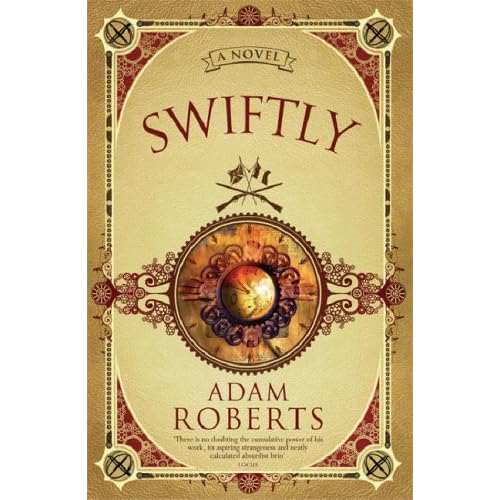
Adam Roberts has posted an interesting article on Futurismic on the blog-baiting subject of “Award shortlists are all rubbish”. Big Dumb Object has responded here.

Myself, I don’t think awards shortlists are rubbish. I just think they’re dishonest. The Hugo Award, the BSFA Award, the Clarke Award, the Nebula Award… are all given to the “best” novel, etc.

Best.

But that’s not true. The voted awards are given to the shortlisted book which has the most votes. The most popular book, in other words. The juried awards are given to the book which the jury – no doubt after much argument and compromise – feels is the best of their shortlist. The same is true of the shortlists themselves. The process itself simply isn’t capable of picking the best book of the year.

If every reader of science fiction and fantasy voted for the Hugo Award, the winner would always be the latest Harry Potter book. Because so many more people read JK Rowling than Michael Chabon (whose The Yiddish Policemen’s Union – which is actually very good – won the Hugo for 2008). But then, of course, they’d have to call it the Hugo Award for Most Popular Novel.

It could be argued that shortlists provide a good reading list, a snapshot of the “state of the genre”, if you will. For juried awards such as the Clarke, that’s possibly true. Although given the Clarke’s predilection for picking non-sf novels for its shortlist, you’re not going to get much idea from it of what’s happening in the genre in any given year.

As far as I can determine, the only conceivable purpose for the various awards which are handed out is… to celebrate the genre. It’s a reminder to the general public that science fiction and fantasy still exist as a separate, functioning ecology; that there are writers, readers, artists and commentators working in the genre; that there are people who feel strongly enough about the genre to do the whole award shenanigans.

So let’s drop the word “best” from all the awards. Let’s call it the Hugo Award for Novel, the BSFA Award for Novel, and so on. Remove all references to any kind of value judgment. Let’s stop pretending the winners are better books than every other genre book published during the same year. The same for short stories, magazines, writers, editors, artists, etc.

Let’s be honest.

Let’s focus on what the awards really are: annual celebrations of the genre.


3 Comments

BSFA Award shortlist

It’s that time of year again. The shortlists for the 2008 BSFA Awards have been announced. And they go something like this:

Best Novel

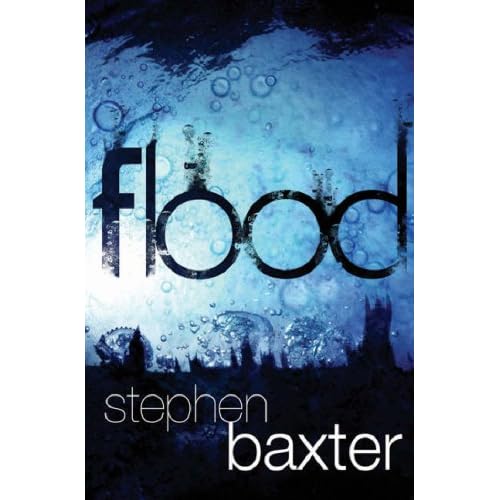
I’ve not read any of the four, although I do have The Night Sessions and plan to read it soon. I’m a bit behind on my Baxter reading, although eventually I would have got to Flood. The Harkaway I’ve heard good-ish things about, but not enough to make me want to shell out for a new hardback by an author I’ve never read before. Anathem…. Well, I hated the Baroque Cycle, so I’m certainly not going to buy Stephenson’s latest brick in hardback.

And yes, I know there are such things as libraries. But I already have enough unread books of my own to keep me reading for several years, so why would I join a library?

Um, it seems The Gone-Away World is available in A-format paperback already. I might well get a copy, then…

Best Short Fiction

A new Chiang. Nuff said. I hope they make it available online. The others are already available to read on the tinterweb. I don’t read enough short fiction each year to judge how the above stack up against everything else published. Annoyingly, you have to sign up for a 7-day trial for some online business information service to access the Rickert. Which requires you to enter a credit card number. Dumb move, F&SF.

Best Non-Fiction

I have Paul Kincaid’s book, and I plan to read it. I am less interested in fantasy, or superheroes. Clute’s piece, as it is online, I will read.

Best Artwork

Judge for yourself…


8 Comments

149 SF Novels Everyone Must Read… Apparently

All week the Guardian has been running 1000 Novels Everyone Must Read. Not 1000 Novels Everyone Should Read. Must read. And these 1000 novels have been arbitrarily – and weirdly – split into seven categories: love, crime, comedy, family & self, state of the nation, science fiction & fantasy, and war & travel. To date, I’ve averaged between one and two dozen read in each category.

But today it’s science fiction & fantasy and, unsurprisingly, I make a much better showing.

Here is the list:

Douglas Adams: The Hitchhiker’s Guide to the Galaxy (1979)
Brian W Aldiss: Non-Stop (1958)
Isaac Asimov: Foundation (1951)
Margaret Atwood: The Handmaid’s Tale (1985)
Margaret Atwood: The Blind Assassin (2000)
Paul Auster: In the Country of Last Things (1987)
JG Ballard: The Drowned World (1962)
JG Ballard: Crash (1973)
JG Ballard: Millennium People (2003)
Iain Banks: The Wasp Factory (1984)
Iain M Banks: Consider Phlebas (1987)
Clive Barker: Weaveworld (1987)
Nicola Barker: Darkmans (2007)
Stephen Baxter: The Time Ships (1995)
Greg Bear: Darwin’s Radio (1999)
William Beckford: Vathek (1786)
Alfred Bester: The Stars My Destination (1956)
Ray Bradbury: Fahrenheit 451 (1953)
Poppy Z Brite: Lost Souls (1992)
Charles Brockden Brown: Wieland (1798)
Algis Budrys: Rogue Moon (1960)
Mikhail Bulgakov: The Master and Margarita (1966)
Edward Bulwer-Lytton: The Coming Race (1871)
Anthony Burgess: A Clockwork Orange (1960)
Anthony Burgess: The End of the World News (1982)
Edgar Rice Burroughs: A Princess of Mars (1912)
William Burroughs: Naked Lunch (1959)
Octavia Butler: Kindred (1979)
Samuel Butler: Erewhon (1872)
Italo Calvino: The Baron in the Trees (1957)
Ramsey Campbell: The Influence (1988)
Lewis Carroll: Alice’s Adventures in Wonderland (1865)
Lewis Carroll: Through the Looking-Glass, and What Alice Found There (1871)
Angela Carter: The Passion of New Eve (1977)
Angela Carter: Nights at the Circus (1984)
Michael Chabon: The Amazing Adventures of Kavalier and Clay (2000)
Arthur C Clarke: Childhood’s End (1953)
GK Chesterton: The Man Who Was Thursday (1908)
Susanna Clarke: Jonathan Strange and Mr Norrell (2004)
Michael G Coney: Hello Summer, Goodbye (1975)
Douglas Coupland: Girlfriend in a Coma (1998)
Mark Danielewski: House of Leaves (2000)
Marie Darrieussecq: Pig Tales (1996)
Samuel R Delaney: The Einstein Intersection (1967)
Philip K Dick: Do Androids Dream of Electric Sheep? (1968)
Philip K Dick: The Man in the High Castle (1962)
Thomas M Disch: Camp Concentration (1968)
Umberto Eco: Foucault’s Pendulum (1988)
Michel Faber: Under the Skin (2000)
John Fowles: The Magus (1966)
Neil Gaiman: American Gods (2001)
Alan Garner: Red Shift (1973)
William Gibson: Neuromancer (1984)
Charlotte Perkins Gilman: Herland (1915)
William Golding: Lord of the Flies (1954)
Joe Haldeman: The Forever War (1974)
M John Harrison: Light (2002)
Nathaniel Hawthorne: The House of the Seven Gables (1851)
Robert A Heinlein: Stranger in a Strange Land (1961)
Frank Herbert: Dune (1965)
Hermann Hesse: The Glass Bead Game (1943)
Russell Hoban: Riddley Walker (1980)
James Hogg: The Private Memoirs and Confessions of a Justified Sinner (1824)
Michel Houellebecq: Atomised (1998)
Aldous Huxley: Brave New World (1932)
Kazuo Ishiguro: The Unconsoled (1995)
Shirley Jackson: The Haunting of Hill House (1959)
Henry James: The Turn of the Screw (1898)
PD James: The Children of Men (1992)
Richard Jefferies: After London; Or, Wild England (1885)
Gwyneth Jones: Bold as Love (2001)
Franz Kafka: The Trial (1925)
Daniel Keyes: Flowers for Algernon (1966)
Stephen King: The Shining (1977)
Marghanita Laski: The Victorian Chaise-longue (1953)
Joseph Sheridan Le Fanu: Uncle Silas (1864)
Ursula K Le Guin: The Left Hand of Darkness (1969)
Ursula K Le Guin: The Earthsea series (1968-1990)
Stanislaw Lem: Solaris (1961)
Doris Lessing: Memoirs of a Survivor (1974)
CS Lewis: The Chronicles of Narnia (1950-56)
MG Lewis: The Monk (1796)
David Lindsay: A Voyage to Arcturus (1920)
Ken MacLeod: The Night Sessions (2008)
Hilary Mantel: Beyond Black (2005)
Michael Marshall Smith: Only Forward (1994)
Richard Matheson: I Am Legend (1954)
Charles Maturin: Melmoth the Wanderer (1820)
Patrick McCabe: The Butcher Boy (1992)
Cormac McCarthy: The Road (2006)
Jed Mercurio: Ascent (2007)
China Miéville: The Scar (2002)
Andrew Miller: Ingenious Pain (1997)
Walter M Miller Jr: A Canticle for Leibowitz (1960)
David Mitchell: Cloud Atlas (2004)
Michael Moorcock: Mother London (1988)
William Morris: News From Nowhere (1890)
Toni Morrison: Beloved (1987)
Haruki Murakami: The Wind-up Bird Chronicle (1995)
Vladimir Nabokov: Ada or Ardor (1969)
Audrey Niffenegger: The Time Traveler’s Wife (2003)
Larry Niven: Ringworld (1970)
Jeff Noon: Vurt (1993)
Flann O’Brien: The Third Policeman (1967)
Ben Okri: The Famished Road (1991)
George Orwell: Nineteen Eighty-four (1949)
Chuck Palahniuk: Fight Club (1996)
Thomas Love Peacock: Nightmare Abbey (1818)
Mervyn Peake: Titus Groan (1946)
Frederik Pohl & CM Kornbluth: The Space Merchants (1953)
John Cowper Powys: A Glastonbury Romance (1932)
Terry Pratchett: The Discworld series (1983- )
Christopher Priest: The Prestige (1995)
Philip Pullman: His Dark Materials (1995-2000)
François Rabelais: Gargantua and Pantagruel (1532-34)
Ann Radcliffe: The Mysteries of Udolpho (1794)
Alastair Reynolds: Revelation Space (2000)
Kim Stanley Robinson: The Years of Rice and Salt (2002)
JK Rowling: Harry Potter and the Philosopher’s Stone (1997)
Salman Rushdie: The Satanic Verses (1988)
Joanna Russ: The Female Man (1975)
Geoff Ryman: Air (2005)
Antoine de Sainte-Exupéry: The Little Prince (1943)
José Saramago: Blindness (1995)
Will Self: How the Dead Live (2000)
Mary Shelley: Frankenstein (1818)
Dan Simmons: Hyperion (1989)
Olaf Stapledon: Star Maker (1937)
Neal Stephenson: Snow Crash (1992)
Robert Louis Stevenson: The Strange Case of Doctor Jekyll and Mr Hyde (1886)
Bram Stoker: Dracula (1897)
Rupert Thomson: The Insult (1996)
JRR Tolkien: The Hobbit (1937)
JRR Tolkien: The Lord of the Rings (1954-55)
Mark Twain: A Connecticut Yankee at King Arthur’s Court (1889)
Kurt Vonnegut: Sirens of Titan (1959)
Horace Walpole: The Castle of Otranto (1764)
Robert Walser: Institute Benjamenta (1909)
Sylvia Townsend Warner: Lolly Willowes (1926)
Sarah Waters: Affinity (1999)
HG Wells: The Time Machine (1895)
HG Wells: The War of the Worlds (1898)
TH White: The Sword in the Stone (1938)
Angus Wilson: The Old Men at the Zoo (1961)
Gene Wolfe: The Book of the New Sun (1980-83)
Virginia Woolf: Orlando (1928)
John Wyndham: Day of the Triffids (1951)
John Wyndham: The Midwich Cuckoos (1957)
Yevgeny Zamyatin: We (1924)

I make that 63 read of 149 – they’re the ones in bold. Plus a further 10 I own but have yet to read (in italics).

It’s a bloody odd list, that much is for sure. No Mars trilogy from Kim Stanley Robinson, but The Years of Rice and Salt instead. Banks’ Consider Phlebas rather than Use of Weapons. Memoirs of a Survivor but not the Canopus in Argos Archives for Lessing. Michael G Coney manages to sneak one on there – I suspect a fondness for his work on the part of one of the compilers. There’s a few I’d never recommend to people – Orlando might have its fans, but I hated it. Nor was I that impressed by Michael Faber’s Under The Skin. Several titles I’d never heard of – especially the old Gothic ones. And… Toni Morrison? Sarah Waters? Ben Okri? Still, there’s a few there I wouldn’t mind giving a go. I might even stick them on the wants list…

EDIT: Thanks to Martin Lewis for posting the list on his blog.


5 Comments

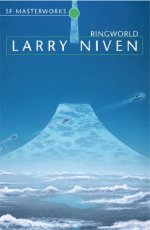
2009 Reading Challenge #1 – Ringworld, Larry Niven

I forget when I last read this book. I seem to recall reading it several times during my early teens, but I’ve avoided it since. I’m not sure why – perhaps I was afraid it would disappoint. I’ve learnt to my cost that “nostalgia ain’t what it used to be”. Few books I loved as a teenager have survived a reread now that I’m just over halfway through my three score years and ten.

Having said that, I may well have not reread it simply because my To Be Read pile is big enough already. And continues to grow…

But Ringworld.

The novel won both the Hugo and Nebula Awards in 1971. It’s also No 60 in the SF Masterworks series. So it’s safe to say it’s highly regarded by sf fans. But I’m not convinced sf novels stand the test of time as well as most fans would have us believe, and Ringworld is now 39 years old.

Everyone knows that the first edition had Earth rotating the wrong way – but this was corrected in subsequent editions. But there are other mistakes (in my 1981 Sphere paperback). On page 22, there is a description of the Long Shot: “The ship would carry practically no cargo, though it was over a mile in diameter.” Yet when they finally see the ship: The Long Shot was a transparent bubble over a thousand feet in diameter” (pg 46). The last time I looked, a mile was 5,280 feet. There’s also a strange mix of metric and Imperial units: “The ring masses two times ten to the thirtieth power in grams, measures .95 times ten to the eighth power miles in radius, and something less than ten to the sixth power miles across.” (pg 70). These are minor complaints, however.

Louis Wu is a 200-year-old adventurer in the 29th Century. He is recruited by Nessus, a Pierson’s Puppeteer, for a mysterious mission. Also recruited are Speaker-to-Animals, a kzin, which is a large feline war-like alien; and Teela Brown, a young woman descended from five generations of winners of the Birthright Lotteries and so supposed to be very lucky. The mission requires a trip to an unspecified destination 200 light years from Earth. This would normally take several decades, but Nessus has use of a ship fitted with a secret “quantum II hyperdrive shunt”, which travels orders of magnitude faster. This ship, the Long Shot, and the secret of its drive, will be Louis Wu and his team-mates’ payment for the mission.

The team head for the home world of the Pierson Puppeteers… which proves to be a fleet of five worlds travelling through space at 80% of the speed of light. The puppeteers are a cowardly race and are fleeing the explosion of the galactic core, whose wavefront won’t reach Known Space for another 20,000 years. Recently, they had discovered an artefact a couple of light years from their present position. A ringworld – a single band of material approximately one million miles in width and 600 million miles in circumference, orbiting one AU from its primary, and comprising the surface area of three million Earths. The puppeteers do not know who built the ringworld, and want Louis and the others to investigate it.

In a second ship provided by the puppeteers, Louis, Teela, Nessus and Speaker-to-Animals travel to the ringworld. While investigating one of the “shadow squares”, which orbit nearer the sun and provde night and day on the ringworld, they are attacked by automated defences and crash on the ringworld’s surface. They must then trek some 250,000 miles to the rim to seek help…

Niven’s ringworld is one of the most famous Big Dumb Objects in science fiction. And justifiably so. It’s huge. And Niven mostly succeeds in getting across its size to the reader. From the crash-site, for example, Louis can see for thousands of miles, but still can’t make out the rim to either side. Compare that with Earth – on flat ground the horizon would be around three miles away for someone six feet tall.

And, I suppose, that if I’d forgotten anything about Ringworld, it was that sense of vast scale. Louis Wu is a protagonist very much in the mould of a US 1970s Competent Man. Teela Brown is decorative, screams a lot, and occasionally manages to surprise Louis with her perceptiveness and intelligence. He still refers to her as “my woman”, however. The kzin is war-like, and the puppeteer is cowardly. Much of the universe of the novel, Known Space, was worked out in earlier novels and short stories. The prose is efficient at best, neither impeding the reading experience nor enhancing it.

But still.

The ringworld casts a huge shadow. It’s the ringworld you remember when you close the book. It’s the ringworld you remember decades later when you pick up the book to reread it. The rest is, well, just a story. The ringworld is sense of wonder. And if that’s all you want in a science fiction novel, then you’ll get it in Ringworld. If you’re looking for more, you’ll perhaps come away disappointed. Niven makes no attempt to explain the origin of the ringworld. The book’s plot is little more than a trek to find a way off it. There are, I admit, one or two interesting sub-plots: for example, the puppeteers’ meddling in both human history and kzin, the first to breed a “lucky” human and the second to make the kzin more docile; and the various speculations these revelations generate. Niven also manages to create a human but slightly off-kilter civilisation-in-ruins on the ringworld, although the name of one of its city, Zignamuclickclick, generates a wince.

I enjoyed my reread, but it did leave me somewhat dissatisfied. Not from the book’s shortcomings – but because I’d forgotten how glibly sf writers of the 1970s used to make stuff up. They made very little effort to convince, they just waved their hands a little more vigorously. That’s a style which is no longer in fashion. Science fiction in the 21st century is a far more rigorous genre, and it’s better for it.

There are more novels following on from this one – The Ringworld Engineers, The Ringworld Throne, and Ringworld’s Children – and these explain who built the ringworld, and why. I vaguely recall reading The Ringworld Engineers back in my teens, but I’ll not bother this time. Nor have I any desire to read more of the series.

That’s not, I hasten to add, because this first book in my 2009 Reading Challenge was a failure. On the contrary, it achieved pretty much what I expected it to achieve. I enjoyed the book, was reminded of some of the reasons why I’d liked it in the first place, and will someday no doubt read it again. But it’s no great work of literature, and there are many science fiction novels I’d consider better than it.


Leave a comment

The Year Ahead

There’s plenty to look forward to reading in 2009. Here’s what’s already on my wants list (warning: pimpage ahead):

First, there’s Spirit: The Princess of Bois Dormant by Gwyneth Jones. The Count of Monte Cristo in space… well, sort of. Set in the universe of Jones’ Aleutian trilogy (White Queen, North Wind and Phoenix Café), this is 21st Century space opera from one on the UK’s best writers of science fiction. Actually published in December, but the copy I’ve ordered from Amazon has been delayed for some reason. Jones also has a short story collection, Grazing the Long Acre, due out some time in 2009 from PS Publishing.

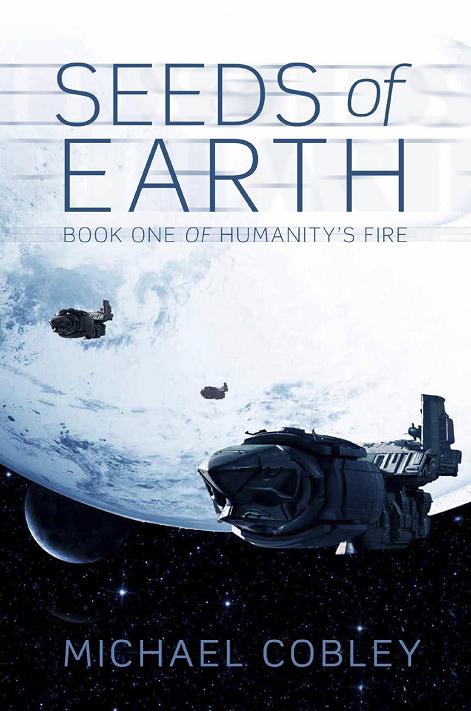
Speaking of space opera, there’s some excellent stuff due out in the coming twelve months… There’s The New Space Opera 2 (Eos) from Jonathan Strahan in July. The first one was excellent, so I expect the second will be too. The first of Michael Cobley’s Humanity’s Fire space opera trilogy, Seeds of Earth (Orbit), hits the shelves in March. And there’s the second of Gary Gibson’s Dakota Merrick trilogy, Nova War (Tor). But I have to wait until September for that. In April, Apex are publishing Paul Jessup’s surreal space opera, Open Your Eyes. Looks very interesting. I’ve pre-ordered it. Well, they did a deal and it sucked me in.

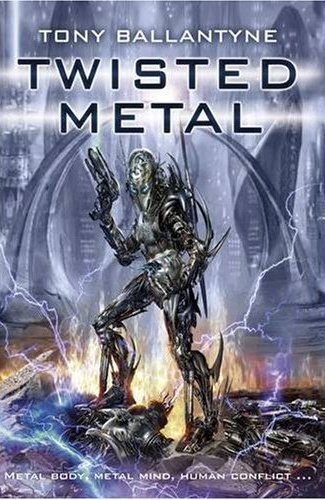
I’m not sure I’d call Tony Ballantyne’s novels “straight science fiction”, but then his new book, due in May from Tor, is titled Twisted Metal. Even if it’s as twisty-turny as a twisty-turny thing, I’ll be getting it. The excellent Keith Brooke has The Accord coming out in March from Solaris. Eric Brown has also been busy – the second book of his Bengal Station trilogy, Xenopath (Bantam), is out in June from Solaris.

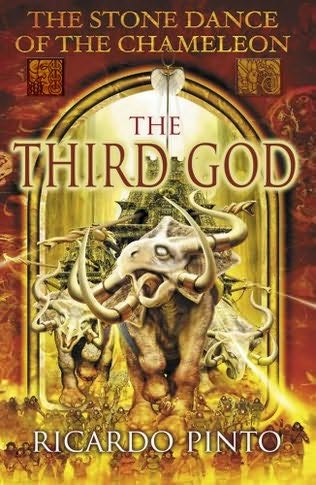
I do read some fantasy, just not as much as I read science fiction. Or mainstream, for that matter. I’m looking forward to Mark Charan Newton’s debut, Nights of Villjamur, out in June from Tor. I’m also eagerly awaiting the much-delayed final installment in Ricardo Pinto’s Stone Dance of the Chameleon trilogy, The Third God. That should be out in March.

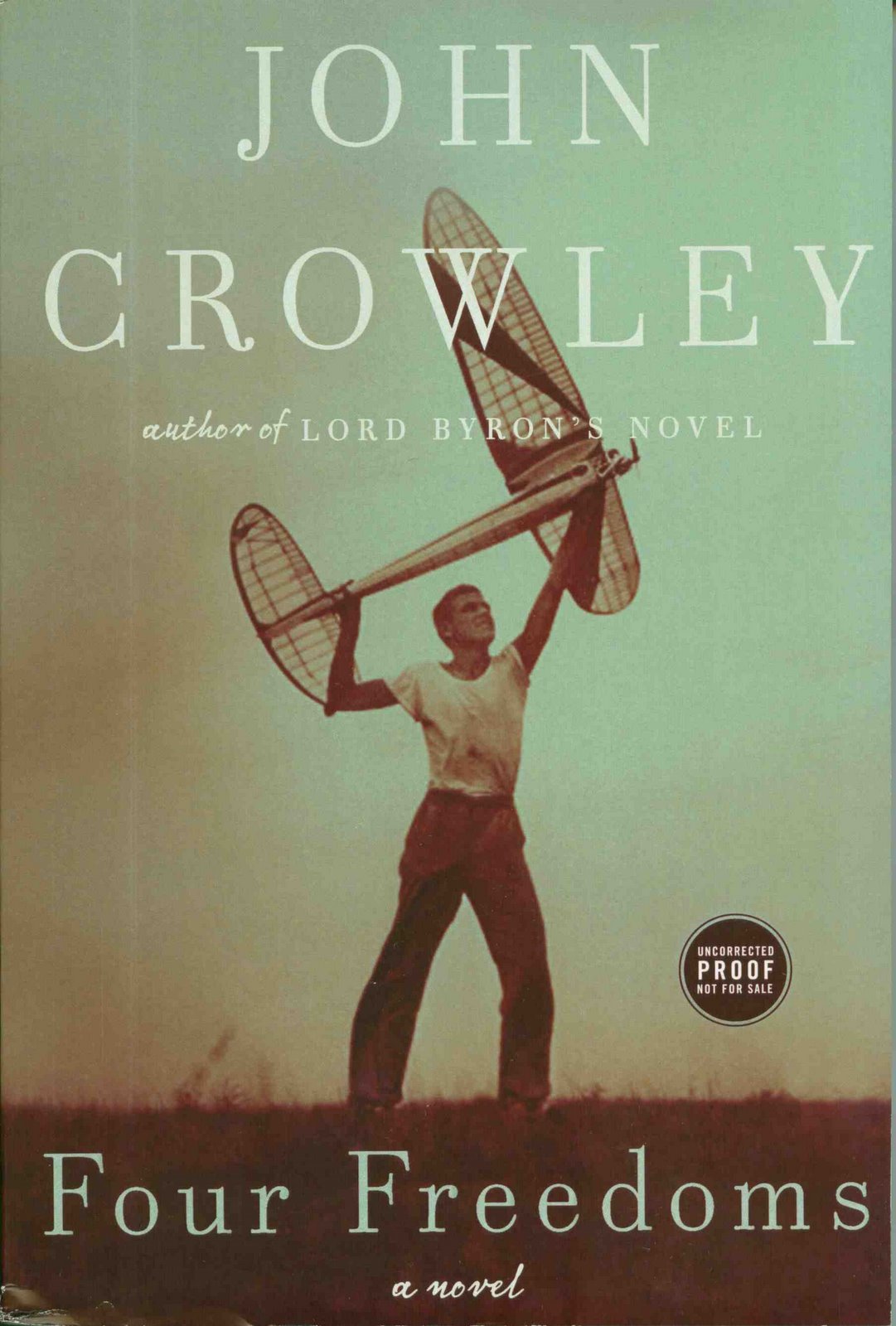
I know nothing about John Crowley’s Four Freedoms, but since it’s by him I’ll be buying it anyway. That’s out in June from Morrow. Likewise Iain Banks’ new novel, provisionally titled Transitions, due in September. Not to mention Richard Kadrey’s Sandman Slim from Eos in August.

Plus, of course, all the good short fiction that will be appearing in print magazines, online magazines, anthologies and the like.