It Doesn't Have To Be Right…

… it just has to sound plausible


Leave a comment

Doing the Hugos, Part 2

Now it’s the turn of the novelettes. The Hugo Award for Best Novelette is “awarded for a science fiction or fantasy story of between seven thousand five hundred (7,500) and seventeen thousand five hundred (17,500) words”. This year’s shortlist looks like this:

‘Alastair Baffle’s Emporium of Wonders’ by Mike Resnick (Asimov’s Jan 2008)
Sigh. Another Resnick. He’s one of those authors who regularly appears on the Hugo and Nebula shortlists, but I can’t for the life of me understand why. Clearly he’s popular, but when an award is given for the “best” of a category that’s what I expect it to be. This is a tired old Crumbly Fantasy – two old codgers reminisce about a magic shop they used to frequent as kids. They go looking for it and – big surprise – they find it and…. I think people have been writing variations on this deal-with-the-devil / youth-regained story since Poe. Its appearance on this shortlist is, well, baffling….

‘The Gambler’ by Paolo Bacigalupi (Fast Forward 2)
At least this is 21st Century science fiction. It’s also very good, with a clever extrapolation of some aspects of current technology. But, more than that, it’s relevant. It’s about our world and our future. It’s not some rosy-tinted reminiscence about the dead past. Science fiction is neither predictive nor didactic, but it should certainly look forward. This novelette does exactly that. And it’s very well-written. It belongs on the shortlist.

‘Pride and Prometheus’ by John Kessel (F&SF Jan 2008)
This one is very good, this one I like. Austen meets Shelley; one of the Bennetts meets Victor Frankenstein. The Pride and Prejudice pastiche is not pitch-perfect (ugh, too much alliteration), although the modern cadences do make it a more contemporary read. And the ending is rushed. But the writing is very good, and Kessel captures the flavour of Regency England quite well. (I’m not so convinced Mary Bennett would have been quite so willing to meet privately with the various men, but that’s a minor quibble.) Frankenstein is a bit wet, but the monster is handled well. Perhaps the story’s impact has been a little spoiled by the recent publicity for Pride and Prejudice and Zombies, but never mind.

‘The Ray-Gun: A Love Story’ by James Alan Gardner (Asimov’s Feb 2008)
There’s something a little old-fashioned about this novelette too – its style rather than its subject. A boy finds a ray-gun, it changes his life; but not in the way you’d expect a ray-gun to do so. He could have found a leprechaun’s hat or a magic dog turd, it would not have substantially changed this story. Which does make you wonder what the point is. It’s well-written and very engaging, but it’s a little worrying to have so many stories driven by nostalgia on the shortlist this year.

‘Shoggoths in Bloom’ by Elizabeth Bear (Asimov’s Mar 2008)
I wanted to dislike this story. There seemed to be too much in it – 1930s race relations, Nazi persecution of Jews, WWI, and a sudden swerve towards slavery at the end – and I couldn’t decide if the central conceit, the shoggoths, was cleverly done or mishandled. I’m still not sure. But the story grew on me, and by the end of it I did think it was quite good. Not as good as the Kessel or the Bacigalupi, but better than the Gardner.

Definitely a stronger category than short stories. While I prefer stories with a more literary treatment of science fiction tropes, I’d sooner there had been such treatments of tropes closer to the heartland of the genre. You know, like spaceships, or aliens, or AIs, etc. Perhaps that’s because three of the five are from Asimov’s. More variety – in subject, style and source – would have been better, but this is a (mostly) not embarrassing shortlist.

Novellas to follow soon.


5 Comments

Doing the Hugos, Part 1

First, I have to confess I won’t be attending the Worldcon in Montreal, nor am I a supporting member. So I didn’t nominate the shortlisted titles, nor will I be voting on them. Nonetheless, I have decided to read the shortlisted novellas, novelettes and short stories, and give my thoughts on them.

So. Short stories first….

’26 Monkeys, Also the Abyss’ by Kij Johnson (Asimov’s Jul 2008)
While this is clearly a good story, it’s not the sort of genre fiction I normally enjoy. The premise is whimsical, the treatment is whimsical, and I’m not a big fan of whimsy. Nevertheless, it’s one of the stronger stories on the shortlist.

‘Article of Faith’ by Mike Resnick (Baen’s Universe Oct 2008)
I thought this was appalling: dated, dull, and wholly predictable. A new robot joins the staff of a small-town church and ends up wanting to worship. Cue arguments on whether robots have souls. Yawn. And who writes stories featuring these sorts of silly pulp sf robots – because, let’s face it, if the robot is a stand-in for a foreigner, i.e., not-one-of-us, then why not actually use a foreigner and give the story more impact?

‘Evil Robot Monkey’ by Mary Robinette Kowal (The Solaris Book of New Science Fiction 2)
What is this? The Year of the Monkey? Er no, it’s actually the Year of the Ox. But the story. The title is a silly joke – the monkey in the story is a live Chimpanzee. A “smart” chimp, in fact. Who makes pots out of clay. The story is around four pages long in the mass market paperback Solaris anthology. It is mildly amusing and mostly inconsequential. It’s not even the best story in The Solaris Book of New Science Fiction 2.

‘Exhalation’ by Ted Chiang (Eclipse 2)
It is a truth universally acknowledged that Chiang is one of the best writers of short science fiction currently being published. Which means every Chiang story is not only judged against all others published around the same time but against every other Chiang story. Which does him no favours. Especially in this case. ‘Exhalation’ is pretty much a thought experiment, with very little in the way of plot. It’s well-written, but it failed for me in several aspects. It lectures the reader… and the explanation for this doesn’t quite justify the up-front info-dumping. Further, the central premise isn’t actually that interesting, and all the story does is provide a slow and cumbersome vehicle for the narrator to figure out that entropy exists.

‘From Babel’s Fall’n Glory We Fled’ by Michael Swanwick (Asimov’s Feb 2008)
This story is not yet available online, and I don’t subscribe to Asimov’s.

It is, overall, quite a poor selection of short stories, and I find it hard to believe they were the best last year had to offer. While I wouldn’t have nominated Kij Johnson’s, it’s clearly the strongest of the bunch. Having said that, I’ve yet to read the Swanwick, so perhaps I should reserve judgment until I have done. All the same, the Chiang is a bit dull, the Kowal is inconsequential, and the Resnick is embarrassingly bad.

Now to read the novelettes….


1 Comment

Clarke Award Shortlist Posted

Oh well. It doesn’t much resemble the shortlist I predicted in this post – I guessed The Quiet War and Anathem, but not the others. The shortlist goes like this:

The Quiet War, Paul J McAuley
Anathem, Neal Stephenson
Song of Time, Ian R MacLeod
House of Suns, Alastair Reynolds
The Margarets, Sherri S Tepper
Martin Martin’s on the Other Side, Mark Wernham

It’s not a list that makes me want to dash out and read the books. I’ve already read – and enjoyed – House of Suns, but I didn’t think it was good enough for the shortlist. (But then, I predicted Nick Harkaway’s The Gone-away World would be on the shortlist, but I’m currently reading it and not enjoying it at all….) I’ve only read MacLeod’s short fiction. Perhaps I should rectify that. I’ve read a few of Tepper’s novels, and they were all very much of a muchness – solid mid-list fare with a slight undercurrent of umbrage.

I’m not going to try and predict the winner. I think most expect Anathem to take the prize. I’ve yet to read it – I probably never will, since I disliked Stephenson’s Baroque Cycle so much.


1 Comment

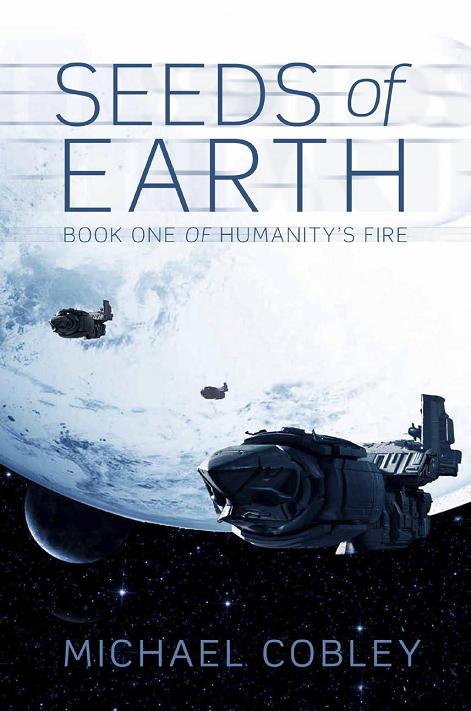
Pure Space Opera – Seeds of Earth by Michael Cobley

I wanted to avoid reviewing books by friends on this blog because, well, it might cost me too much in beers if I ever ran into them at a con… Then I thought, what the hell. It’s not like my friends are crap writers. So I have implemented a policy change. And the first book to benefit from this is:

Seeds of Earth by Michael Cobley.

This is the first novel of a space opera trilogy called Humanity’s Fire. I’d read in several reviews that the book was slow to start but picked up about halfway through. I’d interpreted this to mean there was a steep learning curve. It’s not uncommon in space opera. The author has to lay out their universe and it’s usually a big universe.

But those reviews were quite correct. Cobley’s universe is perhaps not that large – although he’s certainly thrown everything he can think of into it. Seeds of Earth is very much heartland space opera – in fact, it sits right on the bullseye. While this does mean there’s a lot of set-up to plough through – including a somewhat excessive use of italicised alien vocabulary – it’s not just that which accounts for the initial slow pace. However, once the villains appear on the scene the story shifts into high gear, and the book becomes a real page-turner.

Having said that, I suspect Cobley has slightly over-egged his universe. While there are definitely some interesting ideas in there – a hyperspace consisting of strata of dead universes, for example – I personally prefer stories which aren’t so inclusive and which are a little more adventurous with sf tropes.

Which is not to say Seeds of Earth is a bad book. On the contrary, it’s very good. It’s well-constructed and well-written. It’s a pure hit of the purest space opera.

So go read it.

I’m looking forward to the sequel.


Leave a comment

Making It Up As You Go Along

Recently, I’ve been working on a near-future sf short story. For this story, I needed the name and location of a small town in central Asia. The plot required that the inhabitants of this town belong to a sufficiently small ethnic group for their origin to be identified by their genes. And the town had to be remote enough for no one to notice if its population disappeared pretty much overnight.

I was explaining my dilemma to a friend, and he said, “Why don’t you just make one up?”

Fifteen years ago, I’d have had no choice. The town would have to be invented. And if my invented details were a little implausible, it’s extremely unlikely anyone would ever notice.

Now, I can use the Web. I can go hunting in Wikipedia, or on Google Maps. Not to mention using online translation tools to read web sites in other languages. I can find a real town to use in my story. And, if I’m lucky, I might even be able to find photographs taken in that town. So when the protagonist of my story visits it, I’ll be able to describe the town as it actually is.

I explained this to my friend, and he said, “You could still make one up.”

Well, yes. I could. But that’s not the point. Science fiction is not about making it up as you go along. If I invent an alien planet, that planet is still subject to the laws of physics – so no breathable atmospheres at 1013.25 millibars on a planet with the same density as Earth but half the diameter. If I set a story on a moon of Saturn (as I have done), then I want it to be as close as possible to the real life moon of Saturn. I have in the past searched the NASA web site for artists’ impressions of Saturn’s moons – just to learn the angle at which Saturn’s rings will appear to a person stood on the surface of a particular moon.

And yet probably no one would ever notice if I got it wrong. The same is true for that central Asian town. Who actually cares if it’s real or not?

I do.

It’s important to me that the details of a story are right at every level. Even if it’s fantasy. Or space opera. And I now have a powerful tool on my desk which allows me to get the details right: the Web.

So if you’ll excuse me, I have some research to do…


6 Comments

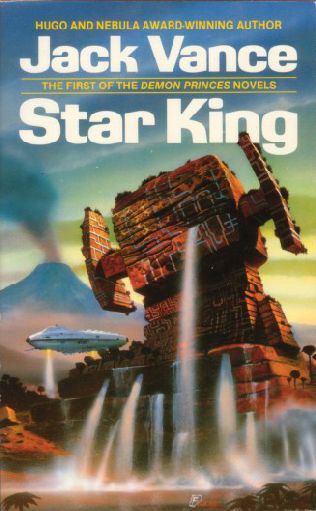
Reading Challenge #3 – Star King, Jack Vance

Ringworld and Rendezvous With Rama could certainly be considered classics of science fiction. And Jack Vance is certainly a classic sf author, and has written a couple of classic sf novels. But Star King is not one of them. However, Vance has always been a singular voice in sf, and I’ve always liked his books. So sticking one of his titles on the list for my 2009 Reading Challenge was a no-brainer. And I decided to choose one I’d not read for many years – for a couple of decades, even.

Star King is the first book of the Demon Princes quintet. The series’ story follows Kirth Gersen as he wreaks his revenge on five interstellar criminals who were responsible for enslaving his town when he was a child. Each novel details his revenge on one of the criminals. The first criminal is Attel Malagate the Woe, a member of an alien race known as Star Kings.

Star Kings are actually humanoid amphibians, but appear entirely human. They are also intensely competitive and driven to excel. The fact that Malagate is a member of this race does help Gersen eventually identify him…

Gersen has been brought to be an instrument of revenge by his grandfather. He has all the necessary skills, and is especially effective at unarmed combat. His grandfather dies and leaves him with a single name, a pirate captain he recognised who was present when the town was enslaved. In a flashback, Gersen visits the pirate, tortures him until he gives up the names of the five criminals – the demon princes of the series’ title – and then kills him.

While meditating on this information at Smade’s Tavern on Smade’s World, Gersen meets Lugo Teehalt, a locator who has discovered an Edenic world ripe for settlement. However, Teehalt has learnt that his sponsor is Malagate, and he doesn’t want to hand over the location of the world to the criminal. Teehalt is then murdered by three other guests of the tavern – who admit they work for Malagate. They take Gersen’s ship, assuming it is Teehalt’s.

Gersen finds Teehalt’s ship, and there are enough clues in it to indicate that Malagate is one of three administrators at Sea Province University on the world of Alphanor… But which one?

I read Star King in a day. There’s not much in it. My edition, the 1988 Grafton paperback, has only 208 pages. And even then, there’s not that much plot. Gersen fortuitously meets Teehalt. Gersen stumbles on a clue to Malagate’s real identity. Gersen puts into effect plan to identify Malagate. Plan works – albeit with one or two minor hurdles to overcome.

Vance has fleshed this out by having Gersen questioning everything he learns and everything he does. It makes the story somewhat… conditional. It’s bad enough that the plot starts with a coincidence, but the continual second-guessing only makes it seem as if Gersen is being driven by the plot rather than vice versa. Even the resolution relies on events Gersen could not have foreseen or planned for. He has his plan, yes; but the final clues which reveal which of the three administrators is Malagate are not part of it.

Still, this is a novel by Jack Vance. And you read his books as much for his voice as for the story. In that respect, Star King does not disappoint. It might be a thin work, but it could never be mistaken for another writer’s novel. Perhaps it’s more lightweight than I’d remembered, but it’s still a fun read. There are worse ways to kill a couple of hours, and certainly worse books available in any book shop.

I’m tempted to read the other four books of the Demon Princes series, but… the to-be-read pile is big enough already. Another day perhaps.


12 Comments

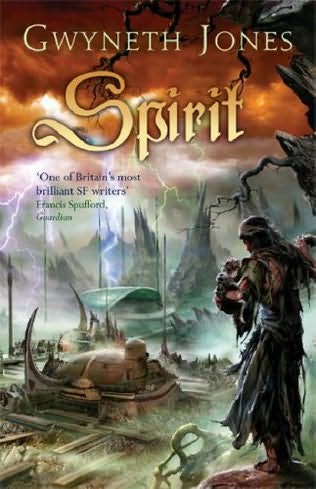
Beyond the Bounds of Vengeance – Spirit by Gwyneth Jones

To date, Gwyneth Jones has appeared on the Arthur C Clarke Award short list six times, and won it once – for Bold As Love in 2002. Only Stephen Baxter has been nominated more times, and he has yet to win the award. If Jones’ 2004 novel Life had been published in the UK, I suspect it too would have been short-listed – it did, after all, win the Philip K Dick Award for that year. As David Soyka wrote in his review of the book on on sfsite.com:

Simply, put, Life is one of the best things Jones has written. You can stop reading right now and go out and buy the book. Otherwise, you’ll have to endure yet another one of these diatribes about how science fiction doesn’t get any respect from the literary mainstream. Because you can’t read this book and not reflect on the fact that had this been written by, say, Margaret Atwood, Life would be receiving more of the widespread attention it deserves.

In other words, Gwyneth Jones is probably one of the best British science fiction writers currently being published. So a new novel by her is certain to be one worth reading. Spirit; or the Princess of Bois Dormant is her latest. It was published at the end of December 2008.
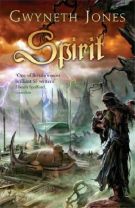
The plot of Spirit is based on that of The Count of Monte Cristo, but it shares its universe with the Aleutian trilogy of White Queen, North Wind and Phoenix Café. The universe has also featured in a number of Jones’ short stories, including ‘Saving Tiamaat’ in The New Space Opera (it can be read here); and ‘The Tomb Wife’, which has just been shortlisted for this year’s Nebula Award (it can be read here).

The shape of Dumas’ story is well-known: Dantès is falsely accused of treason, sentenced to life imprisonment in the Chateau d’If, befriended by a fellow prisoner who teaches him all manner of useful skills and knowledge, escapes, sets himself up in society using treasure whose location was given to him by his friend in prison… and subsequently has his revenge on those who conspired to send him to prison in the first place.

And Spirit does, in broad aspect, follow this. The novel’s protagonist is also unjustly imprisoned for twenty years, is educated while in prison, escapes and uses the “fortune” she was bequeathed by her mentor inside to… Not revenge, but neither is it justice. Call it a “balancing”.

Of course, Spirit is space opera – new space opera, in fact. The conspiracy which puts Dantès in prison was historical and reasonably well-known by readers. The conspiracy underlying Spirit is wholly invented; the world in which Spirit takes place is wholly invented. Which means the narrative of Jones’ protagonist – Gwibiwr; quickly shortened to Bibi – must begin much earlier than that of Dantès. It must give her origin, in fact. And the conspiracy which results in Bibi’s imprisonment must also be set up. It is not until halfway through Spirit that Bibi is actually sent to prison. This is not a criticism – Spirit is not about Bibi’s revenge, it is about Bibi. She is “the Princess of Bois Dormant”.

In the Aleutian trilogy, aliens arrived on Earth and precipitated a crisis. This led to the Gender Wars and, eventually, a World Republic. In Spirit, Jones has expanded this universe into an interstellar Hegemony of five worlds, ruled from a space station in the Kuiper Belt called Speranza. Each of the five worlds is the home of an “alien” race, although there is sufficient biological commonality between the various races to suggest Earth as a common home world in the ancient past. This is known as “having your cake and eating it”. A major theme of the Aleutian trilogy was colonialism, and Earth was the colonised; but in Spirit the humans – or “Blues”, as Earth is known as the Blue Planet – are the colonisers. The Hegemony also allows Jones to spread her commentary on gender and gender roles across societies that are very much other.

And there is plenty of cake to eat in Spirit. Not a Black Forest gateau or the like, not some fancy confection covered whipped cream and chocolate shavings. But a strong English fruitcake, steeped in brandy. Perhaps that’s too silly a conceit. Certainly Spirit contains plenty to chew on, not just the themes carried over from the Aleutian trilogy.

Admittedly, those themes strongly season the book, making Spirit very much a thematic sequel to Phoenix Café. But there are other ingredients: the opening section, in which Bibi grows up in semi-feudal Baykonur, has a flavour of Frank Herbert’s Dune. The sudden decamp to Speranza, and the explanation of the workings of the Hegemony’s interstellar transit network, contains pieces of Frederik Pohl’s Gateway. When Bibi is on Sigurt’s World as part of a diplomatic mission, and it all goes horribly wrong, Spirit tastes almost Banksian. And there’s a soupçon of Samuel Delany in the section set on Ki/An.

Also present are small nuggets of Jones’ earlier works: Escape Plans – the distributed systems of that book have become virtual, or 4-Space; and Kairos – travel via Buonarotti transit-pod mimics in some respects the effects of that novel’s eponymous drug.

All this is mixed in with The Count of Monte Cristo. And layered with new space opera as a mode of science fiction.

It makes for a rich and complex story; a story which, no matter how well stirred, can sometimes overwhelm the palate. As each new flavour or tang rises to the surface, so the focus of the story shifts. Bibi is not always there. At one point, for example, the story breaks away from her, simply so we can experience her ex-boyfriend laying another brick in the conspiracy which will condemn her. And in the final section of the book, the Princess of Bois Dormant has taken Bibi’s place entirely.

It is in fact that last section where Spirit becomes less the dish of its ingredients. Dumas serves this dish cold, but Jones is less focused on revenge. The Princess of Bois Dormant sets out to redress the wrongs done to her, but also to right the wrongs done to those who suffered because of her. Chief among the latter is her son, a prince of Sigurt’s World. This leads to an odd detour, following the prince’s holiday on Ki/An, his trip into the marshes, and his kidnap. Later on Speranza, the prince and his companion help rescue a pair of young women from the Traditionalist roles their family intend them to play. Both women are the daughters of Bibi’s enemies. Those enemies, of course, get their compeuppance, although Bibi seems to have little to do with it. One has a stroke, another is killed while trying to escape. It all seems a bit… incidental.

Not everything in Spirit works. I don’t understand Jones’ decision to pepper the names of the natives of Sigurt’s World with apostrophes, such as her alien prince D”ffyd. If it’s a joke, it soon wears thin. The many references to the French Revolution also seem to add little – despite the novel’s template, The Count of Monte Cristo; despite the novel’s title, Spirit, also referring to the Princess’s Aleutian transit-pod, Spirit of Eighty-Nine (1789, that is). And speaking of French… Sleeping Beauty in French is known as La Belle au Bois Dormant. Perhaps my French isn’t as good as it should be, but I thought the dormant (sleeping) referred to the belle (beauty) and not the bois (wood). La Princesse au Bois Dormant makes much more sense. And is especially ironic as the Interplanetary Prison Moon of Fenmu is a rocky inhospitable place, and Bibi spends twenty years there underground…

Spirit is an excellent novel. I’d have expected no less of Gwyneth Jones. I fully expect it to appear in my best novels of the year list for 2009. However, I suspect Spirit will not be on the short list for the Arthur C Clarke Award next year. It is too rich and complex a novel, and the Clarke seems to prefer works of a much stronger and more distinctive flavour. But I do think it will be on the BSFA Award short list – literate sf novels by British authors do well with the BSFA Award. And so they should.

Incidentally, 2009 should prove a good year for Jones. Spirit may have been published right at the end of 2008, but due during 2009 are a short-fiction collection from PS Publishing, Grazing the Long Acre; and a “Conversation Piece”, The Buonarotti Quartet, and a non-fiction collection, Imagination/Space, both from Aqueduct Press.

(Ah well. The cake-thing seemed like a good idea at the time. But never mind…)


3 Comments

From Page to Screen

There has been some discussion of late in the blogosphere about film adaptations of science fiction novels. Everyone has a favourite they’d like to see on the silver screen, but it’s a process that usually results in failures. After all, how many good, faithful film adaptations of sf novels are there?

David Lynch’s version of Frank Herbert’s Dune was a bit of a mess. Stanisław Lem wasn’t happy with Andrei Tarkovsky’s adaptation of his Solaris. Ridley Scott’s Blade Runner doesn’t actually bear much resemblance to Philip K Dick’s Do Androids Dream Of Electric Sheep?. There are notable differences between François Truffaut’s Fahrenheit 451 and Ray Bradbury’s Fahrenheit 451 – not that Truffaut’s film was all that successful. And Paul Verhoeven deservedly took the piss out of Robert Heinlein’s Starship Troopers, although that didn’t go down too well with many sf fans (myself not included).

And those are films I happen to think are very good.

The quality of the original novel is almost immaterial to the quality of the film adaptation. Yes, a good novel can make a good film, such as A Clockwork Orange. But even a dull novel can make a good film, like The Children of Men.

If there’s one common factor to successful adaptations, it’s that they take great liberties with their source texts. Faithfulness simply doesn’t work. Which makes you wonder why anyone would want to see their favourite sf novel on the silver screen. Because the end result won’t bear much resemblance to the book. I like David Cronenberg’s films of JG Ballard’s Crash and William S Burroughs’ Naked Lunch – both “unfilmable” novels – but they’re more like addenda to the novels than adaptations of them.

So when people put forward sf novels they think will make good films – as io9 has done here – it’s axiomatic that most choices won’t make the transition unchanged. Or appear in any form much resembling the source text. It’s not just the size of the story; a 600-page novel can’t be squeezed into 120 minutes. It’s also the structure. Films have three acts – it’s the ruling story paradigm in Hollywood. A novel’s story has to be twisted and bent to fit this. A movie also demands a romantic subplot. And clear character arcs – very clear character arcs, because there’s not going to be much room for deep characterisation. The story also has to have strong narrative impetus, because it needs to keep bums on seats.

With these factors in mind, here is my list, in no particular order, of five science fiction novels which I think will make entertaining films.

Ringworld, Larry Niven
The setting itself is impressive enough. The sheer scale of the ringworld will keep people watching. But there’s also a very simple story buried in the novel, and it lends itself well to adaptation: Louis Wu and his comrades crash on the ringworld, and then they manage to escape. This can easily be slimmed down to 120 minutes. Throw in the romantic subplot between Louis and Teela Brown, and you have perfect adaptation material.

The Stars My Destination, Alfred Bester
This novel is essentially The Count of Monte Cristo in space, and they’ve made plenty of film adaptations of Dumas’ book. It has everything you need for a good movie – an arresting opening sequence (Gully Foyle left to die on a wrecked spaceship), Gully Foyle’s character arc, arresting visuals (the burning man), and romance (Foyle and Olivia Presteign).

The Undercover Aliens, AE van Vogt
This is one of my favourite novels, and one of the reasons I like it so much is because it has such great cinematic potential. It’s certainly not one of van Vogt’s best novels. It’s an appealing mix of California noir and pulp sf, although the plot is just plain silly. A small town lawyer, Allison Stephens, stumbles across a conspiracy run by a group of people centred around the big house owned by the family which founded the town. These people turn out to be immortals – a gift from a robot ship which has beeen buried beneath the house for millennia. Stephens’ first introduction to the group is via the beautiful Mistra Lanett – so there’s your romantic subplot. Throw in a penthouse apartment which turns into a spaceship and the mystery surrounding the identity of the late family patriarch’s nephew, and you have perfect film fodder…

The Santaroga Barrier, Frank Herbert
Like The Undercover Aliens, this is another sf novel set in a small town in which all is not as it appears. In this case, a psychologist is sent to Santaroga to find out why its inhabitants appear to be immune to marketing and advertising. There’s the conspiracy running the town to unravel, several attempts are made to kill the hero, and he runs across an old flame and rekindles their romance. No great visuals, perhaps, but then there weren’t any in Invasion Of The Body Snatchers.

Equator, Brian Aldiss
This is essentially a spy story tricked out as science fiction. It opens with a secret raid on an alien base on the Moon, but ends in the jungles of Malaysia. The opening alone should keep the audience glued to their seats. But when the raid goes wrong, and the hero has to figure out what happened… There is, of course, a romantic subplot. The aliens are humanoid, but different enough to stand out; and the final scene takes place at an enormous automated pumping station. It’s also a short novel, so there’s no need to leave great swathes of the story on the cutting-room floor.

Looking at the books I’ve chosen probably says quite a bit about the sort of films I like. None of the above require huge amounts of special effects. But then films dominated by special effects often suffer in other areas. Like story. And acting. And direction.

Yes, there are many spectacular scenes and/or artefacts from sf novels I’d like to see on the silver screen. But. Either the stories would lose so much in adaptation I see little point in trying. Or there’s not enough story there in the first place. I’d love to see the eponymous alien artefact in Arthur C Clarke’s Rendezvous With Rama, but there’s no real story in the novel. A team explores Rama. They fail to discover who built it. Or why. Rama leaves the Solar system. The End. If Rendezvous With Rama ever does appear in the cinema, that story won’t survive the transition. At least the five novels I’ve chosen above stand some chance of being faithfully adapted. Mostly.


Leave a comment

Guessing Games

Niall Harrison on Torque Control has posted the long list for this year’s Arthur C Clark Award. It’s the first time they’ve done this. I think it’s a good idea.

I’m not going to repeat the list, nor am I going to turn it into one of those “memes” – you know the sort, the titles you’ve read in bold, those on the TBR pile in italics. I will point out that, of the list, I’ve read Matter, Iain Banks (blogged about it here); Kéthani, Eric Brown; Template, Matthew Hughes (reviewed it for Interzone 218); The Night Sessions, Ken MacLeod (blogged about it here); Debatable Space, Philip Palmer; and House of Suns Alastair Reynolds. Sitting on my book shelves and waiting to be read are The Knife of Never Letting Go, Patrick Ness; Going Under, Justina Robson; Halting State, Charles Stross; Necropath, Eric Brown; and Omega, Christopher Evans.

What I thought might prove an interesting exercise would be to try and predict the short list. That’s six from the forty-six on the long list. And here are my guesses…

I’ve not chosen these titles because they’re the ones that would make my own personal short list. I’ve picked them because they’re the ones I think the judges will choose – based on reviews I’ve read of the books, comments on various blogs and sites, my general feeling of each book’s reception, and previous short lists for the Arthur C Clarke Award.

We’ll find out how close I was in about a month’s time…

EDIT: by “long list”, I mean the list of books submitted by the publishers for consideration. These are not novels the Award jury has chosen.


10 Comments

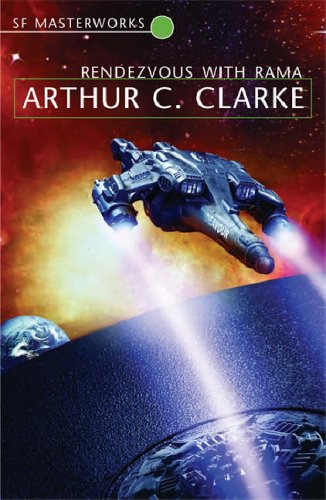
2009 Reading Challenge #2 – Rendezvous with Rama, Arthur C Clarke

There’s a fitting synchronicity to my choice of Rendezvous With Rama by Arthur C Clarke as the second book of my 2009 Reading Challenge. Like Larry Niven’s Ringworld, it is a book that’s dominated by a Big Dumb Object. It also won both the Hugo and Nebula Awards for Best Novel, and is in the SF Masterworks series. So, another highly-regarded science fiction novel. In fact, it’s probably considered Clarke’s best novel, and he’s one of the “Big Three” of the genre, with Robert Heinlein and Isaac Asimov.

The plot of Rendezvous With Rama is not complicated. In 2131 AD, an object – named Rama by Spaceguard – is detected entering the Solar system. It is determined to be artificial, and the nearest spaceship is sent to investigate. The crew of Endeavour discover that Rama is an alien artefact, a cylinder fifty kilometres long and sixteen kilometres in diameter. Its interior is hollow, and it is roatating fast enough to provide gravity on its inside surface. Endeavour‘s crew explores Rama as it travels through the inner Solar system towards the Sun. They find no clues to its makers or origin. In fact, it is deserted but for a wide variety of “biots”, or biological machines. Eventually, the explorers abandon Rama, and the artefact uses the Sun to boost itself on a path out of the Solar system. End of story.

In other words, very little actually happens in the book. There is no explanation, no resolution. Rama is presented as a puzzle, but there is no solution. It is alien.

Rendezvous With Rama is a strange book in many ways. Not just the complete lack of narrative closure, or the way it resolutely fails to answer the questions it poses. It is also a book which has aged both gracefully and badly.

The framing narrative, which introduces the world of the future and then describes the deliberations of the committee overseeing the exploration of Rama, reads as though it’s taking place in the 1950s. Even in 1972, it must have seem dated. In 2009, of course, it reads even more out-of-date: for example, “when he was able to get computer time to process the results” (page 14). In 1972, perhaps, when mainframes were prevalent, this might have seemed plausible. But the novel is set in 2131. One hundred and fifty nine years later. One hundred and twenty-two years in our future.

The main narrative details the exploration by Commander Norton, captain of Endeavour, and his crew. The emphasis is on Rama itself, which helps distance the novel from its time of writing. The characters are also so bland they could be from any age. Admittedly, it’s also very Anglophonic Americo- and Euro-centric – far more so than any vision of the future written now would be. But their concerns are immediate, direct and almost entirely related to the story, so nothing especially jars.

However, like Ringworld, Rendezvous With Rama is over-shadowed by its eponymous BDO. It’s Rama that stays with you. There’s not much in the way of plot, anyway. And the characters aren’t remotely memorable.

But.

Should a science fiction novel be remembered for its furniture or for its story? Both Ringworld and Rendezvous With Rama have been lauded, and are held in high esteem, for the invented artefacts their casts discover and/or explore. Not for their story, or their writing, or indeed any of their characters. It’s little wonder the genre is held in low regard, when the fans themselves apply such reductive appreciation to the works they deem “classics”. After all, Dickens’ Great Expectations is not notable for Miss Havisham’s ruined mansion.

Rendezvous With Rama is an odd book. There’s a timelessness to its story, but its narrative firmly dates it. Its refusal to explain itself makes it more interesting than, by rights, it actually should be. If science fiction were only about “sense of wonder”, then Rendezvous With Rama succeeds as a science fiction novel. But it has not aged as gracefully as memory might insist it has. It’s the product of an imagined world, which in turn created imaginary worlds, which never really existed. And that tells against it.

In the final analysis, Rendezvous With Rama is, I suppose, another partial success. I’m glad I reread it. I may do so again one day. While it’s certainly not a very good novel, I’m beginning to wonder if it’s a good science fiction novel and if “good science fiction novel” means it doesn’t have to be a “good novel”…