The writing group I belong to is having an open night this evening as part of a local literary festival. Each of us will read out a flash fiction piece we have written. I’ve decided to publish mine on my blog as well. It’s here. Enjoy.
Category Archives: science fiction
An Unreliable Review: Transition, by Iain Banks
“Apparently I am what is known as an Unreliable Narrator, though of course if you believe everything you’re told you deserve whatever you get.”
So opens Iain Banks’ Transition. It is a science fiction novel, set among and across many alternate worlds; but it has been published in the UK without the defining “M”. Transition is ostensibly about the Concern, an organisation from an alternate Earth which operates an undefined number of agents who have the ability to “transition”, to travel between alternate realities. In order to further an agenda which never quite becomes clear. Chief among these operatives is Madame d’Ortolan, who heads the Concern’s Central Council and so runs the organisation. Set against her is the rebel Mrs Mulverhill. And caught between the two is Concern agent and assassin Temudjin Oh.
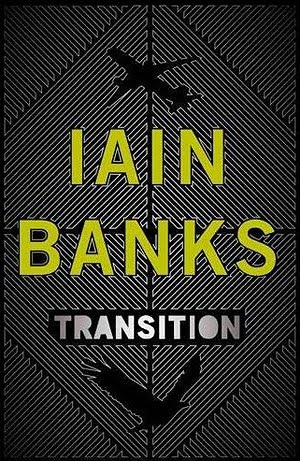
The novel comprises a number of different narratives, none of which progress in chronological order. One featuring “Patient 8262” does very little until the epilogue, which gives his identity without actually explaining it. Another narrative is that of a Yuppie barrow-boy-turned-trader, who is peripherally involved. And there’s another, which appears only a handful of times, about an American film producer trying to get a project green-lit.
There is little that is actually unreliable about the story of Transition. Perhaps there’s a vague possibility that it is all confabulation, but if there are clues suggesting as much I missed them. In fact, other than the bald “I am an Unreliable Narrator” which opens the book, there’s very little in the way of narrative games in Transition. Structurally, yes – the plot is a collage of related vignettes and episodes from life histories. But that’s nothing new for Banks – his Use of Weapons is justifiably known for its innovative structure. But the structure of Transition does beg the question: is it greater than the sum of its parts?
And… I don’t think so. Banks has never been a great prose stylist – good, but not great. But his fiction has always been characterised by great imagination. Even as Iain Banks, the mainstream writer, there has been bleed-through from his science fiction persona, Iain M Banks. And while Transition is certainly not a M book in feel or presentation, it is coloured by his sf far more than any of his other mainstream novels. It’s not a M book because it is low-residue, low-profile science fiction. It’s not the in-your-face space operatics of the Culture novels.
The central conceit, the travelling between alternate Earths, is certainly science fiction; but it is never explained or rationalised. There’s a drug, septum, and a certain small percentage of the population has a talent… There’s a vague nod in the direction of the Many Worlds Hypothesis, but no real attempt at depicting the phenomenon realistically. If anything, it’s simply a device to allow Banks to present different worlds – which are constructed with much of the invention and excess of his science fiction. Sometimes too much, in fact…
The Culture at least provides Banks with a framework for his invention. And he needs it, otherwise he has a tendency to over-colour his worlds. The chief villain of The Algebraist, the Archimandrite Luseferous, is such a pantomime figure, all he is missing are twirling moustaches. And the same is true of Madame d’Ortolan in Transition. She’s not real. Neither, for that matter, is Mrs Mulverhill. They’re comic-book characters – in fact, you can almost imagine them in some brightly-coloured hyper-real graphic novel. Adrian, the 1980s trader, is more real, but even then he’s something of a cliché. And, it has to be said, yuppie excesses are an old target. Today it is the bankers, especially the incompetent CEOs who get to walk away from the wreckage with millions.
In fact, there is a sense throughout Transition of old battles being dragged back into the light. Banks has never been one to shy away from a fight, and we get the usual well-worded attacks – on libertarianism, religion, the rich, military adventurism, the ends justifying the means, torture…
The religion one is especially interesting. There have been many mentions of the novel’s assertion that Christianity is a perfect religion for terrorism.Which may be true considering its creed. But terrorism is a secular activity, and Islam, unlike Christianity, is not simply a creed and a moral framework. It is a political and judicial system, it is more tightly-interwoven into the lives of its followers than Christianity. And, it should be pointed out, all studies on suicide bombers and terrorists to date have demonstrated that they are driven more by nationalistic and political motives than they are religious.
In total, it’s hard to know exactly what to make of Transition. The total doesn’t quite add up. The Concern’s secret agenda – which is the hidden engine of the plot – is not properly geared to the story. The low-profile sf which permeates the novel gets inexplicably thrown away at the climax and replaced with, well, magic. If the villains are comic-book characters, then Oh only wins through at the end because he turns into a superhero…
On reflection, seen in that light – Transition is a hyper-real graphic novel in prose – then perhaps things begin to make sense. The need to atone for the 1980s. The brightly-coloured and highly-detailed backgrounds. The ungrounded inventiveness. The larger-than-sf characters. The way in which each vignette or episode must be treated as complete in and of itself, and yet must also be taken as a part of the greater plot. Transition feels as though Banks has adopted comic-book story-telling techniques to a prose novel. And disguised it as science fiction.
Has Banks has created a novel which can be read in three modes – mainstream, science fiction, and comic-book? Possibly. Because reading Transition solely in one of those modes renders it an unsatisfactory read. It never quite convinces as science fiction; it becomes increasingly too fantastic to work as mainstream; and its narrative is perhaps too complex to succeed as a comic-book. But it certainly makes for a (mostly) interesting read.
Someone once said of Anthony Burgess that he was a great novelist who never wrote a great novel. I’m beginning to wonder if we should say the same of Iain Banks…
Anatomy of a Story: Thicker Than Water
The second of the two stories I’ve put up on this blog is ‘Thicker Than Water’, a hard sf story set on a moon of Saturn. It was originally published in Jupiter sf magazine, issue 23, in January 2009.
Major Gina Priest lives on Tethys, a moon of Saturn. When two raiders from another moon, Titan, attempt to steal some of the fullerenes found on Tethys, they are captured. Gina is shocked to discover that one of the raiders is her brother. She learns she was abducted from Titan at a very young age. After another officer disobeys her orders and tortures the raiders, Gina decides to help the Titans escape and return with them to to her long-lost mother and father.
Here’s the PDF. You might want to read the story before you continue reading this.
The plot of ‘Thicker Than Water’ is based on the story of Iphigenia from ancient Greece. She was abducted as a child and taken to Tauris, where she grew up and became a priestess of Artemis. A pair of Athenians then raided the temple while Iphigenia was present. She learned they were her brother Orestes and his friend Pylades. So she lied to the Taurians, and returned to Athens to join her long-lost family. With the statue of Artemis they had stolen.
I forget where I originally came across Iphigenia’s story. It was back in the early 1990s, so it wasn’t on the Web. I’d also found a mention of a mysterious dark patch on Tethys in a planetology textbook I’d bought for reference – Exploring the Planets by Eric H Christiansen and Kenneth W Hamblin (1995). The book’s a bit out-of-date now, but I have the Web instead. I decided that the dark patch was buckminsterfullerenes – carbon molecules in the shape of spheres or tubes, which were thought to be artificial but do occur very rarely in nature. This idea came partly from another story, ‘Black Rain’ (available in Set It In Space And Stick A Robot In It), which is set on Titan, and takes place in an earlier version of the universe of ‘Thicker Than Water’. In that story, the settlement’s manufactory was destroyed by a blow-in of Titan’s noxious atmosphere, and the superconductor cultures were poisoned. So, instead of Aphrodite’s statue, I’d have Orestes and Pylades, natives of Titan, travelling to Tethys to steal fullerenes in order to re-seed their superconductor cultures. It all slotted very neatly together – and this is actually mentioned in passing in ‘Thicker Than Water’.
I wrote the story, and even submitted it to a magazine or two. They rejected it.
Then it sat in the “bottom drawer” for over a decade.
Last year, I dug out the manuscript, read through it, and decided it was worth having another go. But it needed more than just rewriting. While reminding myself of Iphigenia’s story, I came across mention of Euripides, an ancient Greek playwright. He actually wrote a play, Iphigenia in Tauris, based on Iphigenia’s story. So there’s another dimension, I thought. I can tie in an ancient Greek tragedy.
Greek plays, of course, have Greek choruses. So why shouldn’t ‘Thicker Than Water’ have one? And since NASA had posted a MP3 of the radio noises generated by Saturn, why not use the ringed gas giant as my “chorus”? Hence the numerous mentions of Saturn’s radio-noise in the story.
I used the play in other ways, too. I borrowed the odd phrase from the Potter translation (which provides the lines from the play which preface the story). And I named all my characters for the characters in the play. The king of Tauris is Thoas, but I decided to use King instead. Iphigenia, priestess of Aphrodite, is of course Gina Priest. Orestes and Pylades I shortened to Orris and Pyle. And two unnamed characters, a herald and a herdsman, became Messenger and Shepard.
There are a few other scattered “clues” as well – such as “as if from some oracular distance” in the opening paragraph. Oracular. Oracle. Delphi. Get it?
Oh, and Tauris… In the original version of the story, the settlement on Tethys was also a carousel – a ring which rotated at a speed sufficient to provide some gravity – but it was unnamed. When I stumbled across Euripides’ Iphigenia in Tauris, it occurred to me that a carousel could be torus-shaped. So Tauris became Torus. Sometimes research just gifts you things you’d be a fool to refuse or ignore.
I also changed the plot slightly when I rewrote the story. In the original version, Gina decides to help her brother to escape, but when she returns to his cell he has already been taken away. The story ended with her being unable to prevent his execution – as he was pushed out of an airlock without a spacesuit. For the new version, I had the three of them escape successfully. Which then allowed me to bring the alien sentinel more into the story. That – the mysterious alien vessel patrolling the Solar system – was there right from the start, but more as a clue to why Earth had abandoned its space colonies, and as the reason for the Tethysians protection of the sea of fullerenes.
It had always been in the back of my mind to have ‘Thicker Than Water’ (and the earlier ‘Black Rain’) be part of a single fictional universe. In it, Earth has withdrawn all its space resources, shut down its EM broadcasting, and essentially firewalled itself inside its atmosphere. This has left on their own the many settlements and colonies scattered on Mars and the moons of the Saturn, Jupiter and the Outer Planets. These settlements have also discovered a series of strange alien artefacts, most of which resemble extremely unlikely natural phenomena. Their purpose is unknown. And then there’s the mysterious alien sentinel loose in the Solar system which doesn’t take kindly to any kind of interference with these artefacts.
Now that I was basing my stories on the plays of Euripides, I decided to call this my Euripidean Space universe.
Despite all this going on in the background, the story still needed something more. The escape succeeded, and in the process doomed the Tethys settlement – from an implied attack by the alien… That gave me a better ending. But I needed something extra to round out the middle. So I looked to the news. And came up with…
Torture. The Tethysians would torture the two raiders from Titan, and that would in part explain Gina’s motivation to help Orris and Pyle escape.
I’m not actually all that interested in writing science fiction, I’m more interested in using science fiction in writing, in extending the genre. I don’t want to write adventure stories in a science-fictional universe – I consider it a form of artistic cowardice. ‘Thicker Than Water’ is in part a sf treatment of an ancient Greek play – it uses the same cast, and I tried in some way to carry the flavour across. But it’s also about torture, about Guantanamo and Abu Ghraib. Stories should be about something, about something relevant. Even if they are set in outer space and feature spaceships and aliens. Perhaps even especially if they are set in outer space and feature spaceships and aliens.
I read through the story now, nine months after it was published, and perhaps one or two of the reviews of it weren’t so far off the mark. Perhaps some of the characters’ motivations weren’t entirely clear – one of the perils, I suspect, of taking a story from an ancient Greek play. Perhaps the ending did seem a little disconnected… but the clues were there. But maybe that’s because that aspect of the story wasn’t intended to entirely stand alone – it would be just one element in a greater story, told through many stories. On reflection, I shouldn’t have relied on that. I’ll know better for the next one. And yes, there are more Euripidean Space stories planned.
Again, I hope you enjoyed both the story and this piece on it. No other stories of mine have been published in the last twelve months, although there’s a few due to see the light of day soon. Some time in the future, I may give one of those the same treatment.
Catastrophia ToC announced
Editor Allen Ashley has announced the full table of contents of his forthcoming anthology, Catastrophia. The stories, by alphabetical order of author are:
- ‘Hapless Humanity’ by Brian Aldiss
- ‘The Phoney War’ by Nina Allan
- ‘Nanoamerica’ by David John Baker
- ‘Steven’s Boat’ by Billie Bundschuh
- ‘Happy Ending’ by Simon Clark
- ‘Something for Nothing’ by Joe Essid
- ‘Check’ by Robert Guffey
- ‘Fade’ by David Gullen
- ‘Trouble with Telebrations’ by “J. B. Harris”
- ‘Up’ by Andrew Hook
- ‘A Hard Place’ by Carole Johnstone
- ‘Scalped’ by Jet McDonald
- ‘Noose’ by Adam Roberts
- ‘In the Face of Disaster’ by Ian Sales
- ‘Pixels on a Screen’ by Patrick Shuler
- ‘The Long Road to the Sea’ by James L. Sutter
- ‘Gravity Wave’ by Douglas Thompson
- ‘Crashes’ by Stuart Young
I’m in good company there, I see.
See here for the full press release.
Anatomy of a Story: The Amber Room
It occurred to me some people might find it interesting to learn how I came up with the ideas for my stories, how I approached those ideas, and what I was trying to achieve with the stories which resulted.
First up is ‘The Amber Room’, which was published in Pantechnicon #9 in March 2009. If I were to write a blurb for the story, it would go something like this:
Tina lives in a museum, but this museum contains all the lost art treasures of the world. They were found by her boyfriend Chris, who has an amazing ability: he can visit alternate universes. That’s where he “found” the lost art treasures.
Here’s a PDF of the ‘The Amber Room’; so you can read it before reading the rest of this post.
The idea for the story came to me sometime in March 2007. As far as I recall, it was inspired by the real-life Amber Room itself, mention of which I’d stumbled across somewhere on the Web. I wanted to use it in a story, but, of course, it was lost. So why not write a story about it being found? And since I write science fiction, why not have it found in an alternate universe? In fact, why not have an entire museum filled with “lost” works of art which had been found in alternate universes?
But that’s not actually a story. It needs a plot, characters… a beginning, middle and end…
I remember banging out a first draft in pretty much a single sitting. In that original version, the story focused on Chris, the universe-hopping “art thief”, and was structured as a series of vignettes from his life in no particular chronological order. But it had the same sting in the tail: the identity of Chris’ girlfriend, that she was him from an alternate universe in which his “parents” had had a daughter.
I emailed the draft to a group of friends to see what they thought to it. We’ve been emailing each other stories and novel excerpts for several years now; I value their comments. They liked the central premise, but not the way I’d chosen to tell the story. I rewrote it, making Tina the central character and giving the narrative a linear structure. I sent this second draft to my friends. They liked it a great deal better. However, they still weren’t keen on the ending – initially, the story explained that Tina and Chris were alternate versions of each other. I changed that, made it, well, subtle – i.e., having Tina look at a pair of photographs which reveal the truth… And that too nicely linked in with the Amber Room and the whole concept of “lost” art, turning it into a metaphor of the central relationship. Sometimes, you get to a point in a story where all the choices you made earlier, without really knowing why you made them, suddenly slot together and it all works.
After that, it was simply a matter of refining and polishing the prose. At one point, it occurred to me that since the Amber Room featured four mosaics depicting the five senses, then I should do the same in the story. So every section is written such that it references each of the five senses, beginning with Tina hearing something, then seeing, then touching, and so on.
For example, from the first section: we have “The slam of the door echoed in memory, but she heard now only the metronome click of her heels on the marble steps” (sound). Later in the same section is, “The windows to her right painted great rectangles of sunlight on the floor” (sight). Then “Whenever in the Room, she felt a desire to run her fingers over the mosaics’ tessellae…” (touch), and “The Room soothed her, calmed her. It smelled of history” (er, smell). And finally, “… the wine tasted unnaturally full-bodied and rich to her” (taste). It’s not always a smooth progression – and looking back at the story now, I can see a couple of places where I slipped up and used a sight reference in a line that should have been sound reference, and so on.
Choosing to use the senses in this way also proved useful as it provided a framework for the descriptive writing. Because I could only use imagery specific to the sense referenced at that point in the narrative, I had to think harder about my sentences and word-choices. Take the line “She glanced back up the cochlea-curve of the staircase”. Originally, I’d used “nautilus-curve”, which was the image I wanted; but “cochlea” is hearing-related, and of a similar shape, so I used that instead. And I think it works better too.
Then there was the research. Every single piece of art mentioned in the story is real, and very much lost. When you’re writing, research should hurt. You need to get everything right. Sf is not like it used to be – you can’t just blithely invent stuff, or wave an authorial hand in front of the reader. Like you, readers have got access to the Internet, and they can fact-check as well as you can. Science fiction doesn’t mean you can make it up as you go along. On the contrary, it’s harder to write because you can’t rely on readers’ assumptions or common knowledge.
And, I should point out, it was while researching more about the Amber Room that I learnt of the four mosaics it contained. Which I then fed back into the story as a framework for the prose in each section. So none of it was wasted.
As for the roll call of alternate history sf mentioned on page four… The novels and stories mentioned are all ones I’ve read, and some of them I admire a great deal. Sticking ‘The Amber Room’ in among them was just my attempt at a little postmodern humour. And the “two films – different futures dependent upon whether or not a train was caught” on page seven… Most people have realised that one is Sliding Doors; the other is Blind Chance by Krzysztof Kieslowski.
‘The Amber Room’ was a deliberate attempt to write a “literary” sf story. I wasn’t interested in exploring the central premise. I was interested in the premise’s effect on two people and their relationship. How their relationship came about, how it was progressing. And I wanted the story to be about politics too, about the complicity and greed of politicians. Yes, I could have written a story in which Chris uses his experiences of all those alternate universes to create the perfect political system, or to help humanity reach the stars, or something equally sfnal… But that would be a different story and, to tell the truth, I’m not that interested in writing sf which privileges the central idea. I see the premise, the sfnal aspect of the story, as an enabling device – it enables a story that could not take place without it, that could not be transposed into another genre. If you can swap out the furniture and change the labels, and the story remains unchanged, then it’s not science fiction.
‘The Amber Room’ is by no means perfect – there are rough spots in it. But I achieved what I set out to do with it, and I stand by it. I was disappointed it received so many rejections – five, according to my records – before Pantechnicon took it. I thought it was better than that; I still do. I’d like to think others do as well. And I’d like to think others have found this dissection of it informative and useful.
I hope to do the same soon for the other story of mine I’ve posted here: ‘Thicker Than Water’.
Thicker Than Water
My story ‘Thicker Than Water’ was published in Jupiter magazine’s January 2009 issue. Unlike ‘The Amber Room’ (see here), it received a couple of reviews and was described as an “exciting story” (SFRevu) and “a good story with much promise, atmospheric and exciting” (SF Crowsnest). SF Site was less complimentary – “I was not really convinced … either by the motivations of anyone involved, nor by the potentially interesting conclusion, which is not sufficiently a part of the rest of the story.” For the record, ‘Thicker Than Water’ was inspired by the story of Iphigenia, the daughter of Agamemnon. Click the link below to download the story in PDF format.
Reading Challenge #9 – Lord Valentine’s Castle, Robert Silverberg
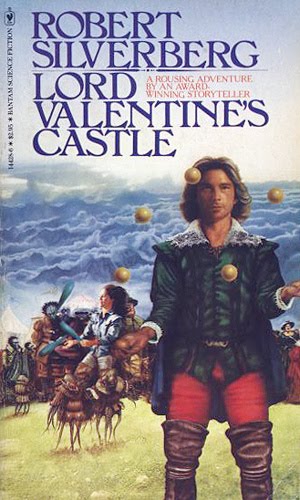
I can’t say I’m a huge Silverberg fan. I’ve read many of his books and short stories, and I’ve enjoyed them. But I’ve never made an effort to seek out those of his works I’ve not read – as I have done with some other writers. To be fair, Silverberg is one of the stalwarts of the genre. He’s had – and still has, of course – a fifty-four year writing career, and has mostly produced good books and stories. During that more-than-half-a-century, he has won four Hugo Awards and five Nebula Awards.
Silverberg’s most well-known creation is, arguably, the world of Majipoor, on which he has set seven novels, two novellas and a short story. The first of these is Lord Valentine’s Castle, published in 1980.
Majipoor is a big planet – in fact, it was inspired by Jack Vance’s novel, Big Planet – with four enormous continents. The world has been settled for thousands of years and has a population of some sixty billion; but it is now something of a backwater, and rarely visited by people from other planets. It is home to several races – humans, Skandars, Ghayrogs, Vroons, Su-Suheris, Liimen, and Hjorts. There are also the native Metamorphs, from whom the humans took the world, and they now live in a reservation. Majipoor is ruled by four potentates – the Coronal, who is the executive arm of government and rules from his castle atop the thirty-mile-high Castle Mount; the Pontifex, the legislative arm, who lives in the Labyrinth; the Lady of the Isle of Sleep, who through dreams provides the world’s moral framework; and the King of Dreams, who punishes wrongdoers, also through dreams.
Lord Valentine’s Castle opens with a man called Valentine on a ridge looking down upon the city of Pidruid, on the western shore of the continent Zimroel. He doesn’t know who he is, or how he got there. A passing boy, taking cattle to market in Pidruid, approaches him and the two enter the city together. Within a couple of chapters, Valentine has shown an uncanny natural ability at juggling, and joined a juggling troupe. The Coronal – also called Valentine – is due to appear shortly in Pidruid on the Grand Processional all coronals take shortly after ascending to power.
The name is not a coincidence. Valentine the juggler soon learns that he was Coronal Valentine but, by some art or science never explained, his mind has been swapped into another body and someone else has taken his place as coronal. The more of his memory Valentine recovers, the more he determines to take back his throne. So he travels across Zimroel to its east coast, and there takes ship to the Isle of Sleep, in order to persuade the Lady (who is always the mother of the coronal) of his true identity. And after succeeding in doing that, he continues on to the eastern continent, Alhanroel, to first gain the Pontifex’s support, and then march on Castle Mount and throw down the usurper.
And that’s pretty much the plot. Silverberg intended that “the book must be fun” – “all light, delightful, raffish…” And in that respect he succeeds. Valentine encounters obstacles on his way, but he overcomes them. He has exciting adventures – some of which seem a little too much, such as being swallowed by a legendarily giant sea-dragon while en route to the Isle of Sleep.
But then, Lord Valentine’s Castle is not a book to take seriously. It has a simple plot and a hero who prevails. It is, above all, colourful – Valentine’s journey east is very descriptive. And everything he sees and meets is exotic. And we know it is exotic because Silverberg has given it a made-up name. Although not all names, it has to be said, actually work all that well. “Niyk-tree” isn’t too bad, nor is “blave”; but “stajja” and “dhiim” just look like typographical accidents.
What strikes me most about this book is not the acknowledged debt it owes to Big Planet, but the debt it owes to Vance. Silverberg is channelling Vance. He does it well, because Silverberg is nothing if not a master craftsman. But, all the same, Lord Valentine’s Castle often feels a little like there’s too much Vance in it, as if Silverberg has crammed several novels by Vance into one book – which at 506 pages (in my 1982 Pan paperback; not the cover shown above) probably is equivalent to several novels by Vance…
Unlike some of the other books I’ve read in this year’s reading challenge, I didn’t regret rereading Lord Valentine’s Castle. I quite enjoyed it. It’s mind candy, but the sort of mind candy a friend might bring back from a trip to a foreign country – still fluffy, but with an exotic flavour to it. It’s a good book to read on a dull journey. And, like many books of its type, its general shape will linger – that the world of Majipoor is so big, Castle Mount and the Fifty Cities on its slopes, the overall story of the book but not Valentine’s individual adventures… and that it all ends happily. It had been a good twenty years or more since I last read Lord Valentine’s Castle, and still it felt comfortably familiar. Which is no bad thing sometimes.
The Amber Room
My story ‘The Amber Room’ was published in March this year by Pantechnicon magazine. But there appear to be problems with the magazine’s web site, so I’m putting a copy of the story here on my blog. Click on the link below to download the story in PDF format.
Reading Challenge #8 – The Left Hand of Darkness, Ursula K Le Guin
Le Guin is an author who grows as you grow. You can read and admire her at thirteen, and you can read and admire her at forty-three. As I have done. Because I think it must be around thirty years since I last read The Left Hand of Darkness. I’d never really felt the need to reread it because I knew the story. It’s one of those novels whose plot and characters have entered science fiction common knowledge – we all know about it even if we’ve not read it.
Which is a shame. Because it’s definitely worth reading, and certainly stands up to rereading.
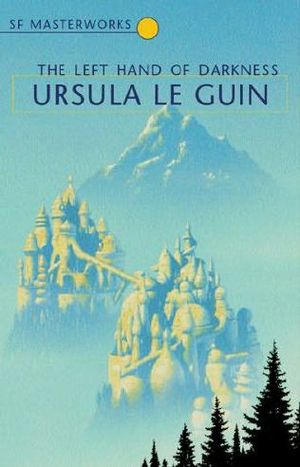
The book is set in Le Guin’s Ekumen, a loose mystical/economic interstellar polity of eighty-odd human planets with the world of Hain at its centre. Earth was seeded by the Hainish. The Left Hand of Darkness is set on Gethen, also known as Winter, which has just been invited to join.
The Gethenians have no space travel and, strangely – and uniquely among the humans of the Ekumen – they are hermaphrodites. For three weeks of every month they are effectively neuter, but for a week they are in heat, or “kemmer”. And the gender they take during kemmer depends entirely on those around them.
The Left Hand of Darkness is essentially a character study of a Gethenian called Estraven. He is the royal contact of Genly Ai, the Ekumen’s lone Envoy to the world. And it is through Ai’s, er, eyes that we come to know Estraven and, by extension, the people of Gethen. The novel is essentially world-building, and it’s a fascinating society Le Guin has created – a result of both the Gethenians’ sexuality and the planet’s harsh near-Arctic climate.
The plot of The Left Hand of Darkness is considerably less complex than the world itself. Estraven falls from favour and is banished from Karhide. The king’s new adviser is not interested in joining the Ekumen, only in provoking a war with the neighbouring police state of Orgoreyn. Ai visits Orgoreyn, hoping to have more luck with its “commensals”. He meets the exiled Estraven, who warns him that no one is interested in the Ekumen, only in using the Envoy to improve their own political fortunes. When those machinations fail, Ai is arrested and shipped off to a “Voluntary Farm”, where he is continually drugged and interrogated. There is an ongoing discussion amongst the Gethenians regarding Ai’s true nature – is he what he claims to be, or just the perpetrator of an elaborate hoax? This is purely Gethenian speculation; for the reader, Ai’s nature is never in doubt.
Estraven rescues Ai from the farm, and the two trek across the northern ice shield to return to Karhide. Since the commensals had claimed Ai had died of a virulent fever, his miraculous return should be enough to provoke the king of Karhide into inviting the Ekumen ambassadors to Gethen.
The story is told by Ai, who begins the novel with the line:
I’ll make my report as if I told a story, for I was taught as a child on my homeworld that Truth is a matter of the imagination.
Ai’s narrative is interspersed with excerpts from the journal of Estraven. And between the two they cover the entire period between Estraven’s exile from Karhide and the landing of the ship containing the Ekumen ambassadors. The focus remains firmly on the two narrators.
Since the Gethenians are neuter for 75% of the time, and can be either gender when in kemmer, their society is essentially single-gendered. So The Left Hand of Darkness is as much a book about gender-roles as it is an exploration of an alien Other. And, while it was first published in 1969, perhaps in order to better contrast Gethenian society with the reader’s, Le Guin seems every now and again to drop into gender stereotypes – especially for women, since Ai is male and Estraven is neither. But that’s a minor quibble.
The Left Hand of Darkness is Gethen. And Gethen is one of the best-realised worlds in science fiction. I’d last read this book years ago, but had since then reread The Dispossessed… and decided the latter was the better of the two. But having now read The Left Hand of Darkness once again, I find I’m not sure. There’s no doubt they’re the best two of Le Guin’s Hainish novels – which makes them amongst the best the genre has produced – but I suspect I’ll never decide which is best and which is second-best.
Unlike the other books I’ve reread for this year’s challenge, The Left Hand of Darkness did not disappoint. In fact, it did the opposite – I like it even more than I thought I did. I will definitely be reading it again one day. I might even add it to the bottom of my favourite novels list…
Reading Challenge #7 – Jack of Eagles, James Blish
This month’s book was somewhat delayed as I’ve been focusing on reading and writing about books related to Apollo 11 for my celebration of the 40th anniversary of the lunar landing. You can find those reviews on my Space Books blog here.
But on with the reading challenge…. My edition of James Blish’s Jack of Eagles is a 1977 Arrow paperback with cover art by Chris Foss. I suspect it was bought for me some time around then. So I must have been twelve or thirteen when I first read it. I actually have a number of Blish novels from that period – all with Foss cover art – as he was one of my favourite sf authors at the time. Which made rereading Jack of Eagles an interesting exercise.
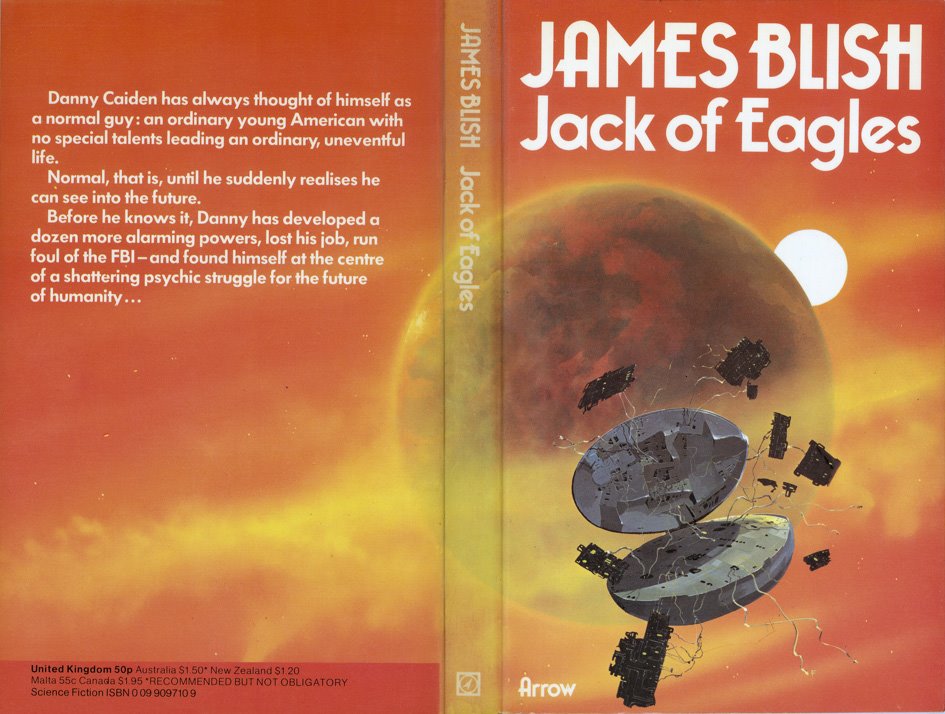
The novel is about Danny Caiden, a young man who develops psychic powers – precognition, telepathy, teleportation, telekinesis, etc. – and subsequently becomes embroiled in a secret war between two groups of powerful psychics, one of which is bent on taking over the world. With the help of a parapsychology professor at a local university, Caiden learns how to control his new-found powers… but it is only when he comes into conflict with the Brotherhood In Psi that he discovers he is the most powerful psi ever.
There’s a definite sense of time and place to Jack of Eagles. It was expanded from a 1949 novelette, ‘Let the Finder Beware’, and with its mention of the GI Bill and other details, it’s clearly set a few years after the end of World War 2. The book is also, like much of Blish’s fiction, well written. But. And this is a problem I had with his The Quincunx of Time when I read it at the end of last year. That too had originally been a short story – which I’d read – but Blish had not chosen to expand the plot, or provide more details of the setting. Instead, he’d used the greater wordcount to waffle on about the bogus science and philosophy which underpinned the book’s central idea – a faster-than-light communication device which allowed people to pick up signals from the future.
And I suspect the same thing happened in Jack of Eagles. The first half of the novel is a relatively straightforward action story – Caiden loses his job, and seeks to learn more about his burgeoning powers by visiting various “experts”. But there’s a long section in which the parapsychologist, Dr Todd, tries to explain the scientific basis of Caiden’s powers, referencing some mangled form of quantum mechanics and the Many Worlds Hypothesis. It’s pointless, implausible guff, and it slows down the story to a crawl.
Later, during Caiden’s battle with the Brotherhood, he escapes by travelling into alternative futures – explained once again by the bogus science of earlier. Each of the futures he visits is interesting, but Blish spends far too long trying to explaining the how of it and his explanations ring false and spoil the atmosphere.
I can’t remember what it is about Blish’s stories and novels that appealed to me when I was in my early teens. Rereading them now, thirty years later, it’s plain that Blish was a good writer. But he seems to have this bad tendency to pad out his novels with implausibly bogus science and philosophy. He should have just finessed it. The explanations interrupt the pace of the narrative and add little or nothing to the story. They probably seemed impressive to a naive thirteen-year-old. Perhaps that was the attraction of Blish’s novels. That and the Chris Foss cover art, of course.
I’m tempted to try reading or rereading a Blish novel that wasn’t expanded from a shorter piece, just to see if it’s the expansion process which led to him padding out the story with scientific bollocks. Perhaps he didn’t do that for stories which were originally planned to be novel-length. The only difficulty is finding such a novel in his oeuvre.
Jack of Eagles was certainly better than the other books I’ve read for this challenge. I’m not entirely sure what it is about the book which originally appealed to me all those years ago, but I doubt I’d have become a fan if I’d read it at my current age. All the same, I still think Blish is a pretty good sf writer, and I won’t be purging my shelves of his books…
 It Doesn't Have To Be Right...