I first read Stranger in a Strange Land back in my early teens, twenty or more years ago. I think I may have read it more than once during that time. I vaguely recall being aware of the book’s reputation, but not entirely understanding why it had such a reputation – I enjoyed it, but I thought other Heinlein novels were better. My opinion of Heinlein’s oeuvre has changed considerably in the decades since then, and according to my records the last book by him I read was in 1996. And that was a reread of I Will Fear No Evil. Well, yes, I did read Starship Troopers last year, but I didn’t read it for enjoyment, so it doesn’t count – see here.
Throughout my science fiction reading career, Heinlein has never been a favourite sf author, although I’ve read around two dozen of his books, many of them more than once. I also owned around a dozen of them – although I purged my book-shelves of all but a handful early last year.
Which is a long-winded way of saying that, despite its reputation, I had relatively low expectations for this reread of Stranger in a Strange Land. Heinlein’s 1940s somewhat patronising dialogue-heavy prose style no longer appeals to me; his politics certainly don’t appeal. So what to make of the sf novel that, along with Dune (a personal favourite) and The Lord of the Rings (I really should reread it one of these days), was beloved by college students around the world in late 1960s and 1970s?
First, the plot. A mission to Mars comes a cropper, and a second mission sent twenty-five years later finds a single survivor living among the Martians: Valentine Michael Smith, the son of two members of the first mission’s crew. They return him to Earth. Smith is Martian in all but physiology, and he introduces his Martian way of thinking to the people around him. He also proves to have “magical” powers. For a while, he stays with Jubal Harshaw, a cantankerous multi-millionaire, who has opinions on everything. Smith leaves him to see more of the world – well, the USA of the time – and then creates a charismatic church. But society at large – well, the society of the USA of the time – does not want to hear his “message”, and he is torn apart by a mob. His church and message survive in his followers.
So. The good stuff. Stranger in a Strange Land is surprisingly readable. Heinlein’s prose is like beige – it’s not colourful, it doesn’t stand out as either good or bad. Some people think all novels should be written in beige prose. I happen to think that’s a waste of English. Why does the language have such a large lexicon if all you’re going to use are the blandest words in it?
That readability may well be because so much of the book is dialogue. A reader doesn’t need to exercise their imagination as much for dialogue as they do for descriptive prose. Sadly, for a book originally published in 1961, the dialogue in Stranger in a Strange Land sounds like it’s straight from some 1940s screwball rom com. In fact, the whole book reads as though it were written twenty years earlier. Nor is it really science fiction. Michael Valentine Smith may be a survivor from a mission to Mars, but there are sections of the book set among angels in heaven. And Smith’s powers are pretty much magical.
And then there’s the politics… Which is sort of Rand lite. But with sexual liberation and some distinctly dodgy 1950s gender politics. Heinlein, many will tell you, was a proto-feminist – and yet one female character, Jill, in Stranger in a Strange Land says, “Nine times out of ten, if a girl gets raped, it’s partly her fault” (p281). This is after two pages of her ruminating on why she enjoys showing off her body to dirty old men and why it is A Good Thing. As is, apparently, pornographic depictions of women.
Stranger in a Strange Land is also apparently a satire – it says on the back-cover of my 1980 NEL edition: “a searing indictment of Western Civilization”. All I found it in were a few off-the-cuff observations of the sort found in a some channel TV sitcom, and a made-up church that owed more to 1920s carnivals than it did to organised religion. In fact, Smith actually joins a carnival for a while after leaving Harshaw’s mansion – but this is a an old-style carnival, rather than simply a travelling funfair.
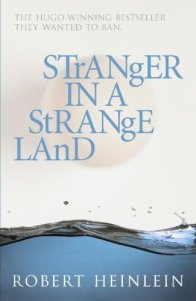
Incidentally, I couldn’t find a copy online of my NEL edition’s cover art, hence the current Hodder edition shown above. Still, look at that hyperbole “the Hugo-winning bestseller they wanted to ban”. It doesn’t say who wanted to ban it – lovers of good literature, perhaps. If it was some religious group – well, don’t forget one such group also wanted to ban Watership Down, a book with a cast of rabbits.
Heinlein’s characterisation never stretched much beyond Competent Man and Perky Female, but in this novel he also manages Dim-Witted Innocent – science fiction’s very own Forrest Gump, if you will. Except Valentine Michael Smith, the Man from Mars, is a Magical Forrest Gump. There are a couple of feeble attempts at passing off his powers as ESP, but I’m not aware of any previously-documented psionic power which makes clothes disappear – telecdysiasism, perhaps? The many mentions of the Martian “Old Ones”, who are “discorporated” members of that race but who still interact with the living, also read more like fantasy than science fiction.
I’d always pegged Heinlein’s later works – the 1970s and onwards – as his Dirty Old Man books, so I was surprised to see he’d actually started on that phase a decade earlier. In 1961, when Stranger in a Strange Land was first published, he was 54, so not really that old, but it’s plain that Jubal Harshaw is Heinlein. Admittedly, Heinlein was known for putting mouthpieces into his fiction, but Harshaw has to be the least subtle of any of them. He’s also, quite frankly, full of crap. He gives a lecture on modern art that is little more than ill-informed opinion. Indeed, some of the “facts” he spouts are anything but. Not to mention that, for all his much-vaunted egalitarianism, he’s nothing more than an old school capitalist patriarch.
Which makes Smith, the Magical Forrest Gump, something even worse. Perhaps in 1961, he might have been seen as something akin to a carnival freak, a “good monster”. But now, he’s more of a Charles Manson / David Koresh type figure – and Smith’s church, with its creed of nudity and group orgies, only makes the resemblance worryingly closer. I personally find little to admire, and much to condemn, in such cults, so a novel celebrating them is unlikely to find much favour with me. To be fair, Heinlein is innocent in that regard, as Stranger in a Strange Land predates both Manson and Koresh, not to mention Jonestown or Heaven’s Gate.
I knew before I opened the cover that reading Stranger in a Strange Land was not going to be fun. That’s one reason why this post is late. But I’d forgotten how downright irritating Jubal Harshaw is, how annoying his Heinlein’s female characters are – and how interchangeable: Harshaw has three “secretaries”, a blonde, a brunette and a black-haired one, but they might as well be the same woman with a few bottles of hair-dye; likewise the other women in the book. I’d also forgotten how stupid the whole concept of “grok” is. Try rereading the book, and substituting “understand” or “comprehend” for “grok”. The book is entirely unchanged.
In the history of science fiction, Robert Heinlein was undoubtedly an important writer, and Stranger in a Strange Land is one of sf’s few break-out books, enjoying success outside the genre. Like Rand’s novels, I suspect Stranger in a Strange Land is also a book read more for its politics and philosophy – it certainly can’t be for its prose, characterisation, or depiction of a near-future USA. And, again like Rand’s novels, there’s not much in there that appeals to me. Nor is it especially timeless. Stranger in a Strange Land reads like a novel of the 1940s, and feels wildly inappropriate in the twenty-first century.
I very much doubt I’ll ever read Stranger in a Strange Land again, but I think I’ll hang onto my copy for the time-being…

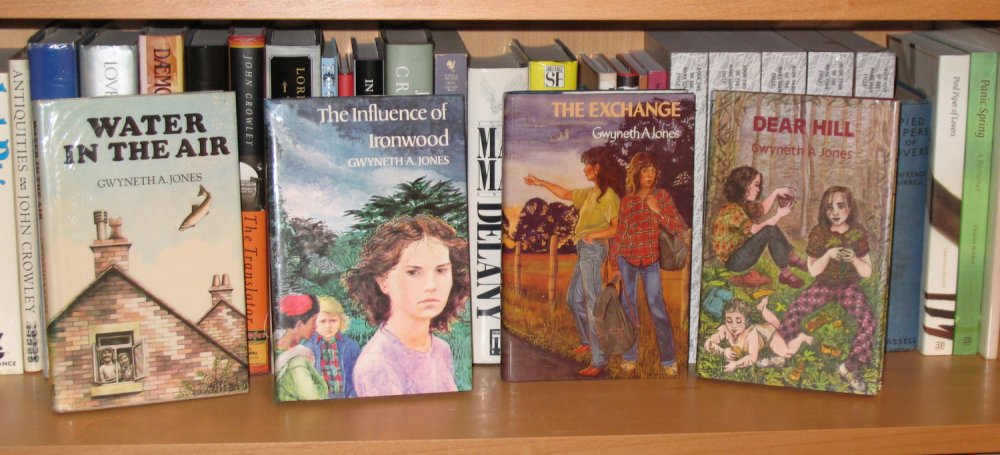 Four early YA novels, published as by Gwyneth A Jones.
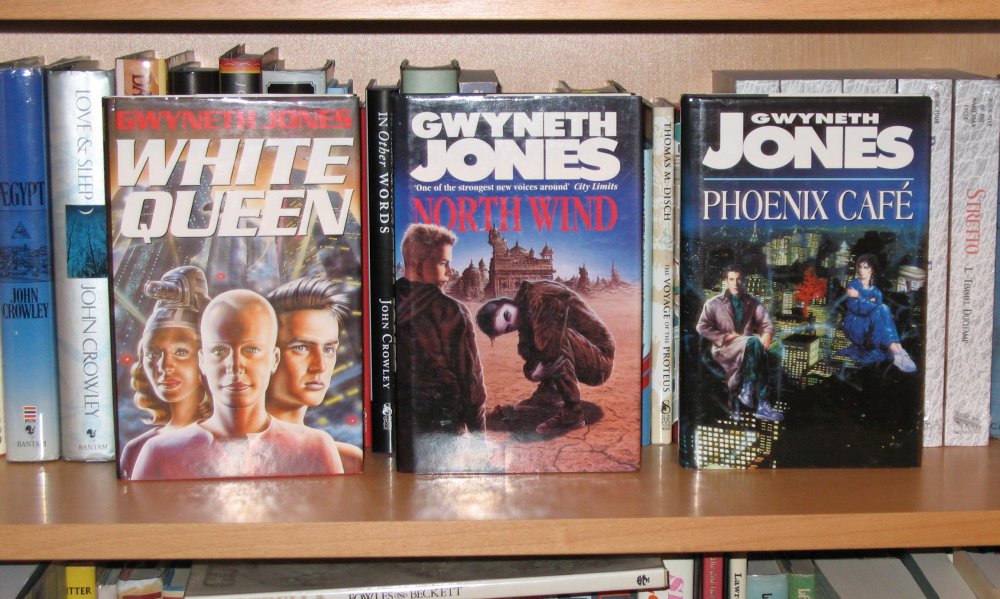 The Aleutian trilogy.
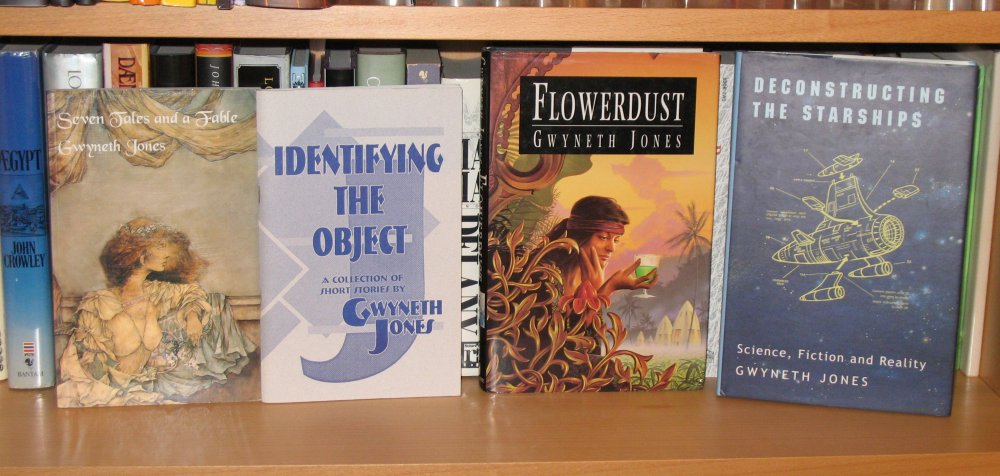 Two small press collections, a sequel of sorts to Divine Endurance, and a criticism collection.
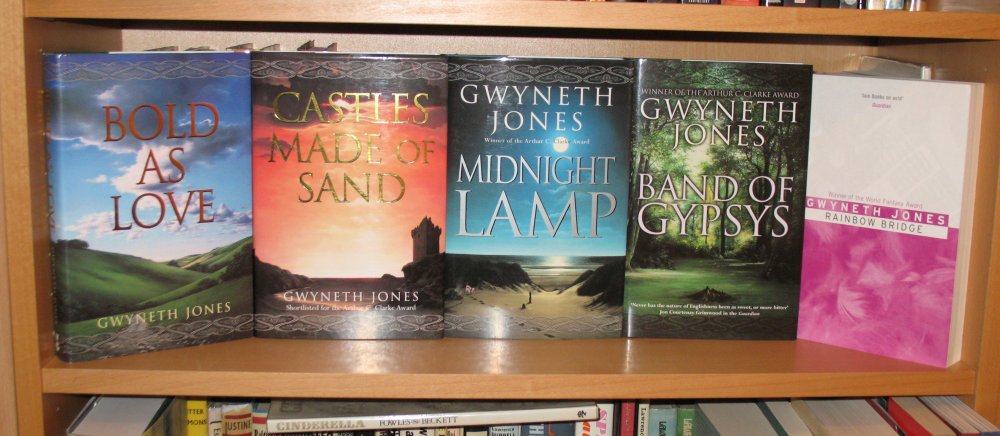 The Bold as Love Cycle.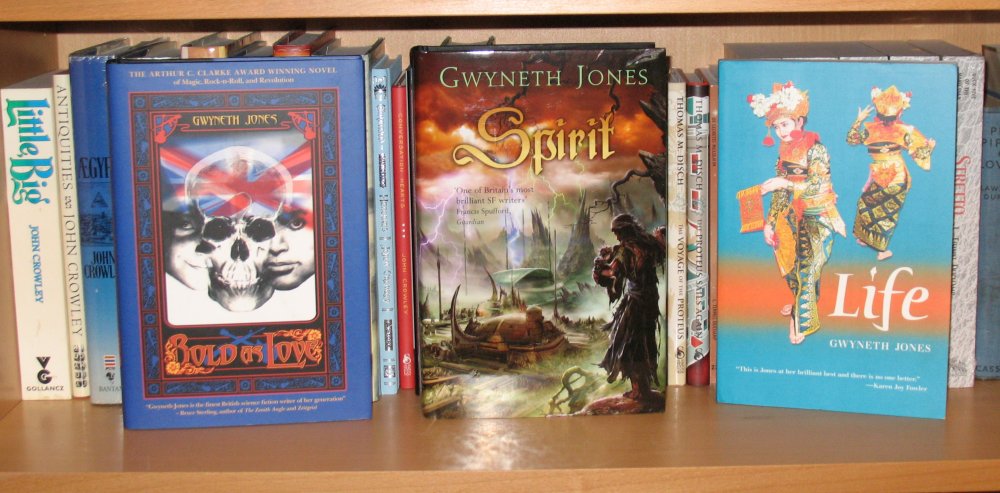
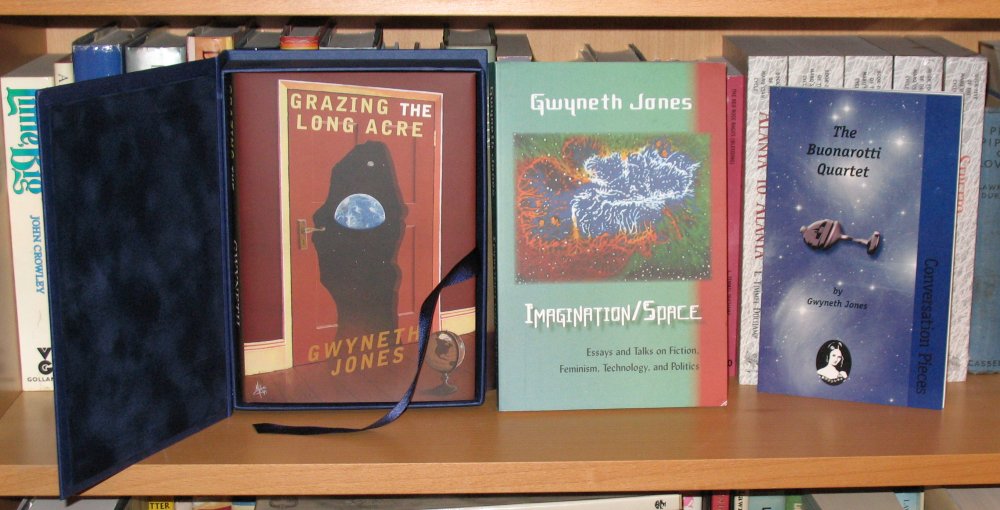 A short story collection from the excellent PS Publishing, and a 4-story collection and criticism collection from the equally excellent Aqueduct Press.
 It Doesn't Have To Be Right...