
They say science fiction is the literature of ideas. They say every science fiction text is about two dates: the date it is set, and the date it was written.
Yet when discussing a science fiction text, it is generally the “big themes” which are addressed: identity, the survival of the human race, the invasiveness or pervasiveness of technology in society, the nature of the physical universe, etc… While it’s true that the concerns and issues of “the date it was written” are typically present, as major themes of a work those concerns are usually sadly lacking. Tackling those issues head-on might well date a novel, although, to be honest, it seems many of the problems affecting modern-day society are, if not perennial, at least recurring. In the relatively short term, that is – say, a few centuries.
So where are the science fiction stories and novels which deal directly with the problems affecting readers today? Why must space operas be based on centuries-old political structures? Why must they refight wars long since lost or won? Why must cyberpunk novels wallow in the economics and geopolitics of the 1980s? Why must hard sf pretend the 1960s has lasted for fifty years? Why must sf ignore existing difficulties and challenges and invent entirely new and irrelevant ones?
I look around and I see that we are failing as a species. We are rendering our planet uninhabitable, and yet are making only token efforts to find solutions. We’re not even looking seriously at off-planet as a possible escape route. Thousands of years of civilisation and we have yet to eradicate wars, hunger, poverty, disease, inequality, slavery… Solutions to all these lie within our grasp, but we refuse to do anything about them. Do these not count as “ideas”? Are they not fit subjects for genre fiction?
True, science fiction is neither predictive nor didactic. It has not been since the 1920s, but I sometimes wonder if it needs to be once again. Back then, it was a marketing gimmick, a way of selling the newly-formed genre to readers of electronics and popular science magazines. Now, the genre has grown far too sophisticated for the simplistic agendas of Gernsback and his contemporaries. As a literary mode of fiction, it has evolved a vast repertoire of tropes, an extensive toolkit, and a lexicon that is in many ways peculiar to it. And along with this increase in sophistication has come a shift in viewpoint from the immediate to the abstract.
Abstract commentaries, however, often yield abstract results. Neither prediction nor didactism are useful tools in today’s fiction market, but that doesn’t mean sf should ignore the immediate. At a time when science itself is coming under attack, perhaps the genre which includes “science” in its name should take up arms once again. I see labels such as “speculative fiction” and “strange fiction”, and all I see is a move to define the genre by its aesthetics.
Science fiction is not fiction which incorporates a defined catalogue of tropes. It is not fiction which features science, or which is about science. It is fiction that once battled for science, which was once a soldier in science’s army. Science fiction is every mode of fiction, every trope, every writing tool, which was invented in order to win that struggle. And, once upon a time, it fought the good fight, inspiring generations to take up careers in science and engineering – including those who made the Apollo lunar landings a reality. Sadly, it could not sustain the offensive, and the war has long since been lost.
This is not to say the genre is as uniform as the above might suggest. Like any movement which has evolved, which has been in existence for more than eighty years, it is varied and disparate. It is a house of many rooms. And a great many people live in that house.
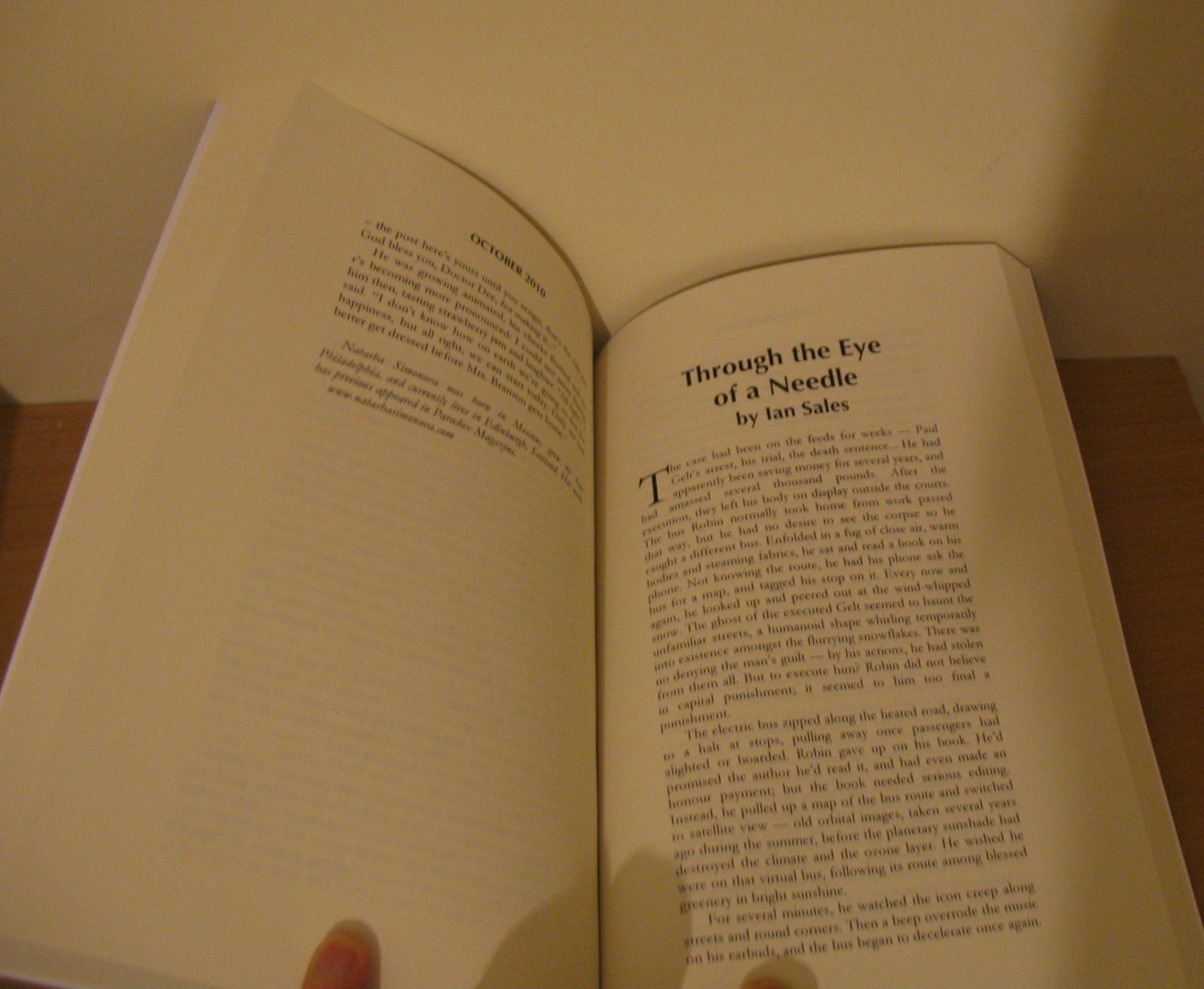
Not everyone is a spectator. I like to think I’ve done my bit, that I’ve contributed something. My story ‘Through the Eye of a Needle’ was a direct attack on climate-change deniers (see here). My Euripidean Space stories are based on the latest data on the moons of Saturn (see here). My story ‘Human Resources’ comments on capitalist economics (see here). I wrote a story to celebrate the achievement in 1960 of Jacques Piccard and Don Walsh (see here) – although the story has yet to find a home.
I plan to contribute much more.



 by Rosemary Kirstein. It was in the last year or so, although the book was originally published in 1989. I do know that it’s not well known in the UK. But whenever, and whatever, I read about it, I decided it might appeal, and so determined to keep my eyes open for a copy. Which I found several months later in a local charity shop.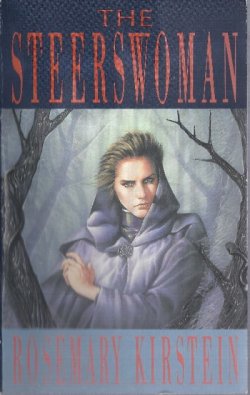
 ).
).
 , which opens up its story’s universe in a series of appendices and so becomes almost a space opera; or even the hints dropped regarding the Age of Legends in Robert Jordan’s bloated Wheel of Time series.
 ,
,  and
and  . All four are available in an omnibus volume,
  . I shall have get me that omnibus volume. (Edit: apparently the omnibus only contains the first two books. Ah well. I shall try to find all three books, then…)
 . This was one of the major genre novels of last year, with a marketing budget normally reserved only for the witless bios of A-list celebs, and subsequently praised everywhere. In
  , probably Hodder-Williams’ best-known work. It was first published in 1969, and I included it in my British SF Masterworks list
 , may be about a War in Heaven, but it is definitely not an eschatological novel.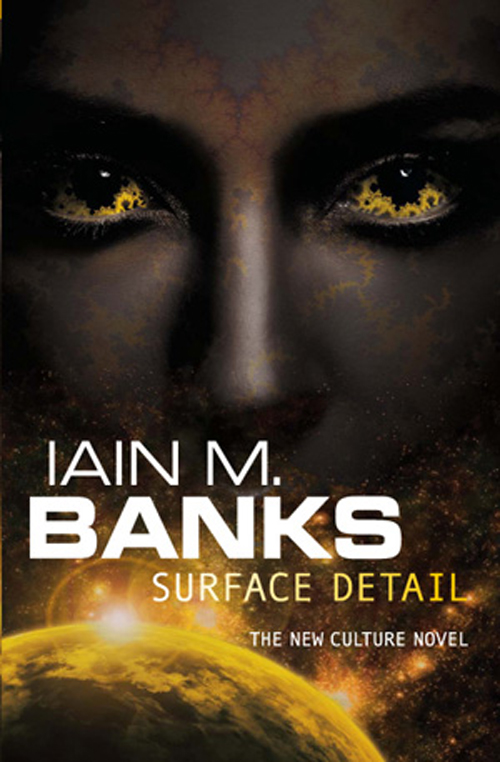
 better. It had a more interesting structure, it had a cooler BDO, it had more interesting characters. Which is not to say that Lededje is not – she’s a typical Banksian heroine, just like the Lady Sharrow from
  . Veppers, unfortunately, is another pantomime villain – cf the Archimandrite Luseferous – and reads as little more than a caricature of an evil plutocrat. As for Demeisen, the avatar of Falling Outside The Normal Moral Constraints… About halfway through
  , Octavia Butler (1979)
 , Elizabeth Hand (1988)
 , Maureen McHugh (1992)
 , Melissa Scott (1996)
 , Chris Moriarty (2003)
 , Tricia Sullivan (2003)
 , Steph Swainston (2004)
 , Karen Traviss (2004)
 , Marianne de Pierres (2007)
 , Lauren Beukes (2008)
 , Liz Williams (2008)
 It Doesn't Have To Be Right...