It Doesn't Have To Be Right…

… it just has to sound plausible


56 Comments

Toward 100 Great SF Short Stories by Women

In my review of Women of Wonder, a women-only sf anthology edited by Pamela Sargent, on SF Mistressworks here, I mentioned the anthology 100 Great Science Fiction Short Stories, edited by Isaac Asimov, Joseph D Olander and Martin H Greenberg. It occurred to me it would be a good idea to put together a list, of meme-like properties, of 100 great sf stories by women writers. I can’t do this on my own – I’ve simply not read enough short fiction to pick out enough good stories. So I’m asking for suggestions. There was a bit of a conversation of Twitter today, using the hashtag #100WomenSF. Feel free to suggest there too.

The rules are simple – written by a woman, science fiction only, published in any year up to and including 2012, any length (ie, novelettes and novellas allowed). The list will feature only one piece of fiction per author but don’t let that stop you. Some authors are going to be easier than others, but may well present different problems – everyone can probably name a suitable story by Ursula K Le Guin off the top of their head, but which is her best one?

I had a quick go and managed just over fifty – including some authors appearing more than once (such as Le Guin) because I’ve yet to decide which story belongs in the final list…

Stories I’ve read that I think belong on the list
‘The Conquest of Gola’, Leslie F Stone (1931, short story)
‘No Woman Born’, CL Moore (1944, novelette)
‘That Only a Mother’, Judith Merril (1948, short story)
‘Brightness Falls from the Air’, Margaret St Clair (as Idris Seabright) (1951, short story)
‘The Last Day’, Helen Clarkson (1958, short story)
‘The Heat Death of the Universe’, Pamela Zoline (1967, short story)
‘And I Awoke and Found Me Here on the Cold Hill’s Side’, James Tiptree Jr (1972, short story)
‘When It Changed’, Joanna Russ (1972, short story)
‘Of Mist, and Grass, and Sand’, Vonda N Mcintyre (1973, novelette)
‘Scorched Supper on New Niger’, Suzy McKee Charnas (1980, novelette)
‘Bloodchild’, Octavia E Butler (1984, novelette)
‘All My Darling Daughters’, Connie Willis (1985, novelette)
‘Webrider’, Jayge Carr (1985, short story)
‘Out of All Them Bright Stars’, Nancy Kress (1985, short story)
‘The View from Venus: A Case Study’, Karen Joy Fowler (1986, novelette)
‘Reichs-Peace’, Sheila Finch (1986, novelette)
‘Rachel in Love’, Pat Murphy (1987, novelette)
‘Tiny Tango’, Judith Moffett (1989, novella)
‘Identifying the Object’, Gwyneth Jones (1990, novelette)
‘The Road to Jerusalem’, Mary Gentle (1991, short story)
‘Coming of Age in Karhide’, Ursula K Le Guin (1995, novelette)
‘The Avatar of Background Noise’, Toiya Kristen Finley (2006, short story)
‘Arkfall’, Carolyn Ives Gilman (2008, novella)
‘Legolas Does the Dishes’, Justina Robson (2008, short story)
‘Immersion’, Aliette de Bodard (2012, short story)

Stories I’ve read that maybe should be on the list
‘Cassandra’, CJ Cherryh (1978, short story)
‘Abominable’, Carol Emshwiller (1980, short story)
‘Symphony for a Lost Traveller’, Lee Killough (1984, short story)
‘Forever Yours, Anna’, Kate Wilhelm (1987, short story)
‘Stable Strategies for Middle Management’, Eileen Gunn (1988, short story)
‘California Dreamer’, Mary Rosenblum (1994, short story)
‘The Lady Astronaut of Mars’, Mary Robinette Kowal (2012, novelette)

Stories I’ve not read
‘Captivity’, Zenna Henderson (1958, novella)
‘Lord Moon’, MJ Engh (as Jane Beauclerk) (1965, short story)
‘Weyr Search’, Anne McCaffrey (1967, novella)
‘The Steiger Effect’, Betsy Curtis (1968, short story)
‘Nightlife’, Phyllis Eisenstein (1982, novelette)
‘Her Furry Face’, Leigh Kennedy (1983, short story)
‘The Mountains of Mourning’, Lois McMaster Bujold (1989, novella)
‘The Power and the Passion’, Pat Cadigan (1990, short story)
‘Suppose They Gave a Peace…’, Susan Shwartz (1991, novelette)
‘Protection’, Maureen F McHugh (1992, novella)
‘Danny Goes to Mars’, Pamela Sargent (1992, novelette)

Duplicate stories
‘Souls’, Joanna Russ (1982, novella)
‘Over the Long Haul’, Martha Soukup (1990, novelette)
‘Nekropolis’, Maureen F McHugh (1994, novelette)

Are these sf? I don’t know
‘The Warlords Of Saturn’s Moons’, Eleanor Arnason (1975, novelette)
‘Stone Circle’, Lisa Tuttle (1976, short story)
‘Red as Blood’, Tanith Lee (1979, short story)
‘Spidersong’, Susan C Petrey (1980, short story)
‘Sea Changeling’, Mildred Downey Broxon (1981, novelette)
‘Dog’s Life’, Martha Soukup (1991, short story)
‘The Nutcracker Coup’, Janet Kagan (1992, novelette)
‘All Vows’, Esther M Friesner (1992, short story)
‘Alfred’, Lisa Goldstein (1992, short story)
‘The Good Pup’, Bridget McKenna (1993, short story)

New additions
‘The Fate of the Poseidonia’, Clare Winger Harris (1927, short story)
‘Space Episode’, Leslie Perri (1941, short story)
‘The Putnam Tradition’, Sonya Dorman (1963, short story)
‘Automatic Tiger’, Kit Reed (1964, short story)
‘The View from Endless Scarp’, Marta Randall (1978, short story)
‘War and Rumours of War’, Candas Jane Dorsey (1988, short story)
‘Patient Zero’, Tananarive Due (2000, short story)
‘Knapsack Poems’, Eleanor Arnason (2002, short story)
‘State of Oblivion’, Kaaron Warren (2003, short story)
‘Inside Out,’ Michaela Roessner (2004, short story)
‘Griots of the Galaxy’, Andrea Hairston (2004, novelette)
‘The Bride Price’, Cat Sparks (2007, short story)
‘Tideline’, Elizabeth Bear (2007, short story)
‘Infinities’, Vandana Singh (2008, novelette)
‘Spider the Artist’, Nnedi Okorafor (2008, short story)
‘Chica, Let Me Tell You a Story’, Alex Dally MacFarlane (2008, short story)
‘Cold Words’, Juliette Wade (2009, novelette)
‘Eros, Philia, Agape’, Rachel Swirsky (2009, novelette)
‘Non-Zero Probabilities’, NK Jemisin (2009, short story)
‘Blood, Blood’, Abbey Mei Otis (2010, short story)
‘The Other Graces’, Alice Sola Kim (2010, short story)
‘Agents of Repair’, Rosie Oliver (2010, short story)
‘Amaryllis’, Carrie Vaughn (2010, short story)
‘I’m Alive, I love You, I’ll See You in Reno’, Vylar Kaftan (2010, short story)
‘Six Months, Three Days’, Charlie Jane Anders (2011, short story)
‘Nahiku West’, Linda Nagata (2011, novelette)
‘The Cartographer Bees and the Anarchist Wasps’, E Lily Yu (2011, short story)
‘Silently and Very Fast’, Catherynne M Valente (2011, novella)
‘Jagannath’, Karin Tidbeck (2011, short story)
‘The Green’, Lauren Beukes (2012, short story)
‘Significant Dust’, Margo Lanagan (2012, novelette)
‘Black Box’, Jennifer Egan (2012, short story)

More new additions
‘Water Pirate’, Leigh Brackett (1941, short story)
‘Fireship’, Joan D Vinge (1978, novella)
‘The Missionary’s Child’, Maureen F McHugh (1992, novelette)
‘All the Birds of Hell’, Tanith Lee (1998, novelette)
‘Riding the White Bull’, Caitlín R Kiernan (2004, novelette)
‘Sinner, Baker, Fabulist, Priest; Red Mask, Black Mask, Gentleman, Beast’, Eugie Foster (2009, short story)
‘Flying in the Face of God’, Nina Allan (2010, short story)
‘A Vector Alphabet of Interstellar Travel’, Yoon Ha Lee (2011, short story)

So, more suggestions needed, please. Especially of twenty-first century sf, but also by authors who are not represented here – what is Margaret St Clair’s best story, for example? And tell me about the stories I’ve not read – how good are they? The stories in the last section, are they sf or fantasy? I can’t tell from the title. I picked them from the shortlists of the Hugo and Nebula awards, neither of which actually differentiates between the genres.

Let’s see if we can do a good representative meme-list of 100 pieces of sf short fiction by women writers. I’ll post the final list here and on both SF Mistressworks and Daughters of Prometheus.

ETA
Have added Leslie F Stone and Margaret St Clair to the first list. Have also settled on ‘Out of All Them Stars’ for Nancy Kress and ‘Coming of Age in Karhide’ for Le Guin. Likewise, ‘And I Awoke And Found Me Here On The Cold Hill’s Side’ has always been a favourite story of mine so I’m going to choose that as Tiptree’s contribution.

ETA #2
Added New additions section, from comments here and on Twitter. Some of them I’ve read. Of the ones I’ve not read, some might not be sf – I need to check that. Also moved a couple of stories to Stories I’ve read that maybe should be on the list since I found copies and read them.

ETA #3
More new additions added. I don’t want the list to be too twenty-first-century heavy, but it is sort of leaning that way. At present, it breaks down by decade as 1920: 1; 1930: 1; 1940: 4; 1950: 3; 1960: 6; 1970: 8; 1980: 20; 1990: 15; 2000: 19; 2010: 17, which adds up to 94 (and still includes more than one entry by a couple of authors). I think the list needs a few more suggestions for the 1950s, 1960s and 1970s. And it would be helpful if anyone can confirm if all of the stories actually are science fiction and not fantasy. Nonetheless, a list is starting to come together…
Leave a comment

Groupthink at SF Signal

Yesterday, SF signal posted one of its regular Mind Melds – see here – this time on the subject of Orwell’s Nineteen Eighty-Four, totalitarianism and total war. And I contributed to it. I sort of riffed about dystopias, which wasn’t entirely on topic but never mind.

I mentioned several relevant sf novels, including Anthony Burgess’s 1985, Alastair Reynolds’s The Prefect, Frank Herbert’s Hellstrom’s Hive, Francis Spufford’s Red Plenty and Margaret Atwood’s The Handmaid’s Tale. But I wish I’d remember to mention Adam Roberts’ multi-award-winning Jack Glass, which pretty much demonstrates one of the points I was trying to make. The second and third parts of the novel feature the daughters of one of the super-rich families which effectively run the Solar System, a situation not that far removed from our current situation. Everyone else, of course, gets to live in abject misery and poverty in order to fund the super-rich’s lifestyles. I’ve said before that our current lords and masters appear to be taking Dickens as a model rather than Orwell, and Jack Glass is a good illustration of that.

And in the comments to the Mind Meld, I also sort of got accused of being a Nazi. Apparently pointing out that Nineteen Eighty-Four doesn’t really map onto the current political climate is a form of Godwinism. Er, no. It’s not a way to stifle argument, it’s simply pointing that if you believe Orwell’s book is relevant to the twenty-first century then your argument is wrong. Which, of course, has nothing to do with Nazis.


4 Comments

The voters have spoken

Back on 22 June, I posted a poll to see which six allegedly classic science fiction novels you would like me to read as my summer reading project. I promised to read the books and then write a blog post on each one. In hindsight, it was clearly a foolish thing to promise, although perhaps there were one or two books in the seventeen I chose for the poll that I sort of wanted to read/reread. Sadly, only one of those made it to the final six. Which are, for the record:

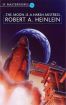
rah_themooni The Moon is a Harsh Mistress, Robert A Heinlein 35 votes
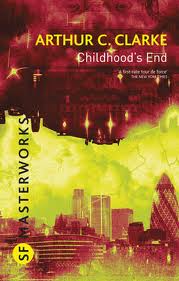
childhoodsend Childhood’s End, Arthur C Clarke 32 votes
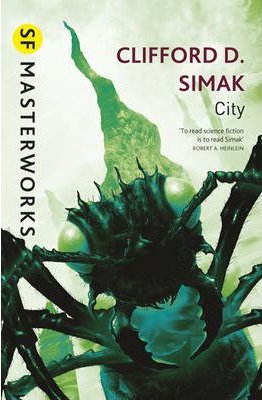
city City, Clifford D Simak 23 votes
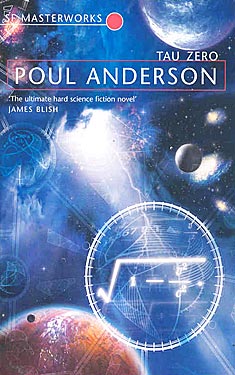
TauZero Tau Zero, Poul Anderson 22 votes
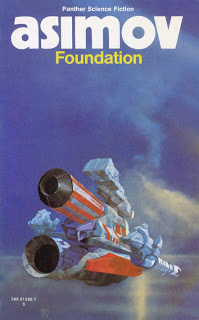
Panther-1080-n Asimov Foundation Foundation, Isaac Asimov 22 votes
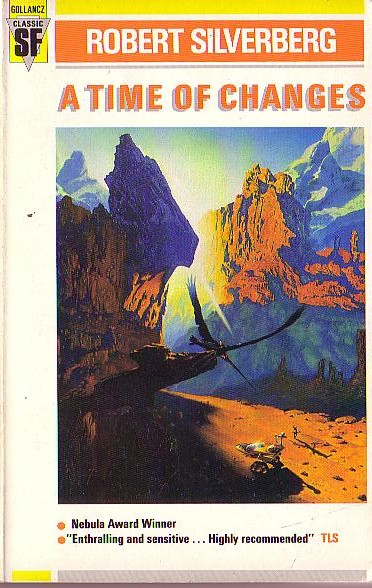
timeofchanges A Time of Changes, Robert Silverberg 20 votes

You lot must really hate me – The Moon is a Harsh Mistress and Foundation. Still, a promise is a promise. Foundation is one of three rereads of the six books. I last reread it in 2006, thugh for some reason I don’t appear to have written about it then. Childhood’s End I read some time back in the early to mid-1980s, I think. I’ve not reread it since. A Time of Changes I’ll have read around the time my Gollancz Classic SF edition was published, which was 1986. The remaining three books I’ve never read before. They’re also in the SF Masterworks series, and those are the editions I own – in fact, Foundation and A Time of Changes are the only books in the six that aren’t SF Masterworks.

Anyway, some time in July I will start my summer project, and after I have finished each book I will write a review here on the blog. I am not expecting my reviews to be positive, but you never know, I might be pleasantly surprised…


10 Comments

A summer challenge

A conversation with Richard Palmer on Twitter this morning reminded me of my reading challenge a few years ago in which I reread a number of science fiction classics that I remembered fondly from my early teens. The challenge did not go well. I hated most of the books, could not understand why I’d ever liked them in the first place, and ended up purging my bookshelves of everything by Harry Harrison, EE ‘Doc’ Smith and Alan Dean Foster. So, of course, I thought it would be a good idea to have another go. As you do. But I’m not entirely sure which books to read and write about. As a result, I’ve decided to throw out a bunch of suggestions (of books that I actually own), and run a poll.

I’ve listed a bunch of titles below, and you get to select six for my challenge. I will read each book and then blog my thoughts on it during July, August and September. Asterisked titles will be rereads, though I likely last read them decades ago. Yes, all of the writers in the poll are male – but that’s deliberate. Twentieth-century sf by women writers I read for SF Mistressworks, and I generally to find it to be of middling to good quality. The titles I’ve put in the poll below are from middling to bad quality. At least, that’s what I’m expecting. Some may prove to be much better than I remembered them, though I’ll be surprised if they do.

Remember, a maximum of six votes only. If you have any suggestions for titles not on the poll, leave a comment and I may consider reading it as one of the six. But nothing published after 1975, please. I’ll close the poll at the end of the month, giving you just over a week to vote.


15 Comments

To gateway or not to gateway

All too often when people suggest science fiction titles to introduce non-sf readers to the genre, they pick something that will show them what the genre is capable of. But everybody knows that all ready – they can see it on telly, in the cinema. They know all about space battles, planets exploding, alien vistas, robots, cyberspace, weird ideas. Whether they recognise some of those ideas as science fiction is an entirely different matter – is The Adjustment Bureau, with its “magic fucking hats”, a sf movie, for example? The reason these people don’t read science fiction is because they think it’s badly-written, or mired in outdated sensibilities and so irrelevant to them. And we’re no help because we thrust shit books written ninety years ago by some dead old white bloke at them. So what if the men all wears hats and the women do the dishes, it’s about galactic empires! It’s a classic of the genre!

But, honestly, why should we expect them to plough through three hundred pages of tin-eared dialogue, cardboard cut-out characters and leaden prose just for an “idea”? The whole point of written sf is that it can do what media sf does, but it can do it better. The plots will be logically and internally consistent, it won’t insult your intelligence, it may challenge your preconceptions and prejudices, it will have themes and motifs, and it tries to say something beside “money, please, now park your bum here for 100 minutes”. Plus all those space battles and exploding planets, too. Nothing in a science fiction novel is likely to make you *headdesk* like the “cold fusion” in Star Trek Into Darkness.

So when we try to think of titles for a non-sf reader to read… we should pretty much bin all the classics of the genre. We should choose books that demonstrate sf can be well-written, even beautifully written, that it can handle ideas considered too outrageous for cinema audiences, that it can tell stories that are well-plotted, internally consistent, without dumb plot-holes, stupid bromances, or daddy-issues that obliterate the actual story… We should suggest books that are recent, relevant, and have something interesting, or perhaps even important, to say.

And such science fiction novels do exist. It took me a while, but I think I came up with five. They’re all twenty-first-century novels. I have also read them. One or two might have won or been nominated for prestigious genre awards. They are, in no particular order…

Intrusion, Ken MacLeod (2012) Because it’s a near-future thriller written with genre sensibilities, works brilliantly and recognisably as a cautionary tale on the world we live in, and yet it also does something a writer of near-future thrillers would never consider doing, or might even actually be afraid of doing.

Dark Eden, Chris Beckett (2012) Not only because it won the Arthur C Clarke Award a month or two ago, but because it’s a story everyone will recognise but set on a world which will be completely new to them; and it’s beautifully written too.

Spin State, Chris Moriarty (2004) Because written science fiction can do the fast-paced action/adventure but it can also, in the same story, ask big questions about identity, memory, the future of humanity… and try to answer them.

Solitaire, Kelley Eskridge (2002) Because if science fiction is not about the people, then what’s the point in it – and how much are those people products of the world in which they live?

Life, Gwyneth Jones (2004) Because sometimes science fiction is actually about science and scientists, and how their calling affects themselves, their lives, those around them, and the world.

So: five science fiction novels, published this century by genre imprints. All are currently available. One is the first book in a trilogy, the third part of which has just been published. One is by a small press. I count eleven appearances in genre award shortlists by the five books, and two wins. So it’s not just me who thinks they’re good books. All five books are, I believe, accessible to someone who has not read science fiction before but is familiar with many of its tropes from television or cinema. And all five books, I feel, will show why written sf can do so much more than sf on television or in the cinema…


4 Comments

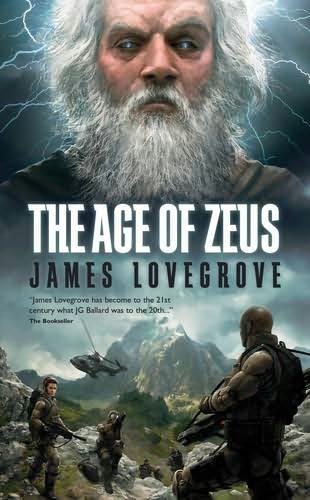
The Age of Zeus, James Lovegrove

50zeusThe Age of Zeus
(2010, Solaris, 678pp, £7.99 pbk)

If any sufficiently advanced technology is indistinguishable from magic, then it follows that any sufficiently advanced technology is equally indistinguishable from divine powers. Zelazny used such a premise in his Lord Of Light back in 1968, and won a Hugo Award for it. James Lovegrove’s Pantheon trilogy, of which The Age of Zeus is the second book, is based on a similar conceit, but it’s unlikely to win any awards. That’s not because The Age of Zeus is a bad book. It’s written by someone who knows their craft, and can spin an entertaining yarn. But that’s all The Age of Zeus feels like: a yarn.

The Greek pantheon has returned, and rules once again from its ancestral home on Mount Olympus. It was not an easy or painless transfer of power, and even now, a decade after their coup, Zeus et al continue to commit random acts of divine violence. But Regis Landesman, arms manufacturer, has had enough, and so secretly puts together a team of a dozen soldiers, armed and armoured with cutting-edge technology, to do battle with the gods. Of course, he calls them the Titans. Sam Akehurst, an ex-detective sergeant from the Metropolitan Police, is Tethys, the leader of the Titans. Like the others, she has personal reasons for hating the Olympians. As, so it seems, does Landesman. Given that he takes the Titan call-sign Cronus, it shouldn’t be hard to guess what that reason is.

Some might say a novel should have no greater ambition than to entertain. I disagree. No artform should be merely bread and circuses. It needs to engage with the real world. Good fiction has something to say, whether or not you concur with what is being said. The Age of Zeus is not short of words, and many of them do indeed reflect on the real world. The Greek gods seized power in a violent coup, but a decade later they are the acknowledged rulers of the Earth. Which makes the Titans terrorists – but is “one man’s freedom fighter is another man’s terrorist” a strong enough skeleton for a story? The four-centimetre-thick spine of The Age of Zeus suggests it is. This is a fat book. It is also fast-paced. It opens with a combat scene – a prologue, which is actually a flash-forward to chapter 35 – clearly intended to yank the reader into the story. In fact, there are a lot of combat scenes. The Age of Zeus is a resolutely modern sf novel: its prose lingers lovingly on its military hardware and technology, each character has a carefully-plotted back-story, much of the dialogue displays a ready wit, and the story is structured as a series of obstacles to be overcome before the grand finale.

But, for all The Age of Zeus‘s techno-porn, there’s a god-sized hole at the heart of the novel, and it’s caused by Lovegrove’s authorial sleight of hand. He explains his Titans’ technology with some well-documented sfnal devices, but the Olympians’ powers are the result of… Well, all you can see is a blur as the author waves his hands in front of your face. As a result, the final big reveal is robbed of much of its divine power.

Despite having almost seven hundred pages, The Age of Zeus is not a heavy read. Its heroine is engaging – even if her competence as a Titan is a little implausible – and she’s ably supported by a cast of secondary characters who play their parts well. Lovegrove has fun with his premise, and he’s not afraid to get in a few digs at the real world. The Age of Zeus is indeed an entertaining novel. It’s a book for a dull journey or to read on a beach. I suspect that was its intent.

This review originally appeared in Interzone #228, May-June 2010.


11 Comments

Self-publishing – one year on…

Whippleshield Books is now just over one year old and has to date published two books, one of them an award-winner. Although I started up the press in March 2012, and published Adrift on the Sea of Rains on 9 April 2012, Whippleshield Press’s online presence didn’t happen until 25 May 2012. So that’s a handful of days over twelve months, plus or minus a month or two. It has been… an interesting year.

Any discussion of self-publishing is sure to be over-shadowed by the likes of Hugh Howey and Amanda Hocking. They have been amazingly successful at it – and, to be honest, I can’t see why. I’ve read Wool, it’s not very good. Which pretty much demonstrates there is no magic formula to success at self-publishing. Something in Wool clicked with a large number of people, but whatever it was it’s far from obvious. What this means is that Howey is not an expert on self-publishing, and has very little that’s useful to add to the debate. And, in all fairness, he has admitted as much: this is what worked for me, he has said, but it doesn’t mean it will work for you. The media, however, are only interested in success stories, as if somewhere in every one of them is an obvious recipe for success. There has been some discussion recently of such “survivor bias”, and to anyone with any common sense it’s plain that luck is not a transferable skill. If one ticket wins the lottery, buying the ticket with a number one up from it does not mean you will also win.

Commercially, Whippleshield Books has not been a “winner”. I’m okay with this – I didn’t set it up to make me pots of money. If anything, I expected it to be a financial burden for much of its life. Happily, it went into the black in March this year… but then the ecommerce annual fee came due and I also had to reprint Adrift on the Sea of Rains. But it’s been back in the black since the beginning of May and seems likely to remain there. Whether it’ll have earned enough to pay the cost of producing book three of the Apollo Quartet is a different matter, however. I’ve been funding Whippleshield Books out of my own pocket so far, so if it doesn’t it won’t affect my planned publishing schedule.

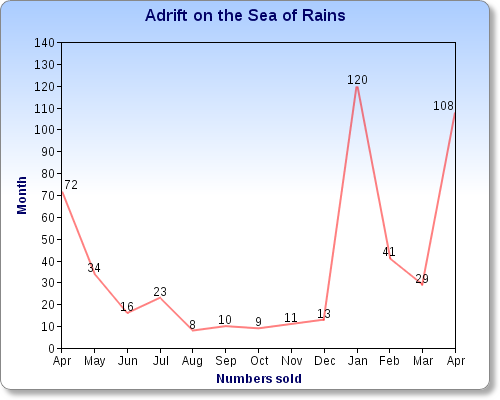
Speaking of which, I’ve received three submissions in the past twelve months. One I bounced immediately as not meeting the guidelines. The other two I rejected after requesting the full ms. To be honest, I had expected to be sent more, even if most would prove completely unsuitable. I can only surmise I’m the only person writing the type of fiction I want to publish. Happily, I’m not the only person who wants to read it, as sales for the first two books of the Apollo Quartet have shown:

AQ1

The two spikes are due to mentions in the Guardian (here and here). The second one coincided with Adrift on the Sea of Rains winning the BSFA Award, so the win may also have contributed. But given that the full novella was published in the BSFA Award booklet for members, I suspect it didn’t have that much effect. I’ve added “WINNER OF THE 2012 BRITISH SCIENCE FICTION ASSOCIATION AWARD” to the product description on Amazon, but I’ve no idea if that has had any impact.

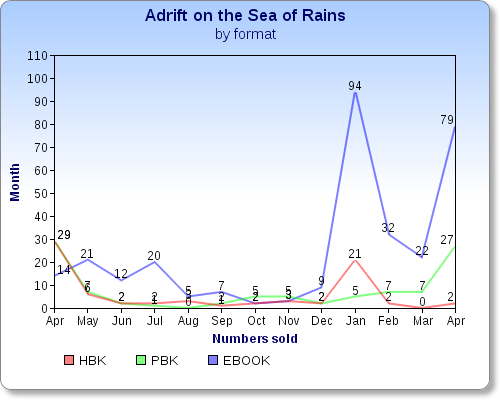
Adrift on the Sea of Rains continues to sell well on Kindle – better in the UK than in the US, it must be said. The number of Amazon paperback orders has also picked up, typically now around one a week. Of course, I’d sooner those sales took place on the Whippleshield website, but I know of no way to drive customers there from Amazon. When I mentioned in a previous blog post that Kindle sales were “more or less pure profit”, someone on a forum responded: “I had to laugh at this one. Shows a real lack of understanding of the costs involved in running a successful website. Electronic files take up disk space which has to be paid for. The transfer of electronic files uses bandwidth that has to be paid for”. To which I can only say, if you’re paying for storage of a single electronic copy of your book, and can actually work out the cost of uploading that file to Amazon, then I suspect other people are laughing at you.

AQ1format

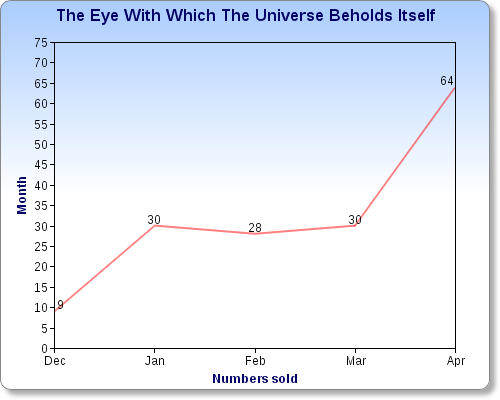
The Eye With Which The Universe Beholds Itself has not been selling quite as well. Nor has it been reviewed as extensively as Adrift on the Sea of Rains (review e-copies of The Eye With Which The Universe Beholds Itself are still available, incidentally), though the genre venues that have reviewed it seem to have taken to it slightly better than Adrift on the Sea of Rains. But then I did write it in such a way to force a reading protocol more tuned to sf readers.

AQ2

Of course, The Eye With Which The Universe Beholds Itself has only been available since late January this year, so around four months in total. And word about Adrift on the Sea of Rains is still making its way throughout the genre landscape – such as making an appearance on SF Squeecast here, courtesy of Paul Cornell. Two books is a slim presence, especially given that they’re novellas too. I’ve had no short fiction published in genre venues with large audiences, at least not yet. So my platform remains small, and still chiefly confined to the UK.

Interestingly, Wunderwaffe, a short story of 9000 words which originally appeared in Anarchy Books’ Vivisepulture anthology, and which I produced as a chapbook limited to 12 copies before publishing it on Kindle, has been selling surprisingly well in the US. This may due to its low price. The $1.16 price-point, and the clearly stated length of 27 pages, however, hasn’t prevented a couple of people from leaving one-star reviews complaining that it isn’t a novel. I’m especially impressed by the review which states “stick to established authors that don’t give short stories under the cover of a book”. I think you’ll find “established authors” have also been known to publish short stories on Kindle too. In fact, John Scalzi’s latest novel was serialised, with each chapter sold as a separate ebook (not entirely the same thing, I know, but you know what I mean).

So there you have it – Whippleshield Books after twelve months. More or less. Plans for world domination may have to be put back another year or so. I believe Adrift on the Sea of Rains is the first self-published work to win a BSFA Award – although there are a couple of self-published works in this year’s Hugo shortlists. The stigma attached to the word “self-publishing” is slowly being eroded, but that doesn’t mean the self-published market is still not full of badly-written and poorly-edited derivative rubbish. But the good stuff is getting easier to find. I like to think that Whippleshield Books is, and will be, seen as a purveyor of that “good stuff”.


3 Comments

Songs of the Dying Earth

sdelgSongs of the Dying Earth, edited by George RR Martin and Gardner Dozois
(Harper Voyager, 660pp, £8.99 pbk)

Few of us would disagree that Jack Vance is a man whose career deserves respect; and since imitation is the sincerest form of flattery, then an anthology of stories which ape one of his creations must seem like a fine and commercial tribute. And yet… The Dying Earth first appeared in 1950. It is over sixty years old. The average age of the contributors to Songs of the Dying Earth is no younger. This anthology, then, is an exercise in nostalgia. Though its cover proclaims it contains “stories in honour of Jack Vance”, it is not a homage: its contents are not inspired by Vance’s creation, they pastiche it. Each of the twenty-two stories uses places and characters invented by Vance. Further, while some directly reference stories written by Vance; one, by Liz Williams, bases its plot directly on one by Vance.

The original The Dying Earth was a short story collection of 176 pages. Songs of the Dying Earth is nearly four times larger. This means those factors which lent the original its charm soon overstay their welcome: the ornate, archaic language; the amusing names of people, places and spells; the science-fictional tone in service to fantastical magic; the constant references to the dying sun. Over 660 pages, these conceits lend every story a similar affect, making each of the stories blend and merge into the one following. Songs of the Dying Earth reads like a novel without a plot and an interchangeable cast. It is, then, a book to be dipped into, not to be read from cover to cover.

While the anthology may provide a varied read only in small doses, the quality – and flavour – of the contents is equally variable. A handful stand out. Kage Baker, who appears to be the only contributor who remembered that many of Vance’s Dying Earth stories were very funny. Lucius Shepard, who shows more invention than most (with footnotes), though a thorny moral discussion in the middle jars somewhat. Elizabeth Hand, whose story is the only one to feature female protagonists (she should also be rewarded for the invention of “Punctilious Trousers”). And Jeff Vandermeer, who brings a foreign, but welcome, note of the surreal; his is perhaps the least accurate imitation, but it is better for it.

However, John C Wright’s and Elizabeth Moon’s stories are completely tone-deaf; unlike Terry Dowling and Walter Jon Williams, who both manage to catch the flavour of Vance’s originals. Neil Gaiman’s story bizarrely opens in present-day Florida. Matthew Hughes, given his career to date, provides an oddly disappointing tale. Robert Silverberg’s opening story is dull, as is Mike Resnick’s. Liz William’s is memorable chiefly for being so miserable. Dan Simmons provides a novella, the longest story in Songs of the Dying Earth. The remainder – Paula Volsky, Phyllis Eisenstein, Tad Williams, Glen Cook, Byron Tetrick, Tanith Lee, Howard Waldrop and co-editor George RR Martin – are somewhere in between.

Each story features an afterword in which the writer explains how they first discovered Vance’s The Dying Earth, and what it now means to them. In almost all cases, they discovered the book at an impressionable age during the 1960s or early 1970s. These afterwords suggest that Songs of the Dying Earth is indeed a celebration of Vance’s creation. Certainly, it seems poorly-designed to introduce a new generation of readers to Vance’s oeuvre – most of which is out of print, anyway. And purely as an anthology, the sameness of its contents works against it.

Overall, it’s hard to not suspect the writers had more fun writing the stories in Songs of the Dying Earth than readers will have reading them.

This review originally appeared in Interzone, #238, January-February 2012.


3 Comments

12-question book meme

“For a lazy Saturday”, says SF Signal (see here). It’s Saturday, I’m feeling lazy, so why not? Twelve SF/F/H-related questions on which to do the meme thing:

1. The last sf/f/h book I read and enjoyed was:
I just reread Eric Brown’s four Starship Seasons novellas – Starship Summer, Starship Fall, Starship Winter and Starship Spring – and enjoyed them. The last genre book I read that really impressed me was M John Harrison’s Empty Space.

2. The last sf/f/h book I read and did not enjoy was:
Moonstar Odyssey, David Gerrold. A palimpsest novel in which Gerrold uses various stories and testimonies to build up a picture of the terraformed world of Satlik and its inhabitants, who chose their gender at puberty or “blush”. Unfortunately, somewhere along the way Gerrold forgot about his plot – three-quarters of the book is scene-setting before an actual plot is squeezed in at the end. I now have a copy for sale.

3. A sf/f/h book that I would recommend to new sf/f/h readers is:
Dark Eden, Chris Beckett. Yes, it won the Clarke Award this year, but as sf texts go it’s quite low-level. By that I mean, despite being set on a rogue planet between galaxies, which features an entirely invented ecosystem, the story itself is as old as the Bible and even readers unfamiliar with the genre and its tropes should have little trouble sympathising with the book’s cast.

The same is also true of Joan Slonczewski’s The Wall Around Eden. It’s set in a small community protected from a post-apocalyptic Earth by a mysterious alien forcefield. The characters are beautifully drawn, the plot works like a well-oiled engine, and there’s nothing in the book at which a non-genre reader might balk.

Um, the Eden references in the titles are purely coincidental…

4. A sf/f/h book that I would recommend to seasoned sf/f/h readers is:
Obviously, I would recommend all the sf novels I most admire. But perhaps I should instead recommend a non-genre book that I think genre readers would enjoy – such as Girl Reading by Katie Ward, or The Explorer by James Smythe. Both were marketed as literary fiction but use sf tropes, and both are considerably better-written than is the norm for genre fiction. Girl Reading is, to my mind, the better of the two, but both are certainly worth reading.

For someone looking for fiction in smaller bites, the sf collection that comes to mind is The Universe of Things by Gwyneth Jones.

5. The sf/f/h book I most want to read next is:
I am so bad at deciding what to read that I have to make a list. Some of my reading is dictated by SF Mistressworks – I have to read and review books to keep to its one-a-week schedule – but that’s no real hardship. Genre books on the list to read some time in the near-future include Principles of Angels, Slow Apocalypse, Rapture, Cyclonopedia, Never at Home and Watermind. Plus a lot of non-genre, such as Under the Volcano, Stonemouth, The Cleft, Killer in the Rain and The Sweetheart Season.

6. My favorite sf/f/h book series includes:
Tricky. I love the Dune series, but I don’t think the individual books in it are especially good. And the whole thing has been poisoned by the McDune books churned out by Kevin J Anderson and Brian Herbert. L Timmel Duchamp’s Marq’ssan Cycle is a series I really want to reread; the same is true of Kim Stanley Robinson’s Mars trilogy. But there’s no actual series, in which one novel follows directly on from another for more than three, four or five books, that I’d call a favourite. There are series that contain books I like a great deal and/or admire – the Culture, Eight Worlds, Hainish Cycle, Jurisdiction, Alliance-Union, Dumarest saga… But despite the many seemingly endless series currently being published, there’s none that I eagerly buy each installment the moment it is published.

7. I will read anything by this sf/f/h author:
Easy. Gwyneth Jones.

8. The first sf/f/h book I read was:
It was a Dr Who novelisation: Doctor Who and the Zarbi. Then, at school, a classmate introduced me to proper science fiction when he lent me Heinlein’s Starman Jones. After that it was EE ‘Doc’ Smith and I was hooked. Now, I can no longer read those books.

9. The sf/f/h book I’m most surprised that more people don’t like is:
Probably Coelestis by Paul Park, which I feel deserves to be in the SF Masterworks series. In the past, I’ve championed both Take Back Plenty and The Continuous Katherine Mortenhoe, and they’re now in the series so I live in hope.

10 .The sf/f/h book I’m surprised so many people do like is:
Basically, anything by Asimov. Especially the Foundation series. More recently, I’ve been baffled by the acclaim given to, among others, Wool, The Windup Girl, Leviathan Wakes, or A Song of Ice and Fire. And while I’ve read and enjoyed books by China Miéville, I still can’t see why he’s the poster boy for British genre fiction.

11. The most expensive sf/f/h book I own is:
A hardback first edition of The Dune Encyclopedia. Paperback copies are rare and not cheap, but I was lucky enough to find a hardback copy. It was very expensive, but it was worth it.

12. The number of sf/f/h books I own and have yet to read is:
Not sure; somewhere around the 300 mark, I expect. I did try reading a book on speed reading once, but it took me ages to finish it… But seriously, I typically read three to four books a week. Even so, it’s going to take me years to whittle down the TBR. Especially given that I continue to buy new books all the time…


Leave a comment

Come what May

A new month, a Bank Holiday weekend, and various doings of recentness in the weird and wacky world of science fiction. First up, of course, is Chris Beckett winning the Arthur C Clarke Award with Dark Eden. A win we can happy with, I think; though it was not my actual favourite on the shortlist. But congratulations to Chris, a genuinely nice guy and an excellent writer. Still, likely there will be much discussion on the win and what it means for science fiction in the UK over the next few weeks. Or perhaps not.

On the topic of not winning, right-wing nutjob Theodore Beale failed to conquer the SFWA and polled only a tenth of the votes of new SFWA president Stephen Gould. I’m not a member of the Science Fiction Writers of America, and have no desire to ever be one but, you know, it’s good to mock fascists, even if their politics are completely risible anyway. Speaking of which, a large number of plainly very stupid people in the UK gave a bunch of seats in local elections to UKIP. This is the party whose candidates believe exercise prevents homosexuality, claim the Jews were responsible for the Holocaust, think it’s funny to photoshop their head onto a photograph of Hitler and some Nazi bigwigs, and give “imitating a pot plant” as a defence for throwing a Nazi salute… One of their candidates has apparently gone to live in Thailand for six months, leaving his (Thai) wife and kids in the UK; and another was forced to resign as a police officer after being caught working as a male escort in full uniform. The clowns are taking over the circus.

Earlier this week, Nook dropped the price of its Simple Touch ereader from £79 to £29. Since I’d spent £130 on four hardback books a couple days before, I decided £29 was cheap enough to order one. Which is where it all went horribly wrong. I placed an order… and moments after getting an email acknowledgement I received a second email saying my credit card had been declined. Because I hadn’t created an account on the website, there was no way I could view or amend my order. I tried contacting Nook support, but they were completely snowed under with, it seemed, queries from other people with the same problem. So I created an account, and ordered another Simple Touch, this time using a debit card. It went through fine. The next day, I get an email saying they’ve fixed the credit card problem, so I can re-order if I want. I don’t want. I already have one heading my way – or so an email tells me. And then I get yet another email, saying it’s out of stock so my order has been cancelled. But the website still says the order’s in progress. So, Nook: big fail there. You win this week’s award for Most Useless Business on the Planet.

Meanwhile, Adam Roberts has been working his way backwards through Banks’ Culture novels. Not reading them back-to-front, obviously, just in reverse order of publication. It perhaps comes as no great surprise to learn that the later novels are not as good as those that preceded it. That is the Way of Commercial Fiction. Go read the reviews – they are insightful and amusing. And they sort of make me want to reread the Culture novels, too. If only the TBR weren’t so damn big…

Fantasy Café’s Women in SF&F month hit a bump in the road recently with a bonkers post about sexism in fantasy – or rather, the poster’s claim that it does not exist. Read the post here, then read an excellent rebuttal here. And on the same topic, here’s a piece from 1982 which demonstrates that thirty years later not a fat lot has changed. Susan Shwartz, incidentally, is the author of one of the few heartland fantasy novels I’m happy to recommend to people, The Grail of Hearts.

One author I constantly recommend people read is Gwyneth Jones. She’s offering her Escape Plans free on Kindle on Monday 6 May and Tuesday 7 May. Go buy it. Best use the link under the title, rather than search for it on Amazon, as their search engine seems to be completely fucked. Here’s my review of it on SF Mistressworks, written back in 2001.

Despite reading for SF Mistressworks, so far this year women writers only account for around 36% of my reading. Which is not to say that reading for SF Mistressworks is a hardship. While Margaret St Clair’s collection might not have been very good, Marta Randall’s novels are certainly much better than most of her contemporaries. And I’ve also had the opportunity to revisit some books I remember with great fondness, such as those by Shariann Lewitt or Susan R Matthews. Perhaps they’ve not always fared especially well on reread, but I’m glad I took the time to do it.

Speaking of books, over the last few days I’ve tweeted photos of some recent arrivals of a bookish nature. I’ll do a proper book haul post in a few days, but let’s just say I now have more research material for Apollo Quartet books three and four, and the Paul Scott and Malcolm Lowry first edition collections have expanded somewhat (which is the £130 of books mentioned earlier). So, of course, I’ve been spending my time reading about… underwater habitats and saturation diving. For another writing project. Current read is Sealab by Ben Hellwarth, which is proving fascinating. The whole idea of living and working on the sea bed appears to have been driven by one man, Captain George F Bond, USN; and who reminds me much of Colonel John Paul Stapp, USAF, of rocket sled fame, and who I wrote about in my story, ‘The Incurable Irony of the Man Who Rode the Rocket Sled’, which should be appearing on The Orphan some time soonish.