It Doesn't Have To Be Right…

… it just has to sound plausible


5 Comments

A hard defence

On his blog, Paul Kincaid has been writing recently about hard science fiction and its politics. It all started with a reprint of a piece originally published in a magazine in 2008, in which Paul argued that hard sf was intrinsically right-wing – see here. Which promptly generated some comments,and which in turn Paul replied to with a second post – see here. I was one of the commentors. Well, I have written hard sf – the Apollo Quartet has been described as “art house hard sf” – and I certainly don’t consider myself right-wing. Quite the opposite, in fact. But that’s me, the writer; not the subgenre.

It seems to me there are two problems with Paul’s thesis. First, he’s defined hard sf as Campbellian sf. While it’s certainly true the origin of hard sf lies in the pages of Astounding under Campbell’s editorship, and Campbell had a very heavy hand on the tiller, that was fifty or more years ago. Genres and subgenres change, definitions evolve. The term space opera was originally coined as a pejorative; it isn’t one now. The generally accepted definition used today for hard sf is based upon either the sciences a text references – the so-called hard sciences of physics, chemistry, cosmology, etc; or the rigour with which the science is treated in the text. Nothing in that definition mentions politics.

Paul’s argument – and I hope I’m paraphrasing correctly – is that the rigour, ie, the adherence to inviolable natural laws, in hard sf is subsequently transferred to human laws and, as a result, hard sf presents authoritarian spaces in which to tell its stories. The example he uses is Tom Godwin’s ‘The Cold Equations’ (a story he discusses in an earlier blog post – see here – reprinted from Vector, the critical journal of the BSFA). ‘The Cold Equations’ has long been seen as the epitome of hard sf, but I don’t think it actually qualifies. It’s certainly the very definition of Campbellian sf, but I contend that Campbellian sf no longer maps onto hard sf.

In a nutshell, the plot of Godwin’s story is as follows… A rescue starship is carrying vital medical supplies to another world. A young girl stows away aboard the starship because she wants to visit her brother on that world. But her presence aboard means the starship is overweight and cannot land. The only excess weight which can be ditched in order to safely land with the medical supplies… is the young girl herself. Clearly, the situation is completely artificial: why does the starship only carry the exact amount of fuel needed for the journey and its load? Surely there is something else aboard which weighs as much as, if not more than, the girl which could be ditched instead? The only fixed limit in the story, the only natural law in the story, is the amount of energy the pilot can get from the fuel he carries. That is unchangeable. Though the plot of the story is predicated on that limit, it uses arbitrarily applied human limits to present a dilemma… and then completely fails to solve it.

Hard sf generally does the opposite: it presents dilemmas predicated on fixed natural limits, and then finds solutions using human ingenuity. (Godwin apparently submitted three different attempts at such a resolution, but each was rejected by Campbell, who wanted the girl to die.)

Of course, that’s no more comprehensive a description of hard sf than Paul’s reliance on ‘The Cold Equations’ as a defining text. Certainly, “Analog-style” stories fit that mould (Astounding renamed itself to Analog, so Campbell’s legacy does continue to some extent), and there are plenty of examples of such hard sf stories by the likes of Clarke, Clement, Bova, Steele or Nordley. But then what about ‘Hardfought’ by Greg Bear – that’s certainly hard sf, but it’s hardly Campbellian. Or hard sf stories by Kim Stanley Robinson, Stephen Baxter, Paul McAuley, Joan Slonczewski, Linda Nagata, Julie E Czernada, Catherine Asaro or CJ Cherryh…

I don’t think it follows that authoritarian spaces must result from a strict adherence to natural laws. Some hard sf stories are set on Mars, but that doesn’t mean all hard sf stories are. Likewise, not all stories set on Mars are hard sf. It doesn’t help that most writers of hard sf appear to have politics that lean to the right – either conservative or libertarian. But that’s an attribute of the writers, not of the subgenre in which they’re writing. I can’t think of any Marxist hard sf stories off the top of my head – in fact, Marxist sf stories of any type are in remarkably short supply. But there are certainly hard sf stories set in the USSR (as was), such as Fellow Traveler by William Barton and Michael Capobianco, or ‘Red Star, Winter Orbit’ by William Gibson and Bruce Sterling (which appeared in Mirrorshades: The Cyberpunk Anthology but is patently not cyberpunk). The USSR also makes an appearance in Kim Stanley Robinson’s Icehenge, a hard sf novel which is not right-wing. Nor indeed is his Mars trilogy, perhaps the most-celebrated hard sf series of recent decades.

Certainly a lot of hard sf is right-wing, especially the near-future variant. But that’s a characteristic brought to it by the writers, not something innate to the subgenre. That ‘The Cold Equations’ presents a right-wing aspect is irrelevant, because it is not emblematic of hard sf, even if it is emblematic of Campbellian sf. The two modes have diverged in the forty-two years since John W Campbell died, and whatever artificial constraints exist in Godwin’s story – and they were editorially, not authorially, applied – I don’t think they arise from a rigorous adherence to purely natural laws.
4 Comments

Goings on and off

Last weekend saw numerous awards handed out in science fiction and fantasy. Sadly, Adrift on the Sea of Rains didn’t win the 2012 Sidewise Award for Short-Form Alternate History. That went to Rick Wilber’s ‘Something Real’, first published in Asimov’s and apparently about a baseball player who turns spy during an alternate WWII. Still, I was surprised, and very pleased, to be shortlisted – and while The Eye With Which The Universe Beholds Itself may be predominantly hard sf, Then Will The Great Wash Deep Above is pretty much pure alternate history… So maybe next year.

Of course, the best-known award handed out over the weekend was the Hugo Award. In sixteen separate categories. The Hugo is a popular vote award, and its results reflect that. The winner was John Scalzi’s Redshirts, a book I will admit appeals to me not one bit, nor from the reviews I’ve read would it seem to qualify as the best science fiction novel published in 2012. But that’s the way the award works. Good to see Pat Cadigan win a long-deserved Hugo for best novelette, though I think it’s long past time the category was hurled into the outer darkness. The short story ballot contained only three stories and I was disappointed Aliette’s ‘Immersion’ didn’t win, but Ken Liu’s brand of sentimentality seems to be serving him well – this is his second Hugo win in two years. I’m not much interested in the other categories, especially those which cling to old modes of fandom for dear life and are being badly distorted by recent years’ results.

Other big sf news includes the death of Frederik Pohl at the age of 93. He wrote a huge number of books, and I think I’ve read around a dozen of them. Some of them I remember as pretty good, possibly even genre classics – like Gateway and Man Plus – but others seemed very forgettable, such as Narabedla Ltd, Mining the Oort or Homegoing. But that’s an occupational hazard of being so prolific, or having so long a career. However, Pohl was also an influential editor and like a lot of sf authors and editors of his generation helped shape the genre of science fiction as we now know it – for good or ill. Pohl is the second author of his generation to die this year. The other was Jack Vance, who was also very prolific. I think I’ve read about two-thirds of Vance’s sf output. He died back in May. Vance’s fiction had a very distinctive voice, and while his novels were of variable quality they were also very recognisable. He wrote pulp, but it was better-than-average pulp, and occasionally it transcended its pulpish origins. While it’s always sad when writers whose fiction has brought you pleasure die, the books of the late Iain Banks meant far more to me than those of Vance or Pohl.

On a personal note, I recently dropped the price of the paperback edition of The Eye With Which The Universe Beholds Itself for UK buyers by £1 on the Whippleshield Books online shop, so order your copy now. I’ve dropped the ebook price as well – across all platforms and sites. Also, you can now listen to the audio version of Adrift on the Sea of Rains on Starship Sofa (part one is currently up, I assume part 2 will appear this week). Rather than have narrator Logan Waterman read out the glossary, we agreed I would post it online – you can find it here.

I also decided a couple of weeks ago that Whippleshield Books is going to publish a series of mini-anthologies in paperback and ebook, each one containing no more than four or five stories. The submission period doesn’t open until 1 November, and I’ll post more about it then, but here’s the original announcement. I’m also playing around with an idea for a non-genre-specific ebook-only mini-anthology series, but we’ll see how Aphrodite Terra goes. Meanwhile, Apollo Quartet 3 Then Will The Great Wash Deep Above is taking shape nicely. I hope to be able to post the cover art and the back-cover blurb soon.

SF Mistressworks has had to go to a fortnightly schedule. I’ve been providing every other review for the last twelve months, and writing a book review once a fortnight was affecting all the other things I have – or would like – to do. Every other review will still be by me – at least until I build up a bigger backlog of reviews – but now I only have to write one a month. I’d been hoping to get more short fiction done this year but had been finding it difficult. This should help. Incidentally, I have no plans to let SF Mistressworks lapse or close. It’s been going now for over two years, and I plan to keep it running until there are no more eligible books to review – although given its policy of allowing multiple reviews of books, that might never happen…

My list of 100 Great Science Fiction Stories by Women continues to get hits every day – in fact, it’s the most popular post on this blog by quite a margin. I never managed to figure out how many times it was reblogged on Tumblr, but I think it was in triple figures; and it was also linked to by a number of blogs and other sites. Perhaps it’s time to start working on a 100 Great Science Fiction Novels by Women list… though I’d expect that to prove a lot more contentious (“where’s x?! How dare you miss out y?!). We shall see.

Meanwhile on this blog, I shall continue to write about the books I’ve read, post photographs of the books I’ve bought, try and define science fiction, post pictures of cool aircraft, ships, submersibles, cars, Brutalist buildings and futurist fashions… and write posts on any other topic which takes my fancy at the time. Blogging is allegedly on its way out – why generate original content when you can just reblog someone else’s content? why comment on something when you can just click “like”? – but I think I’ll carry on doing it for a while yet…


3 Comments

Adrift on the Sea of Rains: the podcast

An audio version of Adrift on the Sea of Rains has just been published by Starship Sofa – see here. I didn’t really believe the story would work as a podcast but, with some careful editing by Adam Pracht and myself, I think we managed it. Go and check it out and you’ll see what I mean.

However, we couldn’t really have the narrator read out the glossary, and since that’s part of the whole Adrift on the Sea of Rains reading experience, I’ve published it on the Whippleshield Books blog, both as a blog post and a downloadable PDF. See here.


2 Comments

The cost of doing business

During the Bank Holiday weekend, while working on Apollo Quartet 3: Then Will The Great Ocean Wash Deep Above, I stumbled across a book I’d not known about and which would prove very useful for research. So I promptly tracked down a copy on abebooks.co.uk and ordered it. As I added it to the bibliography, it occurred to me that I’d spent more on research books for Then Will The Great Ocean Wash Deep Above than I had for the previous two novellas of the quartet.

It’s a somewhat unfair observation as both Adrift on the Sea of Rains and The Eye With Which The Universe Beholds Itself were written chiefly using books I already owned – books I’d collected for my A Space About Books About Space blog over a number of years. But because Apollo Quartet 3 is partly based on something about which I don’t already own reference books… I had to buy them. But exactly how much had I spent?

Totaling up the cost of all the books, and DVDs, mentioned in each of the Apollo Quartet books’ bibliography proved a bit of an eye-opener. It looked like this:

AQ1 £480.02
AQ2 £452.81
AQ3 £477.77
Grand Total £1410.60

That’s a hidden cost of writing, that is. Yes, I write science fiction, so I could just make it all up. And it would cost me nothing. Or I could just rip off ideas from other science fiction novels (I have quite a few of them too). On the other hand, maybe I could borrow books I need from the library – although I suspect at least 80% of the ones I used wouldn’t be available, even through inter-library loans. However, if I include only the books I bought specifically as research for the three novellas, then the figures are considerably reduced:

AQ1 £9.86
AQ2 £62.52
AQ3 £262.93
Grand Total £335.31

That’s not to say that reading all those books for research has been a chore. Having said that, don’t read about the Mercury 13 unless you need more anger in your life. But, on the whole, everything I’ve read for research has proven very interesting. Who knows; I’ve read books on women aviators before – such as Diana Barnato Walker’s Spreading My Wings – and so I might well have sooner or later ended up reading about the Mercury 13 anyway. I’ll certainly be hanging onto the books, and perhaps even re-using some of the research in later fiction… So it’s not like they were a waste of money.

Besides… books.


2 Comments

Recent readings since the last recent readings

Books, huh, what’re they good for? No, wait, that’s something else. Books are good for reading, which by some amazing coincidence is just what I’ve been doing recently with some of them. To wit…

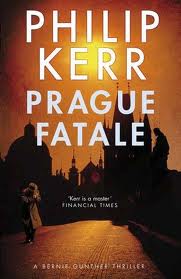
praguefatalePrague Fatale, Philip Kerr (2011) This is the eighth book in Kerr’s Bernie Gunther series, which nearly brings me up to date – there’s one more, A Man without Breath (2013), currently available; although Kerr has not said how many books the series will eventually comprise. Prague Fatale is set during Gunther’s war years. While not a Nazi, and clearly has trouble dealing with them, he’s respected enough by his superiors to be asked to Prague to solve the locked-room murder of an aide to Reinhard Heydrich. The crime itself is plainly an homage to the golden age of crime fiction, and Gunther has little trouble working out what happened. But there’s much more going on in the novel than just a puzzling murder. Early on, Gunther rescues a young woman from an attempted sexual assault, and then helps her out a little with food and money before eventually entering into a relationship with her. He takes her with him to Prague – when all the senior officers have mistresses, and even a select brothel for their use only, why should he not take his girlfriend? As Gunther makes a nuisance of himself at Heydrich’s chateau, asking impertinent questions (not all of which are related to his investigation) and making plain his contempt of the Nazis – so he gradually works out who killed Heydrich’s aide… and how his death ties in with earlier events in Berlin. More than any other of the recent Gunther books, Prague Fatale feels like a crime novel. But it also feels like Kerr is taking the piss a little by presenting the central murder as a locked-room mystery. The solution proves to be relatively straightforward, and delivered almost in passing – but having it as the core of the story turns the book into a warped country house mystery rather than an historical police procedural. It makes for a pleasant change after the complex spy-fiction plot of the preceding novel, Field Grey (2010). Good stuff.

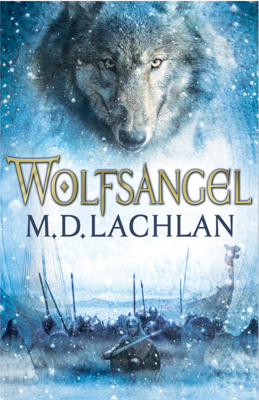
wolf viz 2:Layout 1Wolfsangel, MD Lachlan (2010) Much praise has been heaped on this, the first in a series, and at an Edge-Lit the author begged me to buy a copy despite it not being my thing at all (actually, he didn’t; it looked interesting, so I bought it; but Mark did sign it for me). On finally getting around to reading it, I was surprised by two things: it was more commercial than I’d expected, and it was a lot more interesting than I’d thought it would be. The story opens strikingly, with a loyal warrior of a Viking king stepping from a longship to drown in mid-sea. He and the king were the sole survivors of a raid on an Anglo-Saxon monastery, the object of which was to steal a pair of twin baby boys. The king’s wife cannot give him a son, so a witch told the king where to find one – her part of the bargain was the other twin. But no one must know the true origin of the king’s “son”, so no warriors must make it back alive from the raid. Initially Wolfsangel reads like an historical novel as it describes Prince Vali’s life as a ward of a rival king – there’s a vague feeling that some of the more fantastical elements are the results of worldview rather than actual magic – but as those fantastical elements slowly begin to intrude more and more into the story so the magical side of the story begins to take over. The giant wolf’s head on the cover, not to mention the title, is a clue as to which supernatural creature is central to the book, and Lachlan’s put an interesting spin on the trope. He’s integrated the werewolf into his take on Norse mythology, and it works really well. He pulls a fast one initially, presenting one of the twins as the werewolf, only for the truth to later reveal itself. After finishing the book, I could understand why it had been so highly praised, and I’m keen to read the next on the series, Fenrir (2011). So that’s a shock – I actually thought a fantasy novel was good.

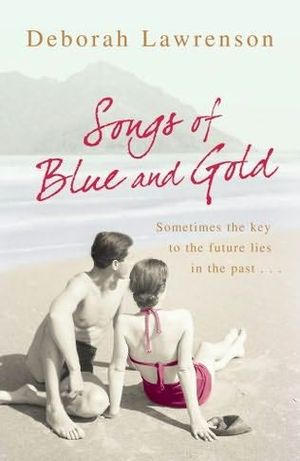
songsofbandgjpgSongs of Blue and Gold, Deborah Lawrenson (2008) I put this one on the wishlist after learning that its story was based on Lawrence Durrell and his time in Corfu, and some time later I was lucky enough to stumble across a copy in a charity shop. When Melissa’s mother passes away, she finds among her possessions a signed and dedicated poetry collection by famous author Julian Adie. Melissa knew that her mother had spent time in Corfu during the 1960s, and is surprised to discover she knew Adie, who lived there at the time. So Melissa heads for the Greek island to learn as much as she can about her mother’s time there. Adie, of course, is Durrell, and Lawrenson does a good job of fictionalising his life and stitching Melissa’s mother into it. There’s a slight mystery attached, which is neither hard to figure out, and resolved offhandedly, and the writing throughout is of a type you’d sort of expect from a novel boasting such cover art if you did have any expectations regarding prose style from the book’s presentation… I enjoyed it, but I suspect I wouldn’t have done so as much if I hadn’t been familiar with Durrell and his life and oeuvre.

murder-by-the-book-vis-1aMurder by the Book, Eric Brown (2013) This is the first crime novel by Brown, and the first in the “Langham and Dupree Mysteries”. Set in the 1950s, the book’s protagonist is Donald Langham, a crime writer who has churned out a dozen well-received novels. Dupree is Maria Dupree, the well-heeled daughter of an upper-class French emigré, and the personal assistant of Langham’s agent. When a series of people involved in the world of 1950s crime writing die under mysterious circumstances, and Langham’s agent is framed for one of the deaths, Langham turns reluctant detective with Dupree’s help. The template, of course, dictates that as the two spend more time together so they are drawn to each other. The murders are a succession of “book murders”, ie, the sort of tricksy killings you only really find in crime novels, especially crime novels of the genre’s golden age. But then Murder by the Book is not trying to do something different genre-wise, but is as centrally-placed in crime as Brown’s sf novels are in science fiction. The period is handled well, without an excess of detail and nothing that jumps out as anachronistic. Langham is a solid hero, likeable but not too firmly wedded to 1950s sensibilities that he’s not sympathetic to a modern reader. Dupree might be a little too good to be true, if not teetering on the edge of cliché, but she’s just as engaging as Langham and the growing relationship between them works. Not being a crime fan per se, though I’ll read the books and am certainly a fan of the oeuvres of a couple of crime writers, I have to wonder if the mechanics of the central murders occupy a similar place in the genre as “ideas” do in science fictions. The complex murders in Murder by the Book seem to operate much like “nova” do in sf, but I suspect that may be a modus operandi (so to speak) more suited to the story’s setting than the modern crime genre marketplace.

hook1Whirlpool of Stars, Tully Zetford (1974) This is the first book in the Hook quartet, and it’s pretty much hackwork. But then Tully Zetford was really Kenneth Bulmer, who was a complete hack – as Alan Burt Akers, he wrote over fifty books in the Dray Prescott series between 1972 and 1997. Whirlpool of Stars opens with a starship breaking down – something in the engineroom blows up as a result of shoddy maintenance. The passengers and crew are forced to flee in lifeboats, though this is no orderly evacuation. Hook is aboard, and he manages to get a seat aboard one of the lifeboats. The nearest planet, however, is run by a rival corporation to that which had operated the starship, and everyone who lands would be subject high fees… which they can pay off by indentured labour… Hook evades the authorities and, with a woman in tow, runs about the planet, trying to avoid slavery and also the Boosted Men, who are after him. You can tell this is complete hackwork because it panders to the worst prejudices of the sf audience. Hook is an alpha-male protagonist, but one with a weakness – he is a Boosted Man himself, but an early iteration and his powers only operate when he is close proximity to a real Boosted Man. The women in the story exist only as set-dressing, trophies, or damsels in distress. The villains are aliens. The background is a typical right-wing corporatist future, with slavery, success oriented purely on wealth and the power it brings, a blithe disregard for the value of human life, ineffective government and murderous and overly-powerful police forces. Whirlpool of Stars is tosh, distasteful badly-written tosh, and while Bulmer was clearly doing it for the money, you have to wonder what excuse present-day writers of similar science fictions have. Oh, and I have another three of these books to read. Sigh.

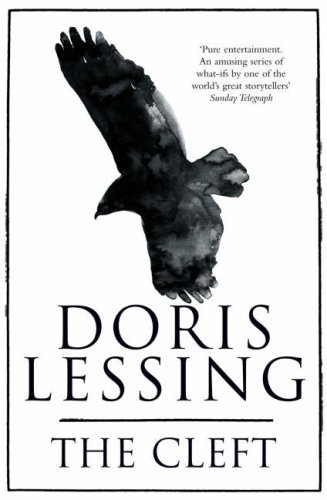
cleftThe Cleft, Doris Lessing (2007) There is a phrase in Brian W Aldiss’s story ‘Confluence’, a “dictionary” of alien terms, that goes: “YUP PA: A book in which everything is understandable except the author’s purpose in writing it; an afternoon sleigh-ride”. That pretty much describes The Cleft. A Roman historian has been handed a bunch of writings, normally kept hidden, and which he plans to turn into a treatise of his own. The documents are purportedly the written-down oral history of the earliest human civilisation, long before agriculture, nations, cities, kings or government. Apparently, humanity was originally female-only, and they lived in caves beside a sea. They reproduced parthogenically, and would occasionally sacrifice their offspring in a nearby rock chimney they called the Cleft. Every so often, mutant children called “squirts” – ie, not “clefts” – were born and left out for giant eagles to take – presumably to feed their chicks. But when one is left to grow to adulthood, he – because, of course, the squirts are men – leaves the women to found a community of his own over Eagle Mountain. More squirts are born, the squirts and clefts discover sex, the two communities begin to interact, one squirt leader leads an expedition away from the two communities along the coast… and I really have no idea what Lessing hoped to achieve with this novel. The Roman historian interjects at various points of the oral history he is supposedly working on – this was denoted using different font sizes, but as the book progressed this seemed to go wrong somewhere until the font size was completely random. There’s very little that’s Edenic about the society in the book and the gender politics once the “squirts” appear runs along somewhat clichéd lines. This has a tendency to reduce all of those early people to one-note characters, and while Lessing throws in some interesting speculation on their physiology, their society doesn’t feel like that much thought has gone into it. Disappointing.

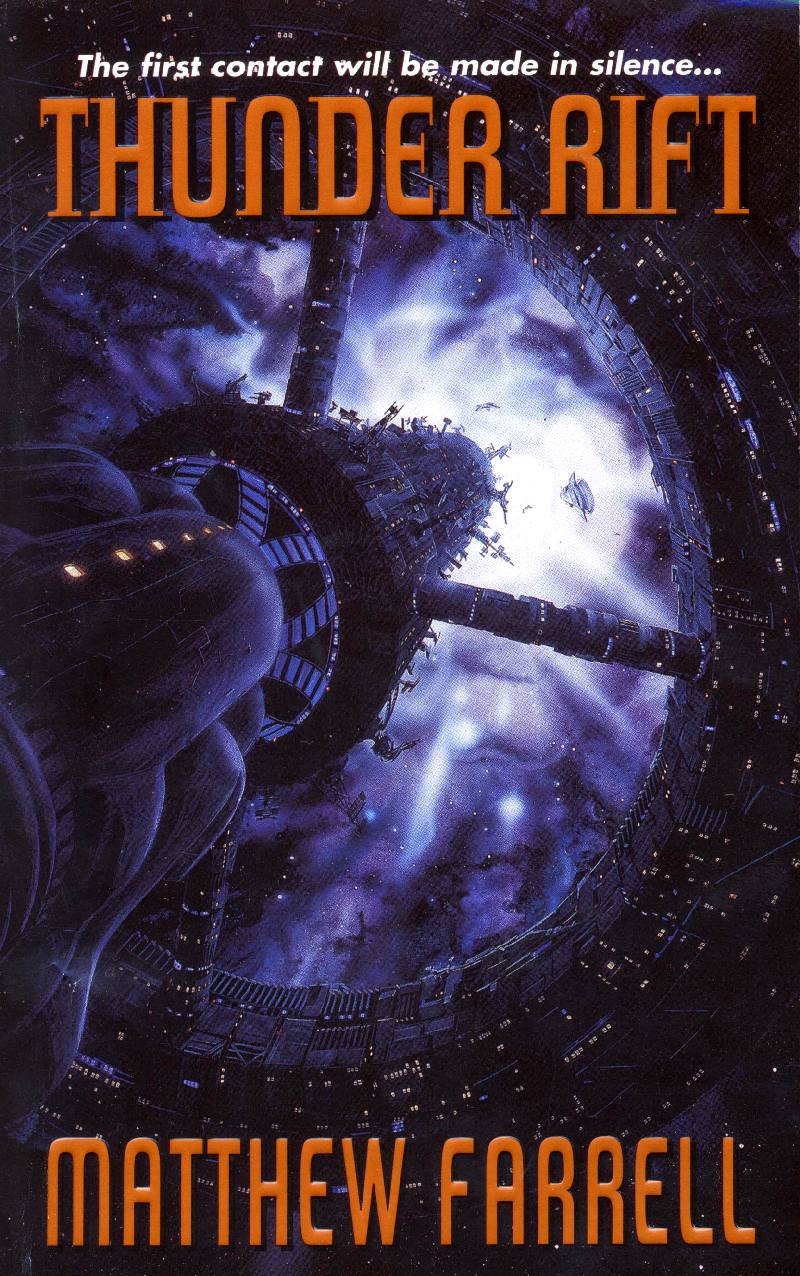
Matthew Farrell_2001_Thunder RiftThunder Rift, Matthew Farrell (2001) Matthew Farrell is really Stephen Leigh, and I suspect this book was published as by Farrell because by 2000 Leigh had become a category killer. In fact, since 2003 he’s been writing fantasy under the pen-name SL Farrell. In all other respects, Thunder Rift reads like a Stephen Leigh sf novel, and fans of Leigh’s earlier Dark Water’s Embrace and Speaking Stones will probably enjoy it. Unfortunately, familiarity with Leigh’s oeuvre does make Thunder Rift a somewhat predictable read. The titular wormhole has mysteriously appeared in the Solar System, out by the orbit of Jupiter, and the EMP generated by its sudden arrival pretty much wipes out all the technology on Earth, resulting in the deaths of hundreds of thousands of people. Yet thirty years later, the nations have not only recovered, they’ve even managed to build a huge military spacecraft to send through the wormhole to see if they can find the wormhole’s creators. On this spacecraft is maverick exo-anthropologist Taria Spears, who is obsessive, uncompromising and all-together difficult. On the other side of the wormhole, the humans find an inhabited world, but its alien civilisation does not appear advanced enough to have created the wormhole. Nonetheless, they send down a contact team… but it doesn’t go very well, and the alien ambassador/chief priestess-type person will only allow Taria to remain on the world. While she tries to learn more about the strange alien culture – their eyesight is so poor, they pretty much use sonar to perceive their surroundings; and they sing a lot – the military aboard the spacecraft set about trying to explore the planet. And then the wormhole vanishes. But something doesn’t want the humans to colonise the alien world. And Taria discovers the secret of the aliens and… This is heartland sf, written with competence if not style or vigour, reliant on far too many familiar tropes and used furniture, but given just enough spin not to generate déjà vu from start to finish. There are lots of sf novels about like Thunder Rift, and they’re all pretty much of a muchness. Fans of this type of sf will likely not to be able to tell it from other books of its ilk, and so enjoy it for that reason.

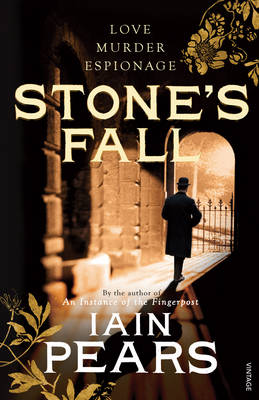
StonesFallStone’s Fall, Iain Pears (2009) Pears started out writing crime novels about a detective art historian, the few of which I’ve read I found quite ordinary; but he also writes complicated historical novels which are several levels of magnitude better. The last of his Jonathan Argyll series was published in 2000, so it would seem he now writes only the historical novels. Of which Stone’s Fall is the most recent – it was preceded by An Instance of the Fingerpost (1998), The Dream of Scipio (2002) and The Portrait (2005), all of which I have read. Stone is an Edwardian industrialist, the wealthiest and most powerful in Britain, and one night in 1909 he falls from the window of his third-floor study and is killed. But was he pushed? His will makes reference to a child he had not previously known about, so Stone’s widow, Elizabeth, hires a freelance reporter, Braddock, to track down the missing heir. The first third of the book – framed as the reminiscences of Braddock, who has just attended Elizabeth’s funeral in Paris in 1953 – attempts to explain Stone’s success in business. The second third is set in Paris in 1890, and is the reminiscences of a British spy whose career began around that time, and who knew Elizabeth, a Parisian socialite at the time, and witnessed her meeting, and growing relationship, with Stone. The final section is set in Venice in 1867 and is written as an apologia by Stone himself, attempting to explain the event which led to him becoming so powerful and also documenting an affair he had at the time which… There’s a mystery at the heart if Stone’s Fall, and it’s not hard to figure out what it is, but it’s only as the Venetian section progresses that the solution slowly starts to reveal itself. Stone’s Fall is not as complex as Pears’ earlier historical novels, but it is very readable and handles its historical detail impressively. Bizarrely, someone has used Wikipedia to give historical notes for the book, most of which are blindingly obvious, rather than summarise the plot or book’s reception…


14 Comments

An epistemological model of (speculative) fiction

All too often people point at the trappings of a fiction and claim that they identify it. Book A contains spaceships and robots, therefore it must be science fiction. Book B has dragons and castles, so it must be fantasy. But as a means of defining a fiction, it’s imprecise, often inaccurate and very much open to abuse. For every book which can be definitively identified by its tropes, there are countless others that can’t, or that require the trope itself to be re-defined. Tropes do not identify a genre: if you paint a car yellow, it does not make it a banana.

To date, the one definition of science fiction that has generated the least argument is Damon Knight’s 1952 comment, science fiction “means what we point to when we say it”. It makes the definition purely personal and subjective. Which makes it completely bloody useless as a tool. And I think it’s important to know what science fiction is you’re going to write it or write about it. Having said that, most of the definitions of sf in Wikipedia – see here – are by sf writers. And most of those definitions are completely ineffective.

A useful definition has to describe something intrinsic to the text, not something extra-textual. We don’t, for example, assume every book with a robot on the cover is science fiction – though many sf novels have robots on the cover, and many books with robots on the cover are sf. And to assume that every book which features a robot in the story is science fiction is identification by trope, which is also wrong. A bildungsroman novel set in a car factory, for example, would feature robots.

I’ve been thinking about agency in fiction and how it can be used to differentiate between fantasy and science fiction. In fantasy, objects which do not have agency in the real world are given it by authorial fiat. In science fiction, the agency is applied systemically by the natural world – the laws of physics, cosmology, biology, etc. Just like it is in mimetic fiction. Things happen in mimetic fiction as the real world dictates they happen – planes fly because their wings generate lift, boats float because they displace water equal to their weight, apples fall from trees because of the law of gravity, and so on. The same holds true in science fiction, though some of the elements of the natural world may be invented, such as that allowing FTL travel.

Also important in science fiction is wonder, which is the bit that fills your imagination up to the brim and then spills over. It is the chief reason people read science fiction in the first place. But wonder also applies to fantasy – dragons are objects of wonder, for example. I have in the past had a go at defining wonder – see here – and even managed to turn it into a (slightly tongue-in-cheek) equation.

Then it occurred to me that if I used both agency and wonder, it gave me a handy way to categorise fiction:

epistemo

Works can, of course, straddle borders, which can lead to interesting effects. But as means of distinguishing between various genres, the above chart doesn’t rely on tropes – in fact, it completely ignores them. A story can, for example, feature dragons, defined as cryptozoologic reptiles, and be science fiction. A fantasy novel can feature spaceships which fly between worlds because some person in a cloak waves their hands and mutters gibberish.

Now, of course, someone is sure to think of examples where my definition doesn’t fit…


5 Comments

Sunday meme

Okay, so SF Signal posted this last Sunday, but I was in Berlin then, with no access to a computer. And yes, I had an excellent time, despite the weekend’s inauspicious start: getting up at 2:30 am, wandering down to the kitchen to make breakfast and stepping on a slug; and then getting to the airport and realising I’d left my credit and debit cards at home (fortunately, I had plenty of cash). Anyway, the meme…

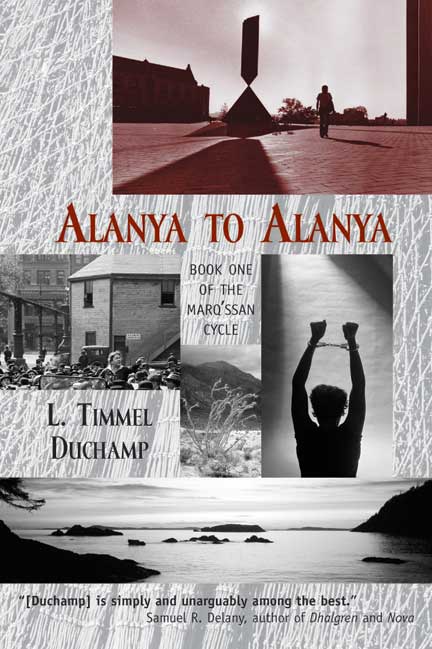
alanya_coverMy favorite alien invasion book or series is…?
Probably the Marq’ssan Cycle by L Timmel Duchamp, although Gwyneth Jones’ Aleutian trilogy runs a close second. Duchamp’s five novels – Alanya to Alanya, Renegade, Tsunami, Blood in the Fruit and Stretto – document the arrival on a near-future Earth of an alien mission which will only talk to women. Supporting character turned chief villain Elizabeth Weatherall is one of the genre’s best creations. Jones’ White Queen, North Wind and Phoenix Café cover similar ground, but from a more global perspective. It also features, like Duchamp’s quintet, an extremely well-drawn antagonist in Braemar Wilson. Both series are intensely political and among the smartest books in science fiction.

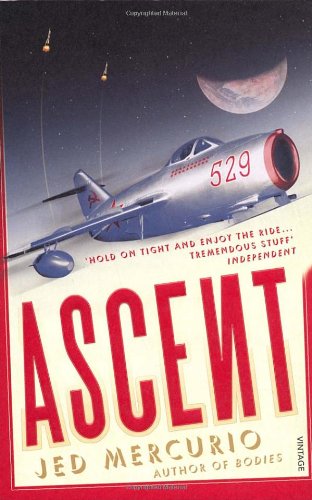
ascentMy favorite alternate history book or series is…?
The Apollo Quartet, of course. But seriously: I’d say Ascent by Jed Mercurio, but naming it as alternate history might constitute a spoiler. It could also be argued that the superb Ash: A Secret History by Mary Gentle is alternate history. I think I’ve read my fair share of Hitler-victorious alternate histories, and I suspect there are very few changes remaining to be rung on that particular trope. Not being American, I’ve little interest in their civil war and how it might have ended differently. Stephen Baxter’s alternate take on the US space programme, Voyage, appeals for obvious reasons. And many sf novels of the past written about exploring Mars and the Moon may not have been written as alternate history, but they pretty much qualify as it now. Unfortunately, most twentieth-century sf novels about twenty-first space travel, such as those by Steele or Bova, suffer from being, well, not very good. Sadly, early and alternate space travel doesn’t seem to be an area of the genre that has attracted writers with much in the way of writing chops. Which is a shame.

My favorite cyberpunk book or series is…?
Metrophage by Richard Kadrey, the book which folded cyberpunk back into science fiction. Everything that came after is just the twitchings of a dead subgenre.

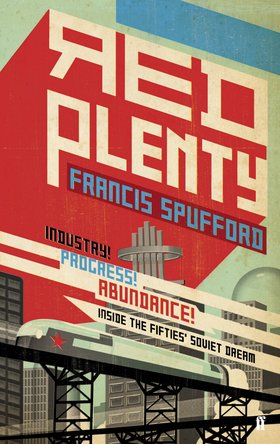
redplentyMy favorite Dystopian book or series is…?
Dystopia is in the eye of the beholder. If you read Francis Spufford’s excellent Red Plenty, you’ll see that not everyone thought the USSR was a dystopia. And for all the UK’s fabled streets of gold, it’s starting to look more and more like a dystopia each day to those of us living here. As for reading about dystopias… I don’t think it’s been done especially well in science fiction – but then Nineteen Eighty-Four casts a long shadow. Some of DG Compton’s works from the 1970s might be considered dystopian, such as The Continuous Katherine Mortenhoe; and in Ascendancies, he manages to find a dystopian story in a near-utopian society. JG Ballard wrote plenty of novels and short stories which might qualify, but no specific title springs to mind – it’s probably best to consider his entire oeuvre as dystopian fiction. And you can’t really go wrong by reading them all.

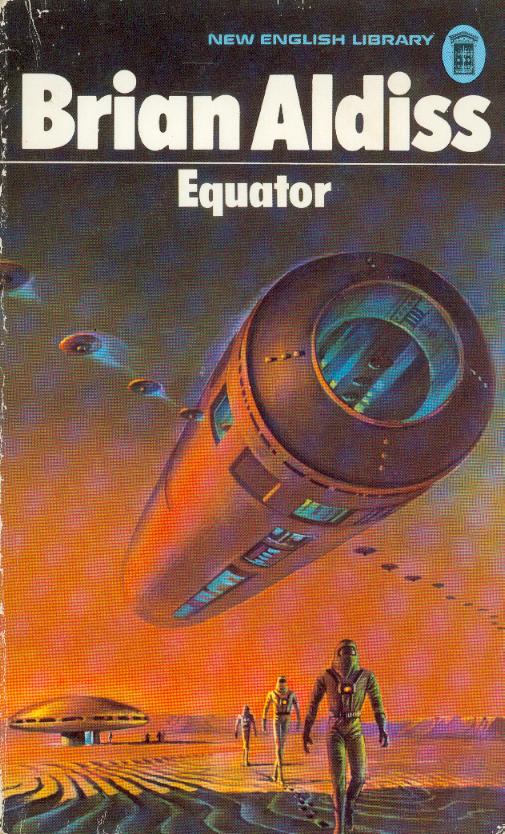
equator3My favorite Golden-Age sf book or series is…?
AE van Vogt’s The House That Stood Still (AKA The Undercover Aliens), which mixes California noir and pulp sf and just about manages to get away with it, is one of my favourite sf novels. It’s completely bonkers, of course; but it’s one of van Vogt’s more coherent works. Which isn’t saying much. Recently, I’ve read some early sf by women writers and found it much better than the so-called classics I read as a kid – these days, I find EE ‘Doc’ Smith, Robert A Heinlein and Isaac Asimov near-unreadable. There’s also an early Brian Aldiss novel, Equator, which I really like, though it’s more like spy fiction with added aliens than science fiction per se. Which may be one reason why I find it so appealing.

My favorite hard sf book or series is…?
The Apollo Quartet, of course. But seriously: it’s probably Kim Stanley Robinson’s Mars trilogy. I don’t read that much hard sf as such. When I need my real science kicks, I read books about space or deep sea exploration. There are very, very few hard sf novels which come even remotely close to emulating the authenticity those books possess.

nature-beast-richard-fawkesMy favorite military sf book or series is…?
I don’t have much time for military science fiction, though in the past I’ve read my fair share – including David Weber, Tanya Huff, Elizabeth Moon, Jack Campbell, David Feintuch, John Steakley, and probably a few others. The only such books left on my book-shelves, and which may well get purged should I ever get around to rereading them, are Richard Fawkes’ Face of the Enemy and Nature of the Beast, which I remember as quite interesting. Also worth a go is Shariann Lewitt’s debut novel, Angel at Apogee, and her two Collegium novels, Cyberstealth and Dancing Vac. And if any of CJ Cherryh’s books qualify, then they’re certainly worth reading.

kairosMy favorite near-future book or series is…?
I don’t think I have one. I’ve always been a fan of John Varley’s Eight Worlds novels and short stories, but do they count as near-future? Gwyneth Jones’ Kairos, a favourite novel, was near-future when it was published, but that was back in 1988 – and these days it reads more like alternate history. The same might well prove true of Ken MacLeod’s excellent Intrusion a decade from now. Another excellent near-future novel is Maureen F McHugh’s China Mountain Zhang, though despite being two decades old it has yet to become alternate history – perhaps because it doesn’t feel like it’s set in a near-future which might well happen.

The_Caryatids_Bruce_SterlingMy favorite post-apocalyptic book or series is…?
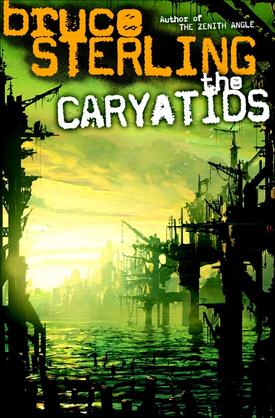
To be honest, I’m not interested in how Americans would react should their society collapse, nor do I believe that every single person on the planet would react in that way. Which pretty much discounts ninety-nine percent of post-apocalyptic novels. The only one that springs to mind as different is Bruce Sterling’s The Caryatids, which shows the world – all of it – coping with the aftermath of climate crash and nation-state failures. Perhaps the best of the more traditional post-apocalyptic novels is Joan Slonczewski’s The Wall Around Eden, in which mysterious aliens save isolated pockets of humanity. It reads like a masterclass in sf and deserves to be back in print.

My favorite robot/android book or series is…?
Science fiction’s treatment of robots has always been silly. They’re either human in all but name and yet treated like slaves, or blatant signifiers for slaves. In remarkably few sf stories do they actually resemble real robots.

ceres-storm-david-herter-paperback-cover-artMy favorite space opera book or series is…?
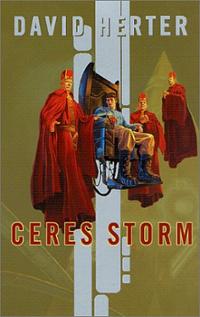
I’ve always enjoyed Iain M Banks’ Culture novels, though I think the individual parts are not as impressive as the sum of them. Colin Greenland’s Take Back Plenty has always been a favourite space opera too, and I remember being impressed by Scott Westerfeld’s The Risen Empire when I read it many years ago. Likewise David Herter’s Ceres Storm, which I read back when it was published in 2000. I really must reread it one of these days…

My favorite steampunk book or series is…?
I don’t read steampunk. There’s nothing in it that appeals to me. Airships? Pfft. Give me supersonic jets every time. Brass? Useless metal. And anyway, steel is more emblematic of the British Empire than brass. Difference engines? NASA didn’t put twelve men on the Moon using clockwork computers, did they?

My favorite superhero book or series is…?
I used to read superhero comics by the likes of Warren Ellis and Alan Moore, but went off the whole genre several years ago. I can no longer think of anything nice to say about the genre.

Millennium(1stEd)My favorite time travel book or series is…?
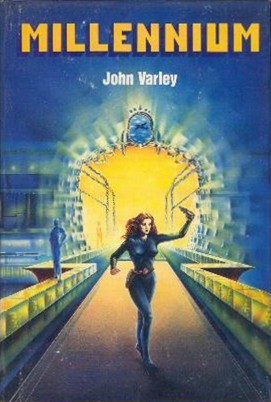
I’m more likely to read and enjoy an historical novel than I am a time travel one. I can’t off the top of my head think of any time travel novels that I hold in especially high regard. I remember enjoying Peter Delacorte’s Time on My Hands, which is set in 1940s Hollywood. And Stephen Baxter’s The Time Ships takes Wells’ The Time Machine and runs with it… and runs… and runs… I’m a big fan of John Varley’s short story ‘Air Raid’, and I still have a soft spot for the film adaptation Millennium, despite its godawful production design… which does mean I really like the novel written by Varley of the film adapted by Varley of the short story written by Varley…

My favorite young adult sf book or series is…?
I don’t read YA books. I am no longer sixteen, and haven’t been for a few decades.

My favorite zombie book or series is…?
I don’t read zombie books. I don’t even like zombie films. Maybe one day somebody will do something interesting with the trope, but I’m not holding my breath.

foss_foundation-coversThe 3 books at the top of my sf/f/h to-be-read pile are…?
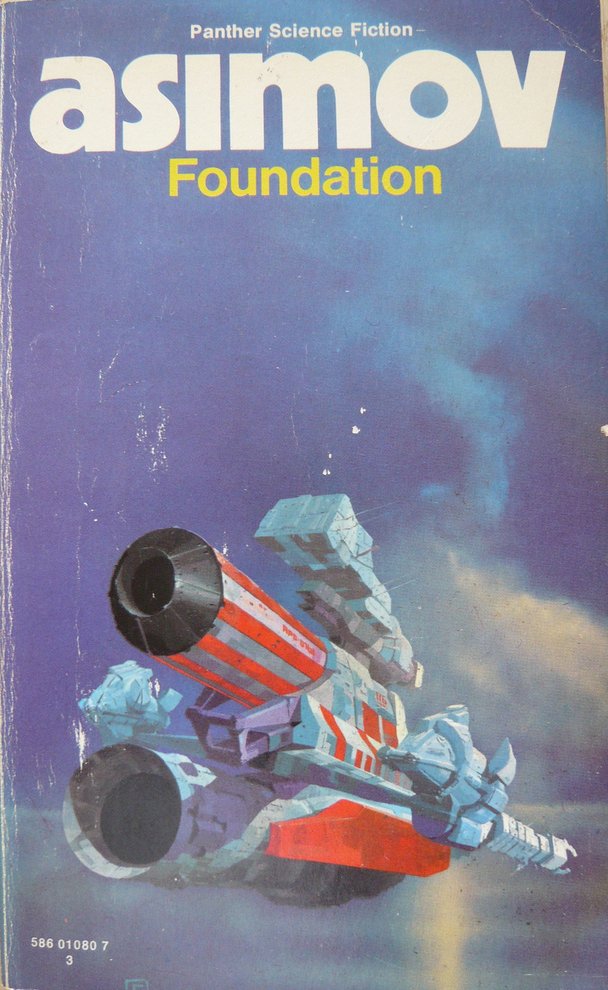
Last month, I foolishly agreed to read and blog about half a dozen classic sf novels, so I have The Moon is a Harsh Mistress and Foundation to look forward to over the next couple of weeks. Other than that, I have some reading for SF Mistressworks, and I hope to sneak in a few more recent genre novels as well, but I’ve yet to decide which ones. In fact, when you have a TBR of around 700 books, it’s often difficult to pick what to read next and I can sometimes spend ten or twenty minutes feeling really indecisive as I wander from one bookcase to the next…

And now I’ve finished this I’ll no doubt think of books I should have mentioned. Oh well. The more observant among you might also have noticed that all the links on this post go to Foyles using their affiliate scheme (except for the one link to a DVD). I found it relatively easy to use – a little fiddlier than Amazon’s, but not unworkably so. We’ll see how it works out.


Leave a comment

The fastest man on earth

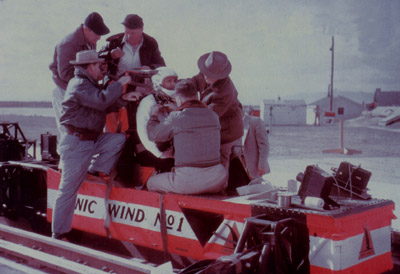
No, not me. Though I suppose if you strapped enough rocket bottles to me, I could probably qualify. Which is what happens – to someone else, I hasten to add – in my story ‘The Incurable Irony of the Man who Rode the Rocket Sled’. It was published yesterday in the The Orphan #5. You can find my story here.

sonicwind

‘The Incurable Irony of the Man who Rode the Rocket Sled’ was inspired by some of the research I did for the Apollo Quartet. I’d come across mention of the rocket sleds that were used in the 1950s to test how many Gs a human body could safely withstand, and I thought it would be pretty cool to write about that. So I did. The end result, however, isn’t exactly typical – as science fiction, my fiction, or even fiction per se: The Orphan itself describes it as possessing “footnotes, no plot, and genre content visible, yet near microscopic”. So, no launching rocket sleds into space to fight aliens or anything. Just a man, the rocket sleds, and the world around him.

They were bonkers, the volunteers on the rocket sled programme – especially the man who created it, John Paul Stapp. But what they achieved did prove useful and ultimately saved many lives. Here’s a USAF information film about rocket sleds, which gives you some idea of what it was all about.

Enjoy.


2 Comments

Analysis: 100 Great sf stories by women

I have to admit the list of 100 Great science fiction stories by women has done considerably better than I expected, and seems to have gone a little bit viral. Loads of people tweeted a link to it, someone posted it on reddit (where a typically clueless number of discussions subsequently took place), it’s been linked from several blogs and sites (including tor.com and SF Signal), and has even appeared on several tumblrs. The hits here have gone through the roof – it is officially my most popular post, with even more hits than the one in which I wrote that Asimov was a shit writer. I was expecting people to turn the list into a meme, but that doesn’t seem to have happened. But it’s not like I’m complaining…

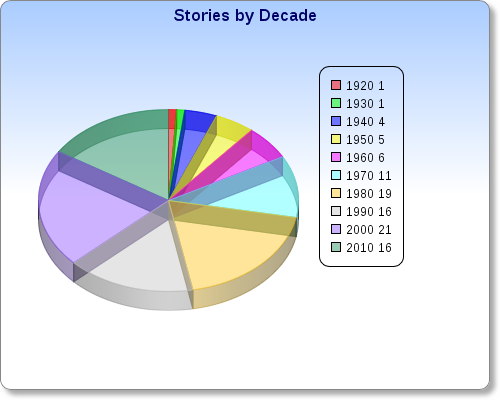
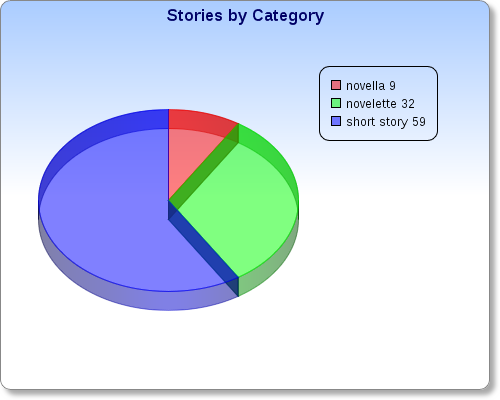
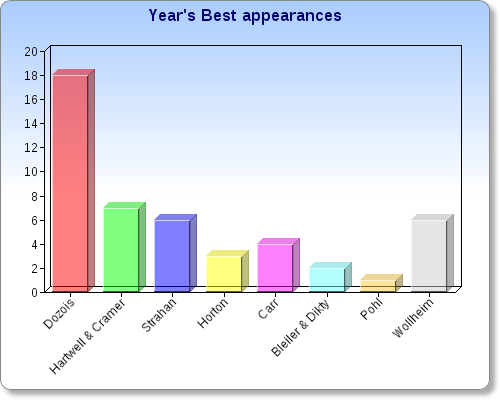
Anyway, I thought it might be interesting to stick up a few charts about the list.

storiesbydecade
The list is slanted a little toward the twenty-first century, but there are more women writing sf now than there were in the first half of last century.

storiesbycategory
Unsurprisingly, more than half of the list are short stories – ie, 7,500 words or less.

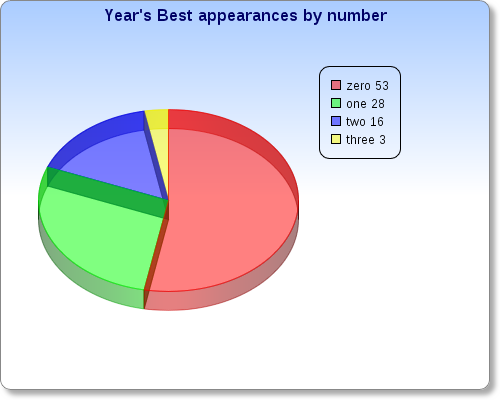
yearsbestappearances
yearsbestbynumber
I used the tables of contents of several year’s best to find titles for the list, so these numbers come as no real surprise – but I was surprised to discover that some of the earlier stories had appeared in year’s bests of the 1950s and 1960s.

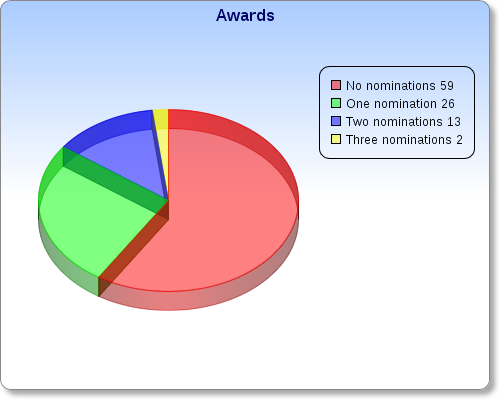
noms

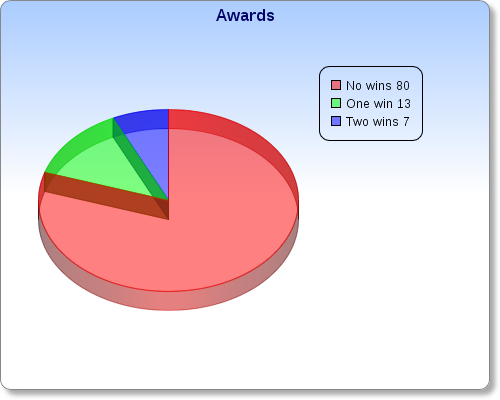
wins

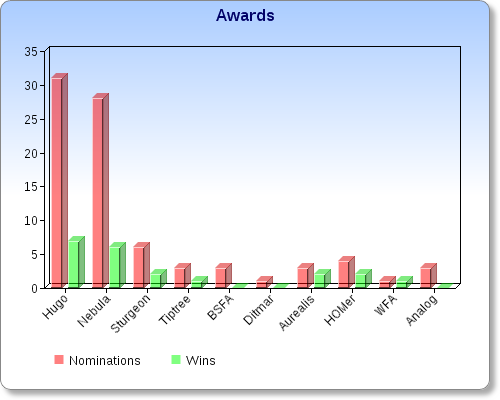
byaward
Again, I looked at award shortlists for titles, so the high number of nominees and winners is not unexpected.

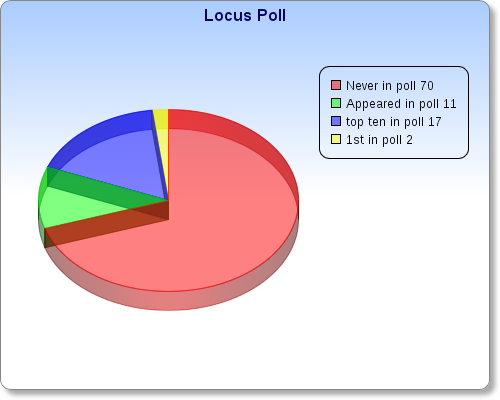
locuspoll
I didn’t use the Locus poll at all, so the number of stories which appeared on it – nearly a third of the list – came as a surprise.

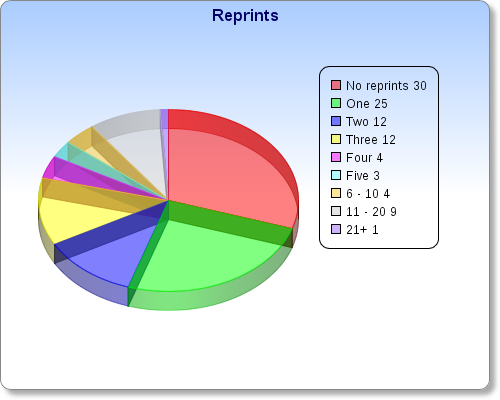
reprints
Quite a few of the older stories have been reprinted a huge number of times. The most-reprinted story is Judth Merril’s ‘That Only A Mother’, with 24 reprints, including Women of Wonder – and in my review of that anthology here, I called it “a bona fide classic of the genre”. It seems I’m not the only person who thinks so…


167 Comments

The list: 100 Great Science Fiction Stories by Women

Now let the arguing begin…

The list below contains 100 pieces of short fiction – short stories, novelettes and novellas – by women writers, published between 1927 and 2012. Each author appears only once. The stories are by no means the best by each writer. In most cases, I’m simply not familiar enough with an oeuvre to choose the best; in other cases, I’ve picked a story I’ve read and thought good, and yes, there are a few of my favourite stories in the list too. I’ve not read them all – some came from suggestions on Twitter or on an earlier post on this blog (many thanks to all who contributed), others I took from various award lists or Year’s Best TOCs. One or two fantasy stories might have sneaked through the net, because I couldn’t find copies to read and check. However, the list should all be science fiction – and it should also demonstrate a good spread of styles and themes and approaches across the genre.

The point of the exercise was to demonstrate that women have been writing good science fiction since the beginnings of the genre – a point signally ignored by the table of contents of the 1978 anthology 100 Great Science Fiction Short Short Stories, which contained only five stories by women. The first story on this list, for example, came third in a competition in Amazing Stories during the magazine’s second year of publication.

1 ‘The Fate of the Poseidonia’, Clare Winger Harris (1927, short story) online here
2 ‘The Conquest of Gola,’ Leslie F Stone (1931, short story) available in
3 ‘Water Pirate’, Leigh Brackett (1941, short story) available in
4 ‘Space Episode’, Leslie Perri (1941, short story) available in
5 ‘No Woman Born’, CL Moore (1944, novelette) available in
6 ‘That Only a Mother’, Judith Merril (1948, short story) available in
7 ‘Contagion’, Katherine Maclean (1950, novelette) available in
8 ‘Brightness Falls from the Air’, Margaret St Clair [as Idris Seabright] (1951, short story) available in
9 ‘All Cats are Gray’, Andre Norton (1953, short story) available in
10 ‘The Last Day’, Helen Clarkson (1958, short story) available in
11 ‘Captivity’, Zenna Henderson (1958, novella) available in
12 ‘The New You’, Kit Reed (1962, short story) online here
13 ‘The Putnam Tradition’, Sonya Dorman (1963, short story) online here
14 ‘Lord Moon’, MJ Engh [as Jane Beauclerk] (1965, short story) available in
15 ‘Weyr Search’, Anne McCaffrey (1967, novella) available in
16 ‘The Heat Death of the Universe’, Pamela Zoline (1967, short story) online here
17 ‘The Steiger Effect’, Betsy Curtis (1968, short story) available in
18 ‘The Power of Time’, Josephine Saxton (1971, novelette) available in
19 ‘And I Awoke and Found Me Here on the Cold Hill’s Side’, James Tiptree Jr (1972, short story) available in
20 ‘When It Changed’, Joanna Russ (1972, short story) online here
21 ‘Sheltering Dream’, Doris Piserchia (1972, short story) available in
22 ‘Of Mist, and Grass, and Sand’, Vonda N McIntyre (1973, novelette) available in
23 ‘Clone Sister’, Pamela Sargent (1973, novelette) available in
24 ‘The Violet’s Embryo’, Angélica Gorodischer (1973, novelette) online here (excerpt)
25 ‘Stone Circle’, Lisa Tuttle (1976, short story) available in
26 ‘Eyes of Amber’, Joan D Vinge (1977, novelette) available in
27 ‘Cassandra, CJ Cherryh (1978, short story) available in
28 ‘The View from Endless Scarp’, Marta Randall (1978, short story) online here
29 ‘Scorched Supper on New Niger’, Suzy McKee Charnas (1980, novelette) available in
30 ‘Abominable’, Carol Emshwiller (1980, short story) available in
31 ‘Sea Changeling’, Mildred Downey Broxon (1981, novelette) available in
32 ‘In the Western Tradition’, Phyllis Eisenstein (1981, novella) available in
33 ‘Her Furry Face’, Leigh Kennedy (1983, short story) available in
34 ‘Bloodchild’ Octavia E Butler (1984, novelette) available in
35 ‘Symphony for a Lost Traveller’, Lee Killough (1984, short story) available in
36 ‘All My Darling Daughters’, Connie Willis (1985, novelette) available in
37 ‘Webrider’, Jayge Carr (1985, short story) available in
38 ‘Out of All Them Bright Stars’, Nancy Kress (1985, short story) available in
39 ‘The View from Venus: A Case Study’, Karen Joy Fowler (1986, novelette) available in
40 ‘Reichs-Peace’, Sheila Finch (1986, novelette) available in
41 ‘Daily Voices’, Lisa Goldstein (1986, short story) available in
42 ‘Rachel in Love’, Pat Murphy (1987, novelette) available in
43 ‘Forever Yours, Anna’, Kate Wilhelm (1987, short story) available in
44 ‘Stable Strategies for Middle Management’, Eileen Gunn (1988, short story) available in
45 ‘War and Rumours of War’, Candas Jane Dorsey (1988, short story) available in
46 ‘The Mountains of Mourning’, Lois McMaster Bujold (1989, novella) available in
47 ‘Tiny Tango’, Judith Moffett (1989, novella) available in
48 ‘Identifying the Object’, Gwyneth Jones (1990, novelette) available in
49 ‘Loose Cannon’, Susan Shwartz (1990, novelette) available in
50 ‘Dispatches from the Revolution’, Pat Cadigan (1991, novelette) available here
51 ‘The Road to Jerusalem’, Mary Gentle (1991, short story) online here
52 ‘The Missionary’s Child’, Maureen F McHugh (1992, novelette) available in
53 ‘The Story So Far’, Martha Soukup (1993, short story) available in
54 ‘The Good Pup’, Bridget McKenna (1993, short story) available in
55 ‘California Dreamer’, Mary Rosenblum (1994, short story) available in
56 ‘Last Summer at Mars Hill’, Elizabeth Hand (1994, novella) available in
57 ‘Coming of Age in Karhide’, Ursula K Le Guin (1995, novelette) available in
58 ‘De Secretis Mulierum’, L Timmel Duchamp (1995, novella) available in
59 ‘Merlusine’, Lucy Sussex (1997, novelette) available in
60 ‘Noble Mold’, Kage Baker (1997, short story) available in
61 ‘All the Birds of Hell’, Tanith Lee (1998, novelette) available in
62 ‘Rain Season’, Leanne Frahm (1998, short story) available in
63 ‘Echea’, Kristine Kathryn Rusch (1998, novelette) available in
64 ‘Patient Zero’, Tananarive Due (2000, short story) online here
65 ‘Knapsack Poems’, Eleanor Arnason (2002, short story) available in
66 ‘State of Oblivion’, Kaaron Warren (2003, short story) available in
67 ‘Inside Out’, Michaela Roessner (2004, short story) online here
68 ‘Griots of the Galaxy’, Andrea Hairston (2004, novelette) available in
69 ‘Riding the White Bull’, Caitlín R Kiernan (2004, novelette) available in
70 ‘The Avatar of Background Noise’, Toiya Kristen Finley (2006, short story) available in
71 ‘Captive Girl’, Jennifer Pelland (2006, short story) online here
72 ‘The Bride Price’, Cat Sparks (2007, short story) available in
73 ‘Tideline’, Elizabeth Bear (2007, short story) online here
74 ‘Arkfall’, Carolyn Ives Gilman (2008, novella) available in
75 ‘Legolas does the Dishes’, Justina Robson (2008, short story) available in
76 ‘The Ecologist and the Avon Lady’, Tricia Sullivan (2008, novelette) available in
77 ‘Infinities’, Vandana Singh (2008, novelette) available in
78 ‘Chica, Let Me Tell You a Story’, Alex Dally MacFarlane (2008, short story) available in
79 ‘Spider the Artist’, Nnedi Okrafor (2008, short story) online here
80 ‘Cold Words’, Juliette Wade (2009, novelette) available in
81 ‘Eros, Philia, Agape’, Rachel Swirsky (2009, novelette) onine here
82 ‘Non-Zero Probabilities’, NK Jemisin (2009, short story) online here
83 ‘Sinner, Baker, Fabulist, Priest; Red Mask, Black Mask, Gentleman, Beast’, Eugie Foster (2009, short story) available in
84 ‘It Takes Two’, Nicola Griffith (2009, novelette) available in
85 ‘Blood, Blood’, Abbey Mei Otis (2010, short story) online here and here
86 ‘The Other Graces’, Alice Sola Kim (2010, short story) available in
87 ‘Agents of Repair’, Rosie Oliver (2010, short story) available in
88 ‘Amaryllis’, Carrie Vaughn (2010, short story) online here
89 ‘I’m Alive, I Love You, I’ll See You in Reno’, Vylar Kaftan (2010, short story) online here
90 ‘Flying in the Face of God’, Nina Allan (2010, short story) available in
91 ‘Six Months, Three Days’, Charlie Jane Anders (2011, short story) online here
92 ‘Nahiku West’, Linda Nagata (2011, novelette) available in
93 ‘The Cartographer Bees and the Anarchist Wasps’, E Lily Yu (2011, short story) online here
94 ‘Silently and Very Fast’, Catherynne M Valente (2011, novella) online here, here and here
95 ‘Jagannath’, Karin Tidbeck (2011, short story) available in
96 ‘A Vector Alphabet of Interstellar Travel’, Yoon Ha Lee (2011, short story) online here
97 ‘Immersion’, Aliette de Bodard (2012, short story) online here
98 ‘The Lady Astronaut of Mars’, Mary Robinette Kowal (2012, novelette) online here
99 ‘The Green’, Lauren Beukes (2012, short story) available in
100 ‘Significant Dust’, Margo Lanagan (2012, novelette) available in

No doubt there are stories and authors I’ve missed off the list, and which/who you feel strongly should be on it. Tell me so in a comment. Also, feel free to disseminate the list as a meme – you know, bold those you’ve read, italicise those on the TBR; or something like that.

For the record, I’ve read: 1, 2, 3, 4, 5, 6, 7 8, 9, 10, 12, 13, 16, 18, 19, 20, 22, 23, 24, 26, 27, 28, 29, 30, 34, 35, 36, 37, 38, 39, 40, 41, 42, 43, 44, 45, 47, 48, 53, 55, 57, 58, 64, 65, 70, 73, 74, 75, 79, 81, 82, 83, 84, 85, 87, 89, 90, 91, 93, 94, 96, 97, 98. Which I make to be sixty-three in total. Not too bad a showing…

ETA
This is a list of short fiction – short stories, novelettes and novels. If you’re interested in novels by women sf writers, then check out SF Mistressworks.

ETA #2: NOTES FOR REDDITORS
This is the easy summary for those on reddit who seem to have trouble understanding the purpose of this list:

  1. It is not novels, it is short stories, novelettes and novellas.
  2. Each writer appears only once.
  3. It is not a list of “best” or “top” sf stories by women. It is “great” because it was inspired by the anthology 100 Great Science Fiction Short Short Stories.
  4. The list demonstrates that women have been writing good science fiction since the genre was created in 1926.
  5. There are many more than 100 excellent women sf writers, but I chose 100 because of the anthology named in point 3.
  6. The gender of the author is not irrelevant. Find me a list of great or top or best sf stories where at least half were written by women. You will fail.
  7. The stories were chosen from a) my own favourites, b) suggestions by other people, c) award shortlists, and d) the tables of contents of Year’s Best anthologies.
  8. I have read 63 of the stories on the list.
  9. There are several authors on the list who have yet to have novels published – ie, new authors.
  10. If there’s someone missing you feel should be on the list, tell me in a comment.
  11. I’m happy to defend all my choices – leave a comment.
  12. Finally, why not click on the links in the list and read those stories which are available online?