
The first batch of 2016’s reading, which, er, seems to be entirely works from last year. I don’t normally read a great deal of recent fiction, and especially books that are less than twelve months old – although, to be fair, I need to get my choices in for the BSFA Award before the end of the month… And some of them feature below. It’ll be interesting to see if the longlist approach has made much of a difference to the shortlist. (I note that ‘Gypsy’, the title novella of the PM Press collection, see below, was actually eligible but no one appears to have nominated it for the long list. Which is a shame.)
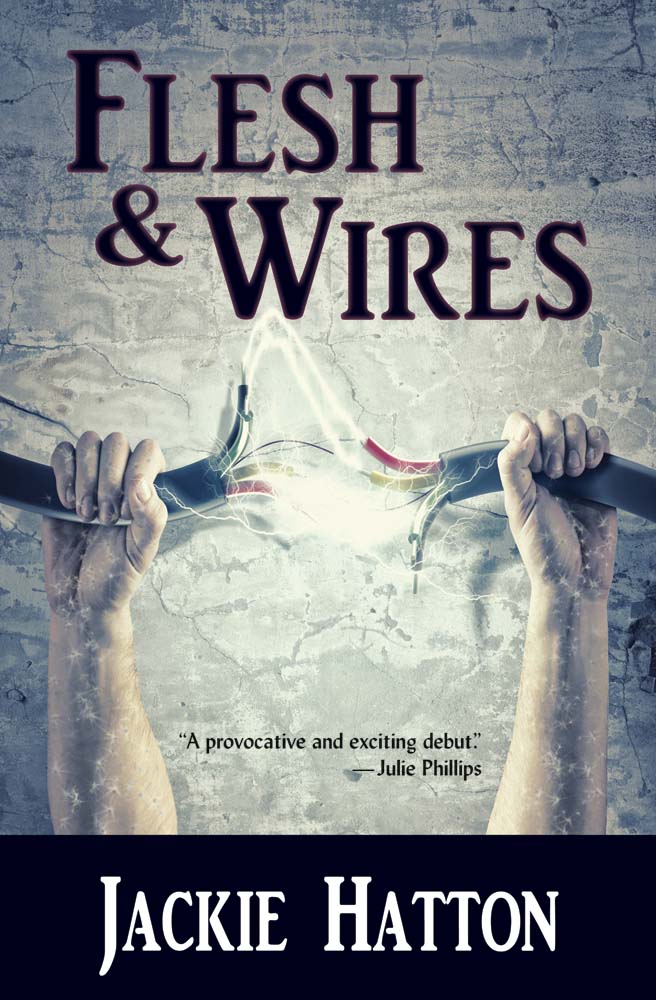 Flesh & Wires, Jackie Hatton (2015). So I went on the Aqueduct Press website with the intention of buying both Elysium and Necessary Ill, both books I’d been planning to pick up for a while… and I saw mention of Flesh & Wires, as well as a pair of novellas, A Day in the Deep Freeze (which I’ve nominated for the BSFA Award) and The XY Conspiracy, bunged them into my basket and bought them… And the first of the three novels I read was Flesh & Wires. To be honest, the blurb made the novel sound more interesting than it proved to be. Which is not to say it wasn’t good. The set-up worked, the plot worked, the characters were well-drawn, there were just some elements of the background which read as confused and a little, well, clichéd. The Earth was invaded by aliens, who killed off most of the population, but kept some women, and turned them into sort of cyborgs by means of “wires”. But then the aliens died of an Earthly disease, and a new set of aliens, Orbiters, turned up, and sort of helped the surviving women – and handful of men – to rebuild. The novel is set in a small town just south of New York, and told chiefly from the point-of-view of a powerful “wired” woman who is the de facto leader of the town. When her brother, long thought dead, turns up and proves to be representing the Orbiters – and is not not at all honest about his intentions; and then a group of Orbiters exiled to Earth also appear, casting doubt on what the protagonist had believed of the current state of affairs… The end result is a solidly feminist sf novel that perhaps relies over much on somewhat dodgy tropes but manages to put a fresh spin on its plot. I’d also like to go on record as stating that Aqueduct Press publish some bloody good sf, and it’s always a pleasure to place orders with them.
 My Fair Ladies, Julie Wosk (2015). Subtitled “Female robots, androids and other artifical eves”, which pretty much describes its topic to a tee. The author was inspired by the discovery of a mannequin’s head in a street fair, and from that starting point goes on to cover historical representations of artificial women in Greek mythology, by Shaw and other late nineteenth-century/early twentieth-century writers, before moving into films, television, robots occupying the uncanny valley, and finally artists, such as Cindy Sherman (although no mention of Gillian Wearing or Lenae Day), who explore the concept of “perfect manmade” women through their art. While the book goes into detail on early literary artificial women, later literature – particularly science fiction – is mentioned only in relation to film or television adaptations. So, no Susan Calvin, Asimov’s robot psychologist who behaved like a robot herself; nor the women of EE ‘Doc’ Smith’s Masters of Space, who are all too eager to be uploaded into replacement robot bodies because it means “their tits won’t sag”; nor even Helen O’Loy. The list of fictional female robots and cyborgs on Wikipedia gives remarkably few examples from sf stories or novels, so perhaps it’s a topic written sf hasn’t tackled that much… although it feels like it has done; too prudish, perhaps, or maybe it required more self-examination than male writers of two-fisted space adventures were capable of; and female writers had more than enough material writing about real women. Anyway, fascinating stuff. One for the non-fiction BSFA Award.
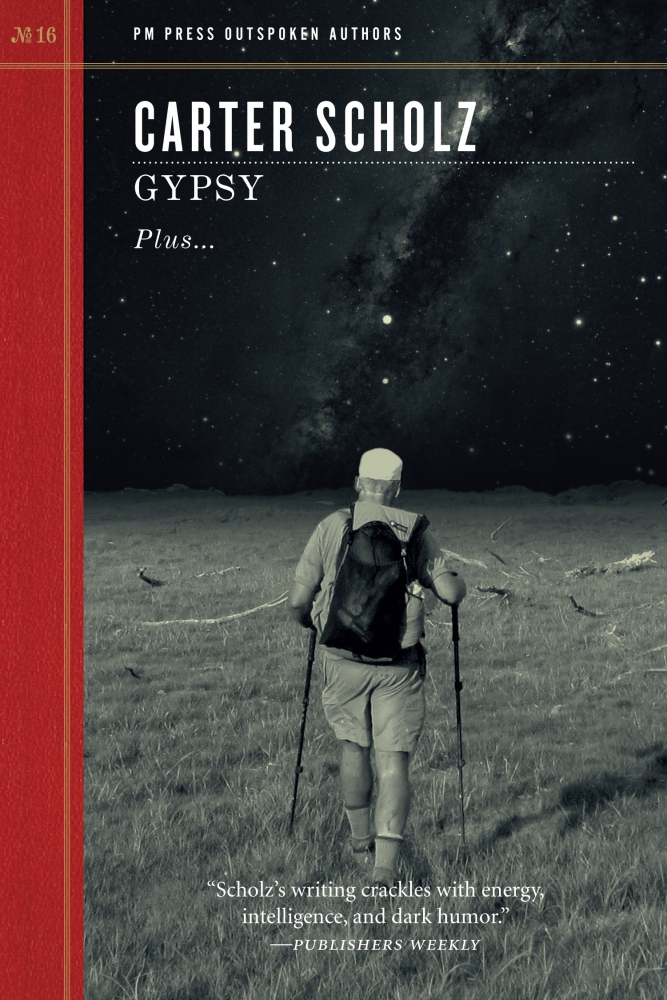 Gypsy, Carter Scholz (2015). I’d never heard of Scholz, although apparently he is held in high regard. Looking at some of the comments on this book, it’s clear he has plenty of genre friends in San Francisco/Oakland, where he lives – including Kim Stanley Robinson – and where PM Press is based. None of which is a reflection on Scholz’s ability, more on the requirement of connections and patronage in genre in order for good fiction to get noticed. And ‘Gypsy’, the title novella of this collection, is very good indeed. It’s 2015’s third generation starship story, and probably the best of the three as a generation starship story. Tchaikovsky’s Children of Time scores well because of its spider civilisation, Kim Stanley Robinson’s Aurora has some good bits about narratology… but Scholz’s ‘Gypsy’ goes for real science and engineering and paints a bleak picture – one not helped by the driving force behind the flight being the immanent collapse of Earth’s biosphere. Not that the flight itself provides any answers. The remainder of the collection comprises a somewhat tired epistolary short story, an essay about US economic shenanigans, a story presented as house committee testimony, and an interview with Scholz. I have a lot of time for Scholz’s approach to genre, as given in his interview, but only the title novella seems a good expression of it.
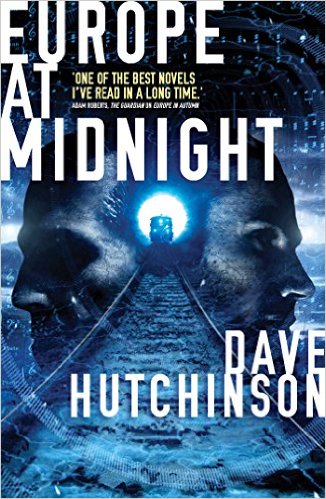 Europe at Midnight, Dave Hutchinson (2015). I thought Europe in Autumn a very good, if a little confused, novel – a superior near-future spy novel, it took an unexpected swerve around two-thirds in, which unsettled the plot but managed not to upset it. And now the sequel, Europe at Midnight, follows that swerve further around the curve and results in a very different novel of a type of science fiction that likely occupies a small place all its own in the genre’s corpus. In the nineteenth century, a wealthy family invented a new English county, which somehow came into being in a reality sideways from ours, and then subsequently expanded into Europe to form a Little England writ large: the Community. Which, it seems, has teeth. The novel opens in the Campus, a pocket universe 200 miles across which comprises one huge university, now having difficulty recovering after a bloody coup. The new Professor of Intelligence is suspicious of the Faculty of Science, but his investigations result in the termination of his position and a take-over by the Science people, who have suspiciously modern weapons. Fortunately, he escapes to our Europe… where he comes under the control of the UK intelligence services. Despite that disconcerting start, we’re now back in future spy novel territory… but even then, Europe at Midnight seems to slip across hidden borders into parallel fictions – much as some of its cast do – as it tells a story about Europe, the Campus and the Community which is only actually revealed in the final chapter. This is good stuff – a novel that cleverly runs our future alongside our memories of our past, and sets the scene for a war between the two. I’ll be nominating this for the BSFA Award.
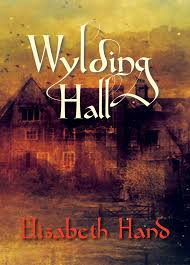 Wylding Hall, Elizabeth Hand (2015). This appeared on the BSFA Award short fiction longlist, and was recommended by several people whose opinions I trust – and, it had to be said, the précis did sound interesting… so I bought it, read it, and I’m giving it one of my four slots on my BSFA Award ballot. An acid folk group in the very early seventies hires the eponymous country manor to rehearse and record their second album (following the suicide of the group’s original singer; she was also the girlfriend of the band’s main creative force). Wylding Hall is a strange place, but this novella doesn’t go for in-your-face ghosts and apparitions but a much more effective general atmosphere of uncertainty. Windhollow Faire come across as a believable band, and the links to the darker side of English folklore are well-handled. The story is told as the decades-later reminiscences of the band members, a technique which is especially effective as it gives it the authority of a Sky Arts documentary. I have only a couple of minor niggles – back then, a grammar school would have been more posh than a comprehensive, and Radio 3 – not BBC 3 – was always more into classical and jazz, not folk; and John Peel was on Radio 1, which was the station mostly likely to play electric folk at that time.
1001 Books You Must Read Before You Die count: 121
 It Doesn't Have To Be Right...