It Doesn't Have To Be Right…

… it just has to sound plausible


7 Comments

I like me some meme

I found this on Larry’s blog here, where he says the following list is the results of a recent online poll on Lit Net. Whatever that might be. Still, a meme. A book meme. Bold those you’ve read, italicise the ones sitting on the TBR…

1 The Bible (I bought a copy of this last year, the first time I’ve ever owned one. It’s for reference, of course. And yes, I have the Qur’an and the Talmud as well)
2 Hamlet by William Shakespeare
3 The Divine Comedy by Dante Alighieri
4 The Great Gatsby by F Scott Fitzgerald
5 The Brothers Karamazov by Fyodor Dostoevsky
6 Ulysses by James Joyce
7 Moby-Dick by Herman Melville
8 Don Quixote by Cervantes
9 War and Peace by Leo Tolstoy
10 Crime and Punishment by Fyodor Dostoevsky
11 Anna Karenina by Leo Tolstoy
12 The Odyssey by Homer (I have the illustrated version of this somewhere)
13 Paradise Lost by John Milton
14 In Search of Lost Time by Marcel Proust (I really must tackle these one day)
15 Lolita by Vladimir Nabokov
16 Les Fleurs du mal by Charles Baudelaire
17 The Illiad by Homer
18 One Hundred Years of Solitude by Gabriel Garcia-Marquez
19 Essays by Montaigne
20 The Stranger by Albert Camus
21 The Oresteia by Aeschylus
22 Infinite Jest by David Foster Wallace
23 Heart of Darkness by Joseph Conrad
24 The Story of the Stone by Cao Xueqin
25 Blood Meridian by Cormac McCarthy
26 To Kill a Mockingbird by Harper Lee
27 The Tale of Genji by Murasaki Shikibu
28 Emma by Jane Austen (the one Austen I haven’t read)
29 Jane Eyre by Charlotte Bronte
30 The Decameron by Giovanni Boccaccio
31 Eugene Onegin by Pushkin
32 Watership Down by Richard Adams
33 The Sound and the Fury by William Faulkner (my copy is one of my father’s Penguin classics)
34 Les Miserables by Victor Hugo
35 Walden by Henry David Thoreau
36 The Adventures of Huckleberry Finn by Mark Twain
37 Leaves of Grass by Walt Whitman
38 Pride and Prejudice by Jane Austen
39 Tess of the d’Urbervilles by Thomas Hardy
40 The Trial by Franz Kafka
41 Lord of the Rings by JRR Tolkien
42 Shahnameh by Ferdowsi
43 The Canterbury Tales by Geoffrey Chaucer
44 Madame Bovary by Gustave Flaubert
45 Fictions by JL Borges
46 El Aleph by JL Borges
47 A Christmas Carol by Charles Dickens
48 Tender is the Night by F Scott Fitzgerald
49 The Magus by John Fowles
50 Life and Fate by Vasily Grossman
51 Testament by RC Hutchinson
52 Zorba the Greek by Nikos Kazantzakis
53 A Song of Ice and Fire by George RR Martin (WTF? Certainly doesn’t belong on this list. Read the first three, gave up…)
54 Thus Spoke Zarathustra by Friedrich Nietzsche
55 Oedipus the King by Sophocles
56 The Hobbit by JRR Tolkien
57 Slaughterhouse-Five by Kurt Vonnegut
58 Waiting for Godot by Samuel Beckett
59 The Marriage of Heaven and Hell by William Blake
60 Naked Lunch by William S Burroughs
61 Fifth Business by Robertson Davies
62 Notes from Underground by Fyodor Dostoevsky
63 Tropic of Cancer by Henry Miller
64 No Exit by Jean-Paul Sartre
65 Othello by William Shakespeare (have seen the BBC adaptation; you don’t read a play, you see it performed)
66 Gulliver’s Travels by Jonathan Swift
67 Vanity Fair by William Thackerey
68 Resurrection by Leo Tolstoy
69 Voss by Patrick White
70 Wuthering Heights by Emily Bronte
71 Manfred by Lord Byron
72 A Tale of Two Cities by Charles Dickens
73 Far from the Madding Crowd by Thomas Hardy
74 The Sun Also Rises by Ernest Hemingway
75 Outer Dark by Cormac McCarthy
76 Lonesome Dove by Larry McMurty
77 1984 by George Orwell
78 Atlas Shrugged by Ayn Rand (an even less deserving entry than GRRM’s)
79 The Gospel According to Jesus Christ by Jose Saramagos
80 Grapes of Wrath by John Steinbeck
81 Of Mice and Men by John Steinbeck
82 Tristam Shandy by Laurence Sterne
83 The Tree of Man by Patrick White
84 The Glass Menagerie by Tennessee Williams
85 Meditations by Marcus Aurelius
86 2666 by Robert Bolano
87 Cosmicomics by Italo Calvino
88 If on a winter’s night a traveler by Italo Calvino
89 The Murder of Roger Ackroyd by Agatha Christie
90 The Arrow of Gold by Joseph Conrad
91 The Recognitions by William Gaddis
92 The Castle by Franz Kafka
93 I Canti by Giacomo Leopardi
94 Man’s Fate by André Malraux
95 Death of a Salesman by Arthur Miller
96 Dance to the Music of Time by Anthony Powell (have read the first, have a few more on the TBR)
97 Portnoy’s Complaint by Philip Roth
98 Confessions by Rousseau
99 The World as Will and Representation by Arthur Schopenhauer
100 Julius Caesar by Shakespeare (have seen the BBC adaptation)

Well, it’s a very traditional list. The odd pre-19th century book can’t disguise all the obvious choices made for 19th and 20th century fiction. Not to mention a couple of frankly bizarre ones: A Song of Ice and Fire? Really? Atlas Shrugged? You think so? As for my “score”… Not so good: fourteen read (mostly), and a further eight on the TBR. I also count a mere  six women (Austen appears twice), which is appalling. This is literature as the province of Dead White Men, and pretty much what the entire field has been fighting against for the past two decades or more. And, of course, it’s woefully US/UK-centric, with a handful of other nationalities. So, not a very good list at all, then.

Lit Net, must do better.

1 Comment

Writerly bloggy hoppy thing

I got nominated for this by RJ Barker and apparently bad things happen to you if you don’t answer the questions and pass it on. So, fingers crossed, here goes…

What is the working title of your book?
I’m currently putting the finishing touches to the second book of my Apollo Quartet, The Eye With Which The Universe Beholds Itself. It needs a little more work in places, but my beta readers all think it is a stronger work than the first book of the quartet, Adrift on the Sea of Rains, which pleases me.

Where did the idea for the book come from?
I blogged about this in a series of post on the Whippleshield Books blog – Genesis of Apollo parts one, two and three.

What genre does your book fall under?
Literary hard sf. Or “art house hard sf”, as one person has described it.

Which actors would you choose to play your characters in a movie rendition?
If Steve Forrest were a couple of decades younger, he’d be perfect for the lead role.

What is the one-sentence synopsis of your book?
A scientific station on an exoplanet, humanity’s only presence outside the Solar System, has vanished and they send the first man on Mars to find out what happened to it.

Will your book be self-published or represented by an agency?
It will be published by Whippleshield Books, which is, er, my own small press.

How long did it take you to write the first draft of your manuscript?
About four months. It’s a 22,000-word novella, but it required a lot of research.

What other books would you compare this story to within your genre?
I’m not sure there are any. Outside the genre, Ascent by Jed Mercurio, perhaps.

Who or what inspired you to write this book?
The 40th anniversary of the Apollo 11 lunar landings – see Genesis of Apollo parts one, two and three. But elements of the plot of The Eye With Which The Universe Beholds Itself were specifically inspired by Lavie Tidhar’s review of Adrift on the Sea of Rains (see here).

What else about your book might pique the reader’s interest?
It suggests a reason for the Fermi Paradox.

Nominate five people to roll this onto
I shall cheat as RJ Barker did, and nominate a single person – Neil Williamson, who writes excellent short fiction and has even been known to enjoy an Opeth song or two on occasion.


6 Comments

The 5 Most Influential Books in My Life

I saw Martin Lewis and Niall Harrison tweeting about this in response to, I think, this post from Aidan Moher. And since I love me a good book-related meme, I thought I’d have a go. It would have been too easy to pick the books I admire the most and claim they have influenced me in some fashion – which no doubt they have. But they’ve hardly directed my reading, or helped form my taste in literature, or shaped my conception of science fiction. Of the following five books, three I do indeed admire. But two are bad. They all, however, led to what I read and how I read it.

Starman Jones, Robert A Heinlein
The first sf novel I recall reading was a novelisation of Doctor Who and the Zarbi, which my parents bought me for Christmas. For years afterward, I received Dr Who novelisations for Christmas and birthday. I’d also buy them with my pocket money. I think I had about two dozen by the time I eventually grew out of them. However, the first proper sf novel I read was by Robert Heinlein. I remember it quite clearly. It was 1976, I was in Form 3A at prep school. A lad in the same class pulled a book out of his desk and gave it to me because he thought I might like it (I think we’d been discussing Dr Who or something). It was Starman Jones. I loved it. Later, a second former introduced me to the works of EE ‘Doc’ Smith, and from then on I was hooked on science fiction. And I’ve been reading it ever since – but not Heinlein or EE ‘Doc’ Smith.

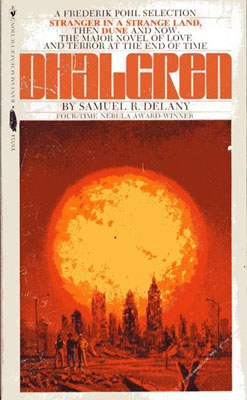
Dhalgren, Samuel R Delany
Some time during the mid-1980s, the family went on holiday to Paris. We stayed in a flat belonging to a director of the company for which my father worked. I vaguely remember buying an English book in a book shop somewhere in the city. It was Driftglass, a collection by Samuel R Delany. I bought it because I was reading The Ballad of Beta-2 / Empire Star, a Delany double, and I thought it was brilliant – especially ‘Empire Star’. Delany’s fiction showed me that sf wasn’t all Heinleinesque rational men heroes and Asimovian cardboard-cutouts characters, it didn’t have to privilege the central idea at the expense of everything else, it could be beautifully written. I was a big fan of Delany’s writing for many years, but nothing blew me away as much as ‘Empire Star’ had done… until I read Dhalgren. It was just so completely not everything I thought sf was – it was wilfully irrational, it was immediate and real and dirty, it wasn’t about manly, or intellectual, white men doing manly and intellectual things in space or on some alien planet… Dhalgren is still one of my favourite novels, and I’ve probably reread it more times than any other book I own – yes, even more times than Dune.

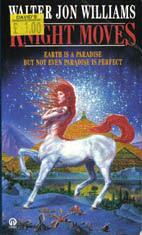
Knight Moves, Walter Jon Williams
I’ve never been a fan of Williams’ books, though I’ve read several of them over the years. I think Knight Moves might be the first book by him I read, however. It was published in 1985, and I’m fairly sure I read it in 1988. I’d joined the British Science Fiction Association that year, or perhaps the year before, and when Paperback Inferno – the BSFA’s paperback review magazine as was – put out a call for more reviewers, I volunteered. Andy Sawyer, the editor, asked me to send him a sample review, so I did a demolition job on Knight Moves. I can remember almost nothing of the book – except that I thought it was terrible – but as a result of my review of it I became book reviewer for the BSFA… and I’ve been reviewing books and commenting on science fiction ever since.

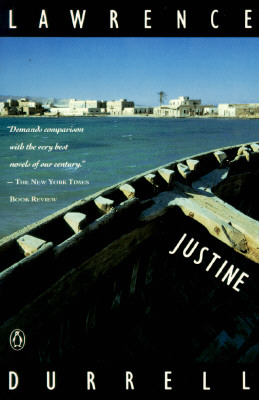
The Alexandria Quartet, Lawrence Durrell
As a teenager, my first choice of reading had always been science fiction, but I didn’t always have access to it. When I spent the holidays with my parents in the Middle East, my reading was often limited to the books they owned. Which meant I read some right crap – Judith Krantz, Shirley Conran, Jackie Collins, Nelson DeMille, Eric van Lustbader – and a few good books (though none of the titles immediately spring to mind). When I moved to Abu Dhabi in 1994, one of the first things I did was join the Daly Community Library. It had only a small number of science fiction titles, so I was forced to widen my reading. That’s how I discovered Anthony Burgess, Angela Carter, David Lodge, Nicholas Monsarrat, Rose Tremain, Lawrence Norfolk, Hanan al-Shaykh, Helen Simpson, Margaret Atwood, and several other authors I still read. One of the books I took out of the library was The Alexandria Quartet. But I didn’t actually get around to reading it, and eventually took it back unread. So I bought paperback copies of the books on a visit to Dubai. I read it, and immediately became a fan of Durrell’s writing… and subsequently a collector of his books. Durrell is not the first author I hunted down first editions of their books so I’d own them all – that would probably be Gwyneth Jones – but my book collecting certainly turned more serious as a result of reading Durrell. so much so, in fact, that I now own a first edition of Durrell’s first novel, Pied Piper of Lovers, which is extremely rare…

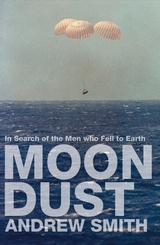
Moondust, Andrew Smith
I was only three when the late Neil Armstrong set foot on the Moon – in fact, the only Apollo mission I recall watching was ASTP in July 1975. But I was very much fascinated by space exploration as kid. I remember having a large poster of a Saturn V and an astronaut on my bedroom wall in Dubai. But then I become more involved in science fiction and lost my interest in science fact. Every now and again, I’d read something related to space exploration – one year as a Christmas present, I was given one of those big Octopus coffee table books on the topic; while I was living in Abu Dhabi, a local book shop stocked a number of Apogee Books’ NASA Mission Reports, and I bought several of them; I read At the Edge of Space by Milton O Thompson, about the X-15 programme, and found it surprisingly interesting. Then, five years ago I read Moondust. I no longer recall what prompted me to read it. But it re-ignited my interest in space exploration, and especially the Apollo programme. So I started buying books on the subject – often signed first editions. I created a blog, A Space About Books About Space, to review the books I bought. I built up quite a library – and it’s still growing – on human space exploration and spacecraft. And all those books have also come in really useful in my science fiction writing (just look at the bibliography in Adrift on the Sea of Rains).


4 Comments

100 Greatest Novels meme

I stumbled across mention of this list on LibraryThing. It apparently comes from The Novel 100: A Ranking of the Greatest Novels of All Time by Daniel S Burt, a specialist in Victorian literature at a US university. Burt’s book was published in 2004, but it seems like an almost stereotypical list of classic literature by Dead White Males – with a few women and POC for variety. Burt clearly has his favourites – I find it hard to believe that some authors, on matter how great, could contribute more than a single work to a Best 100. In effect, Burt is claiming that, for example, Dickens’ third best work is better than the best work of hundreds of thousands, if not millions, of other authors.

Anyway, it’s a list. Of books. Which means… book meme. As usual, bold them if you’ve read them, italicise them if they’re on the TBR.

1 Don Quixote, Miguel de Cervantes (1605, 1630)
2 War and Peace, Leo Tolstoy (1869)
3 Ulysses, James Joyce (1922)
4 In Search of Lost Time, Marcel Proust (1913-1927)
5 The Brothers Karamazov, Feodor Dostoevsky (1880)
6 Moby-Dick, Herman Melville (1851)
7 Madame Bovary, Gustave Flaubert (1857)
8 Middlemarch, George Eliot (1871-1872)
9 The Magic Mountain, Thomas Mann (1924)
10 The Tale of Genji, Murasaki Shikibu (11th Century)
11 Emma, Jane Austen (1816)
12 Bleak House, Charles Dickens (1852-1853)
13 Anna Karenina, Leo Tolstoy (1877)
14 Adventures of Huckleberry Finn, Mark Twain (1884)
15 Tom Jones, Henry Fielding (1749)
16 Great Expectations, Charles Dickens (1860-1861)
17 Absalom, Absalom!, William Faulkner (1936)
18 The Ambassadors, Henry James (1903)
19 One Hundred Years of Solitude, Gabriel Garcia Marquez (1967)
20 The Great Gatsby, F Scott Fitzgerald (1925)
21 To The Lighthouse, Virginia Woolf (1927)
22 Crime and Punishment, Feodor Dostoevsky (1866)
23 The Sound and the Fury, William Faulkner (1929)
24 Vanity Fair, William Makepeace Thackeray (1847-1848)
25 Invisible Man, Ralph Ellison (1952)
26 Finnegans Wake, James Joyce (1939)
27 The Man Without Qualities, Robert Musil (1930-1943)
28 Gravity’s Rainbow, Thomas Pynchon (1973)
29 The Portrait of a Lady, Henry James (1881)
30 Women in Love, DH Lawrence (1920)
31 The Red and the Black, Stendhal (1830)
32 Tristram Shandy, Laurence Sterne (1760-1767)
33 Dead Souls, Nikolai Gogol (1842)
34 Tess of the D’Urbervilles, Thomas Hardy (1891)
35 Buddenbrooks, Thomas Mann (1901)
36 Le Père Goriot, Honoré de Balzac (1835)
37 A Portrait of the Artist as a Young Man, James Joyce (1916)
38 Wuthering Heights, Emily Bronte (1847)
39 The Tin Drum, Günter Grass (1959)
40 Molloy; Malone Dies; The Unnamable, Samuel Beckett (1951-1953)
41 Pride and Prejudice, Jane Austen (1813)
42 The Scarlet Letter, Nathaniel Hawthorne (1850)
43 Fathers and Sons, Ivan Turgenev (1862)
44 Nostromo, Joseph Conrad (1904)
45 Beloved, Toni Morrison (1987)
46 An American Tragedy, Theodore Dreiser (1925)
47 Lolita, Vladimir Nabokov (1955)
48 The Golden Notebook, Doris Lessing (1962)
49 Clarissa, Samuel Richardson (1747-1748)
50 Dream of the Red Chamber, Cao Xueqin (1791)
51 The Trial, Franz Kafka (1925)
52 Jane Eyre, Charlotte Bronte (1847)
53 The Red Badge of Courage, Stephen Crane (1895)
54 The Grapes of Wrath, John Steinbeck (1939)
55 Petersburg, Andrey Bely (1916, 1922)
56 Things Fall Apart, Chinue Achebe (1958)
57 The Princess of Cleves, Madame de Lafayette (1678)
58 The Stranger, Albert Camus (1942)
59 My Antonia, Willa Cather (1918)
60 The Counterfeiters, André Gide (1926)
61 The Age of Innocence, Edith Wharton (1920)
62 The Good Soldier, Ford Madox Ford (1915)
63 The Awakening, Kate Chopin 1899
64 A Passage to India, EM Forster (1924)
65 Herzog, Saul Bellow (1964)
66 Germinal, Émile Zola (1855)
67 Call It Sleep, Henry Roth (1934)
68 USA Trilogy, John Dos Passos (1930-1938)
69 Hunger, Knut Hamsun 1890)
70 Berlin Alexanderplatz, Alfred Doblin (1929)
71 Cities of Salt, Abd al-Rahman Munif (1984-1989)
72 The Death of Artemio Cruz, Carlos Fuentes (1962)
73 A Farewell to Arms, Ernest Hemingway (1929)
74 Brideshead Revisited, Evelyn Waugh (1945)
75 The Last Chronicle of Barset, Anthony Trollope (1866-1867)
76 The Pickwick Papers, Charles Dickens (1836-1867)
77 Robinson Crusoe, Daniel Defoe (1719)
78 The Sorrows of Young Werther, Johann Wolfgang von Goethe (1774)
79 Candide, Voltaire (1759)
80 Native Son, Richard Wright (1940)
81 Under the Volcano, Malcolm Lowry (1947)
82 Oblomov, Ivan Goncharov (1859)
83 Their Eyes Were Watching God, Zora Neale Hurston (1937)
84 Waverley, Sir Walter Scott (1814)
85 Snow Country, Kawabata Yasunari (1937, 1948)
86 Nineteen Eighty-Four, George Orwell (1949)
87 The Betrothed, Alessandro Manzoni (1827, 1840)
88 The Last of the Mohicans, James Fenimore Cooper (1826)
89 Uncle Tom’s Cabin, Harriet Beecher Stowe (1852)
90 Les Misérables, Victor Hugo (1862)
91 On the Road, Jack Kerouac (1957)
92 Frankenstein, Mary Shelley (1818)
93 The Leopard, Giuseppe Tomasi di Lampedusa (1958)
94 The Catcher in the Rye, JD Salinger (1951)
95 The Woman in White, Wilkie Collins (1860)
96 The Good Soldier, Svejk Jaroslav Hasek (1921-1923)
97 Dracula, Bram Stoker (1897)
98 The Three Musketeers, Alexandre Dumas (1844)
99 The Hound of Baskervilles, Arthur Conan Doyle (1902)
100 Gone with the Wind, Margaret Mitchell (1936)

Not an especially good showing – I’ve only read a dozen of them. And several of them I didn’t much like: The Catcher in the Rye, The Good Soldier, On The Road… But a number of them do look interesting  and not just the ones I already have on my TBR.


3 Comments

Ten favourite books read during the lifetime of this blog

I saw this meme on David Hebblethwaite’s excellent blog (and he picked it up from The Broke and the Bookish), and I thought: that’s a good idea, my turn now. It Doesn’t Have To Be Right (It Just Has To Sound Plausible) has been running since 2006, originally on blogger.com but on wordpress.com for the past couple of years. Each year, I’ve put together a list of the best five books I’ve read that year – a habit which even predates my blog, as I used to do it for an APA I was in for a good many years. So those best of lists for each year were the obvious place to look for books for this meme.

This list of ten books are not my favourite books of all time, but they are books I liked and admired a great deal during the years 2006 to 2011. They’re also quite indicative of what it is in fiction that I like and admire. They’re in no particular order.

1 Ascent, Jed Mercurio (2007)
This has been a touchstone work for me for a number of years. Mercurio’s highly-detailed prose is something I try for in my own writing, though I do wonder if in Adrift on the Sea of Rains I’ve gone even further than Ascent does. The story of a Soviet pilot leading up to the Korean War and during the years following, Ascent paints a bleak picture of a driven man who, despite numerous setbacks, still ends up playing an important, but secret, role in the USSR’s space programme. Although its central character, Yefgeni Yeremin, is invited to train as a cosmonaut, this is not the cheerful gung-ho can-do-ism normally found in fictional treatments of the Space Race. Ascent is not a science fiction novel, and Mercurio is not a science fiction author (although he did write and produce the science fiction television series Invasion: Earth), but I felt Ascent could be read as sf – and I wrote as much here.

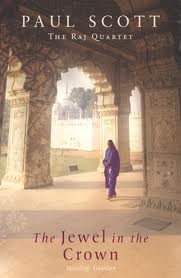
2 The Jewel In The Crown, Paul Scott (1966)
I vaguely recall watching the television adaptation of this when it was broadcast back in the 1980s, though all I can remember is Art Malik, Tim Piggott-Smith and Geraldine James. When I stumbled across all four of the Raj Quartet books in a charity shop for 69p buy-one-get-one-free, I thought they’d be worth a read. And when I got around to reading The Jewel In The Crown I discovered that Paul Scott was precisely the sort of literary writer whose fiction I enjoy a great deal. There is an impressive control of voice on display throughout The Jewel In The Crown, and the collage of testimonies from which it’s put together create an impressively rich and detailed portrait of life in the invented Indian city of Mayapore. After finishing The Jewel In The Crown, I added Scott to the list of authors whose books I collect in first editions (although I’ve yet to find an affordable copy of this book in first edition). I wrote about The Jewel In The Crown here.

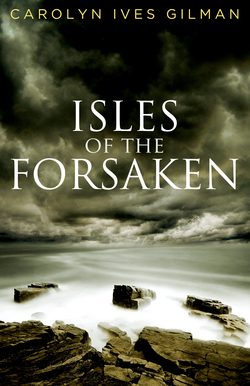
3 Isles of the Forsaken, Carolyn Ives Gilman (2011)
I used to read fantasy quite a lot – not as much as I read science fiction, but it was probably my second choice in terms of reading material. I worked my way through most of Robert Jordan’s Wheel of Time and George RR Martin’s A Song of Ice and Fire, tried the first book of Steve Erikson’s Malazan Books of the Fallen, and ploughed my way through sundry other well-known fantasy novels. And then I completely gave it up – or rather, gave up on it. It was all rubbish. Everything was the same, there had been no real invention in it since the 1970s. It was all magic systems and thinly-disguised role-playing-games’ campaigns. But I knew the name Carolyn Ives Gilman – I’d liked her debut, Halfway Human, which was sf – and the description of Isles of the Forsaken did sound like something out of the ordinary in fantasy terms. And so it proved. There is a scene about two-thirds of the way through the novel where two of the major characters escape imprisonment by the villains. Their route takes them along tunnels and inside the mountain overlooking the city, where they find themselves in some sort of vast otherworldly library built around an apparently bottomless well. It’s an astonishing moment in a fantasy novel that is very much unlike all the other fantasies currently available; and it’s one of only a handful of books in the genre that I consider worth reading. I wrote about it here.

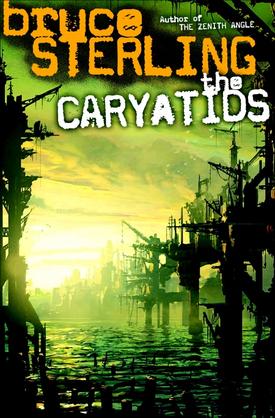
4 The Caryatids, Bruce Sterling (2009)
I’ve been a fan of Sterling’s writing since the 1980s, and have bought each new book by him as it was published. Not all made my top five list for their year of publication as I sometimes felt his propensity to throw out ideas on every page occasionally made uneven reads of his novels. The Caryatids, however, seemed to me like a welcome return to form – more than that, it was one of the first science fiction novels which read like a truly twenty-first century science fiction novel. The world Sterling created in The Caryatids felt like one that was reachable from the present day – or rather, felt like one that was inevitable if nothing was done in the present day to halt things like Climate Change or the collapse of capitalism. I was happy when I was asked to review the book for Interzone, and even more chuffed when I was told I’d also be interviewing Sterling. The interview is in Interzone #221 March-April 2009, and I think it came out quite well. I reprinted the review on my blog here in May of this year. Incidentally, I still don’t understand why there’s been no UK edition of this novel.

5 Spirit, The Princess of Bois Dormant, Gwyneth Jones (2008)
I’ve long maintained that Jones is the finest British writer of science fiction currently being published – although she’s not had a novel published since this one. There have been three collections since 2008, and she continues to write short fiction – and, of course, there are the YA books she writes as Ann Halam… although the latest of those, a sequel to Dr Franklin’s Island, will only be published in the US. Spirit is perhaps the closest Jones has ever come to writing space opera, and the end result is characteristically Jonesian but also seems in part to carry the flavours of several other well-known sf authors, from Samuel R Delany to Iain M Banks. The story is based on that of The Count of Monte Cristo, but the ending recasts Dumas’ tale of revenge as something less vindictive and more redemptive. I wrote about it here but the review’s cake-based conceit wasn’t as effective – or made as much sense – as I’d thought when I wrote it. Oh well, it seemed like a good idea at the time.

6 Carrying the Fire, Michael Collins (1974)
Three years ago was the fortieth anniversary of the Apollo 11 lunar landing, and in order to celebrate it I decided to read the (auto)biographies of the three astronauts involved – Neil Armstrong, Buzz Aldrin and Michael Collins – and review the books on my Space Books blog. I also read and reviewed several other books about the mission. Carrying the Fire not only proved to be the best of the three (auto)biographies, but also the best astronaut autobiography I have read to date. Collins was always characterised as the most introspective and erudite of the three “amiable strangers”, so it’s no real surprise that Carrying the Fire is so readable and so well-written. It also feels far less self-aggrandising than is typically the case for astronaut autobiographies – the nature of the job in those days demanded the sort of people who have big egos. Recently, of course, we lost one of the Apollo 11 crew, Neil Armstrong, on whom the most attention regarding the lunar missions has focused, despite his retreat from public life afterward. My review of Carrying the Fire is here.

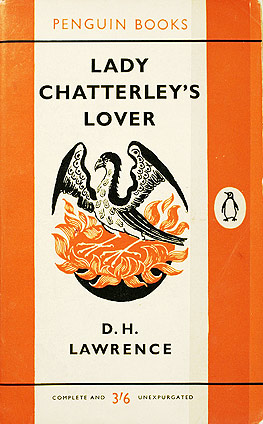
7 Lady Chatterley’s Lover, DH Lawrence (1928)
My father was the DH Lawrence fan in our family. On a trip to the US, he dragged my mother to Taos to see the chapel where Lawrence’s ashes are interred. But, despite a shelf full of books by and about Lawrence in my parents’ house, I’d never tried reading him. And then, for some reason I no longer recall, I decided I ought to have a go. So of course I picked Lawrence’s most famous – and infamous – novel. And I loved it. Like Lawrence, I’m a Nottinghamshire native, and though the Eastwood dialect he writes is much broader than the Mansfield dialect I heard throughout my childhood years, it’s still familiar. So there was an immediate geographical appeal to the book. But when Lawrence was writing about nature and the countryside, his descriptive prose really shone for me (Lawrence Durrell, a favourite writer, is also an excellent writer of descriptive prose). The characters of Mellors and Constance were also drawn much more effectively than I had expected. I so enjoyed Lady Chatterley’s Lover, that on subsequent visits to charity shops I picked up copies of Lawrence’s other books, and now have most of them – and I plan to slowly work my way through them. Incidentally, the best film adaptation I’ve seen so far of the book is Pascale Ferran’s Lady Chatterley. It’s French-language, which is initially odd, but it does seem to capture the book much more effectively than any other adaptation.

8 Evening’s Empire, David Herter (2002)
There is a trio of books by a writer whose personal views I find odious which riffs on Golden Age tropes and attempts to do something 21st century with them. I read the first two shortly after they were published – and before I knew what the author was like – and couldn’t see what all the fuss was about. They weren’t actually very good. David Herter’s first novel, Ceres Storm, plays similar games with those tropes, but it is beautifully written and very, very good. Of course, Herter remains mostly unknown whereas the previous writer now churns out best-sellers. Such is the way things work. Evening’s Empire was Herter’s second novel, and it is not science fiction. It sat unread on my bookshelves for a decade, and when I finally read it I wondered why it had taken me so long. It starts off as a (John) Crowley-esque fantasy before taking an abrupt left turn into something strange and wonderful. The main character is working on an opera based on Jules Verne, and that in turn inspired me to pick up and read Verne’s two best-known works, Twenty Thousand Leagues Under the Sea and Journey to the Centre of the Earth… but I don’t think I’ll ever really be a Verne fan.

9 Synthajoy, DG Compton (1968)
If Gwyneth Jones is the finest writer of science fiction in the UK currently still writing, then Compton is the finest sf writer in the UK who is no longer writing (and hasn’t been published since a pair of near-future crime novels published in the mid-1990s). He’s perhaps best known for The Continuous Katherine Mortenhoe (1974), which was adapted for cinema by Betrand Tavernier as Death Watch in 1979. Compton started out writing crime novels in the early 1960s, but branched out into sf in 1965 with The Quality of Mercy. British sf of that period was far better-written than its US equivalent, chiefly because it was less orientated toward, or had fewer roots in, pulpish action-adventure. Writers such as Arthur Sellings, Keith Roberts, Rex Gordon, Michael G Coney or Richard Cowper – not to mention the New Wave authors – could write rings round their American contemporaries. Even those who banged out hackwork for US publishers with impressive regularity – Brian Stableford, EC Tubb, Edmund Cooper, Ken Bulmer, etc. – were better prose stylists than the big Hugo winners like Asimov, Heinlein, Herbert or van Vogt. Compton was the best of the lot. His books read like snapshots of the 1960s and 1970s now, but they’re beautifully observed snapshots. They are the embodiment of sf novels set in the near-future that are really about the time they were written. Synthajoy‘s science-fictional content does not especially convince, and its central premise is unlikely to generate sense of wonder… but it’s a wonderfully-written portrait of a woman who is driven to crime by the behaviour of her husband, the inventor of the eponymous psychiatric technique. I wrote about it here.

10 Red Plenty, Francis Spufford (2010)
I think I’ve always had a somewhat utopian bent, and that’s only grown stronger in recent years. Science fiction has its occasional spats over pessimistic versus optimistic stories, and while I can hardly claim that Adrift on the Sea of Rains is optimistic, I have grown increasingly annoyed with the default futures far too much recent sf employs. It’s all grimly corporate and capitalist near-fascist states which only perpetuate the myth of self-actualisation through money, power and material possessions. I’d like to see that change. Yes, I know there are utopian science fictions available, but it’s the default nature of this horrible US-led invented future that I’d like to see disappear. Red Plenty, however, does not depict a communist future, a USSR which outlasted the capitalist West. It’s actual a dramatised history of events during the first half a dozen decades of the USSR. But it’s beautifully done, and it’s easy to see how the soviet system promised so much more than it ended up delivering. It presents the USSR as a dream of utopia. The fact the dream failed should not invalidate the attempt. Read Red Plenty and then tell me the American Dream is the only sustainable future. Who knows, twenty years from now we may be mocking sf novels that don’t depict the USA as a repressive and misogynist theocratic oligarchy…

special extra 11th book: Seven Miles Down, Jacques Piccard & Robert S Mietz (1961)
This list is supposed to be ten books – it says so in the title of the post – but I really wanted to include this book… not because it is well-written, or because it’s the best book ever published on its subject. It is, as far as I can discover, the only book published on its subject. And it’s a subject which came to fascinate me when I learnt of it in 2010. That year was the fiftieth anniversary of the first – and until only recently – visit by human beings to the deepest part of the oceans, Challenger Deep in the Mariana Trench. Like the Apollo programme, the descent of the bathyscaphe Trieste was a triumph of brute engineering, and that’s one of the reasons I find it so interesting. It’s also inspired some of my fiction. I wrote about Seven Miles Down here.


3 Comments

BFI greatest films

Has no one turned this into a meme yet? Then allow me… At the beginning of the month, Sight & Sound, the magazine of the British Film Institute published its list of the 50 greatest films. It caused a little bit of a stir because Vertigo bumped Citizen Kane from the top spot, a position it’s held for fifty years.

Anyway, meme – you know what to do. Put it in bold if you’ve seen it, italics if you own it but have yet to watch it.

1. Vertigo, Alfred Hitchcock, 1958
2. Citizen Kane, Orson Welles, 1941
3. Tokyo Story, Ozu Yasujiro, 1953
4. La Règle du jeu, Jean Renoir, 1939
5. Sunrise: A Song of Two Humans, FW Murnau, 1927
6. 2001: A Space Odyssey, Stanley Kubrick, 1968
7. The Searchers, John Ford, 1956
8. Man with a Movie Camera, Dziga Vertov, 1929
9. The Passion of Joan of Arc, Carl Dreyer, 1927
10. , Federico Fellini, 1963
11. Battleship Potemkin, Sergei Eisenstein, 1925
12. L’Atalante, Jean Vigo, 1934
13. Breathless, Jean-Luc Godard, 1960
14. Apocalypse Now, Francis Ford Coppola, 1979
15. Late Spring, Ozu Yasujiro, 1949
16. Au hasard Balthazar, Robert Bresson, 1966
17= Seven Samurai, Kurosawa Akira, 1954
17= Persona, Ingmar Bergman, 1966
19. Mirror, Andrei Tarkovsky, 1974
20. Singin’ in the Rain, Stanley Donen & Gene Kelly, 1951
21= L’avventura, Michelangelo Antonioni, 1960
21= Le Mépris, Jean-Luc Godard, 1963
21= The Godfather, Francis Ford Coppola, 1972
24= Ordet, Carl Dreyer, 1955
24= In the Mood for Love, Wong Kar-Wai, 2000
26= Rashomon, Kurosawa Akira, 1950
26= Andrei Rublev, Andrei Tarkovsky, 1966
28. Mulholland Dr., David Lynch, 2001
29= Stalker, Andrei Tarkovsky, 1979
29= Shoah, Claude Lanzmann, 1985
31= The Godfather Part II, Francis Ford Coppola, 1974
31= Taxi Driver, Martin Scorsese, 1976
33. Bicycle Thieves, Vittoria De Sica, 1948
34. The General, Buster Keaton & Clyde Bruckman, 1926
35= Metropolis, Fritz Lang, 1927
35= Psycho, Alfred Hitchcock, 1960
35= Jeanne Dielman, 23 quai du Commerce 1080 Bruxelles, Chantal Akerman, 1975
35= Sátántangó, Béla Tarr, 1994
39= The 400 Blows, François Truffaut, 1959
39= La dolce vita, Federico Fellini, 1960
41. Journey to Italy, Roberto Rossellini, 1954
42= Pather Panchali, Satyajit Ray, 1955
42= Some Like It Hot, Billy Wilder, 1959
42= Gertrud, Carl Dreyer, 1964
42= Pierrot le fou, Jean-Luc Godard, 1965
42= Play Time, Jacques Tati, 1967
42= Close-Up, Abbas Kiarostami, 1990
48= The Battle of Algiers, Gillo Pontecorvo, 1966
48= Histoire(s) du cinéma, Jean-Luc Godard, 1998
50= City Lights, Charlie Chaplin, 1931
50= Ugetsu monogatari, Mizoguchi Kenji, 1953
50= La Jetée, Chris Marker, 1962

I make that 36 I’ve seen out of the fifty. There are also some of my favourite directors on there too, like Tarkovsky, Hitchcock and Antonioni. There are a few I’m surprised not to see, such as Antonioni’s Red Desert; not to mention works by directors such as Kieslowski, Sirk, Lean or Herzog. I also note that only two sf films make the list – 2001: A Space Odyssey and Metropolis.


2 Comments

Meme 101

Meme! I got this from Andrew Wheeler who got it from James Nicoll who got it from Martine Wisse, who took it from Science Fiction: The 101 Best Novels 1985-2010 by Damien Broderick and Paul di Filippo.

Bold if you own it, italics if you’ve read it, strikethrough if you think it doesn’t belong on this list…

The Handmaid’s Tale, Margaret Atwood (1985)
Ender’s Game, Orson Scott Card (1985)
Radio Free Albemuth, Philip K Dick (1985)
Always Coming Home, Ursula K Le Guin (1985)
This Is the Way the World Ends, James Morrow (1985)
Galápagos, Kurt Vonnegut (1985)
The Falling Woman, Pat Murphy (1986)
The Shore of Women, Pamela Sargent (1986)
A Door Into Ocean, Joan Slonczewski (1986)
Soldiers of Paradise, Paul Park (1987) (an excellent novel, but Coelestis is better)
Life During Wartime, Lucius Shepard (1987)
The Sea and Summer, George Turner (1987)
Cyteen, CJ Cherryh (1988)
Neverness, David Zindell (1988)
The Steerswoman, Rosemary Kirstein (1989)
Grass, Sheri S Tepper (1989)
Use of Weapons, Iain M Banks (1990)
Queen of Angels, Greg Bear (1990)
Barrayar, Lois McMaster Bujold (1991)
Synners , Pat Cadigan (1991)
Sarah Canary, Karen Joy Fowler (1991)
White Queen, Gwyneth Jones (1991)
Eternal Light, Paul McAuley (1991)
Stations of the Tide, Michael Swanwick (1991)
Timelike Infinity, Stephen Baxter (1992)
Dead Girls, Richard Calder (1992)
Jumper, Steven Gould (1992)
China Mountain Zhang, Maureen F McHugh (1992)
Red Mars, Kim Stanley Robinson (1992)
A Fire Upon the Deep, Vernor Vinge (1992)
Aristoi, Walter Jon Williams (1992)
Doomsday Book, Connie Willis (1992)
Parable of the Sower, Octavia Butler (1993)
Ammonite, Nicola Griffith (1993)
Chimera, Mary Rosenblum (1993)
Nightside the Long Sun, Gene Wolfe (1993)
Brittle Innings, Michael Bishop (1994)
Permutation City, Greg Egan (1994)
Blood, Michael Moorcock (1994)
Mother of Storms, John Barnes (1995)
Sailing Bright Eternity, Gregory Benford (1995)
Galatea 2.2, Richard Powers (1995)
The Diamond Age, Neal Stephenson (1995)
The Transmigration of Souls, William Barton (1996)
The Fortunate Fall, Raphael Carter (1996)
The Sparrow/Children of God, Mary Doria Russell (1996/1998)
Holy Fire, Bruce Sterling (1996)
Night Lamp, Jack Vance (1996) (really? This is not very good)
In the Garden of Iden, Kage Baker (1997)
Forever Peace, Joe Haldeman (1997)
Glimmering, Elizabeth Hand (1997)
As She Climbed Across the Table, Jonathan Lethem (1997)
The Cassini Division, Ken MacLeod (1998)
Bloom, Wil McCarthy (1998)
Vast, Linda Nagata (1998)
The Golden Globe, John Varley (1998)
Headlong, Simon Ings (1999)
Cave of Stars, George Zebrowski (1999)
Genesis, Poul Anderson (2000)
Super-Cannes, JG Ballard (2000)
Under the Skin, Michel Faber (2000) (I really disliked this)
Perdido Street Station, China Miéville (2000)
Distance Haze, Jamil Nasir (2000)
Revelation Space trilogy, Alastair Reynolds (2000)
Salt, Adam Roberts (2000) (not his best, by a long shot)
Ventus, Karl Schroeder (2001)
The Cassandra Complex, Brian Stableford (2001)
Light, M John Harrison (2002)
Altered Carbon, Richard Morgan (2002)
The Separation, Christopher Priest (2002)
The Golden Age, John C Wright (2002)
The Time Traveler’s Wife, Audrey Niffenegger (2003)
Natural History, Justina Robson (2003)
The Labyrinth Key/Spears of God, Howard V Hendrix (2004/2006)
River of Gods, Ian McDonald (2004)
The Plot Against America, Philip Roth (2004)
Never Let Me Go, Kazuo Ishiguro (2005)
The House of Storms, Ian R MacLeod (2005)
Counting Heads, David Marusek (2005)
Air (Or, Have Not Have), Geoff Ryman (2005)
Accelerando, Charles Stross (2005)
Spin, Robert Charles Wilson (2005)
My Dirty Little Book of Stolen Time, Liz Jensen (2006) (The Rapture may be better)
The Road, Cormac McCarthy (2006)
Temeraire /His Majesty’s Dragon, Naomi Novik (2006)
Blindsight, Peter Watts (2006)
HARM, Brian Aldiss (2007)
The Yiddish Policemen’s Union, Michael Chabon (2007)
The Secret City,Carol Emshwiller (2007)
In War Times, Kathleen Ann Goonan (2007)
Postsingular, Rudy Rucker (2007)
Shadow of the Scorpion, Neal Asher (2008)
The Hunger Games trilogy, Suzanne Collins (2008-2010)
Little Brother, Cory Doctorow (2008)
The Alchemy of Stone, Ekaterina Sedia (2008)
The Windup Girl, Paolo Bacigalupi (2009)
Steal Across the Sky, Nancy Kress (2009)
Boneshaker, Cherie Priest (2009)
Zoo City, Lauren Beukes (2010)
Zero History, William Gibson (2010)
The Quantum Thief, Hannu Rajaniemi (2010)

I make that 51 read, 33 owned, and 5 owned but not yet read. Not a bad showing. There are some good books on the list, but some feel as if they were picked because they were by a writer they wanted on the list and it was the only title published after 1985. There are certainly a few I don’t think belong on the list – and not just the ones I’ve struck through. Boneshaker, surely, is steampunk, not sf (are we still claiming steampunk is part of sf? do we really want to?). And the Noviks? Fantasy, yes? Also, the Collins trilogy is YA – the only YA on the list, I think.

It’s axiomatic that any such list will be questionable to some extent, though I do think this one is better than most. For one thing, it actually features books I’ve not read but would like to. There are also 32 women on the list, which is more than lists of this sort manage (though it could probably do better).


5 Comments

55 reading questions

I took this meme from David Hebblethwaite’s Follow the Thread blog, and he says he found it Story in a Teacup. It’s fifty-five questions about your reading. I think some of my answers are pretty much the same as David’s…

1 Favourite childhood book? I started out in sf reading Dr Who novelisations, but I can remember virtually nothing about them now. I don’t recall any specific books that I loved prior to that. I just read voraciously.

2 What are you reading right now? Finished ‘A Propos of Lady Chatterley’s Lover’ and other Essays by DH Lawrence on the weekend; and then started The Wanderground by Sally Miller Gearhart, which I’m reading for SF Mistressworks.

3 What books do you have on request at the library? I don’t use the library.

4 Bad book habit? Buying more books than I can read, and starting books when I haven’t finished the current read.

5 What do you currently have checked out at the library? I don’t use the library.

6 Do you have an e-reader? Nope.

7 Do you prefer to read one book at a time, or several at once? I prefer to read serially, but sometimes – often – I end up reading several books in parallel.

8 Have your reading habits changed since starting a blog? Yes. Since starting SF Mistressworks, and contributing to Daughters of Prometheus, I read far more fiction by women writers. I’ve also used this blog to challenge myself to read books I wouldn’t normally read – see this year’s world fiction reading challenge here.

9 Least favourite book you read this year (so far)? The Girl with the Dragon Tattoo, Stieg Larsson.

10 Favourite book you’ve read this year? Either The Universe of Things, Gwyneth Jones; Omega, Christopher Evans; or The Door, Magda Szabó.

11 How often do you read out of your comfort zone? Regularly.

12 What is your reading comfort zone? Science fiction and/or literary fiction. Also non-fiction about space exploration.

13 Can you read on the bus? Yes. I commute to work on a tram and read on it every day.

14 Favourite place to read? I usually read for 30 minutes to an hour in bed every night.

15 What is your policy on book lending? For my collectible books, never. Others, I’m happy to give away – and visitors have occasionally left with piles of paperbacks.

16 Do you ever dog-ear books? Never.

17 Do you ever write in the margins of your books? Never. But I will probably buy an ereader of some description soon because it’ll allow me to annotate what I’m reading.

18 Not even with text books? Nope.

19 What is your favourite language to read in? English.

20 What makes you love a book? Beautiful prose, it says something important, engaging characters, interesting structure… rigour, beauty, insight and depth.

21 What will inspire you to recommend a book? I’m happy to recommend books I both enjoy and admire; and often do.

22 Favourite genre? Science fiction.

23 Genre you rarely read (but wish you did)? I’ve read just about every genre there is, but… The genres I don’t read I generally have no intention of reading. Like urban fantasy.

24 Favourite biography? Carrying the Fire by Michael Collins.

25 Have you ever read a self-help book? No. I’ve no intention of ever doing so.

26 Favourite cookbook? I don’t have one. I prefer eating to cooking.

27 Most inspirational book you’ve read this year (fiction or non-fiction)? I don’t think of books as “inspirational”, or read ones that describe themselves as such.

28 Favorite reading snack? I don’t usually eat while I’m reading.

29 Name a case in which hype ruined your reading experience. Probably The Quantum Thief by Hannu Rajaniemi. It was good, but not as good as I’d expected it to be.

30 How often do you agree with critics about a book? Depends on the critic, obviously. But quite often. Award shortlists, on the other hand…

31 How do you feel about giving bad/negative reviews? Not giving a negative review to a bad book is dishonest. And dishonest reviews are next to useless.

32 If you could read in a foreign language, which language would you choose? I’ve tried reading in French, German and Arabic, and I’d like to improve my facility in those languages. But I also quite like the idea of being able to read Russian classic literature in Russian.

33 Most intimidating book you’ve ever read? In terms of sheer size, probably Ash: A Secret History by Mary Gentle. It proved to be excellent.

34 Most intimidating book you’re too nervous to begin? Possibly House Of Leaves by Mark Z Danielewski. Ian McNiven’s biography of Lawrence Durrell is also intimidatingly big, especially in hardback.

35 Favourite poet? Bernard Spencer or John Jarmain.

36 How many books do you usually have checked out of the library at any given time? I don’t use the library. When I lived in the UAE, I was a member of a subscription library and would generally take out four books every fortnight.

37 How often have you returned books to the library unread? In the UAE, I did it a couple of times. One such book was… The Alexandria Quartet by Lawrence Durrell. I later bought a copy and read it, and subsequently became a huge fan of his writing.

38 Favourite fictional character? I don’t know. There are characters I admire as writerly creations; there are characters who are little more than placeholders for the reader. I prefer the former.

39 Favourite fictional villain? See above.

40 Books I’m most likely to bring on vacation? Big fat ones that require sustained bouts of reading, such as I’ll enjoy on a plane flight or long train journey.

41 The longest I’ve gone without reading. A week, maybe slightly longer.

42 Name a book that you could/would not finish. Most recently, The Windup Girl by Paolo Bacigalupi.

43 What distracts you easily when you’re reading? The television, the internet, the cat…

44 Favourite film adaptation of a novel? It used to be The Right Stuff, but after a recent rewatch I found myself disappointed by the film. Now it would be Fahrenheit 451 – though I love the film but hate the book. Irony in action…

45 Most disappointing film adaptation? The Sylvia Kristal adaptation of DH Lawrence’s Lady Chatterley’s Lover? It’s a bad film and it’s an adaptation. But the same could be said for a lot of sf adaptations… I don’t really know. I rate David Lynch’s Dune as a flawed masterpiece (and I’d have paid good money to see Alejandro Jodorowski’s film of the book had it been made). And Paul Verhoeven’s Starship Troopers is vastly superior to the book…

46 The most money I’ve ever spent in the bookstore at one time? No idea. I’ve spent around £100 on a single order at Amazon a number of times. The most money I’ve spent on a single book is $500, for a first edition of Pied Piper of Lovers, Lawrence Durrell’s first novel. See here.

47 How often do you skim a book before reading it? Very rarely.

48 What would cause you to stop reading a book halfway through? Blatant racism and/or sexism. Offensive sensibilities. Eye-stabbingly bad prose. An inability to plot. Despicable characters.

49. Do you like to keep your books organized? Yes, though the collection is getting a little bit out of hand…

50 Do you prefer to keep books or give them away once you’ve read them? Depends. Collectibles I keep. Likewise books that were hard to find. Others I get rid of as soon as I’ve read them. I’ve also purged my book shelves several times – for example, I saw no good reason to keep the Stainless Steel Rat novels I originally bought back in the early 1980s…

51 Are there any books you’ve been avoiding? Urban fantasy novels. Anything with zombies in it. Many of the books that have appeared on recent Hugo Award shortlists…

52 Name a book that made you angry. Leviathan Wakes by James SA Corey. See my review here.

53 A book you didn’t expect to like but did? Lady Chatterley’s Lover, DH Lawrence. My father was a big fan of Lawrence’s writing, but I never bothered trying any of his books. And this despite Lawrence Durrell being a big admirer of Lawrence. But after watching Pascale Ferran’s excellent adaptation, Lady Chatterley, in 2009, I decided to have a go at the book. And loved it. After my father died, I promised myself I would read all of Lawrence’s fiction, and recently finished The White Peacock. Structurally it’s a bit odd, but there’s some lovely prose in it. And it is sort of “local” fiction for me as I was born in Nottinghamshire. I am now becoming a bit of a Lawrence fan.

54 A book that you expected to like but didn’t? Bodies by Jed Mercurio. I loved his Ascent, and thought American Adulterer very good indeed. But Bodies was just too gruesome for me.

55 Favourite guilt-free, pleasure reading? Georgette Heyer, probably.


Leave a comment

A – Z variant meme

I was a little ashamed my A – Z meme only managed 15% women writers – see here. So I decided to have another bash, but this time only for women writers. I kept the ones from the previous list which qualified, but unfortunately one of letters proved just a bit too difficult…

A Angel with the Sword, CJ Cherryh (1985)

B The Balkan Trilogy, Olivia Manning (1981)

C China Mountain Zhang, Maureen F McHugh (1992)

D Dear George & Other Stories, Helen Simpson (1995)

E An Exchange of Hostages, Susan R Matthews (1997)

F Fisher’s Face, Jan Morris (1995)

G Gilead, Marilynne Robinson (2004)

H Halfway Human, Carolyn Ives Gilman (1988)

I The Inland trilogy: The Daymaker, Transformations, The Skybreaker, Ann Halam (1987 – 1990)

J Jerusalem Fire, RM Meluch (1985)

K Kairos, Gwyneth Jones (1988)

L The Left Hand of Darkness, Ursula K Le Guin (1969)

M Marq’ssan Cycle: Alanya to Alanya, Renegade, Tsunami, Blood in the Fruit, Stretto, L Timmel Duchamp (2005 – 2008)

N Native Tongue, Suzette Haden Elgin (1984)

O O is for Outlaw, Sue Grafton (1999)

P People of the Talisman, Leigh Brackett (1964)

Q Quantum Gravity series: Keeping It Real, Selling Out, Going Under, Chasing the Dragon, Down to the Bone, Justina Robson (2006 – 2011)

R Rats & Gargoyles, Mary Gentle (1990)

S The Steerswoman, Rosemary Kirstein (1989)

T The Talisman Ring, Georgette Heyer (1936)

U The Unit, Ninni Holmqvist (2006)

V V.I. for Short, Sara Paretsky (1995)

W Women of Sand and Myrrh, Hanan al-Shaykh (1988)

X no title

Y The Year of Our War, Steph Swainston (2004)

Z Zoo City, Lauren Beukes (2010)

Now I shall undoubtedly remember titles I should have included in this list…


4 Comments

A – Z meme

Memes are cool; I like memes. I came across this one on David Hebblethwaite’s excellent blog Follow the Thread. He writes that he found it on the Musings of a Bookshop Girl blog. As memes go, it is beautifully simple… and bloody hard to complete. Just list a favourite book for each letter of the alphabet. To be honest, for a couple of letters I had so many choices, I wasn’t sure which one to pick. Other letters – you know, the high-scoring ones in Scrabble – were not so easy…

A The Alexandria Quartet, Lawrence Durrell (1960)

B The Balkan Trilogy, Olivia Manning (1981)

C Coelestis, Paul Park (1993)

D Dhalgren, Samuel R Delany (1974)

E Evening’s Empire, David Herter (2002)

F The French Lieutenant’s Woman, John Fowles (1969)

G Glimpses, Lewis Shiner (1993)

H How Far Can You Go?, David Lodge (1980)

I Icehenge, Kim Stanley Robinson (1984)

J Jerusalem Fire, RM Meluch (1985)

K Kairos, Gwyneth Jones (1988)

L Lady Chatterley’s Lover, DH Lawrence (1928)

M The Master Mariner: Running Proud, Nicholas Monsarrat (1978)

N Nightwatch, Andrew M Stephenson (1977)

O The Ophiuchi Hotline, John Varley (1977)

P The Prodigal Sun, Sean Williams and Shane Dix (1999)

Q The Quincunx, Charles Palliser (1989)

R The Right Stuff, Tom Wolfe (1979)

S Synthajoy, DG Compton (1968)

T Take Back Plenty, Colin Greenland (1990)

U The Undercover Aliens, AE van Vogt (1950)

V Voyage, Stephen Baxter (1996)

W Where Time Winds Blow, Robert Holdstock (1981)

X X, Y, Michael Blumlein (1993)

Y The Yiddish Policeman’s Union, Michael Chabon (2007)

Z Zoo City, Lauren Beukes (2010)

Sadly, it’s a poor showing on the gender parity front – only 15% women writers. There were a number I wanted to include, but I happened to like a book beginning with that letter by a male writer just a little bit more. Also, I am generally a bigger fan of the oeuvres of women writers than I am of individual works by them.

On the other hand, I hadn’t expected science fiction to make such a strong showing, though it has formed the bulk of my reading since an early age. The numbers go: sf 62%, mainstream 31%, and 1% apiece for fantasy and horror. While I find mainstream novels of a higher quality than sf overall, some of my favourite novels remain science fiction ones.

Finally, the 1980s and 1990s are the most popular decades, with 27% and 23% respectively. I’ve no idea why, since I may not have read the books in question during those decades. The first decade of the twenty-first century scores a measly 8%, and there’s only one book from this decade.