It Doesn't Have To Be Right…

… it just has to sound plausible


Leave a comment

Moving pictures 2019, #22

Well, that’s five seasons of Elementary binge-watched. I liked the set-up, and the series had its moments, but it also had a tendency to jump the shark every now and again. And the fifth season was basically a serial with  a not particularly interesting story arc. But here are some films…
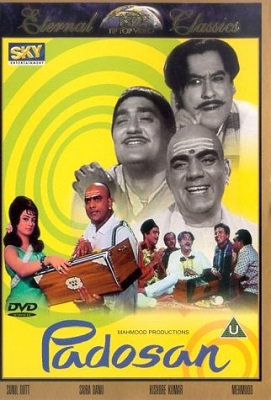
Padosan, Jyoti Swaroop (1968, India). Given how many films Bollywood has made, and given that pretty much all of them follow the pattern boy meets girl, boy loses girl, boy gets girl back, sooner or later one of the ones I watched was going to “borrow” the plot from Cyrano de Bergerac. The difference here is that the suitor uses song to charm his beloved – or rather, he lipsynchs to a friend singing out of sight of his beloved (who loves in the house next-door, and they’re conducting their love affair from the window of one house to a window of the other. There’s an unintended irony here, given that the vast majority of Bollywood stars don’t sing their own songs but mime to playback singers, and some of the playback singers are as famous as the Bollywood stars whose singing voices they provide. This, of course, is only the first part of the formula. The girl discovers the fakery and retaliates by agreeing to a marriage proposal from the boy’s uncle (although they’re not “boy” and “girl” as he’s in his late thirties and she’s in her mid-twenties). In an effort to win back his love, the boy goes all Romeo & Juliet and fakes his suicide. This is not a good idea, in fact it’s a really bad idea. But it appears to work, and the two are finally reunited. Despite some dodgy bits, this is a fun film, chiefly because its cast looks like they’re having fun. It’s considered “one of the best comedy films made in Hindi film history”, according to Wikipedia, and it’s not hard to see why.
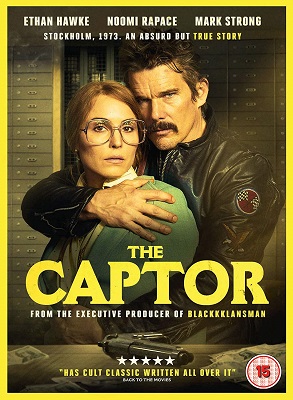
Stockholm, Robert Budreau (2018, USA). When I saw this film, it was titled Stockholm, after Stockholm Syndrome, which was named for the bank robbery depicted in this film. But apparently the UK DVD distributors are preparing for Brexit by removing the name of an EU capital from the cover. Because The Captor is a really dumb title, and pretty much ignores the whole point of the film. Although it is, to be fair, not a great movie. Its cast is predominantly British or American, but they all put on bad Swedish accents. Except they pronounce all the Swedish names incorrectly. Anyway, habitual criminal and his accomplices rob bank, end up in hostage situation, and it all escalates quickly, with the prime minister involved and all sorts of demands and promises made. Oh, and one of the hostages started to identify with the bank robbers. Dodgy Swedish accents aside, Stockholm fails dismally because it makes a bank robbery boring. I mean, hostage situations should be tense and dramatic, even if nothing is actually happening, but Stockholm is just Ethan Hawke stomping about the place like a television cowboy. Avoid.

The Last of England, Derek Jarman (1988, UK). If you had asked me twenty years ago what I thought of Derek Jarman’s films, I might have mentioned being impressed in my teens by Caravaggio but otherwise thinking his work pretentious tosh. But a few years I watched Wittgenstein and thought it really good, and then the BFI released the Derek Jarman Volume 1: 1972 – 1986 Blu-ray collection, and I bought it on a whim… and now I’m a bit of a fan of his movies and I have Volume 2: 1987 – 1994. Part of the reason I’ve become a fan is because Jarman was an experimental film-maker, and while I’ve re-evaluated those of his movies I’d seen before, it’s his experimental films I find myself liking the most. Such as The Last of England. It’s almost impossible to describe, a series of images and scenes set in a post-apocalyptic UK, inspired by Thatcher’s Britain (we didn’t know when we were well off, not that we were: but compared to now? If Thatcher was still alive, this Brexshit would probably see even her rehabilitated. Ugh. What a horrible thought), a painting by Ford Madox Brown, whose title the film takes, and a number of poems. It’s surprisingly effective, both chilling and elegiac. More so, I think, because I remember the late 1980s, and I remember Thatcher’s Britain and Clause 28 and all the things that fed into The Last of England. Good stuff.
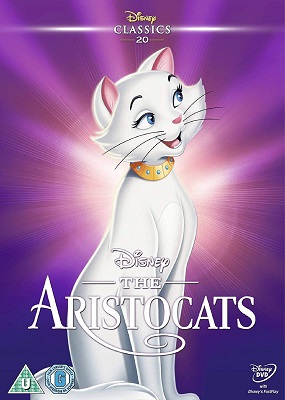
The Aristocats, Wolfgang Reitherman (1970, USA). One of many informal film projects I’ve been running – if that’s not too, well, organised a way to describe it – is working my way through all the Disney films. The classic animated films, of course; but even the obscure live action ones, if I can find them. Some of the animated films I obviously saw as a kid (many of them are older than me; yes, hard to believe); but my memories of them are spotty at best. I think I saw The Aristocats back then. I’ve certainly been aware of the movie since I was a child. But then we had a LP of songs from Disney films when I was young and perhaps it was appearing about the film from listening to that… Stereotypical rich old cat woman plans to leave her riches to her cat, but greedy butler overhears and kidnaps the felines – it should be “catnap”, shouldn’t it, but that means something different… Anyway, he dumps the cats in the country (this is early twentieth century France), but they are rescued by a streetwise alley cat, who helps them return home. For some reason, I remembered the characters from this film, but not the story, nor quite how, well, charming it is. It’s been a mixed bag watching these classic Disney animated films, and I’ve been surprised by which ones I’ve really liked and which I’ve found disappointing.The Aristocats definitely goes in the first group.
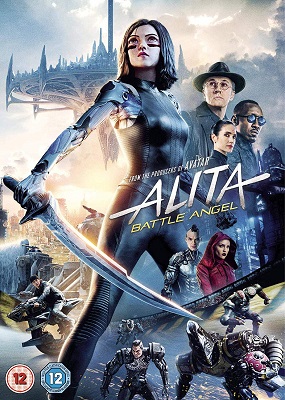
Alita: Battle Angel, Robert Rodriguez (2019,USA). So where my childhood was Disney cartoons and surreal British kids’ TV series and bad US TV shows like The Incredible Hulk, people much younger than myself grew up with Japanese properties mangled for the US market. And this film is a US adaptation of an early 1990s Japanese manga/anime series that is apparently quite well-known among a certain age-group. Which si not me. So I knew nothing about it when I sat down to watch the film… and I know just as little having watched it. Christophe Waltz plays a scientist who runs a sort of street clinic for robots and cyborgs, and who discovers a cyborg head on a rubbish heap. He builds a body for the head, a teenage girl’s body, of course, because he lost his daughter years before. And the cyborg turns out to be some sort of super-soldier or something and there’s a powerplay between various people in a floating city of ultra-rich people and I really couldn’t give a toss abut an hour into the movie… and those eyes. They were… offputting. Yes, there is a style of anime which features over-sized eyes, and in the original manga on which Alita: Battle Angel Alita’s eyes were indeed larger than normal, if not as large as in other manga… But it looks weird in a live-action film, sort of like it’s gone through the uncanny valley and come out the other side. I didn’t like this film, and I’m really tired of cyberpunk dystopian futures (although I recognise the original property on which this film is based is thirty years old). Meh.
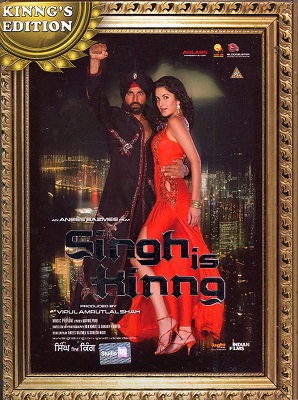
Singh is Kinng, Anees Bazmee (2008, India). Amazon Prime is proving really good for Indian films. Not just Bollywood, but also Tollywood and Kollywood. And classic movies as well as more recent fare. Singh is Kinng opens with a remarkable comedy sequence in which the title character, Happy Singh, attempts to catch a chicken and manages to demolish his village. Actually, it opens with a piece of OTT gangster violence in Australia. But the chicken sequence is really good. Anyway, the gangster, Lucky Singh, is Happy’s cousin and someone is out to kill him, and the village wants to get rid of Happy… so they send him to Australia to help out his cousin. After a detour via Egypt, where Happy meets the love of his life, he ends up in Australia, where he inadvertently puts Lucky into a coma. And everyone persuades themselves that Happy is the perfect person to run Lucky’s huge criminal empire while Lucky is indisposed. This was a lot of fun. The humour’s broad, and the characters a bit stereotypical, but the set-pieces are good and the film is genuinely funny in places. Worth seeing.

1001 Movies You Must See Before You Die count: 940

Leave a comment

Moving pictures 2019, #21

Slowly getting up to date with these. Chiefly by bingeing on box sets.

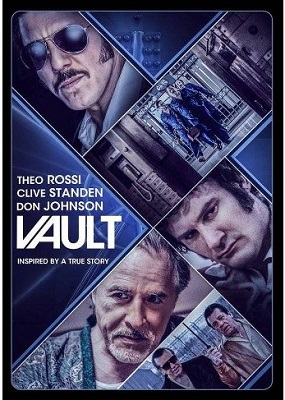
Vault, Tom DeNucci (2019, USA). Hollywood has been glamourising crime – more than that, violent crime – since its beginnings, and while there’s no causal link between violence on the screen and violence in the real world, it doesn’t take a genius to spot that a constant diet of violent entertainment both normalises it and helps desensitise the audience. People will happily consume crime drama, and perhaps even admire the criminals it depicts… up until the moment they’re mugged or burgled. Vault is another film in that long line of gangster dramas Hollywood has churned out. A pair of small-time crooks decide to hold up two banks on the same day, but it goes awry and they end up in prison. Where they come into the orbit of Don Johnson, who has a bone to pick with a mafia don also incarcerated in the same prison. Once Johnson and the two crooks are released, they put together a plan to rob a mafia vault hidden in a fur storage facility. This is all based on a true story. Vault is one of those 1970s-set films, and it’s not the first like it I’ve seen, that makes its depiction of the decade seem more like a parody than a realistic depiction. I was around in the 1970s and although my memories of that time may not be all that sharp – I was a kid during the decade – I remember it as a lot more, well, ordinary than Hollywood has depicted it in movies this century. Which is only one of many things about Vault that doesn’t work. The characters are too dim to be sympathetic, the whole escapade is clearly doomed to failure, and the direction is flat at best. Vault can’t decide if it’s a “smart” thriller or just an action thriller, and fails at both. Not worth it.

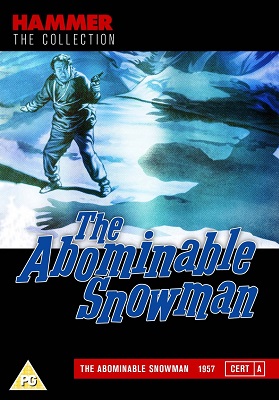
The Abominable Snowman, Val Guest (1957, UK). I’m not a horror fan – too squeamish. I don’t find it entertaining to see people chopped up into bits, especially in modern films with realistic-looking CGI. I don’t mind films with monsters, providing the movies are old enough that it all looks fake. Like Hammer films. Amazon Prime has added a bunch of 1950s horror movies – not all Hammer, but mostly British – so I’ve watched a few of them. The Abominable Snowman is about, well, the Abominable Snowman. Like other Hammer films, such as the Quatermass ones, it was written by Nigel Kneale, based on a television play broadcast by the BBC in 1955 and also written by Neale. Rather than present the Yeti as a mindless creature, or even a primitive subspecies of human, The Abominable Snowman shows them to be advanced beings living hidden in the Himalayas. Peter Cushing is in Tibet to search for botanical specimens but joins an expedition to capture a Yeti led by an American, Forrest Tucker (most Hammer films feature US actors in lead roles to help sell them to the parochial US market). The expedition meets with a degree of success, but there are consequences. The film doesn’t do a very good job of presenting its setting – obviously it wasn’t filmed on location, but the sets are pretty unconvincing. It’s all very, well, British. Particularly British of the 1950s. The accents are all cut-glass, except the American, and the acting is that sort of stiff, stage-like acting you see in many UK films of the period. But it’s all kind of hokey fun, and Kneale’s take on the Yeti is notable.

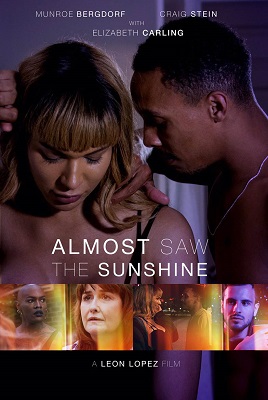
Almost Saw the Sunshine, Leon Lopez (2016, UK). This is a thirty-minute drama starring Munroe Bergdorf, a transgender model and activist probably best-known for being dropped by L’Oréal after pointing out on social media, quite rightly, that white people are racist. Bergdorf is outspoken, which has made her a target for certain groups, and most of the British media, and that’s meant she’s lost a number of positions on trumped-up excuses. Almost Saw the Sunshine is a relatively straightforward drama short, filmed on the cheap in London, in which girl meets boy, girl decides to drop boy for reasons, and things happen. Bergdorf has real screen presence. The acting is perhaps a bit rough and ready in places, but Bergdorf seems assured in front of the camera, so much so she casts the rest of the cast into the shade. Worth seeking out.

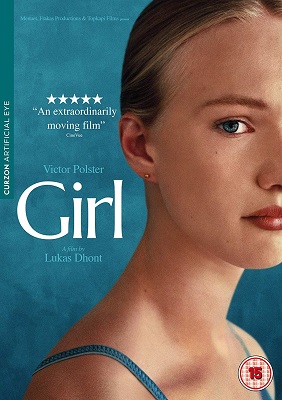
Girl, Lukas Dhont (2018, Belgium). Another film based on a true story, although it has received heavy criticism from the community to which its protagonist belongs. The title refers to a teenage transgender girl who has joined a ballet school but is suffering because of the demands the dancing is having on her body and the changes her body is undergoing as part of her treatment. It’s all very low-key, and well, Belgian. Lara is fifteen years old and transgender. She also wants to be a ballet dancer and has been accepted by a good school. But her gender reassignment is not progressing fast enough for her, and the punishing regime she puts herself through in order to qualify for the school has consequences. The damage she does to her body results in her surgery being delayed, and while she secures a place at the school she is too ill to dance in a class performance. The rest of her class treat her as just another member of the class… until at a pyjama party one of the girls eggs the others on to demand Lara show them her genitals. The next day, Lara takes matters into her own hand… I’m in no position to validate Girl‘s presentation of its subject, but it is based on a true story, and the person who inspired the film has said it’s a fairly true depiction of what happened to her. But, again, I don’t have the background to praise or criticise that aspect of the film. I enjoyed it, and I thought it well acted and well shot. But it may also be problematical.

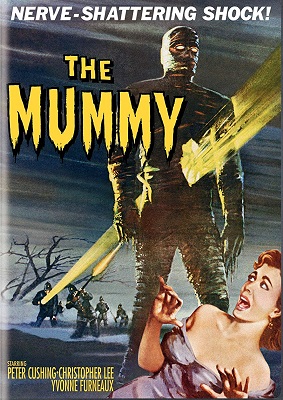
The Mummy, Terence Fisher (1959, UK). another Hammer film, also starring Peter Cushing. And this time, also Christopher Lee. In the title role. I don’t know if this film originated many of the tropes now associated with mummies – there are plenty of earlier appearances by mummies, in film, on stage, and in serial magazines – but it follows the template we all know and love. Archaeologists break into new tomb, find sarcophogus. They come down with mysterious ailment. Years pass. They come out of their coma, and reveal that an evil high priest had been mummified for trying to bring the princess in the tomb back to life, and he’s now a mummy and bent on killing everyone who desecrated the princess’s tomb. It’s all pure hokum, but the cast are far too professional – and British – to reveal they’re having fun, or actually despise the material. Some Hammer films are better than others. This was definitely one of the cheesiest ones.

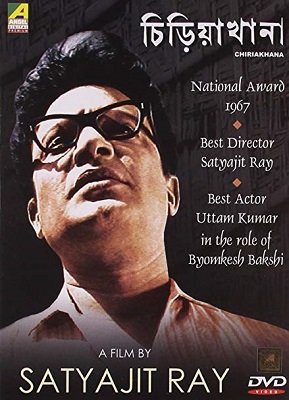
Chiriakhana, Satyajit Ray (1967, India). Ray is probably the best known of India’s “parallel cinema” directors, a movement chiefly based in Kolkata which made realist films in opposition to the song and dance extravaganzas of Bollywood. Ritwik Ghatak, a favourite director, and Mrinal Sen were also parallel cinema, but the ready availability of Ray’s films in the Anglophone world is likely a result of his championing by Ismail Merchant, who he had helped early in his career. Which is not to say that Ray’s films are not good – but I’d like to see Ghatak get the same treatment. (And as for his Sen, his films are only available from Indian DVD labels, and few of them at that.) Chiriakhana was not well received on release as it’s a complex thriller, almost a pulp story in fact. A retired judge has opened his nursery to a group of misfits, criminals and social outcasts. He hires a detective to search among them for an actress who disappeared years before. The detective, disguised as a Japanese horticulturalist (not every convincingly, it must be said), is given a guided tour of the nursery. Soon after, the judge is murdered… Unfortunately, on the copy of this I watched the subtitles ran about 10 seconds ahead of the dialogue. To male matters worse, the cast occasionally code-switched into English. So it made things a bit difficult to follow. The convoluted plot didn’t help either. I’ve watched a  number of Ray’s films, and some I found more engrossing than others. Chiriakhana is one of the better ones, and manages to be especially atmospheric in places. If Indian noir were a thing, this would be the exemplar. Worth seeing.

1001 Movies You Must See Before You Die count: 940

Leave a comment

Moving pictures 2019, #20

Some more movies…

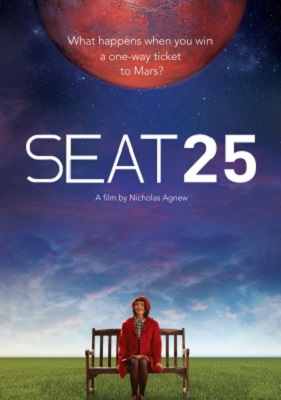
Seat 25, Nicholas Agnew (2017, UK). There’s an international mission to Mars, but it’s one-way. Twenty-four trained astronauts will be sent to settle the Red Planet, But there is room for one more, and that position will be taken by the winner of a lottery. A young woman in the UK wins the ticket, but is given time to break the news to her family – assuming, that is, she accepts – before it is announced publicly. It’s a neat idea and a good hook from which to hang a low-key drama. The world-building is very light, and mostly concerned with infomercials about the mission to Mars. The story stays entirely focused on the young woman who has won the seat: her life, her husband, her friends, her parents and in-laws, her colleagues… She keeps her win secret from them all, but kicks off a few “hypothetical” discussions to see how they would react if she told them she was going on a one-way trip to Mars. If this were all there were to the film, then it would be a neat little drama. Unfortunately, whoever wrote the script doesn’t seem to have advanced socially since the 1970s. Not only is the young woman brow-beaten by her husband, but the dynamics between the couple are a good thirty years old. And her in-laws crack jokes about people in Africa living in mud huts. Who does that? I heard shit like that when I was at school. And that was many decades ago. It wasn’t funny then either. Seat 25 could have been a good indie film, but it was ruined by gender politics and race relations from the 1970s.

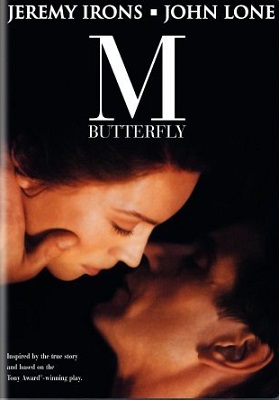
M. Butterfly, David Cronenberg (1993, USA). This is based on a true story. A French accountant at the French embassy in Beijing was seduced by, and entered into long a relationship with, a Chinese opera singer who specialised in playing female roles. The accountant believed the singer was female and never learnt his true gender, even believing an adopted son presented by the singer was his natural son. Even though the Frenchman didn’t realise he was actually in a relationship with a man, and it was never revealed to him, the fact he was in a relationship with a Chinese national was enough leverage to “persuade” him to pass secrets to the Chinese authorities. This went on for two decades. And the Frenchman only learned the true gender of his lover when they were both arrested for spying in 1983. Cronenberg’s film is adapted from a 1988 play by David Henry Hwang, which takes some liberties with the actual story – mostly by compacting the chronology, as far as I could tell. When Cronenberg makes mainstream movies, I can’t honestly tell the difference between his work and any other director’s. The body horror stuff is obviously so signature that any film that doesn’t feature it doesn’t seem like a Cronenberg film. Which is a shame, as he’s an excellent director, and M. Butterfly tells its story entirely convincingly, more so, I think, because Jeremy Irons is perfect as the Frenchman. It works as a slightly off-kilter drama, but it’s off-kilter, I think, more because of the story than because of anything Cronenberg brings to it. Nonetheless, worth seeing.

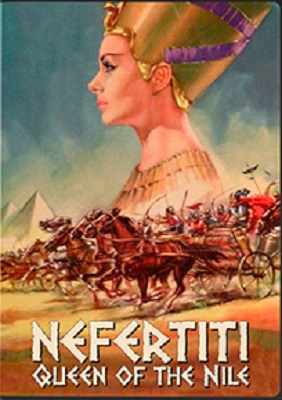
Nefertiti, Queen of the Nile, Fernando Cerchio (1961, Italy). I wonder how many people don’t realise Italy had a huge film industry and churned out movies by the metre. It wasn’t all Antonioni, Fellini, Rossellini, De Sica or Visconti. There was a long series of Hercules films, for example. Not to mention all those “spaghetti westerns”, the sf movies, giallo films, and loads of international thrillers. Some had US stars in lead roles (usually ones whose careers were on the slide). Nefertiti, Queen of the Nile is, of course, an historical film, a swords-and-sandals movie, starring Jeanne Crain (who plays Nefertiti), Edmund Purdom and… Vincent Price. Purdom and Crain are in love, but high priest Price marries Crain off to the new pharaoh. Who happens to be best mates with Purdom. The romantic triangle is tangled up with the overthrow of the state religion, and the institution of a new monotheistic religion. But this is all standard fare: a mid-sixties mangling of history presented as melodrama. It just happens to be from Italy instead of Hollywood. The film also features several really fake-looking fights between Purdom and a lion. Avoid.

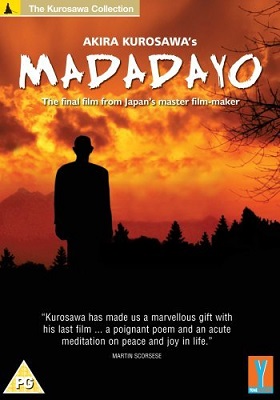
Madadayo, Akira Kurosawa (1993, Japan). This was Kurosawa’s last film and while not one of his signature samurai historical films it was definitely an historical film. It’s set in the late nineteenth century and concerns a retired teacher and those of his pupils he stayed in touch with. It’s immediately obvious from the first five minutes of this movie that Japanese teachers and pupils have a different relationship to those in the West. I mean, most of what I know about pupil-teacher relations has been gleaned from films; as indeed for UK schools, since I went to a public school (not a prestigious one) and it wasn’t unusual for pupils of that school to stay in touch with teachers on an irregular basis for a few years after they’d graduated. But in Madadayo, the “pupils” are young men starting their careers, and yet they visit their old professor, throw a party for him, and ensure his retirement is as intellectually rich as his career was. And they did this every year, for decades. Which unfortunately means Madadayo is not exactly heavy on plot. It’s an elegiac piece, the handing over from one generation to the next, embodied in a teacher and his pupils, which feels like the most obvious of metaphors, but… Madadayo is a nice film. It’s well-played, extremely well-filmed… but ultimately its story is so slight it’s a wonder it lasts 134 minutes. One for fans of Kurosawa, I suspect, although I did enjoy it.

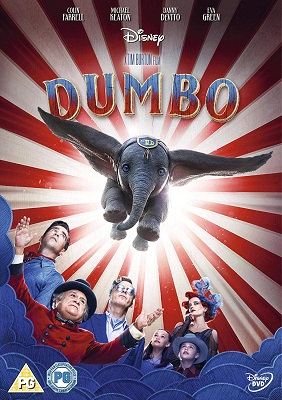
Dumbo, Tim Burton (2019, USA). Disney seems to be on a mission to rebuild its brand in the twenty-first century, and it’s chosen to do so by creating “live-action” versions of its classic films, so kids can enjoy cutting-edge versions of old school animations their parents loved as children. As a strategy, it makes sense… but it’s resulted in some odd films. I can’t really see how a piece of Tim Burton whimsy is intended to appeal to the same market as the original Dumbo back in the 1940s. Sure, tastes have changed considerably since then, as have sensibilities. But this new Dumbo is a great deal darker than the original. For a start, it opens with a  soldier returning home from WWI, minus an arm. His home is a travelling circus, owned by Danny DeVito, and he left his two children there while he was away fighting. The story more or less follows the original – as far as I know, as it’s been decades since I saw it – but all with that Tim Burton heightened reality look and feel. DeVito’s circus is failing financially and a successful rival wants to buy him out. But then his single elephant gives birth to a new calf, initially considered a freak because of his over-sized ears. Turns out the baby elephant can fly. And he’s a big draw. The circus’s fortunes begin to improve. But then millionaire Michael Keaton turns up and proposes a partnership between the circus and his New York amusement park. But all is not well at the amusement park, which does bear some resemblance to some sort of twisted Disney World, but the good guys triumph, there’s a a nice environmentally-friendly message, and even a somewhat perverse dig at corporatised entertainment. I’ve never been a Tim Burton fan, but this is the second one by him I’ve seen recently that stars Eva Green and, well, I sort of quite enjoyed it too.

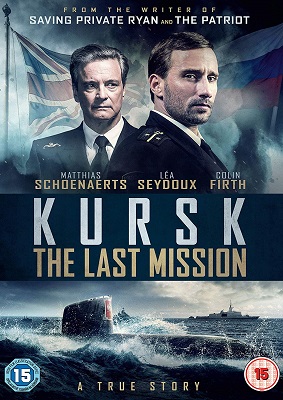
Kursk, Thomas Vinterberg (2018, France). Back in the day, disasters such as the sinking of the Kursk, a Russian nuclear-powered Oscar Class submarine, would have been the a natural subject for a made-for-television movie, with a cast of nobodies all speaking English with bad Russian accents. Instead, we get a French film with a Belgian star and a Danish director who co-founded the Dogme 95 movement with Lars von Trier. Needless to say, the Dogme 95 rules were not in force in Kursk. The story is well-known – submarine sinks after unexplained interior explosion, men are trapped, no rescue is made in time – but the film is very good on the Russian authorities’ poor response to the incident. Initially, they denied the sinking, then they delayed releasing details… The Royal Navy had already offered help but was rebuffed. Perhaps they could have saved some of the crew if given permission early enough, but it seems like pointless speculation. The rich and powerful will always protect their own interests first, whether they’re oligarchs or admirals. Kursk does an excellent job of presenting the  interior of the submarine, both before and after the disaster, but it does all feel a bit like a CGI-fest. We have perhaps became too used to disasters from disaster movies, or just straight-up thrillers, such that we no longer feel compassion, or fear, for those in real peril. Kursk is a good film and worth seeing, for all that it’s framed as a disaster movie and they’re generally best avoided.

1001 Movies You Must See Before They Die count: 940


Leave a comment

Moving pictures 2019, #19

Yet more films. Getting closer to being up to date. The last week or two I’ve been mostly watching TV series, which I don’t blog about, which should help me get my movie-watching fully documented.

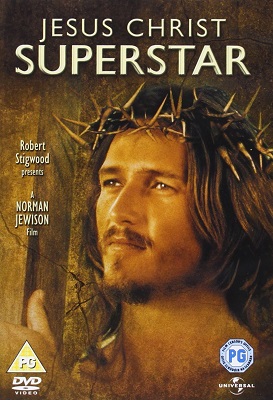
Jesus Christ Superstar, Norman Jewison (1974, USA). I have a vague memory of my parents owning the original soundtrack to this – the original stage musical, rather than this film adaptation – many many years ago. Or it might have been Hair. In fact, now I think about it, perhaps it wasn’t Jesus Christ Superstar because it’s a Lloyd Webber/Rice musical and I don’t remember ever owning any of those on vinyl (actually, it was a rock opera first). Although we did go to see Cats once at some West End theatre in the early 1980s. But Jesus Christ Superstar is, er, about a certain prince of the House of David, a deposed ruling dynasty in occupied Judea and who, two thousand years later, has probably been responsible for more than deaths than Stalin, Mao, Hitler, Pol Pot and the Black Death combined. And it’s a musical. Of course. The story mostly focuses on the relationship between Jesus and Judas. The latter thinks Jesus is not practising what he preaches, an attitude present-day televangelists seem to share, and so leaving himself vulnerable to the Roman authorities. But, of course, Judas is a Bad One, and gives up Jesus to the Romans. Who is then strung up on a cross. And his followers adopt the cross as his symbol. You’d think that would be the last thing he’d want to see if he ever came back. Jesus Christ Superstar is actually framed as a group of actors and musicians staging the original play in an Israeli desert (cunningly suggesting that all of Israel is an inhospitable desert; but that’s a discussion for another day). The framing narrative works really well as a conceit, and the deliberate use of anachronisms throughout the film is very effective. But it’s a musical, so the music… The opening track is really good, as is the one sung by the Pharisees, but a lot of the other songs were less memorable. It’s all sing-through, like Jacques Demy, with only one or two lines of spoken dialogue. Which has the advantage of making the segues into the songs feel like a natural part of the narrative, rather than imposed by the format. I had no idea what to expect when I started watching Jesus Christ Superstar – a not uncommon occurrence for me when watching films, it must be said – but I kind of liked it? I’m by no mean a Lloyd Webber/Rice fan, or indeed a fan of musicals in general; but I do like 1970s rock and I do like idiosyncratic approaches to narrative cinema.

Fanney Khan, Atul Manjrekar (2018, India). And from one musical to another. Although calling a Bollywood film a musical is a bit tautological. The title refers to the singer in a band who never makes the big time. Instead he ends up working in a factory and brings up his daughter with dreams of stardom. She enters a singing competition but doesn’t win because of her weight. So her father kidnaps the latest star, Baby Singh, in order to use blackmail to give his daughter a singing career. This is hardly the most original plot on the planet. But then Bollywood has never used original plots, preferring to put its own spin on well-known stories. And so it does here. The friend asked to look after the kidnapped singer falls in love with her and the two end up in a relationship. The kidnapper becomes a folk hero. And the daughter, despite several setbacks, ends up as a successful singer. This a big-time feel-good film, and does it really well. I mean, I don’t put on a Bollywood film expecting to be depressed, but some do feel-good bit better than others, and Fanney Khan certainly excelled at it. Worth seeing.

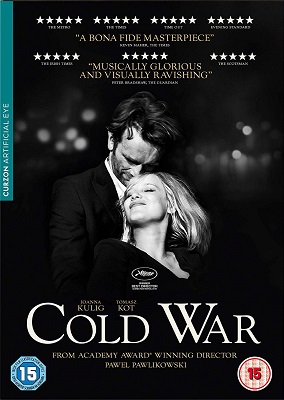
Cold War, Pawel Pawlikowski (2018, Poland). I’m not sure what to make of Pawlikowski, a Polish film-maker who is not Polish, in as much as he grew up and is based in the UK, but nevertheless makes Polish films. Mostly. He started out in documentaries, before making several British features films. But his last two have been Polish. They have also been very good. Cold War is filmed in black and white and is set in the years following World War II. A man and woman fall in love. He’s older than her. She’s a singer and he’s a music teacher. The film takes place over several years, both in Poland and in France, after they’ve managed to leave Poland. Most reviews of this film have rightly pointed out that the cinematography is gorgeous. But the music around which the story is structured is also good, and the two leads do an excellent job of carrying the movie. This is a quality piece of film-making and Pawlikowski is definitely a name worth noting.

Wilson City, Tomás Masín (2015, Czechia). This much is actual history: the city of Bratislava, now capital of Slovakia, was chiefly known as Pressburg, since it had a large German-speaking population. Other names included Prešporok (Slovak), Prešpurk (Czech) and Pozsony (Hungarian). But after the First World War, the city was briefly named Wilsonov after President Woodrow Wilson of the US, in an attempt to encourage US protection when the city declared itself a free city in order to resist annexation by the newly-formed Czechoslovakian state. It didn’t work, the city became part of Czechoslovakia and was renamed Bratislava. The film Wilson City is set during the years just before that name change. A demon is loose and the US sends an FBI agent to help catch it. The mayor assigns a police cadet to assist the agent. But there are other things also happening – the mayor wants to cede the city to the US, which is why he plans to rename it Wilsonov, or Wilson City. For all that it tackles a serious bit of history, Wilson City is definitely a comedy. But a slightly off-kilter one. And the FBI agent, Food, is a really oddball character. Worth seeing.

Henry V, Kenneth Branagh (1989, UK). There is a certain type of thespian-turned-director, almost always male, who seems to feel a need to prove, well, something by directing themselves in a movie adaptation of a play by Shakespeare. And it’s pretty much always one of the history plays. To be honest, this isn’t actually a bad thing. Laurence Olivier’s 1944 film of this same play is actually pretty good; and Orson Welles made three films of Shakespeare’s plays (sort of: Chimes at Midnight was cobbled together from several plays, including Henry V) and they were pretty damn good. But Branagh. He’s so young in this film. I mean, he’s six years older than me and he’s been there on television and in films since the early to mid-1980s, so about as long as I’ve been a consumer of popular culture. He plays King Henry as soft-spoken but very much aware of his power, which does seem a bit weird to modern sensibilities since we would expect there to be something more underpinning that awareness than “divine right”. The battle scenes reminded me a great deal of both Olivier’s and Welles’s takes, in the use of close-in camera work to hide how few actors and extras were actually involved. Plus lots of mud. The other notable thing about Branagh’s adaptation is the number of faces recognisable to anyone who grew up on British TV during the 1980s. It’s almost a who’s who. Olivier’s version used some interesting cinematic techniques and some clever staging. Welles relied on his acting chops and some clever script-writing. I’m not sure what Branagh brings to the table. There’s a very 1980s brashness to his adaptation: a contemporary and un-theatrical presentation of violence, and a development of the characters which owes more to the language of cinema than the language of the theatre. It’s not entirely successful. Emma Thompson plays her role as Katharine, daughter of the French king, but isn’t very convincing. Some of the actors’ accents are a bit wobbly. And Branagh’s king sometimes seem more Godfather than noblesse oblige. But it’s worth seeing. And now I wish I hadn’t put my box set of BBC adaptations of Shakespeare’s plays into storage and brought it to Sweden with me. Ah well.

Pan Jinlian’s Revenge, Wu Shuang (2016, China). Pan Jinlian is a famous figure in classical Chinese literature. She is the central character of The Plum in the Golden Vase and also appears in Water Margin. She is effectively an archetypal character in ancient Chinese literature. She was considered beautiful but was married to a man most thought ugly. She had an affair with a handsome warrior, and she and the warrior poisoned her husband. The husband’s brother, however, investigates and discovers the truth. In Pan Jinlian’s Revenge a young man from the present is accidentally set back in time to the seventeenth century. He is familiar with the story of Pan Jinlian, and so very surprised when he actually meets her and her husband. She is, after all, a fictional character. The film is pretty much the young man trying to prevent Pan Jinlian’s husband from being murdered by his wife. It’s a conceit that clearly works best for viewers familiar with the source material. I have not, I admit, read any classical Chinese literature, although I would like to. But a bit of Googling helped while I was watching Pan Jinlian’s Revenge, although the film could certainly be enjoyed without it as a straightforward timeslip romance (sort of). I mean, it’s not an especially well-made film, more the polished output of a studio that churns out movies, possibly for TV, to a tight schedule. It looks like it was filmed in a heritage village, the cast are good without having any noticeable screen presence, and the story moved on well-oiled rails to its finish. I enjoyed it, and was interested to learn of Pan Jinlian, but that’s about all I could say.

1001 Movies You Must See Before You Die count: 940

Leave a comment

Moving pictures 2019, #18

I still have a bunch of these before I’m up to date. These films are from early June.

A Date for Mad Mary, Darren Thornton (2016, Ireland). Mary has just been released from prison and returns to her home in Drogheda. Her best friend Charlene is about to be married and Mary is one of the bridesmaids. And she needs a date. She also has to run a number of errands for the bride-to-be, such as arranging a hen party. And sorting out the wedding photographer. But Charlene’s friends, and the other bridesmaids, were never really Mary’s friends, and though Charlene insists nothing changed while Mary was inside they are clearly drifting apart. So Mary tries to find herself a boyfriend for the wedding, while trying to ignore that things have changed in Drogheda. Mary bumps into the wedding photographer, the two begin seeing each other, despite neither considering themselves gay. But it’s the wedding photographer Mary takes the wedding. I didn’t know what to expect when I started watching A Date for Mad Mary, but it turned out to be a well-played girl-meets-girl movie, with a good cast, a plausibly story and a realistic setting. Worth seeing.

Captain Marvel, Anna Boden & Ryan Fleck (2019, USA). This has been one of the most divisive films of the year, if not the most divisive film so far in the MCU. And, typically, all the fuss had nothing to do with its quality. There is a type of fan out there, of comics and of films, who simply can’t accept a story in which a woman is the hero. They are of course male. And intellectually-challenged and immature. Not only upset with a tentpole MCU movie being about a female superhero, they flew into a frenzy when they saw a deleted scene from the sell-through release showed Captain Marvel subduing a biker who’d made a sexist advance to her. It’s not a good scene, and adds little to the film (which is probably why it was cut), but what Marvel did is trivial when you consider that fridging is so prevalent in movies it’s an actual trope. That’s fucked up. I am, as I’ve said before many times, not a fan of the MCU films, or indeed of superheroes in general. One or two of the films I’ve found entertaining, but they’re only really impressive as showcases of the state of the art in CGI, and not always then. Captain Marvel made some odd story choices, likely a result of a difficult production, with far too many throwaways that added little or nothing. The use of de-ageing on Samuel R Jackson and Clark Gregg was weird and distracting. And the plot jumped around all over the place, with the final big reveal being obvious from about ten minutes in and so it pretty much fizzled. But there was a lot to like. Marvel is the most interesting superhero to carry a film, and as an origin story Captain Marvel beats being bitten by a radioactive spider, but the power Marvel has by the end of the film… Why are there zillions of superheroes when you have one that’s so powerful no one can stand against her? It’s like everyone has sticks and there’s one person walking around with a chain-gun. Star Trek used to do it all the time, with its god-like aliens like Q. Despite all that, Captain Marvel was one of the better MCU movies I’ve seen.

The Nugget, Bill Bennett (2002, Australia). Like most of the films in this post, I stumbled across The Nugget on Amazon Prime. It’s a low-budget Australian movie, although star Eric Bana has appeared in several Hollywood movies and even played a memorable villain in the first of the execrable Star Trek reboots. I say “memorable” but just about the only things that were memorable in that film were its egregious ignorance of the laws of physics and lack of rigour. Oh, and its plot, which didn’t make the slightest bit of sense. Happily, none of those are accusations that can be levelled at The Nugget. Three layabout road workers own a plot of land in the bush where they hope to find gold. And then, purely by accident, they discover a massive nugget, the biggest ever found. The story then follows a typical path – it was also used in Ousmane Sembène’s Mandabi (see here) – in which the three men and their wives spend they money they will get from the nugget before they’ve even sold. And they don’t even know how to sell it. And then it goes missing, but they figure out who has stolen it. You can pretty much guess the ending. A fun light comedy. And very Australian.

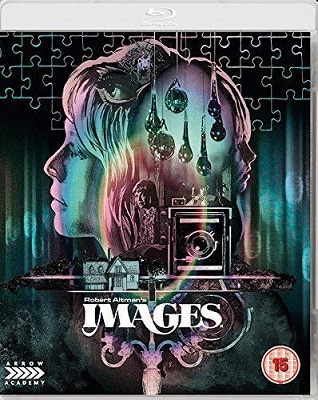
Images, Robert Altman (1972, UK). This is one of those films that reminds you of other films. The obvious reference is Don’t Look Now, although that was released a year after this one. But critics at the time thought it resembled Polanski’s Repulsion from 1965. A successful author of children’s books, Susannah York, is told her husband is having an affair, although she finds no evidence of it. Every now and again, however, her husband appears to be an entirely different man. So they move to a small cottage in the Irish countryside, in the hopes York will have the peace and quiet to work and recover. But her husband still keeps on changing into that stranger, and she even spots a doppelganger of herself at various times. Little in this film made sense, but I don’t think it was intended to. Perhaps it was supposed to represent York’s decaying mental state, but the ending scotches that reading. When you finish watching a film, you like to think it was worth the two hours it took. Not just the quality, but also the story. And that’s where Images failed. It seemed relatively straightforward, but by the end you had no idea what it was supposed to be about. Avoidable.

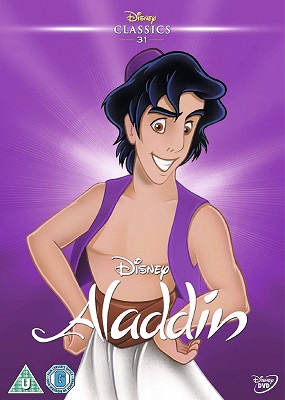
Aladdin, Ron Clements & John Musker (1992, USA). I’ve been slowly working my way through the Disney animated films, not to any plan or timetable it must be said, and it’s often surprises me how few of them I’ve seen. Especially those originally released in the 1980s and 1990s. Which includes Aladdin. I know the story, of course – I’ve read 1001 Nights (various versions), but I knew it even before then, from… the pantomime? I’ve no idea – and I had some sort of vague recollection of some details of the film from back when it was released… Aladdin is a humble, but attractive, street urchin. An evil vizier uses him to break into a cave of riches (this part of the film didn’t seem to follow the original story much) but leaves him trapped inside. He manages to escape, thanks to a genie (voiced by Robin Williams). He returns to the city, disguised as a rich prince, and woos the sultan’s daughter. But the evil vizier plans to marry Princess Jasmine himself and so take the throne. The rest of the story was pretty much by the numbers. With songs. The chief draw here is Williams as the genie, and that’s going to totally depend on how much you enjoy Williams doing the Williams shtick. Which, for me, is not that much. The animation was clean, the character designs were, well, nice, and it all seemed a bit, well, bland. It felt like Disney Product. Meh.

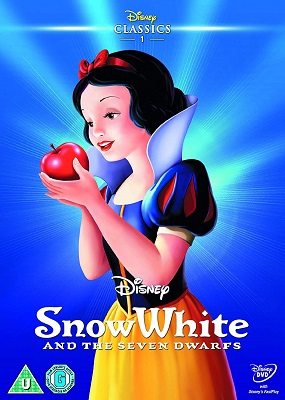
Snow White and the Seven Dwarfs*, David Hand (1937, USA). I’m pretty sure I’ve seen this before, although it must have been when I was a kid because I have no specific recollection of it. But, like a lot of early Disney films, much if its contents have become cultural memory, so it’s hard to know what’s personal memory and what’s learned second-hand.  It’s even harder when you have a story as well-known as Snow White. You know how it goes. Evil queen is told Snow White will eclipse her in beauty, so she has the huntsman take Snow White into the forest and kill her. Which is what you would totally do if someone a couple of decades younger than you turned out to be prettier. The huntsman does not kill Snow White, who runs away and stumbles across a cute cottage occupied seven dwarfs. And so on. It’s all very 1930s, but then classic Disney films were very much products of the decade in which they were made… and I suppose that might also hold true for more recent Disney animated movies, except everything the studio does these seems way more productivised. Snow White and the Seven Dwarfs is generally considered one of Disney’s best films, if not its absolute best one. It’s definitely top ten, perhaps even top five. Unlike Aladdin (see above), it has bags of charm so it seem churlish to complain Snow White herself is completely insipid. But the dwarfs, happily, are anything but. Still, I wanted to put it at number one, or perhaps even in the top three. It’s very good. But there are a few that are better.

1001 Movies You Must See Before You Die count: 940

2 Comments

Moving pictures 2019, #17

I am so behind on these. My lack of internet access for a couple of weeks didn’t stop my movie-watching, but it did prevent me from blogging about what I’d seen. Expect a few more of these before I’m up to date.

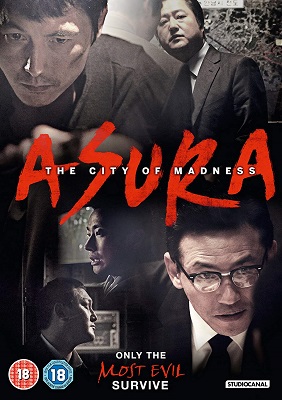
Asura: The City of Madness, Kim Sung-su (2016, South Korea). It’s been nearly two months since I watched this and, to be honest, all I can remember is it was a well-made Korean gangster film. There was an opening scene, I recall, in which the mayor of a city unveils a a new high-profile development, you know the sort, all skyscrapers for the rich, doesn’t really address any social or economic problems the city might be experiencing, but is supposed to attract investment, although no one says from whom… Anyway, the mayor is physically attacked by the city’s DA (or its Korean equivalent) and it’s made clear there’s some enmity there – and which side of the law the mayor is on. I also remember a fight between two police officers, one of whom was corrupt but I can’t remember which, and a guy falls off a rooftop and is impaled on some steel rods, and it was pretty damn realistic. But that’s about all I recall. A polished piece of work… I should really watch it again.

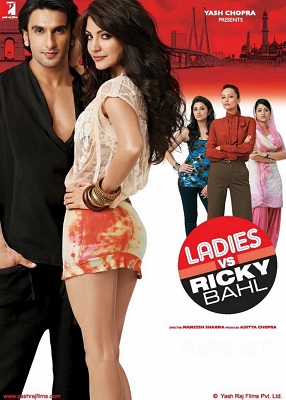
Ladies vs Ricky Bahl, Maneesh Sharma (2011, India). The daughter of a rich businessman is brought home drunk one night by her new boyfriend. The boyfriend impresses the father with his ambition and business acumen, and admits he comes from a family that fell on hard times when he lost his inheritance, a large villa worth millions, after the tenants took it over and he can’t afford to get them evicted. He does a deal with the father, who buys the villa at a knock-down price and sends in his own heavies… Except the villa never belonged to the boyfriend and he’s now vanished with the cash he was paid. A PA is tasked with buying a particular – and very expensive painting – for a client of her boss, and manages to do a shady deal with a gallery owner to get the painting… Only to be embarrassed in front of the client when it proves to be a fake. The boyfriend and the gallery owner are the same bloke – Ricky Bahl, obvs – and it turns out he has more victims. All young women. So they get together and plan to turn the tables on him. Which they do. Via an elaborate scam. Which doesn’t exactly go according to plan. Most Bollywood movies are fun, but this one I thought especially entertaining. The central conceit didn’t outstay its welcome over the typical Bollywood running time, and it was nice to see a film that privileged the women’s point of view (Bollywood films are good at that, by the way, much better than Hollywood). A good film to watch on a Saturday night with a pizza and beer instead of the latest MCU tosh.

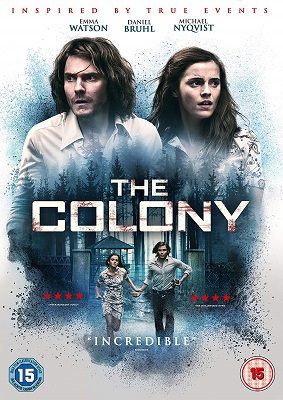
The Colony, Florian Gallenberger (2015, UK). There’s a science fiction film, I think, with the same title, but this movie is based on a true story. The Chilean government, the one run by that evil monster Pinochet, you know, Margaret Thatcher was buddies with him, allowed a German paedophile to set up a “religious retreat” in the south of the country. And the Chilean government used it as a cover for a torture centre. It’s countries like that the US should be invading, but instead they support them. Of course they do. Because they’re all the same. Anyway, a German working for the opposition is taken by the secret police. His girlfriend, also German, tracks him down to the aforementioned cult headquarters, and enrols in the cult in order to rescue him. It’s films like The Colony which make you despise the ruling classes of every country – and with good reason. Pinochet and his regime committed countless crimes against humanity, and yet he was treated like royalty by the governments of most Western nations. He should have been carted off to the ICJ and imprisoned for life. And so should every government leader who treated him like a legitimate head of state. They were fine forcing regime changes in Iran, fucking up Central America and invading Iraq, but they bent over backwards to help a fascist dictator who used a convicted paedophile as cover for a torture centre. FFS. Good film, horrible story.

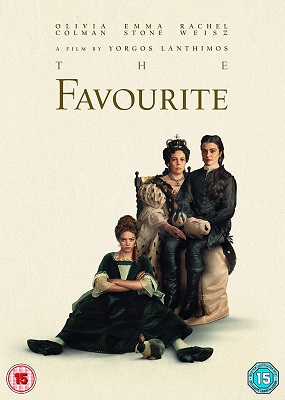
The Favourite, Yorgos Lanthimos (2018, UK). I’m not sure what to make of Lanthimos. Dogtooth was very strange but also very good. I wasn’t so taken with either Attenberg or The Killing of a Sacred Deer. And now we have The Favourite, which on the one hand presents as straight-up historical drama, but on the other seems slightly off-kilter throughout. Which is, it has to be said, totally a Lanthimos thing. The story is about Queen Anne (1702 to 1707) and her relationship with Sarah Churchill, Duchess of Marlborough, ancestor of that idol beloved of the right-wing, a supposed man-of-the-people who was aristocracy through and through, but let’s not stop actual facts get in the way of right-wing mythology. Anyway, the Churchills were just as perfidious back in the 1700s as they were in the 1900s, and this is starting to sound like I sympathise with an actual queen of England, which of course I don’t, but… I don’t give a shit about Anne, Elizabeth, Edward, George, whatever name they choose to take… and even less about those with access to royalty and the wit to manipulate that tribe of inbreds. Olivia Colman puts in a star, if not award-winning, turn as Queen Anne. But we’re still talking about a small, and diminishing, gene pool with unsupportable power over the general population based on self-serving myths and the so-called weight of history; and films such as The Favourite – which is indeed well-made – only show how unsupportable and irrelevant that situation increasingly is.

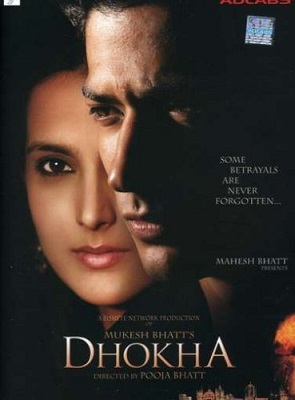
Dhoka, Pooja Bhatt (2007, India). There is a suicide bomber attack at a shopping mall, and a policeman’s wife is among the victims. But then it transpires she was the bomber. And he doesn’t understand this. He had thought he was happily married. He’s shut out of the investigation, obviously, but decides to look into matters on his own. He learns that a corrupt police inspector had arrested his father-in-law as a suspected terrorist and the father-in-law had died during torture. When the policeman’s wife insists on filing a complaint, she is stripped and photographed by the corrupt inspector, and then raped. So she and her brother begin visiting an imam who persuades them to become suicide bombers. The policeman is too late to save his wife, but perhaps he can save his dead wife’s brother. For all that Dhoka covers a sensitive topic – and you don’t see Hollywood making movies about domestic terrorism – it all felt a bit overly melodramatic. True, it is a Bollywood film and melodrama is baked into the formula; but the scenes with the corrupt police inspector were so OTT, it undermined the story. There are hundreds of Bollywood (not to mention Kollywood and Tollywood) free to watch on Amazon Prime, new and old, and more appearing seemingly every day. So there’s plenty to chose from. I’ve generally been lucky with my picks, but this was a rare duff one.

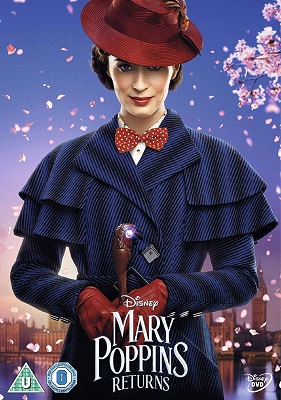
Mary Poppins Returns, Rob Marshall (2018, USA). Before watching this, I rewatched Mary Poppins. I say “rewatched” although it’s been three or four decades, I think, since I last saw it, so it was more like an actual “watch”. But Mary Poppins was a cultural touchstone when I was growing up, so it’s not like I needed to see the film to remind myself what happens in it. And so it proved. Then I watched the sequel. Which, to be honest, I didn’t expect to like. The son from the original film has grown up to become Ben Wishart. He was an artist but now he works as a clerk at the bank his father worked at. And he has two children, who are surprisingly well-behaved (and precocious), but he still ends up with the latest incarnation of Mary Poppins, Emily Blunt, And she’s bloody good. Blunt not only nails Poppins, she redefines it as her own. Jack, a lamplighter and once apprentice of the original film’s chimney-sweep, played of course by an American, although he makes a much better fist of his accent than Dick Van Dyke ever did, seems mostly out of his depth. Not to mention the musical number where Blunt puts on a cockney accent and blows him completely out of the water. There’s a cleverly-done animated sequence, although I seem to remember the one in the original film was pretty good too, but not as comic. Sadly the songs in the new film are nowhere near as memorable, although the fact I remember the original movie’s songs may be because we had a LP of Disney songs when I was a kid and played it repeatedly… I’m glad I took the time to watch Mary Poppins before watching Mary Poppins Returns. I think it definitely added to my enjoyment of the sequel. And I was surprised to find myself enjoying it. Worth seeing.

1001 Movies you Must See Before You Die count: 940

Leave a comment

Moving pictures 2019, #16

More movies. I’m still a bit behind on these. I had thought moving to Sweden would give me more time to work on my blog, and my writing, but it hasn’t worked out that way. Yet. But perhaps as I get settled… I spent a while learning the layout of my local supermarket, only for them to completely re-arrange it. I wasn’t the only one thrown by the change – for a few days, pretty much all customers were quizzing the staff as to the new location of various items. Having said that, shopping is definitely a skill you need to relearn when moving to a new country. Supermarkets are different, food is different. It’s not a hard skill to learn, it must be said, but it’s not something you expect to have to learn. Unlike the language.

Anyway.another bunch of films; some recent, some not….

Siren, Jesse Peyronel (2013, USA). This is a small independent film made by a British director, starring US actress Vinessa Shaw in the title role and that British bloke from Eastenders, who had the shit kicked out of him by Captain Marvel in a deleted scene in, er, Captain Marvel which caused all the man-boys on social media to spontaneously burst into man-tears, in the other lead role. Shaw plays a woman who produces a pheromone so powerful she has to live in seclusion because men fall instantly in love with her (she appears as their fantasy mate to them), which obviously causes huge problems. Given what men are like. To women. Then along comes Robert Kazinsky, who appears to be unaffected by her chemical charms… because he has no sense of smell (knocked out of him by an Iraqi shell during the illegal US invasion and occupation of that country). Actual real love might blossom… There’s a none-too-subtle twist about three-quarters of the way in, but this wasn’t a bad little film at all. It handled its premise well, the two leads were watchable, and while the script wasn’t actively good it was better than that of many a tentpole blockbuster.

Iron Sky 2: The Coming Race, Timo Vuorensola (2019, Finland). If you haven’t seen Iron Sky, you won’t get much from the sequel. If you have seen Iron Sky, you’ll know whether or not you can be bothered to watch the sequel. For what it’s worth, I enjoyed Iron Sky. While I found its humour a little puerile, the production design was great and the premise an absolute winner. To be fair, having previously seen all the Star Wreck films, I had some idea what to expect comedy-wise, so it wasn’t a deal-breaker. Iron Sky 2: The Coming Race manages to turn Iron Sky up to eleven in pretty much all areas… although the humour still remains chiefly juvenile and some of the jokes overstay their welcome. A home-built Russian UFO arrives at the heavily-damaged Nazi base on the dark side of the Moon, and its pilot agrees, after some violent drama, to take some of the (“good”) Nazis to the South Pole to find the Holy Grail in Agartha, the land inside the hollow earth, to save the moonbase. Which is where some other Nazis fled after WWII. Including Hitler. And various other incarnations of evil. Like, er, Steve Jobs. It turns out reptilian aliens colonised the Earth hundreds of millennia before, uplifted humans, and now live in Agartha, occasionally taking human form, such as the leader of the Nazi moonbase. As in the first film, there are some excellent sfx and a few really good set-pieces. The script varies wildly but presents an interesting group of characters. I remember seeing the advance publicity for Iron Sky and being excited about it… only to be a little disappointed by the final product. There’s been a lot of advance material about Iron Sky 2: The Coming Race, but it was harder to know what to make of its use of its references – Bulwer-Lytton! vril! hollow earth! Agartha! Hitler! secret Nazi South Pole bases! I mean, even if Iron Sky 2: The Coming Race were just like Iron Sky, there’d be plenty in there to entertain for those familiar with the mythos. That Iron Sky 2: The Coming Race turns its plot into an action story sort of works in its favour, but the juvenile glee the film takes in its premise and mythos acts slightly against that. Worth seeing… but I suspect you’d have to be a fan to watch it more than once.

Vox Lux, Brady Corbet (2018, USA). For an industry which has been creating celebrities out of nobodies for over a century, Hollywood seems strangely unable to tell a story on that topic in any meaningful or plausible way. And when it comes to Vox Lux, which appears to be a personal project of the director, it’s hard to know what to make of it. Or indeed when he was trying to say. A teenage girl survives a school shooting (if the US won’t introduce gun control, as the UK and New Zealand did after gun massacres, at least they’ll inspire some books and films…), and with her older sister writes a song in response, which becomes an internet hit. This kickstarts the girl’s career. Jump forward twenty years or so and now she’s a successful pop star. And she’s done all the self-destructive pop star things. And is still doing some of them. She also has a teenage daughter, who watches this behaviour from the sidelines with no power to stop it. Yawn. Then a terrorist shooting is linked to the singer because the terrorists wore masks that featured on a promo video of her biggest hit. Bit fucking tenuous. But this is not a film out to make much sense. In fact, in places it seems Corbet is more about the visuals than the story-telling, despite the former being an aspect of the latter. Natalie Portman puts in a good turn in the lead role, but she’s a quality actress. If you like films that are more style than substance, that add nothing to the genre of rock-star-in-decline movies, then you might enjoy this. Otherwise: don’t bother.

X: The Man with the X-Ray Eyes, Roger Corman (1963, USA). The title is pretty much the plot of this classic B-movies from Corman’s New World Pictures. There is a man. He invents a substance which allows eyes to see across a much wider spectrum. He experiments on himself. Guess what happens. As his ability to “see” increases, so his mental stability worsens. It doesn’t help that star Ray Milland was once an A-lister and must have slid pretty far to end up in a Corman movie. But even his past reputation can’t save this. It also doesn’t help that he’s wearing a pair of silly circle lenses that clearly are none too comfortable. It’s all very formulaic, with the title explaining the villain and giving a big nod to the story. Milland comes a cropper in the end, of course he does. That’s how these sort of horror films work. On the other hand, there are some nice psychedelic effects, and the scene where Milland is at a party and can see through everyone’s clothes is probably what the movie is chiefly famous for. X: The Man with the X-Ray Eyes is, I guess, worth seeing at least once. But only after several beers.

Spider-Man: Into the Spider-verse, Bob Persichetti, Peter Ramsey & Rodney Rothman (2018, USA). I’m not a fan of the MCU films, and I can pretty much take or leave 99% of animated movies. When I start seeing lots of praise from many different quarters for a film that is both of them… I’m going to be sceptical. But you never know, chances are I’d probably watch it at some point anyway, so why not sooner? And, well, it’s not really my bag, but once it had finished I was pretty much convinced it’s one of those animated movies that’s a complete game-changer. Like The Incredibles. It doesn’t just raise the bar, it shifts it to an entirely new level. The story was no great shakes, just fairly typical MCU bobbins, but the presentation was superb. Not just the animation, but the design, the use of the screen real estate, everything that made it an animated movie and not just a movie. The script was not terrible, perhaps even a cut above other MCU movies, but it’s not a film where the fact it’s a superhero film is its defining characteristic. So it’s a bit weird it’s won so many accolades, including an Oscar. I mean, an Oscar going to what actually might be an excellent film is something of a novelty. And yet, you can guess it’s not the story that led to those prize wins and nominations, it’s the way the film looks, the way it’s put together, and it’s a surprise to see that recognised so universally. Spider-Man: Into the Spider-verse, as I said, immediately struck me as a game-changer, and its impact in the cinema world seems to demonstrate that. Whether anything will actually change is another matter. I suspect it will. I also suspect any sequel will prove disappointing. That seems to be the way it works. But definitely see Spider-Man: Into the Spider-verse. You will not be disappointed.

Badrinath ki Dulhania, Sashank Khaitan (2017, India). Pretty much every Bollywood movie goes something like this: boy meets girl, something happens, boy loses girl, something else happens, boy gets girl back. Happy end. It’s a very successful formula and it’s produced some very entertaining Bollywood films. Like this one. In Badrinath ki Dulhania, you have the wastrel son of a rich man, who doesn’t want an arranged marriage because he’s seen how unhappy one has made his elder brother. Wastrel son falls in love with a spirited and educated young woman and eventually manages to persuade her to marry him. But she jilts him at the altar. He tracks her down to Singapore, where she’s training to become cabin crew for an airline. After much arguing, and an overnight stay in jail, he mends his ways and the two are finally reconciled. Happy end. Much singing and dancing along the way, of course. The movie makes some important points about dowries and women’s roles and expectations, despite being pretty light-hearted Bollywood rom com entertainment (quite a few twenty-first century Bollywood films are good on gender politics commentary in present-day India, better than Hollywood, in fact). I picked this film at random from the large number of Bollywood films on Amazon Prime (including most of Guru Dutt’s films! Watch them!), and enjoyed it a great deal. A good one.

1001 Movies you Must See Before You Die count: 940

Leave a comment

Moving pictures 2019, #15

Despite my best intentions, I’ve actually got worse at keeping this blog up to date. But then, it’s been a funny old month-and-a-bit: moving apartment, SFI twice a week, a couple of red days, and then a very long weekend in the middle for Åcon, followed by Swecon two weeks later. Which may explain the delay, but not the pretty odd selection below. It’s just the way it worked out.

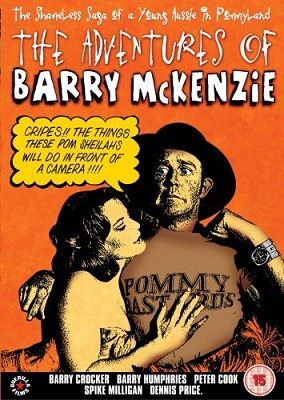
The Adventures of Barry McKenzie, Bruce Beresford (1972, Australia). Remember that time you were down the pub and some bloke told a joke that seemed funny at the time but you were pissed and so was everyone else but but not everyone thought it was funny and in sober hindsight you realise it wasn’t at all funny and was in fact borderline offensive if not outright offensive and if you had been with a more diverse group of friends they probably wouldn’t be friends anymore? Well, that’s this film. Which is why it’s a little embarrassing to write about The Adventures of Barry McKenzie, in which a racist and homophobic young Australian man visits the UK and has humorous adventures, ostensibly at the expense of the English, but he comes across as, well, racist and homophobic, so hardly a good advertisement for Australian manhood. Not that the English behave particularly well, as they’re depicted as either corrupt or even more racist than the Australians. The film was commercially successful but Beresford later said it blighted his career. Making shit films will do that. And just because a film is popular in its time, that doesn’t mean it’s not shit. And I don’t mean “shit” here as in “not well-made” but rather “offensive”. So I can understand Beresford’s complaints. A film to avoid.

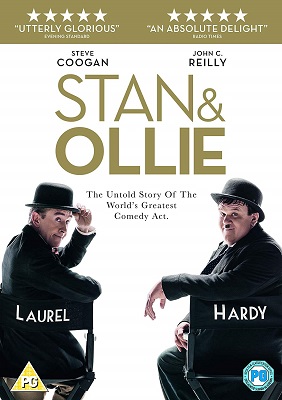
Stan & Ollie, Jon S Baird (2018, UK). In the 1950s, shortly before the end of their careers, Stan Laurel and Oliver Hardy toured the UK. This much is fact. It was partly to drum up interest – financially, mostly – in a film project of Laurel’s, a signature reworking of the Robin Hood legend. But the film producer played the comic duo for fools and the UK promoter of the tour did a less than stellar job. It is somewhat disappointing to learn that despite a career in Hollywood Laurel and Hardy were just as easy to fool as those who had stepped off the bus the night before. The film even shows them being smart about contracts… only to have them not actually learn anything from the incident. But that’s real life. And so is this film. It conflates a few things, changes a few minor details, but it’s essentially true to the pair’s final tour of the UK. And their reasons for doing it. But in any biopic, ninety percent of the appeal comes down to the depiction of the subjects, and in that respect Stan & Ollie scores very highly. Steve Coogan has Stan Laurel’s mannerisms down to a tee, although occasionally he does feel more like an actor playing a part; but John C Reilly is a pretty much a perfect Babe Hardy. I’ve seen a lot of Laurel & Hardy films over the years, I have even seen a few documentaries about the pair. And Reilly is extremely convincing. The pair of them make the film, but Reilly more than Coogan.

Sadak, Mahesh Bhatt (1991, India). According to Wikipedia, this film was inspired by Scorsese’s Taxi Driver, although to be honest I didn’t spot the resemblance myself and I’m not sure how closely one maps on the other. The one thing I do remember about Sadak is that it was more like a Hollywood musical in places. Several of the musical numbers had everyone come together on what were clearly indoor sets purporting to be street scenes to sing and dance. And maybe a bit like the TV series Taxi, that one with Danny DeVito and Andy Kaufman. The film centres on Ravi, a good-natured but insomniac taxi driver, who one day stumbles across the beautiful  Pooja, shortly before she is kidnapped and indentured to an evil transgender brothel keeper. One of Ravi’s passengers had been a celebrity cop, so Ravi enlists his help in rescuing Pooja. But it doesn’t go as planned, as nothing does in films of this sort, even Bollywood ones, and the final scenes sees a shootout between the good guys and the bad guys. Ravi is left for dead, but uses the last of his strength to have vengeance on the bad guys and finally rescue Pooja. Happy end. Sadak felt more 1970s than 1990s, although the transfer was much better than would have been usual for a Bollywood film from the earlier decade. I couldn’t decide if the musical numbers were deliberate pastiches – the opening one, for example, reminded me of one of the songs from Grease in its staging. If you’re into Bollywood films, you’ll get an evening’s entertainment out of Sadak, even if it does take some swallowing in places.

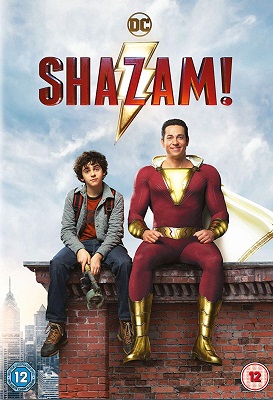
Shazam!, David F Sandberg (2019, USA). DC have had real trouble creating a property with the appeal of MCU’s properties. Which is odd, when you think about it, because they’ve got some big super-powered guns in their arsenal. But they’ve rebooted Batman that many times… and Superman too… and only recently did they finally realise that Wonder Woman was commercially viable (despite a successfully syndicated TV series decades ago), and as for the rest… Aquaman is DC, right? I forget. It was complete bobbins, but very entertaining (see here). There was that Justice League movie. I think I’ve seen it (apparently, I have – see here). So it must have seemed to DC like the most natural thing in the world to pick a second-rate hero like Shazam and make a big budget film about him. The central premise of Shazam! is the super-powers are passed from person to person, and the film’s first act sees those powers being given to a fourteen-year-old boy. Who, when he says the magic word – bet you can’t guess what it is – and transforms into a superhero, he’s a grown man but he’s still got the mind of a kid. It makes for a good joke… when used sparingly. The plot is something to do with a previous candidate for the powers who, peeved he was rejected, turns all-out evil and abducts Shazam’s friends and stuff like that. The movie had its moments, but it’s considerably less memorable than Aquaman, even if my overriding memory of the latter is endless battle scenes and a treasure map that required the use of a statue of a Roman emperor who didn’t exist until centuries after the map was made. Oops. Anyway, a bottle of wine and something trashy to eat like pizza, and Shazam! could be considered suitable accompaniment.

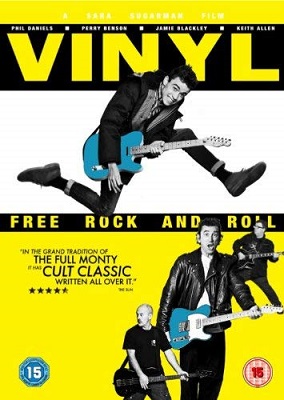
Vinyl, Sara Sugerman (2012, UK). Titling films is important. Sometimes it’s why people watch them. So to title a film Vinyl – an over-used title – when it really has nothing to do with vinyl, ie, LPs, seems like a pretty dumb decision. But that’s what they did here. And it’s even based on a true story. Which also had nothing to do with vinyl. But Vinyl is a film about music and bands, so it’s not like there isn’t some link. In the early 2000s, the members of a punk band popular twenty years earlier all meet up at the funeral of a friend. They’ve all got their own lives, not all of which has been successful. After a piss-up, they jam. The following morning, one of them cleans up the song they spontaneously wrote while pissed, and they all decide it’s good enough to give their band a second lease of life. Except the A&R man of their old record label disagrees. He likes the song, but he’s not interested in a band of fortysomething washed-out punks. So the band hire a bunch of young people to play the part of the band responsible for the song. It works. They get a contract. And the single is successful. But then the fake band members decide they’re a real band and they want a proper career… Vinyl was apparently filmed almost entirely in Rhyl, and much of the cast – with the exception of a handful of lead roles – were local players. The end result is a small town British – well, Welsh – comedy, with perhaps a little too much profanity but some good comic set-pieces, and a story that sounds almost entirely implausible despite being (mostly) true.

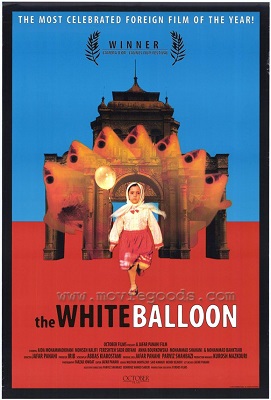
The White Balloon*, Jafar Panahi (1995, Iran). There are several films from Iran on the 1001 Movies You Must See Before You Die list, although most are either by Abbas Kiarostami or Mohsen Makhmalbaf. (The former actually provided the script for The White Balloon.) The presence of movies from Iran on the list is no surprise – its cinema has some excellent directors and has produced some excellent films. I’m not sure I’d put The White Balloon in that group – I think I preferred Panahi’s later The Circle – as I can think of a number of other Iranian films I thought better. The story involves a young girl who wants a goldfish and eventually nags her mother into giving her the money for it. But she loses the money, and it’s only with the help of a white balloon given her by a street boy selling balloons that she retrieves it. The White Balloon is very much a product of Iranian cinema, which is why it probably didn’t stand out for me all that much. It’s not structurally innovative, which both Kiarostami and Makhmalbaf are known for. It’s as well-acted and as well-shot as any number of Iranian movies I could name – but it seems to lack their mordant wit and black humour. It’s a good film and worth seeing, but I’m not sure it belongs on the 1001 Movies You Must See Before You Die list. Which could be said of many films on the list – and the presence of quite a few of them is downright mystifying.

1001 Movies You Must See Before You Die count: 940

2 Comments

Moving pictures 2019, #14

Since moving to Sweden, I’ve pretty much had access only to Amazon Prime. I bought my Blu-ray player with me, and a bunch of discs, but I’ve yet to set it up. Funnily enough, they don’t sell 3-pin to 2-pin electrical plug adaptors here, only the reverse…

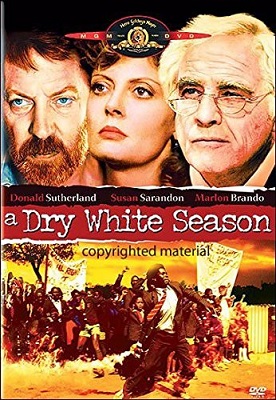
A Dry White Season, Euzhan Palcy (1989, USA). This is based on a novel by noted Afrikaner author André Brink, originally published in 1979, and apparently banned in South Africa. Which is hardly surprising. What is surprising, however, is that the book was around for over a decade before apartheid was ended, and the film for three or four years. And while apartheid was rightly reviled and condemned internationally, I’m surprised books and films which showed its true horror, such as A Dry White Season, weren’t more widely known. Which hardly normalises apartheid, but certainly makes international resistance to it by individuals entirely passive and ineffective. Of course, it doesn’t help when your government – for me at that time, that would be Thatcher’s – cosy up to these vile regimes, or even worse, like Pinochet’s, which more or less much makes them criminals by association. So no, Thatcher does not deserve a statue. Anyway, A Dry White Season. A black teenage boy is rounded up by the police during a schoolboy protest, even though he wasn’t involved in it. His father, the gardener at a posh Afrikaner school, tries to have his son’s criminal record wiped as he was innocent. But then is himself arrested as a “black activist” and tortured. He dies during interrogation. One of the school’s teachers, a famous ex-rugby player and “friend” of the gardener, tries to help out and gets embroiled in the whole thing. He decides to get justice for the dead man, which involves taking the state security police to court for his death. He loses the case. Soon afterwards, he is murdered by a state security police officer. This is grim stuff, and all the ore so for being set in a real world regime that behaved pretty much exactly as depicted. Apartheid was an abomination. A Dry White Season makes an excellent fist of its story, and Donald Sutherland, despite a somewhat wobbly accent, is good in the lead role. Worth seeing.

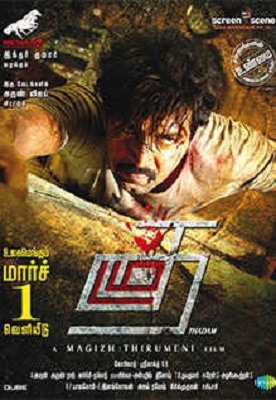
Thadam, Magizh Thirumeni (2019, India). A successful engineer spots a young woman he fancies on his commute to work – in fact, she works in the same building. He tries asking her out, she plays hard to get, but eventually she agrees. The two are very happy together. But then she heads off to a distant city for a celebration of some kind and is never seen again. Rumour has it she ran off with another man. Some time later, a man is brutally murdered in his apartment. The investigating police find a video taken on a phone from the balcony of a neighouring flat during a party – and it clearly shows the engineer on the balcony of the murdered man’s apartment around the time of the murder. He is arrested, but it seems he has an alibi. Meanwhile, it also transpires the engineer has a doppelgänger, who works as a con man and gambler on the streets. He turns up at the police station where the engineer is being held, after being arrested for drunk-driving. So now the police have two identical men, one of whom murdered the victim, but both have alibis. It turns out the pair are twins, who separated when their parents divorced and the two now hate each other. But one of them must have committed the murder, even though both have alibis. The court reluctantly lets them go. This is a clever thriller, and while it’s pretty long by Western standards, it never flags. It kept me guessing for much of its length, although the resolution is hardly a surprise. But if you’re going to watch a polished thriller, why not watch an Indian one?

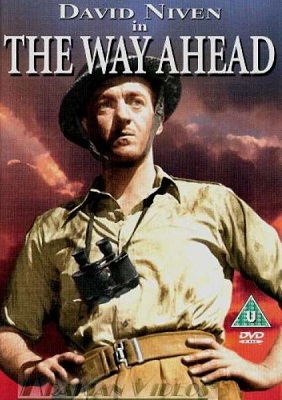
The Way Ahead, Carol Reed (1944, UK). Given when this film was made, and its topic, I suspect it was partly, if not wholly, intended to encourage more people to sign up to fight. And yet it shows the British armed forces are just as shit and incompetent as Evelyn Waugh’s novels make them out to be – as indeed does their record in both WWI and WWII. (The modern British Army, however, is a highly effective and professional fighting force, often hamstrung by poor equipment bought by politicians.) Anyway, a number of men from various walks of 1940s UK life are conscripted. En route to their barracks, they have an encounter with an army sergeant that does not go well. Lo and behold, he turns out to be their platoon sergeant when they finally reach barracks. And they’re all convinced he – William Hartnell – has it in for them. In fact, the opposite is true: he thinks they’ll make good soldiers. The film follows them through their training, including all their whinging and attempts to shirk, and ends up with them being sent to fight, only to be re-assigned elsewhere before the battle… but their ship is torpedoed and they have to fight to for their lives. This is a surprisingly honest depiction of British conscription during the war, and of some of the characters are closer to caricature that’s hardly unexpected given the broad strokes with which they’re drawn. As WWII films go, it makes a good antidote to the bombastic crap both the UK and Hollywood churned out in the decades immediately following the WWII.

Animal Farm, John Halas & Joy Batchelor (1954, UK). Orwell’s novella seems an obvious candidate to turn into an animated film, but it took nearly a decade before it reached the screen. Perhaps it was too political for Hollywood – this adaptation is British, after all. Except… Hollywood has made plenty of political films, even ones that directly criticised Hitler. The story of Animal Farm, unfortunately, lends itself too well to animation, and what is clearly a political parable becomes something that feels more like a cartoon without jokes. There’s some good animation here, but I suspect afficionados of the artform are going to be the only ones who really appreciate it. To my eye, nothing especially stood out, and Orwell’s message felt like it was tacked on than the actual point of the piece. Worth seeing almost certainly, but be prepared to be disappointed.

Silence, Martin Scorsese (2016, USA). In the seventeenth century, the Japanese shogunate cracks down on Christianity and imprisons, or executes, all the Christian priests and missionaries in the country. Two Jesuits are sent to Japan from Portugal a few years later to search for a priest who chose to renounce Christianity rather than be executed. After all, who wouldn’t? Seriously, if you’re that invested in an idea you’d give your life for it, chances are it’s not a good idea. And religion, particularly Christianity, is not a good idea. It’s caused far more harm and destruction than atheism. Funnily enough. Anyway, Andrew Garfield and Adam Driver, a pair of naive young Jesuits, are smuggled into Japan, where they discover Christianity flourishing underground despite being outlawed. Yay for risking execution and torture in service to a promise of an afterlife. Like you’ll ever fucking know whether it exists or not. Show me someone who’s  come back. With proof. Heaven is one of the biggest marketing scams in history of humanity. Up there with the divine right of kings, capitalism, trickle-down theory and white supremacy. Anyway… Scorsese is an experienced and accomplished film-maker, so it’s comes as no surprise that Silence is a well-made film. Although it does still feel like a series of longeurs stitched together by brief moments of drama. In part, that’s the nature of the story Scorsese is telling – it’s spread across years, for one thing. The cast all give good performances, but in places there’s just so much open emotion up there on the screen it feels like a wet Sunday in winter. I’ve never been a Scorsese fan – at least not of his films, but very much so of his World Cinema Project and his work to restore and promote non-Anglophone cinema. That’s always made me feel like I should like his movies more than I do. Silence is by no means a disappointing film, and it ticks all the boxes as an historical drama, but it’s not a film I can have strong feelings about.

The Curse of Frankenstein, Terence Fisher (1957, UK). This was apparently the film which established Hammer as a maker of horror films – and they made some classic, if somewhat cheap, horror films during their time. Melvyn Hayes – better known to Brits of my generation as the female impersonator from the sticom It Ain’t Half Hot Mum, plays a young Victor Frankenstein who engages Robert Uruquhart, a disgraced scientist, as his tutor. Hayes grows up to be Peter Cushing. And he and Uruquhart manage to recreate life. But Cushing takes it further and creates a human – his monster, played by Christopher Lee. The film takes a number of liberties with the novel, mostly by almost entirely ditching Shelley’s plot. Th end result is pretty much archetypal Hammer Horror material, almost a template for their later movies. The Curse of Frankenstein grossed more than seventy times its production cost during its release, according to Wikipedia, and spawned a number of sequels. It was not especially well-received by critics. It’s not a very good film, and it would take some real mental gymnastics to try to claim it as one. But it’s certainly germinal, and while none of the film it led to ever be classified as works of cinematic art, they did what they did well and with a welcome sensibility. I don’t like modern horror films, I’m far too squeamish. But I’d happily work my way through Hammer Horror’s back-catalogue, and consider myself richer for having done so.

1001 Films You Must See Before You Die count: 939


Leave a comment

Moving pictures 2019, #13

Once again, I’ve managed to get a bit behind with these posts. In fact, I’ve not been blogging much since moving to Sweden. Starting a new job. New town. New country. All that. I also moved apartments a couple of weeks ago, and now have a five kilometre walk every day. And I’ve started Swedish lessons, two days a week after work. But I really need to get on top of my blogging. I was hoping the move would help me kick off the writing again but, naturally, there’s an adjustment period… although I do have to keep reminding myself that I’ve only been here for two months. It feels like a lot longer. In a good way, of course.

Jashnn – The Music Within, Raksha Mistry & Hasnain S Hyderabadwala (2009, India). The title refers to a wannabe rock god, who dreams of stardom but doesn’t seem to have much of a clue how to go about it, even though he has a band and write songs. He doesn’t, for one thing, even know what a demo is. He lives with his sister, who is the mistress of a rich businessman. One day in a cafe, he chats up a beautiful young woman, and they start seeing each other. But it turns out she’s the sister of the businessman, and he doesn’t want Jashnn dating his sister – so much so, he threatens to cut Jashnn’s sister off without a cent. Jashnn’s girlfriend is so incensed, she moves in with Jashnn, who is now living in the place where the band rehearse. And she becomes their manager, introduces them to the concept of a demo, and takes them round the various record labels. But the businessman owns the record company, so he gets them thrown out. And it all comes down to a talent contest – as it always does in films of this sort. Jashnn has dropped out of his band, so they enter without him. But his girlfriend convinces him to perform as a last-minute contestant. Which he does. But the businessman has the judges in his pocket. Except… he gives a long impassioned speech explaining that Jashnn’s song really moved him and now he’s completely changed his mind and won’t be the evil bastard he had been previously and Jashnn can keep on seeing his sister, he won’t throw Jashnn’s sister out of her house, and everyone can live happily ever after. A polished piece of Bollywood, but romantic tosh from start to finish.

The Lego Batman Movie, Chris McKay (2017, USA). It was free to watch on Amazon Prime. That’s my excuse and I’m sticking with it. The original The Lego Movie (see here) was sort of fun, except for the horribly intrusive daddy issue swerve in the story toward the end. The Lego Batman Movie is, well, more of the same, but instead focuses on the titular superhero. The film is a relentless sequence of jokes, most of which manage to be funny. The Joker turns the tables on Batman by surrendering – along with all his fellow super-villains – so giving Batman no reason to exist. But it’s all a cunning plot, because Batman steals Superman’s Phantom Zone Projector to send the Joker to the Phantom Zone, which is what the Joker was hoping, because he promptly escapes and brings with him all manner of villains from assorted intellectual properties. There’s a running joke about Bruce Wayne accidentally adopting Dick Grayson, which a is bit uncomfortable in places, but then Batman decides to turn him into Robin (resulting in one of the films better comedy sequences). Still, it’s a Lego movie and you get what it says on the tin. I’m not entirely sure who these films are aimed at – the jokes are a bit too knowing for kids, but Lego is a child’s toy. I guess Lego have done well with these films, then, to position them for such a wide audience.

Dastak, Mahesh Bhatt (1996, India). This was Sushmita Sen’s first film. She was crowned Miss Universe in 1994, and in Dastak she plays herself, a winner of the Miss Universe contest, who is being stalked by a killer. The policeman assigned to look after her turns out to be an old schoolmate, and romance soon blossoms between the two. Which the stalker does not like. And, er, that’s pretty much it.  Although released in 1996, the film feels like it’s a decade or two older. The violence is all a bit pantomime, and I can’t honestly remember any of the musical numbers. But Sen is good in her first film role – not that it seemed to require much acting – and the stalker plot follows the usual story beats, with the stalker escalating each time he feels Sen’s behaviour doesn’t meet with his approval. Meanwhile, the police have no clue to the stalker’s identity. But at least moustachioed cop gets to kindle a romance with his charge. For all its by-the-numbers plotting, and despite the fact it was clearly a star vehicle for Sen, I quite enjoyed Dastak. Perhaps it was because it was a Bollywood film but it felt more dramatic than is usually the case for a Bollywood film of that time. I mean, I’ve seen some excellent Indian thrillers, like Thadam and Kahaani (see here), but they were twenty-first century films. Anyway, not a bad film.

The Getting of Wisdom, Bruce Beresford (1977, Australia). A friend told me that prior to the 1980s pretty much every internationally-recognised film made in Australia was shot by one of two directors. I’m guessing Breresford was one of the two. The Getting of Wisdom was his fifth film and is adapted from a 1910 novel by Henry Handel Richardson (despite the name, a female Australian author), which has apparently been in print continuously since then – so, quite highly regarded, then. Laura Tweedel Rambotham is a provincial naif from a small village who is sent to a boarding-school in Melbourne. The other girls are all snobs, so she finds it hard to fit it. But she’s a gifted pianist and makes friends through her talent. She also invents a romance with the school’s visiting priest, engineering encounters with him in such a way the other girls believe the relationship is real. Until it’s abruptly revealed to be a lie. I wasn’t entirely sure what to make of The Getting of Wisdom. It seemed a bit cobbled together in parts. It probably didn’t help that the source novel is more a series of escapades than an actual straight-through plot, and the film reflected that. I’m glad I saw it, but I can’t say I’d recommend it.
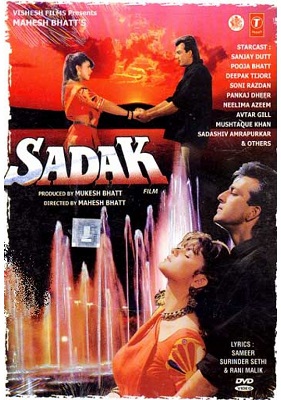
Manikarnika: The Queen of Jhansi, Krish & Kangana Ranaut (2019, India). Apparently Amazon bought the distribution rights to this film immediately after its theatrical release in India. Which is why it’s on Amazon Prime. Although not why it’s free to Prime members. I’ve seen a few recent Indian films available on Amazon Prime, and I think the same deal applied to them. Just to confuse matters, Amazon are releasing them in different language versions – Hindi, Tamil, Telugu and sometimes Malayalam. Anyway, Jhansi is famous for its queen, who fought against East India Company at a time when it pretty much had all the various kingdoms, sultanates and principalities sewn up, and was busy robbing them blind in the name of English commerce and good Queen Vic. Manikarnika was having none of that, and refused to submit. So the British threw an army at her. Strangely, all the British characters in this film had South African accents, although apparently it was just Americans doing bad British accents. Other than that, the film is a long sequence of battle scenes, which are rendered extremely well, with much CGI, or courtly intrigue, most of which involves the British being perfidious or Manikarnika being heroic. It’s good stuff, but no one could accuse it of being subtle. And it’s a definitely a piece of history British people would benefit from learning about, especially all those arseholes who think the British Empire was some sort of noble endeavour that brought all the good things to most of the planet. Was it bollocks. It was a shameful period of British history, and movies like Manikarnika: The Queen of Jhansi give an excellent indication why. Worth seeing.

Area Q, Gerson Sanginitto (2015, Brazil). Stop me if you’ve heard this before. There’s a place where several people have gone missing, and then returned claiming to have been abducted by aliens. For reasons never made entirely clear, an award-winning journalist is sent to that place to look into the matter. The journalist is currently trying to find his young son, who disappeared some months previously. The journalist interviews some of the abductees, and they seem to have been genuinely changed by the experience. Then he is abducted himself, and learns that his son was also abducted. This is all being told to another journalist after the events, because the original journalist’s career bombed after he came back claiming to be an abductee. Area Q differs slightly in its presentation of this over-used and somewhat dated premise because it’s Brazilian. The journalist is an American from LA, but the abductions (except for the son) all take place near a mountain in Brazil. It adds a strange gloss to what is a bog-standard plot strung together from unbelievable clichés. It doesn’t help that the acting is not very good, and the script pretty terrible. Definitely one to avoid.

1001 Movies You Mist See Before You Die count: 939