Just the one US film, and it’s Netflix. And it was rubbish. Although it seems to have its fans, and I seriously worry about criticism in the genre these days. Otherwise some Jackie Chan, some Shaw Brothers, and some Bollywood.
The Protector, James Glickenhaus (1985, China). Chan tried to break into the US market several times – one has to wonder why he bothered – but most of his attempts didn’t go well. Like this one. A lot of it was re-shot by Chan as he was dissatisfied with Glickenhaus’s work. I think I saw Chan’s cut. Certainly there’s a change in tone from the bad early 1980s New York to later scenes set in Hong Kong. Chan plays one of a pair of cops on bodyguard duty at a fashion show (and this is the 1980s!), when a prominent businessman’s daughter is kidnapped by armed gangsters. Because drugs. And a falling out between each end of a New York – Hong Kong drugs pipeline. So Chan and partner (Danny Aiello) head off to HK to find the missing woman. The final fight scene, on a shipyard crane, is somewhat OTT.
Disorder, Olivier Assayas (1986, France). I’m a big fan of Assayas’s films, hence my purchase of a Blu-ray of two of his early works, Disorder (1986) and Winter’s Child (1989). A group of musicians break into a music shop and accidentally kill someone. Then they get on with their lives. I tweeted while watching this that you could tell the French band in the film were “edgy” because they were singing in English. Other than that, it was all very low-key and a bit meh.
Dhoom, Sanjay Gadhvi (2004, India). The title means “blast”, and I suppose the film was just that, in one narrow sense of the word. A group of thieves on high-powered motorbikes have been robbing banks in Mumbai. With great success. A police inspector enlists the help of a dodgy motorbike dealer, and his friends, in catching the thieves. It’s all very glossy, and a bit silly, and I was never really convinced the high-speed chases were, well, high-speed. But there’s some good comedy in it, and the use of slo-mo in the action sequences is gloriously over the top. There are apparently two sequels.
The 14 Amazons, Cheng Gang & Charles Tung (1972, China). Historic martial arts epic from the Shaw Brothers, in which the family of a general killed in battle, plus an army of volunteers, set off to defeat the enemy. Fans of present-day historical epics will probably find this one disappointing. It was made before the days of CGI, and the Shaw Brothers were never ones to spend lavishly on sets or location shooting. Meh.
Golmaal: Fun Unlimited, Rohit Shetty (2006, India). A friend recommended Golmaal and I put it on my watch list, but it disappeared before I got to watch it – explain to me why streaming is a good thing, again? – but having watched this film I have to wonder if it’s the one he meant. Anyway, four friends run numerous small scams until the only one of them that’s at university… is booted out of university. They move into the house of an old blind couple, and two of them pretend to be the couple’s grandson – one playing the body, the other providing the voice (don’t ask) – because of some treasure or something. But the “treasure” turns out to be the ashes of the grandson, who the old man already knew was dead. Except a gangster hid some diamonds in the ashes and he wants the diamonds back… It’s all completely daft but quite funny.
Deewana, Raj Kanwar (1992, India). This film has to be seen to be believed. It’s basically Dynasty dialled up to 13. At least. Rich popular singer visits small country town and falls in love with a young woman who is one of his fans. His nephew, who wants the singer’s fortune, sexually assaults the new bride. The uncle sends men to kill the singer, which they do, although the nephew is killed in the attempt. Young widow and her mother move to another city. They are run over by the wastrel son of a wealthy industrialist. The son falls in love with the young widow. But then the singer turns up, because it seems he wasn’t dead after all (although since he was shot at point blank range and then fell off a cliff, I suppose it was an easy mistake to make). But the singer is happy to let his wife stay with the wastrel, and the two guys fight off the uncle’s goons in an epic battle. Absolutely bonkers. Even for Bollywood.
Police Story, Jackie Chan (1985, China). I was pretty sure I’d seen this before but when I looked I could find no record of it. So I assume I saw some of it, but not all. Chan made it partly in response to his dissatisfaction with The Protector, and while it’s a little more realistic it’s still not entirely believable. Especially the court scenes. The villain gets off far too easily, and the police are far too quick to believe the worst of Chan’s character. For all that Police Story is said to be one of Chan’s best movies, some of the others I’ve seen were, I thought, better. Worth seeing, nonetheless.
The Old Guard, Gina Prince-Bythewood (2020, USA). This has has had a lot of positive press, which is not unexpected for a new genre property from Netflix. Unfortunately, it’s based on a comic that has borrowed far too much from French bandes dessinées and presents a US-privileged worldview despite being allegedly global. True, every country’s art privileges its home nation, but no one outside the US believes the US has a fucking clue what it’s doing. Anyway, the head of a UK pharmaceutical company learns of the existence of four immortals, who have sort of done various good but secret things for centuries, and he wants whatever it is that means they can’t die. So he sets up a complicated plan to capture them, one which results in a death toll over the course of the film of several hundred people. CEOs do this all the time, of course – extraordinary rendition, kidnap, torture, mass murder… No, wait. That’s US presidents. The whole thing was complete bobbins from start to finish, and high production values can’t disguise a story that’s morally repugnant. Avoid.
Oops, a couple of Hollywood films sneaked in – even worse, one is a new Disney film. (Old Disney films are allowed, by the way.) To be fair, I’d assumed the film was Irish, given the mega-selling property from which it was adapted is Irish – but apparently not. The other is by the nearest thing Hollywood has to an actual auteur, although I’ve always found his films unconvincing. Otherwise, your usual international mixture.
Artemis Fowl, Kenneth Branagh (2020, USA). Nope, didn’t get it. Fairy land is real and lies deep in the earth, but they have magic – so why do they need high tech? Which they have, much higher than us poor surface folk. The title character is the eleven-year-old son of a man who shares the same name, and apparently both are criminal geniuses. So we are told. But not shown. Then there was something about fairies and dwarfs and trolls and a powerful weapon that wasn’t a weapon, and none of it made the slightest bit of fucking sense, and it was clear Branagh had reached for the visuals in every scene, but it wasn’t enough to give the material any kind of sense or character. I’ve heard mixed reports about the books, but everyone has said the film is bad. Hard to disagree.
Dragon Fist, Lo Wei (1979, China). Very early Jackie Chan film in which he is a student of a kung fu master who is killed in a grudge match, then Chan later stumbles across the killer, whose clan is in conflict with a nasty evil clan, and discovers the killer has reformed so much so he even cut off one of his legs. It’s a bit silly, yes, and the showdown where the villain’s brainiac henchman explains his plan is even sillier. But there are some excellent fights, and the generally strong story line keeps things simple. One for fans, I think, though.
Dragons Forever, Sammo Hung & Corey Yuen (1988, China). Jackie Chan plays a lawyer hired to prevent a fishery from closing down a chemical plant after complaints of pollution, except the chemical plant is really a drugs plant and Chan falls in love with the environmentalist helping the fishery… A film mostly notable for being very 1980s, until you realise that Chan’s associates, Sammo Hung and Yuen Biao, have an entire comedic routine going on between the two of them that nearly derails the film. Also, Chan’s climactic fight with Benny Urquidez has to be one of his best, if not the most physical the two ever performed – and, to my mind, better than the one in Wheels on Meals. A must for Chan fans.
The Kinsman, Doris Ariole (2018, Nigeria). Nollywood is the third biggest cinema on the planet after Indian (Bollywood + Tollywood + Kollywood, etc) cinema and Hollywood, but its output is not easy to find. In some respects, this is a good thing – most Nollywood films are really, really bad. But occasionally it throws up some gems. While “gem” may be far too strong a word for The Kinsman, I did enjoy it, for all its clichéd story and amateur performances. Widow and nubile daughter return to Lagos, and presume on an acquaintance of her late husband to, first, get the daughter a job, and, second, match-make between the two. But the acquaintance, Mr B, is more than double the age of the daughter, and reluctant to get romantic. Add in a pair of female sidekicks, one of whom is deaf and uses sign language throughout, and you have a rom com that ended up more interesting than the usual fare. I enjoyed it, and I didn’t expect to.
Jaane Bhi Do Yaaro, Kundan Shah (1983, India). There are not many Bollywood films inspired by Michelangelo Antonioni movies – in fact, this might be the only one. Two unlucky owners of a photographic studio/shop find themselves embroiled in a corruption conspiracy when they accidentally photograph a wealthy developer murdering a corrupt municipal commissioner. But this is Bollywood, so a lot of the film is an extended joke on keeping the commissioner’s corpse out of the hands of the bad guys. It’s all very Bollywood and very 1980s, with pantomime villains and luckless heroes. The end sequence, in which the heroes and villains take over a theatre production of the Mahabharata is considered a classic of Bollywood comedy, and rightly so. It’s brilliantly done, and it’s worth seeing the film for it alone.
The Legend of Rita, Volker Schöndorff (2000, Germany). Of all the nations on this planet, Germany has probably interrogated the violence of its recent past the most. Admittedly, it did significant damage to Europe during the 1930s and 1940s, but it has taken responsibility for those crimes in an intelligent and moral way. Which is more than can be said for other European nation. One of the consequences of the position Germany found itself in after WWII resulted in a forty-year campaign of terrorism, which Germany has addressed many times in film. (This is not to say Germany is a complete paragon – it has yet to address the quiet rehabilitation of Nazis which took place in the years following WWII.) The Legend of Rita is based on a true story of a terrorist who escaped to East Germany and was protected by the Stasi. But it all came to an end after reunification…
Gantz, Shinsuke Sato (2011, Japan). Two young men are hit by a subway train and awake to find themselves in an apartment with a giant black ball, which tells them they must kill aliens to earn points. The film is then structured as their encounters with various aliens. But they also have their own lives to navigate – and while I’ve seen reviews of this film complain about the characters development, it strikes me as overly harsh given the situation itself is never really explained. True, Gantz drags quite a lot in places – in far too many encounters, the characters seem completely clueless and stand around waiting to be killed, when the film has already shown what needs to be done. But it’s a neat idea and it’s handled well, and if there are any problems, it’s in the pacing.
Four Weddings and a Funeral, Mike Newell (1994, UK). This is on the 1001 Movies you Must See Before You Die list and while I’d definitely seen it many years before, I didn’t have a date against it. So when it popped up on Amazon Prime, I decided to watch it. I’d forgotten how much I despise Hooray Henries, and their collaborationists, such as Richard Curtis. Hugh Grant’s character is clearly living off overdrafts – the minimum spend for Andie MacDowell’s wedding present is £1000 and he asks what is available for £50. The cars he drives are cheap clunkers. But he has rich friends. And he is posh as fuck. This is all as representative of 1990s UK as Downton Abbey is of the UK at any time. True, John Hanna’s reading of Auden’s ‘Funeral Blues’ still moves, but that’s due to the poem, not the film or actor. I fucking despise “chocolate box England” movies, and Four Weddings and a Funeral was among the first of them. Burn it, burn it to hell.
A Hidden Life, Terrence Malick (2019, USA). If you make a film in which a person is arrested and condemned to death for not doing what his country and society want him to do… who is the villain? Given that this film is set in Austria during the late 1940s, a sensible person would say: the Nazis. Except Malick doesn’t show the Nazis doing anything bad. True, there’s no such thing as a good Nazi – but if you don’t make their evil explicit, then you’re helping rehabilitate them And we know people are stupid enough in this day and age to defend the Nazis. While those sort of people are unlikely to watch a Malick film, anything involving Nazis should not be morally neutral. Three hours of fucking dull ambiguity does no one any favours. There is, it must be said, some lovely photography in A Hidden Life. There is also a lot that is unconvincing. And the most unconvincing thing is Malick’s commitment to his premise. Still, this is hardly surprising – Malick’s films have generally been visually strong but intellectually weak. A Hidden Life feels like Malick’s attempt to make The White Ribbon, while completely missing the point of Haneke’s film…
Just the one US movie this time, and that’s from nearly thirty years ago. To be honest, I had a feeling I’d seen Demolition Man before, but having now watched it I’m still not sure – and I generally have a really good memory for movies…
These Movie roundup posts – and their precursors, the Moving pictures posts – don’t seem to be as popular as my book reviews, but I think it’s important to demonstrate to Anglophone readers there are shitloads of really good films out there that are tons better that the latest glib and simplistic Hollywood blockbuster. Put a bit of intelligence into your movie watching and you will find they can be as intellectually and artistically rewarding as books.
Bacurau, Kleber Mendonça Filho (2019, Brazil). Not entirely sure what to make of this one. It’s Brazilian. But it stars Udo Kier. It’s supposedly set in the near-future, but I don’t recall much that signalled as much. A remote village begins to fall apart after the death of the matriarch, and random strangers turn up and kill people. It probably deserves a second watch, but I didn’t get much out of it – and I’ve seen a number of Brazilian films.
Demolition Man, Marco Brambilla (1993, USA). Risible near-future action from Hollywood, in which Wesley Snipes overplays a violent criminal defrosted in a utopian California in 2032 but has been secretly programmed to sabotage the utopia in order to turn it into a dictatorship. Unfortunately, the authorities defrost his historical enemy, Sylvester Stallone, to catch him and Stallone demonstrates the freedom to starve is worth more than utopia, and he’ll kill to prove it. The whole thing plays like an advert for Reaganomics. No thanks. A story based on a bullshit argument from the rich people who have the most to gain from it. Avoid.
Tiger on the Beat, Lau Kar Leung (1988, China). Hong Kong cop duo action comedy, with Chow Yun-fat as a lazy and ineffectual police officer teamed up with by-the-book go-getter Conan Lee. Takes a while to get going, but there’s some good comedy, and the final fight scene with chainsaws has to be seen to be believed.
Tokyo Raiders, Jingle Ma (2000, China). This was apparently the last film ever released on laser disc, although there were many films released in that format that have never made it to DVD or Blu-ray. With the success of streaming, recent years have seen DVD/Blu-ray labels turn boutique and specialise in collectible and cult films. Which I applaud. A man misses his wedding, and the bride-to-be teams up with an interior decorator who is owed money (yes, really), and they head to Tokyo to track down the missing man’s business partner, who is apparently wanted by gangsters, and there’s a private detective with three female sidekicks, and the story goes round in so many circles it’s astonishing it makes some sort of sense at the end. Worth seeing.
The Sister of Ursula, Enzo Miloni (1978, Italy). Another giallo. Two sisters visit a seaside hotel, indulge in much nudity, while a mysterious killer stalks and kills the female guests. A review on imdb probably describes it best: “spends too much time on the rumpy-pumpy and not enough on the stabby-stabby”.
The Monkey King: Havoc in Heaven’s Palace, Soi Cheang (2014, China). I tweeted while watching this that it seemed to be some unholy mashup of Avatar and Cats. And, a week later, that’s pretty much all I can remember. Monkey is a common and popular figure in Chinese mythology, and variations of him have worked their way into Western culture. I admit I know little about him, so my view of this film is pretty much based entirely on the visuals. Which were… weird. I think the film was shot entirely in green screen, with CGI backgrounds, and to be honest I lost track a bit of whose side Monkey was on, with demons fighting angels but the demons acting like they’re the good guys. All very strange.
A Better Tomorrow I & II, John Woo (1986 and 1987, China). I’ve been aware of Woo’s influence on Hong Kong cinema since first seeing Hard Boiled back in the mid-1990s, and Chow Yun-fat’s popularity as an action star, but it’s only after watching several 1980s Woo movies on the trot recently that I’ve come to appreciate precisely how much he changed Hong Kong, and then world, action cinema. In A Better Tomorrow, the brother of an enforcer for a gangster joins the police, but then their father is killed in a bungled attempt to kidnap him to put pressure on the enforcer after a fall-out with a Taiwanese gang. The enforcer gives himself up after a drug deal gone wrong and spends three years in prison. When he gets out he wants to go straight but everyone else is determined otherwise. A good solid thriller. The sequel is more of the same, but in New York. Chow Yun-fat’s character, who died in the first film, was so popular he was resurrected as his twin brother in the second. While both movies are knotty thrillers, the fight scenes, particularly in the second, weren’t as good as some I’ve seen in other films. But it’s weird seeing how Woo “Americanised” Hong Kong thrillers so effectively that later HK thrillers would be remade by Hollywood…
Bahu Begum, Mohammed Sadiq (1967, India). A classic Bollywood film – and there are a surprising number of them available free to watch on Amazon Prime – set in Lucknow, which was apparently a popular setting. A woman falls in love with one man but is married off to another, not realising until the ceremony it’s a different man. Um, that sounds a bit dumb but it makes sense in the film. I was surprised to see Johnny Walker playing a serious role, as most of the Bollywood films I’ve seen him in he plays comic characters.
Andaz Apna Apna, Rajkumar Santoshi (1994, India). This film was apparently so successful it’s become a cultural phenomenon. Certainly, if its humour were any broader, it would rival the Indian Ocean. An heiress from London visits India to find a husband. Two wastrels decide to win her hand and end up in competition. Complicating matters is the fact the heiress’s assistant is really the heiress, but somehow or other one of the wastrels transfer his affections to her. This is definitely one of the funniest films I’ve seen for along time, despite being such a hackneyed plot.
No US films, as promised in my last Movie roundup post.
The Five Deadly Venoms, Chang Cheh (1978, China). The title refers to five masked kung fu masters, who each base their style on one of Chinese folklore’s poisonous creatures – the centipede, the snake, the scorpion, the lizard and the toad. A pupil has to figure out the identity of the masters before they join up and rob the clan of its riches. Unfortunately, the two good masters are easy to spot – although film drags out the identity of one them long past time – and the two evil ones are even more obvious. The fifth is not revealed right until the very end, and it doesn’t really come as much of a surprise. An odd film – a treasure hunt but it all takes place on three sets, and the fighting is so mannered it’s just not that exciting. I’m surprised this is considered a classic, to be honest.
The Killer, John Woo (1989, China). Whenever I see this film on best of lists, I have a feeling I’ve seen it. But I can’t actually remember the story. Nor have I recorded it on my list of films I’ve watched. And now I’ve watched it… and I still think I might have seen it before but I’m not sure. Anyway, it’s very very 1980s. Chow Yun Fat plays a hitman who’s had enough. He promises to do one last job, during which he accidentally blinds a nightclub singer while returning fire with one of his target’s goons. He feels sorry for her, and later starts seeing her romantically. She, of course, doesn’t know who he is. You can probably guess the rest.
Adventures of a Plumber’s Mate, Stanley Long (1978, UK). The third and final film in the series, with Christopher Neil still as the lead, but this time he’s a, well, a plumber’s mate. Actually, he seems to be an actual plumber, who works under contract for a plumbing company run by Stephen Lewis, you know, that bloke from On the Buses who used to say, “I’ll get you, Butler!”. Neil is asked to replace the toilet seat in a well-off woman’s house, which leads to the expected sexual shenanigans. However, it turns out her husband has just been released from prison after serving time for a gold robbery. The proceeds were never found. Neil sells the toilet-seat to a junk shop. He thinks it’s brass. It’s the gold from the robbery, of course, melted down into a toilet seat. Comedy ensues. Not great films by any means, but this was probably the best of three, perhaps because it had the most coherent plot.
Wheels on Meals, Sammo Hung (1984, China). And speaking of very 1980s films, here’s another one with Jackie Chan. He and Yuan Biao operate a food van in Barcelona. They become involved with a young woman who proves to be a pickpocket. But there are men after her, and not because of her light fingers. It turns out she’s the heir to a large fortune and the next in line wants her gone. This is easily one of the best Jackie Chan films, with an excellent car chase, and a final fight, against Benny Urquidez, which is generally considered Chan’s best.
Balgandharva, Ravi Jadhav (2011, India). In the nineteenth century in India – or perhaps only parts of India – women were banned from the stage, much as in Elizabethan England. The title refers to one such male actress who became hugely successful. Unfortunately, it went to his head and he insisted on ever bigger spectacles and eventually ended up broke. But his career greatly influenced Bollywood (although it’s Marathi cinema and not Bollywood which made this film). Not a bad film, although the actor playing the lead had a disconcerting resemblance to Leonardo DiCaprio.
High Hopes, Mike Leigh (1988, UK). It’s Thatcher’s Britain and a working-class couple in Camden have to deal with his aged mother, who lives in the only council house in a gentrified street, and whose neighbours are Hooray Henries, and a self-centred social-climbing sister who’s married to a used-car salesman. The central couple, and the mother, are well-drawn, but the rest of the cast are caricatures. Still worth seeing, though.
The Bad Education Movie, Elliot Hegarty (2015, UK). Jake Whitehall plays a teacher who has never grown up, tells stories about his salad days at public school, and takes his class on inappropriate school trips. His latest plan to take them Las Vegas is scuppered by the school, and he has to take them to Cornwall instead. Where Whitehall inadvertently hooks up with the “Cornwall Liberation Army”, who then occupy a local tourist spot castle. The humour is a bit hit and miss, and a lot of it is comedy of shame with Whitehall the butt of the joke. The film has its moments, but it’s hard to really like a film that paints everyone outside London as some sort of intellectually-challenged yokel. Those sort of jokes weren’t funny in the 1970s, and they really haven’t aged well.
In Love with Alma Cogan, Tony Britten (2011, UK). Roger Lloyd-Pack plays the manager of Cromer’s pier-end theatre, which is losing money and the Council are threatening to sell off. The reason it’s losing money is because Lloyd-Pack has kept ticket prices low so the townsfolk can afford them. And it’s the low-key battle between the two that forms the plot of the film. The title refers to a tribute act hired to boost ticket sales at the theatre and, to be honest, while the I know the name Alma Cogan I have no real who she was. So I’m not really sure what this film’s intended audience was – because the story seemed quite contemporary, but anyone who remembers Alma Cogan is going to 70+…
Tracker, Ian Sharp (2011, New Zealand). Shortly after the Boer War, a Boer arrives in New Zealand, hoping to begin a new life. But then a Maori is accused of murder and goes on the run, and the Boer is asked by the local garrison commander, who knew him from the war, to track the runaway. (The Maori is innocent, of course.) The Boer, played by Ray Winstone, eventually captures the Maori, played by Temuera Morrison, and they earn each other’s respect. Some lovely landscape cinematography, solid turns by both Winstone and Morrison, and yet another story that shows the British Empire as it really was.
Five Fingers for Marseilles, Michael Matthews (2017, South Africa). Marseilles is a shanty town in South Africa. A teenager, one of a group of five friends, shoots and kills three police officers who are demanding protection money from the local stores. He runs away. Many years later, he returns, after spending time in prison, and discovers the town has grown, one of his friends is now mayor, and a mysterious gangster now runs everything. It’s all framed explicitly as a Western, although the setting bears no resemblance to the Wild West. An excellent film.
2020 has certainly been a year for the history books. True, more people died in the early decades of last century, but that did result in actually intelligent people being in charge for a while. But then old habits kicked back in and the British once again mistook privilege for intelligence and the US once again mistook the possession of wealth for intelligence, and so both countries now have the worst and most inept governments in living memory.
As if that weren’t enough, there’s the pandemic. I’ve spent most of this year so far cooped up indoors. And all my holidays plans – conventions in Stockholm and the Åland Islands – were cancelled; and ones later this year – in Reykjavík and Copenhagen – may also come to naught. You would think that working from home and not socialising would mean I’ve spent the last six months readings tons of books and watching shitloads of films. Sadly, no. Which has made this best of the half year both easier and harder – easier because there’s less to choose from; harder because there were no real stand-outs, just an even split between good and bad. But here goes, anyway…
books
To date, I’ve read 49 books, of which ten were rereads. Female authors accounted for 43%, and male authors for 47%. The remainder were graphic novels and non-fiction. Half were by British authors, a third by US authors, and the rest from Sweden, New Zealand, Israel, France, Belgium and Canada. The oldest book I read was first published in 1923, and the most recent was published this year. The best five books read in 2020 so far are…
1The League of Extraordinary Gentlemen: The Tempest, Alan Moore & Kevin O’Neill (2019, UK). From a relatively easy to understand premise – a group of “superheroes” taken from late Victorian/early Edwardian fiction – this extended series has turned increasingly metafictional as it has progressed. And every piece of British fiction sooner or later references Shakespeare. And if you’re going to do that, and you’re genre, why not go for the big one, The Tempest? (It’d be King Lear for other genres, I suspect; but A Comedy of Errors for, er, comedy.) This latest installment of The League of Gentleman doesn’t just up the metafictional states, it also functions as a history of UK comics. I can understand the motives behind this – and I’m well aware it’s something Moore has tackled many times in other properties – but certainly the breadth of British comics doesn’t seem so well-known – US comics: superhero comics … UK comics: everything from the Bash Street Kids to Dan Dare to Judge Dredd to Susan of St Bride’s to Lord Peter Flint…
2Joanna Russ, Gwyneth Jones (2019, UK). I’ve been a fan of Russ’s fiction for many years, and a fan of Jones’s writing for considerably longer, and in hindsight the two have a great deal in common. The science fiction of both is intensely feminist, although in Russ’s fiction it feels more combative – but claiming that’s a consequence of its time is too easy an answer, because while Russ may have been earlier, the war is far from over, even 65 years after the publication of Russ’s first story in 1955. Jones provides an overview of Russ’s life, and then discusses her fiction, both short and long. This book does what all good books of its type should do: it makes you want to go back and revisit the subject’s works. I finished Joanna Russ wanting to reread Russ’s stories and novels. Job done.
3Unholy Land, Lavie Tidhar (2018, Israel). Tidhar has spent a lot of time exploring alternative Israels and, sadly, history has given him plenty of plausible alternatives to explore. In Unholy Land, the Jews are offered land in Uganda by the British – which really sort of happened – and they accept the offer and call it Palestine. But Tidhar can never tell a straight alternative history, there has to be some sort of spin. In Unholy Land, a science fiction author returns to this Palestine, except he’s not from that reality, and his presence changes things. For all that this is not new territory for Tidhar, it’s good stuff. I’m also pretty sure one of the stories written by the sf author in the novel is the first sf story by Tidhar I ever read.
4Metropolis, Philip Kerr (2019, UK). It’s not just sentimentality that earns this novel its spot in this top five – it’s the last of the Bernie Gunther books, as Kerr died the year before it was published – but as the last book in what has been an excellent series, and one of the better entries in that series, it definitely earns a place. Yes, there is a link with Lang’s film, but it’s pretty tenuous (Gunther is interviewed by Thea von Harbou, Lang’s scriptwriter and wife, and suggests the plot which becomes M). Metropolis covers Gunther’s career in its very early years, specifically an investigation into two serial killers, one who kills prostitutes and one who kills WWI veterans, and it’s excellent stuff. If you’ve not read these books, you really should give them a go.
5Bridge 108, Anne Charnock (2020, UK). This is previously-mined territory for Charnock as Bridge 108 is set in the same universe as A Calculated Life and The Enclave. In fact, the opening chapters of the novel were previously published as The Enclave. Charnock presents a future UK suffering from both climate change and the migrant crisis, but also a world split into haves and have-nots where the distinguishing item is a brain chip allowing direct access to, well, something probably not unlike the internet – but without the trolls and fake news and shitstorm social media. Bridge 108 is a bit like Law and Order – a format I’ve used myself – as the story is carried forward from one character to the next. Science fiction which interrogates our world is becoming increasingly rare – indeed, science fiction which interrogates its own world seems on the wane – so we should value such novels when they do appear.
Honourable mentions:The Green Man’s Foe, Juliet E McKenna (2019, UK), a trunk novel rewritten as a sequel to The Green Man’s Heir, and while it’s a bit, er, bitty, it’s a fun read and a good instalment in a series that deserves to continue; The Real-Town Murders, Adam Roberts (2017, UK), the Hitchcock connection, to be honest, is a bit of a red herring, as is the crime which opens the story, but this is a typically Robertsian exploration of political conflict between two worlds, in this case the real and the virtual, which on reflection seems particularly British; A City Made of Words, Paul Park (2019, USA), a short collection of metafictional pieces by an author who probably writes the best prose of any US genre writer currently being published; The Sinister Mystery of the Mesmerizing Girl, Theodora Goss (2019, USA), the third and, sadly, final, volume in the adventures of the Athena Club, a female-only group of fictional characters from Victorian literature, and, while it doesn’t celebrate the metafictions it explores, this trilogy is pleasingly metafictional; Beneath the World, a Sea, Chris Beckett (2019, UK), Ballard meets Greene in strange adventures in an alien zone in South America, which succeeds because it’s on strong on atmosphere and appropriately vague on rigour; Shardik, Richard Adams (1974, UK), after rabbits Adams turned to secondary-world fantasy, and managed something that is more literary than is common for the genre, even if it wasn’t published as genre per se, but is just as grim and bleak.
films
I bought a dozen Blu-rays with me when I moved here and I’ve still not watched them all. Admittedly, one is 17.5 hours long, so it may be a while yet before the shrinkwrap comes off that one. I’ve not watched any Swedish TV this year, but then I was never a fan of Midsomer Murders. But I have been binge-watching several sf TV series. After finishing off Stargate SG-1, I moved onto Quantum Leap. And there was a season of Space: 1999 in there somewhere as well- and that definitely didn’t match my fond memories of it. There were also some newer series, such as Watchmen, Avenue 5 and For All Mankind, of assorted quality. And then there were the films…
This year, I’ve seen 198 films, so slightly up on last year. Two-thirds were new to me. A third were from the US, slightly less than a third from the UK, and the rest from Argentina, Australia, Belgium, Brazil, Canada, Chile, China (including Hong Kong), Denmark, Estonia, Finland, France, Germany, Greece, India, Iran, Israel, Italy, Japan, Lebanon, Morocco, New Zealand, Norway, Russia (including the USSR), South Africa, South Korea and Sweden. China, India and Italy were the top three among those – that’s a lot of Jackie Chan and Shaw Bros movies, Bollywood films and gialli. The best films – and one “limited event series” – I watched in 2020 so far are…
1Blue, Derek Jarman (1993, UK). I remember watching some of this back in the 1990s – I’m pretty sure I did, although I left the UK in March 1994 and it was broadcast on Channel 4 in September 1993, which would have been my only chance to see it… So perhaps I didn’t it. I certainly knew of it. And at that time I likely thought it hugely self-indulgent – 79 minutes of a single shot of International Klein Blue? But I’ve now watched it several times, and I find it an extremely moving film. Plus, I could listen to Nigel Terry’s voice for weeks.
2Capernaum, Nadine Labaki (2018, Lebanon). I’m surprised I’d not come across this film sooner. It won the Jury Prize at Cannes, and the name Labaki is not unknown to me. Admittedly, it’s getting harder and harder to find the sort of films I like these days. New releases on streaming services seem to dominate social media, and Amazon’s search engine is notoriously useless. And I no longer subscribe to either LoveFilm (which is defunct anyway) or Cinema Paradiso, which was one way of finding new films that might interest me… Fortunately, I stumbled across Capernaum on Amazon Prime, a film about how the West has comprehensively fucked up the Near East, as told through the story of a twelve-year-old Lebanese boy who stabs a man who buys his eleven-year-old sister as his wife (and she dies in childbirth), and the boy wants to sue his parents for having him. This is harrowing stuff, and a film that should certainly be better known.
3In Order of Disappearance, Hans Petter Moland (2014, Norway). Skarsgård plays a taciturn Swede living in Norway who has just been made Man of the Year of his small town. Then his son is found dead of an overdose, except Skarsgård is convinced he never touched drugs. (He was actually murdered by a drug dealer.) Skarsgård investigates and works his way up the drug cartel hierarchy, killing off each person he finds, and inadvertently kicking off a gang war between the Norwegian drug dealers and a gang of Serbian drug dealers. This is the blackest of comedies and it’s perfectly pitched. The head of the Norwegian gang, a pony-tailed Vegan, is an excellent comedic character. Bizarrely, some of the characters spoke Swedish, some Danish, and the rest Norwegian. Which resulted in a somewhat weird viewing experience.
4Twin Peaks: A Limited Event Series (2017, USA). I’ve been a fan of Twin Peaks since it was first broadcast on British TV. The one thing I never thought it needed was a third season. And, to be honest, I’ve sort of gone off David Lynch’s movies. So expectations were mixed when I started watching Twin Peaks: A Limited Event Series, as it was branded in the UK. And… The second season of Twin Peaks ended in a very strange place, and this third season takes that and runs with it. It’s almost impossible to summarise or make sense of the plot. Most of the original cast return, including several who had retired, but especially notable in this season was the cinematic quality of camerawork. The original two seasons of Twin Peaks were television soap opera, and both looked and felt like a – somewhat bizarre, admittedly – television soap opera. But the third season often looks and feels like a string of arthouse films. There’s that famous theme tune, and lots of familiar faces, but watching Twin Peaks: A Limited Event Series is a bit like watching the entire oeuvre of an alternate world David Lynch.
5Gloria, Sebastián Lelio (2013, Chile). A middle-aged divorcee decides she has spent long enough on the shelf, and begins to enjoy a social life. She meets a man of the same age, and they start seeing each other. But he’s still tied to his kids, and he can’t let them go and enjoy their relationship. Middle-aged women are not a common subject of movies – and particularly not, you would have thought, in South America – so such films should be treasured when they do appear. It helps that Gloria is so good. It’s mostly a one-hander, but Paulina García is excellent in the title role (and won a Golden Bear for it). Again, like the other two non-Anglophone movies above, this was a lucky find. I’m glad I found it.
Honourable mentions:Enter the Fat Dragon, Kenji Tanagaki & Wong Jing (2020, China), highly entertaining kung fu action/comedy that starts in Hong Kong then moves to Tokyo; Thale, Aleksander Nordaas (2012, Norway), two nobodies who clean up after deaths get more than they bargain for when they discover a hulder, a Scandinavian forest satyr, in a dead man’s bunker; Hara-kiri: Death of a Samurai, Miike Takashi (2011, Japan), a remake of a 1960s film about a samurai forced to commit hara-kiri and the man who avenges his death; Ali Zaoua: Prince of the Streets, Nabil Ayouch (2000, Morocco), a movie with an amateur cast of Moroccan kids who decide to give one of their own a fitting funeral after he dies in a senseless gang fight.
albums
No albums, I’m afraid. I’ve spent most of the last six months listening to playlists on Spotify. Some I created myself, some myself and colleagues put together, and others I found on Spotify. If I had the time, I could probably pick five best songs I’ve stumbled across in 2020, but that would be a monumental task and I don’t track the music I listen to like I do the films I watch and the books I read. But perhaps by the end of the year, I may have found some albums new to me in 2020 worthy of a top five.
More recent watchings. I’ve been trying to avoid consuming popular US culture for a number of years, but given the current situation in that country, I see even less reason to contribute to the bottom line of some American media conglomerate. Of course, it’s not easy in these days of international financing for movies, and a film made in a European nation, for example, may well have been financed partly by US money. I can’t do much about that. I can certainly avoid Hollywood films, and the only US film among the ones below is Darren Aronofosky’s first, which was financed by donations from family and friends. US films by non-white film-makers, of course, I will happily watch.
And speaking of historical films, I record the country of origin of the films I watch. It is, as mentioned above, not always easy. But I’ve decided to record all Hong Kong-made films as “China”, even if Hong Kong was a British colony at the time the film was made. Likewise USSR movies are documented as “Russia” unless explicitly from a Soviet republic which later gained independence – in which case, I use the republic’s current name.
Disciples of the 36th Chamber, Lau Kar Leung (1985, China). The third of the Shaolin Chamber films, although there were no doubt countless spin-offs, and even now the Chinese film industry is churning out shaolin-related action comedies. But these were the first. Hard to believe one studio, Hong Kong’s Shaw Brothers, pretty much defined an entire film genre. Perhaps even more than one. An over-age schoolboy, who is gifted at kung fu and entirely the opposite at schoolwork, provokes trouble once too often between Han and Manchurians and is sent to a Shaolin temple for his safety. But even there, he causes trouble. I didn’t think the story of this one as coherent as the previous two, and the protagonist’s naivete soon wore thin, especially as he never seemed to suffer its consequences. It’s a fun film – a fun trilogy! – but this is the weakest of the three.
Adventurer: Curse of the Midas Box, Jonathan Newman (2014, UK). Not sure what possessed me to watch this although it’s pretty obvious what possessed its makers to make it. They were hoping for another lucrative franchise. And this despite the failure of The Golden Compass in 2007, or the slow fizzling out of the Chronicles of Narnia movie adaptations after The Voyage of the Dawn Treader in 2010. For twenty years now, Hollywood – and an equally desperate UK film industry – has been mining children’s and teenage genre properties for hit franchises, even though the YA genre has long since lost its box office shine. For this particular film, they chose GP Taylor’s Mariah Mundi series, and while I’ve never read anything by Taylor, nor have I heard anything good about his YA novels. And having now seen Adventurer: Curse of the Midas Box, I can see they deserve their reputation. Mundi is the teenage son of two important members of the Bureau of Antiquities, a Victorian government department which hunts down and safeguards magical artefacts. One of which is the Midas Box – which allegedly does exactly what it says on the, er, box – but evil grave-robber Otto Luger (named for a Nazi gun, so he must be bad) is hot on the box’s trail. He kidnaps and kills Mundi’s parents, then kidnaps Mundi and his younger brother… Throughout the entire film, Mundi is completely useless. He gets caught by the baddies and has to be rescued half a dozen times. He seems neither clever nor resourceful, and is played with all the expressiveness of a rabbit caught in headlights by Aneurin Barnard. The world-building is quite good, but the story is a derivative mishmash of YA steampunk and fantasy tropes, and the cast almost entirely stereotypes. I can understand why the film flopped.
Dogora, Ishirō Honda (1964, Japan). Honda directed a number of batshit weird sf films during the 1960s. Some of them were actually quite good. Weird. But good. This one, sadly, qualifies only for the first of those two terms. Satellites in orbit disappear after colliding with a weird protoplasmic mass. Meanwhile a diamond robbery in Tokyo goes horribly wrong and the diamonds vanish. A police inspector, a scientist, the scientist’s nubile assistant and an undercover insurance agent (played by an ex-USMC who was stationed in Japan, decided to stay there, learnt Japanese, and had quite a successful career in Japanese movies). Anyway, like most of Honda’s movies, it’s almost complete nonsense, something to do with a weird space jellyfish which feeds on carbon, in all its forms, and which they eventually manage to kill. This is sf B-movie territory, it just happens to be Japanese rather than American.
Adventures of a Private Eye, Stanley Long (1977, UK). The second in a trilogy of British sex comedies, apparently intended to rival the much more successful novel-based Confessions series, which numbered four films, and the first of which, Confessions of a Window Cleaner, was the highest grossing British film of 1974. I have a vague memory of reading one of these sorts of novels back in the early 1980s while at school, but I seem to remember it involved competitive cycling. I also seem to remember it was terrible. Anyway, the lead is no longer Barry Evans but Christopher Neil, who is left in charge when his boss Jon Pertwee goes off on holiday. Enter the femme fatale. You can probably guess the rest. I’m not sure why I watched this film, and its predecessor, except perhaps to remind me that for all the cool iconography and design that came out of the 1970s, it was still a pretty shit decade to live through – outside toilets and nylon sheets and hotel rooms without en suite bathrooms and racist sitcoms… Thank fuck I spent most of it abroad.
Pi, Darren Aronofsky (1998, USA). I’ve seen this film mentioned numerous times, and I’ve watched most of Aronofsky’s other films, with varying degrees of enjoyment and appreciation. But, despite his reputation, he’s never been a director whose films I rush to see, or whose back-catalogue I hunt down to watch. Pi has lots of fun ideas in it, but is so resolutely experimental it often prevents enjoyment. A paranoid number theorist gets dragged into some weird plot when introduced to the Kabbalah by a Hasidic Jew, and meanwhile has to fight off the attentions of a brokerage house who want to purchase a program he wrote which seems to accurately predict stock prices. And there’s something about a 216-digit number, which is important in several mathematical fields and Judaism. The movie is filmed in stark black and white, although not as starkly as Pere Portabella’s Cuadecuc, vampir, but certainly with a great deal more contrast than in commercial film-making. This is very much an art house film, with all of an art house film’s look and feel and concerns. It was clear from this movie that Aronofsky was going to have an… interesting career, and that’s certainly been the case. Worth seeing.
The Man from Hong Kong, Brian Trenchard-Smith (1975, Australia). This was apparently the first ever Australia-Hong Kong international co-production, and led to many others. So it’s a bit of a shame it’s so shit. Sammo Hung meets with an Australian contact for a drug deal at Uluru, but there are detectives on the tour bus and Hung is arrested after a bit of a chase up the side of Uluru. He won’t talk, and an inspector is sent from Hong Kong to take him back to face charges there. But the inspector – popular Shaw Brothers lead Jimmy Wang Yu – is determined to take down the Australian end of the drug pipeline, the head of which is George Lazenby. Rumour has it Wang directed part of the film as he was unhappy, and I’m guessing it was the sex scenes. Because there are a lot of them. Wang seems uncommonly successful with the ladies. Unfortunately, the fight scenes are not very good – poorly choreographed and not very inventive. Lazenby, however, gives a good showing in the final, er, showdown, even if he loses. If you like kung fu thrillers, there are plenty of better ones out there. This is, at best, a curiosity.
Capernaum, Nadine Labaki (2018, Lebanon). A twelve-year-old boy is escorted into court and declares to the judge he wants to sue his parents for being born. The film tells his story in flashback. Born in the slums of Beirut to poor parents with too many kids, he doted on his sister, who was sold at the age of eleven to a local shop owner to be his bride. He ran away, and fell in with a Somali illegal immigrant who was trying to hide the fact she had a young baby. But then she’s rounded up by the authorities. He does his best to look after the baby, but is eventually forced to arrange to have himself smuggled to Europe (Sweden). But for that he needs his papers, so he returns home. And discovers his sister died in childbirth, as did the baby. He stabs the “husband” (seriously, you cannot be a husband of an eleven-year-old girl, you’re a paedophile). He is arrested and sentenced to prison. He then learns his mother is pregnant again. This is a heart-breaking film. Everything that happens in it is not only entirely plausible, it is still happening now. Because a handful of Western nations insist on dropping bombs on Arab towns and villages. The so-called Migrant Crisis was created by Western war-mongering. Every nation involved should accept a number of refugees proportional to the number of bombs they dropped. They won’t, of course, because they’re ruled by sociopaths. The US doesn’t have a Middle East foreign policy, only a policy to keep the region so destabilised through war the Russians can’t make any gains. That’s effectively a war crime, and the country’s administration should be held accountable. As should their lapdogs, the UK. Watch this film. It is excellent.
The Impersonator, Alfred Shaughnessy (1961, UK). I can’t decide if the title to this film is misleading or a spoiler. A USAF base somewhere in England – the cast seem to have generic put-on Northern accents, so it could be anywhere north of Leicester – decides to improve relations with the nearby town. So a sergeant is sent to a local school to offer to take the kids to see a pantomime, Mother Goose. He is attracted to the teacher and they arrange a date. But he misses the bus from the base, and she’s gone home by the time he eventually arrives at the tea-room. He stays for a bit and then, on a whim, invites the tea-room’s owner to be his date at the base dance party. She agrees. On the way home, she is murdered. He is the chief suspect. Because the victim’s young son remembers speaking to an American in the tea-room. This is actually not a bad little murder-mystery. While it’s clear the male lead is innocent, the identity of the murderer is kept cleverly hidden for much of the movie. This may be a British B-movie, but it’s not a bad one.
Prova d’orchestra, Federico Fellini (1978, Italy). Fellini was at his best when he was being indulgent. His earlier films are interesting, but his later ones are pure spectacle and amazing to watch. Prova d’orchestra (AKA Orchestra Rehearsal) is a 70-minute feature film that amply demonstrates Fellini’s humour while reigning back on the cinematic excess. Mostly. As the title suggests, this is ostensibly a documentary about an orchestra rehearsing for a performance. But as they play so the excesses of the score come to life, and everything descends into anarchy and chaos. It’s about as pure Fellini as you can get. I’d say it was one for fans, but I think everyone should be a fan of Fellini’s films.
Another in the current batch of Movie round-up posts. Two more and I should be up to date with, or at least not too far behind, my actual viewing.
Love on the Run, François Truffaut (1979, France). Truffaut’s final film about Antoine Doinel, and it makes it no clearer what Truffaut was trying to achieve with these movies. Especially since this last one is partly a clip-show of scenes from the earlier movies. Featuring the many women in Doinel’s life. And that’s pretty much the plot of Love on the Run, Doinel having a string of affairs, and flashbacks showing his past affairs. He is, of course, married for much of this. Perhaps it’s a French thing, but I find Doinel thoroughly unlikable and not in the least bit charming or sympathetic. I like many of Truffaut’s films a great deal, but I really did not take to this series. I suppose I should have guessed this would be the case as I watched The 400 Blows in, I think, the 1990s, and didn’t watch another Truffaut film for over ten years. But as I explored his oeuvre so I found films I liked.
Domino, Brian De Palma (2019, Denmark). Two Danish cops in Copenhagen, played by Danish actors, but speaking in English, respond to a domestic violence call, but surprise the murderer of an immigrant grocer… who proves to have lots of explosives and weaponry stashed in his flat. The murderer kills one of the cops and escapes, but is then picked up by the CIA. The grocer was a member of ISIS, and the murderer is out for revenge on the ISIS chief who executed his father. The surviving cop goes rogue and follows the killer, now controlled by the CIA because they want the ISIS chief dead too, to Spain, where he manages to foil a bomb plot. De Palma has always been a poor man’s Hitchcock, but some of his films haven’t been too bad. This one, unfortunately, is terrible. Not content pretending the Danes all speak English, it also characterises all brown immigrants as either terrorists or killers. The evil CIA man also feels like a cliché too far. Avoid.
Tomboy, Walter Hill (2016, USA). This one of those films you’re surprised ever got made because its premise is such a bad idea. A hit man kills a playboy with a gambling debt on contract. The playboy’s sister is a self-confessed genius renegade doctor, who specialises in plastic surgery and gender reassignment. And runs an underground clinic after losing her licence for experimenting on people. Where she is found, mutilated and surrounded by her dead staff, by the police. The film is told in in flashback as the doctor is interviewed in an asylum over what happened. It transpires she located the hitman, had him kidnapped, and performed gender reassignment surgery on him. Now a woman, the hitman is trying to figure who did it to her. This such a bad take, I’m amazed no one said to any of those involved – and though the film is B-list, there are some big names in it – that perhaps this was a film they shouldn’t make. It’s not like without the dodgy central premise it’s any great shakes as a thriller. Sigourney Weaver chews major scenery as the mad doctor. Tony Shalhoub is running on autopilot as the psychiatrist interviewing Weaver. And Michelle Rodriguez tries her best with a role that fails to convince in all its aspects. Avoid.
Enter the Fat Dragon, Kenji Tanagaki & Wong Jing (2020, China). A Hong Kong policeman interrupts a bank robbery while on the way to his wedding photographs, which causes his starlet fiancée to break off with him. And gets him demoted to the evidence locker. He puts on lots of weight. He is then tasked with taking a Japanese film-maker back to Japan. Unfortunately, the film-maker has amnesia after an accident. Equally unfortunately, he fled Tokyo after accidentally filming some Yakuza demonstrating how they’re using fresh fish to smuggle drugs. And they saw him. And the Tokyo police (according to the film) are all corrupt. Oh, and his ex-fiancée is also in Tokyo, fronting some business celebration for the semi-senile head of the selfsame Yakuza clan. As plots go, it’s pretty standard for the genre, although surprisingly anti-Japanese. However, the fight choreography is excellent. In places, it’s a mix of parkour and kung fu, and it’s all highly entertaining. The opening sequence, in which the cop fights the bank robbers inside the van they’ve stolen as their getaway vehicle, is brilliant. Watch it.
Return to the 36th Chamber, Lau Kar Leung (1980, China). The second of a loose trilogy from the Shaw Brothers. The boss of a Cantonese dye works employs some Manchurians and cuts his workforce’s wages to pay for them. The workers object, so he has them beaten up. They persuade the con-man brother of one of the dyers to impersonate a Shaolin monk to scare off the Manchurians. It doesn’t work. So the con-man tries to infiltrate the Shaolin temple, and fails. The abbot makes him re-roof the temple as penance. It takes him a year, but during that period he more or less trains as a Shaolin monk, so when he returns to his brother he uses his new-found skills to defeat the dye works owner and the Manchurians. This was pretty much what it said on the tin, but it was more entertaining than a lot of Shaw Brothers films I’ve seen. One for fans of the genre, but a good example of it.
Drunken Master, Yuen Woo-ping (1978, China). A Jackie Chan vehicle, although he’s the student and not the eponymous master. The plot is inconsequential, it’s all about the fight sequences – and they’re done really well. It even popularised a style of kung fu. A young man keeps on getting into trouble, and after being rescued by a drunkard in a restaurant, becomes his student. Meanwhile, a business rival sends a kung fu fighter to beat up the student’s father, but the student arrives in time for a climactic fight. Apparently, it was after this film that Chan began to give his movies generic titles in order not to give away the plots. Although there was a Drunken Master II (AKA The Legend of Drunken Master) and the not entirely related Drunken Master III.
Adventures of a Taxi Driver, Stanley Long (1976, UK). The first of a trilogy of British sex comedies, three words which should strike fear into the heart of any cineaste. Barry Evans, the teacher from Mind Your Language, stars as a black cab driver in London, and the film recounts his – mostly sexual – adventures. It’s pure mid-seventies British comedy, with sex scenes, with all the cringe-inducing elements that entails. Interestingly, Ingmar Bergman’s daughter, Anna, has a minor role as a stripper, and it seems her entire acting career involved British sex comedies in the seventies. Entirely missable. There were two sequels: Adventures of a Private Eye and Adventures of a Plumber’s Mate.
Swallows and Amazons, Claude Whatham (1974, UK). Watching this, it occurred to me that the worldview of the upper middle classes is pretty much constructed from works such as Swallows and Amazons, which is set in the 1930s, and that’s been pretty much true right up to the end of the twentieth century. Their whole identity is ninety years out of date. It would explain much, especially the UK’s political scene. In Swallows and Amazons, it is 1929, and a family of posh kids are on holiday in the Lake District. Their father is a RN officer on a destroyer in the Far East. Their mother allows them to use a dinghy and sail about the lake and camp on a small island in the middle of the lake. They get embroiled in a “war” with two girls who also have a dinghy, and they’re all naively patronising to everyone not of their class. The girls’ uncle lives on a houseboat and is targeted by local burglars. He thinks the kids did it, but they manage to prove otherwise, and help the uncle retrieve his property. And everyone has ice cream and plays jolly games. I was surprised to discover Ransome wrote another eleven books in the series.
Thale, Aleksander Nordaas (2012, Norway). Two guys work for a services that cleans up after dearths. They’re sent into one property, find a Cold War bunker in the garden, and in it a strange young woman with a tail who cannot speak. They investigate further and discover the man whose bunker it was experimented on the woman. Soldiers turn up, and then these weird creatures appear from the forest and kill the soldiers. The creatures are apparently hulder, which Wikipedia describes as “a seductive forest creature found in Scandinavian folklore”, although it’s not clear from the entry if there’s only one of them or an entire race. Thale was an entertainingly weird horror film, although the opening scenes are a bit grim.
Gloria, Sebastián Lelio (2013, Chile). A divorcee with grown-up children in Santiago starts going to bars to find companionship and takes up with a divorced man with grown-up children. They get on well together. But he seems to have a habit of disappearing on her, especially one of his daughters rings, which culminates with the woman throwing his mobile phone in the soup while they are staying for the weekend in a luxury hotel on the coast. He goes off and doesn’t come back. She goes off on the piss and falls asleep on the beach. When she returns to the hotel, he’s checked out and taken all her things. You don’t see many films centred on middle-aged women, and even less that treat their subjects with sympathy. Gloria not only manages both, it shows that its eponymous character, and people like her, can define their own happiness. Good film, worth seeing.
I’ve been trying to catch up on all the blog posts I should have written and posted over the last few weeks. I’m not sure what’s prompted this sudden burst of productivity. Perhaps it’s because the weather has turned and it’s been (mostly) sunny for the last week. Unfortunately, at this time I also have to contend with the sun rising at you-must-be-fucking-joking o’clock and setting at stupidly-late o’clock …
Reservoir Dogs, Quentin Tarantino (1992, USA). I don’t remember where and when I first saw Reservoir Dogs, but it has certainly not survived a twenty-first century rewatch. I’d thought Pulp Fiction much more racist than I remembered it, but Reservoir Dogs is much worse. Tarantino’s characters as written spend most of their time spouting racist slurs as if that’s some sort of badge of authenticity. It certainly makes them authentically racist. Most of the dialogue and the acting is over-the-top, which doesn’t play well with the stripped back locations and simple camera-work. In those respects – framing and blocking – Reservoir Dogs works well. And Tarantino clearly had the smarts to hire a good DP. But Tarantino’s films are notorious for their stories and snappy dialogue and, oh dear, that does seem to be somewhat unearned on the strength of this film. Best forgotten.
Chaudhvin Ka Chand, Mohammed Sadiq (1960, India). A classic bit of Bollywood starring Guru Dutt. Two men fall in love with the same woman. Unfortunately, this is Muslim Lucknow, and one of them is married to the woman and the other didn’t realise she’s his best friend’s wife. There’s plenty of comic scenes, courtesy of Johnnie Walker – yes, that really was his screen name, and he had a long and successful career – and Dutt proves he’s the “Orson Welles of Indian cinema” just as much as an actor as a director. This is classic Bollywood, perhaps not up there with Pakeezah or Mughal-e-Azam, but certainly one that should be on every Bollywood fan’s watch list.
Armour of God, Jackie Chan (1987, China). I’d thought in Andrzej Żuławski’s L’amour bracque I’d found the most 1980s film ever, but Armour of God runs it a close second. The former qualified because its cast robbed a bank in shoulder pads, Armour of God, however, features some concert scenes that are even more 1980s than I remember the 1980s actually being. None of which has anything to do with this plot. There’s this suit of armour that was involved in a fight between good and evil, and a guy who is trying to collect it all, and Chan and his partner are sort of hired to find the last few pieces of it in order to prevent its misuse by a bad guy. Like most Jackie Chan films, Armour of God is a string of cleverly done fight scenes, bad dialogue, cheesy romance and relentless action. It’s a formula that’s produced many entertaining Hong Kong movies, but the presence of Chan at the centre of it does give them that little bit extra.
In Order of Disappearance (AKA Kraftidioten), Hans Petter Moland (2014, Norway). I mentioned this film to my mother and she said, “It’s brilliant!” and admitted she’d even recorded it so she could watch it again. Stellan Skarsgård’s son works at the local airport and is murdered one night by gangsters who thought he’d stolen some drugs. True, he’d been helping a friend smuggle in drugs, but he’d not stolen any. He wasn’t an addict but apparently died of an overdose. Skarsgård doesn’t believe this and investigates. And works his way up the drug dealers’ chain of command, killing everyone who had a hand in his son’s death. The drug dealers think a rival Serbian gang is muscling in on their territory and inadvertently kick off a gang war. Excellent film. And slightly weird for me as Skarsgård speaks Swedish throughout, and different bits of the Danish and Norwegian were sort of intelligible. Definitely check it out.
Hara-Kiri: Death of a Samurai, Takashi Miike (2011, Japan). After my last post’s disappointment with Miike, he goes and remakes a Masaki Kobayashi film from 1962, which is highly regarded, and produces something that is arguably better than the original (which, admittedly, I’ve not seen). A young ronin asks permission to commit seppuku in the palace courtyard of a lord, hoping he will be turned away and given money instead – a common practice. But the lord’s head samurai calls the ronin’s bluff, and he is forced to commit suicide with a bamboo blade, having already pawned his sword. Some months later, another ronin turns up and makes the same request. Flashbacks explain that the previous ronin was his son-in-law, and he holds the lord’s samurai responsible. This was excellent – gripping, violent, excellent fights scenes, sympathetic protagonists… Everything you could want in a samurai film. Worth seeing.
Hitch-hike, Pasquale Festa Campanile (1977, Italy). The title pretty much tells you the story. And there are no doubt a dozen films with the same title and plot. A couple holidaying in some canyons on their way home pick up a hitchhiker who proves to be a violent criminal on the run. He takes them hostage and forces them to drive to Mexico. Although set in the Us, the film was actually made in Italy – but it doesn’t long to get used to American set dressing and Italian dialogue in giallo, or even well-known UK or US faces seemingly speaking fluent Italian. The star here is Franco Nero, an actual Italian, who at the height of his career was probably as good-looking as John Phillip Law. The villain, however, was played by a Z-list US actor dubbed into Italian. Meh.
The Fox and the Hound, Ted Berman, Richard Rich & Art Stevens (1981, USA). This was apparently a hand-over film for Disney, when the Nine Old Men, Disney’s original team of animators, retired and passed the torch to a new generation. Unfortunately, the two generations argued over the story for this film, resulting in something even more mawkish than usual. The story is a Disney staple – kids from opposing sides grow up together, are forced to confront their differences once grown, manage to put them aside after a dangerous situation shows their hearts are in the right place. It’s such an American lesson. And completely unsupported by US history or national character. In this case, one kid is a dog and the other is a fox. They play together as pup and cub. The dog hunts the fox once adult. Fox helps save dog and his owner from a bear. Everyone lives happily ever after. sort of. Not one of Disney’s best.
The Incoherents, Jared Barel (2019, USA). Lead singer/songwriter of an alt rock band packs into because he can’t handle the uncertainty. Twenty-five years later, he has a mid-life crisis and decides to “put the band back together”. It’s never that easy, of course. But he persuades the others to follow his dream, they get some small online interest and perform a few well-reviewed gigs. The film is good on the the difficulties in succeeding in a greatly changed industry and market. Other than the giant conglomerates, culture in the twenty-first century has once again become a cottage industry, and The Incoherents makes a good fist of showing the perils, the work required, and the limited success available that entails. Of course, there’s a big showdown at the end, but its results don’t follow the usual Hollywood formula. Not bad.
Project A I & Project A II, Jackie Chan (1983 & 1987, China). Chan plays a sergeant in the Hong Kong Maritime Police, called, of course, Jackie Chan. Or was it Kevin? Might have been both. Pirates and corrupt businesses have Hong Kong tied up. The Marine Police are disbanded after one too many fight with the regular police and subsumed into the latter. This includes Sergeant Jackie Chan. He impersonates one of the business men doing, er, business with the pirates, infiltrates their lair, and defeats him, with the help of his Marine Police friends and the regular police. The sequel wraps in mainland politics, when Chan is given command of a Hong Kong district whose previous inspector was on the take. Chan gets involved with Kuomintang agents (coincidentally female) while trying to take down a gangland boss. The first film is best-known for a twenty-metre fall by Chan from a clock tower; the second features a climactic battle at a chili-drying factory and on a giant bamboo stage. Excellent stuff.
It’s been a while, but it’s time I documented the films I’ve watched over the last few weeks. As usual, it’s a mixed bag.
Sukiyaki Western Django, Takashi Miike (2007, Japan). An attempt to make a samurai film framed explicitly as an arthouse Western. It… doesn’t work. It’s like the entire movie was shot through Snapchat filters. It’s distracting. And the costumes all look like they belong in a visual kei promo video. I can’t actually remember what the story was. There might not have been one. I find Miike’s movies a mixed bag at the best of times, and while there are several Japanese directors whose films I actively seek out he’s not one of them. Meh.
The Die Hard series, comprising Die Hard, John McTiernan (1988, USA), Die Hard 2, Renny Harlin (1990, USA), Die Hard with a Vengeance, John McTiernan (1995, USA), Live Free or Die Hard, Len Wiseman (2007, USA) and A Good Day to Die Hard, John Moore (2013, USA). There’s little doubt the first is a classic piece of Hollywood cinema. It’s complete hokum, of course, but so were the 1970s disaster movies which inspired it. It’s completely clichéd superficial action from start to finish. Unfortunately, the series has been on a downward slide ever since. Die Hard 2 manages to stick to the formula but presents a set of villains, and a twist, that are completely implausible – or, at least, even more implausible than the other movies. Die Hard with a Vengeance at least gets its villain right, although Jeremy Irons is no match for Alan Rickman, and the audacity of the robbery is hard to swallow – as indeed is the existence of a bank in central New York that holds most of the gold reserves of many nations. Live Free or Die Hard is just plain bad. Willis’s character is dragged out of an alcoholic stupor to help a hacker with several million dollars worth of gear prevent an ex-NSA hacker genius from stealing a backup of every piece of financial data in the US – because of course all the banks and brokers and financial institutions in the US obviously let the US government copy their data and keep a back-up. FFS. When Willis isn’t pretending to be hungover – and might very well have actually been hung-over – he’s wearing an iff-putting smirk. And the central premise is so mind-numbingly stupid it’s a miracle anyone ever signed off the film financing. A Good Day to Die Hard is just plain shit. The franchise has sunk so low it’s had to relocate to Russia. Willis’s estranged son is in a Russian prison, so Willis goes to break him out, but his imprisonment was all a cunning CIA plot to rescue an imprisoned Russian politician. Except it turns out everything is actually the opposite of what it seems, except the quality of this movie which remains resolutely shit throughout.
Viking Blood, Uri L Schwartz (2019, Denmark). An odd film, made by an American, in Denmark, with a mostly Scandinavian cast, all speaking English. A mysterious stranger appears in a Viking village, where the Christians and the Pagans are in an uneasy stand-off. The stranger claims to be a mercenary, and seems to do his best in provoking the village to war. It’s all very low-budget, the acting is generally poor, the use of slow-motion in the fight scenes only displays how badly they are choreographed, and even a last-minute twist can’t redeem the plot. Avoid.
One Day: Justice Delivered, Ashok Nanda (2019, India). A modern Bollywood take on And Then There Were None. A respected judge retires, and after his daughter’s wedding party two of the guests go missing. More people go missing. An inspector from another district is called in to investigate, and she soon discovers all of the missing people were involved in one case or other that appeared before the judge. The judge has kidnapped them and is torturing them so they will confess to their crimes. Flashbacks handily explain those crimes and what total scumbags the missing people are. For all that it was somewhat predictable, I enjoyed this.
Killer Nun, Giulio Berruti (1979, Italy). The title pretty much says it all. A giallo, with Anita Ekberg in the title role. It’s about a nun. Who kills people. In the geriatric hospital where she works. It’s all very over-wrought and intense, even for a giallo. A notorious film, apparently, but not a good one.
Miracles, Jackie Chan (1989, China). It has always amused that Jackie Chan plays characters called Jackie Chan in his movies, even if those characters are different people in each film – I mean, Jackie Chan in Miracles, set in the 1930s, can’t be the same Jackie Chan as in Armour of God, set in the 1980s… Of course, when Jackie Chan is not playing Jackie Chan, he’s playing Kevin something, and it usually depends on the distributor, or whoever does the subtitles, what his character is called. In Miracles, Chan plays a hapless innocent who unwittingly becomes the chief of a group of gangsters in 1930s Hong Kong. The gang is at war with another gang, and it all comes down to a one-on-one fight in a rope factory with the usual clever and amusing stunts. Good stuff.
Pulp Fiction, Quentin Tarantino (1994, USA). I can remember exactly when I first saw this film. I’d graduated and was stilling looking for a job six months later. I was staying with my sister in Chiswick, and she and some of her friends had planned a trip to the cinema to see a film. There were two to choose from: The Adventures of Priscilla, Queen of the Desert and Pulp Fiction. I chose the former but was out-voted. I know which film has aged better. Not this one. It’s, well, really racist. Especially Tarantino’s character, who drops the n-word like a nerd who’s too dumb to realise crackers are fucking horrible people. Perhaps the chopped-up chronology of the narrative was innovative in 1994, although I’m pretty sure Hollywood has been playing tricks with narrative chronology since the 1940s. Other than a lot of swearing and a desperate attempt at a hip soundtrack, there’s little in Pulp Fiction that justifies the reputation it once had.
Alien: Covenant, Ridley Scott (2017, UK). After a hiatus of fifteen years, the series creator returned to it with a prequel. And I was bitterly disappointed. It looked great, but relied on idiot characters and idiot plotting and retconned the entire franchise so it made no sense whatsoever. And in the sequel to that film, Scott… doubled-down on everything. The visuals are even more striking, the plot makes even less sense, and the character are even more ridiculously stupid and stereotypical. A third film is due next year, I believe. I expect the downward trajectory to continue.
Bed & Board, François Truffaut (1970, France). The fourth film of Truffaut’s Antoine Doinel series. He’s now working for a florist and expecting his first child. So, of course, he has an affair with a Japanese woman. It’s easy enough to appreciate the skill with which these films are put together but I have no idea what point they are trying to make.
I apologise for the increasing length between posts on this blog. I’d hoped moving countries would reinvigorate my writing – not just blog posts and book reviews, but also fiction – but it seems learning your way around a new job, a new country, a new language… And then, the pandemic hit. I shall have to be more disciplined about how I spend my time when I’m not sitting at the dining-table WFH at the dayjob. My reading has certainly picked up – aren’t Kindles convenient? – but my film-watching has slightly decreased… yet I can’t seem to work out why I seem to have less free time…
Anyway, it’s the day before Valborg, which is going to be a strange celebration this year. Normally, the city turns into one giant party, with lots of live concerts, booze and bonfires. I shall probably just watch some movies. Speaking of which, here are some I saw a couple of weeks ago…
Maleficent: Mistress of Evil, Joachim Rønning (2020, USA). Sleeping Beauty is the best animated film Disney has ever produced, and it’s not a film that ever needed a sequel. But it got one – because no dead horse is not worth a couple more flogs. Except the sequel was live action. Happily, it was removed enough from the original to be an entertaining fantasy in its own right. However, what Sleeping Beautyreally did not need was a sequel to the live-action sequel. This is just fucking bobbins. Anyway, after generations of ignoring the Moors (ie, fairies – bad choice of word there, methinks), the humans decide they actually really want their land because otherwise they will all die for reasons, and this is all down to a fake news campaign by the queen. I know it’s a fairy tale and they run on archetypes, but Disney seems to have mistranslated archetype as stereotype, and then they throw in genocide as if it were just another trope. I love Sleeping Beauty, and Maleficent wasn’t all that bad, but this film pushes it to its twenty-first century limit, which is basically: let’s kill the foreigners to death. It’s one thing to posit such a story and then show it fail, but it would be more healthy to not posit the story in the first place. Make it literally unthinkable. But it’s not, of course: it’s actually wishful thinking. Racist bastards.
The Mighty Peking Man, Ho Meng-hua (1977, China). From the, er, CGI to the, er, man in a rubber suit. Well, furry suit. The title refers to a giant yeti who is captured and shipped to Hong Kong to be put on display. This is the story of King Kong pretty much beat by beat. The only differences are that the action takes place in Hong Kong, and the beast’s love interest comes with him from the jungle. The early part of the film features the love interest, a young woman who crashed in the jungle (um, yes, this Yet lives in a jungle), as child – both her parents died in the crash – and she grew up feral. Of course, she’s the only who can calm the beast and, of course, he ends up going on a rampage through Hong Kong. Very much a film of its time and type.
The Cat and the Canary, Radley Metzger (1978, UK). A few days after watching this, in which Honor Blackman had top billing, I heard she had died. It would be an odd coincidence but for the fact I am that age when the cultural icons I grew up with are all approaching their seventies, eighties and nineties, and so their end is not so far away. That’s how it works. Coronavirus has, of course, fucked this up somewhat, among other things, but for the last few years, and for the foreseeable future, I can expect the people who formed the culture of my childhood and teen years to die. Only cartoon characters, with the financial might of Disney behind them, are immortal. Although the with current state of the art CGI and face-capture, who knows? Anyway, The Cat and the Canary is one of those whodunnit plays from the early decades of last century that has been repeatedly turned into movies, so the whole thing feels completely over-rehearsed, and the story runs on rails so well-oiled there’s almost no traction for the viewer. The thesps here are all on form, the bumps in the plot have been ironed flat through repetition, and trying to second-guess what’s going on is an intellectual exercise with almost no sense of satisfaction when guesses prove correct. Meh.
Edward II, Derek Jarman (1991, UK). Jarman’s choice of material may have initially appeared to be eclectic, but on consideration it displays a sort of attempt at validation of a public school education – I mean: Shakespeare plays, philosophy, Roman history, art… None, of the face of it, especially controversial, but neither is it the usual material mined by British art house directors. In Jarman’s favour, he was more concerned with the presentation of stories created by others, and not on creating his own stories; and focusing entirely on presentation is about as auteur as you can get… And Jarman certainly raised that bar as high as he could get away with – not just the casual anachronisms, but also the use of black-box theatre, his casting choices, and so on… In that respect, I suppose Shakespeare’s – or in this case, Marlowe’s – plays are almost perfect fodder because they foreground dialogue. I still find it slightly boggling that I’ve found myself so much a fan of Jarman’s work. When I was a teenager, Blue struck me as massively self-indulgent, but around the same time, the early 1980s, I remember watching Caravaggio and thinking it very good. I suppose I just needed to see more of his oeuvre to truly appreciate it. So kudos to BFI for the two blu-ray box sets of his films. Which I will treasure.
Twin Peaks: A Limited Event Series (AKA season 3) (2018, USA). I’ve been a fan of Twin Peaks for many years, and was so excited when it appeared on DVD, I kept on buying each new “more” complete edition as it was released. But the last thing I though it ever need was a third season. Nonetheless, David Lynch and Mark Frost went ahead and made one and… it’s probably the best piece of television made in 2018. It is is also completely insane. There is no point in summarising the plot, which I’m fairly sure is impossible anyway. Some of the cast from the original two seasons who appear in this seemed out their depth at times, and didn’t compare favourably with newly-cast actors – but then I think some of them had been retired from acting for many years. Certainly, Twin Peaks: A Limited Event Series no longer presented as a soap opera (however strange), but as more of twenty-first century style genre thriller. The cinematography, on the other hand, was just so much better than is typical for a TV series, and perhaps even better than I remembered from Lynch’s films. It’s going to take a couple of watches to fully appreciate this series, however.
Farmageddon, Will Becher & Richard Phelan (2019, UK). Shaun the Sheep, eh? A minor character from a Wallace and Gromit short film. And now we have a feature-length movie about him. Wasn’t there a TV series too? And didn’t the penguin from The Wrong Trousers get a starring vehicle? I mean, I’m not complaining: these are fine comic characters. and Farmaggedon, which feels overly “Hollywoodized” and not entirely necessarily, and has a plot that is way too familiar, is still very entertaining. In fact, the scene where the young alien visits a local supermarket and downs lots of sweets and pop in quick succession had me in stitches. This is good clean family fun, with perhaps a little less wit than Wallace and Gromit, but more than its fair share of slapstick. Fun.
Raja Vaaru Raani Gaaru, Ravi Kirn Kola (2019, India). Low-key – if that term could be used for any of India’s cinemas – Telugu rom com about a young couple in a village. He is unable to express his love, she goes away to get educated, and doesn’t return for three years. So, your standard Bollywood plot: boy gets girl, boy loses girl, boy gets girl back. But without the first part. Told in flashback by a pair of comic sidekicks. It’s all so feel-good parts of it feel like an advert for butter or something. A nice film.
The Early Bird, Robert Asher (1955, UK). This was a blast from the past. I remember watching it as a kid – although I’d never remembered its title – and had fond memories of it, and star Norman Wisdom, for many many years. And having now watched it as an adult, it is every bit as funny as I remembered. Wisdom plays a milkman for a small local company, which actually still uses a horse. Their territory is invaded by “Amalgamated Dairies”, who use electric milk floats and dirty tricks… And it’s a story that has played out time and time again in the real world – Stagecoach, anyone? – and yet still successive Tory governments refuse to make such tactics illegal. This film is sixty-five years old! How much longer do we have to put up with this shit? Okay, so everyone – well, every Brit – loves an underdog, and Wisdom plays the ultimate one here. Plus, some of the comic set-pieces are absolutely superb. The scene where Wisdom trashes the house and garden of the head of Amalgamated Dairies had me in tears. It’s gloriously pure slapstick. Which perhaps, on reflection, probably detracts from the message. Or was that all such films were sixty-five years ago? Slapstick, not message? I think of the early Carry On films, and they were deeply critical of British institutions, like national service and the NHS – and, later, beauty contests – but they used humour and were never seen as satire or social commentary. The UK film industry had its Angry Young Men and its kitchen-sink dramas, and they apparently filled that niche. It’s a peculiar blindness where you accept being repeatedly punched in the face, but a custard pie is just “harmless fun” and meaningless. But that’s the British voter for you.
Knives Out, Rian Johnson (2019, USA). Johnson was an odd choice to helm the second film of the new Star Wars trilogy, The Last Jedi, and while he fucked up some things big time – bombs in space, FFS! – he introduced a number of interesting ideas into the mythos, most of which were sadly retconned by creative vacuum JJ Abrams in the final film of the trilogy, The Rise of Skywalker. Whatever. Despite a sad puppy backlash to his Star Wars movie, Johnson came out of the franchise with a mostly positive reputation. And Knives Out, an old school Cluedo-style whodunnit, has only improved it. And yet, like his Star Wars contribution, it’s a genre film that misunderstands its genre but succeeds because it is entertaining. On the one hand, I don’t think Hollywood even bothers with genre as a concept anymore; and on the other, I’m not sure they’re wrong to ignore it. So, first, the whodunnit, especially in its purest form, as repeatedly used by Agatha Christie and Scooby Doo: crime takes place, limited number of suspects, clever detective works through clues, alibis, timelines, etc, to discover identity of murderer. In Knives Out, a private investigator is hired to investigate a suicide, which turns out to be perhaps be a murder – and in true, Cluedo-fashion, everyone has a motive. Except the film spends more time on the dynamics in the family than it does the mechanics of the crime. The twistiness of the plot had its moments, although it did lead to a couple of somewhat implausible set-pieces. Still, the cast were good – although to a non-US viewer, Daniel Craig’s accent sounds more like a parody than an accurate attempt – and Johnson made excellent use of his main setting. But this is not that better than The Cat and the Canary, but without the advantage of several decades of polish on stage and silver screen.
Monsters, Inc., Pete Docter (2001, USA). No, I’d never seen this, although I’ve seen the sequel. Yes, my life would have been entirely unchanged had I never seen it. And yet, for a Pixar film mangled by Disney, it’s not all that bad. Monsters from an alternate universe sneak into kids’ bedrooms and scare them, and the alternate universe is fuelled by their screams. I don’t remember ever being afraid of a monster under the bed or in the wardrobe (UK homes do not have generally walk-in closets; nor did apartments in the Middle East); and if I had, I’d have lain there in silent fear… But this is a kid’s film, with all the logic that implies, and while it makes a good fist of its premise, its whole pastiche of nine-to-five and industrial relations… Well, you have to wonder who it’s aimed it. In fact, the entire movie is like that: a premise that would appeal to kids wrapped around a plot that only makes sense to adults. No wonder the film was successful; no wonder it’s pretty much forgotten twenty years later.

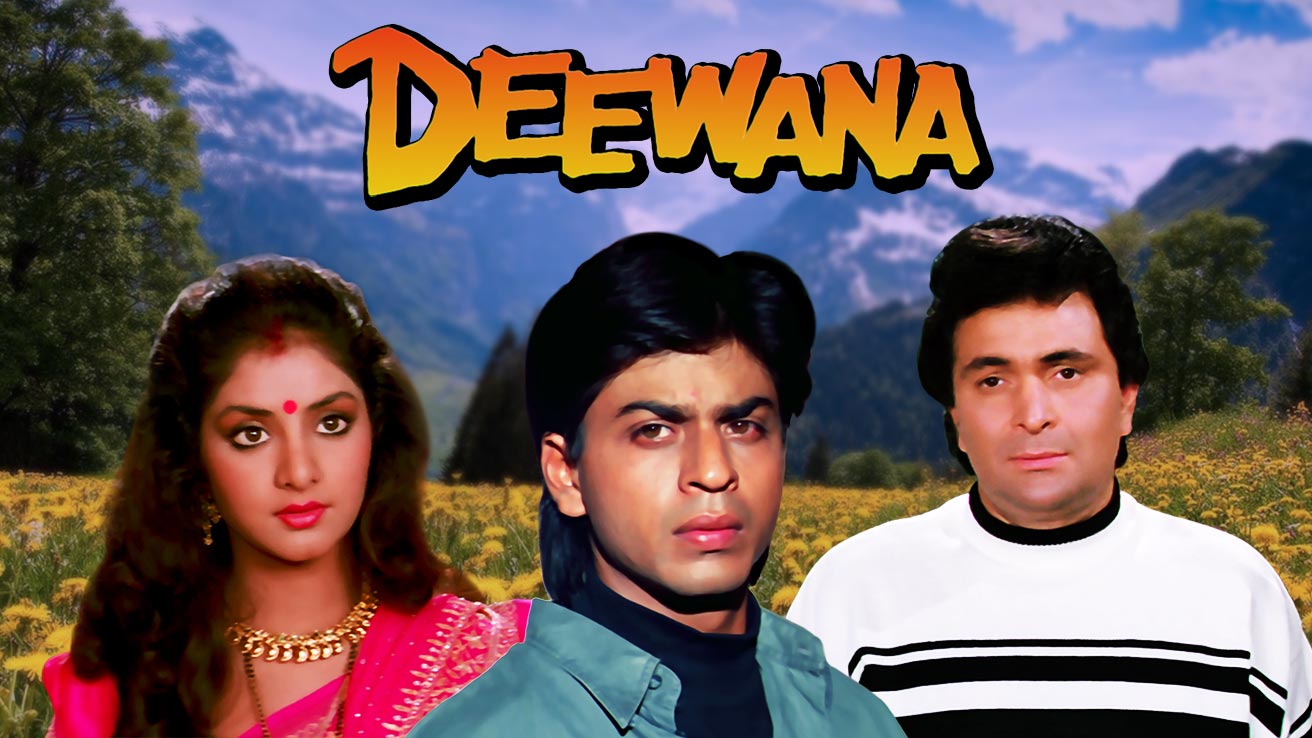


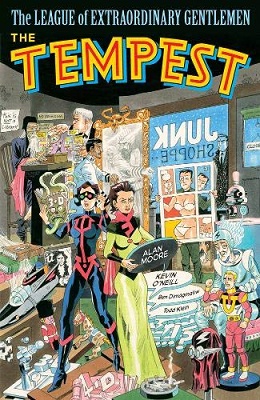
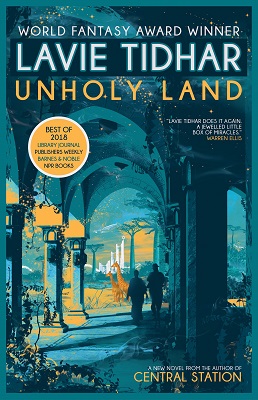
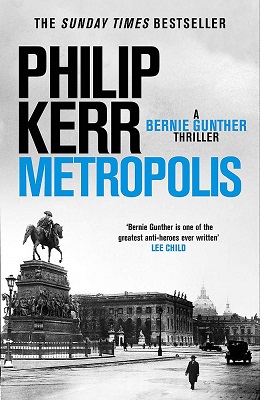
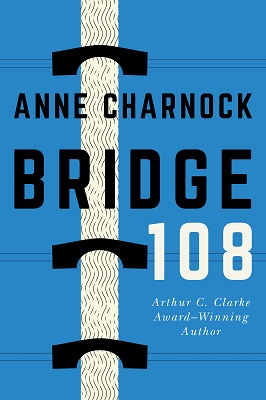

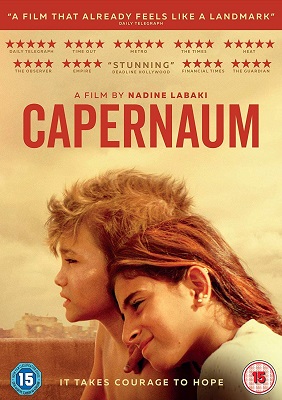
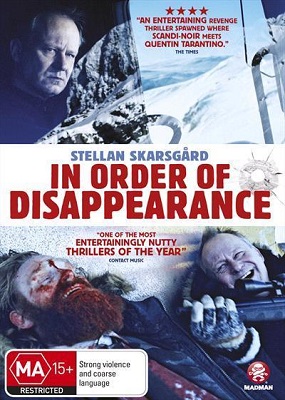
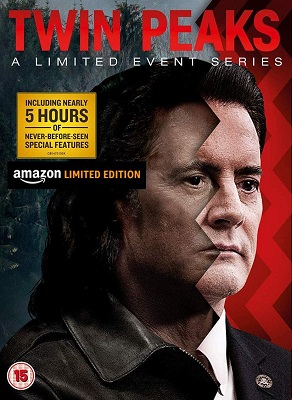
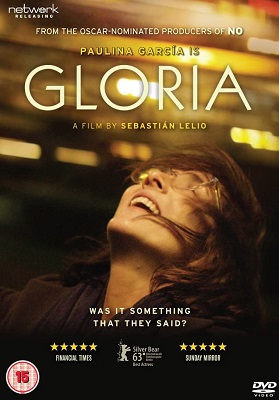

 It Doesn't Have To Be Right...