It Doesn't Have To Be Right…

… it just has to sound plausible


1 Comment

Moving pictures 2017, #24

I’m continuing to watch a varied selection of films, which does make me wonder why people limit themselves to the latest Hollywood blockbusters…

The Case of Hana and Alice, Shunji Iwai (2015, Japan). David Tallerman has recommended a number of films to me, both anime and live action, and they’ve generally been good calls – more so for the latter than the former, as he’s a big anime fan and I’m not. But… I really liked this. (It’s anime, incidentally,) Perhaps because I like anime that isn’t overtly fantastic or about mecha – well, except for the Neon Evangelion films, that is – as witnessed by the fact my favourite Ghibli films are Only Yesterday, Ocean Waves and From Up On Poppy Hill. But I do also own a copy of Royal Space Force: The Wings of Honnêamise, so who knows, one day I might sign on fully  to it… A teenage girl moves to a new town and is bullied by the her new classmates as they claim she is the “Judas”, a girl in the class who was murdered the prevous year. The only person who can shed light on this mystery is Hana, Alice’s next-door neighbour, who no longer attends school. The art is very clean-line, without some of the exaggerations normally found in anime, and I liked it for that. It’s not entirely mainstream, however, as there some low-key fantastical elements which appear. But the whole thing is so stylishly done that it’s hard not to like it. David has recommended  several films I’ve considered adding to my collection, but I think this is the first anime film he’s suggested that I’d like to own a copy of (I think it was Jonathan McCalmont who recommended Neon Genesis Evangelion). Looking on a certain online retailer, there appears to a Blu-ray edition of The Case of Hana and Alice (but not cheap!) – I might well add it to my next basket…
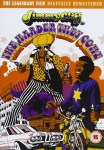
The Harder They Come*, Perry Henzell (1972 Jamaica). I had somehow got this linked in my mind with Superfly from the same year, possibly because both were films about the black experience in the US, except it turns out The Harder They Come is a actually Jamaican film about reggae and any connection between it and Superfly were a product of my imagination (and, let’s be fair, a small amount of racism, which I try at all times to educate myself out of, but I’m white so it’s a 24/7 task). It doesn’t matter to me in what cultural milieu a film is set – I love Chinese films, I love Indian films, I love films from various African nations… among  many others – but The Harder They Come wrongfooted me because it wasn’t what I had mistakenly expected, and so I found it much more interesting than I’d anticipated. I am not, I must admit, a fan of reggae music, but I am a fan of cultural expressions that are deeply embedded in a nation’s culture – a consequence, I suspect, of growing up in Islamic countries – and reggae one hundred percent informs the story and style of The Harder They Come. It did not appeal to me so much, in the way, say, Easy Rider, another film very much tied to its music, did that I put it on my wishlist – but I came away from watching The Harder They Come considering it a film I’d be happy to recommend. Worth seeing.
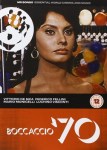
Boccaccio ‘70, Mario Monicelli, Federico Fellini, Luchino Visconti & Vittorio De Sica (1962, Italy). Those Italians and their anthology films. I’ve seen a few of them now, and all seem to have featured names known pretty well internationally, even at the time the anthology film was made. I mean, Monicollo might be a bit of an unknown, but in 1972 Fellini, Visconti and De Sica must have been household names around the world among cineastes. Boccaccio was apparently “an important Renaissance humanist”, although there is likely a subtlety to the Italian use of the word I am missing here completely. I mean, I don’t even understand why they called it Boccaccio ’70 when it was released in 1962… Anyway, there are four segments, of varying degrees of success. The opening one by Monicello is actually a pretty good realist drama, in which a company clerk hides her marriage because her boss disapproves of married women in his department and so she must put up with his flirting. Fellini’s segment is less subtle – a prude campaigns against a giant billboard of Anita Ekberg advertising milk and then finds himself terrorised by a giant Ekberg, and while it has all the implausibility of Fellini’s work it has none of the excess and so feels lacking; Visconti provides an extended vignette about an aristocratic couple whose marriage hits a rocky patch, and while Romy Schieder is a joy to watch, it’s hard to know what to make of the piece; and finally, De Sica has Sophia Loren as a carnival worker in so need of money she auctions off her body but then has second thoughts about what she promised, and it all seems predicated on some aspect of Italian male character that quite frankly passed me by. I’m all for having this film available to watch, and at least two of the segments are definitely worth watching… But then I have to wonder what better films did not get a UK release because this one did… and I’m less charitable toward it.

The Girl on the Train, Tate Taylor (2016, USA). You know when someone writes a novel set in the UK and it’s a bit unbelieveable but sort of plausible, but then they make a movie of it and transplant the story to the US and it’s totally implausible? That. The railways in London are so stitched into the urban landscape, and travel so slowly, that it’s eminently believable someone could see something odd from a train in an area they know and so seek to investigate… But in the US? Do posh houses even overlook railways? Do trains travel that slowly? The rest of the plot is something about a drunkard’s memory loss actually being gaslighting rather than true drunkeness, which is way more a British plot than a US one, so much so I’m frankly astonished someone in the US thought this might even fly with a US audience. But then I guess there’s no underestimating Hollywood’s underestimation of its audience’s capacity to swallow anything. The Girl on the Train is a dull and over-long thriller peopled with unlikeable characters that feels like it would have worked much better in its native country. One to avoid.
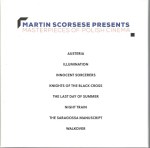
Illumination, Krzysztof Zanussi (1973, Poland). It took me three goes to watch this, and not just because I typically put it on late while a bottle of wine down. But it’s an experimental film in terms of narrative – indeed, it feels like it has none – and though it’s well-shot and has a well-drawn cast of characters, it’s hard to work out, even after a totally sober viewing, what to make of it. It’s a sort of’slice-0f-life of the central character, who is a physicist. He’s searching for meaning, while the film tries to avoid anything as bourgeois as a plot. I think it works, but chiefly because it does that thing Polish cinema of the 1970s does so well: ie, come across as highly intelligent television drama. It’s certainly a film to rewatch, and perhaps one day I’ll figure out what Zanussi was trying to achieve. Fortunately, it’s one of the Blu-rays in the Masterpieces of Polish Cinema box sets I bought, so I can watch it again whenever I want. On the one hand, it would be nice to “de-clutter” and get rid of the DVDs and Blu-rays I have piled everywhere; on the other hand, can I seriously expect a film like Illumination to be available to stream whenever I might want to rewatch it?
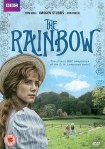
The Rainbow (BBC, 1988). One of the joys of Lawrence is that he’s there, straddling his works, very much a presence in the prose. One of the frustrations is that every sod and their progeny feels they have the “adapt” his work. True, his prose is open to interpretation – inasmuch as he’s so much better at some things than others – and also true, many of his works could not be adapted’for film or television given the lengths expected of similar material. But The Rainbow is not a complicated book, and for all its documenting of the Brangwen family history, the adaptor of the novel for this BBC version ended up with something very different to the novel. It has a good cast – Imogen Stubbs as Ursula Brangwen, Clare Holman as a badly under-written Gudrun Brangwen, Tom Bell as their father, and Jon Finch as the uncle Ursula goes to stay with. The major scenes from the novel are there, but the through-line is not the one I took away from the book, nor the one that Russell’s adaptation, released the following year, apparently took. Lawrence’s prose is never less than colourful, and this version of The Rainbow seemed to lose that. Lawrence also has a great sense of place, and I could not honestly say where this BBC adaptation was supposed to be set. I  suspect there’s no such thing as an ideal Lawrence adaptation, since everyone finds their own Lawrence in the books. But it’s telling that the best one I’ve found so far has been Pascale Ferran’s French-language film, Lady Chatterley

1001 Movies you Must Watch Before You Die count: 863

4 Comments

Moving pictures 2017, #23

A few more US films than usual in this post, although one was a Disney, one an independent film, and the last a silent movie from the 1920s.

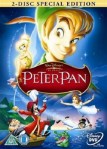
Peter Pan, Clyde Geronimi, Wilfred Jackson & Hamilton Luske (1953, USA). Look at that face on the DVD cover – doesn’t he look, well, a bit evil? I thought all the way through this Disney adaptation that Peter Pan looked impish, but more in the sense of a small devil than a prankster kid. I get that he’s completely immature and thoughtless – it’s there in every word he says and everything he does – but I’d never thought of him as a villain, or even an antihero. And yet, that’s how he’s characterised in Disney’s adaptation – not as a boy who didn’t grow up, though I suspect that’s a characterisation beyond Disney’s writers, and I say that as a boy who never grew up in some senses myself – hey, I read science fiction! – but Peter Pan as an evil force is a complete misrepresentation of the character. Although not altogether uninteresting, and the fact the Darlings are so ordinary and drawn so much like other ordinary families in Disney – comical dad, doting mother, responsible older sister – the whole thing feels like a bad mishmash of two or more movies. Peter Pan is, like many Disney classics, also a pantomime, with the title character played by a woman. As too is Tinkerbell (I forget who the dames are in pantomime Peter Pan), and who has become something of a Disney icon herself, with people cosplaying her just as much as they do all the Disney princess characters and, I think (although I’m not about to investigate), a whole line of Tinkerbell straight-to-DVD animated adventures. And yet Wendy Darling is clearly the most important, and best-drawn, character in the film, and probably the source text too – her invented name did, after all, become popular enough to be considered an ordinary name these days – but then Pan and Tinkerbell are all about the fantasy and Wendy is about making sense of it and who would be interested in that? I’d expected more of Disney’s Peter Pan. I certainly hadn’t expected to take against Pan himself because he looked so bloody evil. I don’t think this one will make my top ten of Disney films…

Springtime in a Small Town, Tian Zhuangzhuang (2002, China). This is a remake of the 1948 classic by Mu Fei, which is a film I very much like. And it’s always odd watching a remake of a film you admire because it makes you wonder why you admire the original film. And in this case… I’ve no idea. This remake is pretty close to the original, but what I like about Mu Fei’s version doesn’t really seem to exist here. I think the reason the original works is because it’s an historical film, made and set during the 1940s, whereas Springtime in a Small Town is set during an historical period but is a contemporary film. The story is the same –  a woman’s old boyfriend, now a doctor, comes to visit and to succour to the woman’s ailing husband, and their old love is rekindled, but never quite requited. The mannered nature of Mu Fei’s version fits brilliantly with the material – not for nothing is it considered one of China’s greatest films – but the same approach feels somewhat artificial in Tian’s remake. It’s a valiant effort, and certainly should have been attempted – it’s only when we attempt to recreate great works of the past that we come to truly appreciate them – but I suspect Springtime in a Small Town was always going to be an also-ran. That’s not always the case, of course: there have been remakes which eclipsed the original, such as Hitchcock’s remake of his own The Man Who Knew Too Much. Mu Fei’s original is a bona fide classic of Chinese cinema, but Tian’s remake is a bold attempt at recapturing it, which doesn’t quite make the grade. It’s a good film despite that, and had I seen it first I might well hold it in higher esteem. Worth seeing, but watch the original first.

David Holzman’s Diary*, Jim McBride (1967, USA). After making this film, McBride went on to make a raft of commercially-successful films for studios. In other words, he totally sold out. You have to wonder why. Because while David Holzman’s Diary has its faults – it’s pretty boring, for a start – it also has a great deal of originality. A young New Yorker decides to film his life, and is very forthright about how, and with what equipment, he plans to do so. But his girlfriend is none too happy with his decision, and throughout the film their relationship deteriorates quite badly. For most of its length, David Holzman’s Diary manages to convince with its premise, but there are times when its staged nature is a little too obvious – and it is, perversely, when it’s at its most cinema verité that it feels most fake. There’s a scene with a “goddess of the street” that feels both very real and also really staged, more because it feels like “Holzman” is forcing an encounter for the sake of his film where none would normally exist. I can see why David Holzman’s Diary made it onto the 1001 Movies you Must See Before You Die list, but I suspect history has been less than kind to it, and will continue to be less kind to it as the years pass, than the list has supposed.

It’s All About Love, Thomas Vinterberg (2003, Denmark). Vinterberg’s Festen is the first official Dogme film and it is a bona fide classic. Which makes It’s All About Love, with its incredibly bland and uninteresting title, even more of a mystery. It has huge ambition, and I admire it for that. But it fails at pretty much everything, which is not totally a deal-breaker… but its interesting bits don’t quite add up to an interesting whole, which is a deal-breaker. Joaquin Phoenux and Claire Danes play a pair of Poles – she is a world-famous figure skater, he is married to her but their relationship has long since soured and now he’s stopping off in New York on the way to a new job in Canada in order to get her to sign divorce papers. But Danes is surrounded by a group of frankly creepy hangers-on and managers… Phoenix is given the run-around, but he’s not sure why – and it doesn’t help when his elder brother, played by Sean Penn, phones in randomly from several other scenes. It transpires Danes’s managers have hired four Russian ice skaters, and had them surgically altered to resemble Danes so they can take over her career, allowing her to retire, with, it’s proposed, Phoenix, as their relationship seems to have rekindled. But then there’s a slaughter on the ice, but the real Danes escapes, and she and Phoenix fly off to Russia and end up somewhere really cold where she dies of exposure. As I said before, It’s All About Love is all about ambition. The world is not our own, and there are thunking great clues dropped throughout the film – the resolution, in part, depends on the world Vinterberg has created. Sadly, none of it really convinces. The small details ought to, but the whole edifice teeters so much on the edge of disbelief that none of it helps. Festen is a great film, and I wanted to like It’s All About Love but, to be honest, it doesn’t even qualify as a noble failure, it’s just a failure.

El Desenlace, Juan Pinzás (2005, Spain). The Spanish do erotic thrillers really well, but I’m not convinced this falls into that description, despite being pretty much exclusively about sex. A director of a film, his producer (who is also his mistress), and the writer of the source novel, along with a prying journalist, all meet in Galicia to discuss the upcoming adaptation. El Desenlace has been promoted as a Dogme film, and it’s certainly shot on digital video with unflattering lighting, although it’s no Festen. Much of the film consists of the director character winding up the writer character over his choice of sexual partner – specifically a transgender cabaret artist who appears at a local nightclub. Which is where things get complicated – because the director’s producer  promises the cabaret artist a major career, while the cabaret artist has also decided it’s time to drop the writer sugar daddy. I can certainly understand why El Desenlace is touted as a Dogme film, but it’s also a very talky film – the entire plot is carried in dialogue – and for all its arguments, and its reliance of a central cast of four – five, including the cabaret artist – it doesn’t do a great deal with the material it has. Disappointing.

The Big Parade*, King Vidor (1925, USA). There’s always something slighlt risible about US films set during WWI. It was called the Great War, and The War to End All Wars, at the time, and World War 1 later, but the US calls it the 1917-18 War and likes to pretend it contributed – when it was only there for the last year and suffered only a tiny fraction of the damage suffered by European nations. So a film about the 1917-18 War from a major Hollywood studio, less than a decade after the war finished, is just adding fucking insult to injury. John Gilbert plays the playboy son a of a mill owner who signs up and discovers the horrors of war for himself. There is so much that is wrong with this film – it glorifies the US’s piss-poor contribution ot WW1, and it legitimises the existence of over-privileged nitwits like Gilbert’s character. Yet it all makes for top-notch Hollywood drama of its time. Vidor was no amateur, he knew his stuff. This is a silent film, and it had the full resources of Hollywood behind it. Some of the long shots, with the casts of hundreds, if not thousands, are impressive. But, please, stop valourising the rich, stop pretending the US won all the world wars, and stop fucking pretending you’re anything but a socially backward nation with access to relatively high technology. The Big Parade‘s position on the 1001 Movies You Must See Before You Die list is dubious at best, although on balance I’m currently tempted to let it remain.

1001 Movies You Musrt See Before You Die count: 862


Leave a comment

Moving pictures 2017, #22

Two from the US in this post, although one is an independent film and the other Disney. I’m trying to work my way through the classic Disney films, for reasons that seemed to make sense at the time. To be honest, it’s been quite entertaining – and I’ve been surprised by what I’ve enjoyed…

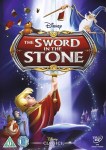
The Sword in the Stone, Wolfgang Reitherman (1963, USA). I’m pretty sure I read TH White’s novel of the same name when I was a kid, but I don’t think I’ve ever seen the Disney adaptation of it. Until now. And it was… serviceable. Disney was still flying high back in 1963, but I expected more of The Sword in the Stone than it actually delivered. It didn’t help that all the supporting roles were played with a variety of British accents but the role of Arthur sounded like your typical petulant American teenager. Which is, I guess, their target audience. The animation was pretty good, without being flashy, and there were one or two moments which reminded me of Sleeping Beauty (still my favourite Disney)… But it all felt a bit like a bad adaptation – and I’m going on distant memories of the book and, er, being British and the Matter of Britain being a, er, British thing, so that may be totally unfair – and for all the nice bits in the film it kind of ruined it a bit for me. It didn’t feel timeless, in the way Sleeping Beauty or Snow White do, and instead felt like a 1960s adaptation of the source material. That also took liberties with the legend. The animation was mostly lovely, the jokes based on Merlin’s character and crockery handled well… But… It never really quite shone for me. I’m tempted to put it in my top ten of Disney films, but maybe around number seven or eight, although I’m having trouble filling the rest of the ten…

Madeinusa, Claudia Llosa (2006, Peru). I didn’t actually pick this for my rental list, but it’s the second disc in The Milk of Sorrow DVD release and, for whatever reason, LoveFilm sent it me the week after The Milk of Sorrow. I’m still trying to decide if it’s the better film of the two. I certainly liked it more. The title is the name of a young woman in the village of Manayaycuna (which apparently means “the town no one can enter”) and her experiences during the Holy Time festival. During that period – Good Friday to Easter Monday – the villagers believe God cannot see sins. A traveller from Lima arrives and is locked away, but Madeinusa helps him escape in return for taking her to the capital. It doesn’t go as planned, of course. Everyone is using everyone else, and though the villagers of Manayaycuna live miles from anywhere, they’re not the simple yokels they appear to be. Madeinusa’s sister hates her, and actively scuppers her plan to escape. And it all ends badly for everyone concerned. The lives depicted are totally convincing, despite being set in an invented village, and some of the idiocyncracies of the village are so mad they feel like they can only be real. I’m a big fan of dramas that have a documentary feel, and both of Llosa’s films are good at that. After seeing The Milk of Sorrow I wanted to see more by Llosa; after watching Madeinusa, I’m defnitely going to watch more by Llosa. Recommended.

Samaritan Girl, Kim Ki-duk (2004, South Korea). It was David Tallerman who turned me onto Kim Ki-duk, although looking at Ki-duk’s filmography I don’t think all of his films are going to appeal. I certainly thought 3-Iron and Spring, Summer, Autumn, Winter… and Spring very good, but was less taken with The Bow. He’s probably a director whose oeuvre is still worth exploring, however. Samaritan Girl was much like those other films, while at the same time completely different. It matched their seeming lack of narrative, while still following a clear plot. But then Hollywood really doesn’t get narrative, and its stupidly slavish devotion to the three-act structure, or is it the one about rescuing the cat, I forget which story guru is current, is a clear indication of creative bankruptcy. Fortunately, Hollywood is not the be-all and end-all of cinema. The title of Samaritan Girl refers to one of two schoolgirls, who acts as ponce for her friend. The two want to visit Europe and one of the two girls is prostituting herself to pay for the trip. But during a police raid, she jumps from a hotel-room window and later dies from the fall. So the titular girl decides to meet up with all of her friend’s sexual partners and refund their money – after having sex with them. But her father is a police detective, and he accidentally discovers what she is up to, and ends up killing one of her clients… The cover art to the DVD is amongst the most misleading of any DVD cover art I’ve seen. Samaritan Girl is a well-drawn drama about two teenage girls and the desperate lengths they go to… which then turns into a tense thriller as the father of one commits murder. There’s nothing salacious in it. And, er, no nuns. Ki-duk was a good call. I’m not convinced every film Ki-duk will appeal, but the ones I’ve seen so far have been very good.

Wendy and Lucy, Kelly Reichardt (2008, USA). I came across Reichardt’s name on Alternate Ending, an excellent film blog, and though US indie cinema is not my thing, I added some of Reichardt’s films to my rental list because I really need to watch more films by female directors. The title refers to a young woman who is drifting about the US, and her dog. And when she is arrested for vagrancy, her dog is sent to the local pound. And then adopted by a family before Wendy can get herself released. And that’s about it. The film stars Michelle Williams, who has been flavour of the month in US cinema for a year or two now, and to be honest there’s little in the film that really stands out. It’s a well-played drama, and Williams is good without actually shining in the role – but the story is so low-key the film seems sadly lacking in drama for much of its length. I’ll be watching Reichardt because I think her importance to US cinema is under-estimated, but there’s not much in Wendy and Lucy that suggests any promise of greatness. It’s an enjoyable and subtle drama, but not especially memorable.

Austeria, Jerzy Kawalerowicz (1983, Poland). The title is apparently a term used by Polish Jews to refer to an inn. And in this case, it’s toward the end of the WWI, and is chiefly concerned with the Germans fleeing through the area, pursued by the Cossacks. The Jews have already left, but the innkeeper insists on staying on. And… The Hateful Eight, this is not. In a good way. For a start, there’s more than eight people staying in the inn. And there are also lots of Jewish rituals – to such an extant, they actually break the world of the film by presenting a service so much better subscribed, and better resourced, than could possibly be the case. Bits of Austeria had a Tarkovskian feel, in that way Tarkovsky dramatised inevitability, and its acceptance, so well. In other respects, Austeria felt like a typical Polish historical drama – it is, it must be said, easier to judge the verismilitude of UK historical dramas because it is the history I grew up in (well, actually, I didn’t; as I grew up in the Middle East), unlike US historical dramas, because the US doesn’t have a history… which is a long-winded way of saying that Polish history, indeed Middle European history, is mostly a blank to me. Which means I’m going to find a film in such a setting more convincing than someone who is a product of that history. I thought Austeria  made a good fist of its period, but my judgement means little. Kawalerowicz was a name new to me, and I’ve explored Polish cinema, until I watched Pharoah (see here), but he looks to have an interesting oeuvre. Austeria was one of the better films from the Martin Scorsese Presents Masterpieces of Polish Cinema box sets…

Night Train, Jerzy Kawalerowicz (1959, Poland). I’ve no idea how I ended up watching two Kawalerowicz mvoies in a row, I guess it was just the way they came out of the box. And this was a much earlier film too – black-and-white, as well. It’s set entirely aboard a train, as a man argues asbout his compartment and then finds himself involved in a murder. Given the British approach to trains – we invented them, we are now apparently incapable of operating them in a way that works for their passengers – I’m always somewhat bemused by films set on trains in other countries. Yes, we had sleepers in the UK, but that was long before I was born, while many European countries still operate them. But much as I’d like to complain about British trains, and the Tories who created the current railway situation, and the people stupid or racist enough to vote for the Tories, because, let’s face it, if you vote for a party and they get into power and start doing really shit things, and the Tories certainly have, then you are responsible for that, but I’m supposed to be writing about Night Train. Which was Hitchcockian in the sense that De Palma’s film are Hitchcockian – ie, they emulate the master. But Kawalerowicz was clearly frying other fish, and though Night Train has the appearance of a Hitchcockian thriller, and is too straightforward to be any kind of  allegory for Poland’s political situation of the time, it still manages a flavour all its own. Night Train is not a film I’d have sought out on its own merits, but it’s one of the Masterpieces of Polish Cinema so I watched it and I’m glad I did.

1001 Movies You Must See  Before you Die count: 860


2 Comments

Moving pictures 2017, #21

Six films from six different countries, which is quite good… and even the US one is not that embarrassing. Honestly.

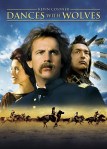
Dances with Wolves*, Kevin Costner (1990, USA), Yes, unbelievably, I’d never seen Dances with Wolves. Since it’s on the 1001 Movies You Must See Before You Die list, I’d always planned to watch it, but I had it as low priority on one of my rental lists. But then I found a copy for a quid in a charity shop… I’d been expecting a revisionist Western and, yes, that’s very much what it is… but not precisely in the way I’d expected. Costner plays a monomaniacal Cavalry officer who insists on being assigned to the furthest outpost in US territory. Shortly after settling alone there, he encounters his neighbours, a village of Lakota Indians. He visits them in the interest of peaceful relations, and gradually learns their language. He also marries a Lakota widow. But then the US Army turns up, and decides Costner is a traitor because he has gone “native”. Unfortunately, there is such a mass of cultural material generated by the US in which the Native Americans are painted as villainous savages, and the white Americans as noble pioneers, that it’ll be centuries before the US truly accepts it committed racial genocide on all the cultures which shared the North American continent prior to their arrival. So, really, we shouldn’t be calling these films “revisionist” because they depict the Lakota as actual human beings and the occupying white Americans as vicious scumbags, because that’s probably much closer to the truth than the genre usually reckons. It is also fucking shameful that science fiction bases so many of its narratives on stories of Western pioneers and their so-called courage and fortitude in colonising distant territory, when it was usually their advanced weaponry and duplicity that won the day. Dances with Wolves was not a great film, although it won a huge raft of awards, but it was a lot better than I’d expected it to be. I actually quite enjoyed it.

Ivan’s Childhood, Andrei Tarkovsky (1962, Russia). This was a rewatch, prompted by me upgrading my Tarkovsky DVDs (which went to a good home) to Blu-rays. Ivan’s Childhood was Tarkovsky’s first feature film for a studio. The title refers to a boy who becomes a runner for the Red Army on the Eastern Front during WWII. There’s a scene in the film which captures me every time: Ivan has just arrived at an outpost, and the commanding lieutenant is not sure what to make of him, despite the boy’s claim to importance. At Ivan’s insistence, the officer rings headquarters and is properly humbled. He then offers the boy a hot bath. Evereyone who meets Ivan wants to do right by him, which by their lights means sending him to school and officer training. But he wants to stay at the front, directly contributing to the war effort. To be honest, there’s not much on this Blu-ray release which justifies the upgrade – it’s a bloody good film, if not Tarkovsky’s best, there’s the rest of his oeuvre to compete for that, and to be honest I can’t say it looks better on Blu-ray than on DVD because it’s a fifty-five-year-old film. Upgrading was a no-brainer – Tarkovsky is one of the best directors ever – and if it’s prompted me to rewatch his films (again), then it’s done more than intended. In fact, I now want to watch them again again.

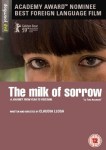
The Milk of Sorrow, Claudia Llosa (2009, Peru). My first film from Peru. And a female director too. (Incidentally, I’ve started tracking the gender of the directors whose films I watch now, but it’s embarrassingly male-heavy at present.) The Milk of Sorrow takes place in an area occupied by indigenous people – Quechua is spoken during the film more than Spanish, in fact – and the title refers to a belief that women who were abused or raped transmit their feelings through their milk to their female children. The film follows a young woman who is accused of suffering from this as she tries to avoid her mother’s fate. I had not come across Llosa before encountering this film – which was pretty much a random Peruvian film picked because I’d never seen a film from that country – but on the strength of The Milk of Sorrow I want to see more by Llosa. (And so I did, as it turns out The Milk of Sorrow was a two-disc set with Llosa’s Madeinusa, which will be covered in a later Moving pictures post). Some films are just good; some films are good and you want other people to watch them. Many of the recent Chinese films I’ve seen fall into that later category. As does The Milk of Sorrow. Highly recommended.

Innocent Sorcerers, Andrzej Wajda (1960, Poland). Another from the second Masterpieces of Polish Cinema box set. I’ve yet to get a handle on Wajda’s output – I really like Man of Marble and Man of Iron, although the latter feels more like a teleplay than a feature film; and the latter is also in the first box set of the Masterpieces of Polish Cinema, which is good as it’s apparently not available in the UK, to go with the Second Run DVD release I have of Man of Marble; but I was not all that taken with his best-known film, Ashes and Diamonds. In other words, I pretty much have to take each Wajda film as I find them. And this one was… fun, in a sort of 1960s black-and-white-jazz-soundtrack sort of way. A bit like a John Cassavetes film but more to my taste. There’s a young doctor with improbably blond hair, and a young man in sunglasses who looks like the protagonist of Ashes and Diamonds, and it’s all very New Wave, but filtered through a very Polish lens. As previously mentioned it’s a lot like Cassavetes’s films but also completely unlike them – it feels more polished for a start, less reliant on ensemble acting, with a bit more Godard in its DNA than Cassavetes was wont to show. The films suffers from unsympathetic characters – but then so do Cassavetes’s films – and very little happens during its 87 minutes. It’s considered an oddity in Wajda’s oeuvre, and it’s easy to understand why. Worth watching, but lacking something that might make it a film worth remembering.

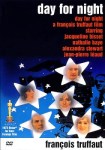
Day for Night*, François Truffaut (1973, France). I had to buy a copy of this as it’s apparently not available for rental from either LoveFilm or Cinema Paradiso. But it turned out to be an excellent film, so never mind. (It was also very cheap.) Truffaut plays a director making a film in the south of France starring a British movie star, played by Jacqueline Bisset. The entire movie is a series of in-jokes about movie-making, and the personalities involved, and it works really well. My attitude to Truffaut’s films is definitely improving. There are some great set-pieces in Day for Night, especially the one with the cat, and the cast are thoroughly convincing in their roles. The alcoholic dowager actress is fun, and the various relationships which develop among the cast and crew are amusing. Apparently, Graham Greene was an admirer of Truffaut and scored himself a walk-on part as an insurance agent. Truffaut, who admired Greene’s writing, only found out later that one of the insurance agents was Greene. As meta-cinema goes, it’s all a bit obvious – and was obvious in 1973, Vertov did it fifty years earlier with Man with a Movie Camera, for example – and some of the jokes were clearly at Hollywood’s expense, but it all seemed so genial, rather than than génial, and Bisset’s depiction of a fragile actress seemed just right for her role in the film and the “film”. My third favourite Truffaut so far.

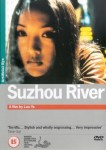
Suzhou River, Lou Ye (2000, China). Yet more Chinese cinema. I’ve yet to see any evidence to contradict my claim that China currently has one of the strongest cinemas of any nation. Admittedly, I’m seeing the films which get international releases, and not the purely domestic stuff, but China has a stable of amazing directors, active from the mid-1990s onwards, who have produced some of the best films of the past ten or so years. Which is not to say there are not some excellent historical films – I’m a big fan of Spring in a Small Town (1948), and The Goddess (1934) is also very good. Suzhou River is an earlier work, inasmuch as it was released at the turn of the century, and it shows a bit in its MTV-style cutting, but it’s still an excellent film. It also takes an interesting approach to narrative, opening with a voiceover in which the narrator explains how he came to love a young woman who plays a mermaid in a Shanghai bar. It then tells the story of Mardar and Moudan, a courier who ferries a rich man’s daughter about town, before being forced to kidnap her… Years later, Mardar returns to Shanghai, and stumbles across the mermaid, who he thinks is Moudan. There is, as previously mentioned, a few too many MTV-style jump-cuts, but in all other respects this is a very good Sixth Generation movie. I’ve found myself buying several of the Chinese films I’ve watched on rental after seeing them, and I think I’ll be looking for a copy of this one too. (Damn, I just went and bought one on eBay for a tenner.)

1001 Movies You Must See Before You Die count: 860


2 Comments

Moving pictures 2017, #20

Another good mix of films, and no Hollywood shitbusters to spoil it either.

Pauline at the Beach, Éric Rohmer (1983, France). I think the first Rohmer I ever watched was Triple Agent, and I forget why I’d added it to my rental list. But as I learnt more about his career, so I wanted to watch more of his films. I’ve been steadily working my way through them and have seen a dozen to date – rentals… although I’ve been tempted on occasion to pick up a box set of his various series… but never quite tempted enough. Rohmer’s shtick is to present moral dilemmas as well-observed drama, and then let the viewer make their own call on what went down. It’s a curiously cowardly way of presenting a story, as if Rohmer doesn’t have the courage to comment on the situations he dramatises. But I don’t think that’s actually the case – indeed, it takes courage to present a scenario that is not plainly black or white. Pauline at the Beach, the third of Rohmer’s “Comedies & Proverbs” sextet, is a good example, although I’ve no idea what proverb it’s intended to illustrate. The titular character, a young teenager, is staying with an older cousin at a beach resort. She is present as her cousin bumps into a male friend from a previous summer, and a repeat holiday romance is mooted… but the cousin instead ends up sleeping with an older man who befriends them. Meanwhile, Pauline finds a boyfriend of her own. But one day, while the cousin has had to return to Paris on business, the older man beds a young woman who sells sweets on the beach; and when the cousin returns unexpectedly early, he makes out it was Pauline’s boyfriend who was shagging the sweet-seller. So Pauline falls out with her boyfriend. Later, she learns the truth, but her cousin refuses to believe it, preferring to accept her lover’s version of events. It’s a story that’s told in a deceptively simple way. It’s likely the most emblematic of Rohmer’s oeuvre I’ve seen. As in all his films, the direction is straightforward but effective, but it’s the cast who shine. I plan to eventually work my way through all of Rohmer’s films, and Pauline at the Beach only encouraged me to do so.

Veer Zaara, Yash Chopra (2004, India). To be honest, I’m starting to wonder why Bollywood films are not a routine part of most people’s film-viewing. Especially Brits. Our links with the country go back to Elizabethan times, when we first started exploiting it… and we’ve never really stopped. Exploiting it, that is. But the only people with whom I have conversations about Bollywood films are Indians (although pretty much all of them seem unaware of Bengal’s “parallel cinema”, which I personally have much more time for…). Veer Zaara was a Bollywood film I’d stuck on my rental list because I’d seen it on another list somewhere and… it was fun. It rang a few changes on the story – this time, it was: boy meets girl, boy is imprisoned on trumped-up charge for 22 years, human rights lawyer brings boy and girl back together again… So, not your average rom com plot. A young Pakistani woman takes her grandmother’s ashes back to India to scatter them in the village of her birth, but is involved in a bus accident en route… where she is resuced by an Indian air force helicopter pilot. They fall in love. He goes back with her to Pakistan to meet her family. But her marriage has already been arranged, and her impending husband has powerful contacts in the Paskistani establishment. He arranges for the Indian pilot to be arrested as a spy… Twenty-two years later, a human rights lawyer takes on the pilot’s case. Since he had originally refused to name the woman he loves back then, and still refuses to do so, it makes things difficult. But the lawyer figures it out, and discovers the woman called off the wedding on being told the pilot was dead, and has since devoted her life to running an orphange in his home village back in India. Obviously, this is not the most cheerful of stories, but this is Bollywood so there is singing and dancing. More than that, Veer Zaara is a very nice-looking film, with some excellent, if somewhat enhanced, photography. The plot is pure cheese from start to finish, but that’s hardly unexpected. I can see why it’s counted a classic Bollywood movie. Worth seeing.

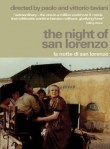
The Night of the Shooting Stars*, Paolo & Vittorio Taviani (1982, Italy). So confusing. Although the only UK DVD art I could find calls this The Night of San Lorenzo, it’s best known as The Night of the Shooting Stars, except when it’s known as just Night of the Shooting Stars. And it’s under that last title that it’s mentioned on the 1001 Movies You Must See Before You Die list, and it’s because it’s on the list that I watched it. And… In WWII, a village in Italy is on the retreating Germans’ route, and since they have stated they will destroy everything, the villagers hide in the church. Except some don’t. Instead, they go looking for the liberating US army… I’m not entirely sure what The Night of the Shooting Stars was intended to convey. Bertolucci’s 1900 did a better job of showing the war’s impact on Italian society, Pasolini’s Sálo did a better job of expressing the Germans’ impact on Italian society, and there are no end of war films which show how it all happened, including really bad ones starring Rock Hudson in a 1970s haircut… Taken on its own, The Night of the Shooting Stars is a good film and perfectly watchable. I couldn’t get invested in it, possibly because it seemed to cover well-trod ground – it was not Neorealist, but it was about WWII, for example – and nothing in it seemed to stand out especially. There is a good scene in which one of the characters is killed by a mythical figure, but it was too few and too little to rescue the film. I can understand why some people rate it highly, but for me it didn’t quite make the grade to justify its place on the 1001 Movies You Must See Before You Die list. I’d sooner put another Fellini in its place.

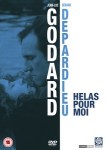
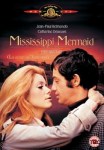
Hélas pour moi, Jean-Luc Godard (1993, France). The more Godard I see, the more Godard I want to own. Truffaut was, I think, a better director, but Godard was the better film-maker. If that makes sense. I mean, I love both Fahrenheit 451 and Mississippi Mermaid, both of which use the language of commercial cinema to present non-commercial films (and neither of which are in collections of his work; bloody typical). And then there’s Tirez le pianiste, which is likely the most definitively New Wave of all the New Wave films… And those are just Truffaut’s films. (Without even mentioning the excellent interview he did with Hitchcock, a director I greatly admire.) But then you look at Godard’s oeuvre and, quite frankly, it’s a mess… Of his films I’ve seen, some are works of genius – Le mépris, 2 or 3 things I know About Her – while others push the boundaries of cinema in interesting new directions – Week End, Détective, Hélas pour moi, Film Socialisme, Goodbye to Language… But he could be enormously self-indulgent – sometimes it worked, as in Film Socialisme – but other times he seemed to let his stars get in the way of his film: both 2 or 3 Things I Know About Her and Made in USA were filmed at the same time (one in the morning, the other in the afternoon), yet I find the former much more successful than the latter. Sadly, as is always the case, little of Godard’s oeuvre is available on DVD in the UK. Hélas pour moi is late Godard, like Film Socialisme, and so is about cinema as much as it is about its story. Which, to be honest, I have no clue what it was. Gerard Depardieu and Laurence Masliah play a married couple, who are involved in some sort of incident in a Swiss village, but other than that, no idea… And yet, I enjoyed this film. It was clearly meta-cinema, something Godard has played with to varying degrees,  but not only was Godard playing with the conventions of cinema but also with the narrative conventions of the story he was telling. I want to watch this again… The only problem is finding a Godard box set that has more films I don’t own than ones I do own… and I don’t own that many. His entire oeuvre should be available, to be honest. Bfi, do your thing, please.

Walkover, Jerzy Skolimowski (1965, Poland). The Masterpieces of Polish Cinema box sets have proven somewhat variable. Some of the films are bona fide classics, and I’m hugely glad I now own decent copies of them. Others I wouldn’t describe as classics but I’m glad I have well-restored copies to rewatch. Some, however, have proven unremarkable and you have to wonder why they were selected for inclusion. Walkover is… a borderline case. It’s a solid drama of the type the Polish do so well, told against a backdrop of socialist industry – another thing the Poles were very good at: presenting socialism in a positive light while also highlighting its failings… The USSR’s version of socialism, that is of course. An unreasoning fear of communism can be blamed for a huge number of really bad, and very damaging, political decisions made between 1950 and 1990… although JFK’s decision to put a human being on the moon by 1969 was not obviously not one of them. Ahem. In Walkover, a young man joins the staff of an industrial plant. and finds himself dragged back into boxing, a sport at which he excelled but which he no longer participates, and this is contrasted with the rise of a female engineer within the plant’s staff. It’s… solid drama. The shiftlessness of the boxer’s life, a result of his academic failures, is contrasted with that of the female engineer. This is socialist propaganda as feature film, and I see nothing wrong with it as it takes the facts of a socialist society and sets a drama in them, unlike Hollywood, which continues to push the American Dream like it weas real thing and actually acheivable. FFS.

Morgan, Luke Scott (2016, UK). I saw mention of this somewhere and stuck it on my rental list, and lo, it arrived, so I watched it one weekend with a bottle of wine at hand. Dynastic film-making at its, er, best: Luke is the son of Ridley. The title refers to a genetically-engineered person – played by a woman but implied to be neuter – who had viciously attacked one of her handlers. A risk assessment consultant is brought in to decide if the project should be canned. There are many references to an earlier project in Stockholm, which resulted in the deaths of several researchers. Morgan tries to keep its cards close to its chest, but the hand it holds is so bloody obvious the effort is totally wasted. Morgan is a genetically-engineered soldier. They built a sociopath and seem surprised when it acts like one. The consultant brought in proves to have expert unarmed combat skills… because it too is a genetically-engineered soldier. That’s like the most obvious reveal ever in sf film. Morgan looks good, and its cast do quite well with a script that clearly recognises it’s one long string of clichés and tries to disguise what it’s actually about. Like Ex Machina, Morgan is Hollywood’s idea of a clever treatment of a difficult sf topic, in which nice visuals can’t hide an entirely trope-bound exploration that illustrates nothing. I seriously do not understand the point in doing that.

1001 Movies You Must see Before You Die count: 858


1 Comment

Moving pictures 2017, #19

Another mix of countries again, sadly ruined by a shit Hollywood sf blockbuster, which, yes, I knew would be shit when I sat down to watch it. Oh well.

Death Walks on High Heels, Luciano Ercoli (1971, Italy). I’ve watched quite a few giallos, after being introduced to the genre when I had to review one for videovista.net several years ago. They’re not a type of film that ever aspired to high art, although both Argento and Bava certainly went overboard on the sets, lighting and camerawork quite often. But most of those I’ve seen have been pretty straightforward low-budget thrillers, with the odd horror element, and plots that are often convoluted to the point of implausibility. It seems almost a defining characteristic that giallos hide who is the real villain of the piece until the end. And that’s exactly what Death Walks on High Heels does. Nicole is an exotic dancer in Paris whose estranged father was an infamous thief. The police inform her he’s been murdered but the proceeds of his last crime, a horde of diamonds, is missing. A man breaks into Nicole’s flat and threatens her with a knife, demanding the location of the missing diamonds. She notices her assailant has piercing blue eyes. Later, she finds blue contact lenses belonging to her sponging boyfriend. She flees Paris in the company of an English businessman she met at a club. He takes her to his holiday cottage in Cornwall (I think) and tells everyone she is his wife (he’s separated from his actual wife but won’t divorce her because she has the money). The boyfriend turns up. Nicole vanishes, and her body turns up later. The police investigate. Ercoli thickens the plot so much, it’s never quite clear what’s going on, and there are at least three different attempts at unmasking the villain. The police are also weird, cracking these odd dry jokes like some sort of dysfunctional comedy duo whenever they’re on screen. I’m not entirely sure what to make of this film – it’s not quite well-made enough to convince, the cast are uniformly bad, and the plot is over-convoluted. It’s a good giallo, but that’s no real indicator of quality. There’s a sequel, Death Walks at Midnight, starring the same cast, which I might try – but this is like a bad quality film done well, if that makes sense.

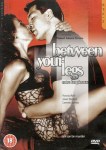
Between Your Legs, Manuel Gómez Pereira (1999, Spain). I’ve had this for a couple of years but I’ve never written about it before, so I thought it about time I did. It’s a convoluted thriller, whose story is told in a series of flashbacks. Javier Bardem plays a film producer who joins a therapy class of “sex addicts”. Where he meets Victoria Abril, whose evening dog walks had been a cover for sex with strangers. She works at a radio station, and through her Bardem discovers that tapes in which he describes his sexual fantasies have surfaced. Meanwhile, her husband, a police detective, is investigating the murder of a man found in the boot of an abandoned car in a multi-storey car park. The sex tapes are from phone conversations Bardem had with a woman he met at the airport, when they both missed their flight and so would have died when it later crashed. Except, the woman is not a woman… There are several things going on in Between Your Legs, such as Abril’s husband’s suspicion his wife is having an affair, a policeman who killed his wife, but the flashing back and forth never actually gets confusing. And I think that’s what’s most impressive about it, that it keeps the viewer invested in the story, despite its artificial nature, its leaping back and forth in time, and the way those flashbacks lead up to the resolution. The Spanish do good sexual thrillers, and this is one of them.

Early Summer, Yasujiro Ozu (1951, Japan). I think this might be my favourite of Ozu’s films, despite being in black and white and despite pretty much having the same plot as all his other films… Not to mention three generations of a family in one home, a daughter who needs marrying off, and a lot of familiar faces. Norioko, a secretary, lives with her parents and her sister’s family. A visiting uncle reminds the family that Norioko is past the age when she should be married. Her boss proposes a friend as a match, and the family are pleased with him as a potential husband. But Norioko would sooner marry a widowed doctor she knows from her daily commute, even though this means moving from Tokyo to provincial Akita. The family are far from pleased about her choice, but she refuses to change her mind. It struck me while watching Early Summer that it’s an ur-Ozu film – it does all the things Ozu does so well and it does them in a single movie. There are some early landscape shots – and the film finishes with a shot across a field of barley, as referenced in the original Japanese title – that seem so un-Ozo that, perversely, they make the film more Ozu. If that makes sense. The family dynamics, and the beautifully understated characterisation, are pretty much the same as any other Ozu film, although the fact the story revolves around Norioko, far more than any other Ozo films seems to centre on one of its cast, gives Early Summer more for the viewer to invest in. There’s a wonderful scene in which four young women go out for a hen party and discuss the upcoming nuptials, and it feels more like eavesdropping than plot-service. Which is, I guess, the appeal of Ozu’s films: there are no story beats, there is no three-act structure… there is just superlative film-making.

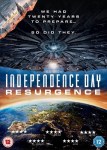
Independence Day: Resurgence, Roland Emmerich (2016, USA). Every now and again, I want to a film I can get pissed while watching, and what better candidate than a Hollywood sf tentpole blockbuster? Especially an unwanted sequel to a twenty-year-old film whose moment passed two months after it was released. Independence Day: Resurgence – I’m pretty sure they meant Regurgence – is actually set twenty years after the events of the first film, with the sons and daughters of the original movie’s heroes as the leads. Except for the non-combat ones, like Brent Spiner, Jeff Goldblum, Bill Pullman, and Goldblum’s dad, that bloke from Taxi. The USA – there are two named Chinese characters in the film, but there don’t appear to be any other nations on Earth; oh, except for a random African one which features for about ten minutes – has reverse-engineered the alien technology and now has a base on the Moon. Which has a giant blaster cannon, just in case the aliens come back. So when a giant spaceship appears, which is nothing like those of the aliens in the original film, the US blows it out of space anyway. Oops. They were the good aliens. Because the bad aliens are back for round two and the good aliens could have helped. Instead, the US has to wheel out all old characters from the first movie. Plus a handful of new ones, most of whom seem more concerned with their relationships with their paper-thin love-interests, plus they’re shit at taking orders anyway, just like every Hollywood military character. Everything that was wrong in the first film is even wronger in this one, and it’s the twenty-first century so a lot of stuff that was acceptable back in the 1990s is pretty much borderline offensive these days. The rest is a mishmash of clichés, hogwash, drivel and machismo bullshit. The special effects may be state of the art, but the storytelling is not. Avoid.

Knights of the Black Cross, Aleksander Ford (1960, Poland). It turns out I’d seen this before, but under the title Knights of the Teutonic Order (which is the title of the Second Run DVD release), although I can’t say I remembered any of the story when I came to watch it this time. It was a huge success in Poland at its time of release – in fact, the Wikipedia entry for the film boasts about the number of people who have seen it. Knights of the Black Cross is certainly an epic movie. It’s set in the late 1300s and is about the frankly evil machinations of the titular order. It clearly demonstrates that there is no one quite as evil as someone who claims to have god on their side – and that’s as true now as it was 600 years ago. A Polish knight finds himself at odds with the order after he rescues a caravan they’re attacking. And it all sort of escalates from there. He threatens the king’s messenger, mistakenly thinking he’s a knight of the order and is sentenced to execution. But the young woman he has fallen for rescues him from the headsman by promising herself in marriage. Meanwhile, her uncle is fighting the order, and ends up captured by them. They also kidnap the knight’s betrothed. Knights of the Black Cross packs a lot into its 166 minutes, and it’s all good stuff. It’s a more melodramatic film than, say, The Valley of the Bees, which also features the Teutonic Order, but is a Czech film – and it makes a good fist of its setting and it’s never dull. Worth seeing.

Eisenstein in Guanajuato, Peter Greenaway (2015, Netherlands). Back in the late 1980s and early 1990s, I used to love Greenaway’s films, perhaps because at that time they were like nothing I’d seen before. But then his star sort of waned and his films became harder to find – the last few have been pretty much financed by the Dutch – but sell-through DVD happily seems to have allowed him to reach a new audience (although I note his films are still somewhat haphazardly available in the UK on DVD or Blu-ray). He also seems to have embraced CGI to a much greater extent than other art house film directors. Like his last two films, Nightwatching and Goltzius and the Pelican Company, Eisenstein in Guanajuato is based on historical fact. Sergei Eisenstein, the director of Battleship Potemkin, Strike, Ivan the Terrible and other Soviet classics, did indeed visit Mexico to make a film in 1930. Greenaway presents Eisenstein as an erudite gay libertine, who takes full advantage of the freedoms offered by Mexico and unavailable in the USSR. Many of the scenes feature declamatory dialogue, often while stalking semi-nude around a single set. The whole is part-lecture, part frankly-implausible drama, but entirely clever and engaging. I hadn’t expected to like Eisenstein in Guanajuato, despite being a fan of Eisenstein’s films, or perhaps because of, but I certainly hadn’t expected Eisenstein in Guanajuato to make me think more favourably of Nightwatching and Goltzius and the Pelican Company, which I now want to watch again. My appreciation of Greenaway’s films may never return to its levels of twenty-plus years ago, but I like his films a whole lot better now than I did five years ago…

1001 Movies You must See Before You Diecount: 857


4 Comments

Moving pictures 2017, #18

I don’t seem to have watched a film from the 1001 Movies You Must See Before You Die list for weeks. But then I have got to the point where, bar a few really populist movies I’m not especially keen on watching (The Lion King, The Sound of Music, etc), the films I’ve yet to see are getting hard to find. I suspect I may never actually watch all 1001 – not that I want to die, either – but if I can get pretty damn close to completion I’ll be happy. And then I’ll move onto a different list…

The Last Man on the Moon, Mark Craig (2014, UK). The title refers to Gene Cernan, the commander of Apollo 17, the last mission to land on the surface of the Moon. Cernan died earlier this year, although this film about him, and sharing a title with his autobiography, was made three years ago. It’s pretty much what you’d expect – talking heads, including Cernan himself, discussing his career prior to NASA, his career at NASA, and his flight to the Moon, intercut with archive film of naval aviators and astronauts. The footage shot on the Moon’s surface is, of course, fantastic, and the nearest anyone will ever get to an actual alien planet this century. (I suppose there might be a commercial, or Chinese, or even Indian, flight to the Moon before 2199, but the way things are going I suspect climate crash will get us all first.) There are a handful of documentaries about the Apollo programme made over the last 45 years, which had theatrical releases, and they’re all very good indeed. Later ones have perhaps featured more talking heads, but then they’ve been more about the people involved than just the achievement itself. Which is hardly surprising, given technological progress since 1972 and the complete lack of political will to contribute to human space exploration. Recommended.

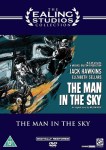
The Man in the Sky, Charles Crichton (1957, UK). I like films whose plots heavily feature aeroplanes, although I much prefer Cold War fighters and bombers than other types of aircraft. The plot summary of The Man in the Sky mentioned a rocket plane, so I bunged it on my rental list and… Well, it’s not really a rocket plane. It’s a Bristol Type 170 Freighter, a late 1940s prop-powered cargo plane, that has had JATO rocket pods attached to give it a much shorter take-off run. Jack Hawkins plays the chief test pilot who takes it up for a demonstration flight for the owner of a freight airline who is planning on buying the plane. The aircraft manufacturer desperately needs the sale, or he will go out of business. So it’s a bit of a downer when one of the engines catches fire during the flight. The crew and passengers parachute to safety, but Hawkins has to figure out how to bring the aircraft down safely because the fire has damaged the ailerons on one wing. It’s all very British Stiff Upper Lip drama, making light of a crisis, etc, and Jack Hawkins plays Jack Hawkins the way he always has done. It’s a mildly entertaining British drama and very much of its time.

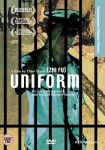
Uniform, Diao Yinan (2003, China). This is the second Diao film I’ve watched, after the excellent Black Coal, Thin Ice (see here). A slacker tailor, with an ill father and nagging mother, tries to return a uniform left by a policeman who needed it ironing. But the policeman isn’t home, and a neighbour tells the tailor he was in an accident. On his way back home, the tailor is soaked in a rainstorm, so he swaps his shirt for the policeman’s. And he discovers that people treat him differently when they think he’s a policeman. So he starts doing it more often. And when his father has to go into hospital, but he has no money to pay for it, so he impersonates a policeman and shakes down people for money. He starts seeing a girl who works in a CD shop, but then he discovers she works for an escort agency as well. This is a pretty bleak film – and, to be fair, a lot of the Sixth Generation Chinese directors seem to go for bleak – but it also has that documentary air I find so appealing about recent Chinese films. The protagonist of Uniform is hardly admirable, or even sympathetic – he’s a slacker who turns into a bully. But his situation is certainly sympathetic, and not just unique to twenty-first century China. I’ve said before that China has an especially strong cinema at present, and this film is ample evidence.

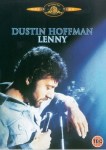
Lenny, Bob Fosse (1974, USA). I wanted to see this since the editing of Lenny plays such an important part in Fosse’s semi-autobiographical All That Jazz, a film I really like. I know very little about Lenny Bruce as he was a) American, and b) before my time. Dustin Hoffman plays the title role, and the film follows his career, intercut with excerpts from some of his later stage performances. It’s astonishing how badly he was treated by the authorities – repeatedly arrested for using words like “cocksucker” in his act – but then the hypocrisy and corruption of the US establishment is hardly news. (Of course, the same can be said of the establishment of pretty much every country.) As biopics go, it’s a good one. But biopics are also dependent on the person being covered, and Lenny Bruce wasn’t all that interesting a person. He was a professional arsehole who ran afoul of the establishment, which hardly makes him unique; but the subject of his comedy seemed fresh and necessary, and was also the reason he was targeted. It makes for a good story. The problem is that when this is real, and the heroes are so deeply flawed, it often invalidates the point being made. Lenny Bruce was a knob. He also had important things to say. So what does that say about his message? Very little, sadly. Most of what he complained about is, these days, generally  acknowledged to be true, but no one seems especially interested in changing things. So US society remains sexist and racist, even more so now than when this film was made.

Marriage Italian Style, Vittorio De Sica (1964, Italy). This is the fifth film by De Sica I’ve seen, and I think most of the earlier ones were Italian Neorealist, a film genre of which I’m not a big fan. Marriage Italian Style, however, is very much a 1960s drama, although it opens in the late 1940s. Sophia Loren plays a prostitute frequently visited by successful businessman Marcello Mastroianni, and he eventually sets her up in his own house, ostensibly to look after his ageing mother. But when Mastroianni plans to get married to another woman, Loren feigns a mortal illness and extracts a promise from him to marry her instead. Then she “recovers”. He marries her, she moves her three sons into the house (one of which was fathered by Mastroianni, but she refuses to tell him which). They start shouting at each other. The two leads are experienced actors, and very good ones too, and they play their parts as well as can be expected. Burt none of it actually adds up to much, and the story never really ignites. Sadly, you don’t much care what happens to the marriage. I’m not sure why I stuck this one my rental list, and having now watched it I’m even less sure.

The Class, Ilmar Raag (2007, Estonia). After Georgia in the last Moving pictures post, it’s now the other end of Europe and another country I can cross off the list of nations whose films I’d never previously seen. The Class is set at a high school in an unnamed Estonian town. One boy in the class is consistently bullied, first by a group of jocks but then by pretty much everyone in the class. But then one classmate decides enough is enough, and he fights the bullies. Which makes him a targe0 toot. Which eventually ends up with the two of them walking through the school with guns, shooting those who had bullied them. It is, sadly, these days a somewhat clichéd story – at least in certain parts of the world – Estonia, it has to be said, not being one of them (but the Wikipedia page mentions two school shootings in Finland which quote the film as inspiration). The problem here, of course, is not kids shooting up schools with guns, but bullying. The Class presents a story that feels very European – this could never be mistaken for a Hollywood film – even if the story is one Hollywood has covered several times. It is also an extremely polished piece of work. Pretty much all nations have a film industry, but not all of their output makes it out of their country – and for some, none of it does. I saw something recently about Jia Zhangke, a Chinese director whose films I rate highly, and whose first three films were made without official approval. It was the international film festival circuit at which his movies were shown which helped finance his later films and also persuaded Beijing to give him their approval. And while I realise there’s been a cinema underground as long as cinema has existed – Maya Deren’s Meshes of the Afternoon and Stan Brakhage’s Dog Star Man are evidence of the US’s own underground avant-garde cinema scene – the twenty-first century has made it much easier for the armchair enthusiast to access previously hard-to-find material. While I’ll happily travel to Sweden or Iceland for a science fiction convention, I’ve yet to work up the enthusiasm to travel to London to see a specific film (damn you, Curzon for showing Francofonia only in London).  Which is, I admit, a purely personal fault. But while I can continue to explore the world’s cinema from my armchair, I will do so – rental, if I can, and I’ll buy them if I think them good enough (as I have done). Because I think it’s important to watch films from as many nations as possible.

1001 Movies You Must See Before You Die count: 857


Leave a comment

Moving pictures 2017, #17

The run of Chinese films from LoveFilm is still going, although only one of the two in this post from that country was actually a rental. We also have the re-appearance of Hollywood… although it’s a 1950s Western by a German director. And there’s a British “quota quickie” in there too.

Antareen, Mrinal Sen (1993, India). This is the only other Sen film I can find available on DVD, which is weird as he seems to be held in equal regard in Bengali cinema as both Satyajit Ray and Ritwik Ghatak, but he also seems to have been working much later than Ghatak. But then Ray was the most prolific of the three, and has been championed in the west for years by David Merchant. Neither Ghatak nor Sen had such a champion – in fact, of the two, Ghatak probably has a higher reputation, although only three of his eight films were ever released on DVD outside India. The two Sen films I now own are both part of NFDC’s Cinemas of Indias restoration of Indian movies, and, I think, the only two by Sen in the  their three box sets. Which is a shame. In Antareen, a writer house-sits a friends decrepit old house – well, it’s more like small palace – and one day the telephone rings. He explains to the caller, a woman, that the owner is away, but they continue to chat. She’s in a loveless marriage and desperate to reach out to someone, and he’s lonely on his own in the big house. He sits by the phone, waiting for her to call. They become friends. Then they decide to meet. Sen’s films seem to have a gentler approach to drama than Ray’s. They also seem less stagier, too. Ray’s films feel like they’re often confined to sets, whereas the two movies by Sen I’ve seen are more cinematic. It’s a pity there’s not more available by him – he directed 27 after all, the last in 2002.

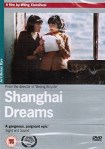
Shanghai Dreams, Wang Xiaoshuiao (2005, China). I watched this twice before sending it back to LoveFilm, and I still think it needs another rewatch. The story is simple enough: the government moves a family to a provincial town, but all they can think about is returning to Shanghai. But their new life is never going to take them back. The film focuses on the daughter of the family, who is realistic enough to build a life for herself in the town but can never seem to do anything right in her father’s eyes. He meets with other volunteers who agreed to move to factories set up in provincial towns to ensure the survival of China’s industrial capacity in the event of war and they plot to return to Shanghai. His bitterness makes him aggressive, and he stalks the daughter. Things then go badly wrong for her, which precipitates the family into moving without permission back to Shanghai. After a couple of Chinese films that hadn’t really grabbed me, this one I thought really good – but then Wang was the director of Beijing Bicycle (see here), which I also thought very good. Annoyingly, those two appear to be the only films by him available in the UK – this is getting to be an all too common complaint.

The Seventh Veil, Compton Bennett (1945, UK). I had thought this was on the 1001 Movies You Must See Before You Die list, but that was apparently The Seventh Victim – a B-movie about a Satanist cult – and not this one, which is a great deal better, if overly melodramatic, but nonetheless quite typical of its time. Ann Todd – who I always get confused with Anna Neagle, and, to be honest, I’m not sure which is the better actress – goes to live with controlling uncle James Mason, playing that smooth-talking villain he did so well, who turns her into a world-class concert pianist. And he’s there to ensure she maintains the discipline needed to stay at the top. She, however, has other ideas – like: love, relationships, etc. The title refers to a piece of simplistic psychology used by the film – each mind has seven veils, like Salomé, and the psychiatrist, Herbert Lom, must persuade Todd to drop that last veil if he is to discover why she tried to commit suicide in the later-set framing narrative. (Hint: James Mason.) It’s melodrama with a capital M, and, I suspect, knocked out as a “quota quickie”. The film it reminded me of the most, strangely, was The Ghost and Mrs Muir, which has made a couple of editions of the 1001 Movies you Must See Before You Die list. Todd is probably The Seventh Veil‘s biggest handicap – she has to play her character from schoolgirl to, well, at least half a decade younger than her actual age – and is clearly Todd throughout. But Mason is certainly on top form. It’s almost as if the role were written for him – in fact, it’s a testament to his skill that so many of his roles did seem written for him. Mason deserves a lot more love than he received. He was one of our best actors.

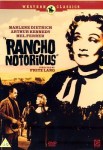
Rancho Notorious, Fritz Lang (1952, USA). I’m trying to work my way through Lang’s entire oeuvre… which sounds like an admirable ambition until you discover how varied his oeuvre was. I mean, is there a typically Lang-ian film? There’s those early German silent films, and they’re all blindingly brilliant. But then he moved to Hollywood and churned out a series of noir films that weren’t all that much better than his rivals, although one or two did shine. And then he ended up with the quite brilliant serial-drama oddities that were The Tiger of Eschnapur and The Indian Tomb. And in between he made… all sorts of stuff. Like this Western, starring Marlene Dietrich. It tries really hard to subvert the form, but decades it feels almost typical of the genre. A man’s bride-to-be is gunned down in a robbery on a general store, and he vows revenge. All he has as a clue is the phrase, “Chuckaluck”. He eventually tracks this down to ex-prostitute Dietrich, who runs a ranch near the Mexican border which she allows outlaws to use as a hideout, for ten percent of their haul. The revengeful widower eventually ends up infiltrating the gang in residence at Dietrich’s, but he doesn’t known which one killed his wife. I think I’ve said before I’m not a fan  of westerns, and the ones that appeal to me are the ones that make a real meal of the landscape… which this one doesn’t. It seems ordinary, and I’d expected better from Lang.

Paper Airplanes, Zhao Liang (2001, China). This is the least satisfying of the three films in this box set, chiefly because it deals with drug addicts, who are, to be frank, not very interesting. On the other hand, this disc also includes three short films which are definitely worth seeing. So, in total, buying the box set was a good move – and now I have to get myself a copy of Behemoth, because Zhao is really very good indeed. In Paper Airplanes, the addicts discuss their addiction, with a surprising lack of self-awareness, but a very informed awareness of what the addiction is doing to them and what its consequences might be. Some of the addicts are in bands, and we see them performing, but if they’re looking for salvation, or even riches,  that way then they’re deluding themselves. Of the three feature-length documentaries in the box set, this is easily the weakest,. Nonetheless, Zhao Liang is a name to watch, and I’ll be keeping an eye out for anything new he produces.

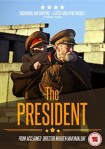
The President, Mohsen Makhmalbaf (2014, Georgia). Despite his stature in Iranian film, Makhmalbaf doesn’t seem to get Western releases to the same extent as other Iranian directors – pretty much the entirety of Abbas Kiarostami’s oeuvre is available in the West, for example, and yet Kiarostami’s Close-up is about a person passing themselves off as Makhmalbaf! Even Makhmalbaf’s most celebrated film, Gabbeh (see here), has never been released in the UK, so I had to buy a US release. So the fact The President is available for rental is a bit of a puzzle… although it’s not really an Iranian film. It’s set in an invented East European/West Asian country, but its cast are Georgian, it was filmed in Georgia, and the Georgian language is used throughout. Which makes it a Georgian film, even if Makhmalbaf is Iranian. I had noted Makhmalbaf’s black sense of humour in other of his films, but it’s in full force in this one. A dictator of an unnamed nation is ousted by rebels, and must flee across the country in disguise, with his young grandson. And… it’s beautifully done. The kid is by turns a charming innocent and a total brat, the dictator is angry, afraid, unrepentant but pragmatic. The final scene in which he is recognised by a group of angry peasants is like something out of a brutal Monty Python. And The President is quite a brutal film in places, and its humour is about the blackest I’ve seen – although not quite as black as the scene in Makhmalbaf’s Kandahar where an army of one-legged men chase after artificial legs thrown from Red Cross helicopters. Recommended.

1001 MoviesYou Must See Before You Die count: 857


2 Comments

Moving pictures 2017, #16

What was that about Hollywood films? I seem to have been ignoring them quite successfully of late…

Rosetta, Luc & Jean-Pierre Dardenne (1999, Belgium). I think in retrospect I like the idea of the films of the Dardennes Brothers more than I like their actual films. They make very personal movies and I agree totally with that, ones that often use handheld cameras and a lot of improvisation by the cast… But the stories they tell often seem stretched beyond their natural length. Rosetta is a case in point. The title refers to a young woman in a Belgian town, who loses her job, and reacts violently. She is, in fact, desperate for work, because she lives in a trailer park and has an alcoholic mother. She lands a job at a waffle – gauffre – baker, but loses that when a profligate son decides he needs a job. So she shops her one friend, a waffle seller who had been making some money on the side with his own waffles, so she can have his job. This is an unpleasant film populated with unpleasant characters, and the title character’s blindness to the moral expediency of her own actions is treated so flatly it’s hard to tell what lesson the Dardenne brothers expect the viewers to take. To a European audience, it’s clearly a condemnation, but I wonder if it plays the same in other parts of the world? And I wonder if such subtlety serves any useful purpose…  Except, belabour the point so unsympathetic audiences will get it and you risk alienating your natural audience. Having said that, I suspect I fall firmly within the demographic the Dardennes expect to appeal to, but I’ve yet to see one of their films I can really take to heart. Rosetta is a good film, but not one to love.

Mississippi Mermaid, François Truffaut (1969, France). I’d not expected like this. Although Truffaut was one of the mainstays of the Nouvelle Vague, I’ve never really had all that much time for him as a director – despite loving his adaptation of Fahrenheit 451. But then I watched his Tirez le pianiste and revised my opinion… Even so, Mississippi Mermaid was a surprise: a commercial film that actually really wasn’t that commercial. Truffaut may not have been as interesting a director as Godard, but when he was in love with his cast – as he plainly is with Deneuve, and possibly also Belmondo, in this movie – at least he only shows them to advantage rather than allowing them to completely derail his story. Having said that, the story of Mississippi Mermaid isn’t all that plausible. A rich plantation owner on Réunion Island has arranged a marriage with a woman whom he knows only from her letters. The woman takes a ship to the island. Except she doesn’t arrive. Instead, Deneuve claims to be the blushing bride-to-be, explaining that she’d sent a photo of a friend in order to better assess Belmondo’s intentions. They marry, they’re very much in love, but she often seems to contradict information she gave in her letters. Then she cleans out his bank accounts. She was a fake. He sets a private investigator on her trail, but some time later inadvertently bumps into her. They rekindle their relationship. But then the PI turns up, and refuses to let it lie as Deneuve was responsible for several crimes. So Belmondo kills him. The scenery is quite impressive – parts of the movie were actually filmed on Réunion Island. But the two leads shine in their roles, and Deneuve is on particularly fine form. It’s a dumb story that should not convince, but Deneuve and Belmondo carry it effortlessly. It’s no surprise’the film was a box office hit in France. And yet, for all its commercial cinema credentials, it refuses to obey the form – it’s over-long (123 minutes!), it can’t decided if its protagonists are heroes or anti-heroes, and it’s not sure if it’s a thriller or a warped romance. I really liked it.

The Hourglass Sanatorium, Wojciech Has (1973, Poland). I watched Has’s The Saragossa Manuscript last year and thought it astonishingly good, but I’m also sure few directors manage more than one such film. The Saragossa Manuscript – which I’m now glad I didn’t buy, despite wanting to, as it’s included in one of the Martin Scorceses Presents Masterpieces of Polish Cinema box sets – is a series of very cleverly nested stories, and The Hourglass Sanatorium uses a similar structure while also tying it to the ravings of a mad protagonist, so it’s not really clear what is what or what it means throughout the film’s 119 minutes. I tweeted while watching it that it was a film to generate nightmares, and while it may not have done it that particular night, it’s very definitely a film filled with nightmarigh imagery. A man visits his dying father in a sanatorium, but nothing is as it seems – not the country he travels through, nor the sanatorium itself. The fears of his childhood are made manifest, and yet none of it is really explained. The film is apparently an adaptation of a 1937 short story collection, Sanatorium Under the Sign of the Hourglass by Bruno Schulz, and the fact it’s based on a collection likely explains the somewhat episodic nature of the film. None of which actually detracts from it. The Hourglass Sanatorium is definitely a film that’s going to need repeated rewatchings. I’d also like to see more by Has.

Killer of Sheep*, Charles Burnett (1978, USA). I’m happy to admit I’d never have watched this film if it had not been on the 1001 Movies You Must See Before You Die list. I’m equally happy to confess I’d have missed out otherwise. I am, in fact, surprised the film is not better known. It was shot in the late 1970s in the Watts district of Los Angeles, but wasn’t actually released until 2007. Because the film-makers didn’t have enough money to secure the rights to music used in the film. Those music rights cost $150,000. The film was shot for $10,000 (around $38,000 in 2016 dollars). It is, it must be said, an excellent soundtrack, but it does help illustrate the strangehold the big media companies have on creative content. Killer of Sheep has no plot as such, it’s just a series of short vignettes set in and around Watts, with an amateur cast. It’s not a documentary because it tries to make its point – the life of working-class blacks in LA – through dramatised incidents, which often works better than a documentary. In order to persuade the viewer of its argument, a documentary needs a narrative – and some documentary makers are excellent at creating narrative, like Adam Curtis or Patrick Keiller. Another methiod is to present a sympathetic vierwpoint character, or more than one, a technique used by Joshua Oppenheimer in The Act of Killing and The Look of Silence. Old style, of course, was to present facts as if building an argument – cf Hotel Terminus, The Thin Blue Line… Patricio Guzmán, on the other hand, presents two arguments, and it is the parallels between them which make his point. But making a drama of a situation has the benefit of allowing the director to control their narrative to an extent not possible with archive footage  (well, unless you’re Aleksandr Sokurov…). Killer of Sheep makes its point emphatically, and it does it with actors and staged stories. Definitely a film that belongs on the 1001 Movies You Must See Before You Die list.

To Kill This Love, Janusz Morgenstern (1972, Poland).Morgenstern is pretty much unknown outside Poland. His Wikipedia page is smaller than my own, and there’s not even a link to his oeuvre on imdb.com. As far as I can determine, he directed a lot of television work, which no doubt accounts for the televisual look and feel of this film (although it is something I have noted previously about several Polish films of the 1970s). A young couple seem suited for each other, but their relationship runs far from smoothly – she is a nurse but too squeamish for some of the tasks she must perform, and he ends up in a relationship with an older woman. To be honest, not much in this film sticks in memory. It felt like a kitchen-sink drama, Polish style, and although the film justifiably made a star of female lead Jadwiga Jankowska-Cieślak, it’s a thin takeaway from a film that incorporates so much human drama – perhaps too much in places. It’s a movie that’s going to require a rewatch, so I’m especially glad it’s part of the box set I bought.

East Palace, West Palace, Zhang Yuan (1996, China). Amazon started taking the piss a bit for a few weeks, and sent me a Chinese film every week, It’s almost like they were reading my tweets… It’s true the Sixth Generation of Chinese directors, and later, have produced some of the consistently best films of the last few decades, and I’m more than happy to explore their output… But I also treasure variety in my viewing, and a constant diet of Chinese films, no matter how good, can get as wearying as a constant diet of films from any other nation (wait, most people watch US films all the time… what am I saying?). East Palace, West Palace refers to a park in Beijing frequented by gay men, who go there to pick up sexual partners. A police raid results in several of them being taken prisoner. One particular police officer takes one to his office and tries to get him to admit to his “behaviour” – homosexuality was apparently not a crime at the time the film is set, although that didn’t stop the police rounding them up every now and again. And, although it feels like a cliché – the gay man tells his the police officer his life story and so the police officer falls for the gay man – it never feels like one as the film progresses. Partly it’s because the flashback sequences are so well-staged, and partly it’s because the way the film drops into fantasy at the end, with the gay man dressing in drag and so seducing the police officer, with it all feeling like a metaphorical treatment without undermining the emotional content. I’ve watched a lot of contemporary Chinese films recently, but I can’t begrudge that because they’ve all been excellent films. True, I’ve become a fan of Jia Zhangke and Zhao Liang, but it’s not that much of a stretch to say that China’s Sixth Generation, and later, of film directors has resulted in the strongest national cinema so far of the twenty-first century.

1001 Movies you Must See Before You Die count: 857


2 Comments

Moving pictures 2017, #14

I’ve done it again – not a single US film in this half-dozen, well, seven, to be precise. In fact, not a single Anglophone movie. Instead, we have Romanian, Schweizerdeutsch, Polish, Russian, Mandarin/Taiwanese, and Kurdish.

californiaCalifornia Dreamin’, Cristian Nemescu (2007, Romania). When I asked some Romanian friends for films from their country to watch, this was one of the titles they suggested (unlike Nemuritorii – see here). And having now seen it, I can see it reflects well on the Romanian film industry but perhaps not so well on the Romanian people. I’ve visited the country and can think of nothing bad to say about the people I met there… but this film is not entirely flattering. Of course, there’s no requirement a film should be. Although US films do tend to show US culture in a flattering light, even while a US character is committing genocide. But US films are notoriously mendacious, and will promote the “American Dream” even in situations where it has plainly failed – which is, in part, germane to the plot of this film, as it is the riches of the US, and its treatment of other places, which leads to the situation the film depicts. A NATO detachment of US soldiers is accompanying a radar unit to Kosovo, and it travels by train through Romania. But when it reaches a small village in the middle of nowhere, the station master, who is corrupt as they come, decides to play the bastard and halts the trains because it lacks the necessary papers. This is all based on a true story, incidentally. The presence of the American soldiers understandably disrupts the village, so much so that the US commander eventually persuades the villagers to riot against the corrupt station master and police chief. The riot turns violent, and the Americans sneak away during the fighting. There’s a running joke throughout about a Romanian soldier seconded to the US company, and so wears their uniform, who pretends to be American to a pretty village girl who does not speak English. But if some of the Romanians come across as venal and corrupt, the majority are just ordinary people struggling to survive in a failing system. The Americans are worse – arrogant, ignorant, and unwilling to make the effort to understand another culture. The US commander is played by Armand Assante, an odd piece of casting, but it turns out he does a “officer with a stick up his ass” quite well. As an advert for Romania, California Dreamin’ fails; as a film, it succeeds really well. Fortunately, films should not be adverts or tourist brochures.

aloysAloys, Tobias Nölle (2016, Switzerland). This was a freebie, thrown in by the seller when I bought half a dozen other DVDs – most of which have appeared in previous Moving picture posts. So I knew nothing about it, but since the seller has chucked in a freebie on previous orders and they’ve proved to be good, interesting films, I had no doubts Aloys would prove the same. And so it did. The title refers to a young man who works as a private detective. He had been the junior partner in the firm with his father, and the film opens with his father’s funeral. Aloys is a loner, preferring to avoid people, and perform his assignments by filming his targets from a distance. He films other people too. After his father’s cremation, he gets drunk, falls asleep on the bus, and wakes up in the depot to discover his video camera and tapes have been stolen. There is one videotape in his pocket. On it, a woman’s voice admits she took the tapes and camera and that she disagrees with what he does. The two of them begin “phone walking”: one describes a place, imaginary or real, over the phone in such a way that the listener can imagine themselves there. When one of Aloys’s neighbours tries to commit suicide, he realises she was the thief and telephone caller. They continue their relationship, she from her hospital bed, leading to a quite wonderful party scene in which the pair play a duet on an electric organ to an audience of their neighbours – but it’s all in his imagination. The realisation of his imaginary walks and meetings is really well done – it makes the film, in fact. Worth seeing.

masterpieces_1Jump (Salto), Tadeusz Konwicki (1965, Poland). While watching this, I couldn’t help be reminded of Wajda’s Ashes and Diamonds, and it’s for the slimmest of reasons: in both films the protagonist continuously wears sunglasses. A man – in sunglasses – jumps from a train as it passes through the countryside, and makes his way to a nearby village. Once there, he claims to know people from having spent time there during WW2, but he tells a different story to everyone he speaks to. And eventually they figure out these contradictory stories cast everything he said in doubt, and so they turn on him. It’s never entirely clear if he’s a total con man, or just a chancer imposing on past acquaintance… and in a country like Poland, with its troubled history during World War 2 and immediately afterward (as documented in films such as, er, Ashes and Diamonds), treading such a fine line is sure to eventually end in disaster. As it does. The townspeople run the man out of town  – a dog even chases after him and tries to bite him as he flees down the road – and then the film presents a nice circularity in having the man run through a field and catch a passing train in a sort of reverse of the sequence which opened the film. This wasn’t one of the best films in this box set, although the restoration and transfer were excellent. I’m glad I bought the box set, despite the price, and even more pleased I chose to shell out for all three box sets. Expect lots of Polish films to appear in these posts over the next few months.

man_movie_cameraThree Songs for Lenin & Kino Pravda #21, Dziga Vertov (1934/1925, Russia). There are two types of utopian vision – those that include everyone, and those that include only those people like the person having the vision. Which is as good a description of left-wing and right-wing as any. And while the USSR turned increasingly totalitarian in the decades after the October Revolution, so much so that I suspect any utopian revolution’s ideals are unlikely to last longer than a generation, Vertov was there at the beginning of the USSR and he filmed it. So while there’s actual footage here of Lenin giving speeches, or meeting and greeting fellow Russians, all silent, of course, given the time, there is also footage of citizens of the USSR celebrating Lenin’s achievement… and it’s mostly from the south, from places like Azerbaijan, with women in burkas and men in dashikis. No one bats an eye at this – they are all comrades. True, this is early Soviet propaganda, although I think Vertov was more guilty of seeing the good cinema could do than of consciously using it as a government tool. But when we live in a world in which Daily Mail readers actually regret the Nazis not winning World War 2, I can only point to these films and say despite all the reasons the USSR was a bad thing, what they show is a good thing. When Soviet art was optimistic, it was a great and wonderful thing; when it was pessimistic, it was a sharp-edged tool. And what do we in the UK, or even the US, have to set against that? An industry which produces commercial product which has perpetuated the greed-is-good narrative so successfully that people would sooner have slavery than multiculturalism! How is that acceptable? There’s no point in being generous about it: if you voted Leave, you are either a racist or ignorant, or both. Likewise if you voted for Trump. You have fucked up the future. And watching Three Songs for Lenin and Kino Pravda #21, I envy the optimism of the people in the films. They had built a new world order and it was a fair one. They couldn’t know it wouldn’t last, but that failure in no way invalidates the attempt to set it up. Perhaps it’s time for a new revolution.

yi_yiA One and a Two (Yi Yi)*, Edward Yang (2000, Taiwan). This is a family saga, covering three generations, although not the entire length of those generations. And while it’s a well-observed drama, I could see no good reason why it made the 1001 Movies you Must See Before you Die list. A good film, yes – but a great film? The film opens with a woman infiltrating the preparations for a wedding banquet and making a scene with the bride’s mother. And then it sort of follows around members of the family… and I honestly can’t remember if there was a plot or not. I seem to recall that at times it felt like a documentary and at other times like a family drama, but that none of it really quite gelled for me. And it was long, too: 173 minutes. I think I should have given it a second go, but it was a rental DVD and I sent it back before I could rewatch it. Having said that, I seem to have made a habit of buying films I’d previously watched on rental, although this one does appear to have been deleted, or at least I’m sure I saw an Artificial Eye edition at some point but can no longer find it online. I think I’d like to see it again, because I remember it being good even if I can’t remember the details of the story.

blackboardsBlackboards, Samira Makhmalbaf (2000, Iran). Samira Makhmalbaf is Mohsen Makhmalbaf’s daughter, but if this film is any indication she has a singular vision all her own. A group of men carry blackboards on their backs across the mountains to teach literacy to the children of the valleys. But there is a war on, and they must avoid being shot at or strafed by jet fighters. And when they do meet up with a bunch of boys from the valley villages, none of them are interested in learning to write. One of the men perseveres, and follows the boys along mountain tracks, trying to persuade them of the benefits of reading and writing. There’s not much in the way of plot here, just the presentation of people in a deplorable situation. The film’s cast appear to be mostly non-professional, but as I’ve learnt over the past year or two that’s not necessarily a bad thing. Makhmalbaf captures their plight well, and keeps sympathy with both those who carry the blackboards on their backs and those into whose lives they intrude. Iran has produced a number of excellent directors of the past few decades, and has a cinema better than many other nations of equivalent size. Some of its directors seem to have their films released in the UK (and US) more often than others – Asghar Farhadi, for example; or Abbas Kiarostami – but then not all of Kiarostami’s films have seen UK DVD releases, and others such as Mohsen Makhmalbaf are woefully under-represented. Nonetheless, Iran has one of the strongest cinemas of any non-Anglophone nation, and it’s always worth watching one of its films.

1001 Movies You Must See Before You Die count: 856