Some long sought-after films here, and some random stuff that happened to catch my eye at the time. So to speak.
The Brain that Wouldn’t Die, Joseph Green (1962, USA). One of my favourite actresses of the 1950s is Virginia Leith, who made only a handful of films, and The Brain That Wouldn’t Die is her last. She plays the fiancée of an arrogant surgeon who thinks he knows better than the entire medical profession. Of course. But then he’s in car crash and his girlfriend is killed, except he saves her head and keeps it alive in his lab at home. But she’s no good to him as a disembodied head, so he goes hunting for a suitable body for her, visiting a nightclub, and then an artist’s model. It’s not like the first time he’s done this, as there’s a monster he created behind a locked door in his laboratory, and his assistant lost an arm and he performed and arm transplant on him. Leith’s character, however, would sooner die, so she persuades the monster to attack her husband. Despite the schlock plot, and the B-movie sensibilities, this wasn’t as bad as I had expected. In fact, it reminded me of Sam Fuller’s films, it had that same sort of underbelly of society feel to it, although the scenes set in the lab with Leith’s head were an odd contrast. A superior B-movie.
Dykket, Tristan DeVere Cole (1989, Norway). One of my “enthusiasms” over the past few years has been deep sea diving, particularly deep sea habitats and saturation diving. But there aren’t that many films based around saturation diving, and the few that do use it in passing – Sphere, I’m looking at you – tend to get it laughably wrong. But Dykket, AKA The Dive, a Norwegian/British production, is actually about divers on a saturation dive. After four months at sea, a diving support ship with three divers aboard – one of whom is Michael Kitchen! – is due to return to port for a refit. But one of Scanoil’s (a stand-in for Norway’s Statoil) sea-bed valves nearby has been turned off by a trawler’s net. The divers are due to return by helicopter to dry land, but since it’s a “bounce dive”, ie, they won’t spend long enough on the sea-bottom at 100 metres (that’s 300 feet, approx, or 10 atmospheres) to require decompression, they decide to give it a try. Of course, it all goes horribly wrong. First, one of the divers is caught in the trawler net, then the bell gets tangled up. So they’re trapped, the ship is running out of gas, and the bell’s reserves have all but gone… The version of this I watched was unfortunately lacking subtitles, and about a third of the dialogue is in Norwegian. But I knew enough about saturation diving to follow what was going on. The underwater scenes are done well, although the incidental music throughout felt more like it belonged to a Euro soap opera than a feature film. But it wasn’t bad. I’m surprised it’s never been release on DVD, not even even in this country – given it stars Michael Kitchen.
Europa ‘51*, Roberto Rossellini (1952, Italy). Ingrid Bergman plays the wife of a wealthy man in post-war Italy. One night, during a dinner party, her young son, desperate for attention, tries to commit suicide by jumping down the apartment building’s stairwell. He ends up paralysed from the waist down. Unfortunately, he dies in hospital a few days later. Stricken by grief, Bergman gets involved with poor people, and helps them out, even taking one woman’s place in a factory for a day. But her husband objects to her activities, and has her consigned to a mental hospital, because when men don’t get what they want from their women they lock them up. The film was apparently inspired by the life of St Francis of Assisi, and Bergman certainly plays her role like a martyr. It’s an odd film, because it’s usually described as Neorealist, and for the first thirty or so minutes it doesn’t at all seem like one. But then Bergman does her ministering angel among the poor bit, many of whom are plainly non-professional actors, and it very much resembles an Italian Neorealist movie. Of the directors associated with the movement, I’ve never really been a big fan of Rossellini’s films, and there’s nothing here to persuade me otherwise, despite it being on the 1001 Movies You Must See Before You Die list.
Sitcom, François Ozon (2000, France). Ozon’s films are readily available in the UK on DVD. Except this one. For some reason. There’s nothing in it I could see which would prohibit a sell-through release in the UK. And certainly nothing in it that is so unlike the rest of Ozon’s oeuvre it would preclude a release on that basis. The film concerns a family whose behaviour changes after the father brings home a lab rat as a pet. First, the son announces he is gay and completely changes his lifestyle. Then the daughter throws herself out of a window, is paralysed below the waist, and then begins exploring sado-masochism. The Spanish maid begins to act more like a member of the family than a paid servant, and her black husband, a sports teacher, starts sleeping with the gay son. The mother has sex with her son in order to “cure” him of his homosexuality. And the father eats the pet rat and turns into a giant rat. And, er, that’s it. I think the film is supposed to comment on the hermetic families which feature in US sitcoms, not to mention the anodyne humour and narrow-minded sensibilities. Unfortunately, the end result that comes across more like an exercise in trying to shock than any type of pointed commentary. And much of it is too silly to be taken seriously, anyway. I find Ozon a bit hit-and-miss, to be honest – I love some of his films, but others have struggled to keep my interest. This one falls in the latter camp.
The Shamer’s Daughter, Kenneth Krainz (2015, Denmark). The king of Dunark, his wife, youngest son and unborn child are found murdered. His oldest son, Nicodemus, is found drunk and covered in blood nearby. So the Master of Law calls in a shamer, a type of witch who can see everything of which a person is ashamed, but she can’t “see” evidence of Nicodemus’s, guilt. So they fetch her young daughter… who discovers that the son is innocent and his half-brother, Drakan, is the real culprit. So then Drakan seizes power, by throwing the Master of Law down a well – and no one thinks, well, if this is how he starts out, he’s not going to be a good ruler, is he? Of course not, this is fantasy. But the shamer’s daughter, and Nicodemus, manage to escape. The daughter is quickly caught, despite disguising herself as a boy. Because fantasy is all about the girls being rescued by the boys. Sigh. However, the Master of Arms begins to understand that Drakan is a bad sort, so he helps puts together a plot with Nicodemus to rescue the daughter and their mother as they’re thrown to the dragons. (despite being Danish, this film features mountains… and dragons.) The shamer’s daughter cannot get Drakan to admit his guilt – he’s not ashamed of murdering the king and his family – so she turns her gaze on the crowd, and gets them all to realise Drakan is a baddy. In the ensuing confusion, the good guys escape. Interestingly, though Nicodemus has Drakan under his sword at one point, and could end it all with one thrust, he chooses not to, and they all run away. To a nicer place, where the shamer and her daughter are reunited with the rest of their family. The world-building wasn’t bad, and the concept of shaming was a pretty good idea, but… Drakan was a pantomime villain, and it beggared belief that everyone would happily go along with his evil plans… and the title character had virtually no agency despite being the star of the story. Disappointing.
Blindfold, Philip Dunne (1966, USA). I could watch Rock Hudson in pretty much anything, but he pushes your level of tolerance sometimes. He made some outright weird stuff, and some stuff that seemed odd at the time but later turned into a classic, and some some thrillers that might have passed muster back then but really haven’t aged well. Like this one. Hudson’s performances are always watchable, and I now find him far better than Cary Grant, who seem to go from galumph to tea-bag tanned louche overnight in the mid-1950s. Hudson plays a psychiatrist who is recruited by the military to analyse a Soviet defector who refuses to talk. He is blindfolded and taken from New York to a house in the Louisiana swamps. Then someone else turns up and convinces him the general who recruited him is a fake, and he needs to rescue the defector. But Hudson has no idea where they’re keeping the defector because blindfold. It all gets a bit confusing, and ends up with Hudson on the run, with the female lead, Claudia Cardinale, a nightclub dancer, of course, and the sister of the defector… They’re chased through the Louisiana swamps at night, and even though it’s done in a studio, it’s quite effective. But this is a pretty ordinary mid-sixties thriller, and not even its stars can do much with the material. Disappointing.
1001 Movies You Must See Before You Die count: 916
For the past several years, probably longer than I think and much longer than I’d care to know, I’ve been putting together a best of the year six months in. Partly it’s to document the good stuff I’ve read or watched or listened to during the first half of the year, but also I find it interesting to see how it changes over the following six months.
2018 has been an odd year so far. While the big project at work moved up a gear, my part in it sort of moved into cruise mode. So I started reviewing again for Interzone – three books so far, and the first book I reviewed made the top spot on my list below – and I also started up SF Mistressworks, although perhaps it’s not quite as regular as I’d like yet. On the film front, I continued to watch far too many movies, but at least it’s proven a pretty wide selection – including a number of films from the 1001 Movies You Must See Before You Die list, plus movies from all over the world… and some surprising new favourites.
books 1The Smoke, Simon Ings (2018, UK). I picked this to review for Interzone having very much liked Ings’s previous sf novel, Wolves. But The Smoke, I discovered, was considerably better. It’s sort of steampunk, sort of alt history, sort of high concept sf. It’s beautifully written, and does a lot of really interesting things really well. It is probably Ings’s best book to date. I would not be at all surprised if it appears on several award shortlists next year. On the other hand, I will not be at all surprised if it’s completely ignored, as UK sf awards don’t seem to be doing so well at the moment, as popular awards are pulled one way then another by in-groups on social media and juried awards try to make sense of a genre that is now so pervasive across all modes of writing that no one has any idea what is what anymore.
2Pack My Bag, Henry Green (1940, UK). Green wrote this autobiography at the age of 35 convinced he would not survive WWII. He did (he spent the war as an ambulance driver). But this is an amazing piece of work, a warts and all depiction of upper class education in the 1920s, and a beautifully stated meditation on writing. I’ve been a fan of Green since the first book of his I read, but Pack My Bag intensified my love for his prose. Read all of his books. If only he weren’t so difficult to collect in first edition…
3The Rift, Nina Allan (2017, UK). This won the BSFA Award a month or so ago, and while it was not my first choice I’m happy that it won as I think it’s a worthy winner. It is, to my mind, the most successful of Allan’s disconnected novel-length fictions. It not only occupies that area between science fiction and mainstream I find interesting, but also between narrative and… whimsy? I’m not sure what the correct term is. The Rift is a story that feels like it should add up but resolutely fails to do so – and makes a virtue of its failure. It’s easily one of the best genre books I’ve read so far this year.
4The Essex Serpent, Sarah Perry (2016, UK). I read this over Christmas so technically it was a 2017 read, but it didn’t feature in any of my posts for that year so I’m counting it as a 2018 read. It’s an odd book, almost impossible to summarise, chiefly because there’s so much going on in it. It’s set in late Victorian times. A recently-widowed young woman decide to indulge her interest in palaeontology and visits a family who are friends of her friends and who live in the Essex marshes. She finds herself drawn to the man of the family, the local vicar, while her autistic son is drawn to his consumptive wife. The titular serpent makes only a brief appearance, and even then its reality is doubtful, but the way in which its legend shapes the lives of those in the books is very real. Fascinating and beautifully written.
5Four Freedoms, John Crowley (2009, USA). I’ve been a fan of Crowley’s fiction for a couple of decades or so, but it usually takes me a while to get around to reading his latest work… nine years in this case. I should have read it sooner because it’s bloody excellent. End it worked especially well for me because the story was based around the construction of an invented WWII bomber which to me was obviously the Convair B-36 (but, bizarrely, it was mostly coincidence as Crowley did not actually base it on the B-36). Essentially, it’s the story of the workforce building the aforementioned WWII bomber, focusing on several members, and telling their stories. It’s beautifully-written, of course; and the characterisation is top-notch.
Honourable mentions –Exit West, Mohsin Hamid (2017, Pakistan) mysterious doors leading to Western nations appear in the war-torn Middle East, a clever look at the refugee issue facing Europe but which sadly turns into an unsatisfactory love story; The Book of Strange New Things, Michel Faber (2014, UK) an Anglican priest is sent to an exoplanet to succour to aliens and becomes obsessed by them, while the UK, and his wife, slowly disintegrates, moving stuff and the sf element is well-handled; October Ferry to Gabriola, Malcolm Lowry (1970, Canada) more semi-autobiographical fiction from Lowry, in which a young lawyer and his wife head to the west coast of Canada to buy a house on an island, I just love Lowry’s prose; A Primer for Cadavers, Ed Atkins (2016, UK) a collection of braindumps and stream-of-consciousness narratives, some of which were written as accompaniment to Atkins’s video installations; Calling Major Tom, David Barnett (2017, UK) polished semi-comic novel about a misanthropic British astronaut en route to Mars who reconnects with humanity via a dysfunctional family in Wigan.
films – narrative
An unexpected top five in this category. One is by a director I normally don’t have that much time for, and the remaining four were by directors more or less unknown to me when I started watching the films.
1The Lure, Agnieszka Smoczyńska (2015, Poland). I saw a description of this somewhere that said it was about carnivorous mermaids in a Polish nightclub during the 1980s. And it was a musical. That was enough for me to add it to my rental list. And it proved to be exactly as advertised. I loved it so much, I bought my own copy on Blu-ray. And loved it just as much on re-watch. It’s a film that revels in its premise and dedicates its entire mise en scène to it. The music is kitschy, and not really very 1980s – and one of the bands in the film is a punk band… that isn’t really 1980s punk either. But those are minor quibbles.
2Dunkirk, Christopher Nolan (2017, UK). I find Nolan’s films generally unsatisfying so I didn’t bother going to see this when it was on at the cinema. Plus, the film’s subject was not one that appealed, especially in these days of Brexit and and various attempts in popular culture to spin it as a good thing because history. Not that Dunkirk was an especially proud moment in British history. Although you’d be surprised at the number of people who think, or insist, it was. It was, as this film mentions, “a colossal military blunder”. But I found myself watching Dunkirk one evening… and I loved it. It’s a beautifully shot film and completely plotless. It presents the events of Dunkirk by focusing on several different groups of people. It does not offer commentary; it is in fact almost a fly-on-the-wall documentary. And did I mention that it looks gorgeous? I ended up buying my own Blu-ray copy.
3Thelma, Joachim Trier (2017, Norway). A young woman from a religious family moves to Oslo to study at university. One day in the library, she suffers an epileptic fit – but subsequent study by doctors cannot find evidence of epilepsy. She also finds herself drawn to a fellow student, but her upbringing makes the relationship difficult. Then odd things began to happen around her… and flashbacks reveal why these occur. Comparisons with Carrie are inevitable, but Thelma is so much better than that film. Elli Harboe is brilliant in the title role, and totally carries the film. I might even buy my own Blu-ray copy.
4Vampir Cuadecuc, Pere Portabella (1970, Spain). I’ve no idea why I stuck this film on my rental list, but I knew nothing about it when I slid it into my player. It proved to be an experimental film, shot during the filming of Jesse Franco’s Count Dracula, but in stark black and white and with only atonal music for a soundtrack. And, er, that’s it. I loved it. I loved it so much I hunted down a Spanish release of a box set of 22 of Portabella’s films and bought it. The imagery is beautiful in the way only transformed imagery can be, and the fact it piggybacks on an existing production, and steals from its plot, not to mention its casts’ performances, only adds to the film’s appeal. I’ve been slowly working my way through the Portabella box set since I bought it. It was a good purchase..
5India Song*, Marguerite Duras (1975, France). I watched this because it was on the 1001 Movies You Must See Before You Die list, but the director’s name was unfamiliar to me, and I didn’t bother looking the film up before watching it. So what I found myself watching came as a surprise… which seems to be a recurrent theme to this year’s Best of the half-year… Duras was a French novelist, playwright and film-maker, who is perhaps best-known outside France for writing the screenplay for Alain Resnais’s Hiroshima, mon amour. But she made almost twenty films herself, and India Song is one of the better known. It is an experimental film, although it tells a relatively straightforward story in a relatively straightforward manner – that of the wife of an ambassador in India in the 1930s who affair with multiple men to alleviate the boredom of her life. But the film has no dialogue – everything is narrated by voiceover. It’s a bit like watching a bunch of people act out a short story as it is read. I found it fascinating, and would love to watch more of Duras’s films. But they are, of course, extremely hard to find in English-language releases. I really should improve my French one of these days.
Honourable mentions –Baahubali 1 & 2, SS Rajmouli (2017, India) absolutely bonkers and OTT Telugu-language historical epic, has to be seen to be believed; A Question of Silence*, Marleen Gorris (1982, Netherlands) one of the most feminist films I’ve ever watched: three women are charged with the murder of a male shop assistant; Penda’s Fen, Alan Clarke (1974, UK) there’s an England which exists in art which I do not recognise, and this is one of the best presentations of it in narrative cinema I’ve seen; WR: Mysteries of the Organism*, Dušan Makavejev (1971, Serbia) a paean to the ideas of Wilhelm Reich and his orgone energy, told through interviews and an invented narrative about a woman in Yugoslavia who has an affair with an People’s Artist ice skater; A Silent Voice, Naoko Yamada (2016, Japan) a lovely piece of animation about a teenager who bullies a deaf student at his school and comes to regret his actions; The Red Turtle, Michaël Dudok de Wit (2016, France) dialogue-free animated film about a man stranded on an island, with some beautiful animation; Secret Défense, Jacques Rivette (1998, France) baggy thriller from Rivette which hangs together successfully over its 170-minute length; Still Life, Jia Zhangke (2006, China) a man hunts for his wife and daughter in the Three Gorges, more documentary-style drama from a favourite director, plus gorgeous scenery; Mishima: A Life in Four Chapters*, Paul Schrader (1985, USA) fascinating, sometimes almost hallucinogenic, dramatisation of the life of famous writer.
films – documentary 1Notfilm, Ross Lipman (2015, USA). A fascinating study of Samuel Beckett’s only foray into cinema, Film, and how it impacted Beckett’s career. The BFI release which includes the documentary also includes a copy of Beckett’s film, plus a 1979 British remake, which sticks closer to the original script. It’s fascinating stuff, not least Notfilm‘s study of Beckett’s career, including interviews with long-time collaborators, such as Billie Whitelaw. I can’t say the documentary persuaded me to search out DVDs of Beckett’s plays – he wrote a lot for television, so some must exist – although I would like to give one of his novels a try.
2A Man Vanishes, Shohei Imamura (1967, Japan). A salaryman leaves the office for home one night and never arrives. A Man Vanishes sets out to discover what became of him, but turns into a meditation on the role of the documentary maker and the impossibility of really documenting what was going through someone’s mind. Particularly during their last moments. The last scene, in which the crew appear and dismantle the set around the actors, is especially effective.
3Waltz with Bashir, Ari Folman (2008, Israel). An animated documentary, partly autobiographical partly fictional, in which Folman tracks down and interviews members of his platoon in the IDF and discovers he was complicit in an atrocity which he had completely blanked. The animation allows Folman to present past events, and it’s an effective technique, even if it doesn’t work quite so well when it’s Folman in deep discussion with friends or platoon-mates in the present day. However, after a while, the animation stops being so obtrusive, and Folman’s unburdening starts to overwhelm the narrative.
4Bombshell: The Hedy Lamarr Story, Alexandra Dean (2017, USA). I suspect it’s a toss-up these days as to whether Lamarr is better known for her acting or her link to Bluetooth (given that the latter has been heavily publicised for the last few years). She was a remarkable woman, who took up inventing to stave off boredom while pursuing a career in Hollywood, and among her inventions was frequency-hopping, now used in everything from military secure comms to GPS to wi-fi to Bluetooth… After watching this documentary, I really wanted to track down a copy of her self-financed and -produced historical epic, Loves of Three Queens, but good copies are hard to find.
5Kate Plays Christine, Robert Greene (2014, USA). An actress, Kate, prepares for her role as a real-life person, Christine, who committed suicide on air back in the 1970s. The length of time that has passed since Christine Chubbuck, a news anchor, shot herself while the camera has live has meant there is little evidence remaining about her or her life. Kate interviews those who knew her, but even then she remains very much an enigma – there’s even a hint she might have been trans. Despite the details of Chubbuck’s death, this documentary is very much not salacious or in bad taste. It navigates its way very carefully, and it’s very well put together. The DVD I bought I bought came bundled with Actress, which is also a very good documentary.
Honourable mentions –Where to Invade Next, Michael Moore (2015, USA) the title’s joke wears thin very quickly, but Moore’s survey of six European nations’ civilised social policies stands in stark contrast to the regressive society of the US, despite Moore’s claims many of the policies are embedded in the Declaration of Independence; Becoming Bond, Josh Greenbaum (2017, USA) a tongue-in-cheek look at the career of George Lazenby, who played the best Bond (yes, he did), but then torpedoed his own film career; The Oath, Laura Poitras (2010, USA) two men were part of al-Qa’eda, one was a non-combatant driver, the other was a member of bin Laden’s bodyguard, the former was captured and held in Gitmo and tried as a terrorist, while the latter gave himself up to the Yemeni authorities, served a brief prison sentence and not lectures against both al-Qa’eda and the US; Dispossession, Paul Sng (2017, UK) a damning indictment of the decades-long Tory policy of neglecting social housing, so that the land can be sold off to developers… resulting in our present-day housing crisis. Fuck the Tories; The Farthest, Emer Reynolds (2017, Ireland) fascinating look at the two Voyager space probes, with interviews of those involved and some excellent CGI footage of the probes themselves; Colobane Express, Khady Sylla (2008, Senegal) set aboard a privately-operated bus in Dakar, using actors to tell the stories of the passenger’s lives, excellent stuff.
albums 1The Scars of Man on the Once Nameless Wilderness I and II, Panopticon (2018) Panopticon is a one-man band, and plays a mix of bluegrass and black metal. It works surprising well. The two albums here, released together as one as they were intended to be, are according to the artist: “the first half of the album is atmospheric metal, the second half is more americana focused”. The acoustic “americana” sections are actually more atmospheric than the black metal sections, but it all hangs together extremely well.
2Currents, In Vain (2018). In Vain are from Norway, and also a one-man band. They play a metal that veers from black to death to prog, and sometimes features a few other musical genres, like country. Currents is their fourth full-length album, after 2013’s Ænigma, which I think made my top five albums for that year. I’m not sure Currents is as good as that album, but it’s still bloody good stuff.
3The Weight of Things, Entransient (2018). Entransient play something halfway between prog rock and prog metal, although one of the tracks on this album features harmony vocals that don’t really belong to either genre. It’s probably the best song on the album, in fact. This is only their second album after their eponymous debut in 205, but it’s a much better album, and I’m looking forward to hearing more from them.
I’ve actually bought more than three albums during the last six months, but not that much more. The last few years I’ve not listened to as much music as I used to, nor seen as many bands perform live. In fact, I’ve only been to one gig so far this year, to see Therion, who were really good (even though I’ve not kept up with them for at least seven or eight years).
A return to usual, with only two of the six films from an Anglophone country. I’m still trying to reduce the percentage of US films in my overall films seen list, and now rent two foreign-language films for every English-language one.
The Super Inframan, Hua Shan (1975, China). I was looking at new releases on DVD/Blu-ray on the Cinema Paradiso website and spotted this, and it looked totally worth a go, a Hong Kong action film done like a Japanese tokusatsu that ripped off Superman. Sadly, it sounded better on, er, paper than it actually was on the screen. I mean, it was exactly what the description promised – a ridiculous plot that confused science-fictional aliens and mythological demons, lots of balletic fight scenes, monsters that could only have been dreamt up by someone whose brain has turned into cheese, cheap costumes that visibly fell apart during the fights, risible dialogue, and jeopardy that was so fake it killed suspense. I had expected to be a lot more entertaining – and bits of it were quite amusing. But unlike some films which are so bad they go out through the other side and become good, The Super Inframan never even made it halfway. The transfer – it’s a new Blu-ray release – however was very good, and as brainless colourful moving pictures to watch while consuming alcohol go, it’s as a good a candidate as any other.
The Freethinker, Peter Watkins (1994 Sweden). I have no idea what to make of Watkins. His use of faux documentary is second to none, but his move toward a mix of drama and documentary, on obscure subjects, probably explains why his films are now financed by television companies in other countries, like Sweden. They are also long. It feels like he’s given up his chance to make a difference to focus on the stories he want to tell. And while I can’t begrudge him that, I have to begrudge the loss of 1990s and 21st century equivalents to War Games, Privilege and Punishment Park. Instead we have La Commune (Paris, 1871), all 345 minutes of it, and The Freethinker, all 276 minutes of it, and The Journey… all 873 minutes of it! The title of this film, which is split across two DVD discs, refers to Swedish playwright August Strindberg, who lived from 1849 to 1912, and wrote “over sixty plays and more than thirty works of fiction, autobiography, history, cultural analysis, and politics” (Wikipedia). ‘The Freethinker’ is also the name of Strindberg’s first play, which he apparently had trouble staging. In fact, Strindberg seems to have struggled for acceptance at first. I wonder if this is true of all art that withstands the test of time. It could be said art is the present in conversation with the past, and art that argues with, criticises, disputes or even refutes the ways of the past is art that tends to last longer. Of course, access also helps – either by popularity or patronage – and obscurity has consigned much great art to the dustbin of history. Watkins’s films are not especially accessible – 276 minutes! – and have become increasingly less visible. And yet they’re clever stuff. They’re inventive in the way they use their format – mixing dramatisation and documentary, breaking the fourth wall, having the cast comment on the historical personages they are playing… a technique also used in La Commune (Paris, 1871). However, unlike La Commune (Paris, 1871), The Freethinker reminded me in places of Sokurov’s films, especially his “elegies”. But where Sokurov talks over his found footage, meditating on a variety of topics inspired by the pictures on the screen, Watkins treats his documentary elements more traditionally, albeit as part of a far from traditional whole. Of course, Strindberg is, for Watkins, just a jumping off point to discuss the role of the artist and critic in society, much as in some of his other films – Privilege, for example, is commentary on the intersection of popular culture, commercialism and authority. At the moment, I’m in two minds whether I should replace my DVD copies of Culloden, The War Game and Punishment Park – part of a French-released box set which also contains La Commune and The Gladiators – with the eureka! and BFI Blu-ray releases… although I suspect I probably won’t. But I’ll continue to hunt down his other films, which, I must admit, are not especially easy to find.
Nowhere in Moravia, Miroslav Krobot (2014, Czechia). Krobot is apparently a highly-respected theatre director and this is his first feature film. Which might go some way to explaining why it is so slow and so dull. Which is totally unfair, as I know nothing about his plays. In this film, an ex-teacher of German now runs a small bar in a backwater Moravian village. Basically, very little happens for much of the film. It introduces the various oddball characters – the woman who lives with two men, the vagrant who drops into the bar every night to buy booze, the mayor who spends most of his time hunting a stag at night… Someone dies, and a relative from Germany comes to the village for the funeral. The bar owner’s sister goes back with him to Munich, she is many years his junior, for a better life. Then the woman with the two lovers is murdered by them. They’re caught very quickly, and taken away by the police. And, er, that’s it. Disappointing.
Fahrenheit 451, Ramin Bahrani (2018, USA). One would imagine in these days of fake news or YouTube slipping Nazi propaganda to children that Fahrenheit 451 would be ripe for a remake – despite the title referencing an ancient temperature scale only the US continues to use, and the actual temperature actually having fuck all to do with paper burning as Bradbury got it completely wrong… And yes, you’d be right about the need for a new Fahrenheit 451. Especially given Bradbury’s original intent for the novel – not a commentary against censorship but against the pervasiveness of popular culture fed through television… But this is not that Fahrenheit 451. This is a reboot of the original film adaptation but with added emojis and reality-TV gloss. And, er, that’s it. Montag is a firemen, he burns books. He comes to doubt his mission, and eventually joins those who seek to preserve books. Except culture is not just books, and in this day and age what were books can now be served in a variety of ways. This new Fahrenheit 451 has the firemen destroy computers because of ebooks (er, haven’t they heard of backups? the cloud?), and it’s pretty much stated that people are mostly illiterate (which suggests an easy test for “criminals” who own books – see if they can read). There is a lot of pointed commentary, on a variety of related subjects, that can be made using a story like Fahrenheit 451. Adding a 2018 gloss to Truffaut’s 1966 adaptation – and they didn’t even use Truffaut’s genius move of casting the same actress as both Montag’s wife and mistress! – is the dumbest possible way to use the story. What next? Nineteen eighty-four with VR goggles? Avoid.
Mishima: A Life in Four Chapters*, Paul Schrader (1985, USA). To be honest, I had thought this was a Japanese film, not an American one. After all Yukio Mishima was a famous Japanese writer, if chiefly famous for publicly committing seppuku – although many seem to forget he was also a right-wing nutjob, and even ran his own government-approved militia. He does, to be fair, come across as a fascinating character, more so at least than Strindberg, see above. and like Watkins’s The Freethinker, Mishima: A Life in Four Chapters is ostensibly a documentary about the man’s life, but uses non-traditional means of doing that. The film not only dramatises parts of Mishima’s life, but also excerpts from his books; and some of the latter are almost hallucinogenic. (I might even have a go at reading one.) I had not expected to like Mishima: A Life in Four Chapters, and even less so when I learnt it was a US film – although filmed in Japanese, with a Japanese cast – but I was surprised to discover that I liked it a great deal. In fact, I’m thinking of getting myself a copy…
My American Uncle, Alain Resnais (1980, France). Gérard Depardieu plays the technical director of a textile firm that’s merging with a competitor. He’s not offered the role of technical director in the new merged film, but a more important position as managing director of a subsidiary. But this requires a move several hundred kilometres from Paris, and is a job well out of his comfort zone. He makes a hash of it. And it affects his marriage. All this is to apparently illustrate the theories of philosopher Henri Laborit, who appears at intervals during the film, explaining his theories on evolutionary psychology (a lot of “evo psych” is now, of course, completely discredited). There are many characters in this film that have affairs with other characters, but given how prevalent that is in French dramas it didn’t really feel like it fed into Laborit’s thesis. So what you have is a long convoluted drama interspersed by lectures to camera by Laborit. Which makes for an odd viewing experience. Both Resnais and Jacques Rivette seemed to like making knotty elliptical dramas based on really quite subtle points, but both also seemed to have difficulty with pace. You can get away with that if you have the cinematography – and while Rivette clearly did, I’ve yet to be convinced Resnais had it. They’re both directors who each produced a fascinating body of work, neither which can be easily described. And it’s that refusal to follow expected narrative forms in narrative cinema – much as Michael Haneke does this century – that’s why I’m interested in their films… but sometimes it doesn’t quite work…
1001 Movies You Must See Before You Die count: 915
Fifty-fifty this time around – three Anglophone films, and three non-Anglophone. Plus two from the 1001 Movies You Must See Before You Die list.
In the Year of the Pig*, Emilio de Antonio (1968, USA). There are several war documentaries on the 1001 Movies You Must See Before You Die list, although I think this is the only anti-war documentary on it. It is ostensibly about the Vietnam War – which is sort of like the American equivalent of the British Empire: if you meet someone who approves of it, then they’re a right-wing fascist moron and best avoided. In the Year of the Pig is both experimental and a traditional documentary. It features a lot of archival footage and talking heads; but that’s juxtaposed with poetic imagery and loud atonal music. But it succeeds in doing what it sets out to do: which is demonstrate that the US should not have been in Viet Nam. Nor indeed should the French have been. It is, despite its reliance on found footage, a good-looking film, although shots of French troops in pith helmets marching past and in which the faces have been blurred out looks weirder than was probably intended. I don’t necessarily agree with the film – it’s Western commentators on an Eastern country, and for all their claims of expertise they’re not Vietnamese. On the other hand, many of the interviewees discuss the US’s failure to treat Ho Chi Minh as “the George Washington of his country”. In other words, the US’s orientalists (for lack of a better term) all felt Ho Chi Minh should be accorded the same respect as any other national leader. But the French had already fucked up, so the US stepped in to “help”. Ha. It would be interesting to see a poll asking if people in the US thought the US won the Vietnam War. I suspect these day the majority might think they did. Fake news! One commentator states that “colonialism created communism”, which is an interesting, if ahistorical, opinion. Communism was already over 100 years old by 1968, and when you have empire looming over you and no prospect of independent local rule, then subsidised communism looks like an attractive alternative… but that’s not a bad take for 1968. Recommended.
Hellzapoppin’, HC Potter (1941, USA). Sometimes you stumble across a film, and even though it’s not the sort of thing you normally watch, it sounds interesting enough to bung it on your rental list. Actually, now I think about it, I do that a lot. Anyway, Hellzapoppin’ was described as a “ground-breaking comedy classic” and “Way ahead of its time, it’s been described as ‘Pythonesque’ and has influenced generations of comedians”. That’ll do for me, I thought. Okay, it was made in 1941, so we’re looking more at Abbott and Costello, or the Three Stooges, than we are Monty Python, but I can live with that. And… it was fun. It was clever, snappy, meta, had some memorable set-pieces, some real groaner lines, and actually reminded me more of the Busby Berkeley musicals from the decade prior than it did Python. It opens in a version of hell, but then the camera pulls back to reveal it’s a set. The director approaches the two comic leads and tells them he has a problem with a movie he’s working on, and they sit down in front of a screen… which begins to display the main narrative of the film, with commentary from the director, but then opens out to fill the frame. A rich family are staging a musical in the gardens of their mansion, because their daughter fancies a playwright but he won’t offer until he is a success. Midway through the play, the two comic leads discover the play should not succeed, so they sabotage it, only for it to become a comic hit. If this sounds familiar, stop me. It’s fun, it’s very much of its time, and to be honest I had no idea who any of the stars in it were.
The Machine, Caradog James (2013,UK). One day, a film-maker will, er, make a film about AI which a) treats the subject intelligently, and b) does not depend on a sexy female robot. But that day has yet to come – and may indeed never come. I tweeted not so long ago that I rarely watch sf television series as I’m not the target audience, and I suspect that is also true of sf films. Although there are a handful of sf films I love dearly. But, let’s face it, most of them are shit. As in, really shit. The Machine tries hard not to be Ex Machina, which it actually predates by a year, which is a point in its favour; and both Toby Stephens and Caity Lotz are quite good in their roles. But there’s a lot going on in The Machine and the director chose foolishly to tell the wrong story. Stephens plays a scientists working for the MoD on advanced prostheses for wounded soldiers, including brain implants to repair brain damage. But the implants haven’t been entirely successful. He brings on board Lotz, an AI researcher, in order to push forward on producing a robot soldier. But she is murdered by a Chinese agent – the UK and China are at war, btw – and then becomes the model for the first AI soldier. Of course. The Machine did well with its low budget, but it’s a story we’ve seen countless times before – Metropolis, anyone? – and it’s time the film world really came up with a fresh spin on it. On the other hand, it was less annoying than Ex Machina. Which, from me, the director should take as praise.
Three Lives and One Death*, Raùl Ruiz (1996, France). Some films make it onto the 1001 Movies You Must See Before You Die list because they are bona fide classics, and it’s obvious as soon as you watch them. Others are seminal works. Some had fascinating production histories, and the fact they exist at all is likely what’s being celebrated. And some of them… I’ve no fucking idea why the 70 film critics and commentators who put together the list chose some of the titles. Three Lives and One Death is not an obvious one – it’s French, although Ruiz is Chilean… but is probably best-known in France, where he settled in 1973 after Pinochet (you know, Margaret Thatcher’s favourite fascist dictator) seized power in Chile. Ruiz’s works are not easy to find in English-language releases, and he made over 100 films. He directed the only film adaptation of Proust’s In Search of Lost Time, which I really must read one of these days, Time Regained, which I have seen. Anyway, Trois vies et une seule mort has Marcello Mastroianni trapped in an apartment for decades by fairies – he’s allowed out, but he cannot leave unless he finds a replacement. And one day, he does: the husband of the woman he left years before when he became trapped in the apartment. I’m not entirely sure what this film is about, which I suspect is par for the course for films by Ruiz, and I’m not especially convinced everyone else is. It may well have made the list because of the scene where Mastroianni buries a hammer in the head of the other man. Which would be a shame. I suspect Ruiz belongs on the list, but I don’t know enough about his oeuvre to determine whether this film is the best representative. It’s certainly slightly off-the-wall, and Mastroianni is always watchable.
The Laundryman, Lee Chung (2015, Taiwan). This was another of the films, most starring Regina Wan, a Taiwanese distributor seems to have dumped on Amazon Prime. Not that I’m complaining, as the ones I’ve seen – The Village of No Return (see here), this one and Threads of Time (confusingly uploaded under the title Contact of Time) – were all pretty good. The latter is an historical epic about the life of Ming dynasty concubine Liu Rushi, although it seems to miss out many of the events of her life. But The Laundryman is set in the present-day and is about a hit man who is haunted by the victims of his hits – to the extent that it is interfering with his work. His boss gives him the name of a medium to consult – the boss is not entirely convinced by his problem – but with the medium’s help he discovers that the haunting is a consequence of his own background. Which involves his upbringing in a care home in which a doctor experimented on the violent tendencies of the children consigned to it. This was a good-looking film, and surprisingly good. I’ve seen comments complaining that the fight scenes weren’t so good, given they used slo-mo and repeated the same actions from different viewpoints. It’s true they slowed the pace, but I wasn’t expecting an action film so I wasn’t that upset by them. Fun.
Thelma, Joachim Trier (2017, Norway). The title character is a young woman from a strict religious background who moves to Oslo to attend university. One day in the university library, she has what appears to be a grand mal seizure. She undergoes a variety of tests – including an induced epileptic fit – but no cause can be found. Meanwhile, she falls in love with a fellow student, but it conflicts with her upbringing (the student is female). The film then cleverly reveals through flashbacks to Thelma’s childhood that she has the ability make whatever she wants happen – just like in ‘It’s a Good Life’. Sometimes with fatal consequences for others. Some critics have suggested Thelma is little more than a carbon copy of Carrie, and there are indeed similarities. But I think Thelma treat its premise with much more subtlety than the film of King’s novel. It is, for one thing, not overtly horrific. There are some quite horrible bits in it, but no buckets of blood, no torture porn. And it is so much better for their lack. Elli Harboe in the title role is really very good, an award-winning performance in a fairer world. I loved this film. I want my own copy.
1001 Movies You Must See Before You Die count: 914
Six films, six countries, six languages. And not one of them English. Don’t think I’ve managed that before. And yes, Sebastiane is a British film. But the dialogue is entirely in Vulgar Latin. (On the other hand, there’s some English dialogue in Force Majeure – but the main language is Swedish.)
Sebastiane, Derek Jarman (1976, UK). I’m fairly sure I watched this back in the 1980s, perhaps even when I was at boarding school – although the likelihood of a bunch of fifteen or sixteen year old boys watching a homoerotic film set during Roman times with dialogue entirely in Vulgar Latin seems a bit far-fetched. Maybe I watched it during a school vacation. Or maybe when I was a student. Certainly, some parts of the film as I watched this time were familiar to me. The title refers to Saint Sebastian, who was a member of the Diocletian Guard in fourth-century Rome, and exiled to a remote garrison after trying to prevent the murder of one of the emperor’s catamites during an orgy. The orgy opens the film, and pretty much sets the scene for the rest of it. This is not a movie which makes a secret of who it is aimed at. At the garrison, Sebastiane declares himself a pacifist, and is eventually executed for refusing to fight. There are a lot of male bodies in very little clothing either lying around on a beach or fighting with wooden swords. According to Wikipedia, Sebastiane“was controversial for the homoeroticism portrayed between the soldiers and for being dialogued entirely in Latin”, and while I can see the latter being controversial – as indeed is the misuse of “dialogue” as a verb – the former should really not have been a problem in 1976. True, it would limit the film’s release – to pretty much a handful of cinemas in London, I imagine – but even in 1976 a gay film could hardly be controversial. It’s not like Jarman had built up a reputation for making heteronormative crowd-pleasers – Sebastiane was his first feature film after a number of avant garde shorts, many – if not all – of which had gay content. For all that, Sebastiane is… mostly dull. The opening orgy has its moments, is almost Fellini-esque in parts, but once the title character is exiled, the pace slows to a crawl and it often feels like the film is making more of a meal of its nudity and Latin than it really needs to. Despite that, for a first feature, this is quite a polished work, although the camera-work often impresses more than the acting. The more Jarman I watch, the more I’m glad I bought this box set.
Force Majeure, Ruben Östlund (2014, Sweden). I was lent this film by David Tallerman, although I’m not sure what prompted it as he normally lends me weird Korean or anime films. Not that I’m complaining, I hasten to add. A Swedish family are holidaying in the French Alps. One afternoon, while eating lunch on an outside deck of a restaurant, a controlled avalanche is triggered. But it looks much more severe than it is, throwing up lots of snow, which covers the restaurant deck and causes the diners to panic. The husband runs away, leaving his family to the their fate. And when the, er, snow has settled, he tries to make light of his, um, flight. But his wife is not so forgiving. And the rest of the film charts the disintegration of their marriage. It’s one of those films that isn’t at all funny but is described as a comedy, a black comedy. As a general rule, even black comedies generate one or two laughs. This one didn’t. Which is not to say it’s a bad film. It’s actually really good. Just not very funny. Worth seeing, though.
L’humanité, Bruno Dumont (1999, France). I’ve yet to figure out what to make of this film. It was… odd. Emmanuel Schotté plays a police inspector in a small town in the north of France. A young girl’s body is discovered – she has been brutally raped and murdered. Schotté’s character seems a bit, well, not all there. Almost child-like at times. He reacts badly to the crime. He also spends time with his friends, who seem to accept him on sufferance, and lives with his mother, who bullies him. He interviews two Brits who were on the Eurostar, which passed the crime scene around the right time, but their testimonies prove completely useless, contradicting each other repeatedly. Eventually the crime is solved, but it’s not Schotté’s character who does it. L’humanité is essentially a crime narrative, and sort of the follows the forms, in as much as it features a crime, an investigation, and a resolution. And it mostly follows the unspoken rules of the form, as the killer proves to be a known member of the cast. But the nearest I can get to the way it treats its protagonist, Schotté, is that subgenre of crime novels which feature long angsty paragraphs focusing on the mess the protagonist detective is making of his or her life – although not quite as dourly as in Nordic noir. Scottish noir, perhaps? But the French version of it. Pascale Garnier, maybe? I’m not that well-read in the genre. Nonetheless, worth seeing.
Cruelty, Anton Sigurdsson (2016, Iceland). I stumbled across this on Amazon Prime and thought it worth a go. I’ve now seen four Icelandic films, and I have to ask: do they ever make happy films? Because the Icelandic title of this movie is Grimmd, and that’s pretty close to the English word which best describes it. Two young girls are found murdered in a wood. A female detective is put on the case. Her boss teams her with an ex-partner against her wishes. The detective focuses on a man she arrested for sex offences years before but never managed to prove her case against him. Registered sex offenders are pulled in, and her partner bullies a confession out of one of them. But that quickly falls apart. It turns out the detective’s brother is a sex offender, but he has been rehabilitated – but this crime results in someone digging up his past. And so his co-workers near beat him to death. Did I mention this was not a cheerful film? I have to wonder if the Icelanders are capable of making cheerful films. And yet it’s a lovely country and the people are extremely friendly. But I have yet to find an Icelandic comedy. If you like Nordic noir, then Cruelty, AKA Grimmd, is a good example; others may find its appeal limited.
Ceddo*, Ousmane Sembène (1977, Senegal). This is one of two films by Sembène on the 1001 Movies You Must See Before You Die list, and he is the only representative of his country, Senegal. The other film is Moolaadé (see here). Moolaadé was given a UK DVD release by Artificial Eye in 2004. It’s since been deleted, but copies can still be found. But Ceddo never was, and copies are really hard to find. (For the record, Sembène’s only other film available on sell-through in the UK is Black Girl, released in a dual format edition by the BFI in 2015.) But, Ceddo… The film is set around the time Westerners discovered the tribes of Senegal. And so too has Islam. The traditional monarchy in under threat on two fronts – the local imam wants to convert everyone to Islam, and the white traders are happy to accept anything that doesn’t disrupt their trade in slaves. The common people – the “ceddo” – kidnap the king’s daughter in order to force him to reject both the Muslims and the whites. But the king sides with the Muslims, and various attempts are made to “rescue” the princess. This is not a film that presents a nuanced picture of white/Islamic colonialism, and that’s fair enough as there’s little that’s nuanced about it. A traditional way of life was destroyed in the name of religion and/or commerce. The film is very declamatory, which is a style that appeals to me, with the opening scenes consisting of cast-members appealing to the king for judgement in various matters. The film also looks like nothing you might have seen before – unless you’ve watched other films by Sembène – and if not, why not? – or perhaps a film like Yeelen – and is a fascinating depiction of what I suspect is now a long lost way of life. This is my fourth Sembène film and they really are very good. Given that Ceddo is an historical film, it doesn’t have the punch of Moolaadé, which is set in the present-day. You should still watch both, however.
The Village of No Return, Chen Yu-hsun (2017, Taiwan). It looks like a Taiwanese distributor has gone and dumped a load of films on Amazon Prime, Not that I’m complaining. Admittedly, I watched this because it starred Shu Qi, one of my favourite Chinese actresses, although I’ve not seen her in anything for a while. At some point in China’s past, a village survived by collaborating with a local troop of bandits. But the local warlord needed the village under his control before making a play for the throne. So he sends an agent provocateur in to blow up a few houses, etc. Except the plan goes wrong from the start. He is accidentally poisoned by his wife (Shu Qi), who is kept chained up and had planned to commit suicide – but she couldn’t do it, and he innocently ate the poisoned sandwich. And then a con man poles up to the village with a machine that allows him to selectively edit people’s memories. And after a couple of demonstrations, he uses it to seize control of the village and convince everyone he has always been the chief. But then Shu Qi’s boyfriend, who had joined the bandits, returns and everything falls apart. This film was amusing, if somewhat confusingly plotted. The memory device was presented well, with memories displayed like they were silent films. I don’t think the title is especially accurate, but The Village of No Return is a lot fun.
1001 Movies You Must See Before You Die count: 912
Ha. For all my promises this blog would not continue as just movie post after movie post, it’s more or less gone and turned into that. And we’re not even halfway through the year. Not, I must admit, that I’ve posted anything else of any real interest during the last five months – the usual reading diary and book haul posts… oh, and a con report back in early April, and a bit on the BSFA Award and a general rant about sf in February and a more recent rant on sensibilities embedded in fction, and… Er, that’s about it. Oh well. And it’s an entirely Anglophone bunch of films this time around. Oh well.
Actress, Robert Greene (2014, USA). This came bundled with Kate Plays Christine, as, er, indicated by the DVD cover art. It’s an earlier documentary by Greene, documenting a period during the life of actress Brandy Burre, who was in The Wire, as she tries to get an acting job after several years away raising a family. I believe the technical term is “resting”. It plays like a documentary, it also plays like a social drama. We see Burre at home dealing with family matters, we see her preparing for auditions. She’s very forthright about her intentions, and indeed her feelings. Greene has said that Burre took to the “role” so much that the line between acting and her real life became blurred. Greene’s decision to film fly-on-the-wall but to also direct the progress of event no doubt also contributed to this. I admit, I’ve never seen The Wire, so Burre was completely unknown to me. I suspect I would have viewed Actress slightly different had she been familiar to me, the actress who played an important character in a TV series I loved a great deal. Because of my unfamiliarity with Burre, Actress in parts seemed little more than a straightforward documentary about an unsuccessful actor. And the film industry is notoriously incestuous, even more so than a literature, and more than overly fond of making movies about making movies. But Burre in this film is such a real presence – which seems somewhat daft to have to say – that she not only carries it but lifts it above what it ostensibly is. It’s perhaps not as technically interesting as Kate Plays Christine, but Burre is a much more interesting character than either Shiel or Chubbock. Another 5 stars from me, then.
In the Shadow of the Sun, Derek Jarman (1981, UK). And with each film I watch by Jarman, so my understanding of his career changes. I had always thought of him as someone like McLaren or Westwood, someone whose aesthetic or ethos had been embraced by the punk movement, chiefly I suspect because Jubilee had been labelled a punk film and I hadn’t seen it. But I’d seen some of Jarman’s other films and they didn’t contradict this impression I had. But then I watched Jubilee – from this very box set – and discovered it wasn’t really a punk film. And having now seen several more films from the collection, including In the Shadow of the Sun, I can see I got Jarman pretty much all wrong. In the Shadow of the Sun was edited together from Jarman’s earliest films, shot between 1972 and 1975 on Super *, and then given a Throbbing Gristle soundtrack. The end result is a series of distorted and colourised images that have little or no narrative, but demonstrate an eye more tuned to the visual than the cinematic. If that makes sense. In effect, In the Shadow of a Sun is a video installation, and in that format – multiple screens in a darkened room, Throbbing Gristle soundtrack turned up loud – I imagine it would be very effective. It succeeds as it is because Jarman has a good eye – what he’s actually filming has been done since the 1940s, perhaps even the 1930s – and a willingness to please himself above his audience. It is proving interesting exploring Jarman’s cinematic oeuvre – I’ve not mentioned in any of these posts the short films by him provided as extras on the discs that I’ve watched – and a fascinating lesson in the use of cinema.
To Be or Not to Be*, Ernst Lubitsch (1942, USA). Having watched a bunch of Lubitsch silent comedies, I wasn’t entirely what to expect of this film. The fact it is set in Poland also briefly confused me. But it stars Carole Lombard and Jack Benny, so it’s pure Hollywood. They are the stars of a theatrical troupe in Warsaw in 1939. The film opens with them rehearsing a play which takes the piss out of Hitler. The imminent German invasion puts a stop to that, and they turn to fare more palatable to Nazi tastes, like, er, Hamlet. A Polish air force pilot fancies Lombard, and they agree to meet in her dressing-room whenever Benny begins Hamlet’s soliloquy – hence, the film’s title. Then the Germans invade, and the pilot escapes to London and joins the RAF. Some time later, he meets a Polish intellectual who is returning to Poland to deliver some messages to the underground. The pilot mentions Lombard, a famous actress, but the intellectual has never heard of her. The pilot smells a rat. The intellectual is a Nazi spy! Which leads to the pilot back in Warsaw undercover, while members of Benny and Lombard’s troupe impersonate the Nazi hierarchy to the intellectual, and the intellectual (whom they accidentally kill) to the Nazi hierarchy… It’s all very cleverly done, and there’s some excellent snappy dialogue. But I’m not sure why it made the 1001 Movies You Must See Before You Die list. There’s nothing brave about Hollywood making a film during WWII which pokes fun at the Nazis, and the film does suggest the Nazi occupation of Poland was less brutal than it actually was. It’s an entertaining film, but it feels a bit like it’s treating a serious subject a little too lightly.
This Happy Breed, David Lean (1944, UK). Lean is generally considered one of the premier British directors of the last century, perhaps because he had several big hits, certainly much bigger than any of the Archers… and I can’t think of a UK director from the middle of last century who had the same level of success as Lean, other than, of course, Hitchcock. Anyway, Lean was a very British director and this between-wars drama, which covers several generations, and two World Wars, is a very British film. It’s set in London among the working class, a sort of well-spoken historical Eastenders, if you will, and follows the Gibbons family from their arrival in the new home in Clapham through to 1939 and the uotbreak of World War II. It’s an adaptation of the play by Noël Coward of the same title. I’m not really a fan of Lean’s films – I like Lawrence of Arabia a lot, but that’s as much because of its subject as it is the movie itself. I find the Archers – Powell and Pressburger – much more to my taste, perhaps because they’re more idiosyncratic. And, to be honest, I’m not especially interested in films, or indeed plays, which whitewash the British national character – all that plucky Englanders muddling through bollocks. They can rewrite WWII to pretend the UK won it – but without the US’s industrial backing at first, and direct involvement later, the Allies would have lost. Not to mention the USSR, who probably contributed more to the Nazis’ defeat than any other nation. True, all nations, all peoples, have a rose-tinted view of their own history, and the arts are as likely to celebrate the lie as they are to comment on the truth. But it’s harder to see where the merit lies in the former…
Bombshell: The Hedy Lamarr Story, Alexandra Dean (2017, USA). These days Hedy Lamarr is more likely to be known as the “inventor” of Bluetooth as she is as a famous Hollywood actress of the 1930s and 1940s. And that chiefly because the idea of a Hollywood actress actually inventing something seems incredible to most people. But why should it? In actual fact, Lamarr did not invent Bluetooth. She invented, and patented, frequency-hopping, which is used these days in everything from secure military communications to GPS to Bluetooth. However, it was not picked up and developed until after her patent had expired in 1959. So she received nothing for it. Anyway, Lamarr led a fascinating life. She was born in Vienna to a well-off Jewish family, and was a precocious child. In her late teens, she became an actress, and in 1933 starred in Ecstasy, a film famous for its controversial scene in which she seemingly orgasms. The film was later banned in Germany by Hitler. She retired from films when she married a munitions manufacturer, the third-richest man in Austria. Who had ties to the fascists and Nazis. He was very controlling and treated her like a trophy wife (he was 15 years older). She escaped and fled to London. She auditioned for Louis B Mayer, but turned down his offer as too low. Afraid she’d made a mistake, she booked passage on the ship Mayer was returning to the US aboard, and so charmed everyone on the liner that Mayer offered her more than double what he had in London. She accepted. Her film career was nothing to really boast about. Her most famous role was as a “seductive native girl” in White Cargo (1942). Bored with being cast in such roles, she decided to finance her own film, and in the early 1950s she made an historical epic, Loves of Three Queens, in Italy. It flopped, possibly because no one would distribute it in the US. It sounds like a remarkable film – copies are really hard to find these days, the only one available appears to be a bad transfer of an unsympathetic edit – a schlocky historical epic and yet astonishingly feminist for its time. Lamarr had no idea how to run a production, and she lost her entire fortune on it. Back in the US, her career in ruins, she retreated into seclusion, and by the time of her death in 2000, her only link to the outside world for the last couple of decades had been the telephone. She was also a pioneer in plastic surgery – as a patient – making demands of surgeons that helped develop several procedures now common. In her later years, some of these surgeries went badly, leading to further surgeries to correct them… Bombshell: The Hedy Lamarr Story is based around a taped interview with Lamarr from, I think, the 1980s, by a magazine and that had been lost for years. But there’s also lots of archive footage and interviews with her family and those who knew her. She was a remarkable woman who led a fascinating life, and while I must have seen her in one film or another of the years I can’t actually bring one to mind. I guess I’ll have to add a couple to my rental list. Anyway, Bombshell: The Hedy Lamarr Story is an excellent documentary about a fascinating woman. Recommended.
1001 Movies You Must See Before You Die count: 911
My viewing of late has been a bit all over the place, as this post no doubt demonstrates. But at least I managed to cross a couple off the 1001 Movies You Must See Before You Die list…
The Queen of Versailles, Lauren Greenfield (2012, USA). David Siegel made his money in timeshares, in fact his company was one of the largest timeshare companies in the world. And he chose to put some of that money into a new home for him, his wife and their eight children. The house was inspired by the Palace of Versailles, but they actually modelled it on the penthouse floors of the Paris Las Vegas Hotel – which tells you pretty much all you need to know about the family’s taste. Once finished, the Versailles House would be one of the largest private homes in the US (but not the largest, as some of the film’s marketing claims). Unfortunately, the market crash in 2008 wiped out Siegel’s company, and he went from having more money than he could spend to not having enough money to pay his bills. And one of the assets he tried to sell was the unfinished Versailles House. For $50 million. But no one would buy it. The Queen of Versailles is basically a film about a rich family trying hard to cope with having considerably less money. On the one hand, neither Siegel nor his wife, an ex-beauty queen who qualified and worked as a computer engineer before turning to modelling as it was more lucrative, and who is thirty years his junior, came from riches. On the other, they’ve become so used to wealth, their lifestyle epitomises senseless spending. It’s hard not to feel sorry for them, despite the fact they’re utterly useless and stupid with their vast riches. The film ends with their future looking bleak. In fact, things did pick up for them afterwards. The economy recovered, Siegel’s company recovered, they never did manage to sell Versailles House but once their fortunes had recovered they restarted construction. It’s still not finished, but at least it now will be.
The Horse Thief*, Tian Zhuangzhuang (1986, China). The only film I’ve seen by Tian prior to this one was his remake of Springtime in a Small Town. I’m a big fan of the original, Spring in a Small Town, released in 1948 and directed by Mu Fei, but I couldn’t honestly see the point of the remake, much as I enjoyed it (see here). The Horse Thief is on the 1001 Movies You Must See Before you Die list, and Tian has said he intended for it to be low on dialogue and more of an ethnographic film, a document of Buddhist rituals among the Tibetans. There’s not much in the way of plot – a viewpoint character, who opens the film as a horse thief but tries to change his ways – but lots of footage of landscape and rituals and people. It’s a fascinating film, and often looks quite beautiful. But its lack of a plot does tell against it somewhat, and even though only 88 minutes long, it palls a little in places. Unfortunately, the copy I watched wasn’t an especially good transfer, which tends to diminish the value of good cinematography. I think I’ll add some Tian to my rental list, and I suspect The Horse Thief does indeed belong on the 1001 Movies You See Before You Die list.
Secret défense, Jacques Rivette (1998, France). I came to Rivette relatively late, only a few years ago, after watching a rental copy of La belle noiseuse, which prompted me to further explore his oeuvre. Which I initially did by buying the Blu-ray box from Arrow Academy which included Out 1, a 773-minute film – and which I have yet to watch. (at least that particular film).. But I added other of his films to my rental list, and this was the first to arrive. And… it’s good. It’s not what I expected. It’s longer than it needs to be, although with Rivette that’s given, but it’s certainly a well-plotted thriller that manages several twists. Sandrine Bonnaire is a scientist, whose father committed suicide several years before. Her brother has come across evidence that it was murder: a photograph showing their father’s assistant, Jerzy Radziwilowicz, at the station where their father caught the train from which he fell to his death, despite Radziwilowicz claiming to have been miles away at the time. Radziwilowicz is now the head of their father’s company and a rich man. While confronting Radziwilowicz at what used to be their family estate, Bonnaire accidentally shoots his secretary and lover. Which is where things get complicated. Because then the twin sister of the murdered lover turns up. And Radziwilowicz admits he did kill the father, but for good reason… Rivette makes long films; he does not make “taut thrillers” – “baggy thrillers”, perhaps… There’s a good solid mystery in Secret défense central to the plot, with some satisfying twists and turns – did Radziwilowicz really kill Bonnaire’s father? Yes, he did, but why? And what does that motive tell Bonnaire about her own past? It’s padded out a bit, particularly by the sub-plot involving the twins, but it’s all resolutely mimetic, which is something I hadn’t expected, given the other films by Rivette I’ve seen. I liked it, I liked it a lot; which is something I’m finding myself doing with Rivette’s films. They’re definitely worth seeing.
Die Bergkatze, Ernst Lubitsch (1921, Germany). I enjoy early silent films, especially German, although they were, to be fair, pretty much the market leaders back in the day, unless you fancied slapstick comedy like the Keystone Kops or Buster Keaton, in which case Hollywood was the market leader… and certainly when it comes to humorous silent movies I suspect US ones have weathered the years better than German ones. I bought this Lubitsch collection – in a sale, I seem to recall – because one or two of its contents seemed intriguing. And one or two were. But there were other films on the three Blu-ray discs. And some of them have proven not so intriguing. On the one hand, there’s clearly very much a Lubitsch… thing – I hesitate to use the word “vision”, given the youth of the medium at the time – and he was equally clearly technically skilled. But I can’t say Die Bergkatze, subtitled “A Grotesque in Four Acts”, struck me as especially comical. A Lothario officer is assigned to a remote outpost in the mountains. En route he is attacked by bandits, but let go by the daughter of the bandit chief. At the fort, the officer is given a detachment to fight the bandits. They lose the fight but are believed to have won, so the fort commander gives his daughter’s hand in marriage to the officer… And somewhere around there, I lost the plot. Or the film did. There was a scene in which the officer and, I think, the bandit chief’s daughter, are played music by a group of snowman who actually looked more like Cybermen. And the entire film was shot through weirdly-shaped cut-outs, but if there was a pattern, or plan, to them, I couldn’t work it out. There is a documentary about Lubitsch’s work in Berlin in this collection, which I have yet to watch. Having recently seen one of Lubitsch’s Hollywood films – To Be or Not to Be from 1942 – I can’t say I’d ever have classified him as one of the greats of the Golden Age of Hollywood, unlike some of his German compatriots; and I have to wonder if some of his later films are not held in higher regard than they deserve.
The Astronaut Wives Club (2015, USA). Lily Koppel’s The Astronaut Wives Club, published in 2013, was one of the many books I used as research for All That Outer Space Allows. Koppel had done some of my work for me, but I found the book unsatisfactory in its somewhat superficial treatment of the titular women and their lives. Nonetheless, when I heard they were making a television series based on it – clearly to cash in on the success of Mad Men and the, er, failure of Pan Am – I was keen to see it. But it did not fare well and, like many such US television series, doesn’t appear to have made it to sell-through. But I managed to see it anyway. The book covers the wives of several of the intakes of astronauts, but the TV series is all about the wives of the Sacred Seven, the original Mercury astronauts: Rene Carpenter, Trudy Cooper, Annie Glen, Betty Grissom, Jo Schirra, Louise Shepard and Marge Slayton. It takes some liberties with actual events – yes, Trudy Cooper was a pilot, the only astronaut wife to hold a pilot’s licence, but none of the Mercury 13 were friends of hers… but inventing such a relationship did at least allow the writers to devote an episode to the Mercury 13, congressional sub-committee and all, and I think bending history to include it was a good call. The astronauts were also painted as probably a good deal nicer than they actually were. The only reference to the “icy commander”, for example, is when Louise Shepard finds a sign reading that on her husband’s office door. In fact, everyone is so nice, it beggars belief. Even when Donn Eisele spends his time at the Cape living with another woman, everyone is very nice about his adultery. I don’t know if The Astronaut Wives Club was intended to last more than a season – certainly, the astronaut-related lives of the wives of the Sacred Seven are pretty much covered during the show’s ten episodes. (Um, I see from Wikipedia it was intended to complete in a single season. But had it been picked up for a second season, it would have shifted focus to the wives of another group of men.) I can see why it wasn’t picked up – put simply, it’s not very good. The astronauts and their wives were anything but bland people, and this series makes them bland. And yet they’re also all so good-looking! The astronauts were not chosen for their looks, and their wives were who they were. Rene Carpenter was known for her glamorous looks – and she capitalised on them, as well as her talent as a writer, by becoming a TV presenter – but the actress playing her is outshone by several of the other wives. In fact, they’re all so good at everything, absolute paragons, as if the writers of the programme had mistaken the time and effort the wives put into projecting the right image so their husbands would get flights was the actual reality. It wasn’t – as Mary Irwin’s autobiography clearly shows. Also, and I’ve no idea why the writers/producers chose to do this, but The Astronaut Wives Club uses present-day music, not music contemporary with when it was set. It feels… wrong. Disappointing.
Yol*, Yılmaz Güney & Şerif Gören (1982, Turkey). As the asterisk indicates, this film is on the 1001 Movies You Must See Before you Die list, the only Turkish film on it. I’ve seen half a dozen Turkish films, most in the last decade, including a couple from the 1960s that were… interesting. The more recent stuff I’ve seen has been very good, and probably deserves to be on the 1001 Movies You Must See Before You Die list, films such as Uzak or Night of Silence – certainly more so than Yol, which probably made the cut because it was openly critical of Turkey’s military junta of the time. So much so, in fact, that Güney was in prison during the actual filming – Gören followed Güney’s instructions in directing – but later escaped, took the negatives to France, where he edited them. Yol follows five prisoners given week-long passes to visit home. One story is about honour killing, another is about a man taking responsibility for his brother’s family after his brother is killed. A third sees a husband and wife attacked by an angry mob after being caught having sex in a toilet on a train. It’s not that Yol is a bad film – but the sole representative of Turkish cinema on the list? AS one of three or four films, it would probably have made the cut. It’s a bit soap opera-ish in parts, and it’s hard not to suspect Güney’s dissidence was not a major factor in its selection. (Okay, so it won the Palme d’Or at Cannes, as well – but even that was likely influenced by Güney’s situation.) The same is also true of the issues it covers, like honour killing. Which is not to say that films which cover important issues should not be lauded for doing so. But cinema is a visual medium, and features films are a narrative form, so it’s not unreasonable to expect excellence in both from an acclaimed film. Worth seeing, but it’s not the best ever film to come out of Turkey – and I can say despite having seen only half a dozen Turkish films.
1001 Movies You Must See Before You Die count: 910
I could claim there’s a system to the films I choose to watch, but that would be a lie. It pretty much depends on what I feel like watching – plus a host of other factors, as outlined in a previous post. So I make no apologies for the somewhat scattershot results of my recent viewing…
Kate Plays Christine, Robert Greene (2016, USA). I had this on my rental list, but I was so intrigued by the polarity of the reviews on Amazon that I decided to get a copy for myself. I may joke that these days books only receive 5-star or 1-star reviews, and I suppose that’s just as true of movies, but Kate Plays Christine actually had only 5-star or 1-star/2-star reviews. And the latter were quite uncomplimentary. But they struck me, as so many such reviews do, as having missed the point. Kate Plays Christine is not only an exploration of the real-life character Kate Lyn Shiel plays – Christine Chubbuck, a news anchor who committed suicide on air in 1974 – but also about the process of film-making, especially documentary-making. Shiel researches her role very carefully, and this involves interviewing people who knew Chubbock personally. That makes for uncomfortable interviews. More so when the topic of an alleged videotape of Chubbock’s on-air suicide is often raised. But the film also interrogates Chubbock and her life. Her suicide shows something was amiss, although Kate Plays Christine makes no attempt to analyse her motives. Not that they really could as there was little available information about her – back in 1974, people’s lives were not that well documented, people no longer wrote letters as extensively as they had done and the internet comprised a handful of servers accessible only to some academics and engineers… I thought the film fascinating and an interesting exploration of its subjects – Chubbock, Chubbock’s story, and the presentation of her story to an audience forty years later. So that’s 5 stars from me.
You Were Never Lovelier, William A Seiter (1942, USA). Astaire has had enough of New York so he heads down to Brazil to join his chum, bandleader Xavier Cugat, played by, er, Xavier Cugat. But Astaire can’t get a job, in fact he can’t even get to see impresario Adolphe Menjou. Meanwhile, Menjou’s oldest unmarried daughter, Rita Hayworth, has no intention of getting married. So Menjou plays a Cyrano de Bergerac on her, and sends orchids and poems as if from a secret beau. Events conspire to make her think it’s Astaire. He goes along with it for a spot at Menjou’s club. It’s not the most original plot in the world, and Astaire is not as likeable as he usually is. But I hadn’t realised Hayworth was so good a dancer, and she more than holds her own with Astaire. Having said that, I much prefer Ginger Rogers as a partner for him. I mean, Hayworth is great, no doubt about that. But I see her more as a femme fatale, or in something like Gentleman Prefer Blondes, than I do as a comic foil and dancing partner to Fred Astaire. In which role, Ginger Rogers was excellent. Indeed she was excellent before that, as I learnt when I watched the films in the Busby Berkeley box sets I own. You Were Never Lovelier was good but, let’s face it, it’s a film for fans of Astaire, Hayworth, or 1940s movies.
The Killing of a Sacred Deer, Yorgos Lanthimos (2017, Ireland). The only other film by Lanthimos I’ve seen is Dogtooth (see here), and it was… odd. This is not necessarily a bad thing in my book, and I did think Dogtooth very good. But The Killing of a Sacred Deer is Lanthimos, a Greek director, working in the Hollywood system, Hollywood has a bad record of adapting, or attempting to co-opt, world or art house directors. Michael Haneke’s Hollywood remake of Funny Games is inferior to his Austrian original; George Sluizer’s Hollywood remake of The Vanishing is inferior to his Dutch original. And that’s when the original directors are involved! But then The Killing of a Sacred Deer is not actually Hollywood, as it’s an Irish production that happens to be filmed in the US with US characters (played by an Irish, Australian and American cast). But it is also quite clearly a Yanthimos film. It’s not just the batshit plot, which toys with genre without fully committing to it, but also the stilted way in which the cast play their parts. Colin Farell plays a heart surgeon who befriends a teenage boy whose father had died in a car accident. He introduces the boy to his family. But it transpires the father died on the operating table under Farrell’s knife, and the boy has engineered the friendship so he can get close to the family. And curse them. So Farrell’s son, the youngest, is mysteriously paralysed from the waist down. Then he refuses to eat. The last stage is bleeding from the eyes. Unless Farrell agrees to murder one of his family in reparation. It’s a bonkers story – inspired, apparently, by a play by Euripides – but the weird, almost hypnotised, way everyone plays their parts gives it a bizarre sense of authority. Perhaps the lack of naturalism suits the unnatural plot; I don’t know. A very good film, whatever the reason.
The Angelic Conversation, Derek Jarman (1985, UK). I thought I had a handle on Jarman’s films after seeing The Tempest and then Jubilee, and relying on vague memories of Caravaggio, but I’d forgotten he was an experimental film-maker, and his resolutely amateurish aesthetic was only one element of it. After all, there was Blue, which I may not have seen but knew about. (And, okay, Wittgenstein, doesn’t quite fit in there, but given that it’s the film that persuaded me to give Jarman another go I think that’s fair). Anyway, all of that and I come to The Angelic Conversation, which is mid-career Jarman, made after a six-year gap since The Tempest and contemporary with Caravaggio. It comprises 78 minutes of filtered footage of two men, or sometimes just one of them, in a sort of dreamlike landscape, while Dame Judi Dench reads sonnets by Shakespeare. And some mostly atonal music. And, er, that’s it. The combination proves effective – and the imagery is often quite beautiful – but at 78 minutes it does outstay its welcome somewhat. Most of the avant garde/experimental films I’ve seen to date have been short, between 3 and 30 minutes. Jarman clearly was not afraid of trying his audience’s patience, or pushing their willingness to spend time watching his films. I don’t know enough about his work to determine if that was a deliberate policy on his part or simply something that never occurred to him. Given there are another four films in this box set, not to mention a shitload of extras, I will no doubt find out. Despite only being a third of the way into this first collection, I must admit I have every intention of buying Volume 2 when it is released.
Anon, Andrew Niccol (2018, UK). Niccol’s Gattaca is generally regarded as one of the best sf films of the last 25 years, but I’ve never really been a fan of it. His subsequent genre films – S1m0ne and In Time, especially – may have been relatively successful but are not so well regarded. Nonetheless, he appears to be seen as a non-commercial genre director who has yet to produce a really great genre film. Some might consider Anon to be that film. I’m not so sure. It has a neat conceit at its core, but it feels a bit tired, a bit like an argument we want to be over because we already know what the conclusion should be. But then, “we” – ie, me – are genre fans, so this is shit we’ve been retreading for forty-plus years and perhaps it’s not so tired to to the general movie-seeing public. In the near-future of the film, people’s entire lives are uploaded to “the Ether” (this is science fiction, remember; we can’t call it by the name it has in the real world, “the cloud”), including everything they see and hear. The police – in the person of detective Clive Owen – have access to these records. So when a crime is committed, they just scroll back through the suspect’s record so they can see exactly what happened. But then a man is murdered, and his murderer remains invisible, because the murderer hacked the Ether so the victim sees his death through the murderer’s eyes. Owen discovers there are hackers who can make people’s records in the Ether disappear. He tracks one down – Chloe Sevigny – who apparently has no record of her own. It’s patently obvious she’s not the murderer, even though she’s linked to all the victims, because the film spends so much energy making every clue point her way. With the end result that the real identity of the killer falls completely flat when it’s revealed. Niccol also seems to think the future will be Brutalist. I’m a huge fan of Brutalist architecture, but it hasn’t signified the future since the 1970s. Putting up great slabs of concrete is time-consuming and expensive; the future will be steel frames and gypsum walls, cheap and easy to put up by immigrant labour– oh wait, we won’t have immigrant labour in the UK anymore, because it will take years to get a visa and three months to get through immigration control. Cheap and easy to put up by indentured local labour, then; because what else are you going to do when the welfare state has been dismantled… Anyway, Anon… Not a bad film. The central mystery was badly-handled, and the premise is not as original or shocking as it thinks it is, but the film did look very pretty.
Lightning Bolt, Antonio Margheriti (1966, Itay). Back in the 1960s, Italy and Spain collaborated on a bunch of cheap thrillers, often with cheap US stars thrown in as a draw. While some cheap Italian films of the period, gialli or otherwise – like Danger: Diabolik or Footprints on the Moon – have transcended their origins, it doesn’t seem like any of these Spanish-Italian co-productions did. Lightning Bolt, starring Anthony Eisley, star of US TV series Hawaiian Eye (1959 – 1963), as Harry Sennet, a pretty obvious take-off of James Bond. The plot is even a rip-off of Dr No. Having said that, Lightning Bolt uses real stock footage of Nasa launches, and does a much better job in that respect than Dr No. Anyway, Nasa’s last six launches have all failed, with the rockets not making much more than a couple of thousand feet from the launch pad. So Eisley, an agent for the Federal Security Investigation Commission, poses as a playboy while investigating the Florida keys just down-range of Nasa for likely causes. His boss is female… and it doesn’t help when she’s introduced as “Agent 36-22-36”. And her treatment is pretty standard for the treatment of women in this film. It’s not that the film makes 007 look feminist, which Trump certainly does, but it’s clearly closer to unreconstructed sexist pig than Bond. Anyway, it’s all because of a beer mogul who has a secret base at the bottom of the sea, and who plans to launch a laser cannon to the Moon which he can then use to blackmail the nations of Earth into ceding him control. FSIC’s playboy agent foils his plot. Of course. There’s a lot of noir-ish voiceover in this film, which is definitely not a characteristic of the genre; and I’m not really sure it works. I recently saw someone on FB post a list of “favourite spy parody films” and they had Derek Flint in their No. 1 spot. I think I’d nominate Matt Helm (but Flint would make my No. 2). Harry Sennet, however, is no spoof, even if at times he seems like one. A film for fans of spaghetti spy-fi only, I suspect.
1001 Movies You Must See Before You Die count: 908
I think this might be the most peculiar post of the series so far this year. Okay, it’s two-thirds Anglophone, but only two films of the six could ever qualify as, well, “normal”, and I’m not entirely sure that holds true for one of them – although part of the appeal of the films made by the Archers is their slightly off-kilter aspect…
King Arthur: Legend of the Sword, Guy Ritchie (2017, USA). Okay, so anything Ritchie touches never survives the encounter intact, and I knew that was as likely to be true of the Matter of Britain as it was of the Man from UNCLE or the Sherlock Holmes canon. So why was I surprised that Ritchie’s Arthurian Britain features giant elephants, Cockneys and Himalayan mountains? It didn’t help that David Beckham appeared to have been cast in pretty much every role, except the one played by Jude Law. (It wasn’t Beckham, of course, just a bunch of male actors cut from the same cloth and styled the same way as him.) I can’t even remember the plot, only that it took considerable liberties with its source material, even though it managed to include most of the best-known elements. Sword in the stone: check. Merlin: check. Camelot: check. Uther Pendragon: check. Londinium: check. Um, that can’t be right – in the fifth century? Masked army of goons: check. Er, hang on. Ninjas: check. No, wait. Impromptu football match: check. What? Jude Law turning into a giant snake: check. Oh come on, this is just taking the piss. Although I may have dreamt the football match. Basically, King Arthur: Legend of the Sword is a Mockney fantasy film, and if that’s your bag then I suppose it does the job. But it’s not the Matter of Britain. In fact, it’s not even Britain. Bollocks.
Mr Skeffington, Vincent Sherman (1944, USA). I think I’ve always had a certain impression of Bette Davis and the parts she played, despite not following her career or making an effort to seek out her films. And having now seen several of them, I can’t honestly say my impression of her was all that different from the reality. She played brittle women who seemed to have trouble dealing with reality – or at least put on a pretence of being unable to do so, while often being considerably more capable than those around her suspected. So either she can’t cope, or she’s secretly coping. Usually, the story is tragic, and Davis’s character is the most tragic of them all. Despite the title, Mr Skeffington is definitely a Davis vehicle. She plays a socialite whose brother fritters away the family fortune, and so she marries the title character, played by Claude Rains, who is very rich. She never loves him, and she forever has a string of beaus in tow, but she’s never unfaithful. They have a girl, but Davis is not interested and does not bond with her. The two divorce, when Davis learns Rains has been squiring his secretaries about town. Rains and daughter move to Europe. Once she is grown, the daughter returns to the US, but does not get on with her mother, marries and moves to Seattle. The war happens. Davis loses first her fortune – Rains’s fortune was taken by the Nazis – and then her looks when she contracts diptheria. But then it transpires Rains did not die in the camps as previously thought, and has returned to the US… And he still loves Davis. Even better, he is now blind and can’t see her raddled features. Sigh. Davis’s character really is unlikable, right from the start; and her dim brother is even worse. Rains plays the title role with a look of constant silent suffering, which he does very well. But it all gets a bit much as the film moves into its final act, and the mawkishness is so thick you can cut it with a chainsaw. Astonishingly, both Davis and Rains were nominated for Oscars for the film, although Rains only as Best Supporting. One to avoid.
A Canterbury Tale, Michael Powell & Emeric Pressburger (1944, UK). I’m a big fan of the the Archers, and I’d put their Black Narcissus in my top twenty films (despite its somewhat problematic aspects), so naturally I’ve been keen to watch their entire oeuvre, and not just their most celebrated films. A Canterbury Tale is generally well-regarded, if not especially well-known. It’s a war-time piece, made during WWII and featuring soldiers. And actually starring a serving US Army soldier. But it’s also very much a film about England and its countryside. A young woman disembarks from a train in the fictitious Kentish town of Chillingbourne late one night. She is looking for farm work as a member of the Land Army. A British Army sergeant and a US Army sergeant also get down from the train, the latter by mistake. As they head off looking for digs, the woman is attacked by a man in uniform who pours glue into her hair. The police admit this has happened several times but they have no clues to the identity of the assailant. The three decide to team up to solve the mystery. Which involves the local landowner and the nearby Army camp. It’s a trivial mystery, when it comes down to it, and if the motives of the perpetrator prove somewhat confused they’re at least pure. And spectacularly ill-timed, even though the incidents are entirely the result of the Army camp having been built nearby. I was reminded while watching a film of a documentary I’d seen about hop-picking in Kent in the first half of last century. Hordes of East Enders used to head down there for a few weeks every year to pick the hops. They’d stay in crude huts and were paid a pittance, but for most of them it was the nearest they had to a holiday. Mechanisation completely killed off the practice. Anyway, A Canterbury Tale… the three leads are sympathetic and engaging, the mystery is resolved without anyone getting hurt, and each of the leads’ character arcs ends the film on a happy note – literally, in the case of one, who had always dreamt of playing a church organ and gets to play Canterbury Cathedral’s during a service to mark his division’s departure for the front. Worth seeing.
Demonlover, Olivier Assayas (2002, France). I’ve been following Assayas’s career since first watching his film Irma Vep back in 2000, but Demonlover has been a hard one to track down. It doesn’t appear to have ever been given a sell-through release in the UK, although DVD editions from other European nations are commonplace (and yes, the UK is part of Europe; and Brexiteers are fuckwits). Having now seen it, I can understand why a UK label might have been reluctant to issue it in this country, although, to be fair, it’s pretty tame and now, sadly, badly dated. Connie Nielsen plays the CEO of a French computer game company. She is trying to acquire the rights to a Japanese hentai series. The title refers to the US company she turns to for handling distribution in the US, which is run by Gina Gershon. But Demonlover, the company, are under threat from their main competitor, Mangatronics. Meanwhile, Nielsen finds evidence linking Demonlover to the Hellfire Club, an online BDSM website. At which point, as the Wikipedia plot summary has it, “the narrative structure of the film more or less breaks down”. It’s tempting to think Assayas was channelling David Lynch while making Demonlover, but it never quite manages Lynch’s levels of strangeness. And for all his utter weirdness, Lynch somehow managed to maintain narrative coherence in his films. If Demonlover feels like an exercise in pushing boundaries, it’s not narrative boundaries. The plot is built around online porn – not just of the animated variety, but also the fringe parts of BDSM – but it all feels very dated. Which it shouldn’t really, when you think about it: a film set in the first couple of years of the twenty-first century will no doubt look like a film set in the first couple of years of the twenty-first century, except… everything except the presentation of the Web in the film could be two, three, five or seven years old. Which makes the Internet parts of the film stand out. Nielsen is good in the title role, Gershon I’m not so sure about. Demonlover is a film, I think, that needs more than one watching, but I’d prefer a better quality transfer than the one I saw.
Dasepo Naughty Girls, E J-yong (2006, South Korea). I probably shouldn’t have to explain that this was recommended by David Tallerman. Five minutes in, and I texted him to say, “this film looks like someone on drugs tried remaking Grease“. Happily, it settled down a little after that, although it was still completely bonkers. It takes place in the Useless High School, among the students of one class. The main character is “Poor Girl”, who carries a stuffed toy on her back called “Poverty”. Another student, called Cyclops, has, er, only a single eye. Poor Girl’s mother has invested heavily in a pyramid-selling scheme – literally, the product is a plastic pyramid – and so to make ends meet Poor Girl becomes a prostitute. One of her clients is a mobster who enjoys dressing up as a schoolgirl, and the two become friends. Meanwhile, Anthony, a rich boy in the class, falls in love with Cyclops’s sister, Double Eyes, who is transgender. Anthony and Poor Girl become friends. She fancies him, but he doesn’t return the sentiment. He also has a secret in his background. There are a couple of musical numbers, including the opening credits, but it’s not really a musical. And not really like Grease at all. It is completely mad, however, and a lot of fun. Worth seeing.
The Farthest, Emer Reynolds (2017, Ireland). I was browsing for documentaries on Cinema Paradiso to add to my documentaries list, when I stumbled on this one. Its subject matter is something that interests me: space probes. In this case, Voyager 1 and Voyager 2. I used to think space probes were boring and much preferred reading about crewed space exploration – and it’s true that the engineering required to keep human beings alive in space I find fascinating… But space probes hold a fascination all their own too. They are machines built to operate in an inimical environment for decades, and for which our ability to direct and control becomes subject to greater and greater time lags, such that operating them becomes totally divorced from reality. The two Voyager probes are, of course, the furthest – or even farthest – travelled human-made objects. And one of them will come back a few centuries from now as a giant fuck-off spacecraft and threaten the Earth. But not to save the whales, that was a different giant fuck-off spacecraft. Anyway, The Farthest consists of lots of talking heads, archival footage and some very pretty CGI. And it really is fascinating stuff. It must be really weird discovering something completely unknown millions of kilometres and many hours after the actual moment of discovery, almost vicarious, but The Farthest manages to evoke something not so very different. Excellent stuff.
1001 Movies You Must See Before You Die count: 908
A mixed bag, this time around. When it comes to choosing films to watch of an evening, there are several factors to consider: rentals DVDs that I need to send back if I want to get another three for next weekend, the growing to-be-watched pile, the growing pile of DVDs lent to me by my mother, the 1001 Movies You Must See Before You Die list, the sort of day I’ve had at work, whether there’s anything I need to get done that evening, whether I have a Moving picture post to write and I’ve forgotten the details of one of the films in it…
Miss Peregrine’s Home for Peculiar Children, Tim Burton (2016, USA). I’m not a big fan of Tim Burton’s films and have managed to avoid them for the past decade or so, but this one sounded like it might be worth a go and… well, I actually enjoyed it. It wasn’t bad. It wasn’t overdone, it wasn’t massively whimsical, and Burton’s treatment seemed to suit the material. Okay, so Eva Green was as mad as a bucket of spanners in it, but then she is in everything she does – and still she’s eminently watchable. A young man’s grandfather dies in mysterious circumstances – found dead in nearby woods, his eyes missing – and so the young man follows up on stories he was told as a child of a children’s home on an island off the coast of Wales. He travels there with his father, and discovers that the home was bombed in 1941 and no one knows what became of the children. But then he meets some of them and discovers they still exist, living in an endlessly-repeated day in 1941 (the day, in fact, which ends with the home’s destruction by a German bomb). There are lots of “peculiar children”, although only a dozen or so at the school, and they’re under threat from a group of people led by Samuel L Jackson. He and his group performed an experiment to give themselves immortality early in the twentieth century, but it has slowly been turning them into invisible monsters – unless they eat the eyes of peculiar children, which keeps them human and ageless. And the young man, it turns out he’s peculiar because he can see the monsters… Okay, so it all looked a bit more Cornish than it did Welsh, but the cast were generally good and the villains were pretty effective. A solid effort.
A Quiet Passion, Terence Davies (2016, UK). This is a biopic of American poet Emily Dickinson, who was notoriously odd and who this film shows to be very odd indeed. Reading up on her afterwards, I don’t think the film quite does her justice. American actress Cynthia Nixon, perhaps better-known for Sex and the City, which is no doubt doing her a grave disservice as she can’t obviously chose which of her work becomes best-known, plays the title role, with a supporting cast of Brits who mostly seem to have trouble with a US accent. Which means that despite a great deal of care over costumes and setting, this film doesn’t always convince. It doesn’t help that Emily Dickinson was barking, so she’s a hard character to sympathise with in the first place. But this is a Terence Davies film, so it looks great and the performances are top-notch (accents notwithstanding). It certainly inspired me to look up Dickinson’s poetry, which I discovered left me completely cold. She was a… singular talent, with a poetic sensibility very much not of her time. These days, her poetry reads like a cross between doggerel and greeting card, and while her refusal to follow the poetic tradition of her time, and her sheer prolificity are admirable (although she only saw a handful of poems in print during her lifetime), I can’t really defend lines like:
Success is counted sweetest
By those who ne’er succeed.
To comprehend a nectar
Requires sorest need.
An interesting film about an interesting person, but don’t expect me to start admiring her poetry as a result.
Submergence, Wim Wenders (2017, USA). I had not known this was a Wenders film until I started watching it. It was the link to diving in submersibles that persuaded me to put it on my watch list. And, after all that, it was a bit meh. It didn’t even feel like a Wim Wenders film, and I wouldn’t have known it was if I hadn’t looked it up. Alicia Vikander is a marine biologist specialising in the hadal zone, on holiday in France. Where she meets James McAvoy, who claims to be a water engineer but is actually a MI6 operative en route to Somalia to meet a contact in a jihadist group. A brief romance ensues. Shortly after arrival in Somalia, McAvoy is captured and held captive. Meanwhile, Vikander visits in the ocean floor off Greenland in a submersible. Both flashback to their romance at the French pension. The only interesting thing about the film was its even-handed treatment of the jihadists, whereas in US films they’re immediately painted as totally evil and fully deserving of extraordinary rendition, torture, imprisonment without due process, making up laws after their capture in order to find them guilty of something, and, of course, illegally invading sovereign nations… Funny how that works…
A Question of Silence*, Marleen Gorris (1982, Netherlands). Three women are arrested for the murder of a man, and while being interviewed by the police it transpires they do not know each other… The film starts ordinarily enough, introducing the three women as they go about their daily business. One runs a café, another is a secretary in an office, and the third is a housewife, who does not speak. Each of the women are arrested and then interviewed by a police officer. They are accused of beating a man to death in a clothes shop. Nothing up until that point has suggested the women capable of committing such an act. It is only when the crime is shown in flashback, that the motive becomes apparent. The housewife had shoplifted a garment, and the shop owner had insisted she return the garment. The three women attacked the shop owner. The other women in the shop just stood and watched them. A court-appointed psychiatrist tries to understand why the women committed the murder, but they refuse to discuss it. In court, the prosecutor suggests the crime would still have occurred if the shop owner had been female. Every woman in the court room starts laughing. This film definitely belongs on the 1001 Movies You Must See Before You Die list. It certainly does not deserve to be so difficult to find. There are plenty of Dutch films available on sell-through in the UK – most of Paul Verhoeven’s oeuvre, for example – and, of course, many Dutch films released in the Netherlands have English subtitles available. But A Question of Silence really was a hard film to track down, and it definitely doesn’t deserve to be. That’s a shame.
Queen of the Desert, Werner Herzog (2015, USA). I had not known this was a Herzog film until– well, no, I had known it was a Herzog film but I found it hard to believe it as I watched it. It seemed more like a Kidman star vehicle. She plays Gertrude Bell, one of a number of British female explorers of the Middle East. Another is Frey Stark. Bell graduated from Oxford with a first in History, the first woman to do so, but was not awarded a degree as women were not awarded degrees at the time. Bored with the life planned for her, Bell travelled to Tehran to join her uncle, a diplomat there. She learns Farsi and studies Persian poetry. She falls in love with a member of the embassy staff – played, bafflingly, by an American with a US accent, who’s a made-up character anyway. But her family deem him unsuitable (her real life lover was married), and he commits suicide. So she throws herself into her work, travelling about the region, doing archaeological and philological work. I got the impression from the film that she was involved with Saudis – I distinctly remember mention of the House of Rashid, the original rulers of the Nejd region of the Arabian peninsula – but Bell’s biography on Wikipedia states she mostly travelled and worked in the region now occupied by Syria and Iraq. True, the House of Saud was based in Kuwait at one point, I seem to recall, and that borders Iraq – in fact, the British drew the Iraqi borders, and I think Bell was one of those involved. She also met TE Lawrence several times, and spent WWI working with him in Cairo for British military intelligence. Given I have a long personal connection to the Middle East, it’s no surprise I find the history of the region interesting. But nothing in this film quite rang true. And nothing about seemed very, well, Herzogian. A disappointment on both counts.
La Ciénaga, Lucrecia Martel (2001, Argentina). I watched Martel’s last but one film, The Headless Woman, last July (see here), and thought it very good. But it wasn’t until I saw a review of her latest, Zama, on Alternate Ending, that I added her other available films to my rental list. This was her first movie. Apparently, the script won a prize at Sundance, but the jury suggested she change it to a more straightforward narrative with clear lead characters. She refused. And so she should have done. Unlike The Headless Woman, which does have a (relatively) straightforward narrative, but – and this is what makes that film so good – it then begins to unravel its own story, until not only the characters but also the viewer begisn to doubt what has actually happened… Unlike that movie, La Ciénaga has no real plot or story. Things happen. And, er, that’s it. There’s no forward momentum. A family have escaped the humid weather in the city by removing themselves to their country house. The mother slips and bashes her head at the side of the pool. She takes to her bed, while her children run riot. The servants take liberties, and she accuses one of theft. Her sister visits with her own children. Martel has made four feature films to date and she really is very good. In fact, Argentina has produced some excellent films by female directors. Lucía Puenzo is another name from the country to watch. It’s not just Argentina – there’s also Claudia Llosa from Peru. And no doubt others from other South or Central American countries I’ve yet to stumble across. The more I see of the cinema of the continent – and it’s not just recent films, but also older ones, such as those by Glauber Rocha of Brazil, of whom I’m a fan – the ‘more I want to explore it. I guess my rental list will be expanding a bit over the next few weeks…
1001 Movies You Must See Before You Die count: 908

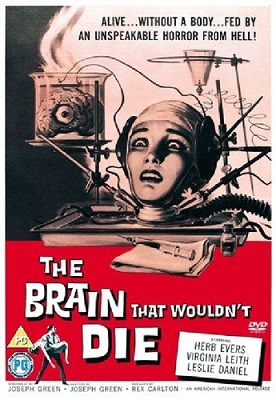 The Brain that Wouldn’t Die, Joseph Green (1962, USA). One of my favourite actresses of the 1950s is Virginia Leith, who made only a handful of films, and The Brain That Wouldn’t Die is her last. She plays the fiancée of an arrogant surgeon who thinks he knows better than the entire medical profession. Of course. But then he’s in car crash and his girlfriend is killed, except he saves her head and keeps it alive in his lab at home. But she’s no good to him as a disembodied head, so he goes hunting for a suitable body for her, visiting a nightclub, and then an artist’s model. It’s not like the first time he’s done this, as there’s a monster he created behind a locked door in his laboratory, and his assistant lost an arm and he performed and arm transplant on him. Leith’s character, however, would sooner die, so she persuades the monster to attack her husband. Despite the schlock plot, and the B-movie sensibilities, this wasn’t as bad as I had expected. In fact, it reminded me of Sam Fuller’s films, it had that same sort of underbelly of society feel to it, although the scenes set in the lab with Leith’s head were an odd contrast. A superior B-movie.
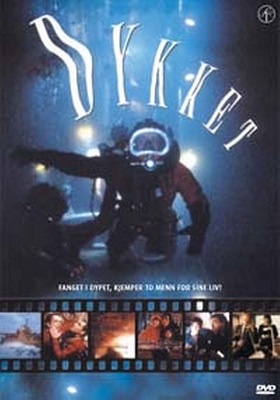 Dykket, Tristan DeVere Cole (1989, Norway). One of my “enthusiasms” over the past few years has been deep sea diving, particularly deep sea habitats and saturation diving. But there aren’t that many films based around saturation diving, and the few that do use it in passing – Sphere, I’m looking at you – tend to get it laughably wrong. But Dykket, AKA The Dive, a Norwegian/British production, is actually about divers on a saturation dive. After four months at sea, a diving support ship with three divers aboard – one of whom is Michael Kitchen! – is due to return to port for a refit. But one of Scanoil’s (a stand-in for Norway’s Statoil) sea-bed valves nearby has been turned off by a trawler’s net. The divers are due to return by helicopter to dry land, but since it’s a “bounce dive”, ie, they won’t spend long enough on the sea-bottom at 100 metres (that’s 300 feet, approx, or 10 atmospheres) to require decompression, they decide to give it a try. Of course, it all goes horribly wrong. First, one of the divers is caught in the trawler net, then the bell gets tangled up. So they’re trapped, the ship is running out of gas, and the bell’s reserves have all but gone… The version of this I watched was unfortunately lacking subtitles, and about a third of the dialogue is in Norwegian. But I knew enough about saturation diving to follow what was going on. The underwater scenes are done well, although the incidental music throughout felt more like it belonged to a Euro soap opera than a feature film. But it wasn’t bad. I’m surprised it’s never been release on DVD, not even even in this country – given it stars Michael Kitchen.
 Europa ‘51*, Roberto Rossellini (1952, Italy). Ingrid Bergman plays the wife of a wealthy man in post-war Italy. One night, during a dinner party, her young son, desperate for attention, tries to commit suicide by jumping down the apartment building’s stairwell. He ends up paralysed from the waist down. Unfortunately, he dies in hospital a few days later. Stricken by grief, Bergman gets involved with poor people, and helps them out, even taking one woman’s place in a factory for a day. But her husband objects to her activities, and has her consigned to a mental hospital, because when men don’t get what they want from their women they lock them up. The film was apparently inspired by the life of St Francis of Assisi, and Bergman certainly plays her role like a martyr. It’s an odd film, because it’s usually described as Neorealist, and for the first thirty or so minutes it doesn’t at all seem like one. But then Bergman does her ministering angel among the poor bit, many of whom are plainly non-professional actors, and it very much resembles an Italian Neorealist movie. Of the directors associated with the movement, I’ve never really been a big fan of Rossellini’s films, and there’s nothing here to persuade me otherwise, despite it being on the 1001 Movies You Must See Before You Die list.
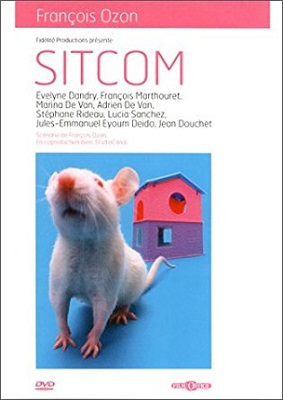 Sitcom, François Ozon (2000, France). Ozon’s films are readily available in the UK on DVD. Except this one. For some reason. There’s nothing in it I could see which would prohibit a sell-through release in the UK. And certainly nothing in it that is so unlike the rest of Ozon’s oeuvre it would preclude a release on that basis. The film concerns a family whose behaviour changes after the father brings home a lab rat as a pet. First, the son announces he is gay and completely changes his lifestyle. Then the daughter throws herself out of a window, is paralysed below the waist, and then begins exploring sado-masochism. The Spanish maid begins to act more like a member of the family than a paid servant, and her black husband, a sports teacher, starts sleeping with the gay son. The mother has sex with her son in order to “cure” him of his homosexuality. And the father eats the pet rat and turns into a giant rat. And, er, that’s it. I think the film is supposed to comment on the hermetic families which feature in US sitcoms, not to mention the anodyne humour and narrow-minded sensibilities. Unfortunately, the end result that comes across more like an exercise in trying to shock than any type of pointed commentary. And much of it is too silly to be taken seriously, anyway. I find Ozon a bit hit-and-miss, to be honest – I love some of his films, but others have struggled to keep my interest. This one falls in the latter camp.
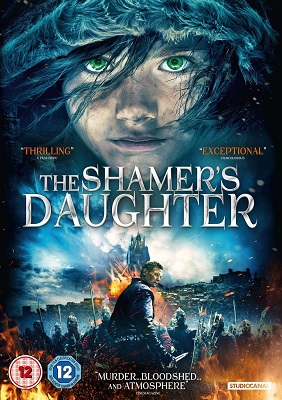 The Shamer’s Daughter, Kenneth Krainz (2015, Denmark). The king of Dunark, his wife, youngest son and unborn child are found murdered. His oldest son, Nicodemus, is found drunk and covered in blood nearby. So the Master of Law calls in a shamer, a type of witch who can see everything of which a person is ashamed, but she can’t “see” evidence of Nicodemus’s, guilt. So they fetch her young daughter… who discovers that the son is innocent and his half-brother, Drakan, is the real culprit. So then Drakan seizes power, by throwing the Master of Law down a well – and no one thinks, well, if this is how he starts out, he’s not going to be a good ruler, is he? Of course not, this is fantasy. But the shamer’s daughter, and Nicodemus, manage to escape. The daughter is quickly caught, despite disguising herself as a boy. Because fantasy is all about the girls being rescued by the boys. Sigh. However, the Master of Arms begins to understand that Drakan is a bad sort, so he helps puts together a plot with Nicodemus to rescue the daughter and their mother as they’re thrown to the dragons. (despite being Danish, this film features mountains… and dragons.) The shamer’s daughter cannot get Drakan to admit his guilt – he’s not ashamed of murdering the king and his family – so she turns her gaze on the crowd, and gets them all to realise Drakan is a baddy. In the ensuing confusion, the good guys escape. Interestingly, though Nicodemus has Drakan under his sword at one point, and could end it all with one thrust, he chooses not to, and they all run away. To a nicer place, where the shamer and her daughter are reunited with the rest of their family. The world-building wasn’t bad, and the concept of shaming was a pretty good idea, but… Drakan was a pantomime villain, and it beggared belief that everyone would happily go along with his evil plans… and the title character had virtually no agency despite being the star of the story. Disappointing.
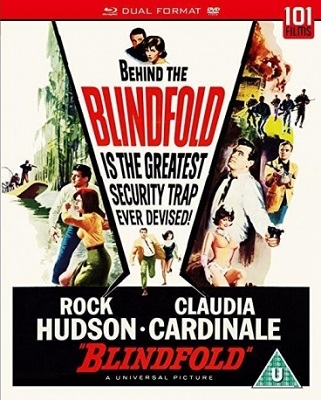 Blindfold, Philip Dunne (1966, USA). I could watch Rock Hudson in pretty much anything, but he pushes your level of tolerance sometimes. He made some outright weird stuff, and some stuff that seemed odd at the time but later turned into a classic, and some some thrillers that might have passed muster back then but really haven’t aged well. Like this one. Hudson’s performances are always watchable, and I now find him far better than Cary Grant, who seem to go from galumph to tea-bag tanned louche overnight in the mid-1950s. Hudson plays a psychiatrist who is recruited by the military to analyse a Soviet defector who refuses to talk. He is blindfolded and taken from New York to a house in the Louisiana swamps. Then someone else turns up and convinces him the general who recruited him is a fake, and he needs to rescue the defector. But Hudson has no idea where they’re keeping the defector because blindfold. It all gets a bit confusing, and ends up with Hudson on the run, with the female lead, Claudia Cardinale, a nightclub dancer, of course, and the sister of the defector… They’re chased through the Louisiana swamps at night, and even though it’s done in a studio, it’s quite effective. But this is a pretty ordinary mid-sixties thriller, and not even its stars can do much with the material. Disappointing.



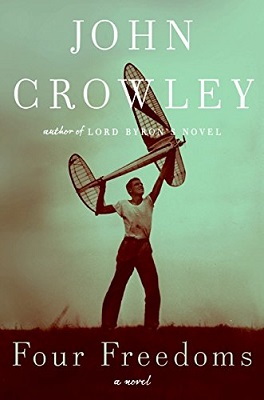


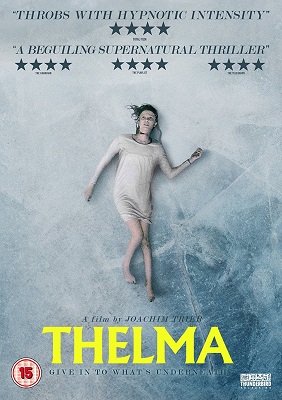

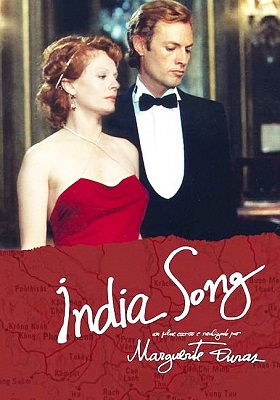
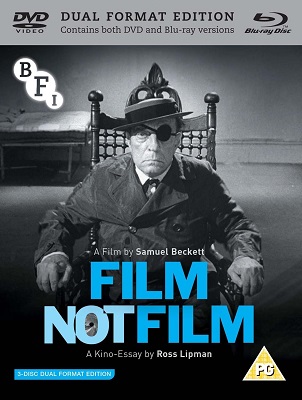

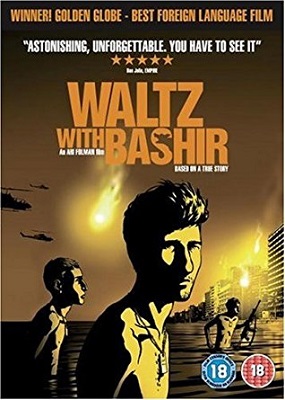

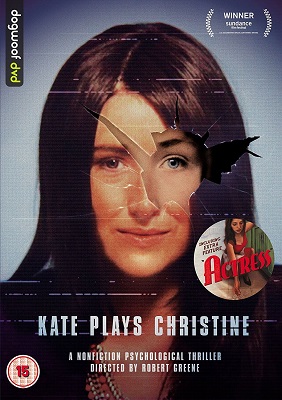


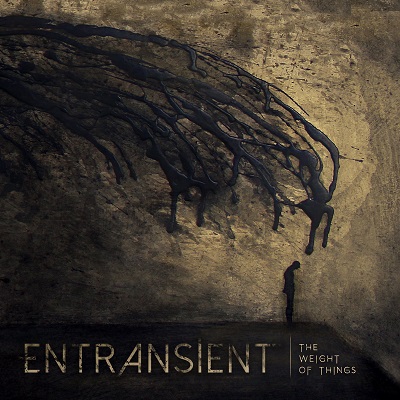


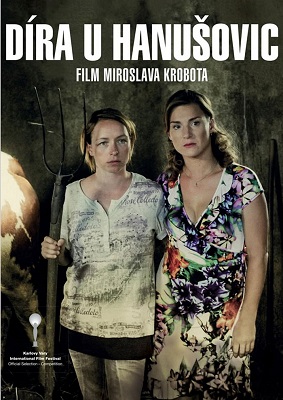
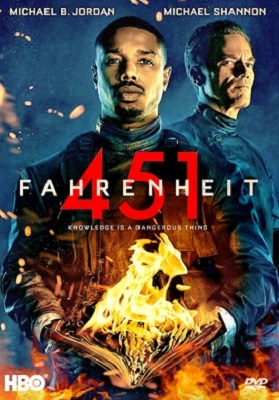


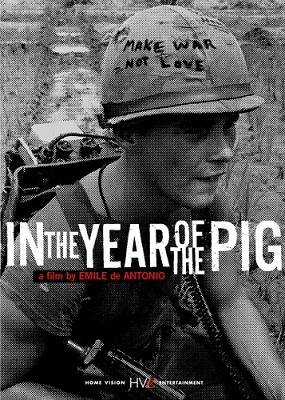
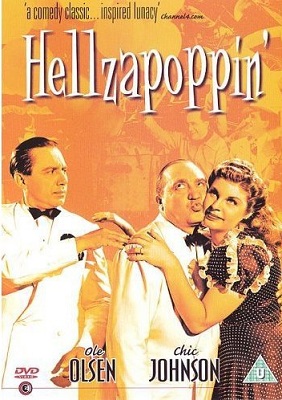
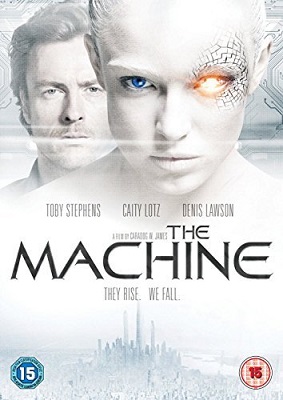
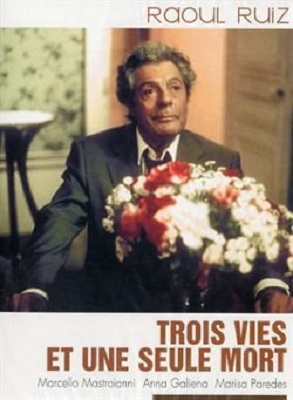


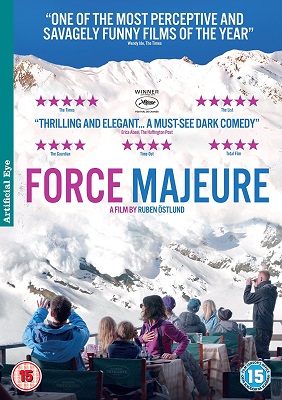
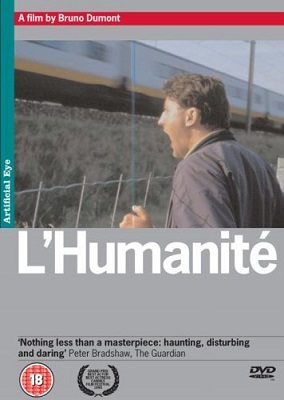
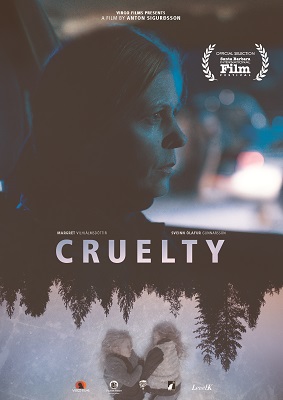


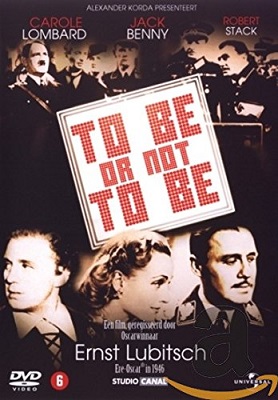
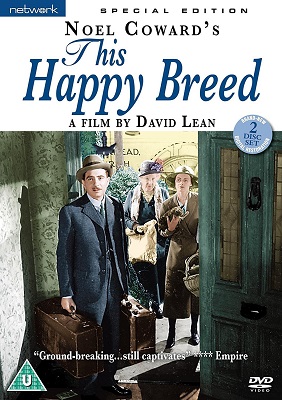


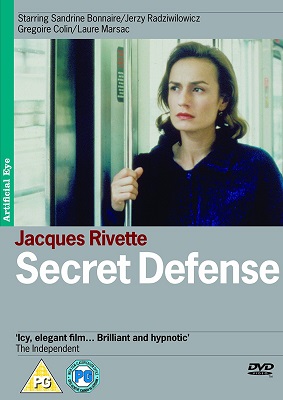

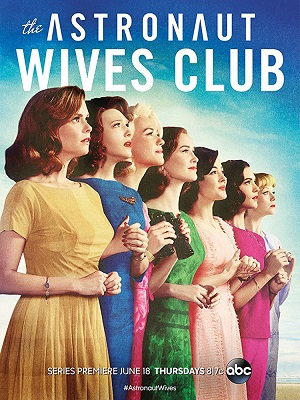
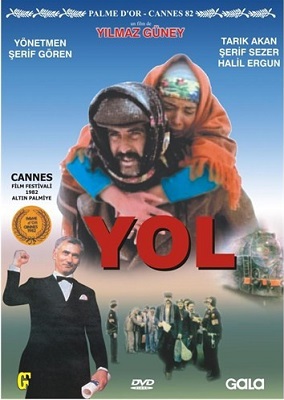

 It Doesn't Have To Be Right...