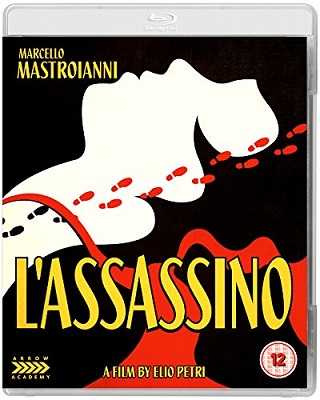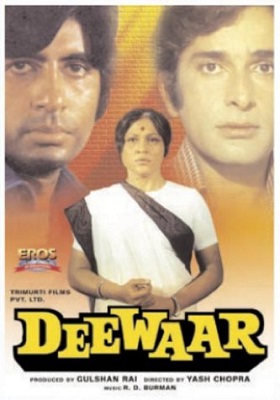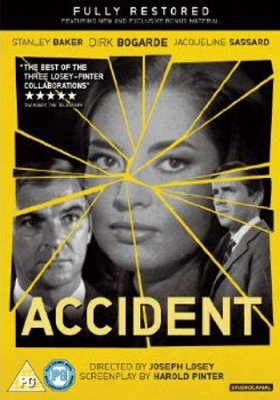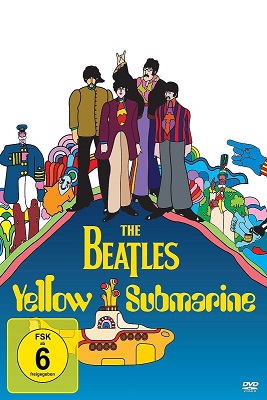
It Doesn't Have To Be Right…

… it just has to sound plausible


2 Comments

Moving pictures 2018, #53

I think I’m starting to suffer from Film Fatigue. I’ve watched so many movies so far this year, I find my attention wandering when I have one playing. So I tried watching television series instead. During August and September, I worked my way through all the past series of New Who, after finding them available on the BBC iPlayer. I was surprised to discover that of all the Doctors since the relaunch, I much preferred Matt Smith. I also tried watching the first season of Andromeda, but I’m not sure how much of it I can take. I like the central premise, and even one or two of the characters, but all the Nietschean bollocks is hugely annoying, not to mention the constant use of twentieth-century cultural references… But then it went and disappeared from Amazon Prime when I was only about ten episodes in. Oh well.

Anyway, here’s another half a dozen movies. I’m a bit behind on these posts, but once I’ve cleared the backlog, I think I’ll slow down a bit on them.
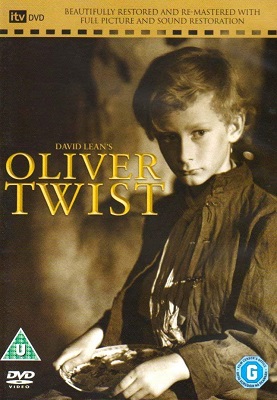
Oliver Twist, David Lean (1948, UK). Although this had been on my list to watch for many years, I’d made no effort to seek it out. So it was good it popped up on Amazon Prime. And an excellent transfer too. I don’t know the book – I’m not a Dickens fan and have read only Great Expectations – although, being English, I’m familiar with the story, as Dickens’s more popular novels are pretty much defining parts of English culture. Oliver Twist is set among the workhouses of Victorian England, and anyone who thinks we  should return to that is a total scumbag and I would quite happily knife. Just point me at them. (Quick note for the police and security services: that’s not an actual threat, although when you finally get around to criminalise thoughts I might have a few problems justifying it…). Anyway, Oliver’s mother dies in poverty and he’s given to a workhouse. After being persuaded to ask for more food – “Please, sir, I want some more.” – he’s apprenticed to a funeral director, where he’s not treated like a slave, but it’s not much better. But he attacks a fellow servant, is promptly whipped, and so runs away to London. Which is where he ends up in Fagin’s gang. The film was criticised on its release for Alec Guinness’s antisemitic portrayal of Fagin. Lean’s defence was that the make-up was intended to make Guinness resemble George Cruikshank’s illustrations from the story’s first appearance. But it doesn’t wash. Cruikshank’s illustrations may well have been antisemitic; Guinness’s portrayal certainly is. The story ends with Oliver being adopted by a family who turn out, amazingly coincidentally, to be the parents of his mother, who had run away from home after becoming pregnant. Oh, and Bill Sykes murders Nancy, but he then accidentally kills himself by falling off a roof trying to escape an enraged mob. The story relies too much on melodrama and coincidence, but Lean’s treatment of it is excellent. His Victorian London is every bit as scary as it would appear to a young boy, and deliberately so. The adult characters are caricatured, not just as written by Dickens, but also visually. I can understand why the film is so highly regarded, and I wouldn’t be surprised to learn that it’s only the depiction of Fagin that kept it off the 1001 Movies You Must See Before You Die list.
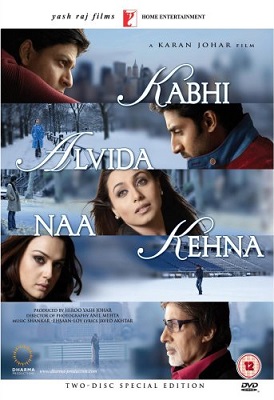
Kabhi Alvida Naa Kehna, Karan Johar (2006, India). This Bollywood film was lent to me by my mother, who has a completely uncritical approach to film watching. Our family connection to Scandinavia means she now watches a lot of films and television from that region, and she’s not at all phased by watching anything with subtitles. I’ve also recommended so many foreign films to her she tends to looks at the story first and not the language. Which, to be honest, hardly applies to Bollywood films as they all have the same plot: boy meets girl, boy loses girls, boy gets girl back again. And Kabhi Alvida Naa Kehna sort of follows the formula, except for being set in New York and being about adultery and two relationships that are consequently split apart. Shah Rukh Khan is a successful footballer in the US. He meets Rani Mukerji at her engagement party (his mother is doing the catering). Shortly after curing her of her last-minute nerves, he’s hit by a car and his football career is over. Four years later, Khan is a little league football coach, while his wife is a successful editor of a fashion magazine. Mukerji is a teacher, and her husband runs a successful PA agency. Meanwhile, his mother and her father have met up and started dating. Which brings Khan and Mukerji together, and their friendship soon turns into something else. There are many words you can use to describe Bollywood, but “bittersweet” is not a common one. But that’s what Kabhi Alvida Naa Kehna feels like. It takes a while before the two leads finally get together, and they’re all too aware of the fact they’re married to other people. Khan and Mukerji make a good couple, and the supporting roles are well played. It’s a polished piece, more so than many of the Bollywood films I’ve seen. It would probably make a good introduction to Indian cinema to those wanting to try it.
Twelve Chairs, Tomás Gutiérrez Alea (1962, Cuba). I’ve a feeling there’s a British film which covers the same territory as this, but perhaps it’s just because it’s such a familiar story. The matriarch of a wealthy Cuban family hides the last of her wealth in one of twelve “English” antique chairs. The rest of the film follows her descendants’ attempts to track down the correct chair and so recover their fortune. It smells like an Ealing comedy. But it’s not presented like one. Mostly. It’s Alea, of course, who directed a number of Cuban comedies during the 1960s, although it’s clear here where his inspirations lay. At least it was to me. But perhaps that was because I’d watched a bad British farce starring Alfred Marks – and Bob Monkhouse! And Anna Karina! – only a few days earlier. In many respects, Twelve Chairs seemed of the same comedy tradition as that which led to the UK film (and both were released in the same year). Which is obviously why I’m almost half-convinced there’s a British film with a similar plot… I’ve seen several Alea movies, but this I thought lightweight stuff compared to them. It was only his second feature-length film, and I’ve not see his first, Stories of the Revolution. But he made Death of a Bureaucrat (see here) and Memories of Underdevelopment (see here) a few years later, and they’re both excellent.
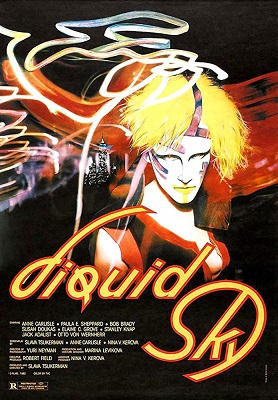
Liquid Sky, Slava Tsukerman (1982, USA). I’d heard of this film years ago but never expected to see it. But then a copy popped up on Amazon Prime for free, and it was a good – no, an excellent – transfer… And you know what, it’s actually a bloody good film. Very eighties. Amazingly eighties. I had thought the most eighties film on the planet was Andrzej Żuławski’s L’amour bracque (see here), but I was wrong. Liquid Sky is as fucking eighties as it gets. Anne Carlisle, who plays both the male and female leads, is especially impressive. It’s not like the acting is good throughout, it is in fact mostly terrible, and the plot is total nonsense. There’s a tiny flying saucer, which looks really fake, and lots of parties where people sneer at each other in a very eighties way, and lots of drugs and arguments about drugs. None of it hangs together, but then it’d be a surprise if it did. Carlisle has considerable screen presence in both of her roles. And yet… it’s the 1980s as we see it depicted in film and television, but it’s not the 1980s I remember. I mean, I was there, I even remember a lot of the cultural moments – Duran Duran first appearing on Top of the Pops, Spandau Ballet with those ridiculous rugs over their shoulders, all the “greed is good” stuff, shoulder pads, Dynasty, Bowie, all that shit. I was there. And while Liquid Sky seems to capture the decade’s essence, it isn’t really an accurate portrayal. But that, I think, is the point, and much of the appeal. They say if you can remember the 1960s, you weren’t there; but I suspect if you remember the 1980s, it’s the later depictions of it you “remember”, not the actual decade. It’s been entirely confabulated. The same will likely happen to the current decade – because, seriously, the shit that’s going down now? You could not make it up.
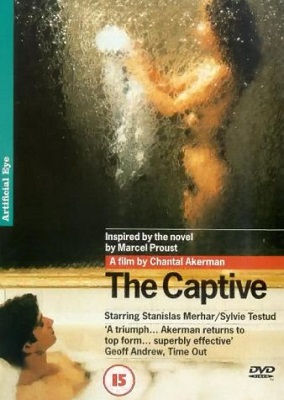
La captive, Chantal Akerman (2000, France). I need to watch more Akerman. I’m not really sure what to make of her. I mean, Jeanne Dielman, 23, Quai Du Commerce, 1080 Bruxelles, is a particular type of film and an excellent one too. But it’s almost plotless and just recounts the life of its titular character. La captive, on the other hand, is narrative cinema, with a plot… although that may be too strong a word. A young man lives with his grandmother and his girlfriend, and he is totally controlling. He follows his girlfriend, making sure she is doing what she tells him she is doing, and he is only capable of having sex with her when she is pretending to be asleep. I will admit I was not concentrating all that much as this film – a rental DVD – was playing, and so I came away from it with an impression of a movie that was much like other French dramas of its time, such as those by Godard – a personal drama, shot cheaply on a single camera, without any expansive, or expensive, shots, just the two main characters talking to, or at, each other as they performed everyday actions. In fact, now I think back on it, there was a lot that reminded me of Godard’s twenty-first century films, although perhaps not so experimental – although Akerman was certainly experimental during her career, cf the aforementioned film by her. I need to watch more Akerman. She directed around thirty feature films, but only La captive seems to have been released on DVD in the UK (Jeanne Dielman, 23, Quai Du Commerce, 1080 Bruxelles is a UK edition of the US Criterion release). I suspect she is another director, like Marguerite Duras, who, despite their reputations, have seen only limited sell-through release in the UK because of their gender. That really needs to change.

The Adventures of Juan Quin Quin, Julio García Espinosa (1967, Cuba). If there’s one thing that’s become clear about Cuban cinema from the dozen or so Cuban films I’ve watched over the last year or so, it’s that they don’t think kindly of their pre-revolutionary days and yet made numerous movies set during those times. Especially historical ones. Amada, for example, (see here) is based on a 1929 novel; two of the three sections of a favourite film, Lucía (see here), are set in the 1890s and the 1930s; and Cecilia (see here) is adapted from a novel published in 1839… On the other hand, Death of a Bureaucrat (see here) pokes fun at the apparatchiks created by the Revolution. The Adventures of Juan Quin Quin, however, is set before the Revolution, but it’s not clear exactly when. The title character is a bit of a chancer who tries a variety of ways to make money, but is eventually declared a bandit by the authorities. Although I may have that wrong. The film opens with Juan Quin Quin cornered in a wheat field by the army. They set fire to the field in order to either smoke him out or kill him. He survives and evades capture. The rest of the film may be flashback, I’m not entirely sure. Because Quin (or perhaps Quin Quin) is next at a cock fight and is inspired to open a bullring. He approaches a circus owner for a bull, ends up working for him, and steals his lion. He then bounces from career to career, at one point ending up playing Jesus Christ in a circus (and the presence of two go go dancers in this section suggest at least one reason why films set in pre-revolutionary Cuba might have been popular in post-revolutionary Cuba…). And, of course, film, especially comedy, was a perfect vehicle for political allegory. At one point during the circus section, a fakir (played by Quin) lies down on a bed of broken glass. The ringmaster asks for volunteers to stand on the fakir’s torso. A large man in military uniform volunteers himself and seems determined to jump onto the fakir’s chest. It’s not the most subtle of metaphors… Quin ends up running a plantation, which brings him into conflict with the owner, and so the authorities, leading to his final career as a bandit, which circles back to the opening sequence… The Adventures of Juan Quin Quin was apparently entered into competition at the 5th Moscow International Film Festival, but lost out to a tie between The Journalist by Sergei Gerasimov and Father by István Szabó. Also entered, incidentally, from the UK was A Man For All Seasons.

1001 Movies You Must See Before You Die count: 931

1 Comment

Moving pictures 2018, #52

I’ve not been chasing films from 1001 Movies You Must See Before You Die the last couple of months, so the number of films I’ve seen from the list hasn’t changed for a few weeks. I’m not entirely sure I want to complete the list. After all, it’s “Before You Die”, which sort of suggests that if you do watch them all, well… Anyway, instead it’s the usual odd mix, including two recent films from Russia, both found on Amazon Prime, a pseudo-documentary from the 1930s, a Hungarian drama, some anime, and, well, I’m not entirely sure how to describe the last film – except, perhaps, that I loved it so much after watching the rental than I bought my own copy…

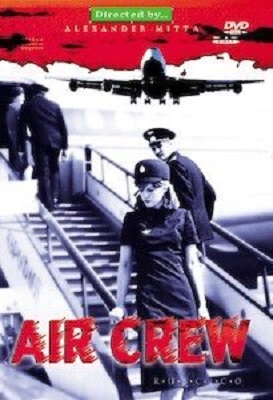
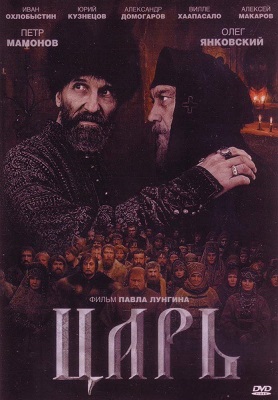
Tsar, Pavel Lungin (2009, Russia). Lungin is the director of the excellent The Island (2006), which seems to be the only film by him that’s been released on DVD in the UK (it’s currently deleted and searching for it by title on Amazon returns nothing; fortunately, I have a copy). Tsar I found on Amazon Prime, and judging by the subtitles, it’s a Russian release. I’ve found a number of Russian films on Amazon Prime, clearly from Russian distributors, from 1947’s Cinderella (see here) through Moscow Doesn’t Believe in Tears and Kin-dza-dza (both of which I already own on DVD) to Air Crew (see here) to Battle for Sevastopol (see here). The thing I remember from The Island is mostly slow cinema, beautifully-framed shots of the monastery at which the film was set. Tsar seems more traditionally framed as a Russian historical film, although there are definitely hints of Tarkovsky at times. The title refers to Ivan the Terrible – the film takes place between 1566 and 1569 – and he’s not so much terrible as completely bonkers and a total psychopath. He invites his friend, the abbot of a monastery on the Solovetsky Islands, and asks him to become Metropolitan of Moscow, ie, leader of the chief diocese of the Russian Orthodox church. The abbot initially refuses, but then agrees, hoping to temper Ivan’s cruelty. But he fails. Later, Ivan strips the Metropolitan of his rank and has him imprisoned in a monastery. This is no slow cinema. Like The Island, its story explores a clash between two views of religion; but it depicts a grim and brutal world, mostly closely-framed. And with a very convincing mise en scène. On the one hand, the tsar’s madness seems to be driven by a fear the world is about to end and the Last Judgement is imminent, and that’s why he’s instituted the oprichnina – culminating in the movie in Ivan being given a guided tour of a “torture camp”, where his enemies will be strapped to various death machines while people wander about enjoying the “spectacle”. Meanwhile, the ex-Metropolitan performs a miracle and escape his chains – and heals his jailer – but even as a saint, or even an ersatz Christ, he can’t cure the tsar of his madness, or prevail against him. Films like this are definitely two-handers. Pyotr Mamonov, who plays Ivan, is especially good, and the abbot, Oleg Yankovskiy, exudes an impressive quite dignity throughout. While Tsar didn’t grab me initially as much as The Island had done, perhaps because its setting isn’t as striking, it turned out to be engrossing. Much as I like Eisenstein’s Ivan the Terrible Part 1 and Ivan the Terrible Part 2 (the latter more, I think, than the former), they do feel a bit pantomime in comparison to Tsar. Recommended.

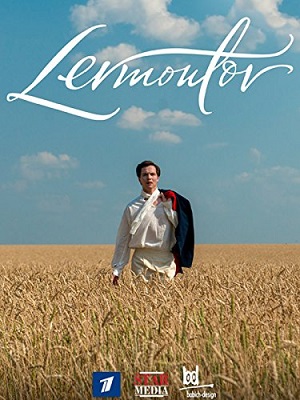
Lermontov, Maksim Bespalyy (2015, Russia). I’ve watched a film about a nineteenth-century Russian author before and ended up buying a book by said author, and after watching Lermontov I had a burning desire to read his most famous novel, A Hero of Our Time. Like Tsar, this is a Russian film I found on Amazon Prime, although it’s a made-for-TV movie so I don’t think it’s ever been released on DVD. It certainly hasn’t in this country. And yet it’s a good piece of work, telling Lermontov’s story with some clever use of graphics as intros to each new chapter of his life. It is all too easy, I’ve found, for Russian historical films to treat their subjects in much the same way the BBC does, relying on a good cast and well-dressed sets. This is not, of course, limited to either British or Russian historical dramas. Lermontov sticks mostly to this but rings a few changes inasmuch as it uses Lermontov’s own writings as a motif for graphics which advance the story, and also tries to marry together the stories of his poems and novels with the events in his life. It works really well. The graphics are cleverly done, and the interplay between fact and fiction prevents the film from becoming too dry. Lermontov, by all accounts, was privileged and arrogant, and like many talents of previous centuries whose works we continue to admire he seemed to create real art more by accident than design. He was convinced of his own superiority, so it’s no real surprise he died aged twenty-seven in a duel. Worth seeing.

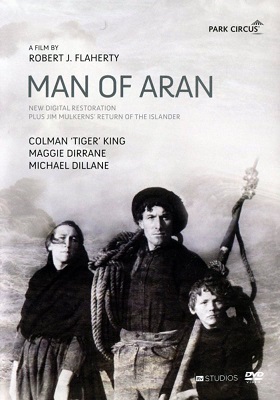
Man of Aran, Robert J Flaherty (1934, Ireland). The Aran Islands are off the west coast of Ireland, just outside Galway Bay. Man of Aran purports to document the life of those who live on the islands. Although made in the 1930s, the life it depicts actually ended some fifty years earlier – leading many to dub the film “ethnofiction”, much like the documentaries of Jean Rouch. Which sort of makes you wonder about the point of it all. There is, for example, a moment in The Epic of Everest (see here) in  which a long-distance tracking shot follows George Mallory’s second attempt on the peak of Everest. And from which he never returned. His body was not found until decades later. There’s a similar mechanism at work in Herbert Ponting’s The Great White Silence (see here), although both are actual eyewitness film chronicles (although the latter makes use of model shots to show Scott’s mission to the South Pole). My point being, I suppose, that the films of Ponting and Noel were actual footage of the historical event they depicted… while Rouch had a tendency to stage the events he wanted to depict, as did Flaherty in this film, and so were labelled “ethnofiction”, you can on the one hand acknowledge the truths they want to document while at the same time wondering just how true those “truths” are… The problem with ethnofiction, in other words, is how reliable is the narrator? Is the film-make “faking” something he knows to be true? Or otherwise. Because making a point by emphasising one aspect of something is still faking it. Did the Aran Islanders really catch sharks as depicted? By the time the film was made, almost certainly not. It’s a slippery slope and I’ve no idea how you judge it. I’m a huge fan of the work of Aleksandr Sokurov, who melds fiction and fact in his films in a way which makes any distinction between the two meaningless. Francofonia is a straight-up mix between the two, but Confession pretends to be the diary of a real person who repeatedly quotes a work of fiction. It’s one reason why I love early documentaries, which are so explicitly fact, and the films of Sokurov which are so clearly extensions of fact… but I find it hard to deal with films which are distortions of fact from early decades…

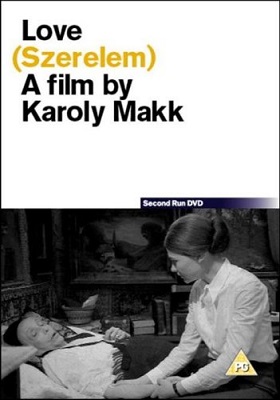
Love, Károly Makk (1971, Hungary). I have a lot of time for Second Run. They’ve released some excellent films from around the world, including some by a favourite director of mine, who also happens to be Hungarian, Miklós Jancsó. I’ve not seen as many Hungarian films, despite Jancsó – eighteen, compared to fifty-six Polish films, for example – so I’m not as well informed on the country’s cinema, although I suspect Jancsó is less typical of it than Makk, likewise Béla Tarr… although did, perversely remind me of films by Polish directors and even one or two by Czech directors (especially Ucho, see here). In Love, a woman’s husband has been arrested as a political prisoner. Afraid this will adversely affect his ill mother, the wife pretends he has been sent to New York for work, and so make up letters from him which she reads to her mother in law. At various points in the story, the film uses flashbacks to explain what is being referenced in the letters. It’s mostly a two-hander, with the wife and mother in law, and the former is especially good. It comes across as very much a film of its time, but not in the sense it’s capturing a particular zeitgeist or period of fashion, but more as a snapshot of a regime and its impact on those on which the regime was imposed. The only revolution in the UK’s history that wasn’t ruthlessly put down was the Industrial Revolution, which tends to suggest “revolution” is the wrong word to describe it. (The English Civil War was hardly a revolution, given Oliver Cromwell was born into the aristocracy.) On the other hand, neither has the UK been occupied as Hungary was by the USSR. It makes for a disconnect, but it also makes it doubly important that such films are made available to a British audience. We  take our freedoms for granted because we cannot recognise when they are being curtailed. To be fair, tanks have appeared on the streets of British cities, and decades later it’s as if it never happened… But films like Love are important because they remind us that totalitarianism is a thing and has a personal cost and that we’re only a heartbeat away from it. I would sooner popular cinema depicted the perils of fascism instead of normalising it; I would sooner Hollywood spent more time depicting the perils of our current political climate instead of convincing everyone the world was a violent place in which might was right. We’ve known now for a couple of decades that US geopolitical dominance has been bad for planet Earth, but I maintain US cultural dominance, for just under a century, has probably been more damaging. Two hundred years from now, historians will probably look back at the twentieth-century as a noble social experiment, born in two world wars, which the US managed to comprehensively fuck up, while still managing to put twelve men on the Moon….

Princess Arete, Sunao Katabuchi (2001, Japan). If you were to wonder if a friend had lent me this particular film, you’d be right. It’s not my usual fare, any any means – and while I have enjoyed many anime films, the cartoon-ish nature of the art in this movie, as displayed on the Blu-ray cover, would normally put me off. Except, of course, the actual film looks nothing like that and much more like something made by Studio Ghibli. Well, perhaps a more simplified style than that of Studio Ghibli. Some of the backgrounds appear more painted, and indeed more detailed than the characters. It’s an effective technique, and one used in my favourite Ghibli film… But this film is not by them and it’s unfair to keep on mentioning them. Story-wise, Princess Arete presents itself as fairy tale that follows the typical template – a European one, that is, not Japanese. There’s a princess whose father keeps her hidden in the castle until a suitable suitor is found for her, but who sneaks out at night for adventure. But then a suit he can’t refuse, a wizard natch, comes along and takes the princess away. And it turns out the wizard is immortal but a prophecy says a princess called Arete will kill him. As Arete tries to escape her new prison, so she discovers more about her suitor and, of course, unwittingly sets in motion the chain of events which kill him and so render the prophecy true. Princess Arete, however, rings a few changes on the template. The title character has far more agency than is usual, and it is her direct actions which bring about the resolution. There’s also a Japanese slant -story-wise and visually – to some of the events in the last act of the film. The version I watched had only French language, or Japanese language with English subtitles, versions – and while the latter is more, well, correct as it’s a Japanese film, it apes European fairy tales and fantasies so well you expect it to be in English. I have zero problem with watching films in their original language with English subtitles, even when English dubs are available (like for many giallo films), I actually prefer it in fact, but with Princess Arete there’s a slight disconnect between what you see and what you hear. Even so, a good anime and worth seeing. Nice soundtrack too.

Shirley: Visions of Reality, Gustav Deutsch (2013, Austria). What this film is, is easy to describe. But what this has resulted in, is difficult to get a handle on. Simply put, Deutsch as taken thirteen of Edward Hopper’s paintings – but not, sadly, ‘Night Hawks’ – and from them stitched together a narrative about a woman called Shirley, from the early 1930s through to the late 1960s (although she does not appear to actually age during the 30 years). As a piece of art, it works amazingly well. Stephanie Cumming in the title role does little more than play a life model, but her voiceover provides all the drama that is necessary. The mise in scène artfully copies Hopper’s paintings: sometimes only momentarily, in other scenes for several minutes at a time. It looks gorgeous, despite the artificial simplicity of the set dressing. I rented this film and loved it so much I bought myself a Blu-ray copy (actually, it’s a dual format edition). It was worth it. I suspect the film will make my top five for the year. Highly recommended.

1001 Movies You Must See Before You Die count: 931

2 Comments

Moving pictures 2018, #51

Another eclectic bunch of movies in this post. Six films and four countries, half of which are Anglophone. I’ve seen films by four of the directors – Greengrass makes good action films, but they’re not my thing, and I’ve never been a fan of Bresson’s work, for all his critical acclaim. Anyway, see below…

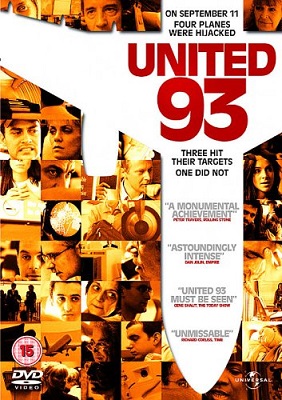
United 93, Paul Greengrass (2006, USA). I was living in Abu Dhabi when the World Trade Center was attacked. From what I remember, I was at home – I’d finished work a couple of hours earlier – when I heard on the radio that a plane had hit one of the towers. I turned on CNN and watched as the second plane hit the South Tower. The world changed on that day – and not for the better. And now, seventeen years later, there’s little doubt who has done more damage in the years since: the US. The Middle East is pretty much fucked up completely, and even the Arab Spring seems to have failed to improve things. Which is not to say the UK does not deserve its fair share of the blame. Wars will continue to be fought as long as people are willing to sell the combatants weapons – and it wouldn’t surprise me to learn that many of the ultra-rich are pretty much war criminals in that regard. Anyway, United 93 is the most celebrated film about the events of 9/11 (an event which has been treated surprisingly rarely in film and television, although it’s far from uncommon in literature). United 93 is named for the one flight of the four hijacked which failed to hits its target, and that was because the passengers aboard fought back against the hijackers and managed to overpower them, albeit too late to prevent them from crashing the aeroplane. United 93 uses a lot of the actual people who were part of events, and a cast of relatively unknown faces in other roles. I don’t have a problem with non-professional actors, particularly in films that are trying for a documentary feel, as this one is. In fact, often dramatisation through the use of actors robs the depicted events of their authenticity. Greengrass, however, successfully keeps everything very real. But what had not occurred to me before watching this film, and which surprised me, was quite how brutal it was. It’s not just the raw emotion of the scenes aboard the eponymous flight, but also the violence when the passengers take back control. United 93 is on one or the other of the 1001 Movies list, although I don’t recall offhand which one. I think it belongs on the list, and not just because of its subject matter. True, such an important event in world history should be represented, but United 93 does it in a way that successfully evokes the emotional turmoil of 9/11. Which is why it should be on the list.

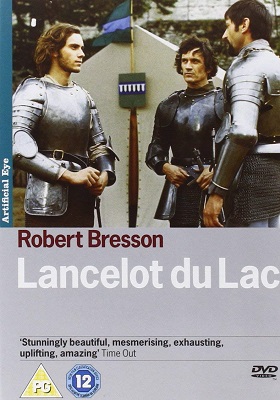
Lancelot du Lac, Robert Bresson (1974, France). Bresson is a highly-regarded director – he’s a favourite of my favourite director Aleksandr Sokurov, for example – but even after seeing some of his most celebrated films I’m not entirely sure I “get” his work. And yet, he does things I like in other directors’ films. In Lancelot du Lac, for example, he uses a mostly non-professional cast. He’s not the first French director to do that – I’ve a feeling Jacques Rivette did, but looking up his films apparently not – but I’m pretty sure some French director, beside Bresson, made extensive use of non-professional actors. Which is, to be fair, a comment more on my bad memory than it is this movie. The film covers the main points of the Lancelot / Arthur / Guinevere legend, focusing particularly on the Lancelot’s relationship with Guinevere. A bad thing, obviously, as she was Arthur’s wife at the time, and a part of the mythos that feels more invented than the rest of it, if only because an adulterous queen feels like imposed commentary (and misogynistic commentary at that, given Guinevere is just about the only woman mentioned in the mythos). The setting doesn’t really convince – if anything, the cast look more like Larpers in a French wood than actual knights of the Round Table. King Arthur also appears a little too saturnine, and more resembles a villain than Mordred. There have been plenty of films made about the Matter of Britain, from musicals to Roman re-imaginings to Guy Ritchie’s mockney mediaeval fantasy. I don’t think any of them have been any good, or presented interesting treatments of the mythos. I think perhaps the most interesting one that comes to mind is a book, and that’s Kazuo Ishiguro’s The Buried Giant. Maybe someday someone will make a good King Arthur film. This one certainly isn’t it.

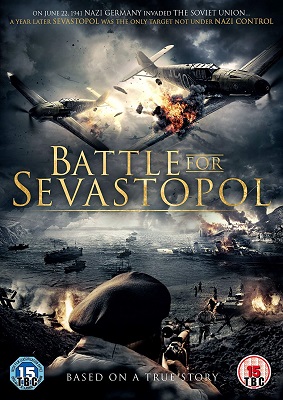
Battle for Sevastopol, Sergey Mokritskiy (2015, Russia). I’d tried half a dozen films on Amazon Prime but given up on each after ten minutes as they were either really bad or I wasn’t in the mood to watch them. But Battle for Sevastopol pretty much dragged me in from the opening minutes, and I find it slightly worrying that I should find a war film more engrossing than the other films I tried watching. Although perhaps that says more about those other films… Anyway, Battle for Sevastopol is based on the true story of Lyudmila Pavlichenko, a Soviet army sniper who killed over 300 men and survived the siege of Sevastopol. The film opens in 1957, with Eleanor Roosevelt visiting the USSR and asking her minder to let he visit an old friend. The film then flashes back to 1942where Pavlichenko is being introduced to an audience in the US. She is there to drum up support (financial, of course; also armaments) for the USSR – this is after the siege, incidentally. Eleanor Roosevelt, on meeting Pavlichenko, takes a shine to her and invites her to stay in the White House. The film then flashes back again, this time to just before the war. Pavlichenko is studying history at university. Annoyed when some male friends are trying to show off on a rifle range, she insists on having a go herself. She proves to be a crack shot. She is sent off to sniper school – even though war has yet to break out. War breaks out. She serves on the Eastern Front as a sniper. The battle scenes are done extremely well. The film flips between Pavlichenko’s wartime experiences – including the loss of her lover, and the loss of a second lover – and her time in the US. I’m not a big fan of war films, although I’ve probably seen all the big WWII ones over the years – it was a popular subject in the 1950s  and 1960s… Not only is Battle for Sevastopol told from a perspective not often seen in Anglophone cinema – if at all – although it’s a little sanitised, after all Stalin killed more Russians than Hitler did, but it also tells its story from an interesting viewpoint: a female sniper. The special effects are pretty much what you would expect for a big budget of the second decade of the twenty-first century; and if the Americans in the film mostly have weird accents, that’s hardly a deal breaker. Worth seeing.

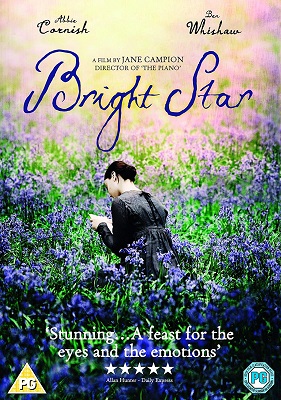
Bright Star, Jane Campion (2009, UK). I remember years ago – back in the 1980s some time – reading a Tim Powers novel and discovering that the Romantic poets were quite fascinating people. I certainly hadn’t learnt that at school when I’d studied Wordsworth’s The Prelude for O Level. I’m not sure who led the most interesting life of them, Byron probably, or the Shelleys perhaps. But Keats is a possibility, a doctor who was also a lauded poet, and who died young, at the age of twenty-five, of tuberculosis. Literature, especially poetry, venerates creators who die young. I’ll admit I know little of Keats’s poetry – I vaguely remember ‘To Autumn’ from school – and what I read after seeing this film I thought pretty awful. I didn’t, to be honest, think much of the film either. It recounts Keats’s betrothal to Fanny Brawne, the daughter of his neighbours in Hampstead Heath. Unfortunately, Brawne is played by Abbie Cornish, who has a noticeable Australian accent. And Keats’s housemate, Charles Brown, is played by an American actor who puts on a Scottish accent, despite Brown apparently being from Lambeth. Keats, incidentally, is played by Ben Whishaw, who is of course the voice of Paddington. While Bright Star does a good job of presenting early nineteenth-century England, the cast aren’t entirely convincing, and the story is extremely dull. Meh.

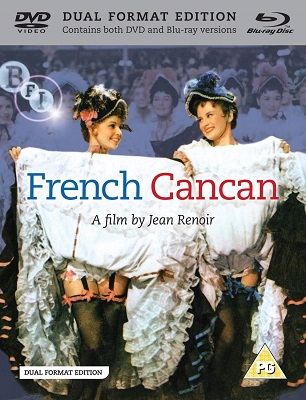
French Cancan, Jean Renoir (1955, France). Jean Renoir, he made films like La grande illusion, Boudu saved from DrowningLa Règle du jeu… The last thing I’d have expected him to make is this over-colourised fluffy French mid-fifties musical. The title pretty much says it all. It’s 1890s Paris and a nightclub owner’s business is failing, and his main attraction, a belly dancer, is not pulling in the punters. But then he discovers that the cancan is still being performed in Montmartre, so he decides a cancan chorus is just what he needs. As is usually the case in these sorts of films, he manages to magic up the cash for a new nightclub – he calls it the Moulin Rouge – plus costumes and props for a chorus of cancan dancers. One of which proves to be a star and draws in the punters. It’s based on a true story, of course, but it does seem the bulk of the problems he encountered were emotional. I’m not even sure if this is one for fans of Renoir or French musicals. It’s definitely colourful, very colourful. Meh.

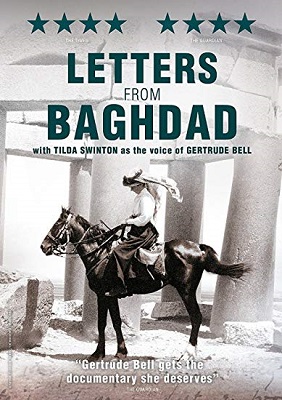
Letters from Baghdad, Sabine Krayenbühl (2016, UK). A few weeks ago I watched Werner Herzog’s biopic of Gertrude Bell, Queen of the Desert (see here), and was not impressed. I knew of Bell, but thought Herzog had been indulging in artistic licence when he showed Bell visiting Bedouin tribes in what is now Saudi Arabia. But, as I discovered in this documentary about Bell’s life, she did indeed go there. To Ha’il, a town in the Nejd, ruled by the House of Rashid (later deposed by ibn Saud). Letters from Baghdad has Tilda Swinton reading out Bell’s correspondence to her parents, interspersed with talking heads acting people who knew her and some archive footage of her or representative of what she experienced. It’s fascinating stuff, and a clever technique that prevents the film from being too dry. But then Bell led a fascinating life. She graduated from Oxford with a first in history, which was not awarded as women could not earn degrees, and was sent out to Baghdad to stay with her uncle, a British minister there. She fell in love with the country and travelled around it extensively. She learnt Arabic and made friends among the tribal leaders. She was not, however, the first foreign woman to visit Ha’il, as Lady Anne Blunt had done so a couple of decades earlier. Bell was one in a long line of British Arabists during the nineteenth and early twentieth century. Many of them, like Bell, provided instrumental in creating the nations which now exist there. Letters from Baghdad is an excellent film about a fascinating person.

1001 Movies You Must see Before You Die count: 931


2 Comments

Moving pictures 2018, #50

Work has been very busy the past few weeks, and likely to remain so for at least another month. Hence the paucity of content here other than Moving pictures posts – and the occasional Reading diary post – since they’re a) pretty easy to write, b) it doesn’t take long to watch a movie, and c) I watch two films a night on average…

I’ve never claimed these are full-on reviews, and half the time I’m just trying to string a series of vague impressions into a description that’s somewhat recognisable and, er, informative. But most of them sort of turn into mini-rants. Oh well.

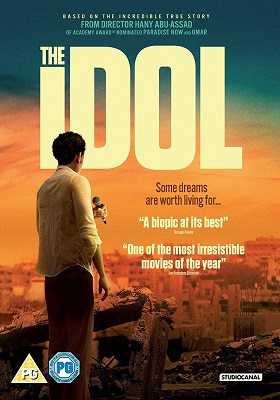
The Idol, Hany Abu-Assad (2015, Palestine). A young boy in Gaza forms a band with his sister and two friends. They play at weddings, that sort of thing. Then his sister dies of kidney failure. The story jumps ahead a decade or so, and the boy is now a young man, paying his way through university by driving a taxi. But he’s desperate to escape Gaza, and singing is his only possible means of escape. But, of course, Israel has Gaza locked up, and its inhabitants do not have freedom of movement. The young man – his name is Muhammad Assaf – arranges to audition for a Palestinian talent show, but he has to Skype his audition as he can’t leave Gaza and the studio is in Ramallah (on the West Bank). But just before the audition, the Israelis cut off power to Gaza… but Muhammad manages to source a generator; but it catches fire during the song… The “success” of the audition persuades Muhammad he needs to audition for Arab Idol, but it takes place in Cairo and he can’t get a visa to attend. He uses his contacts to get himself a forged visa, but then breaks down and admits it’s forged when he gets to the border post. When asked why he’s travelling to Cairo, he tells the border officer that he’s going to a Qur’an recital competition, and recites so beautifully when asked that the officer approves his fake visa. But when Muhammad gets to the auditions, he discovers all the tickets have gone. He breaks into the building and hides out in the toilet. In desperation, he starts singing when he hears someone else enter. The guy who hears him is so impressed by his singing that he gifts him the ticket he had queued for – he’d only applied “for the experience”. So Muhammad gets to sing in front of the judges. And he impresses them so much, he shoots up through the various stages of the competition… And all it seemed a bit too good to be true. Not the Gaza bits – they rang all too sadly true (it looks like a bombsite, basically; and at one point, a Palestinian parkour team go past, jumping from one wrecked building to another). Muhammad had, against all odds, made it to Arab Idol, but he seemed to do so well so easily in it – he was even nicknamed “the Gaza rocket”. And then it’s the Arab Idol final and there are three contestants remaining… but Muhammad Assaf looks, well, different. It’s not the same guy as earlier in the film. Because The Idol, it turns out, is a true story, and the final stages of the film show the real Assaf’s victory on Arab Idol. A postscript explains that Assaf became a UN Goodwill Ambassador and was given a diplomatic passport. But he can only visit family and friends in Gaza with special permission from the Israeli authorities, who still occupy the territory despite it being mandated to the Palestinians. What is it with right-wing governments, that they’re not happy until they’ve burnt everything down to the ground? At the rate they’re going, they’ll bring on the apocalypse before the climate or the economy crashes – both of which, of course, they’ve been happily bringing about sooner…

Death of a Bureaucrat, Tomás Gutiérrez Alea (1966, Cuba). There is a sensibility, I have found, common to those Cuban films I’ve seen, and it is mostly critical of the regime while also acknowledging its social and political ambitions, all in a blackly comic way. And Death of a Bureaucrat is a pretty explicit presentation of that sensibility. A well-respected worker is killed by a piece of experimental apparatus he has been building, and is buried with his labour card as a mark of respect. Unfortunately, it seems his widow needs the card to claim the pension she is now owed. So the son tries to get it all sorted out. But the authorities won’t allow an exhumation unless the body has been interred for more than two years without special dispensation. He digs up the body himself and retrieves the card, but now he can’t re-bury it… because it hasn’t been officially exhumed. So he still needs that special dispensation, but this time so he can bury his father. He fails to get it because the bureaucracy just sends him round in circles. Even breaking into the offices one night to steal the necessary form only results in him being chased by the police because he climbed out of a window and was thought to be a suicide. Eventually he fakes the paperwork, but the cemetery refuses to let him bury his father because he has the body with him even though he has a permit for exhumation. This results in a fight in the graveyard, and they fail to complete the funeral… The bureaucratic comedy of errors is a well-established subgenre, and it’s not just found in the cinemas of communist regimes. There have been several made in the UK, where the civil service has often been an object of fun; and possibly even a few in the US, although none spring immediately to mind (corporate versions are, I suspect, much more common in US cinema). Death of a Bureaucrat judges its absurdities well, and if one or two people are overly officious – particularly those at the cemetery – most are victims of the system as much as everyone else. I’ve seen three films by Alea now, and thought them all good. Must try and track down some more.

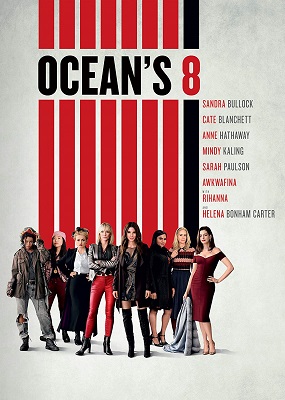
Ocean’s 8, Gary Ross (2018, USA). This was an idea just waiting to happen – an all-female heist movie – and in the hands of a less-than-stellar director, it could have been fucking awful. Oh wait, it was fucking awful. The sister of Danny Ocean (star of Ocean’s 11 and sequels) is released from prison and is determined to get her revenge on the crooked art dealer who put her there. This involves persuading a dimwitted actress (Anne Hathaway) to wear the most expensive Cartier necklace ever to one of those stupidly expensive charity dos, that cost more money than they raise, at a museum, where the sister (Sandra Bullock) plans to steal the necklace. So she recruits a bunch of people, as you do, to pull off this majorly implausible sting. Which only works because – surprise, surprise – one of the principles is a ringer. Gosh. Never saw that coming. Other than that, it’s a showcase of the sort of ridiculous meaningless affluence that makes you want to stick the heads of the ultra-rich on pikes and let off a string of EMPs over Panama. Bullock doesn’t even look human, Blanchett is completely wasted in her role, Hathaway is too smart to play dumb although she plays dumb well, and the others are a hair short of stereotypes. In all other respects, it’s your usual glossy heist flick, and while it’s good to see a female-fronted version, it would have been better if it hadn’t relied on them being used as clothes horses. It’s one of those films where it looks like the cast had a lot more fun making it than viewers have watching it – although with Bullock it’s hard to be sure. With Bullock, it’s hard to be sure of anything she’s feeling. Me, I’d have just machine-gunned everyone at the charity gala and sod the necklace.

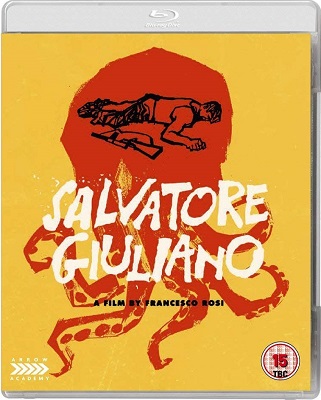
Salvatore Giuliano, Francesco Rosi (1962, Italy). The title refers to a bandit in Sicily in the latter half of  the 1940s. He started out selling food on the black market, the only way Sicilians could obtain food during and after WWII, but soon became leader of a powerful gang. He was seen as something of a Robin Hood figure, despite being wanted for killing the police officers sent to apprehend him, and being implicated in the Portella della Ginestra massacre, in which 11 people were killed and 27 injured during May Day celebrations. He was also a contributor to Sicily’s independence movement, which resulted in the island gaining autonomous status, and which won four seats in the 1946 general election but lost them in the 1948 general election. The film, however, opens with Giuliano’s death – considered suspicious even now – and then jumps back and forth in time, covering the court proceedings against the surviving members of Giuliano’s gang and the events leading up to Giuliano’s death. First, it’s worth noting that the restoration of this film has been done well – the transfer is lovely, and I can’t think of any other 55-year-old black-and-white Italian films that look as good on Blu-ray. But its a good film and worthy of the treatment it’s been given. It’s Italian Neorealist – not my favourite film movement, it must be said – but it’s also semi-documentary and uses a fractured timeline to tell its story. It keeps Giuliano something of an enigma – his character is built up from hearsay – and yet is also deeply critical of Italy’s treatment of Sicily, especially during the courtroom sequences (in which American actor Frank Wolff rants angrily in dubbed Italian). I must admit, when I stuck the film on my rental list I was expecting another giallo or poliziottesco, like Milano Calibro 9, but it’s nothing like either of them. Worth seeing.

The Shop Around the Corner, Ernst Lubitsch (1940, USA). This appears on one or another Movies You Must See Before You Die list, or maybe a They Shoot Picture Don’t They list – although not the 1001 Movies You Must Before You Die list from 2013 that I’m using – and so it seemed like it was worth seeing. Also, Jimmy Stewart. The story is set in Budapest in, er, the 1920s? the 1930s? It’s certainly not 1939, as there’s no mention of war, and it’s unlikely to be a few years before that as there’s no mention of the likelihood of war. Having said that, it’s a US film… Anyway, Jimmy Stewart is chief salesman at a prestigious leather goods store in Budapest. A young woman, Margaret Sullavan, approaches him and asks for a job. He tells her he can’t offer her one, so she goes above his head and persuades the shop’s owner to employ her. Christmas comes around and a private detective tells the shop’s owner that his wife is having an affair with one of his employees. So the shop owner fires Stewart, believing him to be the culprit. Meanwhile, Stewart has been conducting a postal relationship with a woman he met through a newspaper advert, and they’ve finally agreed to meet IRL. Guess who she turns out to be. Yes. Yawn. And of course it wasn’t Stewart boinking the shop owner’s wife after all, it was the oily creepy shop assistant. Unfortunately, discovering this prompts the shop owner to commit suicide, but he is saved by the delivery boy. Jimmy Stewart gets his job back, and gets to publicly fire oily shop assistant. And he turns up to a date with Sullavan but does not reveal he is the man she has been corresponding with. But the two get chatting and… fade to black. As rom coms of the period go, this is quite a good one, but then it has a good cast and a slightly-off-the-wall setting  – leather goods shop on Budapest? WTF? – but that setting also slightly works against it as you have to wonder why they bothered setting the story there and then. I mean, I’m all for introducing parochial US audiences to the concept that there are other nations on this planet and they’re inhabited by people very much like them (biologically at least, although it would be nice if US culture acknowledged they were different culturally), but sometimes it feels like the setting is a hangover from a previous iteration of the story and is rendered pretty much meaningless by the Hollywood treatment. Hungarians you would expect to behave like Hungarians, and only an idiot, or an American (#notallamericans), would expect their sensibilities to be exactly the same. Of course, this is a Hollywood movie aimed at a US audience… but that does again beggar the question, why set it in Budapest? I suspect  the only answer that will ever make sense is: because. The Shop Around the Corner is a fun rom com for its time, not one of Jimmy Stewart’s best pieces of work, but it will entertain.

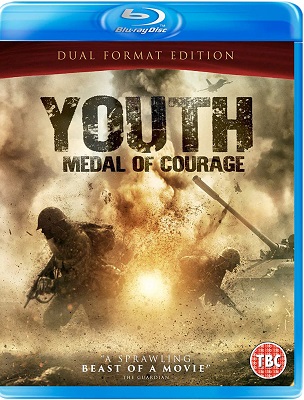
Youth, Feng Xiaogang (2017, China). The only place the subtitle of this film “Medal of Courage” seems to appear is on the Blu-ray artwork. The film is known as Youth, and in Chinese territories as 芳华 (fang hua), which apparently can be translated as “young/blooming flowers/young women”. So, Youth is sort of relevant, but Medal of Courage is completely irrelevant. So the dumb wargame subtitle is a shame, as this is a film is nothing like that might suggest but is actually totally worth seeing. The film opens in the mid-1970s when a young woman, He Xiaoping, joins an army entertainment troupe as a dancer. The first act introduces the main characters – He, who is bullied by the members of the troupe; Liu Feng, who repeatedly turns down military academy as he prefers to be a dancer than an officer or commissar; Lin Dingding, the sweetheart of the troupe, and she knows it; and Xiao Suizi, who narrates the film, and seems to often act as mediator. Liu injures his back and can no longer dance, and eventually becomes a military doctor. He Xiaoping is bullied out of the troupe and joins a military nursing unit. Both end up on the frontline in the Sino-Vietnamese War of 1979. This is act two. It is pretty brutal (and possibly the justification for the film’s subtitle), with graphic depictions of battlefield injuries. For example, a soldier is shot, but the bullet hits one of the grenades on his belt. Seconds later, he explodes messily and blood and guts rain down on all those around him. Both Liu and He survive, although Liu loses an arm to a Vietnamese bullet. He is given a medal for her work, including the care of a soldier suffering severe burns from a flamethrower (he did not survive). The third act takes place years later, in Reform-era China. Everyone has gone their own separate way. Lin married a Chinese-Australian and moved to that country. Liu is now an impoverished haulage contractor. Xiao works in a bookshop. She witnesses Liu being extorted by the local branch of commissars, who have impounded his truck and are demanding an expensive fine to to release it. Admittedly, the film sort of peters away, as Xiao then explains how Liu and He later met up and recognised they had both been damaged by their war experiences, and so sort of drifted together. But the first act is a fascinating portrait – and yes, it’s pure propaganda – of life in a military entertainment troupe, including a visit to a division in the mountains, where the performers suffered from altitude sickness (as, apparently, did some of the film’s cast). If you like war films, and the gorier the better, then act two will appeal. I’ve seen reviews that declare act three unnecessary but I don’t think it is. The thing far too many war films forget is that war heroes do not prosper: medals one day, homeless sufferers of PTSD five years later. That’s the true reality of war. But then the sort of people who lionise war are the same fucking idiots who have neither fought in one nor actually expended much thought in anything other than what to shoot next in their FPS game. Cinema, like any artform, can address truths, but that doesn’t mean viewers will necessarily understand or assimilate what they have to say. Youth makes it explicit – and still idiots complain the third act ruins the movie. FFS. Maybe they should stick to cartoons.

1001 Movies You Must See Before You Die count: 931

Leave a comment

Moving pictures 2018, #49

Another weird mix of films, most of which I stumbled across on Amazon Prime. Which really does have some astonishing stuff hidden away. Only recently I found two films on there by Pavel Lungin that I’d not seen. His Ostrov is excellent (I bought it on DVD years ago). This post is also, surprisingly one-third women. It is much harder to watch films by female directors than it is to read books by female authors, as there are far fewer women directing films.

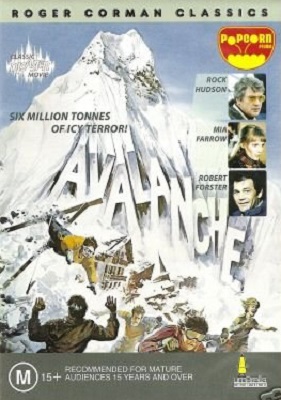
Avalanche, Corey Allen (1978, USA). Until I found this on Amazon Prime, I’d not known Rock Hudson had appeared in a film produced by Roger Corman. True, given Hudson’s career in the decade leading up to his death – Embryo, anyone? – this probably shouldn’t have come as a surprise. His wife in this film, however, was played by Mia Farrow, so perhaps New World Pictures actually spent some real money on their cast. The title pretty much describes the plot. Hudson has built a posh skiing resort in the, er, mountains, snowy mountains in the US somewhere. He invites a bunch of people to the opening, including his ex-wife, Farrow. There’s a big avalanche, everything gets buried under tons of snow, lots of people die. I think this film holds the record for the most number of characters on-screen wearing polo-neck jumpers. I have never seen so many polo-necks at once as I saw in this film. I suspect it was made to cash in on the late 1970s craze for disaster films, but even the bald use of stock footage doesn’t make it any worse than the disaster films churned out by the major studios. Entertaining enough for a lazy Sunday, more so if you find 1970s design and fashion appealing.

Wished, Dayyan Eng (2017, China). Another “stumbled across on Amazon Prime” film. I found it while looking for some Chinese films. There are a lot on there, but not really ones by Fifth or Sixth Generation directors. In fact, most seem to be low-budget-but-polished commercial rom coms, although I have found a few classics, like Song at Midnight (but it’s an awful transfer) and The Red Detachment of Women (see below). Anyway, Wished… An Earth goddess decides, for fun, to award nineteen wishes to a hapless noob, Ma Fendou, who works for his parents as an insurance salesman (mostly unsuccessful) and has just broken up with his girlfriend, Ren Shanshan. But the wishes will be chosen by the Earth goddess from those Ma has made over the years, including the ones he made as a small kid. And the first one manifests when he goes to shower, but there’s no water. And when he pours water from a jug over his head, it pours down either side of him without touching him. Because when he was little, he hated baths and wished he’d never have to have one again. Being unable to wash obviously has consequences, and as each wish manifests so Ma has to deal with its effects. The only person who seems sympathetic to his cause – beside his slobbish flatmate – is his ex-girlfriend, who’s getting married in a few days. Wished is a straight-up rom com – I read somewhere that Hollywood no longer produces these, and hasn’t done since Bridesmaids, but China is clearly still making money from them – in which Ma tries to cope with his wishes, realises he still loves Shanshan, and tries to win her back. Some of the set-pieces are excellent – in one, he spontaneously grows a mullet, because a star he idolised as a teen had one; in another, he finds himself the owner of a Transformer sportscar. Worth seeking out.

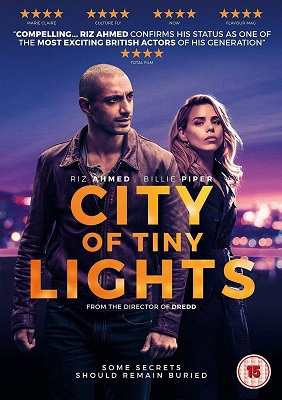
City of Tiny Lights, Pete Travis (2016, UK). “British crime thriller” are not words which would normally encourage me to watch, or in this case rent and watch, a movie. Most of the best British crime drama of the last twenty or thirty years has been television series. In the cinema, it’s all Mockney gangsters or period pieces set decades ago about nasty people who are best forgotten. Or it’s just an old film, with Jack Hawkins as a gentleman bank robber. But City of Tiny Lights was directed by Pete Travis, who directed the excellent Dredd a few years ago. So I gave it a go. And it was worth it. Riz Ahmed plays private detective in North Kensington (Trellick Tower features prominently in many establishing shots). A woman hires him to look for her missing flatmate, Natasha. Both are sexworkers. He finds Natasha’s last client, a Pakistani businessman, dead in a hotel room. Ahmed’s investigations lead to him childhood friend James Floyd, now a wealthy property developer, and the Islamic Youth League, which is under covert investigation by SO15. And somehow or other an old flame – well, a girl he fancied when they were teens – Billie Piper gets dragged into the story, along with associated back-story flashbacks. It all turns out to be a property scam, and the terrorism angle is only a bit of misdirection. As thriller films go, the plot of City of Tiny Lights is nothing special. It’s based on a novel, with the same title, by Patrick Neate, and adapted by him; but it does feel in places like the author was determined to keep some of the subplots in despite the fact there wasn’t enough room to do them justice and they actually detracted from the main plot. Ahmed is excellent in the lead role, and most of the supporting cast are pretty good – although I’ve never really understood the appeal of Billie Piper and she feels completely superfluous in this. But the film looks great, and if it’s more arthouse than noir that’s no bad thing. City of Tiny Lights wasn’t apparently well-received by critics, and I’m pretty sure my opinion of it is in a minority. But it did, for me, things that Dredd well – and Dredd‘s plot wasn’t exactly ground-breaking either – and it displayed a distinctive vision.

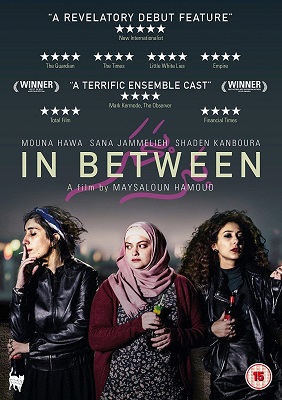
In Between, Maysaloun Hamoud (2016, Israel). Three young Israeli Arab women share a flat in Tel Aviv. Leila is a secular Muslim who works as a lawyer and enjoys partying at night. Salma is a Christian Arab, who DJs but holds down a series of bar-tending jobs, and is lesbian. And Nour is Muslim and religious, in her final year of a computer science degree at university, and affianced to a controlling man who is not happy with her living in Tel Aviv. The story kicks off when Nour moves in, taking the place vacated by her cousin (I can’t remember if the film explained the reason for her departure). While Nour is religious, she is tolerant of the others’ lifestyles, but her fiancé is not (but then, he’s a totally controlling arsehole, which is sadly not uncommon among men). This culminates in a sexual assault, and Nour breaks off with him. Meanwhile, Salma takes her girlfriend to meet her parents, although they do not know she is lesbian. In fact, the dinner is for Salma to meet a prospective husband. When her parents find out Salma is lesbian, they go completely batshit intolerant, and threaten to lock her up in an asylum if she doesn’t move out of her flat and back in with them, and marry a man of their choosing. So she sneaks away after they’ve gone to bed. Leila’s story is the least dramatic – she’s starting to realise she needs to slow-down, but that’s about it. She enters into a relationship with a man, but just when she’s starting to think he could be the one… she discovers him in bed with another woman. (Very few of the men in the film are especially nice, but I don’t have a problem with that – men are generally shits, especially when it comes to their treatment of women.) The film ends with the three of them reconciled to their changed circumstances – the events shown during the film have altered them, and made them closer friends. A good film, worth seeing.

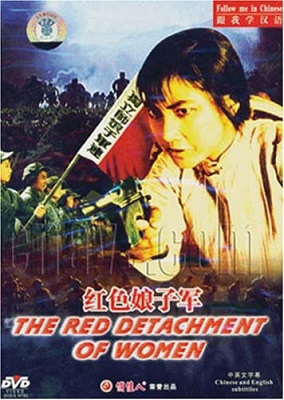
The Red Detachment of Women, Jin Xie (1961, China). As mentioned above, I found this while hunting for Chinese films to watch on Amazon Prime that weren’t low-budget rom coms. It’s generally acknowledged to be a classic of Chinese cinema. The unwieldy title refers to the first women’s army formed by the communists in 1930s China. The film takes place on Hainan Island, a Kuomintang stronghold. Wu Qionghua, a housemaid for the local warlord, runs away after several failed attempts, joins the titular group, becomes its leader and helps liberate Hainan for the communists. It’s a solid piece of cinema, well-made and well-acted, but with nothing especially exciting about its cinematography or staging. Watching it, I couldn’t help thinking how Western – especially US – viewers would probably disparage the film as propaganda. And it is, it’s pure communist propaganda. But then so is the output of Hollywood. Propaganda, that is; not communist, obviously. Every Hollywood film is an advert for the so-called American Dream, every US film showcases the American lifestyle and its worship of consumer products. How is that different? Especially given many visitors to the US are now finding the country much less advanced than claimed (I was surprised on visiting Los Angeles in 2006 to see mobile phone networks advertising themselves using the claim they “dropped fewer calls” than their rivals. Dropped calls? Mobile providers haven’t done that in Europe since the 1980s.) Anyway, I would expect a communist film to extol the virtues of a communist life, just as I expect a US film to extol the virtues of a capitalist life (but let’s not forget the US has some of the least progressive employment legislation in the world, so capitalism not so good after all). Having said all that, The Red Detachment of Women is not about how wonderful life is under communism (a difficult sell, at the best of times), but about the struggle to create a communist state. Which might well apply to the struggle to create any type of state. Except, to be fair, it’s probably only a communist state that would put together a women-only army, which is a point in their favour. The Red Detachment of Women is not great cinema, but I think it is important cinema, and for that reason definitely worth seeing.

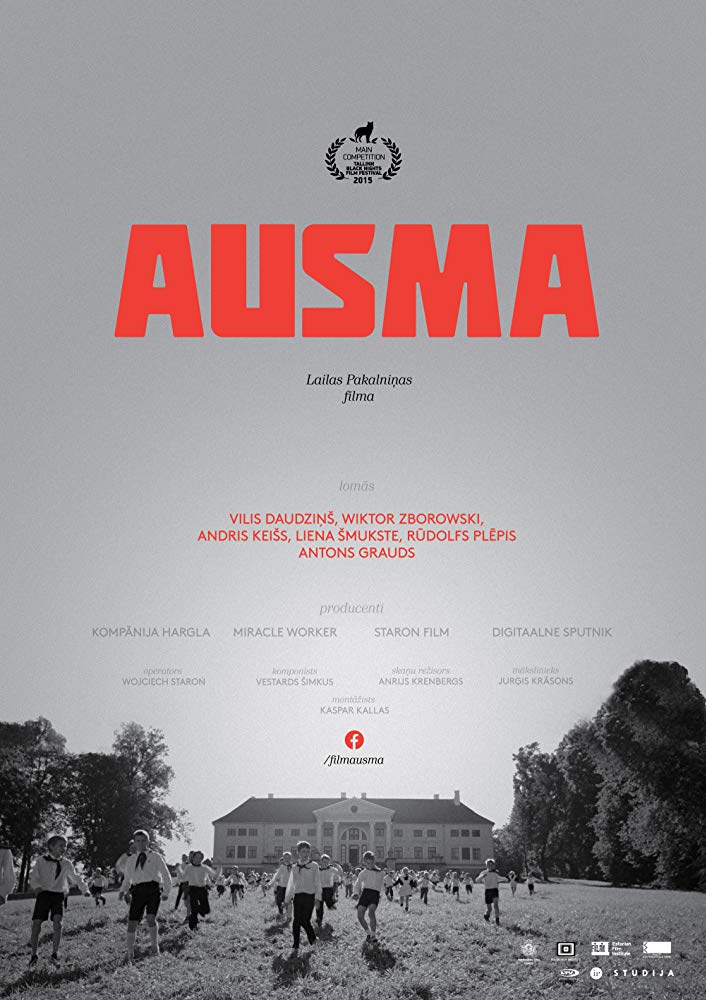
Ausma, Laila Pakalniņa (2015, Latvia). After some diligent searching on Amazon Prime, I managed to find a Latvian film. I’ve seen Estonian and Lithuanian films, but not Latvian. (I did find a recent Albanian one, but it turned out to a be a US production by Albanian immigrants.) Ausma, AKA Dawn, was Latvia’s entry for Best Foreign Film in 2016 Oscars but was not even nominated. It is… odd. Shot in black-and-white and set in the 1930s. It’s set on the eponymous collective farm and, according to Wikipedia, the plot is based on the story of Pavlik Morozov, a thirteen-year-old boy who denounced his father, the chairman of the village soviet, for selling forged documents. The father was sentenced to ten years in a labour camp and later executed. The boy was subsequently murdered by his male relatives. And while that may seem straightforward enough a story – Wikipedia points that there’s little evidence for it, despite the wealth of treatments of it, and it survives only as hearsay – that’s not exactly what I saw when I watched the film. As mentioned, it’s shot in a very crisp black-and-white, frequently from cameras placed in odd positions. The movie’s opening shot, for eamaple, is from the ground, looking up past a large snail centre-screen at a chicken. A later scene has the camera suspended vertically over the table, looking down, around which the actors are sitting. There are a lot shots like these. Young Morozov is readily identifiable, but I wasn’t entirely clear who was his father. I think it was the man the other men described as insane, and who then proved the point by pretending to gun down the rest of the soviet with a broom, before using the broom smash everything on the table. And… It all looks very, well, interesting, but I can understand why it failed to get a nomination. Parts of it looked gorgeous, some scenes were very funny (in a blackly comic sort of way), but the story seemed to jump around so much I had trouble following it. I will likely watch it again, and may well appreciated much more on a second viewing.

1001 Movies You Must See Before You Die count: 931

1 Comment

Moving pictures 2018, #48

Some good directors in this post, ones I should watch more films by… although I’ve seen all of Martel’s movies except her most recent, and Solás, who made twenty-four films… well, few of his are available on DVD in the UK – and I think I have all the ones that are.

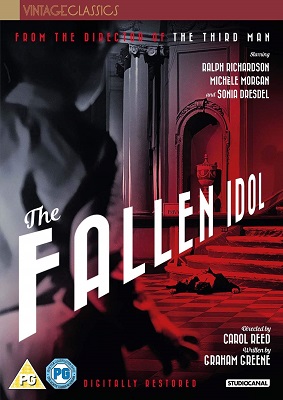
The Fallen Idol, Carol Reed (1948, UK). Reed, of course, is best known for The Third Man, but he made 29 feature films, and won the Oscar for Best Director for Oliver! in 1968. The Fallen Idol is an accomplished late 1940s thriller, more so because it is told chiefly from the point of view of a young boy. Philippe is the young son of the French ambassador to London. He adores his father’s butler, played by Ralph Richardson, who tells him stories of his adventures in Africa. But when Philippe accidentally witnesses a meeting between Richardson and his mistress – identified to the boy as Richardson’s niece – and then starts spending time with them, and the news filters back to Richardson’s wife… Richardson and his wife quarrel and she falls down the stairs and dies. Philippe witnessed the start of the fight, but not the all-important part where Richardson walked away and the wife slipped and fell. Philippe’s refusal to speak ill of Richardson actually hampers the police investigation, who begin to suspect Richardson of murder. It’s all very cleverly done, but the fact the viewer sees the accident happen does make it all feel a bit like an episode of Columbo. The boy who plays Philippe is especially good, although the career promised by the film never materialised. The Fallen Idol doesn’t have the bite of other Reed films (um, well, not including Oliver!), but is a good example of a tightly-plotted well-made thriller. If only good films were ever made, it would be considered a mediocre effort; but compared against the crap that’s usually produced in any given year, it stands out as a solid piece of work. Worth seeing.

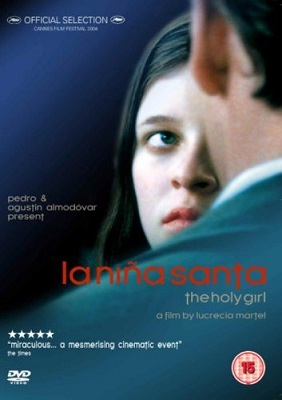
The Holy Girl, Lucrecia Martel (2004, Argentina). Martel has to date made only four feature films, and I have so far seen all but her most recent, last year’s Zama. I would put her in the top twenty-five directors working in film today. The Holy Girl, or La niña santa, is perhaps not the best of her films, but it’s certainly the one that’s most characteristically hers in terms of technique. Martel likes to film as if she were a voyeur, through doorways and windows, more fly-on-the-wall than actually staged, and in this film there is plenty of that in evidence. The story concerns an Argentine schoolgirl who, after being frottaged by a doctor staying at her mother’s hotel for a medical conference, decides it is her holy mission to save him. But all that happens in and around the interaction of the main characters – the girl, her friends, her mother, the doctors at the conference… To say any more would be a spoiler. Martel has a singular approach to drama, and while it’s tempting to compare her to Claudia Llosa (a Peruvian), it’s an unfair comparison: Martel is the more technically accomplished film-maker, but Llosa’s films just have the edge for me (though Llosa’s films are harder to find in the UK). Despite that, Martel seems to have more of a career – Llosa’s last film was 2014, and there’s no news of anything new from her – and she’s an excellent director, definitely one whose career is worth following. Recommended.

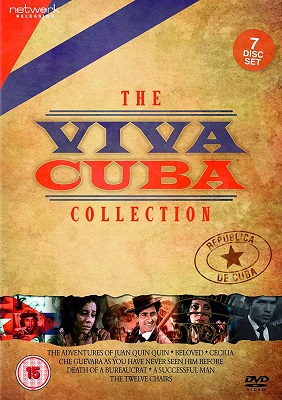
Beloved, Humberto Solás (1985, Cuba). I foolishly didn’t buy this box set of seven Cuban films when it was available, and once it was deleted the price shot up to around the £75 mark (and I see there’s a copy on Amazon going for £150 now). Fortunately, I stumbled across a much cheaper copy on eBay, and when it arrived it was still shrinkwrapped. Result. The first film I chose to watch from the set was Cecelia… but the disc labelled that proved to actually contain Beloved. And vice versa. Oops. All the others could be mixed up too, I’ve not checked. But at least the films are there.  I’m not the first to remark on the similarity between Solás’s films and Visconti’s. Both have made lush period dramas, with mostly static cameras, but with lots of close-ups and reaction shots, and the occasional painterly mid-range shot. In Beloved (AKA Amada), which is set in 1914, a woman, Amada, and her husband, live with her blind mother. He has a mistress, and is about to embark on a career in local politics (which the first scene of the film describes as extremely corrupt). Amada is in love with her cousin, and he is in love with her. But she refuses to leave her husband because she would be branded an adulteress. Meanwhile, the husband has been working on the maid to get her to persuade the mother to sell the house and other properties. As the title indicates, the film is about Amada, a prisoner in her marriage, increasingly held prisoner by the maid, who won’t let her see her mother… The dialogue is pretty intense, with characters often lecturing each other, but that’s hardly unexpected in a film adapted from an early twentieth-century novel – in this case Miguel de Carrión’s 1929 novel La esfinge (The Sphinx). It’s all pretty glum stuff, as Amada’s situation deteriorates and echoes that of the country. I suspect this film would look very nice indeed if restored, but the transfer in the box set is not brilliant. The dark areas frequently overwhelm the screen and the muted colour palette doesn’t work so well on a television screen – even if it does successfully evoke the period. Still, a good film, especially if you like period dramas.

Cecilia, Humberto Solás (1982, Cuba). An adaptation of an extremely important Cuban novel, Cecilia Valdés by Cirilo Villaverde, published in 1839, and apparently released as a six-hour TV mini-series, a four-hour domestic feature film, and a two-hour international feature film. It’s the last which appears in the Viva Cuba box set. In many ways, I mentioned above that Solás’s work reminds me of Visconti’s, and Cecilia certainly put me very much in mind of The Innocent. It’s also an historical piece, about an important part of Cuban history, but also about the role of women – and slaves, and mixed-race people – in Cuban society, at a time between the Haiti revolution and Cuban independence. I tried to think of a film that covered a similarly shameful period in UK history… and failed. There are shameful episodes aplenty in British history, but the British public is more likely to get in an uproar when a US film completely ignores the British contribution to something historically important. I suppose the same is equally true of the US, which still has plenty to be shameful about. Having said that, Hollywood has been so creative with history over the decades that most people probably think historical films aren’t necessarily true. Fake history! As the brainless orange-faced incumbent in the White House would no doubt say. On the other hand, Cecilia is adapted from a nineteenth-century novel, so some element of artistic licence is baked in. And Solás apparently took some liberties with the plot. Anyway, like Amada, this is an excellent period drama, and reportedly the most expensive film made at that time.

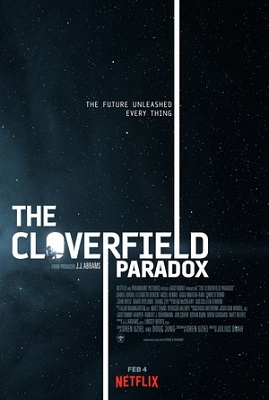
The Cloverfield Paradox, Julius Onah (2018, USA). I don’t know what possessed me to watch this, a crappy sf film badly shoe-horned into the Cloverfield trilogy, which is not actually a trilogy just a dumb JJ Abrams dumb marketing gimmick… but I suppose the cast – and it’s a generally good cast – might have suggested it couldn’t be as bad as most reviews claimed. Sadly, those reviews – and I find most film reviews suspiciously positive about the even shittiest output of Hollywood – were closer to the mark. The Cloverfield Paradox is a perfect example of why I have a low opinion of sf cinema. There have been only a handful of sf films made in the last 100 years which are any good, and that’s a much lower hit-rate than pretty much every other cinematic genre (except maybe the American coming-of-age movie, which has yet to produce a single good film). In The Cloverfield Paradox, an international team of astronauts are experimenting with a particle accelerator aboard a purpose-built space station. Because apparently accelerating a particle will solve the Earth’s energy crisis. Or something. Given the space station apparently has artificial gravity, you’d have thought solving that problem would probably help with the energy crisis. Unfortunately, it seems accelerating a particle actually shifts the space station into an alternate reality. (Which explains much of recent history post-CERN here on Earth.) The astronauts figure this out because they realise they are upside-down, and so they must be on the opposite side of the Sun to the Earth. WTF. Hollywood science: like science, but complete bullshit. Meanwhile, giant monsters have been appearing on Earth. Because. It’s all completely meaningless bollocks, which is a shame because it has a good cast – not just Gugu Mbatha-Raw, who was unknown to me, but also Daniel Brühl, Chris O’Dowd, Elizabeth Debicki and Ziyi Zhang. Avoid.

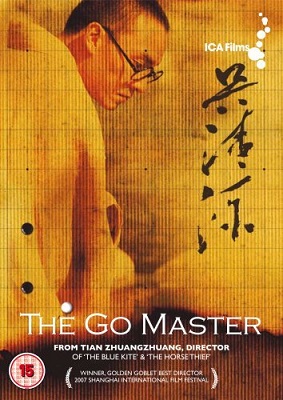
The Go Master, Tian Zhuangzhuang (2006, China). This is pretty much a straight-up biopic of famous Chinese Go master Wu Qingyuan, famous in Japan as Go Seigen. Born in China, Wu moves to Japan as a teenager in order to pursue a career playing Go. But when the Sino-Japanese War breaks out in the 1930s, he decides to remain. At intervals, displays text explaining the events which lead to the life-changing decisions Wu makes, but the text starts in third-person before abruptly shifting to first-person, which is a little odd. The film also makes little effort to introduce the game of Go, and after watching it I’m no clearer about how the game is played than I was before. It does make Wu’s skill – he’s reckoned the greatest twentieth-century player of the game – something you have to take on faith. Like other of Tian’s films, the cinematography is excellent, and the acting top-notch. The pace is slow, but at 104 minutes this is not a long film. I suspect it will appeal more to those who understand, or are interested in, Go. I’ve yet to be convinced by Tian’s films yet. They look gorgeous, but there never seems to be much going on in them. I’ve to date seen four, including this one, of his eleven feature films. I’d like to see more, but there are plenty of Fifth and Sixth Generation directors whose films are available in the UK, so perhaps I should work my way through those first…

1001 Movies You Must See Before You Die count: 931


Leave a comment

Moving pictures 2018, #47

It would appear I’m still watching Marx Brothers films, although my defence is the one below was already on my rental list and I’ve, er, not bothered to purge the list of their films. And I might as well watch the most famous ones, after all. Other than that, this post is fifty percent a UK-fest. I found a whole bunch of old British films on Amazon Prime – totally by accident, of course, because hey Amazon! Your search facility sucks donkey balls totally!

Otherwise, the usual mixed bag. Oh, and a really good Swedish film.

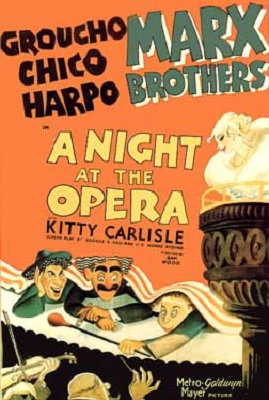
A Night at the Opera*, Sam Wood (1935, USA). Is this film famous on its own merits or because Queen used its title for the title of one of its best-selling albums? Is there any way to find out? Hollywood has a habit of over-stating its influence, so watch an old documentary that claims the Marx Brothers were massively influential and it’s more likely to be Hollywood bullshit than anything else. All part of the marketing machine. Because, in most respects, A Night at the Opera is not much different to earlier Marx Brothers films. The brothers play similar roles, this time centred around an opera company, which Groucho is hoping to use as a vehicle to defraud the fifth Marx Brother, Margaret Dumont, out of her fortune (seriously, she’s the best thing in these films). However, the final act, in which Harpo is chased around the theatre, and uses various tricks to escape capture is among the best physical comedy the Marx Brothers have put on film (that I’ve seen). I think you have to be a fan to truly appreciate these films, but I can understand why this one is held in higher regard than most of the others.

Five Dolls for an August Moon, Mario Bava (1970, Italy). So there was a sale on the Arrow website and a whole bunch of Blu-rays were going for £7 a pop, and this one was one of them… And while I do like me some giallo, I’m a bit picky about the ones I  like and Mario Bava is hardly top of my list of giallo directors to watch even though I’ve seen several of his films… But you know how it is, finger slipped and all that, and I ended up with a copy of Five Dolls for a August Moon, which title conjures up much that sounds giallo but is not all that actually descriptive of the movie’s plot. However, it does have a great jazz rock score. Giallo films are generally quite good on soundtracks, but this is a superior example. Which, sadly, cannot be said of its plot. Five rich men meet on an island, with wives and partners, ostensibly to buy a formula from one of them, but he refuses to sell. Then people are murdered one by one. So it goes. Each of them tries to figure out who the killer is, but none of the clues add up. It’s all very 1970s, with the women in floaty pantsuits, the men in flares, suede and sideburns. Meh.

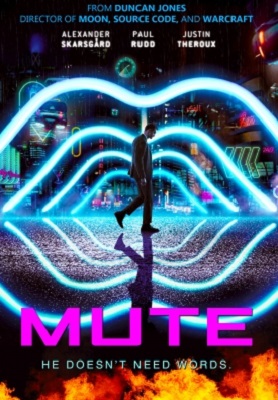
Mute, Duncan Jones (2018, UK). Gosh, this was bad. A Poundland Blade Runner married to a plot straight from some horribly regressive 1970s action movie. Women are routinely brutalised, one character is a paedophile and it’s only offensive when the plot requires it to be, and another character is taunted with being gay. Hey, Jones, it’s 2018, shit like that doesn’t fly anymore. What makes it worse is that Mute is, by all accounts, a personal project, one that Jones spent years trying to get funded. And that’s fair enough, there are many projects that take decades to get funded. But they should be revisited when the finance is in place to make sure they’re appropriate for their year of release. It would seem Mute was not. The title refers to a man who was injured as a kid and so can no longer speak. He works in a nightclub, and is very protective of one of the hostesses (I didn’t think they were in a relationship at first). Which gets him into a fight with a customer who gets a bit too friendly with her. So she’s fired. Then she disappears. He goes looking for her. There are also a pair of underground surgeons and some gangsters and a brothel and… Sigh. It’s all like something from the 1970s, and setting it in a Berlin of the near-future only underscores how anachronistic it all is. Avoid.

Passport to Pimlico, Henry Cornelius (1949, UK). This was one of the films I discovered on Amazon Prime, although the quality of the transfer was pretty bad. It’s one of the classic Ealing comedies, and while I’ve seen a number of them over the years, I seem to have missed seeing this one. Until now, that is. A treasure trove is found in Pimlico, and among all the gold is an ancient document which declares Pimlico had been given to the Duke of Burgundy centuries before. So, in order to hang onto the treasure, Pimlico declares its independence, and makes the young descendant of the Duke of Burgundy (which no longer exists, of course), their head of state. The British government isn’t happy about this state of affairs. So they put up barbed wire and try to starve out the “Burgundians”. But the rest of London thinks it’s all marvellous, and sends them food (there’s a good scene where they’re actually throwing items of food over the barbed wire). At that time, Pimlico was still pretty much a bomb-site, so you can understand why its inhabitants are reluctant to give up their treasure. Although it’s a comedy, Passport to Pimlico is a bit more barbed than just a comic story. The plucky Londoner bit is all somewhat self-congratulatory having survived the Blitz, but that’s pretty much baked into Londoners’ character, and for all the deprivations visible in Pimlico – rationing was still in place in 1949 – it doesn’t seem to prevent the food parcels. (A man with a barrow full of oranges even turns up at one point – were they available again by then?). Much as I enjoyed Passport to Pimlico, I think the other Ealing comedies I’ve seen were better.

Nineteen Eighty-four, Rudolph Cartier (1954, UK). I found this on Amazon Prime too, and it also was a poor quality transfer, but not so bad it was unwatchable. Winston Smith is played by Peter Cushing, in one of his first major roles, if not his first. Donald Pleasance appears as Symes. There are also several familiar faces in smaller parts. It pretty much follows the book. The production design, as you’d expect of 1950s BBC, is pretty much all sets, clean and unadorned when it’s in a ministry office, but like something out of Steptoe & Son when it’s a prole’s home. Given it was made only six years after the book was published, and less than a decade after the end of WWII, it’s no surprise the few outside scenes show a devastated London (but then it would be several decades before the last of the bomb damage disappeared), which, sadly, suits the story. But hey, just wait for 2084. After 66 years of Brexit. Maybe there won’t be a war, just 66 years of enforced neglect (outside the Foxconn enclaves, that is). It’s hard what to know what to make of Orwell’s classic these days, it’s like someone strafed it with a machine-gun firing irony bullets. Although it does render the central love-story a bit, well, banal. Ah well.

Girls Lost, Alexandre-Therese Keining (2015, Sweden). I found this on Cinema Paradiso’s website and added it to my rental list because it sounded interesting. Three fourteen-year-old girls, Bella, Momo and Kim, are being horribly bullied at school. Bella is assaulted. The three are sent a strange seed through the post. They plant it and it grows overnight into a weird black flower. They drink some of its nectar and wake up as boys. The first time, it goes well – they’re welcomed into a pick-up game of football. No one recognises them. They’re invited to a party a few nights later – but they have to bring the beer. Of course, after that it doesn’t go so well. These things never do. Kim falls in with the local bad boy and joins him when he burgles a workshop, and of course fancies him. The girls’ transformations give them the confidence to stand up to their bullies at school, but Kim loves being male much more than Momo or Bella, and even thinks she might be trans. I had almost zero expectations when I slid this into the player – an indie Swedish/Finnish co-production, with a young and unknown cast… But I thought it excellent. The cast are very good indeed – and cleverly chosen so the male and female versions resemble each other. The friendship between the three girls is drawn really well, although some of the scenes where they stand up for themselves at school seem a bit too easy. The bullying, however, is far from subtle, and hard to take. One final point: I don’t normally mention soundtracks unless they’re a feature of the story. But one of the songs in Girls Lost – it plays a couple of times, but most noticeably during the film’s final few minutes – I thought very atmospheric. It was ‘Keep The Streets Empty For Me’ by Fever Ray. Anyway, Girls Lost: recommended. It might well make my best of the year.

1001 Movies You Must See Before You Die count: 931


1 Comment

Moving pictures 2018, #46

I like it when there are six movies and six different countries. And one of the movies is from the 1001 Movies You Must See Before You Die list. True, one of the films below is by a director I’ve been a fan of for many years – that’s Kaurismäki – and for reasons that still escape me I’ve been working my way through the Marx brothers films… but the others were completely new to me.

Horse Feathers, Norman McLeod (1932, USA). After moaning in my last Moving pictures post that I no longer understand why I continue to watch the Marx Brothers, my excuse for Horse Feathers is that was on the same rental disc as Monkey Business… although I can think of no good excuse for, a week later, watching A Night at the Opera (although, to be fair, it is a better film than these early ones). Anyway, Horse Feathers is about… er, a college (ie, university) with a shit football (ie, American Football) team, which always loses, and the Marx Brothers con themselves into positions of power at the college and then hire pro players for their team, all so they can beat a rival college. I can’t remember any especially amusing scenes from this film, only an overriding memory of feeling sorry for Zeppo for having to play the all-American clean-cut college-boy hero. Groucho wise-cracks (often not very funny), Harpo is creepy as fuck, and Chico, embarrassingly, plays a comedy Latino but delivers the best lines. The Marx Brothers comedy has not aged as well as some of their contemporaries.

The Other Side of Hope, Aki Kaurismäki (2017, Finland). I already had everything in this new Blu-ray box set except The Other Side of Hope (and The Man Without a Past, which I’d already seen), but Kaurismäki is definitely worth upgrading from DVD. So I did. And gave my DVD Kaurismäki box sets to a friend. Anyway, The Other Side of Hope. There needs to be more books and films about refugees in Europe, because how we treat them increasingly defines us – and is certainly defining the current era. You have the racists and fascists becoming increasingly normalised in the press, and yet a recent poll claimed the UK was a more welcoming country than it was ten years ago. I suspect that poll doesn’t include the Home Office, which seems to staffed entirely by racists enacting racist policies put in place by arch-racist Theresa May. Happily, not everyone agrees with such Nazis, and people are writing novels – like Jenny Erpenbeck’s Go, Went, Gone (see here) – and making films – such as The Other Side of Hope – which address European nations’ inhumane treatment of refugees and asylum seekers. (There would, of course, be fewer refugees moving into Europe if we stopped bombing their homes.) In The Other Side of Hope, Khaled, a Syrian, enters Helsinki illegally and applies for asylum at a police station. He tells them his story (through an interpreter): he returned home from work one day to find his house destroyed by bombs, and his wife and child dead. Like many other Syrians fleeing the civil war (and British bombs), he and his sister travelled north, but he lost her in the Balkans. His application is rejected and he escapes from the facility where he’d been put. He’s found sleeping rough by a businessman who has just sold his shop and bought a neighbourhood restaurant and which he’s failing to make a go of (their attempt at re-inventing themselves as a sushi restaurant is hilarious). The restaurant owner hires Khaled and arranges for him to get a fake ID. Meanwhile, another refugee Khaled met in the facility has had word of Khaled’s sister. She’s in Lithuania. So Khaled arranges to have her smuggled to Finland. But then Khaled has a run-in with a group of neo-Nazis… The Other Side of Hope is probably the most Kaurismäki of his films. It’s both tragedy and farce, and all played completely deadpan. The restaurant owner is played by Kaurismäki regular and ex-Leningrad Cowboys member Sakari Kuosmanen, and there are few other familiar faces in there too. Khaled is played by Sherwan Haji, a Syrian actor who emigrated to Finland. An excellent film.

The Visitor, Giulio Paradiso (1979, Italy). I get these text messages every now and again, usually late at night, from David Tallerman, in which he tells me to add certain films to my rental list (I do the same to him, of course). The Visitor was one such film. It was also completely bonkers. It’s an Italian film, but set in the US with a mostly US cast, including Mel Ferrer, Glenn Ford, Lance Henriksen, Shelley Winters, John Huston and Sam Peckinpah. Yes, really. There is apparently an ages-long cosmic conflict between evil, Zatteen, and good, Yahweh. But Zatteen was killed on Earth centuries ago, and survives only through the descendants of children he had with human women. One of which is apparently a young girl with telekinetic abilities, which she is using to help the basketball team owned by her mother’s boyfriend win games. It’s all a bit Damien, and the Christian references are laid on thick. And like most Italian films of the 1970s, it’s all very intense, a bit like Cronenberg turn up to eleven but without the body horror. There is, for example, a scene in which they try to kill Shelley Winters by wrapping a wire around her neck and the sending her down the stairs on a stairlift. Despite all this, The Visitor isn’t especially memorable. Batshit insane, yes; and that’s probably why so little of it sticks in memory.

The Mad Masters*, Jean Rouch (1955, France). Rouch was a name unknown to me, despite having directed 109 films between 1947 and 2002. But then, none of his films appear to have ever been released in the UK, and most of them were semi-documentary – what he called “ethnofiction” – films about people and places on the African continent. The Mad Masters is a case in point: it depicts the Hauka rituals, in which participants go into trances, froth at the mouth and claim to be possessed by their colonial administrators. The film was banned in Niger, and then in other British territories in Africa of the time, including Ghana, where it was filmed. Wikipedia states that the film has also been criticised by “African” students and critics (Africa is not a country) for presenting “exotic racism”. Given that the first quarter of the film is about how very ordinary is the city of Accra and its inhabitants – although it’s likely that’s to contrast it with the later depictions of Hauka possessions. Rouch was in important figure in French cinema, and probably deserves a spot on the 1001 Movies You Must See Before You Die list. I don’t know that this is the film to represent his oeuvre. I’d certainly like to see more by him.

Bad Cop, Kai Jiang (2016, China). I found this on Amazon Prime – I say “found”, as if it were actually possible to look for things there and find them, which it’s not as Amazon appears to use the worst search engine on the planet and is about as effective as throwing a dart at a dartboard from several kilometres away and in a different room. So. I stumbled across it. As well as a bunch of stuff I hadn’t known was on there. Bad Cop is not a good film. A policewoman (you can also find the film as Bad Policewoman) who doesn’t take orders very well is sent undercover to a high school to discover why several of the female students have disappeared. She ends up in a relationship with the hot teacher. And the friendly fellow female student turns out to be the villain. Ho hum. Like the other Chinese films dumped on Amazon Prime I’ve seen, the subtitles were… creative. Fun, but not a very good film.

Tramontane, Vatche Boulghourjian (2016, Lebanon). I think it was trailer for this on another rental DVD that prompted me to add it to my list. Or it may have just been that it’s a Lebanese film and I’ve not seen many of them, so I stuck it on my rental list. Whatever, it was a good call. Rabih is blind and a musician in a band. The band has been invited to play in Europe (no one specifies which country or city), so Rabih goes along to the police station to apply for a passport. But they take his ID card off him because it’s fake. He clearly didn’t know, so they tell him to provide proof of his birth and they’ll let him off. But the hospital where he was allegedly born has no record of his birth. At which point his mother admits he was rescued by her brother – then a captain in the army – from a village in the south destroyed during the war. He travels to the village and learns it was never destroyed during the war, and no babies went missing. A member of his uncle’s platoon tells him he was rescued from a car crash in which his Armenian parents died by his uncle, handed to an Armenian orphanage, but then taken from that by his uncle. But the orphanage has no record of an orphan from that time. Through his uncle’s ex-fiancée, he tracks down another member of his uncle’s platoon, who tells him he was “allowed to live” after an operation on a village. At the village, he learns that a man and woman were killed in an attack and their baby disappeared, long since presumed dead. When Rabih asks if the baby could still be alive, he is told, yes, he could be but he would have another family by now and they buried the missing baby decades ago. Rabih’s uncle then presents him with a birth certificate – real, so obviously sourced from “contacts” – but documenting his fake birth as per his fake ID. Rabih has no choice but to accept it. Recommended.

1001 Movies You Must See Before You Die count: 930


3 Comments

Moving pictures 2018, #45

Even given my usual viewing, this is a bit of an odd bunch – mostly films I stumbled across on Amazon Prime. Because good luck trying to actually find films on there, as the search function is next to fucking useless. I learnt this week there are a lot of Nollywood films available for free on Prime (I also learnt they’re mostly dreadful), so an ability to search by country of origin would be really useful…

Air Crew, Alexander Mitta (1980, Russia). There are also a number of Mosfilm and Lenfilm movies available on Prime, including Moscow Does Not Believe in Tears – and Air Crew was the first of several I added to my watchlist. It is apparently the first disaster film made in the USSR, and was clearly modelled on 1970’s Airport (and sequels). The first half of the film sets up the lives of the three main characters, the captain of an Aeroflot Tu-154 who fears he will be grounded because of his age, a Lothario co-pilot on the same plane who enters into a relationship with a member of the cabin crew only for it to be torpedoed by an ex-girlfriend, and an ex-member of the crew who now flies helicopters picking up cosmonauts after they’ve landed and is involved in a custody battle for his son with his ex-wife. The film doesn’t pick up until the Tu-154 is diverted to Bidri (a made-up town) where an earthquake has struck. Air Crew switches to model-work, and the disaster that unfolds makes Thunderbirds look amateur. A plane crashes and explodes, the earth quake causes an oil refinery to, er, explode, and a lava flow hits the airport and causes everything to, um, explode. But the Tu-154 – now with helicopter pilot on board, although I can’t remember how he ended up there – manages to take off. But part of the skin on the upper fuselage has ripped open, and there’s something obstructing one of the elevators on the T-tail… So while at 10,000 feet or something, one of the crew has to crawl out through the intake into the jet engine in the tail onto the upper fuselage to nail the rip shut. Another has to climb up inside the tail and out onto the horizontal stabilisers to clear the obstruction. Tu-154s had a cruising speed of 850 kph, by the way. It’s all completely mad and makes Airport look a bit feeble. While the second half massively overwhelms the first half of the film, it does give a good, if somewhat rosy-tinted, portrait of life in the USSR. Which, for all its deprivations and secret police and shit, was considerably less sexist and racist and Islamophobic than US society was. Not a great film, but definitely one worth seeing.

Monkey Business, Norman McLeod (1931, USA). I’m not entirely sure why I’m watching these, to be honest. I don’t think they’re that funny, and Groucho’s famous wit has been massively over-hyped. In fact, Chico is the funniest of the four, and he’s playing a racial stereotype. Harpo is just a creepy stalker, and Zeppo, who had the coolest name of the four, was lumbered with the straight-man role because he was the most normal-looking. And I can’t even tell the plots apart. In this one, the four Marx Brothers stowaway aboard a ship en route to the US. So the plot is basically a series of jokes in which each of the brothers plays on their characteristics. Groucho is cynical and witty (more the former than the latter), Harpo is creepy, Chico plays a comedy racial stereotype but often has the best lines, and Zeppo is completely wasted in the straight-man role. Margaret Dumont, the “fifth Marx Brother”, doesn’t appear in this, which is probably why it’s so unmemorable. In fact, just about the only thing I can remember is the sketch with the fish barrels, which is pretty much all anyone can remember of this film. The Marx Brothers were… seminal? I don’t think so. Hugely popular in their time? Almost certainly. Their reputation as comedic geniuses has remained mostly undiminished for nearly 90 years, although it’s probably fair to say all the successful comedy stars from that period continue to enjoy a high reputation – Buster Keaton, Harold Lloyd, Laurel and Hardy, the Keystone Kops, etc. Yes, some of those are earlier – and the Marx Brothers were basically filming their Broadway shows for their early movies – but many of them survived into the 1930s and later. And, of them all, I’d say Buster Keaton was best in the early days, and Laurel and Hardy in the later days. The Marx Brothers brand of comedy was often done better by one-offs, like Hellzapoppin (see here), or by screwball romances starring Cary Grant or Clark Gable or Katherine Hepburn or Carole Lombard or Barbara Stanwyck…

Crime or Punishment?!?, Keralino Sandorovich (2009, Japan). I have no idea what this film was about, but that was not unexpected given that it was recommended by David Tallerman. A model, who was printed upside down in an issue of a magazine, and objects violently to the mistake in the magazine’s office, is sentenced to be “police chief for a day” for a small prefecture’s police force. This apparently does happen in Japan. She finds herself investing in the role, and proves surprisingly popular with the police officers. One of whom is a serial killer, and she knows this is because he’s an ex-lover and he had tried to kill her. There’s also a salaryman who witnesses a murder but is then hit by a lorry. The film jumps about in time, – that salaryman’s death appears a few times – and the young woman in the lead role doesn’t especially stand out, which means it all seems a bit confused and a bit confusing. The film is a black comedy, but there wasn’t a great deal that was comic about it – although I guess that’s the point with black comedies. The fact it’s all over the place doesn’t help. Enjoyable, but I’ve seen much better.

The Millionaire, Sergey Chekalov (2012, Ukraine). Doing your life over again is hardly the most original story out there, especially when it’s linked to romance. Kirill is about get engaged to the daughter of an oligarch. He’s an architect and wants to make a name for himself on his own, without his future father-in-law’s help. But when he discovers that’s never going to happen, he rejects his fiancée and walks away. At the reception he’s just left, a waitress tripped over his best mate and brought the champagne fountain crashing down. Kirill got chatting to her outside. After he decides to walk away, he gives her a call and meets up with her and her best friend. He and his best mate take the two women on a date. Ten years later, Kirill is married to the waitress, with a small son, she works as a teacher, and he still has yet to have one of his designs accepted. But he’s still best mates with his, er, best mate, who is now married to his wife’s best friend. But then Kirill attends a ten-year reunion, meets up with his ex-fiancée ad rues what might have been. Cue fairy godmother. Who, by means of a fatal collision with a speeding lorry, throws him into an alternative present where he’d been married to the oligarch’s daughter for ten years. And… he’s a total shit, stuck in a loveless and childless marriage, and his best-mate is poor and alcoholic and his “wife’s” best friend is a disabled writer because she was injured in the taxi ride on that night after her friend was fired from her job as waitress at the engagement party and died… It’s all very obvious, but it’s well-played and the cast are likeable. The Russian filter made it perhaps more interesting than it would have been otherwise, but it was all very glib and superficial and proof that Russian culture can be just as shallow as American culture.

The Villainess, Jung Byung-gil (2017, South Korea). I think this is the first film I’ve seen that opens with a FPS POV. In fact I’m not sure if there are any films that make use of first person as camera, although surely there must be some, as it’s such an obvious cinema narrative trick. In the opening ten minutes or so, we see a young woman, as if she were the camera, basically slaughter her way through a crowd of gangsters. Later, we learn what prompted this murderous spree. We also discover what happened immediately afterwards – the young woman was picked up by a secretive organisation and locked away and trained in a variety of skills… Yup, it’s the plot of La femme Nikita. Pretty much blow by blow. And, like Besson’s film, The Villainess is immensely stylish. Perhaps not definingly so, as Besson’s film was, which spawned a TV series, but then South Korean cinema has been definingly stylish on its own for a couple of decades now. In comparison to other Korean films, The Villainess scores highly; in comparison to La femme Nikita, it blows it out of the water action-wise but can’t reach its level of stylishness. So it’s a sort of swings and roundabouts, half a dozen of one and six of the other, sort of thing. The Villainess is nonetheless definitely worth seeing.

L’Assassino, Elio Petri (1961, Italy). I’d expected this to be a giallo thriller about a, well, an assassin. From the title. But assassino just means killer or murderer in Italian, not necessarily a hitman. In this case, it refers to an antique dealer, played by Marcello Mastronianni, who is taken in for questioning by the police but not told why. Eventually, he – and the viewer – learns it is because his lover, the daughter of a wealthy industrialist, has gone missing. And is then found murdered. As the police interrogate Mastronianni, and take him out to view the scene of the crime, so the story is interrupted by flashbacks showing the relationship between Mastroianni and his lover. There’s one great sequence where acquaintances of Mastroianni’s character talk to camera about him, and, of course, their testimony contradicts his own self-serving account of his past. Petri is better known for his film The Tenth Victim, an adaptation of Robert Sheckley’s short story, ‘The Seventh Victim’, which was subsequently novelised by, er, Sheckley. Anyway, Mastroianni is or isn’t the murderer of his lover and this film keeps its cards very close to its chest for much of its length. But that’s okay because it apes a Neorealist look, although the quality of the picture is much better and the cast are pretty much all professional. But even in 1961, Rome didn’t apparently look that much different from Rome in 1941 – in some areas at least, although part of the film takes place in newly-built suburbs and one section in an abandoned building site, for a hotel, all concrete floors and no walls. It’s an atmospheric piece, if not the piece I expected, but it works, and does actually make me want to make The Tenth Victim again.

1001 Movies You Must See Before You Die count: 929


2 Comments

Moving pictures 2018, #44

Not a single US film in this half-dozen. I’m steadily reducing the number of American films I watch, although there are still a large number of countries I’ve not seen films from.

Deewaar*, Yash Chopra (1975, India). There are only three or four Bollywood films on the 1001 Movies You Must See Before You Die list, while around half of the list are from Hollywood. Despite the fact the two film industries are not so different in size (Indian cinema, including Bollywood, is around a third bigger than Hollywood, and Bollywood accounts for nearly half of Indian cinema’s ticket sales). Of course, the list is aimed at English-language film-watchers, but even so there are some excellent historical Bollywood films that have been missed off, such as Kaagaz ke Phool (see here), Mughal-e-Azam (see here) or Pakeezah (see here), just to mention a few of my favourites. Anyway, Deewaar is neither an historical epic, nor the usual boy-meets-girl Bollywood story, but a family drama and thriller. The film opens with a police officer being decorated, and in his acceptance speech he tells everyone he owes everything to his mother… And then the film heads straight into flashback territory. The two sons of a trade union activist go their separate ways after their father is blackmailed into betraying his fellow workers. One son becomes a criminal, the other a police officer, and… you can guess where this is going. Deewaar apparently had an enormous impact on Bollywood, and it’s certainly a much grittier and realistic – and yes, with singing and dancing – movie than others I’ve seen. In places, this means its age tells against it, as later films have covered similar territory – and, to be fair, it’s not an uncommon story in other countries’ cinemas. I think there should be more Indian films on the 1001 Movies You Must See Before You Die list, but I can see why this one is there.

Accident, Joseph Losey (1967, UK). Joseph Losey and Harold Pinter made three films in the UK during the 1960s: The Servant (see here), The Go-Between (see here) and this one. Accident opens with a, er, car accident, from which Dirk Bogarde manages to rescue Jacqueline Sassard but Michael York is already dead. The two were on their way to visit Bogarde, who was York’s tutor at Oxford. But this is Pinter, so nothing is quite as it seems, and the female characters are never treated well – in this case, that’s Bogarde sexually assaulting Sassard after the accident. Confusing matters is Stanley Baker, another Oxford don, who has been sleeping with Sassard but, unlike York, has no plans for matrimony. The car accident is amazingly shot, not like it would be these days with OTT physical/CGI effects, shot from a number of surprising angles that really evoke the accident extremely well. It’s an arresting opening, and the film takes advantage of it, so when it starts the flashback main narrative it still has the shock of the opening sequence echoing. Which is just as well, as the story which follows is not the most exciting. It’s a cross-between a romantic triangle and a campus professor/student illicit affair story, and fuck knows what sort of shape that makes. It doesn’t help that it all takes at Oxford University, and over-entitled white men no longer play as sympathetic as they once – apparently, bafflingly – did. Bogarde plays a role he’s good at: the quiet restrained type who doe something nasty. Michael York plays, well, Michael York. As usual. Jacqueline Sassard is apparently better known in Italian cinema, and retired from acting two years after Accident when she married the head of the Lancia family (that’s cars, of course). The three Pinter/Losey films are worth seeing, but I couldn’t say which was the best of them. Probably the first.

The Spring River Flows East, Zheng Junli & Cai Chusheng (1947, China). I’m a big fan of current-day Chinese cinema, especially that of the Sixth Generation directors (and Fifth Generation too), but I also like early Chinese cinema a great deal, especially contemporary dramas from the 1940s, like Spring in a Small Town (see here) and this film, The Spring River Flows East. Which is a bit epic. 190 minutes epic. Released-in-two-parts epic. The story opens in Shanghai in 1931 and follows the fortunes of a family during the Japanese invasion. A man joins the resistance, but his wife and child are put in a refugee camp when the Japanese reach Shanghai. The man is later captured but manages to escape and heads for Chungking, which is under the control of the Kuomintang. Years pass, the man becomes a successful entrepreneur and marries another woman. The Japanese are defeated. The man returns to Shanghai. At a party, his first wife, working as a waitress, recognises him and reveals he is a bigamist. His second wife insists the first divorce him, but she finds another solution. The story is pretty much a soap opera, but played out against a backdrop of war, occupation and postwar deprivation. Obviously, the first wife is the sympathetic heroine – she’s played by Bai Yang, the foremost of China’s “Four Great Actresses” – although much is made of the fall from grace of the husband, from working-class hero to bourgeois lackey. The film isn’t as well-shot as Spring in a Small Town, which is really excellent, but what it lacks in cinematography, staging or script, The Spring River Flows East makes up for in breadth of story and scale. I can understand why it’s so highly regarded in Chinese cinema. I’d like to see it again too.
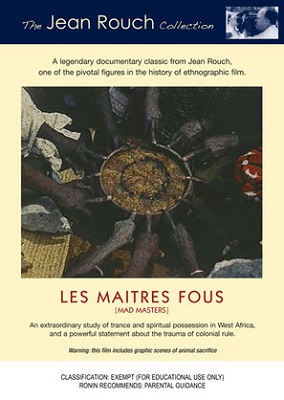
Silent Light, Carlos Reygadas (2007, Mexico). After watching this, I added all of Reygadas’s available films to my rental list – which, fortunately, appears to be all of them. This film takes place in a Mennonite community in Mexico, and the dialogue is chiefly in their language, Plautdietsch. The cast are also mostly non-professional – with the exception of Miriam Toews, a Canadian Mennonite author and actor, who plays the wife of the main character. He is having an affair with a single woman, and his wife knows about it. She confronts him, whch leads to her suffering a fatal heart attack. At the wake, the mistress kisses the wife’s body and she comes back to life. This is one of those films with long static takes and sparse dialogue. The movie opens with a gorgeous shot of the sun rising, and closes with one of it setting, and I thought the whole thing from start to finish excellent. It’s very much the sort of cinema I really like, almost faux-documentary, but with those long slow-moving takes where the very lack of action draws attention to the smallest of details. It’s the polar opposite of Hollywood action movies, with their relentless series of short-span jump-cuts, CGI-enhanced action, and so much detail on screen you’ve no idea where to look or what the fuck is actually going on. Reygadas is definitely a name I’ll be keeping an eye open for from now on.

Yellow Submarine, George Dunning (1968, UK). I think I may have seen this before, although whatever bits and pieces I remembered may well have been from watching only parts of it rather than the whole movie. And that was likely over thirty years ago, during the early 1980s or late 1970s. So when it popped up free-to-view on Amazon Prime – and there’s some surprising stuff on there, but searching on the Fire Stick TV interface is next to useless (mind you, it’s next to fucking useless on the Amazon website too) – I decided to watch it. It’s… very much of its time, and very much what you see on the DVD cover-art. Young Freddie is sent in the Yellow Submarine to recruit the Beatles to help free Pepperland from an invasion by the music-hating Blue Meanies. En route, we’re treated to a number of tracks from various Beatles albums, some well-known, some pretty much forgotten except by fans of the band. I was never much of a fan of the Beatles – I’m still not one – and of the bands popular at the time (which was, I hasten to add, years before my own time), I much preferred the Hollies. I’ve always been slightly baffled by the Beatles’ level of success, but one thing I noticed watching Yellow Submarine was how familiar so many of their songs’ melodies were. I don’t mean familiar because the songs were famous, but familiar because the melodies were simple and sounded very like many other songs. Everything felt, well, a bit re-used. Maybe that was the secret of their success. After all, Oasis were huge too, and every one of their songs sounded like it was ripped off from something else. (I still think Oasis were a scam played on the British public by a jaded music press.) Anyway, I’m glad I watched Yellow Submarine, but I doubt I’ll bother rewatching it.

Le Samouraï*, Jean-Pierre Melville (1967, France). I borrowed this from David Tallerman, as it’s not available  for rent in the UK. (There isn’t even a UK release, and the only one for sale here is the US Criterion Collection DVD.) The only film by Melville I’d seen previously was Bob le flambeur, which has, to be honest, sort of mingled together in mind with a whole bunch of noir films I’ve seen over the years, so much so I don’t really know whether something I remember from it is actually from Bob le flambeur or a film by Dassin, Carné, Tourneur or Duvivier. So Le Samouraï came as a bit of a surprise, as it reminded me of Tati’s Playtime more than anything else. I mean the colour palette, of course. And some of the staging. Not the plot. Alain Delon (I prefer Belmondo, to be honest) plays a hitman, who lives alone in a small barely-furnished apartment with a canary in a cage. He shoots the owner of a nightclub, and is witnessed in the act by the club’s singer. However, when he is pulled in by the police – among many other men – the singer insists he was not the killer. He also had an alibi for the time of the murder – his girlfriend claims he was at her place. Then the hitman finds himself the target of an assassin, but he succeeds in forcing the assassin to tell him the name of his boss. While the plot was almost pure noir, the look of the film was definitely not Nouvelle Vague. The subdued colour palette and the minimalist set design, along with several industrial locations, gave the film a flat affect which suited its story. Delon played his role mostly stone-faced, but the rest of the cast felt more like types than characters. I’d not expected much when putting the disc in the player, but I found myself liking Le Samouraï a great deal. A good film, but I’m unsure whether it belongs on the 1001 Movies You Must See Before You Die list.
1001 Movies You Must See Before You Die count: 929