It Doesn't Have To Be Right…

… it just has to sound plausible


3 Comments

Moving pictures 2018, #45

Even given my usual viewing, this is a bit of an odd bunch – mostly films I stumbled across on Amazon Prime. Because good luck trying to actually find films on there, as the search function is next to fucking useless. I learnt this week there are a lot of Nollywood films available for free on Prime (I also learnt they’re mostly dreadful), so an ability to search by country of origin would be really useful…

Air Crew, Alexander Mitta (1980, Russia). There are also a number of Mosfilm and Lenfilm movies available on Prime, including Moscow Does Not Believe in Tears – and Air Crew was the first of several I added to my watchlist. It is apparently the first disaster film made in the USSR, and was clearly modelled on 1970’s Airport (and sequels). The first half of the film sets up the lives of the three main characters, the captain of an Aeroflot Tu-154 who fears he will be grounded because of his age, a Lothario co-pilot on the same plane who enters into a relationship with a member of the cabin crew only for it to be torpedoed by an ex-girlfriend, and an ex-member of the crew who now flies helicopters picking up cosmonauts after they’ve landed and is involved in a custody battle for his son with his ex-wife. The film doesn’t pick up until the Tu-154 is diverted to Bidri (a made-up town) where an earthquake has struck. Air Crew switches to model-work, and the disaster that unfolds makes Thunderbirds look amateur. A plane crashes and explodes, the earth quake causes an oil refinery to, er, explode, and a lava flow hits the airport and causes everything to, um, explode. But the Tu-154 – now with helicopter pilot on board, although I can’t remember how he ended up there – manages to take off. But part of the skin on the upper fuselage has ripped open, and there’s something obstructing one of the elevators on the T-tail… So while at 10,000 feet or something, one of the crew has to crawl out through the intake into the jet engine in the tail onto the upper fuselage to nail the rip shut. Another has to climb up inside the tail and out onto the horizontal stabilisers to clear the obstruction. Tu-154s had a cruising speed of 850 kph, by the way. It’s all completely mad and makes Airport look a bit feeble. While the second half massively overwhelms the first half of the film, it does give a good, if somewhat rosy-tinted, portrait of life in the USSR. Which, for all its deprivations and secret police and shit, was considerably less sexist and racist and Islamophobic than US society was. Not a great film, but definitely one worth seeing.

Monkey Business, Norman McLeod (1931, USA). I’m not entirely sure why I’m watching these, to be honest. I don’t think they’re that funny, and Groucho’s famous wit has been massively over-hyped. In fact, Chico is the funniest of the four, and he’s playing a racial stereotype. Harpo is just a creepy stalker, and Zeppo, who had the coolest name of the four, was lumbered with the straight-man role because he was the most normal-looking. And I can’t even tell the plots apart. In this one, the four Marx Brothers stowaway aboard a ship en route to the US. So the plot is basically a series of jokes in which each of the brothers plays on their characteristics. Groucho is cynical and witty (more the former than the latter), Harpo is creepy, Chico plays a comedy racial stereotype but often has the best lines, and Zeppo is completely wasted in the straight-man role. Margaret Dumont, the “fifth Marx Brother”, doesn’t appear in this, which is probably why it’s so unmemorable. In fact, just about the only thing I can remember is the sketch with the fish barrels, which is pretty much all anyone can remember of this film. The Marx Brothers were… seminal? I don’t think so. Hugely popular in their time? Almost certainly. Their reputation as comedic geniuses has remained mostly undiminished for nearly 90 years, although it’s probably fair to say all the successful comedy stars from that period continue to enjoy a high reputation – Buster Keaton, Harold Lloyd, Laurel and Hardy, the Keystone Kops, etc. Yes, some of those are earlier – and the Marx Brothers were basically filming their Broadway shows for their early movies – but many of them survived into the 1930s and later. And, of them all, I’d say Buster Keaton was best in the early days, and Laurel and Hardy in the later days. The Marx Brothers brand of comedy was often done better by one-offs, like Hellzapoppin (see here), or by screwball romances starring Cary Grant or Clark Gable or Katherine Hepburn or Carole Lombard or Barbara Stanwyck…
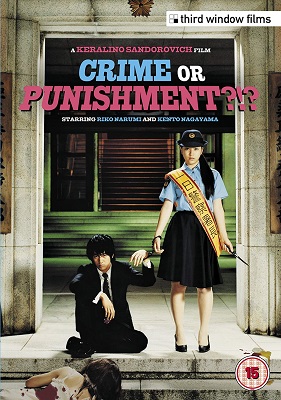
Crime or Punishment?!?, Keralino Sandorovich (2009, Japan). I have no idea what this film was about, but that was not unexpected given that it was recommended by David Tallerman. A model, who was printed upside down in an issue of a magazine, and objects violently to the mistake in the magazine’s office, is sentenced to be “police chief for a day” for a small prefecture’s police force. This apparently does happen in Japan. She finds herself investing in the role, and proves surprisingly popular with the police officers. One of whom is a serial killer, and she knows this is because he’s an ex-lover and he had tried to kill her. There’s also a salaryman who witnesses a murder but is then hit by a lorry. The film jumps about in time, – that salaryman’s death appears a few times – and the young woman in the lead role doesn’t especially stand out, which means it all seems a bit confused and a bit confusing. The film is a black comedy, but there wasn’t a great deal that was comic about it – although I guess that’s the point with black comedies. The fact it’s all over the place doesn’t help. Enjoyable, but I’ve seen much better.
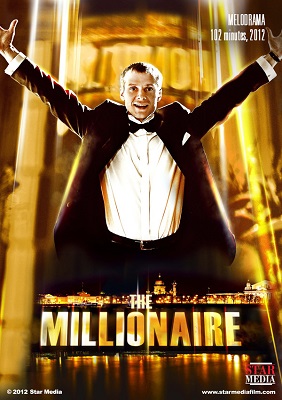
The Millionaire, Sergey Chekalov (2012, Ukraine). Doing your life over again is hardly the most original story out there, especially when it’s linked to romance. Kirill is about get engaged to the daughter of an oligarch. He’s an architect and wants to make a name for himself on his own, without his future father-in-law’s help. But when he discovers that’s never going to happen, he rejects his fiancée and walks away. At the reception he’s just left, a waitress tripped over his best mate and brought the champagne fountain crashing down. Kirill got chatting to her outside. After he decides to walk away, he gives her a call and meets up with her and her best friend. He and his best mate take the two women on a date. Ten years later, Kirill is married to the waitress, with a small son, she works as a teacher, and he still has yet to have one of his designs accepted. But he’s still best mates with his, er, best mate, who is now married to his wife’s best friend. But then Kirill attends a ten-year reunion, meets up with his ex-fiancée ad rues what might have been. Cue fairy godmother. Who, by means of a fatal collision with a speeding lorry, throws him into an alternative present where he’d been married to the oligarch’s daughter for ten years. And… he’s a total shit, stuck in a loveless and childless marriage, and his best-mate is poor and alcoholic and his “wife’s” best friend is a disabled writer because she was injured in the taxi ride on that night after her friend was fired from her job as waitress at the engagement party and died… It’s all very obvious, but it’s well-played and the cast are likeable. The Russian filter made it perhaps more interesting than it would have been otherwise, but it was all very glib and superficial and proof that Russian culture can be just as shallow as American culture.
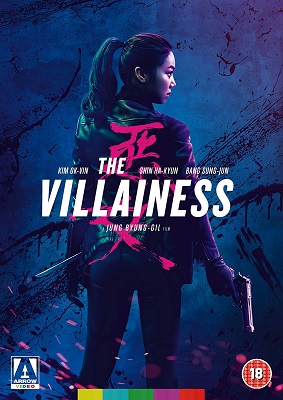
The Villainess, Jung Byung-gil (2017, South Korea). I think this is the first film I’ve seen that opens with a FPS POV. In fact I’m not sure if there are any films that make use of first person as camera, although surely there must be some, as it’s such an obvious cinema narrative trick. In the opening ten minutes or so, we see a young woman, as if she were the camera, basically slaughter her way through a crowd of gangsters. Later, we learn what prompted this murderous spree. We also discover what happened immediately afterwards – the young woman was picked up by a secretive organisation and locked away and trained in a variety of skills… Yup, it’s the plot of La femme Nikita. Pretty much blow by blow. And, like Besson’s film, The Villainess is immensely stylish. Perhaps not definingly so, as Besson’s film was, which spawned a TV series, but then South Korean cinema has been definingly stylish on its own for a couple of decades now. In comparison to other Korean films, The Villainess scores highly; in comparison to La femme Nikita, it blows it out of the water action-wise but can’t reach its level of stylishness. So it’s a sort of swings and roundabouts, half a dozen of one and six of the other, sort of thing. The Villainess is nonetheless definitely worth seeing.
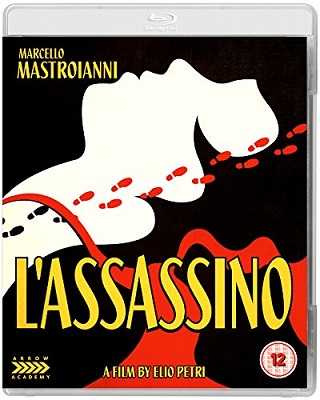
L’Assassino, Elio Petri (1961, Italy). I’d expected this to be a giallo thriller about a, well, an assassin. From the title. But assassino just means killer or murderer in Italian, not necessarily a hitman. In this case, it refers to an antique dealer, played by Marcello Mastronianni, who is taken in for questioning by the police but not told why. Eventually, he – and the viewer – learns it is because his lover, the daughter of a wealthy industrialist, has gone missing. And is then found murdered. As the police interrogate Mastronianni, and take him out to view the scene of the crime, so the story is interrupted by flashbacks showing the relationship between Mastroianni and his lover. There’s one great sequence where acquaintances of Mastroianni’s character talk to camera about him, and, of course, their testimony contradicts his own self-serving account of his past. Petri is better known for his film The Tenth Victim, an adaptation of Robert Sheckley’s short story, ‘The Seventh Victim’, which was subsequently novelised by, er, Sheckley. Anyway, Mastroianni is or isn’t the murderer of his lover and this film keeps its cards very close to its chest for much of its length. But that’s okay because it apes a Neorealist look, although the quality of the picture is much better and the cast are pretty much all professional. But even in 1961, Rome didn’t apparently look that much different from Rome in 1941 – in some areas at least, although part of the film takes place in newly-built suburbs and one section in an abandoned building site, for a hotel, all concrete floors and no walls. It’s an atmospheric piece, if not the piece I expected, but it works, and does actually make me want to make The Tenth Victim again.

1001 Movies You Must See Before You Die count: 929

2 Comments

Moving pictures 2018, #44

Not a single US film in this half-dozen. I’m steadily reducing the number of American films I watch, although there are still a large number of countries I’ve not seen films from.

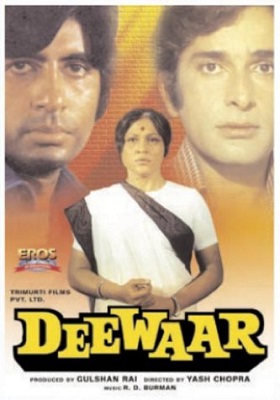
Deewaar*, Yash Chopra (1975, India). There are only three or four Bollywood films on the 1001 Movies You Must See Before You Die list, while around half of the list are from Hollywood. Despite the fact the two film industries are not so different in size (Indian cinema, including Bollywood, is around a third bigger than Hollywood, and Bollywood accounts for nearly half of Indian cinema’s ticket sales). Of course, the list is aimed at English-language film-watchers, but even so there are some excellent historical Bollywood films that have been missed off, such as Kaagaz ke Phool (see here), Mughal-e-Azam (see here) or Pakeezah (see here), just to mention a few of my favourites. Anyway, Deewaar is neither an historical epic, nor the usual boy-meets-girl Bollywood story, but a family drama and thriller. The film opens with a police officer being decorated, and in his acceptance speech he tells everyone he owes everything to his mother… And then the film heads straight into flashback territory. The two sons of a trade union activist go their separate ways after their father is blackmailed into betraying his fellow workers. One son becomes a criminal, the other a police officer, and… you can guess where this is going. Deewaar apparently had an enormous impact on Bollywood, and it’s certainly a much grittier and realistic – and yes, with singing and dancing – movie than others I’ve seen. In places, this means its age tells against it, as later films have covered similar territory – and, to be fair, it’s not an uncommon story in other countries’ cinemas. I think there should be more Indian films on the 1001 Movies You Must See Before You Die list, but I can see why this one is there.

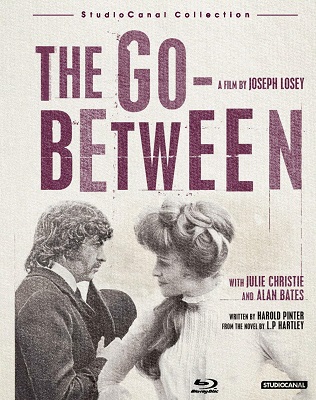
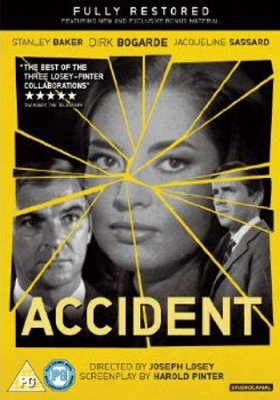
Accident, Joseph Losey (1967, UK). Joseph Losey and Harold Pinter made three films in the UK during the 1960s: The Servant (see here), The Go-Between (see here) and this one. Accident opens with a, er, car accident, from which Dirk Bogarde manages to rescue Jacqueline Sassard but Michael York is already dead. The two were on their way to visit Bogarde, who was York’s tutor at Oxford. But this is Pinter, so nothing is quite as it seems, and the female characters are never treated well – in this case, that’s Bogarde sexually assaulting Sassard after the accident. Confusing matters is Stanley Baker, another Oxford don, who has been sleeping with Sassard but, unlike York, has no plans for matrimony. The car accident is amazingly shot, not like it would be these days with OTT physical/CGI effects, shot from a number of surprising angles that really evoke the accident extremely well. It’s an arresting opening, and the film takes advantage of it, so when it starts the flashback main narrative it still has the shock of the opening sequence echoing. Which is just as well, as the story which follows is not the most exciting. It’s a cross-between a romantic triangle and a campus professor/student illicit affair story, and fuck knows what sort of shape that makes. It doesn’t help that it all takes at Oxford University, and over-entitled white men no longer play as sympathetic as they once – apparently, bafflingly – did. Bogarde plays a role he’s good at: the quiet restrained type who doe something nasty. Michael York plays, well, Michael York. As usual. Jacqueline Sassard is apparently better known in Italian cinema, and retired from acting two years after Accident when she married the head of the Lancia family (that’s cars, of course). The three Pinter/Losey films are worth seeing, but I couldn’t say which was the best of them. Probably the first.

The Spring River Flows East, Zheng Junli & Cai Chusheng (1947, China). I’m a big fan of current-day Chinese cinema, especially that of the Sixth Generation directors (and Fifth Generation too), but I also like early Chinese cinema a great deal, especially contemporary dramas from the 1940s, like Spring in a Small Town (see here) and this film, The Spring River Flows East. Which is a bit epic. 190 minutes epic. Released-in-two-parts epic. The story opens in Shanghai in 1931 and follows the fortunes of a family during the Japanese invasion. A man joins the resistance, but his wife and child are put in a refugee camp when the Japanese reach Shanghai. The man is later captured but manages to escape and heads for Chungking, which is under the control of the Kuomintang. Years pass, the man becomes a successful entrepreneur and marries another woman. The Japanese are defeated. The man returns to Shanghai. At a party, his first wife, working as a waitress, recognises him and reveals he is a bigamist. His second wife insists the first divorce him, but she finds another solution. The story is pretty much a soap opera, but played out against a backdrop of war, occupation and postwar deprivation. Obviously, the first wife is the sympathetic heroine – she’s played by Bai Yang, the foremost of China’s “Four Great Actresses” – although much is made of the fall from grace of the husband, from working-class hero to bourgeois lackey. The film isn’t as well-shot as Spring in a Small Town, which is really excellent, but what it lacks in cinematography, staging or script, The Spring River Flows East makes up for in breadth of story and scale. I can understand why it’s so highly regarded in Chinese cinema. I’d like to see it again too.

Silent Light, Carlos Reygadas (2007, Mexico). After watching this, I added all of Reygadas’s available films to my rental list – which, fortunately, appears to be all of them. This film takes place in a Mennonite community in Mexico, and the dialogue is chiefly in their language, Plautdietsch. The cast are also mostly non-professional – with the exception of Miriam Toews, a Canadian Mennonite author and actor, who plays the wife of the main character. He is having an affair with a single woman, and his wife knows about it. She confronts him, whch leads to her suffering a fatal heart attack. At the wake, the mistress kisses the wife’s body and she comes back to life. This is one of those films with long static takes and sparse dialogue. The movie opens with a gorgeous shot of the sun rising, and closes with one of it setting, and I thought the whole thing from start to finish excellent. It’s very much the sort of cinema I really like, almost faux-documentary, but with those long slow-moving takes where the very lack of action draws attention to the smallest of details. It’s the polar opposite of Hollywood action movies, with their relentless series of short-span jump-cuts, CGI-enhanced action, and so much detail on screen you’ve no idea where to look or what the fuck is actually going on. Reygadas is definitely a name I’ll be keeping an eye open for from now on.

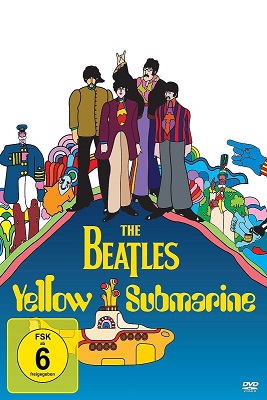
Yellow Submarine, George Dunning (1968, UK). I think I may have seen this before, although whatever bits and pieces I remembered may well have been from watching only parts of it rather than the whole movie. And that was likely over thirty years ago, during the early 1980s or late 1970s. So when it popped up free-to-view on Amazon Prime – and there’s some surprising stuff on there, but searching on the Fire Stick TV interface is next to useless (mind you, it’s next to fucking useless on the Amazon website too) – I decided to watch it. It’s… very much of its time, and very much what you see on the DVD cover-art. Young Freddie is sent in the Yellow Submarine to recruit the Beatles to help free Pepperland from an invasion by the music-hating Blue Meanies. En route, we’re treated to a number of tracks from various Beatles albums, some well-known, some pretty much forgotten except by fans of the band. I was never much of a fan of the Beatles – I’m still not one – and of the bands popular at the time (which was, I hasten to add, years before my own time), I much preferred the Hollies. I’ve always been slightly baffled by the Beatles’ level of success, but one thing I noticed watching Yellow Submarine was how familiar so many of their songs’ melodies were. I don’t mean familiar because the songs were famous, but familiar because the melodies were simple and sounded very like many other songs. Everything felt, well, a bit re-used. Maybe that was the secret of their success. After all, Oasis were huge too, and every one of their songs sounded like it was ripped off from something else. (I still think Oasis were a scam played on the British public by a jaded music press.) Anyway, I’m glad I watched Yellow Submarine, but I doubt I’ll bother rewatching it.

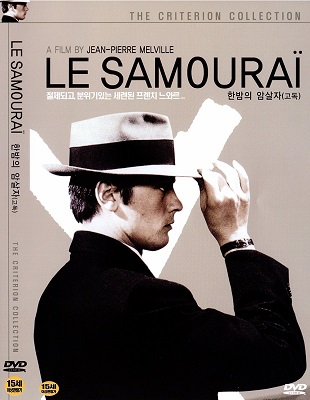
Le Samouraï*, Jean-Pierre Melville (1967, France). I borrowed this from David Tallerman, as it’s not available  for rent in the UK. (There isn’t even a UK release, and the only one for sale here is the US Criterion Collection DVD.) The only film by Melville I’d seen previously was Bob le flambeur, which has, to be honest, sort of mingled together in mind with a whole bunch of noir films I’ve seen over the years, so much so I don’t really know whether something I remember from it is actually from Bob le flambeur or a film by Dassin, Carné, Tourneur or Duvivier. So Le Samouraï came as a bit of a surprise, as it reminded me of Tati’s Playtime more than anything else. I mean the colour palette, of course. And some of the staging. Not the plot. Alain Delon (I prefer Belmondo, to be honest) plays a hitman, who lives alone in a small barely-furnished apartment with a canary in a cage. He shoots the owner of a nightclub, and is witnessed in the act by the club’s singer. However, when he is pulled in by the police – among many other men – the singer insists he was not the killer. He also had an alibi for the time of the murder – his girlfriend claims he was at her place. Then the hitman finds himself the target of an assassin, but he succeeds in forcing the assassin to tell him the name of his boss. While the plot was almost pure noir, the look of the film was definitely not Nouvelle Vague. The subdued colour palette and the minimalist set design, along with several industrial locations, gave the film a flat affect which suited its story. Delon played his role mostly stone-faced, but the rest of the cast felt more like types than characters. I’d not expected much when putting the disc in the player, but I found myself liking Le Samouraï a great deal. A good film, but I’m unsure whether it belongs on the 1001 Movies You Must See Before You Die list.

1001 Movies You Must See Before You Die count: 929

2 Comments

Moving pictures 2018, #43

I’ve been a bit lazy with my choices of viewing of late. I blame the weather. Although I have an air-conditioner, it’s not very effective, and it’s often too hot in the evenings to sit and concentrate on a movie. Not that any of the below could be described as moving wallpaper… But you know what I mean.

Love Me Tonight*, Rouben Mamoulian (1932, USA). Given the power of Hollywood, it’s often easy to forget – in the Anglophone world, that is – that Hollywood was not the only place where films were being made during the medium’s first few decades. Germany had a strong film industry in the 1920s – Alfred Hitchcock learnt much of his trade there. Then there’s the UK: during the same decade, HG Wells wrote three short silent films especially for Elsa Lanchester, as I recently learnt. And France, where Danish director Carl Theodor Dreyer made some of his best films; not to mention local directors such as Abel Gance or Georges Méliès. And China, which produced The Goddess (see here) and Song at Midnight in the 1930s. And the USSR… In fact, the 1001 Movies You Must See Before You Die list contains 83 films from the 1930s. Fifty-seven are from the US! France is next highest with 12, then Germany with 5, the UK with 3, and then China with 2. The remaining nations are Brazil, Spain, Japan and the USSR. But 57 from the US! Okay, so it’s easier for the US-based list makers to find early US films than early films from other nations, but that shows a piss-poor effort to track down non-US examples. One of which, Limite (see here), from Brazil, wasn’t even available at the time the list was first made, and its reputation existed mostly as hearsay (bolstered by Orson Welles declaring himself a fan after a private showing back in 1942!). All of which is a rather long-winded way of saying I cannot honestly see why Love Me Tonight made the list. It’s basically a fairy-tale recast as an early Gene Kelly musical, but with Maurice Chevalier in the lead role. You know what I mean – there’s something fairy-tale about all of Gene Kelly’s musicals, whether it’s the plots or the dream-like dance sequences or the character Kelly usually plays. Chevalier is a tailor, who is owed a great deal of money by an aristocrat (this is a recurring motif in Western European history and fiction, you’d think we’d fucking learn not to trust the nobs), so he sets off to demand what he is owed. He bumps into a princess, declares his undying love, is presented as a baron at the chateau because his debtor doesn’t want to embarrass himself… and, well, it’s a story which should end with a tumbril and not with the two lovers re-united. And I really can’t understand the appeal of Chevalier, who galumphs about like a Cary Grant cast in ‘Allo ‘Allo, and whose singing voice was nothing to, er, shout about. I have enjoyed, and even admired, some of the 1930s US films on the 1001 Movies You Must See Before You Die list, but I’ve been baffled by the inclusion of most of them. This definitely falls into that latter group.

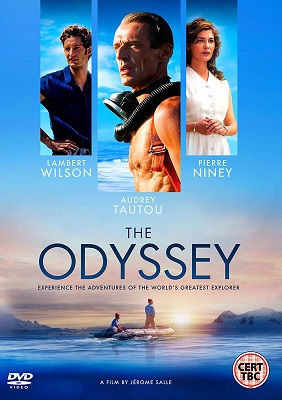
The Odyssey, Jérôme Salle (2016, France). The more sharp-eyed among you will have noticed that the three actors on the cover of the DVD have the wrong names underneath. Which seems like a pretty dumb mistake to let through on the packaging. Anyway, The Odyssey is a biopic of Jacques-Yves Cousteau, as played by Lambert Wilson. I remember Cousteau from my own childhood. His films seemed to always be on television, although whether that was UK television or UAE television, I can’t remember. But I certainly remember his ship Calypso, the diving saucer, and the divers with their distinctive streamlined yellow scuba gear. I’m not young enough to remember his Conshelf underwater habitats, although I’ve read up on them in the last few years, and even have a  copy of the film made about Conshelf II, World Without Sun (see here). So Cousteau was not a figure that was unfamiliar to me, and I was aware of many of his achievements. Having said that, I knew little about his career, just the highlights really. I hadn’t known he was partly funded by the French Ministry of Petroleum, and was responsible for discovering a number of oilfields in the Middle East. Or that his business was in debt to the tune of millions of dollars during the 1980s. Unfortunately, The Odyssey wants to be about JYC’s (as his friends called him) relationship with his youngest son, Phillippe, who initially turned his back on his father and his career, but later joined him and became Cousteau’s lead cinematographer. He also died in a seaplane crash in 1979 – this is no spoiler, as the film opens with the crash. On the one hand, The Odyssey wants to be a biopic of JYC; on the other, it wants to be a father-son drama (because apparently the French think that’s what cinema should be about too); and on the other hand, you have Audrey Tatou as the put-upon wife who acts as “mother” and “shepherdess” (her nickname) to the crew of Calypso… The end-result is a film which has plenty of drama but none of the wonder of Cousteau’s own films about the oceans. The leads are good in their roles, but the focus feels too… land-bound. It comes as no surprise that Cousteau was a bad businessman, or that he was bad at picking business partners. He was a dreamer, and his films get that across much better than The Odyssey does. I enjoyed it, and I find Cousteau an interesting person, but I’d sooner watch one of JYC’s own films, if I’m honest.

The Jungle Book, Jon Favreau (2016, USA). Disney has been on a mission this century to remake all its classic animation feature films as live-action. I’ve no idea why. Earlier attempts, like 1996’s 101 Dalmations, were hardly successful. Having said that, Kenneth Branagh’s Cinderella from 2015 (see here) isn’t half bad, and Sleeping Beauty (see here; the greatest Disney film ever made) was not so much remade as, er, sequelised with Maleficent. But The Jungle Book is not a film you’d expect to be given the live-action treatment. Chiefly because all of its character but one are, well, talking animals. And while WC Fields may have said, “never work with animals or children”, animals can’t actually, er, talk, which pretty much fucks up the entire story of The Jungle Book. So Jon Favreau uses CGI animals. And they look very realistic. But, of course, each animal character – Baloo, Arkela, Shere Khan, Bagheera, King Louie, and so on – needs a human actor to provide their voice. And that’s where Favreau screwed it up. It’s a good cast, an excellent cast, But so hugely miscast. Idris Elbas as Shere Khan? WTF? Bill Murray as Baloo? What the actual fuck? Disney’s original The Jungle Book is a film from my childhood. I remember seeing it in the gym at the Doha English Speaking School in the early 1970s. We also had a LP of songs from Disney films, which featured the best-known song from The Jungle Book abd other films, and which we played relentlessly when we lived in Rumeilah (an area of Doha). So, on the one hand, it’s “mess with my childhood icons at your own peril”, but, on the other, some previous attempts had actually been quite good. I wish I could say The Jungle Book fell into the latter category. The CGI animals are, unsurprisingly, fantastic to look at – even if their voices are so badly chosen. And the story sticks mostly to the Disney animated film. The musical cues make use of the songs from the animated film, without actually being, well, sung. Which feels sort of half-hearted and is disappointing. King Louis is converted into a Gigantopithecus (which allegedly existed from the late Miocene to the mid-Pleistocene), which is no more plausible than the animated film’s orang-utan but does, I have to admit, look pretty cool. But, despite all that, The Jungle Book feels mostly like a showreel for CGI. It’s like an advert for the state-of-the-art. Kipling’s collection of short stories has been well and truly buried. Instead of making a “better” The Jungle Book, Favreau should have gone back to the source. Instead, he’s produced a photo-realistic version of Disney’s 1967 animated film, but taken all the fun out of it. I admit The Jungle Book is not a Disney animated film I hold in especially high regard, but it deserved a better remake than this.

Devil Girl from Mars, David MacDonald (1954, UK). There are a lot of sf B-movies available on Amazon Prime, probably because they’re all out of copyright and watchable copies have been digitised at some point somewhere. Whether they should have been is an entirely different matter. I’d argue that Devil Girl from Mars, which is British rather than American, is one that deserved being better known, even if it’s not that good a film and was roundly panned on its release. Perversely, it is its failures to abide by sf B-movie clichés which makes it interesting. It is, sort of, an Alien precursor. A group of people are trapped at a remote Scottish hotel when a flying saucer lands nearby. They are terrorised by the UFO’s crew, the so-called “Devil Girl”, and her crap-looking robot. They plot among themselves to save the Earth from the threat represented by the Devil Girl – she is, apparently, the scout for an invading force from Mars. The plot is enlivened by the trapped guests’ dynamics. One is an escaped murderer under an assumed name. Another is a scientist sceptical of UFOs. True, the story is somewhat formulaic – N’yah, the Martian, appears in the hotel, tells the trapped guests what they can and cannot do, and leaves. They then discuss what she has said. But the focus is on the characters trapped in the hotel, in response to the threat posed by N’yah, than it is in the N’yah and the threat she poses. In the end, the scientist figures out a way for N’yah’s flying saucer to be destroyed… but only by someone willing to sacrifice themselves. Which leads to, well, a competition among the men to decide who should be the one to blow up the UFO. The acting is not especially good, the special effects are risible (especially the robot), and the studio sets aren’t very convincing. N’yah’s fetish wear doesn’t much resemble what you’d expect the captain of spaceship from Mars to be wearing. This is by no means a great film, but for all its faults it’s not a bad B-movie.

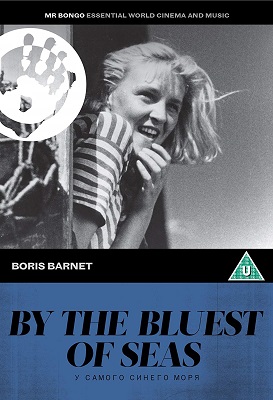
By the Bluest of Seas, Boris Barnet (1936, Russia). I mentioned films from the 1930s on the 1001 Movies You Must See Before You Die list, sand that there was only one from the USSR – it’s Zemlya by Aleksandr Dovzhenko (see here). Which is an excellent film. But Boris Barnet also made some excellent films during the 1930s. Not just By the Bluest of Seas, but also Outskirts (see here). Not to mention Eisenstein’s Alexander Nevsky (see here). Eisenstein does appear on the list – several times, in fact. But not Barnet. Which is a surprise. This film has been accused – by Western critics – of being propaganda, which shows a remarkable lack of self-consciousness, if not honesty, on the part of those critics, as Western, especially Hollywood, movies have been propaganda for, variously, the American Dream, capitalism or consumerism since the early days of cinema. And in these times of overt product placement and merchandising, they’re even more propaganda tools. But, of course, when it applies to capitalism, it’s not propaganda. Because propaganda is political but capitalism is not. If you think that, I suggest you go back to kindergarten as you’ve entirely missed the point of the modern fucking world. Anyway, in By the Bluest of Seas, two sailors are washed ashore a Caspian Sea island during a storm, and join the collective farm located there. Both of them are attracted to the leader of the kolkhoz – that’s her on the DVD cover – and so vie for her attentions. But, after various attempts to win her favour, including a fishing trip during which she is washed overboard and believed lost, but then washes ashore later, they learn she has a fiancé off fighting in the Pacific. It’s not the most original of stories, and its depiction of kolkhoz life probably understates the hardships, but Barnet’s cinematography is really quite good, especially the scenes set on boats during storms. And, for all that, nothing in it felt like propaganda. I could argue that not only is all cinema propaganda, but that it should be more overtly propaganda. And sf should be didactic. But I like my propaganda honest about its intentions – which is more than can be said for Hollywood’s product placement deals, etc – so that at least I can decide how to take it. If, as stated earlier, By the Bluest of Seas presents an overly rosy view of life in a kolkhoz, not to mention the benefits of such a system, then what’s the problem? By the Bluest of Seas is an extremely well-shot, if somewhat hackneyed, romantic triangle set in 1930s USSR. This film should certainly have been considered for the 1001 Movies  You Must See Before You Die list; all of Barnet’s film probably should have been.

Desert Ark, Mohamed Chouikh (1997, Algeria). I now have all four of these Great African Films DVDs. ArtMattan are continuing to release DVDs, but the fourth volume seems to be the last in this series. Their DVDs are also really hard to find – ie, expensive – on this side of the Atlantic, and their website is so 1990s you can only order on it and pay by “check”. Sigh. A big shame, because Africa – which is a continent – has a rich tradition of film-making, some African nations perhaps more than others, but pretty much all of which are hard to find in the UK. This particular volume of Great African Films also includes Daratt by Mahamat Saleh Haroun, a Chadian director, whose movies are released on DVD in the UK (and for good reason – they are excellent) The other film in this set is Desert Ark, by Algerian director Mohamed Chouikh (that’s French orthography, so in English orthography it would probably be Shwaykh). The story pits two tribes, one nominally Berber, against each other over an illicit love affair between a young man from one and a young woman from the other. On the one hand, it’s all intended to be figurative; on the other, artificial tribal affiliations aside, this is something that happens in real life and, despite the attempts of reconciliation by a local mullah, it quickly escalates to violence and outright war. Chouikh’s film is clearly meant to be cautionary, but in the twenty years since it was made the world has become much more violent and intolerant. Which means that Chouikh’s flights of fancy – casting the film as an allegory of life aboard Noah’s Ark – actually mean less than the narrative as presented. The final scenes, in which the two lovers stumble across a ship becalmed in the desert, feel like whimsy rather than the culmination of an allegorical commentary. There is, of course, nothing allegorical about a bullet. Or indeed metaphorical. If anything, bullets are items that are usually turned into metaphors. But when you have two tribes using guns to protect something as nebulous and worthless as “honour” – even worse than that, male honour as embodied in women as chattel – then you have a conflict that is never really going to be resolved until all the men involved have been re-educated as human beings. Desert Ark tells a story specific to its country of origin, but its themes are universal. It really deserves a wider release than it received.

1001 Movies You Must See Before You Die count: 927


Leave a comment

Moving pictures 2018, #42

An almost entirely Anglophone group of films this time around, although one of them isn’t actually Anglophone as it takes place in Zambia and the dialogue is almost entirely in Chichewa (a member of the Bantu language family)… but the director emigrated to the UK when she was nine and the film was mostly funded by UK film production companies, so I’ve marked it as a British film.

Transfer, From the Drain, Stereo, Crimes of the Future, David Cronenberg (1966 – 1970, Canada) The four films in this box set were originally included as extra features on the special edition release of Videodrome, but have since been released as David Cronenberg’s Early Works. I am not an especially big fan of Cronenberg’s works – I’ll happily watch them, and some of them I think are very good – but I’m not the sort to track down all his films, especially the ones that are hard to find, and buy them… although if they’re readily available, I’ll happily stick them on my rental list. I knew that Cronenberg’s first film was Shivers, followed by Rabid, which I’ve seen (see here), although I first came across his work when I watched Scanners some time back in the 1980s. The four films here, two of which are technically feature films as they’re over 40 minutes in length, predate Shivers, but since Cronenberg’s career is generally considered to have started with ShiversTransfer has a psychiatrist and his patient sitting at a table in a snowy field and, to be honest, it’s a curiosity in the director’s oeuvre. Perhaps there are hints of the themes Cronenberg explores throughout his career, but it’s also one of those portentous films made by students who don’t realising they’re  both re-inventing the wheel and producing something that isn’t round in shape. The same is true of From the Drain, which also features two characters in conversation, in this case, veterans of some future war. One for fans. But then there’s Stereo, which is worth the price of admission alone. It’s the usual student over-emphatic nonsense, ostensibly about an experiment to boost telepathic powers, as far as the script is concerned – or rather, voice-over, as apparently no sound was recorded as the Bolex camera too noisy. However, it was filmed entirely on the Scarborough campus of the University of Toronto and features some wonderful Brutalist and Modernist architecture, made all the more visually appealing for having been filmed in black and white. Crimes of the Future treads similar ground – thematically and literally, since it’s also filmed in Scarborough – but it also harkens back to those earlier films, albeit using voiceover again, and tried to be clever with its dialogue. Stereo is a little gem, a great piece of black and white Brutalism. The earlier two films feel like ingredients that fed into it; and the last film seems like a failed attempt to remake it. They’re for fans of Cronenberg, obviously, but I’m glad I watched them.

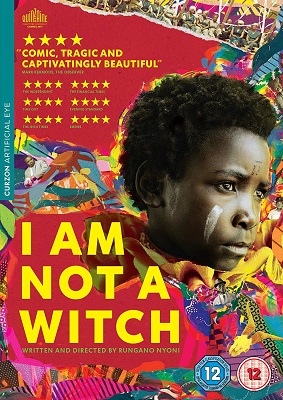
I am not a Witch, Rungano Nyoni (2017, UK). As mentioned above, this film is set in Zambia, using a local cast, with dialogue mostly in Chichewa, but the director moved to Wales when she was nine, and the film has been mostly funded by UK production companies. But really, it’s Zambian in all but its funding. It’s Nyoni’s first feature film too, although two of her earlier short films are also included on the disc – Mwansa the Great and Listen. A young girl is accused of being a witch and taken away to a camp where witches are imprisoned. The women there are loaned to local business as manual labour. Each one is attached to a long ribbon on a large bobbin. They cannot remove the ribbon, or they are punished. The girl proves to have a talent for spotting wrongdoers. When presented with a line-up of suspects for a crime, she can pick out the guilty one. This makes her useful to the bureaucrat responsible for the  witches’ camp, and he uses her talent to better himself. It’s patently obvious that men have been using accusations of witchcraft to punish women who have rejected them – it’s even explicitly said, at one point. Of course, the young girl soon realises the power she has, especially the life that could be hers if she marries her protector, and so naturally she rebels. And, well, let’s just say the films does not have a happy ending. I thought this an excellent film. I’m not into film-making technique all that much, so the director’s inexperience, as outlined in other reviews, did not spoil my enjoyment. More interestingly, there were two shorts by Nyoni on the disc. The first, Mwansa the Great is a mildly amusing vignette set in a Zambian village, which shows a nice touch of the fantastic in realising the imagination of its child cast. Listen on the other hand, co-directed with Finnish/Iranian director Hamy Ramezan, is a much more powerful piece of work. An Arab woman in Denmark is being interviewed by two cops. She claims her husband will kill her if she is sent home. The cops do not understand Arabic, and the translator is wilfully playing down the woman’s situation. So they call in the son, who can speak Danish. He lies and tells the cops everything is fine at home because, he tells his mother, “I can protect you now”. It’s frightening how the woman’s communications are corrupted by others, so much so that the Danish cops respond differently to a woman who is quite clearly a victim. The commentary in Listen is obviously no different to that in I am not a Witch, even if the situations and settings are very different. Nyoni is clearly a name to watch, with a definite message that needs to be told.

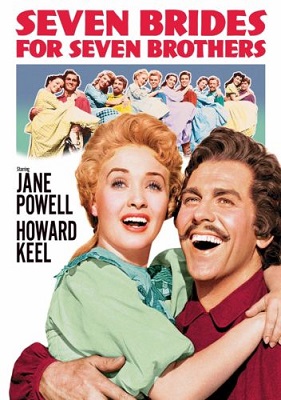
Seven Brides for Seven Brothers, Stanley Donen (1954, USA). I’m not a big fan of musicals, I think I’ve said that before. But I found this on Amazon Prime, so watching it wasn’t going to cost me anything, and it was a hot Sunday afternoon, and you know how it goes… I think the film also appears on one of the iterations of the 1001 Movies You Must See Before You Die, although not the one I’m using. A “backwoodsman”, Howard Keel, visits town looking for a wife. Jane Powell is sick of being treated like a drudge, so she accepts Keel’s offer despite only having met him an hour or two earlier. She goes home with him… and discovers he has six brothers. All of whom also want wives. So she basically knocks off their rough edges, teaches them how to treat women properly… and then they end up pretty much kidnapping six women to be their brides. Up until that last part, I was surprised to find myself enjoying Seven Brides for Brothers. Okay, so the songs aren’t exactly memorable, and a lot of the scenery is actually studio backdrops, but there’s plenty of humour, the dance-off at the barn-building is good, and the cast all play their parts well. It was a fun film. True, I expect to walk away from a musical remembering at least one of the tunes – if not with an earworm it takes me weeks to dislodge – but if I can remember one of the dance scenes then I suppose that’s a close second. Seven Brides for Seven Brothers will never be a favourite musical – and I’m slightly worried that such a concept should even occur to me – but I enjoyed watching it.

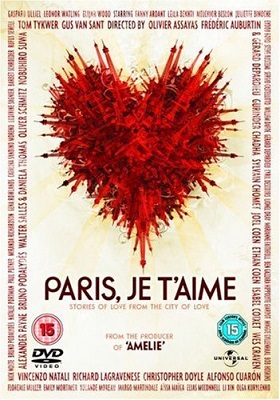
Paris, je t’aime, various (2006, France). This was lent me by David Tallerman. It’s an anthology film of eighteen short films by well-known directors, a mix of French and American, set in the city referenced in the title. And, well, there are too many Americans in it. The segments vary in length but all are shorter than ten minutes. I liked ‘Quais de Seine’ by Paul Mayeda Burges and Gurinder Chadha, in which a young Frenchman walks away from his sexist mates and becomes friends with a young Muslim woman; and ‘Place des fêtes’ by Oliver Schmitz, in which a Nigerian man is attacked by racists and connects with the immigrant paramedic who attends him. Most of the other segments didn’t seem to fit in with French cinema, such as Vincenzo Natali’s segment in which Elijah Wood meets a beautiful vampire, or the Coen brothers’ one where Steve Buscemi is beaten up by a young Frenchman. Of the segments which treated Paris as a destination for tourists, rather than a city with its own natives, probably the best was ‘Quartier Latin’ by Frédéric Auburtin and Gérard Depardieu, written by Gena Rowlands, starring Gena Rowlands and Ben Gazzara and Gérard Depardieu. Out of the eighteen segments, the hit rate was too low to call the film a success. Only a couple were actively bad, but the whole project just seemed to have too heavy a US hand on it and that spoiled it. There is apparently a complimentary film set in New York, which seems more fitting, and less interesting to me, and several more planned: in Rio de Janeiro, Shanghai and Jerusalem. If they are equally aimed at the US market, I dread to think how they’ll turn out. Paris, je t’aime is not a film that celebrates the culture of Paris, it’s a film that uses it as a location to present a handful of Parisian stereotypes.

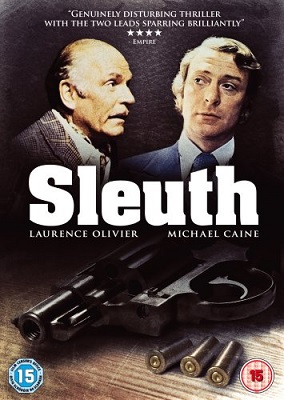
Sleuth*, Joseph L Mankiewicz (1972, UK). I was pretty sure I’d seen this many years ago, but then realised I was confusing with a spoof Sherlock film, whose title escapes me, in which Watson was the clever one and Holmes a bumbling idiot. But that’s an entirely different film, and almost certainly doesn’t belong on the 1001 Movies You Must See Before You Die list. Unlike Sleuth. Which having now seen, I suspect I may well have seen many years ago. But I’m not sure. Olivier plays a successful writer of traditional crime novels. Caine is his wife’s lover, a hairdresser. Olivier invites Caine to his mansion and explains his cunning plan. He approves of their relationship and wants to give them a head-start. So they will fake a robbery, Olivier will claim the insurance, and Caine and ex-wife can keep whatever a fence will give them for the stolen jewellery. But Olivier, of course, has something else in mind – and shoots Caine as an intruder. The following day, an inspector turns up to investigate Caine’s disappearance, but Olivier insists it was all a joke and he only scared Caine by firing blanks. And… anymore would constitute serious spoilers. This is a film that relies entirely on the quality of its cast, and while Olivier is on top form, Caine also rises to the occasion. It doesn’t feel like a play, despite the use of pretty much a single location – the film widens it out a little, opening the film in a maze in the grounds of Olivier’s mansion, and making good use of movement throughout the interior of the house. Having said that, what really stands out about this film is the cleverness of its script, which was a play by Anthony Shaffer, so it seems a bit of a cheat to stick it on the 1001 Movies You Must See Before You Die list. It’s an excellent film, but that’s because it’s a good adaptation of an excellent play. It feels like a cheat, like it’s being rewarded for being something it isn’t. Worth seeing, definitely, but does it belong on the list?

1001 Movies You Must See Before You Die count: 926


2 Comments

Moving pictures 2018, #41

I have seen other films by all the directors in the post, except for the last. Some, of course, more than others – Lang is my 8th most-watched director, with 25 movies. (Alfred Hitchcock, unsurprisingly, occupies the top spot.)

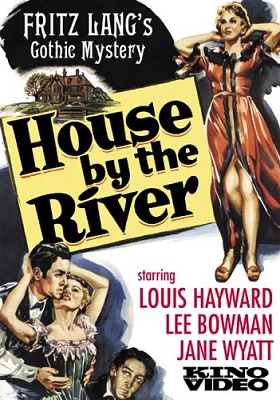
House by the River, Fritz Lang (1950, USA) Unsuccessful author Louis Hayward is left on his own with attractive maid Dorothy Patrick. Enraged by his latest rejection, and drunk, he sexually assaults Patrick, and strangles her when she resists. His brother, Lee Bowman, then turns up, and Hayward persuades him to help him dispose of the body – in the river by, er, the house. Hayward then puts it about that Patrick has run away with clothing and jewellery belonging to Hayward’s wife. But then Bowman learns that the meal sack in which they hid the body had his name on it. And the body has re-appeared. Hayward claims Bowman was the murderer. And it looks like he might go down for it. Lang made some classic noir films during the 1940s and 1950s, but this isn’t generally reckoned one of them. It apparently flopped on its release, but time has been kind to it: the starkly-lit studio sets, indoors and outdoors, look really quite effective, and if the script and acting is perhaps a bit overwrought there are some really effective scenes. The scene where Hayward tries to recover Patrick’s body from the river is especially good. Despite that, it’s probably one for fans – of Lang or noir.

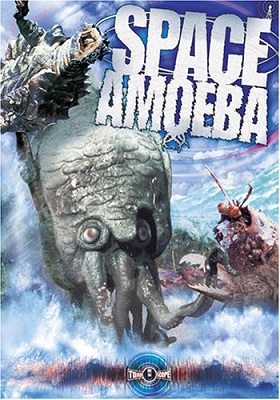
Space Amoeba, Ishiro Honda (1970, Japan). The original Japanese title of this film translates as “Gezora, Ganimes, and Kamoebas: Decisive Battle! Giant Monsters of the South Seas”, which, er, pretty much describes the entire plot. Admittedly, it doesn’t quite roll off the tongue as readily as Space Amoeba, or the film’s US title, Yog-Monster from Space (although what a “yog-monster” is, is anybody’s guess). Anyway, space probe on its way to Jupiter encounters a strange energy alien, which takes over the probe and sends it back to Earth. It crashes in the Pacific, and the alien takes over the body of a cuttlefish and grows it to giant-size. Meanwhile, a group of photographers and developers have travelled to Selgio Island to explore the sight of a future resort. The giant cuttlefish attacks them, and when they defeat it, the alien turns into a giant stone crab, and then a giant mata mata. So, lots of monster fights. And, er, that’s about it. There are a few character arcs and stuff, but let’s not get carried away – kaiju films are all about the monsters, after all. Strangely, the lead characters seemed to have been dubbed by Australian actors.

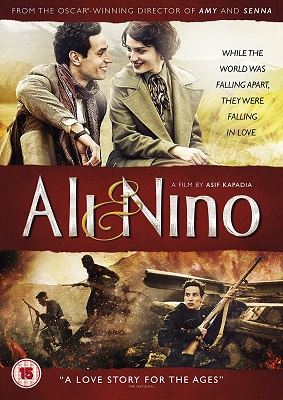
Ali and Nino, Asif Kapadia (2016, UK). I learnt of this story watching a documentary about Baku (see here), but at the time thought it was only a 1937 novel. But it was apparently adapted two years ago by a British director, with a Palestinian playing the Azerbaijani and a Spaniard playing the Georgian. Oh well. Casting aside, the film makes a good fist of the story and even manages to present Baku as it was in the first two decades of the twentieth century. Both Ali and Nino are from well-off families, aristocracy if not minor royalty. A rival for Nino’s affections kidnaps her, but Ali rescues her. But the rival dies during the rescue, so Ali has to hide out in the hills. Meanwhile, WWI breaks out. A friend re-unites the two and they marry in the hills. The Russian Revolution takes place. Post-WWI, Azerbaijan becomes independent. The couple return to Baku and Ali is made a government minister. But then the Russians invade and Azerbaijan becomes a vassal state. Ali and Nino flee. Ali and Nino is all a bit, well, Dr Zhivago, with a bit of Lawrence of Arabia mixed in. It’s clear where Kapadia’s inspirations lay – and it’s no bad thing, as those are both excellent films. The two leads are, perhaps, a little bland, although Mandy Patinkin, one of only two faces I recognised in the cast, makes a good Grand Duke Kipiani, Nino’s father. Kapadia at least does a better job of making his locations look like Baku of the 1930s than Lean did making Spain look like Russia (athough both are good-looking films). Kapadia is probably better-known for documentaries made from found footage, but if this, his feature film, is any indication he has a good career ahead of him in that area too.

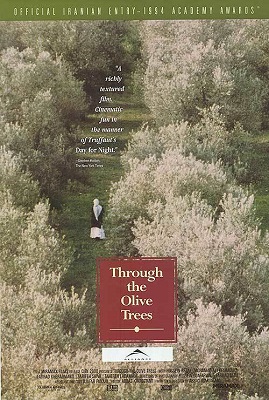
Through the Olive Trees*, Abbas Kiarostami (194, Iran). This is probably Kiarostami’s most highly-regarded film and yet, despite the fact pretty much his entire oeuvre is available on DVD, this one film isn’t. Every other film he made: available on DVD, probably soon to appear on Blu-ray. Through the Olive Trees: nope. I can only hope that when that long outstanding Kiarostami collection appears on Blu-ray, it includes this. Through the Olive Trees is about a director making a film in a village in Iran that recently suffered a bad earthquake. I can’t think of another film director whose movies were so consistently meta – whether it was the pull back to the crew at the end of Taste of Cherry, or the plot of Close-Up (see here), which consists of a man pretending to be rival director Mohsen Makhmalbaf. In Through the Olive Trees, two of the locals the director has cast have a bad relationship: he asked for her hand in marriage but was rejected by her mother. Acting in the film has brought the two together, and while he still burns a torch for her and is incensed by his rejection, she doesn’t seem especially concerned and is happy to accept her mother’s decision. But the two start to confuse the parts they’re playing and their real lives – I believe most of the cast were amateurs from the area where the film was made, and many of the events in the film happened in real life. In and around this, the director has to cope with making a film far from Tehran, with only local support, living in tents and using a much-reduced crew. This hasn’t overtaken Where the Wind Will Carry Us as my favourite Kiarostami, and I think I like Close-up slightly more as well, but it’s certainly in the top five. Excellent stuff.

The Warrior and the Wolf, Tian Zhuangzhuang (2009, China). I watched this twice before returning it to Cinema Paradiso and I’m still not sure sure what it’s about. I think I know what it thinks it’s about, but that’s not the same as what appears on the screen. It receive some stick because it’s a Chinese historical film starring a Japanese man and a Hawaiian woman in the lead roles – cf Zhang Yimou for casting Matt Damon in The Great Wall. The Warrior and the Wolf opens with on-screen text explaining that General Zhang guards the northern border, but during the winter months his army returns home. When Zhang is captured by barbarians, a new recruit, Lu, frees him. Zhang leaves Lu in charge and heads home. Winter arrives and Lu leads the garrison home, but they end up trapped in a village by a snowstorm. Lu takes a village woman for himself, She tells him that sex with outsiders turns the villagers into wolves. When the soldiers leave, they are attacked by wolves. This is definitely a film that’s all about the visuals, not to mention the sex scenes between Lu and the village woman. Occasional screen-fulls of narrative text, however, fail to bed the story into the visuals, so the end result is a film that looks gorgeous but is as dull as dishwater. I’ve now seen three films by Tian, and he definitely seems stronger on cinematography than narrative. The Horse Thief (see here) had the most interesting setting, but The Warrior and the Wolf doesn’t seem all that much different to the current crop of wu xia and historical epic films flooding out of China.

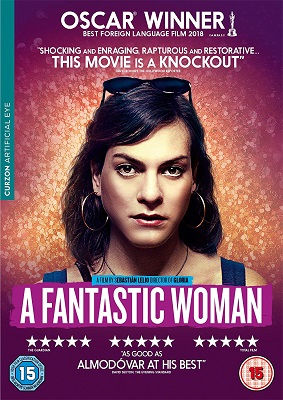
A Fantastic Woman, Sebastián Lelio (2017, Chile) This is one of those films where the plot is easy to describe. That, however, is the only thing that’s “easy” about it. A man in a relationship with a transgender woman, Marina, has a seizure one night. She manages to get him to the hospital, although not without him falling downstairs at one point. Due to the injuries sustained from the fall, the police are called. The man dies of an aneurysm. The police seemed happy Marina was not responsible for the death, but they are afraid she might have been a victim herself in the relationship. So while trying to manage her grief, she’s having to deal with an officious police officer intent on digging into her private life. Then her late lover’s transphobic ex-wife turns up. And she wants everything back. Like the car. The son moves into the flat and throws Marina out. He even keeps the dog, which was given to Marina. And the family refuses to allow her to mourn her lover’s death – they ban her from the funeral, and the son and his mates physically assault her when she turns up. The one thing I don’t understand is why the ex-wife has such powers. Her relationship with the deceased ended when she divorced him. It’s implied Marina’s relationship was relatively recent, but even so she lived with him, they were a couple. A Fantastic Woman won the Oscar for Best Foreign Language Film, and it’s certainly a good film. Its star, Daniela Vega, is excellent in the title role. But it’s also a film that makes you angry with the injustices heaped on its title character. Obviously, they’re making a point – and the success of the movie shows the point is getting across to some people. But the fact it has to be made in the first place… and the treatment meted out by transphobes… It’s disgusting, makes you ashamed to be human. An excellent film, definitely worth seeing.

1001 Movies You Must See Before You Die count: 925


Leave a comment

Moving pictures 2018, #40

Bit of an odd mix this time.

Avalon: Beyond the Abyss, Philip Sgriccia (1999, USA). A while ago I put together a list of all films that featured deep sea diving, and this was on it. I knew nothing about it, other than that. I didn’t know it was a private project by a star of Baywatch, Parker Stevenson. I didn’t know it was released straight-to-video. I didn’t know it was pretty bad. Stevenson plays an oceanographer who is called in when an island mysteriously explodes and creates a “black tide – a “harmful algae bloom” or “HAB”, because, of course, world-killing events always have acronyms. But apparently it’s all to do with a Mayan god, who threatens extinction every 5,000 years… or is it? A diver disappears in the deeps, and when he reappears he’s different, like alternate world version of himself different. Oh, and there’s a big hole, with an “intense magnetic field”, in the ocean bed. So maybe not Mayan gods after all. Surprisingly, Stevenson managed to get use of some pretty state-of-the-art diving hardware for his film – not just a diving support ship and a ROV, but also an actual DSV (which never gets used) and an atmospheric diving suit (which does). This film apparently never made of it off VHS, which is a bit of a shame given much worse films have had DVD, and even Blu-ray, releases. It is perhaps a bit too much of a cut-price The Abyss, and Stevenson probably found his level when he appeared in Baywatch… but there’s some nice hardware on display and some pretty good underwater photography (but also some bad CGI).

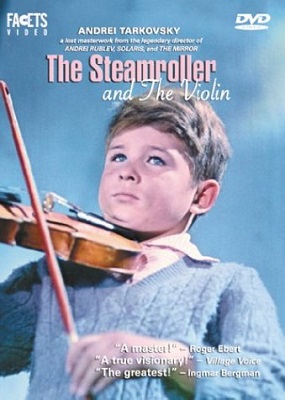
The Steamroller and the Violin, Andrei Tarkovsky (1966, Russia). Prior to the release of his first feature film, Andrei Tarkovsky made four short films, the last of which, The Steamroller and the Violin, was his diploma film at VGIK. It’s a simple enough story: a seven-year-old music student is bullied by the other boys in his apaprtment block, and is one day saved by the driver of a steamroller working on the road outside. The two become friends. They spend the day wandering around Moscow, and agree to meet up to see a film that afternoon. But the boy’s mother won’t let him out because she doesn’t know the steamroller driver. Who insteads goes to the cinema with his female driver colleague who has completely by coincidence of course turned up. The one thing that’s noticeable about The Steamroller and the Violin is all the camera tricks Tarkovsky managed to squeeze into it. On his way to music school, the boy looks at the mirrors in a shop window, and we’re treated to a montage of split-screen fractured moving images, as if reflected in multiple mirrors. When the boy and the driver watch a house being demolished, the camera follows the path of the wrecking ball. And when the boy plays his violen for the driver, the camera is placed near the floor looking up at the boy as he plays. Given it was a diploma film – it was awared “excellent”, apparently – then I suppose it’s good to display technical proficiency, but it all does seem a bit… imposed, a bit too much for the story to carry. Worth seeing, however.

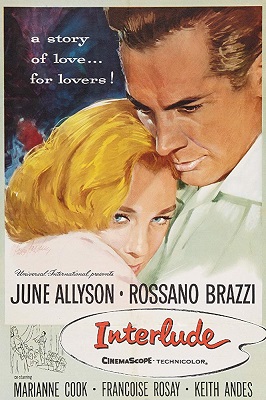
Interlude, Douglas Sirk (1957, USA). My admiration for Sirk’s 1950s “women’s pictures” know no bounds, and not only is All That Heaven Allows my absolute favourite film but I also love Magnificent Obsession and Imitation of Life. But not every film made during that period by Sirk worked quite so well. On paper, Interlude should have done. A young American woman, hungry for adventure, gets a job in post-war Germany with a cultural organisation. Through her job, she meets a tortured genius German conductor, whose wife is mentally ill. She has an affair with him. But eventually realises the error of her ways and returns to the US. It has all the ingredients, and the cast were certainly up to the job – June Allyson and Rossano Brazzi. It even had European locations. And yet… I note that the three films I like had Russell Metty as cinematographer, but Interlude has William H Daniels. Is that all it is? The cinematography? Because Interlude has its moments, but doesn’t enthral to same extent as those other films. Perhaps it’s because Allyson’s character is too nice – Wyman in All That Heaven Allows at least stands up for herself – or perhaps it’s that Brazzi never quite convinces as the tortured maestro, although he does make a good romantic lead. Interlude feels like a film that could have been a pure slice of Americana, with an entirely US cast, but was made in Europe for no other reason than to show American audiences that such a place existed. It’s by no means the worst film Sirk ever made – some of his early Hollywood films are clearly “work for hire” – but it lacks something that lifts up among the best of his “women’s pictures”.

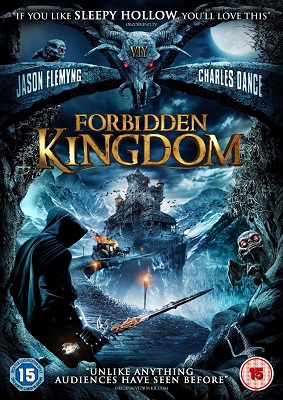
Forbidden Kingdom, Oleg Stepchenko (2014, Russia). It wasn’t until I was about thirty minutes into this film that I realised it was a remake if Viy (see here). It didn’t help that the opening was completely different – Jason Flemyng is a cartographer in eighteenth-century England, who is a caught in flagrante delicto with Charles Dance’s nubile daughter, and so forced to flee the country. He heads east in his steampunk carriage, and so finds himself in the Ukraine… Which is where he ends up in a village currently being haunted by a young woman who died at the hands of a demon. Her body is lying in state in the local churchm and people who spend the night in the church witness all manner of demonic activity. But then it begins to spread into the village. Flemyng is at a dinner where all the other guests turn into monsters. There are sightings of a horned demon. It’s all very OTT and CGI, and while bits of it certainly reminded of Viy there was so much more of it. It didn’t help that the actors who dubbed into English all sounded like they were acting in a bad TV advert. In the end, it all turns out to be some sort of weird mass hallucination, and then there’s a rational explanation for everything, although I must have blinked and missed the point where the film turned from fantastical horror to historical drama. There’s also a framing narrative, in which Flemyng writes to Dance’s daughter – the implication being that the story is told through his letters, which might at least explain the change from horror to drama, but is spoiled by the fact we see it visually on-screen. It was an entertaining enough film, but the original is much better.

The Green, Green Grass of Home, Hou Hsiao-Hsien (1982, Taiwan). This is the second film Hou prefers not to remember, and also a vehicle for Taiwanese pop star Kenny Bee. In this film, Bee plays a substitute teacher sent to a provincial town, who falls in love with a fellow teacher. It’s not all smooth-sailing, as his girlfriend form Taipei turns up and he’s too much of a coward to tell her his attentions now lie elsewhere. He also has to get permission from the woman’s father. And then there’s the class he’s teaching, particularly three young lads he refers to as the “Three Musketeers” (or at least the subtitles do, and I have to wonder what cultural referent the actual dialogue uses). The Green, Green Grass of Home at least doesn’t have the horrible ear-wormy song of Cute Girl, although it does have a song which is repeated throughout the film – on several occasions it’s even sung by the schoolkids. But it’s still lightweight stuff, and it’s easy to see why Hou would sooner it was forgotten.

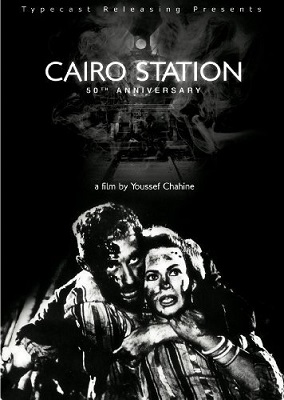
Cairo Station*, Youssef Chahine (1958, Egypt). The Egyptian film industry is, more or less, the Hollywood of the Arabic-speaking world. It churns out endless dramas, almost none of which – or perhaps even none – ever get released in the Anglophone film world. The only Egyptian film I’d seen prior to this one was The Yacoubian Building, which was also a best-selling novel in the UK. Cairo Station, AKA Bab al-hadid or The Iron Gate (a literal translation of the Arabic title), is an early neorealist film in an industry which hasn’t much gone in for neorealism. The story is straightforward enough – it’s a day in the life among the workers at Cairo’s railway station, focusing particularly on the porters and the women who sell soft drinks to passengers. The porters are attempting to unionise because they’re sick of the gang master who controls all the porter jobs. And the soft-drink sellers don’t have a licence and so are continually running away from the police. Also living at the station is Qinawi, a disabled man who does odd jobs and is nominally looked after by the newspaper seller. But he fancies Hannuma, but she is betrothed to the man trying to unionise the porters. And it all comes to a violent head. All of the action takes place in the station, and mostly on the tracks. The plot didn’t hold any real surprises, but I was surprised at how well the film hung together. The cast were variable, but the lead characters were well-drawn and sympathetic, and the story managed to keep its different threads running along together. I think I’d have to see more Egyptian films to decide whether or not it should represents the country’s cinema in the 1001 Movies You Must See Before You Die list, but it’s certainly a good film.

1001 Movies You Must See Before You Die count: 924


1 Comment

Moving pictures 2018, #39

I should stop trying to explain my choices in film-watching. It is what it is. Yes, mostly obscure movies, but there’s also the occasional crowd-pleaser, and a classic or two…

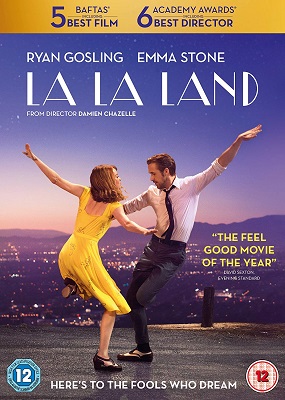
La La Land, Damien Chazelle (2016, USA). I’m not a big fan of musicals and, aside from half a dozen Busby Berkley films, the only ones I really like are High Society, Les Girls and Gentlemen Prefer Blondes. On the other hand, I did watch Seven Brides for Seven Brothers recently and was surprised to find myself enjoying it… Anyway, La La Land, a musical, surprised everyone by winning shedloads of awards a couple of years ago, although Hollywood movies about making movies in Hollywood, musical or otherwise, always seem to do well at awards time. The film follows aspiring actress Emma Stone and jazz pianist Ryan Gosling as they each try to make a success of their chosen careers, which, naturally, involves doing things they don’t want to do simply in order to put food on the table – well, in Gosling’s case it means joining a successful jazz fusion band. The musical numbers are completely forgettable, and even the flights of fancy, despite their Technicolor palette, aren’t that interesting. In fact, the only interesting thing about the film is the bittersweet ending, in which the two split up and are subsequently successful. I have no idea why this film won all the awards it won.

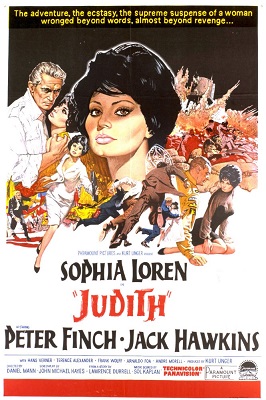
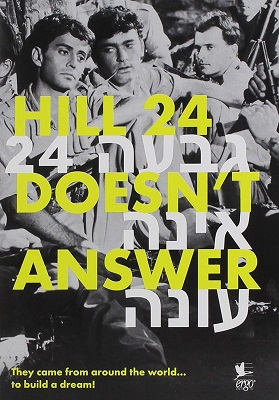
Judith, Daniel Mann (1966, Israel). Lawrence Durrell was not well served by the film industry. The first book of the Alexandria Quartet was adapted as Justine by George Cukor, but it was a financial and critical flop (it had been Joseph Strick’s project but he fell foul of the studio, and they replaced him with Cukor). This is not necessarily a bad thing, as Durrell’s novels would be very difficult to adapt – not that this has prevented Hollywood before with other properties. However, Durrell did provide a story for a movie made by the Israeli film industry, Judith. It was also turned into a novel, which remained unpublished until a couple of years ago. I’ve yet to read it. The story is set in Palestine, just before Israel’s unilateral declaration of statehood. The Jews are worried about the Syrians massing on the border, and have information that a tactical genius Wehrmacht tank commander is now working for the Arabs. But no one knows what he looks like. So they smuggle Sophia Loren into Palestine, since she was married to him and can identify him. But Loren doesn’t fit into the kibbutz where she’s pretending to be a member, arousing the suspicions of the other kibbutz members and the British authorities. Given the way Hollywood framed her career, it’s easy to forget that Loren was a bloody good dramatic actress, streets ahead of her contemporaries also imported from Europe. This is the second early Israeli film I’ve watched this year, and the second whose plot is based around the country’s creation. In this one, however, the threats are chiefly external, although it’s clear there’s an internal organisation more than qualified to investigate and, if necessary, prevent. Perhaps the scenes at the kibbutz tend to reinforce the popular, and hugely incorrect, image of hardy settlers building a homeland in an inhospitable wilderness, but the thriller elements of the story at least show that Palestine was a country under occupation – except, of course, it wasn’t the Jews that were being occupied (although they were certainly the most policed by the British). I’ve yet to read Durrell’s novel – but from the Alexandria Quartet alone, it’s clear where his sympathies lay – but on the whole I’d have to say I thought Hill 24 Doesn’t Answer (see here) the better film.

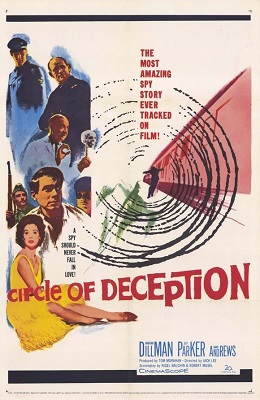
Circle of Deception, Jack Lee (1960, UK). And from watching a film because of the writer who provided the story to watching a movie because of its star. Which I don’t do very often. But Suzy Parker made only a handful of films, and she’s the best thing in them. Most people will probably remember Cary Grant and Jayne Mansfield in Kiss Them for Me, but Parker played the female lead. The Best of Everything is a superior 1950s film, and Parker is better than her fellow leads, Hope Lange and Diane Baker, although not as good as Joan Crawford… Anyway, Circle of Deception is a hard-to-find British film set during WWII starring Suzy Parker, who plays a Brit… and I think it’s her voice, although she was dubbed by Deborah Kerr in Kiss Them for Me, and her accent is pretty much spot-on for much of the film, although it does occasionally drift (which is what persuades me it’s her own voice). Anyway, Parker is the assistant of military intelligence captain Harry Andrews. They need to feed disinformation to the Germans, so they decide to parachute into France someone they know will break under interrogation. They feed their patsy – played by Bradford Dillman – with misinformation, then shop him to the Nazis. Everything goes as planned. Well, except for Parker falling for Dillman during his training. But she remains professional, and sends him off to his doom. The film actually opens several years after the war has ended, when Parker wants to track down Dillman and apologise to him. He’s now living in Morocco, and still suffers after his war experiences. There’s a nasty thread of expediency running through the film, which is I guess the whole point of it, and while both Andrews and Parker are good in their roles, Dillman struggles to keep up. Circle of Deception is an interesting, if minor, British WWII drama, but I suspect its story was seen as more shocking in the decades before 9/11 and Gitmo and extraordinary rendition.

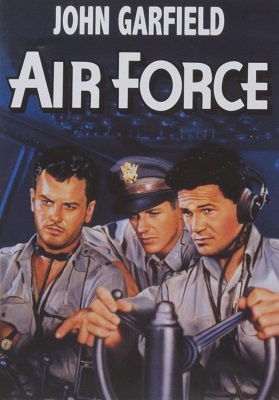
Air Force, Howard Hawks (1943, USA). I don’t know why Hawks didn’t serve during WWII – he was 45 in 1941, was that considered too old for combat duty? – although he did apparently serve as a flying instructor during WWI. Anyway, he spent the war years doing what he had been doing before the war: making films. Five between 1941 and 1946. Three of which were explicitly military: Sergeant York in 1941 (which is actually about WWI; see here), and Air Force and Corvette K-225 in 1943 (see here). Air Force – it was, of course, the Army Air Corps at the time – is about the crew of a B-17 in the Pacific theatre. It’s apparently based on a true story. A crew are ferrying a B-17 from San Francisco to Hawaii when they get caught up in the Japanese attack on Pearl Harbour. Pretty much all the external shots of the B-17 are model work, and not entirely convincing model work either. And the scenes set inside the Flying Fortress… well, I had thought the aircraft’s interior much more… utilitarian than is shown. I like feature films set on and about military aircraft – Strategic Air Command is one of my favourites – but nothing in Air Force felt especially convincing. Which is ironic, given it’s a true story. There are a couple of interesting scenes featuring state of the art computing in 1943, and the film features all of Hawks’s trademark dramatic elements… But it’s a minor work in his oeuvre, and probably only worth seeing for completeness’s sake.

Cute Girl, Hou Hsiao-Hsien (1980, Taiwan). Hou has said that he doesn’t consider his film-making career to have really begun until his third feature, The Boys from Fengkuei (see here), which makes you wonder why eureka! chose to include his two earlier films, Cute Girl and The Green Green Grass of Home, in this new Early Hou Hsiao-Hsien blu-ray box set. Especially since both Cute Girl and The Green Green Grass of Home are really just vehicles for Taiwanese pop star Kenny Bee, and actually not very good films. With extremely annoying soundtracks. The signature pop song from Cute Girl ended up stuck in my head for at least a week after watching the film. The plot is some rom com gubbins about a wealthy young woman who falls for a penniless young man (Bee) who pursues her relentlessly. There are, I seem to recall, a couple of good set-pieces, but the whole thing is so lightweight it’s a wonder it doesn’t blow away. And that fucking annoying song… Hou is a brilliant director but I can understand why he’d sooner this film was quietly forgotten.

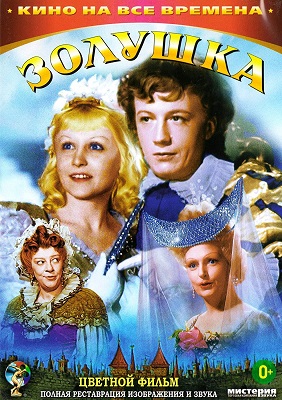
Cinderella, Nadezhda Kosheverova & Mikhail Shapiro (1947, Russia). I found this one Amazon Prime, and thought it worth watching. Which it was. In an odd sort of way. It’s a musical and, strangely enough, Soviet musicals in the 1940s were not much like, say, Meet Me in St Louis (1944, see here). So the songs weren’t exactly memorable, or exactly a pleasure to listen to. But the plot pretty much follows Charles Perrault’s version, although it’s explicitly set in a magical kingdom. But otherwise, it all goes down just like the pantomime. What was interesting, however, was the mise en scène, in which the setting resembled some sort of toy town, with overtly designed scenery that gave the whole film a fairy tale atmosphere. The colourful costumes did the same. Some the choreography was quite balletic, and the big set-pieces were effectively staged, but it was definitely the set design where the chief appeal lay. Worth seeing.

1001 Movies You Must See Before You Die count: 923


1 Comment

Moving pictures 2018, #38

Bit of a UK-fest this time around. Which is just how it sort of fell out. The one US film is a Roger Corman-produced rip-off of Alien. He made two – one I like very much, but this one was absolutely terrible. Oh well.

Wild Reeds*, André Téchiné (1994, France). One topic I’m pretty much cold to in both literature and film is “the sensitive passage into adulthood and the awakening of sexuality”, as Wikipedia describes this film. Basically, it translates as late teens or early twentysomethings acting like arseholes, and then stopping as it slowly occurs to them that they’ve been behaving like arseholes. And the “awakening of sexuality” bit often involves a great deal of sexism, as said teens suddenly discover that the people they’ve been treating as human beings are female and so society (ie, the patriarchy) tells them they shouldn’t actually be treated like human beings. Which is not say this film does either of these, because I don’t much recall what actually did happen as it was all rather dull. The action take places around the time of the end of the Algerian War, and one of the four youths the film focuses on was born in Algeria. Another is gay, but is treated badly by the others. I watched Wild Reeds because it’s on the 1001 Movies You Must See Before You Die list, but I can’t say anything in it especially grabbed me or persuaded me it belonged on the list. Meh.

Denial, Mick Jackson (2016, UK). I had a conversation with someone about David Irving at Fantastika in Stockholm last month, and then this film popped up on Amazon Prime… Not that I took it at face value. I read up on Irving on Wikipedia as I watched the film. Anyway, Irving is a piece of shit Hitler apologist who has had several of his books on the subject challenged – and in one case withdrawn after publication – who decided to sue a US academic, Deborah Lipstadt, whose area of study is the Holocaust, after she accused him of being a Holocaust denier. He sued her for libel in the UK, which has antiquated libel laws which were designed to protect the names of established shitbags rather than arrive at a truthful verdict. In order to win her case, Lipstadt had to prove that Irving had knowingly lied in presenting his thesis. Which her legal team did. So Irving lost. He probably still hasn’t paid off what he owes and the court case took place in 1996. For the record, the Holocaust happened, Irving is a Holocaust denier and his bending of history to serve a right-wing agenda makes him a piece of shit. The film presents the story relatively straightforward, although it does tend to minimise the timescale of events. I also suspect Timothy Spall plays Irving as more of a charmer than the real article, although he certainly manages to convey oleaginous arrogance. If the film has one flaw, it does feel a bit as though Lipstadt and her legal team are all paragons of humanity, and while their motives may have been pure in real life, the film does make it seem a little too good. But a good, entertaining film about an important event, and worth seeing.

The Go-Between, Joseph Losey (1971, UK). I have one of LP Hartley’s novels on the TBR – actually, it might be an omnibus of a trilogy of his. But his best-known work, The Go-Between, isn’t it, or one of them, er, which ever it is. The story of The Go-Between is set in 1900, although confusingly it’s mostly flashback from, I think, the novel’s date, around 1950, so every now and again cars appear on the screen, which seems odd in something that it mostly seems to predate DH Lawrence… And it’s DH Lawrence it mostly seems to want to be, with the nubile daughter of minor gentry, Julie Christie, engaging in no-commitment rumpy-pumpy with hunky farmer, Alan Bates, on the side. And it’s almost as if the two leads were cast because of their connection to Lawrence adaptations – Bates in Women in Love, a great novel and a great film, and Christie in, er, well, no Lawrence adaptations, although she was the female lead in Dr Zhivago. Anyway. The title refers to a young boy, a school friend of the family’s youngest, who has been invited to spend their summer in their stately home. He ends up carrying messages between Bates and Christie, because he has a schoolboy crush on Christie, not realising he is enabling their affair. And when he finds out, he reacts badly. The Go-Between is the third film Losey made with playwright Harold Pinter and, like the other two, class plays an important part, although it feels in the film like the shadow of something that occupies more of the narrative of the source novel (I’m guessing as I’ve not read it). Apart from the obvious class difference between Christie and Bates, and a series of events which position the title character as lower class than Christie’s family, there’s not actually all that much there as commentary on class. Losey and Pinter’s The Servant was much more effective. Which is not to say The Go-Between was a bad film. It’s very good, it just strike me a bit as Lawrence-lite and I have to wonder if Ken Russell might have made a better fist of it…

Tomb Raider, Roar Uthaug (2018, UK). I remember when the Tomb Raider game was released – a friend of mine at the time was a big fan of it. And it seemed unremarkable that a film adaptation be then made of the property. But twenty years later, and you have to wonder why someone felt a reboot was needed. In the first version of the franchise, Brit Lara Croft and her father were both played by Americans – father and daughter too, as it happens – and they made a pretty good fist of it. In this new version, they’re played by… a Swede and a Brit. Who are unrelated. Although, to be fair, Alicia Vikander, does a good job as Lara. Dominic West, who I always get confused with Dougray Scott, plays her father. The film opens with Lara getting a pasting in a boxing-ring. It then quickly establishes that she is highly-educated, has no money, and works as a bicycle courier… because her father disappeared seven years earlier and she refuses to admit he is dead and so cannot touch his fortune until she does so. He disappeared on a trip to a mysterious island in the sea of Japan where an ancient evil Japanese queen’s tomb allegedly can be found. And its fabulous treasure. Lara is eventually persuaded to sign the papers declaring her father dead, but before she does so the solicitor gives her an envelope only to be opened after his death. A cryptic phrase on a piece of paper sends her back to the family estate – papers unsigned, of course – where she finds her father’s secret laboratory. The second act is Lara following her father’s research to the island… which she finds far too easily. Only to be shipwrecked after a violent storm. And then she discovers there is a secret organisation dedicated to ripping off mysterious ancient artefacts with special powers to advance their agenda of world domination. Or something. Anyway, they take Lara prisoner, she escapes, they break into the tomb, she helps them through its various traps, they discover the secret of the ancient Japanese queen, but she manages  to stop the baddies from profiting from it. Oh, and she finds her father, and he’s still alive. Albeit not for long… I enjoyed this more than I expected, to be honest. Vikander is good in the title role, and the excessive CGI is only mildly annoying. The risible plot is redeemed by an opening that actually feels like it’s set in the real world, although the introduction of the vast Croft wealth knocks it off track. And the conspiracy aspect has its moments, although it does feel like a feeble copy of Assassin’s Creed. I’ve still no idea why someone felt a reboot was required – has the game been revamped or something? – and while the original movie at least felt like a part of the moment back then, this one now smells not so much like it missed the boat as it is in actual search of a boat in the first place. But I sort of enjoyed it.

Forbidden World, Allan Holzman (1982, USA). Roger Corman’s New World Pictures was known for a number of things, and one of them was ripping off successful genre properties with low-budget straight-to-video (as was) releases. Ridley Scott’s Alien inspired two such rip-offs – Galaxy of Terror, which is actually not bad; and this one, the considerably more risqué, and considerably inferior, Forbidden World. Which opens with a robot waking its captain as their spaceship is under attack by marauders, who have nothing to do with the plot but do allow Holzman to re-use some model shots from, I think, Battle Beyond the Stars. After seeing them off, the hero lands on the planet of Xarbia, which is the location of a secret biological laboratory base. Which has accidentally managed to create a monster. Which then grows and kills everyone off, one by one. And, er, that’s it. Well, that and the gratuitous nudity. Like when one of the base’s young female staff members decides that what she really needs, despite all the carnage, is a naked sauna… The monster, when it’s eventually revealed, is not at all convincing, looking like it belongs in a much worse film. I’m told the soundtrack is held in high regard, but then it’s the only thing in the film that is at all original. Galaxy of Terror was a rip-off of Alien, but it did something very science-fictional with its premise. Forbidden World doesn’t. There’s some scientific bollocks intended to justify its plot, but it’s substandard writing. New World Pictures produced the odd gem during its time, but this isn’t one of them.

Genius Party/Genius Party Beyond, various (2007/2008, Japan). This is a pair of anthology anime films by various hands, put together chiefly, I think, as a portfolio for a newly-launched animation studio in Japan. Obviously, it was recommended by David Tallerman. There are seven short anime films in Genius Party and five in Genius Party Beyond. None are especially typical of Japanese anime – one, on fact, reminded me of the work of Jodorowsky and Moebius more than anything else. A lot of it is just plain weird. There’s an excellent one on Genius Party Beyond with a Juno Reactor soundtrack, which is probably the best of the lot. The problem, however, is that both films feel like what they are: over-extended showreels. It’s good stuff – excellent animation and some really inventive design… but it’s the sort of thing that works better in 5-minute segments rather than 20-minute segments. Especially since the stories of many of the segments feel like they’re stretched well past their natural length. On the other hand, both films are a showcase of inventive animation and, stories aside, demonstrate that very well. I don’t think either are necessarily for fans of anime, more for people interested in animation and its various forms.

1001 Movies You Must See Before You Die count: 923


1 Comment

Moving pictures 2018, #37

This is what my film watching looks like pretty much – one in six films is from the US. That’s not one in six is Anglophone, as the Israeli film is mostly in English, and One Way was entirely in English as it was set in the US. But there are two excellent Chinese films.

Zhou Yu’s Train, Sun Zhou (2002, China). A woman is on a train between Chongyang and Sanming. She is carrying a vase. A man asks her about it and she admits she made it. He insists on buying it, but she refuses. He introduces himself, he is a vet (a man collapsed earlier on the train and he denied being a doctor because a doctor of human medicine would have been preferable). The woman is on her way to visit her lover in Sanming, a poet. The film follows the woman, and her encounters with the vet and the poet, and that of another woman, played by the same actress, Gong Li. But the narrative is cut up and presented non-chronologically, which means it’s often a bit of a puzzle trying to figure out what’s going on, especially when the same actress plays the two female leads. It all looks great, and the cast are excellent. I’m reminded of Wong Kar-Wai’s films, especially In the Mood for Love and 2046, although without the arthouse cinematography, just the unadorned faux-documentary style used by Sixth Generation directors. I liked this film, but it really needed a rewatch. I’ll have to try and arrange one.

One Way, Jorge Darnell (1973, Mexico). The blurb for this film on Amazon Prime explains it is about an illegal immigrant in the US and declares it is still relevant today. In other words, the US is just as racist as it was in 1973. Probably more so. Although not as bad as the 1960s, when it practiced segregation and lynching. We’re no paragons of virtue here in the UK, but when it comes to racism the US is definitely a world-leader. And this forty-five year old film is ample proof. A farmer from Mexico moves to New York, illegally it must be said, but when someone gives me a good logical reason for secure borders then I’ll start believing “illegal immigration” is a thing. He finds himself subject to racism, but he can’t do anything because he’s there illegally. In one scene, he’s beaten up by drunk Americans at the bowling alley where he works restacking pins. In order to stay in the US, the farmer gets in deeper with criminals, as situation not helped by his desire – reciprocated – for the gangster’s girlfriend (I think she was his girlfriend). Unsurprisingly, it’s all about hiding from the authorities and so being driven into the arms of criminals, which only feeds into the myths surrounding illegal immigration in the first place. It’s like junkie culture – decriminalise drugs and there’s no reason for junkie culture to exist. Welcome immigrants, streamline them into becoming members of society and there’s nothing there for criminals. But then, there’s always the racism. That’ll remain as long as the establishment condones, and practices, it, and until there are real consequences for being a racist arsehole.

Hill 24 Doesn’t Answer*, Thorold Dickinson (1955, Israel). According to the Wikipedia page, the plot of this film “revolves around the personal stories of a number of soldiers who are on their way to defend a strategic hill overlooking the road to Jerusalem”, which is true but completely misses the point of the film. It is also Israel’s first home-produced feature film. Edward Mulhare plays an Irishman in the British occupying forces, who returns after Israel’s unilateral declaration of independence (the film says it was “sanctioned” by the UN, but that word has two meanings and the film is clearly hoping one will prevail). Anyway, Mulhare fancies a Jewish settler, and returns to help her in the fight for Israel. The problem with any film about the early days of Israel is framing their enemy. Who were they fighting? The Palestinians they had displaced? The British who had already left? That there was fighting is beyond doubt. Parts of Palestine were mandated to the Jews by the UN, the rest was won by blood. And what they were mandated was defended with blood. Let’s be fair here – the Israeli state has a right to exist, but so does the Palestinian one. And when you have two nations sharing the same territory, what do you do? China Miéville’s solution in The City & the City is obviously untenable, but neither can you privilege one group over the other as both have legitimate claims – after the fact, if not before. Making Jerusalem an international city is a step in the right direction, but hardliners will block that, and have. Wars are not going to resolve anything, especially when one side is funded by the US. But I’m not about to solve the Israeli-Palestinian problem as it requires someone with bigger guns than me. As early Israeli film culture goes, this isn’t too bad – the Arabs are mostly treated fairly, as are surprisingly the British. The latter are the architect of Israel’s woes, that much is made clear, through their repressive control of the region after WWII. But they’re not demonised. The main focus seems to be on the burgeoning romance between Mulhare and Israeli lead Margalit Oved. It’s a film that deserves to be better known, even if it doesn’t fit the current narrative about Israel. It’s home-grown, it makes a good fist of its story, and any challenges it might make to the current narrative are welcome.

2036 Origin Unknown, Hasraf Dulull (2018, USA). Sometimes you can find hidden gems among independent sf films, and with the sophistication of present-day CGI they can look every bit as good as big studio sf films. But without the zillion-dollar budgets, something has to give… and it’s usually either location or cast. This film takes place almost entirely in a single room, so that it’s not that one. And while Katee Sackhoff is a good actress and reasonably well-known, I should think her price-tag is pretty modest. Plus, the entire cast of 2036 Origin Unknown is single figures. A mission to Mars crashes mysteriously on landing. Years later, Sackhoff, on her own, is running an AI-controlled follow-up robot mission to investigate that crash. They discover a huge cube covered in alien carvings. It vanishes. And reappears in Antarctica. They trick it into returning to Mars. It is apparently some sort of instantaneous interplanetary or interstellar vessel. Some point during all this, the AI – which was put in charge over Sackhoff’s objections – decides to exterminate all life on Earth. Oh, and Sackhoff’s father died in that original Mars mission, so she has an emotional stake in the investigation. Sackhoff tries gamely to carry the film, but the plot has too many ludicrous moments and slowly unravels under the weight of ambitions it can’t meet. It’s a sight more original than many other independent sf films I’ve seen, but even original ideas need to be rigorously worked through.  Meh.

Part-Time Spy, Kim Deok-su (2017, South Korea). Gang Ye-Won is 35 and has spent most of her adult life trying to get a job with the Korean civil service, occupying a wide range of positions before she finally lands a job. In a state intelligence department. But then her boss is phished for $500,000 and he tasks her, secretly, with recovering the money. But the company responsible for the fraud – a call-centre that runs a number of phishing scams – has also been infiltrated by an undercover police agent. So this is basically a buddy movie, where the buddies came together through circumstance rather than choice, and the drama comes out of their interactions. Because neither has much time for the other. Gang is an accident-prone nerd but proves to have a gift for talking punters out of their hard-earned cash, and so gets in with the senior management. The undercover police officer, Han Chae-Ah, is skilled at unarmed combat, a maverick and arrogant. But, of course, they learn to like each other and work together to bring down the evil mastermind behind the phishing scam, not to mention Gang’s inept boss who lost the money in the first place. The comedy is broad, and the fight scenes aren’t that good… but then it would be churlish complain about a female buddy movie that actually has fight scenes. Entertaining. And it makes a good point about the human cost of phishing too.

Here, Then, Mao Mao (2012, China). I seem to remembering stumbling across this one on Cinema Paradiso’s website. Certainly the director is not a name I knew, and I’ve been exploring the oeuvres of both Fifth and Sixth Generation Chinese directors. But I like modern Chinese cinema – both the commercial films and the film festival ones, although the latter much more than the former. Here, Then, Mao’s debut feature, not only does the things I like about Sixth Generation films, but also the things I like about cinema from other countries. It tells a story about a group of twentysomethings in a provincial town, using the sort of faux-documentary style, with minimal dialogue, used by Sixth Generation directors. But it also uses long, often static, takes, and equally often pulled back so that the action takes place only in a small area at the centre of the screen. There are other tricks in there too – in one scene, two young women waiting for a bus dance to music, and the camera zooms in toward one until she is staring out of the screen, suggesting she is breaking the fourth wall. Characters move in and out of focus as the dynamic changes in other scenes. It’s a polished debut, displaying a facility with cinematic language unusual in a first film. I’d like to see it again, so I guess I’m going to have to pick up a copy. I suspect it might make my top five by the end of the year, although it has stiff competition. Highly recommended.

1001 Movies You Must See Before You Die count: 922


Leave a comment

Moving pictures 2018, #36

Managed to knock three films off 1001 Movies You Must See Before You Die list, and they weren’t bad films either.

Genghis: The Legend of the Ten, Zolbayar Dorj & U Shagdarsuren (2012, Mongolia). I found this on Amazon Prime. Incidentally, when I refer to Amazon Prime, I mean the free movies it offers… and it’s an odd mix: straight-to-video crap, poor transfers of early twentieth-century films, occasional blockbusters available for a limited time, forgotten films from the seventies and eighties and nineties… and some very recent films from further afield, such as the Chinese and Taiwanese films mentioned in previous Moving picture posts, and like this Mongolian historical epic and the Russian comedy below. Genghis: The Legend of the Ten is the sort of nonsense title given to foreign movies for the US market. The actual title is Aravt, which is the term for the groups of ten into which the Mongol warriors of Genghis Khan’s time would organise themselves, as helpfully explained by an opening voiceover. The movie is about one such aravt, or group of ten. It is, unsurprisingly, historically accurate – as far as my limited knowledge can tell, but this is no Hollywood re-imagining of history. It’s also quite brutal. The battle scenes are well-staged, but the back-stabbing does get a bit complicated in places. It’s a polished piece of work, and if Mongolia has to mine the better-known elements of its history to make foreign currency, then they did a good job with this and I wish them the best of luck in their industry. It’s only the second Mongolian film I’ve seen – the other was Joy, and it did not live up to its title (see here) – but both are very good. A cinema to keep an eye on, so to speak.

Hold Me While I’m Naked*, George Kuchar (1966, USA). I’d not realised until I started watching this that it was a short, only 15 minutes long. Kuchar was an underground film-maker in New York and San Francisco, active from the late 1950s through until his death in 2011. He made over 200 films, including video diaries. Hold Me While I’m Naked is generally reckoned to be the best of them – certainly it was the only one to appear in the Village Voice’s Critics’ Poll of the 100 best films of the twentieth century. I’m not sure I understand the appeal. There’s a distinct Woody Allen-ish tone to the piece, not helped by Kuchar’s voiceover with its NY accent, and I loathe Woody Allen’s films. The whole thing is resolutely cheap, shot on 16 mm in real locations, with much of the “story” (and I use the term loosely) carried by Kuchar’s voiceover lament in which he complains about his two stars as they perform a steamy shower scene for him (it’s implied the scene is for another film, but it’s not of course; it only only appears in this film). As a commentary on film-making, the meta-narrative is quite effective but seems naive to modern eyes , and it’s hard to see how it could have been all that innovative in 1966 given that Modernism had been around for half a century.

Gun Crazy*, Joseph H Lewis (1950, USA). From the title and poster, I had thought this was a cowboy film, although a closer look at the poster would have clearly shown it was a gangster film. Except it isn’t that either. A boy is fascinated with guns, steals one from a store, is caught and sent to reform school. Later he joins the army. The story picks up after he’s left the army. He’s now a crack shot and, at a travelling fair, takes up a challenge to a shootout against the fair’s resident trick shooter. He wins. The fair owner offers him a job, and he teams up with the trick shooter. They also enter into a relationship (it’s her on the poster). But she’s a bad sort and persuades him to help her rob stores and banks. They go on a Bonnie and Clyde style crime spree. The film is presented all very matter-of-fact, and I especially liked the back-seat camera during the car chases – I’d not seen that used before, and I don’t recall any films using it since. For a film of its time and type, it was a superior example, but I don’t know if that’s enough to warrant a spot on the 1001 Movies You Must See Before You Die list. It wasn’t noir, more like a 1950s spin on a 1930s gangster movie, much like The Phenix City Story, although without the latter’s true story to fall back on. Worth seeing, but not one, I suspect, that belongs on the list.

Mind Game, Masaaki Yuasa (2004, Japan). When this dropped through the letterbox from Cinema Paradiso, I should have guessed it had been recommended by David Tallerman. Not just because it’s anime, but because it’s weird anime. And, to be honest, a week or two after I watched it, I can remember almost nothing of it. Reading the plot summary on Wikipedia doesn’t help, because all I can remember is a really unappealing style of animation, realistic and so not the exaggerated features of much anime, but sketchily drawn. I remember a section set inside a whale, and some of the film took place inside a moving vehicle, but I’m otherwise completely blank. In such cases, I normally watch the film again before writing about it in a Moving pictures post, but this was a rental and I sent it back before I could rewatch it. I wanted to get the DVDs set back before I left for Sweden, so I put them in my bag to post at the railway station… but couldn’t find a post box… or at Manchester Airport… but couldn’t find a post box… and so ended up carrying them to Sweden and back, and posting them in the post box opposite my house the day after I got home. Sigh. Not that it made any difference as I wouldn’t have been able to watch and return any new DVDs before the weekend anyway. None of which is especially relevant, and I suspect I will have to watch this film again although what I do remember of it doesn’t exactly tempt me to do so. Oh well.

The Spider’s Stratagem*, Bernardo Bertolucci (1970, Italy). When you look at non-Anglophone directors, and which particular films from their oeuvres are available on UK sell-through DVDs or Blu-rays… not including films they might have made for Anglophone studios such as, in Bertolucci’s case, Last Tango in Paris, The Sheltering Sky and The Last Emperor… especially a director as highly-regarded as Bertolucci… Well, besides the aforementioned three, there’s Before the Revolution, The Conformist and 1900, although not a couple of English-language international co-productions, Stealing Beauty and Little Buddha (both currently deleted)… And certainly not The Spider’s Stratagem, the third of four films by Bertolucci to make the 1001 Movies You Must See Before You Die list (and the other three are readily available). Why is this? If those other films have found a market, then surely this one would. These days, however, it could be some streaming service hanging on to the rights in order to attract customers. For £9.99 a month, you can have access to the exclusive library of films they’ve managed to prevent being made available on sell-through… I know of a film from 1966 that’s never been released on DVD or Blu-ray, but a restored version is available from a streaming service. Anyway, that’s all by the bye. In this film, a young man returns to his hometown, where his father died a hero of the resistance. But as he asks people about what they remember of his father, so he hears different stories, and eventually realises his father had bottled out of his plan to assassinate Mussolini on his visit to the town and informed on himself to the authorities. But, the son comes to realise, the town needs its hero, so he says nothing, and so is caught up in the mythology they have created around his father. There are half a dozen or so world-class Italian directors, and I’ve watched films by all of them: Bertolucci, Fellini, Rossellini, De Sica, Visconti, Pasolini, … but I’m not sure I could call one out above the others. I love Fellini at his most self-indulgent, I’m a big fan of Pasolini, and both Visconti and De Sica made some excellent dramas… Rossellini never really worked for me, and Bertolucci I find too variable to admire that much – I loved The Sheltering Sky but Last Tango in Paris was awful. I think I’m starting to like Bertolucci’s films more, and I did like this one, but I’m not there yet.

O Lucky Man!, Edouard Parri (2017, Russia). This is not the Malcolm McDowell British film, obviously, which I have not seen and so cannot compare. It is instead a polished piece of Russian action/comedy/drama about a young man who is talked back from jumping off a bridge by a mysterious camp couple, who tell him they can give him the life he feels he deserves. Which they do. He is hired into some ill-defined high management position at a prestigious company the next day. He has a platinum credit card to use. But things start to go wrong, and when his fairy godfathers (a reference only to their role) try to fix things, it ends up worse. So when he misses an important business meeting and is fired, they arrange for him to save a woman from a pair of violent muggers and become a popular hero. Only it then turns out the woman had just ripped off a gangster and the muggers were his enforcers. And now he wants his money back. Then a British secret service agent, in an Aston Martin, turns up, and it’s a bit weird having James Bond speak Russian but there you go. I enjoyed this. It was a pretty obvious comedy, but it rang a few small changes, and I can’t say if they’re down to the Russian worldview or the scriptwriter, but it was enough to make it different. Even the spoof 007 was fun.

1001 Movies You Must see Before You Die count: 921