It Doesn't Have To Be Right…

… it just has to sound plausible


1 Comment

Moving pictures, #17

Six months into the year and I’m on my seventeenth film post already. And it’s not like I include every film I watch here – I don’t, for instance, bother writing about films I’ve seen before, or crappy ones on Movies24 that I find myself watching on a Sunday afternoon after my brain has given up the ghost… Anyway, as usual asterisked films are from the 1001 Movies You Must See Before You Die list (or at least the version of the list I’m using).
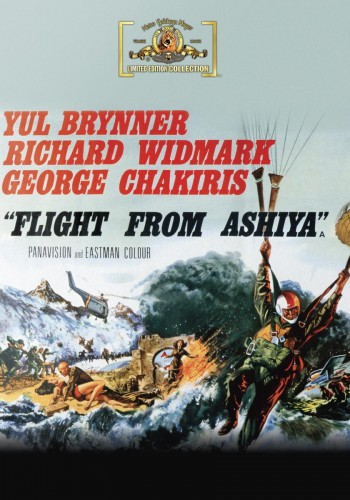
flight_from_ashiyaFlight from Ashiya, Michael Anderson (1964, USA). Richard Widmark is a tough-talking USAF Rescue Service pilot stationed in Japan. Yul Brynner is his Japanese sergeant and medic, and George Chakiris is a pilot lieutenant with confidence issues. A Japanese ship goes down in a fierce storm, and two Rescue Service Grumman HU-16 Albatross seaplanes are sent to rescue them. As they fly to the site of the sinking, and begin searching for survivors, flashbacks cover important events in the past of each of the three main characters. It’s melodramatic, but surprisingly dull, stuff. Suzy Parker has a not-much-more-than-walk-on part as Brynner’s latest flame, and the aerial sequences aren’t too bad; but other than that, this isn’t even the sort of film you’d stop to watch if you were channel-hopping on a lazy Sunday afternoon. Disappointing.

royalspaceforceRoyal Space Force: Wings of Honnêamise, Hiroyuki Yamaga (1987, Japan). I know only a little about anime, and have seen only a dozen or so of the best-known ones and, of course, pretty much all of the Studio Ghibli movies… but I’m open to learning more. So when David Tallerman recommended a handful of titles I should add to my rental list, I picked two of them and this was the first that arrived. And… while the world-building in Wings of Honnêamise was cleverly done it wasn’t enough to offset that style of overly-broad humour and the characters mugging all the time common to much anime that I find really hard to take. The launch sequence at the end, however, where Honnêamise’s first crewed rocket makes it into space while an air and ground battles rages around the launch pad is actually really good. I’m not sure if it’s worth sitting through near enough 100 minutes of the film to get to that point, but even now, weeks after watching the movie, that sequence sticks in my memory. Perversely, thinking about it for this post is sort of making me want to have another go at watching the film. Apparently, a sequel titled Aoki Uru (Uru in Blue) is finally in preproduction, after a number of aborted previous attempts, with a proposed launch date of 2018.

continuumContinuum, Richie Mehta (2013, Canada). AKA I’ll Follow You Down. Physics professor Rufus Sewell says goodbye to wife Gillian Anderson and son (who, twelve years later, grows up to be Haley Joel Osment) and heads for a scientific conference in Princeton, but never returns. It turns out he’s actually invented a time machine, and he uses it to travel back to the 1940s in order to meet Albert Einstein. But he is mugged and killed before he can return. Fortunately, Osment is a genius and he manages to figure out his dad’s arcane physics and so build a replica of his time machine. Which he then uses to go back in time to save Sewell. It’s hardly the most original plot in media science fiction – at least half a dozen sf television series have used it more than once throughout their runs – and it’s all played very low-key… But Osment is too much a genius to be really plausible – and that’s after you’ve swallowed Sewell inventing a time machine. Meh.
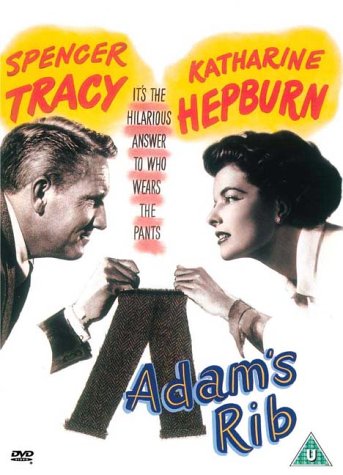
adams_ribAdam’s Rib*, George Cukor (1949, USA). Much as I enjoy screwball comedies, I’ve never really seen Spencer Tracy as a screwball romantic lead. He never quite seemed light enough on his feet, if you know what I mean. But here he is with Katherine Hepburn, as a married couple who are also lawyers who end up opposing each other in court. She’s defending a woman who took a potshot at her philandering husband, he’s the prosecuting attorney. The result is a battle of legal wits and domestic rivalry in the court room. To be fair, I thought Tracy and Hepburn were better in Desk Set – while the film was not especially witty, it was in Technicolor – Technicolor! – and there was a giant 1950s computer in it. It was also a bit, well, sweeter. (And Tracy played a good curmudgeon.) Anyway, I’ve seen Adam’s Rib, so meh.

theislandThe Island, Pavel Lungin (2006, Russia). Amazon insisted on recommending this film to me – repeatedly – because I’d bought, or searched for, films by Aleksandr Sokurov. I checked it out on Wikipedia, and it looked like it might appeal… so I bought a copy. And it did appeal. During WWII, Germans board a Russian coal barge and force the crewman to shoot his captain. The Germans then mine the barge. The crewman survives and is wracked with remorse for killing his captain. The film jumps ahead thirty years. The crewman, Anatoly, is a monk on the tiny island on which he washed ashore. He is also something of a Holy Fool, and tells people things which then come true. He looks after the monastery’s boiler, is perpetually filthy, and talks back to the monastery’s abbot. But one day an admiral brings his daughter to be exorcised by Brother Anatoly… Some films take you by surprise not simply because of the way they’ve been shot – and The Island is indeed beautifully shot – but because of their story and what they say. And The Island certainly did that. I was initially expecting something like one of Béla Tarr’s movies – I seem to recall the phrase “slow cinema” being used in reference to Lungin – but The Island soon became something very different. I now want to watch more films by Lungin. But, since he’s Russian, very few of them have been released in the UK – only this one, in fact. Gah.

paddngtonPaddington, Paul King (2014, UK). This was pretty successful last year, so I thought it might be worth a go. I should have known better. Yes, I remember the Paddington Bear cartoon from my childhood, but this was some bizarre story that didn’t seem to know in which decade it was set. An explorer in “deepest, darkest Peru” finds some talking bears, and years later the child bear heads to London to find the family of the hunter. Though the film was sent in the present day, it only made sense – talking bears notwithstanding – if it was sent in the 1940s. And everything in the plot was structured as if the story were set in the 1940s. It made for a weird disconnect between plot and visuals, and even the modicum of wit couldn’t rescue the movie from total crapness. And comedy cross-dressing? When was the last time a movie featured that? Whatever happened to the British film industry? All it seems capable of turning out these days are mockney gangster movies, execrable upper middle class rom coms, and appalling comedies. Those “quota quickies” they banged out during WWII? Most of those are better than this shit.
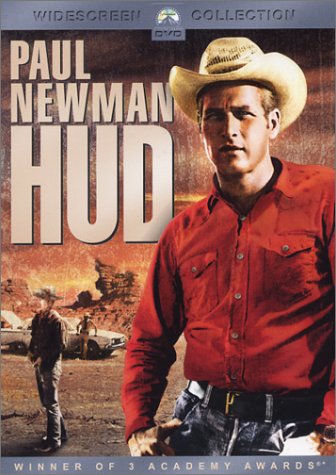
hudHud*, Martin Ritt (1963, USA). Paul Newman plays the ruthless and self-centred son of a rancher, and he’s more concerned with making money than anything as profit-jeoparding as principles (such as, for example, not drilling for oil on the land). So Hud sleeps around, gets into fights, argues with his dad, patronises his younger brother, and generally presents as one of those arsehole characters Hollywood likes to build films around because they’re good for winning awards. (Hud, incidentally, was nominated for seven Oscars, but only won for best actress, best supporting actor and best cinematography.) Working my way through the 1001 Movies You Must See Before You Die list has introduced me to films, and directors, I might not otherwise have seen and which I have greatly appreciated and admired. But it has also resulted in me watching a great deal of middle-brow Hollywood output that I would otherwise have quite happily not bothered seeing. Hud is one such movie. Oh, the scene where they massacre the cattle because it has foot and mouth disease is affecting, but centring the film on an unlikeable prick doesn’t to me feel like it adds anything useful or interesting. I’m sixty percent of the way through the list now, and I suspect of those I’ve seen I’d only consider around a quarter truly belonged there.

1001 Movies You Must See Before You Die count: 601

4 Comments

Moving pictures, #16

It seemed like a good idea to document the films I watched throughout the year, especially since I was working my way through a 1001 Movies You Must See Before You Die list. What I hadn’t considered was how many movies I’d watch. And so have to document. Ah well. Here are more. Ones from the list indicated with an asterisk as usual.
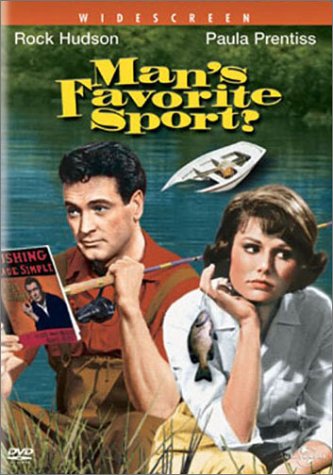
mansfaveMan’s Favorite Sport?, Howard Hawks (1964, USA). I like Rock Hudson films, I like Technicolor films, I like screwball comedies. Throw in Howard Hawks as director, and Man’s Favorite Sport? ought to be a sure-fire winner. Sadly, it isn’t. Chiefly because it was written as a Cary Grant / Katherine Hepburn vehicle, but ended up with Rock Hudson and Paula Prentiss. While both are very good in their roles, Hudson isn’t Grant and has always performed better in Hudson roles. But, by god, the Technicolor certainly makes a picture of this moving, er, picture. The comedy has its moments, the chemistry on screen does create sparks, and Hudson does his best delivering the Grant one liners… but Man’s Favorite Sport? is mostly a lovely-looking film. Hudson plays a fishing expert at Abercrombie & Fitch, who has secretly never fished in his life. And then a fishing resort – represented by Prentiss – persuades his boss to enter him in a competition for publicity purposes. When Hudson comes clean, Prentiss and resort owner’s daughter Maria Perschy have to, er, teach a man to fish. A good piece of early sixties rom com, starring a master of the form and a rising comedic actress. For all its flaws, it’s still bags of fun.

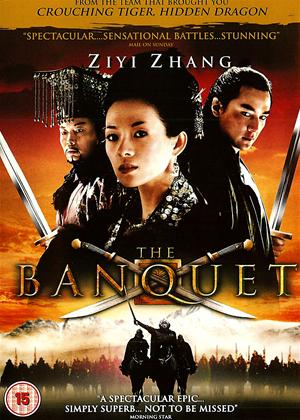
banquetThe Banquet, Xiaogang Feng (2006, China). This was apparently based on Hamlet, although you’d have to be pretty forgiving to acknowledge it. Set in China during the tenth century, a crown prince has exiled himself to a remote theatre after his father married the noblewoman the prince was in love with. But then the emperor is killed by his brother, and assassins are sent to kill the prince. They fail, but he makes his way to the imperial court anyway, where things all get a bit complicated. Like a lot of wu xia movies, The Banquet is a pretty lush production, and the story covers pretty much all the bases – there are epic sword fights, gruesome deaths, love-making with lots of gauzy veils, complicated court politics, sumptuous sets and costumes… and an ending that comes completely out of left-field. One of the better wu xia films I’ve seen recently.

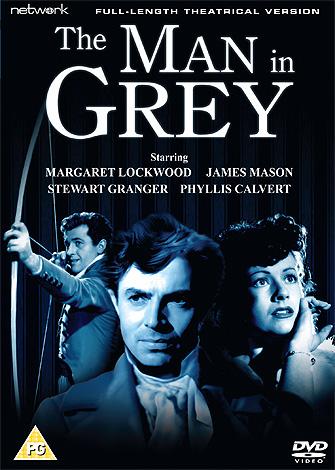
the_man_in_grey_uk_dvdThe Man In Grey*, Leslie Arliss (1943, UK). Stewart Grainger and Phyllis Calvert meet up at an auction room during WWII (he’s a RAF officer, she’s a WREN), and in the process of chatting her up inadvertently bids on a box of trinkets that are all that’s left of the Rohan aristocratic family. He admits to a connection to the Rohans and is far from complimentary; she admits the last male Rohan was her brother. The film then flashes back to the Regency period, and now Phyllis Calvert is an heiress at a posh school in Bath. After leaving school, she’s introduced to the ton, where the eponymous noble, James Mason, asks for her hand in marriage – mostly for appearance’s sake. Later, she bumps into an incorrigible rake, Grainger again, and is smitten by his charms. Grainger is an actor in a company with a woman Calvert was friendly with back in her school at Bath, and she invites the woman, Margaret Lockwood, now down on her luck, into her household. So you have a situation where Mason is having an affair with Lockwood, while Calvert is secretly in love with Grainger. It’s all a bit ploddingly predictable, if you know the form, and Mason’s presence, and the year of release, suggest it’s a “quota quickie” (Mason was a Quaker and refused to fight during WWII), none of which stands against it as some of those quota quickies were actually pretty good. This one is clearly held in such high regard it made the 1001 Movies You Must See Before You Die list, although to be honest I couldn’t see why. A watchable bit of Regency hokum, with an unneccessary contemporary (as of 1943) framing narrative, and a good turn by its leads… But it’s hard to see it as a classic.
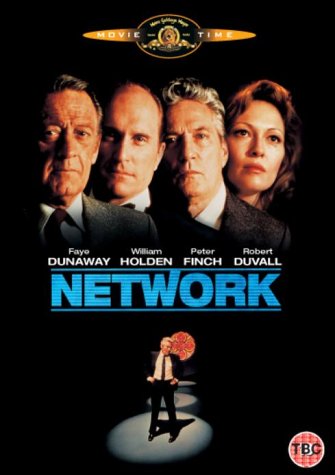
networkNetwork*, Sidney Lumet (1976, USA). I’d assumed I’d seen this at some point in the past – the film is near enough forty years old, and it seems reasonable to assume it was on television several times during the 1980s – but if so, I’d completely forgotten everything about it… as I discovered when I started watching it. The other thing that readily became apparent was that its satire had completely lost its teeth. A corrupt and manipulative media? Driven by profit? That’s not satire, that’s reality. Turning Peter “I’m mad as hell and I’m not going to take it anymore” Finch’s nervous-breakdown news anchor into a prophet of the modern age is a bit, well, that horse has long bolted. And it was probably leaping a fence near the horizon when this film was released. Even casting Faye Dunaway as the ratings-hungry TV executive willing to do anything for the network just plays into your standard sexist arguments about women in the workplace. Some films belong on the 1001 Movies You Must See Before You Die list; some don’t. This is one of the latter. Um, maybe I should put together my own list…

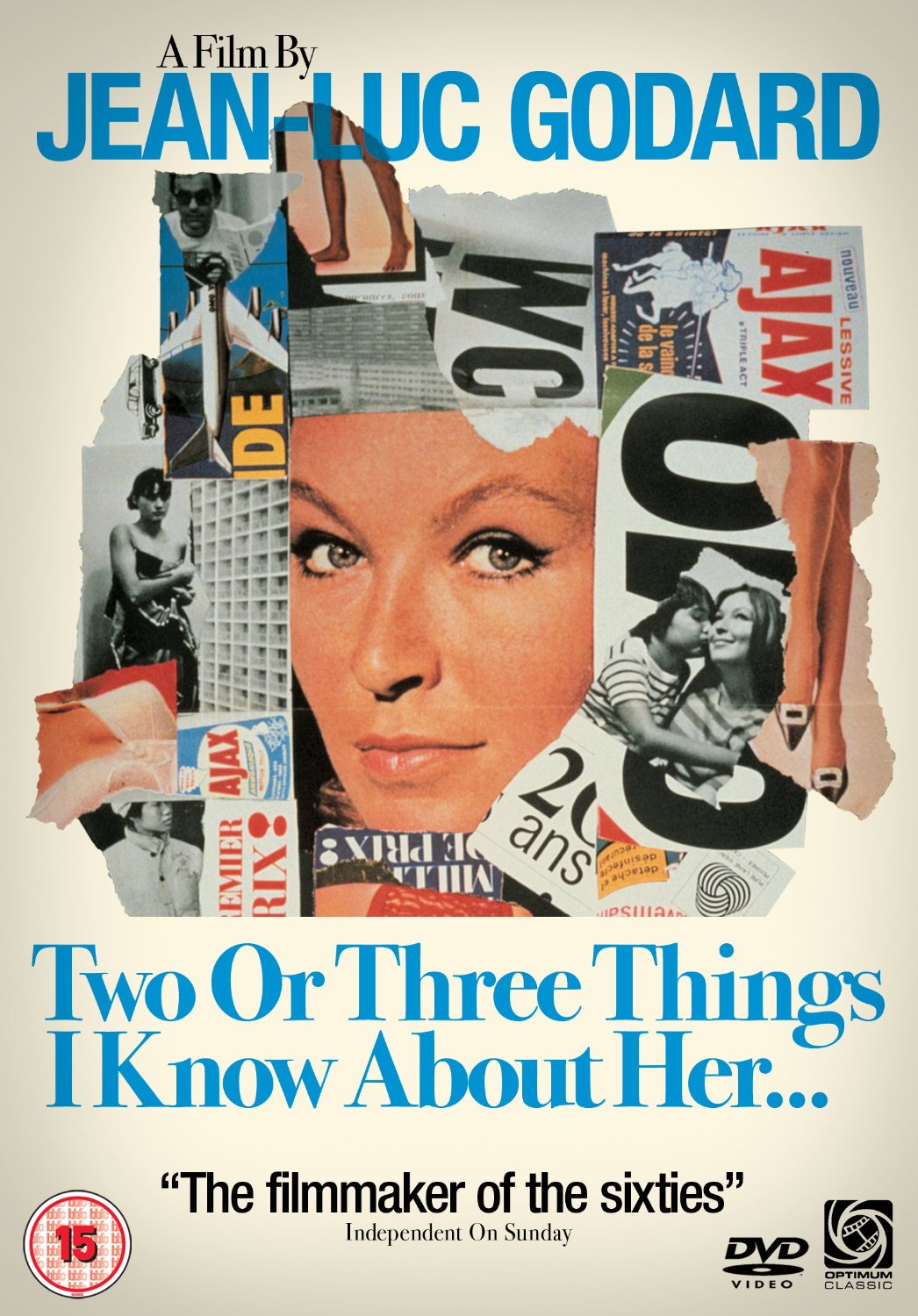
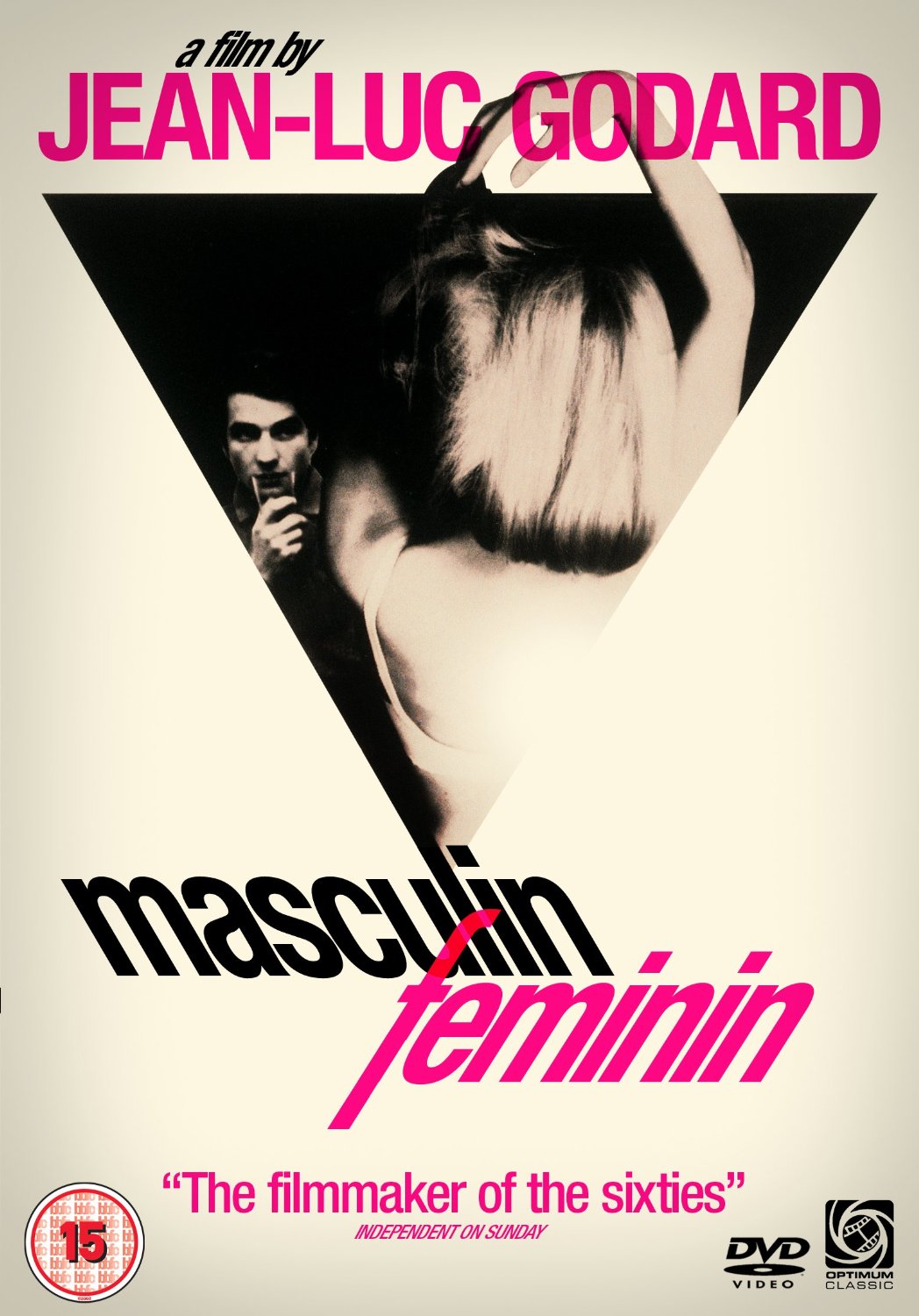
2or3things2 or 3 Things I Know About Her*, Jean-Luc Godard (1967, France). I have mixed feelings about Godard’s films. Most I’ve found a bit dull, but I absolutely adored Le Mépris. And while he’s never been afraid to experiment with the form – something I admire in directors – he was also hugely prolific. So after the disappointing Masculin Féminin (see here), I wasn’t expecting much of 2 or 3 Things I Know About Her. But I actually thought it really good. My second favourite Godard, so far. And I liked it enough to want to watch more of his films. 2 or 3 Things I Know About Her is basically a film study of Marina Vlady, who plays a bourgeois mother who also has sex for money. It follows her as she does housewife things interspersed with meetings with clients. Occasionally, she, and other members of the cast, break the fourth wall. There are also shots of building works in Paris, and some nice concrete architecture. Apparently, this was one of three films Godard made in 1967 – he’d shoot 2 or 3 Things I Know About Her in the morning and Made in USA in the afternoon. Like I said, some films belong on the 1001 Movies You Must See Before You Die list, some don’t. This is one of  the former. I think I’ll get myself a copy of this film, on Blu-ray if I can.

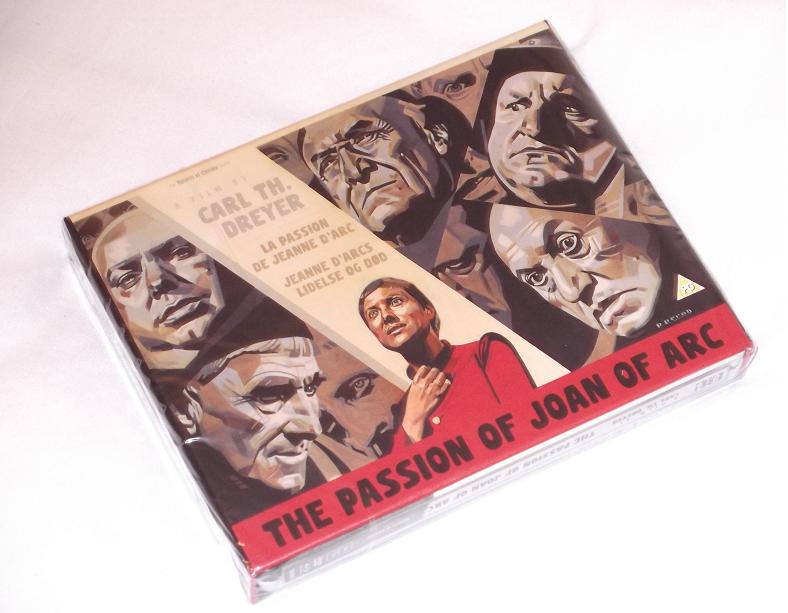
joanofarcThe Passion of Joan of Arc*, Carl Theodor Dreyer (1928, France). Another director I seem to have fastened on to it is Carl Theodor Dreyer, and it’s certainly true Gertrud is a favourite film and I hold Day Of Wrath in high regard… It could be argued that The Passion of Joan of Arc is his most famous film, despite being silent and originally released in 1928. But even though nearly ninety years old it’s an astonishingly… modern film, with its reliance on close-ups and the quite brutal way it depicts Joan of Arc’s burning at the stake. In fact, even the look and feel of the film is weirdly modern. Watching the movie, it’s hard to believe it was made in 1928. Happily, eureka! have done a bang-up job on releasing it on DVD (and Blu-ray). The slipcase not only includes the disc but also a thick booklet on the film. And so it should: The Passion of Joan of Arc is an important film, and should be treated as such. It’s just a shame many other important films are not treated as well.

fatherlandFatherland, Christopher Menaul (1994, USA). Apparently Mike Nichols spent $1 million on the film rights for Robert Harris’s novel but couldn’t interest any studios in the project. So HBO made it as a TV movie instead. And although it netted Miranda Richardson a Golden Globe, it’s actually not very good. Hitler victorious is likely the most popular form of alternate history, but Harris gave his version an interesting spin – setting his story twenty years later, as celebrations for Hitler’s 75th birthday are ramping up throughout Germania, and which will culminate in an historic meeting between the Führer and US President Joe Kennedy Senior. Unfortunately, the death of a party figure starts SS Major March on an investigation which threatens to uncover the Reich’s biggest secret (hint: it’s not a secret in the real world). Rutger Hauer, a Dutchman, plays March, a German; while Miranda Richardson, a Brit, plays Charlie McGuire, an American reporter in Berlin for the festivities who gets dragged into the affair. The film was apparently made in Prague, which doesn’t stand in for Berlin especially well, and the production can’t seem to decide if it should present Germania as a German-speaking nation or, as is often the case in English-language productions, have everyone speak English so subtitles are not needed. So it does a bit of both. The plot is also thuddingly predictable, whether you know the source text or not; and Hauer is a bit too laconic to convince as a SS officer. Disappointing.

1001 Movies You Must See Before You Die count: 599


Leave a comment

Moving pictures, #15

And it’s back to movies, with the usual somewhat eclectic collection of viewing. As usual, films on the 1001 Movies You Must See Before You Die list are asteriskificated.

mapstothestarsMaps to the Stars, David Cronenberg (2014, Canada). Ah, movies about people who make movies, people who make millions for very little work, who live lives of wealth and privilege and think people actually give a shit about them. And that’s pretty much Maps to the Stars, which focuses on a Hollywood family – there’s a famous TV shrink, the son is the child star of a very profitable franchise, the mother manages the son, and the daughter… Well, the story is really about the daughter, who was institutionalised elsewhere after a past arson attempt… but now she’s back in town. And being drove around by Robert Pattinson. There’s also a fading actress, who’s trying to land the lead role in a remake of her mother’s most famous film, and is having a somewhat unemotional affair with the TV shrink. Oh, and the son is trying hang onto his role after a stint in rehab and a co-star who gets all the best lines. I like metafiction because it’s about the mechanics of fiction, but films about film-making mostly seem to focus on the frankly unlikable personalities who profit from the successes of the movie industry. It’s a bit like the US equivalent of Downton Abbey. Admittedly, this is Cronenberg – and you expect something more from him than just another inward-looking Hollywood-movie-about-Hollywood, populated with a cast where it’s impossible to tell who is the more self-involved – the characters or the actors playing them. And true, Cronenberg throws in some minor weirdness to leaven the unremitting rich-people-problems, but it’s not really enough. Even claims that the film recapitulates in allegorical form the decline of Western civilisation seems like one of those feeble excuses five-year-olds are prone to come out with when found in the presence of an expensive broken vase.

jodosduneJodorowsky’s Dune, Frank Pavich (2013, USA/France). Top of the list of films that were never made is Alejandro Jodorowsky’s adaptation of Frank Herbert’s Dune. It only survives in numerous pieces of concept art – although given the artists, Moebius, Chris Foss, Giger, it’s no wonder it survives – and six “bibles” produced by the French production company in order to sell the project to Hollywood studios while drumming up finance. Jodorowsky still has a copy, but it’s not known what happened to the others. Jodorowsky’s Dune is the story of the film, which reached a much further point in preproduction than I’d thought, and was only scuppered because Hollywood was unwilling to entrust it to Jodorowsky. But I’ve always believed it would have been a magnificent piece of cinema, and this documentary only reinforces that belief. Perhpas the most fascinating part of the film – and it’s a close call as the damn thing is fascinating throughout – is where it shows the impact Jodorowsky’s project had on subsequent science fiction films. It’s not just that his “team” – O’Bannon, Foss, Giger, Moebius, etc – went on to work on other films, but also that elements of his storyboard ended up in completely unrelated sf movies. Sadly, Jodorowsky’s Dune is only available as Region A Blu-ray, but it does include a Region 1 DVD – so you might as well get it anyway. Because it’s totally worth it.

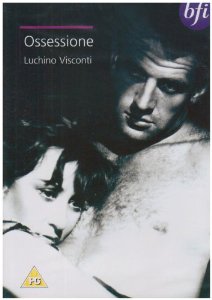
ossessioneOssessione*, Luchino Visconti (1943, Italy). An early piece of Italian neorealist cinema, if not the first film labelled as such. I am not a huge fan of Italian neorealist films, although I love a number of Italian movies (especially those by Antonioni); nor is Visconti among my front rank of directors. I suspect Ossessione is on the 1001 Movies You Must See Before You Die list because of its position as the first Italian neorealist film, because in most other respects it’s relatively ordinary. A tramp finds work at a provincial restaurant, has an affair with the owner’s wife, and the two of them plot to kill her husband. But he dies accidentally… but the boyfriend still ends up going down for it. It’s apparently based on Cain’s The Postman Always Rings Twice. Which I know I’ve not read, but I might have seen one of the film adaptations…

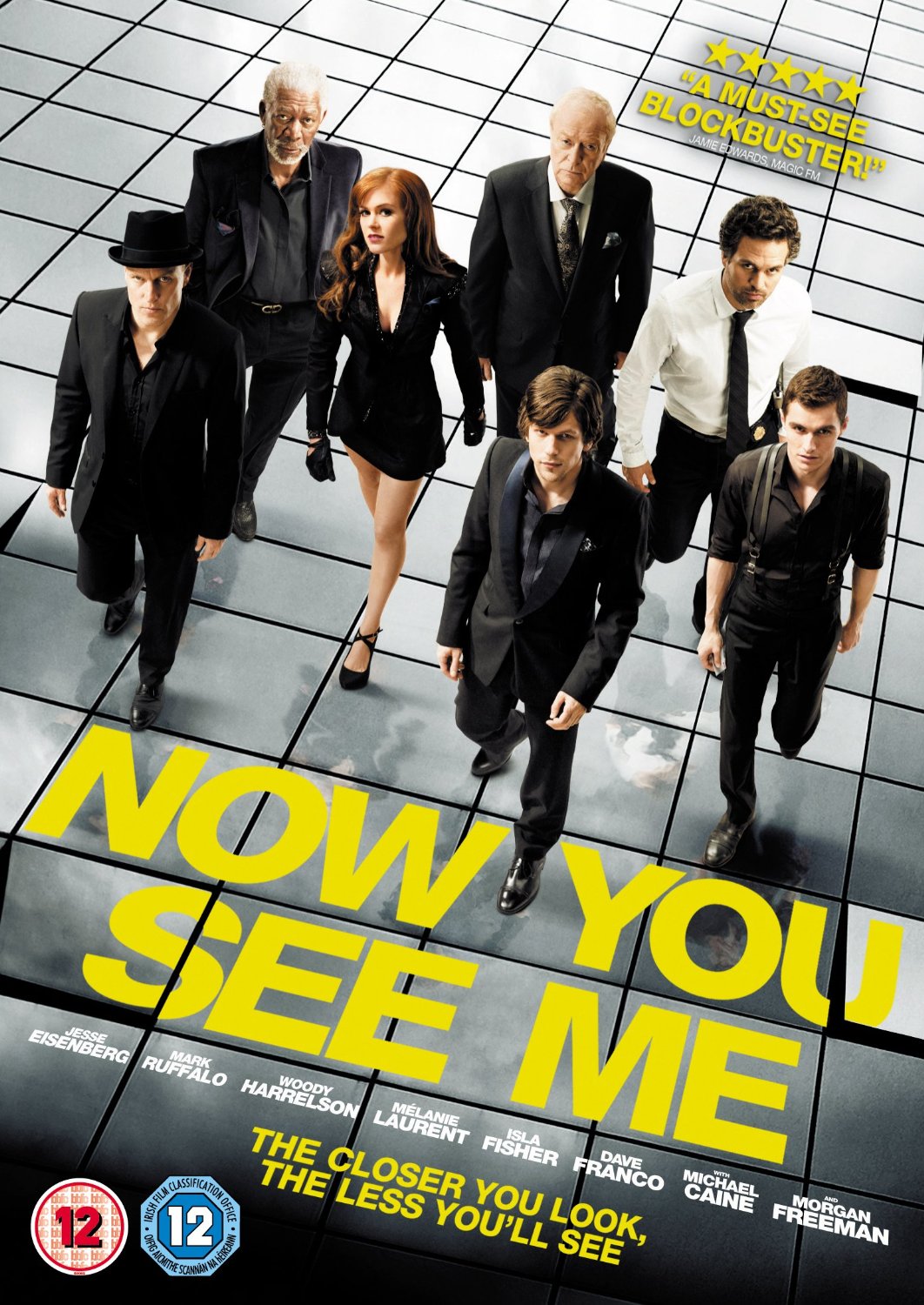
nowyouseemeNow You See Me, Louis Leterrier (2013, USA/France). The charity shop were doing a buy-one-get-one-free offer, so I went for this one although I really don’t like glossy Hollywood thrillers at all. Admittedly, the elevator pitch did sound intriguing: a group of illusionists pull off a series of bank robberies. Having now seen Now You See Me, I dislike glossy Hollywood thrillers even more. Jesse Eisenberg proves once again he has as much onscreen charisma as a dead badger, not to mention a talent for playing characters you’d swerve to run over if you saw them crossing the street. The remainder of the cast are pretty much standard for the type of film, the elevator pitch – illusionists! making the crimes! – is spoiled by the illusions clearly being the result of CGI trickery (except, of course, for those that are “explained”), and it’s all as slick and unmemorable as a cheap supermarket kagool. Avoid.

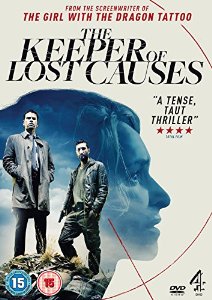
keeperThe Keeper Of Lost Causes, Mikkel Nørgaard (2013, Denmark). My mother is a fan of Alder-Olsen’s novels, and when I spotted this film adaptation of his debut in a charity shop, I decided to give it a go. It’s a Nordic crime thriller, which pretty much hits all the clichés, opening with a police raid that goes badly wrong and in which only our brooding Nordic detective escapes uninjured. But not unscathed. After a medical leave of absence, he’s given a makework job, closing cold cases in Department Q. But not apparently closing cases – he’s not supposed to solve them, just mark them as unsolved and archive them. Or something. But the first one he picks, he decides to solve. A woman disappeared on a ferry, and the death was marked down as suicide, even though the woman had shown no suicidal tendencies. Nordic detective, however, with the help of faithful sidekick of Arab extraction, is made of sufficiently stern stuff to ignore any complaints or threats from his boss, and proves the woman is still alive! In a saturation system! Built in a barn by a nutter! Apparently, checking off every Nordic crime trope wasn’t enough, the makers of this film also had to get the hyperbaric element completely wrong. I can’t speak for the books, but this film adaptation is distinctly unimpressive.

fireworksFireworks Wednesday, Asghar Farhadi (2006, Iran). Some of the best films I’ve seen over the past few years have been from Iran, and Asghar Farhadi’s About Elly is one of the best of those. So I made an effort to seek out some of his earlier films. The title of this one refers to New Year’s Day, when fireworks are let off as part of the celebrations; but it could also be seen as a reference to the internal dynamics of the family at the centre of the story. A young woman about to be wed gets a temporary job cleaning the flat of a family who had have just had it repainted but are now apparently off to Dubai for a short holiday. Except relations between husband and wife are not at their best… because she suspects him of having an affair with a divorcee who runs a beauty salon in their block of apartments. Both husband and wife enlist the young woman in their attempts to prove their suspicions – but that’s all beside the point as Fireworks Wednesday is more of a character protrait of the wife than anything else, and it’s superbly done. Farhadi may be a less formally experimental director than Kiarostami, but he is nonetheless a world-class talent. Seek out all his films and watch them.

orientalelegyOriental Elegy, Aleksandr Sokurov (1996, Russia/Japan). Unfortunately, I have yet to source a copy of this DVD (which actually comprises three films), but I did find a copy of ‘Oriental Elegy’ on Youtube with subtitles. So I downloaded it to a USB drive and watched it on my telly. The quality was… not the best. Although given that this is one of Sokurov’s “elegies”, and his propensity for post-production visual effects, that’s perhaps not so much of an issue. I would seriously like to see  – and own – a decent copy of this. It’s fairly typical for Sokurov, a meditation on life and death prompted by a traveller’s visit to a strange Japanese town, where he listens to the testimonies of various people, amd where distorted cinematography helps illustrate the words spoken by the traveller in voice over. Like most Sokurov films, I’m going to have to watch this a number of times to figure it out. Now that’s value for money…

1001 Movies You Must See Before You Die count: 595


2 Comments

Moving pictures, #14

Yet more films, some of which are from the 1001 Movies You Must See Before You Die list (asterisked). And there’s another Sokurov in there too. I’ve kept the number mentioned in this post lower than usual, perhaps in the hope I’ll write something a bit more critically insightful than I usually do. Oh well.

mockingjayThe Hunger Games: Mockingjay, Part 1, Francis Lawrence (2014, USA). I seem to have missed this off an earlier Moving pictures post, so I thought I’d better include it here. I have not read the books – I don’t read YA as I am not a Young Adult, but I’m happy to watch the movie adaptations… even if, 99 times out of 100, I’ll not be impressed. And so it is with The Hunger Games: Mockingjay, Part 1. Jennifer Lawrence is an excellent actress – see her in Winter’s Bone to see just how good (and it’s a bloody good film too) – but she seems wasted in this series. It’s all about, well, it’s all a bit obvious. I’ve been told that the book is different because Katniss is a reluctant figurehead for the resistance to Capitol (which throughout the film is shown as the capital of Panem, and that’s not what “capitol” means). Anyway, this comes to a head when Katniss is taken to District 13, which is fighting against Capitol and… it’s about as subtle as a mackerel in the face, not to mention weirdly-paced. While Lawrence stands out, as does Donald Sutherland’s broad-brush evil president, the rest of the cast tend to fade into the background, which is a surprise given the calibre of the talent. I’ll watch the final film of this “trilogy”, but I don’t hold a high opinion of them.

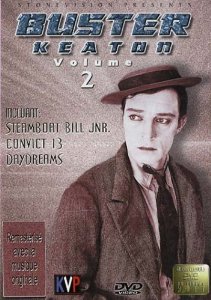
steamboatbillSteamboat Bill, Jr*, Charles Reisner (1928, USA). Buster Keaton’s last film with United Artists, before he moved to MGM and later lost creative control of his films. Keaton plays the college-educated son of a paddle-steamer owner and captain, whose ship is decrepit and losing business to a rival. And it turns out that Keaton is is planning to marry the daughter of said rival. Various hijinks ensue, but it’s the extended sequence where a cyclone hits the town that really shows comic genius. Keaton’s stories do tend to overuse his underdog status and, yes, he always comes out top in the end – with much comical slapstick along the way – but it’s hard to begrudge him the formulaic construction of his films as they are quite funny – and, in parts, really funny.

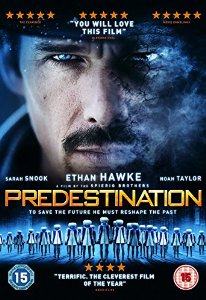
predestinationPredestination, Michael & Peter Spierig (2014, Australia). There are many science fiction works crying out to be adapted for the cinema, and while Robert Heinlein’s ‘All You Zombies’ might seem like a good example, it’s difficult to see how a decent feature-length film might be made of it. But the Spierigs had a go. And they actually made quite a good fist of it. The story is basically a piece of Heinlein fluff – he never understood its popularity, and complained about it frequently in his letters, as published in Grumbles from the Grave – involving a time traveller who turns out to be both his own mother and father. The film expands this by adding in some sort of apocalyptic terrorist, and an additional character (played by Ethan Hawke, see DVD cover) to whom the narrator of the original Heinlein story tells their story. I told a friend after seeing Predestination that it wasn’t as twisty-turny as Primer (a film I like) but more twisty-turny than Looper (a film I didn’t like). But yes, I did like this one.

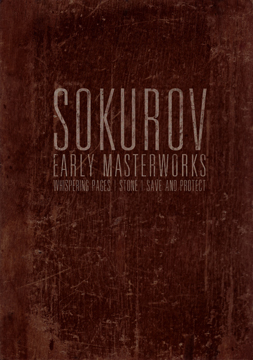
sokurov_earlyAn Example of Intonation, Aleksandr Sokurov (1991, Russia). If memory serves me aright, I watched this after yet another rewatch of Whispering Pages. Which I think makes the Early Masterworks Blu-ray/DVD set (as pictured) the most re-watched DVD box set I own. An Example of Intonation is basically an interview with Boris Yeltsin – and it’s one of the few documentaries Sokurov has made in which he actually appears as himself on-camera. It opens with several minutes of static footage of a snow-covered woodland, while a choral piece plays over the top. It then cuts to two figures walking along a path in a residential estate. Their footstpes are loud on the snow and ice, but their voices are muffled (I would not be surprised to learn that the Russian version is subtitled during this part of the film). The two figures are Boris Yeltsin and Sokurov. The film is a surprisingly frank portrait of the former, and astonishingly personal. Yeltsin is no matinee idol, and though his face often fills the entire frame, it’s a face which humanises a man whom the West has chosen to depict as… if not a villain, certainly one of the architects of the USSR’s fall (and perversely, while the collapse of the USSR is seen as a good thing, those who brought it about from within are seen as having failed at… something – yet more Western political hypocrisy). After the interview, Sokurov joins the family for a meal. The documentary finishes with a dashboard cam recording a journey by a limousine and police escort. It is because of artistic decisions such as this that I think Sokurov is perhaps the greatest director currently making films.

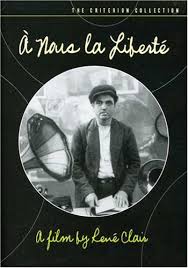
anouslaliberteÀ nous la liberté*, René Clair (1931, France). There is something both Renoir-ish and early Hollywood about the plot of this film, and something very Tati about its implementation. A pair of convicts put together a plan to escape from prison, but one of them fails to make it. The one that does, however, while on the run steals bicycle… and is subsequently mistaken for the winner of the bike race. He uses the prize money and builds up a business selling, and then manufacturing, gramophones, and so becomes a rich industrialist. At which point, the other convict is released as he’s finished his sentence. He goes to work in the gramophone factory, learns the boss is his old mucker from inside, and the two pick up their friendship. But then gangsters learn of the industrialist’s past and demand money. There’s an extended comic sequence in which they try to rob the plant, with the help and hindrance of the two ex-cons… The film ends with the pair as tramps, penniless and on the run. I must admit I wasn’t particularly taken with this for the first twenty or thirty minutes, but as the film progressed it got a lot more interesting and entertaining. There are some good jokes about assembly lines, and an amusing running joke about the woman one of the convicts fancies. A good movie, worth seeing.

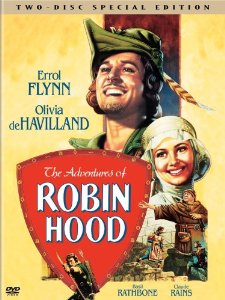
robinhoddThe Adventures of Robin Hood*, Michael Curtiz (1938, USA). I’m really not sure what to make of this. It was filmed in glorious Technicolor, and I mean glorious. It looked beautiful – and some of the outfits worn by the cast, I remember one in an orange and purple tunic with purple tights, for example… But the story was complete Hollywood flim-flam, and not even remotely historical. And I don’t just mean Friar Tuck apparently knowing how to fight with a sword (an edged weapon!). Or Will Scarlet managing to keep his eye-searingly red outfit clean while living in Sherwood Forest… Having said that, the films possesses bags of classic Hollywood charm, as does Errol Flynn. The dialogue was pure cheese, and the cast mostly pure ham. But for all its faults, it’s Technicolor and it looks fantastic. I was born in Sherwood Forest – well, I was born in the town which stands in what used to be the centre of Sherwood Forest (there’s even a plaque to commemorate it), so Robin Hood has been part of my world since I was old enough to understand my surroundings. While The Adventures of Robin Hood hits the main points of the legend as it’s commonly known, it’s probably better considered a piece of Hollywood history than Nottinghamshire history. I quite fancy a copy myself – I’ll have to see if I can find one going cheap on eBay…

1001 Movies You Must See Before You Die count: 594


1 Comment

Moving pictures, #13

I was looking at my film-watching records – yes, I have a spreadsheet of which films I’ve watched, and when – and I noticed in 2013 I watched on average around 16 DVDs a month. Last year, that almost doubled to 30 DVDs a month. This year, I expect it will be much higher. I have yet to figure out why…

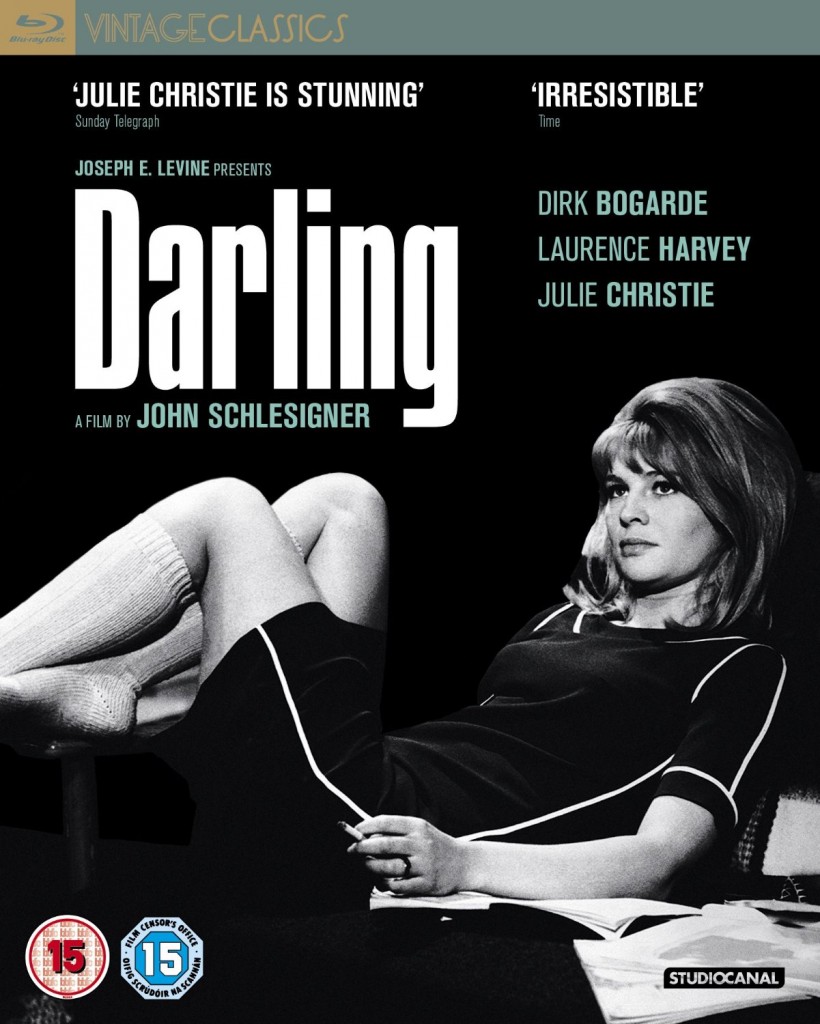
darlingDarling, John Schlesinger (1965, UK). Julie Christie plays a model in Swinging Sixties London, with a nice but dim husband at home, who has various affairs before eventually marrying an Italian count who proves mostly uninterested in her once they’ve tied the knot. The parallels with Grace Kelly’s life are left there for the the viewer to spot. Dirk Bogarde plays Christie’s manager, and he also has an affair with her. Mostly, however, the film is an acid commentary on the more affluent sectors of London society – an expensive dinner to raise money for famine victims, for example; and, oh look, things like that still happen, it’s as if the notion is irony-free, although of course Darling deliberately plays on it. The film starts a little slow, but Christie is good in her role, and things start to pick up as the career of Christie’s character does. A hippie party in Paris is quite amusing, if a little broad in its humour. I stuck the film on my rental list on a whim, and it proved to be a good call.

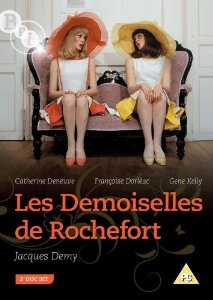
demoisellesLes Demoiselles de Rochefort*, Jacques Demy (1967, France). Demy’s The Umbrellas Of Cherbourg is a much better-known, and better-regarded, film than this but, to be honest, I enjoyed this one much more. The title to refers to a pair of sisters, played by real-life sisters Catherine Deneuve and Françoise Dorléac, who are looking for love in the eponymous town. A fair comes to Rochefort, one of the exhibitors at which is led by George Chakiris and Grover Dale. When their female stars abscond, they recruit Deneuve and Dorléac. Meanwhile, the sisters’ mother runs a café in the town square and pines for a lost love… who has actually returned to the town after many years and is helping Dorléac with her music (and also promises to introduce her to a famous friend of his, played by Gene Kelly). And then there’s the sailor who’s about to be demobbed, who’s friends with the sisters and their mother. Unlike The Umbrellas Of Cherbourg, the dialogue is not entirely sung – which may be one reason I much preferred this film – but they do break into song pretty much every five minutes. And then there are the big dance numbers. It’s a musical, but it doesn’t really feel like one. Which may be one reason for its charm. After watching this film, yes, I’d like to see more Demy. Again.

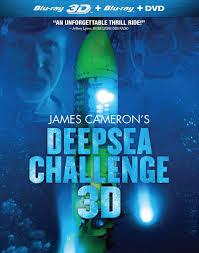
deepseaJames Cameron’s Deepsea Challenge, John Bruno, Ray Quint & Andrew Wight (2014, USA). I had to order this from the US as it’s yet to be released in the UK. And on Blu-ray too – in fact, wanting this documentary is one of the reasons I purchased a multi-region Blu-ray player. Anyway, I’ve been fascinated with the bathyscaphe Trieste’s 1960 descent to Challenger Deep, the deepest part of the oceans, for several years. I wrote a story set in Challenger Deep, and it was published in Where Are We Going?, an anthology from Eibonvale Press; and I used the Trieste in the third book of my Apollo Quartet, Then Will The Great Wash Deep Above. No one else had visited Challenger Deep – 7.5 miles down, where the pressure is 7 tons per square inch – since 1960s… until 2012, when film director James Cameron did it in the specially-built submersible Deepsea Challenger. This is the film of that expedition. It also includes a re-enactment of the Trieste dive. It’s a polished, well-presented documentary, and I found it fascinating. There is, it must be said, very little to be seen on the ocean floor at Challenger Deep, but Cameron and his directors make a very watchable film out of it. If there’s one downside it’s that we’ll have to put up with an Avatar 2 so that Cameron has the money to make another documentary like this…

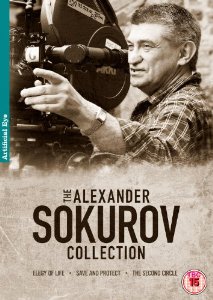
sokurovSave and Protect, Aleksander Sokurov (1989, Russia). This was a rewatch as I first watched Save and Protect shortly after getting The Alexander Sokurov Collection box set for Christmas. I remember it being very slow and somwhat impenetrable. I have now watched it again. More than once. It’s loosely based on the life of Madame Bovary (and no, I didn’t discover the following morning I’d gone and ordered a copy of the book), but only in as much as it presents the sexual freedom of the title character as the foremost aspect of her character. What makes Save and Protect interesting, however, is Sokurov’s deliberate flouting of the fact it’s a period drama. Some of the cast wear more modern clothing, a car even makes an appearance later. This breaking from the carefully-constructed historical world in which the story is set is neither intrusive, nor does it necessarily break the suspension of disbelief the medium relies upon. In fact, it’s very similar in effect to Haneke’s breaking of the fourth wall in Funny Games. The lead role in Save and Protect – ie, Emma, although never named as such – is played by French ethno-linguist Cécile Zervoudacki, who brings a remarkable earthiness to the part (Sokurov likes using non-professional actors, mostly to good effect). According to The Cinema of Alexander Sokurov: Figures of Paradox, “Save and Protect has never been intended as an enjoyable cinematic experience, except perhaps in the frame of masochistic self-infliction” (p 85), which I think is a bit harsh. The book does describe the film is a work of art, and perhaps it is in some respects Sokurov’s least successful movie; but to me this is only further evidence that what Sokurov is doing in cinema is both fascinating and hugely important.

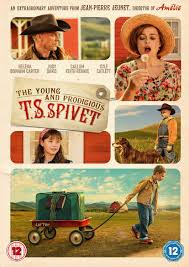
spivetThe Young and Prodigious TS Spivet, Jean-Pierre Jeunet (2013, France/Canada). Delicatessen remains one of my favourite films, and I’ve always rued Caro and Jeunet going their separate ways since neither has produced anything individually as good as the work they did together. Jeunet has been the more successful, of course, with a string of well-received movies, such as Amelie, A Very Long Engagement , Micmacs, and now The Young and Prodigious TS Spivet. Which is plainly a Jeunet film through and through. The title character is a young boy who’s a genius and an inventor. He lives on a farm in Montana, with an entomologist mother (played by Helena Bonham-Carter) and a taciturn cowboy father (a badly miscast Callum Keith Rennie). Young TS Spivet wins the Baird Prize, awarded by the Smithsonian Institute, for his design for a perpetual motion machine, but he had neglected to tell them his age. Nonetheless, he decides to attend the prize-giving ceremony in Washington. So he runs away from home and travels across the US and… Jeunet does whimsy with a master’s eye. But I do find it somewhat thin an ingredient on which to hang an entire movie. There’s only so much CGI-enhanced scenery you can take in, so much borderline slapstick, so many characters bent out of shape until they’re grotesques… Not a bad film for a Saturday night and a bottle of wine, but I’m glad it was a rental and not a purchase.

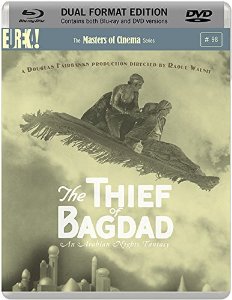
thiefofbagdadThe Thief of Bagdad*, Raoul Walsh (1924, USA). Douglas Fairbanks plays the title role in this Arabian Nights-style silent movie. By my calculation, he was forty when the movie was made, but he plays the title role like a teenager, with lots of gurning at the camera, throwing his arms wide, and standing with his hands on his hips, his waxed chest pushed out. It’s almost a parody of silent movie acting. And somewhat off-putting. Otherwise, the film is a classic of its time, with some clever special effects and a story which, although somewhat long, manages an enviable pace. The production design, however, is… odd. While the sets did sort of resemble an Arabic city of the Caliphate era, the various pieces of writing on the sets were gibberish, not Arabic letters at all. It seemed to me like a weird mistake to make – to go all that trouble to create a believable Arabian Nights setting, and then not bother using an actual real alphabet. Ah well.

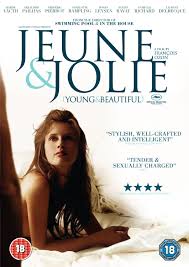
jeuneJeune & Jolie, François Ozon (2013, France). I’m a fan of Ozon’s films, although I do find him a bit hit and miss. I loved Angel, I thought Under The Sand very good indeed, and his film of Rainer Werner Fassbinder’s unfilmed script, Water Drops On Burning Rocks, was close to inspired. There are a few duff movies in his oeuvre, but it’s a generally excellent body of work; and he’s certainly a director whose career I follow. So I had reasonably high expectations of Jeune & Jolie, but… what a cold film. A teenage girl conspires to lose her virginity while on a family holiday, and on their return to Paris becomes an call girl, having sex with older men for money. Marine Vacth (who was twenty-two at the time of filming) plays the lead character with a quite disturbing lack of affect. When one of her clients dies in flagrante delicto, she briefly panics, tries to give him CPR, then runs away. But the police track her down – which is how her parents come to learn of her activities. Despite all this, she seems mostly unconcerned at what happened, or indeed at being caught. Not a pleasant film, though clearly it wasn’t intended to be. In some respect, it felt a bit like something from Haneke, but missing his signature oblique eye.

1001 Films You Must See Before You Die count: 591


1 Comment

Moving pictures, #12

Time to catch up on films again…

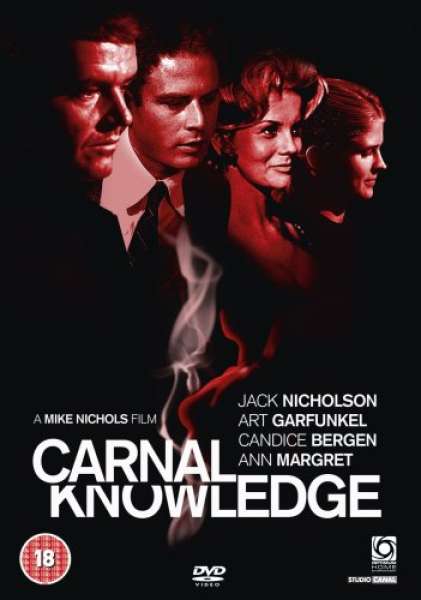
carnalCarnal Knowledge, Mike Nichols (1971, USA). According to imdb.com, this is a sexual satire but I couldn’t see much that was satirical in a film that unironically treats women like objects. At one point, Jack Nicholson even gives a slide show of his girlfriends, giving a running commentary on each woman’s appearance and sexual prowess. You see Nicholson and Art Garfunkel were at college together, and they both fell in love with Candice Bergen, but Nicholson ended up marrying Ann-Margret… and years later both men treat the women in their lives like shit, and I seriously have to wonder why this is classified as entertainment. There are a lot of classic films that have never been released on DVD, there are a lot of foreign films that have never been released in English-language editions on DVD… So you have to wonder why they bothered to waste non-biodegradable plastic on crap like Carnal Knowledge.

sokurov_earlyWhispering Pages, Aleksandr Sokurov (1994, Russia). And speaking of foreign languages films not release in– ah wait, I’ve said this before about Sokurov. Whispering Pages is only available as part of a US-only release, Early Masterworks, on Blu-ray and DVD. The films opens with a distorted image of a riverside block of flats in St Petersburg, before eventually focusing on a series of pillars which distortion have rendered almost two-dimensional, and then a man sitting on some steps at the side of the river. He wanders through a series of buildings, a sort of enclosed city, on some sort of quest. I’ve watched the film three times now I’m no clearer as to what’s going on. I’m guessing it’s Limbo or Purgatory, existence as a struggle with some lesson to be learnt, but Sokurov is so allusive and the references so opaque – according to The Cinema of Alexander Sokurov: Figures of Paradox, the film borrows from both Dostoevsky and Gogol, the works of neither of whom I’m familiar with (although I should be grateful for small mercies in that I didn’t wake up the morning after watching the film and learn I’d ordered their books from Amazon…). But all this, of course, is part of the appeal. The film defies easy understanding, and the beauty and strangeness of the cinematography – it’s weird shifts from sepia-tinted to washed out blues and greys to black and white – sucks you into a world in which there is clearly a pattern but it requires work to discern. I will be watching this again; eventually, I will figure out what it’s about.

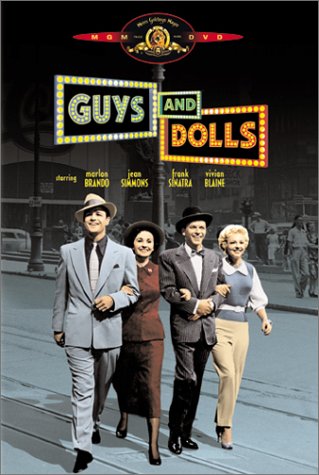
guysanddollsGuys and Dolls*, Joseph L Mankiewicz (1955, USA). If I added up all my pet hates, I’d have a respectable zoo. Well, a small petting one. Probably full of hamsters. And maybe a goat or two. But one of my pet hates is surely that stupid formalised language like that what is used by the writer Damon Runyan in the speech of his gangster characters in the stories that he wrote. Which is what’s used in Guys and Dolls – likely because the stage show, and so the film, were both based on a pair of stories by Runyan. As it is, Sinatra seems peculiarly charisma-free, Marlon Brando is actually less annoying than usual (although not at first), and Jean Simmons provides a surprisingly common-sensical romantic lead. I didn’t think the songs especially memorable, although one or two of the set-pieces were amusingly done. I am not, it has to be admitted, a fan of musical films, and though I have watched many of them – for reasons I have yet to figure out – I thought this one middling at best.

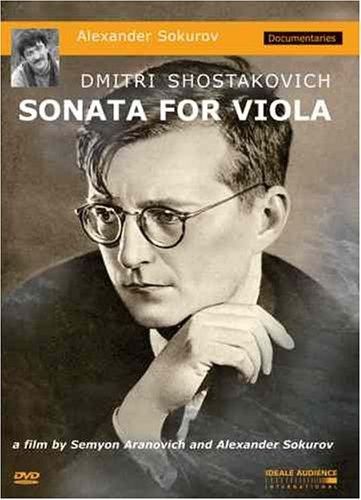
sonataviolaSonata For Viola, Aleksandr Sokurov (1981, Russia). And here’s another film that features music, that is actually about music – or rather, a composer. I know very little about classical music, it just isn’t my thing; so the appeal here is likely to be limited. And so it proves. Sokurov puts together a documentary on Dmitri Shostakovich based on archive footage. It’s an early work, so the voice-over tends to be more factual and less philosophical than later documentaries; and while it does a good job of laying out Shostakovich’s life, and setting it in context, it’s not likely to attract viewers unless they’re interested in the topic or the director. One for the collection, without a doubt. But no, not a favourite in Sokurov’s oeuvre.

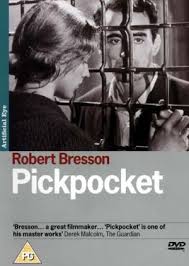
pickpocketPickpocket*, Robert Bresson (1959, France). Bresson is a highly regarded director, and several of his films appear on various lists of great or top 100 or films to see before you die lists. Which is why I’ve seen several… despite not actually taking to any of them. Such as Pickpocket. Non-professional actor Martin LaSalle plays a young man who drifts into thievery, initially for kicks but later as a means to make a living. He meets various other pickpockets and thieves, learns the tricks of the trade, has metaphysical discussions with assorted people, finds himself in a battle of wits with a police inspector… but it’s all played so flat, so affect-less, that’s it’s hard to give much of a shit. LaSalle is a cipher, the remainder of the cast are mouth-pieces, and the story’s only saving grace is its irony. But for irony to really bite, you have to care about its victims. And Bresson does a piss-poor job of making LaSalle, or indeed anyone in the film, sympathetic. He can do it for a donkey, but apparently not for a criminal. Disappointing.

shock_aweNymphomaniac, Volume I and II, Lars von Trier (2013, Denmark). I remember seeing posters for this all over Copenhagen when I was there for Christmas in 2013. And since catching a film at the cinema is an sort on-and-off family tradition over the holiday, I did briefly consider this as a possible contender… But it’s 241 minutes long in total, and I suspected it wasn’t really suitable family viewing… Both facts I can now confirm, having watched it on Blu-ray – although I saw the version bundled in the Shock & Awe von Trier box set, which is not the 325 minute director’s cut. So beware. Stellan Skarsgård finds a badly-beaten Charlotte Gainsbourg one night, takes her home and sees to her injuries. Once recovered, she explains she is a nymphomaniac and tells him her life-story – which is shown in flashback, with Stacy Martin playing the young Gainsbourg. It begins with teenage sexual games, moves onto unhealthy relationships, and finally a marriage which slowly disintegrates, in part because Martin is now visiting sadist Jamie Bell on a regular basis. Skarsgård tries to explain Gainsbourg’s stories by relating them to fly-fishing, as he later admits to having never experienced sex himself. Both parts of Nymphomaniac are pretty much typical von Trier, that unhappy mix of beautiful cinematography, keen observation of the banal, and an almost schoolboyish desire to shock. He also does that thing where a line of genuine insight is often followed by a banal cliché – because he’s at his best when he’s observing and at his worst when he fails to resist the temptation to let his story jump the rails. I still think von Trier is an important director, and the Shock & Awe box set was certainly worth purchasing… but of the von Trier films I’ve seen so far I think Antichrist is the best in this collection – it’s the most emblematic of his later work, not to mention the least misogynistic. It often feels as though von Trier considers himself the enfant terrible of cinema – and tries just a little bit too hard to live up to the label.

1001 Movies You Must See Before You Die count: 589


Leave a comment

Moving pictures, #11

I seem to have gone on a bit of a Russian film binge in this one – a Sokurov box set I’d ordered arrived, and I decided I’d better finish off the Eisenstein box set.

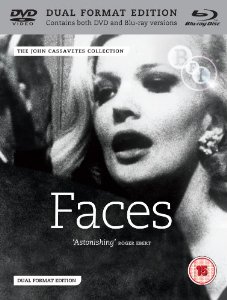
facesFaces*, John Cassavetes (1968, USA). I think this is the second Cassavetes films I’ve seen, it would appear he’s one of those highly-praised US independent directors, like Hal Hartley, whose appeal completely passes me by. Faces is shot in black and white, in a cinéma verité style, and seems to consist chiefly of a group of small people at various times, whose constituents change, being drunk and either talking crap, larking about or treating women badly. Buried somewhere among these scenes is a narrative, which apparently describes the slow disintegration of a marriage. But, to be honest, I didn’t much care. Most of the cast were pretty reprehensible, and their drunken boasting was hardly edifying or particularly entertaining. I’m afraid the high regard in which Faces is held is completely beyond me.

elegylandMaria, Aleksandr Sokurov (1978 to 1988, Russia). Sokurov’s films are not easy to find, and many of them have yet to be released on DVD. Elegy of the Land, on which this film appears, is fortunately relatively easy to find. Sokurov began his career making television documentaries, often from found footage, but Maria is original footage about the eponymous farmer, first filmed in 1978, and then added to ten years later. It’s a propaganda piece, but it’s also typically Sokurovian, although some of the cinematography is not as sophisticated as that displayed in later films. There are, for example, no distortions of the image, as used in later films, and the narrative is relatively straightforward. The film is also vibrantly-coloured – albeit only in the first half, the 1978 segment which last some 18 minutes and 30 seconds. The only dialogue is that spoken by the women farmers (only one or two men actually appear in this part of the film). Ten years later, Sokurov returned to film Maria, opening this half of the film with a typically Sokurovian long take shot from a vehicle driving along a road. The inhabitants of Maria’s village are invited to a showing of the first half of the film, and Sokurov films them (in black and white), and provides a voice-over. Maria dies, and he takes stills of the funeral, while commenting on her career and what she represented to those who knew and loved her. Maria is an odd piece – those first 18½ minutes seem very typical of Soviet propaganda – a colourful cinematographic essay on Soviet agriculture, although without the usual self-aggrandizing commentary. But the second half of the film is much more like one of Sokurov’s elegies, a meditation on its subject visualised using a variety of cinematic techniques. The more Sokurov I watch, the more he climbs in my estimation.

sokurov_earlyStone, Aleksandr Sokurov (1992, Russia). This is available on the Early Masterworks box set, which has only a US release (and includes a Region A Blu-ray), so it’s a little harder to find. But it’s worth taking the trouble to track down a copy. And I say that having now seen Stone three times and still being no wiser as to what it is actually about. In fact, the second time I watched it was after spending the afternoon on a bit of a pub crawl, so I fell asleep about ten minutes in. I then decided to rewatch it straight away, while reading the essay on the film in The Cinema of Alexander Sokurov: Figures of Paradox… And the following morning I discovered I’d ordered two paperbacks by Anton Chekhov from Amazon… But then I find Sokurov’s films – both fiction and documentary – endlessly fascinating not only because he distorts his cinematography to generate a specific visual look and feel – something I would like to be able to do in fiction – but also because he builds his narratives from allusion, metaphor and references, and there is so much going on in his films that every other director’s oeuvre seems almost juvenile by comparison. As far as I can determine, Stone is about Chekhov, returning to his house after his death, I think – but it shares a look and feel, and a thematic similarity with my favourite Sokurov film The Second Circle, although in this one the picture is distorted rather than just filtered. It’s another film with those long takes which suck you in, until you find yourself focusing on every aspect of the film with a degree of concentration it’s impossible to give to a nanosecond jump-cut Hollywood tentpole blockbuster…

dersuDersu Uzala*, Akira Kurosawa (1975, Japan/USSR). This is the first film Kurosawa made after attempting suicide following the commercial and critical failure of Dodes’kaden, and apparently he had known of the book of the same title by Vladimir Arsenyev since the 1930s. Whatever the provenance, I have to admit this is the Kurosawa film I’ve enjoyed and admired the most – but how much of that is due to my favouring of Russian cinema over Japanese? The title character is a hunter of the Goldi (Nanai), one of the Tungusic peoples of the Russian Far East, who Arsenyev runs into while on an army expedition to survey the Sikhote-Alin region. Uzala is a wily old man of the woods, and though the Russian soldiers initially consider him a primitive, he quickly earns their respect. So far so good. Kurosawa handles his wilderness filming with his usual excellence, and makes particular use of his fondness for placing the camera at odd angles. There is a weird spiritual interlude, which feels like pure Kurosawa, but which I felt didn’t quite gel with the other parts of the film. And then there’s the bit where Arsenyev attempts to “tame the savage” by offering Uzala his home when the hunter finds he can no longer live in the wilds as he once did. But he soon begins to long for his previous life. I thought Dersu Uzala very good – and while I may be starting to appreciate Kurosawa’s films more, I suspect it’s the story which is responsible for my liking it so much.

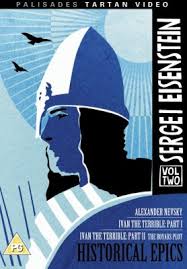
esisensteinIvan the Terrible, part 1*, Sergei Eisenstein (1944, USSR). No, I don’t understand why the first part of this is on the 1001 Movies You Must See Before You Die list, but the second isn’t. Especially since I preferred part 2 to part 1. The film tells the story of, er, Tsar Ivan IV, who ruled all the Russias from 1547 until his death in 1584. It’s all very in your face, with much gurning, and some quite fantastic costumes. In many respects, it feels and looks like Eisenstein’s Alexander Nevsky, although some 300 years separates the two films (their subjects, not their filming). This first part deals with Ivan’s ascension to the throne, with much politcking from the boyars, many of whom had their own candidates for tsar. Then there’s a mob scene – Eisenstein likes his mob scenes – and there’s also his marriage to Anastasia Romanovna, which doesn’t go all that well… The spectacle and melodrama tend to overwhelm the story, and disguise the fact Ivan the Terrible was a pretty fascinating historical figure – this is in many respects  an historical biopic turned up to 11.

esisensteinIvan the Terrible, part 2, Sergei Eisenstein (1958, USSR). Apparently, Stalin banned this part, which is why it didn’t appear until fourteen years after the first. It was also filmed partly in colour, unlike the black and white of part 1. And I found myself enjoying it more. Again, you have those fantastic costumes, and a lot of scenes set in Ivan’s throne room. And in some of those scenes, a dance springs to mind especially, Eisenstein actually turns it up to twelve – which is quite an achievement.  In other words, this film is more of the same, with the emphasis on more. Incidentally, I’m still a little annoyed I’ve yet to find a copy of Tartan’s Sergei Eisenstein Collection Volume 1 (containing Strike, Battleship Potemkin and October) for a reasonable price… although I see the Sergei Eisenstein Collection Volume 2 is now going for silly money… so I’m glad I bought my copy when I did.

1001 Movies You Must See Before You Die count: 587


3 Comments

Moving pictures, #10

I think I maintain a good spread of films in my viewing – current movies, classic movies and art house movies. Working my way through the 1001 Movies You Must See Before You Die list has introduced me to some good films I might otherwise have never seen, as well as some right crap I’d have been better off avoiding. Either way, I recommend using the list to supplement your own viewing. However, one thing has been readily apparent over the past few years, and it’s that I find current Hollywood product less and less appealing. I used to watch US films, as most people do, it was pretty much all I knew. But movies from other countries do exist, other nations do have cinematic traditions… and many of them are, well, actually much better than Hollywood. You can’t call yourself a film fan if you only watch Hollywood films. That’s like describing yourself as a gourmet despite only eating burgers.

So here is some haute cuisine (with a little fastfood thrown in):

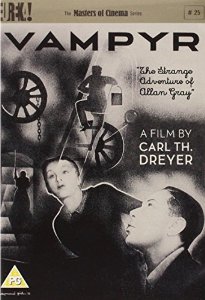
vampyrVampyr*, Carl Theodor Dreyer (1932, Germany). Subtitled “The Strange Adventure of Allan Gray”. This eureka! edition is actually the German print, although, as was common at the time, multiple language versions were filmed – in this case, German, French and English. Gray is a somewhat saturnine-looking young man, who visits the village of Courtempierre and rents a room at the local inn. Vampyr uses both intertitles and spoken dialogue to tell its story – which in terms of vampire mythology is relatively straightforward. The lord of the manor’s oldest daughter is ill, and it transpires it’s from the bite of a vampire. Gray tries to help, gets sucked into events as they unfold… but it all ends well. Dreyer is especially good on atmosphere in this, and even though the pace is somewhat slow he manages to lay it on thick. The ending, in which the vampire’s servant is drowned in flour, is also pretty effective. On balance, I much prefer Dreyer’s later work – his three Danish films are superb – but this one, on the cusp of his early German silent work and later Danish films with sound, is still very good.

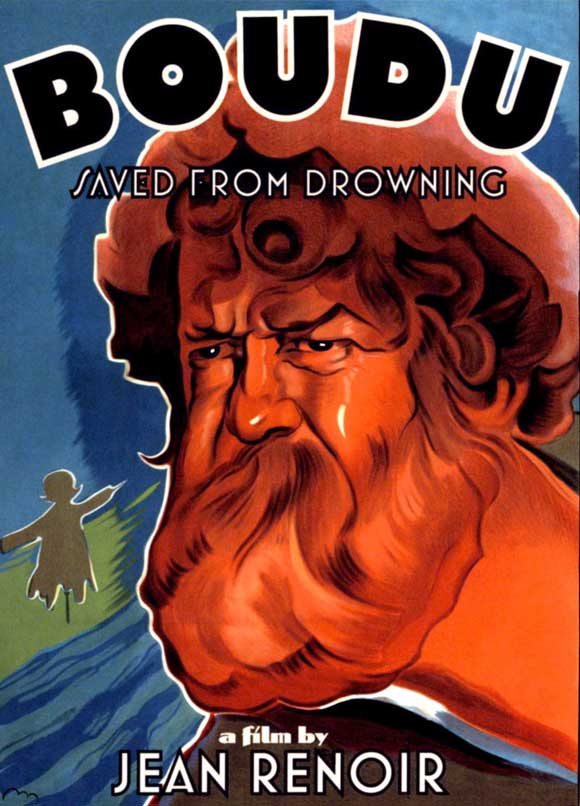
Boudu-PosterBoudu Saved From Drowning*, Jean Renoir (1932, France). There are films which clearly belong on the 1001 Movies You Must See Before You Die list, but there are also other movies on there, by directors of films which deservedly belong on the list, whose presence is, quite frankly, a bit of a puzzle. La Règle du jeu and La Grande illusion are stone-cold classic movies… but Boudu Saved From Drowning? Really? It’s mildly amusing, and even though the social commentary is biting, it’s still somewhat obvious. Technically, it’s clearly ahead of its time – at no point while watching it does it seem like a film made in 1932. But its story of a tramp rescued from, er, drowning, who his saviours then try to turn into a useful member of society, is a little too broadly comical to be pointed – if that’s not a contradiction. It didn’t help that Boudu with a beard bore an uncanny resemblance to Stephen Fry. Whatever – a diverting film even if not one that clearly belonged on the list.

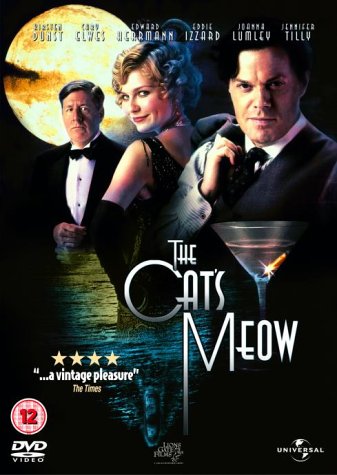
catsmeowThe Cat’s Meow, Peter Bogdanovich (2001, USA). This is apparently based on a true story. In 1924, a group of people spent the weekend aboard William Randolph Hearst’s luxury yacht, ostensibly to celebrate the birthday of Thomas H Ince, a cinema pioneer who owned one of the first movie studios. Other guests included Charlie Chaplin, gossip columnist Louella Parsons, writer Elinor Glyn, and Hearst’s mistress, actress Marion Davies. Allegedly, Ince died of a heart attack but rumour has it he was shot by Hearst over Marion Davies. The film suggests his death was an accident – Hearst thought he was firing at Chaplin, who had been trying to persuade Davies to leave Hearst and marry him. The film is a well-played period piece, although Eddie Izzard as Chaplin is actually pretty bad. The story is the sort of ultra-rich privileged crap that all too often gets accepted as the natural order of things, which is just offensive bollocks. Entertaining but forgettable.

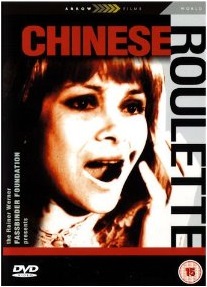
chineserouletteChinese Roulette, Rainer Werner Fassbinder (1976, Germany). Fassbinder, I think – and I say this having only seen eight of his films – did better when the plots of his films were more tightly constrained, either by their literary origin, as in Effi Briest, or the need to present an historical period, as in The Marriage Of Maria Braun, or by, as in this case, the tight focus of the story. An affluent husband and wife make arrangements for separate trips away, only to turn up together with their lovers at the family holiday home in a piece of really bad planning. But never mind, they all get along fine, and so behave as two couples – even if they’re not quite coupled as their marriage certificate defines it. At which point the crippled young daughter and her mute nanny arrive, and events take an odd turn… culminating in a parlour game among them all, in which each asks a speculative question demanding an honest answer from everyone. It’s a living-room drama, with some externally-filmed scene-setting, but it does a beautifully-paced job of setting up its situation and characters, and as a piece of writing probably betters the two Fassbinder films mentioned earlier. If the final frame of the truth or dare game feels a bit seventies television drama, with the cast walking about too much while speaking their lines, Chinese Roulette is certainly a masterclass in defining a dramatic situation. Definitely one of the good ones in the box set.

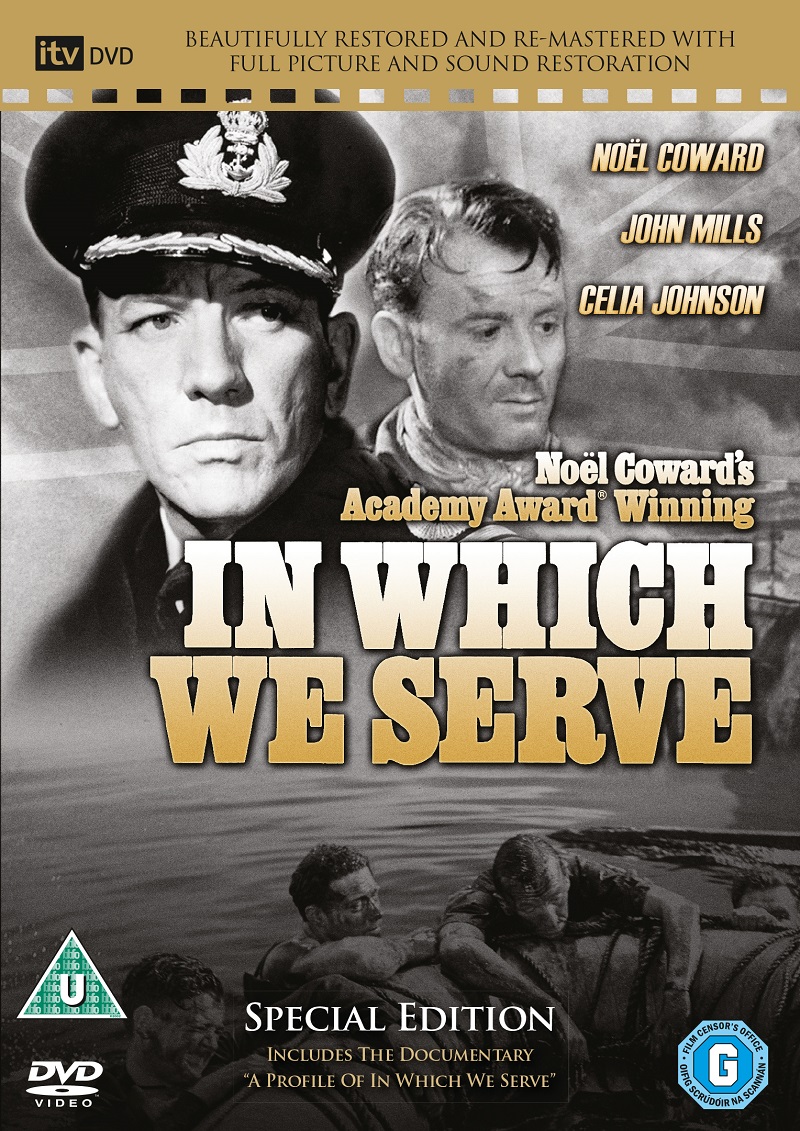
InWhichWeServeIn Which We Serve, Noël Coward and David Lean (1942, UK). Allegedly, this was based on the wartime exploits of Lord Mountbatten. Noël Coward plays the captain of a RN destroyer during the first two years of WWII. It’s careful to show life both for the ratings and the officers of the ship – the film was made with the assistance of the Ministry of Information. The model-work is a bit naff – the UK film industry never did quite manage to make model warships look like the real thing – and Coward is far too fruity to be a steadfast navy officer, no matter how plummy his background. The film is at its best when it’s belowdecks, and John Mills puts in a good turn as an ordinary seaman. But, to be honest, In Which We Serve is not even a wartime curiosity, just one in a long line of not very good war films the UK churned out during the 1940s, mostly for propaganda purposes. Not even Lean directing the “action scenes” is a saving grace (although, to be fair, I can never make up my mind about Lean – he made a handful of excellent films, but a number of very ordinary ones too). If you’re interested in UK wartime cinema, you’re probably better off checking out a few “quota quickies”.

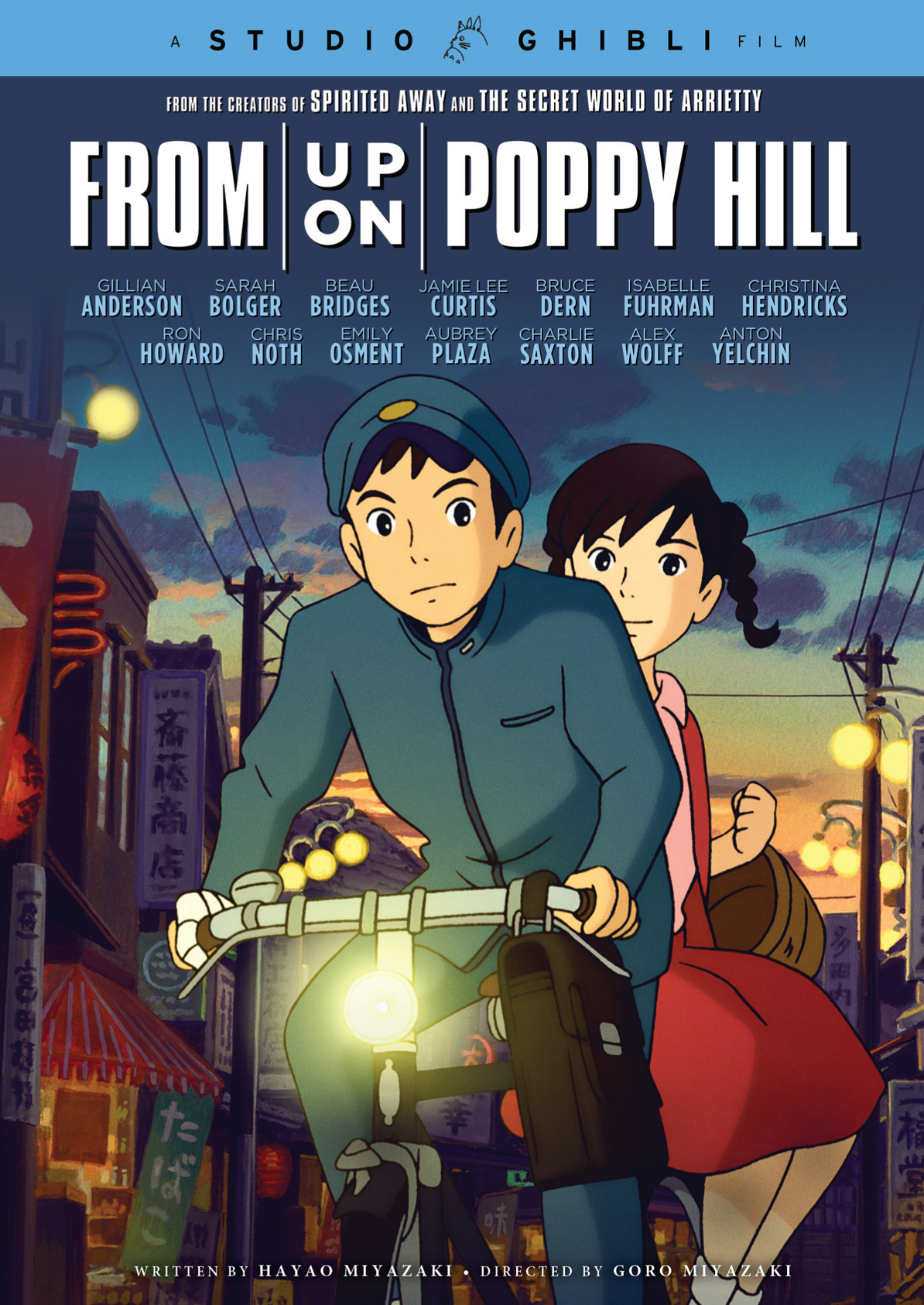
FromUpOnPoppyHillFrom Up On Poppy Hill, Goro Miyazaki (2011, Japan). I’ve enjoyed the Ghibli films the most when they are not genre – such as this one is. Er, isn’t. I mean, it’s not genre. It’s a relatively straightforward – and genre-free – story about a pair of students in early 1960s Yokohama, who are attracted to one another and then learn they may in fact be brother and sister. Wrapped around this is a student protest to prevent a building used by the various student clubs, called the Latin Quarter, from being demolished by a Tokyo businessman. From Up On Poppy Hill is at its best when it’s about the relationship between the two leads, Umi and Shun, but the comedy antics as the students clean and refurbish the Latin Quarter feel like they detract from the real story. Enjoyable, but I don’t think anyone will be calling this their favourite from Studio Ghibli.

edgeoftomorrowEdge of Tomorrow, Doug Liman (2014, USA). Confused. I saw this film advertised on theatrical release as Edge of Tomorrow, but it seems to have been retitled Live Die Repeat for the sell-through (which is the name of the Japanese source text), so obviously it’s such a good film it can’t even decide what its title is. And, okay, perhaps it was a little facile to describe it as Groundhog Day meets Starship Troopers, but that’s pretty much the plot in a nutshell. Nasty aliens invade Earth, obviously the only way to defeat them is to throw human cannon fodder at them, although strangely enough this strategy doesn’t appear to be working. As Tom Cruise repeatedly discovers because he keeps on waking up back on his first day of basic training (although no training actually takes place) and all because he was covered in a particular type of alien’s blood on the battlefield. But that’s okay, since it allows him to figure out there is a hidden mega-alien thing somewhere running the whole show and if he kills that then humanity wins – stop me if you’ve heard this before. Oh, you have? Lots of times? Seriously, if Edge of Tomorrow is being held up as a good sf film, then that says a lot about the piss-poor state of sf cinema – oh, wait, Interstellar was supposed to be the best sf film of last year, so yes, it looks like sf cinema is in a piss-poor state…

bela_tarr_collectionDamnation, Béla Tarr (1988, Hungary). I think I’m going to have to withhold judgement on Tarr’s films for now. I’ve now seen all three in the pictured box set – and while Tarr is noted for the glacial pace of his movies, and I actually like films that take time to tell their stories, I’ve not yet plugged into Tarr’s languorous way of movie-making. Damnation is, I suppose, the most straightforward of the three films, but there are long stretches where no one speaks, there is only music… And then characters speak dialogue that feels more like it should be… declaimed, like in a Jancsó film. Their naturalistic speech is… odd, perhaps even a little off-putting. Having grown up reading science fiction, I’m all too familiar with mouthpiece characters – but where Jancsó’s are overt, Tarr appears to sneak his into the story in the guise of ordinary people engaged in ordinary activities. Tarr’s films will not only bear rewatching, I strongly suspect they demand it. Meanwhile, I shall sort of hover on the edge of liking and admiring them.

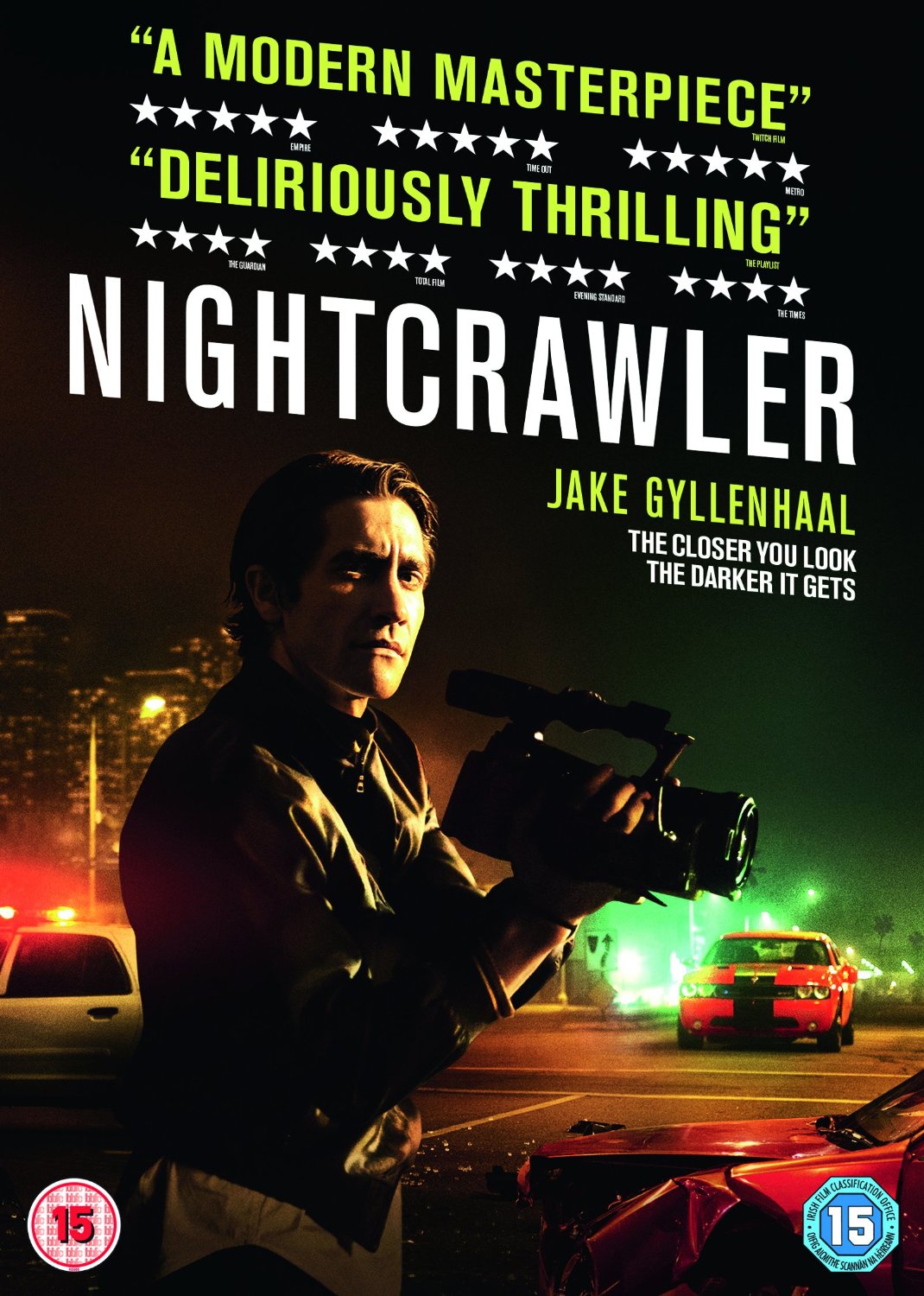
nightcrawlerNightcrawler, Dan Gilroy (2014, USA). Watching this film prompted an interesting discussion on Twitter. Since thrillers depend upon violence and fear to drive their plots and maintain viewer interest, I suggested they were morally bankrupt, if not morally corrupt. In order to generate “story”, they over-state the incidence of violence and harm in the real world. And while the protagonist of Nightcrawler – played by a frankly creepy Jake Gyllenhall – does cover road traffic accidents, it’s his relationship with violent crime which comprises the plot of the film. He’s a freelance cameraman – or rather, he starts on a career as one after witnessing Bill Paxton at work – who forms a business, and increasingly poisonous and misogynistic, relationship with news channel producer Rene Russo. When Gyllenhall gets too close to his subjects, and starts crossing the line between reportage and incitement… it all goes horribly wrong. Yawn. This sort of moral conundrum is completely banal, and has been covered repeatedly in both books and films. Perhaps Nightcrawler‘s take on it rings a few trivial changes, but all we’ve really got here is a creepy update of His Girl Friday. Without the wit.

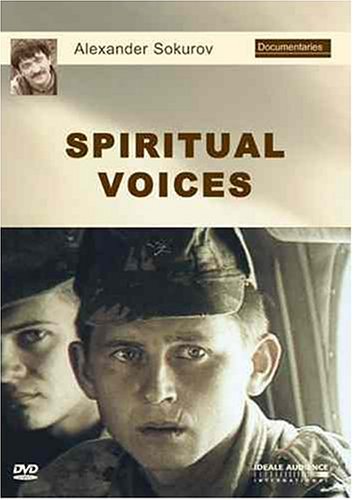
spiritualvoicesSpiritual Voices, Aleksandr Sokurov (1995, Russia). I have no idea how to write about this. I was lucky enough to find a copy on eBay going for a reasonable price – it typically goes for $95 or more, but at 327 minutes split over five episodes, I suppose that’s not bad value for money (I paid less than half that). Spiritual Voices is a documentary filmed at a Russian army dugout in northern Afghanistan – but its opening episode consists of forty minutes of time-lapse photography of a village in Siberia, as night falls and dawn breaks, while Sokurov talks about Mozart and then Beethoven. The second, and following, episodes are hand-held documentary footage of Russian soldiers going about their duties night and day, sometimes interacting with the camera, but usually ignoring its presence. The soldiers, of course, are conscripts; they are also young men. And though they wear the uniform, and spend their days following orders, there is something not quite real about their situation. Sokurov also films the landscape surrounding them, and he’s extremely good at using landscape to paint a moral picture of the story he’s telling. Spiritual Voices is a long film, a very long film, and after a single viewing I’m not entirely sure what to make of it. That first episode is an amazing work of art – I’ve now watched it three times – but I’ve yet to determine how it fits in with the piece as a whole… This is just one of the reasons why I find Sokurov one of the most fascinating directors currently working, and why I’ve tracked down as much of his oeuvre on DVD I can find.

1001 Movies You Must See Before You Die count: 584


5 Comments

Moving pictures, #9

Yet more films wot I have watched of late. This brings the moving pictures posts pretty much up to date, so I won’t need to spam my blog with them quite so much from now on. Although I’m still watching rather a lot of movies, due to a lack of anything interesting on terrestrial or cable television. Perhaps I should turn the damn thing off some evenings and read a book or something…

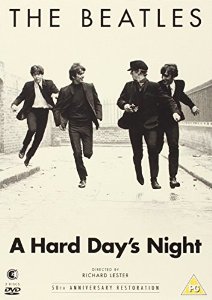
aharddatsnightA Hard Day’s Night*, Richard Lester (1964, UK). I think I must have seen this, perhaps back in the 1970s or something, because it seems an unlikely film to have missed. Having said that, I could remember almost nothing about it – and even now, a couple of weeks after watching it, I’m having trouble recalling the actual plot. Not, it has to be said, that there was much of one. The Fab Four travel to London with Paul McCartney’s grandfather (played by Wilfred Brambell), their manager and their road manager. The band are due to perform on a television programme. It was pretty clear the cast had fun making the film, and there was definitely a manic energy to it – but Lennon’s snidery palled quite quickly, a couple of long-running jokes ran too long, and the music was, well, frankly not that great.

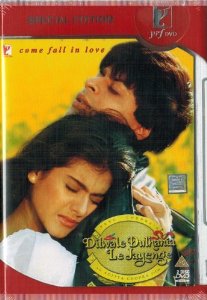
dulwaleDilwale Dulhania le Jayenge*, Aditya Chopra (1995, India). This one was a surprise. I’ve seen bits and pieces of Bollywood films over the years, but I don’t think I’ve sat all the way through one. Nonetheless, I thought I knew what to expect and I suspected watching this film was going to be a chore… but I really enjoyed it, it was actually really good. Wastrel son of a wealthy NRI in London decides to go Interrailing before joining the family firm. Meanwhile, eldest daughter of a hard-working NRI who manages a petrol station will soon be married to the son of her father’s best friend back in Kashmir… so she too decides to go Interrailing first. The two bump into each other as they travel about Europe, fall in love, with much singing and dancing and comedy. Afterwards, she has to go to Kashmir for the wedding, there’s no getting out of it, but he follows and tries to win over her family (the two pretend not to know each other). A smart well-made rom com, with some fun song and dance routines, a well-handled plot and a pair of likeable leads. If you fancy trying a Bollywood film, put this one at the top of your list.

thesunThe Sun, Aleksandr Sokurov (2005, Russia). This is the second of Sokurov’s quartet of films about men in power, and the subject of it is Emperor Shōwa of Japan. (While we in the West know him as Emperor Hirohito, that was his personal name and he’s now actually referred to using his posthumous name, Shōwa.) The Sun concerns the days immediately following Japan’s surrender and the emperor’s meetings with General MacArthur. Apparently, the film caused a bit of a fuss on release, perhaps because it suggests the emperor is almost an innocent, a mild-mannered educated man who tinkers with marine biology and lives in a hermetically-sealed world in which he is considered divine by all about him. That is, until he meets MacArthur. It’s considered likely he was actually a war criminal, and very much responsible for Japan’s conduct of the war – but he seemed to escape justice. Sokurov, however, is not concerned with the truth, or as in Moloch, an historically accurate portrayal. The Imperial Palace depicted in The Sun, for example, is simply a large 1920s villa and bears no resemblance to the actual Tokyo Imperial Palace. The film depicts the emperor’s descent from divine to human – not an actual change, of course, but a matter of perception. I’m not convinced it’s as successful as Moloch, perhaps because it follows a more considered approach, which tends to flatten the story’s affect, whereas Moloch‘s manic infantilism suited its topic perfectly. I still want to know why Taurus isn’t available in an English-language edition, however.

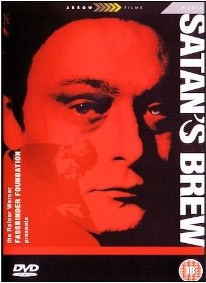
satansbrewSatan’s Brew, Rainer Werner Fassbinder (1976, Germany). Not the most successful Fassbinder film I’ve seen so far. A previously-successful poet, now suffering from writer’s block, shoots his mistress, and then sort of runs around manically, demanding sex from Ingrid Caven, who is married someone else, visiting his own wife and intellectually disabled brother? brother-in-law?, and charging around various places demanding money. The Wikipedia plot summary, which is not very long, concludes with, “Some more obscure things happen but in the end everyone is back on stage”. Which is as good a way of describing it as any. The contents of this Fassbinder box set have been somewhat variable, but I’m glad I’ve seen the films.

bela_tarr_collectionWerckmeister Harmonies, Béla Tarr (2000, Hungary). I’ve yet to decide what to make of Tarr’s films. That they’re slow, with very long takes, and filmed in stark black-and-white, and that sort of film-making appeal to me far more than the frenetic jump-cuts of your present-day Hollywood tentpole franchise movies. (But I also like Technicolor movies, too.) Tarr’s films are also allusive, which again is something I appreciate, in both film and literature. But I think what’s preventing me from really falling for this movie, or the other Tarr I have seen, The Man from London, is that there’s something very play-like about the way they’re put together. And for some reason the mismatch between theatrical presentation and cinematic technique never quite  works for me. In Werckmeister Harmonies, a travelling circus, whose chief attraction is a stuffed whale, appears in a Hungarian town, and triggers a wave of violence. I’m going to have to watch this film again, I think, as while some bits of it seemed to work really well, the allegorical skeleton on which the plot was hung didn’t articulate quite as well for me as it was likely intended to. But at least I bought the box set, so I can rewatch the films at my leisure. Incidentally, I also bought mysql a copy of Sátántangó, so I’ll be able to watch all seven hours of that at my leisure…

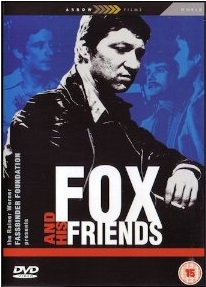
foxFox and his Friends*, Rainer Werner Fassbinder (1975, Germany). A young gay man, played by Fassbinder himself, is obsessed with winning the lottery. Which he does, shortly after entering into a relationship with an older man, an antiques dealer. When the antique dealer’s friends discover that the oick they’re looking down their nose at is worth half a million DMs, they set about swindling him out of his money, seducing him and persuading him to pay their way out of their financial difficulties. Which he happily does, wrongly impugning more than just mercenary motives to their treatment of him. Prior to receiving this Fassbinder box set for Christmas, I had never seen one of his films. And I’ve now seen seven (of the eight films in the box set), and there have been some good ones and some not so good ones. I’ve yet to decide whether I want to explore more of Fassbinder’s oeuvre – and he made a lot of films – probably because so many of the contemporary ones seem very similar in tone and presentation. Perhaps I just watched too many of his films in too short a period – like the time I watched three seasons of The X-Files back-to-back, three or four episodes a night, and could hardly sleep afterwards I felt so paranoid…

dawnofdeadDawn of the Dead*, George A Romero (1978, USA). No, I’ve never actually seen this before, and no, I probably would never have bothered if it hadn’t been on the 1001 Movies You Must See Before You Die list (and how many films on the list have I said that about?), and I’ve never been a fan of zombies, a trope that’s been used intelligently perhaps a handful of times since it first appeared. And, to be brutally honest, this isn’t one of them. Something has caused the dead of the US to rise as flesh-eating zombies – your basic zombie trope, in other words – and a group of people escape various encounters with them, including an extended sequence set in a shopping mall. The film was made of the cheap, and looks it; and the some of the special effects, while gruesome, look cheap and stagey. Apparently, I watched a director’s cut but there’s some confusion over which particular one. All I remember is that it was long, and while there was plenty of action there wasn’t much plot. I’ll admit I’m not a fan of horror films – I’m far too squeamish – and I can perhaps understand how Dawn of the Dead might be seen as a “classic”… But there wasn’t a fat lot there to appeal to me, and I’m happy to just cross it off the list.

1001 Movies You Must See Before You Die count: 582


3 Comments

Moving pictures, #8

The Blu-ray was starting to crackle and fill the screen with static when you ejected a disc, and its remote control was seriously irritating me with its bad design and hard-to-figure-out-what-button-was-what; and the old stereo was just sitting there doing nothing since only the DVD-player had been plugged into it… So I had a bit of a clear-out. I bought myself a new Blu-ray player, one that can play all regions of DVD and Blu-ray, from mrmdvd.com, and chucked everything else away. I also bought myself a soundbar, but it turned out my 18-month-old television didn’t have the necessary new-fangled output for it, so I had to cancel the order. Gah. Backward compatibility FTW. Not. Anyway, the corner of the living-room now looks a lot tidier, the new player works very well indeed, and, of course, I’ve watched my Criterion Blu-ray of All That Heaven Allows*…

europa_europaEuropa Europa*, Agnieszka Holland (1990, Germany). A Jewish boy is captured by Soviets while escaping Germany, grows up in a Soviet orphanage, but is then captured by Nazis – and pretends to be an Aryan German. It’s based on a true story, and protagonist Jupp (AKA Solomon Perel, AKA Josef Peters) first acts as translator to front-line Wehrmacht troops, but is then sent to a Hitler Youth school. Where he falls for an Aryan mädchen, a dubbed Julie Delpy… except she wants a child for Hitler but Jupp can’t let her see his todger because he’s circumcised and that’ll reveal him as a Jew. This is all based on a true story – in fact, the real Jupp appears as himself in an epilogue set in Israel in the year of filming. But I never quite felt the film got across the fear Jupp must have been feeling as he masqueraded as a Hitler Youth. The hate, not to mention the rejection, of his position was there, and some of the lengths Jupp went to in order to disguise his race, not to mention his reasons for doing so, were certainly horrific. This is an excellent film, and if it fails occasionally in the implementation, it’s still a story that demands to be told. Definitely worth seeing.

shock_aweAntichrist, Lars von Trier (2009, Denmark). I’m really not sure what to make of von Trier’s films. There was much to admire in Antichrist, for example – including a scene supposedly imagined during therapy that was pure Sokurov – but it’s always like 4 and 5 makes 10. Admittedly, the final credits revealed Antichrist was dedicated to Tarkovsky, which made some of it understandable (including that Sokurov-ish scene), but some of von Trier’s signature touches seemed to work much better than others. A couple lose their child, and the husband – Willem Dafoe – persuades the wife – Charlotte Gainsbourg – that they must go to an isolated cabin in the woods. Then it all goes a bit strange. In von Trier’s favour is that his films bear, if not demand, re-watchings. There are elements in this one, for example, which don’t initially seem to make sense. But there’re also those which plummet toward the schlocky, which other von Trier films have suffered from. After so much metaphorical and allegorical payload, the film turns into art house horror, and it does tend to undo what’s go before. It’s not that von Trier does not have the courage of his convictions – if there’s one thing this film does not lack throughout its length, it’s conviction – but it often feels like he does’t have enough confidence in his allusiveness, or feels a need to shock the viewer as if whatever judgement a film may receive will depend entirely on that shock value. When you look at earlier films, such as Europa, the shocking end felt of a piece with the story, and if it seemed melodramatic it was at least in keeping with the movie’s aesthetic. But in Antichrist, the horror doesn’t quite blend… and I can’t decide if that’s a deliberate provocation or an unintended artefact. I suppose the fact I can’t tell at least demonstrates von Trier’s importance as a director…

Lisa-And-The-Devil-blu-rayLisa and the Devil, Mario Bava (1973, Italy). I have enjoyed the odd Mario Bava in the past, and I do like the fact they’re very much movies of their time and not particularly gory… so I bunged a few on the rental list, and one of them dropped through the letter box. Also, of course, Elke Sommer. While Lisa and the Devil had its moments, and a story that actually wasn’t too bad, this was pretty cheap entertainment and not a film that’s worth watching more than the once. A tourist lost in Toledo stumbles across an antiques shop in which a creepy-looking Telly Savalas is buying an item. Later, having failed to find her friends, she accepts a lift from a couple in a limousine. The car breaks down outside a creepy-looking mansion… and the butler there proves to be Telly Savalas. It’s all something to do with an aristocratic family, a dark secret, and a demon or something. Apparently, the film was recut to resemble The Exorcist in the US and bombed because… everyone thought it was a rip-off of The Exorcist. Duh. More for fans of Bava or bad 1970s horror, I suspect.

daysofheavenDays Of Heaven*, Terrence Malick (1978, USA). I really wanted to like this, Malick is a very visual director and this is one of those not-very-commercial-successful Hollywood film where the auteur seems to win out over the usual crass Hollywood product. There’s also a (mostly) good cast too. But it really didn’t work. It felt like substandard DH Lawrence transposed to 1920s Texas, and the lovely cinematography was not enough to save it. Richard Gere and Brooke Adams move to Texas from Chicago in 1916, and find work with a local farmer. He falls for Adams, so Gere persuades her to marry him so the two of them can live the good life at the farmer’s expense. It ends badly. Duh. This is a film rightly praised for its cinematography, but the story was slow and uninvolving, and even in 1978 Gere might make a good lead in a rom com but he didn’t have the chops for something as serious as this (unlike Same Shepard, who played the farmer). Disappointing.

masculinMasculin Féminin*, Jean-Luc Godard (1966, France). I have mixed feelings about Alphaville and I absolutely adore Le Mépris, but I can’t really say I’ve seen anything else by Godard that I’ve liked. Including this one. The problem with a lot of Nouvelle Vague cinema is that its characters are self-absorbed to a point that makes them unsympathetic and dull to watch. (The same is also true of a some of Rohmer’s earlier films.) As for plot, well, that’s just bourgeois. (I jest, as I actually agree that plot is over-rated.) Anyway, Masculin Féminin is a series of discussions, monologues, diatribes and pontificating by a young man who enters into a relationship with a young woman, and her two flat-mates, who does not share his tastes or politics. I vaguely recall there being lots of polo-neck jumpers and arguments in corridors. It was all a bit yawn.

bela_tarr_collectionThe Man from London, Béla Tarr (2007, Hungary). After watching on rental thirty minutes of Barr’s Sátántangó in which nothing happened, I decided I ought to buy one of his films in order to give him a fair go – and from what I’d read, his style of film-making was likely to appeal. So I bought The Béla Tarr Collection box set, which contains three of his films, and this was the first of them I watched, coincidentally with a friend who was also new to Tarr’s movies. It made for an interesting experience. The story of The Man from London is apparently taken from a Simenon story, and it was a while before we nailed down the setting. But the movie also proved a welcome antidote to most Hollywood films, in that the pacing was leisurely, if not glacial, the cinematography was lovely, it was black and white, and the only way to watch was to patiently let it slowly unfold. It was a little off-putting to have one of the actors dubbed by a Fox brother – they have way too distinctive voices – but given the stately progress of the story it actually seemed to fit really well. I’m told some of Tarr’s films are real exercises in endurance, but this was an excellent introduction to his oeuvre. And I still have two more films to watch in the box set…

planete_sauavageLa Planète Sauvage*, René Laloux (1973, France). A highly-regarded science fiction animated film that happens to be on the 1001 Movies You Must See Before You Die list… so why not buy a copy? On Blu-ray? So I did. And, well… I was expecting weird, the cover of the Blu-ray alone is enough to prime a viewer for weird. And, it has to be said, I do like me some weird in my cinema. But while it struck me that the story of La Planète Sauvage was fairly routine, and something you might find in a bande dessinée or Polish sf story… the animated design by Roland Topor definitely qualified as strange. On an alien world, giant blue aliens – like the one on the Blu-ray cover – keep humans as pets, though there are many “feral” humans about. A baby human is adopted as one such pet by a young alien girl, but somehow manages to follow the electronic teaching she receives and so becomes educated. He later escapes and meets up with a group of feral humans, and persuades them to fight against the aliens… As allegories go, this is pretty in-your-face, and the idea of using sf to hide what you really want to say and make it palatable was past its sell-by date in 1973. But La Planète Sauvage still presents a unique vision, and is worth seeing for that (even if some of the short films included on the Blu-ray are a bit too much Métal Hurlant, and so less interesting).  Nonetheless, worth watching.

baron_bloodBaron Blood, Mario Bava (1972, Germany/Italy). Another 1970s Bava horror film that, er, stars Elke Sommer. A young American man with a toothsome smile visits relatives in Austria, where he learns about a castle which used to belong to an ancestor, called, er, Baron Blood. Sommer plays an archaeologist investigating the castle’s history while it is being refurbished. She and young American man, while acting about, read out a curse inflicted on Baron Blood, and then read out the words meant to lift the curse. So the baron comes back from wherever he was… and after killing a few people ends up as Joseph Cotton in a wheelchair. This is pretty much standard 1970s Euro horror fare, and if it isn’t, it certainly fits my idea of what it might be. It was kind of fun, but even for Bava it was pretty weak.

shock_aweMelancholia, Lars von Trier (2011, Denmark). You know where science fiction literalises metaphors? Now imagine that depression was a giant planet on a collision course with Earth… Von Trier has said that the story of Melancholia was inspired by his discovery that people with depression remain calmer during crises than people not suffering depression. Which revelation actually leads to three readings of the film. As your actual science fiction, it’s nonsense – the near approach of the rogue planet Melancholia, and its effects on the Earth, are not in the slightest bit scientifically accurate. As genre, it’s hard to imagine a literalised metaphor more in your face than a giant planet about crash into the Earth. However, seen as a study of Kirsten Dunst’s character, in the face of the collision with Melancholia… The first time I watched the film, I took the first reading, despite the fact the story is mostly about Dunst’s wedding, subsequent breakdown and recovery with her sister’s family (also the hosts of the wedding and reception). And the planet Melancholia crashes through the story like a giant implausible thing of implausibility. It all looks absolutely gorgeous, of course, but your suspension of disbelief is in sore need of a hook to hang it on. However, a combinations of readings two and three a) renders it a much more interesting film, and b) allows you to appreciate the lovely cinematography for what it is. I thought Melancholia much better on this rewatch than I had the first time I saw it. I still need to work out what von Trier is doing with his films, but he’s certainly one of the more interesting directors currently making movies.

1001 Movies To See Before You Die count: 577

* For the record, the colours are gorgeous, but the picture is so precise it appears slightly grainy, and the shadows and dark areas tend to block out a little. And I really need to get a soundbar or something. Oh, and the film itself is still brilliant.