It Doesn't Have To Be Right…

… it just has to sound plausible


2 Comments

Moving pictures, #24

Onward with the movie posts…
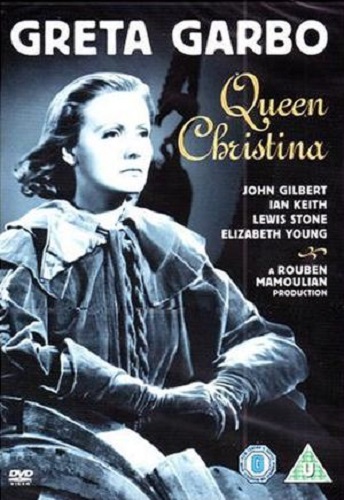
christinaQueen Christina*, Rouben Mamoulian (1933, USA). You know that thing about “Garbo laughs” and they used it as the tagline for Ninotchka, which was released six years after this one, but Garbo, who plays the title role in Queen Christina, does quite a good impression of laughter on a couple of occasions in this film. The title character is a real historical figure, queen of Sweden from 1632 to 1654, and she did indeed abdicate and convert to Roman Catholicism. But not, as the film would have it, for love. In the film, she’s out hunting one day when she comes across the Spanish envoy, whose carriage is stuck in a snow drift. She gives his servants advice on how to extricate the coach. Since she dresses as a man, the envoy mistakes her for one. And does the same later, when they meet at a nearby inn. Queen Christina, who is now actively pretending to be male, has taken the last room. The envoy demands “he” vacate it. They end up sharing and the queen reveals her gender – but not her identity. She saves that little surprise for when the envoy is officially introduced to her at the royal palace. The real Queen Christina was raised as a boy and was in a long-term lesbian relationship. She’d also been fascinated with the Roman Catholic Church from a young age. But when has Hollywood ever let history get in the way of a good story? Or their marketing, for that matter. I’m not entirely sure why this film is on the 1001 Movies You Must See Before You Die list. I didn’t see anything that was technicially or cinematically ahead of its time, and though it was enormously successful and popular in 1933, it doesn’t seem like anything particularly special these days.

fantastic4Fantastic Four, Josh Trank (2015, USA). Given the success of the MCU films, it can hardly be a surprise that Hollywood is rebooting every superhero franchise it can in a desperate effort to keep the rights and find a moneyspinner. Spider-Man is about to see its fourth incarnation, and here’s the Fantastic Four, another iconic Marvel property, on its third incarnation (although the first was never actually released). Like the Spider-Man reboot, they’ve rolled back the ages of the heroes to high school, because twentysomething heroes were apparently fine for twentieth-century kids but in the twenty-first century it’s got to be totally about the kids. And if that wasn’t enough of a change, this film has completely rewritten the Fantastic Four’s origin story. True, the original, er, origin story – four rich twentysomethings build a rocket, go into space, get bombarded by cosmic rays and develop superpowers – was pretty daft, but try naming an origin story that isn’t completely ridiculous. In this new version, Reed Richards spends years developing a teleportation machine, is then recruited by the Baxter Foundation, and with the help of studly Latverian genius Victor von Doom, builds a full-scale model… except it’s not a teleporter, it’s a portal to another dimension. And it’s on a drunken trip there that the four get their fantastic powers… and Doom is left behind and turns into a metal man with awesome mental powers. The military weaponizes the four – except for Richards, who goes on the run. But eventually he is brought into the fold. This is a completely charmless affair, with a charisma-free cast. And where previously the Fantastic Four spent most of their time saving the world, here they’re just “military assets”, tools of US imperialism – and while superheroes are often just as destructive as the supervillains they fight, that change in mission is just downright offensive. Marvel adopts manifest destiny. If superheroes had always seemed a little fascist before, with this film they’ve openly embraced it. Happily, Fantastic Four tanked at the box office. Avoid.
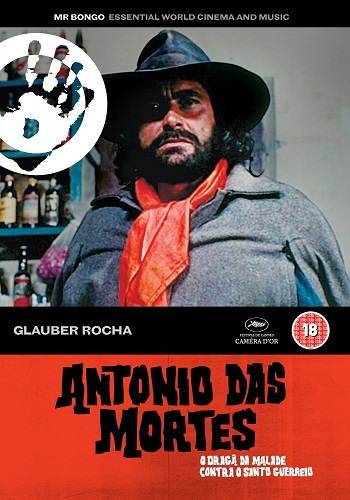
antonio_mortesAntonio das Mortes, Glauber Rocha (1969, Brazil). This is the third of Rocha’s Anotonio das Mortes trilogy (its origin title is actually O Dragão da Maldade contra o Santo Guerriro, “The Dragon of Evil against the Saint Warrior”), following on from Black God, White Devil (see here) and Entranced Earth (see here). Unlike the preceding film, this one is set in Brazil and not an invented country. The north-east of the country was once controlled by bandits called cangaceiros, the greatest of whom was Lampião, who died in 1938. But a new cangaceiro has appeared, accompanied by a young woman believed to be a saint, and a host of peasants. The blind coronel, the landowner of the town of Jardim de Piranhas, sends for Antonio das Mortes to kill the cangaceiro. Antonio fatally wounds the cangaceiro in a duel, but then suffers a change of heart and demands the coronel hand out his food reserves to the poor. The coronel refuses and orders Antonio killed… Antonio das Mortes is the only film of the three in colour, and Mr Bongo have done another slipshod job on it – the print is far from perfect, and the many folk songs on the soundtrack have French translations of their lyrics burned in. It’s also a less declamatory film than Entranced Earth, although not by much – the cangaceiro, for example, introduces himself by speaking in rhyme to the camera. And even much of Antonio’s dialogue is self-reflective. A lot of the violence is staged almost like a dance, which works well with the local folk songs on the soundtrack. The landscape appears much stranger in colour than it does in black and white, with some effective landscape photography that demonstrates just how huge and featurless is the region. I’ll admit I bought these films while under the influence after watching Entranced Earth, but I don’t regret the purchase. Not only are they very political films – the coronel in Antonio das Mortes is portrayed as over-entitled and completely lacking in compassion, and the stories of all three films centre on the common people fighting the ruling classes – but the tactic of playing the political elements flat and affectless and the cultural elements full of sound and colour is especially effective. Not to mention the over-the-top and hammed up violence. These films are very much folk-tales, but they’re colourful and political folk-tales. And I really like movies like that. Recommended. It’s a shame more of Rocha’s films aren’t available on DVD. [0]
femme_publiqueLa femme publique, Andrzej Żuławski (1984, France). I am, I admit, slightly puzzled by Żuławski’s success. After fleeing Poland in the early 1980s, the only place he could go and still make films was France. It’s unlikely he’d have fitted in to the film traditions of any other country. Because his films really are quite strange. Even La femme publique, which is an adaption of an autobiography by Dominique Garnier, in which she describes her arrival in Paris and attempt to break into cinema acting, and her subsequent domination by the director who hires her. In most hands, this would be enough for a story, but Żuławski, with Garnier’s help, decided to add in a subplot about plot to assassinate a Lithuanian archbishop… The end result is an intense drama that might or might not be a somewhat bonkers thriller, which manages not to lose sight of its story. Valérie Kaprisky plays the young actress who, despite having no experience, is cast by enfant terrible Czech director Francis Huster in his adaptation of Dostoevsky’s Demons. Through Huster, Kaprisky meets fellow Czech emigré Lambert Wilson, whose wife has recently disappeared (and proves to have been murdered). Kaprisky is convinced Wilson is the murderer, so she pretends to be his wife (his grasp on reality is shaky to begin with, and visibly deteriorates). Huster meanwhile seems to be involved in some sort of plot to brainwash Wilson into assassinating the archbishop. It sort of makes sense when laid out so baldly, but this is a Żuławski movie so the reality is somewhat different. The performances are intense to a degree that’s rarely seen in Hollywood films, and the story’s focus on the psychology of the major characters is also something not often seen in plot-driven Hollywood movies (never mind Hollywood’s mindless adherence to various screenwriting techniques, such as the three-act structure, McKee’s Story or Snyder’s Save the Cat!). I don’t know that I’d call La femme publique Żuławski’s best film as I still like Na srebrnym globie a lot – but it’s certainly the best-presented film on DVD. This Mondo Vision Signature edition comes in a fancy box, with a soundtrack CD, publicity photos and a booklet. Recommended. [1]
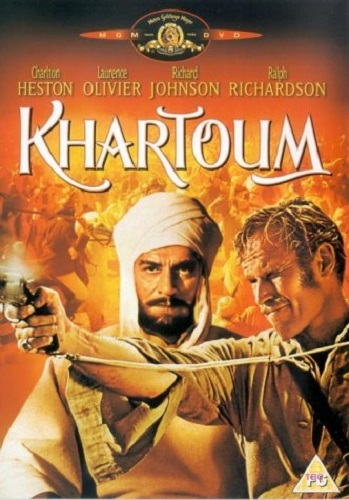
khartoumKhartoum, Basil Dearden (1966, UK). Remember when they used to open films with ten minutes of music, so you had time to buy your ice cream from the usher down at the front, and then they’d have an intermission so you could buy another ice cream or a box of Treets Poppets… or was that just in the UK? As the title of this film no doubt makes clear, it’s about the siege of Khartoum in 1884, when the forces of the Mahdi tried to capture the city from General Gordon, who’d been sent there by the British to evacuate the British and Egyptian population before the Mahdi attacked. The film is a typical historical epic of the period – not just that ten-minute entr’acte and a ten-minute intermission, but also a cast of thousands and big names playing the major roles no matter how inappropriately cast. I mean, Charlton Heston as Gordon is one thing (although apparently it was meant to be Burt Lancaster), and he at least attempts a British accent (albeit not very well); but Laurence Olivier as the Mahdi is just blackface. Khartoum was apparently filmed in Egypt and makes much of its locations – this is big-screen entertainment, and it makes sure you get what you paid for. And yet… it’s all a bit bland and unexciting – despite the battle scenes. Gordon was, by all accounts, an odd bloke – a drunkard, possibly queer, but also a gifted leader and tactician. He actually sounds quite interesting. He was lionised following his death in Khartoum, and it wasn’t until several decades later that his actions, or indeed his character, were questioned. Khartoum is pretty much the dictionary definition of a Sunday afternoon film – at least it was a decade or two ago – and that’s about its level. As history, it’s perhaps a little more reliable than the typical Hollywood movie; and as entertainment it’s very much of its time.
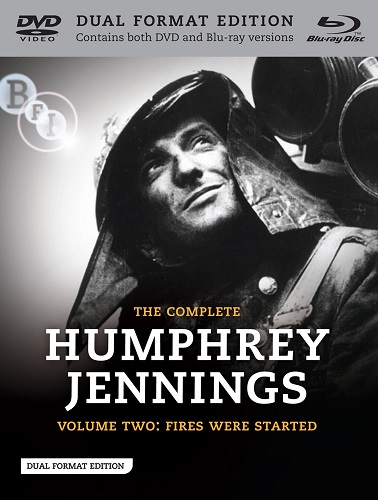
fires_were_startedFires Were Started*, Humphrey Jennings (1943, UK). This is the only Jennings film on the 1001 Movies You Must see Before You Die list, despite him being called one of Britain’s greatest film-makers. And he made thirty-two films, although most were documentary shorts. The BFI DVD case shown here contains five films, all from 1941 or 1943. Fires Were Started is about a London fire brigade, beginning with a new arrival to the watch, and following the watch members as they go about their duties. Although some of the film is reconstruction, and filmed at Pinewood Studios, it all looks very real (the fires, I think, are real fires – certainly the cast were actual firemen and not actors). I do remember that the firemen had their own bar and drank beer… until called out by an alarm. The technology also seemed surprisingly crude, especially when compared to the military technology of the time. But Jennings had a really good eye, and was especially effective at making his subjects seem likeable and sympathetic. The new member of the watch, for example, is university-educated, whereas the the current members are all working-class… but Jennings shows how accomodating both are toward each other and how well they work together. Fires Were Started is one of three collections of Jennings film released by the BFI. I quite fancy getting all three – um, maybe I should just wait until I’ve had some wine and do as I did for Glauber Rocha…

1001 Movies You Must See Before You Die count: 764

2 Comments

Moving pictures, #23

Another mixed bag, country-wise, this time. Four were rentals, two I bought. Two are also sequels. And one is silent, while another has only a music soundtrack.

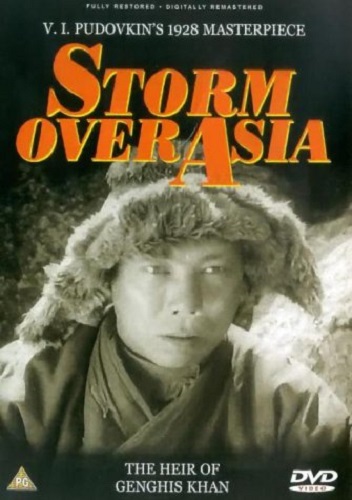
storm_over_asiaStorm over Asia*, Vsevelod Pudovkin (1928, Russia). Although cinema was in its infancy back before “talkies”, what a lot of people seem to forget – or don’t know – is that a lot of the cinematography of that time is often astonishingly good. Anyone who has seen Dreyer’s The Passion of Joan of Arc can’t fail to be impressed by the beauty of the Dreyer’s imagery. Storm over Asia, an early Russian film, is not one that was known to me – Eisenstein, yes; even Aelita, yes; but not this one… Which is a shame as it’s quite an amazing piece of work. It’s set in Mongolia in 1918. A Mongolian trapper is ripped off by a European trader, and runs to the hills after fighting the trader. He becomes a Soviet partisan, fighting against the British occupiers. They catch him and shoot him, but then discover he is a direct descendant of Genghis Khan. Fortunately, he’s still alive, so they patch him up and plan to use him as a ruler under their control. Of course, he turns on them. Hang on, I hear you saying, the British never invaded Mongolia; yes, they invaded lots of places over the centuries, but Mongolia wasn’t one of them. But this is a Russian film, and they were hardly likely to paint themselves as the villains (plus, the British had the advantage of being “capitalists”, which the villains of any Soviet film had to be, of course). Definitely worth seeing.

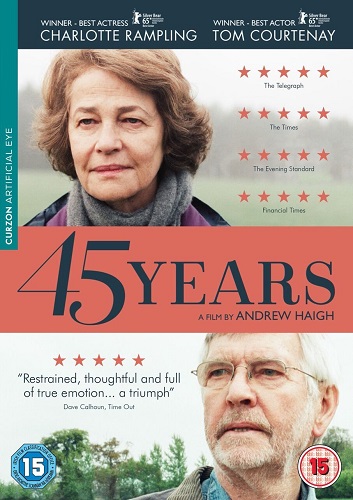
45_years45 Years, Andrew Haigh (2015, UK). It’ll be interesting to see how this film does on sell-through. Hollywood, indeed most Anglophone cinema, seems locked into chasing that young male demographic, as if they’re the only people who go to the cinema. But when you make films aimed at one group, you can’t be surprised when other groups stay away. But then I suspect older viewers are more likely to watch a new movie on sell-through than they are in the cinema. But are they going to bother doing that for shitty tentpole blockbusters like the MCU films? And are they going to spend money on all the merchandising crap, which isn’t there to sell the fillm as much as it is to convince fans that’s okay really to like such rubbish since the property is so ubiquitous they can’t be considered weird for liking it… Which at least can’t be said of 45 Years, which is about a married couple, and the title refers to the time they’ve been married. But a few days before a planned celebration of the event, the husband receives news that the body of an ex-girlfriend, who fell into a crevasse in a glacier back in the 1960s, has just been discovered… While this all happened before he married, he hasn’t been completely honest about what happened with his wife. This is a nice, understated piece, well-played by a high-powered cast. It’s already garnered a fistful of award nominations and wins, and deservedly so.

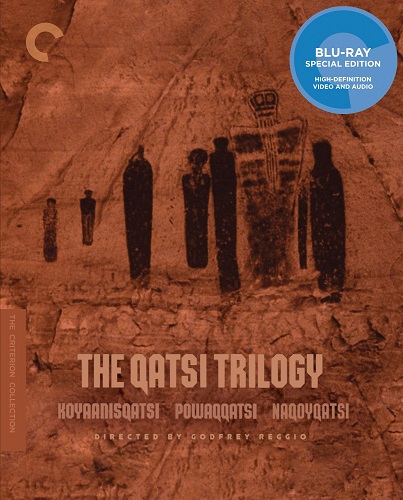
qatsiNaqoyqatsi, Godfrey Reggio (2002, USA). This is the third of the Qatsi trilogy, made some twenty years after the previous two films, Koyaanisqatsi and Powaqqatsi. Ironically, it’s the one that’s dated the most. That’s chiefly because at the time it was made CGI was not as high-quality as it is now, and it shows. Not just in the resolution or range of colours of the computer-generated graphics, but also in the imagination on display. Those earlier two films were pure cinematography – of places and people, with no special effects. And they remain as effective today as they did when they were shot. Also to Naqoyqatsi‘s disadvantage is its subject: technology and war. There’s a big emphasis on computer code, modelling and simulations, and virtual reality, which would have felt cyberpunk… if only the film had been released a decade earlier. While the concerns, and subjects, of the first two remain true to this day, much of the technology celebrated, and reviled, in Naqoyqatsi no longer exists. In parts, Naqoyqatsi reminded me of David Blair’s Wax, or the Discovery of Television Among the Bees from 1991 (I have a signed copy of the film on VHS somewhere), and in other parts of its two predecessors. I’m glad I picked up the set and so now have all three films… but going for the Blu-rays was probably a bit much. [A]

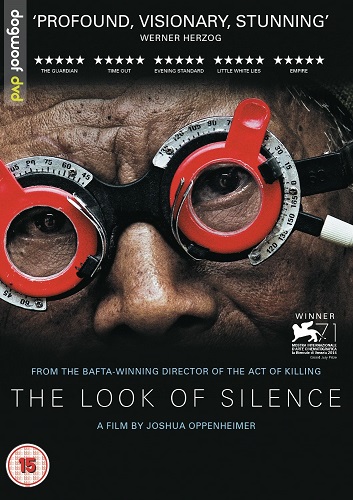
look_of_silenceThe Look of Silence, Joshua Oppenheimer (2014, Denmark). This is the follow-up to Oppenheimer’s earlier The Act of Killing, and covers pretty much the same topic: the Indonesian slaughter of “communists” during the mid-1960s after the military seized control. The conceit here is that the brother of a man who disappeared during those murders visits some of the killers as an optician examining their eyesight, and quizzing them about it while he does so. There’s a telling remark made to camera by one of the men who committed those murders, “Thanks to the Americans for teaching us to hate communists”. The fact that most of those killed weren’t actually communists is apparently irrelevant. The US made it plain that communists were legitimate targets, and it’s not like anyone was going to look too closely when the so-called authorities labelled someone a communist. After all, the US had done exactly the same itself back in the days of HUAC, albeit without the machetes and assault rifles and death toll. Later in The Look of Silence, there’s a clip from US network news show from the 1960s, and it pretty much approves of the death and mutilation of the so-called communists. It goes without saying that the events discussed in this film are horrible; and that it’s enraging the perpetrators not only survived, but prospered and continue to do so. It’s heartbreaking that one survivor’s only way to live with it is to consider it all past and gone, life has moved on. Because clearly justice has not prevailed. And it’s unlikely to ever do so. It would be all too easy to blame it entirely on the Indonesians, except that would not be strictly true. The West creates these situations and should take responsibility for them – except that would mean admitting they’d done wrong, that the corporations are no longer under control, or that capitalism doesn’t actually work.

evangelion_2Evangelion 2.22: You Can (Not) Advance, Hideaki Anno (2009, Japan). It would not be untrue to describe the plot of the Evangelion series as: giant alien creatures called Angels invade Earth (individually) and are fought off by giant cyborg creatures piloted by high school kids. Because, of course, there’s so much more than just that going on in there – that would be the Hollywood version. The Angels are these bizarre creatures, looking partly like something drawn by Moebius and partly like some nightmare doll. In Evangelion 2.22, there is now a squad of Evangelions, and the pilot of one is possibly the most irritating American character ever to appear in a film (which is quite an achievement). In fact, the existence of the squad means Evangelion 2.22 is a more action-packed film than Evangelion 1.11: You Are (Not) Alone, although like the first it’s parsimonious with the details of its setting, leaving much of the world-building a mystery. For example, it’s only on a visit to an aquatic research centre that the film explains that the seas really are red, and why. It’s a movie that requires several watchings – although that may simply because I have yet to learn the Way Of Watching Anime. One thing worth noting, however, is Evangelion 2.22‘s frankly bizarre score, which at times sounds like 1970s jazz/rock fusion – and seems weirdly anachronistic but is actually pretty good. Evangelion 3.33: You Can (Not) Redo is currently available on DVD and Blu-ray, and I’ll be picking up a copy. The final film was due for theatrical release in late 2015 but has been delayed. I can wait. [ABC]

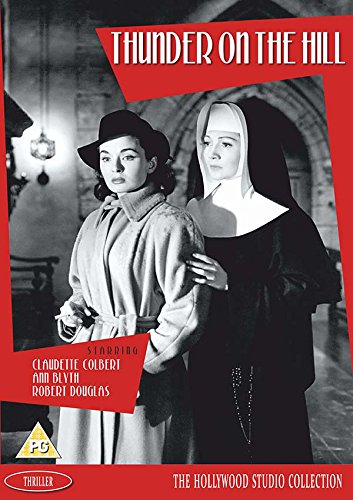
thunderThunder on the Hill, Douglas Sirk (1951, USA). My favourite film was directed by Sirk, and the handful of melodramas he made between 1953 and 1959, such as Magnificient Obsession, Written on the Wind and Imitation of Life, I rate very highly. But he also made a lot of quite frankly ordinary thrillers and dramas for Hollywood throughout the 1940s and 1950s. Thunder on the Hill is one of these. Shot in black and white and set in, of all places, Norfolk, it sees a group of people descend on a convent during a fierce storm. One of these is a convicted murderer, with rescort, on her way to prison, except, of course, she’s really innocent. However, the victim’s doctor – the murderer’s brother – is now doctor at the convent. Guess what happens. Claudette Colbert plays the lead and doesn’t make much of an effort toward a British accent; neither, for that matter, does Ann Blyth. Most of the supporting staff are actually British – so you get that odd disconnect where some of the cast clearly can’t be the characters they play because they have the wrong accents. This is pretty ordinary and forgettable stuff, and you’d be much better off watching one of Sirk’s melodramas.

1001 Movies You Must See Before You Die count: 762


1 Comment

Moving pictures, #22

Only one American film this time, and yes, that’s two Bollywood films. Which I can blame on the vagaries of the DVD rental services. Not that I didn’t enjoy them – in fact, the Guru Dutt was really good.

robot_overlordsRobot Overlords, Jon Wright (2014, UK). Robots have conquered Earth, although they insist it’s only tempoerary while they learn everything there is learnt about humanity. Meanwhile, everyone has an implant fitted in their neck and is nofined to their home – except for a volunteer force, who collaborate with the robots. Robot Overlords centres on a young boy whose RAF father went missing shortly after the invasion. Meanwhile, local volunteer force leader Ben Kingsley has designs on his mother, Gillian Anderson. But then the kids accidentally discover how to disable their implants… and that gets them involved with the local black market (although what they’re trading is a mystery, as no one appears to work anymore), as well as bringing them to the attention of the robots. Who, it turns out, in a completely non-surprise turn, have no intention of going and leaving Earth to carry on as before. The boy’s brother discovers he has a mysterious ability to control the robots, which sort of comes from nowhere. They find the father, hiding out with others in a tine mine, and there’s a Spitfire – WTF – which they use to dogfight the robots. Despite being a polished production, Robot Overlords is a story that probably seemed much better on paper than it actually is. The film only took £4,000 on its opening weekend and, distribution aside, it’s not hard to see why: it’s not very good.

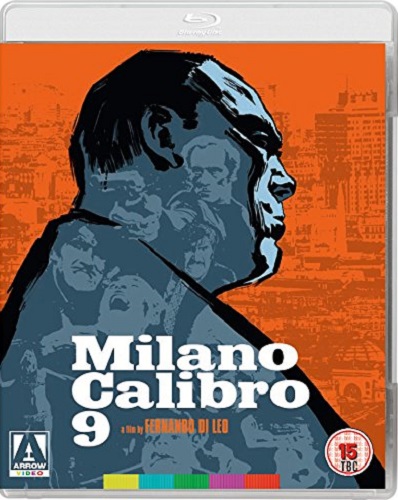
milanoMilano Calibro 9, Fernando Di Leo (1972, Italy). This is a pretty ordinary Italian thriller, except it has a great soundtrack – partly provided by Italian prog rock group Osanna. And it’s obvious right from the opening credits. A gangster is released from prison after serving three years. Everyone thinks he stole $300,000 from his old mob boss, the American (bizarrely renamed the Mikado in a dubbed version). He tries to convince them he doesn’t have themoney and he plans to go straight – but the police don’t belive him, the American doesn’t believe him, his over-acting nutjob ex-partner Rocco doesn’t believe him, and his girlfriend doesn’t believe him. Meanwhile, Rocco and the American are cleaning house by having couriers they suspect of theft actually pick up parcel bombs. And there’s a friend of the gangster who’s a hitman, and the American’s suspicion descend on him… which totally backfires. A pretty solid Italian thriller, very seventies, and with a great soundtrack. Worth seeing.

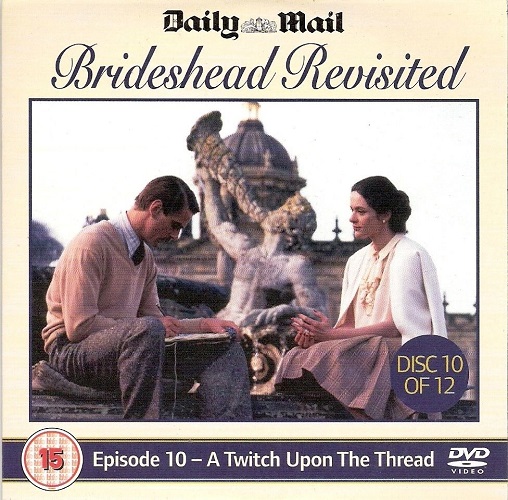
bridesheadBrideshead Revisited (1981, UK). Even now thirty-five years later, Brideshead Revisited is still remembeed as a notable British televisual event. It was a first in many respects, and proved far more successful than its makers had ever expected. Looking back on it from the twenty-first century. it’s not especially easy to understand why it proved such a landmark. Television has changed so much in the decades in between. Of course, a lot of the appeal rests on the source material, and Brideshead Revisited is generally reckoned to be Evelyn Waugh’s best work – and Waugh was a highly-regarded novelist for much of the twentieth century. The adaptation makes a good fist of presenting the time during which it’s set – it opens during WWII, then leaps back to the late 1920s, and the Oxbridge days of Charles Rider (Jeremy Irons) and Lord Sebastian Flyte (Anthony Andrews), before continuing on through the 1930s. Waugh was a horrible snob, and desperate to be accepted by the upper classes – and that’s pretty much what drives Brideshead Revisited. Which makes it even more surprising a hit. There’s that baffling British love of tales of upper class life from the early decades of the twentieth century, of course. But Brideshead Revisited did have a top-notch cast; and Waugh’s novel handled some weighty themes, which made it more or less intact into the adaptation. Having said all that, the Marchmains, indeed much of the cast, are pretty hard to care about. Waugh’s longing to be seen as an equal by people like the Marchmains is plain throughout, and that only makes the whole even less easy to like.  And yet… I did equite enjoy it. I just thought it was about a horrible bunch of people, and I was pretty indifferent to their fate.

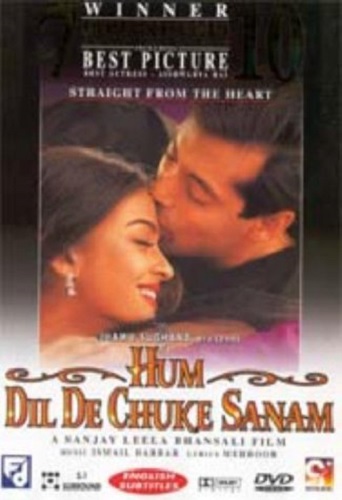
hum_dil_deHum dil de chuke sanam, Sanjay Leela Bansali (1999, India). A singer travels from Italy to India because he wants to learn at the feet of a master of Indian classical music. The master’s daughter is Aishwarya Rai. The singer and Rai initially take a dislike to each other – she chiefly because he has taken her room in the, well, it’s more of a palace than a house. Over several musical numbers, they fall in love. But her parents have arranged her marriage to the unmusical lawyer Vanraj. When the two lovers are discovered canoodling, the master sends away his student. Rai is married to Vanjay, but she is not happy. Eventually, Vanraj decides to reunite Rai with her Italian lover (actually, he’s Indian, although lives in Italy and has an Italian surname). So he takes her to Italy – well, to Budapest, which plays the part of Rome, Hungarian hoardings and street signs notwithstanding. But finding the boyfriend is not so easy, and during the course of their search Rai comes to realise she actually loves Vanraj. So when they do find the elusive singer, she tells him that she came looking for him but now she wants to stay with her husband. This is a Bollywood film, so there’s lots of musical numbers – and some of them are big. Huge, like stage shows. Even for a Bollywood film, Hum dil de chuke sanam felt somewhat OTT (although, to be fair, I’m hardly an expert as I’ve only see about half a dozen). It starts slow, but it definitely builds up steam; and by the time it was all over I could understand why it had proven so successful.

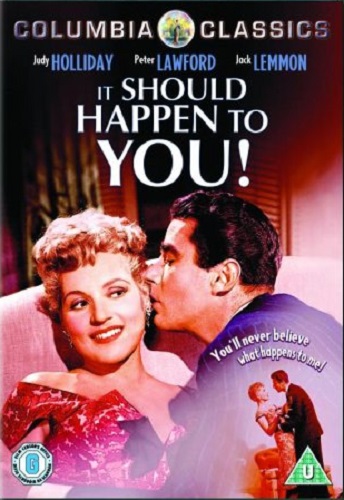
it_should_happenIt Should Happen to You!, George Cukor (1954, USA). I’m not sure why added this to my rental list, probably because I’ve enjoyed some Cukor movies and I do like me some 1950s rom com… Unfortunately, this one was a bit of damp squib. Although not originally written for Judy Holliday, it felt like a vehicle for her. She plays Gladys Glover, who moved to New York to make it but has so far failed to do so. So she spends her savings on a billboard on Columbus Circle – with her name in ten-foot high letters. However, that billboard is normally taken by the Adams Soap Company for their spring promotion. They contact Holliday, but she won’t give it up. They do her a deal – six billboards scattered around New York. She becomes a household name, Adams use her as a model, and so she makes it big. Meanwhile, Jack Lemmon (in his first role), who met her in Central Park right at the beginning and then was a bit stalkery, realises he can’t compete with playboy head of Adams Soap (Peter Lawford), so bows out. But Holliday realises she really loves him. There was some good footage of 1950s New York, but Holliday seemed a bit too laconic for the part she played, and the rags-to-riches tale felt a bit too well-worn.

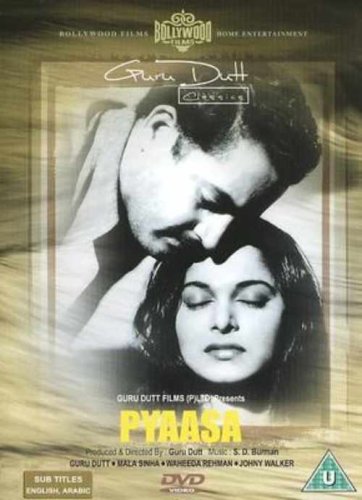
pyaasaPyaasa, Guru Dutt (1957, India). Producer, director and star Dutt plays a poet who can’t get published. He bumps into an ex-girlfriend from his school days who is now married to a big-shot publisher. The publisher hires Dutt as a servant and mostreats him, but then a beggar who dies under a train is mistaken for Dutt… and Dutt’s poetry becomes a posthumous success. His two brothers argue over the money his work now earns, and when Dutt reappears they refuse to recognise him. Eventually they see the error of their ways, but by then Dutt has had enough and walks away. I tweeted that this film “has been restored from vintage source for nostalgic appeal”, as per an on-screen notice in the opening credits. And certainly the transfer quality of the black and white print was not great (by comparison, Mother India – see here – released in the same year – was filmed in colour and a much better quality transfer). Despite all that, Pyaasa was probably the most interesting Bollywood film I’ve seen so far – in fact, I want to see more of Dutt’s movies. It wasn’t just that Dutt played a good part, but that the film seemed to address more interesting themes than your average Bollywood film, and appeared to be more of a drama than a melodrama. It still had songs and dance numbers in it, though.

1001 Movies You Must See Before You Die count: 761


4 Comments
Moving pictures, #21

And back to more films from the US than elsewhere. Given that only half the films described below are rentals, I can’t claim the vagaries of their service as an excuse. Oh well.

cindrelac2Cinderella, Kenneth Branagh (2015, USA). I bought a Blu-ray of the animated Disney Cinderella and the cheapest version available was a double Blu-ray box set with the 2015 live-action version of the film, because, probably, the live-action needs a bit of extra help to sell. I mean, whoever heard of a live-action Cinderella? Okay, it was directed by Branagh, and it’s got stars like Helena Bonham Carter and Cate Blanchett and Stellan Skarsgård and Derek Jacobi in it… but given the number of princess films Disney churns out, my expectations were understandably quite low. And yes, the film takes a few liberties with Perrault’s story, chiefly in order to give the characters more of a background. The two leads – Lily James and Richard Madden – are also a bit bland. But… there were some quite clever references to the Disney animated version, Bonham Carter’s absent-minded Fairy Godmother was fun, and Blanchett was on good form. However, the choreography during the ball scene just looked silly, and spoiled for me what had been up until then good family entertainment. A better film than I’d expected, but nowhere near as good as the animated version (although in its favour, its mice are considerably less annoying). [ABC]

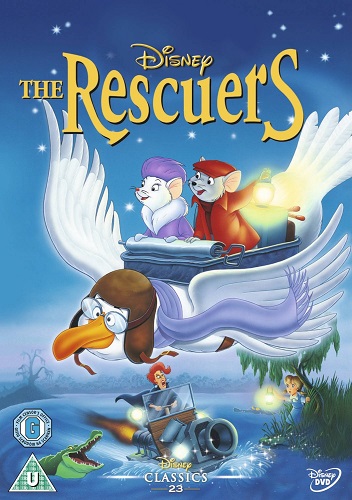
rescuersThe Rescuers, John Lounsbery, Wolfgang Reitherman & Art Stevens (1977, USA). I have a vague memory of this film’s original theatrical release. I can’t remember if I went to see it at the cinema, or if on a trip to the cinema my sisters saw it and I watched some other film. Watching it this time, 38 years later, very little seemed all that familiar. The seagull I sort of remembered, and Madame Medusa I think I remembered… But nothing else. Apparently, The Rescuers was instrumental in turning around Disney’s fortunes – they had not a successful film since The Jungle Book in 1967. I’m not sure I understand why – I can’t think of a weirder pairing for the main characters as Bob Newhart and Eva Gabor. And the animation looked a little crude and not very crisp when compared to Sleeping Beauty and Cinderella. I wasn’t that impressed. Amusingly, in 1999 Disney had to recall 3.4 million videocassettes of the second home video release because someone had spotted a photo of a topless women in the background of one of the shots.

hard_to_be_a_godHard to be a God, Aleksey German (2013, Russia). I’d heard a great deal about this film, and everything I’d heard led me to think I’d be much impressed by it. Not just that it was made by a Russian director, and made in that sort of very Russian style; or that it’s an adaptation of a novel by Boris & Arkady Strugatsky… Anyway, I bought the Blu-ray when it was released… and it sort of sat on the pile of films to be watched for six months or so before I finally decided to stick it in the player… An agent from Earth has infiltrated the society of another planet. The humans of the planet are anti-intellectual, and so are mired in the Middle Ages. The agent has taken the place of a local baron, and the local populace treat their nobles as god. On Blu-ray, the filth and squalour of the world German has created is visceral and obvious.  The film sort of meanders about, revelling in the awful conditions in which everyone lives, and the dumb laws under which they must survive (an old man is drowned upside down in shit, for example, for writing poetry – and being what the subtitles call a “smartypants”). It’s all very grim and very cheerless, but in a sort of weirdly unbelievable and implausible way. The cinematography is fantastic, the film’s commitment to its world is astonishing… but, even though I like slow cinema, this is not a film in which things happen at a particularly fast pace. I thought I’d like it more than I did, so in that respect it’s disappointing. But it’s definitely a film that stands numerous viewings, so I’m glad I bought a copy. [ABC]

black_godBlack God, White Devil*, Glauber Rocha (1964, Brazil). So I’d watched Rocha’s Entranced Earth – because it was on the 1001 Movies Must See Before You Die list, it was a rental, see here – and I really enjoyed it and I was a bit drunk, so I went and bought DVDs of Rocha’s three films, of which Entranced Earth forms the middle part of the trilogy. Black God, White Devil is the first of the three. Obviously, I was interested to see what I made of it. And… well, it’s not a very good transfer. I like that Mr Bongo are releasing hard-to-find non-Anglophone movies, but they don’t seem to put much effort into it. Happily, Black God, White Devil is a good film. A really good film. It has a bit of the Jodorowsky about it, and it works really well. A poor farmer has to flee when he kills his boss (after his boss insists the farmer carry the cost of the loss of the two cattle which died of snake bites en route to market). The farmer and his wife join St Sebastian, an apocalyptic preacher who suggests violence is necessary for redemption. Meanwhile, the government is getting worried about St Sebastian and his growing influence. So they hire bandit Antonio das Mortes to kill the preacher and his followers. Two are left alive to spread the word – yes, the farmer and his wife. And they in turn become bandits. I now want more of Rocha’s films, but the three I have appear to be the only ones that are available. Bah. [0]

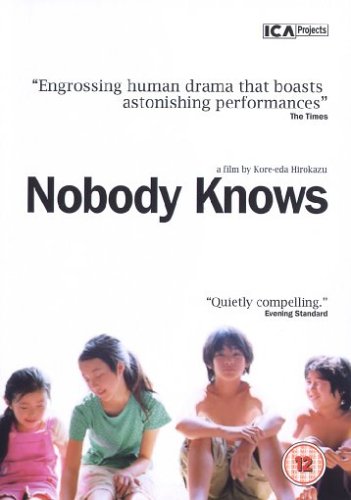
nobodoy_knowsNobody Knows, Hirokazu Koreeda (2004, Japan). This was recommended to me by David Tallerman, who has previously recommended anime films, but this is live action… although “action” may not be the right word. It’s a dramatisation of a true story. A woman with a twelve-year-old son moves into a new apartment. However, she actually has four kids – two are very young and are smuggled into the building inside suitcases, the other is eleven and turns up later. The woman continues to pretend she only has the one kid to her landlord. One day, she heads off to work… and never returns. She has abandoned her children. The oldest boy tries to keep the other children safe and fed, although what little money the mother left soon runs out. Then the utilities are cut off since the bills haven’t been paid. When the youngest girl falls from a stool, hits her head and dies, the three children bury her in a field near the airport. The film is played very flat, like a documentary, which has the odd side-effect of making the mother appear merely flighty instead of criminally negligent. Apparently, the real-life case was somewhat more gruesome – there were five children, not four; the youngest died after being assaulted  by friends of the eldest; and all were badly malnourished when discovered by the authorities (after a tip-off from the landlord). Another of the children also died – Wikipedia does not give the cause – and the body was found with the three survivors. The mother gave herself up when the case hit the news. Astonishingly, after she’d served her three year jail sentence, the mother was given custody of the two surviving girls.

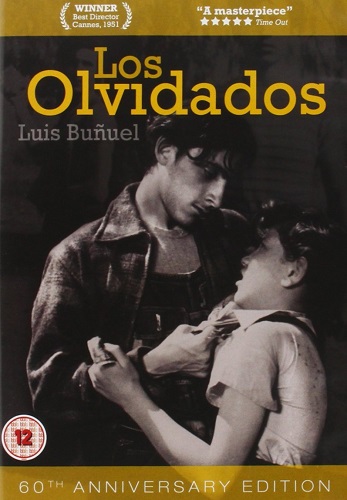
olvidadosLos Olvidados*, Luis Buñuel (1950, Mexico). The title refers to the forgotten kids and teenagers who live on the streets of Mexico City – although this is not a documentary. The teenage leader of a street gang escapes from juvenile jail, tracks down the kid who supposedly grassed him up, then beats him to death with a rock. A younger kid is witness but promises to say nothing. His mother persuades the kid to go straight and he gets a job as a blacksmith’s apprentice. But then the gang leader turns up and steals a knife. The kid is accused of the theft and sent to a progressive rehabilitation centre where, after a dodgy start, he seems to settle down. But then up pops the gang leader again, and he steals some money from the kid. They fight. During the fight, the kid tells everyone the gang leader is a murderer. The gang leader runs away. Later, he tracks down the kid and kills him. But the police are now after him – and they find him and gun him down. Shot in black and white, and in a social realist style, this is anything but a cheerful film. In fact, it’s really grim. To be honest, it didn’t much feel like a Buñuel movie, despite a bizarre dream sequence. To date, I’ve seen eight of Buñuel’s thirty-two films and only really liked two of them – The Exterminating Angel and The Discreet Charm of the Bourgeoisie, neither of which have that much in common. Much is made of Buñuel’s surrealism, or the surrealist elements of his films, and certainly the surrealism of the two I like is their major draw. But then I don’t see where Tristana, Belle du jour or Viridiana are especially surreal – and Un chien andalou and L’age d’or felt more like experimental films than anything else. An important director, undoubtedly, and one whose movies I will continue to watch – but I can’t say he’d make my top ten, or even top twenty…

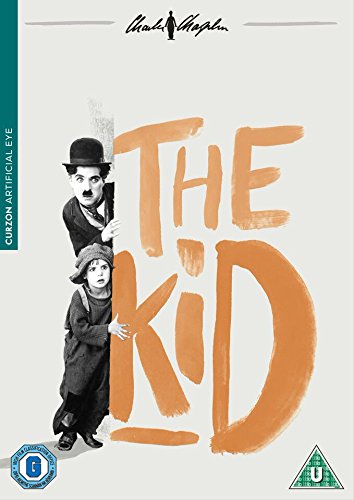
kidThe Kid, Charlie Chaplin (1921, USA). I thought this was on the 1001 Movies Must See Before You Die list, I can’t think why I put it on my rental list otherwise, but it’s not. Strange. Anyway, I watched it. The Kid is one of Chaplin’s most famous movies, and probably because of the title character. A woman has her baby stolen, it’s then left in an alleyway, where Chaplin finds it. He tries to get rid of the child, but fails… and so takes it home with him. The film then jumps forward five years, and the baby has grown into a little gamin, whom Chaplin’s tramp uses in his various cons. The kid throws rocks through windows, then Chaplin turns up with a pane of glass and is paid to replace the broken pane. There’s a scene where Chaplin is beaten up by a tough who’s wearing a bizarrely-padded jumper, and lots of Chaplin-like visual jokes… and a frankly bizarre dream sequence in which Chaplin imagines himself as an angel, the kid too, and everyone else who has appeared in the film, and the two of them fly along the street set… and then Chaplin wakes up.  He decides to track down the kid’s mother, and return him to his rightful home. Which he does suspiciously easily – mother and son are re-united as if it had been five weeks and not five years, and everyone lives happily ever after. I actually prefer the other Chaplin films I’ve seen to this one, yes, even Monsieur Verdoux.

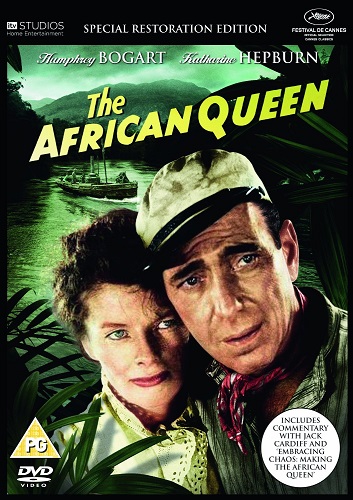
african_queenThe African Queen*, John Huston (1951, USA). Katherine Hepburn is the sister of a British missionary (Robert Morley) in German East Africa in 1914. Humph is the captain of the eponymous steam-powered river boat which regularly delivers supplies. WWI breaks out, the Germans burn down the missionaries’ village, Morley is killed, so Hepburn and Humph escape on the African Queen. They plan to follow the river to the lake at its end, and there destroy the German gunboat which is preventing the British from attacking. Along the way, they fall in love, sneak past a German fort which commands an excellent view of the river, fix a broken propellor, survive a trip through some fierce rapids… It’s all very adventuresome – but then it is adapted from a CS Forester novel. Hepburn and Bogart forever hover on the edge of parody; and half the time they feel like impressionists playing the actors playing their roles. It’s all very silly, and amazingly lightweight for a film that’s on the 1001 Movies You Must See Before You die list. In fact, I’m surprised it actually made the list. Huston is on there eight times, and some of the choices are baffling – Prizzi’s Honour? WTF? After early classics like The Maltese Falcon and The Treasure of the Sierre Madre (both also starring Humph), you have to wonder what happened…

1001 Movies You Must See Before You Die count: 761


7 Comments

Moving pictures, #20

A nice geographical spread this time, although only two films are from the 1001 Movies you Must See Before You Die list.

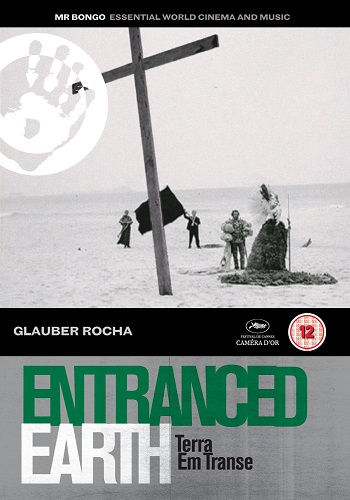
entranced_earthEntranced Earth*, Glauber Rocha (1967, Brazil). I watched this while drinking wine, as you do, and liked it so much I drunkenly went and bought it on Amazon, along with the other two films with which it forms a trilogy – Black God, White Devil and Antonio das Mortes. Oh well, these things happen. I’ve since watched it again – sober, of course – and… I still loved it. It’s a very political film, set in the invented country of Eldorado during an election, in which a journalist tries to decide between a conservative candidate and a populist candidate, both of which are corrupt. The narrative skips back and forth in time and place – it opens at the governor’s palace, but there are also scenes with one of candidates out meeting the public, as well as scenes of the other candidate ranting about the natural superiority of the upper classes. The journalist is also a poet, so we get to see some of his poetry as well. And there’s an astonishing series of shots from high up on a radio mast beside a villa built on the top of a mountain. Plus a hot jazz score. And I hate jazz. It’s clearly influenced by France’s New Wave, but not to its detriment. I loved it. A damn good film. A plot that’s all politics, a non-linear narrative… Great stuff. As I said earlier. Obvs. [0]

late_autumnLate Autumn, Yasujirō Ozu (1960, Japan). And speaking of buying films from Amazon, I’m pretty sure I was sober when I purchased this but I’d actually meant to buy An Autumn Afternoon, which is on the 1001 Movies you Must See Before You Die list, and not Late Autumn, which isn’t. Still, it’s Ozu and you can’t really go wrong with his films. Admittedly, I wasn’t all that taken with Tokyo Story, his most famous film, but I did like Floating Weeds, a later film, a great deal. And, having now watched Late Autumn, which I also liked a great deal, I think I ought to watch more of his films. Such as, er, An Autumn Afternoon. In tihs one, four middle-aged men turn up to the memorial service of a friend of theirs from college days, and decide to find a husband for the attractive daughter of their dead friend. It does not go well. Partly because the young woman does not want to leave her widowed mother alone, but also because the four blokes bungle their attempt at match-making. Late Autumn is a beautifully understated study of professional Japanese life. There are no theatrics, no histrionics, no need for special effects, just people going about their lives… and filmed with no pretensions by Ozu. [dual]

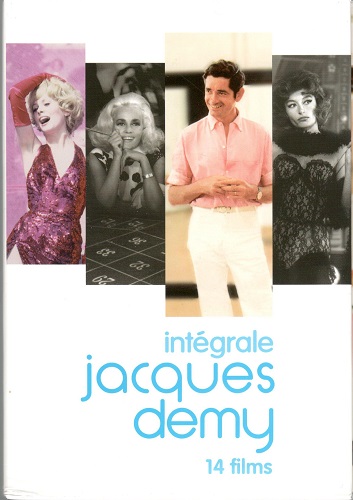
demyPeau d’âne, Jacques Demy (1970, France). Imagine a muscial version of Cinderella with Catherine Deneuve in the title role, only it’s not Cinderella it’s a story that’s a lot like it but a bit weird in places and, well, very Demy. But pretty much the same. Sort of. Deneuve plays a beautiful princess, whose father shows an un-paternal level of interest in her after her mother’s death. So she runs way to the woods, and with the help of magic appears as a poor and dirty servant girl when wearing the eponymous donkey skin. But the prince of a neighbouring country meets her (all his courtiers are red, whereas hers are blue), and wants to marry her. He has her ring – Cinderella’s slipper, in other words – and calls for every woman in the country to try on the ring so he can identify his one true love. Although the plot is pretty generic, the film is very Demy – the courtiers are completely coloured according to their court, so Deneuve’s retainers even wear blue face make-up; and, of course, there are songs, written by Michel Legrand, so if you’ve seen other Demy films you shold know what to expect. Mildly diverting. [2]

dancing_hawkDancing Hawk, Grzegorz Królikiewicz (1978, Poland). I really do like Polish cinema, butr I’m not entirely sure what to make of this one. Ostensibly, it’s the sotry of a self-made apparatchik, who rises high, only to lose it all in the end. But the opening shots depict his childhood during WWII, through much use of Dutch angles, weird shots and strange colour filters. And there’s an abrupt change to Polish realistic cinema, in that sort of TV drama style they do so well – I’m reminded of Wajda’s Man of Iron and Piestrak’s Test Pilota Pirxa – although that may just be the 1970s vibe. I should really wait until I’d rewatched this film before rewatching, but I’m getting a bit behind on my moving pictures posts… but perhaps I’ll write about it again after a rewatch. I will, however, note that I fancy getting that Królikiewicz box set… [0]

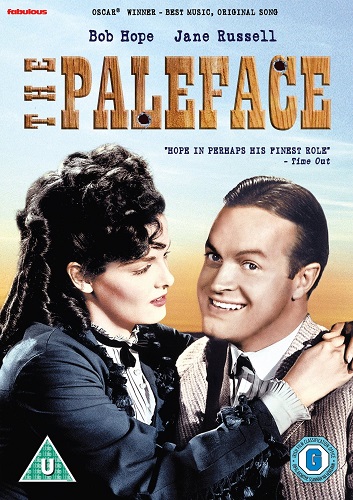
palefaceThe Paleface*, Norman Z MacLeod (1948, USA). There have been a number of films whose presence on the 1001 Movies you Must See Before You Die list I have found baffling, and none more so than this Bob Hope vehicle which manages to be mildly amusing and… well, that’s about all. My own list would include films others might find surprising, but I’d at least defend them; but there’s no documentation on the 1001 web site, so short of buying the actual book I’ve no way of knowing why this film makes the list. It certainly doesn’t deserve to – in fact, every other film in this post not on the list has a better claim to a place than The Paleface. Which may be slightly unfair, as there are plenty of films on the list which don’t belong on it. Bob Hope plays a dentist, and not a very sucessful one, whom Jane Russell decides to use as cover in her mission to travel eadt and discover who is running guns to the nasty Native Americans (who are, after all, trying to prevent their lands from being occupied by an invader; oh wait, the film doesn’t mention that).

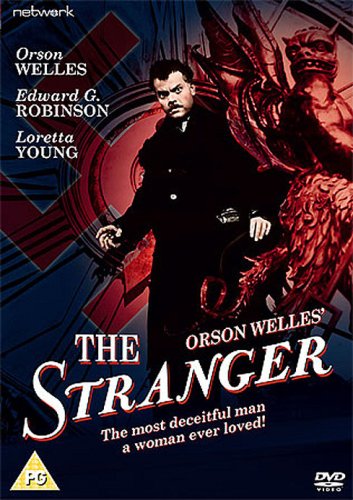
strangerThe Stranger, Orson Welles (1946, USA). A war criminal is released so he can lead a war crimes investigator to a bigger fish. He’s followed to a small US town, where the investigator becomes suspicious of one of the local pillars of the community (played by Welles himself). Apparently, te film is notable for a number of reasons – that Welles wasn’t the first choice of director, and that the film incorporates newsreel footage of the Nazi death camps (because the Americans of the time didn’t really think they ever existed; some still don’t). My admiration for Welles’s work has grown over the past couple of years, and although it’s all too easy to forget quite how ground-breaking Citizen Kane was when it was made, so it’s easy to forget that many of his later films weren’t as straightforward as they initially appeared. The Stranger is by no means a highlight of his oeuvre, it is in most respects a relatively straightforward thriller of its time, but there’s lots to like in the less obvious details – such as the characterisation of some of the cast. Welles was never as clever cinematically as Hitchcock, but he was cleverer in other ways. Worth seeing.

1001 Movies you Must See Before You Die count: 758


1 Comment

Moving pictures, #19

Odd how these films fall out. Most of the ones I watch are rentals, so it depends on what gets sent to me – and sometimes they just happen to send me US films. Although, to be fair, Fellini’s Casanova was a rental. But Beware of the Holy Whore was from the Rainer Werner Fassbinder box set I bought last September.

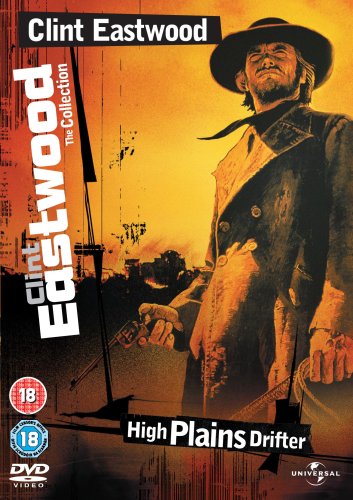
high_plains_drifterHigh Plains Drifter*, Clint Eastwood (1973, USA). As I’ve said before, some films you like the idea of more than you like the actual implementation. But perhaps that’s unfair to High Plains Drifter – I sort of like the central conceit, and how it’s realised – mostly – but it’s a Western, a genre I’m not overly fond of, and it suffers somewhat because it’s a Western. A sheriff is whipped to death by bandits while the people of the town look on and do nothing. Some time later, a stranger arrives in town, violently takes it over, and then promises to defend it against the aforementioned bandits. But he’s really the spirit of the dead sheriff and he’s having his revenge on all parties. So he makes the townsfolk do odd things, like paint all the buildings bloody red, set up a feast in the town’s one street… and then it all turns, well, violent. The film was shot in a purpose-built town on the shores of a lake, which perversely made it seem more like a film set, further adding it to the movie’s general air of strangeness. I can’t decide if its failure to convince works for or against it, but I think on balance I prefer other Westerns directed by Eastwood.

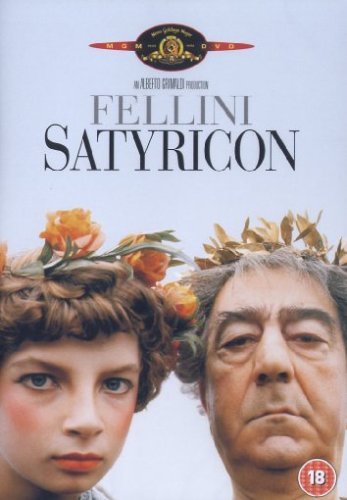
casanovaFellini’s Casanova, Federico Fellini (1976, Italy). After the way Fellini’s Satyricon (an earlier film) had slowly won me over as I watched it, I was sort of hoping Fellini’s Casanova would do the same. And early scenes certainly intrigued… if not so much because of what was going on but because the production design looked like an obvious inspiration for David Lynch’s Dune. It wasn’t just the set or costumes, or the fact Casanova’s forehead was shaved much like those of Lynch’s Bene Gesserit; but even the mechanical owl seemed like a piece of set dressing that wouldn’t have looked out of place in Paul Atreides’s bedroom. The plot, thankfully, is entirely different… although “plot” might be too strong a word. The film opens in Venice during Carnival. After one of the weirdest PG-rated sex scenes ever filmed, Casanova is arrested and imprisoned. He later escapes, and then travels about Europe having various debauched adventures. The title role is played by Donald Sutherland, who is dubbed into Italian (Fellini did this quite a bit, using Hollywood stars and dubbing them into Italian; seems an odd practice). Fellini’s Satyricon was wildly self-indulgent but, in a very bonkers way, sort of appealed; Fellini’s Casanova may actually be EVEN MOAR self-indulgent, but while I was watching I didn’t find myself taking to it to the extent I had the earlier film… But thinking about it now, as I write about it, I do wonder if another watch is needed in order to fully experience its self-indulgent weirdness.

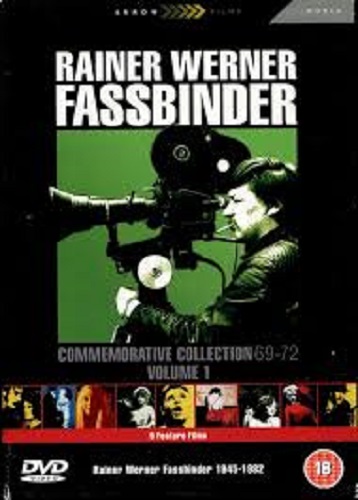
fassbinder1Beware of a Holy Whore, Rainer Werner Fassbinder (1971, Germany). That’s the last of the Fassbinders now watched, from both of the commemorative box sets; and with this first set it’s been a more variable experience than the second. But of the films included in volume 1, Beware of a Holy Whore, despite the unwieldy, and I’m-not-entirely-sure-what-it’s-referencing, title, this is one of the better ones. It’s set almost entirely in the foyer and bar of a hotel in Spain, where the cast and crew of a movie are waiting for a production to restart because the financing has run dry. Fassbinder plays the producer, and spends a lot of the film shouting at people. Various members engage in sexual pairings, others wander around pontificating. Then the director arrives in a helicopter, is less than impressed with the hotel as a location, but the shooting goes ahead anyway… And then the same old arguments as before take place. It feels very much like a play, and reminds me a little of Chinese Roulette, in which the guests at a country house party play truth or dare. Apparently, the film is semi-autobiographical as it was inspired by Fassbinder’s filming of Whity in Spain earlier that year.

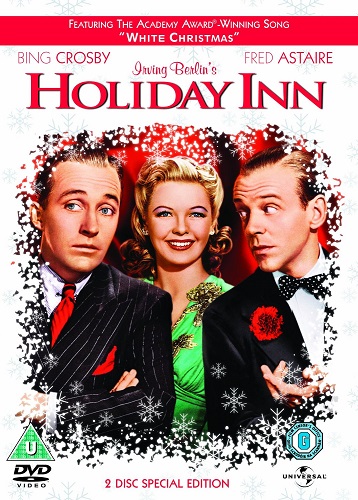
holiday_innHoliday Inn, Mark Sandrich (1942, USA). This is such a famous film – well, it’s the origin of the song ‘White Christmas’ – that I felt sure it must be on the 1001 Movies You Must See Before you Die list. But it isn’t. And I don’t remember why I put it on my rental list. It’s not like I’m a big fan of Bing Crosby, or Fred Astaire, or Irving Berlin (there are no big star female leads in the film, which is a shame – it probably needed Ginger Rogers, or someone like her; have I said how great Ginger Rogers is?). Anyway, Crosby and Astaire are a singing and dancing act with Virginia Dale, Crosby thinks he’s going to marry her and retire to a farm he’s bought, but Astaire marries her instead. Crosby retires to his farm, it does not go well. He decides to re-invent his farm as a hotel open only on public holidays, with full-on musical entertainment. Marjorie Reynolds gets sort of accidentally hired as a star turn. Astaire turns up, decides Reynolds should be his next partner as she’s a complete star (Dale ran off with someone else), but by this point Crosby has decided he wants to marry her. In most respects, this is a fairly typical 1940s musical with a pair of big-name draws. But… one musical number is done entirely in blackface, and that had never been not offensive. Perhaps that’s why it’s not on the list.

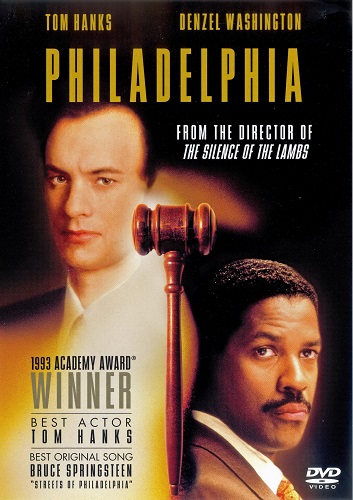
philadelphiaPhiladelphia*, Jonathan Demme (1993, USA). A few days after watching this, I was browsing through my spreadsheet of films watched (yes, I track them on a spreadsheet; stop sniggering at the back) and learnt I’d seen this film back in July 2003. My memory is usually quite good for remembering the plots of stories – either literary or cinematic – but I had zero memory of my previous watch of Philadelphia. It obviously made that much of an impression. And having now rewatched it, I can understand why. Writing this a week or so after watching it, and I’m having trouble recalling much of what happened in the movie. High-flying lawyer Tom Hanks has AIDS but doesn’t tell his employer. One of the partners spots a lesion on his face and correctly guesses Hanks’s condition. So they manufacture an incident and fire him for incompetence. Hanks decides to take them to court, and eventually ends up hiring ambulance-chaser Denzel Washington. Despite most of the cast of Philadelphia being homophobic, the word itself is never mentioned. And it’s a level of overt and constant homophobia that actually works against the point the film is trying to make, as if it’s Hanks’s lifestyle which led to his situation, not his disease. Watching the film is also like having a conversation with your grandad where you abruptly realise that his views and opinions haven’t changed with the times. Of course, a movie can’t evolve (well, it could be “rebooted”), so Philadelphia is a snapshot of attitudes in early-nineties USA. And whatever qualities that existed then which led to Hanks winning the Oscar, and the screenplay being nominated for an Oscar, it no longer feels like a film that belongs on the 1001 Movies You Must See Before you Die list.

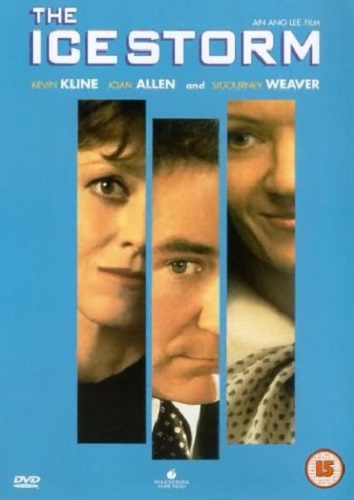
ice_stormThe Ice Storm*, Ang Lee (1997, USA). There is a type of domestic drama which appears on the 1001 Movies You Must See Before you Die list a number of times and whose appeal I cannot fathom. Perhaps it speaks to the experience of being white, affluent and American. I am not American. I am not affluent. So it usually means zilch to me. The Ice Storm is based on a novel by Rick Moody; I have never read anything by Rick Moody. It takes place over the Thanksgiving weekend in 1973, in a well-off Connecticut suburb. There’s a wife-swapping party, which some husbands seem to enjoy, and some wives are very much set against. There are some weird and kooky college-age kids, who do weird and kooky things. Kevin Kline looks like he’s wearing parodies of 1970s clothes throughout, and Sigourney Weaver appears far too intense to be a bored housewife. And I really didn’t care about any of the characters, or any of their antics. Apparently, the film won best screenplay at Cannes, and Weaver won a BAFTA for best supporting actress. Meh.

1001 Movies You Must See Before you Die count: 756


1 Comment

Moving pictures, #18

More of a geographic spread this time around, with only two of the six from Hollywood – and both of those I only watched because they’re on the 1001 Movies You Must See Before You Die list. Some of you may have noticed that I had a go at putting together my own version of the list, but so far only managed about 300 films. It’s a work in progress, of course; and will undoubtedly change as I watch more films, or change my minds about films I’ve already listed. It has so far proven difficult not to put too many films on my list by directors I rate highly – such as Dreyer below – but even then I seem to have included half a dozen by one favourite director but only two by another. So it’s not like I’ve been all that consistent. Ah well. We’ll see how it goes. Meanwhile, more films from the actual 1001 Movies You Must See Before You Die list, and a few others, what I have viewed recently…

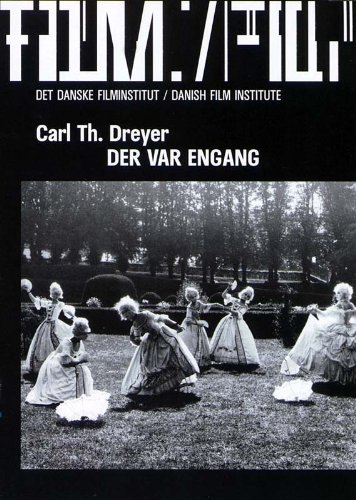
once_uponOnce Upon a Time, Carl Theodor Dreyer (1922, Denmark). As is no doubt obvious from the title, this is a fairy tale. It’s adapted from a play of the same title by Holger Drachmann, first performed in 1885. The film isn’t complete, however, as about half has been lost – but the Danske Filminstitut have managed to salvage a narrative using still photos and new intertitles based on original sources. It’s a less engaging film than Dreyer’s The Bride of Glomdal, although the staging is often impressive – as can be seen from the still on the DVD cover. I seem to recall the story dragging somewhat – and that there were a lot of intertitles, although whether that was a result of the fact half the footage has been lost, I’m not sure. I seem to recall other films by Dreyer from the same period featuring more intertitles than I’d expected. On the other hand, you’d expect a silent movie adaptation of a stage play to be quite talky… I do like Dreyer’s films – I’d certainly put him in my top ten directors list… (For the record, they would be, at this particular time, in no particular order, Sokurov, Tarkovsky, Suleiman, Antonioni, Haneke, Hitchcock, Dreyer, Benning, Kieślowski and Kaurismäki.)

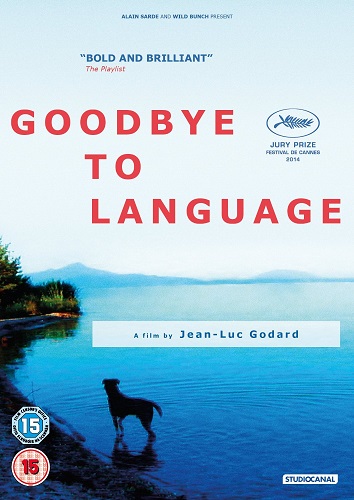
goodbyeGoodbye to Language, Jean-Luc Godard (2014, France). Some things I like the idea of more than I like the actual thing. One of those things is experimental cinema. I like that some film-makers explore how the medium can be used to tell stories, film-makers like James Benning, for example. But not every experiment film works for me. I remember watching and not liking Lukas Moodysson’s Container, although I do like Moodysson’s other movies. Godard was a director who certainly experimented, and one or two of his experiments I do indeed like – such as Two or Three Things I Know About Her or Weekend. Goodbye to Language experiments with both 3D filming techniques – entirely lost on me as I watched a 2D version – and cinematic narrative… and it’s not an easy film to watch. There are scenes which look and feel more like documentary footage, there are scenes in which characters lecture at each other (not unusual in a Godard film), there are strange camera tricks and photographic effects. The story has to be puzzled out from what’s shown on the screen, and it’s not at all obvious. Watching Goodbye to Language was a bit of a chore, but, as mentioned earlier, I like the idea of the movie – and might well give it another go sometime. Sometimes it happens you don’t take to something immediately, but leave it a while, return to it, give it another go… and it becomes a favourite. I suspect that won’t happen here, but perhaps I might decide I do actually like it…

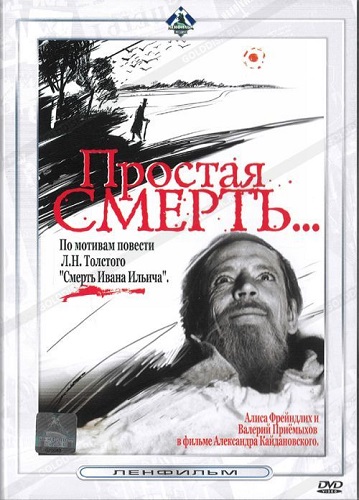
A_Simple_DeathA Simple Death, Aleksandr Kaidanovsky (1985, Russia). Kaidanovsky is perhaps better known as an actor – he played the lead in Tarkovsky’s Stalker, and one of Pirx’s crew in Test Pilota Pirxa – but he also directed three feature films: Гость (an adaptation of a Jorge Luis Borges story), Жена Керосинщика, and Простая смерть. The last, A Simple Death, is an adaptation of Tolstoy’s novella, ‘The Death of Ivan Ilyich’, and pretty faithfully follows its plot: a magistrate who has led a mostly good and successful life falls while hanging curtains one day and hurts his side, the pain grows each day until he is bedridden and his codition is terminal, where he reflects on his mortality, his life and the injustice of his current predicament. Although made in 1985, A Simple Death is black and white, and parts of the film reminded me strongly of Sokurov’s Stone, in which Chekhov returns to the present day and surprises the young man who is caretaker of his house. There’s a similar aesthetic at work, although Kaidanovsky’s film and camera work is not as experimental as Sokurov’s. Good stuff.

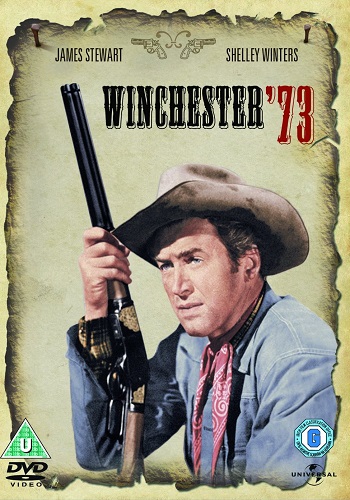
winchesterWinchester ’73*, Anthony Mann (1950, USA). The title refers to a model of rifle, the Winchester 1873, which was a superior repeating rifle and much prized. Even more prized, however, was the “one in a thousand”, which was is a particular instance of the Winchester ’73 which was so well-made – more by accident than by design – that it shot so much truer than the other 999 rifles made in that batch. Winchester ’73 opens with a crowd gathering in Dodge City to either witness or take part in a shooting competition, the prize for which is a “one in a thousand”. The contestants are whittled down to two: Jimmy Stewart and Stephen McNally. And there’s plainly bad blood between the two. Stewart wins, but McNally later ambushes him, steals the prize rifle, and gets the hell out of Dodge. Stewart and buddy chase after him. Meanwhile McNally has lost the rifle in card game with a gunrunner, who then sells it to a Native American chief (Rock Hudson) on the warpath. Who then attacks a cavalry detachment, but Stewart and buddy turn up and help them cavalry win the day. Hudson is killed and a young Tony Curtis finds the prize rifle. The sergeant gives it Charkes Drake, as Stewart has already left. Drake, and fiancée Shelley Winters (who had met Stewart back in Dodge), continue with their journey, but come a cropper with a member of McNally’s gang, and so the rifle ends up back in McNally’s hands. At which point Stewart turns up and the two shoot at each other for the gun. Throughout the film, they’ve been depicted as superlative shots, but this last scene has them repeatedly missing each other. Guess they weren’t so good, after all. As mid-centiury Westerns go, Winchester ’73 isn’t a bad one – and it’s certainly refreshing to see Stewart acting tougher than he usually does. But I’m not really sure why it needs to be on the 1001 Movies You Must See Before You Die list.

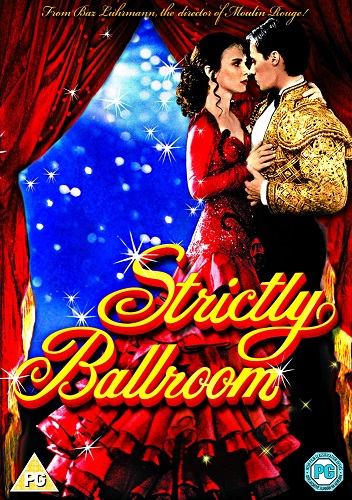
strictlyStrictly Ballroom*, Baz Luhrmann (1992, Australia). I should think most of the populations of Australia and the UK, amd a goodly-sized proportion of the US, have already seen this film, but somehow or other I’d never managed to do so. Of course, I only watched it because it was on the 1001 Movies You Must See Before You Die list. And now I have. It was… okay. It’s a spoof set around a regional ballroom dancing championship in Australia. The son of a dancing school instructor is the local star, and tipped to do well in the competition. But his partner leaves him for another dancer since he has a tendency to stray from “proper dance steps” – and, against his parents wishes, and with some persuasion, he decides to take as his partner a young woman who hangs around the dancing school but is not a dancer. They practice secretly, she develops into an excellent dancer, and he even learns some useful life lessons – and how to dance the pasodoble correctly – from her immigrant parents. Apparently, the film was adapted from an earlier play written by Luhrmann when he was  a student. It’s also one of the most successful Australian films of all time. It has now been made into a stage musical, which I guess means it’s now as mainstream as you could possibly get.

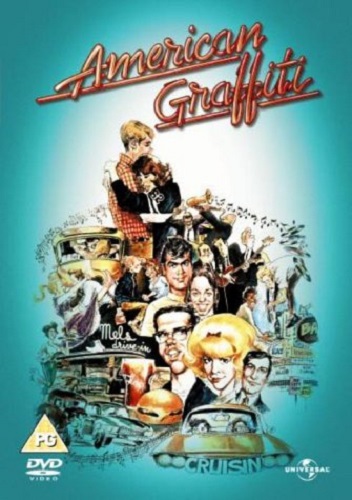
grafittiAmerican Graffiti*, George Lucas (1973, USA). After THX-1138, Lucas decided to make something more commercial, and so chose a story based on his own memories of growing up in Modesto, California. Although audience response to the film was good, and he had a number of big names batting for him, the studio first wanted their own re-edit of it and then to release it as a TV movie. However, saner heads prevailed, and the film was given a theatrical release, and went on to make a pretty good profit. All of which may be interesting, but is of no consequence when considering American Graffiti as a film. And it’s a Californian coming-of-age movie, a duller subject I can’t imagine. Obnoxious teenagers with over-inflated senses of self-worth driving around small town USA and getting up to drunken antics. Richard Dreyfus spends much of the movie chasing after a young woman he saw fleetingly in a car. Paul Le Mat cruises around with a teenybopper, before ending up in a road race against Harrison Ford. Charles Martin Smith chats up a young woman, mostly by telling lies, and then cruises around with her. And so on… Yawn. I have no idea why this film is on the 1001 Movies You Must See Before You Die list.

1001 Movies You Must See Before you Die count: 753


6 Comments

Moving pictures, #17

Seems to be mostly US films this time, including a few populist ones. I don’t know what came over me.

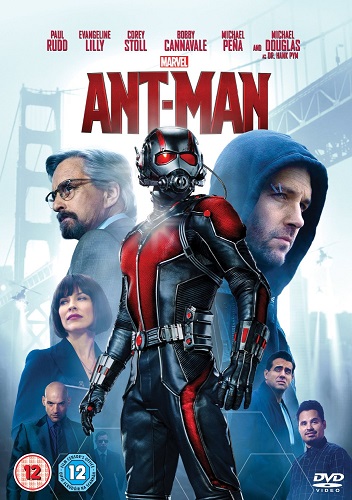
ant_menAnt-Man, Peyton Reed (2015, USA). Superhero films are monumentally stupid and pretty much awful. Putting comics up on screen and investing billions of dollars in state-of-the-art CGI has not made them any cleverer or less juvenile. And yet Ant-Man is one of the few which, we’re told, transcends the genre. Which, when you think about it, is a backhand way of saying, “yes, we know superhero films are dumb and low art”. Of course, it does no such thing. Its hero is a bit grey, inasmuch as he’s no boy scout in tights; but neither is he a villain. As for the plot: nasty executive takes over noble inventor’s company, exploits’magical maguffin invention for typically capitalist reasons, or at least tries to… Yawn. We’ve seen it a zillion times before. The only difference is that in SuperheroWorld, said executive gets his comeuppance; in the real world, he gets a seven-figure bonus. Paul Rudd makes a good fist of the title role, although Michael Douglas these days feels more like a caricature of an actor than an actor. But the story was the usual superhero bobbins, and figuring out whether a superhero film is a good film per se is a bit like counting angels on the head of a pin – ie, you have to believe in angels in the first place. Best just walk away.

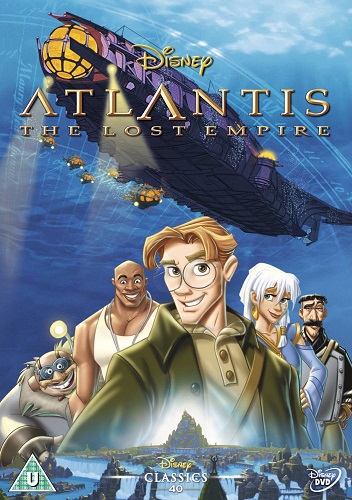
atlantisAtlantis – The Lost Empire, Gary Trousdale & Kirk Wise (2001, USA). And if superhero movies are for people who haven’t grown-up, then Hollywood animated movies are for people who have yet to grow up. (When I wrote that sentence it seemed to make perfect sense to me, but coming back to it a couple of days later, I’m having trouble figuring out what I meant. Ah well.) There’s no reason why such films have to be like that, of course – just look at Japan’s anime industry; or indeed animated films from Europe, such as René Laloux’s La Planète Sauvage, or anything by Jan Svankmajer. (We’ll ignore Heavy Metal for the time-being, if you don’t mind.) Atlantis – The Lost Empire is a kids’ film, but the design is quite effective and the story is sufficiently oddball to appeal to me. Its performance at the box office was apparently “lacklustre”, so much so that Disney cancelled a planned television series and an underwater attraction at Disneyland. It’s by no means a great film, although it has become something of a “cult favourite”. There’s a sequel, Atlantis: Milo’s Return, which was cobbled together from three episodes of the cancelled television series, and it’s pretty damn poor. Atlantis – The Lost Empire doesn’t hold a candle to either Sleeping Beauty or Cinderella, but it’s still better than about half of Disney’s feature film output.

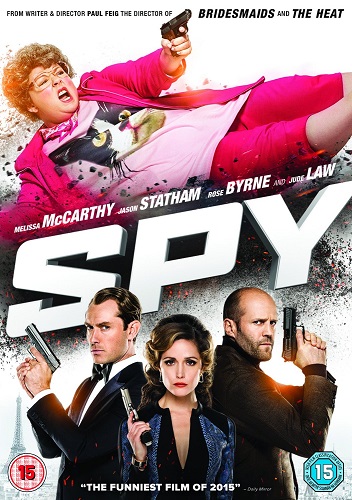
spySpy, Paul Feig (2015, USA). Every now and again I throw a Hollywood blockbuster onto my rental list (er, okay, perhaps more than one, given the above), so I can spend at least one night with my brain turned off (shut up at the back); and while I never have especially high hopes of such films I’m prepared to be pleasantly surprised. I wasn’t for Ant-Man, but Spy was a comedy and… Oh dear. Tonally, it was all over the place. Humour one minute, over-the-top violence the next. And the improv… Seriously, whoever decided that improv was a good way to make comedy movies “better” was clearly a fucking idiot. Remember those films with sharpy witty dialogue? They were written like that. Now we have witless burblings spontaneously vomited up by comedians who think that not filtering their verbiage is the way to generate laughter. It’s not. Spy had its moment, not least the set-up, in which a field agent’s support officer takes his place in the, er, field… but they just had to over-egg the cake and make her some sort of combat expert despite the fact her career had been spent behind a desk. And the dialogue bounced from the inane to the embarrassing, without doing much to advance the plot. Spy could have been a good film, but giving the cast free rein was a big mistake – this is a movie that needed to be tightly controlled to work. In its present incarnation, it doesn’t.

beyondBeyond, Joseph Baker & Tom Large (2014, UK). This was a charity shop find, and I’m not entirely what it was I actually found. Earth has been attacked by aliens, who have pretty much defeated humanity. There’s a couple, they meet at a fancy dress party. They get together, I think they marry, they have a baby. They argue about the baby. The film jumps back and forth chronologically. And I have to admit that after a while I started to lose interest. Beyond is one of those independent films in which pretty much everything is implied and all that remains on the screen is the bickering between the two leads. In and of itself, this is not necessarily bad, but Beyond does feel more like it should be a short film, rather than a 84-minute feature film. I’ll give the movie a rewatch, because I feel it ought to be more interesting than it proved – but we’ll, er, see…

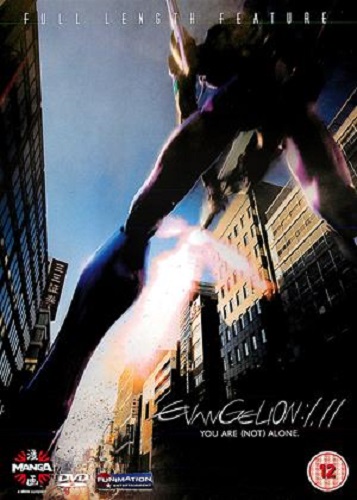
evangelion_111Evangelion 1.11: You Are (Not) Alone, Hideaki Anno (2007, Japan). I am not a big fan of anime, although people continue to recommend various anime films and/or OAV to me. But it’s worth doing so, because sometimes it sticks. Usually it takes a while after I’ve watched it, however. (I am, incidentally, defining “big fan” based on those anime fans I know, who have watched absolute tons of the stuff.) For example, I watched and enjoyed Royal Space Force: The Wings of Honnêamise, and then later decided to pick up a copy of it for myself. And I’m sort of feeling the same for Evangelion 1.11, except… Well, this film, and its sequels, is a reworking of the OAV Neon Genesis Evangelion, and I’m wondering if I might be better off watching the OAV. Especially since, according to Wikipedia, the OAV goes into more detail on the background – Evangelion 1.11 more or less throws you right into the middle of the story, and it’s only some way into the film that some background needed to follow the story is revealed. And yet, the art is of a high quality, the story is certainly intriguing, and I actually find the refusal to explain makes me like the film more. It’s set in, er, 2015, after aliens – called Angels – have wiped out much of the Earth’s population. Secret scientific organisation NERV has invented giant cyborg mecha to fight the Angels, and this film is about the first of those to go into combat, and its pilot’s relationship with the wounded pilot of the prototype mecha. I can’t get excited about men and women in giant robot suits – I really didn’t like Pacific Rim – but there’s enough going on in the story of Evangelion 1.11: You Are (Not) Alone, for me, to offset the fact it’s about men and women in giant robot suits. Incidentally, Neon Genesis Evangelion comprised twenty-six, but there are only four feature-film reboots – this one, Evangelion: 2.22 You Can (Not) Advance, Evangelion 3.33 You Can (Not) Redo, and an unmade final film.

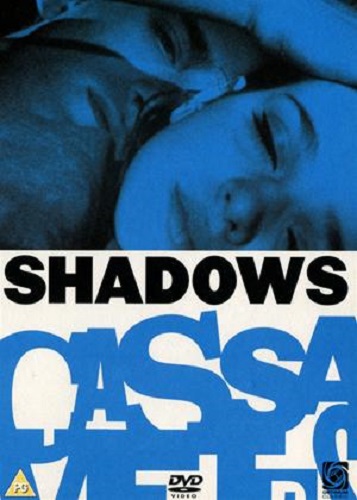
shadowsShadows*, John Cassavetes (1959, USA). Cassvetes appears four times on the 1001 Movies You Must See Before You Die list, and he was certainly an important figure in US independent cinema, but, in terms of cinema as a whole, was he more important than, say, Varda, Wajda, Mizoguchi, Ozu, Sturges, Resnais, Kiarostami, Haneke, or Ophüls… to name a few? I can understand why Shadows is on 1001 Movies You Must See Before You Die list, not just because if its importance in terms of indie cinema, but also because of its subject matter. But according to Wikipedia, its genesis was a bit fraught. Originally shot with improvised dialogue, Cassavetes ended up remaking great chunks of it using a script. As documentation of a particular time and place – New York, the late 1950s – and a particular sector of society, Shadows works well; but the improvisational nature of the story tells against it, and it often seems a little too chaotic – but that’s something all of Cassavetes’s films have in common, and probably explains why I’m not a fan of his work. Yes, Shadows belongs on 1001 Movies You Must See Before You Die list, moreso perhaps than some of Cassavetes’s other movies; and at least I can now cross it off.

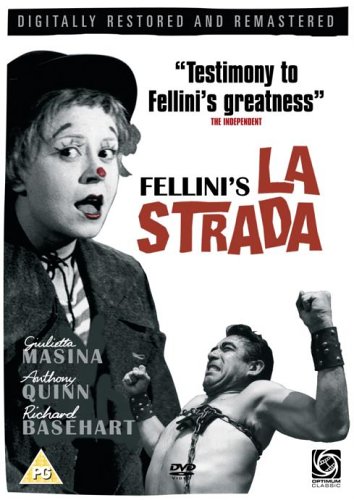
stradaLa strada*, Federico Fellini (1954, Italy). Fellini is a popular director in the 1001 Movies You Must See Before You Die list, with seven films – one of which is La strada. I have to date seen all but one of those films, and I liked pretty much straightaway, and grew to love Fellini Satyricon as I watched it. The rest were a bit meh. To be fair, I like Italian Neo-realism as an idea more than I’ve liked those films which are labelled as such – not that all, or indeed many, of Fellini’s movies have been classified as Italian Neo-realist. La strada has Giuletta Masina as a naïf who is sold to an abusive Anthony Quinn to perform as assistant (and clown) to his travelling strong man act. She runs away, he finds her, there’s a rivalry with trapeze artist Richard Basehart. The rivalry intensifies, partly driven by the two men’s relationships with Masina… and it all ends badly, in a sort of all-too-predictable-but-gently-ironic way, not that Fellini is a director who does irony especially well. I would rate some of Fellini’s films highly, but not this one. I’m glad I saw it, and I can cross it off the list, but that’s about it.

1001 Movies You Must See Before You Die count: 750


1 Comment

Moving pictures, #16

If I was an organised sort of person, I’d write these as I watch the movies, and then all I’d have to do is gather them together after, say, half a dozen films to make a post. But while my book shelves are all organised alphabetically by author, and chronologically within author, and I, er, pile my DVDs by director, and I have lists of pretty much everything, including lists of lists… I’m a bit crap at organising work. Because it’s work. Well, yes, it’s writing – reviews, fiction, blog posts, etc, but that’s still work, even if it’s not for money. At least it feels like work. That’s my excuse and I’m sticking to it. So there.

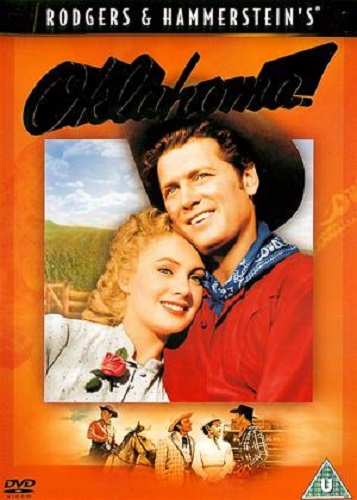
oklahomaOklahoma!*, Fred Zinneman (1955, USA). Since I’ve been working my way through the 1001 Movies You Must See Before You Die list I have watched films I would never have even thought of bothering to watch… and enjoyed them and found them very good. But there are also those that were no more than ticking off an item on a list. Musicals are not films I normally bother to watch, although there are a few I really like. And yes, they’re from the 1950s (except for All That Jazz, from 1979, which I also like a lot; and Les demoiselles de Rochefort, from 1966 and, er, French). But Oklahoma! – a musical from the 1950s. It is also a Western. Although, to be honest, it didn’t really need to be, it could have been set in an inner city, given that it’s the old love triangle plot. With songs. The leads were likeable enough, the songs were mostly memorable, and Rod Steiger was impressively villainous. But it all felt a bit artificial (and I don’t mean the fact it was filmed in Arizona and not Oklahoma), and contrived. As the only film adaptation of the first musical written by Rodgers and Hammerstein, I understand the need to put it on the 1001 Movies You Must See Before You Die list, but I wouldn’t call it an especially notable example of the Hollywood musical.

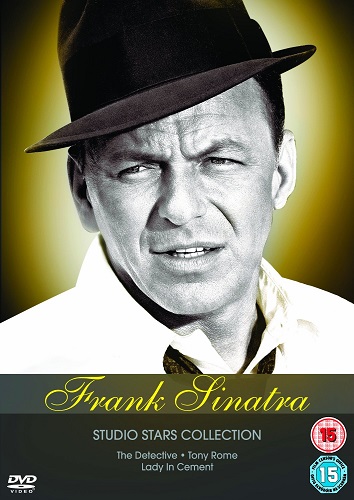
sinatraTony Rome, Gordon Douglas (1967, USA). Sinatra and Douglas made three neo-noir films in the late 1960s, in two of which Sinatra played the title character of this movie. Not that Sinatra was ever much of a character actor. And in the three films his hair always seems a step or two behind him in the script (if it was a hair-piece, it was not a good one). In this movie, Rome is asked to take home a young woman who has passed out from drink in a hotel room, in order to prevent the hotel from any accusation of impropriety. When the young woman – who’s from a wealthy family, of course – wakes, she discovers a diamond pin is missing, and hires Rome to find it. Cue the sort of convoluted plot you only ever found in noir books and films. The movie scores well on ambience – it’s hard to imagine a more late-sixties USA film – although Sinatra plays his role with all the depth of a petri dish and the plot seems to think an overly-complex story counts for depth. Good for a lazy Sunday afternoon, but that’s about it.

five_easy_piecesFive Easy Pieces*, Bob Rafelson (1970, USA). All this time and I’d thought Five Easy Pieces was some counter-culture film like Easy Rider, and I’ve no idea where I got that idea from (I hope it isn’t something as dumb as the fact they both have the word “easy” in their titles)… because, well, it isn’t. Not at all. Jack Nicholson plays a middle-class classical pianist slumming it as a wildcat oil worker after a falling out with his family. He even puts on the accent. He also has a girlfriend, a waitress, played by Karen Black. And a friend, who introduced him to wildcatting. But when said friend is arrested for a petrol station hold-up a year earlier, and Nicholson learns his father has suffered a stroke, he heads home, taking Black with him. The title refers to five pieces of music played by classical pianists, and which are heard during the film. Nicholson chews the scenery, as per usual, and the only real notable thing about the movie is the swap from working class to affluent middle class, and the all-too-obvious deduction that Nicholson’s character is play-acting in his working class life, which is hardly something to be celebrated. I’ve yet to actually work out the numbers but I’d guess that at least two or three out of every five films from the 1001 Movies You Must See Before You Die list have, to me, felt like they didn’t belong – and this is another of them. Meh.

sinatraThe Detective, Gordon Douglas (1968, USA). Unlike the other two films in this box set, this film is not a Tony Rome movie. But Sinatra does play, well, a detective. But not a private one, a police force one. In New York, not Miami. A man is found murdered in his apartment and his body mutilated. Various leads point to New York’s underground gay scene. Then a man commits suicide by jumping from the roof of a racetrack pavilion. And this somehow links back to the first murder, through some convoluted plot involving land sales by corrupt councillors. Sinatra’s investigation is enlivened by help from Jacqueline Bisset, wife of the suicide, who appears completely out-of-place. Compared to the two Tony Rome movies, this one is a bit grim and cheerless. The plot is just as daft as those, however, and Sinatra plays, well, Sinatra (with hair-piece); but this is more of a wet and miserable Sunday afternoon film. Apparently, a sequel was made many years later, and the makers were contractually obligated to offer the role to Sinatra. However, he was seventy years old, so he passed on it… and it went to Bruce Willis. The sequel was released under the title… Die Hard.

mocckingbirdTo Kill a Mockingbird*, Robert Mulligan (1962, USA). It’s been hard to avoid mention over the past year or so of the novel from which this film was adapted – first because of the “prequel” and the controversy surrounding its publication, and then because of the death of the author. I have actually somehow not managed to read the book for fifty years, or indeed see the movie. And I have now rectified the latter. And… really? Precocious kids, homespun philosophy, simple living a product of poverty not choice, and paternalism as a response to racism? Not to mention a muddled plot that can’t decide if its focus lies with the court case or with Boo Radley. True, this is a movie, not the novel, and perhaps the latter doesn’t seem so confused given that novels typically cover more ground. I’d always been under the impression To Kill a Mockingbird was about race relations in the US south, and that the court case formed the centre-piece of the story. But it isn’t. And it doesn’t. It’s just part of Scout’s childhood, and like many of the incidents, seems structured to teach her a life lesson. I wasn’t really sure what to expect from this film, but it was certainly something a lot more critical and insightful than this. Disappointing.

love+one+another+coverThe Bride of Glomdal, Carl Theodor Dreyer (1926, Norway). Dreyer started his movie career as a writer of intertitles for Nordisk Films. Six years later, he directed his first film, Præsidenten, a convoluted adaptation of an 1884 Austrian novel of the same title. Glomsdalbruden (The Bride of Glomdal) was Dreyer’s eighth film, and the last he made before leaving Denmark for France, where he made The Passion of Joan of Arc. Despite the dour-sounding title, The Bride of Glomdal is a love story – poor man loves rich woman, woman’s father is against the match, etc. It was filmed in Norway, mostly outdoors, and the clarity of the picture is really quite astonishing given its age. There’s also an impressive sequence in which the hero is swept downriver and through some rapids. The plot is based on a pair of stories by Norwegian author Jacob Breda Bull – as far as I can determine, he has never been translated into English. Dreyer’s films are never less than fascinating, and if this one can’t compete with The Passion of Joan of Arc for emotional power, it still remains a superior silent movie.

1001 Movies you Must See Before You Die count: 748


1 Comment

Moving pictures, #15

For the forseeable future, this blog will likely contain more posts about films than books – if only because I watch more films than I read books (it being a time thing, and a bad-organisation-of-time thing – although I remain committed to books as my favourite transport vector for culture). Anyway, I’ve got behind on these Moving pictures posts so I need to catch up a bit. So there might be a few of these in quick succession, beginning with…

ragnatokGåten Ragnarok, Mikael Brænne Sandemose (2013, Norway). On Amazon Prime, this looked like some terrible Viking-themed action movie, so I’ve know idea why I bothered watching it (particularly given its English retitling… Ragnarok – The Viking Apocalypse). Happily, it proved to be anything but. Maybe it was just the fact it was Scandinavian. Anyway, an archaeologist in Norway believes a tribe of Vikings travelled to the far north of the country and the legend of Ragnarok was a consequence of their trip. But he has no real proof. But then an assistant, sent north to Finnmark, returns with a piece of stone on which some runes have been carved… and despite having no museum backing, the archaeologist sets off to find more evidence for his pet theory, taking his two kids along with him (he’s widowed, and his late wife did much of the work toward the theory). They find a remote lake, and centred in it a small island which contains Viking artefacts… because a bunch of them went there and were slaughtered by… a monster. This was actually pretty good – perhaps not up there with Troll Hunter, but nonetheless and interesting mix of Norse mythology and modern monster movie. Worth seeing.

masqueThe Masque Of The Red Death*, Roger Corman (1964, USA). I admit it, one or two of the films produced by Corman’s New World Pictures are among my favourites. This is not one of them, It is, in fact, precisely the sort of film you’d expect Corman and American International Pictures to churn out. Based on the Edgar Allen Poe story of the same name, it’s little more than a US version of a Hammer Horror film, right down to the kitschy lead, the over-colourful production design, and the terrible over-acting. And perhaps it’s weirdly parochial of me, but I’ve always preferred it when Brits do it. Vincent Price plays your typical evil lordling, who discovers evidence of the titular plague on his land, and so offers his castle as a sanctuary to neighbouring nobility, who duly turn up, behave like everyone’s favourite cliché of decadent aristocracy, before themselves succumbing to the “red death”. It tries for the colour of The Adventures Of Robin Hood, but falls well short; I suspect that’s the only area in which it tried for anything. The louring mediaeval feudalism was done better, and earlier, by Mario Bava in 1960’s Black Sunday, and the effete nobles partying away the end days has been done better in several Hammer films. I have no idea with this film is on the 1001 Movies You Must See Before You Die list, but if they had to absolutely pick one from American International Pictures’ catalogue, then why not Queen Of Blood from 1966, or, from Corman’s own New World Pictures, 1981’s Galaxy of Terror?

satyriconFellini Satyricon*, Federico Fellini (1969, Italy). I have a somewhat conflicted view of many of the great directors whose films I have watched – and there’s no denying Fellini is one of them – inasmuch as I love some of their films but can see little of note in their others. I do love Fellini’s but a lot of his others films have felt all a bit meh. And Fellini Satyricon seemed to be going the same way when I first started watching it – it felt like a weird cross between Derek Jarman’s Caravaggio and the sword-and-sandal epic Hercules and the Tyrants of Babylon (which are apparently also called “peplum fantasies”, as I learned from Aliette de Bodard; a phrase new to me). Anyway, so the film initially looked like Caravaggio… and then it put to sea in the most bizarre ships ever designed and I decided, for no good reason, that I actually really loved this film. And that, I suspect, is the mark of a movie that belongs on the 1001 Movies You Must See Before You Die list. The more I watched it, the more I wanted my own copy of Fellini Satyricon, preferably a nice high-rez Blu-ray version with lots of features. I still have no idea why I went from not liking it to thinking it was a work of genius, but the only way to discover that is to own and rewatch it. It was self-indulgent and over-the-top, but it was also, as it progressed, increasingly beautifully shot and weirdly fascinating.

sorrowThe Sorrow and the Pity*, Marcel Ophüls (1969, France). Some films, it’s easy to see why they made the 1001 Movies You Must See Before You Die list, even if they don’t seem of sufficient quality, or historical importance, to be there. But The Sorrow and the Pity is historically important, and its presence on the list is pretty much incontestable… even if I found it somewhat dull and uninteresting. It covers the Occupation of France during WWII, first from the point of view of those who fought against the Nazis, and then from those who fought with the Nazis. So it essentially consists of series of talking heads. It was banned from TV broadcast in France, and wasn’t shown until 1981. I can understand how defeat and collaboration are seen as nationally shameful, but I’d have thought it more shameful for  politicians, and the press, to be spouting the same rhetoric as the Nazis, as they seem to be doing in the twenty-first century. And with films like this one around you’d think they’d know better. But, as they say, those who don’t know their history are doomed to repeat it – and those who do are doomed to suffer as the others repeat it.

chariotsChariots of Fire*, Hugh Hudson (1981, UK). Everyone knows the theme tune, right? By Vangelis? I mean, it doesn’t sound at all appropriate for the 1920s, which is when this film is set, but it’s pretty damn memorable. Unlike the actual movie. Which purports to tell the story of the rivalry between Bible-bashing Calivinist Eric Liddle and upper-crust Jew Harold Abrahams, both runners who competed in the 1924 Olympic Games. It takes a few liberties, apparently, in pursuit of drama, as the silver screen is wont to do – particularly in regard to Liddell’s refusal to run at the Olympics on a Sunday. In the film, he learns on his way to Paris that the race is scheduled for a Sunday, but in reality he knew months beforehand and the British Olympic Committee had made plain their unhappiness about it. Having said all that, my overriding memory of the film is of a bunch of over-entitled toffs at Oxford or Cambridge (they’re interchangeable, after all) – as if that were in any way representative of the UK at that time (but hey, our current lords and masters are working hard to return us to those days of an over-privileged elite living off the backs of a working class trapped below the poverty line in slums). A boring film, and if the makers of the 1001 Movies you Must See Before You Die list were determined to include some British movies, they could have picked far better than this.

babetteBabette’s Feast*, Gabriel Axel (1987, Denmark). Three pieces of fiction by Karen Blixen (AKA Isak Dinesen) have been made into films, which is not a bad record. Out Of Africa, of course, everyone knows. The Immortal Story by Orson Welles is perhaps less well-known (and Blixen’s novella is superior to Welles’s movie). But Babette’s Feast is reasonably well-known, as is the fact it’s based on something by Blixen. At least, I think it’s reasonably well-known. And while it’s not the best novella from the collection in which it appears – that would be, for me, ‘The Tempest’ – it’s a good story and worth filming. I suspect I may have in the past avoided the film under the mistaken impression it involves a feast much like that in The Cook, The Thief, His Wife And Her Lover. It doesn’t. Amusingly, the story is set in Norway but was filmed in Denmark, because the Norwegian village in the story didn’t look dour and miserable enough. An excellent film.

1001 Movies You Must See Before You Die count: 744