It Doesn't Have To Be Right…

… it just has to sound plausible


5 Comments

Space movies

I saw a list recently of “space movies” and the first film on the list was… Star Wars. I like lists, and though they usually make me angry I also like bad lists – because they inspire me to create my own. After all, if you’re going to put together to a list of “space movies”, then you’d expect “space” to play a major role in the film. And yes, there’s the Death Star and the Millennium Falcon running away from the Imperial space destroyer and that final space battle and it’s space opera which even has the word “space” in it… but is Star Wars really a “space movie”?

There are plenty of films – not just Hollywood ones, either – where space or space travel forms a major portion of the plot, or is indeed the actual subject of the film. Having said that, any list of films which comprises almost entirely Hollywood output, bar one or two token world cinema entries, is also going to generate rage. I’ve forgotten how many times I’ve seen Tarkovsky’s Solaris as the token non-Hollywood sf movie in a lists of sf movies. Tarkovsky was a great director, no doubt about that, but he made two other sf films – all of which is beside the point, as there are a huge number of non-US and non-Anglophone directors who have made science fiction movies, many of which are excellent.

All this is, of course, a somewhat long-winded way of introducing my own list of “space movies”, ie films that are space-related – inasmuch as they are about space exploration, or the setting is space for at least more than half of the film. I have, as is my wont, tried to avoid the obvious and commercially safe choices…
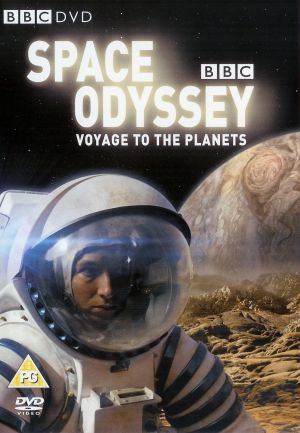
space_odysseySpace Odyssey: Voyage to the Planets (2004, UK). This is my go-to for near-future space-based science fiction. It’s a television dramatisation of a near-future Grand Tour, made chiefly by the BBC. It’s hard to find these days, but it’s definitely worth hunting down a copy. The CGI hasn’t aged especially well, the acting is not great, and the talking heads often slow things down… but much of it was filmed on the Vomit Comet and it does a top job of presenting life aboard a spacecraft travelling about the Solar Sytem. In fact, it does a top job of presenting all the technology required to visit all the planets of the Solar System. Good stuff.

apollo18sdApollo 18, Gonzalez López-Gallego (2011, USA). Okay, so the rock monsters are a bit silly, as is the, er, plot. But this is still the best fictional presentation to date of an Apollo mission on celluloid. And it also scores highly because it shows a Soviet LK and gets it absolutely right. This is the proper way to do a space movie… even if it’s in service to a hoary old plot. Admittedly, it’s a found footage movie, and it’s never quite made clear how they found the footage, given we’ve never been back to the moon… but never mind.
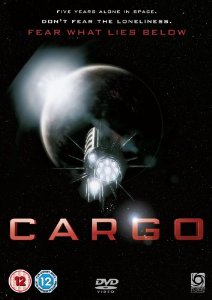
cargoCargo, Ivan Engler & Ralph Etter (2009, Switzerland). This is a polished piece of sf from a country not really known for producing science fiction movies. The story takes place aboard a starship on its way to an Edenic colony world, which is closed to the masses teeming in space stations orbiting a poisoned Earth except as a prize in a lottery. En route, the film manages to pull in most modern sf movie tropes, but it handles them well and even manages a few – albeit somewhat predictable – scares along the way.
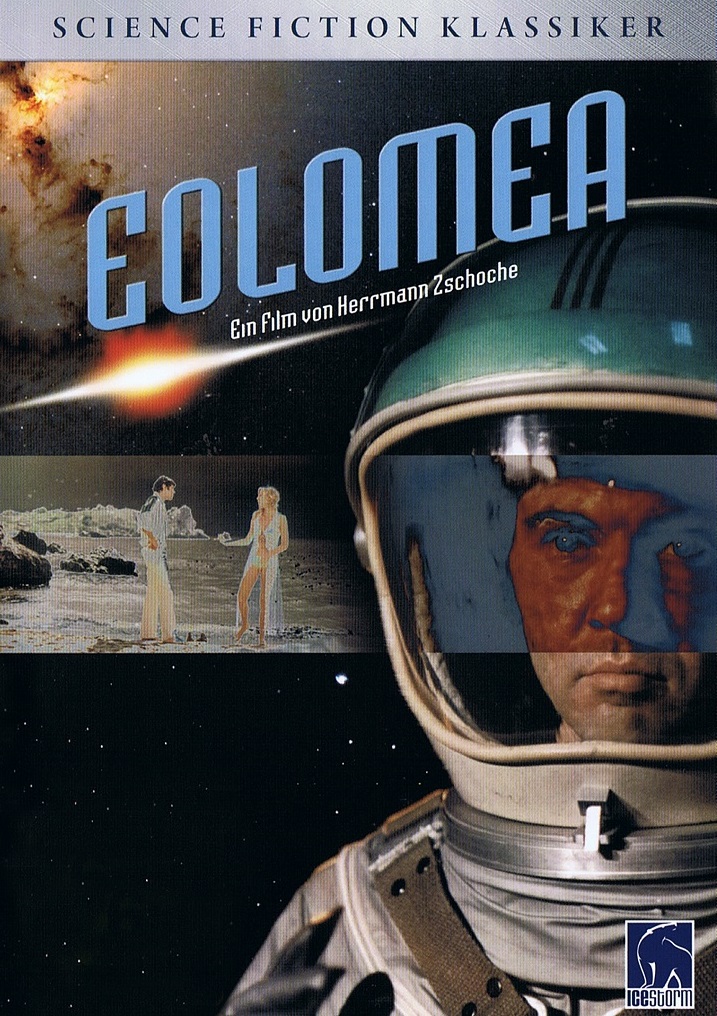
eolomeaEolomea, Herrmann Zschoche (1972, East Germany). Deutsches Film-Aktiengesellschaft made four big-budget – for East Germany – sf movies during the late 1960s and early 1970s. They’re a bit dippy, but they did go all out to make good-looking, globally-minded intelligent science fiction. Eolomea is perhaps the best of them, a mystery about the plan to settle the eponymous exoplanet and a space station that has suddenly gone silent. Some great 1970s retro-futuristic production design, too.

testpilotpirxTest Pilot Pirx, Marek Piestrak (1979, USSR). AKA Pilot Pirx’s Inquest. Based on the character created by Stanisław Lem, this sees Pirx take a trip to the rings of Saturn, with a crew which contains one or more androids – but he doesn’t know who is which. It starts as a weirdly-paced future thriller, before turning into a space movie that strives for accuracy in some areas but gets it bizarrely wrong in others. And, like most Eastern Bloc sf movies, the future is assumed to be a world of peaceful multinational cooperation, unlike in US films. The soundtrack is also surprisingly ahead of its time.

ikarieIkarie XB-1, Jindřich Polák (1963, Czechoslovakia). The titular spacecraft is sent on a long mission to Alpha Centauri, and various incidents happen en route, including one member of the crew going mad. The production design reminds me a little of Raumpatrouille Orion in places, and there’s plenty of Anglophone films that were later influenced by it – perhaps because, unlike Hollywood sf films of the time, it had an intelligent script.

frau-im-mond-loresFrau im Mond, Fritz Lang (1929, Germany). Not the first ever sf movie, that was Georges Méliès’s Le voyage dans la lune in 1902 (which is worth seeing), but Lang’s silent epic Frau im Mond is considerably more realistic and famously gave us the rocket launch countdown. It perhaps spends overmuch of its length laying out the background to the moon shot, and the scenes set on the lunar surface are unsurprisingly not especially accurate, but I’m pretty sure it’s the first actual space movie.
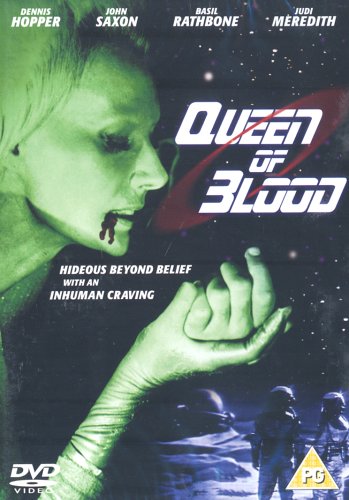
queen_of_bloodQueen Of Blood, Curtis Harrington (1966, USA). This is one of those films Roger Corman cobbled together from footage from a pair of Soviet sf movies – in this case, Небо зовет and Мечте навстречу – with US-filmed material starring John Saxon, Dennis Hopper, Judi Meredith and Basil Rathbone. Florence Marly plays the title role, an alien vampire stranded on Mars who is rescued by a mission from Earth. Although considered a B-movie, Queen Of Blood rises above its humble origins – those astonishing Soviet visuals, Meredith’s equal treatment alongside Saxon and Hopper, and Marley pulling a star turn as the alien vampire.
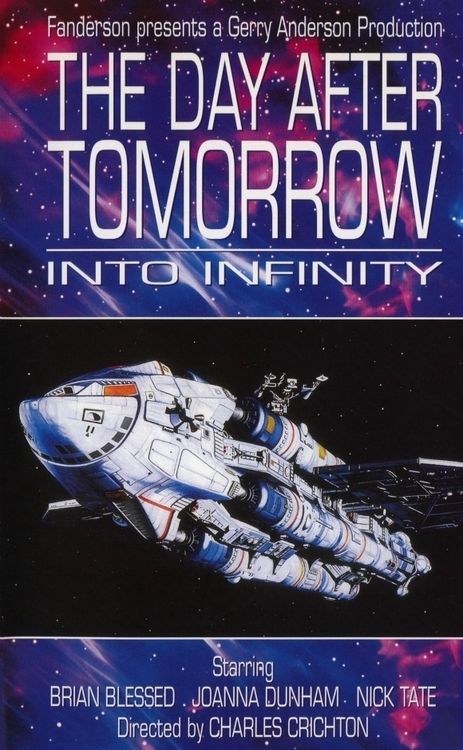
o_the-day-after-tomorrow-into-infinity-dvd-gerry-anderson-f508Into Infinity, Charles Crichton (1975, UK). AKA The Day After Tomorrow. A live-action made-for-television film by Gerry Anderson, it describes the maiden voyage of Altares, the first human spacecraft to travel at the speed of light. The dialogue is mostly exposition, there’s an explanatory narration by Ed Bishop, and, to be fair, the plot is somewhat on the dull side… but I remember loving it as a kid, and although a recent rewatch did reveal many of its flaws it still fired the sense of wonder I recalled from all those decades ago.

royalspaceforceRoyal Space Force: Wings of Honneâmise, Hiroyuki Yamaga (1987, Japan). An anime film about a space programme on an entirely invented world, and which ends with the first launch of a crewed rocket, should surely qualify for this list. I only watched this for the first time recently, and I wasn’t that taken with it – but in the weeks since I found myself thinking more kindly of it, and I’m even considering getting hold of a copy of my own.

There are some others I could have included, one or two of which I might even hold in higher regard, but for this list I wanted a good geographic spread.
11 Comments

Wait, fantasies in space? How does that work?

It looks like this film challenge thing I’m doing with Shaun Duke is becoming a regular, er, thing. After he met my last challenge of five films which complement my Apollo Quartet – see here – he tasked me with coming up with a list of “5 science fiction films which are basically fantasies in space, but which are not Star Wars. Ugh. That are “in your opinion and by your own criteria, good movies“. I suspect this is not possible – in fact, I know it’s not – so I’m going to cheat a little and pick films that are either good within the confines of their genre, or enjoyable irrespective of their quality. Because you’re not going to get some cheesy space fantasy that stands up there with anything by Tarkovsky or Bergman or Haneke or Kaurismäki or Sokurov or… Well, you get the, er, picture.

As for “fantasies in space”… yes, well, if not Star Wars is part of the definition then it must mean dumb space operas. And I can think of many examples, but they are almost universally pretty bad. There are no doubt lots of Japanese anime examples, and some of them may even be very good, but I’m not that familiar with anime.

Anyway, after much scratching of head and rootling through my DVD collection, I came up with following five. A couple may be obvious, one or two may invoke cries of shocked disbelief, and for a few I had to take “space fantasy” to mean “complete science fiction bollocks”.

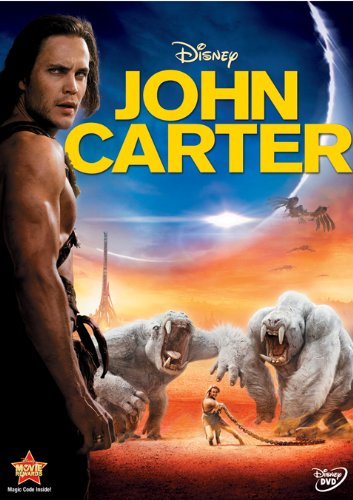
johncarterJohn Carter, Andrew Stanton (2012). The obvious choice, and one that will no doubt have a few of you choking on your doughnuts. I loved this film from the moment I saw it in IMAX 3D, and I’ve watched it several times since on DVD. The production design is gorgeous, the CGI is seamless (the Tharks actually look almost real!), and the script is polished, with a structure which is far more sophisticated than the material deserved. It’s a crying shame Disney decided to sink it because it could have been the start of a bloody good franchise. But instead we’re going to get endless shit superhero movies, a vast cinematic retconning of the Star Wars universe, and increasingly dumber Star Trek sequels. Yay for tentpole sci-fi blockbuster movies…

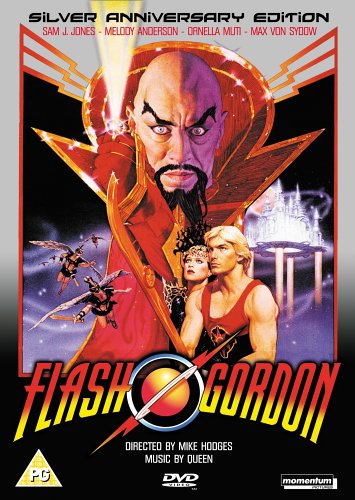
flashFlash Gordon, Mike Hodges (1980). There’s much that cringe-worthy in this film, from the Queen soundtrack (there, I said it) to the cheesy dialogue to half the cast clearly belonging in a much superior film to completely non-entity Sam Jones in the title role. Having said that, you won’t find more sci-fic pomp and silliness in any other movie. Von Sydow, Wyngarde and Dalton plainly belong in a much better film; Topol, Muti and Blessed seem to have found their level. Melody Anderson actually makes a good Dale Arden. It is, in fact, hard to fault Flash Gordon as a piece of cheesy sf camp, but it’s a mistake to consider it anything more than that (and unlike some people, I ask more of my movies and books than they be mere entertainment).

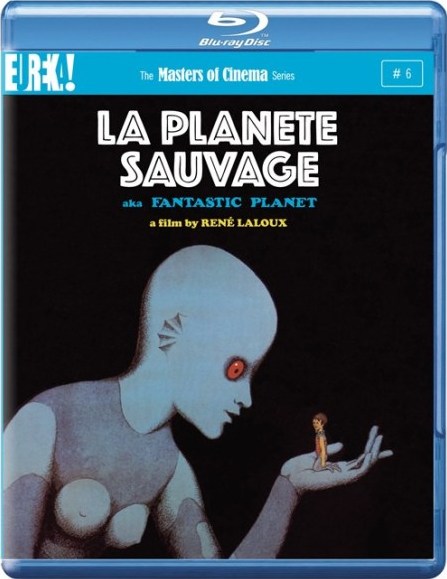
planete_sauavageLa planète sauvage, René Laloux (1973). No film list put together by myself would be complete without at least one non-Hollywood film. While this is not usually difficult to achieve, for “fantasies in space” it’s proven something of a hurdle. I mean, only the US makes cheesy space operas. But I believe La planète sauvage qualifies because, while it initially describes an alien world in which primitive humans exist only in the wild, it soon turns weird and philosophical and all sort of wishy-washy and bonkers. The animation and production design throughout is distinctive and strange – it’s by Roland Topor – but it suits the story. Laloux’s later animated films were a bit Métal Hurlant, but La planète sauvage displays a unique vision. Definitely worth getting hold of a copy.

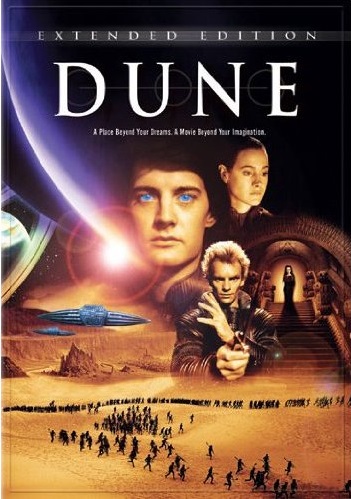
duneDune, David Lynch (1985). Heresy! Dune as a “fantasy in space”? I mean, I’ve always considered Dune science fiction, in space or otherwise, and I see no good reason to change that since it meets my definition of the genre. But since I also consider Star Wars science fiction, I feel this makes Dune allowable under Shaun’s somewhat baggy definition. And yes, Dune is a good film, and only fails at being a great film because the director couldn’t match his vision. But there are clues there if you watch the “television version” (which includes around an additional 45 minutes). It’s not so much the additional story that’s on the screen, and it’s certainly not the horrible prologue with its awful artwork. But the extended scenes set in the Imperial Court display an overly mannered presentation that works at the lengths shown in the television version much better than it does in the theatrical release. Plus, of course, the production design is superb. In fact, I’ll even forgive Lynch the “weirding module” and the rain at the end because everything looks so much like Dune should look. I currently own five DVD editions of Dune, so it’s probably about time I got it on Blu-ray. But which is the best Blu-ray version…?

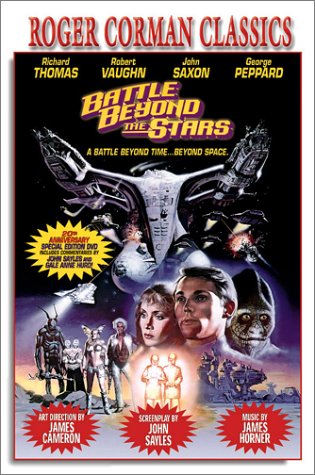
battleBattle Beyond the Stars, Jimmy T Murakami (1980). Space operas – sorry, “fantasies in space” – don’t come cheesier than this rip-off of Star Wars. But it does possess a certain charm all its own, whether it’s because its plot is a beat-by-beat copy of The Magnificent Seven, or that the hero’s spaceship looks like a pair of breasts, or Sybil Danning’s double entendres, or the fact George Peppard was clearly pissed throughout the film, or that the entire thing looks like a series of episodes from a bad sf television series. But as low budget space operas go, it’s an enjoyable example. And Richard Thomas actually displays some impressive acting chops. The fact the script is by John Sayles also helps.

There are a number of other films I could have chosen, but it would have been stretching a point beyond breaking to describe them as “good” – such as… The Humanoid, Aldo Lado (1979), in which Richard Kiel plays the title role in an Italian Star Wars rip-off with production design that’s a weird mashup of 1970s near-future science fiction, Star Wars and Flash Gordon… Or Starcrash, Luigi Cozzi (1978), which manages to make zero sense but does include the immortal line, “Imperial battleship, halt the flow of time!”… Or Barbarella, Roger Vadim (1968), which has not aged well despite being based on a French bande dessinée… Or even Andrzej’s Żuławski’s Na srebrnym globie (On the Silver Globe)… Or spaghetti sci-fi Star Pilot, Pietro Francisci (1966), which apparently inspired some elements of Star Trek…

ETA: After much thought, I’ve decided on Shaun’s challenge. Five non-English language films featuring space travel, not including Solaris. Oh, and no more than two of them from Japan.


4 Comments

Behind the Iron Screen

It all started quite innocently enough. Shaun Duke posted a list of something or other on his blog, The World in the Satin Bag. I pointed out he was wrongheaded. He challenged me to produce a rival list, which I did. I challenged him to produce a list… and by this point I’ve forgotten whether we were originally discussing books or films. I’ve a feeling we started off with books but somehow drifted onto films. Anyway, he responded to my challenge and issued one of his one own, which I met. And then I challenged him to produce – and I think this is the point we’re at now – a list of five Cold War-related genre films that most people would not have heard of. Which he did. And now he has demanded that I do the same, but from the other side of the Iron Curtain. So, five Warsaw Pact Cold War-related genre films, of which at least three must be from the USSR/Russia…

Happily, I immediately thought of several possible movies. The only question was whether they qualified as Cold War-related. Or as genre. And having to choose three of the five from the Soviet Union did somewhat limit my choices. So it was more a matter of picking which five to put on my list than it was actually finding five. And here they are, in no particular order…

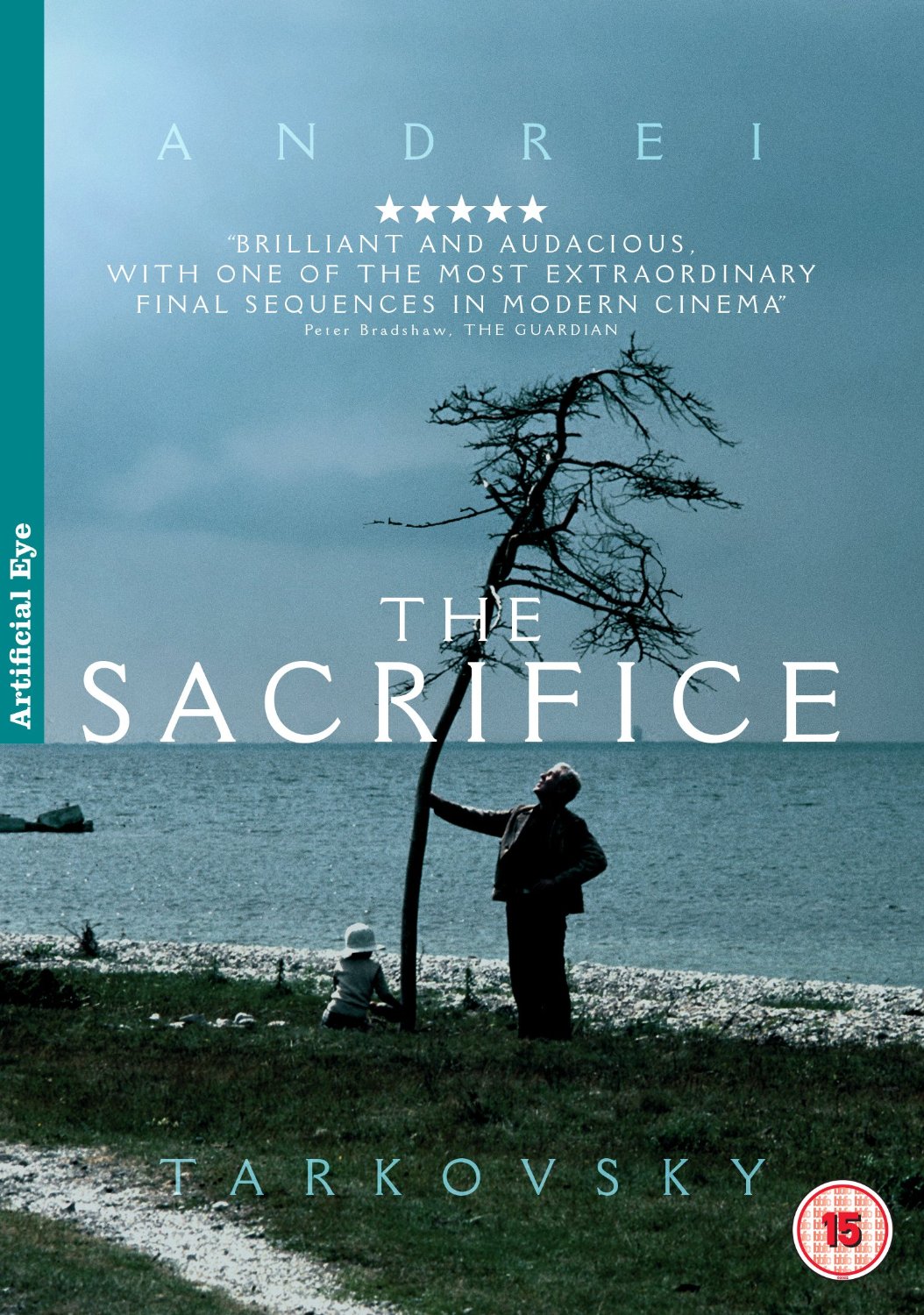
Sacrifice_Offret (The Sacrifice), Andrei Tarkovsky (1986, Sweden). The absolutely obvious choice. It’s about a nuclear war, so you can’t get more Cold War than that. Okay, it was filmed in Sweden with a Swedish cast, but Tarkovsky is arguably the most famous film director to have come out of Russia, so in my mind it counts as a Russian film. So there. An ex-actor, played by Bergman regular Erland Josephson, lives in a nice house on a remote Swedish island with his wife. After admitting he no longer believes in God, news reaches Josephson of all-out nuclear war. He vows to sacrifice all he owns and loves if God will undo the nuclear holocaust. Unsurprisingly, this is quite a harrowing film, but it is also Tarkovsky… and you cannot call yourself a cineaste if you do not love Tarkovsky’s movies.

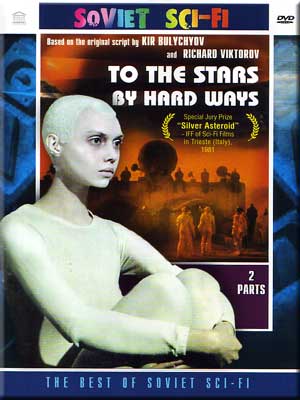
starsbyhardwaysЧерез тернии к звёздам (To the Stars by Hard Ways), Richard Viktorov (1981, USSR). The Cold War link is less obvious in this famous Russian sf film, but given that it concerns an ecological war between two groups on an alien world – and in which humans become involved after rescuing the bizarre-looking Yelena Metyolkina – there’s clearly a parallel. Admittedly, the rescue mission is multi-national, but then socialist films liked to show the world’s nations working together, even if the West has always been resistant to the idea (US films, for example, always show the US doing everything) . Ruscico currently sell a copy of this on DVD. It’s completely bonkers but worth getting. I’ve heard the director’s son has released a director’s cut of the film, but to my knowledge it’s only available in Russian and my knowledge of that language is limited to a handful of pleasantries and swear words.

testpilotpirxДознание пилота Пиркса (Inquest of Pilot Pirx), Marek Piestrak (1978, USSR/Poland). Pirx was created by Polish sf writer Stanisław Lem, so there’s no doubting this film’s genre credentials; and while it’s a joint production between studios in Poland, Ukraine and Estonia, the latter two were in the USSR when the movie was made, so it counts. It’s another socialist film which presents an international crew, but there are still two sides engaged in a form of Cold War: humans and androids. Pirx must captain a ship on a space flight Saturn. One of his crew is an android, but he doesn’t know which one – and once at their destination, it tries to seize control. A weird mix of Cold War thriller, with an amazing seventies aesthetic, and hard sf, this is another DVD worth getting. Again, it’s available from Ruscico.

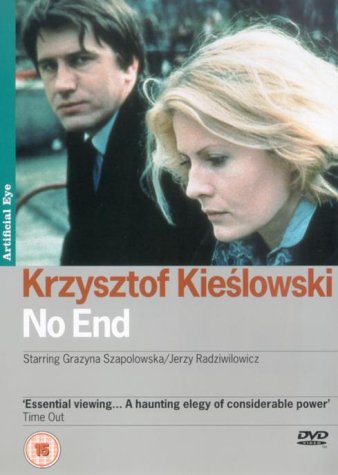
noendBez końca (No End), Krzysztof Kieślowski (1985, Poland). This is in no way science fiction, and it’s only Cold War-related inasmuch as its story takes place during the years of martial law in Poland after Solidarność was banned. A translator, whose lawyer husband died recently, struggles to make ends meet and bring up her son, while the ghost of her dead husband watches over her. But it’s Kieślowski, that’s all you need to know. You cannot call yourself a cineaste if you do not love Kieślowski’s movies.

in_the_dust_of_the_starsIm Staub der Sterne (In the Dust of the Stars), Gottfried Kolditz (1976, East Germany). During the 1960s and 1970s, East Germany’s Deutsche Film-Aktiengesellschaft, DEFA, made four big budget science fiction films: Signale – ein Weltraumabenteuer (1970), Der Schweigende Stern (1960), Im Staub der Sterne and Eolomea (1972). The last three are available in an English-language DVD box set, but I’ve yet to find the first in an English edition (and my German is a bit rusty – I struggled when watching Raumpatrouille Orion). In Im Staub der Sterne, a spaceship lands on a rescue mission on the world of TEM 4, only for the inhabitants to deny sending a distress call. Except there are two groups on TEM 4 in a sort of Eloi / Morlock relationship, as the crew discover, and it’s not hard to read it as an Eastern Bloc versus decadent West sort of thing. The film is also astonishingly kitsch, with some of the most bonkers seventies production design ever consigned to celluloid. Hunt down that DEFA collection box set, it’s totally worth it.

szulkinO-Bi, O-Ba. Koniec cywilizacji (O-Bi, O-Ba. The End of Civilisation), Piotr Szulkin (1985, Poland). Just because I can, I’m going to make my list six films. Mostly because this movie is so on point, it didn’t deserve to be an also ran – and yet I also wanted to include the ones I’d already chosen. O-Bi, O-Ba. Koniec cywilizacji is set entirely in an underground fallout shelter after some sort of nuclear holocaust – except there’s more going on than there initially seems. The shelter is not the shiny clean antiseptic complex you’d expect of a US Cold War movie, but a dirty ill-lit dungeon, a sort of confined post-apocalyptic wasteland in its own right. There’s a very black joke about the currency used in the shelter (Szulkin’s films all possess an amazingly dark humour). Telewizja Kinopolska have released a DVD box set containing O-Bi, O-Ba. Koniec cywilizacji, Wojna światów – następne stulecie (War of the Worlds – The Next Century, 1981), and Ga, Ga. Chwała bohaterom (Ga, Ga. Glory to Heroes, 1984), as well one of my favourite films, a 1993 short titled Mięso (Ironica), about the political history of Poland during the twentieth century and, er, meat products.

The also-rans? There’s Béla Tarr’s 2000 movie Werckmeister Harmonies from Hungary, which is about the Soviet occupation of Eastern Europe, but the film might have been a little hard to justify on genre grounds. Andrzej’s Żuławski’s Na srebrnym globie (On the Silver Globe, 1988) is definitely science fiction, but given that it’s adapted from a 1903 novel its Cold War credentials are a little harder to see – but Żuławski adapted the story so it read as a criticism of the Polish authorities… which they managed to spot and so shut down the production (the film was eventually completed ten years later, using stock footage and voice-over narration). Кин-дза-дза! (Kin-dza-dza!, 1986) by Georgiy Daneliya is a 1986 sf film in which a pair of Soviet innocents are dumped on a desert world in which two societies, the Chatlanians and the Patsaks, exist in near-conflict (which seems to be a common trope in Soviet sf cinema). And finally, there’s Pane, vy jste vdova! (You are a Widow, Sir!, 1971) by Czech director Václav Vorlíček, which is a sort of madcap and very silly sf comedy, involving assassins and brain transplants in an invented country, but it might be stretching the point to call it a Cold War film.


42 Comments

Best sf films since 2000

So Shaun Duke says Interstellar is one of the best sf films of this century and I’m like no way and he’s like way and so he challenges me to produce my own list of top ten sf films of the last fourteen years… And it’s actually quite difficult as I can think of two dozen off the top of my head that are better than Interstellar, but I have to whittle it down to only ten. Which I did. And here they are…

1 Cargo, Ivan Engler & Ralph Etter (2009) I’m surprised this film isn’t better known. Perhaps it makes a little too free and easy with some well-known tropes, but this Schweitzer Deutsch production puts them to excellent use, and still manages to ring some changes.

2 Avalon, Mamoru Oshii (2001) A Japanese film made in Poland with a Polish cast. It looks amazing, and the VR game plot with its layers of realities seriously messes with your head.

3 Primer, Shane Carruth (2004) Probably the best time travel film ever made. And it’s impossible to work out the plot.

4 Under The Skin, Jonathan Glazer (2013) An improvement on the book. Shot guerilla-style in Glasgow, with Scarlett Johansson as an enigmatic alien.

5 John Carter, Andrew Stanton (2012) Commercially a flop, but there’s much to like in this tentpole blockbuster – it looks gorgeous, the script is far smarter than the material had any right to expect, and the cast all play good turns.

6 Sky Captain and the World Of Tomorrow, Kerry Conran (2004) A CGI-fest which makes perhaps too much of a feast of its source material – while the pulp production design looks wonderful, the pulp narrative didn’t sit well with modern audiences.

7 Dredd, Pete Travis (2012) Who knew an art house version of the Mega City One lawmaker would work so well?

8 Upstream Colour, Shane Carruth (2013) Elliptical and even more of a mind-fuck than Primer.

9 Timecrimes, Nacho Vigalondo (2007) More time paradoxes than you can shake a reasonably large Moebius loop at.

10 Sound of My Voice, Zal Batmanglij (2011) A  clever study of the cult mentality, with Brit Marling as a “prophet” from the future.

Honourable mentions: Apollo 18 (2011), amazingly accurate rendition of an Apollo mission, with monsters; Gravity (2013), not quite as accurate, no monsters either; Possible Worlds (2000), odd and under-stated many worlds thriller; Natural City (2003), frenetic Korean cyberpunk actioner; Time Of The Wolf (2003), Haneke does post-apocalypse.


4 Comments

Ian’s greatest films

After seeing the BFI greatest films list, I thought it might be an interesting exercise to put together a list of my own. Obviously, I’ve not watched every film ever made, and my tastes probably lean in a certain direction cinematically – I don’t, for example, see the appeal of the films of either Kurosawa or Ozu. Anyway, here – for what it’s worth – is my pick of the fifty greatest films – that I have seen – ever made. I tried to go for a little variety, instead of just listing half a dozen films each by my favourite directors. It’s certainly a more international list than the BFI one.

1. All that Heaven Allows, Douglas Sirk, 1955
2. Mirror, Andrei Tarkovsky, 1975
3. The Colour of Pomegranates, Sergei Parajanov, 1968
4. Divine Intervention, Elia Suleiman, 2002
5. Red Desert, Michelangelo Antonioni, 1964
6. Metropolis, Fritz Lang, 1927
7. Rear Window, Alfred Hitchcock, 1954
8. Autumn Sonata, Ingmar Bergman, 1978
9. No End, Krzysztof Kieslowski, 1984
10= Brazil, Terry Gilliam, 1984
10= Mooladé, Ousmane Sembène, 2004
12. 8½, Frederico Fellini, 1962
13. Red Psalm, Miklós Jancsó, 1972
14. Sunrise: A Song of Two Humans, FW Murnau, 1927
15. The Piano Teacher, Michael Haneke, 2001
16. Alien, Ridley Scott, 1979
17. Passenger, Andrzej Munk, 1963
18= Stalker, Andrei Tarkovsky, 1979
18= 2001: A Space Odyssey, Stanley Kubrick, 1968
20. Imitation of Life, Douglas Sirk , 1959
21. The Holy Mountain, Alejandro Jodorowsky, 1973
22. Aguirre, Wrath of God, Werner Herzog, 1972
23. Delicatessen, Jean-Pierre Jeunet & Marc Caro, 1991
24. Daratt, Mahamat-Saleh Haroun, 2006
25= Lady Chatterley, Pascale Ferran, 2006
25= The Seventh Seal, Ingmar Bergman, 1957
27. Citizen Kane, Orson Welles, 1941
28. On the Silver Globe, Andrzej Żuławski, 1988
29. Things to Come, John Cameron Menzies, 1936
30. Drifting Clouds, Aki Kaurismäki, 1996
31. Fahrenheit 451, François Truffaut, 1966
32. Rio Bravo, Howard Hawks, 1959
33= Underground, Emir Kusturica, 1995
33= The Bothersome Man, Jens Lien, 2006
35. Das Boot, Wolfgang Peterson, 1981
36. La Jetée, Chris Marker, 1962
37. The Man Who Fell to Earth, Nicolas Roeg, 1976
38. High Society, Charles Walters, 1956
39. Russian Ark, Alexander Sokurov, 2002
40. Blade Runner, Ridley Scott, 1982
41. Atanarjuat the Fast Runner, Zacharias Kunuk, 2001
42= Went the Day Well?, Cavalcanti, 1942
42= The Third Man, Carol Reed, 1949
44. Secret Ballot, Babak Payami, 2001
45. Lawrence of Arabia, David Lean, 1962
46. Starship Troopers, Paul Verhoeven, 1997
47= The Right Stuff, Philip Kaufman, 1983
47= The Life and Death of Colonel Blimp, Michael Powell & Emeric Pressburger, 1943
49, It’s a Wonderful Life, Frank Capra, 1946
50. Mulholland Dr., David Lynch, 2001


3 Comments

BFI greatest films

Has no one turned this into a meme yet? Then allow me… At the beginning of the month, Sight & Sound, the magazine of the British Film Institute published its list of the 50 greatest films. It caused a little bit of a stir because Vertigo bumped Citizen Kane from the top spot, a position it’s held for fifty years.

Anyway, meme – you know what to do. Put it in bold if you’ve seen it, italics if you own it but have yet to watch it.

1. Vertigo, Alfred Hitchcock, 1958
2. Citizen Kane, Orson Welles, 1941
3. Tokyo Story, Ozu Yasujiro, 1953
4. La Règle du jeu, Jean Renoir, 1939
5. Sunrise: A Song of Two Humans, FW Murnau, 1927
6. 2001: A Space Odyssey, Stanley Kubrick, 1968
7. The Searchers, John Ford, 1956
8. Man with a Movie Camera, Dziga Vertov, 1929
9. The Passion of Joan of Arc, Carl Dreyer, 1927
10. , Federico Fellini, 1963
11. Battleship Potemkin, Sergei Eisenstein, 1925
12. L’Atalante, Jean Vigo, 1934
13. Breathless, Jean-Luc Godard, 1960
14. Apocalypse Now, Francis Ford Coppola, 1979
15. Late Spring, Ozu Yasujiro, 1949
16. Au hasard Balthazar, Robert Bresson, 1966
17= Seven Samurai, Kurosawa Akira, 1954
17= Persona, Ingmar Bergman, 1966
19. Mirror, Andrei Tarkovsky, 1974
20. Singin’ in the Rain, Stanley Donen & Gene Kelly, 1951
21= L’avventura, Michelangelo Antonioni, 1960
21= Le Mépris, Jean-Luc Godard, 1963
21= The Godfather, Francis Ford Coppola, 1972
24= Ordet, Carl Dreyer, 1955
24= In the Mood for Love, Wong Kar-Wai, 2000
26= Rashomon, Kurosawa Akira, 1950
26= Andrei Rublev, Andrei Tarkovsky, 1966
28. Mulholland Dr., David Lynch, 2001
29= Stalker, Andrei Tarkovsky, 1979
29= Shoah, Claude Lanzmann, 1985
31= The Godfather Part II, Francis Ford Coppola, 1974
31= Taxi Driver, Martin Scorsese, 1976
33. Bicycle Thieves, Vittoria De Sica, 1948
34. The General, Buster Keaton & Clyde Bruckman, 1926
35= Metropolis, Fritz Lang, 1927
35= Psycho, Alfred Hitchcock, 1960
35= Jeanne Dielman, 23 quai du Commerce 1080 Bruxelles, Chantal Akerman, 1975
35= Sátántangó, Béla Tarr, 1994
39= The 400 Blows, François Truffaut, 1959
39= La dolce vita, Federico Fellini, 1960
41. Journey to Italy, Roberto Rossellini, 1954
42= Pather Panchali, Satyajit Ray, 1955
42= Some Like It Hot, Billy Wilder, 1959
42= Gertrud, Carl Dreyer, 1964
42= Pierrot le fou, Jean-Luc Godard, 1965
42= Play Time, Jacques Tati, 1967
42= Close-Up, Abbas Kiarostami, 1990
48= The Battle of Algiers, Gillo Pontecorvo, 1966
48= Histoire(s) du cinéma, Jean-Luc Godard, 1998
50= City Lights, Charlie Chaplin, 1931
50= Ugetsu monogatari, Mizoguchi Kenji, 1953
50= La Jetée, Chris Marker, 1962

I make that 36 I’ve seen out of the fifty. There are also some of my favourite directors on there too, like Tarkovsky, Hitchcock and Antonioni. There are a few I’m surprised not to see, such as Antonioni’s Red Desert; not to mention works by directors such as Kieslowski, Sirk, Lean or Herzog. I also note that only two sf films make the list – 2001: A Space Odyssey and Metropolis.


17 Comments

Ten Greatest Film Directors

Time for a list. Lists are good. People like lists, even – or especially – contentious ones. This does not make me a blogposer (see here).

I could have titled this list Ten Favourite Film Directors, because that’s sort of what it is. Except they’re not just favourites, they’re also directors whose skill and artistry I greatly admire. Just because something is a favourite, that doesn’t necessarily mean I think it’s good. Like Frank Herbert’s Dune – it’s probably the one novel I’ve reread more than any other, but I don’t think it’s an especially well-written book.

Anyway, here is a list of film directors whose films I both like a great deal and admire a great deal; in no particular order:

  1. Alfred Hitchcock – the master of the thriller, whose films are the most consistently entertaining of all time. He has several absolute classics to his name, which is more than most directors can say: Psycho, Vertigo, Rear Window, North By Northwest, The Birds
  2. Douglas Sirk – was to the melodrama what Hitchcock was to the thriller. All That Heaven Allows is one of the great films of the 1950s. His films were melodramatic, but also deeply subversive. And very, very cleverly made.
  3. Krzysztof Kieślowski – created some of the most exquisitely-made films, photography and script, in the history of cinema.
  4. Andrei Tarkovsky – his films were unlike any other film-maker’s. Beautifully-shot, for a start. And resolutely challenging, in a medium which privileges accessibility.
  5. Michael Haneke – because, of all the directors currently making films, he has the most interesting body of work – in the sense of his approach to telling stories using the medium.
  6. Ingmar Bergman – if most cinema can be equated to popular written fiction, then Bergman was an accomplished writer of prize-winning literary fiction.
  7. Terry Gilliam – because he has one of the most singular imaginations in the film-making world.
  8. Michangelo Antonioni – another director who experimented with the narrative techniques of the form, with great success. L’Avventura remains a classic piece of cinema.
  9. Aki Kaurismäki – Finnish cinema may be unfairly characterised as grim and depressing, but even the grimmest of Kaurismäki’s films display a sly and absurd sense of humour. He remade Hamlet, recasting the title character as the heir to an international rubber duck manufacturing concern, for example.
  10. The “Archers”: Michael Powell & Emeric Pressburger – made three of the best British films of all time: A Matter Of Life And Death, The Life And Death Of Colonel Blimp, and The Red Shoes. And there are plenty more in their oeuvre.

A few who didn’t quite make the cut into the top ten: David Lynch, Fritz Lang, Werner Herzog, Frank Capra.

Feel free to add your own lists in the comments. No doubt there will be some disagreements…

Next up: ten greatest novelists.


28 Comments

20 British sf films

I had this really good idea for a post, a sort of companion piece to my British sf Masterworks. Films… Science fiction films… British science fiction films. How about a list of the best twenty-five sf films from the UK? Everyone likes lists.

Except… I couldn’t find twenty-five good British sf films – either that I’d seen or that I’d would be willing to hold up as good cinema. So I picked twenty. And, to be honest, there are a few on the list that stretch the definition of “good” somewhat. There are also a few that do the same with “British”… Kubrick was American, as are Gilliam and Hyams; and Truffaut is French. And some of the films were made with US money, requiring US actors in the starring roles – but they were British productions, so they count for this list.

No doubt I’ve forgotten lots of really good sf films from the UK, so feel free to leave a comment and suggest some. But here is my list, in order of year of release:

1 – Things To Come, dir. William Cameron Menzies (1936) – there’s not much you can say about this. It’s an astonishing piece of cinema, especially given when it was made.
2 – The Quatermass Xperiment, dir. Val Guest (1955) – Quatermass had a powerful impact on British sf, so one of the three films featuring him deserves to make this list.
3 – The Day The Earth Caught Fire, dir. Val Guest (1961) – not only a disaster film, caused by testing nuclear weapons, but also a post-apocalypse film. The shots of empty cities remain creepy even today.
4 – First Men In The Moon, dir. Nathan H Juran (1964) – the recent Gatiss adaptation on BBC4 was entertaining, but there’s a bonkers charm to Lionel Jeffries’ portrayal of Professor Cavor.
5 – Daleks Invasion Earth 2150AD, dir. Gordon Flemyng (1966) – back when Daleks were cool, they drilled a hole to the centre of the Earth so they could replace it with an engine and turn the whole planet into a spaceship. And they did it in Britain. Until Bernard Cribbins stopped them. With a bit of help from Dr Who.
6 – Fahrenheit 451, dir. François Truffaut (1966). The book is rubbish, but the film is excellent. Casting Julie Christie in two roles was inspired. And the monorail is really cool too.
7 – Frozen Alive, dir. Bernard Knowles (1966) – an Anglo-German production, set in Germany, in which a scientist, well, he freezes himself. But his wife is murdered while he is frozen, and he’s the chief suspect. It sounds daft, but it works.
8 – They Came From Beyond Space, dir. Freddie Francis (1967) – and the plot of this one seems even dafter: meteorites land throughout the UK and take over people, who subsequently build an armed camp in southern England. This is so they can send rockets to the Moon, launched from underneath a lake, to help repair the alien spaceship marooned there.
9 – A Clockwork Orange, dir. Stanley Kubrick (1968) – Kubrick may have been an American but this film was as British as you can get – from Anthony Burgess’s source novel through to the cast and crew.
10 – Journey To The Far Side Of The Sun, dir. Robert Parrish (1969) – Gerry Anderson’s only live-action feature film, although some of the cast were as wooden as his puppets. The central conceit – a copy of the Earth on the other side of the Sun, where everything is reversed – is complete nonsense, but all those Meddings model shots make up for it.
11 – 2001: A Space Odyssey, dir. Stanley Kubrick (1971) – Kubrick gets two films on this list because A Clockwork Orange is too British to leave off, and 2001: A Space Odyssey is too damn good to ignore.
12 – The Man Who Fell To Earth, dir. Nicolas Roeg (1976) – Bowie was perfectly cast. Any film that can say that deserves to be on this list.
13 – Flash Gordon, dir. Mike Hodges (1980) – it’s like a panto. In space. With Brian Blessed. Three reasons why it belongs on this list.
14 – Outland, dir. Peter Hyams (1981) – there’s not much that’s British about High Noon set on a moon of Jupiter (although without Grace Kelly). This was actually a British production, however.
15 – 1984, dir. Michael Radford (1984) – qualifies in the same way A Clockwork Orange does. It’s also an excellent adaptation of Orwell’s novel.
16 – Brazil, dir. Terry Gilliam (1985) – could be 1984 from an alternate Britain. It’s as British as Orwell’s novel, but… funny. Absurd, in fact. Which is the only other sane response to Nineteen Eighty-four.
17 – Sliding Doors, dir. Peter Hewitt (1997) – it’s about the Many Worlds Hypothesis… Well, sort of. It’s a romance, a fluffy version of Kieslowski’s Blind Chance, in which catching a train or not causes the story to split into two separate narratives.
18 – 28 Days Later, dir. Danny Boyle (2002) – zombies that can run. Enough said.
19 – Code 46, dir. Michael Winterbottom (2003) – is one of those films which seems to inhabit a near-future which already exists. It also asks some difficult questions about biotechnology.
20 – Moon, dir. Duncan Jones (2009) – I wrote about this here.

So, what films have I missed off?


6 Comments

50 Essential SF Films

Time Out have put together a very strange list of their 50 essential sf films here (with nods to here and here). It does not include dystopias, for some completely arbitrary reason – so no Blade Runner or Fahrenheit 451. Their list is… silly. Cherry 2000? Howard the Duck? Battlefield Earth? If shiteness is an essental quality of sf cinema, then perhaps they do belong on the list. I, however, believe otherwise.

So I shall do the blog-worthy thing, and present my own list. And I will include dystopias. For as good a reason as Time Out excluded them from their list: because I want to.

Here then is my list of 50 essential sciencefiction films – in alphabetical order. Oh, and it is exactly 50 films. Rather than cheat and feature an entire franchise – Star Wars, Star Trek – I’ve picked the best of each. There is some overlap with the Time Out list.

2001: A Space Odyssey, dir. Stanley Kubrick (1968) – still a high-water mark for sf films. It possesses a grandeur unmatched by few other genre movies.
A Clockwork Orange, dir. Stanley Kubrick (1971) – it’s essential because it shows that sf is not all spaceships and robots; it’s essential because it shows that sf can be brutal (not violent, brutal) ; it’s essential because it shows that sf can be also for adults.
Abre los Ojos, dir. Alejandro Amenábar (1997) – ignore inferior remakes, this is an original piece of sf film-making.
Alien, dir. Ridley Scott (1979) – the first and still the best of the franchise.
Avalon, dir. Mamoru Oshii (2001) – perhaps the central premise is not the most original in the world – but then what sf film does feature an entirely original premise? – but in parts of this film, the presentation of it is jaw-dropping.
Back to the Future, dir. Robert Zemeckis (1985) – sf can be family entertainment too. And without being brainless.
Battle Beyond the Stars, dir. Jimmy T Murakami (1980) – although clearly made to cash in on Star Wars, the plot was ripped from The Seven Samurai by way of The Magnificent Seven (Robert Vaughan even reprises his role). It manages to transcend its origins just a tiny little bit.
Blade Runner, dir. Ridley Scott (1982) – I need say nothing about this film. Its presence here is a given.
Brazil, dir. Terry Gilliam (1985) – if George Orwell had not been so po-faced, he would have written Brazil. Ironic that it took an American to make a more English version of 1984 – totalitarianism is not frightening, it is absurd. See, sf doesn’t need to ignore politics, either.
Children of Men, dir. Alfonson Cuarón (2006) – the book was mediocre, the film is very good.
Close Encounters of the Third Kind, dir. Steven Spielberg (1977) – this film is too iconic to ignore it, although it has not aged entirely gracefully.
Dark City, dir. Alex Proyas (1998) – oh dear, what happened? Proyas went from this great little film to… I, Robot.
Delicatessen, dir. Jean-Pierre Jeunet & Marc Caro (1991) – sf can be very funny too, without being like Spaceballs. Poking fun at sf for humour’s sake is easy: it’s a huge target. But making something humorous and sf is much harder. Delicatessen does it superbly.
Destination Moon, dir. Irving Pichel (1950) – before the Americans went to the Moon for real, they went to the Moon on celluloid. They got quite a bit wrong in this film, but it’s a fascinating look at the thinking of the time on the subject.
Dune, dir. David Lynch (1984) – as adaptations of novels go, this one isn’t good. But as a realisation of the Dune universe, it beats all. Frank Herbert’s series of novels will forever be coloured by this film’s production design. And yet it could have been so good: there are moments of true greatness in it. And some really dumb bits, too.
Fahrenheit 451, dir. François Truffaut (1966) – the book is dull, but the film is weirdly engrossing.
Flash Gordon, dir. Mike Hodges (1980) – everything that sf fans hate about the public’s perception of the genre is in Flash Gordon. It’s as camp as a row of tents. It has stupid costumes and stupid lines and a universe that makes no sense. It is full of British thesps hamming it up so much Brian Blessed’s performance doesn’t even stand out as over-the-top. And yet… it’s great fun.
Forbidden Planet, dir. Fred M Wilcox (1956) – if you dismissed this as just another 1950s studio cash-in on sf, like This Island Earth for example, you’d be doing it a disservice. It’s a clever story, put together with state-of-the-art (of the time) effects. Okay, so the robot is silly, and Altaira’s wardrobe looks like it belongs in a bad B-movie… but it’s definitely an essential classic.
Galaxy of Terror, dir. Bruce Clark (1981) – sometimes cash-in films transcend the profit motive. Forbidden Planet did. And so does Galaxy of Terror. The sfx are a bit ropey, but the climax of the story makes up for it.
Independence Day, dir. Roland Emmerich (1996) – some films are events. This one was. Even though it’s brainless family entertainment, and everything a sf film doesn’t have to be.
La Jetée, dir. Chris Marker (1962) – some films transcend the media, and that’s what this one does. It is narrated; it is composed of black & white still photographs. And yet its power is undiminished.
Metropolis, dir. Fritz Lang (1927) – I shouldn’t need to explain or defend this film’s inclusion.
Naked Lunch, dir. David Cronenberg (1991) – it could be argued that William S Burrough’s work is not sf, but never mind. As adaptations of unfilmable novels go, this is one of the best.
Nineteen Eighty-Four, dir. Michael Radford (1984) – sometimes it was hard to tell the 1970s and 1984 apart; sometimes it was hard to tell the early part of this century and 1984 apart. Happily, we have this film to do it for us.
Pitch Black, dir. David N Twohy (2000) – a taut little sf movie, and so unlike its bloated sequel. It’s one of those films where the one-sentence, er, pitch tells you everything you need to know about it. More sf films should be made with that as an objective.
Planet of the Apes, dir. Franklin J Schaffner (1968) – too iconic to ignore.
Possible Worlds, dir. Robert LePage (2000) – another film that bucks the sf as brainless family entertainment trend, and so deserves to be on any self-respecting list.
Primer, dir. Shane Carruth (2004) – sf does not have to have multi-million dollar sfx budgets. Nor does it have to be heroically stupid. Admittedly, you can go too far in the other direction – certainly Primer‘s plot is likely to cause sustained bouts of head-scratching….
Queen of Blood, dir. Curtis Harrington (1966) – cobbled together from footage from Soviet sf film Nebo Zovyot, with inserts filmed in the US with a US cast (plus Basil Rathbone), this still manages to be a surprisingly modern film. I wrote about it here.
Repo Man, dir. Alex Cox (1984) – before there was guerilla film-making there was this: a cheap and cheerful movie that manages to celebrate its ideas in every frame.
Rollerball, dir. Norman Jewison (1975) – the future we deserved but never got: all those mainframe data centres and architecture by Oscar Niemeyer, not to mention the corporate oligarchy and plebian bread and circuses. Well, we got some of it. Ignore the silly eponymous sport, look at the world Jewison shows us.
Sky Captain & the World of Tomorrow, dir. Kerry Conran (2004) – another film with a future we deserved – airships, giant rockets, giant robots…. This film looks fantastic, but perhaps marrying its astonishing visuals with pulp story-telling was not the best way to do it. Nonetheless, it’s essential.
Solaris, dir. Andrei Tarkovsky (1972) – ignore inferior remakes. Tarkovsky is, I admit, an acquired taste and perhaps unsuited to the modern multiplex moviegoer, but this remains a powerful piece of film-making.
Stalker, dir. Andrei Tarkovsky (1979) – and Tarkovsky’s Stalker – an adaption of a novel by Boris & Arkady Strugatsky – is arguably even better than Solaris.
Star Trek: The Motion Picture, dir. Robert Wise (1979) – received wisdom would have it that Star Trek 2: The Wrath of Khan is the best of the franchise. It’s not, it’s a bloated television episode. Unfortunately, The Motion Picture is not the best either. But it is the most outright cinematic of them, cunningly hiding its television origins. Its pace may be glacial, but the presence of two Tarkovsky films on this list should have told you I don’t consider that necessarily bad.
Star Wars 5: The Empire Strikes Back, dir. Irvin Kershner (1980) – easily the best of the lot, thanks to a sharp script by Leigh Brackett. And Kershner, unlike Lucas, managed to get good performances out of his cast.
Starship Troopers, dir. Paul Verhoeven (1997) – a superb satire of Heinlein’s novel. The sight of Doogie Howser in a Nazi greatcoat has to be one of the biggest sensawunda moments of 1990s sf cinema.
The Abyss, dir. James Cameron (1989) – there’s an earnestness to this film which still appeals today, and the special effects still – ahem – hold water. Perhaps the ending is somewhat difficult to swallow, but this remains one of the best first contact films made.
The Day the Earth Stood Still, dir. Robert Wise (1951) – back in the day, they used to make thoughtful sf films with little in the way of gosh-wow special effects. Okay, so perhaps the story is a little simplistic and implausible, but it’s considerably closer to the people in it than your average modern-day soulless blockbuster.
The Fifth Element, dir. Luc Besson (1997) – this is not so much a film as a moving comic. It’s very colourful, it’s very silly, it doesn’t make a great deal of sense, and the characters are painted with the same bright palette as the backgrounds. But it’s still a lot fun. And you can’t go wrong with a space opera with European sensibilities. More space operas should have European sensibilities, in fact.
The Man Who Fell to Earth, dir. Nicolas Roeg (1976) – also too iconic to ignore, if only for Bowie in the title role.
The Matrix, dir. Larry & Andy Wachowski (1999) – ignore all inferior sequels. This was an astonishing film when it was released and we should remember it for that.
The Mysterians, dir. Ishiro Honda (1957) – a Japanese sf film from last century which is not structured around some recurring hero or monster is deserving of note. In all other respects, this is as strange as the many Gojira, Gamera or Starman films.
The Silent Star, dir. Kurt Maetzig (1960) – the second sf film produced by the East German DEFA studios, and it’s clearly not the product of western capitalist minds. The production design is amazing. I wrote a bit about it here.
The Terminator, dir. James Cameron (1984) – ignore all inferior sequels. This is a taut action sf film, with little pretensions and little need for any.
The Thing, dir. John Carpenter (1982) – the original had an earnest silliness about it; this one translated that into gore. It made aliens on Earth just as scary as the ones in spaceships.
The Time Machine, dir. George Pal (1960) – another iconic film, although it’s scuppered a little by 1960s sensibilities – silly lines like “How do the women of your time wear their hair?”
Things to Come, dir. William Cameron Menzies (1936) – not to be confused with the similarly-titled The Shape of Things to Come from 1979 which a) bears no resemblance to HG Wells’ novel, and b) is astonishly crap. Menzies’ version, however, is just an astonishing piece of early cinema.
Twelve Monkeys, dir. Terry Gilliam (1995) – Back to the Future proved that audiences could follow twisted time-travelling narratives; Twelve Monkeys pushed it even further, and still remained entertaining drama.
Until the End of the World, dir. Wim Wenders (1991) – this was the first film which for me made the future seem like a real place. Admittedly, its future is a little quaint these days, and the actual story feels like two stories badly welded together, but it is still as Wenders intended it: the “ultimate road movie”. I wrote about it here.


1 Comment

Best SF Films

Last week, the American Film Institute released several new lists of top 10 films, including one for science fiction. And on his blog on AMC, the always entertaining John Scalzi commented on the list, pointing out that the most recent film on it was released in 1991. So he decided to create a list of Top Ten SF Films Released since 1991, and asked people for suggestions. Here’s my list (in order of year of release)…

1. Delicatessen, dir. Jean-Pierre Jeunet & Marc Caro (1991) – it’s hard to imagine how a post-apocalyptic black comedy featuring cannibalism could be, well, funny. But this film certainly manages it. The inhabitants of an apartment block in a Paris after some unspecified disaster regularly invite new tenants to take empty flats… so they can kill and eat them. Ex-circus performer Dominique Pinon is the latest such victim… but he manages to evade his fate.

2. Until the End of the World, dir. Wim Wenders (1991) – when I first saw this back in 1992, I thought the 1999 it depicted was the most plausible I’d seen on film. Having watched it recently, I can see why I thought so and why it wasn’t so prophetic after all. Wenders has said he intended Until the End of the World to be the “ultimate road movie”, and that it is for much of its length. I blogged about it here. I still want to see the 4 hour 40 minute version, though.

3. Abre los Ojos, dir. Alejandro Amenábar (1997) – César, a wealthy playboy, is hideously disfigured in a car crash caused by a jealous ex-girlfriend. But doctors use a new surgical technique on his face, and he regains his former good looks. And the love of his life. Except everything seems a little different and not quite right… An unsettling film. It was remade by Cameron Crowe as Vanilla Sky, starring Tom Cruise. Beware of expensive Hollywood imitations; go for the original.

4. The Fifth Element, dir. Luc Besson (1997) – okay, this is a supremely silly film. Which is where much of its charm lies. A vividly technicolour space opera, it owes more to French sf comics such as Métal Hurlant than it does to Star Wars. This, of course, is actually a good thing. On the other hand, thinking too hard about The Fifth Element is probably not a good thing – although, to be fair, it holds up better in that department than Star Wars does.

5. Starship Troopers, dir. Paul Verhoeven (1997) – the book is a thinly-disguised fascist political tract, so the only way to make a film of it would be as a satire. And that’s just what Verhoeven did. Perhaps it turns into a bit of a mindless bug hunt towards the end, but it skewers its satirical targets entertainingly – the adverts exhorting young people to sign up for the Mobile Infantry to kill bugs are a hoot.

6. Dark City, dir. Alex Proyas (1998) – a man wakes up in a bathtub, with no memory, and there’s a dead body in the other room. And the city outside is a dark and claustrophobic place which, bizarrely, changes each and every night. Despite initially appearing to be noir, Proyas piles on sufficient strangeness until the film can only be science fiction. It ends entirely appropriately.

7. Donnie Darko, dir. Richard Kelly (2001) – a troubled teenager survives a jet engine crashing onto his bedroom when a giant rabbit calls him outside and tells him the world will end in 28 days 6 hours 42 minutes and 12 seconds. The rabbit subsequently urges him to commit various acts of violence and vandalism. This is one of those films whose plot only becomes clear as the film progresses. But it all makes a clever kind of sense in the end.

8. Avalon, dir. Mamoru Oshii (2003) – better known for animé, Oshii made this live-action film in, of all places, Poland. In Polish. With a Polish cast. It opens in a VR war game, and the special effects are jaw-dropping. The plot – a hunt for a “hidden level” in the game – is not as eye-opening as the visuals, but neither is it some dumb First Person Shooter.

9. Primer, dir. Shane Carruthers (2004) – this starts off relatively straightforward: a pair of geeks inadvertently invent a time machine. But each time they go back in time, they’re co-existing with their earlier selves… and if they go back from that point… Two-thirds of the way into the film and there are several pairs wandering around, and several narrative threads following their exploits. A very clever film, and not a little mind-bending.

10. Sky Captain & the World of Tomorrow, dir. Kerry Conran (2004) – this was one of the first films released with entirely CGI-generated sets and backgrounds, but that’s not what makes it so remarkable. Sky Captain & the World of Tomorrow is an homage to old pulp science fiction and Saturday morning serials – not just the H Rider Haggard / Edward Bulmer Lytton plot, or the fantastic future of the past production design, but also all those shots so familiar from noir films: the policeman blowing his whistle, the heroine in the telephone booth, the running shadows thrown across buildings…