It Doesn't Have To Be Right…

… it just has to sound plausible


Leave a comment

Why Am I Still Doing This…? Part 2

I must be mad, I tell you, mad… Well, if I’m not now, I will be by the time I’ve finished my Nightmare Worlds 50-movie pack. The SciFi Classics one was bad enough, but this set is rapidly showing itself to be of even lower quality.

But, never mind. Without further ado, here’s the next batch of personality-wipingly bad films from the set:

Death Warmed Up – many years ago, Peter Jackson, director of the Lord of the Rings trilogy and King Kong, started out his career with a bad sf/horror spoof called Bad Taste. The director of Death Warmed Up clearly tried for something similar – but his film is crap.

Doomsday Machine – the Chinese have built the ultimate weapon, so the crew of a soon-to-launch mission to Venus is quickly reshuffled, replacing half the men with women. The ultimate weapon does exactly what it says on the tin, leaving our hardy space explorers as the last of the human race. But, of course, they bicker and fight until there’s none of them left. Not a film to watch if you’re feeling misanthropic, but actually not bad for an early 1970s sf B-movie (if that’s not over-qualifying it too much).

Embryo – Rock Hudson is a genetic scientist who manages to save a dog fetus after its mother was run over. The dog grows to term and proves entirely normal – for a savage Rottweiler guard-dog. So Hudson decides to up his game and try the experiment with a human fetus. He’s successful, and the baby grows – using some super-growth scientific thingummy – into the bright and beautiful Barbara Carrere. But, of course, it all goes horribly wrong in the end. Hudson made a couple of odd but strangely watchable genre films during his career – like this one and Seconds.

End of the World – Christopher Lee is a priest who runs a convent. And he’s also an alien double. The aliens are trying to take over the world, of course. A young couple get involved somehow. I remember some scenes set in a 1970s computer centre, although the computer was apparently capable of tasks even modern ones can’t do. And there were the nuns, who were really aliens. And a transdimensional gate, or something, which was the cause of the natural disasters which were destroying Earth. A very odd film.

Eternal Evil – a television director is taught how to astral project by a mysterious woman, and while he sleeps does just that. And kills lots of people. I must have been astral travelling when I watched this, because I can’t remember any of it.

Evil Brain from Outer Space – Starman saves the Earth again. Sigh. This one had a really strange monster in it – I mean, yes, it was obviously a man in a rubber costume. But it looked very weird. Oh, and the titular evil brain spent the entire film being carried round in an attaché case. I’ve seen plenty of maguffins, but it’s the first time I’ve seen a brain used as one.

Shadow of Chinatown – this is actually a serial from 1936, and it’s real pulp action. A mad Eurasian scientist (Bela Lugosi) plots to put the Chinese merchants of an unnamed West Coast American city out of business. There’s a plucky reporter, her manly boyfriend, fistfights, narrow escapes, bombs, and poison traps. It would have been really exciting if it weren’t so, well, dull…

The Disappearance of Flight 412 – and here’s another one which proved less exciting than its title or synopsis suggested. A USAF plane witnesses a UFO encounter, and is directed to land at a disused airbase. Where the crew are held and interrogated by government agents. Their commanding officer, meanwhile, wants to know where his men have vanished to. It’s all because the policy is to cover up UFO sightings and not to investigate them, you see.

Idaho Transfer – I’m not entirely sure what to make of this one. The transfer was terrible, which didn’t help. But its story, and the way it approached it, was actually quite good. A group of scientists have perfected a time machine, and regularly send people 56 years into future, when the Earth appears to have suffered some form of ecological collapse and humanity has died off. The nature of the time travel device means only people under the age of twenty can go, and when the military seizes the time travel facility, a group of young people maroon themselves in the future. Only the Earth isn’t entirely depopulated, and it does eventually recover. An odd, low-budget, low-tech time travel film, not unlike Primer (although nowhere near as confusing).

Good Against Evil – a pilot for a television series which was never (thankfully) made. It apparently stars a young Kim Cattrall of Sex & the City. I don’t actually recall seeing her in it. But then I don’t actually recall much about this film. Something about Satan trying to possess a woman, and a writer trying to exorcise her. The writer is played by Dack Rambo. Who apparently has a twin brother called Dirk Rambo. Dack and Dirk. You can’t make this sort of stuff up…

Alien Zone – a man is dropped off on the wrong street while trying to return to his hotel. It’s raining badly, so a mortician offers him shelter. As they do. To while away the time, the mortician tells the man stories about four of the bodies currently occupying his coffins. As they do. I don’t actually recall what those stories were, however. Or what they had to do with aliens.

So, a mixed bag this time. Embryo, End of the World and Idaho Transfer weren’t bad – and might even have been quite good, if the transfer hadn’t been so poor. The Disappearance of Flight 412 proved duller than it should have been. The rest were as expected.

Don’t forget part one of this recipe for insanity.


1 Comment

Why Am I Still Doing This…? Part 1

Well, I’ve now had a couple of weeks to regain my sanity after I finished watching the 50 films in the Sci Fi Classics 50-movie pack… So it’s on to the second 50-movie pack, Nightmare Worlds.

Alien Contamination – this Italian film pretty much transplants the plot of Ridley Scott’s Alien to Earth. A tramp freighter from South America drifts into New York harbour, its crew all dead. In the hold are strange alien eggs… which cause people to explode messily. The detective in charge, with the help of a secret government organisation of scientists, tracks down the surviving astronaut from a Mars mission. Together, they travel to the ship’s origin… and discover the other Mars astronaut, who had faked his own death and is now growing and distributing alien eggs for his alien masters on Mars. This film was entirely ordinary.

Alien Species – a trio of prisoners are being transported by sheriffs, when a fleet of UFOs attack Earth and force them off the road. The prisoners escape, and hide out in a nearby cave. Which proves to be the headquarters of the invading aliens. Initially watchable, this film quickly descended into silliness. The cave sets look fake, the aliens looks fake, and ten minutes in, the story began shedding plausibility and intelligence by the second.

Atomic Rulers of the World – a Japanese Starman film, and as such resembles all the other Starman films. The alien council of the Emerald Planet look like the deranged imaginings of the insane brother of the inventor of Teletubbies. The plot: Starman saves the Earth from human invaders from the planet Mirapolia.

The Alpha Incident – A space probe returns to Earth and brings with it a dangerous micro-organism. While being transported by train, a sample of this micro-organism is inadvertently released by a criminally stupid train guard. Five people are exposed, and promptly confined at a remote train stop while scientists rush to find a cure. This was as dull as it sounds.

Attack from Space – another Starman film. This time the Spherions are out to conquer Earth. Of course, Starman defeats them. Happily, they don’t make films like this any more.

Beast of the Yellow Night – a man sells his soul to the Devil after being saved from certain death. As a result, he turns into the titular creature at night – not just on yellow nights, I should add; whatever a “yellow night” might be – and kills people. This film couldn’t quite make up its mind what it was supposed to be – horror, thriller or family drama. The poor transfer made it even harder to figure out.

Warriors of the Wasteland – an Italian post-apocalypse movie. And if there’s one thing we now know about the Apocalypse from all the films on the subject, it’s that the Goths will inherit the Earth. Well, they’re not quite Goths in this one – the eponymous warriors wear white, for one thing. (Which means we also know Persil will survive the Apocalypse.) And they’re a bit too camp to be Goths. But, essentially, this film is Mad Max meets the Camp White-Clad Goths of the Wasteland. And he kills them all.

Werewolf Woman – this one is about a woman who turns into a werewolf. Of course. Actually, she only thinks she turns into a werewolf. Except she does at the end. Along the way, she meets and seduces numerous men, and then kills them. This is one of those movies where you get exactly what the title leads you to expect. In fact, the film’s alternative title Naked Werewolf Woman probably tells you more than you need to know…

The Nightmare Never Ends – an old Nazi hunter is killed, and the detective investigating the murder begins to obsess about the man’s death. The Nazi hunter had been tracking a notorious war criminal, a louche young SS officer, who doesn’t appear to have aged in the 35 years since WWII. Unfortunately, the title better refers to the film itself than it does to its plot…

Counterblast – a Nazi scientist escapes to England at the end of WWII, and murders and takes the identity of a British scientist returning from Australia. He continues to work on the biological weapons he had been creating for his Nazi masters, with the intention of using them to usher in a Fourth Reich. But it all starts to go wrong… This B&W British film from 1948 was actually quite good.

All the Kind Strangers – Stacy Keach is driving through deepest darkest Tennessee when it sees a young boy walking by the side of the road with a heavy bag of shopping. He stops and offers the kid a lift… which subsequently involves a long drive down a dirt track and across a creek… to a house where seven kids (ranging in age from late teens to under ten) live alone. They do have a “mother” – but she’s actually a woman they’ve kidnapped and forced to play that role. And so they likewise force Keach to become their father. There was a halfway decent story buried in this film – which isn’t at all sf or horror – but it didn’t deserve 74 minutes.

The Day the Sky Exploded – Earth is bombarded by asteroids. Which is sort of like the sky “exploding”. Cue lots of running around, explosions, buildings falling over. I don’t actually remember there being much in the way of a story in this film. Deep Impact it’s not. Happily, neither is it Armageddon.


3 Comments

I Did This So You Don’t Have To – Part 4

Here’s the final lot of films from the SciFi Classics 50-Movie Pack.

The Incredible Petrified World – a diving bell is sucked into a labyrinth of underground caverns, and the four crew-members are trapped there. A mad victim of a shipwreck from years before tells them there is no escape, but our plucky heroes – and heroines, of course – manage to find a route to the surface via a volcanic vent. This film is possibly only of interest to potholers.

Queen of the Amazons – a woman’s husband disappears during a trip into the African jungle. She organises an expedition to find him… only to discover he’s shacked up with the local Amazon queen. But she falls for her guide – who rescues her from all manner of jungle-related danger, of course; including man-eating lions and, er, locusts. There’s not much that’s sf about this movie. In fact, suspiciously many of the films in this 50-movie pack have been set in the African jungle. Maybe they’re hangovers from H Rider Haggard‘s She and King Solomon’s Mines

The Amazing Transparent Man – many years ago, comic 2000AD ran a story about a “Visible Man” – a chemical accident had turned his skin transparent so all his internal organs were, well, visible. This film, on the other hand, is just another tired retread of HG WellsThe Invisible Man. This time, however, he’s aiming for world domination. If he succeeds, how are they going to put his head on the coins and stamps, eh?

Horrors of Spider Island – an agent puts together a troupe of dancing girls for a show in Singapore. En route, their plane crashes and the bevy of beautiful girls find themselves stranded on a deserted island. It’s all sunbathing and skinny-dipping for a while… until their manager is attacked by a giant spider and turns into a half-man half-spider creature. Just like Club 18-30, then. While watching this, I couldn’t work out why the soundtrack was slightly off – the dialogue didn’t seem to match the lip movements. It was only afterwards I learnt that the film is German. I’d just assumed it was an early Roger Corman or something…

Devil of the Desert vs The Son of Hercules – another Italian swords & sandals starring some random bodybuilder as Hercules. These have all started to blur into one homogenous blob of badly-dubbed English, poorly-choreographed fight scenes, evil despots who live in caves and/or castles, and some bodybuilder hero in a leather skirt.

Zontar, The Thing from Venus – an object approaches Earth and proves to be an invader from Venus. It persuades an astronomer to act as its agent on Earth, but is eventually defeated. There was lots of people explaining the plot to each other – usually accompanied by manic laughter – and when Zontar finally does put in an appearance he looks like, well, like a bloke in a rubber monster suit.

Kong Island – some scientists visit the titular island with a plan to turn its gorilla population into an unstoppable army through the use of brain transplants. But a giant gorilla foils their fiendish plot. I know I’ve watched this one, but I have no memory of it. That’s probably a good thing

Bride of the Gorilla – Raymond Burr (better known as Perry Mason) is a plantation manager in a South American jungle. He falls for his boss’s beautiful wife, so he kills the old man and takes over the plantation and the wife. But his crime is witnessed by a native sorceress. She curses him. Every night, he turns into a… wild gorilla. After ripping various people to bits, he’s hunted down and shot. It’s all very silly but quite watchable.

Mesa of Lost Women – a mad scientist invents a serum which makes women beautiful. Men, however, turn into evil dwarves. (Sounds like beer to me.) The serum is actually made from, er, “spider hormones”. A group of people are taken to the secret lair of the mad scientist and manage to foil his fiendish plot.

Hercules and the Tyrants of Babylon – another US star gets roped into one of these Italian Hercules epics. This time it’s Peter Lupus of the Mission Impossible television series. He has to rescue the beautiful Queen of the Hellenes from the eponymous rulers of Babylon – who were actually the most interesting characters in the film. In all other respects, this was just like all the other Hercules films.

Hercules Unchained – happily, this was the last of swords & sandals. Hercules drinks from an enchanted spring, loses his memory, and shacks up with the beautiful but evil Queen Omphale. Fortunately, brave Ulysses helps him regain his memory, so Hercules wins the day yet again. I always thought Hercules only performed twelve labours, but it feels like I’ve watched hundreds of these films. I think I’d sooner muck out the Augean stables than watch another one…

White Pongo – the title creature a legendary white gorilla. A scientific expedition heads into the jungle to find it. One thing about this film puzzles me: the boxed set is titled SciFi Classics, but I fail to see what’s science-fictional about a jungle expedition to find a white gorilla. It’s not even horror, which at least some of the other non-sf films in the set are. But perhaps it’s a bit late to be asking this.

The Snow Creature – now this one is peripherally sf, inasmuch as the objective of the expedition is to find the fabulous Yeti. But in most other respects, it’s very like White Pongo. Parts of this movie appeared to have been filmed on location – although I suspect it’s the Rockies rather than the Himalayas…

That’s it. All fifty movies watched. And I survived. Now onto the second 50-movie pack, Nightmare Worlds

Also see parts one, two and three.


1 Comment

Alt.Fiction 2008

That’s the third alt.fiction finished. And each year it has grown bigger, and more areas of the labyrinthine Assembly Rooms have been opened to the event. I only made it to only two items during the day – a reading from his new novel, Kéthani, by Eric Brown (with the able assistance/prompting of Tony Ballantyne), and a talk by my agent, John Jarrold. I did want to attend the talk on ‘Science Fiction’ given by Eric Brown, Tony Ballantyne and Charles Stross. But it was the last item on the agenda at 8:15 p.m, and I didn’t want to get home late. Sorry I missed it, guys.

All attendees were given an ARC of Charles Stross’ Halting State in their convention pack. I had a chat with Charlie – mostly about the appalling cover art to the US edition of his Saturn’s Children and his upcoming signing tour of the US – and then got him to sign the ARC. On which subject… There were no dealers present – other than the redoubtable and near-ubiquitous Elastic Press, NewCon Press and TTA. This was both good and bad. Bad because I might have been able to pick up a few hard-to-find titles from the wants list. Good because it saved me money. The event organisers were selling books by the attending authors, and there was a signing session arranged about halfway through the day. But there was a poor choice of titles available, and they were pretty much all massmarket paperbacks. But then alt.fiction isn’t a convention per se, and that’s reflected in the attendees. This was particularly obvious during John Jarrold’s talk. Alt.fiction is aimed at unpublished writers, and in that respect the many talks provide some very useful and helpful information. And, of course, an opportunity to network.

Annoyingly, I forgot to take my camera along – although one or two people were happy I’d left it behind. I can’t think why… But, despite that, despite the lack of dealers, I had a good time, and I’ll certainly be attending next year’s alt.fiction.


3 Comments

I Did This So You Don’t Have To – Part 3

Yet more cinematic delights from the SciFi Classics 50-Movie Pack. And I use the word “delights” advisedly.

Warning From Space – yet another Japanese monster movie. In this one, flying saucers approach Tokyo – but not to destroy it. There’s a meteor on a collision course with Earth, and the aliens have come to warn humanity. I think this is the one that has the aliens that look like giant upright starfish with a big eye in their middle. They were… silly.

Phantom from Space – a flying saucer lands in California and a space-suited alien disembarks from it. He attacks and kills two passers-by. The authorities chase after him. So he takes off his spacesuit and underneath he’s… invisible!

Hercules & the Captive Women – sigh. More sandalled bodybuilders running up and down sandy valleys and in and out of caves. The eponymous women – it’s one at a time, rather than many at once – have been left out as sacrifices to Proteus by the queen of Atlantis. Hercules is only there because his friend, King Androcles of Thebes, drugs him and takes him on a mission to uncover who it is that’s trying to conquer Greece. But Hercules defeats the Atlanteans – the queen and an army of strange blond identical men with what look like false foreheads – and everyone lives happily ever after.

Lost Jungle – this one is a vehicle for 1930s animal trainer Clyde Beatty, and an excuse to have a lion and a tiger fight it out on-screen. Beatty’s (he plays himself) girlfriend disappears on an expedition to discover the lost island of Kamor, which boasts both African and Asian fauna. Lions and tigers, in other words. Beatty, freely admitting that Kamor will save him the expense of a trip to Africa and India, joins a rescue mission. And, er, rescues her. Oh, and there’s a fight between a lion and a tiger. Even though Beatty plays himself, the film makes an effort to give him a character-arc. I suspect that’s unusual in a 1934 film.

Teenagers from Outer Space – a bunch of Martians arrive in California in a flying saucer and decide it is an excellent place to raise their giant lobster-like cattle. Unfortunately, these creatures will destroy all earthly life, so one heroic Martian escapes to warn the population of a nearby town. There’s a sort of earnest amateurishness to this film.The special effects are poor, the acting is terrible, and the plot involves a lot of running about. Despite that it’s actually not bad.

Rocky Jones, Space Ranger: Menace from Outer Space – yet more interplanetary derring-do by Rocky, sidekick Winky, and token female Vena Ray. There’s a comet approaching the Earth, and it’s controlled by some villains. Rocky heads off in his spaceship and saves the day. Can anyone spell “formula”?

Colossus and the Amazon Queen – I bet Rod Taylor (of George Pal’s The Time Machine, among other films) doesn’t mention this one on his c.v. He plays the sidekick of strongman Glauco (played by yet another bodybuilder). The pair of them go exploring, and find themselves in the hands of the Amazons. Glauco escapes, and then rescues the others. All these Italian swords & sandals epics are starting to blur into one… Astonishing to think that these films were made in the same country that gave us the great Michelangelo Antonioni

Moon of the Wolf – there’s a werewolf loose down in the bayou. Even when this film was made in 1972, its plot was a cliché. David Janssen plays the manly sheriff, Bradford Dillman the louche aristocrat who’s really a werewolf, and Barbara Rush the sister who had a fling with the sheriff but had to go away because she consorted with the one of the lower orders… Southern Gothic meets An American Werewolf in Paris. In recent years, this has become an extremely popular sub-genre in written fiction – for reasons I completely fail to understand.

The Wasp Woman – an early Roger Corman, this one wasn’t too bad… except for the title character. The owner of a cosmetics company injects herself with wasp royal jelly in the hope of looking younger. Which it does. It also turns her into a wasp-human hybrid at intervals. Who attacks and kills people. Pretty silly. Um, on reflection, perhaps it wasn’t that good after all.

The Galaxy Invader – an alien crash-lands in the wrong part of the US, and a group of drunken rednecks go hunting for him. It’s sort of like Deliverance. But without a decent script. Or anyone who can act. Or a decent director. Or coherent dialogue. Actually, it was more like a home video.

Also see Part 1 and Part 2.


1 Comment

Swing, clang!, shuffle, swing, clang!, shuffle, swing, ow!

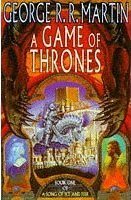
Between 1993 and 2002, I was a member of a long-running sf APA called Acnestis. Each month, we’d write a couple of sides on genre-related subjects, make 30 copies, and then send those copies to the administrator. Who would then send out a parcel containing one copy of each member’s contribution to everyone. Today, I was hunting through some of my contributions to Acnestis, and stumbled across this review of George RR Martin‘s A Game of Thrones from 2001. Enjoy…

There is little in A Game of Thrones that can be counted as truly original. The setting is stock high fantasy: a mix and match of Dark Ages peasantry and Camelot-style pageantry. There are, fortunately, no elves, dwarves, gnomes or (gag) hobbits. But there are dragons (although they only appear near the end), and lots of mediaeval hack-and-slash swordsmanship.

Where A Game of Thrones may be traditional high fantasy in terms of setting, it’s not in terms of structure. Unlike the Wheel of Time, Martin does not use the “hero’s journey” template but builds up his story from a number of narrative strands, only some of which actually intersect.

First, there are the various members of the Stark family, lords of the Northern wastes. Lord Eddard Stark, head of the family, is a rigid, honourable man, traditional in his views, and a good friend of King Robert Baratheon. The king has been outmanoeuvred increasingly often by his wife, Cersei, and her family, the Lannisters. When his advisor dies, King Robert turns to Stark to take over the position and bring his reign back on track. This, of course, upsets the Lannisters. Stark moves to the capital, King’s Landing, to take up his duties. There is much politicking and corruption, and, well… any more would constitute a spoiler.

Jon Snow is Stark’s bastard son and, while he is acknowledged as fruit of Stark’s loins, he can never inherit the family title or possessions. So he joins the Night Watch, a Foreign Legion-type organisation which guards the Wall far to the north. Winter is coming (seasons appear to last several years in the world of A Song of Ice and Fire), and mysterious, probably magical in origin, creatures are attacking the Wall and threatening to invade.

The other members of Stark’s family include: Bran, who is crippled after overhearing something he shouldn’t and who looks set to develop powers of some kind which could help later in the story; Robb, the heir, who takes over when his father heads south to the capital; Sansa, the eldest daughter, betrothed to King Robert’s son (who is spoilt and cruel, and takes after his mother, Cersei); and Arya, Stark’s other daughter, who is something of a tomboy and more interested in sword-fighting than courtly intrigue and pomp and circumstance.

On another continent, Daenerys, last of the Targaryen dynasty, the previous rulers of Baratheon’s kingdom until he had overthrown them, has been married to Khal Drogo, lord of a Mongol-type horde. Her brother, who is a real nasty piece of work, is hoping the khal will provide him with an army to take back the throne “stolen” by Baratheon.

The novel alternates chapters between these (and a few more) characters, and all of them in some way affect the story-arc and the novel’s resolution. Despite the size of the cast-list (and Martin includes a sizeable dramatis personae at the back of the book; and, of course, a map at the front), it’s easy to keep track of the major characters. (I had to keep on referring to the dramatis personae for some of the minor characters, however.)

This technique of multiple viewpoint-narratives is one that’s commonly used in techno-thrillers, which is itself a best-selling genre. It’s also better-suited to the complex political nature of Martin’s story than the traditional hero’s journey structure would be. This, however, doesn’t really explain the book’s appeal.

It’s either the setting, or the story. The story owes more to dynastic historical or semi-historical fiction than it does to high fantasy. There’s no Quest, no object which can save or destroy the world, no army of darkness, nor even some vast prophesied change which must be helped or avoided. In that respect, A Game of Thrones is really quasi-historical fiction. There’s little in the way of derring-do, or real heroics, and certainly no one person upon whose shoulders the fate of the world rests…

Which means, I suppose, that high fantasy must sell more because of its setting than any other factor. The question is, is it the details of the particular world, or the mere existence of the particular world, which appeals? Will any old mediaeval land do, or is it the differences between the fantasy land and the historical model? There is, as I said earlier, little that’s all that original in A Game of Thrones. The cities, villages and castles are straight from the Dark Ages. The combat, arms and armour are straight from the Matter of Britain…

Which raises an interesting point. In many high fantasy series (and A Song of Ice and Fire is one), both hack-and-slash sword-fighting exists alongside thrust-and-parry. Historically, in the West, one developed from the other; the two techniques did not really exist alongside each other. During the Middle Ages, swords were big, heavy, often required two hands, and had cutting edges. They were, effectively, sharp-edged clubs. You swung them, as hard as you could, at your opponent. If you were strong, skilled, or lucky, you inflicted a wound. By the reign of Elizabeth I, sword-fighting had become cut-and-thrust, the mode perhaps most familiar from “swashbuckler” movies. Swords could cut, but they could also wound or kill with the pointy bit at the end. The cutting-edges gradually disappeared over time (because a blade without cutting-edges was stronger), until during the Renaissance sword-fighting focused almost exclusively on the pointy end—i.e., the rapier (a corruption, via the French, of the Spanish espada de ropera, or “town / dress sword”).

In A Game of Thrones, the noble male characters wear full-plate armour, often ornately decorated (and, judging by Martin’s descriptions, some of them probably have to be seen to be believed…). It is very difficult to kill someone in full-plate with a rapier. The blade simply isn’t up to piercing it. You’d have to find a weak spot (inside the elbow, for example), and hope you manage to hit it before you get brained with a mace or morning-star. Plus, of course, rapier sword-fighting requires you to be light on your feet—difficult when you’re weighed down with a suit made out of sheet metal. So, two knights in full-plate who want to cause damage have little choice but to swing at each other with hefty swords with cutting-edges (a great sword, bastard sword, sword-and-a-half, or something similar). Personal combat would be pretty much fixed in this mode.

And the mode used in personal combat would carry across into group combat or battles. Peasants, of course, would not have swords—swords are, after all, expensive, and certainly cost more to replace than your average peasant. No, the peasants have sharpened sticks. Put a bit of steel on the end and you have a pike (or put a short curved blade on the end, and the peasant’s weapon becomes doubly useful: he can chop up your enemies or reap the harvest with it). Alternatively, give your peasant lots of small pointed sticks, and a bow, and he becomes an archer, a “long distance” weapon.

Presumably Martin wanted to give his ersatz Dark Ages world some colour, and so threw in Arthurian pageantry. Which happened to go well with the social system he had set up. But, Arthurian pageantry demands full-plate and bastard swords; full-plate and bastard swords do not lead to exciting fight scenes—swing, clang!, shuffle, swing, clang!, shuffle, swing, ow!, shuffle, etc. The swashbuckling style of sword-fighting is exciting. So he threw that in as well…

Perhaps it’s this element of mix and match that lends high fantasy its appeal. It is, to some extent, the romance of the Middle Ages, without all the nasty stuff—squalor, rape, pillaging, disease, short lives, etc. The nearest high fantasy gets to this is in the combat, which is only one minor aspect of the period lifestyle. And so writers of high fantasy pick out all the romantic imagery of the Middle Ages, suggesting a low-maintenance lifestyle of well-earned hardship (never comfort), little responsibility and a level of self-actualisation that’s keyed to bringing in a good harvest. But you can’t have serfs without liege-lords and, it has to be said, there’s something equally attractive about the life of luxury led by the nobility: little or no fruitless work (that’s all done by the peasants), no decisions made by others, a very direct responsibility for lifestyle maintenance (everyone gets what they deserve), and all conflicts or problems are purely personal and can be resolved at the personal level (even in battle).

It’s all very well grinning with pride at a job well done, and looking forward to a hearty dinner of cheese and ale, as your sons bring in the bountiful harvest. But let’s not forget that your liege-lord could choose that very moment to come riding down onto your (clean, of course) hovel and rape your wife and daughters for a bit of sport. And there’s nothing you can do about it. In high fantasy, only villains of the darkest stripe would do such a thing, and their serfs are evil by association, so they deserve it.

It is, when you dig deep enough, American Rationalism that’s informing the various worlds of high fantasy best-sellers. Rewards are earned, never a function of position. Unless you’re a villain… in which case, you get your just desserts, anyway. One man can indeed change a world. Except, of course, he doesn’t. He leaves it exactly as he found it. The hero is there to maintain the status quo.

If there is a lesson here, it’s that a best-selling genre novel should boast: a) a world in which individuals can have a very real impact; b) said impact has to be earned through hard work and steadfastness; c) said impact is welcomed by all; d) the danger is always immediate and personal, as are the rewards; and e) there should be lots of colour.

A Game of Thrones, it goes without saying, features all of the above. As does Robert Jordan’s Wheel of Time series. The actual writing itself is immaterial. It need only be immediate. Themes and motifs only get in the way. Which might explain the merely competent writing that seems a given of high fantasy.

A Song of Ice and Fire is actually better-written than most of its ilk—although the line on page two, “A cold wind was blowing out of the North, and it made the trees rustle like living things”, initially seems to suggest otherwise (a Thoggism, if ever I saw one). Martin’s use of language may not be perfect, but his command of narrative structure is far superior to that of best-selling authors such as Robert Jordan, or David Weber. The prose is uniformly tight, without the extended introspective passages beloved of lesser writers. The dialogue is natural, and remains true to the characters uttering it. For those reasons alone, A Game of Thrones is a superior example of its type. Add in Martin’s departure from the standard template, and you have another reason for appreciating the novel in and of itself. But when you include the world he has built, the very sub-genre he is working in, well… you have a best-seller. Of course.


1 Comment

I Did This So You Don’t Have To – Part 2

Here’s the next set of films from the SciFi Classics 50-Movie Pack.

Attack of the Monsters – another Japanese monster movie. Three kids find a flying saucer, two of them climb aboard and are whisked away to another world. They see a giant monster with a sword on its head fight a giant pterodactyl. Then they’re rescued by two women in futuristic costumes, and taken into the women’s base. But the women are evil, and want only to conquer Earth. Happily, Gamera the giant flying turtle arrives, kills the monster with the sword on its head, and saves the day. If you want to watch a Japanese sf film, watch The Mysterians. Not this.

Voyage to the Prehistoric Planet – this film was created from a re-edit of the Russian film, Planeta Burg, with English dialogue recorded over it and a couple of scenes featuring Basil Rathbone added. A US spaceship arrives in orbit about Venus, but the first landing mission crashes. So a second one is launched to rescue them. While the film is badly-paced, and the story doesn’t make a great deal of sense, it all looks pretty cool. Well, except for the dinosaurs, which look like men in rubber dinosaur suits.

Voyage to the Planet of Prehistoric Women – this one uses the same footage as Voyage to the Prehistoric Planet, with the mystifying addition of several scenes featuring Mamie van Doren and a bevy of beautiful women in bikinis who are apparently the telepathic inhabitants of the planet. Their scenes don’t actually seem related to the rest of the film. Much of the movie is narrated by “director” Peter Bogdanovich. Voyage to the Prehistoric Planet was interesting but a bit dull; Voyage to the Planet of Prehistoric Women is near unwatchable.

Blood Tide – another one that wasn’t sf at all. James Earl Jones hams it up as a poet-turned-treasure-hunter on some Greek island. There’s an ancient temple accessible only via a sea cave, but it has some horrible guardian. Newcomers try to horn in on Jones’ treasure-hunting, the sea monster awakens, and the ancient temple is destroyed. A better transfer would have greatly improved this film. It didn’t actually appear that bad – although it was hard to tell at the time as the picture and sound were so poor.

First Spaceship on Venus – this is actually a badly-dubbed version of the East German film, Der Schweigende Stern (The Silent Star). Scientists analyse the debris of huge meteor impact, and discover a recording from a crashed spacesuit. They determine the spaceship was from Venus, and so send a mission to that planet. En route, they decode the recording. It’s an invasion plan… The production design is really good, with some excellent model work and some truly weird sets. I plan to get a copy of the original version – happily, it’s available on DVD.

Buck Rogers: Planet Outlaws – not the grinning beefy loon in a spandex girdle of the 1980s television series, this is the original one: Buster Crabbe. His prototype airship crashes on its maiden flight at the north pole, and he is frozen… and woken up centuries later. He ends up helping the inhabitants of an invisible city in their war against the evil Killer Kane. This involves such cunning ploys as hiding behind rocks, and jumping out at Kane’s men as they pass by. If you like Flash Gordon serials, then this is, well, exactly the same.

Killers from Space – Peter Graves of Mission Impossible stars as a scientist whose plane crashes during an atom bomb test. When he turns up later, no one believes his story of alien abduction and invasion. Unlike Whitley Strieber, it seems he’s telling the truth. This one wasn’t as bad as it sounds.

She Gods of Shark Reef – when the box cover says “SciFi Classics”, that’s what you expect: science fiction. By no stretch of the imagination could this film be considered that. Two gunrunners are shipwrecked on a Hawaiian island populated only by attractive women. When one of the women is chosen for the annual sacrifice to the shark god, the gunrunner who is in love with her tries to rescue her. Another film I suspect was more fun to make than to watch.

The Atomic Brain – a scientist experiments with brain transplants, including transplanting a woman’s brain into a cat, and vice versa. You can’t help but wonder how a human brain would fit into a cat’s skull, or what he used for padding when he put the cat’s brain in the woman’s skull. Judging by the woman’s acting, it was probably blancmange or something. This is the sort of film that gives B-movies a, er, bad name.

Son of Hercules: The Land of Darkness – another spaghetti sandal epic, and yet another random bodybuilder in the title roll. Except he’s not a son of Hercules, he’s actually Hercules himself. Although, for some bizarre reason, the English language dubbing calls him Argolese throughout. The blurb on the CD pack says, “Hercules falls for the daughter of a deposed king whose kingdom is held in thrall by an evil queen.” I know I’ve watched this film, but I can’t remember what actually happened in it.

Rocky Jones, Space Ranger: Crash of the Moons – this is a compilation of two episodes of a 1954 television series. It shows. Rocky’s sidekick, Winky, is annoyingly stupid. The female, Vena Ray, might prance about in a miniskirt, but she’s surprisingly assertive for the early 1950s. The special effects – apparently expensive for the time – are a little better than Flash Gordon from two decades earlier, but not much. Forbidden Planet this isn’t.

Santa Claus Conquers the Martians – the theme-tune to this film is great, a perfect piece of 1960s bubblegum pop. Sadly, it’s all downhill from there. Green-skinned Martian kids are addicted to Santa Claus on Earth television, so their parents decided to kidnap him. But Santa sets up shop on Mars, and wins everyone over with sacks full of cheap toys. I suspect that seeing the film as an allegory for the rise of Japan after World War 2 might be reading a little too much into it. Especially since it’s, well, crap.

Part one is here.


4 Comments

I Did This So You Don’t Have to

Several months ago, I purchased two 50-movie boxed sets of crap sf films. And no, I don’t know why I did. I have now watched all of the films in the first set, SciFi Classics. First of all, I should point out that not all of the films are actually science fiction. Neither are they all crap. Some are… well, “interesting”. Describing them as “good” might be a bit of a stretch. The quality of transfers was also uniformly bad.

But at 25p per film, I’m not going to complain.

Gamera the Invincible – Gamera is a giant turtle, who can fly. He can withdraw his legs into his shell, and the leg openings become rockets. How he manages to fly forwards when all four rockets are firing is beyond me. Sometimes Gamera is good, sometimes he’s not. In this film, the turtle is a rampaging monster, only prevented from causing total destruction by a small boy who has an empathic link with him.

Hercules Against the Moonmen – what do they call these sorts of films? Spaghetti and sandals epics? Something like that. During the 1960s, Italy churned out thousands of them. In this one, some random bodybuilder plays Hercules. He ends up fighting the evil queen of Samar and her alien allies, the Moonmen. Lots of feats of strength… and strange rock-like monsters which are far too slow to actually catch people… so those being chased by them have to trip or fall so they can be caught and crushed. I’ll admit I’m no expert on Greek mythology, but I don’t recall rock creatures from the Moon in Hercules’ twelve tasks. I suspect the ancient Greeks were right to leave them out.

Assignment: Outer Space – the interestingly named Rik Van Nutter plays a loud American reporter on an assignment aboard a rocket crewed by English-dubbed Italians. When a runaway spaceship threatens to destroy the Earth, he pitches in with the rest. This film’s transfer was so bad, I’d watched half of it before I realised it was supposed to be colour. Interesting production design, though – a mix of Destination Moon and Space: 1999.

Laser Mission – this wasn’t sf by any stretch of the imagination. Brandon Lee stars as a secret agent who must rescue a kidnapped scientist from some African dictator. It’s the sort of film Channel 5 would broadcast on a wet weekday afternoon. Ernest Borgnine was in there somewhere too. I think he was supposed to be Russian. It was hard to tell from the accent he put on. I’m fairly sure the villain was South African, though. Brandon Lee is accompanied by an attractive woman who proves to be an excellent shot and very good at evasive driving. It comes as no surprise to learn she’s a CIA agent sent to assist him on his mission. A mission in which, strangely, no lasers feature…

Cosmos: War of the Planets – ah, now this is the sort of film I was hoping to find when I bought this boxed set. It’s a 1970s Italian sf film, and it’s completely incoherent. The spaceships appeared to be made out of Lego and egg-cartons. The plot is incomprehensible. Star John Richardson thumps his superior and is sent on a mission. Someone has disappeared on a planet, where there are green bald people and a huge robot controlling them. At least I think that’s what it was about. I vaguely recall a sex scene in there somewhere too. One of the green bald men ends up as a crew-member aboard Richardson’s spaceship. Then everyone gets killed. I think.

Destroy All Planets – another Japanese film featuring Gamera the flying rocket-propelled turtle. An alien spaceship attacks Earth, but Gamera sends it on its way. Meanwhile, two boy scouts rewire a miniature submarine so that forwards becomes reverse, etc. The alien spaceship returns, Gamera fights it, and… I lost the plot somewhere about then. It ended up underwater I seem to recall, but I may be mistaken. Gamera destroyed the alien spaceship anyway.

Eegah – a young woman driving through the California desert is confronted by a seven-foot caveman. She returns the next day with her father and boyfriend. The caveman is called Eegah, and he’s played by Richard Kiel (Jaws from James Bond) in one of his earliest film roles. They take Eegah to Palm Springs, but he goes on a rampage and smashes things. So they hunt him down and kill him. Any resemblances to King Kong are probably intentional.

The Astral Factor – also known as Invisible Strangler, because it’s about, well, this invisible bloke who strangles women. A prisoner on death row develops psychic powers, which he uses to make himself invisible. He escapes from prison in order to have his revenge on the five women who testified against him. I’m surprised Stefanie Powers and Elke Sommer haven’t had all copies of this film destroyed. Perhaps they tried – certainly the transfer in this boxed set was terrible. The picture was all scratched and faded, as if it had been dug out of the bottom of a bin.

Battle of the Worlds – oh dear, how the mighty have fallen. Claude Rains stars in this as an astronomer who discovers a planet which is fast approaching Earth. Actually, he doesn’t discover it, although he did predict its appearance. He also predicted the fleet of flying saucers which then attack Earth. What a shame he didn’t predict that his career would come to this. Definitely not the start of a beautiful friendship…

The Brain Machine – there’s this facility somewhere in the middle of nowhere, and a group of volunteers who are having experiments performed on them. And a powerful computer – well, a wall of flashing lights. This is 1977, after all. It all goes badly wrong because one or two of the volunteers are evil, and the experiment itself is pretty unethical. I think a Brain Machine is required to actually watch this film.

Wild Women of Wongo – the boxed set says “SciFi” on the cover, but there’s nothing in this film which qualifies as science fiction. It’s set in some primitive Polynesian village called Wongo. A prince from a neighbouring kingdom visits and asks for help to repel raiders. The king of Wongo refuses. The raiders attack Wongo, but the women manage to escape. They make their way to the neighbouring village, and discover that the raiders have not attacked there. The Wongo women are more attractive than that village’s women; and the men of the village are more handsome than the Wongo men. I suspect this film was more fun to make than it was to watch.

They Came From Beyond Space – the title may sound like the worst kind of B-movie, but this one is actually pretty good. Some meteors have landed in the south of England, but the scientists sent to investigate have begun behaving strangely. One man – an astronomer, American, with a steel plate in his head – suspects foul play. Especially when the scientists recruit more people, put up barbed wire around the meteor site, and all the American’s colleagues and friends start treating him like an enemy of the state. It’s aliens, apparently – they’re using mind control. They have a giant rocket underneath a pond, and they use it to send enslaved humans to the Moon to help fix their spaceship which crashed there. Despite the silly plot, this is actually a good Sunday afternoon sf film.

Prehistoric Women – a bunch of prehistoric women – well, women in make-up and furs – overpower and enslave their men. But one man escapes. He discovers fire and returns to use it to drive off a giant pterodactyl which has been attacking the tribe. As a result, the women release their men as they can’t all be bad. So if your relationship is in trouble, all you have to do is fight off a giant pterodactyl…

The Phantom Planet – this one started quite well. A rogue planet has entered the Solar System, so a rocket is sent to investigate. But it crashes on the planet. Which is actually quite small. One of the crew survives and discovers… a race of tiny people. They even shrink him to their size so he can talk to them and fall in love with the daughter of the leader of the little people and save the day, etc. Apparently the tiny people can steer their planet too, but they still live in caves. Any sufficiently advanced technology, I suppose, is indistinguishable from authorial bollocks.

More films to follow in another post…