Time for another report from my ongoing mission to read every book I own. There is no five-year plan – actually, there is: A Five Year Plan, a thriller by Philip Kerr, which I read back in February 2005… What I mean is, there is no end in sight – in fact, it recedes further from me with each passing month. Must. Read. More. Books. (Yes, yes, I know: I could also try: Must. Buy. Fewer. Books. But don’t be silly, that’ll never happen.)
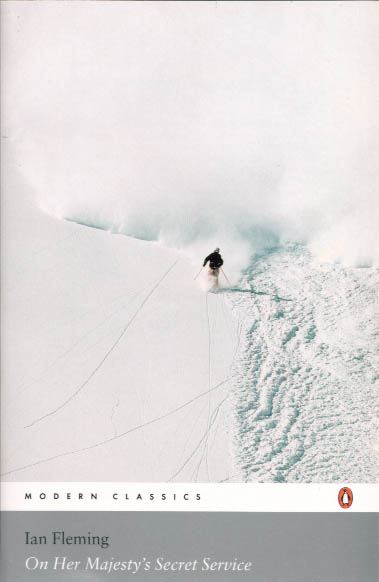
 On Her Majesty’s Secret Service, Ian Fleming (1963). This is the one where Bond gets married, and then his wife is killed soon afterwards. The woman he marries is the daughter of a Sicilian mafia boss, but she’s been to finishing school and her previous husband was a wastrel Italian count so she’s now a contessa; and, of course, she’s beautiful. And suicidal. The book opens with Bond rescuing her from a suicide attempt when she throws herself into the sea. The actual plot concerns a fiendish plan by Blofeld to destabilise the UK by destroying its agriculture. There’s a mountain-top health centre in Switzerland run by a mysterious scientist – who may or may not be Blofeld – and Bond infiltrates it in the flimsiest of disguises. He finds it populated by a number of young English women, all there ostensibly to be cured of phobias and allergies. But they’re actually being brainwashed into performing a series of tasks to poison British agriculture. When Bond meets the centre’s owner, Comte Balthazar de Bleuville, he just knows he’s Blofeld, even though he doesn’t resemble Blofeld at all. Plastic surgery, you see. Anyway, Bond foils Blofeld’s fiendish plot – the English women are caught before they can cause any damage, and British forces launch a raid on Blofeld’s health-centre but Blofeld escapes. Afterwards, Bond gets married, Blofeld attempts to kill him, and his wife dies in the attack. There’s a good sequence when Bond escapes from Blofeld’s hideaway by skiing down the mountain – bizarrely, it reads more like the cinematic Bond than Fleming’s original. The science practiced by Blofeld is completely bogus, and the only connection between the villain of this book and the villain of Thunderball is Bond’s conviction that they are one and the same man. Fleming’s treatment of Bond’s father-in-law, the Sicilian capo, is deeply racist; and it goes without saying that the women throughout the book are little more than plot tokens or adjuncts to Bond’s masculinity. This is actually one of the better Bond novels I’ve read so far, though I still don’t think they deserve their immense popularity. I’d always assumed their success was due to the films, but apparently there was a James Bond strip in the Daily Express, which ran from 1958 to 1983. While the hardback of Casino Royale apparently sold out three print-runs within thirteen months in the UK – but flopped in the US: they retitled it You Asked For It, and even renamed 007 as “Jimmy Bond” in the paperback reprint – I do wonder if it’s the newspaper strip which, by bringing the character to a much larger audience (under Beaverbrook the Daily Express had the largest circulation of any newspaper in the world), really made Bond a twentieth-century cultural icon.
 A Man Without Breath, Philip Kerr (2013). That’s me completely up-to-date on the Bernie Gunther novels, at least until a new one appears. In A Man Without Breath, Gunther has moved to the War Crimes Bureau, and is sent out to Smolensk because several buried bodies have been found in a nearby wood by German troops. The Germans suspect the bodies belong to Polish officers, killed by the Russians, who had allegedly shipped the Poles they had captured off to POW camps. The wood is Katyn Wood. When a pair of soldiers from a nearby signals detachment are found murdered in Smolensk, Gunther is asked to assist by the local field police. The more he investigates the double murder, and the circumstances surrounding it, the more he’s convinced there is some sort of conspiracy in place among the senior German officers in Smolensk. Meanwhile, other War Crimes Bureau investigators have found yet more murdered Poles buried in Katyn Wood… If Prague Fatale was a piss-take of a country house murder – including a locked room mystery! – A Man Without Breath is pure World War II behind-the-lines thriller. The plot hangs from two very real atrocities committed during the war – the Katyn Massacre, and another performed by the Germans (revealing it would constitute a spoiler, so I won’t). Kerr places Gunther firmly in the middle as all these events come to a head, and while he’s not responsible for resolving them, he is certainly the one who makes sense of them and puts the pieces together for the reader. One of the difficulties with writing historical fiction involving well-documented people and events is that everything must end up as it does in the history books. This is not Inglourious Basterds, Hitler and the Nazi bigwigs do not get gunned down before 1945. The larger events depicted in A Man Without Breath are actual history, and you can read about them on Wikipedia. The same is true of the movements of the more important figures. So when Hitler makes a flying visit to Smolensk in the novel, that’s what he actually did in the real world. Kerr does this really well. And having read science fiction for so many years, I’m finding myself increasingly drawn to fiction which includes elements I can go and look up afterwards. In fact, that’s something I try to write myself – even though what I write is science fiction…
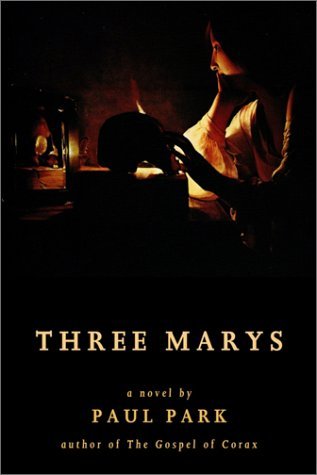
 Three Marys, Paul Park (2003). After writing four excellent science fiction novels, one of which remains my favourite sf novel of all time, Park decided to write a couple of books set in Biblical Palestine. The first was The Gospel of Corax, a sort of alternate life of Jesus, in which he wasn’t crucified but wanders eastward, dispensing magic and theosophist philosophy. Three Marys is a more historical novel and, as the title indicates, takes as its protagonists three women called Mary who each knew Jesus – Mary Magdalene, Mary of Bethany and Jesus’ mother, Mary. I’m a big fan of Park’s writing, but first century Palestine is not a place and time that especially interests me. I’ve read one book set there this year, Philip Boast’s Sion (see here), but that was quite a strange book. Park’s is far better historically-grounded, and reads much more convincingly than Boast’s did. The three title characters are also beautifully drawn. But… I don’t find Jesus interesting as either a historical or a religious figure, and I struggled to gain purchase on Three Marys despite its lovely prose. I suspect I may have to reread it one day, but for now I’d say it was a book I admired far more than I enjoyed.
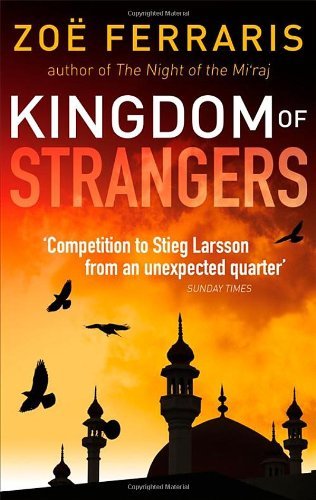
 Kingdom of Strangers, Zoë Ferraris (2012). The third book in Ferraris’ Jeddah-set murder-mysteries. A body is found in the desert after strong winds have blown sand from a dune by a road. The body is that of a young woman, has had its hands removed and appears to be several years old. The police investigate and eighteen more bodies are found in the area. It looks like Jeddah has a serial killer on its, er, hands, and no one knew about it. This is not unexpected: given the frequent abuse and mistreatment of female expatriate maids and nannies – many of them run away and the police rarely bother to look for them. Meanwhile, the Filipina mistress of Imbrahim Zahrani, the policeman in charge of the serial killer investigation, has gone missing, and he’s worried that knowledge of his affair will leak out and torpedo his marriage and career. Forensic pathologist Katya Hijazi is also keen to get involved on the serial killer case, but most of the police officers don’t want women working on it. She has also agreed to marry her fiancé, which creates a bit of a problem as the police think she is already married (and she wouldn’t be allowed to work there if she were unmarried). The setting of Ferraris’ novels makes for interesting reading, and while the crime aspects of the plot often seem incidental to documenting the lifestyle of the Saudis, it all hangs together entertainingly. I never actually lived in Saudi myself, only on the Gulf coast, but Ferraris’ portrayal does match what I know of the country and its inhabitants. She has a group of sympathetic and well-drawn protagonists, handles her supporting cast well, and I think I’m going to continue to read the books as they’re published.
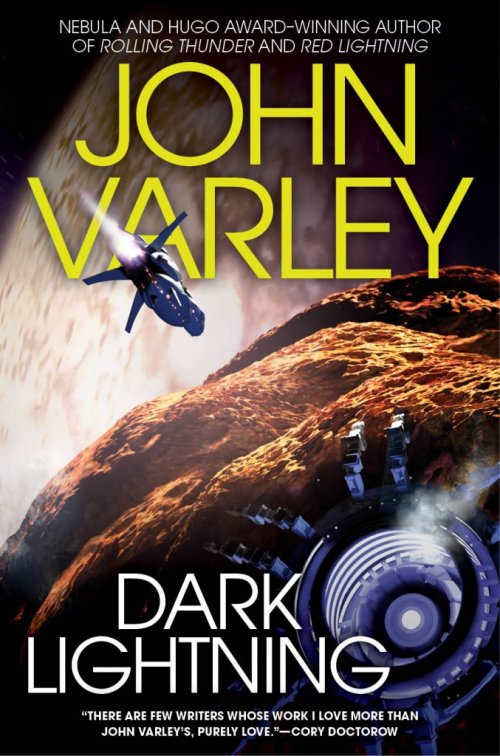
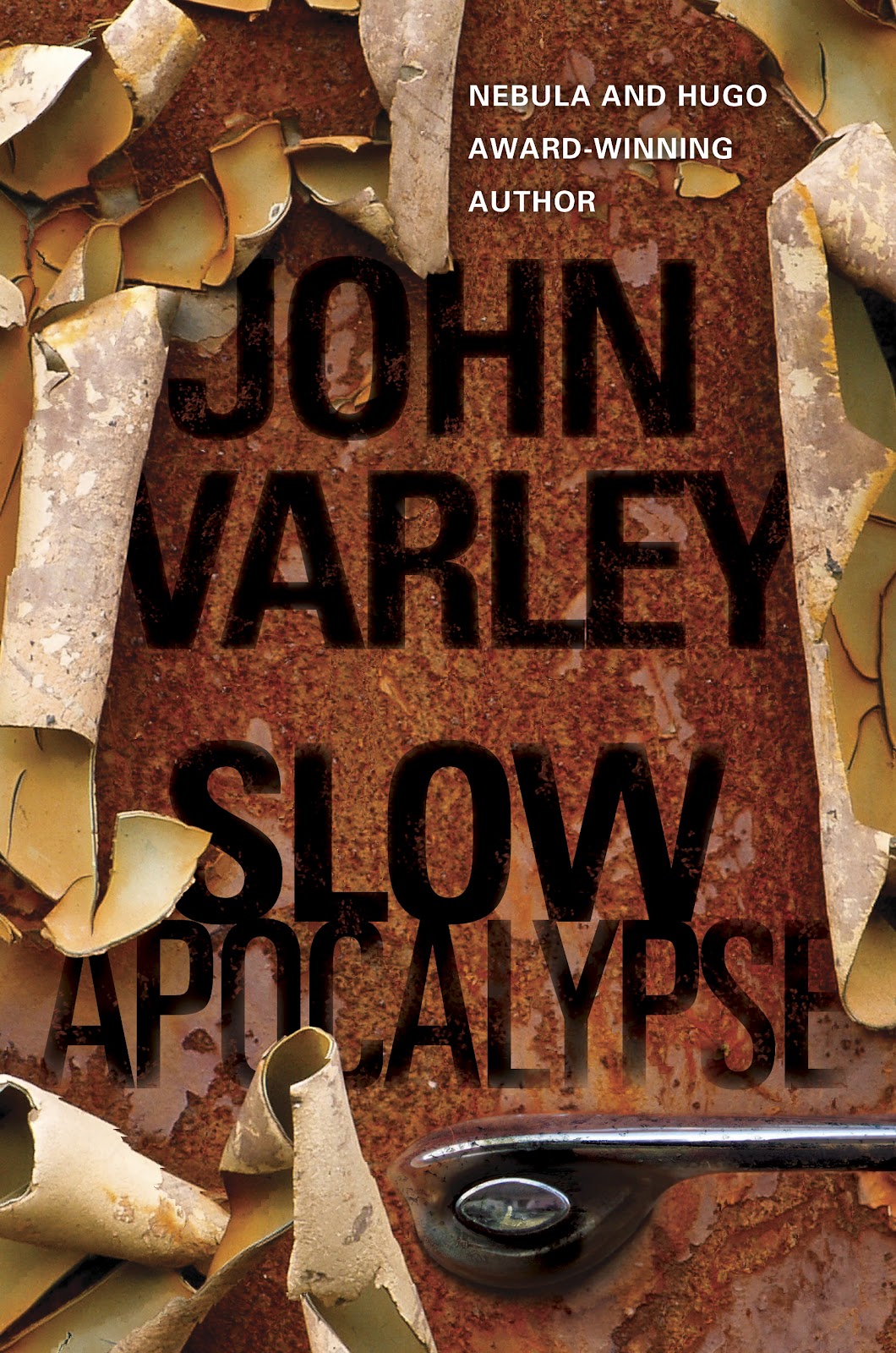
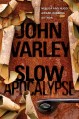 Slow Apocalypse, John Varley (2012). I fell in love with Varley’s short fiction when I first read some of it back in the 1980s, and his The Ophiuchi Hotline remains a favourite sf novel. I even sort of like Millennium, the film adaptation of his short story ‘Air Raid’, which he then novelised as, er, Millennium. Since 1998’s The Golden Globe (which I really must reread one of these days), I’ve bought his books in hardback on publication – he’s no longer published in the UK, so I’ve had to order them from the US. Sadly, none of his recent novels have quite matched up to those earlier works. And, unfortunately, Slow Apocalypse is more of the same. A Hollywood-based television writer, Dave Marshall, learns from a secretive ex-military contact that the US experimented with a bacteria to render enemy oil fields unusable, but that the scientist responsible turned rogue and released the bug into the wild. Marshall thinks the story is excellent material for a movie, one that will reinvigorate his stalled career. Then oil wells around the world start to explode… Soon, there’s very little petrol available, and other resources – such as food – which rely on petrol for transportation also become scarce. A huge earthquake then strikes Los Angeles, near-destroying the city, and society collapses. Marshall and family join together with their neighbours in the canyon in which they live to safeguard their houses. Because he heard the story early, Marshall has managed to stockpile plenty of supplies, but he’s afraid his neighbours may soon want to him to “share”. Also, their current redoubt is unsustainable for much longer – especially after a huge brush fire sweeps out of the hills and renders most of the city uninhabitable. The government is proving no help, and aid is virtually non-existent. So Marshall agrees to travel south with a group of close friends and colleagues, in search of somewhere sustainable to settle. It’s plain that Slow Apocalypse was written as a commercial disaster novel, and if it gives Varley’s career a boost than that’s all to the good. But. I found it really dull. Much of the book consists of Marshall – with wife or daughter – driving about LA and witnessing the damage done to it by the quake and subsequent breakdown of law and order. The whole thing reads prescriptively. There are a number of quite good action set-pieces, but they’re not enough to enliven the narrative. There’s also a Heinlein-esque mouthpiece character, but Varley has always been able to make such characters more palatable than Heinlein ever did. The plot is as predictable as a Hollywood movie, and might well follow Hollywood’s over-used three-act arc. Disappointing.
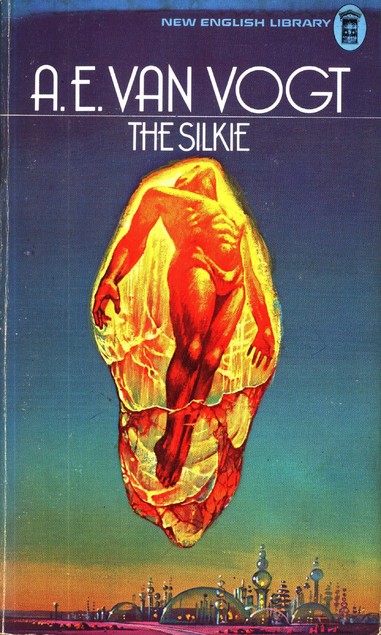
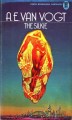 The Silkie, AE van Vogt (1969). Sometimes I wonder if something in my brain doesn’t work quite the way it should. I have very little time for Golden Age authors, but for some reason I keep on fooling myself that I have a soft spot for the works of one of them: AE van Vogt. I think his The House That Stood Still is very nearly a bona fide sf pulp classic, and some of his other novels can be entertaining in a not-quite-coherent way. But. He made his career out of the advice given in a how-to-write book, which basically said to break any narrative down into 800-word sections which must always end on a cliff-hanger. And it’s pretty clear in most of van Vogt’s fiction that when he finishes a section, he’s no real idea of what’s going to happen next. It’s often plain he’s no idea what’s going on within sections. His prose is competent at best; he mangles science, philosophy and history at will; and he has fixed-up and expanded so many of his stories, it’s impossible to say where some begin and others end. The Silkie is a fix-up and it reads like one. The book opens with a prologue, and it’s actually not that bad. It’s set in the present day in the Caribbean. A scientist and his daughter have been invited to the island of a secretive scientist who claims to have discovered immortality. Instead, the daughter meets a Silkie… a human capable of metamorphing into a seal-like creature which is equally at home underwater. And then the story completely changes, and we’re in outer space and Silkies apparently have a third form, which allows them to live, and move about, in space. There are also Variants, who are the products of Silkies and human women – all Silkies are male – but are not full Silkies. But they get written out of the story once van Vogt has finished with them. Which is pretty quickly. There’s a Variant boy who has astonishing mental powers and may be a threat to the Silkies, so the hero defeats him. Then it turns out there’s an alien attacking the Silkies, so the hero defeats it. And then it turns out there are bad Silkies who live in an asteroid inside the orbit of Mercury. So they weren’t invented by the scientist in the prologue after all. But they’re not really bad because they’re actually unknowingly under the control of a giant alien blob that’s older than the universe. But the hero defeats it. And discovers everything is all part of a plot by yet another alien race. So he defeats them… And it’s one damn thing after another, and each threat is written out of the story as soon as it’s vanquished, and its presence and/or defeat has no repercussions or ramifications on later parts of the story. The Silkie reads like the science-fictional ramblings of a drunk who has no grasp of plot, story-arc, continuity or rigour.
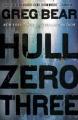 Hull Zero Three, Greg Bear (2010). I stumbled across a copy of this in a local charity shop, and bought it because it was on the Clarke Award shortlist last year. So it must be good, right? I generally have a lot of time for the Clarke Award juries’ choices, although every now and again they pick books which to my mind don’t seem to be award-worthy. This was one of them. A man wakes on a giant spaceship, with no memory of who he is or what he is supposed to do. All he can remember is that he is a Teacher, and will be needed when the generation ship reaches its destination and begins the settlement of a new world – information he chiefly recalls from a dream fed to him while he was in cryogenic hibernation. He ends up running around the ship with a bunch of strange people – not your normal-type humans – encountering monsters and such, and eventually discovering why he was woken and what has happened to the ship. All the time I was reading this book, I was thinking: why is this spaceship so bloody huge? There’s one scene where the group enter a vast room with a catwalk across its middle and an enormous window in its floor. Why is it so big? If it’s an observation room, it doesn’t need to be so huge. It makes no sense – enormous chambers need more steel to build, more air to provide a breathable atmosphere of the required pressure, and more energy to heat. It’s stupid. The whole spaceship seemed to have been designed by a production designer for a B-movie. As, in fact, did the story. Systems aboard a generation starship come to blows over one of the mission’s objectives… monster movie in space results. I couldn’t see why Teacher specifically had been woken, why the generation ship had been designed in such a stupid manner, and by the end of the book I no longer cared. Bear has written much better than this, and this monster movie book didn’t deserve to be on the Clarke shortlist.







 It Doesn't Have To Be Right...