It Doesn't Have To Be Right…

… it just has to sound plausible


4 Comments

2014 reading diary, #4

The good news is I’m sticking to my New Year’s resolution to alternate my fiction reading between women and men writers; the bad news is that since I finished my reading for the Hugo – and what a pointless exercise that proved to be! – since then my reading’s been a bit all over the place.
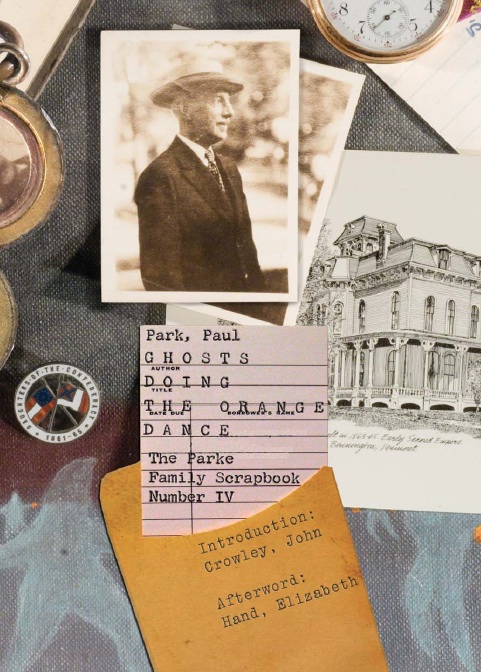
ghosts-doing-the-orange-dance-hc-by-paul-park-1622-pGhosts Doing the Orange Dance, Paul Park (2013) With a title like that, I’d expected this to be literary fantasy, something Park does really well. It actually proved to be meta-fictional literary science fiction – something Park does even better. Park looks back over the history of his family – the title refers to a painting by his relative, which may or may not depict a UFO visitation – trying to draw links between some of the stranger people in his family tree, and various strange events which may or may not have had anything to do with them. It’s impossible to tell what is fact and what is fiction – Park mentions his A Princess of Roumania, for example, among many other details which feel autobiographical. The introduction by John Crowley and the afterword by Elizabeth Hand play into the same conceit. Of course, I bought the signed, limited edition… but a note on the limitation page says the signatures were “culled from other sources”. Huh? They’re not real signatures? Or is that another meta-fictional joke? Anyway, highly recommended.
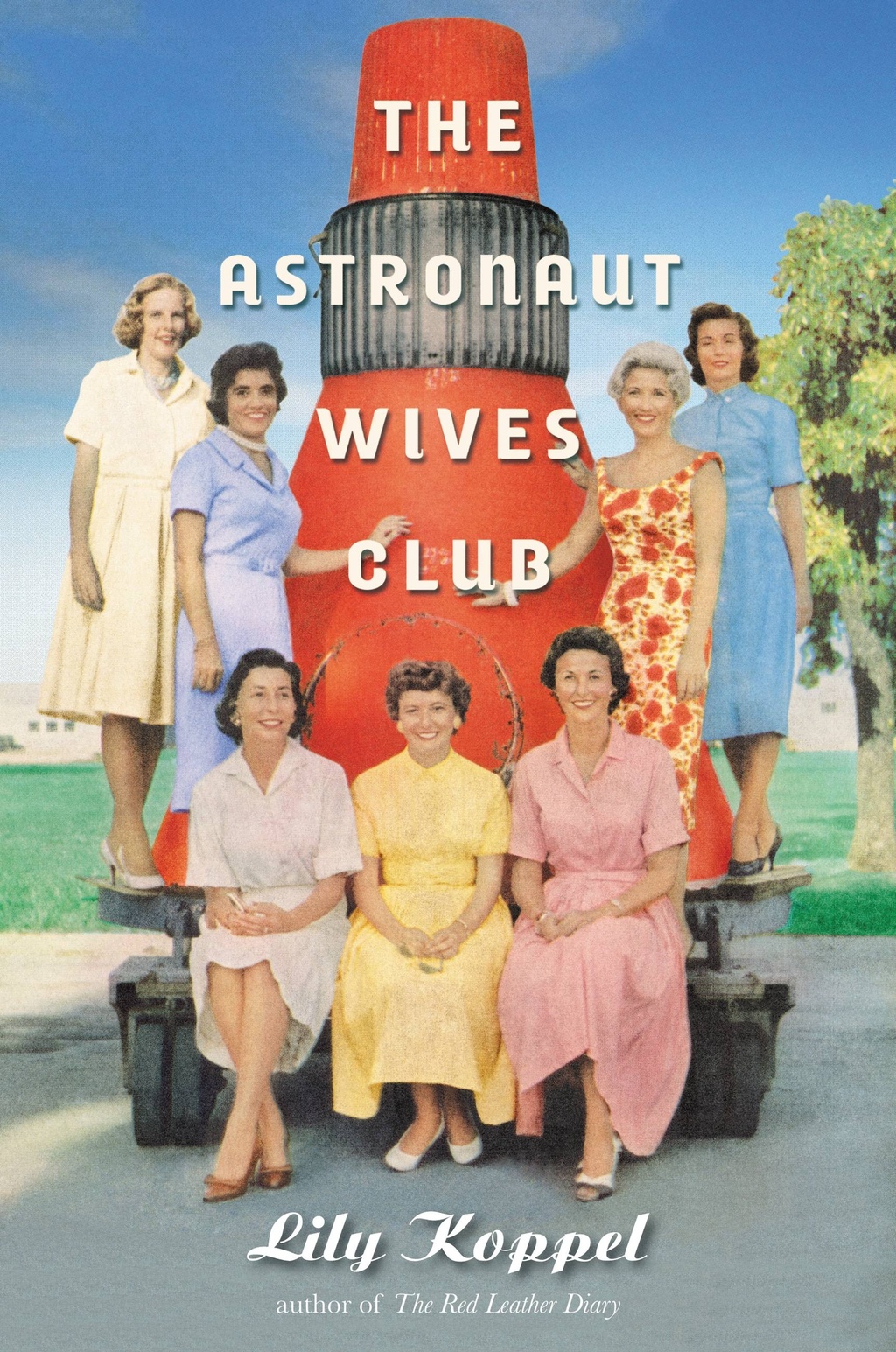
astronaut-wives-clubThe Astronaut Wives Club, Lily Koppel (2013) Read for research for Apollo Quartet 4 All That Outer Space Allows. This is the only book published to date on the wives of the early astronauts, although Life Magazine did run a series of articles on each of the Mercury 7 wives back in the 1960s. There is also, as far as I’m aware, only one autobiography by the wife on an astronaut – The Moon is Not Enough (1978) by Mary Irwin, wife of Apollo 15’s James B Irwin (yes, I have a copy). Having said that, several of the wives wrote or co-wrote their husbands’ biographies, such as Rocketman by Nancy Conrad (2005), Moonwalker by Charlie and Dotty Duke (1990) and Starfall by Betty Grissom (1974). The wives of the Apollo 11 astronauts also appear in First on the Moon (1970), the first book about the mission (see here). Koppel’s book is not especially insightful, and often borders on the banal, but I spotted no obvious inaccuracies, and it at least gives a more human portrayal of the astronauts than their own books do – but that’s hardly surprising, given they all had egos as big as the Moon. As far as the Apollo Quartet is concerned, The Astronaut Wives Club will be treated much like Wikipedia – a good place to start, but I’m going to have to look further afield if I want to dig deeper. All the same, it was worth reading, and I hope it’s merely the first book on a group of people who need to be written about more.
visforvengV is for Vengeance, Sue Grafton (2011) I’ve always much preferred crime novels which feature female protagonists, and my two favourite women PIs have always been VI Warshawski and Kinsey Millhone. I used to like Patricia Cornwell’s Kay Scarpetta books until I realised the plot of every one was exactly the same. But, Kinsey Millhone… In this one, a gangster is trying to turn legit, a process that accelerates after he meets the bored wife of a Hollywood lawyer (who has discovered her husband is having an affair with his secretary). Meanwhile, the gangster’s not-so-smart brother is causing irruptions by behaving like, well, a gangster. Millhone gets dragged into it all when she witnesses a shoplifter in action and reports her to store security, said shoplifter being part of a state-wide operation run by the aforementioned gangster. The Millhone books are framed as reports given by Millhone to her client, although the narrative is presented as your typical crime novel – including sections not in Millhone’s POV… which sort of spoils the framing conceit. But never mind. I liked this entry in the series much more than the preceding few. Dante, the gangster trying to go straight, was sympathetic; I liked the narrative of Nora, the lawyer’s wife; and the various subplots came together pleasingly at the end.
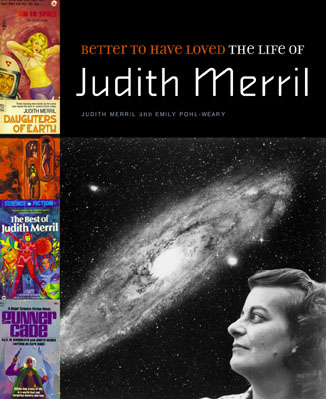
bettertoBetter to Have Loved, Judith Merril & Emily Pohl-Weary (2002) Also read for research for Apollo Quartet 4 All That Outer Space Allows. This is sort of Merril’s autobiography – it was compiled by Pohl-Weary from an aborted attempt by Merril to write an autobiography, her letters to various well-known sf names, and the introductions to some of her books (her collections and the anthologies she edited). Merril started out in the Futurians, an influential New-York-based group of fans in the 1940s, writing pulp fiction for hire, chiefly crime and westerns. They weren’t a very pleasant bunch in those days – at one point, they reformed the Futurians specifically to exclude one person they felt wasn’t much fun – but they were very close-knit, often kipping over for months at a time at friends’ houses. Merril was certainly outspoken, and these days she’d probably be described as “poly” – neither of which in those days endeared her much to her fellow fans and writers. Some of the gossip Merril drops in is horribly fascinating – such as, for example, when Frederik Pohl was an editor early in his career he’d buy his friends’ stories and keep 60% of the fee; or that, later, when Merril was an influential editor, writers would approach her and beg to be included in her next anthology, and they’d tell her they wouldn’t even accept a fee. Merril moved to Canada in the 1960s, and eventually took Canadian citizenship. She comes across as one of those opinionated but interesting people you’d probably dislike on meeting. Worth reading.
Dictionary_of_the_KhazarsDictionary of the Khazars, Milorad Pavić (1988) I’ve fancied reading this for years, so when I stumbled across a copy in a charity shop I snapped it up. But after all that… I’m not a big fan of weird fiction or magical realism – although when it’s kept low-key, I’m happy to read it. I thought Patrik Ouředník’s Europeana excellent, for example; which led me to think I might enjoy fiction by other Balkan fabulists. But this one just didn’t work for me. I thought the structure clever and interesting, and some of the stories which make up the dictionary entries were quite good. But often Pavić pushed the fantasy too far, and it spoiled it for me. The book is structured as three “dictionaries” – they’re not, they’re more like glossaries – which cover the conversion of the Khazar people to one of the Abrahamic religions. There’s a Christian dictionary, a Muslim one and a Jewish one, and each claims the Khazars converted to their religion. The dictionaries comprise biographies of important people and stories which illustrate their lives and/or their connection to the Khazars. The stories are… fantastic. Some of the details are amusing, like the person who saved up all their Tuesdays so they could use them at once; others, for me, just felt like a whimsy too far. I guess I like a lot of realism in my fantastika. Which is no doubt why I much prefer science fiction. Ah well. Back to the charity shop it goes, and I can cross Pavić off the list of authors I’ve always wanted to read.
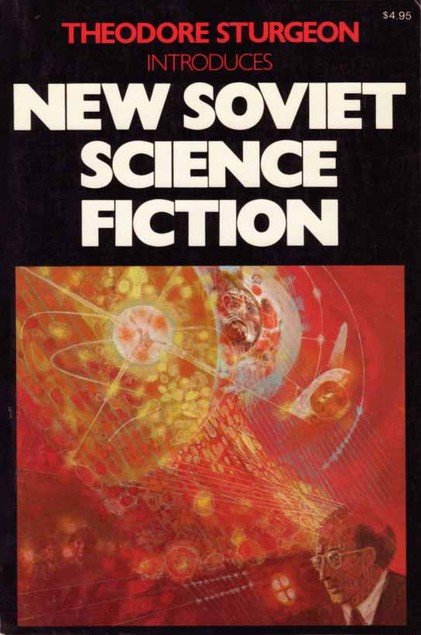
sovietsfNew Soviet Science Fiction, Helen Saltz Jacobson, ed. (1979) I spotted this on eBay, discovered Macmillan had in the late 1970s published a short series of Soviet sf anthologies and novels, and immediately thought, ooh I can collect them. But just to see if it was worth doing so, I bought this cheap ex-library copy of New Soviet Science Fiction…. And yes, it was totally worth it. Now I’m going to have to find a decent copy to replace mine. And buy all the other books in the series too. The contents include fiction by Ilya Varshavsky, Kirill Bulychev, Dmitri Bilenkin, Gennady Gor, Vladen Bakhnov, Anatoly Dneprov, Vladimir Savchenko, Mikhail Emtsev and Eremei Parnov, and Vadim Shefner – with several of them contributing more than one piece. The Savchenko was good, a nice black comedy with a very Russian atmosphere. Some of the others feels like they’ve been translated too diligently into American English vernacular – I mean, what’s the point of reading Russian sf if it reads just like US sf? Annoyingly, the book includes no prior publication details, so I’ve no idea how old some of these stories are.
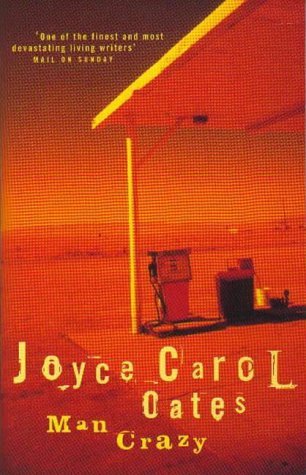
mancrazyMan Crazy, Carol Joyce Oates (1997) An author I’ve heard much about without actually ever getting around to reading. I stumbled across a copy of this book in a charity shop, so I bought it and… The narrator is a teenage girl with an absentee father and a drunken mother. She’s white trash, moving from place to place, although only within a relatively small region, eventually getting into drinks, drugs and dalliances with inappropriate men…  and eventually ending up in a biker cult. The control of voice is impressive, as is the way Oates builds up her story through a series of small vignettes (none really qualify as short stories, and some are shorter than flash fiction). But none of the cast likeable – even the man who becomes the sugar daddy of the narrator’s mother isn’t doing it out of the goodness of his heart… although his fate is hardly deserved. This is a bleak novel, which I was not expecting. I’m still not sure if I really liked it.
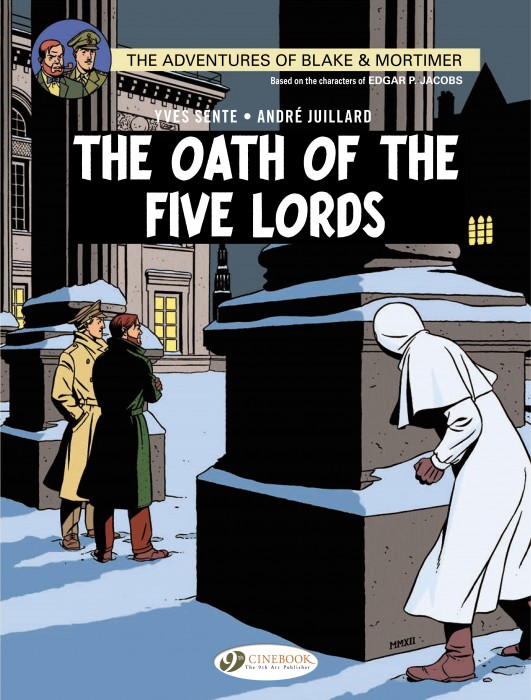
fivelordsThe Adventures of Blake and Mortimer 18: The Oath of the Five Lords, Yves Sente & André Juillard (2012) I’ve been impressed with a couple of Sente’s scripts, more so than I have anything written by series creator Edgar P Jacobs – chiefly because Sente manages to stitch his stories into real history. And so he does in this one, and it’s particularly effective. The story is essentially a murder-mystery. The titular lords are a secret society, created decades before to safeguard a pamphlet written by TE Lawrence but which he was never allowed to publish. Someone is bumping off the lords and stealing their portion of the pamphlet. It’s up to Blake and Mortimer to learn the identity of the killer/thief before the pamphlet is all together lost and the five lords all murdered. It’s not a very complex mystery, though Sente still manages a few bits of sleight of hand with his clues. I thought this one of the better entries in the series.
3 Comments

April book haul, part 1

The following books I bought between the last book haul post and Eastercon. I’ll include the books I bought in Glasgow in a post on the convention. Meanwhile… a few for the collection, a few for research, a few because they looked interesting… The usual, in other words.

2014-04-25 09.30.21

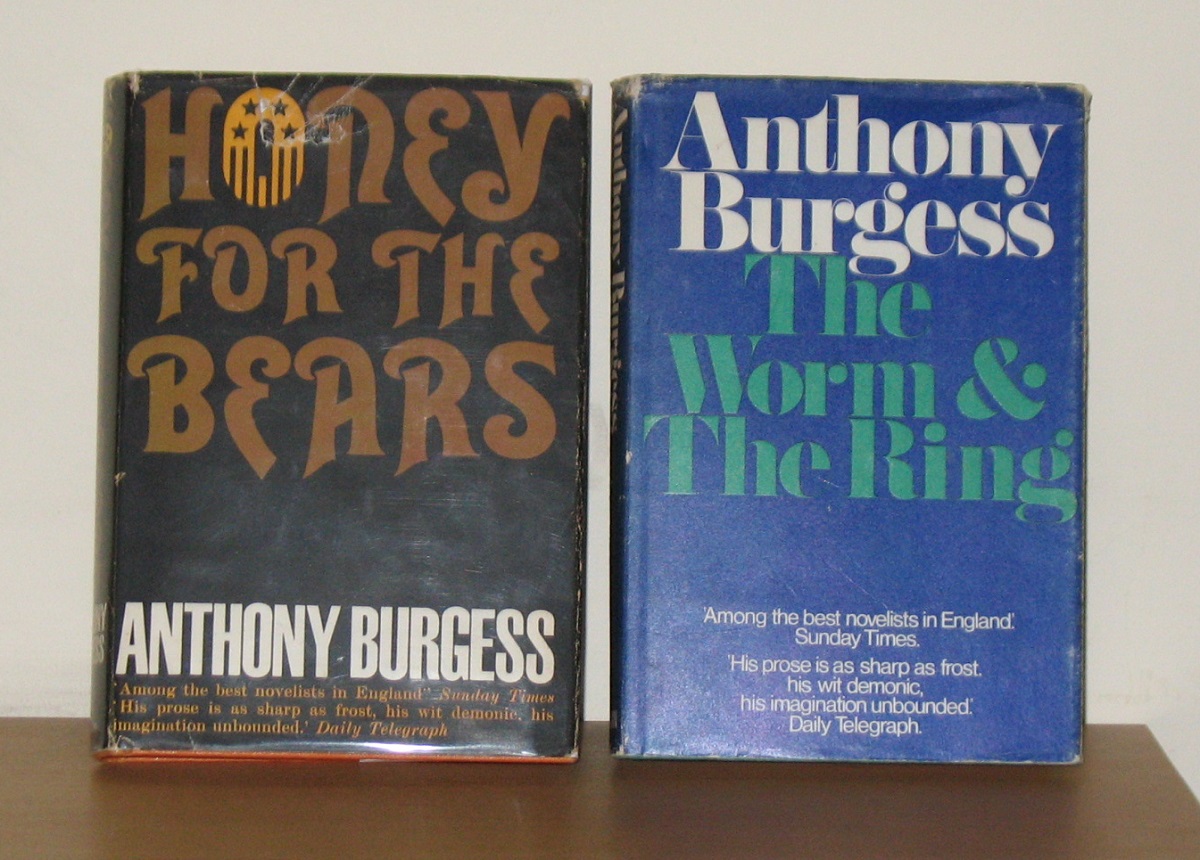
A pair of hard-to-find first editions for the Anthony Burgess collection: I read Honey for the Bears years ago in paperback, but I’ve yet to read The Worm and the Ring. The latter, incidentally, is the 1970 revised edition. The original version was withdrawn and pulped after a complaint that one of the characters was an obvious caricature, and copies of it are very expensive.

2014-04-25 09.31.16

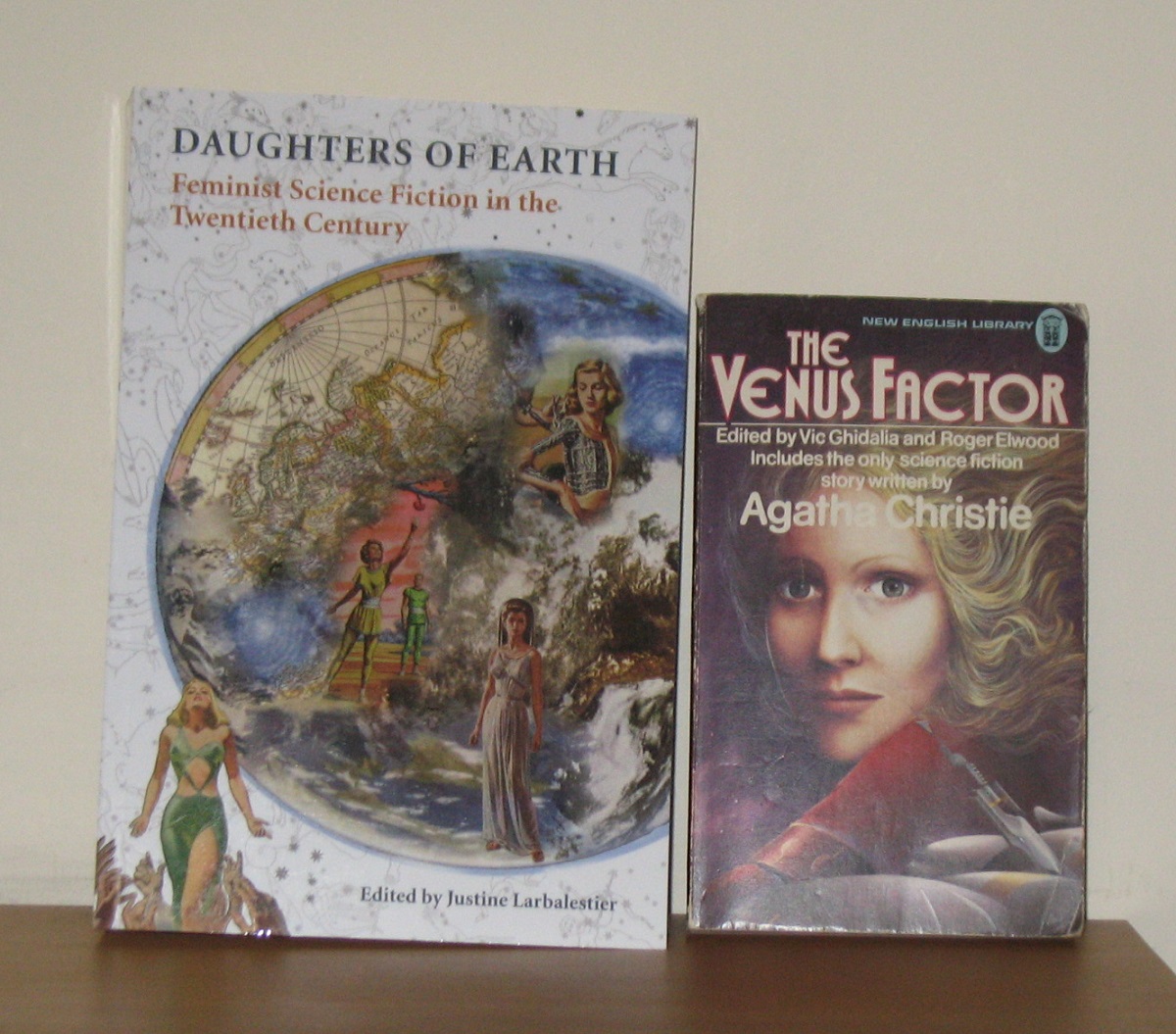
A pair of women-only sf anthologies (see my post on the topic here). The Venus Factor is, I believe, the earliest such; and Daughters of Earth is the latest – at least until The Mammoth Book of SF Stories by Women is published this coming December. Daughters of Earth is actually a mix of fiction and non-fiction: each story is followed by an essay.

2014-04-25 09.31.58

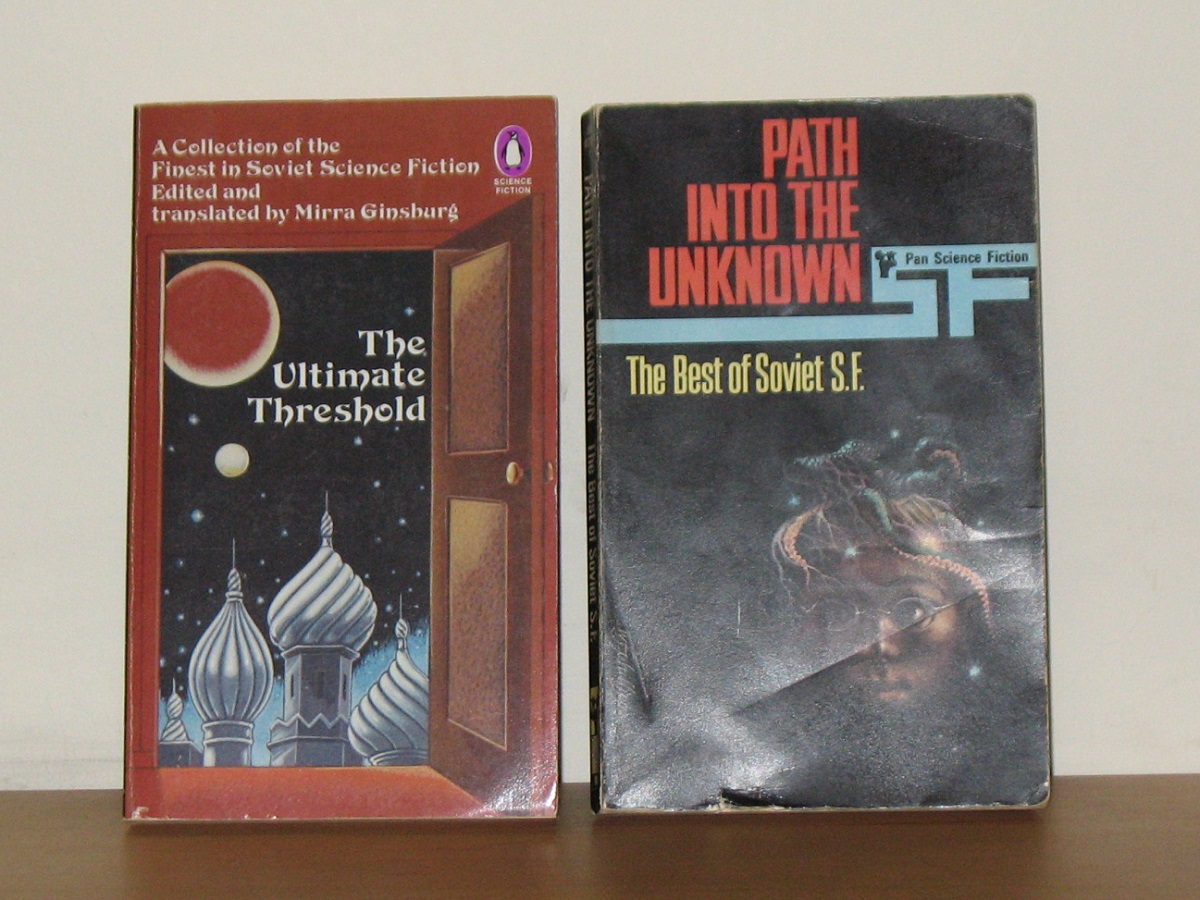
While researching Soviet sf for my Gagarin on Mars story, I decided to pick up a few anthologies of science fiction from the USSR. The Ultimate Threshold and Path into the Unknown are from 1970 and 1966 respectively, and share no contents at all.

2014-04-25 09.40.37

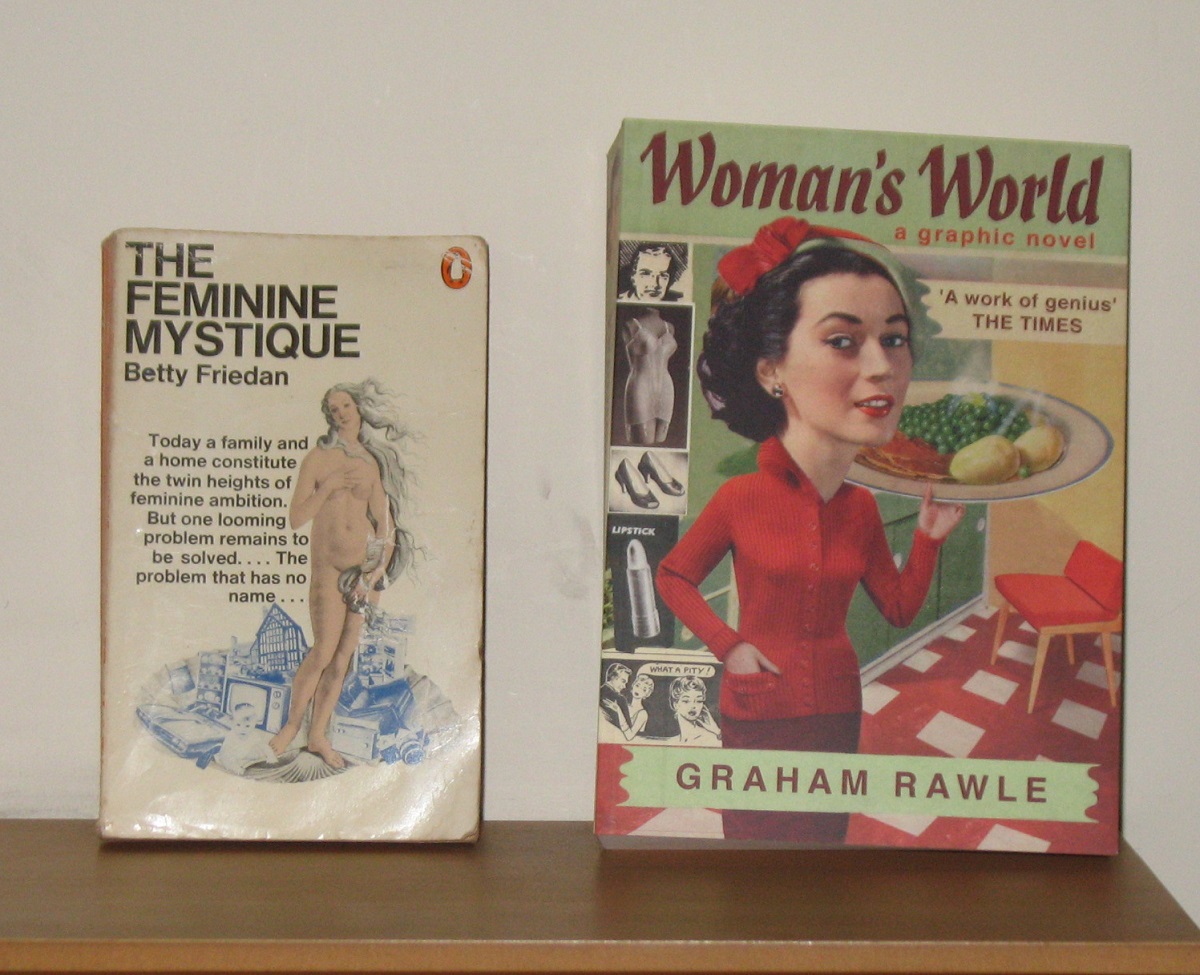
The Feminine Mystique is research for Apollo 4 All That Outer Space Allows. Yup, I’m writing a hard sf novella and I need to reference a classic feminism text… Woman’s World I’d seen ages ago but only now bothered to buy. It’s billed as a “graphic novel”, but it’s not really – the prose has been put together using words cut from women’s magazines. So it’s like a novel-length ransom note, with a, er, plot.

2014-04-25 09.41.25

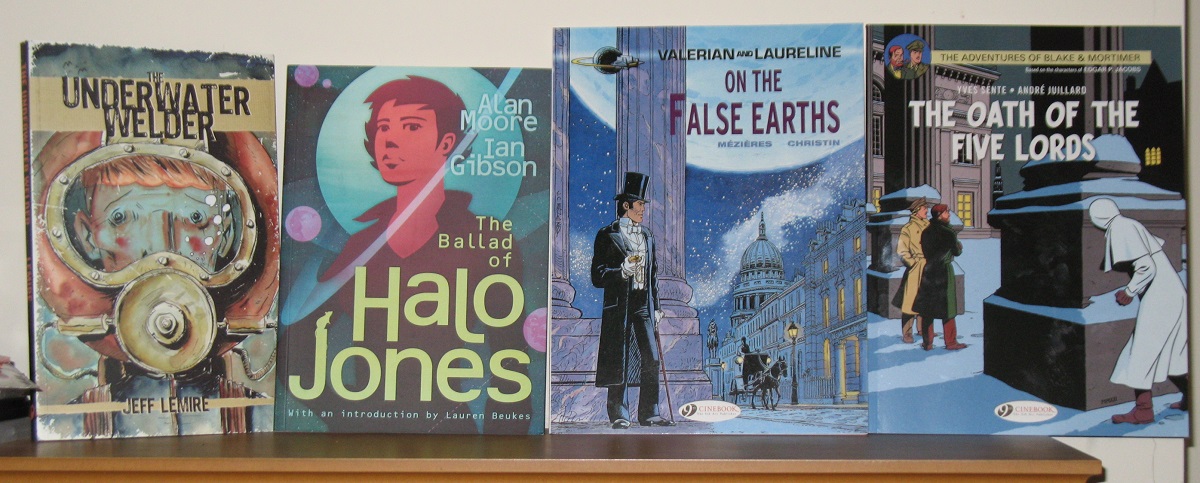
Finally, a handful of graphic novels. The Oath of the Five Lords is the eighteenth book in The Adventures of Blake and Mortimer series. It’s not an original Edgar P Jacobs book, but by Yves Sente and André Juillard. I think Sente writes cleverer stories than Jacobs did – this one is about TE Lawrence, and an anti-government pamphlet he wrote but was not allowed to publish. On the False Earths is the seventh book of Jean-Claude Mézières and Pierre Christin’s Valerian and Laureline series. It was originally published in French in 1977, and Cinebook are slowly publishing English-language editions – and about time too. They’re clever little science fiction bandes dessinée. The Underwater Welder I bought because of the subject, but I can’t say it really grabbed me. And while I subscribed to 2000 AD throughout my teens, I managed to miss the Halo Jones stories – but I’d always wanted to read them so I finally got hold of an omnibus edition, The Ballad of Halo Jones. I might well get a few more trade paperbacks of stories from the comic.


17 Comments

Women-only science fiction anthologies

Men-only sf anthologies are hardly rare, and anthologies where the male writers hugely outnumber the female writers on the table of contents are sadly commonplace. But there have been attempts in the past to redress this. As far as I can discover, there have been thirteen women-only sf anthologies published since the 1970s, and one that describes itself as a feminist anthology and has mostly female contributors. Late this year, of course, we get Alex Dally MacFarlane’s The Mammoth Book of SF Stories by Women, and I’m very much looking forward to seeing what stories she has chosen. But for the time-being, there are…

venusThe Venus Factor, Vic Ghidalia & Roger Elwood, eds. (1972) This is the earliest women-only sf anthology of which I’m aware. It appears to have been sold on the fact it contains “Agatha Christie’s only science fiction story”, ‘The Last Séance’. The remaining stories are by Cynthia Asquith, Gertrude Atherton, Miriam Allen deFord, and the more familiar Zenna Henderson, Anne McCaffrey, Judith Merril and CL Moore. It covers most of the decades from sf’s beginnings to the book’s publication, with Christie’s story from the 1920s, three from the 1930s, one from the 1950s and three from the 1960s.

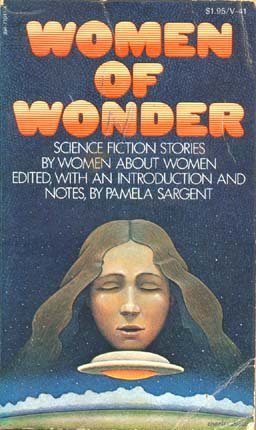
wowWomen of Wonder, Pamela Sargent, ed. (1975) Perhaps the most celebrated of the women-only sf anthologies – or rather, the trilogy which this book begins is perhaps the most celebrated. Sargent lays out her agenda in an excellent introduction (in fact, all three Women of Wonder anthologies are worth getting for Sargent’s introductions) – this is more than just science fiction “by women about women”, it’s about women’s place in the genre, and in the history of the genre, as both protagonists and writers. There are no obscure names in the table of contents, and one story even won a Nebula Award. The stories are by Sonya Dorman, Judith Merril, Katherine McLean, Marion Zimmer Bradley, Anne McCaffrey, Kit Reed, Kate Wilhelm, Carol Emshwiller, Ursula K Le Guin, Chelsea Quinn Yarbro, Joanna Russ and Vonda N McIntyre, and date from 1948 to 1973. I reviewed it on SF Mistressworks here.

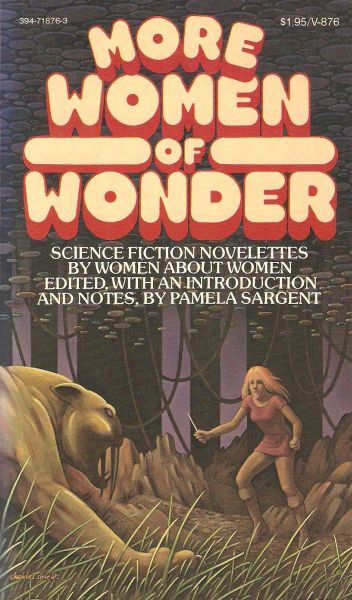
mwowMore Women Of Wonder, Pamela Sargent, ed. (1976) Although the Women of Wonder anthologies were plainly intended to demonstrate that, “Look! Women write science fiction too!”, Sargent does seem to draw her contributions from a relatively small pool. Admittedly, she explains that the anthologies are as much about sf stories about women as they are sf stories by women. Appearing in this volume are CL Moore, Leigh Brackett, Joanna Russ, Josephine Saxton, Kate Wilhelm, Joan D Vinge and Ursula K Le Guin, three of whom appeared in the earlier volume. I reviewed the anthology on SF Mistressworks here.

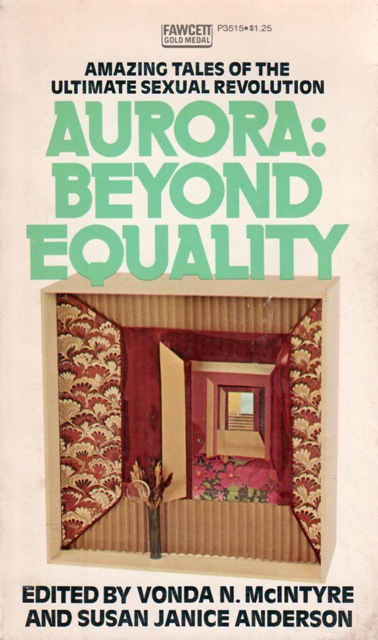
auroroaAurora: Beyond Equality, Vonda N McIntyre & Susan Janice Anderson, eds. (1976) This billed itself as a “feminist science fiction anthology” because its contents were not contributed wholly by women – three of the stories in the anthology were by men, David J Skal, PJ Plauger and Craig Strete. The remaining stories were provided by James Tiptree Jr (twice), Mildred Downey Broxon, Ursula K Le Guin, Joanna Russ and Marge Piercy. The stories are all original to the anthology.

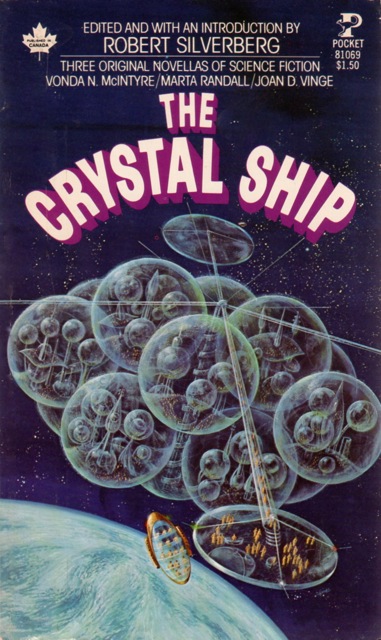
crystalThe Crystal Ship, Robert Silverberg, ed. (1976) Although a male sf writer’s name appears prominently on the cover of this book, it actually contains three original novellas by women: ”The Crystal Ship’ by Joan D Vinge, ‘Megan’s World’ by Marta Randall and ‘Screwtop’ by Vonda N McIntyre. The last also appeared in The New Women of Wonder (see SF Mistressworks review here), and was published in 1989 as one half of a Tor double with James Tiptree Jr’s ‘The Girl Who Was Plugged In’.

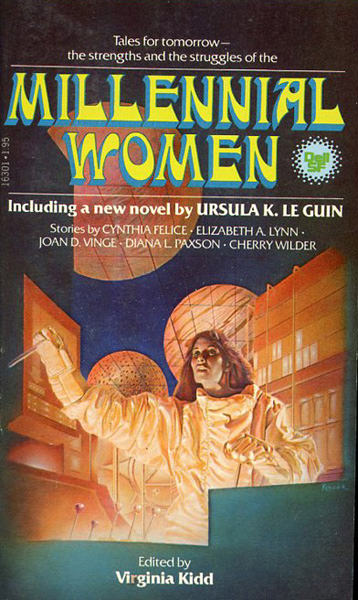
millennialMillennial Women, Virginia Kidd, ed. (1978) Kidd was a member of the Futurians and an influential editor. While this anthology is perhaps not as strong as any of the Women of Wonder anthologies, it does present a wide variety of sf stories – provided by Cynthia Felice, Marilyn Hacker, Diana L Paxson, Elizabeth A Lynn, Cherry Wilder, Joan D Vinge and Ursula K Le Guin. Some editions of the book were sold as Le Guin’s short novel, “Eye of the Heron and other stories”, with Le Guin’s name most prominent on the cover. I reviewed it on SF Mistressworks here.

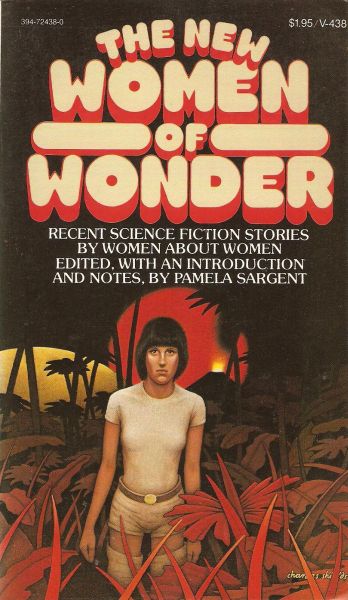
nwowThe New Women of Wonder, Pamela Sargent, ed. (1978) The third and final Women of Wonder anthologies until their 1995 reboot. Sargent once again turns mainly to women writers she has previously published – only Eleanor Arnason, Pamela Zoline and James Triptree Jr are new in this volume. Mind you, their three stories are pretty much stone-cold classics of the genre. Also inside are stories by Sonya Dorman, Vonda N McIntyre, Josephine Saxton, Kit Reed, Carol Emshwiller, Joanna Russ, Chelsea Quinn Yarbro and Joan D Vinge. This volume is the strongest of the three. I reviewed it on SF Mistressworks here.

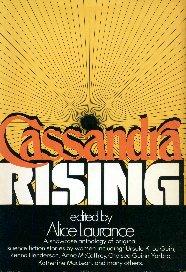
cassandraCassandra Rising, Alice Laurance, ed. (1978) Not an easy book to find, this anthology contains nineteen original stories by Ursula K Le Guin, Kay Rogers, Joan Bernott, Zenna Henderson, Katherine MacLean, Kathleen Sky, Rachel Cosgrove Payes, Josephine Saxton, Grania Davis, Raylyn Moore, Alice Laurance, Anne McCaffrey, Steve Barnes, Barbara Paul, Sydney J Van Scyoc, Beverly Goldberg, Miriam Allen deFord & Juanita Coulson, Jacqueline Lichtenberg and Chelsea Quinn Yarbro. Steve Barnes, incidentally, is not male writer Steven Barnes but the pen-name of Margaret L Barnes (an introductory note explains she used the name “as a way of preserving her family name, Stephenson, lost in marriage”). Judging by some of the introductory comments to the stories made by Laurance, this was an open submission anthology, which may explain the presence of the more unfamiliar names. There is also a foreword by Andre Norton.

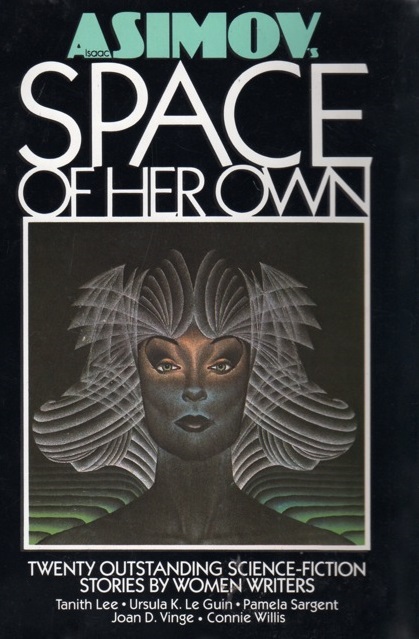
spaceAsimov’s Space of Her Own, Shawna McCarthy, ed. (1983) As the title indicates, this anthology contains women-authored stories originally published in Isaac Asimov’s Science Fiction Magazine. Asimov’s regularly published themed anthologies of contents drawn from the magazine – McCarthy herself edited four of thirty such anthologies. The contents date entirely from 1981 to 1983, and are provided by Connie Willis, Mary Gentle, Leigh Kennedy, Sydney J Van Scyoc, Ursula K Le Guin, Pamela Sargent, Joan D Vinge, Julie Stevens, Mildred Downey Broxon, Cyn Mason, PA Kagan, Sharon Webb, Pat Cadigan, Lee Killough, PJ MacQuarrie, Tanith Lee, Stephanie A Smith, Cherie Wilkerson, Janet Asimov, Beverly Grant and Hope Athearn. None of the stories are especially well-known.

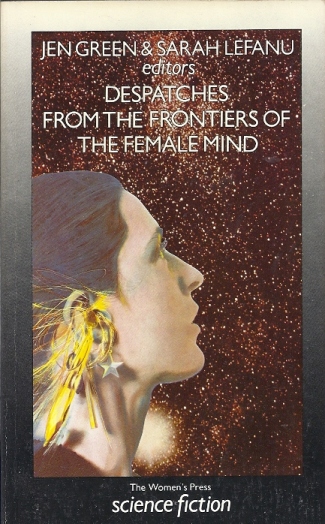
despatchesDespatches from the Frontiers of the Female Mind, Sarah LeFanu & Jen Green, eds. (1985) During the 1980s, The Women’s Press published a number of science fiction paperbacks by women writers, all in similar grey livery. This was the only anthology. It contains original stories by Josephine Saxton, Margaret Elphinstone, Joanna Russ, Gwyneth Jones, Beverley Ireland, Tanith Lee, Lannah Battley, Pamela Zoline, Mary Gentle, Frances Gapper, Lisa Tuttle, Pearlie McNeill, Naomi Mitchison, Zoe Fairbairns, Penny Casdagli, Raccoona Sheldon (AKA James Tiptree Jr) and Sue Thomason. Many of the authors also had novels published by The Women’s Press, reprints and original. The Zoline is a coup – she has only ever written five stories… and one of those was original to her collection, Busy About the Tree of Life. Jack Deighton reviewed Despatches from the Frontiers of the Female Mind on SF Mistressworks here.

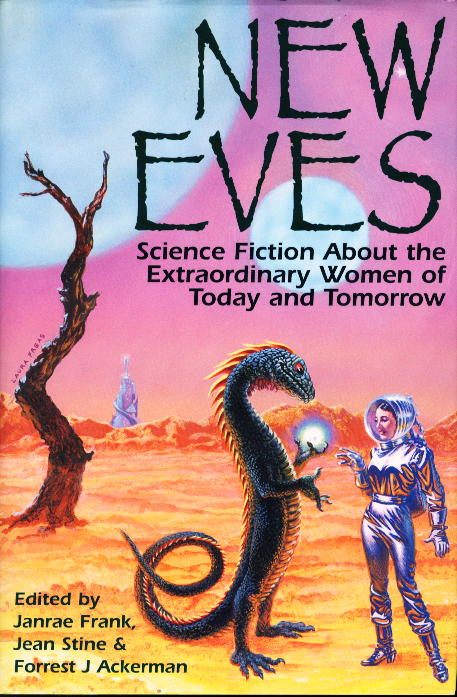
newevesNew Eves: Science Fiction About the Extraordinary Women of Today and Tomorrow, Forrest J Ackerman, Janrae Frank & Jean Marie Stine, eds. (1994) An excellent introduction to science fiction by women from the genre’s beginnings through to the year of publication of the anthology – indeed, the anthology is organised by decade. The editors’ introduction is mostly good, but sabotages itself with a final section which undermines the quite sensible argument presented in the preceding pages – no doubt the lone male editor insisted on this. The stories are organised into sections by decade: ‘The 20s & 30s’, ‘The 40s’, ‘The 50s’, ‘The 60s & 70s’ and ‘The 80s – and Beyond’. Not all of the older stories work for modern readers, but it’s good that they’re documented – works by Francis Stevens (AKA Gertrude Barrows Bennett), Leslie F Stone and Hazel Heald, for example. Later authors may be better known but there are still many who have been unfairly forgotten. I reviewed the anthology on SF Mistressworks here and here.

wowcalssicsWomen of Wonder: the Classic Years, Pamela Sargent, ed. (1995) The first of a pair of reboots of the Women of Wonder series, it actually contains more stories than the the original three volumes – and, in fact, contains many of the stories from those anthologies. Zenna Henderson, Margaret St Clair and Lisa Tuttle are new to the volume, and CL Moore, Leigh Brackett, Marion Zimmer Bradley and Joan D Vinge are all represented by different stories than those in the Women of Wonder trilogy. As for the rest… The stories by Judith Merril, Katherine McLean, Anne McCaffrey, Sonya Dorman, Kit Reed, Chelsea Quinn Yarbro, Joanna Russ and Vonda N McIntyre all originally appeared in Women of Wonder; those by Josephine Saxton, Kate Wilhelm and Ursula K Le Guin were in More Women Of Wonder; and the stories by Pamela Zoline, James Tiptree Jr and Eleanor Arnason were in The New Women of Wonder. There is enough of a difference to consider buying this book if you own the original trilogy, but perhaps less of a reason to track down the three Women of Wonder anthologies if you have this one.

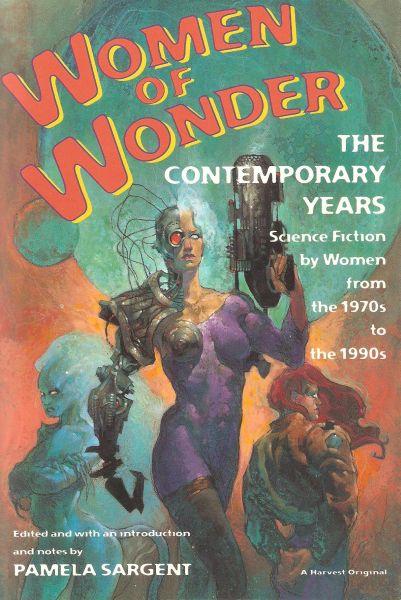
wowconWomen of Wonder: the Contemporary Years, Pamela Sargent, ed. (1995) While the “classic” volume covered the years 1948 to 1977, the same years covered by Sargent’s original trilogy, this one covers the following two decades – with stories from 1978 to 1993. Contributions are provided by CJ Cherryh, Tanith Lee, Suzy McKee Charnas, Carol Emshwiller, Sydney J Van Scyoc, Angela Carter, Mary Gentle, Octavia E Butler, Jayge Carr, Rosaleen Love, Sheila Finch, Pat Cadigan, Pat Murphy, Karen Joy Fowler, Judith Moffett, Connie Willis, Lisa Goldstein, Nancy Kress, Storm Constantine and Rebecca Ore. Although there are names in common with New Eves: Science Fiction About the Extraordinary Women of Today and Tomorrow, there is very little overlap – only the Van Scyoc story, in fact, appears in both. I reviewed this anthology for SF Mistressworks here and here.

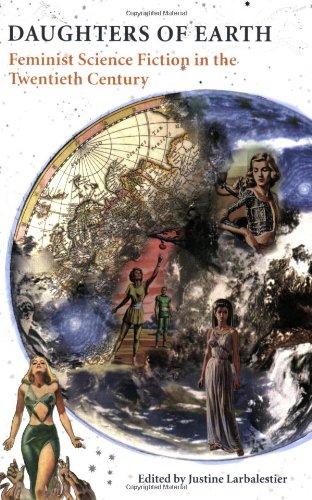
doeDaughters of Earth, Justine Larbalestier, ed. (2006) Unlike the other anthologies in this post, Daughters of Earth is a mix of fiction and non-fiction, as each of the stories is followed by an essay discussing that story and/or its author. Daughters of Earth also covers the widest spread of time of all the anthologies named above – the earliest story is from 1927 and the latest from 2002. The fiction is provided by Clare Winger Harris, Leslie F Stone, Alice Eleanor Jones, Kate Wilhelm, Pamela Zoline, James Tiptree Jr, Lisa Tuttle, Pat Murphy, Octavia E Butler, Gwyneth Jones and Karen Joy Fowler. Some of these stories have appeared in other anthologies mentioned in this post; one or two of them I consider personal favourite sf stories. The non-fiction is provided by Jane L Donawerth, Brian Attebery, Lisa Yaszek, Josh Lukin, Mary E Papke, Wendy Pearson, Cathy Hawkins, Joan Haran, Andrea Hairston, Veronica Hollinger and L Timmel Duchamp. If this anthology has a fault, it’s that it could do with being much larger – it contains eleven pieces of fiction, but I can think of at least another dozen I think deserve the same treatment.

I’ve mentioned throughout this post where reviews of the anthologies on SF Mistressworks exist, and I’ve linked to those reviews. The ones that have yet to be reviewed… will be done some time during this year as I own copies of them all. For those interested in reading more on the subject, there is Partners in Wonder by Eric Leif Davin, The Battle of the Sexes in Science Fiction by Justine Larbalestier, Decoding Gender in Science Fiction and, if you can find a copy, Future Females: A Critical Anthology by Marleen S Barr. There are probably many other books on feminist science fiction, as well as books on, or by, individual feminist writers – for example, Joanna Russ: On Joanna Russ by Farah Mendlesohn or The Country You Have Never Seen by Russ herself. And, of course, everyone should own a copy of Russ’s How to Suppress Women’s Writing

ETA: Despite owning copies of them, I managed to miss out both Despatches from the Frontiers of the Female Mind and Cassandra Rising, as noted in the comments below. I have now added them. Other people have pointed me in the direction of themed all-women anthologies from major publishers and small presses, many of which include both science fiction and fantasy. Those, I think, are a post for another day. The above are explicitly science fiction anthologies, covering the historical spread of the genre and demonstrating that women have been writing sf since its beginnings.


3 Comments

2014 reading diary, #3

I took a break from my Hugo reading to get up to date with some SF Mistressworks reading and then, for some reason, when it came to choosing books by male authors I picked old sf ones (because I’m still alternating my reading between women and men writers). Still, at least now I’ve read those crappy old sf novels and they can go to the charity shop…

Extra(Ordinary) People, Joanna Russ (1984). I read this to review for SF Mistressworks – see here.

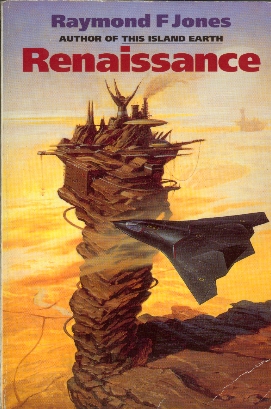
renaissanceRenaissance, Raymond F Jones (1951). Many years ago I had an idea for a story inspired by the plot of the film This Island Earth, so I decided to read the novel as research. It was years before I tracked down a copy and a few years more I finally got around to reading it – see here. Meanwhile, I’d decided to read more Raymond F Jones – even though I had yet to read This Island Earth at the time. I’d already bought Jones’ Beacon novel The Deviates (because Beacon novel; see here) and a copy of The Alien (I loved the cover art; see here). So I picked up a copy of his first novel, Renaissance, and recently pulled it from the shelf to read. To be honest, I wasn’t entirely sure what to expect – I hadn’t been impressed by This Island Earth and that is Jones’ best-known novel. Well, Renaissance is very much a novel of its time, and it makes very little sense. It opens with a giant computer, which seems to run a small colony of scientifically-minded people, but it’s all sort of B-movie weird with a giant curtain of nothingness bordering the colony on one side and a DESERT OF FIRE on the other, and everyone wears togas or something and no one appears to have sex as babies magically appear at some sort of temple… The hero gets into trouble with the authorities for daring to research a taboo subject, biology. He uncovers a conspiracy, so he infiltrates the temple… which requires him to disguise himself as a woman – but given that they wear little in the way of clothing, he uses some sort of plastic material to effect his disguise. No one sees through it, although you wouldn’t know from the text that he was pretending to be a woman for much of the story. Anyway, it turns out the colony is in an alternate universe and was an experiment by Earth, which is now ruled by some sort of secretive cabal, and there’s a historical repository of knowledge safeguarded an AI which wants to overthrow the cabal… And it’s all complete tosh, about as rigorous as blancmange and as plausible as a unicorn pasty. I’ve still got those two other Jones’ books to read – well, three if you include The Secret People, the book on which The Deviates is based – but I doubt I’ll be going any further into his oeuvre.

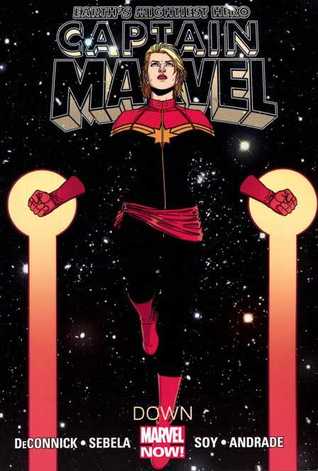
marvel2Captain Marvel 2: Down, Kelly Sue DeConnick, Dexter Soy & Filipe Andrade (2013). I was never really a big comics fan, and I went off superhero comics completely a number of years ago. And even when I did read comics, Captain Marvel was not a title I bothered following. But when I discovered that the first half of this miniseries by Kelly Sue DeConnick featured the Mercury 13, I decided to give it a go (see here). I wasn’t that impressed so wasn’t going to bother with the second volume… until I learnt it took place at the bottom of the sea. It was just too close to Then Will The Great Ocean Wash Deep Above. And now I’ve read it, er, it isn’t. At all. Captain Marvel – Carol Danvers – helps a friend recover something from the sea bottom off the coast of New Orleans. Down there it’s a ship and plane graveyard… and then some alien energy leaks into the wrecks and creates a giant monster out of them which Danvers and her friend must battle. The story then moves to New York and Danver’s private life, trouble with her neighbours, a possible medical condition preventing her from flying, and random attacks by an old nemesis… Like the first book, there’s a smart script there, so it’s a shame the art is routinely awful. You’d think, given that comics are a visual medium, they’d put more effort into it.

Requiem for Anthi, Jay D Blakeney (1990). This is the sequel to The Children of Anthi; I reviewed it for SF Mistressworks – see here.

charismaCharisma, Michael G Coney (1975). During the 1970s, there were a number of male British sf writers all working (mostly) down the same line in the genre. They’d come out of the New Wave – although some had been around prior to that – and, in direct contrast to the big-selling US sf authors, they kept their visions low-key and their focus more literary. Writers such as Richard Cowper, DG Compton, Michael G Coney, Keith Roberts, Robert Holdstock, perhaps even JG Ballard. Their novels were often set in a near-future UK, with light extrapolation, and only a small number of “ideas” – which were there solely to drive the plot. There was no “movement” as such, and several of the writers went on to write completely different genre fiction – Holdstock and his Mythago Wood, Ballard left the genre all together, Coney moved into pure heartland territory with his Hello Summer, Goodbye… Coney’s Charisma, however, very much fits the pattern. It could almost have been written by Compton, in fact. The narrator, John Maine, is the manager of a hotel in the small Cornwall fishing port of Falcombe. He’s also involved with a local boatyard which sells “houseyachts” (hovercraft houseboats, as far as I can make out). Near Falcombe is a Research Station which has been experimenting with a device that gives access to parallel worlds. And Maine discovers by accident that he can travel to these parallel worlds – because the John Maine in those worlds has died, so there aren’t two of them existing in the same world at the same time. And then the owner of the hotel, a lying and cheating businessman, a Tory in other words, is murdered… and Maine travels back and forth to various parallel worlds trying to change events, solve the murder and track down the woman he loves, Susanna. The plotting in Charisma is quite clever, with its multiple parallel takes on the same group of people and their  actions. The world-building is light – it’s pretty much 1975, but with hovercars and 3D television. Unfortunately, Maine, the narrator, is… I hate to say “a product of his time”, but you’d be hard-pressed to find a more male-gazey novel than this – in fact, Maine is an unreconstructed sexist pig. And it leaves a nasty taste in what would otherwise be an interesting and accomplished 1970s British sf novel.

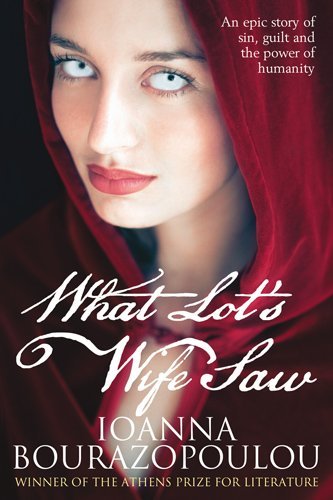
lotswifeWhat Lot’s Wife Saw, Ioanna Bourazopoulou (2013). The last of my Hugo reading. I do have at least one more novel on the book-shelves that qualifies – Kim Stanley Robinson’s Shaman – and I did have time to buy and read a couple more, but I decided to call it a day after What Lot’s Wife Saw. Possibly because I’d heard so much praise for it that I thought it likely to take the final slot on my ballot. Except, well, I didn’t really like it at all. It’s the near-future and the Dead Sea has somehow inundated much of Southern Europe, and coincidentally revealed a rift which contains “salt”, a powerful drug to which much of the world is now addicted. Phileas Book lives in Paris and compiles “Epistlewords” for The Times. These are three-dimensional crosswords whose clues depend on extracts from letters published alongside. Despite numerous descriptions of the Epistleword, and its “meandros” shape, nothing in the novel indicates the Epistleword is either plausible or solvable. The salt mentioned earlier is mined at the Colony, a small company town on the shore of the Dead Sea – which is now completely gelid. How the Dead Sea has a shore after flooding the surrounding area for thousands of square kilometres  is not explained, but the shore is an inhospitable desert populated by “Suez Mamelukes”.  Recently, the governor of the Colony died in mysterious circumstances, and within a fortnight riots tore the town apart. His six closest advisers have all written letters explaining what happened. The mysterious Seventy-Five, the company which mines the salt, asks Book to analyse the letters – because of his Epistleword special talent thing – to discover the truth of the events they relate… A lot of people praised  What Lot’s Wife Saw so I think it’s fair to say my expectations were pretty high. But. It just didn’t work for me. The sections in the Colony felt like they were set in the eighteenth or nineteenth century, which made a nonsense of it being near-future – assuming you swallowed the whole Flood thing, which made no sense anyway. The letter structure was interesting, but the voices of the six were so similar it was often hard to tell them apart. And they were really unlikeable. The writing was mostly good but often drifted into over-writing. And the ending, the solution to the mystery Book is asked to unravel, is… well, it’s banal. I’d been expecting something with much more impact, and not just a quick Scooby Doo scene which explained clues that were so obscure no reader would have spotted them – I mean, EREMOI? Disappointing.

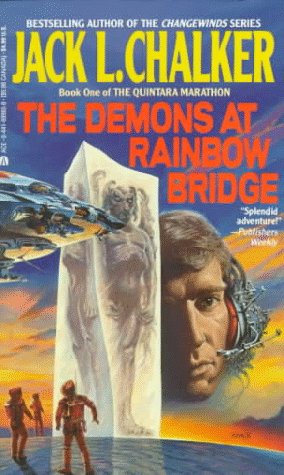
demonsThe Demons at Rainbow Bridge, Jack L Chalker (1989). This is the first book of a trilogy, the Quintara Marathon. Chalker used to bang out trilogies and series as if science fiction were on the brink of extinction. And it showed. In this one, the writing barely reaches competent, the setting is cobbled together from used furniture, and the text is riddled with continuity errors. In this series, the galaxy is split into three mutually antagonistic power blocs, the Exchange, the religious nutters of the Mizlaplanian Empire, and the evil dog-eat-dog empire of the Mycohlians. Humanity went out into the stars and found itself just another alien race among the many claimed by these three polities. The Exchange is ruled by the mysterious never-seen Guardians, and is pure Rand-like capitalism from top to bottom. The Mizlaplanians have hugely powerful mental powers and have convinced everyone they’re gods and those of their subject races with “normal” mental powers are angels and saints. The Mycohlians are parasites and they pretty much leave their anarchic empire to run itself, assuming that the cream – the most ruthless and violent cream, that is – will rise to the top and keep everything together. An Exchange scout ship finds a pair of the eponymous demons on a remote world, and sends out a mayday before being slaughtered. The novel then spends a third of its pages describing the formation of an Exchange team to investigate, then a third on a Mizlaplanian team to do the same, and the final third on the Mycohlian team. All three head for the remote world, where they find a butchered research team, the demons have escaped and… continued in the next book of the trilogy. Chalker was a crap writer and this is far from his best work.

Ark Baby, Liz Jensen (1997). Every time I start a Liz Jensen novel, I tell myself I should read more of her books. I’ll be reviewing this on SF Mistressworks, since it qualifies as science fiction.


14 Comments

Five genre books that should be back in print

A couple of times while reading books to review on SF Mistressworks, I’ve wondered why a book is no longer in print, especially given that many inferior ones still are. A recent such review – it will appear tomorrow – had me thinking about which out-of-print books I’d like to see available once again, books that only saw one or two editions a decade or more ago. It proved a harder list – even limited to five – than I expected. For one thing, the SF Gateway has been doing an admirable job in bringing a number of books back into “print” as ebooks; some of my favourite sf novels have appeared over the last few years in the SF Masterworks series; and many authors have made their back list available as print-on-demand books or on Kindle, such as Marta Randall or Gwyneth Jones. But there are still some books that I think should be re-introduced to a twenty-first century audience:

The Wall Around Eden, Joan Sloczewski (1989). I reviewed this for SF Mistressworks (see here) and thought the book a masterclass in science fiction writing. The last edition in print was from The Women’s Press in 1991. It really deserves to be made available once more.

The Complete Short Stories of Joanna Russ, Joanna Russ. This is a cheat – there’s no such book. But if assorted male authors have had their collected short fiction published, then why not Russ? Her last collection was in 1988, and by my count she had almost seventy pieces of short fiction published. It’s long past time for a collected works.

Coelestis, Paul Park (1993). Okay, so it’s one of my favourite sf novels and I also happen to think it’s one of the best sf novels ever written… But it saw only a single hardback and paperback release in the UK and US and has been out of print ever since.

The Steerswoman’s Road, Rosemary Kirstein (2003). This was an omnibus of two earlier novels, published in 1989 and 1992 (neither of which were then reprinted), but the omnibus appeared only in a single edition and has never been reprinted since. It should be – the books are excellent. See my reviews on SF Mistressworks here and here.

The Grail of Hearts, Susan Shwartz (1992). This is a superior fantasy which has apparently never been reprinted since its paperback edition in 1993.

Anyone else have any genre books they’d like to see back in print?

ETA: By my count Russ had 56 stories published, plus six Alyx stories and two set in the Cthulhu mythos. All but fourteen have been collected.


Leave a comment

Another month, another book haul

… Although I think it’s been longer than a month since my last book haul post. Which may explain why so many books appear in this one. Except my book haul posts always seem to feature a large number of books… I really must cut back on the number I buy. I managed to read nine books in one weekend during February, which took less of a chunk out of the TBR than I’d have liked since I’d bought so many damn books that month. Ah well. The following are the usual mix of subjects and genres and stuff.

2014-03-07a

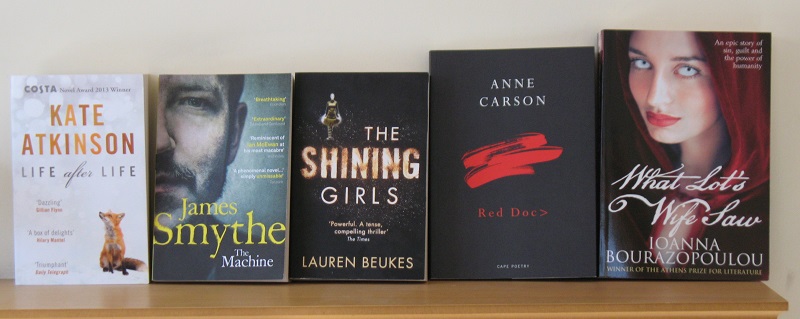
My Hugo reading – a bunch of 2013 titles I bought to round out my ballot for best novel. I’ve already read Life After Life, The Machine, The Shining Girls and Red Doc> (see here). Only What Lot’s Wife Saw to go (and also Kim Stanley Robinson’s Shaman, which I bought last year when it was published).

2014-03-07b

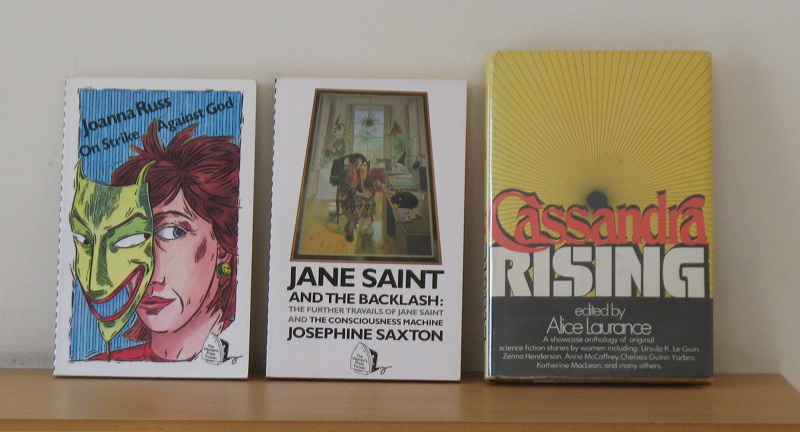
Some books for SF Mistressworks. Cassandra Rising is a SFBC women-only sf anthology, and the only copy of it I could find happens to be signed by half the contributors. Oh well. Jane Saint and the Backlash is the sequel collection to Saxton’s The Travails of Jane Saint, which was also published by The Women’s Press. On Strike Against God isn’t, as far as I’m aware, genre, but I’ll decide whether it’s suitable for SF Mistressworks once I’ve read it. All three books were bought on eBay.

2014-03-07c

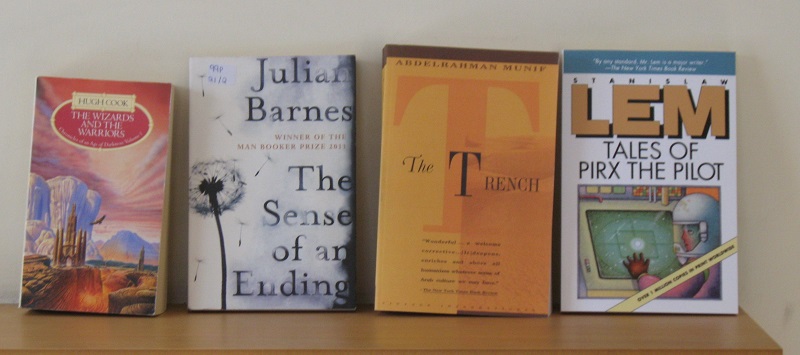
An assortment of paperback fiction. I want to read more Lem, hence Tales of Pirx the Pilot. Which reminds me, I must get a copy of the film adaptation – I found a website the other day that sells Russian DVDs (many of which have English subtitles). The Trench is the sequel to Cities of Salt, a novelisation of the US exploitation of the Saudi oil reserves, which I enjoyed (see here). The Sense of an Ending was a charity shop find; it was shortlisted for the Man Booker Prize. The Wizards and the Warriors is the first book of the Chronicles of the Age of Darkness, which I’ve heard isn’t too bad – now I have the first three books I’ll see what they’re like.

2014-03-07d

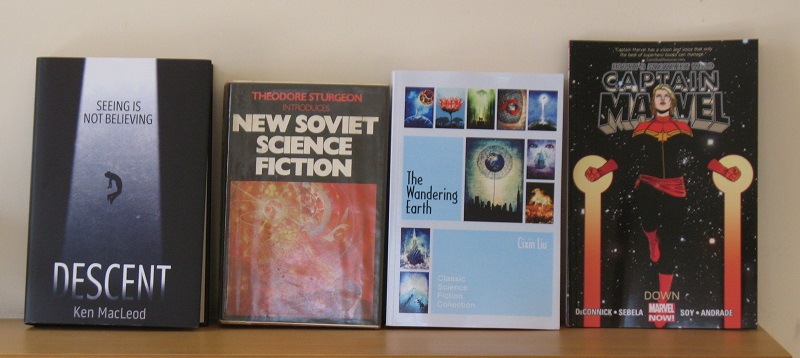
An assortment of hardback fiction. And a graphic novel. The stories of Captain Marvel 1: In Pursuit of Flight (see here) and this second volume, Captain Marvel 2: Down, have pretty much the same inspirations as Apollo Quartet 3, Then Will The Great Ocean Wash Deep Above. It’s as if Kelly Sue DeConnick took the two narratives of my novella and wrote her own versions of them – except, of course, the timing makes that impossible. Both feature a character called Helen Cobb, clearly based on Jerrie Cobb. The first Captain Marvel graphic novel is about the Mercury 13, and the second partly takes place at the bottom of the sea in a ship and plane graveyard. A very weird coincidence. Sadly, the story is mostly typical superhero fisticuffs, and the art is pretty poor. Cixin Liu’s fiction has been recommended to me many times, so I decided to pick up a copy of The Wandering Earth, a collection of his novellas translated into English for the first time. Browsing on eBay one day, I discovered that Macmillan had published a series of Soviet sf books back in the 1970s. New Soviet Science Fiction is an anthology, but the series also featured several novels. I smell a collection coming on. Finally, Descent is Ken MacLeod’s latest novel.

2014-03-07e

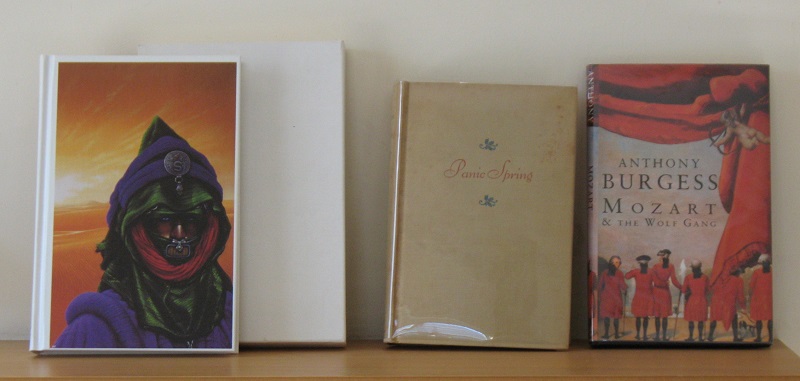
Some collectibles. Mozart & the Wolf Gang is a signed first edition. The other two books are among the most expensive I’ve ever bought – I won’t say how much each cost, it’s a little embarrassing. Panic Spring is Lawrence Durrell’s second novel, which was published under the name Charles Norden as his first did so badly. This is the US first edition, sadly, not the UK. Eye is a collection by Frank Herbert and copiously illustrated by Jim Burns. There were 175 slipcased, signed and numbered editions published, and now I have one of them.

2014-03-07f

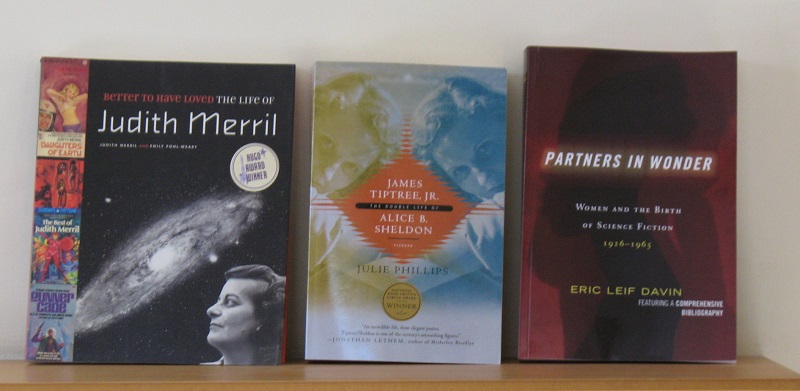
Research material for Apollo Quartet 4, All That Outer Space Allows. The final novella of the quartet will be about Apollo astronauts, of course it will… sort of. But it’ll chiefly be about an astronaut’s wife, and women science fiction writers – hence a pair of biographies of the latter: Judith Merril’s, Better to Have Loved; and James Tiptree Jr’s, The Double Life of Alice B. Sheldon. Partners in Wonder is about early women sf writers – I might write about it for SF Mistressworks after I’ve read it…

2014-03-07g

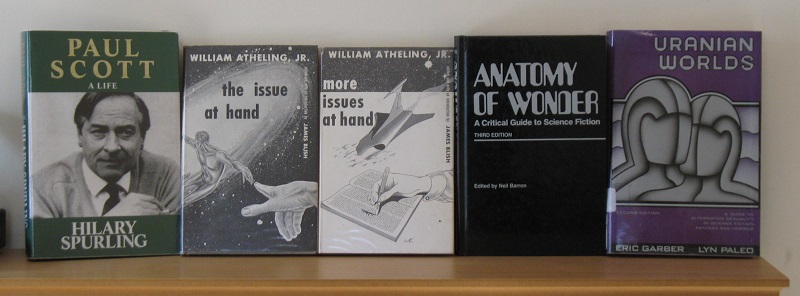
Some reference books, genre and otherwise. The Issue at Hand, More Issues at Hand and Anatomy of Wonder were all bargain purchases from Cold Tonnage. Uranian Worlds I decided to buy when I was trying to look something up online with very little success. I bought it from an Amazon marketplace seller; the book proved to be an ex-library copy, but the seller cheerfully refunded me half the selling-price. Paul Scott: A Life is a biography of, er, Paul Scott.


4 Comments

2014 reading diary, #2

I spent much of February catching up with 2013 novels for my Hugo ballot. While this included a number of books by authors I usually read and enjoy, I also chose a number of edge cases that had looked interesting. I also didn’t have a computer at home during two weeks of February, which is why I was uncharacteristically quiet during the latter half of the month… It also meant I got a lot of reading done – nine books in four days at one point – so I’ll keep my comments on each book short as there’s more than the usual number of them. Incidentally, I’m still sticking to alternating genders in my fiction reading.

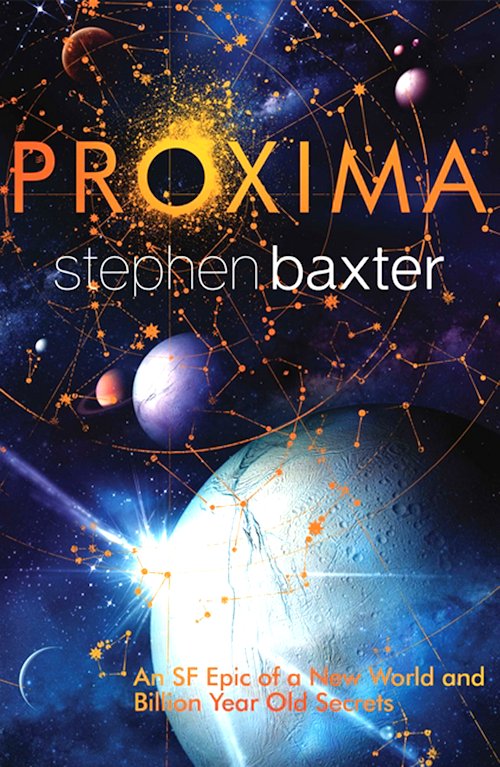
proxima-ukProxima, Stephen Baxter (2013). Not sure what I was expecting this to be like – the publicity suggested I might like it… but I found it more like Exultant (see here) than Coalescent (see here). In other words, I thought it juvenile and thick with indigestible lumps of exposition; and while there was plenty of invention on display, no single idea was neat enough to make the book stand out. Criminals are transported to an inhabitable exoplanet in the titular star system, and what a surprise they prove completely unsuitable as pioneer colonist material. We’ve got rape and violence and warlordism in a century that has settlements throughout the Solar System and can even send spacecraft to another planetary system. But those criminal types do stumble across an enigmatic alien device which links the exoplanet with Mercury. This novel won’t be going on my Hugo ballot.

reddocRed Doc>, Anne Carson (2013). This was shortlisted for the Kitschies earlier this year, which is why I bought a copy and read it. It’s a poem, told in a mix of styles, and I’m still not entirely sure what to make of it. While I find its genre aspects all a bit wishy-washy, there are moments of great beauty in it, and the dialogue in the told sections reads truer than anything you might find in a category genre novel. Since it’s not a novel, novella or short story, but a poem, I’m going to put it on my Hugo ballot as a related work. As far as I know, there’s nothing in the rules which says a related work has to be non-fiction.

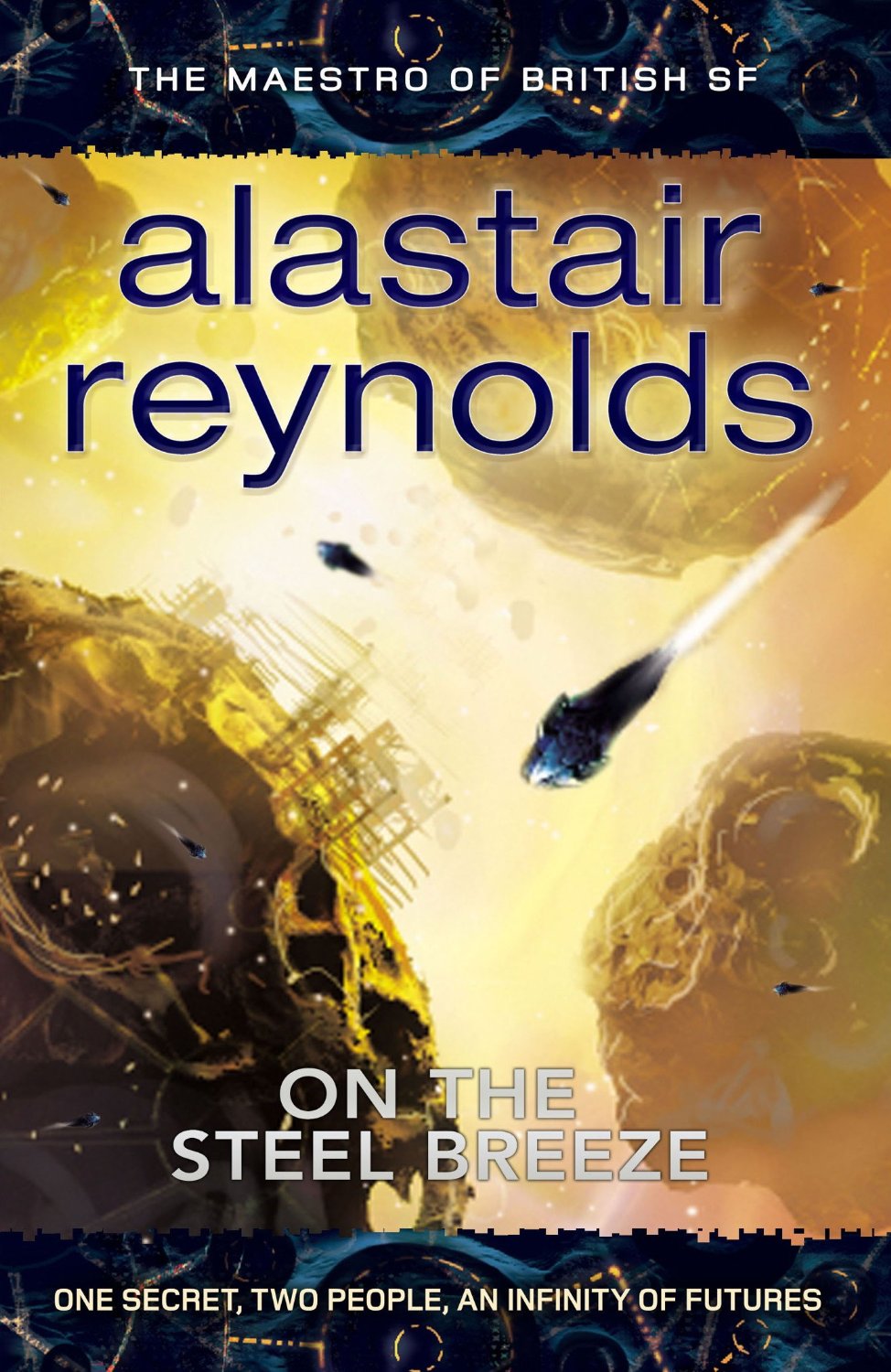
On-the-Steel-BreezeOn the Steel Breeze, Alastair Reynolds (2013). This is the sequel to Blue Remembered Earth and the middle book of the Poseidon’s Children trilogy. Much of it concerns a covert war prosecuted by Arachne, an AI built to monitor a huge space-based telescopic array, because of course all machine intelligences are completely fixated on destroying non-machine life. There’s also a convoy of “holoships” – hollowed-out asteroids – en route to an exoplanet, on whose surface is an enormous enigmatic alien feature, the Mandala. The story focuses on three “clones” of Chiku Akinya, labelled Red, Yellow and Green – it’s a bit more complicated than cloning, something called “Quorum Binding”, which allows them to update each other’s memories, as is helpfully explained to one of the Chikus early in the novel by another character, even though, of course, she already knows how it works. One of the Chikus stayed on Earth; one set off in pursuit of Eunice Akinya’s space craft, Winter Queen (from Blue Remembered Earth); and one joined the  fleet of holoships heading for the exoplanet Crucible. There are some nice set-pieces – I liked, for example, the one set on the surface of Venus, even if it didn’t seem to add much to the plot. The societies in the holoships turn totalitarian because, of course, totalitarianism is the default setting of any society in a science fiction novel – much as I disagree that hard sf is inherently right wing, the preponderance of right-wing societies in it is tiresome. There are also some uplifted elephants, a genius scientist who has a set of pronouns all of “vir” own, more about the mer people from the first book, and even some giant enigmatic alien machines orbiting Crucible, the presence of which had been hidden from humanity by Arachne. It’s certainly a polished novel,and what Reynolds does he does well, but it doesn’t quite meet the promise suggested by the first book of the trilogy. Of course, there’s still a final book to come, so perhaps that will do the trick. This book is not going on my Hugo ballot.

lifeafterlifeLife After Life, Kate Atkinson (2013). I’d never heard of Atkinson until her Jackson Brody books were adapted for television – even though her debut novel won the Whitbread Book of the Year in 1995 and she’s a pretty big-selling author in the UK. However, it was hard not to be aware of Life After Life, her latest book, as it’s already won the Costa Novel Award, is arguably genre, and has been talked about by a number of my online friends and acquaintances. A young woman born in 1910 dies at various times during her life, each time being reborn back in 1910 and somehow – sometimes only through some subconscious prompting – each time managing to avoid her fate from the previous time around. I thoroughly enjoyed this book – a pleasantly engaging protagonist, nicely witty prose, and a very smooth read without being as bland as commercial fiction. Recommended. I’ll be putting this one on my Hugo ballot.

themachineThe Machine, James Smythe (2013). Smythe is banging out books like they’re an endangered species, but if the two I’ve read are any indication he’s no hack. The machine of the title of this novel is used to remove troublesome memories, but it’s later discovered that prolonged use puts the patients into a persistent vegetative state. Like Vic, Beth’s husband, a soldier who returned from the war with severe PTSD, turned increasingly violent and so opted for treatment with the Machine, but is now in a nursing hostel, oblivious to everything. So Beth buys a black market Machine, “kidnaps” her husband, and uses her Machine to restore his memories and so restore him. The name “Ballard” has been thrown around a lot in reference to The Machine, and certainly the setting – a sink estate on a post-global-warming Isle of Wight – feels very Ballardian, although the story itself doesn’t feel much like a Ballardian commentary on society. The prose is good, written in present tense with no quotation marks – which, obviously, is a style I’m all for… but why does it feel like everyone is doing it these days, eh? The ending may not come as much of a surprise, although perhaps reading Smythe’s The Explorer I’d been primed to expect a twist. Good stuff – and I have one spot left on my Hugo novel ballot and this is the current front-runner for it.

22.-The-Shining-GirlsThe Shining Girls, Lauren Beukes (2013). After Beukes’ Clarke Award-winning Zoo City, we have a high-concept commercial thriller, though the concept is enough to make it genre: a time-travelling serial killer. There’s a house in Chicago, and the killer can use it to access any time from the 1930s, when he discovers the house, to the 1990s. He jumps back and forth through the decades, stalking and killing young women, often ones he has previously visited while they were kids. They are the “shining girls”, so called by him because they have some quality which would have led them to live remarkable lives had he not murdered them. The Shining Girls is a fast, pacey read with a good sense of time and place, but the plot feels a bit too choppy to gel in places and the whole never feels quite complete somehow. This one will not be going on my Hugo ballot.

DofPThe Disestablishment of Paradise, Phillip Mann (2013). I’m a fan of Mann’s science fiction – I have all of his novels in hardback. So I was particularly happy to discover he had something new out, seventeen years after his last novel, 1996’s The Burning Forest. But, oh dear. The Disestablishment of Paradise refers to the final months of the Earth colony on the exoplanet called Paradise – this is what disestablishment is, the removal of a colony from a world – and the scientist, and her “assistant”, who remain behind and learn something more about the planet and its flora (it has no fauna). Particularly the Peripatetic Dendron, which is a sort of giant animated three-legged tree, and the Michelangelo-Reaper, which is a plant with psychic powers of some sort. There’s no denying that Paradise is a fascinating place, and that Mann draws a beguiling picture of it; but the human dynamics in The Disestablishment of Paradise are woefully old-fashioned (especially in regard to the female characters) and the dialogue is stilted at best. The story is framed as the novelisation of the reminiscences of the scientist, as told to a writer best-known for dark and edgy children’s books; and I’m not entirely sure what that conceit adds. There are occasional asides to the reader – and several appendices of supplementary material, which are referenced in the narrative – but it’s not enough to jolly along the somewhat plodding pace. One of the longest set-pieces is the “saving of the Dendron”, which seems to go on and on and on, with an excess of detail into Dendron physiology. After reading The Disestablishment of Paradise, I’m going to have to reread Mann’s earlier novels, as I don’t remember them being as dull or stodgy as this one. The Disestablishment of Paradise will not be appearing on my Hugo ballot.

The Children of Anthi, Jay D Blakeney (1985) I read this for review on SF Mistressworks.

martian-sandsMartian Sands, Lavie Tidhar (2013). Or Tidhar does Dick. Again. I am not much of a fan of Philip K Dick’s work – there are a couple I like, but the only reason I own so many of his damn books is because almost half of the SF Masterworks series consisted of works by him. Martian Sands reads like a pastiche of Dick – and for me, that’s its biggest problem. It’s as if the plots and settings of a dozen of PKD’s novels were glommed together, and then roughly stitched into a single narrative using a magic chest full of sf references and in-jokes.  I know some preferred this to The Violent Century, but I thought the other book much the better of the two. I won’t be putting Martian Sands on my Hugo ballot

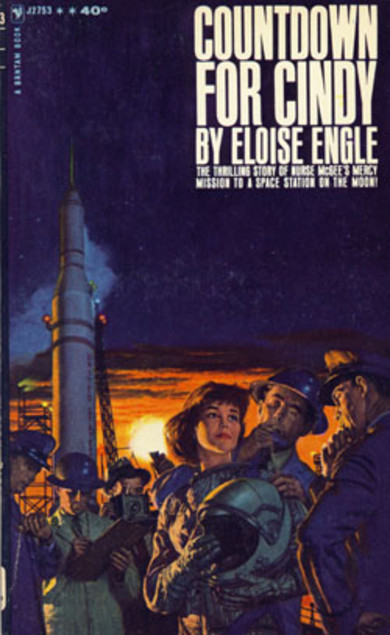
countdownforcindyCountdown For Cindy, Eloise Engle (1962). I couldn’t resist this when I saw it on eBay, chiefly because it offered a 1960s take on women in space – which is something I’d covered in Apollo Quartet 3, Then Will The Great Ocean Wash Deep Above. The “MOON NURSE!” on the back was just a bonus. Interestingly, according to a foreword the author interviewed both Jackie Cochran and Jerrie Cobb, both of whom appear in Then Will The Great Ocean Wash Deep Above (actually, Cobb is one of my novella’s two protagonists). I’m working on a full review of Countdown For Cindy, to be posted here soon-ish.

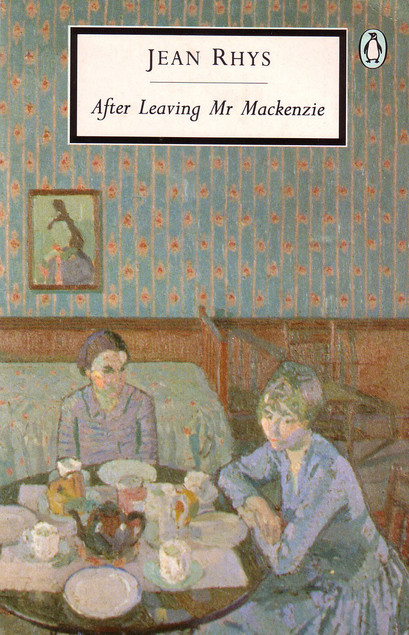
aftermackenzieAfter Leaving Mr Mackenzie, Jean Rhys (1930). It was M John Harrison who recommended Jean Rhys on Twitter – some time last year, I seem to recall – during a conversation about women writers. Shortly afterwards, I stumbled across this book in a charity shop, and decided to give it a go. Julia has left her husband after the death of their baby, and is now living hand-to-mouth in a Parisian fleapit hotel. Desperate for money, she returns to London, hoping to sponge off relatives and/or past lovers. There’s a distant tone to this short novel, a weird lack of affect, as if Julia didn’t quite fully inhabit her life or the story – and, as a consequence, it’s hard to really care if Julia is successful or not. There’s an admirable clarity to the prose, and some nice turns of phrases in the descriptions – like “Behind the curtains was a green and optimistic sun-blind, faintly irritating, like a stupid joke” – and it all adds up to a curiously timeless prose-style. The sensibilities and lifestyles being described might be from the Thirties, but the language feels like it could belong to any decade of the Twentieth Century. That’s pretty impressive. If I see any more books by Rhys in charity shops, I’ll probably take a punt on them, but this one feels a little too languid for my tastes so I’ll not be in any rush to track down her work.

relevant_jonathan1The Man from Charisma, Ted Mark (1970). I’ve no idea what possessed me to buy this book, or one of its sequels, Rip It Off, Relevant!. Perhaps I read something somewhere that suggested it might be amusing. It wasn’t. Jonathan Relevant is discovered naked on an iceberg after test missiles launched by a US and a Soviet nuclear submarine accidentally collide and explode above it. Relevant appears different to different people – to Soviet scientist Dr Ludmilla Skivar, he’s a studly Gagarin; to US Paper Clipped scientist Professor Von Schweindrek, he’s a model of Aryan masculinity; to African-American student activist G-for-George Pullman Porter, he’s Black Panther Eldridge Cleaver… The Soviets lay claim to Relevant, but the CIA steals him from them, and hides him in a CIA-sponsored research institute at Hartnell University… whose admin building has just been occupied by radical students protesting a number of different things. Relevant gets dropped into the middle of this, and tries to resolve it – which shouldn’t be that difficult given how everyone sees him as what they want to see. But this is the late 1960s, so… “Every man sees him as his hero. Every woman sees him as her lustful dream.” Sigh. We’re strictly in right-on “comedy” territory from the Swinging Sixties, with all the bad and borderline offensive jokes that entails – not to mention some outright offensive characterisations of various groups of people. I’ve no idea what possessed me to buy this book, and now I’ve read it I wished I hadn’t bought it. We’ll have to see if the sequel is any better – but I’m not holding my breath….


3 Comments

2014 reading diary, #1

This year, I’m going to try and be a little more disciplined about writing up what I’ve read. So I’ve decided to title the series of posts a “reading diary” and I hope to put one up every month or so. As usual, however, the choice of books will be somewhat eclectic – a mix of genre and literary fiction and, er, other stuff – and I’ll also mention any non-fiction I’ve read for research. You’ll notice that the fiction alternates between male and female writers. That was one of my New Year’s Resolutions, and so far I’ve managed to stick to it.

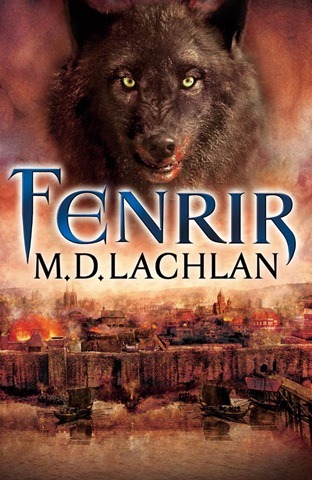
lachlan-fenrir7Fenrir, MD Lachlan (2011). I really liked Lachlan’s debut, Wolfsangel, to which Fenrir is a sequel, so I had pretty high hopes for this. Unfortunately, it didn’t quite meet them. The plot – deliberately – echoes that of Wolfsangel, but this time takes place in the late ninth century, and in France. Three characters unknowingly act out the romantic triangle from the earlier book, which apparently echoes some Norse god romantic triangle and will bring about Odin’s return to Earth. Fenrir opens with the Siege of Paris (885 – 886), and ends 532 pages later in Aldeigjuborg, a Viking-ruled Russian kingdom near what is now St Petersburg. The first member of the triangle is Aelis, the sister of the ruler of Paris, who manages to escape the siege and then has to evade capture by the marauding Vikings. The other two members are male – Jehan, a crippled monk, and Raven, a Viking shaman. The ruler of Aldeigjuborg wants Aelis for his wife, and has sent a trader, Leshii, and a wolfman, Chakhlyk, to fetch her. She doesn’t want to go, of course. And Raven is after her for his own – and his sister’s – nefarious purposes. And when the wolf is awakened in Jehan, by Norse magic, then he becomes fit and able, and he gets involved too. I said when I read Wolfsangel that werewolves and Vikings were not really my thing, but that novel did something very interesting with them – and Fenrir continues in that vein, but unfortunately it’s a bit too long for its story. The first half dragged badly in parts. It also didn’t help that “dirham” was incorrectly spelled as “dihram” throughout, or that one character’s name went from Swava to Suava and back again. Having said that, some of the set-pieces are really good, and I’ve every intention of continuing with the series.
minaretMinaret, Leila Aboulela (2005). The narrator is the daughter of a well-to-do Sudanese businessman – or rather, he was well-to-do. He prospered under the country’s old regime, and he and his family were almost aristocracy. But when that government was overthrown, he was arrested and executed as a symbol of its corruption. So now the narrator, Najwa, is in London, and working as a nanny since all the family’s riches (justly earned or not) have been seized. The woman she works for is a young Arab who grew up in the Gulf states, is married to an Egyptian currently working in Oman, and is studying for a PhD at a London university. She’s not especially religious. Her younger brother, also a student, however, is religious. And Najwa, who has discovered religion since coming to London, is drawn to him. But it’s not a match the family condone. Minaret is more about Najwa, how she became the woman she is, than it is about her burgeoning relationship with her employer’s brother. The writing is very good throughout – Aboulela writes in English – and Najwa is a beautfully-drawn character. I thought this a much better book than Aboulela’s earlier The Translator.

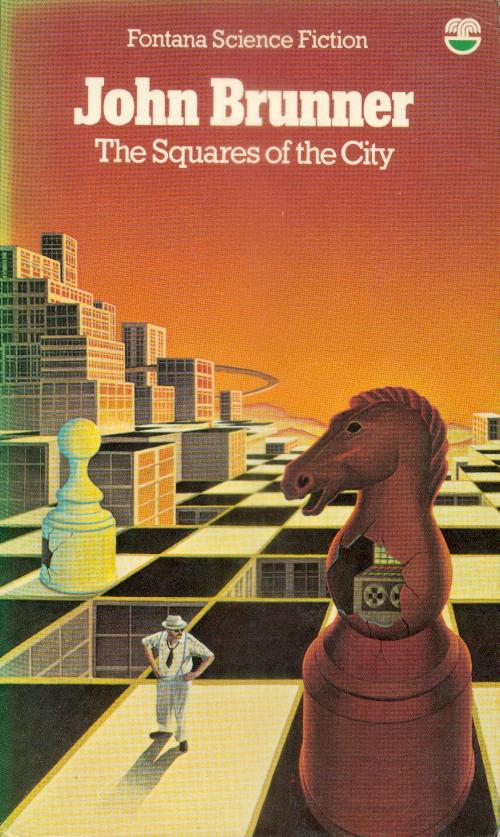
squarescityThe Squares of the City, John Brunner (1965). An Australian traffic analyst is invited to a South American model city clearly patterned on Brasilia (although the invented country in which it is located is Spanish-speaking) because the visionary president of the nation believes traffic analysis will cure his lovely city of its unsightly slums. From the moment of his arrival, the narrator is in over his head, as it turns out there are two main political factions in the city and he’s being used as a tool by one of them. Though he repeatedly says he can provide short-term solutions to the slums, but in the long term proper housing and education is the only way to really fix the problem, the city authorities want a quick result. And then people start to get killed. I liked that Brunner had based his invented city of Vados on Brasilia, and it seemed to me he sort of captured a similar architectural flavour. The characters also seemed to suit the setting, although the narrator drifted a little too close to Overcompetent Man at times. However, The Squares of the City is apparently notable because the plot is based on a famous chess match, with each of the characters representing various pieces. To be honest, not knowing this in no way changes how you read the story, nor does knowing it actually help you parse the plot. It’s a gimmick that means nothing to the reader, and I’m surprised Brunner even bothered mentioning it. Yes, it turns out the two chief movers and shakers in Vados – the president and the leader of the opposition – have been playing a chess game with people, and that’s why there have been deaths, but it seems too abstracted to make any real difference. I think that makes the novel more of a curiosity than anything else.

Journey, Marta Randall (1978). See my review on SF Mistressworks here.

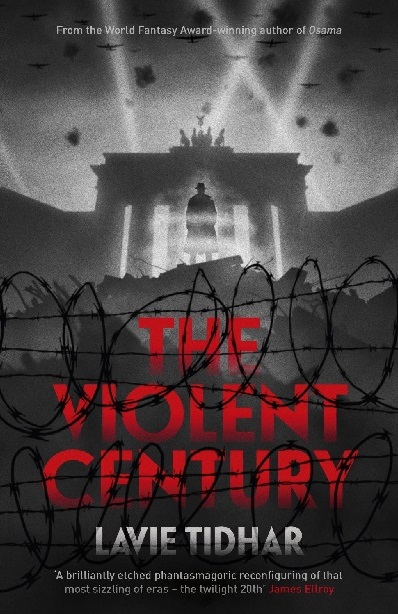
violent-century-lavie-tidharThe Violent Century, Lavie Tidhar (2013). This novel landed in October last year with quite a thud. In fact, only last weekend a friend mentioned he was thinking of reading the book because it had received so many positive notices. Which is, I suppose, as good a reason to read a book as any. The Violent Century covers, well, not even a century really – it opens in the 1920s, but the present of the story is labelled only “the present”, although clues suggest it is near the turn of the millennium, if not just after. Back in the early part of the twentieth century, Dr Vomacht inadvertently released a probability wave which changed a small proportion of the world’s population, effectively giving them superpowers. In Britain, these superpowered people were recruited as spies and undercover agents, and spent much of WWII trying to track down Vomacht, or eliminate Germany “Übermenschen”. The book’s two protagonist are Fogg and Oblivion, a pair of British agents, and the novel covers their escapades during WWII and the Cold War, as told in flashback from the present-day. Fogg has been brought out of retirement because something has happened, and the flashbacks lead up to the explanation of that. The structure works well, although there’s a niggling sense at times that some information is left unsaid when it needn’t be because the requisite flashback has yet to take place. And speaking of niggling, The Violent Century reminded me of something else but I could never quite put my finger on it. It borrows heavily from comicbook mythologies, of course; and there’s a pulpish flavour to its alternate history… but there was something in the mix that was quite heavily reminiscent of… something. I also thought the ending was a bit weak. A strong novel, yes; but not, I think, one I’ll be putting on my Hugo ballot.

Fireflood and Other Stories, Vonda N McIntyre (1979). A review of this will be posted up on SF Mistressworks in a couple of weeks.

Europe in Autumn, Dave Hutchinson (2014). I reviewed this for Vector.

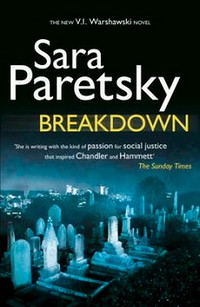
breakdownBreakdown, Sara Paretsky (2012). I’ve been a fan of Paretsky’s VI Warshawski novels since first stumbling across them in the UAE in the early 1990s. In recent years, the politics have been much more in your face – not necessarily a bad thing, though it does sometimes over-balance the story. Breakdown is a case in point. It opens with Warshawski stumbling across a recently-murdered man in a cemetery while trying to track down a group of missing teenage girls who have gone there to practice a ritual tied into their love of an urban fantasy series of books (plainly based on Twilight). The plot spirals out from there to feature the right-wing media, particularly the sort of moronic far right television pundit who presently seems bafflingly popular in the US at the moment. There’s also an ultra-rich Jewish industrialist, possibly with a shady past, who is the chief target of the  TV pundit’s attacks, and even a pair of senators battling for the local seat – a liberal, backed by the industrialist; and a Tea Party-type loon, backed by the right-wing media. If Paretsky’s novels are overly target-rich from a liberal perspective, Warshawski is turning increasingly quixotic with each subsequent book. Parestsky chooses big themes, but gives Warshawski small victories; it’s a strategy guaranteed to leave you angry when you finish the book. And no matter how righteous that anger, Warshawski’s – and by extension, the reader’s – inability to change things makes you wonder what the point of it all is. But I like Warshawski as a character, I like that Paretsky wears her politics on her sleeve (and I mostly agree with them), and so I’ll continue to read these books.

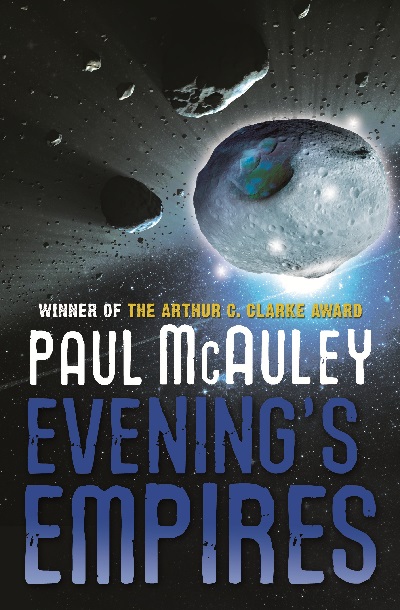
Evening-empireEvening’s Empires, Paul McAuley (2013). I read this because it has been shortlisted for the BSFA Award this year, even though it’s the fourth book in a loose series – preceded by The Quiet War, Gardens of the Sun and In the Mouth of the Whale, and only the first of which I’ve read (and I didn’t really like it; see here). Evening’s Empires can be read as a standalone, but it also makes numerous references to the events in those earlier novels. All the same, I didn’t find that an obstacle, though it did leave me curious about the earlier two books. But. I’d not really taken to The Quiet War, and I suppose I’d not really expected to take to Evening’s Empires, although something about its blurb did suggest I might be mistaken. Perversely, I found myself underwhelmed by the novel thanks to something I’d not even considered… Evening’s Empires opens with Gajananvihari Pilot marooned on a tiny asteroid on the outer edges of the Belt. The asteroid had once been inhabited – most recently by an ascetic – so there is enough infrastructure present for Hari to survive. He’s been marooned because dacoits captured his father’s ship but he managed to escape. The hijackers were after the fruits of Dr Gagarian’s research into the Bright Moment, a single vision granted to every member of humanity at precisely the same moment when Sri Hong-Owen “vastened” and melded with the alien intelligence present in Fomalhaut’s gas giant (which is apparently what happened during In the Mouth of the Whale). When a pair of dacoits come to capture Hari – and Dr Gagarian’s head, with which he has absconded – he kills them and uses their scooter to escape… and promptly follows a series of clues around the Asteroid Belt, and out to Saturn, in order to have his revenge on the hijackers and discover why Dr Gagarian’s research was so important to them. McAuley describes a Solar System in decline – the places Hari visits are long past their glory days. There have been system-wide wars, empires have risen and fallen, and in many cases, those that are left are just living in, or have re-purposed, the ruins of earlier centuries. Which means that while Evening’s Empires is very much hard sf, it mostly reads like space opera. McAuley has also filled his story with in-jokes. Each of the sections, for example, is named for a sf classic of the past. And part of the plot’s climax takes place at the Memory Whole, an Earth-orbiting asteroid which hosts a virtual environment for avatars of early uploaded post-humans. One of these avatars is quite cutting to Hari about humanity’s predilection for living in the fantasies of earlier ages. Given that the Memory Hole is a real-life UK-based fanzine collection, I can’t decide if McAuley is taking the piss or writing a savage indictment of science fiction…
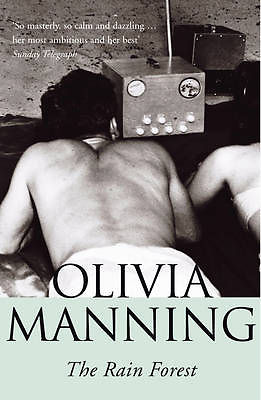
therainforestThe Rain Forest, Olivia Manning (1974). I loved Manning’s The Balkan Trilogy and The Levant Trilogy when I read them several years ago, so I always keep an eye open for books by her when I visit charity shops. Which is where I found this copy of The Rain Forest. It’s her last novel, and set on the invented Indian Ocean island of Al-Bustan (clearly based on Mauritius; there are several mentions of the dodo). Hugh and Kristy Foster have moved temporarily to Al-Bustan so Hugh can take up a position in the local British administration of the island. He’s actually a screenwriter – and Kristy is a successful novelist – but the industry has collapsed in the UK and left him out of work and out of cash. The couple are put up in the Daisy Pension, a boarding-house populated by a cast of minor grotesques. They make friends with the owner’s profligate son, who is shunned by the pension’s guests, and through him meet some of the island’s colourful inhabitants. Although published in the early 1970s, and clearly meant to be set around that time – there’s mention of fashion designers Pucci and Gamba; a helicopter is the chief means of reaching the island – everything felt like it was a couple of decades older. There’s a feel of 1940s Raj to it all – I mean, I was an expat in the Gulf states in the 1970s, and while I was only a child then, I don’t remember it being how Manning describes it on Al-Bustan. Having said that, Al-Bustan is a small island with a native population descended from waves of earlier immigrants from Africa and the Arabian peninsula, so the situation hardly maps onto that, say, of the Trucial States as was. The plot of The Rain Forest bumbles along, there’s a feeling that in the hands of a male writer the story would have been more comic, played for laughs, though to be honest I prefer Manning’s approach. It’s not entirely clear what role the titular woodland plays, and certainly some of the events described in the novel don’t quite gel with it – the Fosters’ treatment by the other residents of the pension, the small war they fight with the new owner after the original owner dies, Kristy’s pregnancy, even the trip Hugh takes to the rain forest in the final section. The cast are mostly unlikeable, except for the Fosters, and what little pathos is present seemed to fall flat more often than not. The Rain Forest is nowhere near as good as those two earlier trilogies – though I do have to wonder if it’s as autobiographical as they were (after all, Kristy is a successful novelist) – but all the same, I’ll continue to keep an eye out for Manning’s novels.


2 Comments

10 question book meme

John DeNardo posted this on SF Signal on Saturday, and I’m a sucker for a book meme. I’ve a feeling I’ve done this one before but, you know, the answers would have been different then.

  1. The last sf/f/h book I read and liked was: A Tale for the Time Being, Ruth Ozeki. I’ve already nominated it for the BSFA Award, and I’ll be doing the same for the Hugo Award. I’d also be very happy to see it on the Clarke Award shortlist.
  2. The last sf/f/h book I read and wasn’t crazy about was: Palimpsest, Catherynne M Valente. I gave up about 100 pages in. I like lush prose – I collect Lawrence Durrell’s books, ffs. But the prose in this just rubbed me completely up the wrong way.
  3. The sf/f/h book I am reading now is: The Violent Century, Lavie Tidhar. There’s a whole bunch of 2013 novels I need to read before the nominations for the Hugo Award closes on 31 March 2014.
  4. The sf/f/h book(s) I most want to read next is/are: see above.
  5. An underrated sf/f/h book is: Most of the genre novels I rate highly are under-rated by other people, most of the genre novels I rate highly are currently out of print.
  6. An overrated sf/f/h book is: Where do I start? How about… anything by Neil Gaiman, or that regressive space opera series by James SA Corey?
  7. The last sf/f/h book that was recommended to me was: Ancillary Justice, Ann Leckie. And it was an excellent call. I take most recommendations with a pinch of salt, but this came from a number of trusted sources and the book’s blurb sounded like it might appeal.
  8. A sf/f/h book I recommended to someone else was: Ancillary Justice again.
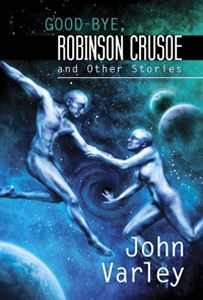
  9. A sf/f/h book I have re-read is: My most recent reread, which probably doesn’t count, was John Varley’s Good-Bye, Robinson Crusoe – it’s reprint collection, so while I’d not read the book before, I had read every story in it previously. Otherwise, it was Sovereign by RM Meluch, back in June 2013, which I reviewed for SF Mistressworks here.
  10. A sf/f/h book I want to re-read is: White Queen, Gwyneth Jones. It’s been years since I last read it, and she is my favourite science fiction writer. Or perhaps Acts of Conscience, William Barton, as he was a writer I really liked and it’s been a long time since I last read one of his books.


2 Comments

Readings catch-up

And here we are, the last books I read during 2013. As usual, it’s quite a mix – some category science fiction, some literary fiction, and a handful of bandes dessinée. Make of them what you will.

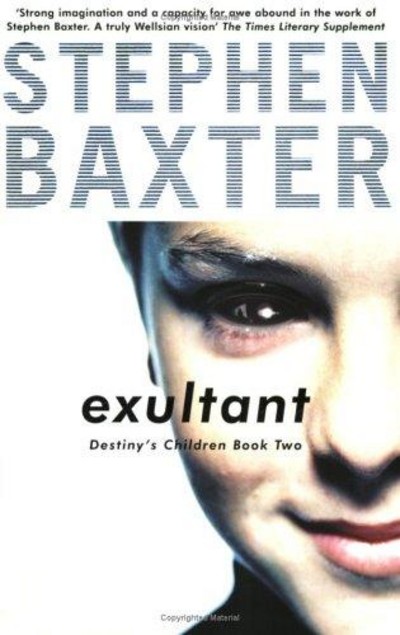
exultantExultant, Stephen Baxter (2004). This is the second book of the Destiny’s Children trilogy, and I quite enjoyed the first, Coalescent (see here), so I was expecting to enjoy this one too. But… oh dear. The earlier book had two main narratives, one set in the present day and the other in Ancient Britain. Exultant is set wholly in the distant future, when humanity is at war with the Xeelee, and has been for over a thousand years. A pair of teen soldiers become involved in a series of attempts to strike a final blow against the Xeelee, and destroy the huge black hole at the heart of the galaxy, called Chandra, which the Xeelee use as a base. The novel opens with fighter pilot Pirius escaping destruction by a Xeelee nightfighter through some “timelike curve” manoeuvre which results him and his crew travelling back in time several years. This is apparently not unusual on the front line – and because Pirius disobeyed orders, he is sentenced to serve in a penal battalion. His earlier self is also punished, even though he hasn’t done anything. Er, yet. But visionary Commissary Nilis (isn’t a commissary somewhere to buy food?) rescues the “innocent” Pirius from punishment and takes him to Earth to help with his crazy schemes to strike decisively at the Xeelee. Meanwhile, time-travelled Pirius experiences life as a ground trooper in the war against the Xeelee. This is science  fiction as boy’s own adventure, with a side-order of Big Idea cosmology. Baxter leaves his story for chapters at a time to explain how the universe began – and, in the process, created races like the Xeelee. The characters are drawn with the broadest of strokes – Nilis is a stereotypical dotty old professor, even down to the lack of personal hygiene; a female aide is a stereotypical beautiful but cold bitch; Pirius and his girlfriend, Torec, are everyman teenagers. The way the war is prosecuted doesn’t seem at all convincing, the explanations for it and the Xeelee are dull, and the link with the preceding book is so tenuous it’s a stretch to consider this book a sequel. Exultant is sort of like distilled Baxter, but one where the distillation process has taken out all the stuff that makes most of Baxter’s works interesting. I’ll be reading the third book, Transcendent, but I’m not really looking forward to it.

Betel-thumb-300x413Betelgeuse 1: The Survivors, 2: The Caves and 3: The Other, Léo (2000 – 2005). This is the direct follow-on from Léo’s Aldebaran series, and was originally published in five volumes:  La planète, Les survivants, L’expédition, Les cavernes and L’autre. There are two more sequences, Antares, of which four of the five volumes have been published in English, and Les survivants, which currently comprises two volumes and neither of which has yet to be translated into English. Kim, one of the two teenagers who was invited to join the group of immortals in Aldebaran (see here), has spent the last few years studying on Earth. Now she’s back on Aldebaran, and is recruited to join an expedition to regain contact with a lost colony on a world orbiting Betelgeuse. On arrival at the planet, they find the colonists’ ship, but when they dock to it a computer virus destroys their ship’s systems. They descend to the surface, where they meet up with the surviving colonists – who, like on Aldebaran, have created a society in which women are second-class citizens, justified by both religion and a desperate need for population growth. But there is another group of colonists, led by the ship’s captain, who are more interested in investigating the world than subjugating women – and who the men from the first group blame for the computer virus. Kim finds herself caught between the two – the first group expect Kim to join their village and become yet another brood mare, but she’s there to discover what happened and why. It’s all tied in with the creature, the mantris, from the first series – another of its type exists on Betelgeuse, and is part of the life-cycle of the local animals known as “iums” (and who may actually be sentient). Kim learns their secret, solves the problem of the computer virus, but there is still a greater mystery to be solved. I picked up the Aldebaran series on a whim, but I must admit I’m enjoying these books. The art is good, the setting is interesting, and if Léo has a tendency to fall back on macho sexist pigs for his male villains, at least they get their just deserts. Good stuff.

unexplodedUnexploded, Alison MacLeod (2013). I saw this novel on the Booker Prize long list, and something about it seemed like it might appeal. So I bought a copy. And… well, it read a bit like a parody of your typical middle-class literary novel – a couple’s marriage slowly implodes, a child unwittingly betrays someone, which leads to a shocking end… The only difference is that the story is set in Brighton in 1940, much is made of some Brits’ admiration of Hitler (not to mention their blatant anti-semitism), and Virginia Woolf makes an appearance. The story is told chiefly from the point of view of the wife, Evelyn, who enters into an affair with a Jewish painter expelled from Nazi Germany as a “degenerate”, whom she first meets in the refugee camp – a de facto prisoner of war camp – superintended by her banker husband. Yet, for all that I enjoyed the book. MacLeod evokes her period well, the cast are beautifully-drawn, and there’s some lovely writing. If it’s all a bit obvious plot-wise, at least the narrative maintains your interest. I’m not entirely sure it belonged on Booker long list, however.

timebeingA Tale for the Time Being, Ruth Ozeki (2013). This novel, of course, made it to the Booker short list, and it’s also one of those literary novels that makes free use of science fiction tropes. Unlike Exploded, its description didn’t especially appeal, but I stumbled across a secondhand copy on a table of books being sold for charity in, of all places, my local Wilkinson. So I bought and read it. And I thought it was very good. Perhaps comparisons with David Mitchell’s number9dream are inevitable – both are set (chiefly) in Japan, both have very chatty narrators – but I think A Tale for the Time Being is by far the better of the two books. And that’s not just because of its core conceit, or its framing narrative. It opens as the diary of a young Japanese girl, Nao, who has grown up in the US and, on the family’s return to Japan, no longer feels Japanese. She is bullied at high school, and her father can’t find a job and has tried to commit suicide. She documents her attempts to find herself  – including spending a summer with her great-grandmother, a 104-year-old Buddhist nun, whom she idolises, but also a short period spent being paid for sex by men. The diary was discovered by a writer, Ruth living on a small island off the west coast of Canada. She thinks the diary is debris from the tsunami, and tries to contact Nao, only to discover she can find no trace of her or her family. Ozeki has thrown a lot into A Tale for the Time Being – not just Japanese culture and history, but also things like the Many Worlds Hypothesis, eco-terrorism, barnacles… There are footnotes and appendices. And it all works. Both Nao and Ruth are likeable and well-drawn characters, the mishmash of tropes actually gloms together to create an interesting story, and the prose is excellent throughout. Ozeki didn’t win the Booker – it went to Eleanor Catton’s The Luminaries (which is on the TBR) – but I would be happy to see it on the BSFA and Hugo shortlists this year.

redstationOn a Red Station, Drifting, Aliette de Bodard (2012) I should have picked up a copy of this at the Eastercon, and I’m not really sure why I didn’t. Anyway, I rectified that error at Fantasycon. This is well-crafted heartland science fiction set in a Vietnamese universe. The story opens with the arrival of Linh on Prosper Station, after the rebels have taken the world which she administered as magistrate. But now she’s a refugee and dependent upon the kindness of distant relatives she has previously had little or no dealings with. It also transpires that Linh had written a letter to the emperor, criticising his conduct of the war with the rebels, and a faction at the court who share her sentiments have decided to use her in a play for courtly influence. Complicating matters is the fact she’s not welcome on Prosper Station, and that the station is having trouble coping with the refugees it has taken aboard. The story was apparently inspired by The Dream of the Red Chamber (AKA The Story of the Stone) by Cao Xueqin, one of China’s “Four Great Classical Novels”, and dating from 18th century. While I’m familiar with some classical Arabic literature, I’m not with Chinese – though I might well give it a go (like I really need more books to read…). Anyway, On a Red Station, Drifting was certainly worth the cover price, and I really must catch up with the other Xuya stories.
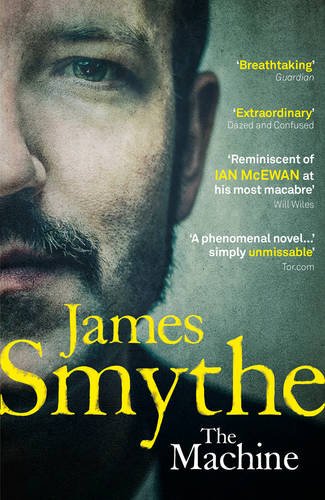
orbital5Orbital 5: Justice, Sylvain Runberg and Serge Pellé (2012) The continuing adventures of the Human-Sandjarr diplomatic team comprising Caleb and Mezoke, though the last volume left them in a bad place – Caleb in a regenerative c0ma and Mezoke on trial for high treason. This is very much a continuation of the story, and quite confusing if you’ve not read – or can’t remember the plot of – the previous volumes. There’s lots of political manoeuvring going on, and it seems the Earth-based politics of earlier volumes is part of a much wider galactic conspiracy. There’s also a team of masked assassins wandering round, making matters worse. This is pretty much space opera bande dessinée, and if it feels relatively unexceptional in terms of world-building or the tropes it deploys, it at least presents a unique vision – through Pellé’s art – of its universe. On occasion it looks like it owes a little too much to media sf, especially Star Wars and Babylon 5, but the story is surprisingly twisty-turny for the subgenre and format. There’s  a sixth book, Résistance, due out in French this year, and I expect Cinebook will follow with an English edition about a year later.
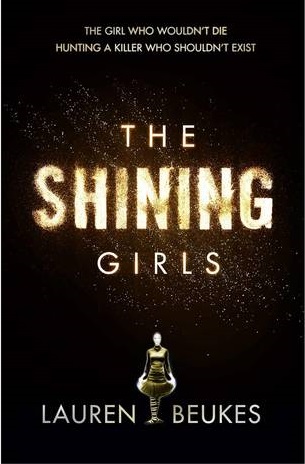
krishnapurThe Siege Of Krishnapur, JG Farrell (1973) And speaking of the Booker Prize, The Siege Of Krishnapur won it in 1973. I must admit I hadn’t realised this novel was forty years old when I started reading it, but it’s moot anyway as the story is set during the Indian Rebellion in 1857. The Collector, his family, a handful of officers and men from a nearby garrison, plus the remaining English residents and visitors from the town barricade themselves in the Collector’s Residence and are besieged for four months by the rebel sepoys. As expected, the food runs out after a couple of months – leading to an auction of all the foodstuffs the survivors have been hoarding, a number of attacks by sepoys take their toll on the defending soldiers, and then there’s an outbreak of cholera. To make matters worse, there are two doctors in the Residence, one who believes cholera is caused by a miasma, and a dour Scot who is much more progressive. The two hate each other, and differ widely in their treatments to injury and illnesses. The Collector himself is a progressive sort, very much taken with the many devices he saw on display at the Great Exhibition a couple of years earlier. Despite that, he is also very Victorian… which leads to one of the book’s stranger elements: the women are treated as either precocious pets, or perfectly capable of standing alongside the men and contributing to the defence of the Residence. Often, it’s the same woman which provokes these contradictory sentiments – such as Lucy, who had been “compromised” by an officer some weeks before the Mutiny kicks off; but despite feeling almost theatrically sorry for herself since her prospects have been reduced to zero, she proves to be made of sterner, and quite manipulative, stuff, and is one of the few women to play a major part during the siege. I don’t recall why I picked up this book to read – yes, I admire Paul Scott’s Raj Quartet a great deal, but this is set a century earlier and the Victorian age doesn’t appeal to me all that much (which is one reason why I’m not a fan of steampunk). And yet, I thoroughly enjoyed The Siege Of Krishnapur and thought it very good. I think I’ll even read some more Farrell.
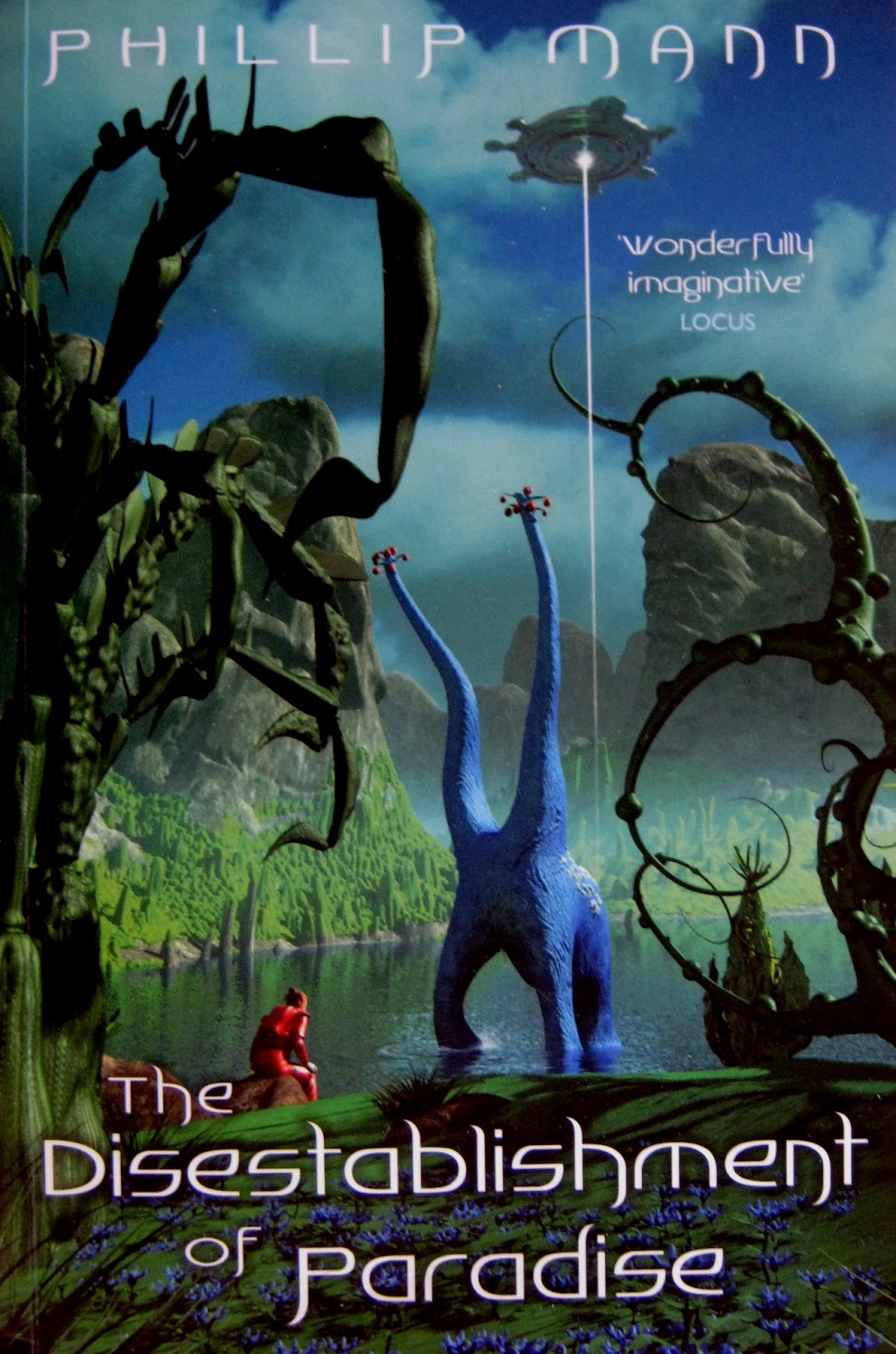
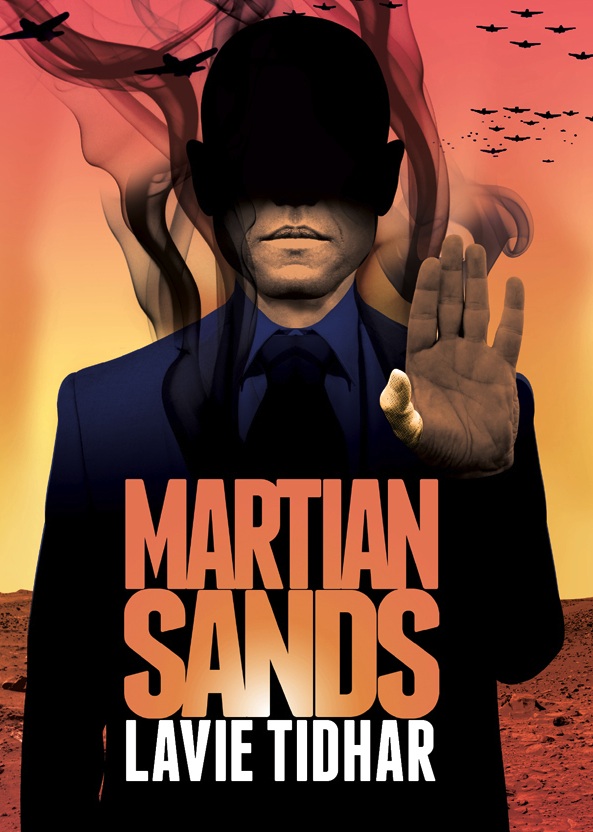
a-possible-life-jacket-faulksA Possible Life, Sebastian Faulks (2013) Or rather, five possible lives. The first is a young man who joins one of the many secret agent services during WWII, is captured, ends up as a trustee at a death camp but escapes, and the rest of his life is changed by his experiences in Germany – even though he returns to his pre-War career as a teacher at a boarding school. A father sells his son to a workhouse, the son prospers, buys his way out, sets himself up in business, and eventually becomes a well-to-do (if somewhat shady) business in Victorian London. A young woman in Italy a decade or so hence is obsessed with discovering the biological source of human awareness (a fascination Faulks also clearly shares, given this and his novel Human Traces). An orphaned girl in nineteenth century provincial France lives an unexceptional life looking after a family’s children. A retired rockstar discovers a new talent and nurtures her career, becoming her lover and manager, but the pressure proves too much for her. Faulks’ ideas on human awareness are interesting, but there’s not enough connective tissue between the five stories to define that idea as this book’s central conceit or even give it structure. The writing is your standard Brit-lit-fic prose, and while the settings of some stories convince, others do less so – especially the rockstar one. All in all, a pretty weak effort.

GoodbyeRobinsonCrusoeGood-bye, Robinson Crusoe, John Varley (2013). I’ve been a fan of Varley’s fiction since first stumbling across one of his short stories back in the early 1980s. A couple of those stories still remain favourites to this day, though neither are in this retrospective collection. But it was the fanboy in me who shelled out for this signed and numbered limited edition copy from Subterranean Press (who do lovely books), even though I have all but one story in other collections – and some of them in two collections. What Varley did back in the 1970s and and 1980s, he did very well – his novels from that period are still in print for good reason – and surprisingly many of his stories have withstood the test of time quite well – ‘Equinoctial’, for example, could have been written a handful of years ago. Some of the others fare less well – ‘The Unprocessed Word’ is a silly joke that probably wasn’t very funny when it was first published in 1986, and just feels quaint now. ‘Blue Champagne’ feels like a heartland sf story of its time; ‘In the Bowl’ still stands up; as does ‘Lollipop and the Tar Baby’, although a sentient black hole is a little, er, hard to swallow. In hindsight, this is a book for fans of Varley’s fiction. The most recent story dates from 1986, so it’s hardly an introduction to his current fiction (he has a new novel, Dark Lightning, out this year). If you want to see what Varley’s fiction is like, The John Varley Reader from 2004 is a better look at his career than this book, even if it’s not as attractive an object.