It Doesn't Have To Be Right…

… it just has to sound plausible


4 Comments

Reading diary, #23

It’s really not difficult to maintain gender parity in your reading. After you’ve read a book written by a man, you read one written by a woman; and vice versa. Or, as it seems is the case in this Reading diary post, two books by women followed by two books by men. And then, when you have to write about science fiction or science fiction books, or indeed any branch of literature, you’ll have as many female authors you can cite as examples as you have male authors.

Having said all that, the books below are a bit of a cheat… I’ve been a fan of Helen Simpson’s short stories for many years and have all her collections (she has never written a novel). The Emshwiller I read for SF Mistressworks. David Tallerman is a friend. So the only book I actually chose to read unaffected by non-textual factors was the Tregillis… and well, you can see below what I made of it.
cockfostersCockfosters, Helen Simpson (2015). As far as I remember, I first came across Helen Simpson in an anthology of “best short stories” of some sort – I do know, however, that it was her story ‘Heavy Weather’, and I fell in love with it. This was in Abu Dhabi. So on a later visit to the library, I checked out one of her collections – her second, in fact, Dear George & Other Stories. And I’ve been a fan ever since. And yet, the only place I’ve read her fiction has been in her collections – the stories in Cockfosters, for example, originally appeared in Granta, New Statesman and daily newspapers, none of which I read. But hey, that’s what collections are for. There are nine stories in Cockfosters, one of which is genre. In ‘Erewhon’, a husband lies awake at night, worrying about the day ahead, while his wife sleeps oblivious beside him. It’s only as the story progresses, and the hours tick away, that you realise the gender roles are reversed in the world of the story. ‘Kentish Town’, a discussion amongst the members of a book group, is a particularly scathing criticque of Tory Britain. The longest piece, ‘Berlin’, is about a party of middle-aged tourists visiting Germany to see various of Wagner’s Ring Cycle, and how the narrator and her husband slowly come to an appreciation of the operas. Those are the stand-outs, but the others are still highly-polished pieces of prose. Simpson is very, very good at what she does, and Cockfosters amply demonstrates it.
thestartoftheendThe Start of the End of it All, Carol Emshwiller (1990). I’d read a few of Emshwiller’s stories before in various anthologies, and had always found them the sort of science fiction not to my taste. While there was no denying their quality, they didn’t offer me the things I looked for in genre fiction. And while this collection certainly shows that Emshwiller is a good writer, I found it something of a mixed bag in terms of what I enjoy reading. I’ve been working on a review of it for SF Mistressworks, but it’s been taking a bit longer than expected.
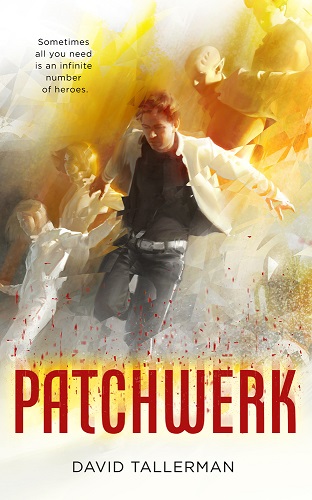
patchwerkPatchwerk, David Tallerman (2016). Dran Florrian has invented a machine he calls Palimpsest and, afraid it might be used as a weapon, he decides to do a runner with it. But his arch rival, Harlan Dorric, tracks him down and tries to take Palimpsest for himself. Oh, and Florian’s ex-wife, Karen is now with Doric too. Palimpsest apparently provides a means of viewing, and even manipulating, alternate realities – as is revealed when Doric and his goons attack Florrian, and Florrian and Karen find themselves in a completely different world (a steampunkish one, in fact). And so it goes. As the chase continued across alternate realities, it occurred to me this was a very cunning way to expand a short story to novella-length. Because the resolution of the story is not dependent on the realities Florrian and Karen visit – in fact, all they do is delay, or perhaps even obstruct, the resolution. But this is hardly a problem as the story is fast-paced, very readable and manages a more-than-sufficient level of invention. Perhaps the various backgrounds are a little sketchy, and Florrian has a tendency to over-analyse at times; but at short-story length this would probably have been too light on detail to be satisfying, and there really isn’t enough plot to justify novel length. But it works just fine as a novella.
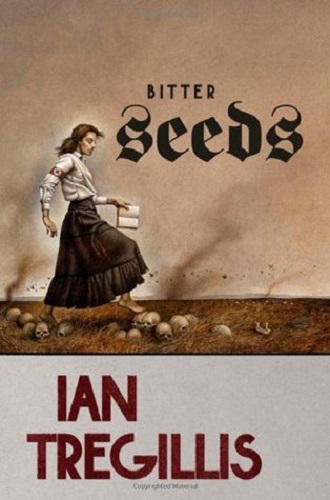
bitter_seedsBitter Seeds, Ian Tregillis (2010). I “won” this book on Twitter – a friend did a giveaway and… I can now understand why he gave it away. Bitter Seeds is a reworking of World War II – although it opens during the Spanish Civil War – in which the Germans have half a dozen super-powered teenagers, who need electricity wired directly into their brains to manifest their powers. The British are forced to make deals with the Eidolons, enigmatic and omnipotent demon-like creatures, who exact a blood price each time they deign to help. It’s an interesting idea, a mishmash of Nazi occult science mythology and the sort of potboilers Dennis Wheatley used to churn out. Unfortunately, it reads like a novel that’s been through far too many writing workshops, where the writer has tried to follow every “rule” and address every critique levelled at the manuscript. So when it’s not overwritten, it’s trying too hard do everything it thinks prose should do. And then there’s the research… Although much of the story is set in Britain, it’s not in the least bit convincing. Everyone carries billfolds. The book’s hero marries his wife in the garden of his boss’s house. The second son of a duke wears a bowler all the time (and the ducal estate is in Bestwood, which is actually a colliery village but never mind). There’s a pub which resembles no British pub ever. And the dialogue sounds like it was based on that spoken in 1970s and 1980s UK television series. There are apparently two sequels to this book. I won’t be reading them. But I might well be doing a giveaway on Twitter for Bitter Seeds

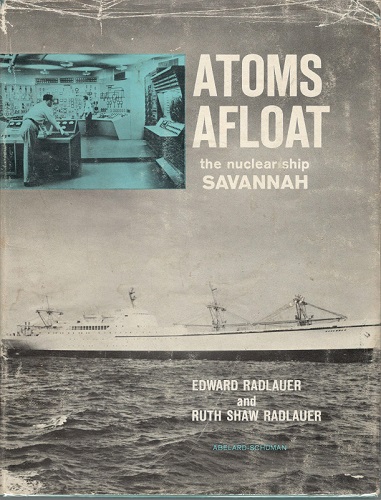
atoms_afloat_smallAtoms Afloat, Edward Radlauer & Ruth Shaw Radlauer (1963). The NS Savannah, the world’s first nuclear-powered merchant ship, was one of only four ever built. She was launched in 1962 and served as a passenger and cargo ship until 1965, and then as cargo-only until 1972. She was designed as a demonstration model for nuclear power and a show case for Eisenhower’s “Atoms for Peace” project. And she was quite a stunning-looking vessel. The interior was also designed to be in keeping with ship’s “atom age” styling, and looked fantastic. Atoms Afloat is the only book I’ve been able to find on the NS Savannah – and it’s aimed at middle-grade readers. It’s also more about the construction of the ship, and how her nuclear reactor works, than it is her design. But there are some nice photos in the book. I also have a copy of a brochure, published in the late sixties by the shipping line which operated her, and that contains some nice colour photos of Savannah’s passengers spaces. The NS Svannah was a design icon of her age, and someone really should do a proper book on her, filled with lots of colour photographs.

1001 Books You Must Read Before You Die count: 122

3 Comments

Reading diary, #22

Yes, I know it’s confusing that I’m continuing the numbering scheme from, er, when I started it. But never mind. It would be a bit weird to change it a handful of weeks into the year, so I seem to be stuck with it. Anyway, a mix of books this time round…

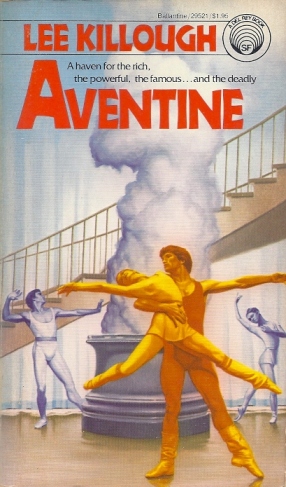
aventineAventine, Lee Killough (1981). I reviewed this collection of short stories for SF Mistressworks – see here. I like Killough’s fiction, it’s very readable and likeable, even – dare I say it – undemanding. This collection’s premise may well have been more original, for science fiction, in 1981 than it is now, but it’s stood the test of time reasonably well. It remains memorable, which is more than can be said of the works of many of Killough’s peers in genre. I shall continue to hunt down copies of her books.

soc_modRoman Bezjak: Socialist Modernism, Inka Schube (2011). Bezjak, a lecturer at a German university, often travelled around East Europe, and he took photographs of socialist architecture – or rather, architecture that seemed designed to foster socialist ideals. The result is a series of photographs from a number of cities of exactly the sort of architecture I find hugely appealing… because I too believe there’s a utopian dimension to architecture – and that’s despite living in a city in which one of the great such experiments failed and sits prominently on a hill above the city centre…

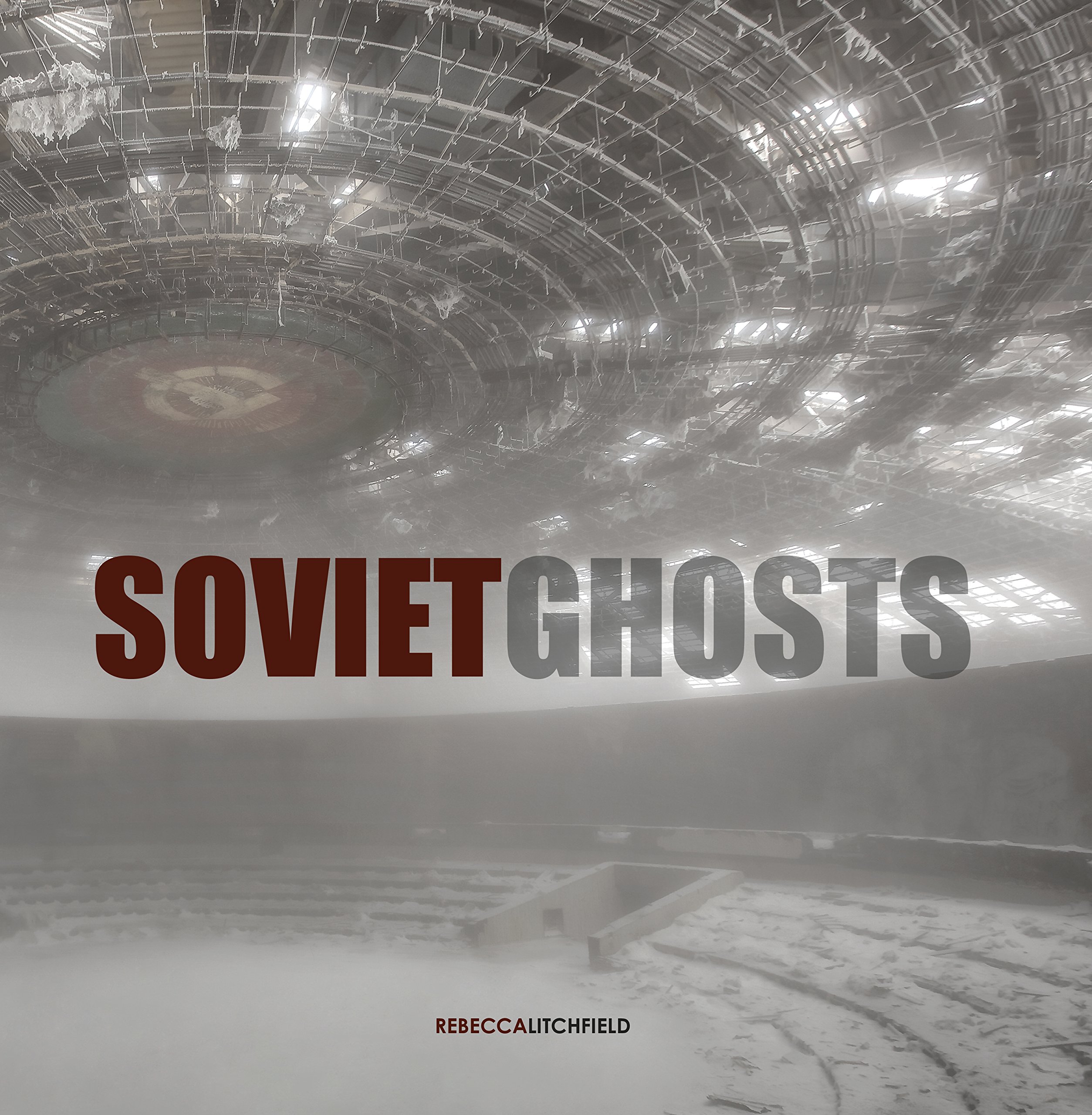
soviet_ghostsSoviet Ghosts, Rebecca Litchfield (2014). And this book makes makes real the dreams of the former book… We’re all too quick to judge one group of people for their failures and yet admire others for their aspirations. For all its manifold faults and endemic corruption, the Soviet Union had many admirable ideals – and a great many of those are embodied in the buildings, now ruined, which appear in Soviet Ghosts. Perhaps most emblematic is the Buzludzha Monument in Bulgaria, intended as a celebration of a secret assembly of socialists in 1890, opened in 1981, but since fallen into extensive disrepair. Other photographs feature abandoned sheds of locomotives, military bases, hospitals, even entire towns which have been left to rot. As the previous book no doubt demonstrates, I find socialist architecture interesting, and it’s just as interesting in decay as it is in rude life – perhaps even more so, because it embodies a dream that died rather than one corrupted by compromise, greed and corruption.

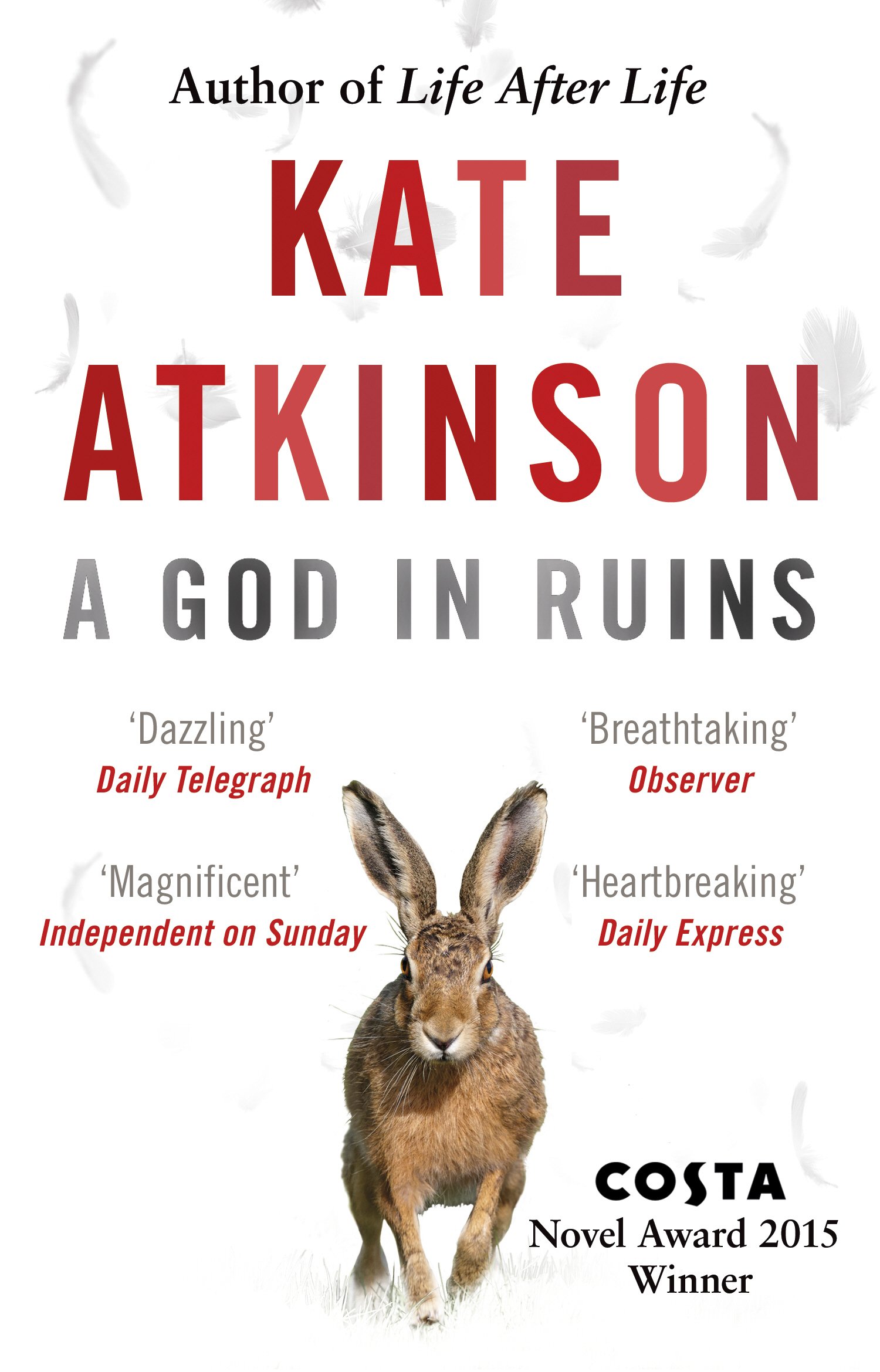
agodinruinsA God in Ruins, Kate Atkinson (2015). I’d heard good things about this semi-demi-hemi-sequel to Life After Life, which was a book I’d enjoyed a great deal and thought good enough to nominate for the Hugo (as I was a Worldcon member, briefly, that year). In that earlier novel, Ursula Todd repeatedly died and was reborn, and so got to live out alternate versions of her life, of history itself since much of the story took place during World War 2. Teddy is Ursula’s younger brother. He enlists in the RAF, becomes the pilot of a Handley Page Halifax heavy bomber, flies three tours (ie, ninety missions), before being downed and captured. After the war, he marries his childhood sweetheart, Nancy, who worked as a decoder at Bletchley Park, the two become teachers, have a daughter Viola, who bounces around UK counter-culture, and has two children of her own, Sunny and Bertie. A God in Ruins is Teddy’s life, told in non-chronological order. He is an ordinary man in extraordinary times, who promises himself that if he survives the war he will strive to always be kind – and so he does. It’s a lovely piece of writing, deeply affecting, with an impressive control of the story’s emotional landscape. I suspect it will prove one of the best books I read this year. The big question, however, is: is A God in Ruins genre? For ninety-five percent of its length, most certainly not – it is a well-researched piece of historical fiction (Connie Willis should take notes). But the ending casts an entirely different light on what has gone before. It’s either genre or metafiction, although I tend to the former, given its link to Life After Life and the way the ending is  actually handled. But read it for yourself and make up your own mind. Because you really should read it.

after_funeralAfter the Funeral, Paul Scott (1979). The only edition of this short story available is a chapbook published shortly after Scott’s death, illustrated by his daughter and with a preface by his friend and collaborator Roland Gant. Copies are hard to find and expensive, but I found a reasonably-priced one on eBay. The story is typical Scott – a retelling of Cinderella which turns the entire tale on its head without losing sight of the original or sacrificing detail. The illustrations are lovely and appropriate. It is, in all, a very nice limited edition slipcased hardcover chapbook, and a fitting tribute to its author.

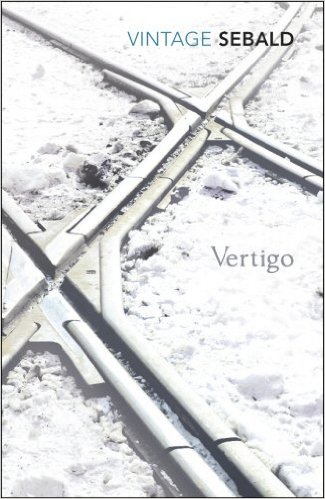
vertigoVertigo*, WG Sebald (1990). If you want to confuse someone, ask them to explain the plot of a Sebald novel.  Better yet, ask them if his novels actually are novels. Because I’m not entirely sure they are – and yet I’m pretty sure they’re fictional. Vertigo describes the arrival in Italy of Stendahl in the early 1800s as part of Napoleon’s army, and then covers his life somewhat swiftly. The next section recounts two visits by the narrator to Venice, and other towns in Italy, as in 1987 he retraces some of his travels of 1980. The third section describes an incident during Franz Kafka’s life, when he was supposed to give a talk in an Italian town in his professional capacity. In the final section, the narrator returns to his childhood village and notes the changes since he left decades before. It’s clear the narrator is Sebald himself, but not clear how much of what he recounts is invention. Certainly Venice, which he visits, is a real place, and the places he mentions in the city are real and the histories he gives them are real; but is the village of W., where the narrator spent his childhood, an actual place? Does it matter? I am, as should be clear from my own writing, interested in that liminal area between true fact and invented fiction – that is, essentially, what the glossary to Adrift on the Sea of Rains is. (And I admit it, Sebald’s Austerlitz was one of the inspirations behind my novella.) Reading Sebald is unlike reading any other author, and it’s for that reason – and the sheer quality of his prose – that I treasure his books. I plan to work my way through his entire oeuvre.

1001 Books You Must Read Before you Die count: 122

Leave a comment

Acquisitions

… and unlike a company which specialises in student accommodation which “aquired” some land locally a few years ago, I know there’s a “c” before”the “q”. Yes, I can hold spelling grudges for years. I can also keep books for years on my shelves… before either reading them or giving them away because I’m never going to read them and whatever possessed me to buy them in the first place has long since evaporated… But some of the following may well become members of the Ian Sales Permanent Book Collection – which does not necessarily result in an eventual state of “having been read”. I really need to get the TBR down to manageable levels. I think my current record is eleven years between buying a book and actually reading it – and, perversely, it turned out to be my favourite book of that year…

2016-02-05 09.48.28

Flesh & Wires, Elysium, Necessary Ill, The XY Conspiracy and A Day in Deep Freeze were all ordered from Aqueduct Press. The second and third I’d heard good things about, and that prompted the order – the rest were thrown in to make it worthwhile… and Shapter’s novella I immediately nominated for the BSFA Award. I wrote about Flesh & Wires here.

2016-02-05 09.50.26

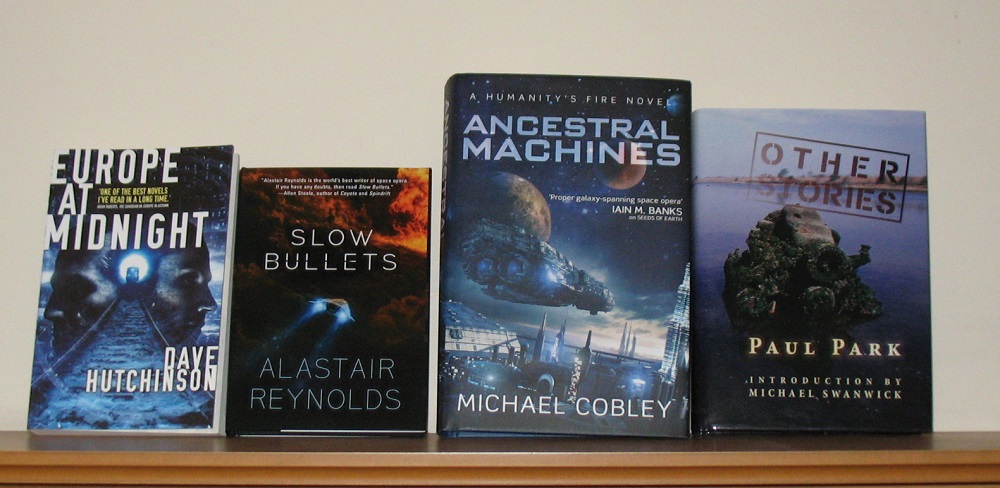
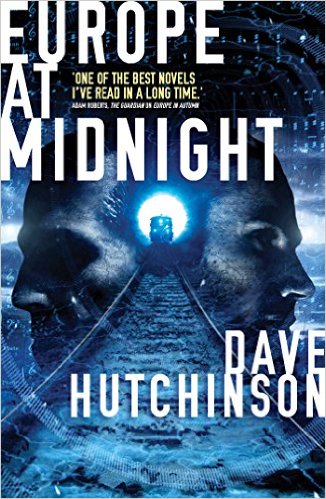
Europe at Midnight was sent to me by the author, who is a good friend, and excellent it is too – see here. It was on my BSFA Award ballot. I hung on for the signed limited hardback of Slow Bullets, only to discover WSFA had given it the same ISBN as one of their previous books. You would not believe how many things that fucks up. Argh. I wrote about it here. And Mike Cobley is a friend of many decades, so I only buy his books out of a sense of duty – hence Ancestral Machines. (Only kidding, Mike’s space operas are smart twenty-first century examples of the subgenre, and worth reading.) Other Stories is a long-awaited collection from a favourite writer – and it’s another lovely job from PS Publishing.

2016-02-05 09.52.13

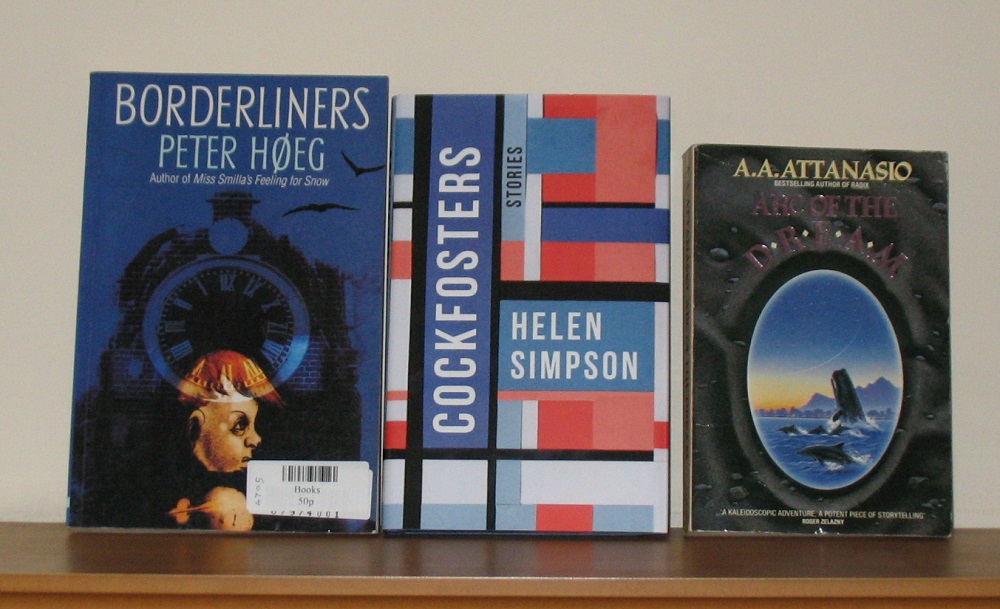
Borderliners is by one of those authors whose books I pick up when I see them in charity shops. I’ve been a big fan of Helen Simpson’s short stories for many years, so a new collection by her – which is what Cockfosters is – is worth celebrating. And I’ve always been meaning to complete my Radix Tetrad by picking up a copy of Attanasio’s Arc of the Dream, but completely failed to do so until now – but I’d sooner have one in better condition than this one.

2016-02-05 09.55.31

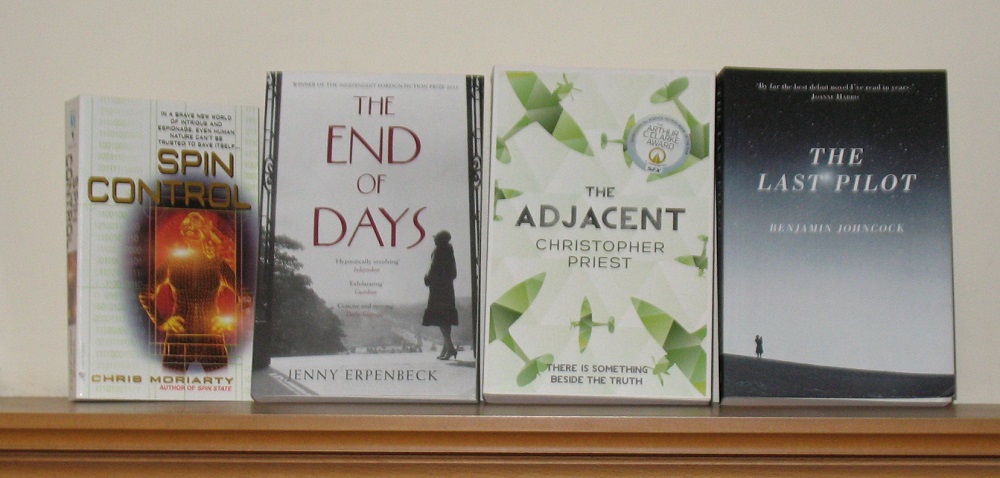
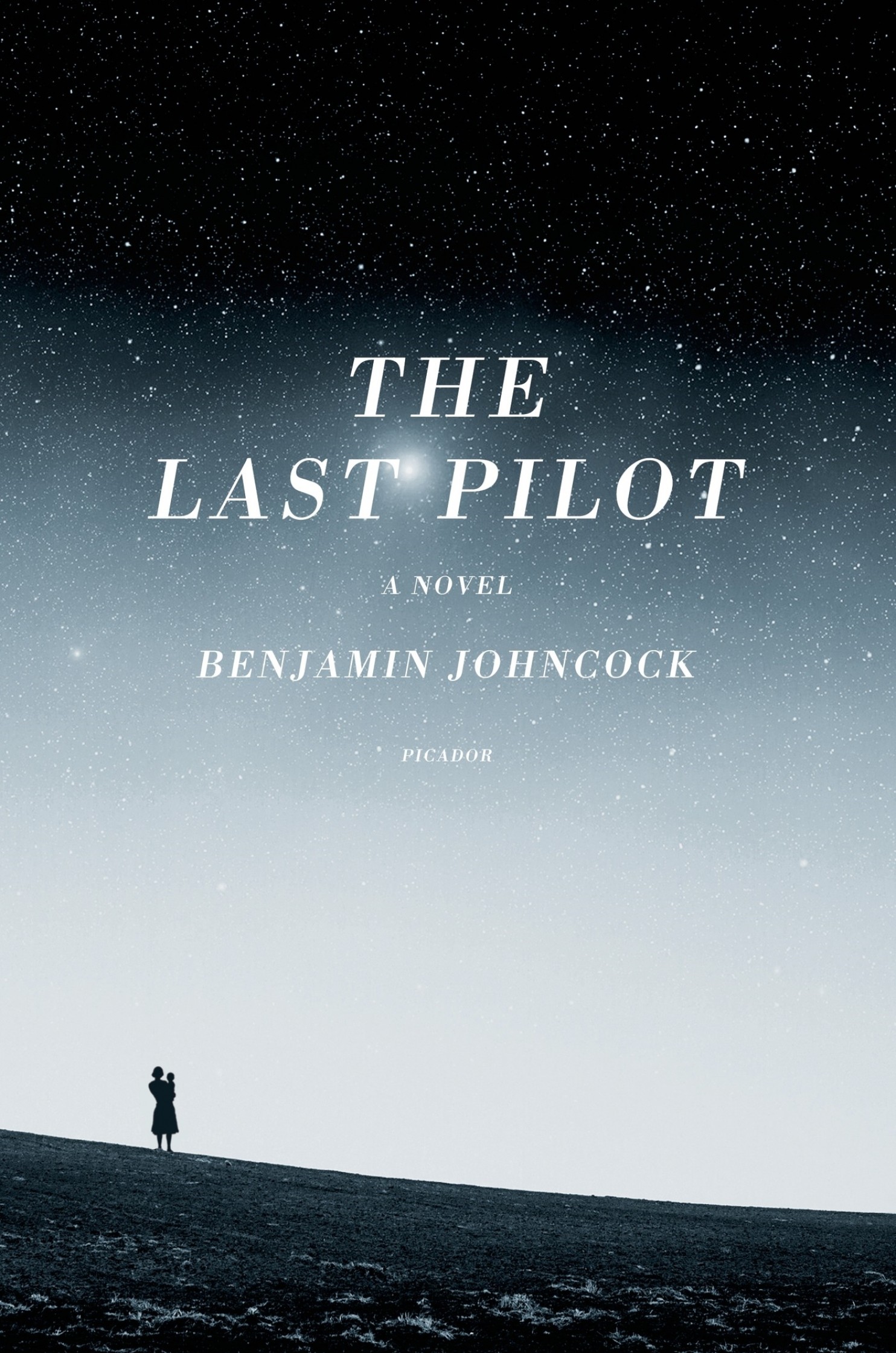
Spin Control, The End of Days, The Adjacent and The Last Pilot were all Christmas presents. My family obviously know my tastes in books – or have access to my Amazon wishlist… So far I have read only The Last Pilot – see here.

2016-02-05 09.56.50

Caliban and Lady Killer are a pair of graphic novels I bought in Faraos Cigarer in Copenhagen over Christmas, and wrote about here.

2016-02-05 09.57.54

Atoms Afloat I’ve been after for a while. I think the NS Savannah, the first commercial nuclear-powered ship, is a beautiful vessel. DH Lawrence: The Story of a Marriage came from my mother, who found it in a charity shop, I think. And I love me some photographs of Soviet/East European modernist architecture (second only to Niemeyer’s designs for Brasilia), so Roman Bezjak: Socialist Modernism was a must-purchase.

2016-02-05 09.59.06

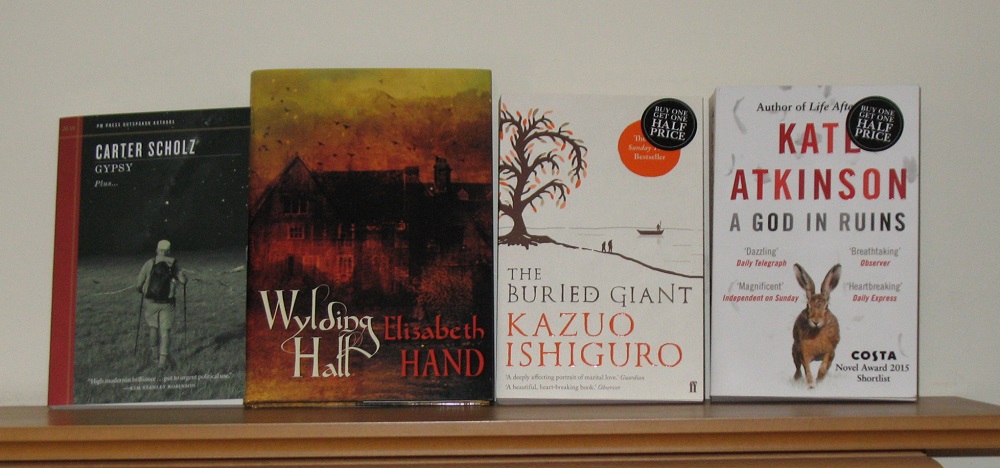
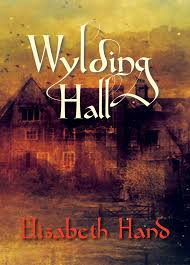
Gypsy was recommended to me by a number of people, and the title novella is indeed very good – sadly it wasn’t longlisted for the BSFA Award, although I think it was eligible. Happily, Wylding Hall, also recommended to me by, er, the same people, was longlisted, is very good, and it took one of my nominations. The Buried Giant didn’t make it to the longlist, but A God in Ruins did… so I read it, thought it very good indeed , and promptly nominated it for the BSFA Award. Gypsy and Wylding Hall I wrote about here.


8 Comments

Reading diary, #21

The first batch of 2016’s reading, which, er, seems to be entirely works from last year. I don’t normally read a great deal of recent fiction, and especially books that are less than twelve months old – although, to be fair, I need to get my choices in for the BSFA Award before the end of the month… And some of them feature below. It’ll be interesting to see if the longlist approach has made much of a difference to the shortlist. (I note that ‘Gypsy’, the title novella of the PM Press collection, see below, was actually eligible but no one appears to have nominated it for the long list. Which is a shame.)

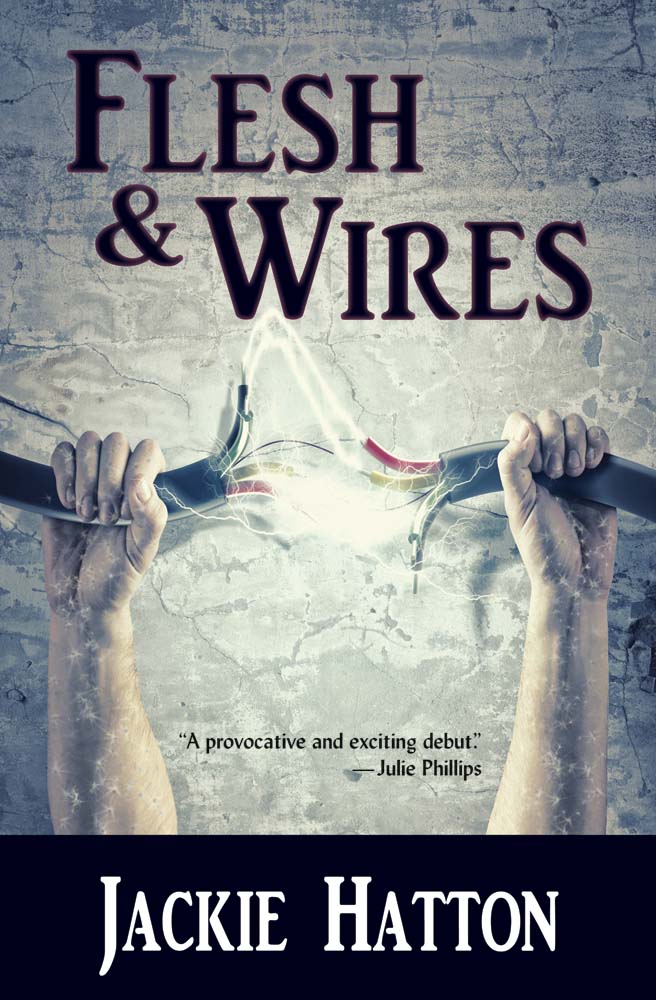
fleshandwiresFlesh & Wires, Jackie Hatton (2015). So I went on the Aqueduct Press website with the intention of buying both Elysium and Necessary Ill, both books I’d been planning to pick up for a while… and I saw mention of Flesh & Wires, as well as a pair of novellas, A Day in the Deep Freeze (which I’ve nominated for the BSFA Award) and The XY Conspiracy, bunged them into my basket and bought them… And the first of the three novels I read was Flesh & Wires. To be honest, the blurb made the novel sound more interesting than it proved to be. Which is not to say it wasn’t good. The set-up worked, the plot worked, the characters were well-drawn, there were just some elements of the background which read as confused and a little, well, clichéd. The Earth was invaded by aliens, who killed off most of the population, but kept some women, and turned them into sort of cyborgs by means of “wires”. But then the aliens died of an Earthly disease, and a new set of aliens, Orbiters, turned up, and sort of helped the surviving women – and handful of men – to rebuild. The novel is set in a small town just south of New York, and told chiefly from the point-of-view of a powerful “wired” woman who is the de facto leader of the town. When her brother, long thought dead, turns up and proves to be representing the Orbiters – and is not not at all honest about his intentions; and then a group of Orbiters exiled to Earth also appear, casting doubt on what the protagonist had believed of the current state of affairs… The end result is a solidly feminist sf novel that perhaps relies over much on somewhat dodgy tropes but manages to put a fresh spin on its plot. I’d also like to go on record as stating that Aqueduct Press publish some bloody good sf, and it’s always a pleasure to place orders with them.

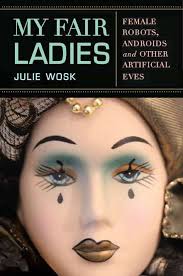
my_fair_ladiesMy Fair Ladies, Julie Wosk (2015). Subtitled “Female robots, androids and other artifical eves”, which pretty much describes its topic to a tee. The author was inspired by the discovery of a mannequin’s head in a street fair, and from that starting point goes on to cover historical representations of artificial women in Greek mythology, by Shaw and other late nineteenth-century/early twentieth-century writers, before moving into films, television, robots occupying the uncanny valley, and finally artists, such as Cindy Sherman (although no mention of Gillian Wearing or Lenae Day), who explore the concept of “perfect manmade” women through their art. While the book goes into detail on early literary artificial women, later literature – particularly science fiction – is mentioned only in relation to film or television adaptations. So, no Susan Calvin, Asimov’s robot psychologist who behaved like a robot herself; nor the women of EE ‘Doc’ Smith’s Masters of Space, who are all too eager to be uploaded into replacement robot bodies because it means “their tits won’t sag”; nor even Helen O’Loy. The list of fictional female robots and cyborgs on Wikipedia gives remarkably few examples from sf stories or novels, so perhaps it’s a topic written sf hasn’t tackled that much… although it feels like it has done; too prudish, perhaps, or maybe it required more self-examination than male writers of two-fisted space adventures were capable of; and female writers had more than enough material writing about real women. Anyway, fascinating stuff. One for the non-fiction BSFA Award.

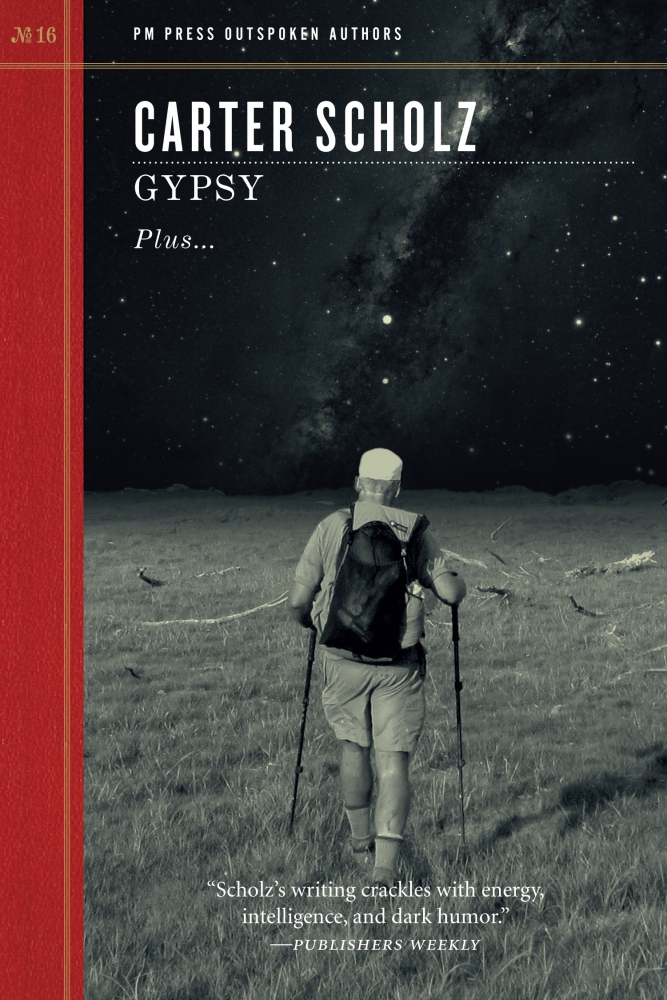
large_737_gypsyGypsy, Carter Scholz (2015). I’d never heard of Scholz, although apparently he is held in high regard. Looking at some of the comments on this book, it’s clear he has plenty of genre friends in San Francisco/Oakland, where he lives – including Kim Stanley Robinson – and where PM Press is based. None of which is a reflection on Scholz’s ability, more on the requirement of connections and patronage in genre in order for good fiction to get noticed. And ‘Gypsy’, the title novella of this collection, is very good indeed. It’s 2015’s third generation starship story, and probably the best of the three as a generation starship story. Tchaikovsky’s Children of Time scores well because of its spider civilisation, Kim Stanley Robinson’s Aurora has some good bits about narratology… but Scholz’s ‘Gypsy’ goes for real science and engineering and paints a bleak picture – one not helped by the driving force behind the flight being the immanent collapse of Earth’s biosphere. Not that the flight itself provides any answers. The remainder of the collection comprises a somewhat tired epistolary short story, an essay about US economic shenanigans, a story presented as house committee testimony, and an interview with Scholz. I have a lot of time for Scholz’s approach to genre, as given in his interview, but only the title novella seems a good expression of it.

europeEurope at Midnight, Dave Hutchinson (2015). I thought Europe in Autumn a very good, if a little confused, novel – a superior near-future spy novel, it took an unexpected swerve around two-thirds in, which unsettled the plot but managed not to upset it. And now the sequel, Europe at Midnight, follows that swerve further around the curve and results in a very different novel of a type of science fiction that likely occupies a small place all its own in the genre’s corpus. In the nineteenth century, a wealthy family invented a new English county, which somehow came into being in a reality sideways from ours, and then subsequently expanded into Europe to form a Little England writ large: the Community. Which, it seems, has teeth. The novel opens in the Campus, a pocket universe 200 miles across which comprises one huge university, now having difficulty recovering after a bloody coup. The new Professor of Intelligence is suspicious of the Faculty of Science, but his investigations result in the termination of his position and a take-over by the Science people, who have suspiciously modern weapons. Fortunately, he escapes to our Europe… where he comes under the control of the UK intelligence services. Despite that disconcerting start, we’re now back in future spy novel territory… but even then, Europe at Midnight seems to slip across hidden borders into parallel fictions – much as some of its cast do – as it tells a story about Europe, the Campus and the Community which is only actually revealed in the final chapter. This is good stuff – a novel that cleverly runs our future alongside our memories of our past, and sets the scene for a war between the two. I’ll be nominating this for the BSFA Award.

wylding_hallWylding Hall, Elizabeth Hand (2015). This appeared on the BSFA Award short fiction longlist, and was recommended by several people whose opinions I trust – and, it had to be said, the précis did sound interesting… so I bought it, read it, and I’m giving it one of my four slots on my BSFA Award ballot. An acid folk group in the very early seventies hires the eponymous country manor to rehearse and record their second album (following the suicide of the group’s original singer; she was also the girlfriend of the band’s main creative force). Wylding Hall is a strange place, but this novella doesn’t go for in-your-face ghosts and apparitions but a much more effective general atmosphere of uncertainty. Windhollow Faire come across as a believable band, and the links to the darker side of English folklore are well-handled. The story is told as the decades-later reminiscences of the band members, a technique which is especially effective as it gives it the authority of a Sky Arts documentary. I have only a couple of minor niggles – back then, a grammar school would have been more posh than a comprehensive, and Radio 3 – not BBC 3 – was always more into classical and jazz, not folk; and John Peel was on Radio 1, which was the station mostly likely to play electric folk at that time.

1001 Books You Must Read Before You Die count: 121


1 Comment

Reading diary, #20

A new year, more books read (some of which are actually from the Christmas holiday, but never mind).

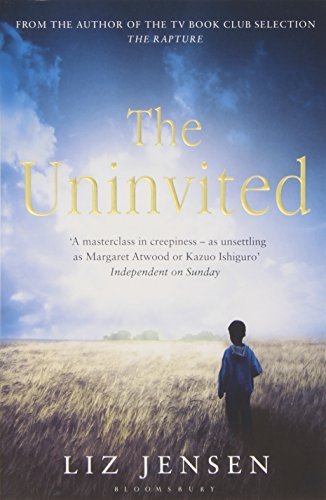
the_uninvitedThe Uninvited, Liz Jensen (2012). I am a Liz Jensen fan, although I don’t make as much of an effort to read her books as I should do. True, whenever I see one in a charity shop, I buy it. But, seriously, I should be buying her books new from a retailer – online or otherwise – because they are that good. Consider it a personal failing. In The Uninvited, the narrator, who suffers from Asperger’s, finds himself drawn into an investigation into children who have murdered their parents. And there seems to be an epidemic of such murders. In all cases, the children have no idea why they committed murder, and seem completely unaffected by their actions. Jensen never gives you quite what you expect – and that’s as true of this novel as it is of any of her others. The narrator’s condition is handled expertly, the circumstances of the deaths he investigates are presented convincingly, and the actual plot of the novel actually seems almost plausible. I’m not the only one with a failing here – we should all be reading Liz Jensen. And The Uninvited is as good a place to start as any.

Last Pilot_PicadorThe Last Pilot, Benjamin Johncock (2015). How could I not read this? A test pilot at Muroc Air Force Base (later renamed Edwards) in the late 1940s becomes an astronaut in the Apollo programme. This is exactly the same ground I covered in All That Outer Space Allows, although I did it from the wife’s point of view. And my take is a lot more technical. As far as I can determine, Johncock’s Jim Harrison takes the place of Dave Scott (Apollo 15 commander), although Scott does actually appear toward the end of the book. Also, while many aspects of Harrison’s persona life are invented, many incidents assigned to Harrison actually happened to others. Harrison is there when Yeager breaks the Sound Barrier in 1947, he gets assigned to the X-15 program and then to the X-20 program, before eventually joining NASA and becoming an Apollo astronaut. Also like All That Outer Space Allows, The Last Pilot focuses on its protagonist’s marriage. Although Harrison and his wife try for children for years, they’re not successful – but then, against all odds, as is usually the case in fiction, they have a girl. But she sickens and dies of cancer at the age of ten, and her death slowly tears the marriage apart from within. If lit fic is unfairly characterised as fiction about middle-class marriages disintegrating, then The Last Pilot is lit fic – albeit with a test pilot/astronaut as its protagonist. It is well-researched, well-written, and Johncock cleverly covers plenty of ground by assigning so many documented incidents to his protagonist. But – and I can actually say this: it’s not the book I would have written. And my own novel coloured my reading of Johncock’s – almost certainly unfairly. It’s a good piece of work, certainly – but I would have preferred something a little more interesting as the plot’s engine… And lots more technical detail.

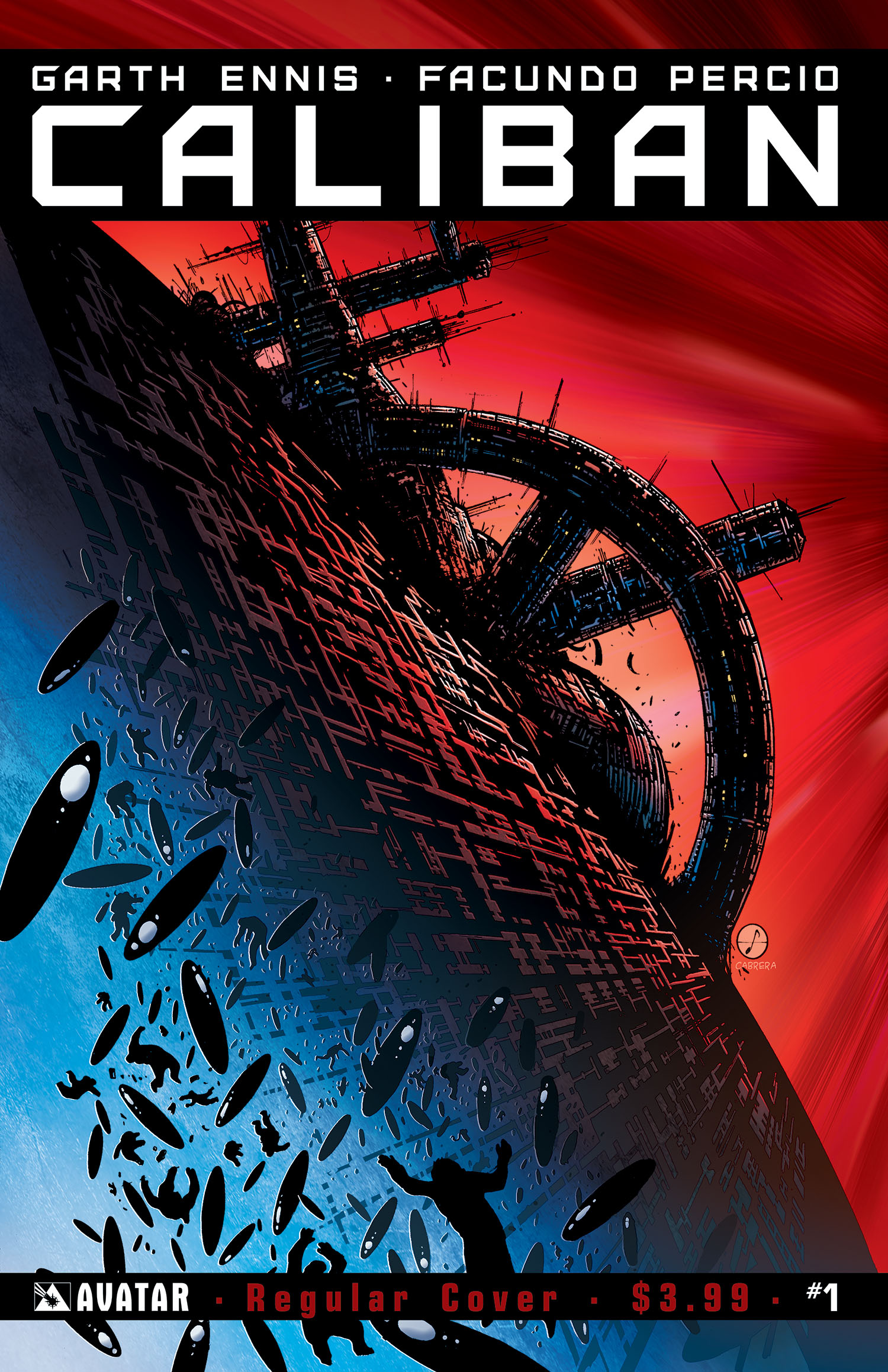
Caliban-1Caliban, Garth Ennis & Facundo Percio (2015). This was the first of two graphic novels I bought in Faraos Cigarers in order to make up my numbers on my 150 book reading challenge. To be honest, the shop also had an impressive number of Moebius collections, and I would have bought them like a shot – but they were all in Danish. Sigh. Instead, I had to make do with substandard US/UK sf graphic novels like this one. A spaceship collides with a mysterious alien spaceship in hyperspace and the crew of the former decide to explore the latter. Guess what – this proves to be a bad move. There’s like some alien virus thing which takes over one of the crew and leads it to slaughter all the others. This is pretty much Event Horizon meets Alien. A thoroughly unimpressive and derivative piece of science fiction in graphic form. Seriously, given the stuff produced by France, Anglophone graphic sf needs to step up its game big time.

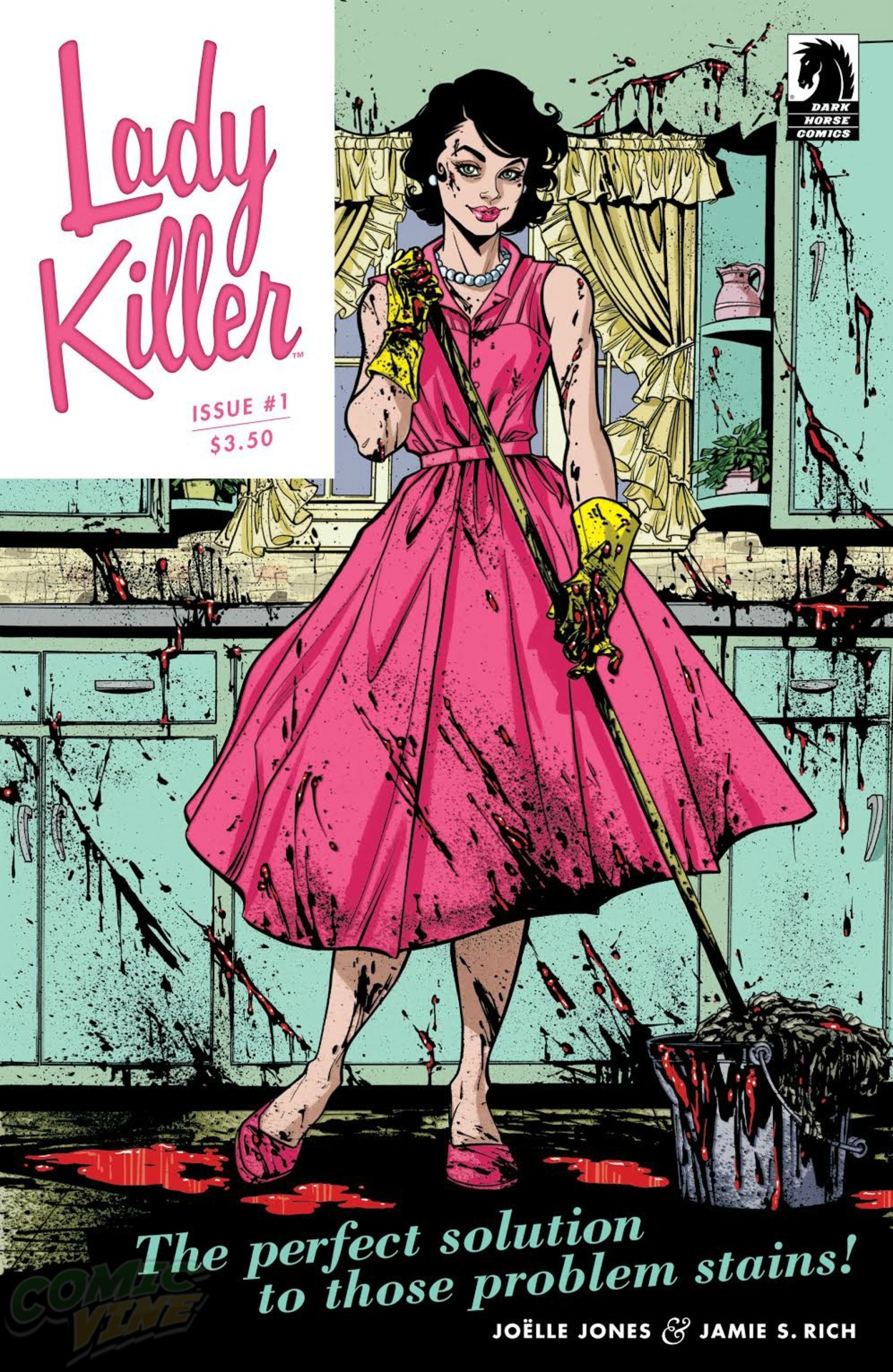
4263805-1+lady+killer+1+cover+final+designLady Killer, Joëlle Jones & Jamie S Rich (2015). And this was the second graphic novel from Faraos Cigarer. It was the also the more appealing of the two. Nineteen-fifties housewife secretly works as an assassin on the side. Sadly, the plot is almost pure cliché from start to finish – after several successful, and very bloody, jobs, there’s one which proves she’s not a totally heartless killing machine. Meanwhile her boss has decided she’s going to become a liability – because she’s a woman. Perhaps there could have been more housewife stuff (probably not of interest to your average comics fan) to provide a better contrast with the killing and gore, but despite that the art is really very nice indeed. It’s just a shame the story couldn’t think beyond its boundaries – I mean, there’s plenty of room for commentary on fifties society, something a little more subtle than the blunt instrument that is a housewife-assassin (who actually masquerades as a Bunnygirl at one point!). But this is hardly Moebius, or any bande dessinéee, so I guess I should take what I can get.

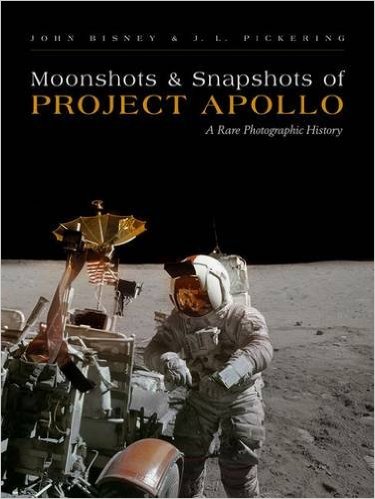
moonshotsMoonshots & Snapshots of Project Apollo, John Bisney & JL Pickering (2015). The second of two books by the authors about – well, the title pretty much gives it away. Like Spaceshots & Snapshots of Projects Mercury & Gemini, the authors have selected photographs not normally seen in these sorts of books. There are, of course, a huge number of books about the US space programme (not so many about the Soviet one, obviously), which does make you wonder how some people didn’t know who Neil Armstrong was – even if Project Apollo ended forty years ago with ASTP and that’s pretty much ancient history to some. But Mercury, Gemini and Apollo – not to mention Vostok, Voskhod and the many versions of Soyuz – were an astonishing achievement, and sadly seem nowadays to be little more than fuel for a lucrative nostalgia industry rather than an actual stepping stone to further achievements in the human exploration of space. It’s tempting to think that two hundred years from now all this might be indistinguishable from some sort of science fiction documentation project, like one of those mockumentaries about invented rock bands – but what a project! So much documentation! And all the cross-referencing! (All of which, of course, means people who think the Moon landings are a hoax are complete idiots.) Anyway, there’s a huge number of books on twentieth-century space exploration, and it’s almost impossible to keep up with them. But these two by Bisney and Pickering would look good in any space books collection.

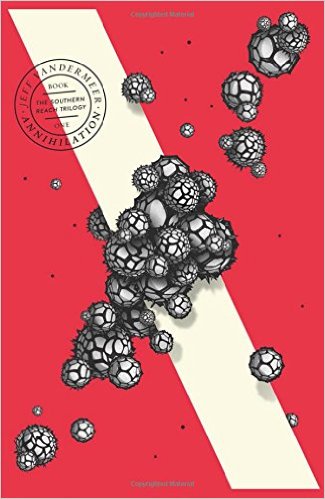
annhilationAnnihilation, Jeff VanderMeer (2014). This is a good book, one of the better ones genre fiction produced in 2014. Let’s get that out of the way. It is also completely not my thing. If I had to vote for it on a shortlist, it would be because of its recognisable quality not because I liked it. I’ve already decided I won’t be bothering with parts two and three. Four women are sent into Area X, a wilderness area which manifests strange behaviours, as the latest in a number of expeditions, of which all the previous were unsuccessful. The women are never named – the narrator, whose journal forms the narrative, explains that the expeditions do not use names since referring to each other by profession is considered safer within Area X. A day or two after their arrival, they find a structure which the narrator calls the Tower but the others refer to as a tunnel. It is a staircase circling down into the earth to an unknown depth. Along the wall of the staircase is a line of glowing script, possibly fungal in nature, written by a creature several levels lower. None of this is explained. And deliberately not so. As I commented in a Twitter conversation with Jonathan McCalmont a few days ago, prompted by John Clute’s review of David G Hartwell & Patrick Neilsen Hayden’s 21st Century Science Fiction in The New York Review of Science Fiction (see here)… Clute’s point that science fiction colonises the universe – “to make the future in our own image” – resonated with some of my own thoughts on the genre. To me, the universe is explainable but not necessarily knowable, and I prefer science fictions which reflect that. Area X in Annihilation is plainly neither knowable nor explainable, and is clearly not meant to be. It’s an artistic choice, but it’s one that doesn’t interest me.

1001 Books You Must Read Before You Die count: 121


Leave a comment

The year in reading

I managed to read 152 books in 2015, beating my Goodreads Reading Challenge target of 150 by two. So, not bad going. Admittedly, there were a couple of “cheats” in there – for example, I bought a pair of graphic novels from Faraos Cigarer in Copenhagen on 28 December so I could be sure of making 150 by the end of the year. I likely wouldn’t have bought them otherwise. But never mind. However, I did manage to read ten books from the 1001 Books You Must Read Before You Die list, which is pretty good (for the record, they were: The Quest for Christa T., The Leopard, The Island of Dr Moreau, The Rainbow, Loving, The Sense of an Ending, Pale Fire, Frankenstein, The Old Man and the Sea and One Day in the Life of Ivan Denisovich).

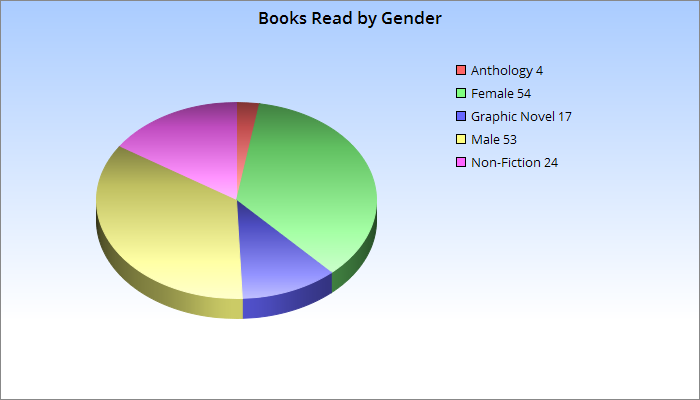
I also managed to read more women writers than men in 2015, although it was close, with only a single title in it. See below.

2015_books_by_gender

I plan to continue alternating genders in my fiction reading for the foreseeable future. Although many of the women writers I read were for review on SF Mistressworks, and my project to read some post-war British women writers didn’t really get into gear, I did discover a couple of non-genre female writers I’d like to read more by, such as Karen Blixen, Sarah Hall and Pamela Frankau.

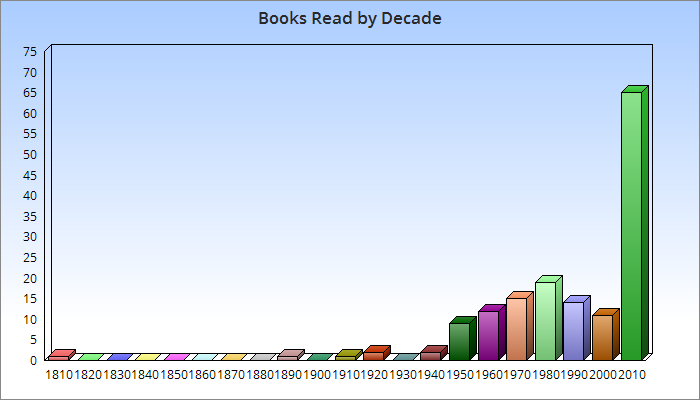
I was surprised to discover how much of my reading is of books from the last five years. I’d have thought it more evenly spread across the decades – although more in the last three or four decades than earlier. But apparently not. See below.

2015_books_by_decade

The one title in the 1810s was, of course, Mary Shelley; and the one in the 1890s was, naturally, HG Wells. The title from the 1910s and the two from the 1920s were by DH Lawrence. The 1970s and 1980s books, I suspect, mostly came from reading for SF Mistressworks.

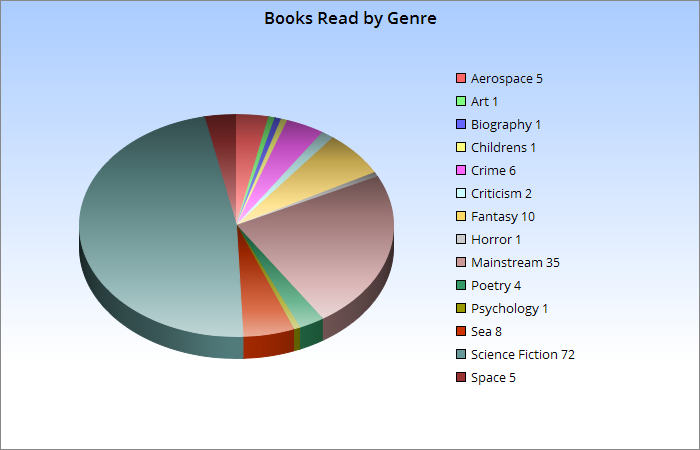
Which also probably explains why science fiction continues to dominate my reading – nearly half at 47%. Mainstream is next at 23%, then fantasy at 7% and crime at 4%. See below.

2015_books_read_by_genre

In 2016, I’d like to read more mainstream fiction and less science fiction. I’d also like to read more non-fiction – on, of course, my favourite topics: space and deep sea exploration. But also criticism. I have, after all, a couple of bookshelves full of critical works on science fiction and my favourite authors. (The one children’s novel, incidentally, was by Nathan Elliott, a pseudonym of Christopher Evans, and was read for completeness’s sake; it wasn’t worth it.)

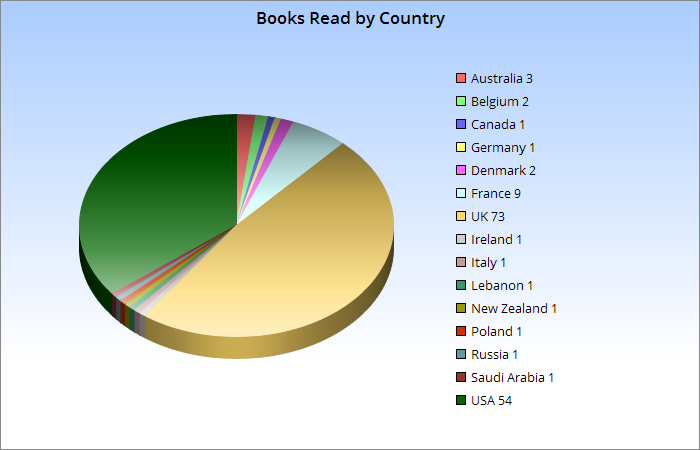
By country (of origin of the writer), the books I read stayed mostly close to home – pretty much half of my reading was by British authors. Followed by the US. France makes a good showing because I read a number of bandes dessinée during the year – they also account for Belgium’s presence. See below.

2015_books_by_country

Not counting the bandes dessinée, I read only half a dozen translated works, and I really should do better. There are certainly authors from other countries I’ve read in previous years I’d like to read more by – like Elfriede Jelinek or Magda Szabó or Abdelrahman Munif. Perhaps I should resurrect my World fiction reading challenge from 2012? It stumbled to a halt that year when I got bogged down in Orhan Pamuk’s My Name is Red and Javier Marías’s Fever and Spear. But I’ve read both of those now, and should be able to find twelve books by writers from nations whose literature I’ve never tried. I probably have a few candidates on the TBR already…

In fact, on the subject of reading resolutions for 2016, I stumbled across (via Eve’s Alexandria) a thing called Read Harder. It’s from Book Riot and is a list of 24 criteria for choosing books to read in 2016. There are a couple of categories I’m not at all interested in (reading aloud, audio books, food memoirs, middle grade fiction), so I’ll replace them with a few of my own…

Read Harder (the Ian Sales version) 2016

  1. Read a horror book
  2. Read a non-fiction book about science
  3. Read a collection of essays
  4. Read a novel by a writer from a country whose literature you’ve never read before*
  5. Read a novel by a woman writer published before 1900*
  6. Read a biography (not a memoir or autobiography)
  7. Read a dystopian or post-apocalyptic novel
  8. Read a book originally published in the decade you were born
  9. Read a book that has won the Orange/Baileys Prize*
  10. Read a book over 500 pages long
  11. Read a book under 100 pages
  12. Read a book by a person that identifies as transgender
  13. Read a book that is set in the Middle East
  14. Read a book that is by an author from Southeast Asia
  15. Read a book of historical fiction set before 1900
  16. Read the first book in a series by a person of colour
  17. Read a non-superhero comic that debuted in the past three years
  18. Read a book that was adapted into a movie, then watch the movie
  19. Read a non-fiction book about feminism or dealing with feminist themes
  20. Read a book about religion (fiction or non-fiction)
  21. Read a book about politics, in your country or another (fiction or non-fiction)
  22. Read a book related to cinema or film-making*
  23. Read a play
  24. Read a book with a main character that has a mental illness

The asterisked challenges are my replacements. The rules state it’s okay to use the same book for multiple categories. And I’m pretty sure I can do about half straightaway just from the TBR. Even so, 24 books in a year is an easy target. One or two are going to be easy – I gave up on reading superhero comics several years ago, so the only graphic novels I read now do not feature men in tights or improbably pneumatic women. I mentioned Abdelrahman Munif earlier, and I have his The Trench on the TBR, so that’s the Middle East book. And I have Karen Armstrong’s The Bible: The Biography on the TBR too (it’s, er, been there a few years, tbh). I have a number of critical works on feminist science fiction, and I went and drunkenly bought that book of plays by Anton Chekhov earlier in the year. Anyway, we shall see how it goes…

I also plan to continue working my way through the oeuvres of DH Lawrence and Malcolm Lowry, as well as reading more books by Henry Green and Karen Blixen, and more from the 1001 Books You Must Read Before You Die list.

I’ll be posting a year in films piece some time over the next few days as a companion to this post.


1 Comment

Reading diary, #19

One more of these and that’ll see my entire 2015 reading documented. After I’ve posted that, I’ll do a summary “year in reading” post, you know, with pie charts and shit. I’ve already done my best of the year post (see here), even though the year had yet to finish then but everyone does it early so never mind. And I can always carry over any candidates I missed to next year’s best of, anyway…

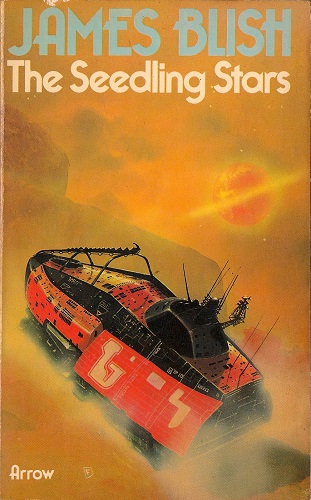
seedlingstarsThe Seedling Stars, James Blish (1957). Back in the early 1980s, I was a big fan of Blish’s fiction – possibly because Arrow had repackaged them with Chris Foss covers – and bought and read a dozen or so. I still have them. But one I’d missed was The Seedling Stars, so I tracked down a copy on eBay a few years ago – with, of course, the Foss cover art – and stuck it on the TBR. I had a feeling I might have read it before – certainly, ‘Surface Tension’, the penultimate story in the collection wasn’t new to me, although I’m not sure where I’d previously read it. But the other two novellas and one short story didn’t ring any bells. All four are about “pantropy”, which is genetically engineering humanity for environments rather than terraforming worlds. In ‘Seeding Program’, Earth has sent an agent to infiltrate a colony on Ganymede created by the leader of the pantropy movement and whose inhabitants have all been engineered before birth to survive on the Jovian moon’s frozen surface. It’s not in the slightest bit convincing, and the plot could just have easily been translated to any random Earth location. In ‘The Thing in the Attic’, the theocratic society of the gibbon-like humans of Tellura is causing them to stagnate, but when one freethinker is exiled he and his companions trek over the mountains and discover a starship of humans who have come to see how the colony is doing. Solid nineteen-fifties science fiction, perhaps a little preachy in places, and not especially memorable. ‘Surface Tension’, however, is memorable. In this novella, tiny humans have been seeded in a series of ponds on the one small piece of land on a water world. Again, a freethinker (male, of course) persuades his fellows to build a special vehicle to explore the world “above the sky”. The sentient amoebas are a little hard to swallow (so to speak), but it’s a fun setting and Blish makes good use of it. The final story, ‘Watershed’, is very short and takes place on a starship heading for Earth. The crew are baseline humans and the passenger is an engineered human from another world. The crew are also hugely racist toward their passenger. Who points out that baseline humans are now the minority among the colonised worlds. I suspect I would have enjoyed this collection a whole lot more if I’d read it back in the early nineteen-eighties when I read all those other Blish books…

Slow_Bullets_by_Alastair_Reynolds_WSFA_CoverSlow Bullets, Alastair Reynolds (2015). I decided to hang on for the signed, numbered WSFA Press edition of this novella, rather than buy the original Tachyon Publications edition. And it’s a smart little hardback they’ve produced – except… they’ve got the ISBN wrong, and re-used one from one of their previous novellas. Argh. You would not believe how many things that screws up. The title of the novella refers to devices implanted in people which store their memories, allowing their actions during a vast war between worlds to be recorded. They’re called “slow bullets” because they’re implanted in the leg and then slowly work their way up to lodge in the chest. But the actual plot of Slow Bullets concerns Scur, who is captured and tortured by a war criminal from the other side, left for dead, but then wakes up aboard a transport carrying war criminals and other prisoners. Except something has gone wrong and it looks like everyone aboard had been left in hibernation for thousands of years… This is typical Reynolds – a universe which he perhaps might not have visited before but nonetheless feels like one of his, and a plot predicated on horrible violence which still manages to slingshot off an optimistic and redemptive ending. It is, in fact, pretty much about as Reynolds as you can get and, as a result, your mileage may vary. I enjoyed it, some bits more than others.

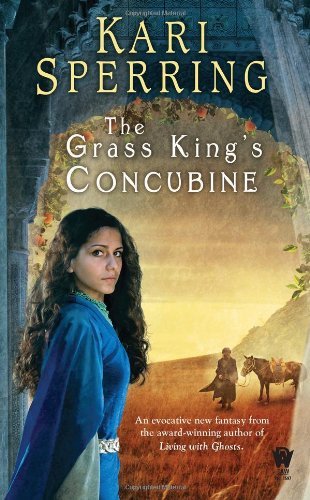
grass_kingThe Grass King’s Concubine, Kari Sperring (2012). I bought this after it was pointed out that I don’t read enough by fantasy by women writers by the author herself (it was a general admonishment on Twitter, not one personally directed at me, but I felt it was a fair comment). And I’m glad I did. I am not a huge fan of epic fantasies – I’ve read a fair number of them, and no longer find their tropes or stories interesting. Happily, The Grass King’s Concubine is nothing like an epic fantasy. Fantasy, yes; and a very cleverly done one. But not epic. And that’s meant as a compliment. Aude is the daughter of a rich land-owner, not old money but rich enough to be accepted into high society, but she is curious as to the source of her family’s wealth and determined not to marry and become just another trophy wife. After a couple of visits to the Brass City, the Dickensian industrial part of the city where she lives, she ends up running away with provincial officer Jehan. Aude’s search ends up with her being forcibly taken to the WorldBelow, ruled by the Grass King; and Jehan is taken there by a pair of ferrets who can take human form and act as guardians to the gate. Aude is a refreshingly forthright and active female protagonist, and there’s a welcome line of social commentary running throughout The Grass King’s Concubine. The fantasy elements are also interesting, original and well thought-out – Aude’s explorations of the Grass King’s palace are particularly well-drawn. If I had to recommend a modern fantasy novel I’d be more than happy to recommend this one. Go and get yourself a copy.

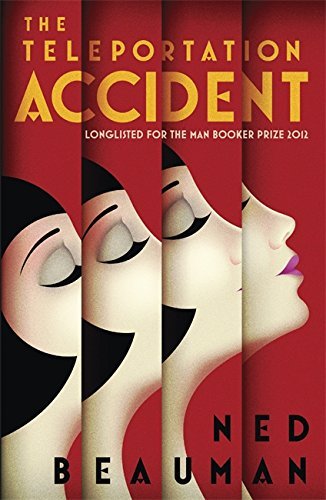
teleportation_accidentThe Teleportation Accident, Ned Beauman (2012). Having read this, I now understand why Lavie Tidhar is such a fan of the book. It addresses some of his favourite subjects. Myself… I enjoyed it, thought it amusing in parts and cleverly done overall, but I wasn’t taken with the engine which drives the plot. The title refers to a piece of stage machinery, first invented in the late eighteenth-century, which allows for the rapid, and apparently instantaneous, changing of scenery. In Weimar Berlin, Egon Loesser is trying to build a new version of that machine, but one that moves the cast around rather than the scenery. But during a test it goes wrong and dislocates both arms of the actor wearing it. Loesser is one of those horrible comic protagonists you find yourself inadvertently rooting for – he’s self-centred, fixated on his sex life (or lack thereof), and nasty to pretty much everyone he meets. It is Loesser’s lack of a girlfriend, and desire for the nubile Adele Hitler, which drives the plot, as Loesser chases her to Paris and then onto Los Angeles, at each place bumping into friends and acquaintances (some Jewish, some not) from Berlin. It all ends up with Loesser getting involved in a WWII project at a LA university to build an actual teleportation machine, which may or may not work and which may or may not have something to do with the strange murders which have been occurring on the campus. A fun read, even outright funny in places, although not particularly pleasant and often only saved by its cleverness.

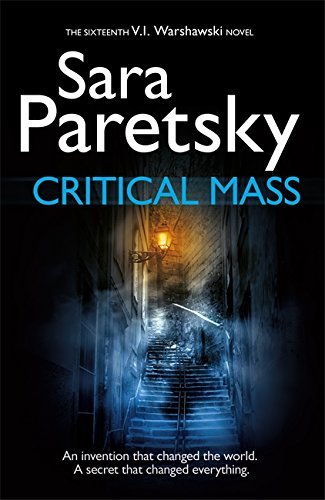
critical_massCritical Mass, Sara Paretsky (2013). I’ve been a fan of Paretsky’s novels since reading Guardian Angel back in the early 1990s. I’d borrowed it from my mother, and liked it so much I made an effort to read more of the VI Warshawski series… and have done ever since. Earlier this year, my mother took me to see Sara Paretsky speak (with Val McDiarmid) at the Harrogate Crime Festival. The plot of Critical Mass is a little more convoluted than most Warshawski novels, but the villains of the piece are, as usual, the rich. Vic’s friend Lotte receives a panicked phone call from the junkie daughter of a friend from Lotte’s childhood back in Vienna just before the Anschluss. Vic investigates, but the bird has flown, and all that remains is a shot-up meth lab and a dead body (male) in a nearby field. It turns out the woman’s younger brother, who is a physics whiz and works as a software engineer at a big computing firm, has also gone missing. The CEO of the company, whose father invented ferromagnetic memory, is worried he has taken one of their secret projects to a rival firm, but the clues suggest to Vic he disappeared for other reasons. There are also flashbacks to Lotte’s childhood, focusing on a young Jewish woman who is a gifted physicist but finds it hard to be taken seriously and eventually ends up as slave labour on one of the Nazis’ atom bomb projects. The story bounces around between two seemingly unrelated crimes before the two eventually, and cleverly, interlock. The only sour note is a pair of DHS agents who behave like mindless thugs rather than professional federal agents and a CEO who thinks it’s worth murdering people to safeguard the reputation of his company. But otherwise, this is a good Warshawki and worth reading – and it also sheds light on a little-known aspect of early twentieth-science and World War Two.

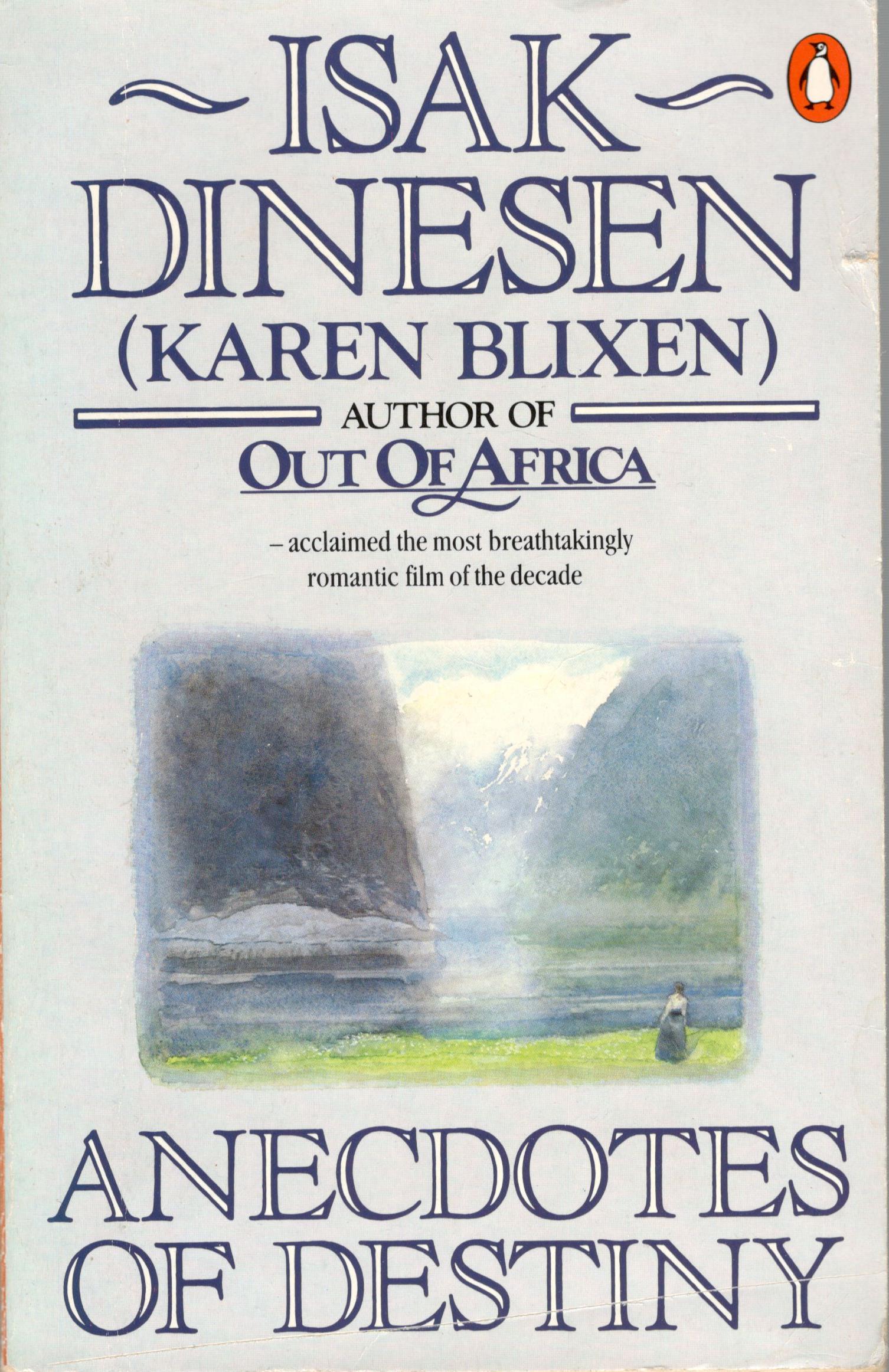
anecdotesAnecdotes of Destiny, Karen Blixen (1958). After watching Out of Africa, I fancied reading something by Blixen, so when I spotted this collection in a charity shop, I bought it. And since I was spending Christmas in Denmark, I thought it appropriate to take it with me and read it there. Anecdotes of Destiny has apparently been republished under the title of the most famous story in it, as Babette’s Feast and Other Stories, which I’m glad I spotted now as it’d likely confuse me later if I stumbled across the latter book. As it is, the original title does the collection a disservice as its contents are far from “anecdotes”. True, the opening story story pastiches a tale from 1001 Nights, and my heart sank a little when I read it. But ‘Babette’s Feast’ is wholly different and a great deal better. Best in the collection, however, is ‘Tempests’, about a young woman in Norway who joins a travelling theatre and then saves a ship from foundering during a storm, and it quickly became a favourite novella – and would make an excellent film too. A very good collection, overall, and I plan to read more by Blixen.

1001 Books You Must Read Before You Die count: 121


5 Comments

Reading diary, #18

My reading seems to have picked up a little of late, likely because I’ve been choosing shorter books to read… Mind you, three of them were literary classics – and not just according to the one list I’ve been following. Admittedly, I’ve been a fan of Marilynne Robinson’s writing since reading Gilead several years ago (and now have three of her books in signed first editions) – but the other two classics I was aware of but had never actually read. Now I can say I have done…

maeveMaeve, Jo Clayton (1979). I’ve been working my way through Clayton’s Diadem from the Stars series for SF Mistressworks. I wasn’t impressed with the first three books, which had super-special-snowflake heroine Aleytys, with special powers coming out of the wazoo, subjected to rape, slavery, sexual slavery and rape. But this book is a complete change of pace and tone – Aleytys is now a straight-up space opera heroine, helping out the alien inhabitants of a planet against a rapacious corporation. Let’s hope the series keeps up this new direction. My full review is on SF Mistressworks here.

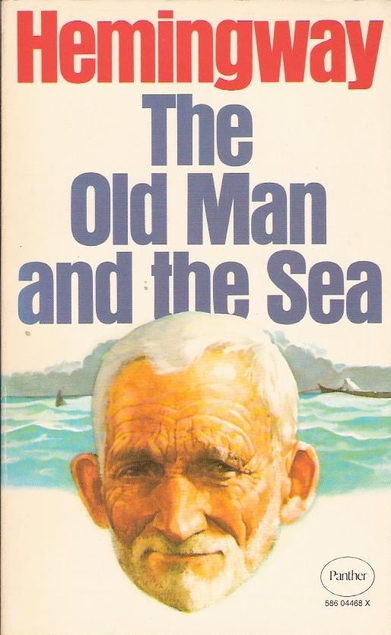
oldmanseaThe Old Man and the Sea*, Ernest Hemingway (1952). I tried reading Hemingway’s For Whom The Bell Tolls a few years ago but gave up about halfway in. You’d think his fiction would appeal to me – Hemingway believed in factual writing, and that’s something I’ve been doing with my own fiction. But, to be honest, I’ve never understood why he’s held in such high regard. And that’s even more so after reading The Old Man and the Sea, the (very short) novel which apparently re-invigorated his career and was likely instrumental in him being awarded the Nobel Prize for Literature. Go figure. Given Hemingway’s penchant for factual writing, this should really be titled The Old Man and the Big Fish, as that’s what the story is actually about – an old Cuban fisherman who wages a war of endurance against a giant marlin. He wins eventually, but sharks rob him of his prize. The writing is simple and declarative, and on occasion quite striking. It is also often repetitive and its simplicity can hinder as much as it helps. It is a book which lingers in memory – possibly a result of its simplicity – and though I didn’t much enjoy reading it, and certainly wasn’t impressed by its prose, it does make me think more favourably about Hemingway than I did previously. So much so, in fact, that I may try actually reading something else by him…

ivanOne Day in the Life of Ivan Denisovich*, Aleksandr Solzhenitsyn (1962). I have Sokurov’s Dialogues With Solzhenitsyn waiting to be watched (and it wasn’t an easy DVD to find at a reasonable price), and while I knew of One Day in the Life of Ivan Denisovich, Solzhenitsyn’s most famous work, and roughly what it was about, I’d never actually read it. So when I stumbled across a copy in a local charity shop, I bought it. Given its content, I can sort of understand why it was considered so shocking when it was first published – it is, after all, an actual description of life in an actual Soviet prison camp. However, there’s a curious sort of acceptance to the life displayed by narrator Shukhov. Much of the book is a flat description of his activities during the day in question – waking up, the struggle for breakfast, laying bricks during the day, the evening meal, various errands he runs – with some detail of the accommodations Shukhov has made in order to survive his sentence. That the conditions in the camp are brutal is a given – and even the most idiotic Westerner must know how bad the camps were (hint: conditions may have been much worse than Gitmo, but at least they didn’t get tortured – but both were/are travesties of the legal process). There’s a nice level of detail, and Solzhenitsyn succeeds in getting across the appalling climate… but it all felt a bit too fatalistic, a bit too complicit, to me. I’m glad I read it, and it’s clearly an important novel, but I shan’t be rushing out to find more Solzhenitsyn novels – although I may feel differently after watching Dialogues With Solzhenitsyn

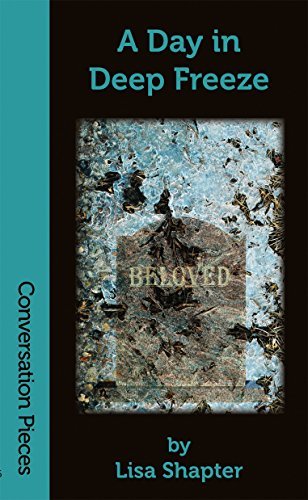
dayindeepfreezeA Day in Deep Freeze, Lisa Shapter (2015). I added this Conversation Pieces novella to a recent order from Aqueduct Press based solely on the description on the website. As the title states, the story covers a single day in the life of the narrator. During WWII, he was employed in a secret underground factory which manufactured a truth drug, but the drug affected all those working in the factory – which was sealed and its workforce were not allowed to leave. But some – including the narrator – later escaped, but now many years afterwards the factory has closed down, its workforce let go, and they’re now integrated into the local town’s population. But the drug changed them. It made them form near-telepathic relationships with each, a “bond” between two men, which, of course, they have to hide as it’s considered “inversion”. Shapter has written that she writes sf in which she uses male characters to tell women’s stories, and if A Day in Deep Freeze is any indication it’s an effective technique. The novella makes no concessions to the reader – it’s a puzzle to figure out what is happening just as much as it is to figure out why – but the end result is a strong piece of writing that takes a interesting premise in an unexpected direction.  I think I’ll be nominating this for the BSFA. Incidentally, Shapter is currently writing a series of military sf stories with all-male casts based on a similar philosophy (see here for a list), and it seems an exercise worth investigating. (Although I would like to see more about the world of A Day in Deep Freeze).

spaceshotsSpaceshots & Snapshots of Mercury & Gemini, John Bisney & JL Pickering (2015). As the title suggests, this is a collection of photographs from the Mercury and Gemini programmes. As glossy coffee-table books about the space programme go, it’s a good one. The photos are not the usual suspects, the accompanying text is short but informative, and it will certainly appeal to those fascinated by those two space projects. There’s a companion volume for the Apollo programme, of course. And yes, I bought it too.

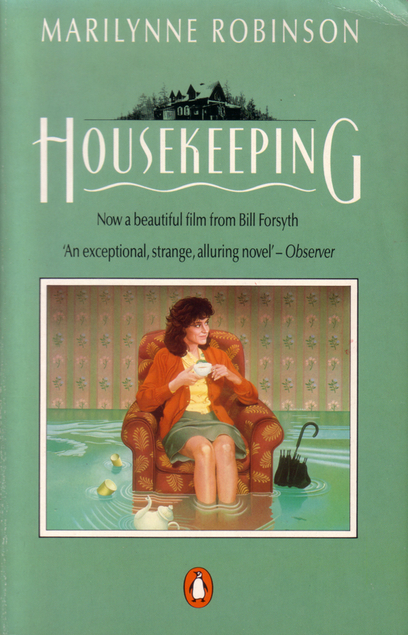
housekeepingHousekeeping*, Marilynne Robinson (1981). Robinson has to date published four novels. Having read two of them, and knowing that the fourth was linked to those two, I had thought I knew what to expect with her debut, Housekeeping. It seems I was wrong. It’s set in the town of Fingerbone, Idaho, sometime during the late 1940s or early 1950s, and is about two young girls whose mother commits suicide, and their grandmother then dies of old age, so they end up being looked after by their aunt, who has plainly spent many years travelling the US on trains as a hobo (the novel describes her as a “transient”, but also features men called hoboes; although from her behaviour she may well be suffering from a mental illness). So in story terms, there’s no overlap with Robinson’s later novels. But there’s certainly that lovely clarity of prose which distinguishes her writing, although some of the prose in Housekeeping is perhaps even better than in her later novels – perhaps because I’m a sucker for landscape writing, and there’s so much more of that in Housekeeping. To be honest, the writing throughout is wonderful. Sylvie is something of a cipher, but the two girls, Ruthie (the narrator) and Lucille, are beautifully drawn. Although a charity shop find, this book is definitely a keeper (sadly, first editions are out of my price range). It was also apparently made into a film. I shall have to see if I can track down a copy.

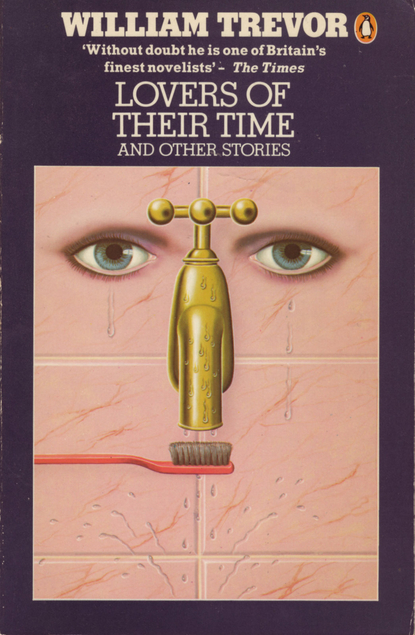
loversLovers of their Time and Other Stories, William Trevor (1978). I forget where I first heard Trevor’s name, but wherever it was it must have been enough for me to buy this book when I stumbled across it. And… well, it’s lit fic of the type which seems to give lit fic a bad name. The stories are good, varied in subject, and show a fine eye for detail and observation. But they are also either domestic or turn on tiny changes of circumstance, and often prove to be the sort of story which seems to rely on fine prose to impress rather than observation, insight or plot – and in most of the stories, the prose is good, without being especially so. According to Wikipedia, Trevor is “widely regarded as one of the greatest contemporary writers of short stories in the English language”. So that’s me told off. Doubtless the stories in Lovers of their Time and Other Stories have much to offer to readers of contemporary short stories, but I found little in there to make them stand out especially for me. And I do like lit fic. But I like it a little more adventurous than Trevor writes, or with more landscape (see above). Having said that, Trevor is good at period detail – although I wonder how intentional this is in the stories set in the 1970s – which does give an added layer of much-needed charm. Another writer whose oeuvre, I suspect, I will not be exploring…

1001 Books You Must Read Before You Die count: 121


Leave a comment

Reading diary, #17

I still haven’t sorted out my reading, and while I suspect I will complete the 150 book challenge on Goodreads – I have to read 17 books in December to make it, but I usually read a book a day over Christmas week – it still feels like there are more books sitting around my house that I want to read right now than in previous years. Maybe it’s just been a good year for new books – or indeed old ones that I’ve bought. In fact, I’ve read fourteen books published for the first time in 2015, which is I suspect not much different a figure from previous years’ reading.

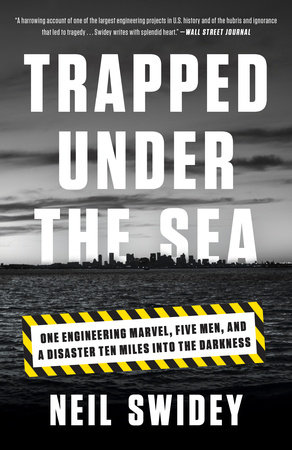
trappedTrapped Under the Sea, Neil Swidey (2014). I seem to recall stumbling across this book while searching for books on something else on eBay. But it sounded interesting, so I checked out the author’s website, and then ended up adding a copy to my next order with Amazon. And after it had arrived, I flicked through it, found myself sucked in… and finished it a couple of days later. Until recently, Boston harbour was apparently one of the dirtiest harbours in the US, thanks to millions of gallons of untreated sewage being pumped directly into it. So the city built a state-of-the-art sewage treatment plant on Deer Island, part of which included an outfall tunnel stretching ten miles out to sea under the ocean bed, and through which treated effluent can be dispersed into the surrounding water. The diffuser heads on the ocean floor, however, had been sealed during construction to protect the workers, but once the tunnel was completed all electricity and ventilation was removed… leaving those diffuser heads still sealed. So the contractors hired a diving company to send five men along the ten-mile tunnel to remove those seals. They would have to be divers because without ventilation, the ten-mile tunnel no longer contained a breathable atmosphere, even though it was still empty. The diving company came up with what it thought was an innovative solution. Since they couldn’t carry enough bottled air to last the journey and the hours they would be working (they used two specially adapted Hummers to travel to the end of the tunnel), the divers would be fed blended oxygen and nitrogen from tanks of liquid gas, mixed using a special piece of equipment imported from Denmark. But it all went horribly wrong and two of the divers died of asphyxiation. Because the equipment was never designed to be used to feed oxygen and nitrogen to human beings, its safety features had been disabled through ignorance, and the man running the job refused to admit his plan was unworkable or even dangerous. A fascinating read.

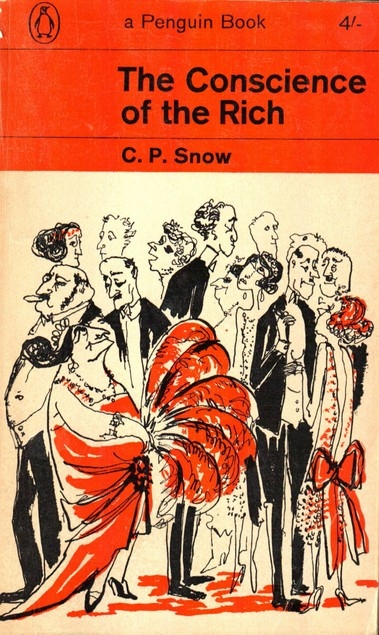
conscienceThe Conscience Of The Rich, CP Snow (1958). I like British postwar fiction, and among its more celebrated examples CP Snow’s – he of the “two cultures” thing – Strangers and Brothers series of eleven novels seemed like it might appeal. So I decided to read them – but not in order of publication, in order of internal chronology. The Conscience Of The Rich is the third book in the series, but was written and published seventh. It’s the late 1920s, Lewis Eliot has moved to London and joined an inn of court, under Herbert Getliffe. He meets a fellow trainee barrister, Charles March, the eldest son of a wealthy Jewish family, and is slowly drawn into their fold. Eliot is there when Charles gives up the law for medicine; and when he decides to marry a distant cousin with ties to the communists, Eliot is also there. Much of the novel is taken up with the March family’s domestic crises – not just Charles’s career and marriage, but also his sister’s marriage to a gentile, Getliffe’s younger brother. The two sort of come together in the final third of the book, in the late 1930s, when some shady dealing by barrister Getliffe seems to incriminate the March family patriarch, a Whitehall mandarin and Charles’s uncle, and a communist-backed magazine to which Charles’s wife contributes intends to publish details of it all. There’s a considered, and mannered, voice to Snow’s prose, more evident I felt in this novel than the earlier two I’ve read, and while the plot is not exactly gripping, the characters are well-drawn and engaging, and the whole is an interesting window on an earlier time.

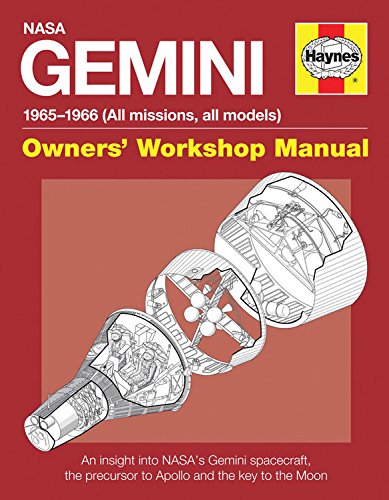
geminiOwners’ Workshop Manual: Gemini, David Woods & David M Harland (2015). Like Haynes’s earlier Owners’ Workshop Manual on Soyuz, this is not a how-to-fix-it guide to NASA’s Gemini spacecraft. It is instead a detailed exploration of the Gemini program and spacecraft. Perhaps it doesn’t boast the number of diagrams of NASA’s own technical documentation, but it comes pretty close. It’s also very readable. And very interesting. I hadn’t known, for example, about the difficulties experienced by Gene Cernan during the US’s second spacewalk during Gemini IX-A. Good stuff.

The Sand Men, Christopher Fowler (2015). I read this book for review in Interzone. I’d been intrigued by it since first hearing of it, since it’s set in Dubai, a place I know well (although my knowledge is now some ten years out of date). I grew up in the Gulf states – including living twice in Dubai – and later spent a decade working in Abu Dhabi. Sadly, I was not impressed.

changing_planesChanging Planes, Ursula K LeGuin (2003). There’s a cunning pun in that title there. It goes like this: a person waiting one day in an airport to catch a connecting flight accidentally discovered a way to visiting other worlds, or, as Le Guin has it in this collection, other planes. Get it? Aeroplanes and alternate universes/planes. And hence this collection of, well, fables, all based on other planes visited by a narrator from Earth. I am not a big fan, I must admit, of fables, though I am certainly a fan of Le Guin’s fiction. So while I can appreciate the art and cleverness with which Changing Planes is put together, I didn’t much enjoy the stories. Meh.

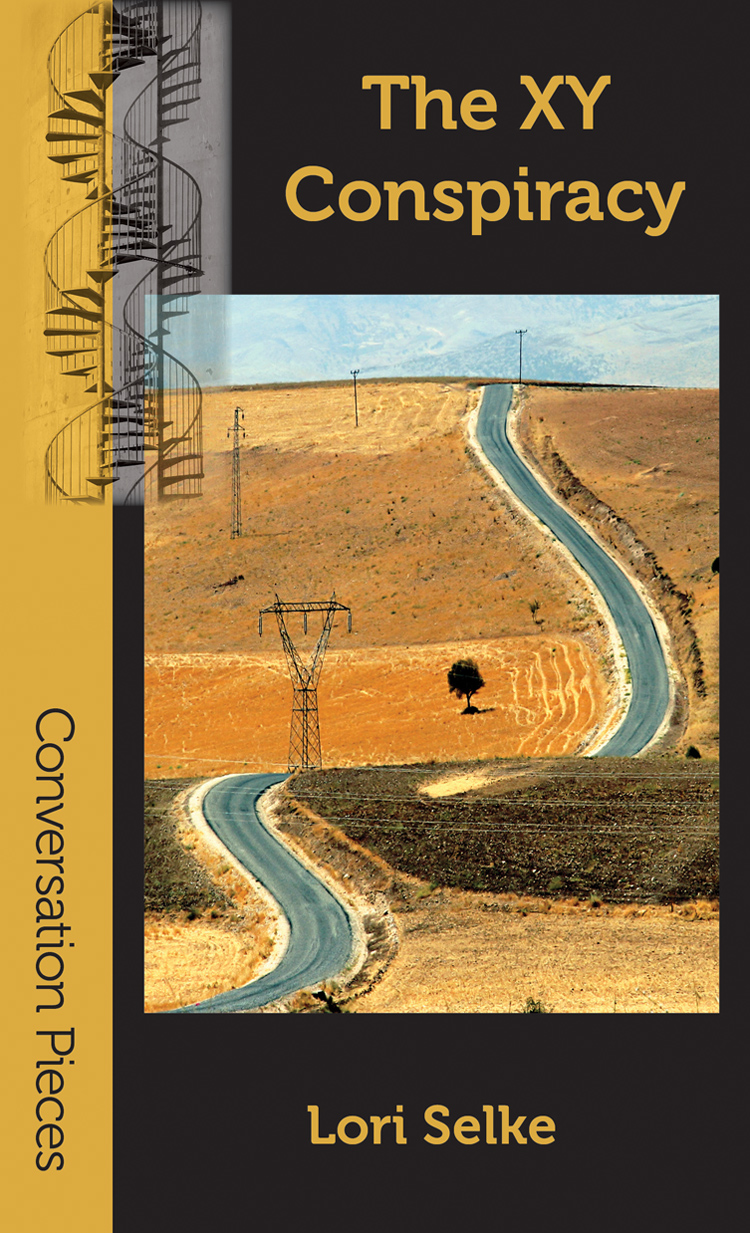
xy_conspiracyThe XY Conspiracy, Lori Selke (2013). I’d been planning to buy a couple of Aqueduct Press books for a while – Necessary Ill and Elysium – and browsing their site one evening, I saw the description of Flesh & Wires and that sounded interesting too… So I placed an order, and bunged a couple of Conversation Pieces novellas into my basket as well – The XY Conspiracy and A Day in Deep Freeze. Jyn is am exotic dancer (stripper) and a UFO nut. When she spots a Man in Black lurking outside the San Francisco club where she works, she panics and decides to leave town. And since she’s doing that, she decides to tour all the important UFO sites as she heads north to Washington, across to Montana and then south through Colorado and Texas into New Mexico and, er, Roswell. Jyn also has a theory that the Y chromosome is a mutation, part of an experiment by aliens to prevent parthenogenesis in mammals. An interesting and sympathetic narrator and good use of UFO mythology. Worth reading.

1001 Books You Must Read Before You Die count: 118


6 Comments

Wonderbook, Jeff VanderMeer

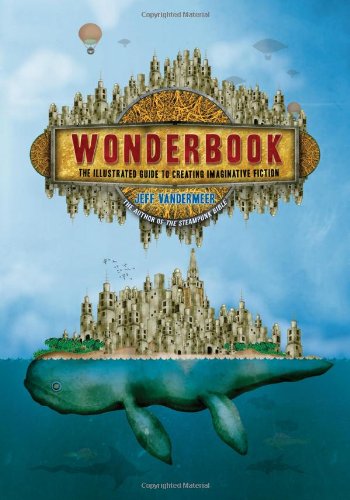
wonderbookThey say everyone has a book inside them. Some people, it seems, even have a book about writing books inside them. While many of the latter have been written by people whose only published work appears to be a book about writing a publishable novel, there are a large number by authors with long and illustrious careers. This is especially true in science fiction and fantasy, a mode of fiction which as been curiously self-fertilising since its inception in the pages of Amazing Stories in 1926. Names from the letters pages of the pulp magazines soon had stories appearing in those same titles. There is a long list of successful science fiction and fantasy writers who have published “how to write” books, from Bob Shaw to Ben Bova, from Lisa Tuttle to Damon Knight, and from Stephen King to Ray Bradbury. And yet, despite the marquee names on the covers, such books are not always useful. Shaw’s How to Write Science Fiction (1993) may be an entertaining read, but its advice can be distilled down to “read lots of books”. The best, despite its age, is probably Knight’s Creating Short Fiction (1981). Bova’s The Craft of Writing Science Fiction that Sells (1994) is simplistic, and the stories – his own, of course – he uses to illustrate his points do the book no favours. However, Bova did go on to edit a series of books on specific aspects of writing science fiction for Writer’s Digest Books and, while necessarily specialist in the topics they cover, they can be helpful.

All of which is a roundabout way of introducing Wonderbook by Jeff Vandermeer. Vandermeer is no stranger to genre fiction – he is an award-winning writer and anthologist, and he also runs a highly-regarded small press, Cheeky Frawg Books. Wonderbook, subtitled “the illustrated guide to creating imaginative fiction”, has apparently been several years in the making. Given the book’s size, and its copious illustrations, that’s a boast it’s easy to believe. In fact, as an object, Wonderbook is pretty impressive, which is not something that can be said of most “how to write” books.

And yet… There’s something in the whole concept of a “how to write” book which seems vaguely antithetical to the process of creating fiction. The axiom that writing is a craft, that it is a skill set which can be taught, appears to suggest there is a right way and a wrong way to do it. As a result, “how to write” books often come across as prescriptive – “this is what fiction should be”, “this is what genre fiction should be”… And this can lead to a blanding out of literature written in a science fiction or fantasy mode.

If the recent self-publishing boom has taught us anything, it’s not just that everyone has a book in them, but that most of those books really should have never seen the light of day. It’s not simply an inability to tell a compelling story, it’s that many self-published writers simply do not have the language skills – their books are replete with typos, grammatical errors and malapropisms.

But is a facility with written language all that’s required? Certainly, a writer should know what they are doing before they make a deliberate choice not to do it. It’s not that there’s a need for rules, or even accepted ways of doing things… but expectations certainly exist – from editors to readers, from publishers to reviewers…

Wonderbook scores higher in this regard than other books of its ilk – the clue is there in the subtitle. This is a book designed to catalyse the creative process, and then show how to shape that creative impulse. Vandermeer is also clear on Wonderbook’s audience: “although of use to beginner and intermediate writers working in any genre, Wonderbook’s default setting is fantasy rather than realism” (p xiv). The book covers its subject in seven chapters, titled: Inspiration and the Creative Life, The Ecosystem of Story, Beginnings and Endings, Narrative Design, Characterization, Worldbuilding, and Revision. Each chapter contains numerous illustration – some instructional, some merely decorative. There are also a number of sidebar essays by established genre writers, such as Kim Stanley Robinson, Lauren Beukes, Karen Lord, Ursula K Le Guin, Nick Mamatas and Neil Gaiman. And a detailed analysis of Vandermeer’s own novel, Finch.

The sidebar essays demonstrate that asking ten different writers how to write will result in ten different answers, many of which will be either contradictory or too specific to be of much use. Authors with successful careers have by definition experience at writing publishable fiction, but what worked for them is not necessarily transferable. Nor should it be.

There are plenty of examples given of the narrative techniques covered in Wonderbook, but unfortunately some of the details are just plain wrong. The love affair in Kim Stanley Robinson’s 2312 is between Swan and Wahram, not Waltham (p 87). Iain M Banks’s Culture novels do not “postulate a far future in which humankind has spread out across the galaxy”, but are set during our present day – see the novella ‘State of the Art’ (p 147).

Despite all that, if you’re looking for insights into writing for publication successfully, a “how to write” book is not necessarily the best place to look. Shaw’s advice – “read lots of books” – may be trite, but it’s still the best way to learn how to write. Some “how to write” books may present novel-writing as a “get rich quick” scheme, but anyone with any sense knows it’s anything but. Wonderbook makes no such claims: its lessons are clear, its analyses are mostly unobjectionable, the illustrations add welcome texture, and it’s a poor reader who will walk away from the book without learning something. For the “beginner or intermediate writer”, it’s certainly one of the best books available of its type. For the seasoned writer, perhaps not so much – there’s just a little too much which feels restrictive.

But that’s the nature of writing about writing fiction.

This review originally appeared in Interzone #250, January-February 2014.