It Doesn't Have To Be Right…

… it just has to sound plausible


3 Comments

Reading diary, #50

Oops. I appear to have missed a number. I went straight from Reading diary, #47 to Reading diary, #49. I could have gone back and corrected the numbering, but I can’t be arsed. So this forty-ninth post is numbered fifty, and it’ll just have to carry on from there. All together now: deal with it.
The Memoirist, Neil Williamson (2017, UK). This is the fourth and final novella in NewCon Press’s new series of novella quartets (I wonder where they could have got that idea from?). These first four are straight-up sf, so I will admit to some surprise at seeing Neil Williamson’s name, since he’s not known for straight-up sf. But, thankfully, The Memoirist certainly qualifies as that, and even better, it’s a pretty damn good piece of straight-up science fiction. A ghost writer is hired to write the memoirs of the lead singer of a long-since defunct rock band that had a Moment a couple of decades previously. That Moment was at a near-legendary gig in a small club, of which no recordings or footage exists. And yet the myth of the gig overshadows what meagre impact the band itself ever had. In this world, ubiquitous “bees” provide 24/7 surveillance… but it seems that mythical gig triggered something which led to a new type of “bee”… and to say any more would give the plot twist away. I’ll admit I thought the mystery dragged out a little, but the way the plot then shifted into left-field more than made up for it. I enjoyed this, a good piece of near-future sf, almost McLeod-esque in places, with an interesting premise and an in interesting, and nicely oblique, approach to that premise (okay, it was a little Espedair Street too, but that’s hardly a complaint). Good stuff.
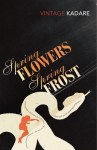
Spring Flowers, Spring Frost, Ismail Kadare (2000, Albania). So I went looking for novels from countries I’d not read literature from before, and came up with this one. Kadare has won several international prizes, and been mooted as a Nobel laureate a number of times. Spring Flowers, Spring Frost is his eleventh book, and his entire oeuvre – of novels, at least – appears to have been translated into English. Mark Gurabardhi is an artist in the provincial town of B—– and, well, things happen. Beginning with a bank robbery. People also tell each other stories, and each chapter is followed by a counter-chapter which expands on that story, as if it were the plot of the novel (but the counter-chapters are not a single narrative). Some sections of the novel deal with the old Albanian mountain code of Kanun, blood vendettas that go back generations, so far no one remembers what they were actually about, and how they’re in danger of kicking off again now that Hoxha’s communist regime has collapsed. Much as I enjoyed Spring Flowers, Spring Frost, it didn’t blow me away. I’m glad I read it, but I doubt I’ll read anything else by Kadare. But at least I can cross Albania off the list.
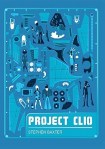
Project Clio, Stephen Baxter (2016, UK). I remember seeing this at the 2016 Eastercon in Manchester, but I own so many Baxter novels and novellas already, and had been badly disappointed by the last few I’d read, that I’d decided to give Project Clio a pass. But then recently I placed an order for the final novella of Eric Brown’s Telemass quartet and this novella sort of accidentally fell into my basket… It reads a little like Baxter had watched Danger: Diabolik, or any number of similar films, once too often, and while it’s a lot of fun it does read somewhat compressed and elided. It’s a carry-on from two earlier stories, which I have not read, even though I own the collection, Universes, in which the stories appear, which does mean Project Clio throws the reader in at the deep end since it assumes prior knowledge of the characters and set-up. There’s mention of Brutalist architecture in the novella, but I can’t work out if it’s approving, because being unapproving of Brutalist architecture would of course be unforgivable. The novella ends with a bit of a Dr-Who-style finish, which didn’t work for me. I liked the use of 1960s iconography, and the piss-takes of 1960s cultural artefacts, but the plotting did feel more like that of a television episode than an actual novella.
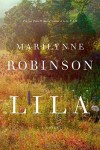
Lila, Marilynne Robinson (2014, USA). I’m still not entirely convinced by Robinson’s books, but they’re so beautifully written I’m prepared to forgive them much. Lila is written from the point of view of the wife of John Ames, the protagonist of Gilead and the patriarch depicted in Home. She was stolen as child, a neglected child, by a woman who calls herself Doll (and who gave Lila her name), and subsequently dragged about the Midwest looking for work. This was during the Great Depression, and anyone who has read Steinbeck, or even seen the film of The Grapes of Wrath, will have some idea of the abject poverty these people experienced. Eventually, Lila fetches up in Gilead as a young woman, and slowly, in much the same way a wild animal would, begins to explore the small town and its inhabitants. She starts working in the pastor’s garden, in return for his unprovoked acts of kindness toward her, and the two sort of drift together until he asks her to marry him and she says yes. While both Lila and Ames are drawn with an impressive amount of sensitivity – and Ames is clearly a remarkably, perhaps a little too remarkably, sensitive man for his time – and the interactions between the two are beautifully-written… but there’s that leap from friends who know very little about each other to marriage that seems somewhat ungrounded. I really do like Robinson’s prose – it’s deceptively simple – and I also really like the gentle pace of her novels, and the depth to which she explores her cast and their various interactions. But… they do also feel like they’re missing an edge, a bit of bite to temper the smoothness. The depiction of Lila’s childhood during the Great Depression is too bland to do the job. It means Robinson’s novels can feel a bit too, well, too pleasant. But still worth reading.

vN, Madeline Ashby (2012, Canada). According to my database, I bought this at the 2014 Fantasycon for £1. So it’s taken me nearly three years to get around to read it. I seem to recall it being quite well-received at its time of release, but, to be honest, I wasn’t all that impressed. The title refers to von Neuman machines, although in this novel they’re actually AI in humanoid bodies thatare faster, stronger, etc, than humans. They’ve integrated into society such that the story opens with a man, his vN wife and vN child (vN children are identical copies of their parent – created by both female and male vN; and, in fact, all vN come in a limited number of “models”, each one identical to the original vN of their line). In order for the child vN, Amy, to “grow” along a similar time-frame to a human child, her parents have been limiting her “food” intake. But when her vN grandmother, Portia, turns up to her kindergarten graduation and goes berserk, Amy eats her. And so grows almost immediately to adult size.  And goes on the run… The problem with vN is that the vN over-balanced the world-building, and Amy was a completely unconvincing character. The vN are so physically superior to human beings they made no sense unless they were non-sentient. But they’re AIs, and supposedly not dangerous because they have a “failsafe” (sort of Asimov’s Three Laws rolled up into one maguffin). Except Portia has overriden hers. And it’s likely Amy will be able override hers too. But since the entire novel is told from Amy’s POV- and she’s a very implausible five-year-old – we can only guess at what this might actually mean to society at large. If you want to read a book about robots and humans, Machine by Jennifer Pelland is much better. There’s apparently a sequel to vN, titled iD. I’ll not be bothering with it.

Blood Enemies, Susan R Matthews (2017, USA). I’ve been a fan of Matthews’s Under Jurisdiction series since reading the first book, An Exchange of Hostages, back in the 1990s when it was published. so I was pretty disappointed when Matthews’s original publisher, Avon Books, dropped the series after the original trilogy. It was then picked up by Roc, who published a further three novels before dropping it. A seventh novel was published four years later by Meisha Merlin, who went into administration shortly afterward. And now, eleven years later, we finally have the next book in the series, published by, of all people, Baen. Which at least explains the shit cover art. Happily, Baen are also rereleasing the earlier books in omnibus editions, which is just as well as Blood Enemies follows straight on from the previous book, 2006’s Warring States, and would be hard to follow without knowledge of the preceding books, despite Matthews’s lengthy introduction. Kosciusko had sent his freed bondsmen off into the Gonebeyond, but when he tried to follow them he found himself stuck on Safehaven. Meanwhile, Cousin Stanosz, an agent of the Malcontent (the Dolgurokij Combine’s unofficial secret service), has been investigating a series of brutal terrorist attacks on Gonebeyond colonies. He thinks Kosciusko’s brother is involved, and so impersonates Kosciusko to visit the brother in the company station he inhabits in Gonebeyond, travelling there in the bondsmen’s ship. Except Kosciusko manages to escape his house-arrest and tracks his b0ndsmen to the company station, inadvertently ruining Cousin Stanosz’s plan… This book is better-written than I remember the earlier books in the series being, and Kosciusko seems to have settled down as a character. But a lot happens in its 256 pages, and the constant referring back to events and people in the earlier books does tend to confuse in places. The Under Jurisdiction novels don’t have quite the same level of shine as they did back in the late 1990s and, while the genre has moved on in the eleven years since Warring States, although it has moved in much the same direction as the Under Jursidiction books were sort of heading… Blood Enemies still doesn’t feel much like a 2017 science ficiton novel. The world-building is strong, but it’s not the focus of the narrative. Nor are the characters’ emotions. Which does make it feel, when compared to present-day sf, as though everything in Blood Enemies is slightly off-centre. I’m not all that interested in the current sf narrative style, to be honest – world-bling and feels and word salad – but Blood Enemies reads like it’s trying to catch up rather than do its own thing. Having said that, I still intend to continue reading the series.

1001 Boks You Must Read Before You Die count: 129

6 Comments

2017, Best of the half-year

It’s that time of year again, ie, halfway through the twelve months, when I look back over the books I’ve read, the films I’ve watched and the music I’ve listened to, and try to work out which was the best so far. I do this at the end of every year as well, of course, but I like seeing what has lasted the course, or if the back half of the year has proven better than the front half.

The last couple of years it’s been quite difficult to put together these lists, chiefly because I’ve watched so many films, sometimes more than a dozen a week. And I choose films to watch that I think might be good, which they generally are… and that makes picking the best of them even harder. On the other hand, I’ve not read as much so far this year as I have in previous years, but my selection of books is just as random…

books
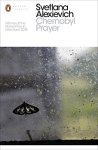
1 Chernobyl Prayer, Svetlana Alexievich (1997, Belarus). I was chatting with friends on Twitter one night earlier this year, and the conversation drifted onto Nobel Prize laureates, especially female ones, and I realised I’d read very few female winners of the Nobel. So I went onto Amazon and ordered some books. Herta Müller’s The Appointment was a good read but not so good I wanted to read more by her. But Alexievitch’s Chernobyl Prayer was brilliant, a fantastic revoicing of the people Alexievich had interviewed about Chernobyl and its after-effects. I have since bought a copy of Alexievich’s most recent book, Second-Hand Time, and I may well pick up more books by her. I wrote about Chernobyl Prayer here.

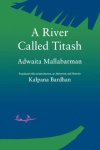
2 A River Called Titash, Adwaita Mallabarman (1956, Bangladesh). This is the novel from which one of my favourite films was adapted, so I was keen to read it to see how the book and film compared. And the answer is: pretty well. The film simplifies the novel’s plot, which is pretty much a series of vignettes anyway, but both suceed admirably as ethnological documents depicting a lost way of life. Mallabarman was brought up on the Titas river, but he later moved to Kolkata and became a journalist and writer. A River Called Titash is partly based on his own childhood, so it’s a first-hand depiction of a now-lost culture. I wrote about the book here.

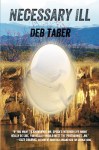
3 Necessary Ill, Deb Taber (2013, USA). I bought this a couple of years ago from Aqueduct Press after hearing many good things about it. But it took me a while to get around to reading it, which was a shame – as I really really liked it. It’s by no means perfect, and a on a prose level is probably the weakest of the five books listed here. But I loved the premise, and fund the cast completely fascinating. Other than half a dozen short stories, this is the only fiction Taber has so far had published. But I hoping there’ll be another novel from her soon. I wrote about Necessary Ill here.

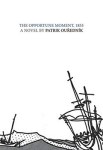
4 The Opportune Moment, 1855, Patrik Ouředník (2006, Czech Republic). Ouředník’s Europeana made my best of list a few years ago, so I’ve kept an eye open for his books ever since. Unfortunately, Dalkey Archives have only translated three of his books to date, and I thought the second, Case Closed, interesting but not as good as Europeana. But then The Opportune Moment, 1855 is not as good as Europeana… but it’s a deal more interesting than Case Closed (on the other hand, maybe I should reread Case Closed). I wrote about The Opportune Moment, 1855 here.

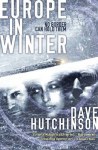
5 Europe in Winter, Dave Hutchinson (2016, UK). This is the third book in the trilogy-that-is-no-longer-a-trilogy about a fractured near-future Europe in which an alternate universe, where the entire European continent has been populated by the British, is now linked to our universe – or rather, the universe of the main narrative. These books have drifted from sf-meets-spy-fiction to something much more sf-nal. In a good way. Happily, there is at least one more book due in thrilogy series. I wrote about Europe in Winter here.

Honourable mentions Proof of Concept, Gwyneth Jones (2017, UK), a piece of characteristically smart but grim sf from a favourite author; The World of Edena, Moebius (2016, France), a beautifully drawn bande dessinée; Lord of Slaughter, MD Lachlan (2012, UK), the third book in a superior Norse mythos/werewolf fantasy series; The Language of Power, Rosemary Kirstein (2004, USA), the fourth book in Kirstein’s fun Steerswoman series; The Possibility of Life’s Survival on the Planet, Patrick Keiller (2012, UK), an accompanying text for a nexhibition related to Keiller’s documentary, Robinson in Ruins; Lila, Marilynne Robinson (2014, USA), the third of Robinson’s Gilead novels, following the wife of the narrator of Gilead.

films
1 I Am Cuba, Mikhail Kalatozov (1964, Cuba). I bought the 50 Years of the Cuban Revolution box set because I wanted a copy of Memories of Underdevelopment – and yes, it had Lucía, a favourite film, in the set, which I already owned, but I could pass the copy I had onto a friend… But I was surprised to discover that I Am Cuba, a film about which I knew nothing, proved so good. It’s an astonishing piece of work, Soviet propaganda, that the authorities deemed a failure, but which is technically decades ahead of its time. I wrote about it here.

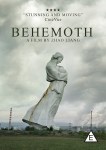
2 Behemoth, Zhao Liang (2015, China). I went on a bit of a Chinese film kick earlier this year, after watching a couple of films by Sixth Generation directors such as Jia Zhangke and Zhang Yuan, and I’d thought Zhao Liang was one such. But he’s not. And he makes documentaries, not feature films. Zhao’s films are deeply critical of the Chinese regime, which makes you wonder how he manages to get them made, but Behemoth is also beautifully shot, with quite arresting split-screen sections at intervals. I wrote about it here.

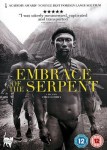
3 Embrace of the Serpent, Ciro Guerra (2015, Colombia). I found this on Amazon Prime, and then David Tallerman recommended it, so I moved it up the to-be-watched queue… and was very pleased I had done so. It’s set in the Amazonian jungle, and covers a pair of expeditions for a legendary plant, one in 1909 and the other in 1940. There’s a bit of Herzog in it, and probably some Rocha too, and the cinematorgaphy is often amazing. I wrote about it here.

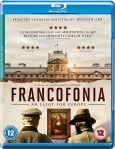
4 Francofonia, Aleksandr Sokurov (2015, France). I’ve made no secret of the fact Sokurov is my favourite director, so anything by him is almost certain to make my top five. The only reason Francofonia isn’t higher in this list is because I expected it to be excellent. And so it was. It reminds me more of Sokurov’s “elegy” films than it does Russian Ark, although comparisons with the latter will likely be inevitable for most. The production values are also probably the highest I’ve seen in a Sokurov film, and I hope Francofonia‘s international success gives his career the sort of boost it has long deserved. I wrote about Francofonia here.

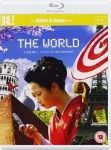
5 The World, Jia Zhangke (2004, China). The first film by Jia I saw A Touch of Sin, and I thought it excellent. So I added more of his films to my wishlist, and ended up buying the dual edition of The World because its premise intrigued me – it’s set in a theme park comprised of small-scale copies of famous buildings from around the world. It immediately became my favourite Jia film, and possibly one of my all-time top ten films. Despite having little or no plot, it feels more of a piece than A Touch of Sin. Jia is now one of my favourite directors. I wrote about The World here.

Honourable mentions The Epic of Everest, JBL Noel (1924, UK), astonishing silent documentary of an early attempt to climb Everest; Marketa Lazarová, František Vlačíl (1967, Czech Republic), grim mediaeval drama, something the Czechs seem to do well; Elena, Andrey Zvyagintsev (2011, Russia), languidly-paced character study of a rich man’s wife as she attempts to provide for her son from an earlier marriage, beautifully shot; Reason, Debate and a Story, Ritwik Ghatak (1974, India), more ethnographical film-making and political debate from a favourite director; Shanghai Dreams, Wang Xiaoshuai (2005, China), grim semi-autobiographical drama from a Sixth Generation director; Suzhou River, Lou Ye (2000, China), cleverly-structured mystery from another Sixth Generation director; Madeinusa, Claudia Llosa (2006, Peru), affecting story of a young woman in a remote village in the Andes; The Case of Hana and Alice, Shunji Iwai (2015, Japan), a lovely piece of animation.

music
Um, well, embarrassingly, I don’t seem to have bought any new music so far this year. I used to listen to music a lot at work, but I’ve not been able to do that for over a year. Some of my favuorite bands have released albums in 2017, such as Persefone, but I’ve not yet got around to buying them. And, in fact, I’ve only been to one gig in the past six months, and that was to see Magenta, a band I last saw live over five years ago. It was a good gig. But it’s been a quiet year musically, so to speak, this year…


3 Comments

Reading diary, #49

I seem to have made up for the last post’s male heaviness, so to speak…

Necessary Ill, Deb Taber (2013, USA). A lot of people whose opinion I respect had said approving things about this book, and yet within less than a year after its publication conversation about it seemed to fade away. Nonetheless, it remained on my radar, and when I placed an order with Aqueduct Press – an excellent small press, by the way – I included it; or it may have been that I wanted this book and waited until there were others before ordering it, I forget which. Either way, that order also contained Flesh and Wires (see here) and A Day in Deep Freeze (see here), so it was a good purchase. All of which makes it a little embarrassing it’s taken me so long to get around to reading Necessary Ill. And, even more embarrassingly, I loved it. I don’t think it’s perfect, and at least one of the reasons I love it is because one of its elements fits so badly. It’s by no means a beautifully-written book, although its prose is generally better than average for sf, and its world-building does feel a bit hit and miss in places. But it’s premise has so much going for it, that I couldn’t help liking the book. At some point in the future, some babies are born neuter. They’re considered freaks, and those that do make it to adulthood disguise themselves as gendered people (those that haven’t had gender surgically forced on them as kids, that is). By the time the novel’s story starts, there’s a secret colony of them living deep in the Carlsbad Caverns in New Mexico. The earth is also in serious trouble, thanks to a failing climate and scarce resources, and cannot handle its current population levels. Some of the neuters engineer plagues, which they release throughout the US, in an effort to cull the population. Jin is one such “spreader”, and is the chief character of the novel. While travelling about Texas, carefully spreading one of its plagues, Jin tangles with a man who seems to know a lot about the spreaders, and who appears to be behind an anti-neuter movement which is gathering steam. Meanwhile, Sandy, a young woman rescued by another neut, is now living with the neuts in their underground home. The plot spends a while exploring the world and the chief characters – but it’s all good stuff – before turning into the redemption of Jin, and by extension, all the neuts. This is done through a feature film about Jin, lightly fictionalised, and made by all the neuts who have infiltrated the film industry (inasmuch as they’re disguised as gendered people). The secret world of the neuts is handled really well, and if some of the science behind the plagues doesn’t quite sound like it could be true, it’s all presented with sufficient scientific grounding to be plausible. I think this book will make it into my top five for the first half of 2017, and might even make it to the end of year one.

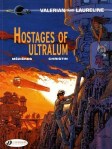
Valerian and Laureline 16: Hostages of Ultralum, Jean-Claude Mézières & Pierre Christin (1996, France). I do love this series, but not every album in it is all that memorable. And this, er, is one of the unmemorable ones. Ultralum is an important mineral used to fuel spaceships, but it only exists in areas of high spatio-temporal instability. Valerian and Laureline are still bouncing around after a previous album saw Galaxity, the pan-galactic peace-keeping organisation for which they worked, wiped out of existence and out of memory. There are a few references in this story to earlier albums, but from what I remember the plot was pretty thin and it felt more like the series was treading water than anything else. Plot-wise, that’s disappointing, but there are other aspects to the series which appeal – not least the mordant wit, which felt sadly lacking in the trailer for Besson’s film, although, to be fair, that focused on the visuals because that’s what modern audiences appear to want. But one of the strengths of the Valerian and Laureline series has been the shift in emphasis from Valerian to Laureline, and it would be a crying shame if the film characterised Valerian as the omni-competent hero and Laureline as his decorative sidekick. Because, to be honest, I had thought we were better than that. Still, this is Besson, so who knows. Mézières is apparently happy with the film, although as the illustrator I’d expect him to be concerned chiefly with the visuals. But I may be doing him a disservice – and Besson too, of course. We shall see. Meanwhile, the comics are readily available and definitely worth reading. Up to volume 17, at least.

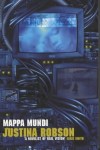
Mappa Mundi, Justina Robson (2001, UK). I bought this when it was published 16 years ago, but I seem to have missed reading it and it’s only now I’ve finally got around to it. The novel opens with six prologues, each of which is based around one of the main narrative’s major characters. I’ve never been a big fan of prologues, but I like books that play around with narrative structure… And six introductory prologues strikes me as an interesting structural choice, even if their content doesn’t add all that much to the plot. Which concerns a pair of government projects, one in the UK and one in the US, based around some sort of neurological mapping technology, which could allow governments to control, and program, the thoughts of their citizens. Elements within the US security apparatus want control of the technology – and have already run a hugely illegal, and unsuccessful, test on human beings on a Native American reservation. In the UK, the research is being performed by a company owned by a mysterious Russian scientist (whose chain of identity changes forms one of the six prologues). When a test on a human subject is sabotaged, leading to a Dr Manhattan-like series of events, and infecting main character Natalie Armstrong with a more powerful version of the Mappa Mundi software… it kicks off a transatlantic techno-thriller plot that reminds me a little of a Cronenberg film, and in which the science-fictional technobabble floats uneasily on a well-realised real-world setting. The two main characters, Armstrong and half-Cheyenne FBI agent Jude Westhorpe, also felt a little good to be true. I suspect I’d have been more impressed with Mappa Mundi had I read it in 2001 (it made the Clarke Award shortlist, but lost out to Gwyneth Jones’s Bold as Love, and rightly so), but Robson’s subsequent novels have all been very good indeed and she’s one of the authors whose books I buy as soon as they’re published – even if it takes me sixteen years to get around to reading them…

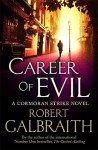
Career of Evil, Robert Galbraith (2015, UK). I forget why I read the first of Rowling’s pseudonymous crime novels (her disguise had been rumbled before I read it, so I knew it was by Rowling). Possibly it was because my mother had a copy and asked me if I wanted to read it and I said, go on then. And then she got hold of the second book in the series… And now the third… The prose is a little better than average for the crime genre, but not quite good enough to be called literary. And the crime elements are not especially well put together or convincing, perhaps about as poorly done as you’d expect in a literary novel. So the Cormoran Strike novels fall uneasily between two stools, without being quite good enough to be one or the other. Having said that, they’re easy reads, and the two protagonists – Strike himself, and his business partner, Robin – are engaging characters. In this one, an old enemy of Strike’s sends Robin the leg of a young female murder victim by courier, and clues suggest the perpetrator is an enemy from Strike’s past – two men he investigated when in the RMP, and a stepfather he hated. Rowling drags out the mystery for far too long, sending Strike and Robin up and down the country in search of clues. Meanwhile, Robin’s relationship with her fiancé hits a rocky patch – as the fiancé thinks Robin and Strike are attracted to each other (Rowling has been doing a Mulder/Scully thing with them). Oh, and the reference to Blue Oyster Cult in the title? (I spotted it immediately, I’m a BOC fan.) The entire book is filled with references to the songs and lyrics of Blue Oyster Cult. As a fan of the band, that was a draw, but I can’t see it being the same to those who aren’t. It’s not like the references add anything to the plot that could not have been done by a fictional band (and, let’s face it, Rowling could hardly write worse lyrics than some of Sandy Perlman’s). Of the three Strike novel so far published – and more will undoubtedly appear – Career of Evil was more likeable than its predecessors, but less satisfactory as a crime novel. I suspect that may be the series’ future…

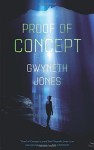
Proof of Concept, Gwyneth Jones (2017, UK). New science fiction from my favourite sf author? That went straight onto the wishlist the moment it was announced… Two scientists from different fields, and with opposing views on how to conduct their science, join forces to run an experiment in a recently-discovered “void”, a hollow space deep in bedrock, in which they plan to make changes to “information space” and so instantaneously relocate their facility to an exo-planet. In the facility are the IS scientists and a “crew”, a group of reality TV stars who have been involved in several television interstellar mission simulations. The main character, Kir, is a young woman who grew up feral and now has an AI embedded in her skull. The Information Space thing reminds me of Buonarotti Drive from Jones’s Aleutian trilogy, and may in fact be the same thing. Proof of Concept starts out as an exploration of two incompatible groups of people living in a facility sealed off from the outside world, and in which tensions are heightened after a series of deaths – heightened to the point where the experiment is jeopardised. But then the experiment has also been dangerously compromised, and is not quite what it’s been presented to be. Reading Proof of Concept reminded me of all the reasons why Jones is my favourite sf author – that clear clinical prose, the knotty ideas, the sense there’s so much more to the story that’s not being told… Jones sketches in her near-future lightly, but there’s more than enough there to ground the story, even if current taste is for an excess of detail. She also pitches the readers straight into the story, which can leave readers floundering a little. But Jones’s fiction has always required work from the reader – as should all good fiction – and if Proof of Concept feels a little thin in places, it nevertheless has an interesting protagonist in Kir, and a fascinating idea, Information Space, at its core. More, please.

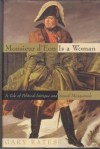
Monsieur d’Eon is Woman, Gary Kates (1995, USA). I have no idea how long I’ve had this book. I sort of found it a couple of weeks ago and decided to read it. (Um, according to my database, I bought it cheap on eBay in 2005.) Anyway, I found it in a pile of books while I was doing a little light tidying in the study. I’d heard of the Chevalier d’Eon, of course, and thought I knew the basic details of his story… But apparently not. Kates bases his biography chiefly on d’Eon’s own writings – which, he is careful to point out, often contained fabricated and/or embroidered details (and in some cases, Kates provides historical evidence that d’Eon had lied in his autobiographical writings). The popular story has it that d’Eon was a spy for Louis XV, and he infiltrated the Imperial Russian court purporting to be a woman. After a period in England, he returned to France, adopted a female identity, and lived out the rest of his days as the Chevalière d’Eon. He claimed to have been born female, but brought up male because his father needed a son or they’d lose the family holdings. But on d’Eon’s death, it turned out d’Eon was male. Much of this history was fabricated by d’Eon himself. Kates maintains that d’Eon got himself in such bad favour with Louis XV, and yet was privy to so many embarrassing secrets, that the only way to neutralise d’Eon was to make him a woman – by royal decree. The book explains the historical and political background to d’Eon’s life and adventures, but it’s never quite clear why everyone thought a gender-change was suitable. Or what triggered the rumours he was really female. What is clear, however, is that d’Eon was an astonishing person, widely-read, learned, a gifted diplomat, a prolific author, and a minor war hero. He led a peculiar life – the first half as male, and a spy/diplomat for the French king; the second half in exile as a woman. Some of the details on d’Eon on his Wikipedia page are contradicted in Monsier d’Eon is a Woman – especially the bit about the Russian court. Kates maintains d’Eon invented the cross-dressing element years later (although he was indeed sent to the Russian court by Louis XV). A fascinating book about a fascinating person.

1001 Book You Must Read Before You Die count: 129

1 Comment

Reading diary, #48

I’m still struggling with my reading, and slipping further behind on my Goodreads challenge. It’s not the books I’ve been choosing to read, because most of them I’ve enjoyed and thought good, and none were hard work to get through. I love books, I love reading, and I want to read as many books as I possibly can. So I’m going to have to get back into it somehow… The books are a bit male-heavy this time around. I usually alternate genders in my fiction reading, but I seem to have had a short run on books by male authors. Ah well, it’ll balance out in the end.

The Possibility of Life’s Survival on the Planet, Patrick Keiller (2012, UK). Keiller is a film-maker, best-known for London, Robinson in Space and Robinson in Ruins, which are excellent lightly fictionalised cinematic meditations on the state of the UK, both economically and politically. He’s a bit like Adam Curtis, but without the found footage and global conspiracies. The Possibility of Life’s Survival on the Planet was published to accompany an exhibition of Keiller’s work – which I never saw as I only discovered his work after it had been on – and describes how Keiller went about making Robinson in Ruins, his thought processes as he wrote the script and what inspired him. It’s fascinating stuff. And you should definitely watch the films too.

Europe in Winter, Dave Hutchinson (2016, UK). This is the third book of the trilogy, but there’s apparently a fourth book in the works. Which is no bad thing, as it’s been an excellent series so far – and I’m not the only person to think so, as Europe in Winter won the BSFA Award only last month (although, bafflingly, it didn’t make the Arthur C Clarke Award shortlist; should I blog what I think of this year’s Clarke shortlist, or are we not allowed to have dissenting opinions any more?). It’s more of the same like Europe in Autumn, rather than Europe at Midnight, and in part follows on from the plot of the first more than that second. There’s a terrorist attack on the Line, and Rudi discovers his own father was heavily involved with a bunch of rogue topographers from the 1920s who might or might not have been responsible for an entirely separate pocket universe that might or might not be part of the Community. The person who promised so much in the the second book is assassinated from a distance in this one, abruptly cutting off that particular avenue of exploration by the narrative… Where these books are especially good – and it’s not the melding of sf and spy thriller, which has been done before, although no examples spring immediately to mind – but these books’ true strength is in depicting Europe as a coherent federation of cultures. They’re not entirely harmonious cutures, which is hardly unexpected, but the Europe books exhibit a magnificent sense of place. They could not have been written by a US author, that much is obvious; it’s slightly surprising they were written by a Brit… because the best European fiction has always been written by continental Europeans, not Brits. It’s an impressive achievement, which means cavilling over elements of the plots seems, well, cheap. But there are holes – the opening bombing is never satisfactorily explained, there’s always a sense the author is following a different agenda to his characters (and his readers must follow the characters’, of course), and there are one or two set-pieces which hint at a level of technology that’s never quite capitalised upon. But these are are minor quibbles. These are great books, superior near-future sf, and I’d put them in the top five of recent near-fututre sf with, er, Ken McLeod’s Intrusion – and that’s about it. Go read all three books.

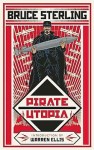
Pirate Utopia, Bruce Sterling (2016, USA). Which a lot of people probably don’t know about as it seems someone fucked up the Nielsen data entry so badly that Amazon lists the book as by John Coulthart, Rick Klaw and Warren Ellis, and doesn’t mention Bruce Sterling anywhere. But now you know about it, and being a fan of Sterling’s work… Apparently, after World War I, the city of Fiume, now Rijeka, was claimed by both Italy and the recently-formed Kingdom of the Serbs, Croats and Slovenes. But a group of anarchists, led by the Italian poet Gabriele d’Annunzio, seized power and declared the independent Regency of Carnaro. The city became something of a social experiment, but the fascists seized control after a couple of years and Fiume was annexed by Italy. Sterling’s short novel makes much of the birth of Futurism – indeed, the major character dreams of building “air torpedoes” and such, the sort of technology displayed in Lang’s Metropolis. But Pirate Utopia is also about the birth of fascism in Italy, and how it gained traction among the establishment. Of course, we’re seeing that happen on a daily basis here in the UK and the US. Pirate Utopia is a fascinating piece of history, but… as a piece of writing it felt a little lacking. Sterling was never much of a stylist, but I remember novels such as Distraction and Holy Fire being well-written novels. Pirate Utopia, on the other hand, seems to be written entirely in simple declarative sentences, which makes all feel a bit dumbed-down. I get that there’s a lot going on in the book, but it does feel a little Like Sterling didn’t trust his readers and so kept it simple. I suspect this is one for fans.

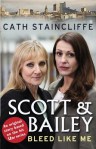
Bleed Like Me, Cath Staincliffe (2013, UK). I was a big fan of the Scott & Bailey TV series – and certainly for at least the first two series (or “seasons”, for US readers) it was superior telly. It slipped a bit in the third, and while it’s still very good it has seemed to lose its way a bit. And, to be honest, the 2016 series consisted only of three episodes, none of which were hugely memorable. The books are, sadly, much the same. I like that they’re built around the series, and include details revealed in the programme, but they’re otherwise straightforward police procedurals, heavy on the procedural and personal life of the two title characters (one of the series’ strengths, it must be said). In this book, a pub owner kills his wife, daughter and brother-in-law and then flees with his young son. The rest of the book is a manhunt – this is not a murder-mystery. They know who committed the crime, they just have to find him before he kills the young child he has with him. Meanwhile, Bailey is still trying to get over her relationaship with, and attempted murder by, her ex-boyfriend. Scott is having problems at home, which is not helped by her fling with a colleague, and syndicate leader Murray is worried about her son who has moved in with his estranged father and no longer seems interested in going to university. To be honest, I was expecting more in the way of plot. The manhunt is really dragged out, and reading this several years, and several series, after it was written, and so all the subplots have been resolved, kind of spoiled it a bit. But they’re easy reads, I like the characters, and if I stunble across the next one in a charity shop I’ll probably buy it and read it.

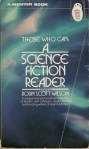
Those Who Can: A Science Fiction Reader, Robin Scott Wilson, ed. (1973, USA). I found this at Eastercon, and while it was quite tatty, and most of the contents wouldn’t normally appeal to me, but the fact it was a mix of short stories followed by essays by the authors on writing those stories, and some of the names involved included Delany, Le Guin and Russ, so I thought it worth a bash. It also included a story by the editor. I don’t get that. If you edit an anthology, you do not include one of our own stories. It’s hugely unethical. I don’t even care if you’re a co-editor. You edit, you do not contribute. It  makes you look bad, it makes everyone involved in the anthology look bad. And Scott Wilson’s story in this particular anthology, which is otherwise quite good, is easily the worst. As it is, the stories are variable – the Russ, ‘The Man Who Could Not See Devils’, is not one of her better ones, but the following essay is quite interesting. The Delany is ‘We, in Some Strange Power’s Employ, Move on a Rigorous Line’, which has always felt to me, in part, like a prototype for Dhalgren, and is one of those Delany stories I like more the more often I read it. His essay on the piece is especially good, and his approach to writing echoes my own in many ways. Le Guin contributes ‘Nine Lives’, the story about a ten-clone, and it’s okay. Damon Knight annotates his own story, ‘Masks’, although annotations overstate the literary quality of the story. And Kate Wilhelm’s dissection of her story ‘The Planners’ gives some useful tips on point of view. As a sf anthology, Those Who Can is middling at best, but the essays on writing greatly improve it. It’s a pity my copy is so tatty.

The Opportune Moment, 1855, Patrik Ouředník (2006, Czech Republic). I read Ouředník’s Europeana back in 2006, after something in the blurb persuaded me I might enjoy it. I loved it. I even picked it as one of my top five books of the year. I was less enamoured of his Case Closed, although it was good enough for me to continue to read him. The Opportune Moment, 1855, despite its unwieldy title, is not as good as Europeana, but it’s still huge fun. The novel opens with a letter from an Italian in 1902 to his beloved, before moving back half a century to the titular year and the journal of an Italian anarchist who travels to Brazil with a group of like-minded souls – well, not entirely like-minded, as they bicker and argue throughout the trip – to join a utopian community called Fraternitas. The book then jumps to six months after their arrival, and gives four slightly different entries on the first few months in the community. In each of them, the community fails because of the failings of its members; and while it makes for good satire to poke fun at idealism, not everyone is venal and corrupt despite all their protestations of high ideals. Ouředník is definitely worth reading, and The Opportune Moment, 1855, is very good, but it does feel a bit like shooting fish in a barrel, and even though the book is very funny in parts, and very good on human nature, I prefer my utopian fiction with a happy ending. Oh, and I’d really like to see more of Ouředník’s fiction translated into English.

1001 Books you Must Read Before You Die count: 129

Leave a comment

Books landing

The last few book haul posts I’ve photographed the new books on the landing, hence the title of this post. It’s been a while since the last such post, but then I’ve not bought all that many books in the past couple of months…

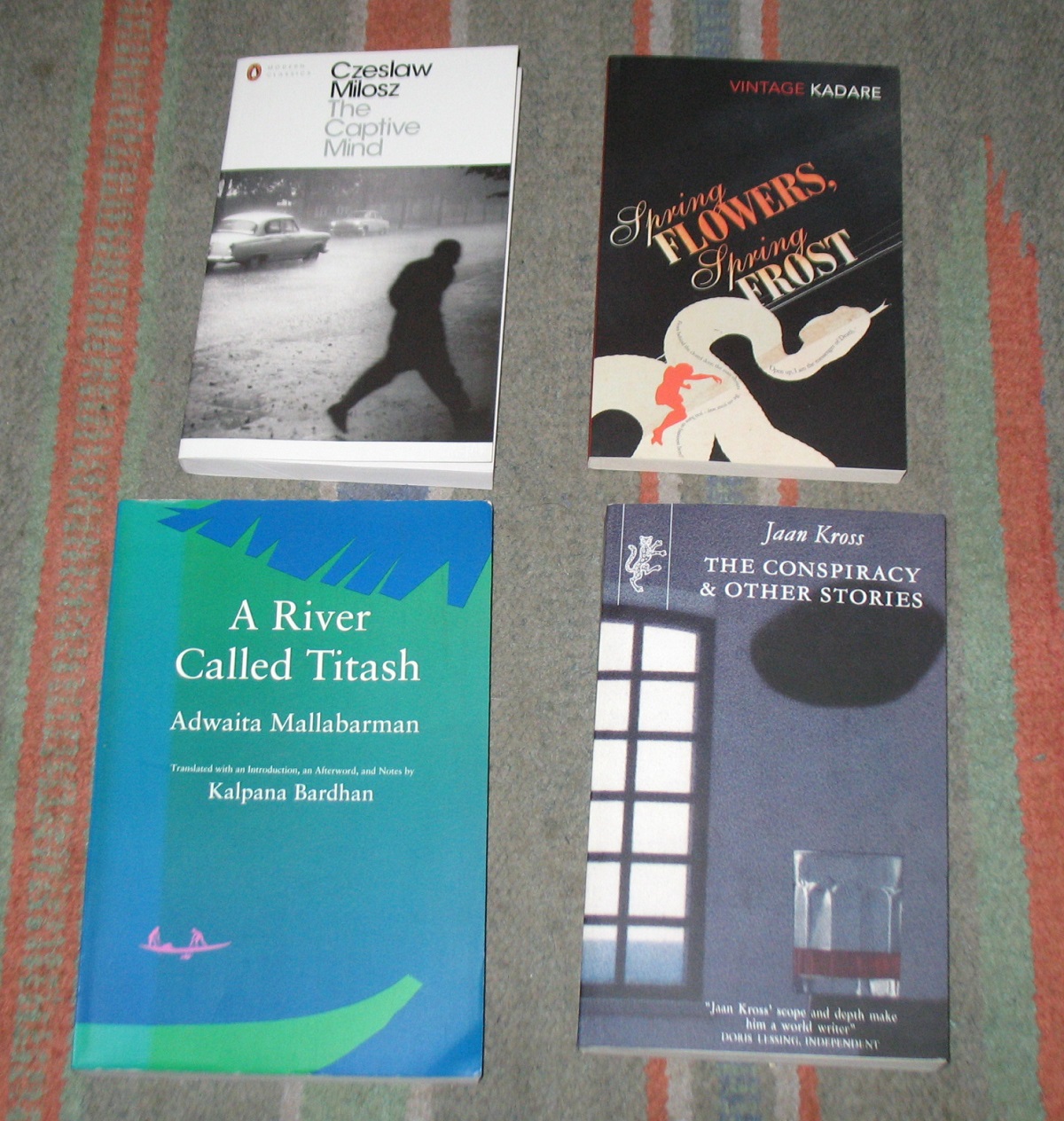
Some birthday presents – it was my birthday back in March, and it’s been that long since I last did a book haul post. Patrick Keiller is the man who made the films London, Robinson in Space and Robinson in Ruins. The Possibility of Life’s Survival on the Planet is an accompanying text to Robinson in Ruins, and The View from the Train is a more general meditation by Keiller on his life and career. I’ve become a fan of Green’s writing, and some pretty new omnibus editions of three novels each have jus1t been published, so… Loving, Living, Party Going and Caught, Back, Concluding. He wasn’t very good at titles, was he?

Some recent sf. I’m glad Susan R Matthews is back in print after so long, so kudos to Baen for doing that… although the cover art to Blood Enemies is a bit naff. Her Under Jurisdiction series is recommended. The Memoirist is the fourth book of the first quartet NewCon Press’s new novella series. And New York 2140 is another mighty tome from Kim Stanley Robinson, whose books I’ve always admired, if not always liked.

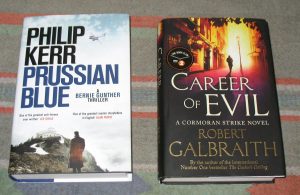
Some recent crime. Prussian Blue is the latest in the Bernie Gunther series, and there’s at least one more to come, I think. I’ve read the first two Galbraith (ie, JK Rowling) novels, and they’re not great, but my mother lends them to me – she found Career of Evil in a charity shop – and they’re easy to read and entertaining enough.

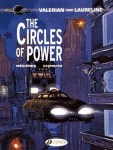
A bit of a mix. Retribution Falls was on the Clarke shortlist several years ago, although its presence seemed to baffle many. I found this in a charity shop. The Circles of Power is the latest Valerian and Laureline – see here. I was so impressed with Alexievich’s Chernobyl Diary (see here), I bought Second-Hand Time when it was published. And The Ordinary Princess I found in a local charity shop, and bought because I’ve always liked MM Kaye’s historical novels, and even took the trouble to hunt down copies of her crime novel series so I could read them. I hadn’t known she’d written a children’s book.

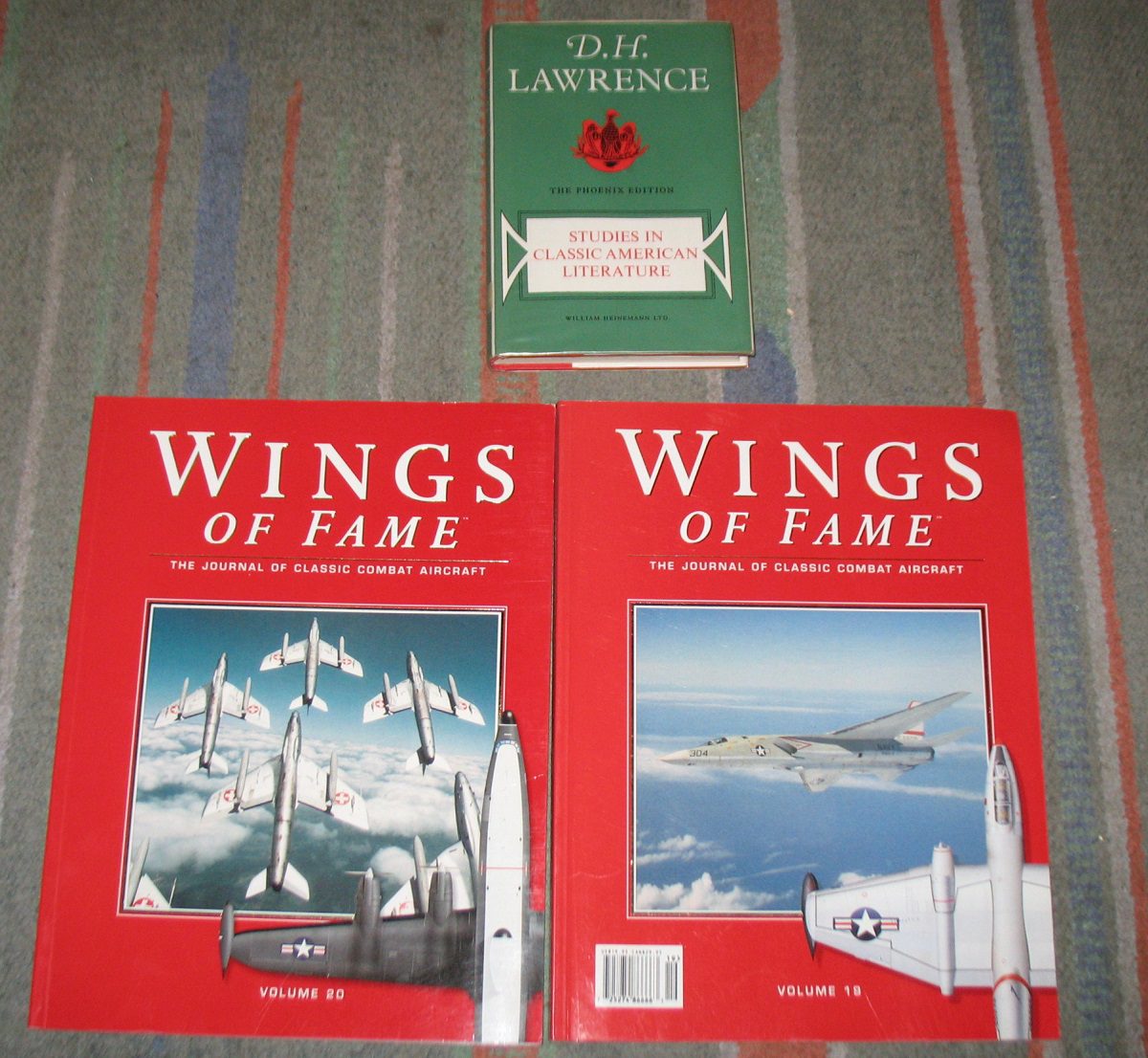
When I decided to work my way through DH Lawrence’s oeuvre, I started out just picking up whatever books by him I found in charity shops. And then I stumbled across three all with the same design, and discovered Penguin had re-issued most of his works in a uniform paperback design back in the early 1970s. So I had to buy those ones, and only those ones. Like The Trespasser. I now have twenty-four of them, but it’s hard to find out what else is in the series. Some time later, I discovered Heinemann had published a hardback “Phoenix Edition” series of Lawrence’s works in, I think, thirty volumes, from the 1950s to the 1970s. And I’ve been picking those up as well, but they’re much harder to find. Kangaroo popped up on eBay recently (er, no pun intended). I have thirteen of them so far.


3 Comments

Reading diary, #47

My reading slowed badly during March and April, so much so I’m ten books behind on my Goodreads reading challenge, and I picked a total ten less than the year before (which I just managed to reach). Partly it’s because I’ve been so busy at work, I’ve been eating my lunch at my desk, and so not reading during that break. But I’ve also found it harder to continue with the book I’m reading on the weekend. I really do need to pick up my reading pace.

The American Lover, Rose Tremain (2014, UK). Back when I lived in Abu Dhabi, I read several books by Tremain, both novels and collections, and enjoyed them. Since returning to the UK, I’ve not read anything by her, so I thought it time I rectified that and bought her latest collection. And… it was a good move. She’s worth reading. These stories are slight, it has to be said, but good, of a type I like and enjoy, but not exactly memorable. I find Helen Simpson’s short stories have more bite. The stand-out is probably ‘The Jester of Astapovo’, in which a dying Leo Tolstoy, fleeing from his wife, ends up at a nowhere railway stop “120 miles south-east of Moscow, on the Smolensk-Dankovo section of the Ural railroad line”, and spends his last few days there in the house of the station-master (aside, this is, from the use of the horrible Americanism “railroad”). I enjoyed The American Lover enough to decide to carry on working my way through Tremain’s oeuvre.

The Corporation Wars 1: Dissonance, Ken MacLeod (2016, UK). I’ve been buying and reading Ken’s novels since stumbling across a copy of his first novel, The Star Fraction, in Spinneys in Abu Dhabi back in the 1990s. Throughout the years since, he’s published a variety of sf novels, and some I’ve liked a great deal more than others. Some have even been excellent – I still think his Intrusion is one of the best near-future sf novels of the past ten years. The Corporation Wars 1: Dissonance, on the other hand, has a title that really doesn’t appeal – it sounds like “Neoliberals in Spaaaace!” – and if it had been written by anyone other than Ken I’d have given it a wide berth. As it is… I’m unlikely to put it in my top five MacLeod novels. It’s a realistic treatment of robot sentience accidentally being created at a corporate mining site on a moon of Jupiter, and the team of avatars – virtual representations of dead human beings – who fight them. There’s a lot about simulated environments, a familiar topic to readers of Ken’s novels, and some intelligent treatment of the vast distances within the Solar System. But. Well, it never quite caught fire for me. The self-aware robots felt a bit clichéd, and the avatars were no better drawn. This is solid twenty-first century space opera, a bit more to the hard sf end of the spectrum than is usually the case, but I found it a little disappointing.

The Language of Power, Rosemary Kirstein (2004, USA). I forget who recommended the first book in this series, The Steerswoman, but when I came across a copy in a local charity shop, I bought it, later read it… and liked it so much I went and tracked down the remaining Steerswoman books (only the first was ever published in the UK, so I had to buy US editions… and there was such a long gap between books two and three that the first two were re-issued in an omnibus edition.) The Language of Power follows directly on from The Lost Steersman, but none of the books really make much sense unless read in order from The Steerswoman. Rowan is back in the seaport of Donner, trying to make sense of the events recounted in previous book. But her efforts to track down the records of a previous Steerswoman draw unwanted attention from the wizards… but then she stumbles upon Will, the boy genius who was taken on as apprentice by a friendly wizard, and it seems they’re trying to figure out the same things. These books are hugely likeable, and the presentation of science fiction as fantasy is perfectly pitched. It’s not a new idea, by any means – even Robert Jordan used it, for example – but Kirstein’s talent is in presenting understandable science fiction to the reader, not a handful of sf buzzwords or well-worn tropes, in such a way that it’s obvious this is sf to everyone except the characters. Sadly, the story is not yet complete and the recent installments have taken a while to appear. But it’s worth hanging in there, because these books are lots of fun.

Valerian and Laureline 15: The Circles of Power, Jean-Claude Mézières & Pierre Christin (1994, France). Annoyingly, Cinebook have been prompted by the imminent release of Luc Besson’s Valerian film – which looks a bit dodgy as an adaptation, to be honest – to rerelease the Valerian and Laureline books in hardback omnibus editions. Argh. I’ve been buying the paperbacks as they’ve been published in English. And, as is evident in this blog post, I’m currently at volume 15. (Volume 16 will be published in April, but there are, to date, 22 volumes in French, the last published in 2013.) In The Circles of Power, the titular two find themselves on a world in which the city and society are organised into circles with increasing levels of authority and regulation. But something weird is going on in the highest circle, and since they need money to get their ship fixed, they’re forced to investigate. The solution to the mystery comes as no real surprise, but along the way – and this is where, on the strength of the trailer alone, I admit, I think Besson’s adaptation might fail – there is ample opportunity for Christin to display his mordant view of real world society and politics. And I saw nothing of that dry banter in the trailer for Besson’s film. Which is a shame – one of the joys of the Valerian and Laureline bande dessinée series is how it maps onto the its time of writing.

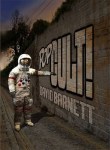
popCult!, David Barnett (2011, UK). I bought this at the Fantasycon before last, so it’s taken me about 18 months to get around to reading it. Which is actually pretty good – I have some books I bought over a decade ago I’ve yet to read. I can’t remember why I bought it, possibly because I know the author, but perhaps also because the blurb mentions a lost Carry On film as central to the plot… and for all their myriad faults I’m a reluctant fan of the Carry On series.  In the event, Carry On, You Old Devil!, the so-called missing film, turned out to be a maguffin. The actual novel is about the writer of the titular work – a non-fiction work on popular culture in the novel – and how he is recruited by the, er, titular underground organisation, which is dedicated to safeguarding popular expressions of mass culture – talent shows, reality television, anything which makes celebrities of nobodies, basically – against a mysterious and semi-immortal enemy. Unfortunately, the protagonist is thoroughly unlikeable, and his allies somewhat too perfect to be true, but there’s some excellent commentary on popular culture buried among the implausible goings-on. It’s a fun novel, but it’s one where the writer was clearly capable of better – and has subsequently proven so. One or two aspects proved uncannily prescience when I was reading it – especially the section where popCult! break into the Palace of Westminster… Worth reading, if you can find a copy.

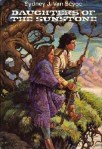
Darkchild, Sydney J Van Scoyc (1982, USA). Many years ago, I decided I liked Van Scyoc’s novels – I forget which of her novels prompted it – and over a number of years I’ve picked up copies of all her books… and I’ve been very slowly reading them. Darkchild I actually read as the first part of SFBC omnibus edition, Daughters of the Sunstone, which also includes Bluesong and Starsilk. I was afraid I might have gone off Van Scyoc’s writing, but I was happy to find I still like it a lot. There’ll be a review of Darkchild on SF Mistressworks soon.

1001 Books You Must Read Before You Die count: 129

1 Comment

Reading diary, #46

I try to plan my reading, but usually end up not following the plan at all… other than in its broadest intentions, ie, alternating male/female writers, for example… Which I only just managed to do here. Ah well.

river_titashA River Called Titash, Adwaita Mallabarman (1956, Bangladesh). Good books don’t always made good films, and great films are not always made from great books. Nonetheless, A River Called Titas by Ritwik Ghatak is one of my favourite films, so I had high hopes of the novel from which it was adapted. From what I’d read the novel was held in high regard, which is always a good start, although apparently not enough to be still in print in English in the twenty-first century. And since I couldn’t find a copy of its original 1950s Penguin release, I ended up with a university press edition… which actually proved a bonus as it included footnotes and appendices that added to the reading experience. A River Called Titash is mostly autobiographical – Mallabarman, who died in 1950, the novel was published posthumously six years later – was born and grew up in a Malo village on the River Titash, which is an offshoot of the Meghna River in the Chittagong District of Bangladesh, which is basically just one giant flood plain pouring into the Bay of Bengal. Obviously, I read A River Called Titash as the source text for A River Called Titas… and the most obvious difference seems to be that the film confused the Titash and Meghna. True, some of the story takes place on the latter river, but the film implies it all does – although it does follow, in broad stroke, the same story. A fisherman from a Titash village defends a young woman – actually only fifteen years old in the novel – during an attack on her village by pirates. So she is given to him by her family in marriage, they consummate their union, and and the next day set off in his boat for the trip home where the actual marriage ceremony will take place. En route, while anchored at night, pirates sneak aboard and kidnap her. But she escapes and ends up at a third village. She doesn’t know her husband’s name, or the name of his village. (Nor did the husband learn his bride’s name – in fact, she’s never named in the novel, and referred to only as “Ananta’s mother” – and saw her face only on a handful of occasions.) She has a son, Ananta. Some time later – in the novel Ananta is four, in the film he’s considerably older – mother and son have finally learnt the origin of the lost husband and make their way to his village. But the husband had lost his mind shortly after his bride was stolen. So the “widow”, as she has to pretend to be, ekes out an existence while trying to reconnect with her insane husband. I absolutely adore Ghatak’s movie, and this novel is equally fascinating. It provides more detail, indeed, it’s been described as just as much an ethnographical text as it is a novel – it is set, after all, in the first two or three decades of the twentieth century, and documents a way of life long since lost (although I think some remnant of it was still around when the film was made in the 1970s).  In one respect, reading the novel was especially helpful as it put some of the events in the film in context, and explained why the characters behaved as they did. A fascinating read, and likely to make my top five of the year.

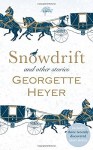
snowdriftSnowdrift and Other Stories, Georgette Heyer (2016, UK). I do love me some Heyer, so I was a bit excited when I discovered a new collection of her short stories had been published. In the event, Snowdrift turned out to be a retitled Pistols for Two, which I already own and have read, but with the addition of three previously uncollected stories. On the one hand, these stories are lots of fun and Heyer was a dab hand with the prose. On the other… well, it’s all about entitled nitwits, and bears as much likeness to real history as, well, the Bible. It’s fun reading about Corinthians and Nonpareils and headstrong mistresses who Adventure, but they’re all aristocracy and there’s only one story in this collection, and new to it too, in which any one from the working class has any agency. Heyer is frothy and witty and fun, but the tribulations and concerns she invariably writes about no sensible person cpuld honestly give a shit about in this day and age. In one story, for example, an impressionable young woman (sixteen or so, I think) has learnt that her irresponsible brother has been challenged to a duel by a regular Man in Grey (lots of Heyer’s story follow the plot of The Man in Grey). So she tries prevent this but accidentally stumbles into the orbit of a supercilious noble (in his thirties) who promises to see her brother comes to no harm. He is, of course, the challenger, and only a complete idiot would fail to spot it. And it is only the fact he has the hots for the hothead’s teenage sister that saves the day. The problem with most Heyer stories is that you can change the words a little, without being inaccurate, and the plots would sound really skeevy. “Jaded thirtysomething chats up teenager in pub on way to arranged marriage… only to discover teenager is his proposed partner.” “Eloping teenagers mistake thirtysomething roué for irate brother hot on their heels, but when they realise their mistake teenage girl goes off with roué instead.” I had thought when reading A River Called Titash I could overlook the young ages at which girls were married off as a cultural thing from more than 100 years ago, only to realise that Heyer valourised something similar happening in the UK a hundred years before the events of Mallabarman’s novel. A River Called Titash at least has the advantage of being an historically correct ethnographical novel by a member of that culture, whereas Heyer wrote about a tiny sector of Regency England society more than 100 years afterwards. Still, they are fun, and I’m not about to give up my Heyer collection any day soon.

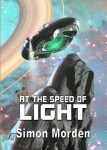
speed_of_lightAt the Speed of Light, Simon Morden (2017, UK). This is the second of the four novellas published recently by NewCon Press. It opens with a man waking up on board a spaceship, ignorant of his surroundings or his purpose. And, it is eventually revealed, not entirely human. I admit it, I sighed. This is a cliché. But I know Simon – although I don’t know his writing – and I should not have been so quick in jumping to conclusions. Because when the situation is finally revealed, in the third of the novella’s three sections, that opening section makes perfect sense and is actually quite clever. A spacecraft which can travel at a substantial percentage of the speed of light has accelerated out of control until it is now travelling fractions of a percentage less than c. Then the AI which controls the spacecraft notices a second one travelling in formation with it. And it realises this new spacecraft was sent by a planetary system the AI had travelled through, but since the AI had been in a fugue state at the time it had not noticed the communication attempts by the system’s inhabited world. The plot develops logically from there. It’s not Mundane SF by any means, although it initially pretends to be (an FTL drive pops up toward the end). The physical effects of travelling at very close to the speed of light are handled especially well, and although the novella is structured as an opening puzzle followed by a long extended info-dump as the narrator works out what’s going on, it’s a very good example of its type.

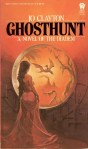
ghosthuntGhosthunt, Jo Clayton (1983, USA). I picked up the first seven books of this nine-book series at a Swecon because Clayton was not a name known to me at the time and I thought they’d make suitable review material for SF Mistressworks. This series was apparently very popular in the late 1970s and early 1980s but has since been forgotten, and having now read them I’m mostly happy with that state of affairs. When you read forgotten or obscure sf, there’s always the hope you’ll stumble across a lost masterpiece; and it’s certainly true I’ve found some forgotten female writers of sf, or books by female sf writers, from past decades who deserve far more of a reputation than they currently have – anything by Marta Randall, for example, and Judgement Night by CL Moore should rightly be considered one of the classic space operas. But a lot of books vanish into obscurity for very good reason. The Diadem series has its high points and its low points, but its lows are pretty damn low, and even when it manages to be inventive progressive space opera it only just clears the bar. The series improved as it progressed, but not by a great deal. Still, there are the last two books to go – copies of which I will have to track down. My review of Ghosthunt will appear shortly on SF Mistressworks.

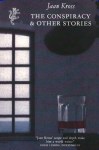
conspiracyThe Conspiracy & Other Stories, Jaan Kross (1991, Estonia). In an effort to widen the geographical spread of my reading, I picked a bunch of writers from random countries to try. One of them was Jaan Kross from Estonia. I’ll admit to knowing nothing about Kross, or indeed Estonian literature, when buying the book; and, to be honest, I’m not a great deal wiser now. Kross apparently specialised in historical fiction set in Estonia’s past, and his best-known work is the Between Three Plagues trilogy set in the sixteenth century. The stories in The Conspiracy, however, are set shortly before, and during World War 2, in German-occupied Estonia, and are told in the first person by Peeter Mirk, a stand-in for Kross himself. The stories are rich in period and place detail (so much so, each stories has end-notes… even though some of the glossed terms are later explained in the narrative). In one story, Mirk persuades an old university friend to desert the German not-so-voluntary Hilfswilliger levy corps, only for Mirk’s plans to see his friend off to Finland fall apart, but so putting his friend in his debt that the friend takes a stupidly risky route of his own choosing and dies in the attempt. In another, Mirk is attempting his own escape from Nazi-occupied Estonia, but the boat he is aboard is caught by a German patrol boat. Mirk has with him the manuscript of his first novel, which is highly critical of the Nazis. He throws his suitcase overboard, but the Germans manage to retrieve it. But there’s nothing in the suitcase to identify the owner (not even a name on the manuscript), except for… a collectible book given to him by a friend in lieu of payment for a debt moments before they boarded the boat to Finland which has an ex libris sticker giving that friend’s name. If Mirk says nothing, then his friend will be executed… There are half a dozen stories in the collection, and they’re well-written and interesting. I doubt I’ll dash out and buy something else by Kross to read – have you seen the size of my TBR? – but at some later date I might give something else by him a go.

1001 Books you Must Read Before You Die count: 129

Leave a comment

Reading diary, #45

The reading further afield thing hasn’t quite kicked into gear yet, with an almost entirely UK set of books in this post – and a lone bande dessinée from Belgium (which is, ironically, about a British writer: William Shakespeare…).

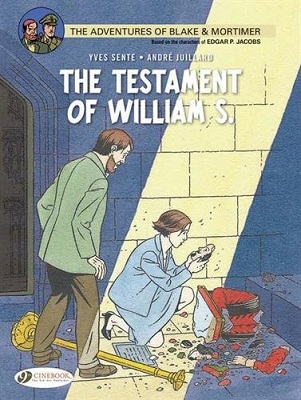
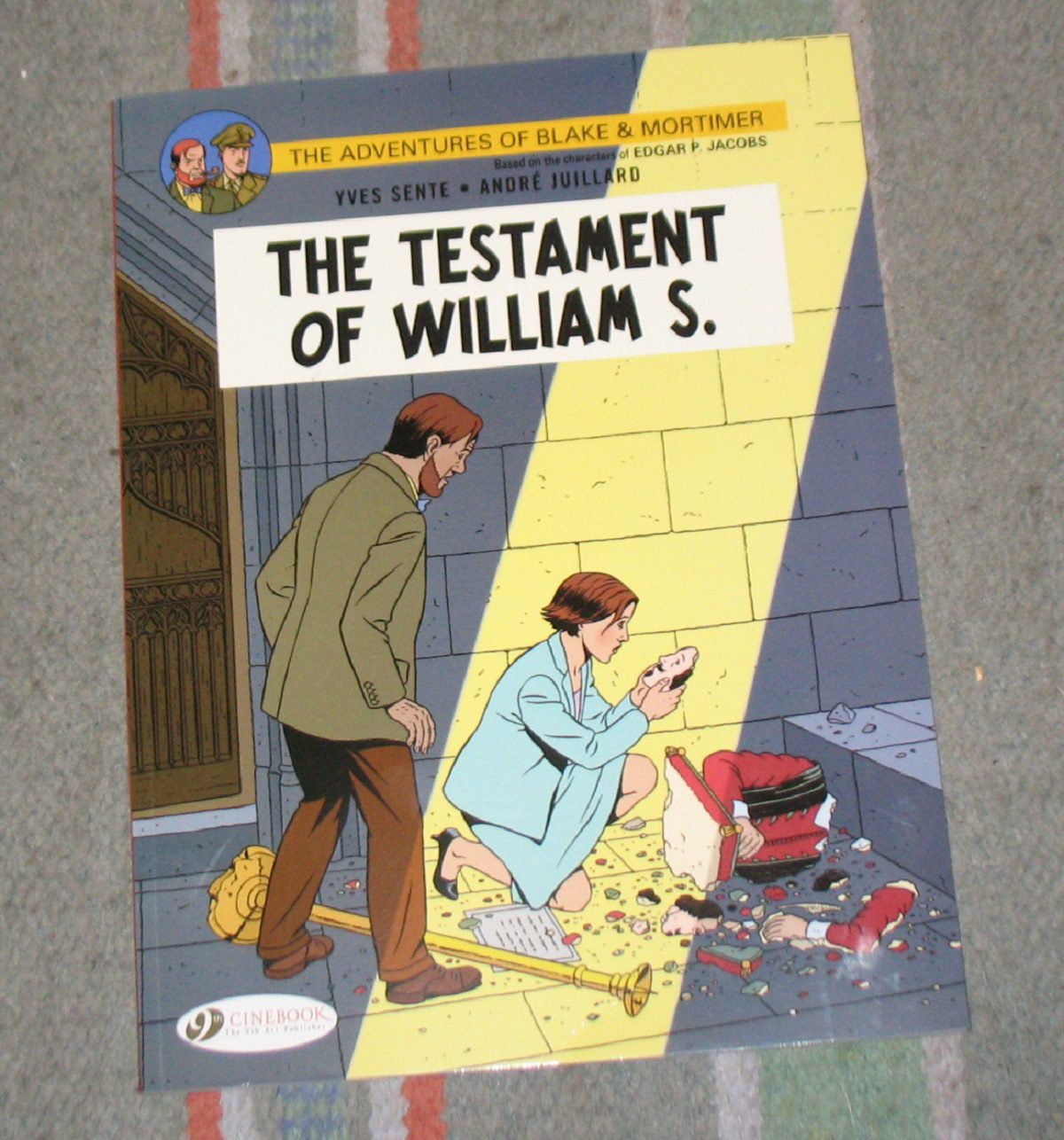
blake_24The Adventures of Blake & Mortimer 24: The Testament of William S., Yves Sente & André Juillard (2016, Belgium). I’ve been picking these up as Cinebook publish the English translations, and if that’s not a testament to their quality, then I don’t know what is. Perversely, they’ve improved considerably since the series creator, Edgar P Jacobs, died. In most cases, the originator does it best – Hergé refused to let anyone continue the Tintin series after him; but the Asterix and Obelix series is generally considered to have declined now that both Goscinny and Uderzo are dead. But Jacobs’s stories for Blake and Mortimer were very much of their time – even offensively so: the villains for several stories is the “Yellow Empire”, ffs – and the science fiction elements were complete bollocks. Since the Edgar P Jacobs Studio has been producing the books, they’ve turned into clever alternate history conspiracy thrillers – such as this one. The William S. of the title is the Bard himself, and the story revolves around two societies who have been feuding for decades over who actually wrote the plays and sonnets. One believes it was indeed Shakespeare; the other believes it was the Earl of Oxford. But a clue hinting at vital evidence proving the claim of one of the societies is unexpectedly discovered in Venice, and, since there’s a huge bequeathed fortune tied up in the answer, the race is on to puzzle out the hidden location of the evidence, and either publish it or destroy it. Good stuff.

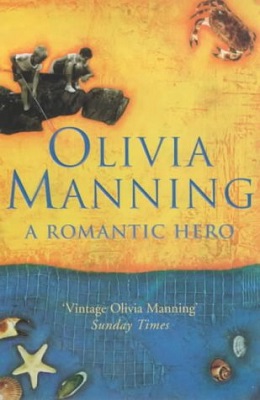
a_romantic_heroA Romantic Hero, Olivia Manning (1967, UK). I’m a big fan of Manning’s Balkan and Levant trilogies, and always pick up her books when I spot copies in charity shops… which is where I bought this collection of her short stories (her second collection, apparently). I’d not read her short fiction before, only her novels, so I was interested to see how it compared. And, initially, not so good… the two opening stories, written in the 1930s feature two children of impoverished middle class parents (in a collapsing marriage) who live on the coast of Ireland. Fortunately, things pick up quite dramatically, and some of the following stories are excellent, with some lovely prose and sharply drawn characters. One features the semi-autobiographical characters from the Balkan Trilogy; another is set in Cairo during WW2, but I’m not sure if the characters appear in the Levant Trilogy. The stories in A Romantic Hero stretch from the 1930s to the 1960s (and a couple from the 1930s were re-written in the 1960s), but there’s no discernible change in Manning’s writing with each decade. Perhaps some of the earlier ones seem less individual, more like other fiction of the time; but still well-written. A good collection. Worth reading. Although, annoyingly, the book doesn’t have a table of contents.

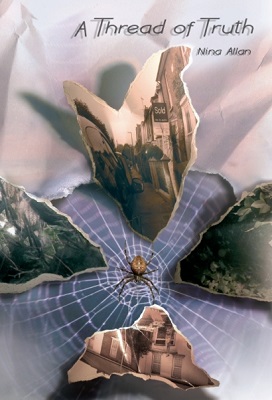
cover_truth_largeA Thread of Truth, Nina Allan (2006, UK). I’m still in two minds about Allan’s work. I think that what she does is very interesting, I just don’t think it succeeds that often. On a prose level, she is an excellent writer, one of the best currently writing in UK genre fiction, and her ability to blur the lines between genres, narratives and even characters is both a clever and worthwhile schtick. A Thread of Truth is an early collection – her first, in fact – and is a nicely-produced hardback by Eibonvale Press (who do very nice books, it must be said). I found the stories… mixed. Allan’s prose is very good, but I’m not always convinced by her research. Some of the settings she describes are clearly based on personal experience – she knows these places and does an excellent job in conveying to the reader. But in the title story, the narrator enrolls on a Surveying and Land Management course at university because he wants to be a quantity surveyor. Er, that’s not what quantity surveying is. Every now and again in Allan’s fiction I stumble across things like that, and they spoil the story for me. Two of the stories in A Thread of Truth are actual science fiction, although neither to my mind pull it off especially well. ‘Birdsongs at Eventide’ is set on an alien planet, where a team are studying a troop of local creatures which resembles dragons. And ‘The Vicar with Seven Rigs’ reads like mimetic fiction, until the penultimate page where it’s revealed it takes place in a future UK where travel between planets is routine, as if the narrator had sideslipped into an alternate reality. Neither worked for me.

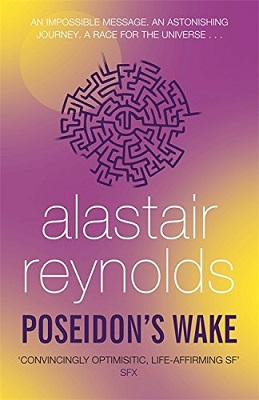
poseidons_wakePoseidon’s Wake, Alastair Reynolds (2015, UK). If there’s one thing that really annoys me, it’s when publishers completely redesign the covers of a trilogy for the last book. As Gollancz did for the Poseidon’s Children trilogy. Now the design for Poseidon’s Wake is a very attractive design, but it’s not the same as the two earlier books, Blue Remembered Earth and On the Steel Breeze. Argh. And after all that… Poseidon’s Wake proved a disappointing end to what had promised to be a good sf trilogy. The story picks up several decades after the events of On the Steel Breeze. the holoship Zanzibar is now just a belt of rocks orbiting Crucible, the settled planet orbiting 61 Virginis (I think). And then the world receives a message from Gliese 163, a star system some seventy light-years distant, which reads only “Send Ndege”, Ndege being the woman who was responsible for turning the Zanzibar into rubble by playing around with the Mandala and accidentally triggering it. So Crucible sends a mission to Gliese 163, which includes not Ndege but her daughter, Goma, and several others. En route, Goma’s uncle, Mposi, the head of the mission, is murdered, and the evidence points to a Second Chancer (ie, religious extremist) in the team. The ship arrives at Gliese 163 and discovers… that the three taken by the Watchkeepers are still alive – well, two of them are, Eunice Akinya and the uplifted elephant, or Tantor, Dakota – and Eunice was the source of the message. Because she’s fallen out with Dakota. Who now rules a colony of thousands of Tantors in Zanzibar, which was not apparently destroyed but sent on a near-lightspeed journey to Gliese 163. Oh, and there’s a waterworld superearth whose oceans is dotted with thousands of two-hundred-kilometre-diameter metal hoops, whose apexes are almost out of the atmosphere – and the world is protected by a belt of hundreds of artificial moons in complex orbits. This was all built by the Mandala-builders, and is perhaps a clue to their history and technology… so obviously everyone is keen to go and have a look at it. Including the Watchkeepers. But the moons will only let organic intelligences through… I remember enjoying Blue Remembered Earth and On the Steel Breeze (read in 2012 and 2014, respectively), but this was all a bit meh. The characters were mostly unlikeable, and it was hard to figure out if they were meant to be likeable. One character is set up as a possible murderer, but he’s paper-thin and not at all convincing. Even Dakota, the uplifted elephant – and since uplifted even further by the Watchkeepers – doesn’t really come across as an alien intelligence. The prose is sketchy, with very little description (except of planets and stars and suchlike), which I didn’t like. And the book’s big takeaway is that apparently the universe doesn’t offer meaning, life has no meaning – and I’m sorry and everything, but I pretty much figured that out when I was about eight years old. There’s an interesting discussion about intelligence without consciousness, made in reference to the Watchkeepers, who apparently are no longer conscious. Because a feed-forward intelligence is not conscious, and a feedback intelligence, given enough resources, can simulate a feed-forward intelligence… except if A is superior to B, why use more resources to simulate B than A requires? It is, in somewhat apposite words, completely illogical. I didn’t take to Poseidon’s Wake, but no doubt others will.

book_enclaveThe Enclave, Anne Charnock (2017, UK). So I bought The Iron Tactician by Alastair Reynolds (see here), which was the first of four sf novellas from NewCon Press. And when I saw who had written the other three, I decided I wanted them too. The Enclave is actually the third, but I’ve not read the second yet. I read Charnock’s Sleeping Embers of an Ordinary Mind last year (see here) and thought it very good. In fact, it reminded me of Katie Ward’s Girl Reading, which is one of the best novels I’ve read in the last five years or so. Despite that, I hadn’t really known what to expect on opening The Enclave. Happily, it is good, although I’ve yet to decide if it’s good enough to be nominated for an award (although given how few novellas I read in their year of publication… On the other hand, I wouldn’t nominate an unworthy novella just because it was the only one I’d read that year). The title refers to a ghetto in, or near, a UK city, in which live migrants and UK citizens who have refused to be chipped. (It’s not entirely clear what this chipping entails or means in the story, but given The Enclave is set in the same world as Charnock’s novel A Calculated Life, I imagine it’s explained there.) Caleb is a twelve-year-old boy who walked from Spain to the UK with his mother, hoping to find his father who had left earlier. But somewhere in England, he lost his mother, was picked up by Skylark and sold into indentured labour under Ma Lexie. So now he lives in a shack on a rooftop in an enclave. Ma Lexie sells “remade clothes” at a street market, and has three boys to do the sewing for her. But Caleb has an eye for fashion and so Ma Lexie boots out her old overseer and puts Caleb in charge. The story is told first-person, initially from Caleb’s point of view, then from Ma Lexie’s, and finally again from Caleb’s. The characters are convincing, the setting is an all-too-frighteningly-likely consequence of Brexit and the rise in institutional racism in the UK, which means the whole chipping thing does tend to dilute the politics. I’ve never really taken to first-person narrative – it’s always struck me as the weakest, and the one writers with poor imaginations most frequently employ. A first-person narrator who is a Mary Sue (of any gender) is a complete waste of time. Happily, neither Caleb nor Ma Lexie can be accused of that, and the use of first-person here allows Charnock to confine the narrative only to what the narrators know. Although well-written, I’ve a feeling The Enclave could have been stronger, made more of a meal of its setting, said something trenchant about UK politics of the last twelve months. Other than that, bits of The Enclave reminded me, of all things, of Kes, especially the end. And there’s a slight hint of Keith Roberts to it, which is, of course, a plus. I think I probably will end up nominating it next year.

1001 Books You Must Read Before You Die count: 129


Leave a comment

All the awards that’s fit to print

I found myself completely uninterested in genre awards this year, despite being nominated for two last year (and it’s not like I had anything eligible for any of this year’s awards anyway – well, my one published piece was a spoof coda to the Apollo Quartet, but it was probably unreadable unless you’d actually read the quartet). I suppose my indifference is partly a result of the lacklustre shortlists generated by the various awards last year. But there’s also the increasing disconnect between what the awards mean and the works they’re rewarding. Yes, yes, popular choice wins popularity contest, news at ten and all that. And, true, there’s always been a bit of personality cult about the popular vote awards, which is why so few people keep on winning so many awards, and currently it’s a different set of faces to those of ten or even twenty years ago. A more diverse set of faces, which is good, but given the size of the field these days it would not be unreasonable to expect more variety.

And then there’s the way social media has completely fucked up awards, not to mention the cutting back on promotion by publishers which has normalised the sort of grasping self-promotion bullshit, as epitomised by elegibility posts, that is now common. There may have been an element of awards going to people not to works in the past, but now it’s pretty much nakedly out there.

I suspect I’m not alone in my apathy. I saw almost no conversation about the BSFA Award longlist, and last year’s Clarke Award was notable for its lack of commentary…

Which neatly leads into a recent development which plans to address that last: the Clarke Award Shadow Jury, put together by Nina Allan and hosted online by the Anglia Rusking University’s Centre for Science Fiction and Fantasy. Shadow juries are nothing new – hell, we even have a Shadow Cabinet in our government – although I think this is the first time it’s been done for a genre award. And it’s a really strong shadow jury – I actually know more people on it than I do on the actual Clarke Award jury – and I’m looking forward to seeing their thoughts on the books that have been submitted (there’s a list of submissions here).

A quick scan down that submission list, and I can see a number of interesting books… but I can also see a lot of commercial crap that I hope gets nowhere near the shortlist.

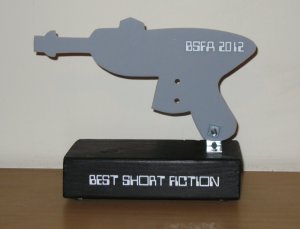
And speaking of shortlists… the BSFA Award shortlist has now been announced. And there are some… odd choices. (And they still haven’t sorted out whether it’s named for the year of elegibility or the year the award ceremony takes place. It’s fucked up at least two year’s worth of trophies in the past. It’s not difficult. Fix it.) I understand the BSFA has around 800 members (yes, I’m one of them), and few of them actually bother nominating or voting. I mean, I’m sure Adam Roberts: Critical Essays is an excellent book, but I doubt more than a handful of people have read it – and yet two of the essays in it have made the non-fiction shortlist. And I count six appearances of NewCon Press across the four shortlists.

But the big one is the novel shortlist, and it looks like this:

The Beckett is the third book of a trilogy, the first of which won the Clarke Award in 2013, and both books one and two were also shortlisted for the BSFA Award. The Chambers is also a sequel, and the first book seemed to make every English-language genre award shortlist in existence… except the BSFA Award. Europe in Winter is the third book of a trilogy, and both books one and two were previously shortlisted for the BSFA Award (and the Clarke Award). Sullivan has made the BSFA Award twice previously, in 2004 and 2011, and Occupy Me is her first sf novel since that 2011 nomination. Azanian Bridges is Wood’s first novel.

Quality of the various books aside, that’s an unadventurous shortlist. Seriously, two book threes from trilogies, of which all the previous installments were also shortlisted? True, some of those earlier volumes have also been picked by Clarke Award juries. Yes, I know, small pool of voters, large field, familiar names – and even faces, as half of the shortlist regularly attend the Eastercon (members of the convention also get to vote on the shortlist). And yes, the nominees are good people (and some of them are friends of mine). But I’m not voting for them, I’m voting for the work.

bsfa2012

The BSFA Award is a popular vote award, so I shouldn’t be all that surprised that the same old names keep on cropping up. I look to juried awards to give a better indication of what’s good in the genre in a particular year. But I also remember when the BSFA Award actually used to be a pretty good barometer of what was good in the British sf field in a year. Not so much for the short fiction category, that was always a bit of a crapshoot, but certainly the novel category. And now I find myself wondering: when did that stop being true? I don’t doubt the books shortlisted this year are good books – well, except for the Chambers, as I wasn’t at all impressed by A Long Way to a Small, Angry Planet – since I’ve read and enjoyed those earlier installments by Beckett and Hutchinson, and have heard good things about the Sullivan and Wood. But I can also see several novels on the longlist (see here) that were more than good enough to make the shortlist. Even then, only thirty-five novels were longlisted. Thirty-five! The Clarke Award submission list is eighty-six novels. (And only twenty-seven nominations in the BSFA Award short fiction category!).

I honestly don’t see the point of awards for short fiction anymore – I wrote as much in an editorial for Interzone back in 2015. I get that awards are a celebration, but what exactly are we celebrating? Back in the day, sf was a ghetto, and it was all reverse snobbery elitism. Awards were an affirmation of that. But it’s been open season on sf tropes now for several decades, and science fiction is still playing the same old game. And this during a period when the field has exploded, not only all over the internet, with way more fiction venues out there now than there were twenty or thirty years ago, but also serious efforts to bring non-Anglophone sf to Anglophone audiences. It’s almost becoming axiomatic that the only people reading genre short fiction these days are other writers of genre short fiction. Sf has always been self-fertilising, it’s one of the genre’s strengths, but that’s ridiculous.

They’ve tried revamping the BSFA Award a couple of times over the last few years, but I’m not convinced their changes have had much impact. For what it’s worth, I think they should drop the short fiction and non-fiction categories, institute a new award for non-fiction/criticism separate from the BSFA Awards, and limit the BSFA Award to best sf novel published in print in the UK and best piece of sf artwork to appear in print in the UK. But leave the definitions of genre up to the voters. No longlist or two-stage nomination process. Just keep it simple. December and the following January each year to nominate five novels and five pieces of artwork each. Top five in either category makes it to the shortlist. Then it’s business as usual: voting and an awards ceremony at the Eastercon. Let’s not just celebrate science fiction, let’s celebrate science fiction in the UK. And with the most visible forms of it – novels, which appear in book shops; and art, which can be plastered all over the internet. That sounds horribly Brexit-ish, which is not my intention at all – I voted Remain, and am hugely pissed off by all this Brexit shit – but the fact remains that when you’re addressing a parochial electorate it’s best to keep it parochial. And let’s not forget that authors from many other nations get published in the UK (although perhaps not as many non-Anglophone ones as we’d like).

I started out this post documenting my apathy toward genre awards, and ended up getting a bit excited about what they could be. And I guess it’s that disconnect, that sense of disillusionment, that fuels my annual awards annoyance. But in the world we have today, and all the shit that’s going to go down in 2017, praying for an asteroid strike is too much of a long shot. And, short of causing every Nazi newsaper in the UK to spontaneously combust, or Corbett and May to give the finger to the Nazi cabal pulling all the strings, we can at least do something positive in the world of science fiction and make a proper job of this celebration-type thing we call an award.


Leave a comment

Fresh month, fresh books

The start of a new month and so time to place an order with a large online retailer of books (and other stuff). Last month’s purchases were mostly catching up with books published in 2016 I’d not got around to buying last year. This month, it’s widening my reading to include authors from some countries I’ve not previously tried. Plus a few favourites.

2017-02-11-11-33-38

Three British writers. I read the first book of Ali’s Islam Quintet, Shadows of the Pomegranate Tree back in 2011, and though I enjoyed it I never got around the reading further. Hence book 2, The Book of Saladin. Snowdrift is a new collection from Heyer, and I do love me some Heyer, it must be said. Back in the UAE, I read several books by Tremain, but stopped when I returned to the UK. No idea why. I thought it was time I started reading her again, so The American Lover.

2017-02-11-11-32-25

Some fiction from around the world. The Captive Mind is from Poland, not the Czech Republic, as I mistakenly tweeted a week or two ago. Spring Flowers, Spring Frost is from Albania. The Conspiracy and Other Stories is from Estonia. And A River Called Titash, from Bangladesh, is the novel from which one of my favourite films was adapted.

2017-02-11-11-31-08

The latest Blake and Mortimer. Volume 24, to be precise. I actually think this series has improved since the series creator, Edgar P Jacobs, died. The plots are much more closely tied to the real world. This one, for example, is about a rivalry between two societies who disagree over the real author of Shakespeare’s plays.

2017-02-11-11-31-00

Non-fiction. Now that I have volume 19 and volume 20 I have complete set of Wings of Fame. All it took was patience. And I’m patiently waiting to complete my set of Heinemann’s Phoenix Editions of DH Lawrence’s books. Sadly, this copy of Studies of Classic American Literature is ex-library, and was not described as such by the seller on eBay, but it’ll do for now.
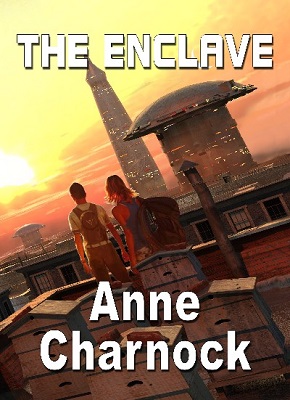
2017-02-11-11-29-57

Finally, some science fiction, old and new. Naked to the Stars / The Alien Way is #31 in Tor’s series of back-to-back novellas from 1989 and 1990. That’s why I bought it, not because I’m a fan of Dickson’s fiction (okay, so the Dorsai trilogy is still kinda pulpy fun). At the Speed of Light and The Enclave… Well, I bought The Iron Tactician by Alastair Reynolds because I like Al’s fiction… and then I saw it was one of a set of four novellas published by NewCon Press, and the last one was by an old friend, Neil Williamson… and I’ve read one of Anne Charnock’s novels and it was very good and I’ve seen Simon Morden tweet that he was keen to get the science right in his novella… so I went and bought the other three. The Memoirist, the fourth novella, has yet to be published, however.