It Doesn't Have To Be Right…

… it just has to sound plausible


1 Comment

Reading diary, #56

After a run of male authors in my last Reading diary, it’s a run of female writers… including one novel I had never planned to read. These days, “Hugo Award winner” is more likely to make me put a book down than actually pick it up. Um, looking back over the history of the award, I can’t say I’ve ever really used it as a guide to my genre reading and have always felt it has picked far more duds than actual classics.
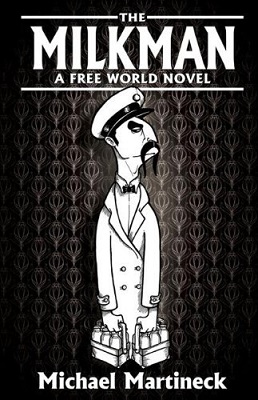
The Milkman, Michael Martineck (2014, USA). Michael is a friend of many years, around two decades in fact, although we only met for the first time in person at the Worldcon in Helsinki this August. And it’s just as well I know Michael as The Milkman posits a horrible corporatised world and does so with a completely straight face. But I know Michael does not believe the politics the book presents… because they really are quite nasty. The story is told from several viewpoints. A young woman is murdered outside a bar, but there are no clues to the crime. The corporate police officer tasked with solving the crime – assuming it can be done economically – finds himself hitting a brick wall. A film-maker is paid to make a documentary about the Milkman, a mysterious figure who analyses milk from corporate dairy farms and posts his results on an anonymous website. And then there’s the Milkman himself, who’s a low-level bureaucrat who, with his network of co-conspirators, tests milk as a hobby. The Milkman does a good job of presenting a world in which everything is owned by one of three corporations, and manages to use it effectively in a mystery/thriller plot. Personally, I’d have liked more commentary on the world – I mean, it’s a horrible place to be, and presenting arguments from the characters that it’s preferable to the “old world” made the novel sound approving. It’s a political novel, and when it comes to political novels the author needs to wear their politics on their sleeve. You can’t let the reader draw their own conclusions, because they might well draw the wrong ones. There’s enough right-wing sf out there – the entire genre is essentially right-wing – and commentary against it is sorely needed in science fiction. Much as I enjoyed The Milkman, it felt too ambivalent toward its world – despite the final scenes set among those who had opted out – and I’d liked it to have been a little more overt in its politics.
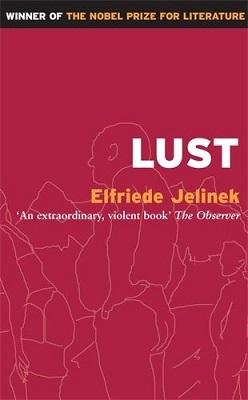
Lust, Elfriede Jelinek (1989, Austria). I’m a big fan of Michael Haneke’s films, and after seeing his The Piano Teacher, and learning that it was an adaptation of a novel by a Nobel laureate, I bought the book and read it and thought it very good. And then recently I thought it about time I read more Jelinek, so I picked up a copy of Lust, as it was quite short. It was perhaps not the wisest book to read on my daily commute, given the title. But never mind. The story is a brutal depiction of a marriage in wich the wife is treated as chattel by her husband. And when she eventually breaks free and finds herself a lover, he proves just as bad. What I had not remembered from The Piano Teacher, and perhaps that was down to the translator, but Lust was one long string of wordgames and puns and plays on words. It was relentless. Given its subject, it should come as no surprise the wordplay mostly focuses on sex, and especially on the male sex organ. I have no idea how this worked in German, or in the Austrian dialect in which Jelinek writes, but in English it felt to me like a dilution of the novel’s central point. The wife is entirely subject to the husband, she exists to satisfy his sexual desires, just as much as she is there to look after him and their spoilt son. Some of the expressions used, “shot his bolt”, for example, feel too… childish, schoolboyish, and while I get that the breadth and variety are what’s important, it does seem to detract from the brutality. This is an ugly book, about an ugly subject, so perhaps the wordplay is intended to add to that ugliness and it works much better in German. But this is definitely a book that provokes a reaction, and I’ll be reading more Jelinek.
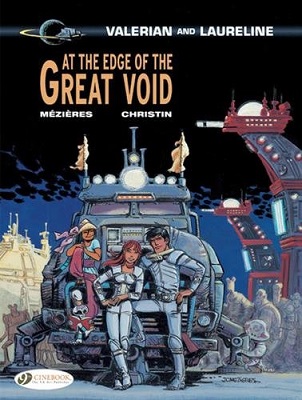
Valerian & Laureline 19: At the Edge of the Great Void (2004, France). Cinebook are churning these out at a much faster rate after the Besson film, which is all to the good. At the Edge of the Great Void kicks off a new story-arc, which I think is the last for the duo. Valerian and Laureline are posing as itinerant traders on the edge of the Great Void because they feel the key to restoring Earth lies within it. But their plans are scuppered when Valerian is arrested. Fortunately, Laureline has made some friends, and with their help, she arranges an escape for Valerian, and the two of them join the crew of a ship heading into the Great Void. The story is mostly set-up – it introduces a new alien race, the Limboz, and drops hints about a plot by the Triumvirate, villains from an earlier story, and some sentient stones, the Woloch, who are clearly intended to provide the plot for the next few episodes. I’ve yet to see to Besson’s film, although I expect to be disappointed. The Valerian and Laureline series is massively inventive – there’s a good argument, although likely wrong, that it influenced Star Wars – and there’s a very dry wit in the interaction between the two main characters. But the stories are also very cut-down, so much so it often feels like bits of the plot have been left on the cutting-room floor. It’s like the opposite of decompression. Which, er, would be compression. I suspect it’s an artefact of the series’ original magazine appearances and limited page-count.
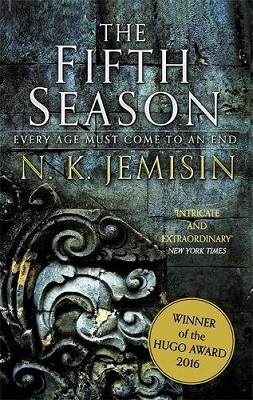
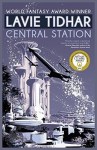
The Fifth Season, NK Jemisin (2015, USA). I had no plans to read this, for all that it won a raft of awards, and was shortlisted for many more (including, according to the back cover, the James Tiptree Jr Award, which, er, doesn’t have a shortlist – it has an honour list, and I should know as I’ve been on it). Anyway, there was no real buzz around The Fifth Season, as there had been for God’s War and Ancillary Justice, probably because The Fifth Season was Jemisin’s sixth novel – and, on top of that, it was fantasy, which is of zero interest to me. But some people said it was actually science fiction, not fantasy, and I heard some good things about it and, I admit it, the clincher was the fact it was going for £2 from a near-monopolitistic online retailer… So I bought it. And… It certainly smells like science fiction rather than fantasy; and if its sessapinae and orogeny is hand-wavy bullshit, it’s no more so than FTL, or indeed most of sf’s common tropes. It’s not worth summarising the plot, as much of it is linked to the world-building. The Fifth Season is set late in Earth’s history, when the planet is unstable, and “fifth seasons”, periods of intense seismic and/or volcanic activity, often bringing on nuclear winters, occur every few centuries. A new one has just kicked off as the book opens. There are three narratives, each following a female character – an orogene (ie, a person who can, among other things, control siesmic events) who has been in hiding for many years; a young girl with ability who is sold to an imperial order of trained orogenes; and a “four-ring” orogene of that order who is tasked with accompanying a “ten-ring” orogene to clear a town’s harbour of coral. The first narrative is written in the second person; the other two are more traditional. Initially, I thought the novel better than average – the prose was doing the job, but the world-building was interesting, if a little overdone (but we’ve all been there, nothing brings in the nerds like an excess of world-building detail). It was brutal in places – ho hum, it’s all that genre fiction does these days. So… enjoying it, but, on balance, unlikely to bother with the rest of the trilogy. And then I realised the book was using time-stacked narratives. Those three main characters were the same woman during different periods of her life. And things started to slot together like a piece of IKEA furniture. Now it was a much more interesting novel. Now, I might actually read the sequels. Did it deserve to win the Hugo? Given the shortlist… probably. I’ve read the Leckie, but the trilogy pretty much nose-dived after the first book. The other three shortlisted works do not appeal at all. If it hadn’t been for the £2 price point, I’d probably never have bothered reading The Fifth Season. Maybe if I’d stumbled across a copy in a charity shop, I might have given it a go. But I am glad I read it.

The Best of Leigh Brackett, Leigh Brackett (1986, USA). I’m no stranger to Brackett’s fiction, having been a fan for a number of years – ever since reading the collection, Sea-Kings of Mars, in the Fantasy Masterworks series, in fact. The stories in that collection are not fantasy, of course. But Sea-Kings of Mars was not the only book in the Fantasy Masterworks series that was actually science fiction. There are ten stories in The Best of Leigh Brackett, and they’re all, well, typical Brackett. Some I had read before. They’re set on planets and moons of the Solar System which share names with the planets and moons we know but otherwise bear no resemblance – Mars is a desert world, inhabited by ancient dying races; Venus is a jungle world, also, er, inhabited by dying ancient races; the moons of Jupiter are inhabited; as is Mercury… In fact, Brackett pretty much turned every planet and moon on the Solar System into the sort of exotic location used in a Humphrey Bogart movie. It’s always the same – a dying race, a dead culture, a degraded society, and a jaded hero from Earth – pretty much always the US – who overcomes local taboos and superstitions to win the prize. It’s pure Hollywood, so it’s no surprise Brackett worked extensively in movies, her best-known scripts being Rio Bravo (my favourite western) and The Empire Strikes Back. Leigh Brackett and CL Moore were female pioneers in sf – not the only ones, by any means, and it could be argued Gertrude Barrows Bennett was more of a pioneer – but Moore and Brackette were big names in the genre fiction back in the 1940s, and while their style of science fiction is no longer popular, there’s no doubt they were very good at what they did. Perhaps too good, in some respects – some of stories in The Best of Leigh Brackett are dismayingly misogynist. It’s nothing unusual when you compare it to, say, EE ‘Doc’ Smith (it continues to amuse me that ‘Doc’ is always presented in quotes), but I’d expected better of Bracket – and she has indeed done better in other stories. Despite the title, The Best of Leigh Brackett does not contain any of her more celebrated stories, except perhaps ‘The Jewel of Bas’ – but since those stories appear in plenty of other Brackett collections, that’s to its advantage. I’d also dispute the stories here were her best – I thought the aforementioned Sea-Kings of Mars a better selection. Nonetheless, Brackett is always worth reading.

1001 Books You Must Read Before You Die count: 131

Leave a comment

Loyal friends

Ernest Hemingway apparently once said, “there is no friend as loyal as a book”, which is one of those pithy aphorisms that doesn’t really stand up to scrutiny. I’ve certainly been abandoned by books, mid-read, on planes and trains – most recently, on my flight back home from the Worldcon in Helsinki. It wasn’t a very good book anyway. Here are a few books – some good, some I have yet to find out – that have joined the collection. Now that we have an IKEA store in Sheffield, I must see about buying some more bookshelves… assuming I can find a free wall in the flat to stand them against…

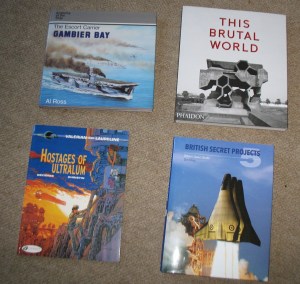
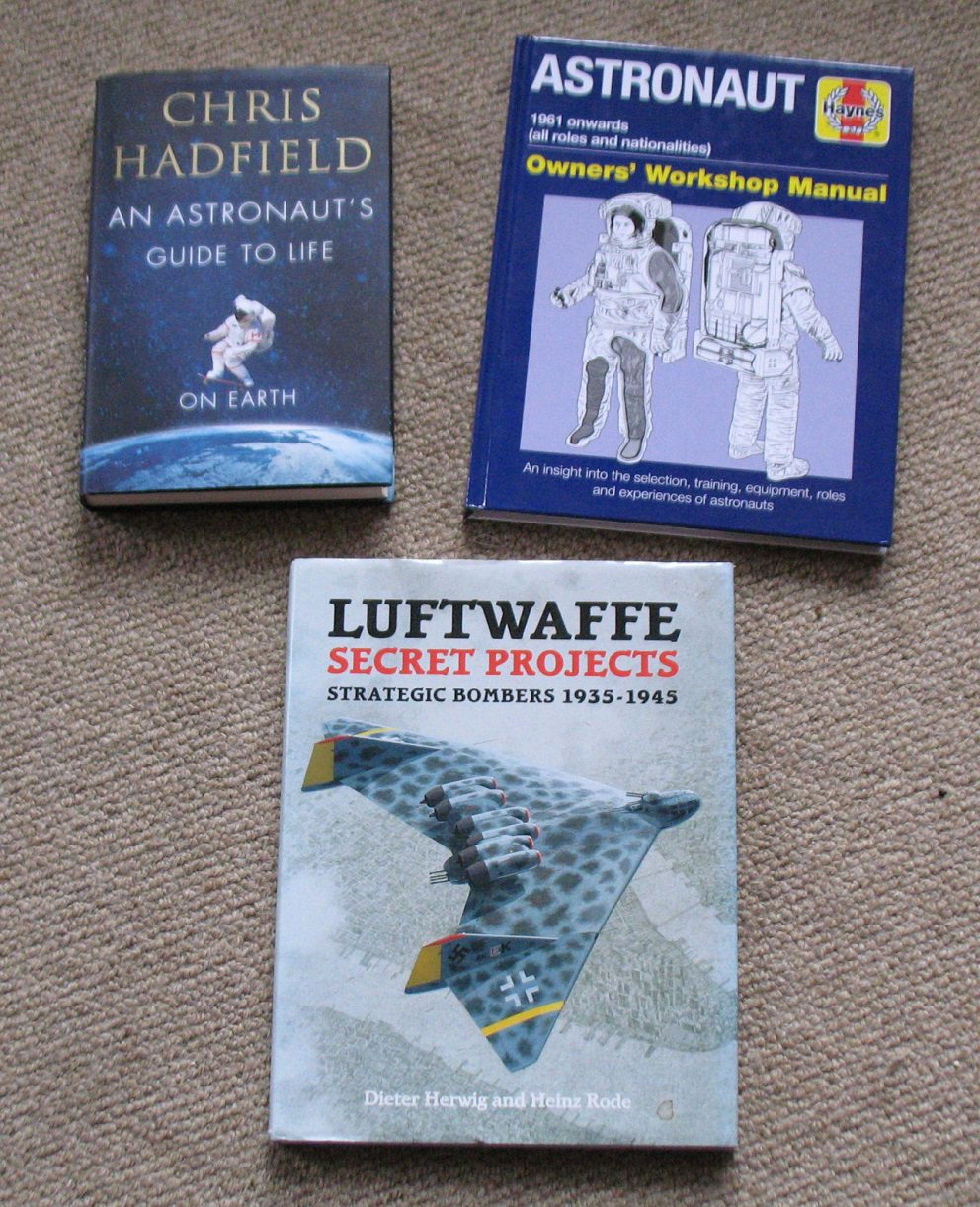
Several years ago, I bought loads of books about space, but the last couple of years I’ve bought few. I was tempted by Chris Hadfield’s An Astronaut’s Guide to Life on Earth when it was published, but didn’t bother. Which is just as well, as I have now found myself a signed copy, and it was cheap. Haynes have done quite a few space-related Owner’s Workshop Manuals. Some of them have been pretty good. I haven’t read Astronaut yet, however. Midland Publishing published a whole range of Secret Projects books, and I have several of them. They’ve started reprinting them recently, but with redesigned cover art. And they’re numbering the volumes as well, although they don’t seem to be publishing them in order. Luftwaffe Secret Projects: Strategic Bombers 1939 – 1945 is the first of two volumes of Luftwaffe aircraft that never made it beyond prototype or even off the drawing-board.

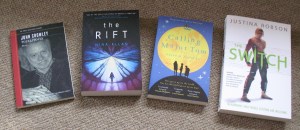
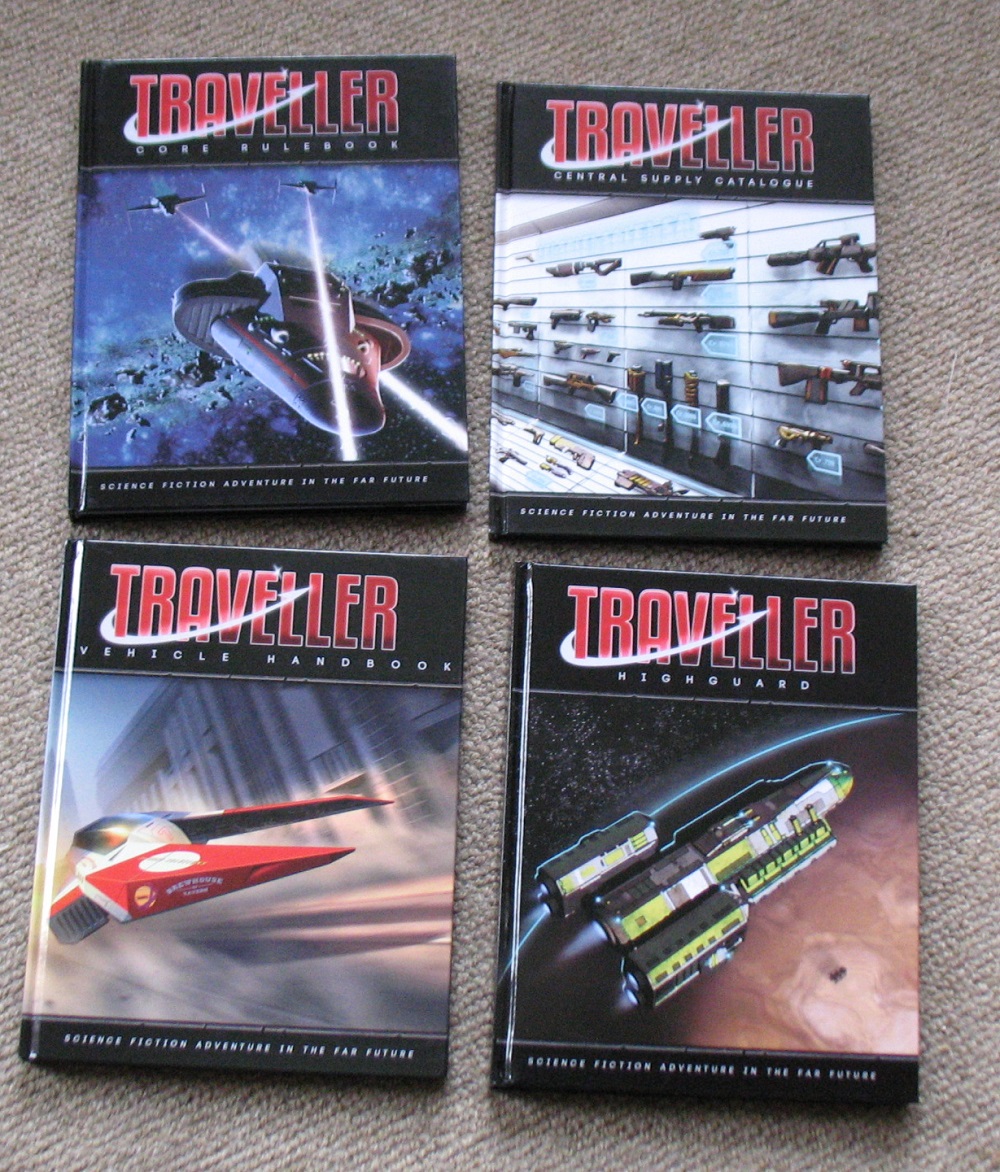
These four rulebooks were a reward for signing up to The Great Rift kickstarter. Very nice-looking, they are too.

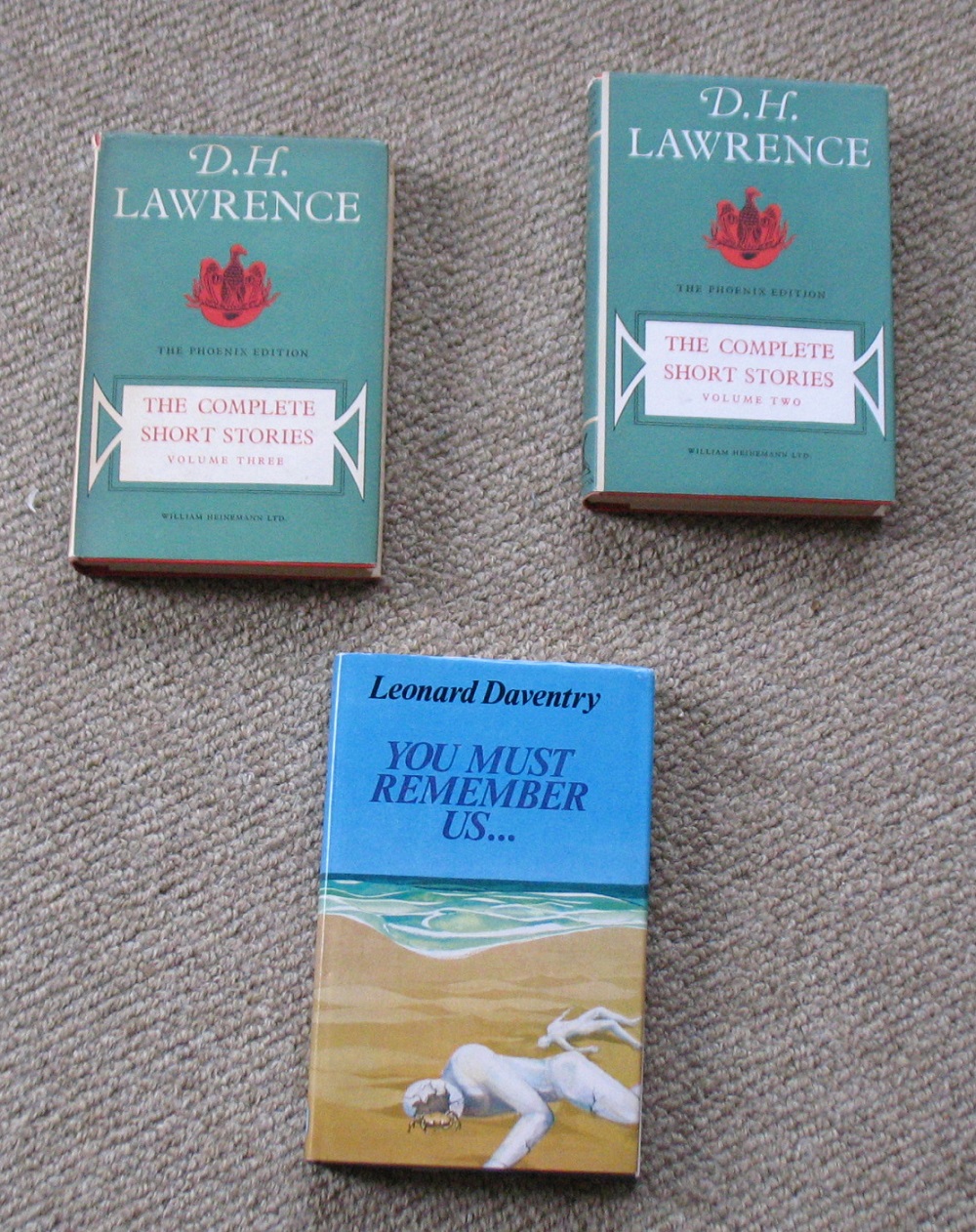
I keep an eye open on eBay for copies of the Phoenix Editions of DH Lawrence’s books – they were published from the 1950s to 1970s – but some are easier to find than others. I now have The Complete Short Stories Volume Two and Volume Three, but not yet Volume One. You Must Remember Us… was a lucky find.

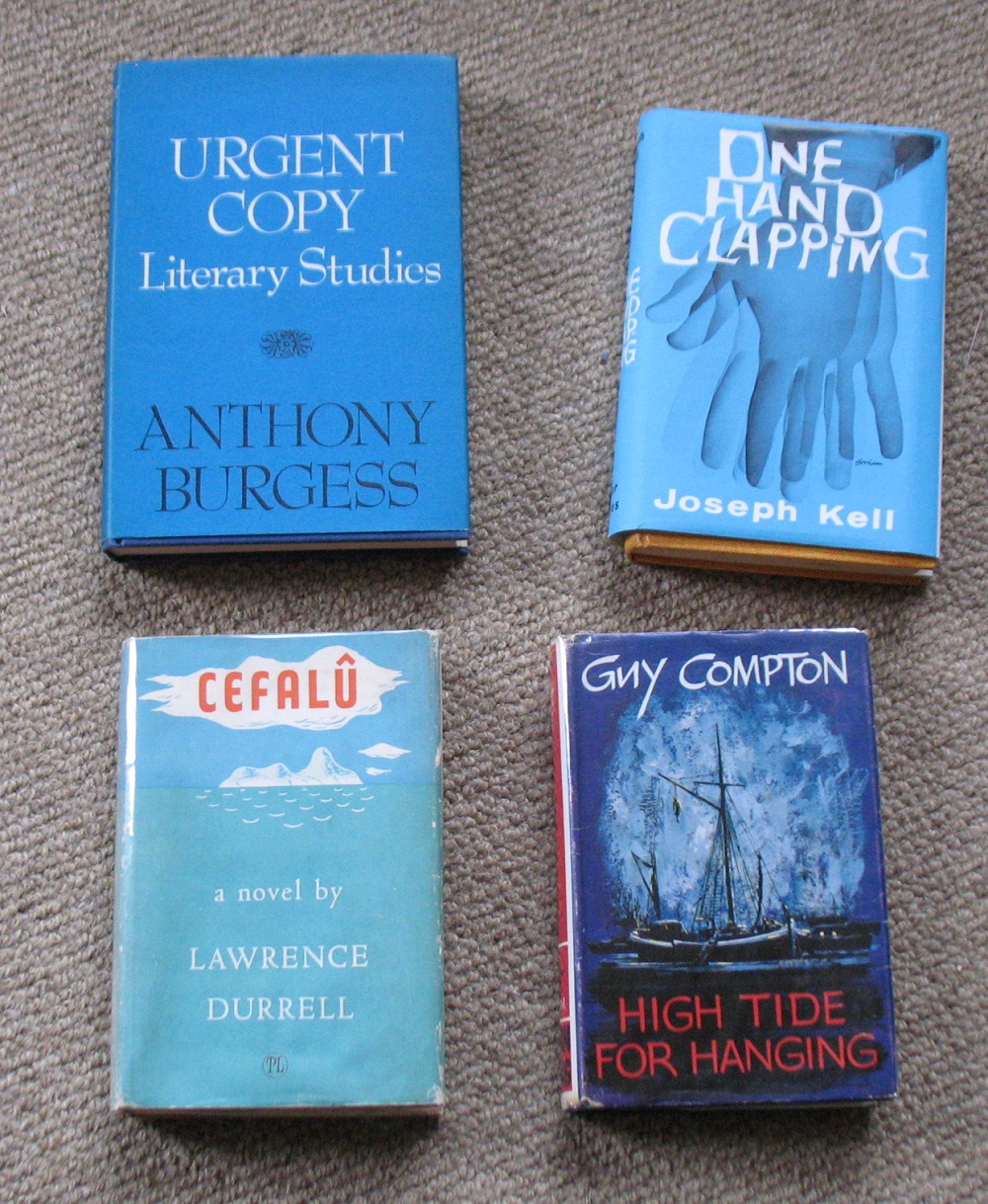
Some lucky first edition finds on eBay. Urgent Copy is a collection of essays by Burgess, One Hand Clapping is one of half a dozen or so novels Burgess wrote under the name Joseph Kells. Yes, that is a first edition of Lawrence Durrell’s hard-to-find fourth novel, Cefalû. With dust jacket too. A rewritten version was later published as The Dark Labyrinth. And High Tide for Hanging is one of half a dozen crime novels DG Compton wrote under the name Guy Compton before turning to science fiction. The book was apparently in the library of the Windhoek Hotel in South Africa.

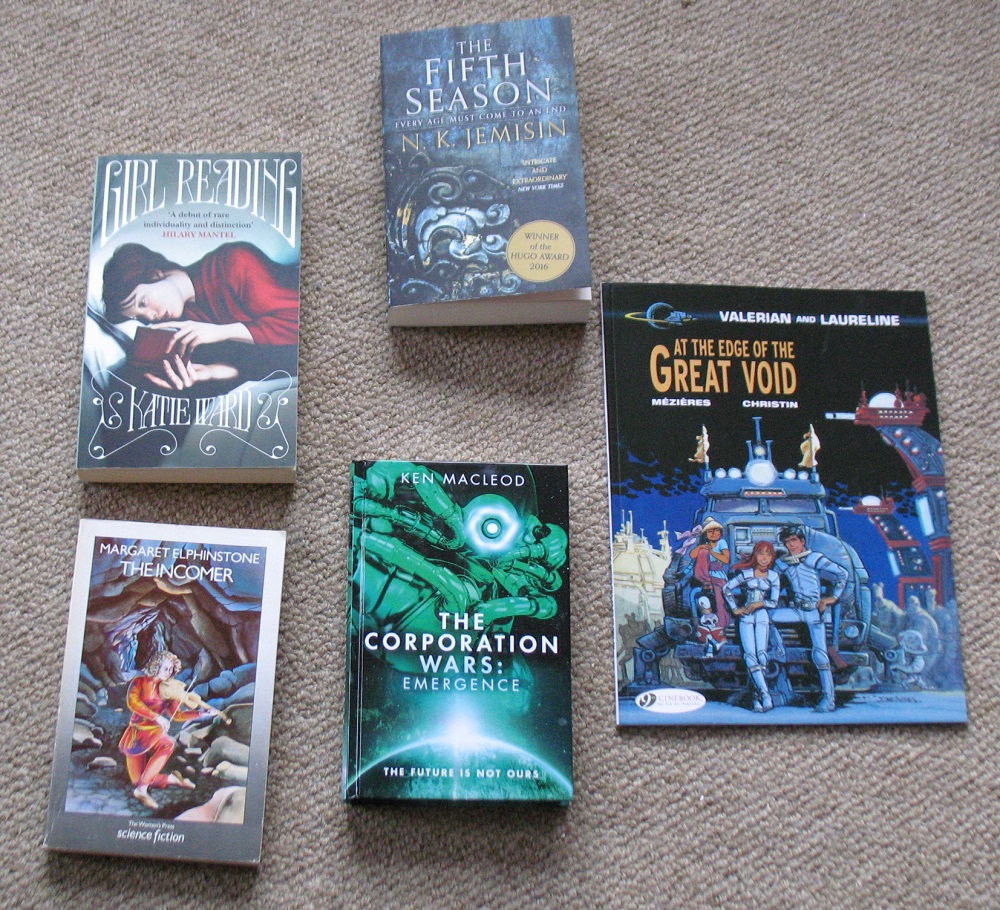
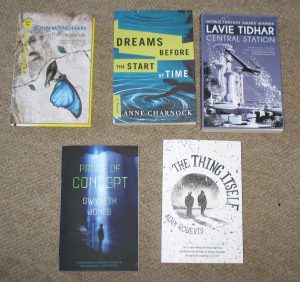
The Fifth Season was only £2 from a large online retailer, so I thought it worth a go. At the Edge of the Great Void is the nineteenth volume in the Valerian and Laureline series. I have yet to see the film. Emergence is the third and final book of The Corporation Wars. The Incomer is another one for my The Women’s Press SF collection. And I loved Girl Reading when I read it a couple of years ago, but I had a tatty copy bought from a charity shop. I now have a signed copy.


2 Comments

Reading diary, #55

It might look I had a run of books by male authors, but in amongst these were several sf novels by female writers, which I plan to review on SF Mistressworks soon-ish. As it is, there are two books by a single writer, Eric Brown, who’s a friend of many years: a novella and a short collection.

Exalted on Bellatrix 1, Eric Brown (2017, UK). This is the final book in the Telemass Quartet, in which obsessive father Hendrick chases after the body of his young daughter, who has been put in stasis until a cure for her condition can be found, and who has been kidnapped by Hendrick’s ex-wife. And she is apparently just as warped as she’s been subjecting her daughter to increasingly desperate remedies, none of which have worked. But this is the fourth novella of a quartet, and Brown rarely fails to deliver some sort of uplifting closure to the agonies through which he puts his protagonists. In this one, Brown uses a setting he’s used many times in the past, an artists’ colony. Hendrick’s ex-wife has taken their daughter to the eponymous planet, where they’re hoping the reclusive, but advanced, alien inhabitants, the Vhey, will cure her. The end result is something in which the quartet’s story arc feels almost incidental. The novella focuses on the head of the colony, who is a nasty piece of work, and whose wife died in mysterious circumstances, and who plans to make use of the secret of the Vhey. Although not in the way Hendrick’s ex-wife is expecting, and not in a way that will save the daughter. Of the four novellas, this was probably the least satisfying, chiefly because it feels a bit warmed-over in places. Also, annoyingly, the previous three books used Roman numerals in their titles, but this one uses an Arabic number 1.

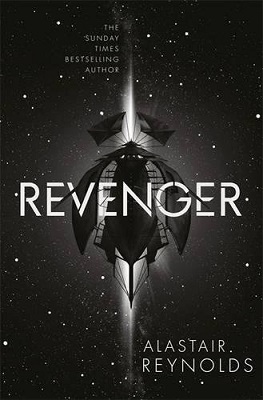
Revenger, Alastair Reynolds (2016, UK). This is, I think, supposed to be a YA novel – or at least YA-ish. The narrator is a teenage girl, in a planetary system populated by billions of space habitats, and which as been colonised in waves over billions of years. It is, it must be said, a pretty cool piece of world-building. Except… it’s all a bit steampunk. The spacecraft use light-sails to travel around the system, the technology is all brass and clockwork, except for magical tech artefacts left behind by aliens from earlier waves of colonisation… One of which are the skulls. Although the alien race whose skulls they were has long since vanished, and all that remains of them are bones, the technology inside their skulls remains active, and they’re all plugged into some sort of FTL comms network. Some teenagers can eavesdrop on this network, and send signals. Both Fura Ness and her sister Adrana have this knack. Adrana, the older of the two, persuades her sister to join her in running away from their financially-ruined father and making their fortune as skull readers. They join the crew of a ship that raids “baubles”, abandoned repositories of ancient alien tech (perhaps the baubles were habitats in the distant past, it’s never entirely clear). The baubles are usually secure behind impenetrable shields, but the shields occasionally drop for short periods, and some people are able to predict when these windows of opportunity will occur and how long they will last (again, it’s never made entirely clear why the shields should do this; because plot, I guess). Unfortunately, at their first bauble, the ship is attacked by a semi-legendary pirate, Bosa Sennen, who takes Adrana to be her skull-reader, and kills everyone else. But Fura hid, and survives. She vows revenge on the pirate, but her plans are derailed when her father has her brought back home and has a doctor halt her ageing so she will remain under-age and under his control. To me, that was the most horrifying part of the whole novel – Fura imprisoned by her age and society. Of course, Fura breaks free, joins the crew of a ship, engineers an encounter with Bosa Sennen and, well, there are no real surprises at the climax. As I said, the world-building is cool, but it’s never really convincing – and the baubles reminded me of something, A Deepness in the Sky perhaps? – and I didn’t really like the faux Victoriana. Fura makes for a good protagonist, but I thought the violence over-done. There is, I believe, a sequel called Revealer, due next year or the year after. I’ll buy it, of course.

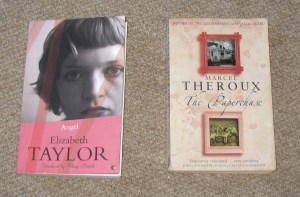
The Paperchase, Marcel Theroux (2001, UK). I stumbled across this in a charity shop, and having been impressed by the last Theroux novel I read, Strange Bodies, I bought it. It’s not science fiction in the slightest, more of a family drama slash mystery. The narrator is a UK-based American, who is surprised to discover he’s been left his uncle’s house on a New England island in a will. The uncle was a celebrated writer, who faded away and became a recluse. The narrator leaves his job at the BBC and goes to live in the house – it’s a condition of the will: he only gets to keep it if he lives in it. And something about the papers left by his uncle, and the stories, and histories, of his neighbours, persuades the narrator there is a deeper story here – a mytsery about his uncle’s death, or his life. From a variety of unrelated facts, and assorted residents of the island, and friends of the late uncle, the narrator figures out the secret at the heart of the family. The problem is the prose, and the narrator, is so laid-back the revelation doesn’t really have the impact it should. True, it’s not especially earth-shattering, and very personal, but it’s the point of the novel so I’d expected something with more consequence. There’s a nicely digressive tone to the narrative, and the characters are well-drawn (and mostly likeable), but I polished this off about as quickly as I would a commericial crime novel and I had expected more of it.

Strange Visitors, Eric Brown (2014, UK). This is the eighth volume in NewCon Press’s Imaginings series of short collections. The contents in this one were originally published in a variety of venues, but, as is usually the case with collections, one story is original. It is not, to be brutally honest, Brown’s strongest collection. ‘Life Beyond…’, a piece of Simakiana, hews so closely to Simak’s patterns the plot is obvious from the first page. ‘Steps Along the Way’ is a post-human story about a twentieth-century human reincarnated thirty thousand years later… just to set up a surprise reveal ending (I suppose I should have liked this one, given its plot, but I thought it weak). ‘Myths of the Martian Future’ is one of those sf stories where every character in it is an alien of some form. It felt lighter than its tone suggested. ‘The Scribe of Betelgeuse V’ felt more like Dr Who story than an Eric Brown one. But without Dr Who. Its tone suited its lightness. ‘The Rest is Speculation’ is set during the last days of planet Earth, and reads more like a travelogue than a story (and the header in the book is incorrect as it gives the title of the following story). Which is ‘The Tragic Affair of the Martian Ambassador’, a HG Wells / Sherlock Holmes mash-up, and succeeds as that if not entirely as a Holmes mystery. ‘Bukowski on Mars, With Beer’ was written for “bizarro fiction” anthology Vivisepulture (which also contained my Nazi occult flying saucer story, ‘Wunderwaffe’). I don’t know enough about Bukowski to feel qualified to comment on this story. ‘People of Planet Earth’ is one of those stories based on one of those silly ideas that wants to be both shocking and humorous, but fails at both. Finally, I was prepared to be disappointed by the collection’s only original story, ‘P.O.O.C.H.’, if only because of its terrible title. And prepared to hate it when I read that P.O.O.C.H. was an acronym for “Personal Omni-Operational Correctional Hound”, but… The premise is daft – giving convicted felons robot dogs programmed for bad behaviour in order to make them better people – but Brown draws his protagonists well and does a good job navigating the emotional landscape of the story. And yes, I also got to feel smug about being a cat person. It’s easily the best story in the collection.

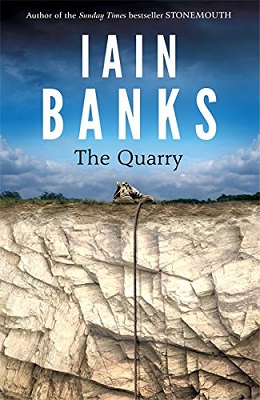
The Quarry, Iain Banks (2013, UK). This was Banks’s last novel and is about a man dying of cancer, so questions about art and life were inevitable after Banks announced he had terminal cancer. The novel is actually narrated from the point of view of the dying man’s son, who has, I think, Asperger’s Syndrome. It is, like most of Banks’s non-M novels, a story based around a family secret, but the secret in this case is actually pretty irrelevant. A group of people who shared a house during their student days have returned to the house, where the oldest of their number now lives, and is in the end stages of terminal cancer. There is mention of a videocassette – the group fancied themselves as avant garde film-makers at university – which none of them want to see the light of day, but neither dying Guy nor his son Kit, know what’s happened to the tape. Meanwhile, a few home truths are aired, a few minor secrets from the past are let out of the bag, and the mystery of the identity of Kit’s mother is occasionally floated past the reader, only for it to be dealt with in passing at the end. The scene where the group view the sought-after videocassette is also pretty much a damp squib. The novel is narrated by Kit, and I don’t know enough about Asperger’s or autism to just how accurately or effectively he is portrayed. Other than that, Banks always wore his politics on his sleeve, and they’re out in full force in The Quarry. It’s far from his best novel, mainstream, science fiction or both, although it does come across as an angrier novel than his earlier ones (except perhaps for Complicity) – but that’s hardly surprising given what the Tories have been doing to the UK since 2010. Banks’s death makes The Quarry a more uncomfortable read than it would have been otherwise – the politics were clearly intended to make for uncomfortable reading for some, but the cancer aspect of the plot, sadly, overshadows it. Still, it’s a Bank novel, so it’s a given that it’s worth reading.

Go, Went, Gone, Jenny Erpenbeck (2015, Germany). After reading The End of Days, I knew Erpenbeck was a name to watch. So I tracked down her previous books and read them, and they were good. And now we have her latest, actually published In Germany in 2015, but the English translation is new this year. A retired professor in Berlin, and who grew up in East Germany, one day stumbles across a camp of African refugees in Alexanderplatz. He follows their story in the press as they are moved to a tent city in another square, and then split up and placed in temporary accommodation – mothballed schools and sanatoria – while the Berlin senate makes a decision on their fate. The professor decides to document the plight of these refugee men – from Libya, Ghana, and Niger, chiefly. There is a group of them in an old nursing home near his house, and he is allowed to interview them. As he gets to know them and their stories, so he realises that the narrative written by European governments and press about the refugees is both inaccurate and incomplete, in much the same way the powerful in Germany fostered a desire for unity and imposed their own narrative on the union of East and West. There are contrasts also – the initial easy acceptance of East Germans by West Germans, which soon soured, not to mention the expectations of the East Germans based on myths of the West propagated through Western culture. This is a book that properly interrogates its topic, and it pulls no punches. Right wing press and governments have traded on people’s racism and xenophobia to whip up anti-immigrant and anti-refugee sentiment that has no basis in fact – because people scared of strangers are easier to control and are less likely to notice when their rights and property are taken from them just so some oligarch can earn more money than he could possibly spend in a thousand lifetimes. They’re the ones we should be scared of, the oligarchs; they’re the ones we should hate – not the poor sods driven out of their homes by wars created by inept US foreign policy and British arms sales, or the economic depredations of Western corporations chasing profits, and organising violent regime changes, in the developing world to offset their decreasing margins in the developed world…

1001 Books You Must Read Before You Die count: 131

1 Comment

Reading diary, #54

I’m slowly picking up on my reading, partly I think because I really enjoyed a recent reread of Gwyneth Jones’s Aleutian trilogy. I mean, I’d remembered the books as good, but I’d been starting to forget what reading good intelligent sf was like. Although not all of the sf I’ve read recently would qualify as that…

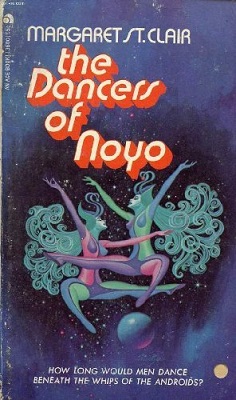
The Dancers of Noyo, Margaret St Clair (1973, USA). Okay, I admit it: I bought this because of the cover art. It was at the Eastercon, and it was like a quid. And I knew I could review it for SF Mistressworks (when I resurrect the blog, that is). I’d previously read a collection by St Clair, and some of her other stories in various women-only anthologies, but I think this was by first novel by her… And it wasn’t at all what I expected. In fact, it read more like Doris Piserchia than the St Clair I’d expected. The story is set after a plague – world-wide possibly, US-wide certainly; it’s hard to tell with US sf novels – in a California which has returned to a tribal agrarian culture. Sort of. The protagonist, Sam McGregor, is a bit of a rebel and doesn’t understand why the young men of the tribe must always dance under the instruction of the android Dancer. So he’s sent on a Grail Quest, which means driving down the coast in search of some sort of epiphany. Instead, he begins to relive the lives of people from earlier times, including a dead young woman being autopsied, and the inventor of the androids. To be honest, not a single bit of this novel made the slightest fucking sense. McGregor meets up with the daughter of the android inventor, who also appears to have something to do with “bone melt”, the disease which basically depopulated California, or the US, or the world. St Clair seems to have no clear idea of her story or what she wants to say. The result is a novel that doesn’t read so much as if St Clair made it up as she went along but more like a novel she couldn’t be bothered to turn into sense. It was her last.

Valerian and Laureline 18: In Uncertain Times, Jean-Claude Mézières & Pierre Christin (2001, France). Our two heroes are still wandering the galaxy after the loss of Galaxity and, well… When a graphic novel opens with a plot diagram that makes Primer look like a straightforward narrative… Because Galaxity’s disappearance was caused by God, who lives on Hypsis with His layabout son and Whose fortunes have been declining because humans no longer worship Him… But making Galaxity never exist means Earth will now be destroyed in the 27th Century, which is even worse. So God has to go back in time and sort of undo things, along the way preventing a multinational corporation from building for themselves a godlike creature. And this somehow involves Valerian and Laureline, because Laureline’s origin (revealed in the very first book in the series) is pivotal. Or something. One of these days I’m going to have read this series in one long binge – or at least the story arc that began with Galaxity’s disappearance in volume 11, The Ghosts of Inverloch. It’s good stuff, and fascinating sf, but I’m starting to lose track of the story-arc… And there’s no way Besson could have adapted these last few volumes.

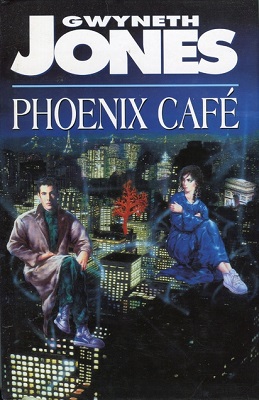
Phoenix Café, Gwyneth Jones (1997, UK).. This is the final book of Jones’s Aleutian trilogy, after White Queen and North Wind (see here), and, as can be seen, just as well-served as those books by Gollancz’s art department. The story is set a century after the events of North Wind, and the Aleutians are preparing to return to the home world. They have the Buonarotti Device, and they’ve fitted it to their worldship. Unfortunately, it seems the Device doesn’t really work for humans – they can certainly travel somewhere else instantaneously, but their time at their destination has all the concreteness of a dream. Fortunately, it works perfectly well on Aleutians. (By the time of Spirit, Jones’s last published novel, and also set in the same universe, the problem seems to have been solved for humans.) The Gender Wars have pretty mcuh split humanity into two antoginstic blocs: Women (Reformers) and Traditionalists (Men). Men believe in traditional gender roles, and keep their women veiled. The Reformist agenda is less clear. The protagonist is Catherine, a “descendant” of Clavel (the Aleutians are serial reincarnators) engineered before birth to be human. Which presents a problem: because the serial reincarnation is partly learned and requires the total immersion in the Aleutian chemical communication medium, and Catherine obviously lacks the biology to read or generate such communication. In North Wind, Clavel was Bella a half-Aleutian/half-human hybrid, but as Catherine, who is fully human, Clavel can finally atone for the rape of Johnny Guglioli in White Queen, which kicked off three hundred years of Aleutian rule, and arguably led to the Gender Wars and the destruction of the environment. Like the other two books in the trilogy, Phoenix Café is a darker novel than I remembered it. There’s a hardness, almost a brutality, to the way the characters treat each other and themselves, and in places it makes the book a difficult read. And yet, there’s a fierce intelligence in the novel too, a sense that there’s far more going on than appears on the page. Gwyneth Jones is my favourite science fiction writer, and I consider her one of the best this country has produced, but it’s good to remind myself of that at times by rereading her books.

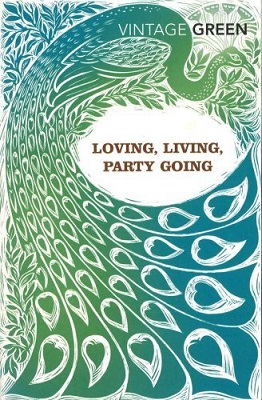
Party Going, Henry Green (1939, UK). The novel opens with a middle-aged woman entering a London railway station (I don’t think it’s named) and finding a dead pigeon. She picks up the corpse, takes it into the ladies’ toilets, washes it, and then wraps it in brown paper. She’s not entirely sure why. And after she bumps into the young woman she is there to meet (she was in service with her family as a nanny), she throws away the dead pigeon. But then she goes and retrieves it from the bin. The young woman is there to meet up with a bunch of friends who are all heading for the south of France on the boat-train. However, thick fog has closed down the station, and no trains are running. So after the party has gathered, they head into the station hotel to wait for the fog to lift. At which point, the ex-nanny is taken ill (it’s not clear if she’s just had too much to drink or is genuinely ill). Meanwhile, the party settles down in a suite, and the banter begins – mostly focusing on two women and their relationship with the young playboy who’s funding the trip to the Riviera. The fog still hasn’t lifted by five o’clock, and all the commuters have turned up to find their trains home aren’t running. So the management seal off the hotel while the station concourse fills up with angry workers. Green’s prose is beautifully done. There’s very little in the way of exposition, and what there is comes naturally from the characters. The prose is sparse and clear, and often dispenses with definite articles or pronouns in a Modernist style. The characterisation comes purely from the characters’ words and deeds. Green neither shows nor tells. It’s up to the reader to plot what’s going on, to figure out the relationships between the characters, to work out the story-arc (and, to be fair, there usually isn’t one), and to make sense of the situations Green documents. I stumbled across this omnibus of three of Green’s novels in a charity shop and was intrigued by the description of him as “the best English novelist alive” (by WH Auden, in 1952). His prose is indeed superb, and I greatly admire its clarity and its refusal to compromise. The Modernism reads a little quaint these days, and I’d sooner novelists experimented with structure rather than grammar, but every writer worth their salt should try a Green novel at least once.

The Amazing Adventures of Kavalier & Clay, Michael Chabon (2000, USA). According to my records, I received this book as a Christmas present back in 2008. I’d read Chabon’s multi-award-winning The Yiddish Policemen’s Union that year, and thought it good. So I’m a little surprised it’s taken me nearly nine years to get around to The Amazing Adventures of Kavalier & Clay. Maybe I was put off by its size – 643 pages in this paperback edition. And, to be honest, the history of comics, or fiction about early comics history, doesn’t really interest me. Which is a shame, because The Amazing Adventures of Kavalier & Clay is actually really good, much better in fact than The Yiddish Policemen’s Union. The eponymous duo are not comicbook superheroes but the creators of a comicbook superhero, The Escapist, who is as successful as Superman during the 1930s and 1940s. But The Amazing Adventures of Kavalier & Clay is also about Jews in New York – particularly when Europe was fighting WWII – and American Nazis, and Kavalier’s family back in Prague after the country was invaded by Germany… It’s also about stage magic – Kavalier is an amateur magician and escapologist – and real magic – the story opens with a plot to move the Golem from Prague – and broken dreams – Clay’s great love is the actor who plays The Escapist first on radio then in a film serial, but Clay chooses a “normal” life instead. I’m not entirely convinced by Chabon’s prose. There are occasions when it seems over-egged – actually, most of the time it seems over-egged. Although it’s always very readable. A prose stylist, he is not. But the story he tells is completely engrossing (okay, the whole Golem plot-thread was completely unnecessary). Such as Kavalier’s war service in Antarctica – a completely bizarre detour, but entertaining and interesting. I don’t get the comicbook history elements – or rather, while they come across as convincing, they don’t seem like plausible precursors of the comics I read as a child in the 1970s. But then, back then, I read US comics infrequently, and UK comics followed the anthology model – either WWII-set, or comical (as in Beano and Dandy). Do you know how weird it was for a British kid of the 1970s to read a comic that contained only a single strip and it wasn’t even complete? Which I guess seems like an odd aspect to notice, given the other elements in the novel. But I have no equivalent experience in those areas and am more than willing to accept the authority of Chabon’s narrative. Which all sounds a bit like cavilling, when I don’t mean it to. The Amazing Adventures of Kavalier & Clay was really very good indeed, and any infelicities in the prose style were offset by the novel’s breadth and depth. Recommended.

Solar, Ian McEwan (2010, UK). You know that old story about the bloke who buys some biscuits in a cafe, then sits at a table with a complete stranger. He eats one of his biscuits, and then is shocked when the other man takes one of the biscuits? McEwan turns that old chestnut into six-pages of over-baked prose in Solar. He later admits it’s a variation on an urban legend, the Unwitting Thief; but then so many parts of this books feel like variations on urban legends. McEwan also thinks airlines serve food on flights between London and Berlin – I didn’t think they bothered anymore for journeys of less than three or four hours, but perhaps I’m wrong. The protagonist is a womanising scientist who has been trading on his Nobel laureate for much of his career. He’s not so much a product of his time as a product of McEwan’s time, because he reads like a lecherous and sexist pig. His marriage is failing, his current job feels like a waste of time, and then he accidentally causes the death of his wife’s lover and frames his wife’s ex-lover for it, and uses it as a springboard to boost his own career. There’s some solid argument for anthropogenic global warming and against all the dumb climate change deniers, but everything esle in the novel is sadly quite bad. The protagonist is unlikeable, the female characters are badly drawn, elements of the plot seem to have been lifted from snopes.com, and there are assorted rants against “postmodernism” – which it is not: McEwan is just ranting against critics of male white privilege. I was much impressed by McEwan’s earlier novels when I read them back in the 1990s, but this century I’ve found them increasingly disappointing. Saturday, in fact, I thought awful. I only continued to read him out of a misplaced sense of loyalty. But after Solar, I purged my TBR of McEwan’s novels and I’ll no longer bother reading him. Life is too short.

1001 Books You Must Read Before You Die count: 131

1 Comment

A kind of library

So I did the usual and went and bought me more books – mostly for the collection, but a favourite author also had a new novel out, and I went a little mad one evening after watching a film and purchased everything I could find by that film-maker…

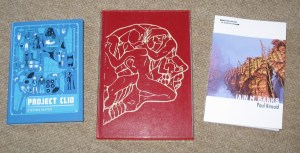
… which was Ben Rivers. The Sky Trembles and the Earth is Afraid and the Two Eyes are not Brothers (that’s the red one) was published to accompany the film of the same title. Ways of Worldmaking is about Rivers’s works. And then, on another night, fuelled by wine and Rivers’s Two Years at Sea, as I was writing about it for a Moving pictures post and comparing it with video art installations… and I remembered the excellent one I’d seen by Richard Mosse in the Hafnarhús site of the Reykjavik Art Museum last October… So I went looking online and found four books by Mosse. Both Richard Mosse  and Incoming were published to accompany a solo exhibition in the Barbican’s Curve gallery from February to April this year; the first was published by the Barbican, the second is signed. The other two books by him I found… well, Infra is $900 ($1000 for the collector’s edition), and The Enclave is $1050 ($2000 for the box set edition). A bit out of my range…

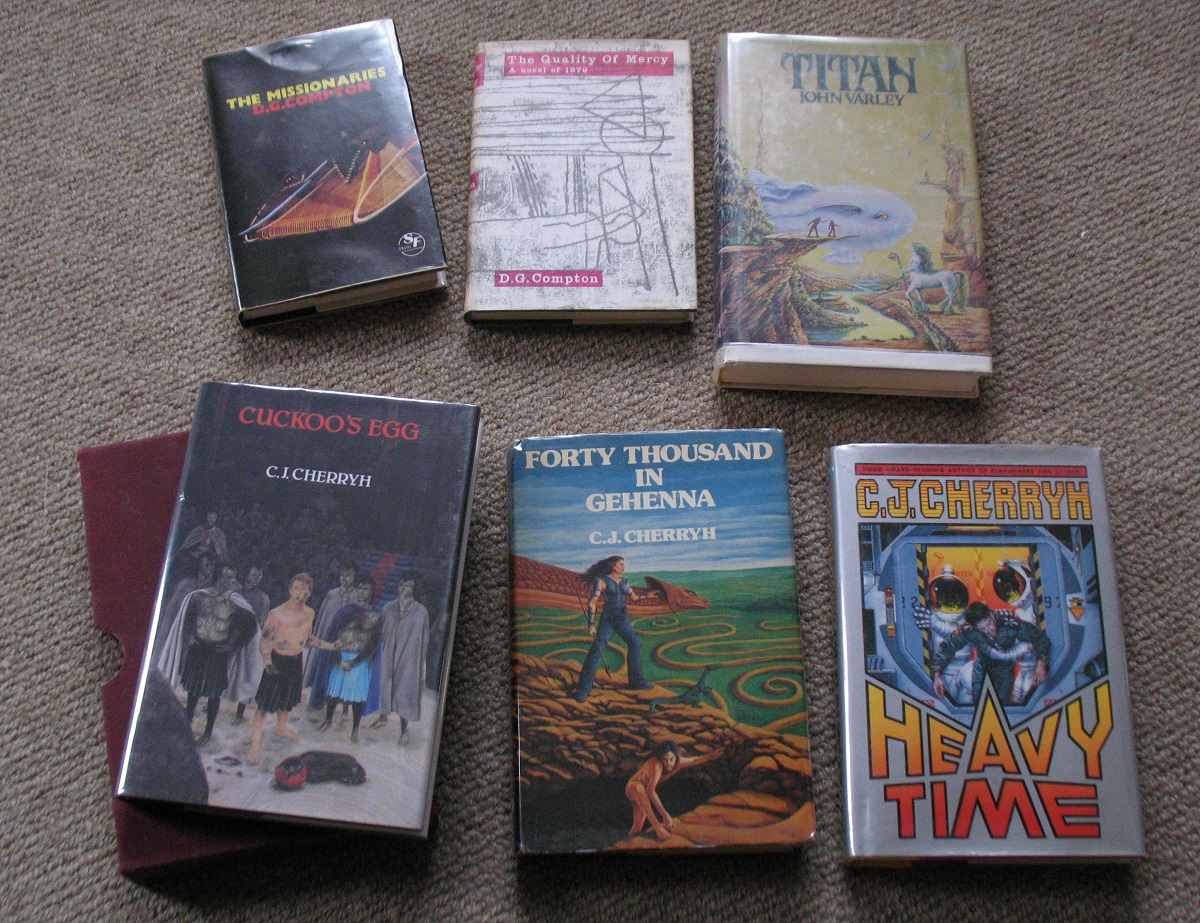
Some sf hardbacks for the collection. The Quality of Mercy was a lucky find on eBay. It’s really difficult to find a good copy, and I got it for a very reasonable price. I already have a copy of The Missionaries, but this was one was going cheap and in much better condition. Titan I bought for 10 euros from SF Bokhandeln’s stall at Worldcon75. It usually costs considerably more. Heavy Time is signed. Cuckoo’s Egg is signed and numbered – and the seller threw in Forty Thousand in Gehenna for free as he was trying to reduce stock (sadly, it’s not signed).

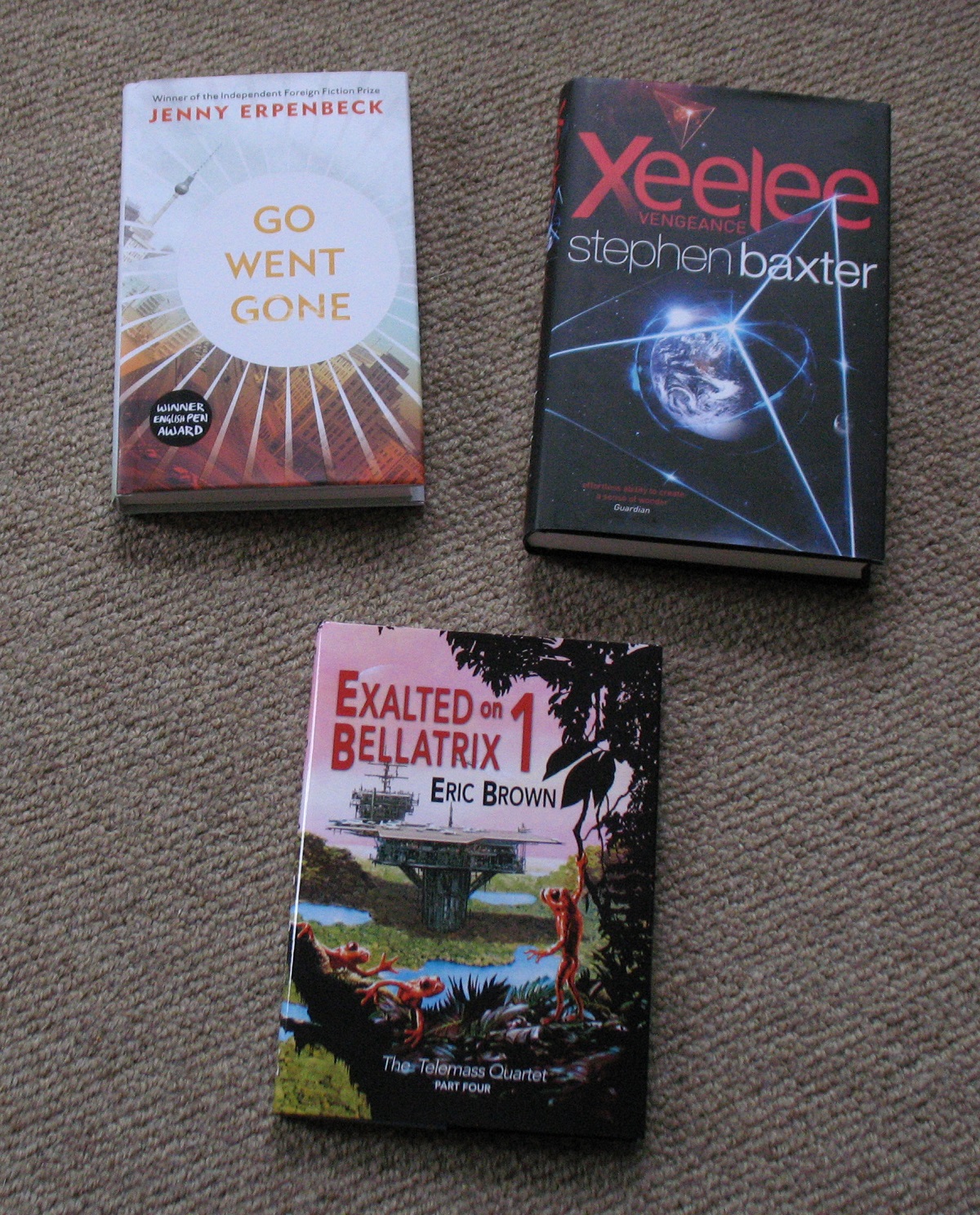
Some new hardbacks. Jenny Erpenbeck is a favourite writer, so I’ve been looking forward to Go, Went, Gone. The last Baxter novels I read were Proxima and Ultima and I thought them, to be honest, a bit juvenile. But he’s a hard habit to give up. Hence, Xeelee: Vengeance. If only he weren’t so fucking prolific… Exalted on Bellatrix 1 is, despite the title, the final book of Brown’s Telemass Quartet. They’re actually numbered in reverse, with the number referring to a planet of each novella’s eponymous star. Annoyingly, the other three use Roman numerals but this one doesn’t. Solid science fiction and typically Brownian – although the protagonist does come across as a bit creepily obsessive.

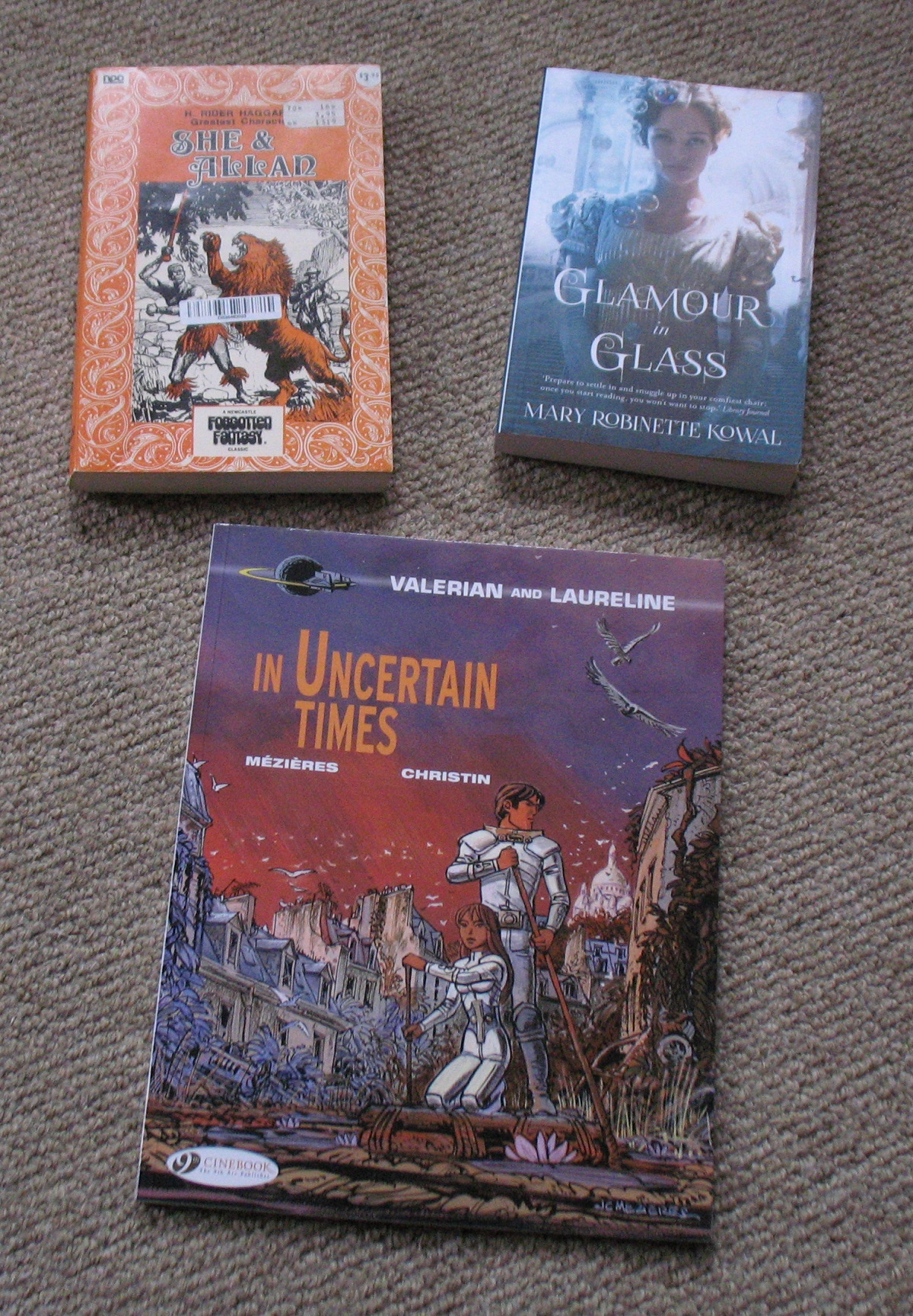
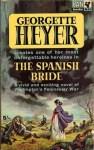
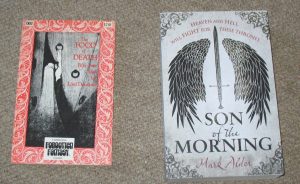
Two paperbacks and a graphic novel. Back in the 1970s, Newcastle Publishing issued a line of fantasy reprints, the Forgotten Fantasy Library. I’ve been picking them when I find them. She and Allan is the sixth book in the series. A recent Twitter exchange persuaded me to give Mary Robinette Kowal’s Glamourist Histories – or “lamourist histories”, as the spine has it – another go. Glamour in Glass is the second book in the series. Well, I do like Georgette Heyer’s novels… And In Uncertain Times is the eighteenth volume in the Valerian and Laureline series, and I see Cinebook are pushing them out at a much faster rate now, after the relelase of Besson’s film (which has apparently not done all that well, anyway).


3 Comments

Reading diary, #53

Apparently, I still read science fiction – or rather, most of my reading is still science fiction. Which is odd, given my opinion of the quality of much of it. But then two of the books below were rereads and by my favourite sf writer. Make of that what you will.

White Queen, Gwyneth Jones (1991, UK). I’ve been meaning to reread this book, and its two sequels, for a long time, but in the continual chase to main a positive TBR balance (ie, reading more books than I buy) I usually don’t find time for rereads. But then I agreed to write something about Jones’s aliens for a critical work, not just because I welcomed the opportunity to write about Jones but also because it would force me to do that long-put-off reread. And so it did. And… White Queen was not only better than I’d remembered it, but also a good deal nastier than I’d remembered. True, I’m a different reader now than I was twenty-five years ago – who isn’t? – when I last read the book. I can see how some of the characterisation was of that time… but it does read differently now. The word “whore”, for example, is thrown around a lot more than you’d find in a novel of the second decade of the twenty-first century. The characterisation also seems not as I remember it – the aliens are better drawn than the humans, basically. Some time hence, a decade or two, aliens land secretly on Earth. These are the Aleutians, so called because of their original landing place. They resemble humans, but have no noses, a single gender, and bio-technology based on “wandering cells” from their own individual bodies. Johnny Guglioni is an engineer/journalist, or eejay, (one of the novel’s less impressive neologisms), who has been infected with a virus which can degrade coralin, the “living clay” on which all modern electronics are based. He becomes involved with the Aleutians through Clavel, one of the three Aleutian “captains”, in an invented African country. Braemar Wilson is a tabloid television journalist who thinks Earth cannot survive an encounter with superior aliens, and who seduces Johnny as a means of gaining access to Clavel. Then the Aleutians reveal themselves to what they think is the world government, an international conference on women’s rights taking place in Thailand… The Aleutians are one of sf’s great alien races without a doubt, thoroughly convincing with the minimum of hand-waving. And the novel has plenty of the latter, as the plot soon congregates around a FTL drive, or instantaneous transportation method, invented by eccentric engineered genius Peenemunde Buonarotti, and which features in later stories and novels set in the same universe, notably Spirit and the stories in The Buonarotti Quartet. It seems an odd hook on which to hang the narrative up to that point, although it does handily lead into Johnny’s Christ-like redemption – and I have to wonder if that was the point of it all. It was Jones’s ‘Forward Echoes’, published in an issue of Interzone in late 1990 which made me sit up and take notice of Jones’s fiction (perversely, a revised edition of the story, ‘Identifying the Object’, in a chapbook collection of the same title, doesn’t give me that same jolt), and ‘Forward Echoes’ is about the first contact with the Aleutians in an African country. White Queen is an extension of it… and yet it’s not my favourite Jones novel, which is Kairos. But rereading White Queen after so long reinforced my admiration of Jones’s prose and made me realise how very very good she is at depicting the alien (and, on reflection, that ties in quite well to the fracturing of reality which is one of the strengths of Kairos). Jones is one of my favourite writers, and still, to my mind, one of the best science fiction writers this country has produced. And being at an age when rereading old favourites  usually ends up poisoning the well of my childhood, it’s heartening– no, it’s a delight… to discover my appreciation of Jones’s writing not only remains undimmed but has probably been strengthened.

Totalitopia, John Crowley (2017, USA). A new collection by John Crowley! Time for celebration. Except, well, this is a collection of essays and columns and a couple of stories, plus an unpublished piece of fiction… although, to be fair, I’ll pretty much take any Crowley I can get. (And I wonder when the Incunabula anniversary edition of Little, Big is going to appear, it’s been going on a decade since I paid for it). There’s a review of Paul Park’s fiction, focusing on his Princess of Romania quartet and his last “novel”, All Those Vanished Engines. Much as I admire Crowley’s fiction, for me Park is the best sf novelist the US has produced – although Crowley is more than qualified to write about him. The fiction is a little too Americana for my tastes – much as I love All That Heaven Allows, fiction that evokes a similar atmosphere leaves me cold. The columns are good, and while their subjects may not necessarily appeal, they certainly act as good inspiration for pieces I want to write myself – I really must write something about why All That Heaven Allows is my favourite film, for example; I mean, I listen to death metal, I write science fiction… and my favourite film is a 1950s melodrama. Go figure.

The Power, Naomi Alderman (2016, UK). This was the first of three books I took with me to Finland to read during the trip, and during whatever downtime I might have during Worldcon75. I pretty much finished the novel before the first day of the con was done. Which I suppose is a testament to its readability. I had high hopes for The Power. At one point, it seemed a serious contender for the Arthur C Clarke Award shortlist this year, and while the Shadow Clarke Jury ended up split on the book, and it never even got a look in with the actual jury, it did sound interesting enough to be worth a punt. But, oh dear. The central premise is brilliant: young girls develop the ability to generate electricity like electric eels, and the scaffolding to back it up is well-built (Alderman namechecks Peter Watts in her acknowledgements). But this is then used in service to a feeble cross between a transatantlic thriller and a BBC euro-thriller plot. There are three main narratives: a young woman in the East End of London, who witnesses her mother’s brutal murder, and ends up taking over her father’s gangster empire; the ex-athlete trophy wife of the Moldovan president, who desposes him and turns her country into women’s state; and an American orphan, who proves have the strongest power of all, and who starts up a religion with herself in the Christ role. The entire book is framed as a novelisation of “historical events” written a millennia or so later in a world in which women are the dominant gender. It’s not very subtle. I enjoyed the book, but I found it disappointing as the three narratives were such obvious ways of treating the concept, and made it all feel more like a techno-thriller than a commentary on its premise. I gave the book away after I’d finished. I hope the person I gave it to is more impressed than I was.

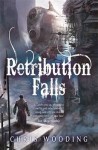
Retribution Falls, Chris Wooding (2009, UK). This was shortlisted for the Arthur C Clarke Award and was seen as an odd choice at the time. Having now read it, I’m even more mystified. It’s a steampunkish sf adventure story with 1970s sexual politics. And while one word in the preceding sentence qualifies it for the Clarke Award, the rest should have immediately disqualified it from the shortlist. The title refers to a semi-mythical town populated by pirates. Darian Frey is the captain of the Ketty Jay, a Millennium Falcon sort of equivalent in a world where there are powered aircraft who use an invented gas, aerium, to improve their lift. So they’re sort of a cross between zeppelins and aeroplanes, but are treated like steampunk spaceships. And it’s totally unconvincing. Then you have the crew, who are the usual bunch of RPG-session misfits (or Firefly-inspired character writing, which I guess is the same thing), who get inadvertently embroiled in a plot which reaches all the way up to the highest levels of society… Yawn. The book was, according to the author, written to be fun, which is fine in and of itself. But when the only two named female characters are a) undead and b) a ruthless pirate captain who turns out to be the jilted lover of the hero… Oh, and let’s not forget his current girlfriend, who’s been sent to a convent by her upper class father… All the other female characters are whores or nuns. Well, this is not a book that should have been published in the twenty-first century, never mind shortlisted for a major genre award. Seriously, what the fuck were they thinking? It’s not even like the plot is hugely original, as the way it unfolds is pretty much obvious from page one. Retribution Falls reads like a write-up of a dudebro session of a derivative RPG game. The genre is better than that, the Clarke is way better than that. Avoid.

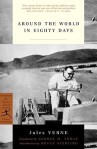
Around the World in Eighty Days*, Jules Verne (1873, France). I have no idea if I’ve read this before – I don’t think so, but it’s hard to tell since I’ve seen versions of the films enough times over the decades to know the story. Except, well, they’re not the story. I don’t think any of the movies I’ve seen – I can think of two, off the top of my head, one starring David Niven and the other Steve Coogan – are at all faithful to the book. Yes, Phineas Fogg accepts a challenge to travel around the world in eighty days. Yes, he thinks he’s failed, only to discover that by travelling east he has gained a day. Yes, he has adventures along the way, and even rescues a young woman who becomes his wife at the end of the book. But in the novel, he meets her in India, when he rescues her from suttee. And I don’t recall a Scotland Yard detective on Fogg’s trail for much of his travels – he believes Fogg stole £50,000 shortly before leaving London. And the final section, in which a desperate Fogg, Passepartout, Fix and Aouda race across the USA to catch a ship to Liverpool… the big set-piece is driving a train over a damaged bridge at high speed so the bridge doesn’t collapse under it. Much of the prose is larded with geography lessons, and while Verne’s didactism is one of the more charming aspects of his novels, here it seems overdone. True, I’m coming at the book more than a century later, as a member of a society considerably better-informed about world geography, and a highly-educated member of that society with an interest in other countries… So much of the exposition was superfluous as far as I was concerned. Further, Fogg’s characterisation as unemotional and po-faced hardly made him a sympathetic protagonist. Perhaps Verne intended this so the reader would indeed think Fogg was the bank robber, but it only made him feel like he had zero depth. Unfortunately, I’m not convinced, from what I remember, that the film adaptations are especially superior. The book is, I suspect, the best version of the story. Which is a bit of a shame.

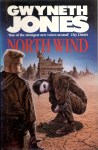
North Wind, Gwyneth Jones (1994, UK). I can’t remember if White Queen was initially presented as a standalone, I can’t remember when I first read White Queen if it was sold as the first book of a trilogy – although judging by the gap between it and North Wind, I suspect not. The story of North Wind opens a century later, long after all those mentioned in White Queen have died – although the Aleutians are, of course, serial reincarnators. Everyone now knows the Aleutians arrived in a generation ship – less of a hardship for serial reincarnators, obvs – and the events of White Queen have pretty much passed into legend, especially among the Aleutians, who remember it as a significant epic, The Grief of Clavel. The opening of North Wind turns the tables on White Queen, this time having a human rescue a naive Aleutian, rather than vice versa, when a backlash against the aliens takes place, and all but Bella, the “librarian”, among the Aleutians are killed in, again, Africa. Bella – “he” to himself and other Aleutians, but “she” to humans – is rescued by human Sidney Carton (the name explicitly taken from Dickens’ A Tale of Two Cities). Since White Queen, Earth has been embroiled in several Gender Wars – the Women are not all women, the Men are not all men; reformers and traditionalist are mentioned throughout as better labels – and this has made things more difficult for the Aleutians, and the halfcastes, who are humans who surgically alter themselves to resemble Aleutians, and consider themselves reincarnations (of, obviously, cultural icons of Jones’s own formative years, like Jimi Hendrix, who is of course also heavily referenced in Jones’s Bold As Love novels). In North Wind, Carton’s rescue of Bella, and her/his subsequent escape from his “care”, eventually leads into a hunt for Buonarotti’s mythical FTL drive… I couldn’t honestly tell you if North Wind is better than White Queen. I suspect the distinction is irrelevant. White Queen is a more memorable narrative, but it has the advantage of kicking off the series. North Wind has a more coherent narrative – but one of the strengths of the series, novels and short stories, is that a lack of narrative coherence is a side-effect of FTL travel, or rather, the narrative deliberately obfuscates in order to evoke the experience of FTL travel. I had forgotten how good this trilogy was, so I’m grateful for being prompted into rereading them. I should reread them more often, regularly perhaps. On the other hand, I had forgotten how badly Gollancz had served these books with cover art. Jones has recently rereleased the novels herself on Kindle, and she may well have updated them. Which is really annoying, as I’m not a fan of ebooks and would much sooner read hardcopy, paperback or hardback. Next up, Phoenix Café, the original 1997 Gollancz hardback…

1001 Books You Must Read Before You Die count: 131

Leave a comment

Expanding bookiverse

Things got a bit stressful a few weeks ago, so I coped by doing what I usually do in such situations: I buy more books. Also, there were a few authors with new books out that I wanted. So the collection has grown quite a bit this month…

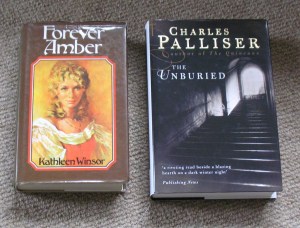
I have absolute no idea why I bought Forever Amber. I recently watched the film adaptation by Otto Preminger (see here) and was not especially impressed. But when I looked up the book on Wikipedia and saw the lines, “The fifth draft of Winsor’s first manuscript of Forever Amber was accepted for publication, but the publishers edited the book down to one-fifth of its original size. The resulting novel was 972 pages long”, I was intrigued enough to look for a copy on eBay. Where I found a hardback for £2. The Unburied was a lucky find – a signed first edition for a reasonable price. I’ve been a fan of Palliser’s books for years but only recently started collecting them.

Some new books: The 7th Function of Language, The Essex Serpent and The Power (not shown) I bought in Waterstone’s a few Saturdays ago, before meeting up with friends for the Sheffield SF & Fantasy Social. I took The Power with me to Helsinki to read during the trip, and gave it away when I’d finished it. Lust was from a large online retailer. I decided it was time to read another book by Elfriede Jelinek – I read her The Piano Teacher a couple of years ago, and thought it very good.

I signed up for The Blaft Anthology Tamil Pulp Fiction Vol 3 on indiegogo back in June 2015. It only arrived last month. The rewards I signed up for included volumes 1 and 2, but reprints of Vol 1 have apparently been delayed so the publishers included Kumari Loves a  Monster as a “sorry, and please be patient”.
Xeelee: Endurance is a collection of stories originally published in 2015. This is the PS Publishing slipcased version, which was published only this year. The Massacre of Mankind, also by Baxter, is an official sequel to Wells’s The War of the Worlds. I’ve read several of Goss’s stories over the last few years, and was especially impressed by her ‘Cimmeria: From the Journal of Imaginary Anthropology’ in 2014, so much so I nominated it for the BSFA Award… but it didn’t make the shortlist. The Strange Case of the Alchemist’s Daughter sounds like more of the same.

New paperbacks by authors whose books I like and admire: John Crowley’s Totalitopia is more a collection of essays than anything else, The Rift is Nina Allan’s second novel (although I didn’t bother with the updated Titan Books version of The Race), Calling Major Tom is by a friend and has been getting good reviews, and The Switch, well, I’ve been buying and reading Justina Robson’s books right from the start, after being in a writing orbiter with her back in the 1990s.

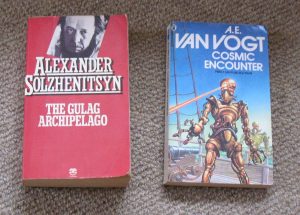
The Gulag Archipelago – it’s only volume one, although it doesn’t say so – I found in a local charity shop. Cosmic Encounter I bought on eBay – it was very cheap, but the seller was a little optimistic in their description of its condition.

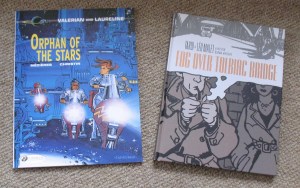
And last but not least, a pair of bandes dessinée: Orphan of the Stars is the seventeenth volume of the Valerian and Laureline series (I was surprised to discover recently they’re publishing a novelisation of Luc Besson’s film adaptation; er, what?), and Fog over Tolbiac Bridge is the latest by Jacques Tardi to be published by Fantagraphics. I wrote about both of them here.


3 Comments

Reading diary, #52

I’m still trying to pick up the pace of my reading, but I’ve not had all that much success so far. I’m managing to keep ahead of my TBR – ie, I’m reading more books each month than I buy, although I’m not buying as many as I have done in the past – but I’m still more than a dozen books behind in my Goodreads reading challenge of 140 books by the end of the year.

Valerian and Laureline 17: Orphan of the Stars (1998, France). The volumes in the Valerian and Laureline series have been forming an extended narrative for a while now. Initially, each was an unconnected story, then there were a couple of two-volume stories, but since the disappearance of Galaxity after the past was changed, the duo’s narrative has been more serial than series. The volume prior to this one, Hostages of Ultralum (see here), saw Valerian and Laureline rescue the Caliphon, the brattish young son of the Caliph of Iksaladam, a fabulously wealthy planet, from kidnappers, and in this book he’s still with them, and they’re still being pursued by the kidnappers. The three are now in the Asteroids of Shimballil, a belt close enough to the star system’s sun for the asteroids, each with their own atmosphere, to be habitable. The duo are trying to find a treatment for the Caliphon’s behavioural dificulties, but they need money… and after meeting a producer of popular entertainments, Laureline agrees to act for him for the money. Like many of the other tomes in the series, Orphan of the Stars takes satirical pokes at various things – in this case, the aforementioned entertainments industry (ie, the film industry), but also academia. I’ve yet to see Besson’s film, and I think I’ve missed its run at the cinemas, but from the reviews I’ve seen it seems to mangle an important aspect of the series, the relationship between Valerian and Laureline. Given that the relationship has developed and changed over 22 volumes, it’s no surprise the film fails to get a handle on it. But, more importantly, it also seems to me, the movie fluffs the books’ humour. It’s not just satire and piss-takes of contemporary culture which feature in the series, but also the banter between the two principals. Laureline is definitely the competent one, and has been since around volume three or four, and the two are in a relationship, but there’s a give and take between the two, between Valerian’s misplaced protectiveness and Laureline’s competence, it sounds like the movie has bungled. But I guess I’ll know that for sure when I finally get to watch it.

Living, Henry Green (1929, UK). What to say about Henry Green? At one point, he was considered by some as “the best English novelist” and – a phrase I quite like – as the “writer’s writer’s writer”. According to Wikipedia, he was always more popular among other writers than the reading public and “none of his books sold more than 10,000 copies”. From the 1950s onwards, his star faded – he died in 1973 – and by the 1980s, he was mostly forgotten… only to be rediscovered in the early 1990s, and omnibuses of his nine novels (three per omnibus) have been in print ever since. And yes, he is every bit as good as his admirers have/had it. Living, his second novel, is set in and around a Birmingham iron foundry in the 1920s – Green actually worked as the managing director of his family’s engineering firm in Birmingham – and focuses on a handful of its employees, including the London-based son of the company’s owner. The prose is modernist, and uses definite and indefinite articles sparingly. It takes a bit of getting used to, but Green’s writing is so good it’s highly effective. The dialogue is also written in dialect – although I could never quite make it sound Brummie in my head – which also takes a while to get used to. In terms of plot, there’s not a great deal, just the lives of its central characters, and how they cope with changes to the company’s fortunes. But reading Green just makes me want to push the envelope of my own writing. I don’t want to come up with cleverer plots, or more engaging stories, I want to sharpen my narratives, improve my word-choices, write the best damn prose I can, so that I too can be as lucid, as economical, and yet as lyrical, as Henry Green. Highly recommended.

Angel, Elizabeth Taylor (1957, UK). This book was, in a roundabout fashion, my introduction to the fiction of Elizabeth Taylor – or rather, I learnt of her writing thanks to this book. Well, thanks to François Ozon’s adaptation of it, starring Romola Garai, which I reviewed many years ago for videovista.net. I liked the film so much, I kept an eye open in charity shops for books by Taylor… and it’s taken till now before I finally stumbled across a copy of Angel (after first finding and reading Blaming and A Wreath of Roses). And the first thing I noted about Angel the novel was its differences to the film adaptation. The plots are pretty much identical – opening in the last years of Queen Victoria’s reign, working-class teeenager Angelica Devereux, Angel, writes a florid romance novel, publisher takes a chance on it, book is a success, Angel goes onto become a successful – if critically mocked – writer, falls in love with Esmé, an impoverished upper-class painter, who marries her for her money but cheats on her, he is wounded in WWI and dies in an accident soon after, her books are by then no longer popular, and she lingers on in poverty… The film has Esmé’s work re-evaluated after his death, so he becomes critically lauded, while Angel’s books continue to be seen as trashy potboilers. The film also makes Angel more of a figure of fun, and so more sympathetic, than the novel, although they make use of the same events. In that respect, in that Angel is an unsympathetic character, and not played for light laughs, the book is a tougher read than the film is a viewing. But Taylor’s prose is so very good, reading it is never a hardship (which is not say Ozon’s direction is bad, although he does film it in a very artificial, almost pantomime, style, which suits his treatment of the material). I’ve now read Angel, but I’ll continue to keep an eye open for Taylor’s novels – and I have her Complete Short Stories on the TBR…

Home Fires, Gene Wolfe (2011, USA). I picked up a copy of the signed and numbered PS Publishing edition of this novel for much cheapness a couple of years ago, although not being an especially big fan of Wolfe’s fiction I’ve no real idea why I did so. His The Fifth Head of Cerberus is a classic work of sf, The Book of the New Sun is a remarkable work but its sensibilities have not aged well, and everything else he has written I’ve found more or less meh. Except his short fiction – that I really don’t like at all, bar one or two stories. But Wolfe has a reputation for tricksiness and cleverness, as if the two things are the same, and his profile within genre remains extremely high, even if few people seem to read him these days. Home Fires does nothing to change my current opinion of Wolfe. It’s set a century or so hence. Skip Grison is a wealthy lawyer in his fifties. Twenty-something years before, he contracted (civil partnership) with Chelle Sea Blue (yes, really), who then left Earth to fight the Os. She is due to return home. Although she has been away decades, it has only been a handful of years for her. He is worried for their partnership, although he still loves her dearly. As a present for her return, Skip arranges for Chelle’s mother to be resurrected – ie, a brain scan of her is imprinted onto the mind of a volunteer. Skip and Chelle then go on a cruise on a sailing ship (the cover art depicts a motor cruise liner with masts and sails badly photoshopped on top, which is annoying). Things happen aboard the sailing ship – hijackers seize it, attempts are made on the life of Shelle’s mother, Wolfe plays his usual wordgames with the reader… But it all seems a bit, well, a bit feeble. Some of the puzzles presented in the narrative are easy enough to solve, and are indeed explained, but don’t seem to add much to the story. Those which are left unexplained, add even less. I can live with the mix-n-match worldbuilding, and while the old-fashioned sexual politics are uncomfortable they don’t actually overwhelm the narrative, but… it all feels like a pointless exercise. It doesn’t feel like a story, it feels like half a puzzle with no reward for solving it. I had expected some intellectual gratification from identifying the puzzles and then solving them, or failing to solve them, but to be honest I didn’t really care. Home Fires reads like a forgettable sf novel with a heavy reputation it doesn’t deserve hanging over it. Avoidable.

Fog Over Tolbiac Bridge, Jacques Tardi (2017, France). The first Tardi I read was The Arctic Marauder, and I liked its Verne-esque steampunk-ish flavour very much. So I continued to read his bandes dessinées – or rather, the Fantagraphics English translations of them. He’s probably best known for his The Extraordinary Adventures of Adèle Blanc-Sec, made into a film by Luc Besson, or perhaps for providing the production design, and the actual style of the art and animation, of the steampunk April and the Extraordinary World (see here). But Tardi’s graphic novels actually cover a variety of genres, from war to thriller to crime. And Fog Over Tolbiac is this last, an adaptation first published in French in 1982 of a noir novel by Léo Malet. (Tardi has adapted nine of Malet’s Nestor Burma novels to date, but Fog Over Tolbiac Bridge is the first to appear in English.) Burma is a private detective, who receives a letter one day from a man he knew twenty-five years before when both were anarchists. But the man has been murdered, and Burma finds himself trying to puzzle out the murder, its link to an unsolved robbery in 1936 on the eponymous bridge, and Burma’s old friends from his anarchist days at the “vegan hostel”. It’s a bit thin as a mystery, to be honest, though I suspect that’s an artefact of adaptation, but Tardi’s art is eminently suited to the material, both the story and the less-than-competent Burma. To date Tardi has published thirty-one bandes dessinées, of which around fourteen or fifteen have so far been published in English by Fantagraphics. After a hiatus of several years, brought about by illness, Fantagraphic seem to be back translating Tardi’s work… and I’ll continue to buy them.

Nomansland, DG Compton (1993, UK). Compton is a science fiction writer I admire a great deal. I think his prose is far far better than 99% of genre writers, living or dead, and his relatively low profile is not only due to the quality of his prose (many sf readers consider such prose either irrelevant or a hindrance), nor the fact his last novel was published in 1996 and only the SF Gateway has any of his books currently in print (as ebooks and omnibuses), although he does have one novel in the SF Masterworks series… but chiefly because the bulk of his fiction has a very British flavour and a lot of it is really quite miserable. Nomansland displays both these last two qualities, despite being set in an invented, and unnamed, European country, and because the world of the novel is forty years into the “Attrition”, an epidemic which causes pregant women to reject male embryos. In other words, only female babies have been born for nearly half a century. Nomansland also uses another common Compton technique – the double unsynchronised narrative, which is probably not the best way to describe it, but refers to paired narratives which differ in ways other than just POV. In Nomansland, one narrative is loosely-coupled third-person, set forty years after the Attrition, and focusing on scientist Dr Harriet Ryder-Kahn, who has just discovered a cure for MERS, Male Embryo Rejection Syndrome, but is being blocked from publication by her bosses at the Ministry of Science. The second narrative begins some ten years after the start of the Attrition, when Harriet is a young girl, and is first-person. It traces her history up to the 40-years-after narrative. There’s an elephant in the room in this story, and it takes two-thirds of the novel before anyone even mentions it: the world is a much nicer place now there are so few men (they’re still in charge, but they’re hugely outnumbered by women, and dying out). So the question becomes, is it worth actually curing MERS? Isn’t it better to leave the population as it is? Of course, the men – and few of them in this novel are painted in a flattering light – would like their own kind to be back in charge, but… I’m entirely sympathetic to the view a massively-majority, or entirely, female population would turn the planet into a much more pleasant place; and I can think of no good reason why men should be re-introduced, given a solution to reproductive needs. For all the crap we’re fed in the right-wing press about vile behaviour by other cultures, most of it is more a product of toxic masculinity than it is actual culture. In Nomansland, Compton is also clearly sympathetic, but he tries to present a balanced view and often undermines his point. MRA types will object to the characterisation of the male characters, but fuck ’em, they have no opinions worth treating seriously. If there is a problem, it’s that Compton is, if his fiction is any indication, somewhat misanthropic, and so even his female characters are far from sympathetic. Ryder-Kahn, for example, is fixated on publication, and does not seem to understand the impact of her cure. Nomansland is by no means one of Compton’s best, although my admiration for his writing remains undimmed.

1001 Books You Must Read Before You Die count: 130


Leave a comment

Reading diary, #51

With a TBR in the low four figures, it’s reached the stage where I’ve owned books for decades without having got around to reading them. This is, quite obviously, pretty dumb. So for several years now I’ve been trying to plan my reading, making a list of the books I intend to tackle in the coming month… But then, of course, the new shiny drops through the letterbox, and sometimes its lure is a little too strong and so it supplants one, or more, of the books on the TBR… Which is certainly what happened twice in the half a dozen books below.

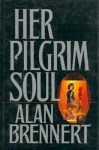
Her Pilgrim Soul, Alan Brennert (1990, USA). I picked this up at Kontur in Uppsala last month, and ended up reading it on the train from Manchester Airport after stupidly leaving the book I had been reading on the plane. To be honest, I’d not been enjoying that book – it was The Music of the Spheres, and the writing was pretty bad – so it was no great loss. I was annoyed, however, about losing the 100 Yugoslavian dinar note I’d been using as a bookmark. (Um, I see there’s one for sale on eBay, from a seller located not all that far from Manchester Airport – they’re asking £1.40, although the market price appears to be 99p…) To be honest, I thought I might have read Her Pilgrim Soul before, but on reflection I think I’ve read some of its contents before – likely in one or another of Gardner Dozois’s The Year’s Best SF anthologies, which I used to buy for many years. It’s a collection of well-crafted stories, a mix of science fiction and fantasy, most on the light side of either genre (but not the lighter side), and most not especially memorable. It’s been more than a month since Kontur, and I can remember very little about the contents of Her Pilgrim Soul. A good collection, I suppose, but in a way that has no lasting impact and leaves only a vague impression. Fiction, of course, should do more than that; but most manages much less.

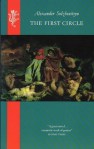
The First Circle*, Alexander Solzhenitsyn (1968, Russia). I suspect I like the idea of Solzhenitsyn as a writer more than I like actually reading his writing. If that makes sense. I’d no real desire to read Solzhenitsyn until seeing Sokurov’s Dialogues with Solzhenitsyn (see here), and when I saw a copy of The First Circle, and immediately linked it to Sokurov’s The Second Circle, a favourite film, then I was suddenly keen to read Solzhenitsyn. And now I have read him – this book, and A Day in the Life of Ivan Denisovich last year (see here) – I’m wondering what all the fuss was about. True, I’m not reading him in the original Russian, so any infelicities in prose and style are more likely the fault of the translator, but… Well, the two books by Solzhenitsyn I’ve read so far are blackly comic works about the inhuman excesses of Stalin’s regime. And, well, I knew that, I knew Stalin was, and still is, the worst despot this planet has ever seen, responsible for a vast number of deaths, more perhaps than many historical epidemics. He killed more Russians in WWII, for example, than the Germans did. The First Circle, which is quite a hefty novel, covers three days among the inmates, and others linked to them, of Mavrino Prison, which is actually a secret penal laboratory staffed by politicial prisoners and others pulled from gulags and labour camps. Compared to others in the Soviet prison system, they have it cushy. But not as cushy as the family of the prison head, which includes his son-in-law, a young and upcoming diplomat, who foolishly telephones a doctor about to leave for Paris and warns him not to hand over some medical data to the West as he had threatened. The authorities were, of course, listening in… but they can’t identify the caller. Fortunately, some of the Mavrino inmates, and some of the equipment they’ve built, could help the MGB… The contrast with the lot of the prisoners and the diplomat’s family is stark, as is the contrast between those in Mavrino and their previous experiences in the gulags. Solzhenitsyn manages to find the nobility, and venality, in his prisoners, and paints them vividly as people. But the endless reiteration of bureaucratic cruelty – epitomised, if not literalised, by the treatment of the diplomat in the Lubyanka after his arrest – does pall on occasion. The First Circle, despite its short narrative timeframe, is surprisingly rambunctious, but less philosophical than I had expected – although, to be fair, most, if not all, of the references to Russian literature were lost on me. I still like the idea of Solzhenitsyn as a writer, and I still have another of his novels on the TBR, but I’ve yet to make up my mind about his actual writing.

Modern Masters of Science Fiction: Iain M Banks, Paul Kincaid (2017, UK). A housemate lent me a copy of The Wasp Factory back in 1987, and while it was certainly a memorable book, it wasn’t my thing. It wasn’t until I joined the British Science Fiction Association a year or two later that I discovered Banks also wrote science fiction – and I can remember finding a hardback copy of Consider Phlebas in WH Smith soon after, but at the time I would never have considered buying a book in hardback. Later, Banks was GoH at Prefab Trout, the second convention I ever attended, in September 1989, and I can remember a review of Canal Dreams in the programme booklet which described the novel as “a taunt thriller”. I think by that point I’d read Banks’s earlier novels – probably borrowed from Coventry City Library – the mainstream ones at least, but possibly also Consider Phlebas and The Player of Games. I’m pretty damn sure, however, that the first Culture novel I actually bought was Use of Weapons, which was launched at Eastcon, the 1990 Eastercon, in Liverpool. I bought the hardback and Banks signed it for me. I stil have it, of course. From that point on, I purchased all of his books in hardback as soon as they were published. (However, it wasn’t until a few years ago that I managed to track down first edition copies of the books before Use of Weapons.) So I guess you could say I am/was something of a fan. And yet, all those decades of reading him, but so few of his books seemed to manage the quality I expected of them – I enjoyed them, I appreciated them… but it always felt to me like he could do much better. I knew I was being unfair, but I could never help myself. And yet…. after reading Paul’s book on Banks’s novels, it occurs to me that my problem with Banks is that he rewarded careful reading but his prose was so effortlessly readable that I likely never gave his fiction the depth of reading which generated the most reward. And I reached this conclusion because Paul, a friend of many years, writes about Banks’s novels so well, so readably, that I want to go back to Banks’s books immediately and reread them and discover in them all the depth and goodness identified by Paul which I plainly missed… and knowing full well that I will also hugely enjoy the novels because they were always were, above all, hugely enjoyable. So, Paul, job done. (Although I’ll need more convincing about Transition, I think…)

The Killing Thing, Kate Wilhelm (1967, USA). Okay, I admit I bought this novel – at this year’s Eastercon – because of the dreadful cover art. Comparisons with, and references to, The Martian proved inevitable, although the book itself is set on some random alien desert world. Humanity has spread out among the stars and pretty much conquered everyone it meets, most of whom also happen to be human, but nice and fluffy and progressive compared to Earth’s bigoted, racist and sexist conquerors. On one such world, the protagonist of The Killing Thing, Tracey, visits an open-cast mine and sees an experimental mining robot. It kills its inventor, and is taken by Earth’s military establishment for study. On Venus. Where it escapes. And now Tracey is the sole survivor of a ship that tracked the killer robot to the random alien desert world, and he’s stuck on its surface in a lifeboat with limited fuel and supplies, and must hold out until rescue arrives, while the robot hunts him down and tries to kill him. If it weren’t for the background material – most of which is, quite frankly, offensive – The Killing Thing would be padded out beyond boredom. As it is, it still reads like a short story bloated beyond its natural length. I’d had a quite high opinion of Wilhelm’s fiction based on previous stuff by her I’d read, but that opinion took a bit of a beating reading The Killing Thing. When I restart SF Mistressworks – soon, I hope – then I’ll bung a more comprehensive review of this book up there. For now: not a good work from a usually good writer.

Central Station, Lavie Tidhar (2016, Israel). Once upon a time fix-up novels were pretty common in science fiction. Authors would take a bunch of stories, lash them together with a crude framing narrative, and then the whole thing would be presented as a novel. Some were more successful than others… but the fix-up is still an ugly, lumpy and lop-sided beast of a narrative form. Central Station, although presented as a fix-up novel, and on plenty of novel award shortlists, strikes me more as a collection of linked stories, although there is a story arc which progresses throughout it. I remember one or two of the stories appearing in Interzone and, at the time, I wasn’t especially taken with them. But given the success of this “novel”, and because several people have told me the stories work better together than they did in isolation, I decided to give it a go. And… it still doesn’t really read like a novel. But the individual stories do benefit from being in a collection. Alone, they felt incomplete, unresolved, whereas the novel shows that the resolution is merely cumulative and deferred. The title refers to space port in Tel Aviv/Jaffa, and the stories are focused on a handful of families who live in the environs. There’s no date – it’s the future of a century or two hence – which occasionally leads to weird inconsistences in the setting, a feeling that tropes are deployed when needed rather than being integral, or natural, to the background. The prose, happily, is uniformly good, which means the stories are a pleasure to read. But if each individual story feels slightly unresolved, the novel, as a novel qua novel, manages not to feel that way. I don’t think Central Station is as adventurous, or as challenging, as some commentators have claimed, and it probably says more about the way we now view awards, than it does the book itself, that it’s appeared on so many shortlists – I mean, Osama, A Man Lies Dreaming, those were genuinely challenging sf novels. But, on the other hand, Central Station is a well-crafted piece of science fiction, with visible writing chops in evidence, and such books seem all too rare in the genre these days…

The Spanish Bride, Georgette Heyer (1940, UK). I’ve no record of when and where I bought this paperback, but I remember buying half a dozen or so secondhand Heyer paperbacks when I was in Great Malvern for a Novacon. That was back in 1997… So, um, two decades ago. I don’t know why it’s taken me so long to read The Spanish Bride, or if that was indeed when I bought the book, given that I’ve read all the other Heyer books I own – all thirty of them –  and some I’ve even read multiple times. I suspect it is because it’s a war novel, rather than a frothy Regency romance or eighteenth-century adventure. If the cover doesn’t make it plain, the first chapter certainly does, as it describes the Siege of Badajoz in quite gruesome detail. In fact, as a novel of the Peninsular War, The Spanish Bride does a pretty good job. Its hero, Brigade-Major Harry Smith of the Light Division, is perhaps a bit too much of a paragon – if not in his intent or actions, certainly in his ability to avoid harm – and its eponymous heroine is also far too chirpy and accepting and… well, only fourteen when she marries to Smith… and it’s hard to read the book without that fact floating about in the back of your mind. Heyer makes an excellent fist of describing the Spanish landscape, and while the blow-by-blow accounts of the various battles seem both accurately- and carefully-phrased, I often had trouble picturing the progress of the fighting. I wanted to see maps, or wargaming tableaux, or something that indicated how the oft-professed tactical genius of the various English officers actually manifested. I know Heyer for her Regency romance novels and, skeevy sexual politics of the time (or of her depiction of the time) aside, I had expected that element of The Spanish Bride‘s plot to be uppermost. But it isn’t. It is, as I wrote earlier, a war novel. If anything, “English officer marries underage Spanish hidalgo heiress” is merely subplot. And yet, having said that, Heyer’s prose has a clarity and wit few these days can match, and it’s readily evident here. The Spanish Bride is not a fun book, but then I don’t think it was intended to be. It’s almost cefrtainly going to be the Heyer novel I reread the least number of times – assuming I ever do reread it, which is unlikely – but I’m nonetheless glad I did read it.

1001 Books You Must Read Before You Die count: 130


3 Comments

Books, glorious books

My book reading has slowed somewhat this year, but it seems so has my book buying. So I’m still managing to chip away at the TBR. Which has been joined by the following books over the last couple of months…

The Escort Carrier Gambier Bay means I now have all twenty of the Anatomy of the Ships books on warships (plus one about the RMS Queen Mary). And no, I paid nowhere near the silly price currently shown on Amazon. They were originally published in the 1980s and early 1990s, but the series was expanded, and some of the earlier ones republished in new editions, in the early 2000s. The grey cover design means this is one of the original series. I missed buying This Brutal World when it first came out last year, and second-hand copies immediately started going for silly money. Happily, the publisher decided to reprint. Hostages of Ultralum is the sixteenth volume of the Valerian and Laureline series to be published in English. I wrote about it here. Several years ago, Midland Publishing (a company associated with Ian Allan, if that name means anything to you) published a series of “Secret Projects” books about military aircraft – from the US, UK, WWII Germany, Japan and, I think, France. I bought several of them, but they got increasingly harder to find. It looks as if they’ve now kicked off the series again, and, annoyingly, they’re numbering the volumes. But I actually bought Britain’s Space Shuttle because the subject interests me… and who knows, I might get a story or two out of it.

I recently pre-ordered the fourth novella of Eric Brown’s Telemass Quartet, and added Project Clio to my order, despite having sworn off buying and reading more Baxter after finding the Proxima/Ultima diptych disappointingly juvenile. Oh well. The red book in the middle is a really hard to find Lucius Shepard, The Last Time, which I found going for less than half its usual price on eBay. The slipcover is, bizarrely, made of clear plastic. Finally, Modern Masters of Science Fiction: Iain M Banks is a book I wanted from the moment Paul Kincaid first mentioned he was writing it. I thought Banks an excellent writer, although he often disappointed me – but not enough for me to stop buying his books, all of which I have in first edition, some signed.

These two are charity shop finds. I discovered Elizabeth Taylor’s writing (no, not that Elizabeth Taylor) perversely through a film – François Ozon’s adaptation of Angel. But I could never find a copy of the book, and was never that engaged in reading her to buy the book new. Whenever I stumbled across copies of her novels in charity shops, I’d buy them and read them. I’m now considerably more of a fan of her writing, and I’m sort of wavering now about buying the rest new… Oh well. The Paperchase was just a random find. I know the author’s name from Far North, which was shortlisted for the Clarke Award and which I didn’t really like, and Strange Bodies, which seemed to be ignored by most sf awards and was actually pretty bloody good.

These three books were my only purchases at Kontur, the Swedish national convention in Uppsala (see here). I bought them from Alvarfonden, a charity that sells donated books at Swedish cons. I’m not entirely sure why I bought any of them. The Final Circle of Paradise I’d never heard of, but I’d like to read more of the Strugatsky brothers’ fiction, if only because of Tarkovsky’s Stalker (I was disappointed by Roadside Picnic when I finally got around to reading it, as everything had been translated into US idiom and that ruined it for me). I’m sure I’ve heard approving things about The Birth of the People’s Republic of Antarctica, but I can’t remember where. Or how long ago. Alan Brennert writes middle-of-the-road well-crafted sf and fantasy stories, and I’m not really sure why I bought Her Pilgrim Soul. But I did.

I’ve been buying volumes from Newcastle Publishing Company’s Forgotten Fantasy Library when I can find them, although they’re getting harder to find. Annoyingly, the series doesn’t seem to have a consistent design, or even size. The Food of Death by Lord Dunsany is the third book in the series and the sixth I own (of twenty-four). Son of the Morning is by yet another pseudonym of Mark Barrowcliffe. The fantasies he writes under the name MD Lachlan are very good, and I’ve heard good things about this Mark Adler book too. I won it in the raffle at the last York pubmeet.

Last of all, some recent sf… Well, okay, The Chrysalids is hardly recent, but the SF Masterwork edition is new, and, astonishingly, I don’t recall ever reading Wyndham at novel length (only a collection of dreadful short stories, the cover art for which was a blurry photo of an Airfix model of a Battlestar Galactica Viper fighter). I see Penguin are still paying Amazon more than Gollancz do, as a search of the title returns the Penguin edition first and no mention of the SF Masterworks edition… I thought Anne Charnock’s Sleeping Embers of an Ordinary Mind very good (see here), so planned to buy Dreams Before the Start of Time when it was published. Which I did. Central Station seems to have won, or been nominated for, lots of awards, so it was time to see what all the fuss was about. I think I’ve read some of the stories which form it, but perhaps they’ll appeal to me more as part of a novel. Proof of Concept is s new novella from my favourite sf writer, so of course I was going to buy it. I wrote about it here. Adam Roberts was foolish enough to make a wrongheaded prediction about this year’s Clarke Award shortlist, I bet him a fiver he was wrong, he was wrong, and generously included a copy of The Thing Itself with the £5 note he sent me in payment. I’d been wanting to read it, so that proved a happy accident.