It Doesn't Have To Be Right…

… it just has to sound plausible


Leave a comment

Reading diary 2019, #13

This is the last post of reading from last year, which is why it features seven books instead of the usual half-dozen. And is a bit, er, long. Sorry. I’ve set my reading challenge in 2020 to 120 books, twenty lower than last year but still nearly ten more than I managed in 2019. Hopefully, I’ll also blog better in 2020 about books than I did in 2019.

It’s sometimes hard to know what to write when you think of yourself as a genre commentator – I’ve been described as a “critic” but it feels like a label that’s only deserved when you make use of actual critical tools, and I’ve never studied those tools nor been trained in them, and have only read a little on the subject… Yes, I know, in the twenty-first century we don’t like experts and everyone is also an expert in everything. But science fiction is a thing that interests me – not so much how it works, because it’s been bent and twisted and shaped in so many different ways it would be like studying the workings of a stick which can substitute for every single tool in a regular DIY person’s toolbox. Your average stick can do a lot of different things, you know.

Science fiction has a well-documented history, comprised in part of the actual texts which form the corpus of science fiction. So there’s plenty there to interrogate. I’m not so good on individual texts – even my book reviews turn into mini-rants on one tangent or another – but I find the tropes science fiction has invented endlessly fascinating, especially since they seem to have weathered a century essentially unchanged while the world has changed greatly around them. That, I think, is  what I’d sooner comment on, and I must one day get back into the habit of doing.

But, for now, here are the last books I read in 2019, a year of many changes personally, none of which were actually reflected in my reading.
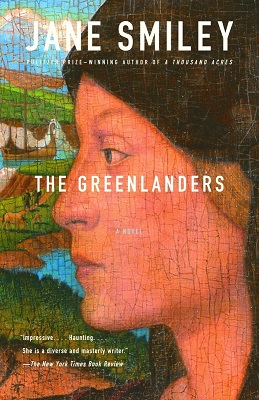
The Greenlanders, Jane Smiley (1988, USA). I’ve no idea why I decided to read this. I must have seen an approving mention of it somewhere, because it’s not the sort of fiction that usually crosses my path or appeals to me. It is pretty much straight-up historical fiction about a community in Greenland during the early decades of the second millennium. And it’s written in a style appropriate to the material. Which means it is has a sort of saga-like approach to its story. While this gives the prose verisimilitude, it does mean that no sooner have you begun sympathising with a character then they are killed off. And then characters mentioned in passing several chapters earlier appear and occupy centre-stage in the narrative. It’s not like it’s even focused on a particular family, even over several generations, which would limit its cast and make it more manageable. It is actually a about a community, spread across several steads, into which people from other steads, often distant, are married or adopted. It gives the narrative a meandering character, which certainly suggests the annals of a mediaeval Greenlandic community, but makes for a difficult read for those expecting a story. I can’t vouch for the verisimilitude or historical accuracy, although it seemed very like what it would have been like to me based on what little I know. It’s an excellent novel but it is, to be honest, a bit of a slog, and it’s hard to feel any real empathy with any of the characters given they don’t stay around very long. Worth reading, but with caveats.
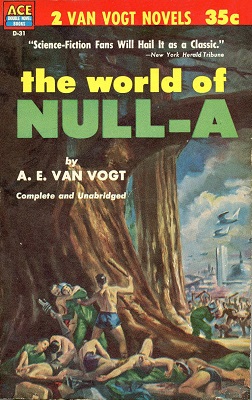
The World of Null-A, AE van Vogt (1948, UK). This was a reread, although I forget when I originally read it, probably in the late 1970s or early 1980s. I’d always wanted to finish the trilogy – of which this is the first book – and last year stumbled across copies of The World of Null-A and The Players of Null-A at Fantasticon in Copenhagen and bought them (they were very very cheap, very very very cheap). I have all three books – in the nice NEL editions from the 1970s – and have had them for many years, but they’re in storage at present. Having found cheap copies of the first two, I thought it worth giving them a go. That was a mistake. I mean, I know what van Vogt’s fiction is like. I have, after all, read enough of it. Admittedly, that was back in the late 1970s and early 1980s, when I was a teenager. But every book I’ve read by him since I turned, say, thirty, has been awful – except perhaps rereads of the handful of his books I continue to think are not absolutely awful, such as The Undercover Aliens. Gilbert Gosseyn is in the city to take part in the Games, in which thousands participate, all overseen by a giant computer brain. Players are given jobs depending on how far they reach in the Games. But it turns out Gosseyn’s life is a complete lie – someone has implanted memories in him that are simply not true. And given that on the night before the Games start all laws in the city are temporarily rescinded and people lock themselves away in groups for safety… but Gosseyn’s identity can’t be established so he’s forced out onto the streets, where he meets a young woman and the two look out for each other… But it turns out she’s the daughter of the president, and it’s all a plot as the president is trying to destroy the giant computer brain, because there’s some secret galactic empire that wants to invade the earth… And Gosseyn was more or less grown to order to foil the secret galactic empire’s plans because… he has two brains! Or is it minds? I forget. And all this is wrapped around some guff about non-Aristotelian, or “null-A”, logic, which seems to be basically non-binary logic, or fuzzy logic. But, of course, binary logic is for computers, not people, so it’s not entirely clear what van Vogt is going on about. But then, that’s true of a lot of Golden Age science fiction: it’s complete bollocks, written by people who had no idea what the fuck they were wittering on about, but it managed to impress the shit out of poorly-socialised thirteen year old boys. And from such was a genre born. The really scary part of all this is not that the writers actually believed the shit they were peddling, or even that some were quite cynical about it – hello Elron and that evil “religion” you invented! – but that many adult fans were just as impressionable as those thirteen year olds. Van Vogt famously based his writing on the advice given by a how to write book – and there’s another genre entirely dependent on gullibility – chief among which was that scenes should be 800 words long and end on a cliff-hanger. Van Vogt took this advice, well, literally. And reading his books is like watching a magician pull a series of increasingly unlikely series of creatures out of a hat when you actually turned up to see a drag queen lipsynch the hits of Rihanna. I connected with a few of van Vogt’s novels as a young teenager, which mistakenly led me to believe he was an author whose oeuvre I should explore. And during the 1970s and 1980s, I bought and read his books. They were readily available in WH Smith during that period. But reading his books now, nearly forty years later… I’m slightly embarrassed at having been taken in all those years ago. He was an appalling writer, and the level of his success is mystifying. That people continue to champion him tells you more about them than, well, you really want to know. He’s a lot like Asimov in that respect. Although, to my knowledge, he was not a serial sexual harasser; but who knows… there were a lot of really fucking horrible people, fans and pros, in the first few decades of US science fiction – google the Breendoggle – and even now the recent death of an author popular since the 1980s has seen an outpouring of appreciation that conveniently forgets he was last “famous” for some sexist articles in the SFWA Bulletin that saw the entire organisation re-structured and its newsletter revamped. But that’s an argument for another day, and not one for a review of a van Vogt novel. The World of Null-A is typical van Vogt and really quite bad. This is not surprising. One for fans of van Vogt, I suspect. And if you’re a fan of van Vogt, I can only ask… why?
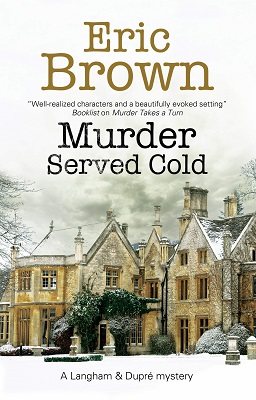
Murder Served Cold, Eric Brown (2018, UK). Crime fiction, bizarrely, is likely more technology-dependent than science fiction. The mobile phone has, for example, pretty much killed half of the standard crime novel plots… And who needs private detectives when you have the internet? Which makes it more difficult to come up with interesting stories for current-day crime or mystery novels. So some writers have chosen to write historical mysteries, and so bypass the issue. Such as these by Eric Brown, the Langham and Duprée series, which are set during the 1950s. As a conceit, it works fine, and Brown handles the period extremely well. But… Well, it does seem all a bit cosily familiar. I mean, it’s not “chocolate-box England” by any stretch of the imagination, but it’s certainly a time and place that has been extensively colonised –  particularly by those who were present during that time and place – although not always with fictions that gave any real indication of what the period was actually like. The advantage of a series such as  Brown’s is that it offers twenty-first century commentary on 1950’s sensibilities, and it’s to this series’s credit that it judges the mix to a nicety. This book, the sixth of the series, sees the protagonists investigating the theft of an expensive painting at a country house, which then leads to murder. The crimes are solved relatively easily, but what makes Murder Served Cold (the titles are a joke that has overrun its course) more interesting than others of its type is that it comments intelligently on social mores of the time. It’s the secondary characters who carry the meat of the story, and that strikes me as something a lot of crime writers with flagship characters seem to forget. Brown uses his story to discuss a variety of topics that were around in the 1950 but still reflect on twenty-first century society. It’s a clever trick, and it works well – although I suspect not all readers will recognise what’s going on. The protagonists’ politics, for example, is diametrically opposed to that of their client, and while relations remain amicable there is political commentary in there. It’s nice to see a 1950s-set novel with a 21st century spin. I mean, there were lots of excellent novels written and published in the 1950s, but there are a lot of 21st century novels set in the 1950s which do little to engage with the mores and politics of that time. I hope this series continues.

Mission Critical, Jonathan Strahan, ed. (2019, UK). Strahan is something of an anthology engine. For the past decade and more, he has been churning them out with impressive frequency. When people look back on the first two decades of the twenty-first century, their view of science fiction may well be defined by Strahan’s anthologies. Certainly a similar process has taken place in previous decades with other editors. In the main, Strahan’s editorial work has been excellent – and that includes the collections he has edited for authors. Strahan edited the New Space Opera series of anthologies, which did much to define a subgenre that had been bent out of shape several times since its origin. In Mission Critical, Strahan attempts to tackle hard sf and the anthology’s strapline is “from our world, across the Solar System, and out into deep space to tell the stories of people who had to do the impossible”… but the contents don’t actually match this. There are some big names in the book, and it’s hard not to suspect their stories were accepted because of their names even though they weren’t quite on topic. True, names sell anthologies, but themes are a waste of time if they’re ignored because a BNA wrote a story that didn’t fit. I don’t know this, obviously. It’s just that some of the stories feel like they’re stretching the brief beyond breaking point. As it is, Mission Critical proves sadly forgettable. I can’t actually remember any of the stories in the anthology, and that’s a month after I read it. I look at the table of contents, and if I  remember the story it’s because it’s linked to a universe the author has used in other fiction – Carolyn Ives Gilman’s story, for example, reads like an offcut from her novel Dark Orbit, and while I’m a huge fan of her fiction this didn’t feel like a new and exciting entry in the universe. The way Mission Critical has been promoted, I was expecting near-future hard sf – and there’s Allen Steele, who writes exactly that, there on the TOC, even though I think he’s pretty poor – but then you have a Xuya story from Aliette de Bodard, and she’s good but how in fuck does a Xuya story qualify as “near-future hard sf?” So, a mixed bag… that comprehensively fails its brief and likely succeeds best the further (de Bodard) from its brief (Steele) it is. Anthologies these days are a waste of space. They’ll only work if they’re cheap enough to be offered as tasters. Shelling out the same amount as you would for a novel for a dozen short stories of variable quality and even more variable appeal is a mug’s game.
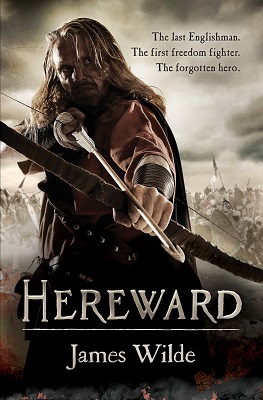
Hereward, James Wilde (2011, UK). Hereward the Wake is an English hero, so it’s somewhat surprising he’s not been dragged out of obscurity in these days of Brexit. Oh wait, he was fighting against the King of England. But no! The king was a foreign invader, William the Bastard of Normandy! Perfect material, you’d have thought. Unless it might offend the Queen, she is after all nominally descended from William the Conqueror. Or maybe it’s the institution, the British Throne, that should never be attacked. I don’t know. Brexiteers are just plain stupid, so who knows what goes through those defunct cells in their skulls. Hereward opens with its eponymous hero on the run after being accused by his father of the murder of his wife. It’s all to do with the successor to Edward the Confessor, who had no heirs. Hereward overheard something which jeopardised plans to put Harold, Duke of Wessex, on the throne after Edward. Hereward escapes to the Continent and spends many years as mercenary working for Flemish noblemen. But William the Bastard’s invasion pulls him back home – William’s sobriquet might refer to his birth, but is apparently an accurate representation of his character – where Hereward becomes something of a guerrilla, harrying the Norman occupiers. It’s an interesting period of history – only a thousand years ago! – with some fascinating historical characters, and Wilde handles his… information well. But the book is written in that commercial prose style that relies heavily on cliché and stock phraseology, and it turns what could have been an interesting commentary on English identity into an historical potboiler. True, that’s slamming the book for not being what it had no intention of being, although for me it would have made it a better read. Wilde’s research is spot-on, and evokes the period well, but for me the prose was just too commercial. Disappointing.

Paris Echo, Sebastian Faulks (2018, UK). I read Birdsong twenty years ago – I forget why I decided to do so – and I’ve sort of followed Faulks’s career ever since, possibly because his books were available in the subscription library I joined on my move to Abu Dhabi in 1994 and his name was familiar from Birdsong. None of his novels have matched that one, and in fact many have been disappointing in one way or another. But, as British middle-brow literary fiction authors go, he’s at least better than Ian McEwan. Paris Echo is middling Faulks. It presents an interesting slice of history – Paris under the Nazis – and comments on collaboration and its impact on people and families of the time. Unfortunately, it doesn’t offer much in the way of plot as a substrate for this discussion, and in fact seems more concerned with the intersection of the lives of two immigrants in Paris, a female American academic and a teenage Moroccan who has had himself smuggled into the country, than the actual story the characters are intended to be springboards for. But the Maghrebi teenager’s experiences  are all very anodyne, and the US academic is a bit of a blank slate, and the two narratives run along side each other but do not influence each other to any degree which sort of renders it all a bit moot. There’s some good historical stuff in here, but there’s sadly little in the way of plot and the two protagonists are somewhat thin. Faulks has written some good stuff during his career, but this is not one of them.
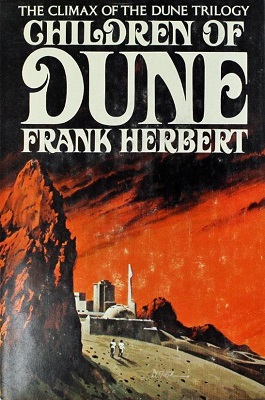
Children of Dune, Frank Herbert (1976, USA). The reread of the Dune series continues, and now that I’ve finished the Children of Dune I have the somewhat daunting prospect of God Emperor of Dune next on the list. To be fair, I remember enjoying that book on previous reads. But it is big. Children of Dune, however… follows on directly from Dune Messiah, but the two children born at the end of that book, Leto and Ghanima, are now nine years old. Herbert conceived all three books as one since he was interested in exploring how a messiah figure might bend a society out of shape and what might happen after the fall of said messiah. Despite claims to the contrary, I suspect the first book was conceived alone and the story arc of the trilogy imposed later. But certainly, Dune Messiah and Children of Dune follow a story arc that proceeds naturally from the end of Dune. Paul Atreides’s children are both the future of Paul’s empire – and the enemy of its current regent, Alia – and so a threat to all those who would wrest power from the Atreides. But Leto and Ghanima have their own plan for the future, the Golden Path, based in part on their vision of possible futures and what they think is best for humanity… It’s been interesting during this reread seeing what I find in the novel when compared to my memories of earlier reads. Leto’s transformation, which ends the book and sets up God Emperor of Dune, obviously. Plus Alia’s take-over – Abomination! – by the Baron Harkonnen. But in Dune Messiah, Paul Atreides, now the Preacher, had come across as something of a cipher, but here he is much better characterised. Unfortunately, the rest of the cast are not so well-drawn. There’s lots of politicking going on, as one of the old emperor’s daughters arranges for the assassination of Leto and Ghanima so her son can take the throne. But the twins have foreseen it all and… well, one of things that does annoy about Children of Dune is that the two protagonists are nine years old but behave like adults (and not just in dialogue, since Leto experiences “an adult beefswelling in his loins” at one point, which is totally WTF but also, are there cows on Arrakis?). True, the twins are “Pre-born” so they have genetic memories going back generations – although it’s not really clear how they manage to stay sane, despite frequent attempts in the text to explain it. Herbert’s views on government are also extremely annoying – at one point, Leto states that good government “does not depend upon law or precedent, but upon the personal qualities of whoever governs” – it’s even repeated as part of a chapter heading  – which is complete bullshit; but exactly the sort of meretricious bullshit that science fiction fans and creators seem to believe, and have done since the genre’s beginnings. But then space opera is a right-wing mode of fiction, and even its left-leaning creators write the same tired old right-wing crap – which makes them little different to actual right-wing writers. Herbert was no Heinlein or Pournelle, of course, but he was American, so even if he was left-wing his politics would still be to the right of mine. Certainly, the whole Dune series is all about an authoritarian empire, with a rich and powerful nobility lording it over serfs, who have no freedom of movement (something Brits will shortly lose, and you have to wonder how many actually know what that means) – and if Herbert’s empire is not actually fascist, it does love its giant architecture, as both the Imperial Keep and Temple are apparently single buildings the size of small towns (they were built remarkably quickly, given their size). In fact, in Children of Dune, the furniture somewhat overwhelms the story. Clearly Herbert wanted his trappings of imperial rule to impress but it’s like the fleet of a million battleships – it’s too much, it just generates questions – practical questions (how did they build them? where did they get the crews?) – all of which detract from the intended effect. But that’s a common failing of space opera. Children of Dune closes off the original trilogy, but it struck me on this reread that, although it’s a better put-together book than Dune, with better prose, Children of Dune‘s story detracts from the first book’s universe and story… Not, it has to be said, in an especially damaging way, since most people don’t even bother to read the sequels. Their loss, of course; and those who actually liked Dune, it makes you wonder why they even bother reading novels that start series… I’m undecided about Children of Dune, and the final shape of the trilogy, but I’m looking forward to reading God Emperor of Dune.

1001 Books You Must Read Before You Die count: 135

Leave a comment

Reading diary 2019, #12

Now that winter is here, I’ve been taking the bus into work. It’s great. There’s an app – everything is apps here – and you buy a ticket on it and show the ticket to the driver. They’ll be introducing a “blippar” to read the QR code on the app’s tickets soon, but it’s not been rolled out yet. The entire city is a single zone, by the way; and buses are frequent. The journey to and from work is about the same length as my commute back in Sheffield, but I’ve not yet got into the habit of reading on the bus. And since at work we eat out for lunch pretty much every day – most restaurants here run a “dagens lunch” menu, typically half a dozen dishes, or a specific dish each day of the week, changing weekly, for between 90 kr and 150 kr – so I don’t get much reading time then. Except when I take sandwiches into work. Which is about once a week.

Anyway, books… I set my Goodreads reading challenge at 140 books this year, the same figure as last year. In 2018, I managed slightly more than that; this year, I doubt I’ll hit 110 books read. Ah well.

Oh, and somehow I managed to read only female authors during November. All of the books below are by women writers as well.

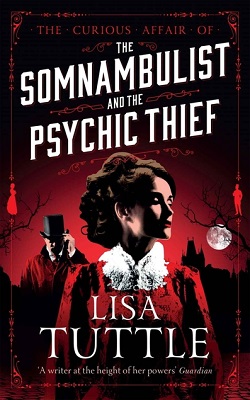
The Somnambulist & the Psychic Thief, Lisa Tuttle (2016, UK). I’ve been a fan of Tuttle’s fiction for many years – her collection, A Spaceship Built of Stone, is especially good – but, to be honest, this book, the first in the Jesperson and Lane series, about a pair of late Victorian/Early Edwardian paranormal investigators, did initially smell like an attempt at something explicitly commercial. No bad thing, of course; every writer wants to be successful, and it’s even harder these days than, say, twenty years ago. The Somnambulist & the Psychic Thief is very readable; and the characters are engaging, and even amusing in a sort of Holmesian-pastiche sort of way… It’s also clear Tuttle had a great deal of fun writing it, which means it is also fun reading it. Lane is a debunker of spiritualists who falls out with the woman she assists and returns to London, only to stumble across an advert for a detective’s assistant by Sherlock-Holmes-wannabe Jesperson. Except he isn’t really a Sherlock-Holmes-wannabe, he’s more a character inspired by Holmes, who is real in the story’s world, which presents something of a dissonance. Jesperson’s and Lane’s first case involves the disappearance of several prominent spiritualists, and though the pair soon identify the perpetrator, they’re not sure of his methods or aims. The Somnambulist & the Psychic Thief was good on period detail, and the main characters were definitely engaging, but elements of it did feel occasionally secondhand. I bought this book when it was on offer; I’d do the same for the sequel.

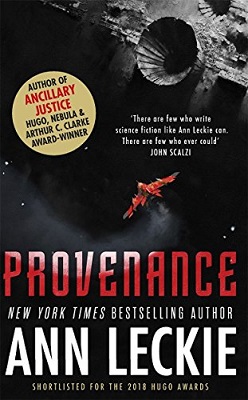
Provenance, Ann Leckie (2017, USA). I enjoyed Leckie’s Imperial Radch trilogy, although I thought they declined in quality and interest as the series progressed. The many comparisons of this pendant novel to Le Guin were strident enough to put me off reading it. I mean, I like Le Guin’s fiction, she’s one of the genre’s great writers, but I knew Leckie was not actually all that much like Le Guin and so the comparisons were likely disingenuous at best. But I was in Akademibokhandeln in Gränbystaden and it was a 3-for-2 offer and I only had two books so I grabbed Provenance to make up the three. In the event, Provenance proved to be nothing like I’d expected, and a lot better than I’d thought it would be. It’s set in the same universe as the Imperial Radch trilogy, although not on a world controlled by the Radch. A young woman from a culture in which politically powerful figures chose their successors from their children – either biological or adopted – attempts to win her mother’s favour, and discredit her brother, the favourite, by breaking a criminal out of “prison” – implied to be a no-holds-barred prison world – in order to make use of him. It’s all to do with “vestiges”, which are basically a cross between antiques and mementos, ie objects present at events of historical significance, possessing exactly what the title outlines. Of course, there’s more going on here than is apparent to the somewhat naive protagonist. And for all the book’s claims to non-violence, it ends with a military assault on a space station, a hostage situation, and a violent response. But hey, at least it’s not totally fascist. This is not Le Guin, make no mistake about that. But it’s a nicely-drawn space opera, set in an interesting universe, which sadly still fails to avoid many of space opera’s failings. I enjoyed it, perhaps even more so than the two sequels to Ancillary Justice. I’m not sure where we go from here. Leckie has already moved onto fantasy – The Raven Tower – and the endless marketing of debuts means no writer has the chance to develop a universe as they once had. There will never be another Vorkosigan saga, there will never be another Wheel of Time. One of those does sound like progress, but I suspect we should rue the loss of both.

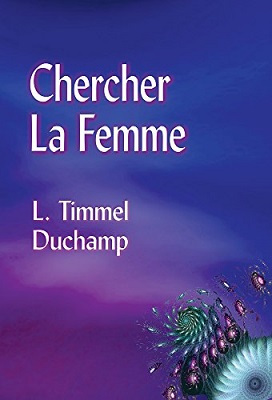
Chercher La Femme, L Timmel Duchamp (2018, USA). I buy Duchamp’s books as soon as they are published as I’ve been a fan for many years. She’s quite honest in pointing out that many of these novels took a number of years to see print – which, in less charitable eyes, would see them classified as “trunk novels”. Which is, when you consider it, an unfair label. For one thing, it assumes the writer has not reworked them, given what they’ve learnt since they were first published. It’s also too easy a label to throw the label at a book by a writer that doesn’t fit the reader’s preconceptions. Anyway, Duchamp describes the history of her novel in an afterword, and it began life many years ago but sat in a drawer for many years. This probably explains the slightly old-fashioned feel to Duchamp’s world-building, which makes for a slightly off-centre reading experience. True, that off-centre perspective is one of the appeals of Duchamp’s writing. It’s… hard to explain. Chercher la Femme – not the best title ever – is a first contact novel. But it’s more about the preconceptions and society of the contactors than it is the contactees. In fact, the latter are complete mysteries, almost ciphers in fact. They occupy a place in the narrative, but they’re more signifiers than an actual worked-out alien race. And it’s what they signify that forms the main premise of the novel. The Pax is a pan-national semi-utopian socialist polity, which has been contacted by a bird-like alien race, who have gifted them three FTL spaceships. One of these spaceships is sent to the eponymous world – and I can’t decide if naming the planet Chercher la Femme is  extremely clumsy or quite clever – only for the mission to fail and its crew join the population of the planet and refuse to be contacted. The novel is told from the POV of the “leader” of the follow-up mission. The inhabitants of Chercher la Femme are near-magical, and more or less reflect the crew members’ preconceptions back on themselves. Which makes for a difficult first contact. I’m not convinced it all hangs together. The characterisation is excellent, and some of the world-building is really good… but the aliens don’t feel like they have an actual real existence, which is probably the point, but which makes the whole thing either too reminiscent of Lem’s Solaris or too circular for whatever point Duchamp is try to make to stick. Chercher la Femme is probably the most disappointing novel I’ve read by Duchamp, but I’ll continue to buy and read her books because when she’s good she’s really good.

The Stone Gods, Jeanette Winterson (2007, UK). There’s a reverse snobbery thing you sometimes find in science fiction in which sf commentators sneer at non-sf authors, so-called “literary fiction” authors, who write sf and sort of get it wrong. I’m not one of them (well, not unless they sneer at science fiction first). Literary authors writing science fiction, whether they acknowledge it or not, has resulted in some excellent science fiction and fiction. Unfortunately, it has also resulted in books some writers would probably sooner didn’t appear on their bibliographies. I mean, Jeanette Winterson is a highly-regarded author in the UK and has written some excellent novels, but The Stone Gods reads like it was written by someone who thinks all literary sf should resemble David Mitchell’s highly successful Cloud Atlas. While the prose is actually really good, everything in the story feels secondhand and, well, used, and you have to wonder what point Winterson thought she was trying to prove. I mean, the novel opens with the sort of misogyny that might not have looked out of place in a 1940s sf novel but would certainly have raised eyebrows in a 2000 one. And then the narrative drops back to the 1700s and Easter Island, and takes as real the myth the islanders caused the islands’ ecological collapse. The idea of using science fiction as one of several narratives to illuminate a point is, in principle, almost impossible to abuse, although perhaps not entirely. Mitchell at least has a history in sf – he was a member of the BSFA for many years – but even so his novels still feel somewhat jejeune on a science-fictional level. Which is somewhat ironic, given that science fiction is itself a largely juvenile genre. But Winterson, an otherwise excellent writer, does not compare well with Mitchell with this book, and I don’t simply mean reading The Stone Gods as sf. In other respects, too. It’s clumsy. It fumbles its deployment of its sf tropes. It seems to imagine sf exists in opposition to an historical narrative. Which is not true. And never has been. Everything a literary author could do wrong when when writing sf-as-literary-fiction it sort of does wrong. And yes, I know “wrong” is not the right word, but you know what I mean. It fumbles everything. It’s almost the dictionary definition of a book by a lit author that sf snobs sneer at. Which unfortunately means it is neither good sf nor good literary fiction. Avoidable.

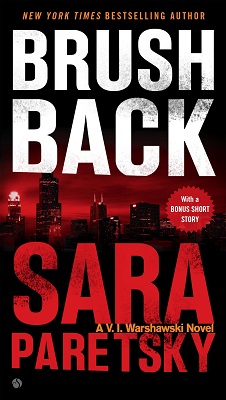
Fallout, Sara Paretsky (2017, USA). I’ve been a fan of Paretsky’s fiction for longer than I care to remember. She’s one of those authors whose books I buy as soon as they’re published. Sort of. She’s never been for me a collectable author, so I’ve never bought her books in hardback, but I’ll happily pick up a paperback copy, or even borrow one, or, more recently, buy the ebook, should it be on promotion. Fallout is something of a departure from the typical formula – for a start, much of it takes places outside Chicago. VI Warshawski is hired to investigate the disappearance of a  young black film-maker, which leads her out into deepest darkest Kansas – incidentally, Paretsky’s own home ground – and various shenanigans from decades before, involving lesbians, a nuclear missile silo, corruption among university faculty, and a government-sponsored research programme that went slightly wrong. It’s all good solid Warshawski material, given an added boost because it’s not about Chicago or that city’s endemic corruption. I cannot recommend this series enough. The first half dozen or so can be read in any order, but I think the last dozen or so books probably need to be read after reading that first six. If so, you have a treat ahead of you. Paretsky is one of the best crime writers currently being published. These are excellent books. Read them.

The Sudden Appearance of Hope, Claire North (2016, UK). North’s The First Fifteen Lives of Harry August was subject to quite a bit of online buzz. So I read it, and enjoyed it. And North’s second book too, Touch, I read that and enjoyed it. But North’s star seemed to wane a little and I sort of stopped reading her books. But then The Sudden Appearance of Hope popped up on promotion on Kindle, so I decided to give it a go. And I’m glad I did. It helped that the novel opened in Dubai, and actually managed to present the emirate in a way that resembled the real place. Which is more than can be said of most books featuring Dubai. Hope is a young woman cursed with the ability – left unexplained, and not entirely scientifically credible – which means people forget her completely minutes after she has stopped interacting with them. This makes life extremely difficult for her, but she has become a thief, and a very good one. She flits around the world, hanging out with the rich and famous. And robbing them. Which is why it all starts to go slightly wrong when in Dubai she robs someone at a party for an app called Perfection, which rewards people for doing things which “improve” them. This promptly drags Hope into a campaign to destroy Perfection, which is pretty much a pure distillation of late-stage capitalism, and… Like the two earlier books by North I read, The Sudden Appearance of Hope doesn’t seem quite know what it’s about. It’s had a great premise – two great premises, in fact. And they do neatly slot together. And provide opportunity for plenty of pithy commentary. But North can’t seem to decide where her focus lies. I’ve seen complaints the prose is “too literary”, but I actually liked that about the book – ie, it tried for something that wasn’t your bog-standard beige commercial prose. And although the novel wore its research lightly, it was clear North had done her homework. I put down The Sudden Appearance of Hope after I’d finished and decided I really should seek out her other novels.

1001 Books you Must Read Before You Die count: 135

2 Comments

100 books, part 4

The 1990s had seen me expand my reading from purely genre fiction and read more widely within science fiction and fantasy. The former was chiefly from necessity – the only library I had access to possessed a limited genre collection. The latter was due to the members of the APA I was in discussing books that sounded like they were worth reading. The APA packed in shortly after the turn of the millennium, killed by the internet.

And the internet, ironically, made it much easier to purchase the books I wanted to read. No more poring through Andromeda’s monthly mailing catalogue to find interesting new books to buy. Now there was a certain humungous online retailer of books, and eBay for the out-of-print books. (This was not necessarily a good thing.) During the 1990s, I had bought books I wanted to own and read, but after my return to the UK in 2002 I started collecting them. Buying first edition copies, preferably signed, by my favourite authors. I returned to the UK with 45 boxes filled with books, of which around 80% were paperbacks. Over the next ten years, I would end up with five bookcases, double-stacked, of hardback books.

Which brings us to…

The 2000s

The Forever War, Joe Haldeman (1974). I’m not a fan of this book, or of Haldeman’s work in general, but this novel makes my list because it was the first book published in the SF Masterworks series. And the first book that really turned me into a collector of books. Originally, the SF Masterworks were numbered – although they managed to screw up the numbering… twice – and ran for ten years from 1999 to 2009, ending after 73 books. Naturally, I wanted them all. The series was relaunched in 2010 in a new yellow cover design, this time unnumbered, and with a much expanded list. I have all of the numbered versions – there was a rival Fantasy Masterwork series of 50 books, which I also collected – but have only dipped into the unnumbered series, some of which appeared in the original series anyway.

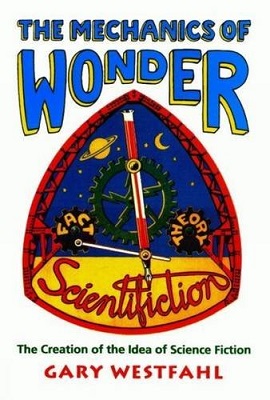
The Mechanics of Wonder, Gary Westfahl (1998). While I had read plenty of science fiction, I had read almost nothing about it. The previously mentioned APA often had discussions about the nature of the genre – there are as many theories of what it is as there are sf critics – which were formative in developing my own theories of science fiction, and where I often tried those theories out on my fellow APA members. The Mechanics of Wonder had a mixed response on publication, but I remember it being one of the first popular critical works on science fiction (rather than academic, that is; or collections of book reviews) I bought and read. I agree with Westfahl that the genre of science fiction as we now understand it was created in 1926 with the publication of the first issue of Amazing Stories… but I’ve pretty much forgotten what else Westfahl had to say in the book.

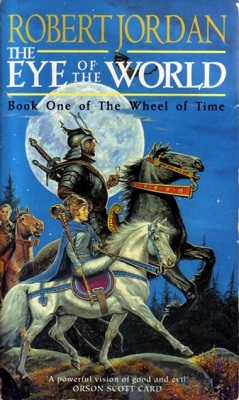
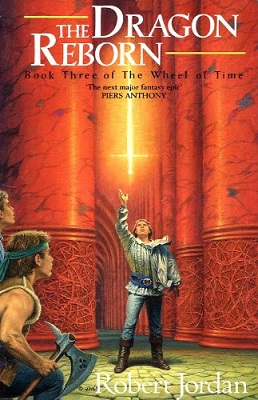
The Eye of the World, Robert Jordan (1990). Back in 2001, I bought the first six or so books of Jordan’s Wheel of Time series from a new bookshop in Abu Dhabi. I wanted to understand why they were so popular. I never did find out. It was the first instance I remember of reading a book (and its sequels) specifically to understand how they worked. They’re badly-written, bloated, and haphazardly plotted. The world-building is a hodge-podge of elements borrowed from other works, although it does seem to develop a character all its own as the series progresses. But it’s a mystery to me how the Wheel of Time ever became a best-seller. For some reason I have yet to work out, this year I decided to reread them all (to be fair, I’d never managed previously to make it to the final few volumes). Amusingly, people who had recommended the books twenty years ago now told me the books were rubbish. I knew that already.

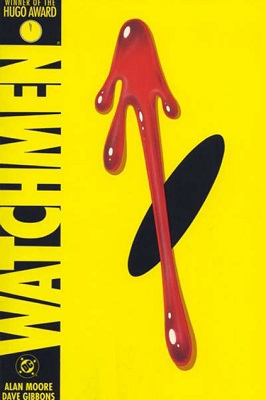
Watchmen, Alan Moore & Dave Gibbons (1987). British comics tradition, unlike that of the US or France, has always been anthology-based – ie, each issue contains multiple strips, which may be standalone or part of a story spread across multiple issues. As a kid, I’d moved on from Beano and Dandy to war comics such as Warlord and Victory, which were popular then. Then 2000AD appeared, and that was the comic for me (plus Starlord and Tornado, which 2000AD later subsumed). I was never a big fan of US superhero comics, but growing up in the Middle East they were all that was available. The only superhero titles I remember reading from that time were The X-Men and Guardians of the Galaxy, but I undoubtedly read others. I forget where I heard about Watchmen, and, to be honest, until I came to write this post I had thought I’d read it much early than after the millennium… but apparently not. It wasn’t just the main narrative that impressed me, but also that Moore had buttressed it with other narratives: some comic strips, some prose. Watchmen made me look afresh at superhero comics, particularly those published as “graphic novels”. My renewed appreciation of superhero comics did not last long – I gave up on them a second time a few years later. Oh, and for the record, the film adaptation of Watchmen has its flaws, but its ending is superior to the comic’s.

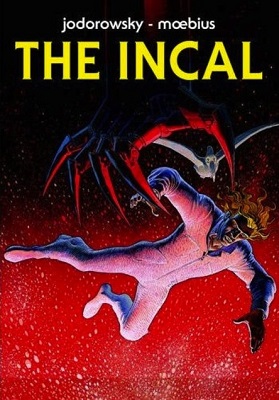
The Incal, Alejandro Jodorowsky & Moebius (1980).
Valérian and Laureline 4: Welcome to Alflolol, Pierre Christin & Jean-Claude Mézières (1972). One of the reasons I turned my back on superhero comics was the new easy availability of French/Belgian bandes dessinées – initially English-language translations published only in the US, but also original French copies, sold on eBay; but then from publisher Cinebooks, who introduced a number of popular and long-running bandes dessinées series to the UK market. Some of these were not new to me. During the 1980s, when flying out to the Middle East for the holidays we would transit through Schiphol Airport, and there I would often buy copies of Heavy Metal, 1984 and Epic magazines. In Abu Dhabi in the 1990s, I stumbled across a few volumes of Valérian and Laureline, as well as individual volumes of the Adventures of Blake and Mortimer, and Yoko Tsuno, all published as one-offs some time in the 1980s. But I didn’t start reading Valérian and Laureline (and Blake and Mortimer) in earnest until Cinebook began publishing them in the mid-2000s. Moebius, of course, I knew from Heavy Metal. Jodorowsky I discovered through his films, probably after hearing of his attempt at adapting Dune, and then learning he had written a highly-regard science fiction bande dessinée. Unlike superhero comics, I still read bandes dessinées, and there are a number of series I follow.

The Levant Trilogy, Olivia Manning (1977 – 1980). I think I set out to read this book, and its prequel, The Balkan Trilogy, specifically because Manning was in Egypt during World War 2 at the same time as Lawrence Durrell, and both were part of a community of British writers in North Africa. Which is partly where Durrell’s The Alexandria Quartet came from. But I loved both of Manning’s trilogies, and hunted round for more of her fiction. Her books also kindled an interest in British postwar fiction by women writers, and I sought out female authors who had been active between the 1930s and 1960s. It proved to be a larger project than I’d anticipated, and many of the books were long out of print, but I did find some interesting works by the likes of Storm Jameson, Pamela Frankau, Elizabeth Taylor (not the actress) and Susan Ertz, Taylor especially becoming a favourite writer.

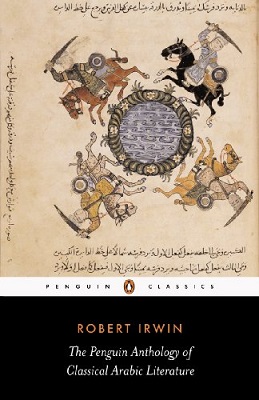
The Penguin Anthology of Classical Arabic Literature, Robert Irwin (1999). I remember reading this in a hotel in Altrincham. I was in the city for a two-day training course. Despite growing up in the Middle East, I knew very little about early Arab history and culture – although I did know the history of the countries in which I’d lived, Qatar, Oman and the UAE, and to some extent, Saudi Arabia. But I knew nothing about the Abbasids and the Ummayads and so on. The Penguin Anthology of Classical Arabic Literature, originally published as Night and Horses and the Desert, proved fascinating stuff, and triggered an interest in mediaeval Arabic literature.

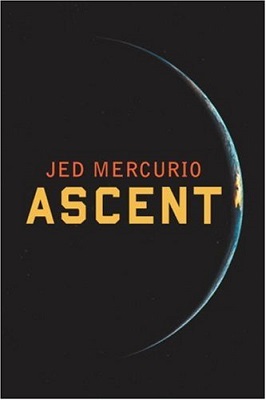
Ascent, Jed Mercurio (2007). My father had seen a review of Ascent in a newspaper and mentioned the book in passing. I found a review in another paper and, yes, it seemed very much a book I wanted to read. But then I promptly forgot about it… until a visit to Waterstone’s some months later where I saw piles of Ascent on one of the tables just inside the doors. I bought it, I read it, and I fell in love with the detail-oriented prose. I wanted to write like that. And Ascent did indeed become a touchstone work when I was writing the Apollo Quartet. It’s hard to overstate how much it inspired my writing of those books. I’ve kept an eye open for works by Mercurio ever since, although these days he’s better known for his TV work than his novels. I can certainly recommend An American Adulterer, but Bodies was a bit too gruesome for me (and I’m unlikely to ever watch the TV series). I’m eagerly awaiting more fiction from Mercurio, but meanwhile we have his Line of Duty TV series, which has proven to be one of the best thriller series on British television in recent years.

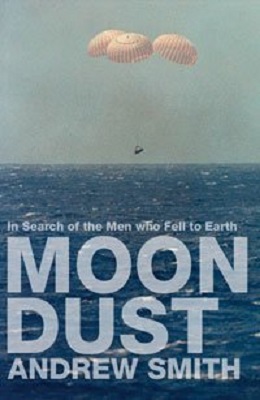
Moondust, Andrew Smith (2005). I don’t actually remember the Moon landings – I was only six when Apollo 17 landed in the Taurus-Littrow valley. I do, however, recall watching on television the ASTP orbital rendezvous in 1975. I forget why I read Moondust, possibly a copy I found in a charity shop. I’d bought a couple of the Apogee mission reports several years before after finding them in an Abu Dhabi bookshop, and was fascinated by the engineering involved in the Moon landings. But Moondust deepened my interest – so much so I started hunting for astronaut autobiographies and other books about the US space programme. I call these “enthusiasms”, an interest that takes you over so much you build up an extensive library on the subject. I even went so far as to start up a website, A Space About Books About Space, where I reviewed the books on the topic I read. Sadly, the site has been moribund since 2013. I really should start contributing to it again, but all my books are now in storage. The books I bought, incidentally, proved extremely useful when writing the Apollo Quartet.

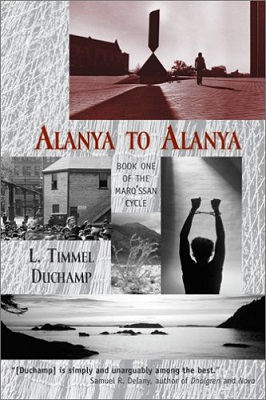
Alanya to Alanya, L Timmel Duchamp (2005). I became aware of Duchamp’s Aqueduct Press, an explicitly feminist genre small press based in the US, when it published Gwyneth Jones’s Life. I think the first three books of Duchamp’s Marq’ssan Cycle were on sale, and they sounded interesting, so I ordered them. I read the first book and thought it was good. But it wasn’t until I had all five books that I read the rest – in fact, I reread Alanya to Alanya and then worked my way through the sequels. It is among the best first contact science fiction ever published. Elizabeth Weatherall is one of the genre’s great characters. The Marq’ssan Cycle made me a fan of Duchamp’s writing as well as her Aqueduct Press, and now I now buy her books as soon as they are published. Her work has also impacted how I read other science fiction works, due to its explicitly feminist approach, particularly those by female sf authors of the 1940s to the 1980s.

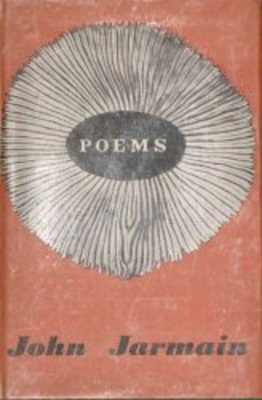
Poems, John Jarmain (1945). At one point in the decade, I frequented the Interzone forum online, and somehow or other found myself spending most of my time in its poetry forum. I’d been a fan of Wilfred Owen and his poetry since the early 1990s, had read several biographies of him, and could even quote two or three poems from memory. I had also explored other poetry of the Great War. The Durrell connection to Olivia Manning had led to an exploration of the Salamander and Personal Landscape groups of writers and poets based in North Africa during World War II. Which included John Jarmain. I tracked down a copy of his poetry collection, and even his sole novel, Priddy Barrows. He was killed in France in 1944. Neither of his books made it past their first printing – and copies of Priddy Barrows now go for around £200 – and he was mostly forgotten, until the publication of a book about him in 2012. Jarmain – and the Interzone forum – kicked off an interest in poetry, particularly that of the 1930s and 1940s, and I bought several anthologies published during that period – one even included a review slip – and discovered several poets who became favourites, such as Bernard Spencer and Terence Tiller.

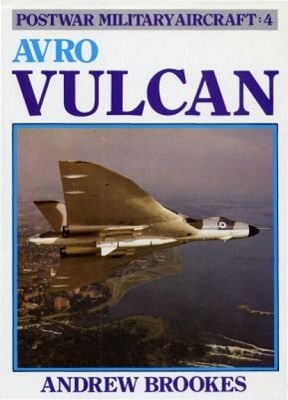
Postwar Military Aircraft 4: Avro Vulcan, Andrew Brookes (1985). I forget what triggered it – perhaps it was a rewatch of the film Strategic Air Command, starring Jimmy Stewart – but in the late 2000s, I decided I wanted to read about jet bombers, especially Cold War ones; and this became another “enthusiasm”. Postwar Military Aircraft 4: Avro Vulcan was the first book on the subject I read (and I eventually picked up copies of all seven books in the series). I remembered the Avro Vulcan from my childhood and teen years, and I’d always thought it a fascinating aircraft. Over several years, I bought lots of books on various fighters and bombers from US, USSR and UK. Although not as long-lived an enthusiasm as my space one – and I never did really get to use Cold War supersonic bombers in my fiction writing, despite the joke coining of a new subgenre, jetpunk – I still ended up buying far too many books on the topic. A lot of them I had to get rid of when I moved.

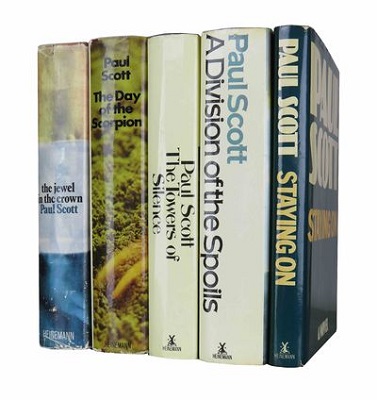
The Raj Quartet, Paul Scott (1966 – 1975). Like pretty much every Brit of my age, I had seen The Jewel in the Crown television series back in the early 1980s, and was aware it was an adaptation of a series of books. I stumbled across paperback copies one day in a charity shop – 69p each, buy one get one free; so I got the full quartet for the princely sum of £1.38. As soon as I started reading the books, I loved them. Scott’s control of voice was amazing, and Barbara Batchelor is one of British Postwar fiction’s greatest characters. As someone who had grown up in the Middle East, the books spoke to me in other ways as well. I immediately started collecting Scott’s books, and even tracked down copies of his earlier works, most of which are long out of print.

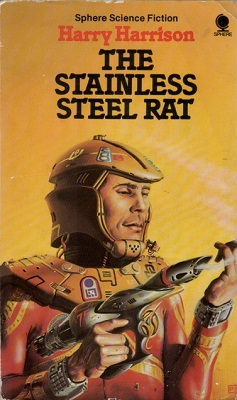
The Stainless Steel Rat, Harry Harrison (1961). I first read this back in the early 1980s. I suspect I bought the book in the school bookshop mentioned in an earlier post. But in 2009, I set myself a reading challenge: to reread science fiction novels I’d loved as a teenager. And I had loved The Stainless Steel Rat – and, in fact, had bought and read the series throughout the 1980s – but, oh dear, the reread did not go well. I absolutely hated the book. It was piss-poor science fiction – you could have moved the plot to the 1960s, with only superficial changes needed – and the treatment of the villain, Angelina, was hugely offensive. I purged my bookshelves of all my Harry Harrison novels. Just because you loved a book as a teen, that does not make it a good book or worth recommending to other people. Reread the book. If you still like and admire it, fair enough. You probably won’t, though. They say the Golden Age of science fiction is thirteen, but my reread of The Stainless Steel Rat, and some of the other books in that same reading challenge, brought that aphorism rudely home.

First Man: The Life of Neil A Armstrong, James R Hansen (2005)
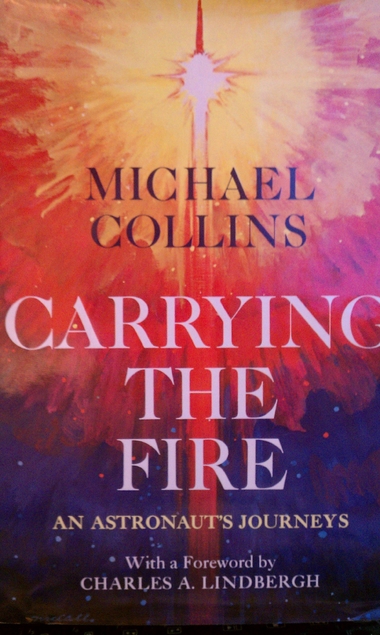
Carrying the Fire, Michael Collins (1974)
Return to Earth, Buzz Aldrin (1973). This year is the fiftieth anniversary of the Apollo 11 Moon landings, but back in 2009, as part of the fortieth anniversary celebrations, I decided to read the autobiographies – biography in Armstrong’s case – of the three Apollo 11 astronauts and review them on my A Space About Books About Space blog. Which I did. But I also wanted to write an alternate history story about the Apollo programme as part of my blog’s celebration. Unfortunately, I got stuck about 500 words in, and failed to finish it in time for the anniversary. Several months later, the writing group I was in put on a flash fiction competition and it occurred to me my alternate Apollo might work better as flash fiction. It did. I banged out an additional 500 words, titled the story ‘The Old Man of the Sea of Dreams’, and published it on A Space About Books About Space here. I had enjoyed the process of researching and writing the story so much I wanted to try something similar at a longer length… and that’s where Adrift on the Sea of Rains, and the Apollo Quartet, came from. I would subsequently read many more books on space exploration over the next few years as research for my writing.


Leave a comment

Reading diary 2019, #11

Winter has definitely arrived and we’ve already had several days of snow. I’m a good deal further north than I used to be, although for much of the year so far that’s not really been apparent – it was hot during the summer, when it wasn’t wet and windy. But there’s definitely less daylight up here now that summer and autumn are over. After fifteen years in the UK, it’s nice to live somewhere that has clearly demarked seasons.

Greeks Bearing Gifts, Philip Kerr (2018, UK). I’ve been a fan of the Bernie Gunther series for many years – and indeed of most of Kerr’s fiction (although, to be honest, a few of his thrillers are complete potboilers). Greeks Bearing Gifts is the thirteenth Bernie Gunther book, and the one following it, Metropolis, is unfortunately the last, as Kerr died last year. (And yes, I do have them all in first edition hardback.) Gunther is working as a porter at a hospital in Munich when he’s recognised by a local cop and blackmailed into assisting with a shakedown of a local bigwig with Communist connections. It goes wrong but gets Gunther a job at a reputable insurance company as an investigator. Which is why he ends up in Athens, investigating a claim for a yacht owned by a German that sank while searching for sunken treasure. Except, of course, nothing is ever that simple in a Bernie Gunther novel: and not only are the circumstances surrounding the sinking dodgy, but so too is the treasure they’re hunting – it’s gold stolen from Jews, basically – but then the owner of the yacht is murdered, and Bernie is up to his neck in events resulting from wartime incidents which he himself experienced but which make him look like a war criminal when he’s actually not one. They’re cleverly done these books, they treat their subject seriously. Kerr does his research and backs it up, and they show – through the point of view of a slightly corrupted witness – the many atrocities the Nazis committed and which people are now all too happy to dismiss. It’s quite simple: anyone who defends the Nazis is a Nazi. They were evil scum, and as the years pass and we learn quite how evil they actually were, so sympathising with them becomes even less justifiable. Bernie Gunther is a sympathetic character, and he worked with many Nazis – including a number of well-known ones, as is thrown in his face at one point in this novel. But he was never a Nazi and never sympathised with their views. And Kerr has used him extensively to criticise Nazi thought and views. It’s just a shame the people most likely to promote Nazi views are too stupid to read Kerr’s novel. Or indeed read books.

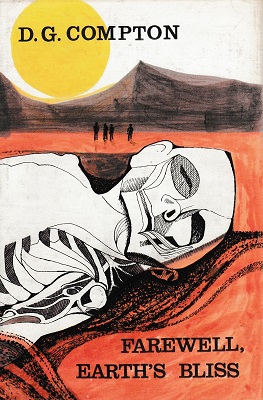
Farewell, Earth’s Bliss, DG Compton (1966, UK). Mars has become a new Botany Bay, and convicts are transported there at regular intervals. Life is brutal on Mars – although not as brutal as it would have been had Compton’s Mars been anything like the real Mars – as the latest group of transportees discover on arrival. I consider Compton one of the best science fiction writers the UK has produced. His prose is astonishingly good. But his best work was published in the 1970s and 1980s, and those books are very much of their time – to an extent, in fact, that it becomes part of their appeal. Farewell, Earth’s Bliss was Compton’s second sf novel – he had previously written crime fiction as Guy Compton, and continued for a few more years after his first sf novel. I’ve no idea why he decided to change genre. Perhaps he thought it would be easier to sell novels – although he doesn’t seem to have been discovered by the US until 1969, when his third sf novel, The Silent Multitude (see here), was published in the first Ace SF Special series. Anyway, Farewell, Earth’s Bliss owes much to Rex Gordon’s No Man Friday (see here), at least in terms of its depiction of the Red Planet. The characters are well-drawn but a deeply unpleasant bunch. And there’s a low level everyday racism – although one viewpoint character is black, and his narrative is handled sensitively – that does not sit well with modern readers. But, in common with other novels by Compton, it’s hard to see where the story is going. He was never one for plotting – perhaps that’s why he swapped from crime to science fiction, he couldn’t plot and could disguise that lack in sf – and Farewell, Earth’s Bliss is fairly typical in that regard. It reads like a series of character studies, something Compton did really well, although they work better when they’re in service to a barebones plot, which this novel lacks. It is a rare writer who impresses you with every book in their oeuvre, especially the early ones. Compton remains, to my mind, one of the best prose writers science fiction has produced, but that does not mean every book he wrote was amazingly good. (If you give a book five stars, what if you read one that’s even better? For fuck’s sake, give up with the juvenile “everything is awesome”, you’re not in the marketing department, you’re not being paid to make it easier for some multinational to rip you off.)

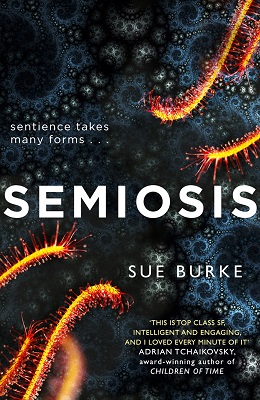
Semiosis, Sue Burke (2018, USA). This was shortlisted for the Arthur C Clarke Award, and while I often disagree with the jury’s choices, there’s at least some expectation of quality in the books they pick. I mean, this is a national award. For science fiction. They might define the genre a little oddly every now and again, but they at least recognise good fiction when they see it. Except, well, maybe not last year. That was a really shit short list. Happily, the best book did indeed win. This year was quite an odd shortlist – the final book of a trilogy, a book of sf art, a horror novel, a debut novel, a mainstream novel that’s really sf, and… this, Semiosis. Which is certainly science fiction. It is, in fact, a first contact novel, and it says so on the cover. But it’s also surprisingly old-fashioned. I was reading sf like this back in the 1990s. The fact it’s done well doesn’t make it any more twenty-first century. The novel is structured as the diaries of members of a colony that has settled an alien world – a private venture, with very fixed ideas on minimising the colony’s impact on the alien world. The personal accounts follow on one generation from the next, first outlining the accommodations the colonists have made to survive, then the perversion of those accommodations in order to preserve ideals that no longer are relevant. Then the colonists learn there are others on the planet, descendants of colonists from an alien world. Where Semiosis differs from other first contact novels is that the major intelligence the colonists discover is a plant. And it more or less programmes the humans according to its own needs, which happily also result in some degree of success for the humans. That is until the humans meet the descendants of the prior alien colonists. There’s no denying Semiosis is done well, but there’s nothing I can see in it that makes it stand out from other well-crafted science fiction novels that privilege science. And while that may be a rarity in this day and age, it should not on its own be enough to merit appearance on a major genre award shortlist. Semiosis was good but I don’t think it deserved to be a Clarke finalist.

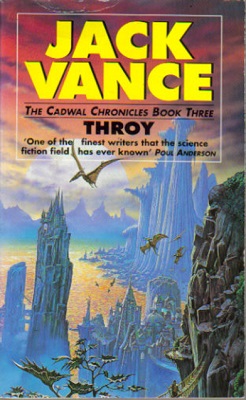
Throy, Jack Vance (1992, USA). So the Cadwal Chronicles comes to a close and it’s pretty much as expected, but this is Vance so it’s the journey that’s been the real source of entertainment. By the start of Throy, the conspiracy threatening Cadwal is pretty much understood. It seems to be driven chiefly by pique – the two sisters Spanchetta and Simonetta Clattuc couldn’t have Glawen Clattuc’s father, so they determined to destroy Cadwal’s society – in other words, the sort of brainless arrogance which seems to have been prevalent in British politics for the last fifteen years. Two factions want to open up Cadwal to exploitation – the LPF faction of the Naturalist Society, which owns Cadwal, wants a feudal society in which they lord it over vast estates of Yips, the planet’s servant race/class; while the two Clattuc sisters simply want to destroy the society in revenge. Unfortunately, the society’s ownership of Cadwal was safeguarded in the second book, Ecce and Old Earth (see here). Which means the two groups are forced to use more violent means to achieve their aims. Happily, the forces of good have a good idea of what is about to go down, and even though the novel is mostly a hunt for clues to resolve a couple of minor mysteries, and there’s a humongous atrocity which is pretty much passed over in a couple of paragraphs, everything works out pretty much as expected, and it’s all done very entertainingly. I’ve enjoyed these three books, more than I thought I would, and that’s despite being extremely familiar with Vance’s career. I’d happily recommend these above other better-known works by Vance.

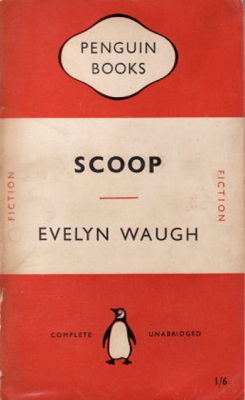
Scoop, Evelyn Waugh (1933, UK). Well, if I’d thought Black Mischief (see here) was racist, it’s almost woke compared to Scoop. And yet Scoop is the Waugh novel which appears on so many best of lists, including “Best British Novels of All Time”. Of course, the people putting together these lists are not the ones who are troubled by the casual everyday racism embedded in them, but things have changed – for the better – and these works really should be re-evaluated in light of present-day sensibilities. And yes, I’m happy to call any right-winger a fascist, even if their views don’t fit the dictionary definition of fascism, let’s not forget taxonomy is a derailing technique and the only people who derail arguments are people who don’t want their views held up to public scrutiny. Because they’re probably fascist. Or racist. Like Scoop actually is. Its story is apparently inspired by real events, but it’s still a story about a white man – a hapless white man, it must be said – who goes to an “uncivilised” African country. Because all brown countries are, of course, uncivilised. At least to 1930s white people. But then, to add insult to injury, the text is filled with a number of racial slurs, not just spoken in dialogue, but in the actual descriptive prose. I lost count of them. The big joke is that a newspaper magnate has picked the wrong man – due to some confusion over names – to be his foreign correspondent covering a civil war in the invented African nation of Ishmaelia, but the Ishmaelians are too stupid and indolent to actually fight and all that happens is a series of contradictory communiques by government agencies. It’s a variation on Chesterton’s The Man Who Was Thursday, but written from a British colonialist perspective of the 1930s. Waugh was a terrible snob and a horrible person – it’s well-documented, he was deemed “officer most likely to be shot by his troops” during WWII – but he had a wonderful prose style. It’s a dilemma. His command of English is a joy to behold, but he wrote horribly racist and snobbish books (the latter allegedly presented as “comedy”). Read him and then throw his books away, that’s my strategy.

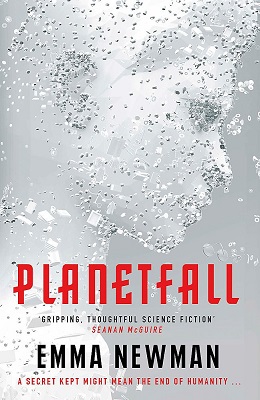
Planetfall, Emma Newman (2015, UK). These books have been recommended to me several times, although perhaps the third book, Before Mars, more than that others. And I’d had a vague ambition to give them a go, but then Planetfall was reduced to 99p for the ebook version so I though it worth a try. And I’m glad I did. From what I remember of the reviews, I had not thought it would appeal, but in actual fact it was much closer to my tastes in sf than I’d expected. There’s something in Planetfall that recalls a lot of older works – Rogue Moon is an obvious example – but also something very twenty-first century about the treatment. The narrator is  member of a colony on an exoplanet. She is in charge of the colony’s 3D-printers, which has caused problems for her, as the novel slowly reveals. The colony is also sited juts outside an alien enigmatic and uninhabited city. The novel does not explain the alien city, but it uses it and its strange properties to open up the workings of the human colony. Planetfall is not only very readable, it also makes an excellent first of its premise. Perhaps I would have liked the alien city to be a little more explained, but Planetfall is the first in – to-date – a series of four books, and I plan to keep on reading, so how knows what will be revealed…

1001 Books You Must Read Before You Die count: 135

2 Comments

Reading diary 2019, #10

I really should read more classic literature as I seem to be spending most of my time reading science fiction and a lot of it has been pretty shit. But, well, I’m a sf fan, and sf gives me something classic literature does not. Unfortunately, it doesn’t give me good writing. And all too often it doesn’t even give me good science fiction. Sf that’s well put together is getting harder to find – because that’s not a commercial quality and it is commercial qualities which determine whether a) books are published, and b) they are successful and so everyone talks about them and they’re easily available. Back in the day, when the NBA existed, editors could curate their lists, and publish books that might not sell many copies but were actually good. Now they have to chase the the bottom line. This is not a change for the better. It’s like privatisation: it never fucking works. Still, it makes the rentiers happy – and that’s basically what society apparently exists to do, so there you go.

Splintered Suns, Michael Cobley (2018, UK). Mike is a mate of many years, decades even, and I’ve followed his career from the beginning. Unfortunately – if that’s the right word – he’s a better writer than his books would suggest. Partly this is because he’s determined to write commercial genre fiction – fantasy initially, now space opera – and in order to get work accepted by publishers, he’s had to work within those constraints. With his Humanity’s Fire trilogy, he wrote a smart British space opera, based a little too obviously on the works of Iain Banks – which is hardly a crime – but with enough invention to hold its own. And if the descriptive prose and characterisation were a cut above what were typical for the sub-genre, well, that was all to the good. But these pendants to that series – Ancestral Machines (2016) and Splintered Suns – on the one hand haven’t done the trilogy any favours, but on the other are likely to have introduced new readers to the series. They’re weaker books – or rather, they’re lighter books, lacking the heft of the trilogy, with more adventure-oriented plots, explicitly so in Splintered Suns. Both make extensive use of a Big Dumb Object, but Splintered Suns is the more inventive of the two. And its plot is better suited to its cast. Who are the misfit crew of a trading ship which is often involved in less than legit business. And who remain still mostly irritating – especially the captain of the Scarabus, Brannan Pyke – and had they been players in a RPG the GM would have lied about their dice rolls very quickly to ensure they were killed off… Totally unfair, of course, as space operas like Splintered Suns are just as much about their cast as they are their setting. The plot, however… Not only do you have the crew of the Scarabus trying to track down a legendary two million year old giant spaceship, and when they find it they have to navigate a shifting set of time streams and alternate realities to do the space opera maguffin thing, meanwhile there are a set of copies of the crew stuck in a VR fantasy RPG who have to work their way up the levels to kaibosh the space opera maguffin from within. Cobley manages his cross-cut plots with impressive aplomb, although the dialogue does occasionally drift towards parody. Splintered Suns is, as I said, a better book than its predecessor, and it certainly demonstrates there are many stories to be told in the Humanity’s Fire universe.

Ecce & Old Earth, Jack Vance (1991, USA). I used to think Vance was great, one of the actual real great writers of science fiction, although these days that label seems to be handed out to books on a daily basis. Then I sort of went off Vance – the plots often seemed the same, the prose was variable, the invention a little too obviously copying from earlier works… There are great Vance works, but there are also a lot of mediocre ones. I still like the Alastor Cluster books, but the Demon Princes series is badly plotted. Happily, Ecce & Old Earth, the second book in the Cadwal Chronicles, a part of the Gaean Reach loose series, is good. It’s also late Vance, from a time when he was no longer at his prime… or so I had thought, except… I really enjoyed the first book of the trilogy, Araminta Station (see here), and thought it read like Vance on form. Happily, the same is true of Ecce & Old Earth. The plotting is not quite as solid, and the invention does not spark as much, but both seem more than suitable for the story. The world of Cadwal is protected by a charter held by the Naturalists’ Society, but the society is moribund and it seems the charter may have been sold decades before by an unscrupulous secretary. The plot of Ecce & Old Earth is compared by its characters to a ladder – one character starts from the bottom, the other from the top, both hope to discover who currently owns the charter and so safeguard Cadwal’s future. Most of the novel takes place on Earth, and Vance’s inventiveness fails him to some extent as he present Earth towns pretty much as they were at the time of writing (or at least some romanticised version of them from the time of writing). But then Vance was always one for recycling the real world, and even then he manages to give the quotidian a touch of the alien. But you read Vance for the prose style, not for the plotting, and Ecce & Old Earth is Vance in fine voice. And the wit seems a little funnier than I remember from other series. The Cadwal Chronicles have rekindled my respect for Vance’s works. I’ve already bought an ebook copy of Throy so I can complete the trilogy.

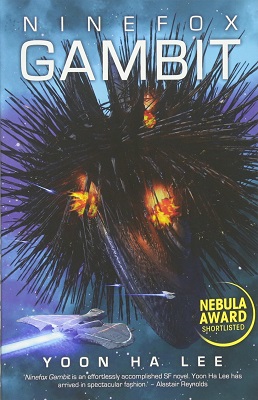
Ninefox Gambit, Yoon Ha Lee (2016, USA). This was shortlisted for the Hugo Award in 2017, and its sequel in the year following, and the third book of the trilogy this year… so this is science fiction which is highly regarded by that small section of fandom which votes for the Hugo. I wasn’t planning to bother reading the trilogy – I’d bounced out of Lee’s short fiction enough times that trying it at novel-length didn’t appeal at all. But I was given a copy of the third book as part of this year’s Hugo Voters Pack (but not the first two books, even though the Machineries of Empire trilogy was nominated for Best Series), and the first book went on sale at 99p, so… Ah, why the fuck did I bother? This is pretty much fantasy with a spaceship on the cover. Also, it’s not very good, certainly not worthy of a Hugo nomination. In the space opera universe of the series – and assorted short stories, now collected – humanity has split into a variety of factions, six of them in fact, the “Hexarchate”, and they all make use of a specific calendar and “calendrical mathematics” to magically generate things like FTL or exotic weapons. Imposing this calendar is what allows the Hexarchate to maintain control. Except when one of its core fortresses decides to use a heretical calendar, and introduce democracy, so jeopardising the existence of the Hexarchate. Which responds by bonding the mind of the Hexarchate’s most successful general, a criminal psychopath whose mind is held in secure stasis, with that of a mathematically-gifted Kel (ie, military) officer. And the pair of them are charged with taking the fortress from the rebels. Most reviews I’ve read have praised this book’s worldbuilding, and the density of it, but it’s meretricious nonsense. The whole calendrical thing is no different to a RPG magic system. The plot of Ninefox Gambit consists chiefly of the two protagonists lecturing each other. And the whole thing exhibits the sort of mindless brutality and callousness at which even sociopaths would blanch. A calendar that requires ritual torture as reinforcement? Sounds a bit fascist. The Kel have “formation instinct”, which is where the individual Kel are neurologically programmed to obey orders. Sounds a bit fascist. There used to be seven factions, but one of them rebelled so the other six committed genocide. Sounds a bit fascist. It transpires the psychopath general objected to this and felt the Hexarchate – the Heptarchate as was – might not be such a good thing. So, Ninefox Gambit suggests towards its end, and the blurbs of the two sequels suggest it’s the story arc of all three books, he chose to do something about this. But the only way he could live long enough to bring down the Hexarchate was to be put in stasis as a criminal. So he commits a huge massacre. WTF? Not even the most cynical Jesuit could rationalise that means as justifying the ends. It would be like dropping a nuclear bomb on London to bring down Boris Johnson’s government and then writing it up as if the bomber were a hero. Welcome to US space opera. Abu Ghraib means nothing; Gitmo means nothing. With a total lack of irony or reflection, US space operas are willing to bake into their worlds the sort of shit George W Bush was happy to sign off on, even if as individuals they are committed to opposing neocon politics. What doesn’t seem to have occurred to them is that putting shit like that in sf novels only helps normalise it. They need to take responsibility for the worlds they build. I don’t care what the politics of the writer may be, but if they’re writing Nazis in space then their book is no different to anything written by an actual Nazi. It’s one thing to present bad ideas and then argue against them, but space opera doesn’t do that. It presents them as normal. And that is more damaging. To read the works of an author who is explicitly not fascist but whose works embody concepts that are fascist is… exactly the same as reading the works of a fascist. No art is created in a vacuum; no art is consumed in a vacuum. You cannot separate the art from the artist. You should not give a free pass to those creators whose personal politics you approve but whose works contain politics you do not approve… without commentary. The Machineries of Empire trilogy, which renders fantasy as space opera, normalises a level of brutality which differs from grimdark only in the gruesome destructiveness of its invented arsenal. And people nominate this for awards! Had Ninefox Gambit been brilliantly written, had it provided a morally-balanced commentary on its worldbuilding, then perhaps it might have been worthy of nomination. It is, and does, neither. The prose is about average for genre writing, the commentary is focused almost exclusively on the characters within their world. The whole idea of democracy being a bad thing is a wink at the reader – or rather, a knowing nod at what the author imagines is an enlightened reader. If there’s one thing the Sad Puppies debacle has taught us, it’s that not all sf readers are enlightened. Not on a literary level, not on a political level, not on an intellectual level. Indeed, some of them actively reject being enlightened, particularly on an intellectual level. The Sad Puppies were defeated and I am glad of that, but I do worry that science fiction learned nothing from the skirmish. It was presented as a battle for the heart and soul of science fiction, but it looks very much like it was a fight between authors who held different personal politics but were happy to write down exactly the same political line in their sf stories. A hollow victory indeed.

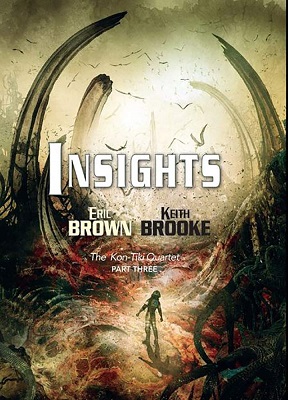
Kon-Tiki 2: Parasites, Eric Brown & Keith Brooke (2018, UK) and Kon-Tiki 3: Insights, Eric Brown & Keith Brooke (2019, UK). Both authors are friends. I’ve known them for many years, and their fiction has always struck me as good, but it never seems to garner the acclaim needed to raise their profiles. They’re craftsmen – what they write is well-written; but sometimes it lacks that additional inventiveness required to bounce it to the next level – and when it does, it doesn’t matter because they’re boringly ordinary people with very low, if not zero, online presences. PS Publishing have regularly published Brown’s novels and collections, as well as the novellas he’s written in collaboration with Brooke (and they’ve been collaborating, every now and again, for at least thirty years). The Kon-Tiki Quartet is about the colonisation of an earth-like exoplanet by an Earth very close to catastrophic failure from climate crash. The gimmick here is that copies of the colonists are sent and “printed” on arrival. Leaving the originals behind in. In Kon-Tiki 2: Parasites, the colonisation ship arrives at “Newhaven”, only to discover it was beaten there by a more efficient vessel. And so the crew – or rather, the handful the story concerns – discover they have copies of themselves, with different histories. If that isn’t enough, one of them has been researching the local fauna and discovered it has a form of hormonal telepathy which is compatible with human chemistry. And so an unregulated experiment becomes the means to untangle a love triangle, and some of its nasty secrets, including the murder which formed the plot of the first book of the quartet, while also presenting a magic bullet that will present all future human interactions in a different light. Which, unfortunately, certain movers and shakers on Newhaven have a problem with in Kon-Tiki 3: Insights. Because they have plans for Newhaven, which they intend to take back to Earth, and if everyone could read everyone else’s thoughts, experience their actual being, then not only are their plans jeopardised but their entire lives are rendered useless. And they don’t want that. Which does, unfortunately, give the novella more of a thriller plot – albeit on an alien world – than a science fiction plot. And the central premise, that people might be “printed” into bodies other than copies of their originals, is not really explored, other than as an enabler for infiltration of government offices. In many respects, the Kon-Tiki Quartet is almost the dictionary definition of traditional sf: it’s ideas-based, and carefully worked out and well-presented… but it’s also Eurocentric, with a cast of almost entirely white people, and concerns that apply chiefly to them. This is hardly unexpected, given the authors’ backgrounds. But a series about a project to safeguard humanity by settling an exoplanet you would expect to mention more races and cultures. Of course, this is all a bit Scylla and Charybdis – which is more damaging to the reputations of the authors, the lack, or including it and not getting it right enough for some readers? Given the authors’ lack of online presence, it hardly matters. What happens on Twitter only really matters to people on Twitter. I feel like I’m damning the Kon-Tiki Quartet with faint praise, when if in fact it’s a well-constructed series of four novellas (well, three to date) that occupies the heartland of Atlantic, albeit more UK than US, science fiction. It does what it does with a degree of accomplishment you’d expect of its authors. It may well be a shame neither are not better-known, either side of the Atlantic, but, to be honest, this is not the work to do that. One for fans – but I do recommend becoming a fan of both authors.

The Dragon Reborn, Robert Jordan (1991, USA). The reread continues, and most of the time I have to wonder why I’m bothering… The story arc is still bouncing around, trying to work out what length the series will finally be (and even then, Jordan had pretty much no clue right up until his death), most of the characters continue to be very irritating – or rather, Jordan’s repetitive way of presenting them is hugely annoying – but the worldbuilding, despite being somewhat identikit fantasy, is starting to come together. After the big battle which ended the previous book, and actually resolved very little, book three seems to be mostly explanations of what might happen. Rand al’Thor has declared himself as the Dragon Reborn, and is afraid he’ll go mad from channelling the One Power (as has every other bloke who could since the Age of Legends). But he’s determined not to be controlled by the Aes Sedai, or rather the small group of Aes Sedai who actually believe he is the Dragon Reborn. So he’s run away to Tear, partly driven by bad dreams and partly by the onset of madness caused by using the Source. The three young women, Egwene, Elayne and Nynaeve, are on their own adventure – approved this time – to find the escaped Black Ajah, who have gone to ground in Tear. Moiraine, Lan, Loial and Perrin are hot on Rand’s tail, but having adventures on their own. And Mat, cured by the Aes Sedai, has been sent to Caemlyn to deliver a letter to the queen, but then heads for Tear after overhearing a plot to murder Elayne… In other words, the plot is eighty percent travelogue, with plenty of history lessons, before everything comes to an explosive head in Tear in the final chapter. Nynaeve’s constant tugging of her braid is getting really fucking annoying. Rand is pretty much a blank, chiefly because his viewpoint appears very little – amusingly, the Wikipedia describes The Dragon Reborn as “unique at the time” in the series because of this. It’s the third book in the series, FFS. Anyway, The Dragon Reborn is a definite improvement on the preceding two books, but that’s a pretty low bar to clear. I can see why people became invested in the Wheel of Time as this is the first book of the series which actually feels like part of a series. And that’s not just because the end clearly slingshots into the next book. It’s like the setting is starting to develop a third dimension. That doesn’t stop it from being 75% identikit, but it’s like that tilt-shift thing where a flat backdrop sort of refocuses and… Hmm, isn’t that effect used in the opening credit sequence of Game of Thrones? Anyway, next up: The Shadow Rising. Although I think I will continue with my Dune reread before tackling it.

1001 Books You Must Read Before You Die count: 135
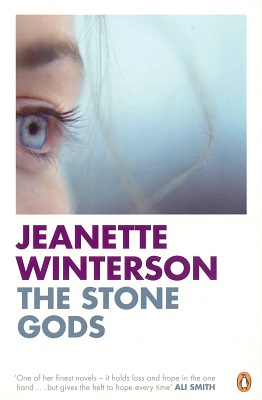

2 Comments

Reading diary 2019, #9

My trip to Dublin for Worldcon entailed a few hours strapped to a chair, which meant I got some reading done. This may be a mixed blessing. I should probably rename my “book reviews” as “book rants” since, to be honest, I tend to use the books under discussion chiefly as jumping off points for commentary on fiction in general – if not genre in general (which sounds a bit weird but there you go). After all, my reviews have caused me a few problems with writers who have disagreed with my assessment. Repeat after me: REVIEWS ARE NOT FOR THE WRITER.

Brush Back, Sara Paretsky (2015, USA). I’ve been a fan of Paretsky’s novels since being introduced to them by my mother back in the mid-1990s. Not only are they well put-together crime novels with a likeable protagonist, but Warshawski – and Paretsky, by extension – wears her politics on her sleeve. And they’re politics I pretty much agree with. It’s not entirely political, however. Given that these books are set in the US, and moreover in Chicago, corruption plays an important role and Warshawski continually battles against it. It features in Brush Back, of course, but the novel opens with a completely unrelated incident, one which, it transpires, was indirectly caused by corruption. A woman from Warshawski’s old neighbourhood is released from prison after serving twenty-five years for the murder of her daughter. She now claims she is innocent, more so she claims the actual killer was Boom-Boom, Warshawski’s cousin and much-loved ice hockey star who was murdered in the second Warshawski novel, Deadlock, published back in 1984. Warshawski is rightly affronted, but she is involved in another case, also centred on the same neighbourhood. Of course, the two are linked, and it’s all to do with a local councillor who’s as bent as they come and another man, an old protege, who looks like he’s got a shot at power. When you start a Warshawski you pretty much know what you’re going to get, and Brush Back delivers that as effectively as any of Paretsky’s novels. It’s a good addition to an excellent series, and more people should be reading them.

New Suns, Nisi Shawl, ed. (2019, USA). I have never really been a fan of anthologies. If they’re themed, and the theme interests me, then sometimes they work for me. But anthologies, not just genre ones, and pretty much since they were invented, have a fatal flaw: cronyism. Editors invite their friends to contribute, or people they hope will draw in readers, or people who tick certain boxes. Some people say tables of contents have to be built, which means going out and finding the writers whose presence in the anthology are not going to cause a stink on social media. The alternative is open submissions. Anyone and everyone sends in a story, and the editor picks the best, or most suitable, stories. This too has its problems. A lot of crap gets submitted; not everyone seems to understand the concept of a brief – the editor wants hard sf and someone submits urban fantasy, the editor asks for stories between 3,000 and 5,000 words and there’s a 10,000 word story or two sitting in the queue… Also, many well-known writers won’t submit unless asked (why should they invest time and effort in something with no guarantee of a sale? On the other hand, if invited why should they assume their submission will be accepted?). So, anthologies: by definition a mixed bag, irrespective of how they’re put together. New Suns is sort of themed, in as much as its contributers are all people of colour. The stories themselves cover a wide range, from Tobias S Buckell’s relatively straightforward sf to the almost mythical fantasy of Minsoo Kang’s ‘The Virtue of Unfaithful Translations’. Some stories work better than those, but overall this is a pretty strong anthology. And I suspect part of the reason for that is its variety – okay, I mean I realise that sort of contradicts what I wrote earlier, but the contributors’ backgrounds certainly inform their stories (mostly) and that works in the anthology’s favour. As indeed it was no doubt intended to. I still have mixed feelings about the usefulness of anthologies (that is, to anyone except their contributors), but I do recognise that some serve a useful purpose as showcases, and New Suns sits firmly in that category, and does it well. Worth reading.

Europe at Dawn, Dave Hutchinson (2018, UK). So the trilogy becomes a  quartet, and it’s an odd book that rounds off the three-book story. It’s sort of an extension, but it’s also a recapitulation of the previous three books. It tells their story – or rather, the story actually begun in the second novel, Europe at Midnight – but from perspectives, and featuring some characters, that weren’t in the preceding novels, but in a way that sort of weaves its narrative in and around their narratives. Rudi, who is perhaps the chief protagonist of the series, is definitely front and centre in Europe at Dawn, although he takes a while to appear, something that’s seems to be a stylistic tic of the quartet. Initially, Europe at Dawn is about a flunky in the Scottish Embassy in Tallinn, who finds herself on the run thanks to events of which she understands nothing. And it all sort of goes round in circles, although perhaps more like a Slinky than just a plain circle, and it takes a while before the novel’s direction truly becomes apparent. Essentially, there is someone else out there, not just the fractured EU and the Community, or indeed the Line, which may not be as simple as presented in earlier novels. There’s always been something of the spy novel to this series, the way the stories are constructed: firmly bedded on a science-fictional conceit, but the various misdirections of the plot are not from the genre kicked into life in 1926 by Amazing Stories. It makes of the central conceit something more than is usual, something more than just near-future science fiction. These books are masterful at narrative sleight of hand, and Europe at Dawn does this more than the others – it’s not until the final chapter that the purpose of the various narratives is revealed. That Hutchinson manages to do this by keeping the individual narrative tense but not the underlying story-arc is perhaps what’s most impressive. The end comes into shape, and it’s neither expected nor completely out of left field. These are excellent books. I suspect Europe at Dawn may not be the actual end, but you won’t hear me complaining if it itn’t…

The Underground Railroad, Colson Whitehead (2016, USA). Only one novel has won both the Pulitzer Prize and the Arthur C Clarke Award. This one. The Pulitzer Prize is not known for giving out gongs to genre works, so it comes as little surprise on reading The Underground Railroad to discover that it’s not actually a genre novel. It’s not even borderline. Its one conceit is related to the title – that the underground railroad, a network of people who smuggled escaped slaves north, was an actual railway. Underground. A very forgiving genre reader might consider that alternate history, except, well, it doesn’t actually change history. Cora’s story would be exactly the same without the book’s conceit. Which doesn’t make sense anyway. The first underground railway was in London and it opened in 1863. The Underground Railroad takes place before the American Civil War, which began in 1861. However, not only is the underground railroad of the book historically unlikely, it’s also technologically unlikely. How would it be built? And run? But then, it doesn’t actually feature that much in the novel. Cora rides on it twice. She spends a third of the story hiding in an attic. As a dramatised history of slavery in mid-nineteenth century US, The Underground Railroad does an admirable job of demonstrating how vile and reprehensible an institution it was, although to be fair if you need that demonstrating to you then there’s something wrong with you. There is no moral justification for slavery. Of any sort. Whitehead structures his narrative weirdly and I’m not convinced it works. He skips back and forth in time, from character to character, promising stories that take nearly half the book to appear, or reporting on the death of a character before jumping to a point just before his death (and, to be honest, the scene serves no real purpose). I’m not convinced The Underground Railroad is an especially good novel. On a sentence by sentence level, the prose is good, and often excellent. But the structure is all over the place and the central conceit is a paper-thin gimmick. It’s certainly not genre. However, it tackles an important topic, and does so in a way that gives it a wide audience – and that’s something that shouldn’t be trivialised.

Longer, Michael Blumlein (2019, USA). I’ve been a fan of Blumlein’s work since reading a short story by him in Interzone back in the late 1980s. At novel length, his work has been… variable. Only his one horror novel, X, Y, seemed to match his short fiction in style and tone. A few years ago, he was diagnosed with lung cancer, but after a short hiatus he seems to have become productive than before, with two novels and three collections published in the last ten years. Longer is marketed as  a novel, but it’s published by Tor.com, who chiefly publish novellas, and it’s pretty thin, at only 227 pages. It’s also written in a very stripped-down style, with lots of dialogue and very little descriptive prose. Gunjita and Cav are the sole occupants of an orbiting laboratory, one of many owned by Gleem Pharmaceutical. Gunjita has rejuved, her second and last, but Cav has not, and it becomes increasingly obvious he has no plans to do so. Not only is his decision affecting their work, it’s also affecting their relationship – they’ve been happily married for a very long time. And then they discover something strange on a passing comet, a smear of material which may be organic but is certainly not terrestrial… In other hands, this could turn into, well, something not unlike a shitty sf film such as Life. But Blumlein is not interested in alien monsters, or even in the nature of the alien on the comet. It’s the relationship between Gunjita and Cav, and the way it fractures due to Cav’s choice, that drives the story of Longer. The alien is merely a crutch to bolster Cav’s decision; much as Gunjita is presented with one herself when the head of Gleem Pharmaceuticals, who has uniquely survived three rejuves, reveals to her the consequences of that third rejuve. The busyness of the story, and the depth of the themes it covers, with the bare-bones prose, unfortunately makes Longer read more like an outline or an excerpt than a full novel. Blumlein sets his scenes, and lays out his world, with enviable brevity, and the interiority of the main characters never feels lacking… but the plot seems to be mostly carried in discussion between Cav and Gunjita and it sometimes leaves you wanting more from the narrative. Blumlein is very good, but Longer is more like a charcoal sketch than an oil painting – it tells a story, and the artistry is plain to see, but there’s no colour.

Y is for Yesterday, Sue Grafton (2017, USA). So, that’s it. The Alphabet series is over, and Grafton unfortunately died before starting work on a book for the letter Z. Still, the books were bestsellers so some publisher somewhere is probably already trying to get permission for an official sequel by some ghost writer or desperate Big Name Author. I have no real feelings either way. It’s sad when a much-loved series ends, and you can understand the creator’s decision to let it die with them. On the other hand, some series and worlds you want to continue to explore, and the authors chosen to continue the works have produced work as good, and sometimes even better, than the creator’s. So, Tintin died with Hergé, but the Edgar P Jacobs Studio, set up after Jacobs’s death, has produced better instalments in The Adventures of Blake and Mortimer series than Jacobs ever did. And then there are the sequels to the Dune books, written by Kevin J Anderson & Brian Herbert, which are unutterably shit. But I digress. Y is for Yesterday both follows on from the preceding volume, X (see here), and is centred around a new mystery. Ned Lowe, the serial killer from X, is still on the loose, and now hiding out somewhere in Santa Teresa and bent on revenging himself on Kinsey Millhone. Meanwhile, Millhone has been hired by the family of a recently-released con who served eight years for shooting and killing a classmate at a party. A videocassette of the guy and two friends raping a drunken classmate has surfaced, and the parents want Millhone to identify the blackmailer. Ten years previously, two students were caught cheating on a SAT, and another student blamed for dobbing them in. Some weeks later, that student is shot and killed when an attempt at intimidation goes badly wrong. The instigator – not the shooter – promptly disappears and has been on the run ever since. Much as I’ve enjoyed reading these books over the years, this last one… well, the central mystery feels a bit insubstantial. I’d noticed in recent books that Grafton had taken to at times moving the narrative away from Millhone’s first-person account, something I don’t remember happening in the earlier books (although I may be misremembering). In Y is for Yesterday, one narrative is set ten years in the past and, to be honest, it doesn’t really add much to the story. Millhone’s investigation should be enough to explain events. But that’s a minor quibble. These are fun, readable books, less political than Paretsky’s but very similar in tone and style. I’m sorry there will be no more of them.

1001 Book You Must Read Before You Die count: 135
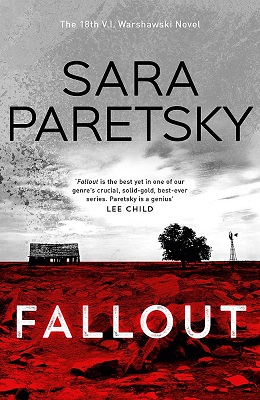

Leave a comment

Reading diary 2019, #8

After cracking through a bunch of novels, I hit the last book of the half-dozen below and ground almost to a halt. Possibly a result of its size as much as its extremely poor writing. Not to mention that the main characters are annoying as hell. Why on earth did I decide to reread the series?

Permafrost, Alastair Reynolds (2019, UK). I picked up a copy of this at the SF-Bokhandeln in Stockholm while meeting up with family over on a visit to Sweden. It’s not Reynold’s usual fare, but a near-future time travel story. The human race is pretty much over, killed off by its appalling lack of husbandry of its environment (that’s pollution, Global Warming, germ warfare, hunting to extinction, etc, etc), but a group in Russia have perfected time travel and send someone back into the past to make enough of a change to allow humanity a small chance at survival. It’s not actual physical time travel – which means it’s at least free of the risible technobollocks in Avengers: Endgame – but the consciousness of the tempunaut is sent back to occupy the mind of a person of the target period. (A similar conceit, I believe to Michael Bishop’s No Enemy But Time.) Of course, as is ever the way, nothing goes as planned, and protagonist Valentina must race across Russia to deliver the maguffin, only to learn how the future has changed when she returns to it. I thought Permafrost pretty good, but I wasn’t entirely sure why it was set in Russia, or what the setting brought to the story, other than, well, the title. Reynolds has never had much luck with the Hugos, but given that Permafrost was published by Hugo darlings Tor.com then perhaps he stands a chance next year.

Big Cat and Other Stories, Gwyneth Jones (2019, UK). A new book by Gwyneth Jones, whether a novel, novella or collection, is cause for celebration in this house. She’s been my favourite sf writer since reading Kairos in the early 1990s, and I’d even go so far as to say sheäs the best science fiction writer who is still writing the UK has produced. Big Cat and Other Stories collects eleven stories originally published between 2007 and 2016 (and one original to this volume), only two of which I’d  previously read. Three of the stories are set in worlds from Jones’s novels, although one of those novels was published under Jones’s YA pseudonym, Ann Halam. This does mean for those three that you get more out of them if you know the original novels, more so for the story which lends the collection its title as it’s set in the universe of the Bold As Love quintet and features its central triumvirate of characters. The stories are chiefly science fiction but spread  widely across the genre, from the slightly off-kilter pulp adventure on Venus of ‘A Planet Called Desire’ and the Leigh Brackett/Lovecraft mashup of ‘The Vicar of Mars’ to the near-future of ‘Stella and the Adventurous Roots’, ‘Emergence’ and ‘Bricks, Stick, Straws’, although they depict worlds not quite the same as our own. All of the stories are a hit of the pure Jones, and if you appreciate her science fiction then Big Cat and Other Stories is as good a selection as any other. Recommended.

Red Clocks, Leni Zumas (2018, USA). I’m not sure why I bought this. I guess the blurb must have caught my fancy or something. Although that doesn’t seem right, because, well, “near-future dystopia”. I mean, who reads them anymore? With the actual shit that’s going down in Trump’s US and Brexit Britain, literary dystopias are starting to look like weak sauce. In Red Clocks, the Republican Christian nutjobs are firmly in charge, abortion is illegal, and only families of one father and one mother can adopt kids. Which is unfortunate for a couple of the characters in Red Clocks, a pregnant schoolgirl and a single teacher desperate for a child (and whose numerous tries at IVF have all been unsuccessful). Zumi chooses to tell her story from the viewpoints of each of her characters, but in their viewpoint chapters they’re not identified by name, only by their role in the story – so “the biographer”, “the wife”, and so on. It doesn’t work. It’s an unnecessary hurdle – although it does successfully disguise for at least the first quarter of the book quite how ordinary its story is. I was also annoyed by the attempt at found documents pertaining to the historical figure who is the subject of the biographer’s unfinished, er, biography, a female polar explorer from the turn of the twentieth century. She’s named Eivør Minurvasdottír – and  the first time I saw it I thought, there’s no ø in Icelandic. But there is in Faroese. Which is where she’s from. But the accent on the surname is in the wrong place. It should be -dóttir. The name is misspelt throughout the novel. Didn’t the author check? Didn’t the editor? The publisher? It’s not like it’s hard to find out. It’s a minor complaint – and from someone who chiefly reads science fiction! But for all that Red Clocks was shortlisted for the Orwell Prize for Political Fiction, the first time an Orwell Prize has been offered for fiction, there didn’t seem much to me that stood out. (The Orwell Prize is probably best remembered for giving an award to Johann Hari, only to demand it back when it transpired Hari had plagiarised and misrepresented facts in his articles. He returned the prize but has never returned the prize money.) But Red Clocks. Dull and unoriginal. Not worth reading.

Breakwater, Simon Bestwick (2018, UK). A Facebook friend has been working his way through the works shortlisted for the British Fantasy Award, and I saw this novella in my timeline and since it’s set in an underwater base, something I find fascinating, and was extremely cheap on Kindle, I decided to give it a go. And… oh dear. The title refers to an underwater complex just off the the coast of the UK. Originally built for research, it has been taken over by the military as a first line of defence against a mysterious underwater race who, we are told in an infodump, are now at war with humanity because of humanity’s history of polluting the oceans. The widow of the man with whom she co-designed Breakwater still works there. With the Royal Navy. And, wouldn’t you know it, the underwater people decide to attack a couple of pages into the novella, and this time it’s the biggest attack ever. The woman manages to escape, with the help of a female petty officer. They run through an empty complex, staying just ahead being drowned. But then the petty officer lets slip she’s one of the underwater people – or rather, one engineered to look human – and she belongs to a faction that wants to open dialogue with humanity… And, well, that’s it. The author doesn’t seem to understand how depth works – there’s a few mentions of airlocks and ears popping; oh, and the woman’s husband died of the bends – otherwise, changes in pressure are blithely skated over. There’s a bit of authorial prurience over the two female leads, which reads a bit old-fashioned. And something I’ve not seen in a book for years: a detailed description of the protagonist’s appearance. Who still does that? The British Fantasy Awards are, like the Hugos and Nebulas, prone to logrolling, and it’s not unusual for people well-known and well-liked among the voters to have their works find their way onto the shortlist irrespective of the quality of the work. The voting pool for the BFA is very small, probably even smaller than the average attendance of the annual Fantasycon (ie, a couple of hundred).

The Calculating Stars, Mary Robinette Kowal (2018, USA). I had sort of avoided reading this as I’d covered similar material myself, although with a considerably lower profile and less commercial success. But then it was nominated for the Hugo, and so was made available in the Hugo Voter Pack, and a quick look persuaded me that there’s actual very little overlap between The Calculating Stars and Then Will The Great Ocean Wash Deep Above. In Kowal’s novel, a large meteorite strikes the earth in the early 1950s, crashing down somewhere in the north Atlantic and so kicking off an accelerated greenhouse effect. Elma York is a gifted mathematician and a pilot. She and her husband, a rocket engineer at NACA, survive the meteorite and are instrumental in the creation of an international space agency to lead the quest to settle another world so humanity survives once the earth as become uninhabitable. So this is the very early days of the Space Race, more Hidden Figures than The Right Stuff. But Elma also wants to be an astronaut, so there’s also a lot of the Mercury 13 in the story (and several names familiar to me from my research; but, strangely, not Jerrie Cobb). There’s much to like in the novel: the swing about halfway through to a Mercury 13 narrative (although Kowal characterises Jackie Cochran as a much nicer person than she was – it was Cochran who famously said that women shouldn’t be taking jobs from men but should “follow after and pick up the slack”). I liked Kowal’s stand-in for Al Shepard, Stetson Parker, although the narrative seemed curiously ambivalent about him, feeling like at times it was trying to make him sympathetic. I thought the anxiety aspect overdone, but I’ve been told by sufferers they thought it accurate and found it welcome. On the other hand, I’ve heard there has been grumbling about the presentation of Judaism in the novel (York and her husband are Jews). In hindsight, The Calculating Stars is a novel that wants to tell a story about a space programme created in response to an extinction-level meteorite strike, but it also wants to be Hidden Figures and feature women computers… Which gives it a slightly anachronistic feel despite the very good period detail. In the real world, women went on to become programmers, too, but were then supplanted by men – in many cases, the female programmers were moved to assistant positions despite being better qualified and more experienced. That, I think, might have made for a more interesting story, and would not have meant pulling the start of the space programme back to the early 1950s. (On the other hand, having it when Kowal set it meant there were lots of ex-WASP female pilots around, as well as the women computers.) The Calculating Stars won the Hugo last weekend. Should it have done? I’m told Naomi Novik’s Spinning Silver is the better novel, although I’ve not read it yet, but The Calculating Stars was certainly my choice to take the award.

The Great Hunt, Robert Jordan (1990, USA). I’ve been told the Wheel of Time was originally pitched as a trilogy but then cut down to a single novel, but proved so successful the trilogy was reinstated, before mutating into the bloated fourteen-volume beast it eventually became. Certainly the pacing in The Eye of the World is so bad it’s entirely plausible its story was intended to stretch over several books. You have ten percent introduction to the world and characters, then 80% travelogue, and everything gets wrapped up in the last ten percent. The Great Hunt has slightly better pacing, and a great deal more happens in it, but there’s still a lot of travelogue. And padding. Reams and reams of padding. There’s even three or four pages where Rand experiences the same thing over and over again. It makes for a dull read. The one thing I’m noticing about these books during my rereads – other than the derision of friends when I tell them I’m rereading the Wheel of Time – is that the world-building is a strange mix of identikit sword-and-sorcery and weird but interesting original touches. It also feels strangely “lived-in”, with its various parts slotting together in a way that doesn’t feel entirely the result of authorial fiat. Having said that… the characters are still as annoying as shit. Rand al’Thor reads like a thirteen year old and his friends are no better. An important minor character turns out to be a Darkfriend (ie, agents of the the Dark Lord) but it comes totally out of left-field. The actual Darkfriend the protagonists spend the entire book chasing is far too pantomime. And another character do be talking like this all the time and it do be fucking irritating. The Great Hunt is a great improvement on The Eye of the World, but that’s not exactly a high bar to clear. There are some enjoyable set-pieces and some good hooks set for later in the series. But the praise this series received back in the 1990s still astonishes me. It’s a poor piece of work – and that in genre not known for the high quality of its prose or plotting.

1001 Books You Must Read Before You Die count: 135
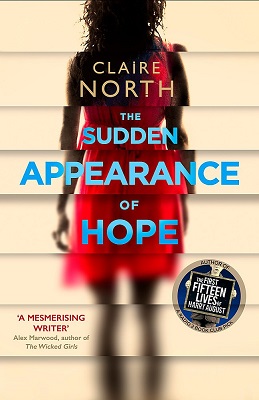

1 Comment

Reading diary 2019, #7

I was never much of a fan of ebooks, but circumstances forced me to use them. Because of my move, I got a Kindle and, since it took a while for me to find somewhere reasonably permanent to live, I was reluctant to buy hardbacks or paperbacks due to the hassle of shifting them from one address to another. So the Kindle has proved extremely useful. In the last three months, my reading has been around 80% ebook. There are some books I would like to keep as physical copies, which means I’m not going to buy them as ebooks. I have some catching up to do there, however.

Meanwhile, below are: a paperback I brought with me to Sweden, and five ebooks I bought once I was here, two of which I actually have as physical copies, but in storage back in the UK.

Lord of the Flies*, William Golding (1954, UK). This was Golding’s debut novel, and probably the only book for which he is known by most people. Which must have rankled. I have a feeling I read this at school, perhaps when I was eleven or twelve, although the only novels I remember reading at that time as part of my schooling are Cider with Rosie and The Cruel Sea. But I did read a lot then. In fact, it was around that time I was introduced to science fiction when a lad in my class lent me a copy of Starman Jones. Another boy in the year below me then lent me some EE ‘Doc’ Smith Lensman novels… and the rest, as they say, is history. Lord of the Flies has sort of entered British culture and its central conceit is part of the country’s popular consciousness. That conceit is, of course, schoolboys marooned on a desert island who start behaving like, well, children. Everyone remembers Piggy and his glasses, but he’s not the focus of the story. (I’ve not seen the film adaptation, from 1963 or 1990, so I don’t know if either made changes.) There is Ralph, mysterious and charismatic (and reads like Golding recalling a school boycrush), who is more or less dragooned into leadership. And there is Jack, leader of a choir, who fancies himself a leader (so is the Boris Johnson of the group). Ralph rightly insists on a signal fire to attract the attention of any passing ship. But Jack is more interested in hunting wild pigs. The conflict splits the group of schoolboys, and Piggy is accidentally killed. It has been said that Lord of the Flies is not as universal as it’s proclaimed to be, because its cast consists entirely of white British schoolboys (mostly) from the middle classes and above. This is only a problem if you think Lord of the Flies was intended to be, well, universal. I don’t think it is. It’s about public schoolboys (well, mostly; I think a few are not). If Golding was making a point that might be applicable to a much wider group then he wouldn’t have been so careful about the make-up of the marooned boys and their group dynamics. I know very little, I admit, about Golding’s life, or his thoughts on writing, so I may be projecting. But Lord of the Flies strikes me as too carefully staged and cast to be chiefly allegorical – an assumption based on a reading of only third of his oeuvre, I admit. But careful writers are careful writers, and careful writing is a good indicator of a habit of carefulness, much as a history of stupid decisions is a good indicator of stupidity (hello, Boris Johnson). I finished Lord of the Flies surprised it was Golding’s best-known work as it felt too slight. And this after reading The Pyramid (see here) and The Paper Men (see here). Perversely, though they felt too much like what they were, they also felt more… considered than Lord of the Flies. This is not to say it’s a bad book, but it is more of an historical document than its reputation would suggest. Read it by all means, but Golding wrote more interesting novels and they would be better reads.

Time Was, Ian McDonald (2018, UK). I’d heard a number of good things about this novella, and while I’m usually sceptical about recommendations, and, to be honest, I’ve bounced out of McDonald’s novels on a number of occasions, but… it’s a novella, and it was on offer on Kindle. So I went for it. And I’m glad I did. The purported Nazi invasion of Shingle Street, Suffolk, has pretty much entered WWII mythology. McDonald posits it as a Project Rainbow-like experiment (AKA The Philadelphia Experiment), which actually results in sending two men careering independently through time. Unfortunately, they happen to be in a relationship. Fortunately – and this provides the entry to the story – they communicate using a collection by an obscure poet, left in antiquarian bookshops scattered throughout Europe. (Reading this novella, I was reminded of the Italian publisher who published a pirate edition of DH Lawrence’s Lady Chatterley’s Lover, banned in the UK at the time, and was so embarrassed at how it successful it was he sent royalties to Lawrence.) So Time Was is sort of a literary detective novel because the obscure collection is really obscure. But it also hints at a relationship between two men that leaves evidence scattered throughout the twentieth century. It’s cleverly done. And, I must admit, it did remind me of something, or perhaps several somethings – but I couldn’t think what. Which is not presented as a criticism. If anything, those echoes of other half-remembered stories added to Time Was. I liked this novella a lot, and I’m surprised it didn’t make more award shortlists. It won the BSFA Award, and was shortlisted for the Campbell and Dick, but didn’t even warrant mention for the Hugo or Nebula. A shame. This is an excellent novella.

Dune Messiah, Frank Herbert (1969, USA). The Dune series reread continues, although perhaps not as quickly as I’d hoped. It’s all down to me, of course; there’s nothing stopping me reading the books one after the other. Except I have a habit choosing something different to my last read for my next one. Probably not a great strategy when reading a series – but given this year I also decided to have a go at rereading the Wheel of Time series, and I’m pretty sure I wouldn’t survive reading those books in quick succession… Anyway, Dune Messiah. Popular wisdom would have it that Dune Messiah is the best of the original Dune trilogy – or, as some would day it, the best of the Dune sequels. Which tells you how wrong popular wisdom is. Dune Messiah is not a sequel – Herbert conceived of the trilogy as a whole, although perhaps not in detail. It’s also not the best of the three. Neither, to be honest, is the first book, Dune. Which means it must be the third one… but I’ve yet to reread it. Dune Messiah is set some years after the end of Dune. Paul Atreides is now emperor and has become increasingly disenchanted with the institution he has created. Meanwhile, there is a plot to kill him, led by some Fremen who fought with him and are unhappy with the changes to Arrakis. There are also a series of sub-plots. Princess Irulan, Paul’s wife, is angling for an heir, and has joined a conspiracy with a Guild navigator, a Tleilaxu Face-Dancer and a Bene Gesserit. It’s clear they all have different objectives, and it’s a marriage of convenience, so to speak (marriages of convenience pop up a lot in the Dune books). Meanwhile, Chani is pregnant and Paul knows she will die in childbirth. Which she does. She has twins, which Paul had not foreseen. And it turns out the Tleilaxu are more interested in finding a trigger for the ghola Hayt, a clone of Duncan Idaho, to recover Idaho’s memories. While rooting out the plot to kill him, Paul was permanently blinded by a “stoneburner”, a type of nuclear weapon. It’s Fremen tradition to abandon blind people in the desert, and eventually that’s what Paul does: walks out into the desert. Some years later, a blind Fremen called the Preacher appears in Arrakeen, the capital city of Arrakis, and rants against the regency that has taken over from Paul. Is Dune Messiah better than Dune? Yes. The prose is much better-written. But then it improves as the series progresses, so that’s no surprise. But where Dune had the fifteen-year-old Paul Atriedes as its focus, a character readers, especially male teen ones, can glom onto, Dune Messiah has no one. Which means it reads as a more distanced narrative. Paul is presented as a tragic figure – in fact, no one in the book is all that sympathetic, except perhaps, perversely, Princess Irulan. (Since first reading the book in my teens, I’ve always been fascinated the most by Skytale, the Tleilaxu Face-Dancer.) Dune was definitely a book of two halves: ‘Dune World’ and ‘The Prophet of Dune’. But Dune Messiah also feels like a book of parts, perhaps because its sub-plots don’t gel especially well. To some extent, that’s down to Herbert’s decision to have a cabal of four plotters all pursuing different aims, and a plot to kill Paul on top of that. It makes for a busy narrative, and yet Dune Messiah is only 256 pages. So the plot jumps around and Herbert skimps on some of the detail. Dune Messiah reads like Herbert stringing together his favourite scenes from the story he had planned. It works – better than Dune does, to be honest – but it does feel more like a best-of than a coherent narrative. The Dune series is a science fiction institution, and is likely to be even more so in the future. After decades of trying to raise the profile of the Dune series, leading to the questionable decision to publish a series of shit novels by Kevin J Anderson, Herbert Limited Partnership have finally got their wish, with a two-movie adaptation of the Dune directed by Denis Villeneuve and a supporting TV series. Dune is going to be up there with Lord of the Rings and Game of Thrones. The good news is the books are just as capable of supporting the cross-platform media giant Dune will become as Tolkien and GRRM. This is not necessarily a compliment. However, the Dune series reread continues and perhaps I will surprise myself with my re-evaluation of the following books…

Lethal White, Robert Galbraith (2018, UK). Speaking of series, my mother lent me the first Cormoran Strike novel, The Cuckoo’s Calling, and, while I wasn’t overly impressed, it did strike me as interesting enough to continue with the series. Not because Galbraith was really JK Rowling (to be honest, I’ve only read Harry Potter and the Philosopher’s Stone) but because The Cuckoo’s Calling sort of fell between the stools of crime fiction and literary fiction without actually being good examples of either, and yet still managed to present a pair of sympathetic characters more than capable of carrying a number of novels. And so I read The Silkworm and Career of Evil… and now Lethal White. The continuity between novels is good, even if the individual novels continue to suffer from that unfortunate fall between two stools. However, Galbraith does at least choose interesting subjects around which to base her novels (okay, so yes, Career of Evil was structured around the songs of Blue Oyster Cult, and I’ve been a fan of the band since my schooldays). Lethal White is, to be honest, more of the same. A politician somewhere between Boris Johnson and Jacob Rees-Mogg (AKA between arsehole and scumbag; or vice versa), is murdered. He had been the subject of a Strike investigation, which proves embarrassing. And so Cormoran and sidekick Robin Ellacott (Robin, get it?) have to solve the murder – initially thought to be suicide under weird circumstances (a time-honoured Tory tradition) – and clear the wife and estranged son of blame. But everyone seems to have an alibi. As mentioned previously, Lethal White does well as a follow-on from the previous book, and its central crime is sufficiently puzzling to drive the plot. But there’s a strange whiff of approval for the central Tory character, and I’m not sure if I misread the novel because this is JK Rowling and even vast riches wouldn’t turn her into a fan of Boris Johnson. Although, to be fair, Michael Heseltine might be a better model, and the extremism of the current Conservative Party has helped rehabilitate him and he’s now seen as almost moderate. I’m not saying the Galbraith novels are good – either as novels qua novels or as crime novels. But they’re certainly very readable and they do seem to have a somewhat sideways approach to crime… and this is in a genre which doesn’t necessarily prize originality.

Araminta Station, Jack Vance (1987, USA). I first read this many years ago, probably soon after it was published in 1989 (the edition pictured, the NEL A-format paperback, is the one I own), which was a few years before I started recording the books I read. For some reason, I never got around to picking up copies of the two sequels, Ecce and Old Earth and Throy, until many, many years later… Then I never got around to actually reading them. And now, of course, they’re in storage. Happily, all three books of the trilogy are available as ebooks from the SF Gateway, so I picked up the first as a reread. The planet of Cadwal has been declared off-limits to development and is ostensibly policed by a group based at the eponymous station. Which has existed so long its workings have come to define its society. Glawen Clattuc is a teenager likely to take a middling position in the Araminta bureaucracy. But enemies of his father arrange for him to be given a much lower ranking than he deserves. He goes to work for the station’s police force. At a festival, Glawen’s girlfriend disappears, believed murdered and her body shipped off-world in a wine cask. There’s a suspect, but no evidence to charge him. There’s also a plot brewing in Yipton, an offshore community composed entirely of Yips, a human subspecies used as temporary labour at Araminta Station. All of which results in Glawen being sent on a mission to another world, where he ends up imprisoned in a monastery. And that, and the plot in Yipton, seems to link into mutterings about opening up Cadwal for development… I remember reading Vance’s last couple of sf novels in the late 1990s and early 2000s, and being disappointed by them. And the Cadwal Chronicles trilogy were the novels published prior to those. So my expectations weren’t especially high. Happily, Araminta Station proved to be Vance on fine form. It’s busier than most of his other novels, but it’s also better plotted. The characterisation also seemed less arbitrary than I recalled in other novels. And the comic lines were good too.

The Battle to the Weak, Hilda Vaughan (1925, UK). A few years ago, I put together a list of postwar British women writers. Some of them were already known to me – Olivia Manning, Naomi Mitchison, Elizabeth Taylor – and not all of them began their careers after WWII, but there were undoubtedly some particularly big names from the period I chose to ignore… Not, I hasten to add, that I considered my list in any way complete. It was a selection. And I did indeed track down books by some of the names on the list – Katherine Burdekin, Susan Ertz, Pamela Frankau, Storm Jameson, E Arnot Robertson, GB Stern… and Hilda Vaughan. Who, it turns out, probably didn’t really fit on the list, although her last novel was published in 1954, as she was chiefly active between the wars and is probably better considered a contemporary of DH Lawrence than a postwar writer. And, in fact, The Battle to the Weak, her first novel, has much in common with Lawrence’s novels. A young woman from a poor farming family in mid-Wales is sent to stay with an aunt at a seaside town. There she meets a young man, and the two fall in love. Unfortunately, it turns out he’s the son of her father’s mortal enemy, a neighbouring farmer he’s been violently clashing with for years. The son was given to his aunt at a very young age and more or less adopted, so he’s not at all involved in the feud. When the young woman’s father learns the identity of her fiancé, he forbids the wedding. As does the fiancé’s father. So the fiancé goes off to Canada to make his fortune. The young woman prepares to join him, but her father fights with her sister, who falls down the stairs and is paralysed from the waist down. The woman puts her plans on hold to look after her sister. Years pass. The sister dies. The young woman prepares to move to Canada. Then the father dies, so the young woman stays on to help her mother. The man in Canada writes and tells the young woman he couldn’t wait and has married. Years pass. The man returns to Wales, and the two eventually reconnect. In its depiction of rural life in the 1920s, The Battle to the Weak is very Lawrentian. There’s also a cross-generational aspect. But Vaughan’s novel is much more grim than anything Lawrence wrote. The lives she documents are hard, and the men – bar a couple of exceptions, one of which is the fiancé – are monsters. Especially the father. The prose is typical of the period, but it’s good. If you like fiction from the early part of the twentieth century, then Vaughan is definitely worth a go.

1001 Books You Must Read Before You Die count: 135
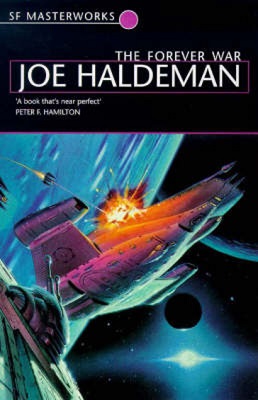

6 Comments

Reading diary 2019, #6

My reading seems to be all over the place of late. Mostly it’s because I’ve been limiting myself to buying ebooks, and only when they’re cheap. I did bring some books with me, and I bought a few at the recent Swecon, but I put a lot of unread books into storage. So with less to choose from, my reading has proven less planned. Ah well.

X, Sue Grafton (2015, USA). I’ve been a fan of Grafton’s Kinsey Millhone novels since discovering them back in the mid-nineties. As well as being good crime novels with an engaging narrator, Grafton’s decision to keep the internal chronology consistent irrespective of how long it took her to produce a novel has meant each book has slipped further and further back into the past. Even now, thirty-seven years after the series began – or rather, thirty-three years from A to X – and X is still set in the 1980s, albeit towards the end of the decade. Millhone is hired by a local rich woman to check up on the son she gave up for adoption decades before, and who has just been released from prison after committing a string of burglaries. She does as asked but then discovers the man was no relation… and that the rich woman is the estranged wife of millionaire, and the two are trying to screw as much money out of each other as possible. Throw in a string of missing women and the man responsible for their deaths, identified by Milhone, and who then begins stalk her. Plus an elderly couple who have moved into Milhone’s neighbourhood but do not prove to be who they claim… It’s a bit busier than most of the Milhone novels, and the millionaire man and wife plot actually has a happy end; but these are good books and definitely worth reading.

Embers of War, Gareth L Powell (2018, UK). This won the BSFA Award earlier this year, although I don’t chose the books I read because they won awards (ha!). I’d sort of gone off space opera in recent years as none of the stuff being published really appealed – and, to be honest, most of it seems to resemble military sf more than it does space opera. But UK space opera is a different beast to US space opera, and closer to my sensibilities. I’d also heard a few good things about Embers of War… But, well, having now read it, I’m not entirely convinced. Powell’s decision to tell his story using a number of different points of view in short chapters, I think, worked against it. It didn’t help that so many of the voices were similar, including that of the ship’s AI whose story the novel ostensibly is (in fact, Embers of War is the first in a series about the ship; the sequel is Fleet of Knives). Anyway, the ship Trouble Dog used to be a warship but is now a de-armed rescue ship with your typical space opera crew of misfits. A spaceliner is attacked by a mysterious enemy while visiting a planetary system whose planets were all reshaped into giant sculptures by a powerful and long-dead alien race. Trouble Dog goes to the rescue. Meanwhile, the target of the spaceliner attack – and why do sf novels think it’s acceptable to murder thousands in pursuit of just one person? It needs to stop – has managed to survive and finds herself on the surface of the planet known as the Brain (because, er, it looks like one). She discovers a labyrinth inside the planet – this part of the novel reminded me a great deal of a favourite sf short story, ‘A Map of the Mines of Barnath’ by Sean Williams – and so discovers its secret. The real identity of the woman was not hard to figure out, and it’s the reason why people want her dead – although given she was following orders at the time, it did seem a bit like they were going after the wrong person. The last Powell novel I read was The Recollection back in 2011 (see here), and I thought that started well but then turned boringly generic. Embers of War suffers from the latter as well. The world-building is all a bit too identikit and the ideas feel somewhat second-hand (cf my mention of the Williams story earlier). The characterisation is either bland or relies on quirks, and the prose is readable without being memorable. Readers who like BDOs and alien puzzles will find something to their taste here, but for me this is just Extruded Space Opera Product, with little or nothing that makes it stand out.

The Paper Men, William Golding (1984, UK). I’m having trouble making up my mind about Golding. Until a couple of years ago, I knew him only as the author of Lord of the Flies – his debut novel and his most famous, which must have really hurt – but then I read Rites of Passage and was very impressed. I picked up several of his books in a charity shop, so I had more to read. But… I’m reminded of John Fowles’s oeuvre: he wrote a couple of novels that were stunning pieces of work, but also a number that were almost emblematic of the output of a British white middle-class middle-brow male writer and so not so good. I think Golding was a better writer than Fowles, although none of his books, other than his debut, were as successful as either The Magus or The French Lieutenant’s Woman (and while the latter is an excellent piece of work, the former is very much the sort of book that’s admired only by people in their early twenties). So too with Golding: a handful of beautifully-written but quite strange novels, and then some that are pretty much emblematic of the output of a British white middle class male writer, although perhaps never middle-brow. And The Paper Men falls into the latter category. It’s a first-person narrative by a famous writer who has managed to build a successful career out of a critically-acclaimed and commercially-successful novel and a series of much less successful follow-on works. But he’s seen as an important man of letters, and a US academic turns up on his doorstep asking to be his official biographer. The writer refuses. Shortly afterwards, the writer’s marriage breaks up and he heads off to foreign parts. There’s then a sort of hallucinatory chase around the world, with the biographer trying, and failing, to gain permission to access the writer’s papers. There’s something more going on there, or at least it feels like there should be, but if it’s a reference to anything it pass me by. There’s some very male-gazey – well, pretty lecherous – depictions of the biographer’s young wife, and a number of situations with border on farce. In fact, at times The Paper Men feels like it’s supposed to be a comic novel, even though it’s not at all humorous for most of its length. I’ll certainly read more Golding, but the last two books by him I’ve read have been somewhat disappointing.

The Bitter Twins, Jen Williams (2018, UK). I read the first book in this trilogy earlier this year (see here), and only did so because some friends were extremely effusive with their praise of it… I mean, I’m not a fan of heroic fantasy, although I’ve read a lot of it in the past, and I’m pretty sure there’s very little overlap between my taste in genre fiction and that of the one friend who praised these books the most… But I’m happy to read outside my comfort zone because how else would I discover new authors to like and admire? While bits of the first book, The Ninth Rain, didn’t entirely work for me, I do like fantasy worlds that are couched as science-fictional – and vice versa, of course – so there were definitely things to appreciate there. Enough, at least, to read the second book. Which is, I think, better than the first. And middle books of trilogies generally are not that. It’s better because it introduces a mystery in one of its narratives, gives it a satisfying conclusion, and also uses it to reveal some deeper background about the world. On the other hand… there was something about the writing style which didn’t quite click with me. It wasn’t until a chat at a con with the aforementioned friend where she mentioned “cock-blocking” and quoted a particular line from The Bitter Twins that I figured out what it was about the prose that was giving me trouble: it was written like fan fiction. The author was having far too much fun with their characters, to the extent that “having fun with characters” was driving the story rather than the plot. I’m not saying this is a bad thing. That friend? She’s a big fan of fan fiction, so it’s an approach and style of narrative that appeals to her. I don’t have that background – she had to explain what “cock-blocking” was to me – and I prefer my narrative voice distanced (see pretty much every Reading diary post on this blog). Despite that, the world-building in this trilogy remains very good – in many respects, it reminds me of Jemisin’s award-winning Broken Earth trilogy – and while the good guys tend to be a bit too good to be true at times, the villains of the piece are interesting. Worth a go.

Air Force!, Frank Harvey (1959, USA). I think it was the cover art which prompted me to buy this. I do like books about the Space Race, and while a cherry-picker was never used to deliver astronauts to their space capsule – whatever capsule that’s supposed to be on the cover – it all looked close enough to reality to appeal. If you know what I mean. The contents turned out to be somewhat different to what I’d expected. For a start, I’d thought it was non-fiction, a series of essays written for the popular press about the Space Race, or extrapolations of its future. It turned out to be entirely fictional, albeit based on extrapolations of the state of aviation and space technology in the US at the time.  There are eight stories, originally published chiefly in the Saturday Evening Post. One story is about the first X-15 flight to achieve orbit (the X-15 never did), another is about a pilot whose wife is pressurising him to leave USAF and go into business but his successful prevention of a disaster on a flight persuades him to say. Another story has a fighter pilot “demoted” to transport planes but he manages to prevent a fatal crash during a catastrophic failure of his plane’s systems and that persuades his superiors he should be back flying fighters. It’s all very gung-ho and USAF rah rah rah, and while the technical details are spot-on, the extrapolations are closer to the military’s wishful thinking than what actually happened. This is Man In Space Soonest rather than Skylab, if you know what I mean. The prose is not even serviceable, it’s “journalese” and presents each story as a cross between fiction and a personal account. It’s fun, if you’re into mid-twentieth century US aviation fiction, but its appeal these days, ie sixty years later, is going to be limited pretty much to fans of that. Like, er, me.
A Big Ship at the End of the Universe, Alex White (2018, USA). I should have known from the title… and its sequels’ titles (currently A Bad Deal for the Whole Galaxy and The Worst of All Possible Worlds). This is the Becky Chambers school of titling books, and I’m not a fan of Becky Chambers’s novels. Although to be fair, I was unimpressed with A Big Ship at the End of the Universe for a number of reasons, of which its terrible title was probably the least objectionable. The bad news starts pretty much on the first page. This is a far-future space opera universe… and it has magic. There’s no sense to it, clearly it was added because the author it was a cool idea. Half the stuff magic does in the book is also done by technology. Why would they do that, build a technological solution to a problem already solved by magic? It’s like that throughout the story. But, you know, some people like tech and magic; the fact it makes no sense, that it destroys any rigour the universe might claim to possess, is not a deal-breaker for them. It’s certainly a hurdle more easily scaled by some readers than others. Had that been my only issue with A Big Ship at the End of the Universe, then I’d have simply written it off as “not for me”. But… The novel opens with car race on a space station and it’s clear this is a sport all worlds enjoy and follow, and there’s a lot of money and prestige invested in it, much like Formula 1 in the real world. During the race, one of the drivers, the favourite to win the championship, witnesses the murder of her rival by a strange masked magical figure who seems to have EVEN MOAR magical powers than is known to be possible. The driver is charged with the murder, fears for her life, and does a runner (despite belonging to one of the richest families in the galaxy). Meanwhile, a woman who makes a living selling fake treasure maps to gullible treasure hunters finds herself being hunted by unknown assailants. And she is one of those rare people who have no magical ability whatsoever. Both end up being kidnapped by, and then dragooned into, the crew of the Capricious, an ex-warship from the losing side of an earlier war. The map-seller was once a member of the crew but walked away when the war ended. Bad feelings remain. The plot is all about a super-warship that disappeared during the war, and somehow the super-magic assassin is associated with it. After some internal tensions, the crew of the Capricious track down the ship with authorially imposed ease, but then find themselves the targets of a group of super-powerful magicians, including the aforementioned assassin, who seem to have no trouble razing rich and powerful galactic institutions to the ground. And that is this novel’s biggest problem. The villains are super-powerful, and their strategy of slash and burn is at complete odds with the conspiracy’s previous actions, and it all seems EVEN MOAR implausible than having random magic powers in a technological space opera universe. And if that weren’t enough, the hardy band of adventures otherwise known as the crew of the Capricious still manage to win the day. They are massively outgunned, hugely outgunned… But they win. A battle, not the war – as indicated by the presence of sequels. I mean, there’s suspension of disbelief and there’s suspension of disbelief. The presence of magic is stretching it, but I’m willing to go with it. The rest? No! Dial it back, FFS. It’s nonsense. Super-villains taken down by hardy adventurers with no special powers? There’s no rigour here, no attempt at it. It’s like the author just threw “cool” ideas at the page with no regard for what fitted. It’s not like the plot is super original, because it’s not, in fact it’s a pretty standard one for RPGs (and “ordinary” player-characters overcoming super-powered NPCs is also pretty common in RPGs). Anyway, A Big Ship at the End of the Universe is not a good book. I will not be continuing with the series.


12 Comments

The Hugos 2019, novellas

I attended the Worldcon in Helsinki in 2017 – and had a great time – which meant I was eligible to nominate and vote for the Hugos that year and the year following. I did neither. In either year. I’ll be attending the Worldcon this year in Dublin. Which means I’m once again eligible to nominate and vote for the Hugo Awards. Again, I’ll be doing neither. The Hugos have never really aligned with my tastes, and I refuse to vote for people on shortlists that comprise works. However, as an eligible voter, I have access to the Hugo Voter Pack. Which is pretty much everything on the various shortlists. This year, I decided to actually have a go at reading the shortlisted works. I doubt I’ll finish the novels before the con itself – and, to be honest, I’ve not even started them – but the novellas, novelettes and short stories… those I can do. The other categories I don’t care about.

First up are the novellas. Because it’s a length of fiction I like, both to read and to write. Of the six works on the shortlist, four were by authors whose names I’d heard of before and, in some cases, even read previously. One was vaguely familiar and one was completely unknown to me. In the order in which I read them…

Gods, Monsters, and the Lucky Peach, Kelly Robson. I don’t think I’ve read anything by Robson previously, but her name sounded vaguely familiar– Ah, she won a Nebula for Best Novelette last year, and is another of the Clarkesworld/Tor.com stable, members of which have appeared on many shortlists in the last couple of years. Gods, Monsters, and the Lucky Peach was published by Tor.com. In fact, five of the six novellas on this year’s shortlist were published by Tor.com. Which is a problem. Anyway, Gods, Monsters, and the Lucky Peach is set on a post-climate crash Earth, in which a much-reduced population live in small high-tech communities. There are people who work on fixing the damage caused by the climate crash, in an effort to create a world that can be repopulated to former levels. The protagonist of this story is one of them. She also has eight prosthetic legs, like an octopus. And she is part of a team, if not its leader, which submits a proposal for an environmental impact study which involves time travel back to Sumeria. It sounds messy as fuck, but Robson manages to make it all hang together. There are problems: it’s not entirely clear what the team from the future are trying to achieve, the personal politics are confused with the wider political situation, and the POV is peculiarly narrow given the world-building. It actually reads like part of a series where much of the world-building was handled in earlier works, but I’m not sure that’s the case. It’s a reasonably well-handled piece, and the prose itself neither stands out nor is an obstacle – and the latter is certainly something that could be said of other nominees. I’m not sure if it deserves to be on the shortlist… but on balance, I’d say its presence is not embarrassing.

Artificial Condition, Martha Wells. Another problem with the novella category – indeed, with the Hugo Awards over the last few years as a whole – is the preponderance of sequels. Martha Wells, previously better-known for mid-list fantasy series, published three of her Murderbot novellas in 2018. (The first was published in 2017.) That’s a series. Artificial Condition is the second instalment. None of them stand alone. There are indeed cases where the second instalment in a series is better than the first, but in this case the first instalment, All Systems Red… won the Hugo Award for Best Novella last year. Come on, people, read a little more fucking widely. It would be understandable if the Murderbot series were astounding, the best sf published for many years… But they’re not. They’re entertaining, and even a little bit clever in places. But fun as they may be, they’re not award-worthy. And if you’re nominating fiction because it was “fun”, you appear to have misunderstood the meaning of the word “best”. The thing about “best” is that you have to recognise something as being of high quality, higher quality in fact than pretty much everything else you read, you don’t necessarily have to have enjoyed it or thought it was fun. The two are quite different. Any old wine will get you pissed, but the good ones won’t have you gagging every time you take a sip. At least not for the first half-dozen glasses. What we have here is a novella that gets you pissed without you actually noticing the flavour of the vintage – and I’d submit that’s not what awards are about, at least not awards that have the word “best” in their title. I enjoyed Artificial Condition. I might even read the rest of the series. But I really can’t see this as award-worthy and its nomination says more about the award than it does the genre.

The Black God’s Drums, P Djèli Clark. Clark won the Nebula Award for Best Short Story this year (the story is also nominated for the Hugo), but appears to have come pretty much from nowhere. True, The Black God’s Drums was published by Tor.com, but his short story was published in a magazine I’ve not come across before. Also true, there seems to be a great love for debuts in recent years’ popular vote genre awards (seriously? why?), but that doesn’t mean the nominated works are necessarily bad. The Black God’s Drums is a bit busy, but it’s an interesting melding of ideas – alternate history, steampunk, voodoo magic and gods – and if it suffers it’s because its ideas makes its plot all a bit too obvious. Streetwise urchin protagonist has connection to powerful goddess; said goddess makes unexpected appearance at story climax to save the day. It’s not quite that simplistic, but the telegraphing here is as blatant as it comes. Obvious foreshadowing is better than none, but a little subtlety goes a long way. The plot is pretty much a staple of, well, fiction in general: nutter steals superweapon to wreak vengeance on city, random people come together to foil the plot (because there’s no organised government response to these sorts of things, ever). Does The Black God’s Drums belong on the shortlist? About as much as the Robson, I think. Its presence is hardly embarrassing, but if this and the Robson are the best the genre can produce in a given year then there’s still a long way to go…

Binti: The Night Masquerade, Nnedi Okorafor. Like Clark, Okorafor also appears twice in this year’s Hugo nominations – for this novella and for the Black Panther comic she scripted. I have to admit I don’t understand the acclaim her fiction receives. She’s a fascinating person and is an excellent role model, but what little fiction by her I’ve read has struck me as simplistic and badly-written. It doesn’t help that Binti: The Night Masquerade is the third and, I think, final part in the Binti series. I read the first, and thought it interesting, if not particularly well put-together. But it was much better than this one, in which this happens and then that happens and then something else happens and then Binti is killed and then she comes back to life and then it all abruptly ends. It doesn’t help that the title refers to a nightmarish figure who appears to Binti, and yet the name of it – the Night Masquerade – clearly indicates it’s a fucking fake but everyone is too fucking stupid to realise. Anyway, Binti returns home but her family are dead, except they’re not really, and there are two races at war with each other but it’s almost impossible to keep straight because Okrafor is more interested in Binti’s feels than she is setting the scene. I’m no fan of exposition, and I disagree entirely with Kim Stanley Robinson’s statement “it’s just another form of narrative”, and “streamlining exposition into the narrative” is another piece of writing advice that gets my back up… Which is not to say there’s zero info-dumping in Binti: the Night Masquerade. There’s plenty. But it’s all about Binti and her culture, or that of her male companion. The rest of the world is so sketchy it might as well have been made-up on the spot by Binti herself. I really do not rate these novellas, and I’m mystified by the love shown to them.

Beneath the Sugar Sky, Seanan McGuire. Yet another sequel. This is the third instalment in the Wayward Children series, about which I know nothing… but can pretty much guess what it’s about from this novella alone. Think Miss Peregrine’s Home for Peculiar Children. Sort of. But less clever. McGuire’s prose is so bland it rivals Gaiman’s. Except, that is, for the occasional flight of fancy, none of which actually work. The story is all “poor fat girl who is actually a princess in another reality” tagging along with some friends who try to help a fellow “wayward child” at a school for children who have spent time in other worlds and can’t cope in the real one. The central conceit is, I admit, quite neat, and McGuire clearly has a great deal of fun with it. But it all reads like poor-me fiction and a single idea stretched well past breaking point. The first volume in the series, Every Heart a Doorway, won the Hugo and Nebula awards in 2017, and I’m told it’s better than this one. And the second instalment, Down Among the Sticks and Bones, was nominated last year. But Beneath the Sugar Sky‘s presence on the shortlist says more about the power of McGuire’s fanbase than it does the quality of her fiction.

The Tea Master and the Detective, Aliette de Bodard. I’ve been and on-and-off fan of de Bodard’s fiction since first reading one of her stories in an issue of Interzone just over ten years ago. I say “on-and-off” because her science fiction appeals to me much more than her fantasy. And while I remember a number of sf stories set in an Aztec-dominated world, she is best-known these days for her Xuya universe stories, a Vietnam-based far future. (The universe itself is shortlisted for the Best Series Hugo Award, which is not how I thought the Best Series Hugo Award worked, and I’m surprised there’s more than 250,000 words in the short stories and novellas, but no novels, set in the Xuya universe.) Anyway, the “tea master” is a ship mind (more McCaffrey than Banks, if I’ve interpreted the text correctly) and the detective is a woman with a chequered past who hires the ship mind for a simple task. During which they discover a body that clearly did not die of natural causes. The mystery of the victim’s death is intertwined with the mystery of the detective’s past, although one is not a consequence of, or reflects on, the other. But both have satisfying conclusions, and the novella makes good use of its setting. The Tea Master and the Detective is not, as a friend said to me, the best Xuya story de Bodard has written, but it’s a good one. and to my mind, it’s easily the best on this year’s Hugo shortlist.

So there you have it. I’m not going to vote on any of the above, but if I had to choose a winner it would be The Tea Master and the Detective. If I were in a good mood, I’d vote de Bodard, then Robson, then Clark, and everything else below no award. If I were in a bad mood – which is more likely, I suppose – then it’d be de Bodard and everything else below no award.

I had thought this might prove a fun exercise. In fact, I’m discovering why I no longer follow the Hugo Awards. Ah well. Next up, the novelettes…