It Doesn't Have To Be Right…

… it just has to sound plausible


1 Comment

Locus All-Centuries Poll short fiction results

Locus posted the short fiction results to its poll a couple of days ago and the results are… not entirely unexpected. Americocentric. A little more diverse in terms of race and gender than the novel results, but not by that much. And yes, pretty much exclusively Anglophone. But let’s see how my choices did…

20th Century SF/F Novella
22 – 1 ‘Great Work of Time’, John Crowley (1989)
6 – 2 ‘The Fifth Head of Cerberus’, Gene Wolfe (1972)
51 – 3 ‘Forgiveness Day’, Ursula K Le Guin (1994)
0 – 4 ‘Equator’, Brian W Aldiss (1958)
72 – 5 ‘Green Mars’, Kim Stanley Robinson (1985)
83 – 6 ‘Marrow’, Robert Reed (1997)
0 – 7 ‘Secrets’, Ian Watson (1997)
1 – 8 ‘Story of Your Life’, Ted Chiang (1998)
71 – 9 ‘Piper at the Gates of Dawn’, Richard Cowper (1976)
10

Well, I picked the number one novella, although I had it down at number eight. A single Aldiss novella barely made the top fifty – so much for his sixty-year career (though I will admit ‘Equator’ is not generally seen as one of his career highlights; I still love it, however.) A single Ian Watson novelette made it to number 117 – so there’s another British author who has been cruelly neglected.

Instead, the actual top twenty had Chiang, old favourites like Heinlein and Simak and John W Campbell and Sturgeon and Lovecraft, and six women (including US middle-aged fan favourite Connie Willis). Most, surprisingly, are science fiction, rather than fantasy.

20th Century SF/F Novelette
108 – 1 ‘The Barbie Murders’, John Varley (1978)
170 – 2 ‘Beauty and the Opéra or the Phantom Beast’, Suzy McKee Charnas (1996)
0 – 3 ‘The Time-Tombs’, JG Ballard (1963)
73 – 4 ‘A Little Something For Us Tempunauts’, Philip K Dick (1974)
157 – 5 ‘Black Air’, Kim Stanley Robinson (1983)
0 – 6 ‘The Last Days of Shandakor’, Leigh Brackett (1952)
100 – 7 ‘No Woman Born’, CL Moore (1944)
0 – 8 ‘FOAM’, Brian W Aldiss (1991)
44 – 9 ‘Swarm’, Bruce Sterling (1982)
0 – 10 ‘Housecall’, Terry Dowling (1986)

A few more zeros here, meaning no one selected those choices as their number one. My highest placer is Bruce Sterling at 44, and I thought that was my most commercial pick. I should have instead listed ‘The View From Venus: A Case Study’ by Karen Joy Fowler, which, er, no one picked at all.

The actual top twenty has the execrable ‘Nightfall’ at number two. Kill it with fire. And another Asimov at number four. Plus Harlan Ellison (it’s harder to know which to despise more, the man or his fiction). Three women, although Tiptree is selected twice. Samuel Delany sneaks in at number sixteen. All twenty novelettes are by Americans (the first Brit appears at 41).

20th Century SF/F Short Story
56 – 1 ‘And I Awoke And Found Me Here On The Cold Hill Side’, James Tiptree Jr. (1972)
25 – 2 ‘Air Raid’, John Varley (1977)
0 – 3 ‘Forward Echoes (AKA Identifying the Object)’, Gwyneth Jones (1990)
213 – 4 ‘The Lake of Tuonela’, Keith Roberts (1973)
0 – 5 ‘The Road To Jerusalem’, Mary Gentle (1991)
0 – 6 ‘A Map of the Mines of Barnath’, Sean Williams (1995)
0 – 7 ‘The Brains Of Rats’, Michael Blumlein (1986)
22 – 8 ‘Aye, And Gomorrah’, Samuel R Delany (1967)
276 – 9 ‘A Gift From The Culture’, Iain M Banks (1987)
101 – 10 ‘The Gernsback Continuum’, William Gibson (1981)

I wasn’t expecting to have many popular choices in this category, but not a single one of mine made it into the top twenty. Delany came highest at 22, and then Varley at 25. And they’re popular works of sf. I got four zeroes.

The actual results featured Ellison (3), Heinlein (2), Clarke (3), Asimov, Bradbury (2)… It’s Dead White Male time. (Except Ellison isn’t dead, of course.) Four women. JG Ballard’s highest placing is 47, which is dismaying. Looking at the results, I see a lot of stories that are repeatedly anthologised. Well, there you go…

21st Century SF/F Novella
59 – 1 ‘Arkfall’, Carolyn Ives Gilman (2008)
0 – 2 ‘My Death’, Lisa Tuttle (2004)
6 – 3 ‘Diamond Dogs’, Alastair Reynolds (2001)
0 – 4 ‘Dangerous Space’, Kelley Eskridge (2007)
0 – 5 ‘A Writer’s Life’, Eric Brown (2001)

I’ve read two of the novellas which made the top ten in this category. One of them was the Reynolds. I was surprised Carolyn Ives Gilman didn’t get zero, but then it was originally published in Asimov’s. Two of the others were original novellas from PS Publishing, so no surprise with the zeroes there…

21st Century SF/F Novelette
2 – 1 ‘The Merchant and the Alchemist’s Gate’, Ted Chiang (2007)
66 – 2 ‘Divining Light’, Ted Kosmatka (2008)
3
4
5

I freely admit to being crap at this category. Not only is the novelette a completely useless category and should be roundly expunged from, well, everything, but I’ve not read enough long short fiction published this century. Still, my number one choice made number two. Still, Chiang… (On the other hand, he also made the number one spot.)

As it is, the top ten are all genre darlings – Chiang, Link, Gaiman, Stross, Miéville, Bacigalupi…

21st Century SF/F Short Story

I was so rubbish at this one, I couldn’t think of a single story to nominate. If I had chosen the story I remembered after the deadline, ‘The Avatar of Background Noise’, Toiya Kristen Finley, it would have come… nowhere. No one picked it. Instead, we got ten relatively recent award winners, with a couple of outliers – Le Guin and Swanwick.

We can thus conclude that all worthwhile science fiction and fantasy short fiction is written by a group of about thirty people, over half of whom are dead. Of course, this is a consequence of the small number of voters, most of whom probably fit a fairly similar profile. I’m not sure how useful an exercise that makes the poll, though as a guideline for changing a reader’s approach to the genre it offers a possible blueprint. You know, don’t read the writers in the top twenties for each category, read other ones instead, ones you may not have come across before. Diversify your diet of genre fiction. Add some diversity to it.

And finally, I just have to say something about the amazingly stupid remark made in the comment thread on the results page:

“If there was more women and minorities that cared enough to vote in this poll, then there would have been more females and minorities on the list. you cannot blame others for it.”

Poor grammar aside, it’s a remarkably dumb thing to say. Because of course only women and minorities nominate women and minorities. And women only vote for women, just as minorities only vote for minorities. Someone take away Maddog’s computer, he’s clearly too stupid to use it properly.
24 Comments

The Novel Poll results are in

… and oh dear. Well, that’s a little embarrassing. The results for the novels for the Locus All-Centuries Poll are in – see here. The best science fiction novel of the twentieth century is apparently Frank Herbert’s Dune, the best fantasy novel of the twentieth century is The Lord of the Rings, the best sf novel of the twenty-first century is John Scalzi’s Old Man’s War, and the best fantasy novel of the twenty-first century is Neil Gaiman’s American Gods.

These results only show that most people confuse popularity with quality. I love Dune and I’ve read it many times, but it’s not a very well-written book. In fact, Herbert’s prose rarely rises above the embarrassingly bad. The Lord of the Rings is the giant elephant in the fantasy room, and it’s about time fantasy got over it. The less said about the twenty-first century novel choices, the better. I’ve read neither, I have no intention of reading them, they are not books I’d ever consider would merit the description “best”.

Unsurprisingly, my own choices did woefully badly. Only one actually made it onto a list – Watership Down at number ten on the 20th Century Fantasy Novel. For the record, here are the actual positions of my choices, where 0 (zero) means the book was not chosen as number one on a list by anyone.

20th Century SF Novel
221 – 1 Coelestis, Paul Park (1993)
206 – 2 Dhalgren, Samuel R Delany (1975)
16 – 3 The Dispossessed, Ursula K Le Guin (1974)
283 – 4 Kairos, Gwyneth Jones (1988)
0 – 5 Synthajoy, DG Compton (1968)
349 – 6 Ash: A Secret History, Mary Gentle (2000)
0 – 7 Where Time Winds Blow, Robert Holdstock (1981)
35 – 8 Red Mars, Kim Stanley Robinson (1992)
0 – 9 Take Back Plenty, Colin Greenland (1990)
76 – 10 The Female Man, Joanna Russ (1975)

20th Century Fantasy Novel
229 – 1 Aegypt, John Crowley (1987)
265 – 2 In Viriconium, M John Harrison (1982)
236 – 3 Rats & Gargoyles, Mary Gentle (1990)
34 – 4 Mythago Wood, Robert Holdstock (1984)
0 – 5 Lens of the World, RA McAvoy (1990)
10 – 6 Watership Down, Richard Adams (1972)
102 – 7 The Golden Compass, Philip Pullman (1995)
62 – 8 Tehanu, Ursula K Le Guin (1990)
18 – 9 The Book Of The New Sun, Gene Wolfe (1983)
0 – 10 The Grail of Hearts, Susan Shwartz (1992)

21st Century SF Novel
14 – 1 Light, M John Harrison (2002)
67 – 2 Life, Gwyneth Jones (2004)
0 – 3 Ascent, Jed Mercurio (2007)
0 – 4 Alanya to Alanya, L Timmel Duchamp (2005)
0 – 5 The Caryatids, Bruce Sterling (2009)

21st Century Fantasy Novel
0 – 1 Evening’s Empire, David Herter (2002)
87 – 2 A Princess of Roumania, Paul Park (2005)
0 – 3 Lord Byron’s Novel: The Evening Land, John Crowley (2005)
155 – 4 Hav, Jan Morris (2006)
0 – 5 Lord of Stone, Keith Brooke (2001)

So there we have it: popularity contest picks most popular novels and calls them “best”. In other words, a total waste of time. I knew going in that some of my choices were reasonably obscure – not totally obscure, as they were published by major publishing houses – but even so I expected some people to recognise their quality. Sadly not. And even my choices for the more popular and better-known authors didn’t even make it into the final top ten or top five. I mean, no halfway-intelligent person can consider Old Man’s War to be a better book than Light. Not, and be taken seriously. But that’s the problem, isn’t it? Sf and fantasy aren’t taken seriously. And never will be as long as we pull stupid strokes like the results of this poll.

So, science fiction and fantasy, go and stand in the corner.


Leave a comment

Locus poll adden-doh

So, a day or two after I filled in my selections for the Locus Poll of Polls (see here), I stumbled across this Mind Meld I did back in October 2010 on my perfect short fiction anthology. While most of the TOC made it into my categories for the polls, some didn’t and I wish I’d managed to remember them. The missing ones were:

‘That Only a Mother’, Judith Merrill (short story, 1948)
I went for ‘No Woman Born’ by CL Moore instead. I’d have to reread both to decide which of the two I should have chosen. It might have been both.

‘The Sword of Rhiannon’, Leigh Brackett (novel, 1949)
This is apparently a novel, so it doesn’t even belong in a short fiction anthology. Whoops. I picked Brackett’s ‘The Last Days of Shandrakor’ for my 20th Century SF/F Novelette category.

‘A Woman Naked’, Christopher Priest (short story, 1974)
I did think about including this one, but I had more than ten choices for my 20th Century SF/F Short Story category. Even though some turned out to be novelettes, I still had to say no to a couple of titles. Incidentally, I wrote a guest post on this story on Gav Reads – see here.

‘The View from Venus: A Case Study’, Karen Joy Fowler (novelette, 1986)
I considered this one too, but I thought it was a short story and I was over-subscribed in that category. But I’ve just looked on isfdb.org and it’s down as a novelette. So I should have included it in that category, probably in place of the Sterling or the Dowling.

‘In Saturn Time’, William Barton (short story, 1995)
Like the Priest, I considered this, but had no free space in the category.

‘Beside the Sea’, Keith Brooke (short story, 1995)
I’d forgotten about this one, but I suspect it wouldn’t have made the cut anyway. Though it is an excellent short story.

‘The Avatar of Background Noise’, Toiya Kristen Finley (short story, 2006)
I wish I’d remembered this one. I left my 21st Century SF/F Short Story category blank, but I’d have included this one if I’d remembered it. Argh.

I only managed nine in the 20th Century SF/F Novella category, two in the 21st Century SF/F Novelette, and none in 21st Century SF/F Short Story. I think I need to read more short fiction from the first decade of this century. It’s not like I’m prevented from doing so – I have a huge pile of Interzones, a shelf full of Postscripts, and a whole bunch of other magazines and anthologies…

So, I think, as a resolution for 2013, I shall work towards putting together a short fiction best of the year, as I do every year for books, films and albums. That should encourage me to read more short stories. I’ll not differentiate between short story, novelette or novella – they’ll all be munged together into one list. Nor will I work overly hard at reading as much as possible. If a story doesn’t grab me within the first 500 to 1,000 words, I’ll not bother finishing it. I’ll stick to the venues I usually frequent, though if someone recommends a story published elsewhere I’ll give it a go. Hopefully, by the end of the year I’ll have enough to choose from to list the five best. I’ll even be able to pick stories to nominate for the BSFA Award. (hint, hint.)


1 Comment

The humungous Locus poll and my picks for it

I hate polls; polls are stupid things. Picking the best fiction with a popularity contest? Fail. But I had a bash at it anyway. Not that my choices are likely to appear in the final top ten in any category, or cause anything but the tiniest amount of skew in the results. But it was sort of fun as an intellectual exercise.

Picking out the novels was easy enough, but the short fiction categories were hard, especially the 21st century ones. Some stories stay with you for years afterwards, but they’re few and far between. And numbers alone – plus the fact I don’t read every piece of short fiction as it’s published – means I probably encountered few memorable stories during the first decade of this century.

Anyway, for what it’s worth here are my picks:

20th Century SF Novel
1 Coelestis, Paul Park (1993)
2 Dhalgren, Samuel R Delany (1975)
3 The Dispossessed, Ursula K Le Guin (1974)
4 Kairos, Gwyneth Jones (1988)
5 Synthajoy, DG Compton (1968)
6 Ash: A Secret History, Mary Gentle (2000)
7 Where Time Winds Blow, Robert Holdstock (1981)
8 Red Mars, Kim Stanley Robinson (1992)
9 Take Back Plenty, Colin Greenland (1990)
10 The Female Man, Joanna Russ (1975)

20th Century Fantasy Novel
1 Aegypt, John Crowley (1987)
2 In Viriconium, M John Harrison (1982)
3 Rats & Gargoyles, Mary Gentle (1990)
4 Mythago Wood, Robert Holdstock (1984)
5 Lens of the World, RA McAvoy (1990)
6 Watership Down, Richard Adams (1972)
7 The Golden Compass, Philip Pullman (1995)
8 Tehanu, Ursula K Le Guin (1990)
9 The Book Of The New Sun, Gene Wolfe (1983)
10 The Grail of Hearts, Susan Shwartz (1992)

20th Century SF/F Novella
1 ‘Great Work of Time’, John Crowley (1989)
2 ‘The Fifth Head of Cerberus’, Gene Wolfe (1972)
3 ‘Forgiveness Day’, Ursula K Le Guin (1994)
4 ‘Equator’, Brian W Aldiss (1958)
5 ‘Green Mars’, Kim Stanley Robinson (1985)
6 ‘Marrow’, Robert Reed (1997)
7 ‘Secrets’, Ian Watson (1997)
8 ‘Story of Your Life’, Ted Chiang (1998)
9 ‘Piper at the Gates of Dawn’, Richard Cowper (1976)
10

20th Century SF/F Novelette
1 ‘The Barbie Murders’, John Varley (1978)
2 ‘Beauty and the Opéra or the Phantom Beast’, Suzy McKee Charnas (1996)
3 ‘The Time-Tombs’, JG Ballard (1963)
4 ‘A Little Something For Us Tempunauts’, Philip K Dick (1974)
5 ‘Black Air’, Kim Stanley Robinson (1983)
6 ‘The Last Days of Shandakor’, Leigh Brackett (1952)
7 ‘No Woman Born’, CL Moore (1944)
8 ‘FOAM’, Brian W Aldiss (1991)
9 ‘Swarm’, Bruce Sterling (1982)
10 ‘Housecall’, Terry Dowling (1986)

20th Century SF/F Short Story
1 ‘And I Awoke And Found Me Here On The Cold Hill Side’, James Tiptree Jr. (1972)
2 ‘Air Raid’, John Varley (1977)
3 ‘Forward Echoes (AKA Identifying the Object)’, Gwyneth Jones (1990)
4 ‘The Lake of Tuonela’, Keith Roberts (1973)
5 ‘The Road To Jerusalem’, Mary Gentle (1991)
6 ‘A Map of the Mines of Barnath’, Sean Williams (1995)
7 ‘The Brains Of Rats’, Michael Blumlein (1986)
8 ‘Aye, And Gomorrah’, Samuel R Delany (1967)
9 ‘A Gift From The Culture’, Iain M Banks (1987)
10 ‘The Gernsback Continuum’, William Gibson (1981)

21st Century SF Novel
1 Light, M John Harrison (2002)
2 Life, Gwyneth Jones (2004)
3 Ascent, Jed Mercurio (2007)
4 Alanya to Alanya, L Timmel Duchamp (2005)
5 The Caryatids, Bruce Sterling (2009)

21st Century Fantasy Novel
1 Evening’s Empire, David Herter (2002)
2 A Princess of Roumania, Paul Park (2005)
3 Lord Byron’s Novel: The Evening Land, John Crowley (2005)
4 Hav, Jan Morris (2006)
5 Lord of Stone, Keith Brooke (2001)

21st Century SF/F Novella
1 ‘Arkfall’, Carolyn Ives Gilman (2008)
2 ‘My Death’, Lisa Tuttle (2004)
3 ‘Diamond Dogs’, Alastair Reynolds (2001)
4 ‘Dangerous Space’, Kelley Eskridge (2007)
5 ‘A Writer’s Life’, Eric Brown (2001)

21st Century SF/F Novelette
1 ‘The Merchant and the Alchemist’s Gate’, Ted Chiang (2007)
2 ‘Divining Light’, Ted Kosmatka (2008)
3
4
5

21st Century SF/F Short Story
1
2
3
4
5

Well, the same names crop up in most lists, but that’s because I think those writers are amongst the most interesting in genre fiction. I did trawl through the lists of suggested titles provided by Locus, but there were few novels or stories I liked or thought especially good – in fact, many of choices above don’t appear on any of their lists. I’ve not read enough 21st century short fiction to pick the five best. I managed it with a handful of novellas and novelettes, but short stories?

(No doubt I’ll think of possible titles the moment I hit the “Publish” button on this post…)

And let me once more ask what on earth is the use of the novelette? It’s an entirely arbitrary and useless category. Anything bigger than a short story but smaller than a novel is a novella. The only places where novelette is used as a category is in the Big Three genre magazines and US genre awards. And it seems to me it only exists so the big friendly and incestuous club of US genre writers have an excuse to give each other yet another award. Get rid of it, please.


6 Comments

The 5 Most Influential Books in My Life

I saw Martin Lewis and Niall Harrison tweeting about this in response to, I think, this post from Aidan Moher. And since I love me a good book-related meme, I thought I’d have a go. It would have been too easy to pick the books I admire the most and claim they have influenced me in some fashion – which no doubt they have. But they’ve hardly directed my reading, or helped form my taste in literature, or shaped my conception of science fiction. Of the following five books, three I do indeed admire. But two are bad. They all, however, led to what I read and how I read it.

Starman Jones, Robert A Heinlein
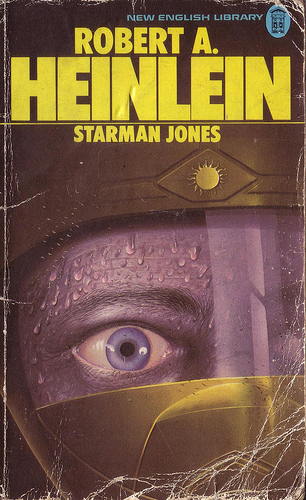
The first sf novel I recall reading was a novelisation of Doctor Who and the Zarbi, which my parents bought me for Christmas. For years afterward, I received Dr Who novelisations for Christmas and birthday. I’d also buy them with my pocket money. I think I had about two dozen by the time I eventually grew out of them. However, the first proper sf novel I read was by Robert Heinlein. I remember it quite clearly. It was 1976, I was in Form 3A at prep school. A lad in the same class pulled a book out of his desk and gave it to me because he thought I might like it (I think we’d been discussing Dr Who or something). It was Starman Jones. I loved it. Later, a second former introduced me to the works of EE ‘Doc’ Smith, and from then on I was hooked on science fiction. And I’ve been reading it ever since – but not Heinlein or EE ‘Doc’ Smith.

Dhalgren, Samuel R Delany
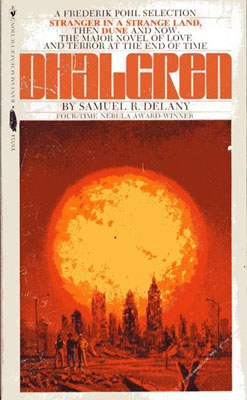
Some time during the mid-1980s, the family went on holiday to Paris. We stayed in a flat belonging to a director of the company for which my father worked. I vaguely remember buying an English book in a book shop somewhere in the city. It was Driftglass, a collection by Samuel R Delany. I bought it because I was reading The Ballad of Beta-2 / Empire Star, a Delany double, and I thought it was brilliant – especially ‘Empire Star’. Delany’s fiction showed me that sf wasn’t all Heinleinesque rational men heroes and Asimovian cardboard-cutouts characters, it didn’t have to privilege the central idea at the expense of everything else, it could be beautifully written. I was a big fan of Delany’s writing for many years, but nothing blew me away as much as ‘Empire Star’ had done… until I read Dhalgren. It was just so completely not everything I thought sf was – it was wilfully irrational, it was immediate and real and dirty, it wasn’t about manly, or intellectual, white men doing manly and intellectual things in space or on some alien planet… Dhalgren is still one of my favourite novels, and I’ve probably reread it more times than any other book I own – yes, even more times than Dune.

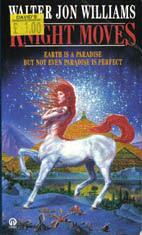
Knight Moves, Walter Jon Williams
I’ve never been a fan of Williams’ books, though I’ve read several of them over the years. I think Knight Moves might be the first book by him I read, however. It was published in 1985, and I’m fairly sure I read it in 1988. I’d joined the British Science Fiction Association that year, or perhaps the year before, and when Paperback Inferno – the BSFA’s paperback review magazine as was – put out a call for more reviewers, I volunteered. Andy Sawyer, the editor, asked me to send him a sample review, so I did a demolition job on Knight Moves. I can remember almost nothing of the book – except that I thought it was terrible – but as a result of my review of it I became book reviewer for the BSFA… and I’ve been reviewing books and commenting on science fiction ever since.

The Alexandria Quartet, Lawrence Durrell
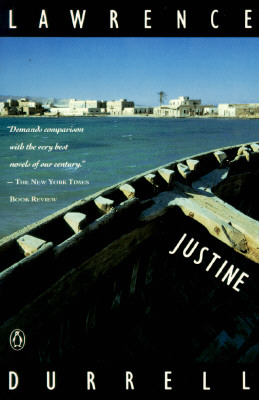
As a teenager, my first choice of reading had always been science fiction, but I didn’t always have access to it. When I spent the holidays with my parents in the Middle East, my reading was often limited to the books they owned. Which meant I read some right crap – Judith Krantz, Shirley Conran, Jackie Collins, Nelson DeMille, Eric van Lustbader – and a few good books (though none of the titles immediately spring to mind). When I moved to Abu Dhabi in 1994, one of the first things I did was join the Daly Community Library. It had only a small number of science fiction titles, so I was forced to widen my reading. That’s how I discovered Anthony Burgess, Angela Carter, David Lodge, Nicholas Monsarrat, Rose Tremain, Lawrence Norfolk, Hanan al-Shaykh, Helen Simpson, Margaret Atwood, and several other authors I still read. One of the books I took out of the library was The Alexandria Quartet. But I didn’t actually get around to reading it, and eventually took it back unread. So I bought paperback copies of the books on a visit to Dubai. I read it, and immediately became a fan of Durrell’s writing… and subsequently a collector of his books. Durrell is not the first author I hunted down first editions of their books so I’d own them all – that would probably be Gwyneth Jones – but my book collecting certainly turned more serious as a result of reading Durrell. so much so, in fact, that I now own a first edition of Durrell’s first novel, Pied Piper of Lovers, which is extremely rare…

Moondust, Andrew Smith
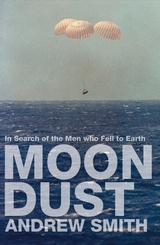
I was only three when the late Neil Armstrong set foot on the Moon – in fact, the only Apollo mission I recall watching was ASTP in July 1975. But I was very much fascinated by space exploration as kid. I remember having a large poster of a Saturn V and an astronaut on my bedroom wall in Dubai. But then I become more involved in science fiction and lost my interest in science fact. Every now and again, I’d read something related to space exploration – one year as a Christmas present, I was given one of those big Octopus coffee table books on the topic; while I was living in Abu Dhabi, a local book shop stocked a number of Apogee Books’ NASA Mission Reports, and I bought several of them; I read At the Edge of Space by Milton O Thompson, about the X-15 programme, and found it surprisingly interesting. Then, five years ago I read Moondust. I no longer recall what prompted me to read it. But it re-ignited my interest in space exploration, and especially the Apollo programme. So I started buying books on the subject – often signed first editions. I created a blog, A Space About Books About Space, to review the books I bought. I built up quite a library – and it’s still growing – on human space exploration and spacecraft. And all those books have also come in really useful in my science fiction writing (just look at the bibliography in Adrift on the Sea of Rains).


4 Comments

100 Greatest Novels meme

I stumbled across mention of this list on LibraryThing. It apparently comes from The Novel 100: A Ranking of the Greatest Novels of All Time by Daniel S Burt, a specialist in Victorian literature at a US university. Burt’s book was published in 2004, but it seems like an almost stereotypical list of classic literature by Dead White Males – with a few women and POC for variety. Burt clearly has his favourites – I find it hard to believe that some authors, on matter how great, could contribute more than a single work to a Best 100. In effect, Burt is claiming that, for example, Dickens’ third best work is better than the best work of hundreds of thousands, if not millions, of other authors.

Anyway, it’s a list. Of books. Which means… book meme. As usual, bold them if you’ve read them, italicise them if they’re on the TBR.

1 Don Quixote, Miguel de Cervantes (1605, 1630)
2 War and Peace, Leo Tolstoy (1869)
3 Ulysses, James Joyce (1922)
4 In Search of Lost Time, Marcel Proust (1913-1927)
5 The Brothers Karamazov, Feodor Dostoevsky (1880)
6 Moby-Dick, Herman Melville (1851)
7 Madame Bovary, Gustave Flaubert (1857)
8 Middlemarch, George Eliot (1871-1872)
9 The Magic Mountain, Thomas Mann (1924)
10 The Tale of Genji, Murasaki Shikibu (11th Century)
11 Emma, Jane Austen (1816)
12 Bleak House, Charles Dickens (1852-1853)
13 Anna Karenina, Leo Tolstoy (1877)
14 Adventures of Huckleberry Finn, Mark Twain (1884)
15 Tom Jones, Henry Fielding (1749)
16 Great Expectations, Charles Dickens (1860-1861)
17 Absalom, Absalom!, William Faulkner (1936)
18 The Ambassadors, Henry James (1903)
19 One Hundred Years of Solitude, Gabriel Garcia Marquez (1967)
20 The Great Gatsby, F Scott Fitzgerald (1925)
21 To The Lighthouse, Virginia Woolf (1927)
22 Crime and Punishment, Feodor Dostoevsky (1866)
23 The Sound and the Fury, William Faulkner (1929)
24 Vanity Fair, William Makepeace Thackeray (1847-1848)
25 Invisible Man, Ralph Ellison (1952)
26 Finnegans Wake, James Joyce (1939)
27 The Man Without Qualities, Robert Musil (1930-1943)
28 Gravity’s Rainbow, Thomas Pynchon (1973)
29 The Portrait of a Lady, Henry James (1881)
30 Women in Love, DH Lawrence (1920)
31 The Red and the Black, Stendhal (1830)
32 Tristram Shandy, Laurence Sterne (1760-1767)
33 Dead Souls, Nikolai Gogol (1842)
34 Tess of the D’Urbervilles, Thomas Hardy (1891)
35 Buddenbrooks, Thomas Mann (1901)
36 Le Père Goriot, Honoré de Balzac (1835)
37 A Portrait of the Artist as a Young Man, James Joyce (1916)
38 Wuthering Heights, Emily Bronte (1847)
39 The Tin Drum, Günter Grass (1959)
40 Molloy; Malone Dies; The Unnamable, Samuel Beckett (1951-1953)
41 Pride and Prejudice, Jane Austen (1813)
42 The Scarlet Letter, Nathaniel Hawthorne (1850)
43 Fathers and Sons, Ivan Turgenev (1862)
44 Nostromo, Joseph Conrad (1904)
45 Beloved, Toni Morrison (1987)
46 An American Tragedy, Theodore Dreiser (1925)
47 Lolita, Vladimir Nabokov (1955)
48 The Golden Notebook, Doris Lessing (1962)
49 Clarissa, Samuel Richardson (1747-1748)
50 Dream of the Red Chamber, Cao Xueqin (1791)
51 The Trial, Franz Kafka (1925)
52 Jane Eyre, Charlotte Bronte (1847)
53 The Red Badge of Courage, Stephen Crane (1895)
54 The Grapes of Wrath, John Steinbeck (1939)
55 Petersburg, Andrey Bely (1916, 1922)
56 Things Fall Apart, Chinue Achebe (1958)
57 The Princess of Cleves, Madame de Lafayette (1678)
58 The Stranger, Albert Camus (1942)
59 My Antonia, Willa Cather (1918)
60 The Counterfeiters, André Gide (1926)
61 The Age of Innocence, Edith Wharton (1920)
62 The Good Soldier, Ford Madox Ford (1915)
63 The Awakening, Kate Chopin 1899
64 A Passage to India, EM Forster (1924)
65 Herzog, Saul Bellow (1964)
66 Germinal, Émile Zola (1855)
67 Call It Sleep, Henry Roth (1934)
68 USA Trilogy, John Dos Passos (1930-1938)
69 Hunger, Knut Hamsun 1890)
70 Berlin Alexanderplatz, Alfred Doblin (1929)
71 Cities of Salt, Abd al-Rahman Munif (1984-1989)
72 The Death of Artemio Cruz, Carlos Fuentes (1962)
73 A Farewell to Arms, Ernest Hemingway (1929)
74 Brideshead Revisited, Evelyn Waugh (1945)
75 The Last Chronicle of Barset, Anthony Trollope (1866-1867)
76 The Pickwick Papers, Charles Dickens (1836-1867)
77 Robinson Crusoe, Daniel Defoe (1719)
78 The Sorrows of Young Werther, Johann Wolfgang von Goethe (1774)
79 Candide, Voltaire (1759)
80 Native Son, Richard Wright (1940)
81 Under the Volcano, Malcolm Lowry (1947)
82 Oblomov, Ivan Goncharov (1859)
83 Their Eyes Were Watching God, Zora Neale Hurston (1937)
84 Waverley, Sir Walter Scott (1814)
85 Snow Country, Kawabata Yasunari (1937, 1948)
86 Nineteen Eighty-Four, George Orwell (1949)
87 The Betrothed, Alessandro Manzoni (1827, 1840)
88 The Last of the Mohicans, James Fenimore Cooper (1826)
89 Uncle Tom’s Cabin, Harriet Beecher Stowe (1852)
90 Les Misérables, Victor Hugo (1862)
91 On the Road, Jack Kerouac (1957)
92 Frankenstein, Mary Shelley (1818)
93 The Leopard, Giuseppe Tomasi di Lampedusa (1958)
94 The Catcher in the Rye, JD Salinger (1951)
95 The Woman in White, Wilkie Collins (1860)
96 The Good Soldier, Svejk Jaroslav Hasek (1921-1923)
97 Dracula, Bram Stoker (1897)
98 The Three Musketeers, Alexandre Dumas (1844)
99 The Hound of Baskervilles, Arthur Conan Doyle (1902)
100 Gone with the Wind, Margaret Mitchell (1936)

Not an especially good showing – I’ve only read a dozen of them. And several of them I didn’t much like: The Catcher in the Rye, The Good Soldier, On The Road… But a number of them do look interesting  and not just the ones I already have on my TBR.


2 Comments

Meme 101

Meme! I got this from Andrew Wheeler who got it from James Nicoll who got it from Martine Wisse, who took it from Science Fiction: The 101 Best Novels 1985-2010 by Damien Broderick and Paul di Filippo.

Bold if you own it, italics if you’ve read it, strikethrough if you think it doesn’t belong on this list…

The Handmaid’s Tale, Margaret Atwood (1985)
Ender’s Game, Orson Scott Card (1985)
Radio Free Albemuth, Philip K Dick (1985)
Always Coming Home, Ursula K Le Guin (1985)
This Is the Way the World Ends, James Morrow (1985)
Galápagos, Kurt Vonnegut (1985)
The Falling Woman, Pat Murphy (1986)
The Shore of Women, Pamela Sargent (1986)
A Door Into Ocean, Joan Slonczewski (1986)
Soldiers of Paradise, Paul Park (1987) (an excellent novel, but Coelestis is better)
Life During Wartime, Lucius Shepard (1987)
The Sea and Summer, George Turner (1987)
Cyteen, CJ Cherryh (1988)
Neverness, David Zindell (1988)
The Steerswoman, Rosemary Kirstein (1989)
Grass, Sheri S Tepper (1989)
Use of Weapons, Iain M Banks (1990)
Queen of Angels, Greg Bear (1990)
Barrayar, Lois McMaster Bujold (1991)
Synners , Pat Cadigan (1991)
Sarah Canary, Karen Joy Fowler (1991)
White Queen, Gwyneth Jones (1991)
Eternal Light, Paul McAuley (1991)
Stations of the Tide, Michael Swanwick (1991)
Timelike Infinity, Stephen Baxter (1992)
Dead Girls, Richard Calder (1992)
Jumper, Steven Gould (1992)
China Mountain Zhang, Maureen F McHugh (1992)
Red Mars, Kim Stanley Robinson (1992)
A Fire Upon the Deep, Vernor Vinge (1992)
Aristoi, Walter Jon Williams (1992)
Doomsday Book, Connie Willis (1992)
Parable of the Sower, Octavia Butler (1993)
Ammonite, Nicola Griffith (1993)
Chimera, Mary Rosenblum (1993)
Nightside the Long Sun, Gene Wolfe (1993)
Brittle Innings, Michael Bishop (1994)
Permutation City, Greg Egan (1994)
Blood, Michael Moorcock (1994)
Mother of Storms, John Barnes (1995)
Sailing Bright Eternity, Gregory Benford (1995)
Galatea 2.2, Richard Powers (1995)
The Diamond Age, Neal Stephenson (1995)
The Transmigration of Souls, William Barton (1996)
The Fortunate Fall, Raphael Carter (1996)
The Sparrow/Children of God, Mary Doria Russell (1996/1998)
Holy Fire, Bruce Sterling (1996)
Night Lamp, Jack Vance (1996) (really? This is not very good)
In the Garden of Iden, Kage Baker (1997)
Forever Peace, Joe Haldeman (1997)
Glimmering, Elizabeth Hand (1997)
As She Climbed Across the Table, Jonathan Lethem (1997)
The Cassini Division, Ken MacLeod (1998)
Bloom, Wil McCarthy (1998)
Vast, Linda Nagata (1998)
The Golden Globe, John Varley (1998)
Headlong, Simon Ings (1999)
Cave of Stars, George Zebrowski (1999)
Genesis, Poul Anderson (2000)
Super-Cannes, JG Ballard (2000)
Under the Skin, Michel Faber (2000) (I really disliked this)
Perdido Street Station, China Miéville (2000)
Distance Haze, Jamil Nasir (2000)
Revelation Space trilogy, Alastair Reynolds (2000)
Salt, Adam Roberts (2000) (not his best, by a long shot)
Ventus, Karl Schroeder (2001)
The Cassandra Complex, Brian Stableford (2001)
Light, M John Harrison (2002)
Altered Carbon, Richard Morgan (2002)
The Separation, Christopher Priest (2002)
The Golden Age, John C Wright (2002)
The Time Traveler’s Wife, Audrey Niffenegger (2003)
Natural History, Justina Robson (2003)
The Labyrinth Key/Spears of God, Howard V Hendrix (2004/2006)
River of Gods, Ian McDonald (2004)
The Plot Against America, Philip Roth (2004)
Never Let Me Go, Kazuo Ishiguro (2005)
The House of Storms, Ian R MacLeod (2005)
Counting Heads, David Marusek (2005)
Air (Or, Have Not Have), Geoff Ryman (2005)
Accelerando, Charles Stross (2005)
Spin, Robert Charles Wilson (2005)
My Dirty Little Book of Stolen Time, Liz Jensen (2006) (The Rapture may be better)
The Road, Cormac McCarthy (2006)
Temeraire /His Majesty’s Dragon, Naomi Novik (2006)
Blindsight, Peter Watts (2006)
HARM, Brian Aldiss (2007)
The Yiddish Policemen’s Union, Michael Chabon (2007)
The Secret City,Carol Emshwiller (2007)
In War Times, Kathleen Ann Goonan (2007)
Postsingular, Rudy Rucker (2007)
Shadow of the Scorpion, Neal Asher (2008)
The Hunger Games trilogy, Suzanne Collins (2008-2010)
Little Brother, Cory Doctorow (2008)
The Alchemy of Stone, Ekaterina Sedia (2008)
The Windup Girl, Paolo Bacigalupi (2009)
Steal Across the Sky, Nancy Kress (2009)
Boneshaker, Cherie Priest (2009)
Zoo City, Lauren Beukes (2010)
Zero History, William Gibson (2010)
The Quantum Thief, Hannu Rajaniemi (2010)

I make that 51 read, 33 owned, and 5 owned but not yet read. Not a bad showing. There are some good books on the list, but some feel as if they were picked because they were by a writer they wanted on the list and it was the only title published after 1985. There are certainly a few I don’t think belong on the list – and not just the ones I’ve struck through. Boneshaker, surely, is steampunk, not sf (are we still claiming steampunk is part of sf? do we really want to?). And the Noviks? Fantasy, yes? Also, the Collins trilogy is YA – the only YA on the list, I think.

It’s axiomatic that any such list will be questionable to some extent, though I do think this one is better than most. For one thing, it actually features books I’ve not read but would like to. There are also 32 women on the list, which is more than lists of this sort manage (though it could probably do better).


Leave a comment

A – Z variant meme

I was a little ashamed my A – Z meme only managed 15% women writers – see here. So I decided to have another bash, but this time only for women writers. I kept the ones from the previous list which qualified, but unfortunately one of letters proved just a bit too difficult…

A Angel with the Sword, CJ Cherryh (1985)

B The Balkan Trilogy, Olivia Manning (1981)

C China Mountain Zhang, Maureen F McHugh (1992)

D Dear George & Other Stories, Helen Simpson (1995)

E An Exchange of Hostages, Susan R Matthews (1997)

F Fisher’s Face, Jan Morris (1995)

G Gilead, Marilynne Robinson (2004)

H Halfway Human, Carolyn Ives Gilman (1988)

I The Inland trilogy: The Daymaker, Transformations, The Skybreaker, Ann Halam (1987 – 1990)

J Jerusalem Fire, RM Meluch (1985)

K Kairos, Gwyneth Jones (1988)

L The Left Hand of Darkness, Ursula K Le Guin (1969)

M Marq’ssan Cycle: Alanya to Alanya, Renegade, Tsunami, Blood in the Fruit, Stretto, L Timmel Duchamp (2005 – 2008)

N Native Tongue, Suzette Haden Elgin (1984)

O O is for Outlaw, Sue Grafton (1999)

P People of the Talisman, Leigh Brackett (1964)

Q Quantum Gravity series: Keeping It Real, Selling Out, Going Under, Chasing the Dragon, Down to the Bone, Justina Robson (2006 – 2011)

R Rats & Gargoyles, Mary Gentle (1990)

S The Steerswoman, Rosemary Kirstein (1989)

T The Talisman Ring, Georgette Heyer (1936)

U The Unit, Ninni Holmqvist (2006)

V V.I. for Short, Sara Paretsky (1995)

W Women of Sand and Myrrh, Hanan al-Shaykh (1988)

X no title

Y The Year of Our War, Steph Swainston (2004)

Z Zoo City, Lauren Beukes (2010)

Now I shall undoubtedly remember titles I should have included in this list…


4 Comments

A – Z meme

Memes are cool; I like memes. I came across this one on David Hebblethwaite’s excellent blog Follow the Thread. He writes that he found it on the Musings of a Bookshop Girl blog. As memes go, it is beautifully simple… and bloody hard to complete. Just list a favourite book for each letter of the alphabet. To be honest, for a couple of letters I had so many choices, I wasn’t sure which one to pick. Other letters – you know, the high-scoring ones in Scrabble – were not so easy…

A The Alexandria Quartet, Lawrence Durrell (1960)

B The Balkan Trilogy, Olivia Manning (1981)

C Coelestis, Paul Park (1993)

D Dhalgren, Samuel R Delany (1974)

E Evening’s Empire, David Herter (2002)

F The French Lieutenant’s Woman, John Fowles (1969)

G Glimpses, Lewis Shiner (1993)

H How Far Can You Go?, David Lodge (1980)

I Icehenge, Kim Stanley Robinson (1984)

J Jerusalem Fire, RM Meluch (1985)

K Kairos, Gwyneth Jones (1988)

L Lady Chatterley’s Lover, DH Lawrence (1928)

M The Master Mariner: Running Proud, Nicholas Monsarrat (1978)

N Nightwatch, Andrew M Stephenson (1977)

O The Ophiuchi Hotline, John Varley (1977)

P The Prodigal Sun, Sean Williams and Shane Dix (1999)

Q The Quincunx, Charles Palliser (1989)

R The Right Stuff, Tom Wolfe (1979)

S Synthajoy, DG Compton (1968)

T Take Back Plenty, Colin Greenland (1990)

U The Undercover Aliens, AE van Vogt (1950)

V Voyage, Stephen Baxter (1996)

W Where Time Winds Blow, Robert Holdstock (1981)

X X, Y, Michael Blumlein (1993)

Y The Yiddish Policeman’s Union, Michael Chabon (2007)

Z Zoo City, Lauren Beukes (2010)

Sadly, it’s a poor showing on the gender parity front – only 15% women writers. There were a number I wanted to include, but I happened to like a book beginning with that letter by a male writer just a little bit more. Also, I am generally a bigger fan of the oeuvres of women writers than I am of individual works by them.

On the other hand, I hadn’t expected science fiction to make such a strong showing, though it has formed the bulk of my reading since an early age. The numbers go: sf 62%, mainstream 31%, and 1% apiece for fantasy and horror. While I find mainstream novels of a higher quality than sf overall, some of my favourite novels remain science fiction ones.

Finally, the 1980s and 1990s are the most popular decades, with 27% and 23% respectively. I’ve no idea why, since I may not have read the books in question during those decades. The first decade of the twenty-first century scores a measly 8%, and there’s only one book from this decade.


3 Comments

Meme! The Nobel Prize of Literature

A new meme. Cool. This one is the Nobel Prize for Literature winners meme. I took this list from Larry’s OF Blog of the Fallen. You know the rules: bold if you’ve read anything by the author, italicize if it’s on the TBR.

2011 Tomas Tranströmer
2010 Mario Vargas Llosa
2009 Herta Müller
2008 Jean-Marie Gustave Le Clézio
2007 Doris Lessing
2006 Orhan Pamuk
2005 Harold Pinter
2004 Elfriede Jelinek
2003 John M Coetzee
2002 Imre Kertész
2001 Sir Vidiadhar Surajprasad Naipaul
2000 Gao Xingjian
1999 Günter Grass
1998 José Saramago
1997 Dario Fo
1996 Wislawa Szymborska
1995 Seamus Heaney
1994 Kenzaburo Oe
1993 Toni Morrison
1992 Derek Walcott
1991 Nadine Gordimer
1990 Octavio Paz
1989 Camilo José Cela
1988 Naguib Mahfouz
1987 Joseph Brodsky
1986 Wole Soyinka
1985 Claude Simon
1984 Jaroslav Seifert
1983 William Golding
1982 Gabriel García Márquez
1981 Elias Canetti
1980 Czeslaw Milosz
1979 Odysseus Elytis
1978 Isaac Bashevis Singer
1977 Vicente Aleixandre
1976 Saul Bellow
1975 Eugenio Montale
1974 Eyvind Johnson, Harry Martinson
1973 Patrick White
1972 Heinrich Böll
1971 Pablo Neruda
1970 Aleksandr Isayevich Solzhenitsyn
1969 Samuel Beckett
1968 Yasunari Kawabata
1967 Miguel Angel Asturias
1966 Shmuel Yosef Agnon, Nelly Sachs
1965 Mikhail Aleksandrovich Sholokhov
1964 Jean-Paul Sartre
1963 Giorgos Seferis
1962 John Steinbeck
1961 Ivo Andric
1960 Saint-John Perse
1959 Salvatore Quasimodo
1958 Boris Leonidovich Pasternak
1957 Albert Camus
1956 Juan Ramón Jiménez
1955 Halldór Kiljan Laxness
1954 Ernest Hemingway
1953 Sir Winston Leonard Spencer Churchill
1952 François Mauriac
1951 Pär Fabian Lagerkvist
1950 Earl (Bertrand Arthur William) Russell
1949 William Faulkner
1948 Thomas Stearns Eliot
1947 André Paul Guillaume Gide
1946 Hermann Hesse
1945 Gabriela Mistral
1944 Johannes Vilhelm Jensen
1943 No Nobel Prize was awarded this year.
1942 No Nobel Prize was awarded this year.
1941 No Nobel Prize was awarded this year.
1940 No Nobel Prize was awarded this year.
1939 Frans Eemil Sillanpää
1938 Pearl Buck
1937 Roger Martin du Gard
1936 Eugene Gladstone O’Neill
1935 No Nobel Prize was awarded this year.
1934 Luigi Pirandello
1933 Ivan Alekseyevich Bunin
1932 John Galsworthy
1931 Erik Axel Karlfeldt
1930 Sinclair Lewis
1929 Thomas Mann
1928 Sigrid Undset
1927 Henri Bergson
1926 Grazia Deledda
1925 George Bernard Shaw
1924 Wladyslaw Stanislaw Reymont
1923 William Butler Yeats
1922 Jacinto Benavente
1921 Anatole France
1920 Knut Pedersen Hamsun
1919 Carl Friedrich Georg Spitteler
1918 No Nobel Prize was awarded this year.
1917 Karl Adolph Gjellerup, Henrik Pontoppidan
1916 Carl Gustaf Verner von Heidenstam
1915 Romain Rolland
1914 No Nobel Prize was awarded this year.
1913 Rabindranath Tagore
1912 Gerhart Johann Robert Hauptmann
1911 Count Maurice (Mooris) Polidore Marie Bernhard Maeterlinck
1910 Paul Johann Ludwig Heyse
1909 Selma Ottilia Lovisa Lagerlöf
1908 Rudolf Christoph Eucken
1907 Rudyard Kipling
1906 Giosuè Carducci
1905 Henryk Sienkiewicz
1904 Frédéric Mistral, José Echegaray y Eizaguirre
1903 Bjørnstjerne Martinus Bjørnson
1902 Christian Matthias Theodor Mommsen
1901 Sully Prudhomme

Not a very good showing, I’m afraid. Only half a dozen read; though I have more sitting on the TBR – and in several cases, multiple books by those authors.