It Doesn't Have To Be Right…

… it just has to sound plausible


5 Comments

Recent notable reading

In other words, we’ll not bother mentioning the crap ones, or the ones that are meh – though I did include one that was so bad, people should be warned off it. I’ve also excluded those I’ve read for review elsewhere – on SF Mistressworks or Daughters of Prometheus (for which I have a backlog of reviews to finish and post).
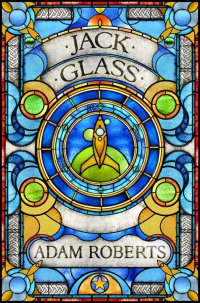
JACK-GLASS-by-adam-robertsJack Glass, Adam Roberts (2012)
Which I read too late in the year to consider for my best of the year post. Adam Roberts’ novels in précis always sound interesting and appealing, and yet I still need to find the right way to read them. This one I think I’ve come closest. It is, as Adam himself describes it, an attempt to “collide together some of the conventions of Golden Age science fiction and Golden Age detective fiction”. It opens with an impossible escape, told from the point of view of the escapee. Next is a murder-mystery. Finally, there is a locked-room mystery. All three involve the mysterious figure Jack Glass. This is a gruesome and quite Dickensian novel. The Solar System is filled with disenfranchised poor, living in fragile space habitats, while a hierarchy of the ultra-rich and privileged live a life of luxury. But the possibility of FTL – even though against the laws of physics – threatens this situation by providing an escape to the stars. And that’s the maguffin driving the three sections of the novel. The characters are a bit annoying, especially their speech patterns, and perhaps there’s a little too much authorial sleight of hand used in places to delay the solution, but it all hangs together very entertainingly and readably. Though I’ve only read about four or five of Adam’s novels, this one was the most enjoyable – perhaps because it felt the most authorial, despite managing to capture the tone and verve of Golden Age sf.
asonoftherockA Son of the Rock, Jack Deighton (1997)
A somewhat old-fashioned sf novel – it wouldn’t have looked out of place among British sf of the 1970s; and I hold British sf of the 1970s in high regard – and well-written, but with a mostly unlikable narrator. It’s set in a sort of future galactic human co-prosperity sphere, in which primitive worlds are exploited for raw resources. The population also undergoes an anti-ageing treatment, which is so endemic that signs of ageing, and old people themselves, are viewed with fear and hatred. The narrator works for a mining company, but before taking up his post he goes on a Grand Galactic Tour. On the world of Copper, he meets the titular character, an old man, who both repels and fascinates him. It also seems the old man sees a kindred spirit in the narrator. Later, after he joins the mining company, the narrator chooses not to take the anti-ageing drug – his grandmother reacted badly to it, and the condition is genetic so he could also suffer from it – and over time becomes a freak in society. There’s some very nice description in the book, and the premise is handled well, but it feels a little old-fashioned in places, and the supporting cast are nicer than the narrator is. Definitely worth reading, however.
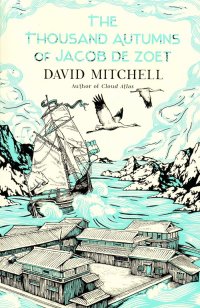
David-Mitchell-The-Thousand-Autumns-of-Jacob-de-ZoetThe Thousand Autumns of Jacob De Zoet, David Mitchell (2010)
I took this with me to Denmark to read over Christmas, as it had been sitting on my TBR since November 2010. And I’m glad I did. It is the late 1790s and the title character has arrived at the Dutch East-Indies Company’s trading post in Japan, Dejima in Nagasaki’s harbour, to assist a new manager root out corruption. But the novel is only sort of about de Zoet. It’s also about the Japanese midwife he falls in love with, and the bizarre shrine where she becomes a prisoner when her father dies, and how de Zoet beats the British attempt to muscle in on the Japanese market. It reads like straight historical fiction – although that shrine holds a horrible secret, which seems to have given its monks immortality. The period detail rings true and it’s clear Mitchell did plenty of research. They were a horrible venal, nasty, brutal and racist lot in those days, and Mitchell pulls no punches. It doesn’t make for sympathetic characters, so it’s impressive Mitchell manages to carry the story with such an ugly cast. I think this is the best of Mitchell’s novels – yes, even better than Cloud Atlas.
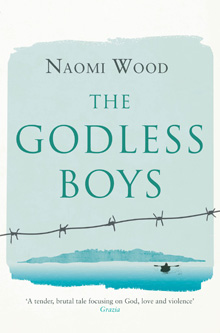
the-godless-boys-978033051336401The Godless Boys, Naomi Wood (2011)
This one got a lot of positive word of mouth last year, so I thought it would be worth a go. In 1951, a Secular Movement opposed the increasing hold the churches had on British society. This prompted a government backlash. The secularists were rounded up and exiled to an island off the north-east coast of England. In 1977, there was another wave of church burnings, and yet more people were sent to the Island. And on the Island, a decade or so later, a group of youths, led by Nathaniel, see themselves as guardians of the inhabitants’ godlessness. That is until a young woman arrives, looking for her mother, who disappeared in 1977 and was implicated in the burning of a church. I wanted to like this book, but it was trying so hard to be A Clockwork Orange, and failing, that it annoyed me. The Island came across as some parody of “grim Up North”, the neologisms felt horribly forced, and I never really got a good handle on the age of the protagonists. It comes as no surprise to discover that Wood has a MA in Creative Writing.
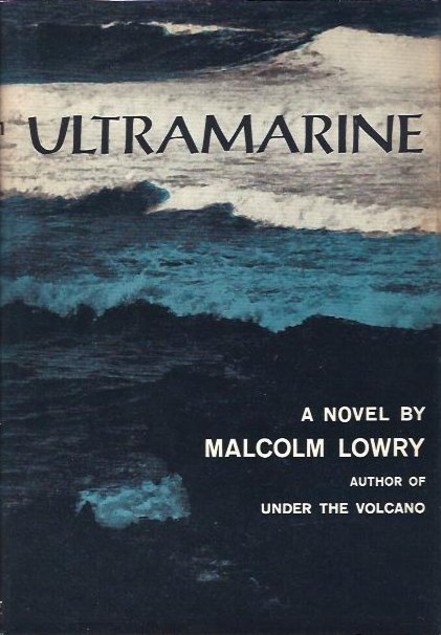
ultramarineUltramarine, Malcolm Lowry (1933)
So I read ‘Through the Panama’ in Lowry’s only collection, Hear Us O Lord from Heaven Thy Dwelling Place, and was blown away. Perhaps the rest of the collection wasn’t as impressive, but I wanted to read more. Happily, I’d grabbed the aforementioned collection, Ultramarine, Lowry’s first novel, and Under the Volcano from my father’s Penguin paperback collection. But I also went further and picked up some first editions of his other books. And, er, Ultramarine, his first novel. Again. The edition I have, in both paperback and hardback, is the 1962 revised edition of the 1993 original – revised, obviously, not by Lowry, who died in 1957, but very much based on his part-written revisions for the novel (which he had done in order to bring it in line with a planned seven-novel sequence titled The Voyage That Never Ends (actually used for a collection of Lowry’s “fictions, poems, fragments, letters”)). The narrator of Ultramarine – who is loosely based on Lowry himself, as indeed are most of his protagonists – joins the crew of a tramp freighter as a mess-boy, but is not liked by the rest of the crew. The book takes place in the Far East, while the ship is moored at Tsjang-Tsjang. This is a book you should read for the writing, which is excellent. There’s not much in the way of plot. The characters are superbly drawn, often just through dialogue. It’s easy to see why Lowry was such an important writer.
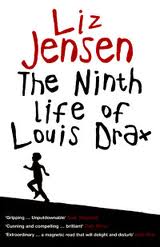
ninthlifeThe Ninth Life of Louis Drax, Liz Jensen (2004)
Whenever I see a Liz Jensen book I’ve not read in a charity shop, I buy it. But I think I shall start buying them new because I’ve yet to be disappointed with any of her books I’ve read. And that’s not something I can say for many of the authors I read regularly. The Ninth Life of Louis Drax is set in France in the present day, and the eponymous character is an accident-prone ten-year-old boy currently lying in a coma after falling down a cliff at a family picnic. His father is also missing and, according to the mother, responsible for pushing the boy off the cliff. Louis has just been moved to a new hospital for coma patients in Provence, and the doctor in charge – who alternates the narrative with Louis himself (apparently speaking from within his coma) – finds himself unprofessionally drawn to the boy’s mother. Essentially, The Ninth Life of Louis Drax is a murder-mystery, but one eyewitness is lying and the other is comatose – but is speaking to the reader via a worldview which obfuscates their meaning. It’s all very cleverly-done, and if the ending comes as no great real surprise, the journey to that point was not wasted. Definitely must read more of Jensen’s books.
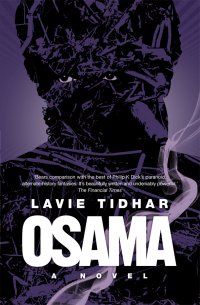
OsamaOsama, Lavie Tidhar (2011)
Originally published by PS Publishing – the edition I have – then brought out in massmarket paperback by Solaris. Winner of the World Fantasy Award last year, and a surprising omission from several other shortlists (though it made the BSFA Award shortlist). It would be unfair to say I did not come to this book with high expectations. Happily, they were met. A private detective based in Ventiane is tasked with tracking down Mike Longshott, the mysterious author of a series of pulp novels which feature Osama bin Laden as a vigilante hero. This is not, of course, the world we know. Though there are echoes of it there, and as the PI draws closer to Longshott so those echoes begin to ring louder and louder. Interspersed between the chapters are short pieces of reportage on terrorist attacks from our world. It’s not hard to figure out what’s going on, and the prose sometimes stumble – trying to pastiche pulp prose at one point, then not at another. There’s also an odd substitution of “dawdle” for “doddle”, and Lavie reveals his secret love for the music of Eva Cassidy. But it’s certainly a worthy award winner and fully lives up to its audacious title.

farnorthFar North, Marcel Theroux (2009)
This was shortlisted for the Arthur C Clarke Award in 2010, but lost out to Miéville’s The City & The City. It is yet another US post-apocalypse novel. The writer is British, but the son of US author Paul Theroux; and the novel is actually set in Siberia. The central premise is that Siberia was opened to American settlers, but then some sort of catastrophe did for the rest of the world, and those remaining in the “Far North” gradually succumbed to the usual violence, rape and warlordism. Theroux can’t decide if his settlers adopted Russian culture, or simply transplanted their own – he makes reference to both situations. The narrator of the story is a young woman who acts as constable for a town in which she is the only survivor. She encounters a group of slavers, and later witnesses a plane crash. That crash persuades her that somewhere there is a settlement with technology – albeit primitive technology. She sets off to find it, and is captured by those slavers… I’m a little puzzled how this made the Clarke shortlist. True, it’s literary fiction that’s science fiction in all but name, which means the quality of writing is generally much better than genre fiction displays. It also means the genre tropes are presented as if they’ve never been used before. Except post-apocalypse has been done before – in literary fiction. The first third of Far North, in fact, was trying hard to be The Road. And failing. The fact it later abandoned that template – and introduced some magic glowing substance, for no good reason – couldn’t prevent it from being as banal as most post-apocalypse novels are.

before-the-incalBefore The Incal, Alejandro Jodorowsky & Zoran Janjetov (2012)
It’s not that The Incal required a prequel, but Jodorowsky has done a clever job here of explaining stuff you were perfectly happy to swallow unexplained in that book, as well as set things up beautifully for the later story. Janjetov’s art nicely emulates Moebius’ style – in fact, according to the introduction it was Jodorowsky’s observation that Janjetov’s style was similar to early Moebius that prompted him to write Before The Incal in the first place. All the characters from The Incal are here, and the story cleverly sets them up for the roles they will later play. The whole thing is not quite as bonkers as The Incal (though it is still quite insane), but it’s beautifully drawn, and this is a handsomely-produced volume on a par with Self Made Hero’s lovely edition of The Incal.
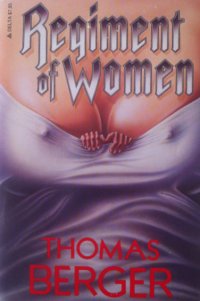
regimentRegiment of Women, Thomas Berger (1973)
A 1970s sexual satire. Oh dear. I haven’t read a book as bad as this for quite a while, and I’ve seen more biting satire on gender roles in a Two Ronnies sketch. A century or so from now, in what amounts to the ruins of the twentieth century, the women are in charge. But they dress and behave just like men – in fact, “effeminate” means behaviour currently associated with dumb macho males. Men, of course, wear pretty dresses, make-up, high heels and pantyhose, and behave like the sort of women a dumb 1970s sexist imagines women behave. Men also have breast implants. Yes, that’s right: the women are in charge, but the men conform to male gaze. Georgie is a secretary at a publishing house, but after getting unintentionally drunk at a friend’s, he is caught in public dressed as a woman – ie, in trousers, shirt and tie. He is arrested. Transvestism is illegal, but the police are convinced he is some sort of dangerous subversive. Georgie manages to break out of prison, and meets the Male Underground. They persuade him to infiltrate a Sperm Camp, where men are milked for their sperm for ex-utero procreation. (Women’s sex with men consists solely of anal penetration with a dildo, usually without the women undressing; and, most often, it’s rape.) In prison and in the Sperm Camp, Georgie encounters Harriet. She’s a woman but she just wants to dress and behave like a man – ie, wear pretty dresses, make-up, high heels and pantyhose… It’s a monumentally stupid set-up. Berger has to go through so many contortions to overcome the obvious flaws in his world, and none of his “explanations” are even remotely plausible. And that’s not to mention the deeply offensive views on gender roles on which the entire plot is based. Mystifyingly, this book has a 3.46 average on Goodreads, with quite a few 5-star reviews. Incidentally, I don’t recall any POC characters in it.

Leave a comment

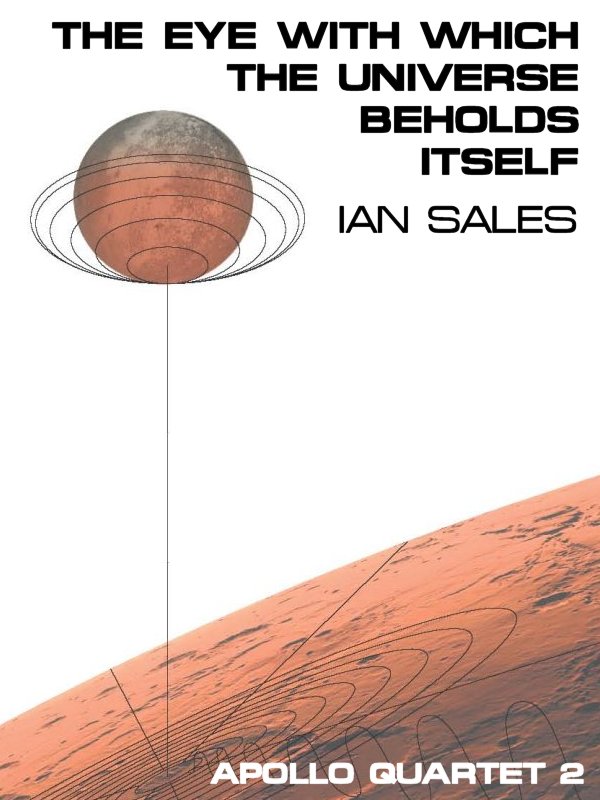
Apollo Quartet 2 on Kindle

The second book of the Apollo Quartet,The Eye With Which The Universe Beholds Itself, is now available for Kindle on Amazon. It’s priced at £2.56, which is a bit odd as I did set it a little higher than that. But then Amazon probably included VAT in that price since it’s an ebook, and then took it off the listed price as they don’t pay it because they’re based in the Channel Islands. Not that they pay much tax anyway. But that shouldn’t stop you buying a copy of The Eye With Which The Universe Beholds Itself for your Kindle, of course.

the_eye_with_which_ebook_cover

On the other hand, you could buy the EPUB or MOBI ebook editions direct from the Whippleshield Books website here.


12 Comments

BSFA Awards shortlist announced

And it’s a bloody good set of shortlists – and I don’t just say that because I’m on the short fiction shortlist for Adrift on the Sea of Rains. (Which astonishes and pleases me.) I’m also on the non-fiction list in spirit via Karen Burnham’s ‘The Complexity of the Humble Spacesuit’ from the anthology I edited, Rocket Science.

It is all together a strong set of shortlists. Unusually, I’ve read more of the shortlisted items than for most years – three of the five novels (and the other two are on the TBR); two (well, three) of the short fiction; and four of the five non-fiction nominees (if you can be said to “read” an entire website).

Anyway, the shortlists goes like this…

Best Novel
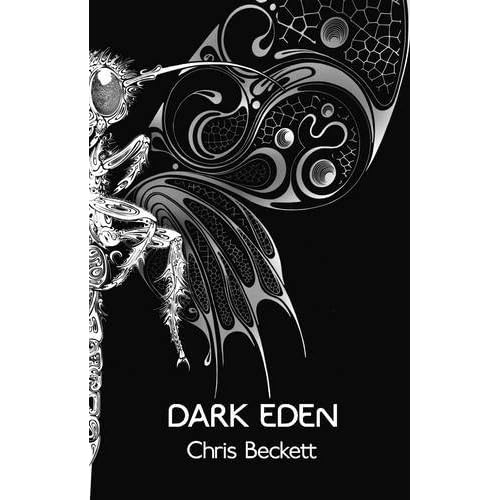
Dark Eden by Chris Beckett (Corvus)
Empty Space: A Haunting by M John Harrison (Gollancz)
Intrusion by Ken Macleod (Orbit)
Jack Glass by Adam Roberts (Gollancz)
2312 by Kim Stanley Robinson (Orbit)

Best Short Story
‘Immersion’ by Aliette de Bodard (Clarkesworld #69)
The Flight of the Ravens by Chris Butler (Immersion Press)
‘Song of the Body Cartographer’ by Rochita Loenen-Ruiz (Phillipines Genre Stories)
‘Limited Edition’ by Tim Maughan (1.3, Arc Magazine)
‘Three Moments of an Explosion’ by China Mieville (Rejectamentalist Manifesto)
Adrift on the Sea of Rains by Ian Sales (Whippleshield Books)

Best Artwork
Ben Baldwin for the cover of Dark Currents (Newcon Press)
Blacksheep for the cover of Adam Roberts’s Jack Glass (Gollancz)
Dominic Harman for the cover of Eric Brown’s Helix Wars (Rebellion)
Joey Hifi for the cover of Simon Morden’s Thy Kingdom Come (Jurassic London)
Si Scott for the cover artwork for Chris Beckett’s Dark Eden (Corvus)

Best Non-Fiction
“The Complexity of the Humble Space Suit” by Karen Burnham (Rocket Science, Mutation Press)
“The Widening Gyre” by Paul Kincaid (Los Angeles Review of Books)
The Cambridge Companion to Fantasy Literature by Edward James and Farah Mendlesohn (Cambridge University Press)
The Shortlist Project by Maureen Kincaid Speller
The World SF Blog, Chief Editor Lavie Tidhar


6 Comments

Books to look forward to

There have been a few posts on anticipated genre 2013 releases around and about the internet, but most have either been uncritically exclusive, or squeeing fannishly over volume umpteen in various piss-poor epic fantasy series. Which is not to say the outlook for 2013 is entirely glum. Yes, there will be the usual badly-written tomes of badly-mangled mediaevalish adventure, all of which are interchangeable: swords! rape! magic! feisty princesses! rape! war! rape! But there are one or two books upon which I have my beady eye…

January
ROBOTSAdam Robots, Adam Roberts
A collection of Mr Robot’s stories. Who could not want this? I’ve appeared in a couple of anthologies alongside Adam, which has sort of forced me to read his stories. But what I’ve read I have liked and thought very good, so I’d like to read more of them. I seem to react better to his short fiction than his novels. And, it has to be said, that is a pretty damn cool cover.

the-explorer-by-james-smytheThe Explorer, James Smythe
Astronauts are definitely in – what with Lydia Netzer’s Shine Shine Shine (see here) and Christian Kiefer’s The Infinite Tides last year. The Explorer looks pretty much like genre heartland, although it seems to be marketed on the edges of science fiction. Given my own fascination with astronauts – Adrift on the Sea of Rains, The Eye With Which The Universe Beholds Itself, ‘Faith’ (PDF), etc –  it’s certainly a book I plan to read.

February
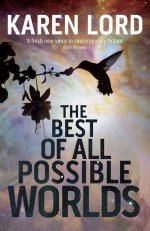
bestofallpossibleworldsThe Best of All Possible Worlds, Karen Lord
This has been getting lots of good press and looks like one of the year’s more interesting sf releases. I’m not sure the précis on Amazon makes it sound wholly appealing – remnants of the galaxy’s once ruling elite is short on women, and a civil servant must accompany one such male on his search for a mate – but it all depends who’s writing it…

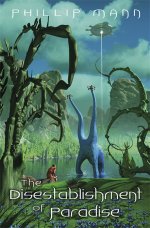
disestablishmentThe Disestablishment of Paradise, Phillip Mann
I’ve been a big fan of Mann’s fiction for decades (oof, that makes me feel old) – see here – so I’ll buying this one in hardback the moment it is released. It will be Mann’s first book since 1996’s The Burning Forest, the final book in his A Land Fit for Heroes alternate history quartet. That’s quite a long silence – seventeen years. Alexander Jablokov spent a decade not writing before Brain Thief was published. I thought it very good, but it didn’t seem to do very well. Let’s hope Mann’s The Disestablishment of Paradise does better…

March
Life-after-life-cover-194x300Life After Life, Kate Atkinson
I’ve not read any Atkinson, though I understand she’s quite good. I did watch the television series with Jason Isaacs, however (though, to be honest, it clashed with Scott & Bailey, which I thought much the better series). This book, about a person who serially reincarnates, sounds like it might be worth a go. I’ll wait for the paperback, though.

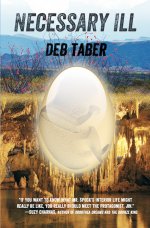
NecessaryIll-cvr-low-resNecessary Ill, Deb Taber
According to Suzy McKee Charnas, this novel “offers hopeful glimpses of alternatives to the current cultural barrage of post-Apocalyptic savagery and regression to warlordism”. Am sick to bloody death of post-apocalypse novels in which people turn into animals and only some warped version of right-wing US society offers hope or a way forward. So, want.

April
sereneinvasionThe Serene Invasion, Eric Brown
Eric has been churning out quality sf for more than two decades, and his novels and short fiction are always worth reading. It’s a shame his books seem to cause few, if any, ripples. Except, of course, he’s been shortlisted this year for the Philip K Dick – albeit bafflingly for Helix Wars, rather than the year before for The Kings of Eternity, which is by far the better book.

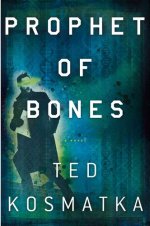
prophetofbonesProphet of Bones, Ted Kosmatka
To be honest, I’d sooner see a collection from Kosmatka. I’ve only read a handful of his short fiction, but what I’ve read I’ve thought very good – I even picked his ‘Divining Light’ for the Locus All-Centuries Short Fiction Poll. I’ve been meaning to pick up Kosmatka’s first novel, last year’s The Games, in paperback, and whether or not I get Prophet of Bones will depend on my reaction to that book.

June
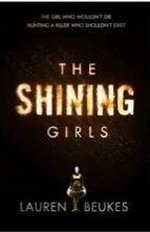
shininggirlsThe Shining Girls, Lauren Beukes
I really liked Zoo City (see here), so I’m keen to read this one, even if the plot has been described as “The Time Traveler’s Wife meets The Girl with the Dragon Tattoo“. Ugh. But I trust Lauren to produce something good despite that. (Incidentally, it really annoys me they never bothered correcting the spelling mistake in the title of The Time Traveler’s Wife (yes, I know, it’s the american spelling; but I don’t live in the US, and we use British English here).)

The AdjacentThe Adjacent, Christopher Priest
I’m always late reading Priest’s novels, though I usually get there in the end. It’s useless speculating what it might be about, because Priest’s novels generally defy summary. This one is allegedly his “most complex yet”, although if anyone knows of a simple Priest novel I’ve yet to hear it. Santa brought me The Islanders for Christmas, so I’ll be reading that soon… two years after everyone else and a year after it won the BSFA Award…

July
Evening’s Empires, Paul McAuley
The fourth book in McAuley’s hard sf nearish-future series. I really must read Gardens of the Sun

August
On the Steel Breeze, Alastair Reynolds
The second book of Poseidon’s Children and the sequel to Blue Remembered Earth. I liked the first book, I liked its optimism and its avoidance of sf’s usual panoply of magic bullshit technology. This one I will certainly be buying in hardback on its release.

September
Proxima, Stephen Baxter
There’d be something wrong if there wasn’t at least one Stephen Baxter novel out each year. It’s deep future sf, with humans living on a dead world orbiting Proxima Centauri, and all sounds very Baxterian.

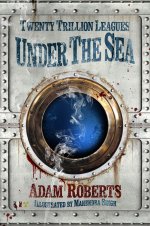
twentytrillionleaguesTwenty Trillion Leagues Under the Sea, Adam Roberts
A sequel to The Asylum’s “mockbuster” of Verne’s Twenty Thousand Leagues Under Sea by Adam Roberts has to be worth a go. Though, to be fair, I did think the ending to the film was pretty unequivocal – the Nautilus was destroyed by the nuclear warheads Nemo had planned to launch against the US, and everyone aboard, including Nemo, was killed. But I’m sure Adam will come up with some cunning trick to show how Nemo escaped death in a nuclear explosion at the very last second.

December
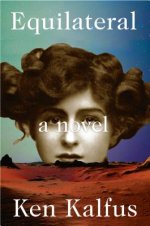
Equilateral-Kalfus-Ken-9781620400067Equilateral, Ken Kalfus
I saw mention of this on io9, and its description sounded interesting: British scientists at the turn of the century have come to believe there’s life on Mars, so they propose to build a massive triangle in the Egyptian desert. Yup, I’d read that. (io9 gives the publication date as April, but according to Amazon it’s December in the UK. I guess I’ll have to wait a bit longer than them, then.)

No doubt there will be more titles I want to read appearing throughout the year, but these are the only ones that have been announced so far that appeal to me. I’ll also probably end up reading other new books recommended to me but which, at first glance, I hadn’t thought worth trying, or hadn’t known about. So it goes.


7 Comments

I like me some meme

I found this on Larry’s blog here, where he says the following list is the results of a recent online poll on Lit Net. Whatever that might be. Still, a meme. A book meme. Bold those you’ve read, italicise the ones sitting on the TBR…

1 The Bible (I bought a copy of this last year, the first time I’ve ever owned one. It’s for reference, of course. And yes, I have the Qur’an and the Talmud as well)
2 Hamlet by William Shakespeare
3 The Divine Comedy by Dante Alighieri
4 The Great Gatsby by F Scott Fitzgerald
5 The Brothers Karamazov by Fyodor Dostoevsky
6 Ulysses by James Joyce
7 Moby-Dick by Herman Melville
8 Don Quixote by Cervantes
9 War and Peace by Leo Tolstoy
10 Crime and Punishment by Fyodor Dostoevsky
11 Anna Karenina by Leo Tolstoy
12 The Odyssey by Homer (I have the illustrated version of this somewhere)
13 Paradise Lost by John Milton
14 In Search of Lost Time by Marcel Proust (I really must tackle these one day)
15 Lolita by Vladimir Nabokov
16 Les Fleurs du mal by Charles Baudelaire
17 The Illiad by Homer
18 One Hundred Years of Solitude by Gabriel Garcia-Marquez
19 Essays by Montaigne
20 The Stranger by Albert Camus
21 The Oresteia by Aeschylus
22 Infinite Jest by David Foster Wallace
23 Heart of Darkness by Joseph Conrad
24 The Story of the Stone by Cao Xueqin
25 Blood Meridian by Cormac McCarthy
26 To Kill a Mockingbird by Harper Lee
27 The Tale of Genji by Murasaki Shikibu
28 Emma by Jane Austen (the one Austen I haven’t read)
29 Jane Eyre by Charlotte Bronte
30 The Decameron by Giovanni Boccaccio
31 Eugene Onegin by Pushkin
32 Watership Down by Richard Adams
33 The Sound and the Fury by William Faulkner (my copy is one of my father’s Penguin classics)
34 Les Miserables by Victor Hugo
35 Walden by Henry David Thoreau
36 The Adventures of Huckleberry Finn by Mark Twain
37 Leaves of Grass by Walt Whitman
38 Pride and Prejudice by Jane Austen
39 Tess of the d’Urbervilles by Thomas Hardy
40 The Trial by Franz Kafka
41 Lord of the Rings by JRR Tolkien
42 Shahnameh by Ferdowsi
43 The Canterbury Tales by Geoffrey Chaucer
44 Madame Bovary by Gustave Flaubert
45 Fictions by JL Borges
46 El Aleph by JL Borges
47 A Christmas Carol by Charles Dickens
48 Tender is the Night by F Scott Fitzgerald
49 The Magus by John Fowles
50 Life and Fate by Vasily Grossman
51 Testament by RC Hutchinson
52 Zorba the Greek by Nikos Kazantzakis
53 A Song of Ice and Fire by George RR Martin (WTF? Certainly doesn’t belong on this list. Read the first three, gave up…)
54 Thus Spoke Zarathustra by Friedrich Nietzsche
55 Oedipus the King by Sophocles
56 The Hobbit by JRR Tolkien
57 Slaughterhouse-Five by Kurt Vonnegut
58 Waiting for Godot by Samuel Beckett
59 The Marriage of Heaven and Hell by William Blake
60 Naked Lunch by William S Burroughs
61 Fifth Business by Robertson Davies
62 Notes from Underground by Fyodor Dostoevsky
63 Tropic of Cancer by Henry Miller
64 No Exit by Jean-Paul Sartre
65 Othello by William Shakespeare (have seen the BBC adaptation; you don’t read a play, you see it performed)
66 Gulliver’s Travels by Jonathan Swift
67 Vanity Fair by William Thackerey
68 Resurrection by Leo Tolstoy
69 Voss by Patrick White
70 Wuthering Heights by Emily Bronte
71 Manfred by Lord Byron
72 A Tale of Two Cities by Charles Dickens
73 Far from the Madding Crowd by Thomas Hardy
74 The Sun Also Rises by Ernest Hemingway
75 Outer Dark by Cormac McCarthy
76 Lonesome Dove by Larry McMurty
77 1984 by George Orwell
78 Atlas Shrugged by Ayn Rand (an even less deserving entry than GRRM’s)
79 The Gospel According to Jesus Christ by Jose Saramagos
80 Grapes of Wrath by John Steinbeck
81 Of Mice and Men by John Steinbeck
82 Tristam Shandy by Laurence Sterne
83 The Tree of Man by Patrick White
84 The Glass Menagerie by Tennessee Williams
85 Meditations by Marcus Aurelius
86 2666 by Robert Bolano
87 Cosmicomics by Italo Calvino
88 If on a winter’s night a traveler by Italo Calvino
89 The Murder of Roger Ackroyd by Agatha Christie
90 The Arrow of Gold by Joseph Conrad
91 The Recognitions by William Gaddis
92 The Castle by Franz Kafka
93 I Canti by Giacomo Leopardi
94 Man’s Fate by André Malraux
95 Death of a Salesman by Arthur Miller
96 Dance to the Music of Time by Anthony Powell (have read the first, have a few more on the TBR)
97 Portnoy’s Complaint by Philip Roth
98 Confessions by Rousseau
99 The World as Will and Representation by Arthur Schopenhauer
100 Julius Caesar by Shakespeare (have seen the BBC adaptation)

Well, it’s a very traditional list. The odd pre-19th century book can’t disguise all the obvious choices made for 19th and 20th century fiction. Not to mention a couple of frankly bizarre ones: A Song of Ice and Fire? Really? Atlas Shrugged? You think so? As for my “score”… Not so good: fourteen read (mostly), and a further eight on the TBR. I also count a mere  six women (Austen appears twice), which is appalling. This is literature as the province of Dead White Men, and pretty much what the entire field has been fighting against for the past two decades or more. And, of course, it’s woefully US/UK-centric, with a handful of other nationalities. So, not a very good list at all, then.

Lit Net, must do better.


1 Comment

Locus All-Centuries Poll short fiction results

Locus posted the short fiction results to its poll a couple of days ago and the results are… not entirely unexpected. Americocentric. A little more diverse in terms of race and gender than the novel results, but not by that much. And yes, pretty much exclusively Anglophone. But let’s see how my choices did…

20th Century SF/F Novella
22 – 1 ‘Great Work of Time’, John Crowley (1989)
6 – 2 ‘The Fifth Head of Cerberus’, Gene Wolfe (1972)
51 – 3 ‘Forgiveness Day’, Ursula K Le Guin (1994)
0 – 4 ‘Equator’, Brian W Aldiss (1958)
72 – 5 ‘Green Mars’, Kim Stanley Robinson (1985)
83 – 6 ‘Marrow’, Robert Reed (1997)
0 – 7 ‘Secrets’, Ian Watson (1997)
1 – 8 ‘Story of Your Life’, Ted Chiang (1998)
71 – 9 ‘Piper at the Gates of Dawn’, Richard Cowper (1976)
10

Well, I picked the number one novella, although I had it down at number eight. A single Aldiss novella barely made the top fifty – so much for his sixty-year career (though I will admit ‘Equator’ is not generally seen as one of his career highlights; I still love it, however.) A single Ian Watson novelette made it to number 117 – so there’s another British author who has been cruelly neglected.

Instead, the actual top twenty had Chiang, old favourites like Heinlein and Simak and John W Campbell and Sturgeon and Lovecraft, and six women (including US middle-aged fan favourite Connie Willis). Most, surprisingly, are science fiction, rather than fantasy.

20th Century SF/F Novelette
108 – 1 ‘The Barbie Murders’, John Varley (1978)
170 – 2 ‘Beauty and the Opéra or the Phantom Beast’, Suzy McKee Charnas (1996)
0 – 3 ‘The Time-Tombs’, JG Ballard (1963)
73 – 4 ‘A Little Something For Us Tempunauts’, Philip K Dick (1974)
157 – 5 ‘Black Air’, Kim Stanley Robinson (1983)
0 – 6 ‘The Last Days of Shandakor’, Leigh Brackett (1952)
100 – 7 ‘No Woman Born’, CL Moore (1944)
0 – 8 ‘FOAM’, Brian W Aldiss (1991)
44 – 9 ‘Swarm’, Bruce Sterling (1982)
0 – 10 ‘Housecall’, Terry Dowling (1986)

A few more zeros here, meaning no one selected those choices as their number one. My highest placer is Bruce Sterling at 44, and I thought that was my most commercial pick. I should have instead listed ‘The View From Venus: A Case Study’ by Karen Joy Fowler, which, er, no one picked at all.

The actual top twenty has the execrable ‘Nightfall’ at number two. Kill it with fire. And another Asimov at number four. Plus Harlan Ellison (it’s harder to know which to despise more, the man or his fiction). Three women, although Tiptree is selected twice. Samuel Delany sneaks in at number sixteen. All twenty novelettes are by Americans (the first Brit appears at 41).

20th Century SF/F Short Story
56 – 1 ‘And I Awoke And Found Me Here On The Cold Hill Side’, James Tiptree Jr. (1972)
25 – 2 ‘Air Raid’, John Varley (1977)
0 – 3 ‘Forward Echoes (AKA Identifying the Object)’, Gwyneth Jones (1990)
213 – 4 ‘The Lake of Tuonela’, Keith Roberts (1973)
0 – 5 ‘The Road To Jerusalem’, Mary Gentle (1991)
0 – 6 ‘A Map of the Mines of Barnath’, Sean Williams (1995)
0 – 7 ‘The Brains Of Rats’, Michael Blumlein (1986)
22 – 8 ‘Aye, And Gomorrah’, Samuel R Delany (1967)
276 – 9 ‘A Gift From The Culture’, Iain M Banks (1987)
101 – 10 ‘The Gernsback Continuum’, William Gibson (1981)

I wasn’t expecting to have many popular choices in this category, but not a single one of mine made it into the top twenty. Delany came highest at 22, and then Varley at 25. And they’re popular works of sf. I got four zeroes.

The actual results featured Ellison (3), Heinlein (2), Clarke (3), Asimov, Bradbury (2)… It’s Dead White Male time. (Except Ellison isn’t dead, of course.) Four women. JG Ballard’s highest placing is 47, which is dismaying. Looking at the results, I see a lot of stories that are repeatedly anthologised. Well, there you go…

21st Century SF/F Novella
59 – 1 ‘Arkfall’, Carolyn Ives Gilman (2008)
0 – 2 ‘My Death’, Lisa Tuttle (2004)
6 – 3 ‘Diamond Dogs’, Alastair Reynolds (2001)
0 – 4 ‘Dangerous Space’, Kelley Eskridge (2007)
0 – 5 ‘A Writer’s Life’, Eric Brown (2001)

I’ve read two of the novellas which made the top ten in this category. One of them was the Reynolds. I was surprised Carolyn Ives Gilman didn’t get zero, but then it was originally published in Asimov’s. Two of the others were original novellas from PS Publishing, so no surprise with the zeroes there…

21st Century SF/F Novelette
2 – 1 ‘The Merchant and the Alchemist’s Gate’, Ted Chiang (2007)
66 – 2 ‘Divining Light’, Ted Kosmatka (2008)
3
4
5

I freely admit to being crap at this category. Not only is the novelette a completely useless category and should be roundly expunged from, well, everything, but I’ve not read enough long short fiction published this century. Still, my number one choice made number two. Still, Chiang… (On the other hand, he also made the number one spot.)

As it is, the top ten are all genre darlings – Chiang, Link, Gaiman, Stross, Miéville, Bacigalupi…

21st Century SF/F Short Story

I was so rubbish at this one, I couldn’t think of a single story to nominate. If I had chosen the story I remembered after the deadline, ‘The Avatar of Background Noise’, Toiya Kristen Finley, it would have come… nowhere. No one picked it. Instead, we got ten relatively recent award winners, with a couple of outliers – Le Guin and Swanwick.

We can thus conclude that all worthwhile science fiction and fantasy short fiction is written by a group of about thirty people, over half of whom are dead. Of course, this is a consequence of the small number of voters, most of whom probably fit a fairly similar profile. I’m not sure how useful an exercise that makes the poll, though as a guideline for changing a reader’s approach to the genre it offers a possible blueprint. You know, don’t read the writers in the top twenties for each category, read other ones instead, ones you may not have come across before. Diversify your diet of genre fiction. Add some diversity to it.

And finally, I just have to say something about the amazingly stupid remark made in the comment thread on the results page:

“If there was more women and minorities that cared enough to vote in this poll, then there would have been more females and minorities on the list. you cannot blame others for it.”

Poor grammar aside, it’s a remarkably dumb thing to say. Because of course only women and minorities nominate women and minorities. And women only vote for women, just as minorities only vote for minorities. Someone take away Maddog’s computer, he’s clearly too stupid to use it properly.


3 Comments

2012 is dead, long live 2013

This happens every year at this time – you look back at the year just ended, remember the good bits and try to forget the bad bits; you look ahead to the year just begun, and try to convince yourself it will be better than even last year’s best bits, or that you have any control over how it will turn out… Shit happens, the road to hell, etc, etc.

Which doesn’t mean you shouldn’t make an effort, of course. You may not, for example, be able to land yourself a book contract, no matter how wonderful your novel is, but if you don’t write the damn thing you stand even less chance. (Though debut novelists have been offered contracts before writing their novels.)

Likewise, the most reliable method of getting short fiction into print seems to be the Shotgun Method. Write as many stories as you can, submit them as many times as you can… Someone somewhere will usually buy them. Then you too can be ubiquitous, and subsequent sales will get easier.

In other words, Hard Work helps. But there are no guarantees. Certainly short cuts don’t always do the trick. There are stories of self-published authors selling phenomenally well, and subsequently being picked up by big publishing houses. They are in a very tiny minority. Most books published by anyone other than major publishing houses or long-established small presses are ignored. For instance, Rocket Science, published by Mutation Press, received plenty of positive reviews when it appeared back in April 2012. But it is also notably absent from lists of “best anthologies of the year”. I didn’t expect Adrift on the Sea of Rains to make it onto any lists – around 300 people, at a guess, have read it, and none of them were commentators with a large footprint within the genre. New small press… self-published… A not-unexpected result.

I worked quite hard during 2012 promoting those two books, but I suspect my message didn’t travel much beyond my own circle of friends, acquaintances and those I talk to within the genre. That’s as far as my “platform” reaches at present. It grew during 2012 – a little – but that sort of organic growth is too small and too slow to bounce my work to the next level. Because I made a tactical error in 2012: I spent so much time promoting Rocket Science and Adrift on the Sea of Rains, and writing The Eye With Which The Universe Beholds Itself, that I didn’t write any short fiction. And I need to do that in order to get my name out there…

So that’s one resolution for 2013. (I suspect it may have also been a resolution for each of the past few years.) I will write more short stories in 2013, I will submit more short stories in 2013. I have a bunch sort of started but far from finished, and I’ll  focus initially on them. Unfortunately, my desire to not write the sort of science fiction currently appearing in genre mags and on genre websites may somewhat limit my chances of success. Take my current work in progress: I was hoping to have it done for 31 December 2012, the deadline for Eibonvale Press’s new railway-themed genre anthology, Rustblind and Silverbright. Have yet to actually finish it. And it’s going to be a hard one to sell. ‘The Incurable Irony of the Man Who Rode the Rocket Sled’ is barely science fiction, and barely has a plot. It’s sort of “magical realism with astronauts” (as my story ‘Faith’ was once described), except it has no astronauts in it.

I do have other stories to work on. Sorry, no exploding spaceships. No spaceships at all, in fact. I have two novellas I’d like to complete – one of them is an expanded version of ‘The Contributors’. There’s also book three of the Apollo Quartet, Then Will The Great Ocean Wash Deep Above; and possibly book four, All That Outer Space Allows. I have three novel ideas for which I need to write the first three chapters. I’d also like to see if I can do anything with my Nanowrimo effort from 2011.

And that’s just on the writing side. (You do realise, of course, that most of this will go undone, because… things.)

Oh, and I also experimented in 2012 with publishing a limited edition chapbook. It started out as a bit of a joke, but the twelve copies of Wunderwaffe I produced all sold. I then put it up on Kindle, where it has also sold (thought not in huge numbers). I’m planning to do something similar to another of my previously-published short stories, but I haven’t decided which one yet. I might do it to more than one…

On the reading side, I’ll be continuing to review books for SF Mistressworks. In the absence of other regular reviewers – I do have some irregular reviewers, however – I’ll have to read at least one suitable a book a week. That’s going to be a tough schedule to meet. I will need help. Please.

There’s also the TBR, which reached epic proportions several years ago. Over Christmas just gone, for example, I read The Thousand Autumns of Jacob De Zoet, and realised afterwards with some embarrassment that I’d bought the book in November 2010. That’s actually not too bad – it’s taken me ten years to read some of the books I own. And that’s despite reading 153 books during 2012 – twelve down on the previous year’s total; in fact, the number has been steadily dropping since 2008. I suspect the number of books I’ve bought each year, however, has been steadily rising…

So, in 2013, I want to read more sf by women writers, more Malcolm Lowry, more Paul Scott, more recent genre books that interest me, more literary fiction… more good books. I also want to read much more genre short fiction. That’s going to be another resolution – to read genre short fiction regularly. But only if it interests me. I’ll happily bail on a story if it’s not working for me. But by the end of the year, I should at least be able to make some informed choices for the BSFA Award. I’ll also be including a top five of short fiction in my end of the year round-up post.

I’ll not bother with resolutions for films or music. Each year, I try to get to at least one gig a month. I don’t always make it, but by year’s end I’m usually not far off. For the record, it was 11 gigs in 2012, including Bloodstock. The best one should have been Anathema and Opeth in Leeds in November, but the venue was awful – over-packed and over-heated – and ruined the experience. Insomnium and Paradise Lost back in April might be the best, or perhaps it was local bands Setsudan and Northern Oak supporting Evil Scarecrow in October.

There’s no point in resolving to go to the cinema more often, because I only go if there are films I really want to see being shown. There were three in 2012, which is something of a record for me – at least since I left the UAE, where I lived just around the corner from an excellent cinema. There might be one or two movies I’d be willing to shell out £13 to see in IMAX 3D in 2013, but we’ll have to see. I will, however, continue to watch DVDs by my favourite directors, as well as trying new ones – mostly foreign-language, of course. And the really good films, I will write about here…

…Because I will continue to blog. I don’t think I could stop, to tell the truth. Posting once or twice a week is a good schedule to keep, but I suspect I won’t be able to maintain that level. I didn’t in 2012. This year, I’ll retire the Rocket Science News blog, since it’s served its purpose. It’ll stay up, but I won’t post to it anymore. Besides I have enough on with this blog, SF Mistressworks, the Whippleshield Books blog, and my Space Books blog (which I really must post to more often). I’ll remove the sf poetry blog – and perhaps work on some of the poems from it and start submitting them. I’ve only had two poems published to date, I really should start sending out more.

2012 was a bit of a convention-going year for me, although more by accident than design. Lavie Tidhar persuaded me to attend the SFX Weekender in February in Prestatyn. Much fun was had. Then there was the Eastercon in Heathrow, where I launched Rocket Science and Adrift on the Sea of Rains and nearly won the BSFA Non-Fiction Award for SF Mistressworks (it’s still eligible, by the way). Shortly after that, it was alt.fiction in Leicester, then Edge-Lit in Derby, and in November, Novacon in Nottingham. I’m not planning to attend as many cons in 2013.

Outside of genre and literature and music and cinema, 2012 was a bit meh. Some family issues were resolved. I spent Christmas in Denmark yet again, and saw some snow on the first day – but it rapidly disappeared and the weather remained wet and drizzly and dull. Santa brought me some books I want to read and some DVDs I want to watch. Oh, and some socks. The food was good, the visit to Louisiana, a modern art museum, was fascinating, and much as I hate Christmas it was a pleasant way to spend it…

And there you have it. 2012 is dead, long live 2013. I’m hoping it’ll be a good year, but it’ll be what it’ll be. That’s the way it works, you know. Life. Huh.


22 Comments

Artistic license reviewed

I review books – for Interzone, for Vector, for SFF Chronicles (though not as often as I should), for SF Mistressworks, for Daughters of Prometheus, even here on my blog. I have been reviewing books since the late 1980s.(My first published review was of CJ Cherryh’s The Tree of Swords and Jewels in the BSFA’s review magazine, Paperback Inferno, in October 1988. I vaguely recall not liking the book.) I am not a critic, nor do I consider my writings about books to be criticism. I leave that kind of in-depth analysis to those who have the necessary tools to do it.

I have also been on the receiving end of reviews – more so this past year than in any other. In two capacities: as the writer of the text being reviewed, and as the editor of the book under review. On the whole, it’s been very informative. I knew when I wrote Adrift on the Sea of Rains that it was atypical and possibly difficult. I suspected its appeal was limited. Happily, it seems to have transcended that and the vast bulk of reviews have been positive and very complimentary. Many of them have also been quite insightful, pulling out things I’d hadn’t realised I’d consciously put in the story. But that’s what happens with good reviewers.

Which is not to say that good reviewers can sometimes get it wrong. Martin McGrath felt Dan Hartland’s review of his story in Rocket Science on Strange Horizons missed an important point, and so he responded to it in a blog post. Dan’s review is, in the main, a good, insightful review. I think it’s clear he and I differ on what science fiction is and needs to be – for one thing, I don’t feel Rocket Science is “weirdly old-fashioned”. If anything, the current fashion for hand-wavey sentimental sf harkens back to an older form of the genre, although the current form is generally far better written. Dan also comments on diversity in his review, pointing out that only five of the twenty-two contributors to the anthology are female. Rocket Science was open submission, so there wasn’t much I could do about that. But it’s bending the point a little to present the contents as being wholly male-centric, especially when the review fails to mention, for example, Deborah Walker’s ‘Sea of Maternity’, a story about a single mother and her unruly teenage daughter. In point of fact, as this post shows, 23.53% of the stories featured female protagonists.

But that’s a minor quibble, and I think Dan’s review of Rocket Science is a good and useful review.

Which is more than can be said for this review of Adrift on the Sea of Rains

Yes, there is a typo on the first page of the book: “sussurus” should be “susurrus”. There’s nothing I can do about that in the paperback and hardback editions. I’ve not bothered fixing it in the ebook edition, but I will do when I publish the second book of the quartet, The Eye With Which The Universe Beholds Itself. Typos happen, and while I should have caught that one, it did slip by a lot of other people as well.

I can understand someone having trouble with the prose style of Adrift on the Sea of Rains – no quotation marks! – and as a result not liking it. And so bailing before finishing it. I can comprehend a reader finding the subject not to their taste and so choosing not to read to the end. But, come on, giving up after a page because there are three (far from wildly obscure) words you don’t understand? That’s no excuse.

And to further suggest that it’s bad craft is insulting.

I do not believe in dumbing down my prose. I am not writing for people with limited vocabularies. I am writing for intelligent adults, because that’s what I consider my peers to be. I will not insult the intelligence of my readers because, as a reader, I loathe writers (or film-makers) who insult my intelligence. I may not always be successful in communicating precisely what I intended to communicate, but recasting it in words of one syllable is not a solution. I like writing “difficult” fiction, just as much as I enjoy reading “difficult” fiction. That difficulty, to my mind, adds value. It’s not just some slick superficial entertainment, but also something that makes you think, makes you reconsider your views and knowledge. Science fiction is particularly well-suited to that task – though the bulk of it fails to do more that bolster existing prejudices. I write about things that interest me and try to shine a new light on them. I don’t do “idea”. In fact, I’m becomingly increasingly convinced that the focus on idea is what continues to cripple science fiction. As long as you privilege idea, your fiction will not be taken seriously outside genre circles. And success within the genre is a poisoned chalice…

Science fiction is a small field, struggling to survive within the shadow cast by its history. There is also a very large elephant in the room of science fiction. (And I’m mixing metaphors, but never mind.) Past masters continue to provide topics within the genre conversation, despite no longer being relevant, of generally poor quality, and less available than in the past. Media sf is so popular the entire genre is believed to be the same as it – but science fiction is far from homogeneous. The sf works which receive general acclaim these days are ones that are not published as sf. Far from breaking down the walls of the ghetto, the tools of sf have leaked out but most of the readers and writers have refused to leave. This is not a healthy state of affairs.

There have been attempts in the past to re-engineer science fiction. While each ultimately failed, they did shift the genre in its course a little. Myself, I’d like to see science fiction stripped back to its roots and rebuilt for the twenty-first century, but that’s never going to happen. People are too happy with their tropes, no matter how old they are or how little sense they make in the current day.

I wrote the first two books of the Apollo Quartet as science fiction, and I set up Whippleshield Books as a science fiction small press. I consider myself a writer who writes in a sf mode. I use science fiction in my writing, I don’t actually write science fiction.

Perhaps the difference exists only in my head, but it’s enough for me.

EDIT: the review of Adrift on the Sea of Rains was also posted on Amazon.com with the heading “Artistic licence revoked!”. Hence, er, the title of this post… But I see now that’s he’s changed it… And reduced it to one-star. Yay, my first one-star review!

EDIT 2: “JL Dobias” has removed the “review” of Adrift on the Sea of Rains from his blog, so the link now points at some random blog post on “Gee Wiz” and “Wiz Bang” sf. The review on Amazon has also been removed, and the Goodreads review has been rewritten and now gives the book three stars rather than the original one. Dobias has thoroughly covered his tracks, so now only his comments here on my blog – all of which were from an email address belonging to a “Luci” – are all that remain of the whole farce. Given my dealings with Jerry/Luci, I suggest they’re best avoided.


Leave a comment

Science fiction becoming fact

A post from BuzzFeed has been doing the rounds, 27 Science Fictions That Became Science Facts in 2012. Ignoring the assumption that science fiction is predictive – it never has been, and any such successes in that department have been happy accidents – how many of the items on the list had actually been used in sf before 2012?

1 Quadriplegic Uses Her Mind to Control Her Robotic Arm
Cyborgs are a genre staple, though they’ve proven more popular in cinema sf than written. However, the term “waldo” for a tele-operated arm comes from a science fiction story by Robert Heinlein, so this is indeed a “science fiction become science fact”.

2. DARPA Robot Can Traverse an Obstacle Course
Robots may be genre staples, but we’ve had robots in the real world for several decades. I don’t know of any sf stories or novels which were based on a robot’s ability to traverse difficult terrain. They were just robots, they did whatever humans could do – only usually better.

3. Genetically Modified Silk Is Stronger Than Steel
I’ve a feeling this has made an appearance in a science fiction novel. I’m guessing either Paul McAuley’s Fairyland or Neal Stephenson’s The Diamond Age. Certainly materials “stronger than steel” and weighing considerably less feature in any sf text which includes an orbital elevator.

4. DNA Was Photographed for the First Time
I’m not aware of any science fiction text which uses this. It doesn’t actually seem a particularly useful achievement either.

5. Invisibility Cloak Technology Took a Huge Leap Forward
Surely this is more superhero comics than science fiction? When stealth appeared in the real world, it rapidly found its way into sf, especially military sf. But researchers have been working on these sorts of things for decades, so it’s not like it came from nowhere.

6. Spray-On Skin
I’m pretty sure this has been used in sf books or stories, though mostly as a throwaway detail. Another one that can probably be considered a “science fiction become science fact”.

7. James Cameron Reached the Deepest Known Point in the Ocean
The first people to visit the deepest part of the ocean did so in 1960. Jacques Piccard and Don Walsh descended in the bathyscape Trieste some 36,000 feet to the floor of Challenger Deep. Until Cameron repeated their achievement, they were the only people to have done so. I know of only one sf short story set in Challenger Deep, though I believe there are a few novels set in the hadal zone. So this one is “science fact, er, stays as science fact”.

8. Stem Cells Could Extend Human Life by Over 100 Years
Life extension is a science fiction staple, but this is hardly a “science fact”. It says “could”. That makes it supposition. Or, if you will, “science fiction”.

9. 3-D Printer Creates Full-Size Houses in One Session
Has 3-D printing appeared in any sf text? I’m not aware of one that features it (though I’ve not read anything by Cory Doctorow). However, 3-D printing has been around for a few years, so this is more a case of “science fact stays as science fact”.

10. Self-Driving Cars Are Legal in Nevada, Florida, and California
Driverless cars are certainly a well-known genre trope. While their existence is hardly new, their legal status certainly brings them closer to how they are used in sf.

11. Voyager I Leaves the Solar System
Another science fact that remains a science fact. Voyager I launched in 1977. Off the top of my head, I can’t think of a single sf novel or story in which it takes a spacecraft forty-plus years to leave the Solar System. Usually, it takes a matter of hours or days using a magical FTL drive or something.

12. Custom Jaw Transplant Created With 3-D Printer
See point 9.

13. Rogue Planet Floating Through Space
Another genre trope, long theorised by science but now with evidence to support it. I suppose that does make it “science fiction become science fact”.

14. Chimera Monkeys Created from Multiple Embryos
I suspect this is too specific to really qualify, though Dr Moreau-type animal experimentation has been a genre topic for over a century.

15. Artificial Leaves Generate Electricity
This is another one I suspect may have appeared in a sf text, though I can’t think of it at the moment – again, McAuley or Stephenson?

16. Google Goggles Bring the Internet Everywhere
VR goggles have been around for decades. A refinement on existing technology hardly qualifies as “science fiction become science fact”.

17. The Higgs-Boson Particle Was Discovered
Or, “science theory becomes science fact”. Are there any sf texts which feature the Higgs Field?

18. Flexible, Inexpensive Solar Panels Challenge Fossil Fuel
Again, a refinement on existing technology hardly qualifies as “science fiction become science fact”.

19. Diamond Planet Discovered
You’d probably have to go all the way back to the 1920s or 1930s to find a sf story featuring a diamond planet – something by Edmond Hamilton or Jack Williamson, perhaps. Or perhaps Arthur C Clarke wrote one a decade or two later. This likely qualifies as “science fiction become science fact”.

20. Eye Implants Give Sight to the Blind
Well, there’s DG Compton’s The Continuous Katherine Mortenhoe and Bruce Sterling’s The Artificial Kid, for a start. Artificial vision is certainly a sf trope.

21. Wales Barcodes DNA of Every Flowering Plant Species in the Country
Not sure how this ever qualified as science fiction.

22. First Unmanned Commercial Space Flight Docks with the ISS
There are a raft of libertarian US sf novels in which hardy far-sighted entrepreneurs exploit the final frontier for the benefit of humanity and their own bank account. That’s certainly science fiction. As they say in the space industry, “to make a small fortune in space, start with a large fortune”. So I don’t think this quite qualifies as “science fiction become science fact” yet.

23. Ultra-Flexible “Willow” Glass Will Allow for Curved Electronic Devices
When transparent aluminium is invented, or slow glass, then it would be “science fiction become science fact”. But not this.

24. NASA Begins Using Robotic Exoskeletons
I can think of plenty of science fiction in which exoskeletons, or powered spacesuits, or powered armour, appears. This takes us, so to speak, one step closer, so, yes, it’s “science fiction become science fact”.

25. Human Brain Is Hacked
A cyberpunk trope that has proven so popular it’s almost a cliché. Definitely “science fiction become science fact”.

26. First Planet with FOUR Suns Discovered
Given that so much sf is completely made-up with no regard to real science, then this is probably a happy accident. Having said that, hard sf authors no doubt did their research, considered this possible, and dutifully included in a story or two. Now we know it occurs, so it’s “science fiction become science fact”.

27. Microsoft Patented the “Holodeck”
They’ve not built it yet though, have they? It doesn’t actually exist. So it’s still science fiction, not science fact.

None of the above were actually “predicted” by science fiction in any sort of prognosticatory way. It’s true that a number of genre tropes have now become reality, but that may well be the tail wagging the dog. As it is, this list proves that, well, there were interesting advances during 2012… which makes it not much different from 2011, or what we can expect of 2013.


24 Comments

The Novel Poll results are in

… and oh dear. Well, that’s a little embarrassing. The results for the novels for the Locus All-Centuries Poll are in – see here. The best science fiction novel of the twentieth century is apparently Frank Herbert’s Dune, the best fantasy novel of the twentieth century is The Lord of the Rings, the best sf novel of the twenty-first century is John Scalzi’s Old Man’s War, and the best fantasy novel of the twenty-first century is Neil Gaiman’s American Gods.

These results only show that most people confuse popularity with quality. I love Dune and I’ve read it many times, but it’s not a very well-written book. In fact, Herbert’s prose rarely rises above the embarrassingly bad. The Lord of the Rings is the giant elephant in the fantasy room, and it’s about time fantasy got over it. The less said about the twenty-first century novel choices, the better. I’ve read neither, I have no intention of reading them, they are not books I’d ever consider would merit the description “best”.

Unsurprisingly, my own choices did woefully badly. Only one actually made it onto a list – Watership Down at number ten on the 20th Century Fantasy Novel. For the record, here are the actual positions of my choices, where 0 (zero) means the book was not chosen as number one on a list by anyone.

20th Century SF Novel
221 – 1 Coelestis, Paul Park (1993)
206 – 2 Dhalgren, Samuel R Delany (1975)
16 – 3 The Dispossessed, Ursula K Le Guin (1974)
283 – 4 Kairos, Gwyneth Jones (1988)
0 – 5 Synthajoy, DG Compton (1968)
349 – 6 Ash: A Secret History, Mary Gentle (2000)
0 – 7 Where Time Winds Blow, Robert Holdstock (1981)
35 – 8 Red Mars, Kim Stanley Robinson (1992)
0 – 9 Take Back Plenty, Colin Greenland (1990)
76 – 10 The Female Man, Joanna Russ (1975)

20th Century Fantasy Novel
229 – 1 Aegypt, John Crowley (1987)
265 – 2 In Viriconium, M John Harrison (1982)
236 – 3 Rats & Gargoyles, Mary Gentle (1990)
34 – 4 Mythago Wood, Robert Holdstock (1984)
0 – 5 Lens of the World, RA McAvoy (1990)
10 – 6 Watership Down, Richard Adams (1972)
102 – 7 The Golden Compass, Philip Pullman (1995)
62 – 8 Tehanu, Ursula K Le Guin (1990)
18 – 9 The Book Of The New Sun, Gene Wolfe (1983)
0 – 10 The Grail of Hearts, Susan Shwartz (1992)

21st Century SF Novel
14 – 1 Light, M John Harrison (2002)
67 – 2 Life, Gwyneth Jones (2004)
0 – 3 Ascent, Jed Mercurio (2007)
0 – 4 Alanya to Alanya, L Timmel Duchamp (2005)
0 – 5 The Caryatids, Bruce Sterling (2009)

21st Century Fantasy Novel
0 – 1 Evening’s Empire, David Herter (2002)
87 – 2 A Princess of Roumania, Paul Park (2005)
0 – 3 Lord Byron’s Novel: The Evening Land, John Crowley (2005)
155 – 4 Hav, Jan Morris (2006)
0 – 5 Lord of Stone, Keith Brooke (2001)

So there we have it: popularity contest picks most popular novels and calls them “best”. In other words, a total waste of time. I knew going in that some of my choices were reasonably obscure – not totally obscure, as they were published by major publishing houses – but even so I expected some people to recognise their quality. Sadly not. And even my choices for the more popular and better-known authors didn’t even make it into the final top ten or top five. I mean, no halfway-intelligent person can consider Old Man’s War to be a better book than Light. Not, and be taken seriously. But that’s the problem, isn’t it? Sf and fantasy aren’t taken seriously. And never will be as long as we pull stupid strokes like the results of this poll.

So, science fiction and fantasy, go and stand in the corner.