It Doesn't Have To Be Right…

… it just has to sound plausible


6 Comments

Reading diary, #26

Some fast reads and short books have helped me catch up on my Goodreads reading challenge, which is perhaps not the best way to choose books to read, but never mind.
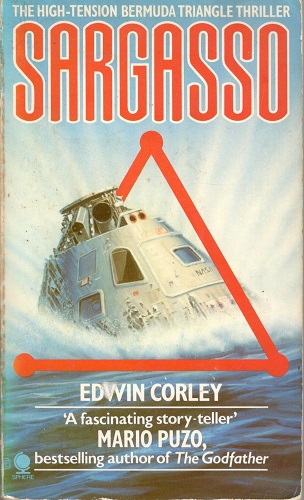
sargasso_smSargasso, Edwin Corley (1977). A 1970s technothriller is not my normal reading, but since this one features both an Apollo space mission and underwater exploration… The initial set-up is intriguing: the command module for Apollo 19 splashes down in the Atlantic after its crew have spent time aboard a Soviet spacestation in an ASTP detente-in-orbit type exercise… but when the CM is opened, it’s empty. No astronauts. And yet Mission Control was communicating with them as they left orbit and fell to Earth. After much guff about the Bermuda Triangle – as that’s where the splashdown occurs – and an ocean survey ship with a submersible which experiences a total power failure seconds before the splashdown… Not to mention a re-enactment of Flight 19, and a man who has been alive for more than a hundred years… It all turns out to be payback for a dastardly plot by those evil communistic Soviets. A back-cover quote praises the book’s research, but I thought it pretty slipshod. Not that the book made much of an effort at detail anyway. The prose barely rose to workmanlike, the cast were the usual stereotypes, and sometimes I wonder why I bother reading some books…
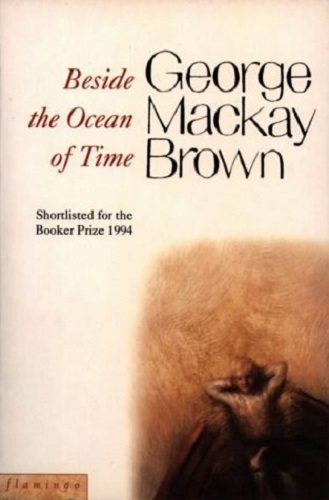
beside_oceanBeside the Ocean of Time, George Mackay Brown (1994). Thorfinn Ragnarson is an idle dreamer, the schoolboy son of a subsistence farmer on the invented Orcadian island of Norday, and considered mostly useless by all who know him. Various incidents set off daydreams, in which Thorfinn imagines himself in assorted historical roles – aboard a Viking ship which makes for Byzantium, the squire of a knight on his way to Bannockburn, a member of the people who built the brochs, press-ganged into the English fleet to fight the French republicans… But there is also a section which describes life on Norday at the time the novel is set, the 1930s, and centres around the mysterious young woman who comes to stay with the local reverend. This was my first experience of reading Mackay Brown, and I’m sure it’s my thing. I found the prose very simple and declarative, and while there were occasional  moments of lovely imagery, much of it struck me as quite sketchy. The setting, of course, had its own fascination, and I actually spent an hour or so looking up brochs after reading about them in Beside the Ocean of Time (and even considered buying a book on the topic). There are some authors, you only need to read one novel or novella, and you want to explore their oeuvre further. While I liked Beside the Ocean of Time, and may well pick up copies of Mackay Brown’s books if I see them in charity shops, I’m not minded to actively seek out his other works.
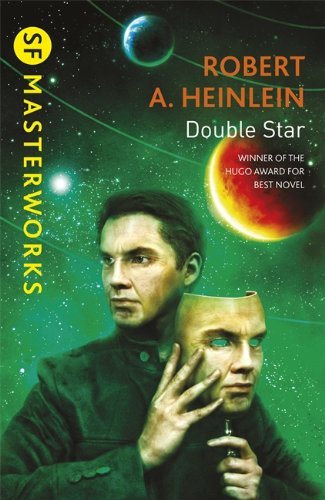
double_starDouble Star, Robert Heinlein (1956). As far as I was aware, this was one of the less objectionable novels in Heinlein’s oeuvre, and I’ve seen much praise for it which was careful to make that point. And yet I have to wonder if those people had actually bothered reading it recently. I can understand a thirteen-year-old lapping it up, and nostalgia putting even more of a shine on the book many decades later… but there’s no way Double Star stands up to scrutiny for anyone with a modicum of intelligence, taste or sensitivity. What else to think of a novel that contains the line “a woman will forgive any action, up to and including assault with violence, but is easily insulted by language”? And there is only one female named character in the entire book. And she’s the hero’s personal assistant. The world-building is also piss-poor, something at which Heinlein is normally quite good. It’s not just the idea of a Solar System-wide empire ruled by a member of the House of Orange, or Mars, Venus and Jupiter having native intelligent life, or the really clunky technology (much of which is behind the state of the art for 1955)… Everything just feels weirdly anachronistic and old-fashioned, even for sf of the 1950s – no, especially for sf of the 1950s. Then there’s the lectures on free trade, all of which are patent bollocks. (Free trade does not generate wealth, it concentrates wealth. In the hands of those who already possess wealth. History has been telling us this for centuries.) An actor is asked to impersonate an important politican who has been kidnapped, but is desperately needed at a ceremony which will result in a treaty with the Martians. The actor does so, the politician is rescued but proves too ill to return to his job, and so the impersonation continues… As far as I know, Double Star was never published as a juvenile, but it’s hard to believe it was aimed at an adult audience.
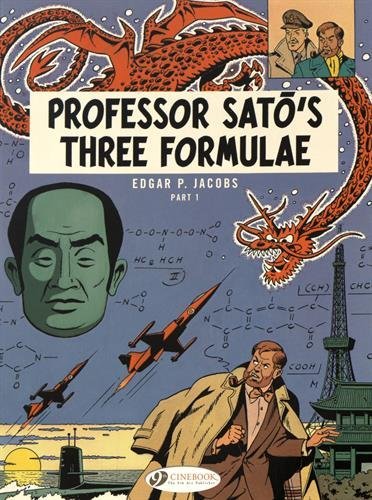
prof_satoThe Adventures of Blake & Mortimer 22: Professor Satō’s Three Formulae, Part 1, Edgar P Jacobs (1971). I first stumbled across Blake & Mortimer back in the 1990s when I lived in Abu Dhabi. If I remember correctly, it was upstairs in Card Zone, where the shop sold books – and some of their stock went back a decade or more. I found a bunch of English-language editions of some bandes dessinée from the late 1980s, one of which was Atlantis Mystery, the seventh in the Blake & Mortimer series. For whatever reason, only half a dozen of the Blake & Mortimer books where published in English… until 2007, when Cinebook began publishing the entire series in English, both Jacobs’s originals and those produced after his death by the Edgar P Jacobs Studio. However, they’ve not been following the original publication order, which is why Professor Satō’s Three Formulae, books 11 and 12 in French, has been published as books 22 and 23 in English (the latter due in May this year). I have to admit I prefer the ones written after Jacobs’s death. While Jacobs was careful to get his details right – in this one, for example, set in the early 1970s, the aircraft and cars are all shown accurately – but the science-fictional aspects are often quite silly. Those written by other hands seem to me to be more careful at making their stories plausible – even going so far as to integrate them into real history. In Professor Satō’s Three Formulae, Part 1, the eponymous scientist has invented a type of robot, which he has built in the form of a ryū. But it somehow escapes his secret laboratory and destroys two fighter jets from the Japanese Air Defence Force. Convinced there is a conspiracy afoot to steal his ideas for nefarious pruposes (there is, of course), Satō calls for his old friend Mortimer for help. Satō has also distilled his research into three formulae, which he plans to give to Mortimer for safe-keeping. Of course, it all goes wrong. Not one of the better books in the series, although I admit I’ve enjoyed reading them and have no plans to stop.
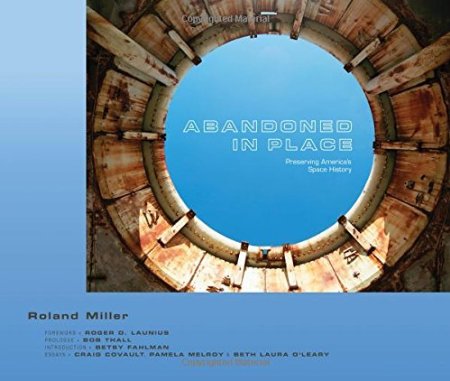
abandonedAbandoned in Place, Roland Miller (2016). Rockets, of course, need somewhere to launch from, and such structures need to be pretty damn sturdy given the beating they will take. So fifty years later, it’s no surprise to discover there are relics and ruins still scattered about the US: block houses, test stands, launch complexes… Some have been demolished since Miller photographed them, some have been repurposed, but many are simply too difficult to destroy. There’s something sadly emblematic about the photos in this book, the fact that the structures they document are all that’s left of the optimism which put twelve men on the surface of the Moon. And they’re in a state of abandonment. It has been argued that NASA’s space programme was the nearest to a socialist economic policy the USA has ever implemented, and I can see how the argument has merit – by spreading the bounty throughout the country in order to win political support, it uplifted towns and states both financially and technologically. There’s a certain level of irony in that. And yet, like the USSR, the only evidence of its existence are ruins – and the world was a better place when both were thriving.
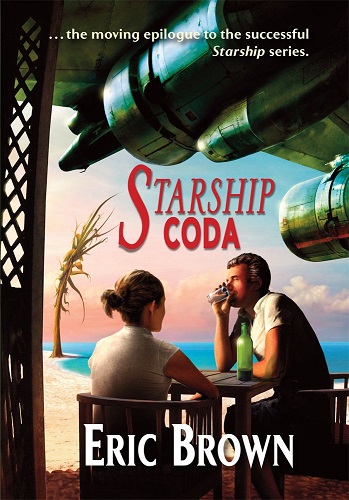
starship-coda-hc-by-eric-brown_smStarship Coda, Eric Brown (2016). Ten years after the events of the Starship Quartet, narrator David Conway is mysteriously contacted by his ex-wife, whom he left before the events of the first novella in the sequence, Starship Spring. She wants to know how he managed to get past the death of their daughter in a drowning accident – the event which drove them apart, and drove Conway from Earth to Chalcedony. The answer, of course, lies in the events of the preceding four novellas. But Conway’s ex-wife duly appears, and it seems she has undergone a drastic procedure in search of closure: Age Reversal Therapy. Which is exactly what the name says. Starship Coda successfully matches the tone of the earlier novellas, although at less than 40 pages it’s a thin book. There’s a sort of comfortable languidness to the world and story, although the focus of the prose is very much on the narrator’s emotional landscape. In fact, there’s something very relaxing about the story – it’s sort of affirming, without being cosy. And while the road to the conclusion may not be smooth, you know there’s happiness at the end of it. And I’m not embarrassed to admit I’d sooner read books like that than I would dystopias, post-apocalypses or anything which professes to be “grimdark”.

1001 Books You Must Read Before You Die count: 122

1 Comment

Moving pictures, #16

If I was an organised sort of person, I’d write these as I watch the movies, and then all I’d have to do is gather them together after, say, half a dozen films to make a post. But while my book shelves are all organised alphabetically by author, and chronologically within author, and I, er, pile my DVDs by director, and I have lists of pretty much everything, including lists of lists… I’m a bit crap at organising work. Because it’s work. Well, yes, it’s writing – reviews, fiction, blog posts, etc, but that’s still work, even if it’s not for money. At least it feels like work. That’s my excuse and I’m sticking to it. So there.

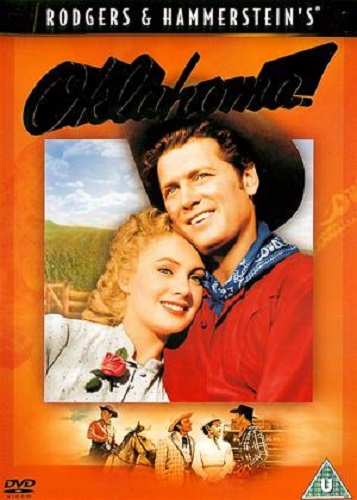
oklahomaOklahoma!*, Fred Zinneman (1955, USA). Since I’ve been working my way through the 1001 Movies You Must See Before You Die list I have watched films I would never have even thought of bothering to watch… and enjoyed them and found them very good. But there are also those that were no more than ticking off an item on a list. Musicals are not films I normally bother to watch, although there are a few I really like. And yes, they’re from the 1950s (except for All That Jazz, from 1979, which I also like a lot; and Les demoiselles de Rochefort, from 1966 and, er, French). But Oklahoma! – a musical from the 1950s. It is also a Western. Although, to be honest, it didn’t really need to be, it could have been set in an inner city, given that it’s the old love triangle plot. With songs. The leads were likeable enough, the songs were mostly memorable, and Rod Steiger was impressively villainous. But it all felt a bit artificial (and I don’t mean the fact it was filmed in Arizona and not Oklahoma), and contrived. As the only film adaptation of the first musical written by Rodgers and Hammerstein, I understand the need to put it on the 1001 Movies You Must See Before You Die list, but I wouldn’t call it an especially notable example of the Hollywood musical.

sinatraTony Rome, Gordon Douglas (1967, USA). Sinatra and Douglas made three neo-noir films in the late 1960s, in two of which Sinatra played the title character of this movie. Not that Sinatra was ever much of a character actor. And in the three films his hair always seems a step or two behind him in the script (if it was a hair-piece, it was not a good one). In this movie, Rome is asked to take home a young woman who has passed out from drink in a hotel room, in order to prevent the hotel from any accusation of impropriety. When the young woman – who’s from a wealthy family, of course – wakes, she discovers a diamond pin is missing, and hires Rome to find it. Cue the sort of convoluted plot you only ever found in noir books and films. The movie scores well on ambience – it’s hard to imagine a more late-sixties USA film – although Sinatra plays his role with all the depth of a petri dish and the plot seems to think an overly-complex story counts for depth. Good for a lazy Sunday afternoon, but that’s about it.

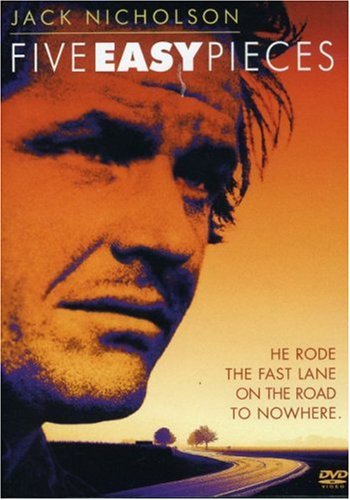
five_easy_piecesFive Easy Pieces*, Bob Rafelson (1970, USA). All this time and I’d thought Five Easy Pieces was some counter-culture film like Easy Rider, and I’ve no idea where I got that idea from (I hope it isn’t something as dumb as the fact they both have the word “easy” in their titles)… because, well, it isn’t. Not at all. Jack Nicholson plays a middle-class classical pianist slumming it as a wildcat oil worker after a falling out with his family. He even puts on the accent. He also has a girlfriend, a waitress, played by Karen Black. And a friend, who introduced him to wildcatting. But when said friend is arrested for a petrol station hold-up a year earlier, and Nicholson learns his father has suffered a stroke, he heads home, taking Black with him. The title refers to five pieces of music played by classical pianists, and which are heard during the film. Nicholson chews the scenery, as per usual, and the only real notable thing about the movie is the swap from working class to affluent middle class, and the all-too-obvious deduction that Nicholson’s character is play-acting in his working class life, which is hardly something to be celebrated. I’ve yet to actually work out the numbers but I’d guess that at least two or three out of every five films from the 1001 Movies You Must See Before You Die list have, to me, felt like they didn’t belong – and this is another of them. Meh.

sinatraThe Detective, Gordon Douglas (1968, USA). Unlike the other two films in this box set, this film is not a Tony Rome movie. But Sinatra does play, well, a detective. But not a private one, a police force one. In New York, not Miami. A man is found murdered in his apartment and his body mutilated. Various leads point to New York’s underground gay scene. Then a man commits suicide by jumping from the roof of a racetrack pavilion. And this somehow links back to the first murder, through some convoluted plot involving land sales by corrupt councillors. Sinatra’s investigation is enlivened by help from Jacqueline Bisset, wife of the suicide, who appears completely out-of-place. Compared to the two Tony Rome movies, this one is a bit grim and cheerless. The plot is just as daft as those, however, and Sinatra plays, well, Sinatra (with hair-piece); but this is more of a wet and miserable Sunday afternoon film. Apparently, a sequel was made many years later, and the makers were contractually obligated to offer the role to Sinatra. However, he was seventy years old, so he passed on it… and it went to Bruce Willis. The sequel was released under the title… Die Hard.

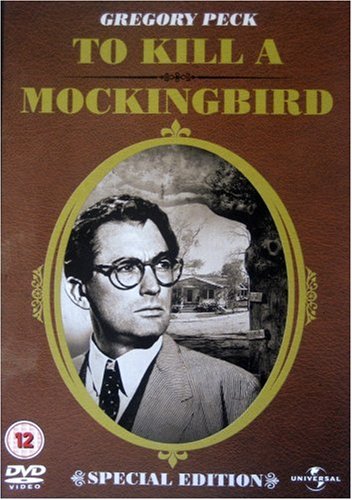
mocckingbirdTo Kill a Mockingbird*, Robert Mulligan (1962, USA). It’s been hard to avoid mention over the past year or so of the novel from which this film was adapted – first because of the “prequel” and the controversy surrounding its publication, and then because of the death of the author. I have actually somehow not managed to read the book for fifty years, or indeed see the movie. And I have now rectified the latter. And… really? Precocious kids, homespun philosophy, simple living a product of poverty not choice, and paternalism as a response to racism? Not to mention a muddled plot that can’t decide if its focus lies with the court case or with Boo Radley. True, this is a movie, not the novel, and perhaps the latter doesn’t seem so confused given that novels typically cover more ground. I’d always been under the impression To Kill a Mockingbird was about race relations in the US south, and that the court case formed the centre-piece of the story. But it isn’t. And it doesn’t. It’s just part of Scout’s childhood, and like many of the incidents, seems structured to teach her a life lesson. I wasn’t really sure what to expect from this film, but it was certainly something a lot more critical and insightful than this. Disappointing.

love+one+another+coverThe Bride of Glomdal, Carl Theodor Dreyer (1926, Norway). Dreyer started his movie career as a writer of intertitles for Nordisk Films. Six years later, he directed his first film, Præsidenten, a convoluted adaptation of an 1884 Austrian novel of the same title. Glomsdalbruden (The Bride of Glomdal) was Dreyer’s eighth film, and the last he made before leaving Denmark for France, where he made The Passion of Joan of Arc. Despite the dour-sounding title, The Bride of Glomdal is a love story – poor man loves rich woman, woman’s father is against the match, etc. It was filmed in Norway, mostly outdoors, and the clarity of the picture is really quite astonishing given its age. There’s also an impressive sequence in which the hero is swept downriver and through some rapids. The plot is based on a pair of stories by Norwegian author Jacob Breda Bull – as far as I can determine, he has never been translated into English. Dreyer’s films are never less than fascinating, and if this one can’t compete with The Passion of Joan of Arc for emotional power, it still remains a superior silent movie.

1001 Movies you Must See Before You Die count: 748


1 Comment

Easter bounty

Surprisingly, I only bought three books at this year’s Eastercon. Admittedly, the dealers’ room was was a bit lightweight compared to previous years. I also picked up four free books… Even so, that still makes it a considerably smaller book haul than I usually manage at cons. I blame online retailers… several of which I have visited in the past few weeks and made purchases…

2016-04-03 11.14.11

First, the Mancunicon haul: I was at the NewCon Press launch in the Presidential Suite on the twenty-second floor of the Hilton Deansgate, but I didn’t buy a copy of The 1000 Year Reich until the following day. Both The Sunbound and Heritage of Flight I bought to read for SF Mistressworks – I’ve been after a copy of the latter for a while, as I very much like the only other book by Shwartz I’ve read, The Grail of Hearts. There was also a table of giveaways from various major imprints, which is where I picked up copies of Creation Machine, The Tabit Genesis, Crashing Heaven and Wolfhound Century.

2016-04-03 11.15.31

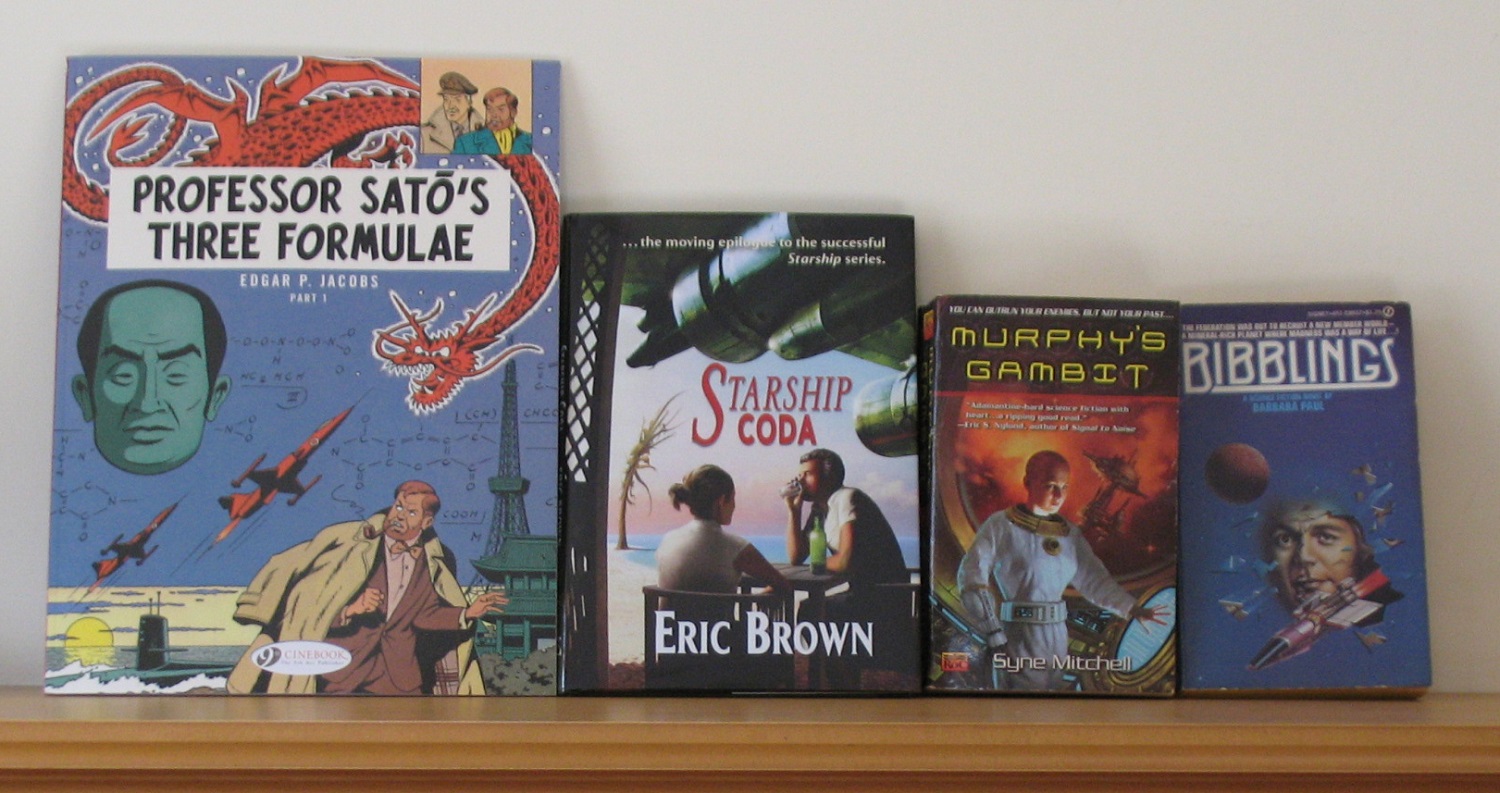
Speaking of SF Mistressworks, both Bibblings and Murphy’s Gambit were bought on eBay to review there – in fact, I’ve already Bibblings, see here. Eric sent me a copy of Starship Coda (although it was launched at Mancunicon), after I gave him a copy of Dreams of the Space Age. Professor Satō’s Three Formulae, Part 1 is the twenty-second volume in Cinebook’s English-language reprints of the Adventures of Blake and Mortimer, purchased from a large online retailer…

2016-04-03 11.17.46

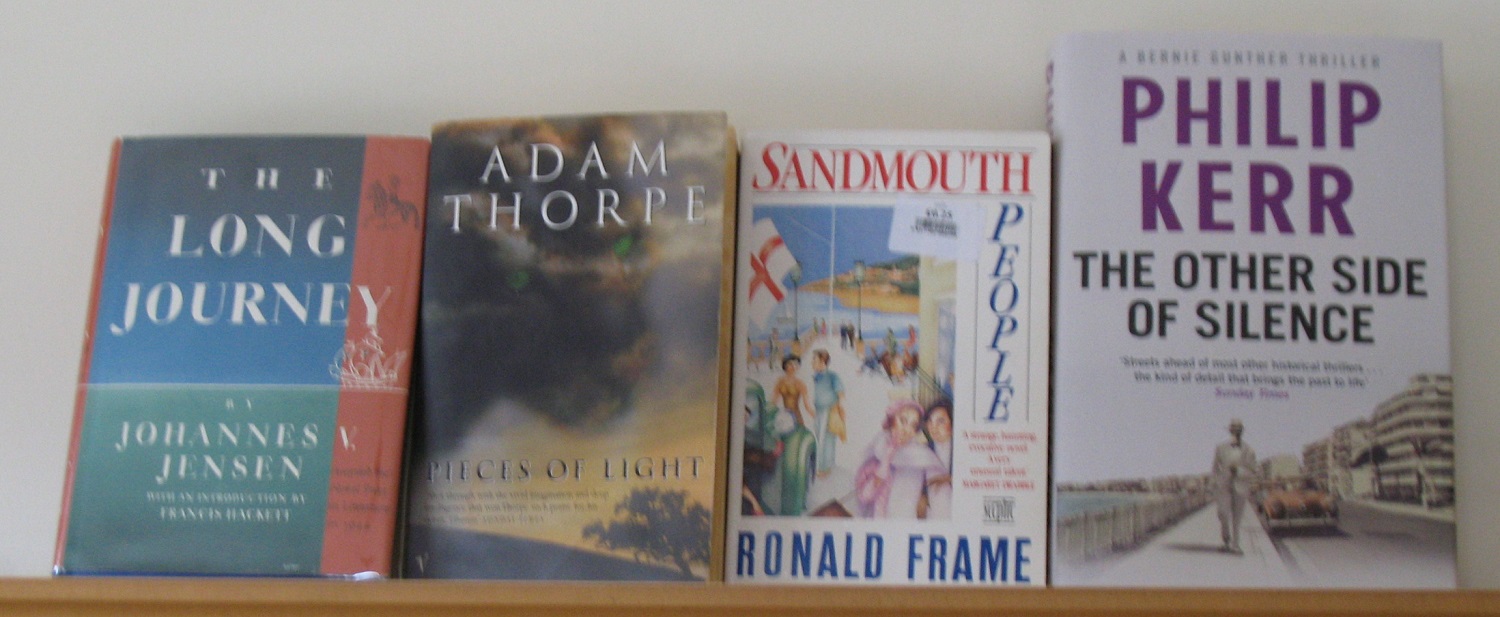
… which is also where I bought The Other Side of Silence, the eleventh book of Kerr’s Bernie Gunther series. Sandmouth People and Pieces Of Light were both charity shop finds. The Long Journey I bought from a seller on ABEbooks after reading about it, I seem to recall, in Malcolm Lowry’s In Ballast to the White Sea, and deciding it sounded really interesting. Jensen, incidentally was awarded the Nobel Prize for Literature in 1944.

2016-04-03 11.19.32

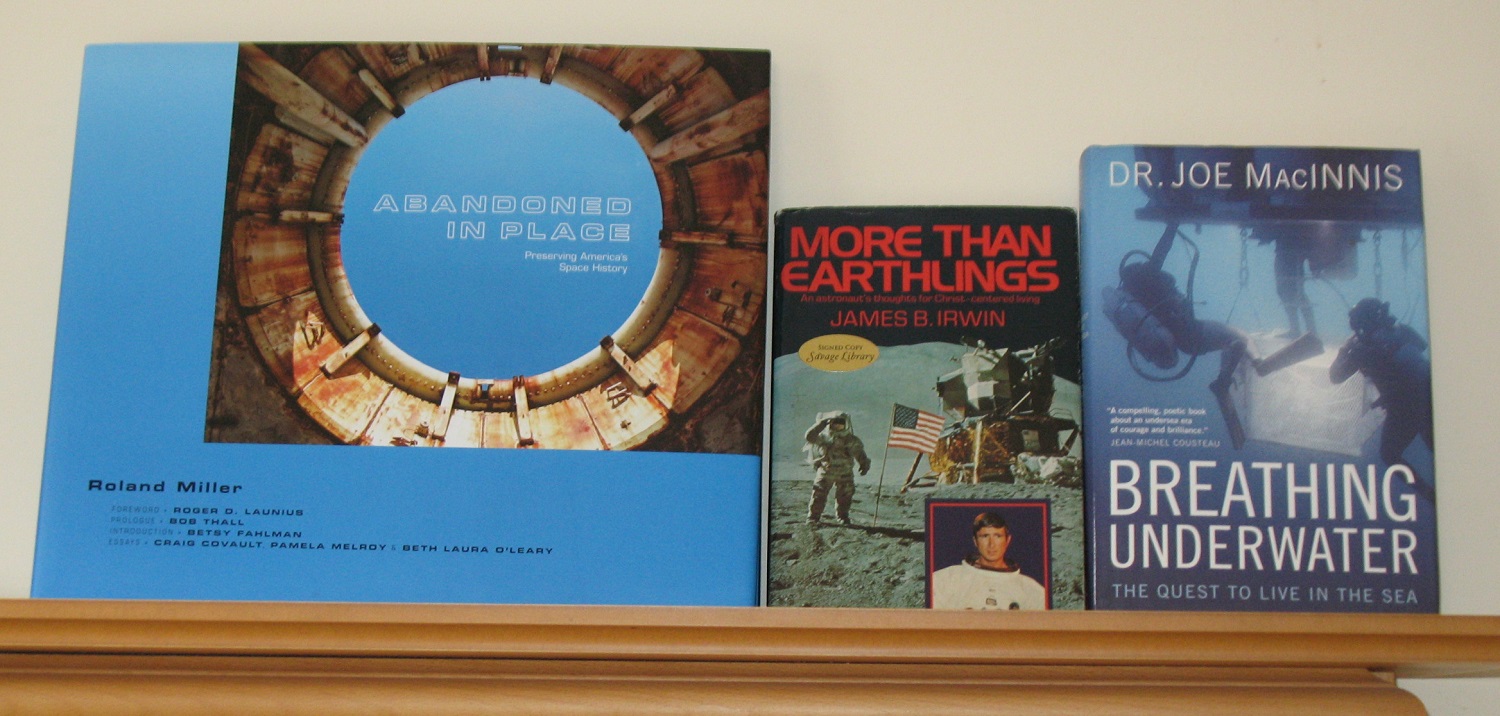
Breathing Underwater by Joe MacInnis I also bought on ABEbooks. MacInnis has been at the forefront of underwater research for several decades, ever since being taken on as doctor on Ed Link’s Sea Diver back in the 1960s. More Than Earthlings, Jim Irwin’s second book about his Moon flight, I found on eBay; it is signed. And Abandoned in Place is a photo essay on the support hardware used by the space programme, much of which has been left to rot as it’s no longer in use.


1 Comment

Moving pictures, #15

For the forseeable future, this blog will likely contain more posts about films than books – if only because I watch more films than I read books (it being a time thing, and a bad-organisation-of-time thing – although I remain committed to books as my favourite transport vector for culture). Anyway, I’ve got behind on these Moving pictures posts so I need to catch up a bit. So there might be a few of these in quick succession, beginning with…

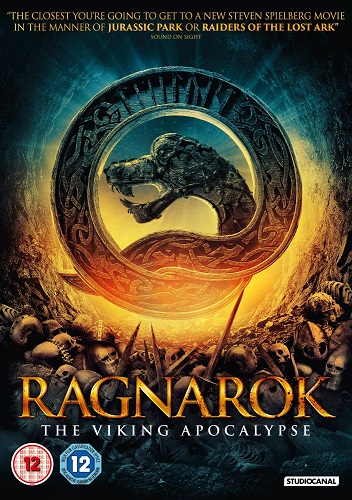
ragnatokGåten Ragnarok, Mikael Brænne Sandemose (2013, Norway). On Amazon Prime, this looked like some terrible Viking-themed action movie, so I’ve know idea why I bothered watching it (particularly given its English retitling… Ragnarok – The Viking Apocalypse). Happily, it proved to be anything but. Maybe it was just the fact it was Scandinavian. Anyway, an archaeologist in Norway believes a tribe of Vikings travelled to the far north of the country and the legend of Ragnarok was a consequence of their trip. But he has no real proof. But then an assistant, sent north to Finnmark, returns with a piece of stone on which some runes have been carved… and despite having no museum backing, the archaeologist sets off to find more evidence for his pet theory, taking his two kids along with him (he’s widowed, and his late wife did much of the work toward the theory). They find a remote lake, and centred in it a small island which contains Viking artefacts… because a bunch of them went there and were slaughtered by… a monster. This was actually pretty good – perhaps not up there with Troll Hunter, but nonetheless and interesting mix of Norse mythology and modern monster movie. Worth seeing.

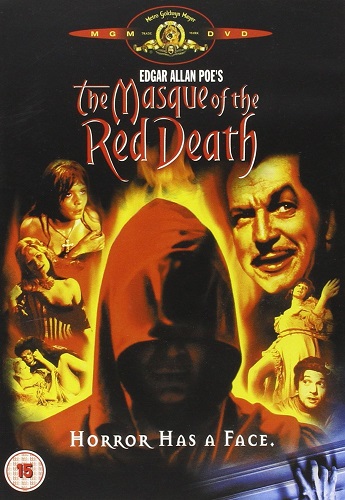
masqueThe Masque Of The Red Death*, Roger Corman (1964, USA). I admit it, one or two of the films produced by Corman’s New World Pictures are among my favourites. This is not one of them, It is, in fact, precisely the sort of film you’d expect Corman and American International Pictures to churn out. Based on the Edgar Allen Poe story of the same name, it’s little more than a US version of a Hammer Horror film, right down to the kitschy lead, the over-colourful production design, and the terrible over-acting. And perhaps it’s weirdly parochial of me, but I’ve always preferred it when Brits do it. Vincent Price plays your typical evil lordling, who discovers evidence of the titular plague on his land, and so offers his castle as a sanctuary to neighbouring nobility, who duly turn up, behave like everyone’s favourite cliché of decadent aristocracy, before themselves succumbing to the “red death”. It tries for the colour of The Adventures Of Robin Hood, but falls well short; I suspect that’s the only area in which it tried for anything. The louring mediaeval feudalism was done better, and earlier, by Mario Bava in 1960’s Black Sunday, and the effete nobles partying away the end days has been done better in several Hammer films. I have no idea with this film is on the 1001 Movies You Must See Before You Die list, but if they had to absolutely pick one from American International Pictures’ catalogue, then why not Queen Of Blood from 1966, or, from Corman’s own New World Pictures, 1981’s Galaxy of Terror?

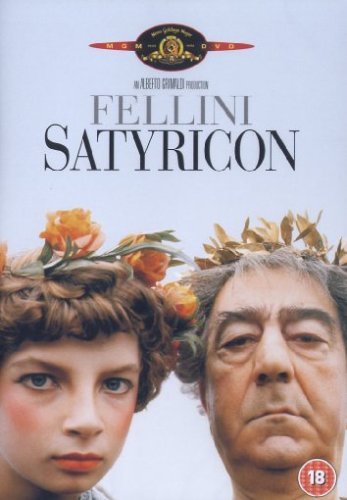
satyriconFellini Satyricon*, Federico Fellini (1969, Italy). I have a somewhat conflicted view of many of the great directors whose films I have watched – and there’s no denying Fellini is one of them – inasmuch as I love some of their films but can see little of note in their others. I do love Fellini’s but a lot of his others films have felt all a bit meh. And Fellini Satyricon seemed to be going the same way when I first started watching it – it felt like a weird cross between Derek Jarman’s Caravaggio and the sword-and-sandal epic Hercules and the Tyrants of Babylon (which are apparently also called “peplum fantasies”, as I learned from Aliette de Bodard; a phrase new to me). Anyway, so the film initially looked like Caravaggio… and then it put to sea in the most bizarre ships ever designed and I decided, for no good reason, that I actually really loved this film. And that, I suspect, is the mark of a movie that belongs on the 1001 Movies You Must See Before You Die list. The more I watched it, the more I wanted my own copy of Fellini Satyricon, preferably a nice high-rez Blu-ray version with lots of features. I still have no idea why I went from not liking it to thinking it was a work of genius, but the only way to discover that is to own and rewatch it. It was self-indulgent and over-the-top, but it was also, as it progressed, increasingly beautifully shot and weirdly fascinating.

sorrowThe Sorrow and the Pity*, Marcel Ophüls (1969, France). Some films, it’s easy to see why they made the 1001 Movies You Must See Before You Die list, even if they don’t seem of sufficient quality, or historical importance, to be there. But The Sorrow and the Pity is historically important, and its presence on the list is pretty much incontestable… even if I found it somewhat dull and uninteresting. It covers the Occupation of France during WWII, first from the point of view of those who fought against the Nazis, and then from those who fought with the Nazis. So it essentially consists of series of talking heads. It was banned from TV broadcast in France, and wasn’t shown until 1981. I can understand how defeat and collaboration are seen as nationally shameful, but I’d have thought it more shameful for  politicians, and the press, to be spouting the same rhetoric as the Nazis, as they seem to be doing in the twenty-first century. And with films like this one around you’d think they’d know better. But, as they say, those who don’t know their history are doomed to repeat it – and those who do are doomed to suffer as the others repeat it.

chariotsChariots of Fire*, Hugh Hudson (1981, UK). Everyone knows the theme tune, right? By Vangelis? I mean, it doesn’t sound at all appropriate for the 1920s, which is when this film is set, but it’s pretty damn memorable. Unlike the actual movie. Which purports to tell the story of the rivalry between Bible-bashing Calivinist Eric Liddle and upper-crust Jew Harold Abrahams, both runners who competed in the 1924 Olympic Games. It takes a few liberties, apparently, in pursuit of drama, as the silver screen is wont to do – particularly in regard to Liddell’s refusal to run at the Olympics on a Sunday. In the film, he learns on his way to Paris that the race is scheduled for a Sunday, but in reality he knew months beforehand and the British Olympic Committee had made plain their unhappiness about it. Having said all that, my overriding memory of the film is of a bunch of over-entitled toffs at Oxford or Cambridge (they’re interchangeable, after all) – as if that were in any way representative of the UK at that time (but hey, our current lords and masters are working hard to return us to those days of an over-privileged elite living off the backs of a working class trapped below the poverty line in slums). A boring film, and if the makers of the 1001 Movies you Must See Before You Die list were determined to include some British movies, they could have picked far better than this.

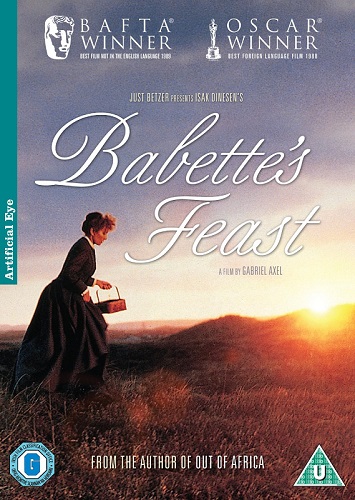
babetteBabette’s Feast*, Gabriel Axel (1987, Denmark). Three pieces of fiction by Karen Blixen (AKA Isak Dinesen) have been made into films, which is not a bad record. Out Of Africa, of course, everyone knows. The Immortal Story by Orson Welles is perhaps less well-known (and Blixen’s novella is superior to Welles’s movie). But Babette’s Feast is reasonably well-known, as is the fact it’s based on something by Blixen. At least, I think it’s reasonably well-known. And while it’s not the best novella from the collection in which it appears – that would be, for me, ‘The Tempest’ – it’s a good story and worth filming. I suspect I may have in the past avoided the film under the mistaken impression it involves a feast much like that in The Cook, The Thief, His Wife And Her Lover. It doesn’t. Amusingly, the story is set in Norway but was filmed in Denmark, because the Norwegian village in the story didn’t look dour and miserable enough. An excellent film.

1001 Movies You Must See Before You Die count: 744


1 Comment

The wrong side of the Pennines

Eastercon this year took place in Manchester, on the other side of the Pennines. I very much prefer Eastercons when they’re outside London, and even more so when they’re relatively close – and Mancunicon was only 55 minutes away by train. Having said all that…

Every Eastercon begins with travel woes, and Mancunicon was no exception. I’d booked a taxi in plenty of time to take me to the station, giving me 40 minutes before my train left. But at the time the minicab was supposed to arrive, it didn’t. And continued not to arrive… until eventually appearing 15 minutes before my train was due. This was because the current minicab operating model has a central dispatching office put out jobs for drivers to bid on. And if they don’t receive any bids, or don’t accept any of those they do receive, then you don’t get a taxi. And they don’t bother to tell you. This is not helpful. The cab driver who eventually turned up told me he’d bid on the job earlier but his bid had been rejected – otherwise he’d have arrived much sooner.

As it was, I managed to make train, although it was close. The trip was uneventful, and I then had a ten-minute walk to my hotel. Not normally a bad thing. But it was a warm day, I was wearing a coat and carrying a box of Whippleshield Books to sell. So I was knackered and soaking wet by the time I made it to my hotel room. I then met up with Tobias, who’d flown over from Stockholm, and we headed across to the Hilton Deansgate, the con venue. I sort of liked the hotel, but I’m not convinced it was an especially good con hotel. Most of the programme rooms were far too small, meaning you had to get to them really early to get a seat. The dealers were split across two rooms, which didn’t work. The hotel had only three lifts, which meant there was a queue when people wanted to head up to the twenty-second floor for book launches in the Presidential suite (which was itself too small). There was no place to sit down and relax – one  bar was pretty much standing-only, the other was laid out like a coffee-shop. And the snack food provided during the con was disgusting.

On the plus-side, the location was excellent – lots of shops and eateries within easy walking distance. And even a museum of science and technology… which I didn’t visit. And a cinema. Given better use of the Hilton Deansgate’s conference facilities – and some comfy chairs in the mezzanine bar – it would make a really good venue. Having said that, Mancunicon was a victim of its own success. I was told they’d expected 700 to 800 attendees, but actually had 950 people over the weekend. It was certainly busy a lot of the time.

I made, as is my usual practice, less than a handful of programme items. I was on one – on space opera, ‘The Stars Are Your Canvas’, with Mike Cobley, Tom Toner, Alison Sinclair, Jo Zebedee and Gavin Smith. I think the panel went well enough, although in hindsight we didn’t actually interrogate our subject much, and by the end it had turned into a bit of a nostalgia fest for certain space opera properties… Ah well. Then there were the BSFA Awards (congrats to the winners)… Oh, and I made the NewCon Press book launch in the Presidential suite too. But the highlights of the weekend were, as ever, meeting up with friends, and those free-wheeling conversations you have in the afternoons while you’re sat round a table – including one discussion on neurology, theology and Game Theory with Simon Morden and Alex Lamb; another on the various media adaptations of Dune with Adrian Tchaikovsky; not to mention all those “catch-up conversations” you have with friends that aren’t really catching-up because you know pretty much what they’ve been up to since you last saw them thanks to Twitter and Facebook status updates… Of course, there’s also meeting new people. Which I did. And seeing many people I’d not seen for many years…

Oh, and for the record, the Traveller identity card I mentioned during the space opera panel? Here it is:

patent

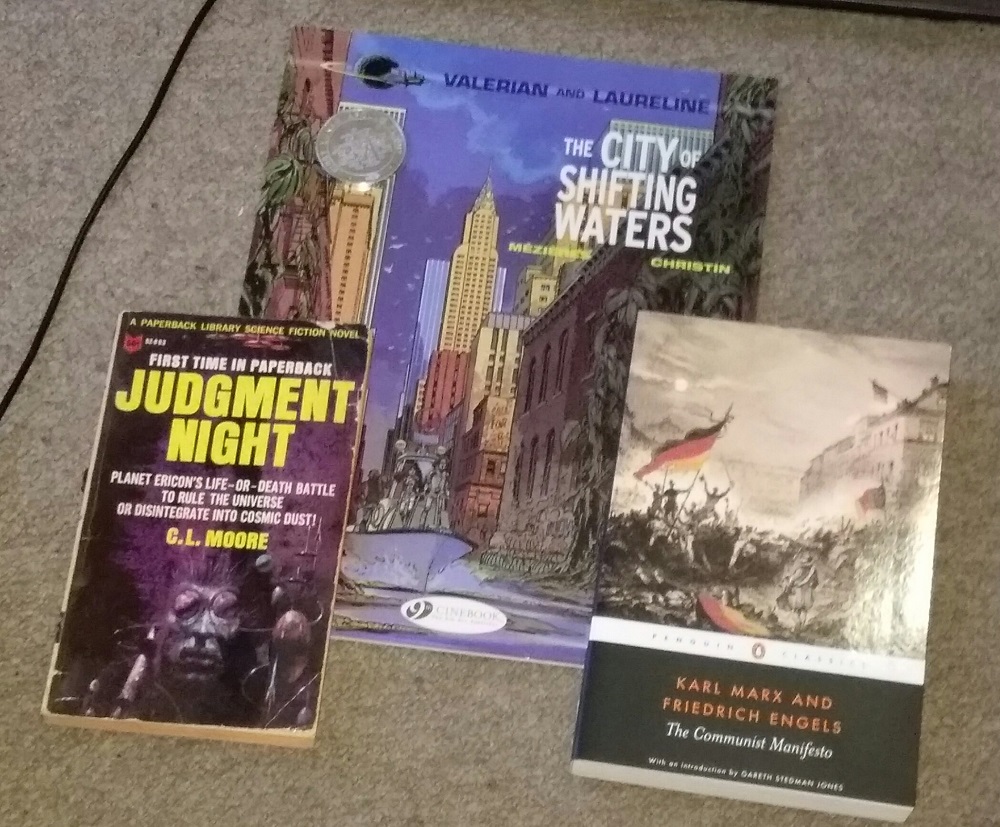
I also mentioned Judgment Night, the Valerian and Laureline series, The Communist Manifesto and a coin that’s flown around the Moon:

IMAG0010_1

I didn’t do so well on the social front, and went to be early on all three nights. I’d developed a bad back about a month ago, and all that standing around wasn’t do it any good. As usual, I also ate badly during the day, thanks to the poor choices available (such as the aforementioned disgusting con food). On the Sunday, I nipped to a nearby Sainsbury’s and bought lunch there. I wish I’d done it on the previous two days. Twice, I had dinner in the hotel restaurant. The food was pretty good. On the Saturday night, a group of us went to a nearby Indian restaurant. The food was good, but it was a bit too loud in there (a birthday party on the mezzanine, apparently).

I want to like Mancunicon more than I did. I think the two things that spoiled it for me were pain from my back and the somewhat feeble dealers’ room. I bought three books at the con; I usually come back with a carrier-bag full. In the past, I’ve spent hours browsing the books in the dealers’ room, but that took all of five minutes at Mancunicon. I suspect I was also hoping it would be more of a relaxacon, with places to chill out; and while many of the programme items looked interesting, the faff in actually getting a seat in the rooms put me off even trying. None of which is to say Mancunicon was a badly-organised Eastercon. On the contrary, it did extremely well – especially when you consider it was a rescue bid.

(Speaking of which, 2017’s Eastercon in Cardiff collapsed, but a rescue bid in Birmingham was announced at Mancunicon: Innominate at the Hilton Metropole at the NEC, GoHs Pat Cadigan, Judith Clute and Colin Harris. And 2018’s Eastercon will be Follycon in Harrogate, with GoHs Kieron Gillen, Kim Stanley Robinson, Nnedi Okorafor and Christina Lake.)

Oh well, perhaps I’ve been spoiled. Archipelacon is going to take a lot of beating. I did quite well with my own books (and I’m eternally grateful to Roy Gray for having them on the TTA table). It always surprises me – in a good way, of course – when people come up to me and say nice things about them I was hoping I wouldn’t have to carry a box full of Whippleshield Books back home, and happily I sold just over half of those I took with me. (The books are, of course, still available from the Whippleshield Books website here.)

In summary, a middling-to-good Eastercon for me. Mostly my fault – but also partly because the venue didn’t quite work as a con hotel. I wish I could say I came home fizzing with ideas and enthusiasm for writing projects… but I didn’t. I left at lunch-time on the Monday – it was absolutely hammering it down and I didn’t fancy walking to the station but a friend planned to order a cab… The journey home went without a hitch, and the cat at least was happy to see me and spent a good five minutes telling me off for disappearing on him. I did tell him but… Anyway, Birmingham next year – and I remember the hotel from the 2011 Eastercon… A good venue, but expensive and miles from anywhere, I seem to recall. But that’s twelve months away…


1 Comment

Reading diary, #25

I suppose you could say I’ve recently become disenchanted with modern genre fiction. I haven’t really, it’s been an ongoing thing. I suspect this comes to us all at some time. It’s not so much “putting away childish things” because I don’t consider genre a childish thing (not all of it, anyway). My tastes have changed, and most genre no longer meets those tastes. So I have to look harder to find stuff that does – I have to look harder anyway because the genre is now so much bigger, and I have access to so much more of it; but you know what I mean. I still have my favourite genre writers, of course, and I continue to read, and enjoy, their output; but unless something new really is out of the ordinary I usually find myself blithely uninterested in it.

Fortunately, there is more to literature than just genre fiction. And I’ve found that some mainstream/literary fiction does offer me what I look for in my reading. Plus, there is tons of it to explore – an entire history, in fact. I’ve learnt I really like, for example, DH Lawrence’s writing, so there’s an extensive oeuvre to work through right there. And Malcolm Lowry. And the works of recent discoveries Karen Blixen and Jenny Erpenbeck I want explore. I also have a bad habit of jotting down the titles of books that sound interesting when I come across mention of them, particularly twentieth-century ones that are hard to find… which is how I ended up with a copy of Johannes V Jensen’s The Long Journey (originally published in Danish in six volumes between 1908 and 1922; first published in English in three volumes in 1924), and I’m still looking for a copy of Nordahl Grieg’s The Ship Sails On (1924)… oh, and I’d like to read Jerzy Żuławski’s Lunar Trilogy but I don’t think it’s ever been translated into English…

Despite all that, there’s still a lot of twentieth-century science fiction I’ve not read, and I’m not about to write off the genre completely. It may well be projection on my part, but there seemed to be more of a distinction between science fiction and fantasy last century and I like that. I also like that there are a lot of well-written science fiction novels from the twentieth-century which have been pretty much ignored – mostly written by women, yes – and discovering them for SF Mistressworks does add an extra dimension to reading them.

So, anyway, reading… I did some. It is here. See below.

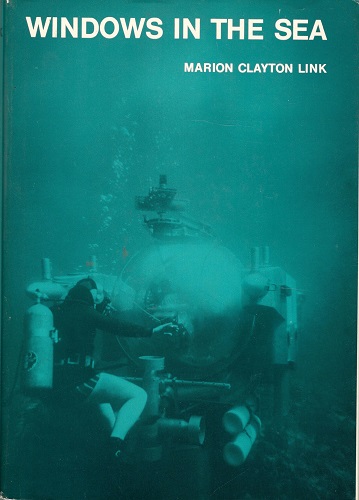
windows_sea_smallWindows in the Sea, Marion Clayton Link (1973). Ed Link made his fortune inventing the aircraft simulator, but he put a lot of time, effort and money into underwater exploration. He invented the SPID (Submersible Portable Inflatable Dwelling), which set a record when two divers stayed in it for 49 hours at a depth of 432 feet. He also invented a submersible with a lock-out chamber for divers, so they could be carried to their working depth, compressed en route, and begin their decompression while returning to the surface. And he invented the Johnson Sea Link submersible, in which the pilot and passenger sit inside a transparent acrylic sphere. Perhaps he didn’t advertise his adventures to the extent Jacques Cousteau did – in fact, this is the only book specifically about Link’s underwater exploits; other books are about people who worked for him – but he pioneered a number of important underwater technologies. Windows in the Sea thankfully sticks to more of a reportage style, rather than being hagiographic, and it’s fascinating stuff. Of course, not everything went according to plan – in an early test of the SDC (Submersible Decompression Chamber), it was catapulted out of the water with Link inside. Later, Link’s son died in a tragic accident in the Johnson Sea Link. But in a topic poorly served by non-fiction works, this book deserves to be better known.

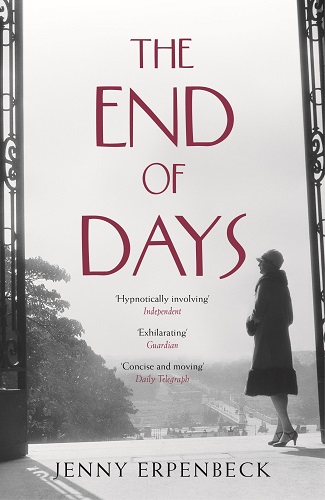
end_daysThe End of Days, Jenny Erpenbeck (2014). I think it was David Hebblethwaite who recommended this novel – and while people recommend books pretty much all the time, something about this one sounded like it might appeal. So I bunged it on my Amazon wishlist, and was subsequently given it as a Christmas present. The back-cover blurb makes explicit comparisons to Kate Atkinson’s Life After Life (a book I very much liked, and, in fact, nominated for a Hugo, during my one and only attempt at nominating for the Hugo), but the novel The End of Days reminds me of the most is Katie Ward’s Girl Reading, another book unknown to me until someone recommended it… and which turned out to the best book I read that year. Plotwise, Atkinson’s novel is certainly a closer match, given that The End of Days describes the life of a woman born in Galicia in the latter days of the Austro-Hungarian Empire, and her life throughout the twentieth century as she survives WWI, joins the Communist Party in Vienna, moves to Moscow, and then Berlin, and becomes a famous East German writer. As in, that’s it in the final section in which she lives a long and eventful life. Earlier sections cut it short at various junctures. The writing throughout is stunningly good, the structure is very carefully built up, and this is one of the most impressive books I’ve read so far this year. I fully expect it to make my best five of the half-year, if not the year. I also want to read more by Erpenbeck.

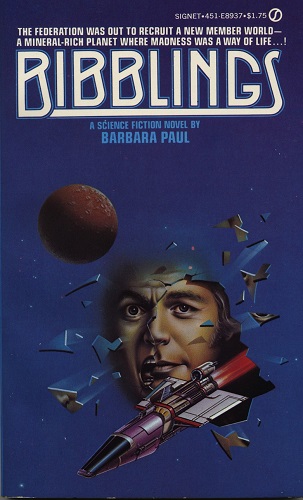
bibblingsBibblings, Barbara Paul (1979). I consider myself reasonably well-informed on women sf writers of last century, particularly novelists, but Barbara Paul was one that had completely slipped by me. She had five novels published between 1978 and 1980, and one Star Trek novelisation in 1988. Only her first novel, An Exercise for Madmen, and this one, Bibblings, were published in the UK – and the first was in hardcover only by Robert Hale (whose books are notoriously hard to find). Paul also wrote crime novels; the last was published in 1997. She has an extensive website here. My review of Bibblings is on SF Mistressworks here.

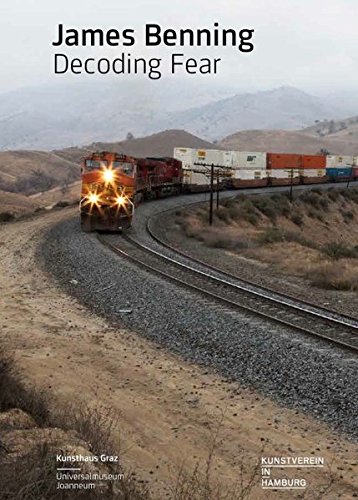
decoding_fearJames Benning: Decoding Fear, Peter Pakesch & Bettina Steinbrügge, eds. (2014). I Love Benning’s films, at least those I’ve seen so far, which is only a small portion of his oeuvre as that is all that’s to date been released on DVD (happily, he donated his archives to the Östereichisches Filmmuseum, so hopefully they will release more). James Benning: Decoding Fear was produced to accompany an exhibition of Benning’s work, and comprises a series of essays in German and English, photographs of the exhibits, and an interview, in both German and English, about one element of the exhibition – his Two Cabins, the cabins in question being those by Henry David Thoreau (of Walden fame) and Ted Kaczynski (the Unabomber). It’s an interesting insight into an artist whose work I much admire, although to be honest I had expected something a little more analytical than what is essentially a companion-piece to an exhibition.

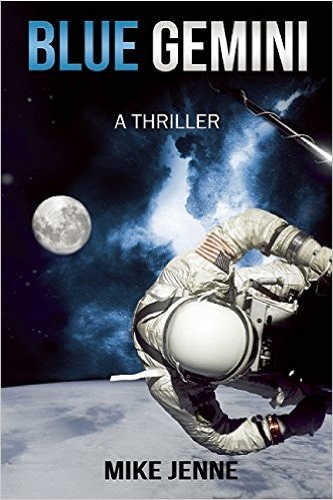
blue_geminiBlue Gemini, Mike Jenne (2015). How could I resist this? A thriller about a secret militarised Gemini programme – that’s right up my street. True, it was published by an independent publisher, and it’s not being sold as genre fiction… but I thought it worth a go. And, unsurprisingly, the book’s prose has all the style and grace of, well, a technothriller. The topic is indeed something that interests me – a Soviet plan to orbit nuclear warheads persuades the US to develop a secret USAF programme of satellite killer Gemini spacecraft, something that was actually considered in the real world. A group of sterotypically technothrillerish characters become involved in said programme and, er, well, that’s it. The research is good, and Jenne writes the technical aspect of his story with authority. But the characters are pretty much what you’d expect, the prose rarely rises above clunky, and there are a lot of pages here for the story. There are some nice set pieces – particularly those involving a black USAF airman and the racism he encounters – but there’s also a lot of ignorance shown about the rest of the world, and it’s not always clear if Jenne is trying portray the ignorance of Americans of the 1960s or if it’s twenty-first century ignorance. There are two sequels to this book – Blue Darker Than Black, published earlier this year, and Pale Blue, due in June this year. To be honest, I don’t think I’ll be bothering with them.

1001 Books You Must Read Before you Die count: 122


2 Comments

Moving pictures, #14

The whole reading books instead of watching films thing isn’t quite working out as planned – well, inasmuch as it’s not really working out at all. Having said that, of late I’ve been binge-watching The Killing season one – unfortunately, like most television series, it didn’t quite survive the experience. About two-thirds into the season, it completely lost the plot, dragging suspects back and forth in front of the viewer, and missing out so many logical steps for the investigation to take, that it no longer mattered who actually committed the original murder, it was all about Lund and keeping her centre of whatever mad theory she was spinning that episode. Which is not to say I didn’t enjoy it, and would like to watch later seasons. Anyway, I did watch some films as well, and here they are…

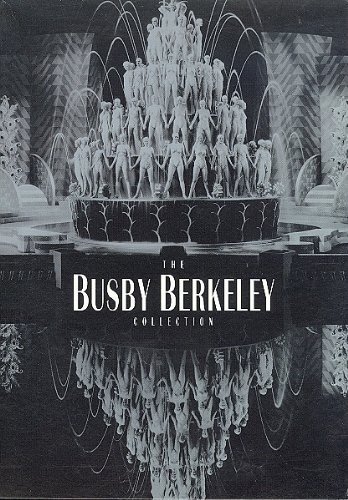
busbyGold Diggers of 1935, Busby Berkeley (1935, USA). I think this is the final film in the Busby Berkeley Collection, although there was a second collection released which seems to be deleted, which includes Gold Diggers of 1937, Hollywood Hotel, Varsity Show and Gold Diggers in Paris. Anyway, Gold Diggers of 1935 shares only the term “gold diggers” with Gold Diggers of 1933, and the only cast member to appear in both is Dick Powell – but then he appeared in pretty much every musical film made in the 1930s, or so it seems. The plot is also more of a comedy, and takes place almost entirely in a resort hotel for the rich. A rich old woman wants her daughter to marry a rich old man, but she falls for Powell, who has been paid to escort her. There’s a charity show in which they’re all involved – the rich old woman wants it done on the cheap, but those making the show want it to be as expensive as possible so they can skim some off the top. Gold Diggers of 1935 is perhaps best-known as the film which contains the Berkeley routine ‘Lullaby of Broadway’. Not the best film in the collection, but still a lot of fun.

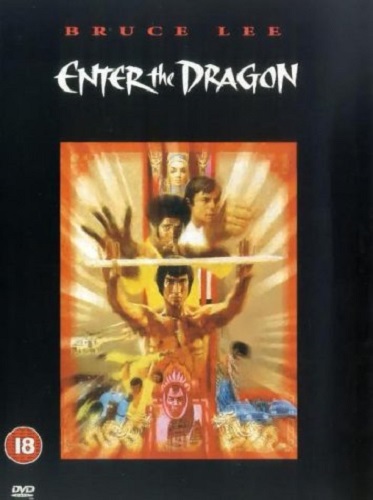
enter_the_dragonEnter the Dragon*, Robert Clouse (1973, Hong Kong). I have a feeling I may have seen this many years ago: bits of it seemed familiar – although it’s just as likely I’ve seen parts of its on various telly programmes or something. Anyway, I’ve seen the entire film now… because it was on the 1001 Movies You Must See Before you Die list… and it was pretty much a cheap 1970s action movie that appears to be held in much higher regard than it actually deserves. But when an actor becomes a cult figure, as Bruce Lee has done, then by definition their movies assume an importance out of all proportion to what they deserve. I’m not entirely sure why Lee became the cult figure he did – according to Wikipedia, it’s because of his role as Kato in The Green Hornet TV show, which lasted for a single season. In Enter the Dragon, he certainly proves himself… well, muscular, and a good martial artist (cinematically, at least; I’ve no way of judging his actual martial arts skills); and, of course, there’s that weird shrieking he does when he fights. But Enter the Dragon is a relatively ordinary and cheap 1970s Hong Kong/USA action movie, and in no way deserves to be on a 1001 Movies You Must See Before you Die list.

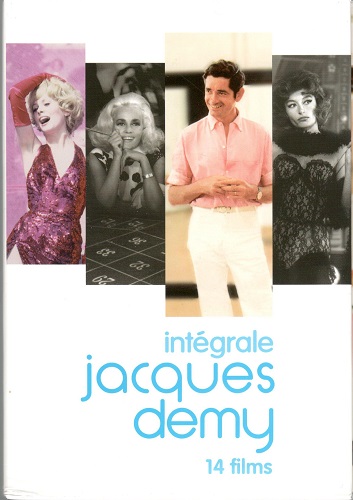
demyThe Pied Piper, Jacques Demy (1972, UK). One thing to be said for the Intégrale Jacques Demy collection is that its contents are varied. If I’d imagined Demy’s oeuvre consisted solely of films like The Umbrellas of Cherbourg or Lola, I’ve certainly learnt otherwise from this box set. The Pied Piper is a case in point. It was  filmed in the UK and features a lot of familiar faces (to someone of my age, at least). The title role – it’s the story of the Pied Piper of Hamelin, as should be clear from the title – is played by Donovan, of ‘Mellow Yellow’ fame. The first time the Pied Piper, a travelling minstrel, performed, and it was a modern folk song, I thought, oh that works, it works really well. The contrast between modern music and period set dressing I thought an interesting approach. Admittedly, it’s probably the only thing that is interesting about the film. There’s a sense throughout the UK cast were enjoying themselves a little too much, at the film’s expense; and, true, Donovan is not much of a thespian – but in his defence, he can actually play his guitar, and there’s nothing more annoying in films than actors badly faking playing musical instruments. Overall, enjoyable, but not an especially good film.

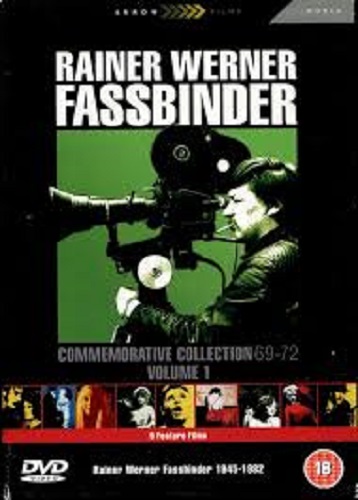
fassbinder1Gods of the Plague, Rainer Werner Fassbinder (1970, Germany). This first volume of Fassbinder’s movies has been, I admit, more of a chore to watch than the second volume. Possibly because Fassbinder seems to have spent much of his early years recycling ideas picked magpie-like from US noir and gangster films. The protagonist of Gods of the Plague is a gangster. Recently released from prison, he gets involved with two women, hooks up with the gangster who kills his brother, and eventally participates in a robbery of a supermarket. However, unlike the noir films which Fassbinder clearly loved, Gods of the Plague is far from snappy. The dialogue is much more reflective, often self-reflective, and the pace frequently slows to a crawl – those beloved pauses between question and answer, used so often to suggest an atmosphere of angst. I’m sympathetic to the idea of exploring themes and concepts using genres of milieu with which they’re not normally associated, and from what I’ve seen so far it’s something Fassbinder spent a lot of time doing – not always to good effect. Gods of the Plague is also apparently the second in a loose trilogy, preceded by Love is Colder than Death and followed by The American Soldier. All three were shot in black and white. They likely need rewatching, and the collection was a good investment, but at first blush, their appeal is not immediately obvious.

exilesThe Exiles*, Kent MacKenzie (1961, USA). I saw  this film discussed on Twitter, and a day or two later I was sent it as a rental DVD. It’s a documentary, one of several on the 1001 Movies you Must See Before You Die list. Most of which, it has to be said, have been a bit of a mixed bag. The problem with documentaries – and I say this as a fan of Sokurov’s films – is that they’re often judged on their subject more than they are their approach to that subject. Admittedly, when a topic is worth documenting, should be documented, it’s hard not to think kindly on the documentary. The topics of some of Sokurov’s documentaries may be somewhat esoteric, or perhaps not even immediately obvious, but the manner in which the film unfolds is fascinating and impressive. The Exiles, however, is one of those documentaries that tells an important story in an unadorned style, and so appears to be celebrated chiefly for its topic. The exiles of the title are members of American Indian Nations who live working-class lives in Los Angeles, and The Exiles is an unadorned look at their existence. The subjects show no self-consciousness before the camera – and equally no self-editing: they behave precisely as they would had no camera been present. It’s clearly not confidence, but lack of self-awareness… which only makes the topic of The Exiles even more heartbreaking and sad than its subject would suggest. This is a film that has only recently been released on DVD, and it definitely deserves to be seen.

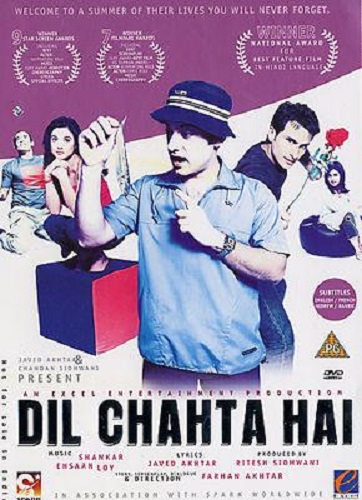
dil_chahta_haiDil Chahta Hai, Farhan Akhtar (2001, India). Bollywood films have now become part of my rental list, but there are rather a lot of them so I have to be a bit picky… but this one seemed to have good reviews and be held in high regard… Three young men, all close friends, each have their own experience with love. The film is mostly told in flashback, which seems to be a Bollywood thing. Akash is a total prat and in a nightclub tries chatting up a woman only to be thumped by her fiancé. Later, he’s sent to Australia to run a branch of his parents’ business, and finds himself sitting next to the same woman on the plane. They get chatting become friends, and he falls in loive… eventually manages to steal her from her fiancé… at the actual wedding. Sameer’s parents have arranged a marriage for him – he’s get against the idea… until he meets his intended. But she’s in a relationship, so he has to be content with being friends only. But then she and her boyfriend split, so Sameer proposes. And Sid is an artist who falls in love with a neighbour, an older woman and an alcholic – much to the horror of his friends and family. In fact, the film opens in the hospital where the woman is dying of cirrohsis of the liver. Of course, there’s the usual Bollywood singing and dancing. But… well, it all seemed a bit yuppie. Everyone drives Lexuses. They’re all well-off. Even the part of the film set in Australia is more Darling Point than Muriel’s Wedding. It sort of spoiled it all a bit – everyone was so well-off, you pretty much expected they would come out of it all okay. The World Of Apu this was not.

fassbinder1Rio das Morte, Rainer Werner Fassbinder (1971, Germany). The title refers to a region in Brazil, which contains treasure according to a map found by a pair of dimwitted young men in Munich (and they also think it’s in Peru). So they try to drum up cash for the journey to South America, and make plans to fly there and put their map to good use. Their girlfriends are less keen on the project. Rio das Morte is plainly more an an examination of idle youth in 1970s Munich, than it is of the power of dreams to distort lives – if, sadly, only because the two young men are plainly out of their depth right from the start. There is a cringe-inducing conversation with a travel agent in which the dreams of one of the two young men is shown to be complete nonsense – and yet he does not seem to notice. In fact, when the pair approach a business man for funding ,and he demands cash flow projections and the like, they see it merely as a series of hoops they must jump through before they will be gifted the cash – and they seem equally mystified when the cash fails to present itself because their plan is rubbish (a situation Fassbinder mocks by having the secretary laugh mockingly at each element of their plan). Fassbinder did not, as a rule, to my mind make mean films, but Rio das Morte does feel uncharacteristically like one. As I said earlier, the films in this first volume DVD box set have proven less immeduately likeable than those in Volume 2, but I suspect that means they will also weather repeated watchings more robustly.

1001 Movies You Must See Before You Die count: 739


Leave a comment

Moving pictures, #13

Had a fun weekend not so long ago. The Royal Mail managed to lose my address, they somehow managed to not find the place they’d been delivering my mail to for the past ten years. The mail in this case being my rental DVDs from Amazon. On receiving the returned DVDs, Amazon marked my account so no new films would be dispatched until I’d confirmed my address. Which I did. But this managed to break things, so my account got stuck in “do not dispatch”. I contacted Amazon’s help desk, and they apologised and immediately put 3 DVDs from my list in the post. And they added a fourth to make up for the hassle. The help desk person also raised a note to Amazon’s engineering department about the fact my account was stuck. And they fixed it. Which meant their system immediately despatched the next 3 DVDs from my rental list. With the two discs a week I get from Cinema Paradiso… I ended up with nine DVDs to watch that weekend.

busbyGold Diggers of 1933, Mervyn LeRoy (1933, USA). There is, it has to be said, something of a formula to the films in this Busby Berkeley Collection. A producer wants put on a show, but for some reason can’t. Then everyone rallies round… and it happens. Here, it’s a lack of money but once that hurdle is overcome, the show goes on. The story focuses on four actresses – the “gold diggers” of the title – played by Ruby Keeler, Joan Blondell, Ginger Rogers (all three of whom appear in several of the other films) and Aline McMahon. Of course, it’s the Berkeley routines for which these movies are remembered – and with good reason. (Although, to be honest, I also think Ginger Rogers is great.) In this one, Rogers sings ‘We’re in the Money’, which probably everyone knows – although they probably don’t know it’s from this movie, I certainly didn’t – including a verse in pig Latin. Another routine features dwarf Billy Barty as a baby in a pram, who later gives Dick Powell a can opener so he can get through the metal lingerie (yes, actual metal) worn by dancers. Er, right. I’ll admit I bought the Busby Berkeley Collection so I could watch a couple of the films on the 1001 Movies You Must See Before You Die list that were not available on rental (or indeed in UK editions). But I’ve really enjoyed the movies and, unlike some other DVDs I’ve bought just because they’re on the list, I’ll be keeping this box set. Well worth the money (sung to the tune of ‘We’re in the Money’, of course).

christ_eboliChrist Stopped at Eboli*, Francesco Rosi (1979, Italy). This is another one of those Italian Neorealist films that was new to me and which I found myself impressed by. Admittedly, one of the reasons I started watching the films on the 1001 Movies You Must See Before You Die list was to expand the range of films I was watching. It’s not that my viewing was limited to Hollywood films – I’ve been a fan of a number of non-Anglophone directors for many years, such as Tarkovsky, Bergman, Kieślowski, Suleiman, Haneke, Antonioni… among others. But the list seemed like an excellent source of titles I’d not seen and would probably like… and it subsequently introduced me to Italian neorealism as a film movement I’d not previously been aware of or explored. All of which is probably irrelevant as Christ Stopped at Eboli is not classifed as Italian neorealism – but it is Italian and it is on the 1001 Movies You Must See Before You Die list, and it’s also a film I likely would never have seen otherwise. Which would have been a shame, as it’s very good. In 1935, painter and writer Carlo Levi is exiled to a village in southern Italy for his anti-fascist activities. Since he studied to be a doctor, he ends up practicing medicine for the peasants (the local doctors aren’t interested in treating the peasantry). His politicial sensibilities also result in a rocky relationship with his putative “warden”, the local mayor; and he also forms a relationship with the local priest, also an exile, whom the mayor hates. Christ Stopped at Eboli is an odd film – it was filmed in 1979 but set 44 years earler… and from the looks of it horribly little set dressing was required. The pace is languid, content to let the relationships between the characters slowly be revealed and the scenery to speak for itself. The end  result is a movie which is slow to start but slowly drags you in. So much so, in fact, that by halfway through the film I was very much impressed. Worth seeing.

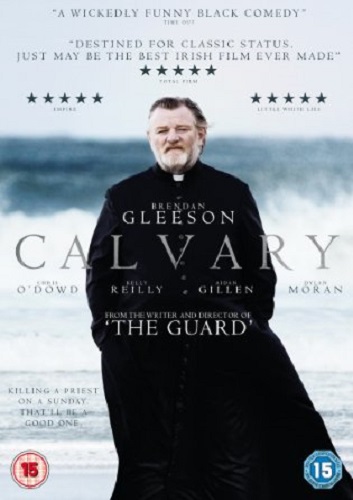
calvaryCalvary, John Michael McDonagh (2014, Ireland). Several people recommended this film to me, and I’d heard good things of it, so I bunged it on the rental list and lo it dropped through onto the doormat one day… It’s set in present-day Ireland, a man gives his confession to his local priest and tells him he will kill the priest because the man giving confession was abused as a boy. The priest knows who it is, but there’s nothing he can do about it. However, the priest has a week to get his affairs in order – and so he does. Sort of. He goes to the bishop, but the bishop tells him he should go to the Garda (the bishop comes across more like a politician or middle manager than a man of God). At one point, someone sets fire to the church. Calvary is sort of a gentle black comedy, if such a thing exists, and very much based on its characters – none of which, it must be said, are especially sympathetic, with the exception of the priest, played by Brendan Gleeson, who has been threatened with murder. His assistant (verger?) is an idiot; one of the locals is a doctor and a nasty snide piece of work; another is innocent to the point of stupidity… At times, some of the characters teeter on the edge of caricature, and I suspect it’s only the presence of Gleeson anchoring the film which keeps them from doing so. A film worth seeing, but not I think a great film.

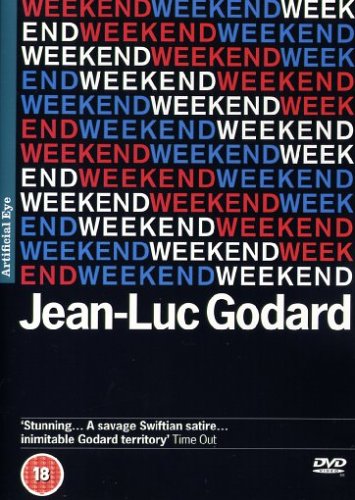
weekendWeekend*, Jean-Luc Godard (1967, France). I was convinced my Godard theory held water – colour films good, black-and-white films not good. True, it was based solely on the fact that the two Godard films I really like – Le mépris and 2 or 3 Things I Know About Her – are both colour films. It wasn’t much of a theory, it has to be said – for a start, I’ve only seen nine of Godard’s films, the most recent of which is, er, Weekend, and which is also a colour film. On the one hand, I didn’t like Weekend as much the other two films, but I did like more than the black-and-white films I’ve seen. It’s a less pretentious movie than Godard’s others, but it’s also more… chaotic. A bourgeois couple drive out to the country to visit the wife’s dying father. Each has decided to murder the other, so their relationship is somewhat fraught. As they drive through the country they become involved in various violent events. An odd film, and plainly deliberately so. That sort of appeals to me – although it did, in places, do that Godard thing I’m less fond of, where characters talk at each other. And the scenes set in the wood were dubious at best. I guess, on reflection, my Godard theory still holds, although I think Weekend probably requires another watch.

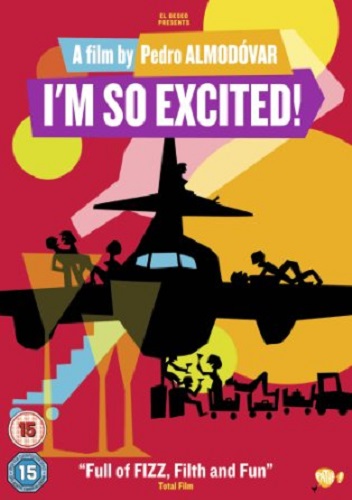
excitedI’m So Excited!, Pedro Almodóvar (2013, Spain). I spotted this one in a charity shop, and I’ve always enjoyed Almodóvar’s films… albeit not as much as I once did… but I thought it worth a quid and… Oh dear. Talk about light and frothy – I’m So Excited! (original title Los amantes pasajeros translates as “the fleeting lovers or “the passenger lovers”, according to Wikipedia; and seems better suited) is set aboard a flight to Mexico, and it’s probably only the frothiness of the script that keeps the aircraft in the air. A cock-up on the ground, perpertrated by Antonio Banderas and Penelope Cruz in cameos, results in one of the aeroplane’s undercarriage not folding away properly, which means the aircraft will not be able to land when it reaches Mexico City. So they go into a holding pattern above the airport they departed from while things are figured out. The economy class passengers and cabin crew are put to sleep with tranquilisers, leaving only the dozen or so first class passengers, four cabin crew and the two pilots awake. All of whom, it transpires, have some sort of known or unknown relationship with each other. It’s not that I’m So Excited! isn’t a fun film – because it is. It just feels like a somewhat OTT comedy-drama sketch stretched to feature-film length. The brightly-coloured production design, and the fact much of the movies takes place in the aircraft’s first class section, only heightens this resemblance. One for fans, probably.

busbyDames, Ray Enright (1934, USA). This is the one with the Berkeley routine with giant Ruby Keeler heads which freaked me out. Not because they were Ruby Keeler, just the sight of loads of giant heads dancing about it. (Not real heads, of course; they were actually giant cut-outs.) In pretty much all other respects, Dames follows the pattern as followed in the other films in the Busby Berkeley Collection. Well, almost. In this one, an eccentric millionaire promises to leave his fortune to a relative, providing said relative can prove he leads a moral life. Unfortunately, the relative’s daughter is a dancer in a musical show, and the millionaire thinks muscial shows are the height of immorality. Dames is more of an outright comedy than the other films in the box set, but the Berkeley routines – in all their shark-jumping glory – are all present and correct. Not just the previously-mentioned one with the giant heads, but also one in which Joan Blondell sings to washing hanging on a line and the various garments start dancing. (Sadly, no Ginger Rogers in this one.) Again, a good box set to get. I’ve really enjoyed the movies in it.

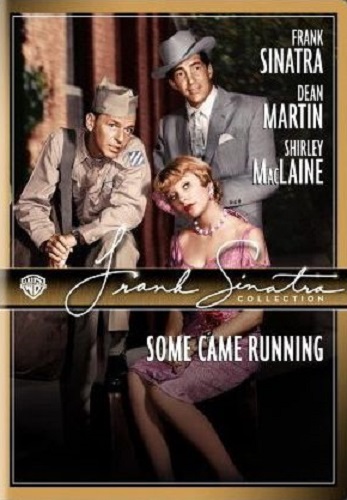
some_came_runningSome Came Running*, Vincente Minnelli (1958, USA). There are quite a few movie adaptations of Great American Novels on the 1001 Movies You Must See Before You Die list, and this is the second by author James Jones (his other is From Here to Eternity). An Army veteran, Sinatra, wakes on a bus on his way to his home town, having been put on it while drunk. He doesn’t really want to go, but he’s there now. The vetervan was a published writer and is estranged from his brother, who put him in an orphanage when their parents died, even though the brother had just married. This brother tries to patch things up, but Sinatra is not interested – although he is friendly to his niece, and falls in love with a friend of his brother, an English teacher. Then there’s Shirley Maclaine, who had been as drunk as Sinatra and joined him on the bus – but sober, he’s not interested in her, although she has fallen in love with him. Meanwhile, the teacher persuades Sinatra to start writing again. And he’s also fallen in with a group of gamblers, headed by Dean Martin. Some Came Running is very much a Great American Novel film – it’s all there: the romantic triangle, the class commentary, academia, the military, writing, small town America… If there were a checklist, Some Came Running could probably manage a good 75%. Sinatra is good in the lead, Maclaine was nominated for an Oscar (but lost to Susan Hayward in I Want to Live!), and Martin plays Martin… I suppose your appreciation of this movie depends on how you feel about Great American Novels. I enjoyed it, but I’m not entirely sure why it’s on the 1001 Movies You Must See Before You Die list.

1001 Movies You Must see Before You Die count: 737


1 Comment

Reading diary, #24

I wish I could read as many books a year as films I watch. I did manage to complete the 150 book challenge on Goodreads last year – although I am apparently 6 books behind schedule for 2016 – but that’s not even close to 570, the number of movies I watched last year… I did try reading for 30 to 60 minutes when I got home from work, and managed to keep that up for at least a week. I really need to make it part of my daily routine. I also need to get into the habit of reading on the weekend again, too. Back when I lived in the UAE, I used to spend most of Thursday and Friday reading – in fact, it wasn’t unusual for me to catch a taxi to the Daly Community Library on a Thursday morning, take out four books… and have read two of them by that evening. Admittedly, I read quite a lot of crime and thriller novels – the library didn’t have many science fiction books – and they’re fast reads. But I also read a lot of literary fiction as well. Maybe I’m just slowing down in my old age…

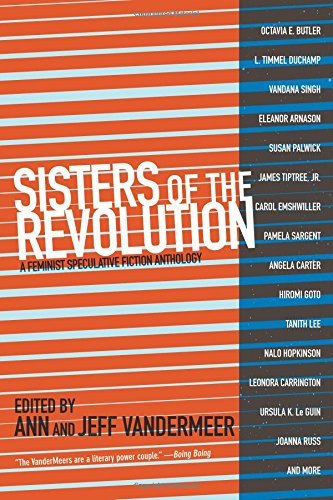
sistersSisters of the Revolution, Ann & Jeff VanderMeer (2015). I supported the kickstarter for this as it sounded like a project worth supporting and, after a period that was longer than expected, it finally arrived. And… it was worth the wait. It’s a strong and varied selection, its contents mostly new to me – around ten of the twenty-nine stories in the anthology I’d read previously. I’m amused by the back-cover blurb’s description of thr anthology as a “highly curated selection”, as if the VanderMeers put MOAR EFFORT into it than every other anthology editor. Having said that, I don’t know how many stories they read in order to make their choices. but judging by comments on Twitter, Facebook, etc, it was a hell of a lot. I don’t think every story they chose works, although that’s more a matter of personal taste – I’m not a fan of genre fiction that plays fast and loose with rigour, or indeed any mode of fiction that does, nor stories that are too allegorical or too consciously presented as fables. Which is not to say there are not some bloody good stories in Sisters of the Revolution – in fact, the opener, ‘The Forbidden Words of Margaret A.’ by L Timmel Duchamp, is one of the best stories I’ve read in a long time. And Ursula LeGuin’s ‘Sur’ was not only new to me but also one of the best by her I’ve ever read. James Tiptree Jr’s ‘The Screwfly Solution’ remains as scarily effective as it was the day I first read it. Octavia Butler’s ‘The Evening and the Morning and the Night’, Kelly Barnhill’s ‘The Men Who Live in Trees’, Angela Carter’s ‘The Fall River Axe Murders’, Joanna Russ’s ‘When It Changed’ and Eileen Gunn’s ‘Stable Strategies for Middle Management’ are all worth the price of admission. I’d definitely say Sisters of the Revolution is one of the strongest anthologies I’ve seen for quite a while.

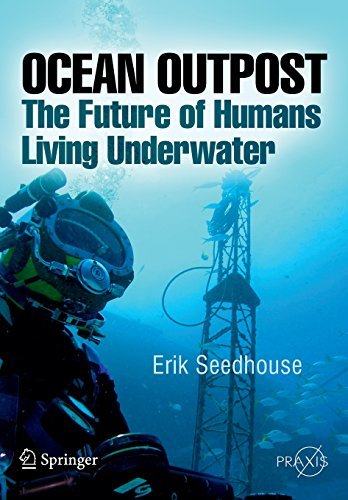
ocean_outpostOcean Outpost, Erik Seedhouse (2011). I picked up a copy of this cheap on eBay, which is good as Springer-Praxis books are not cheap. But they are interesting. The subtitle of this one reads “The future of humans living underwater”, and it covers a variety of different methods of doing so. The first section covers diving – free-diving, technical diving and saturation diving – but while the studies on free divers is interesting, the section on rebreathers reads like a technical sales brochure. The second section is about submersibles, but covers only Mir, Alvin and Shinkai before turning into an advertisement for hydrobatic submersibles (ie, ones that “fly” underwater). Section III deals with the reasons for colonising the ocean bottom, such as mineral exploitation, and the final section is about medical intervention to allow survival underwater. It’s fascinating stuff, despite the book’s tendency to read at times like it’s quoting verbatim from technical sales material; and while it’s good on the science and engineering of the current state of the art, it’s not so good on the history – the chapters on submersibles, for example, make no mention of the Trieste or Ben Franklin. But then it is a relatively slim book, only 187 pages, including appendix, epilogue and index. Nonetheless, pleasingly detailed.

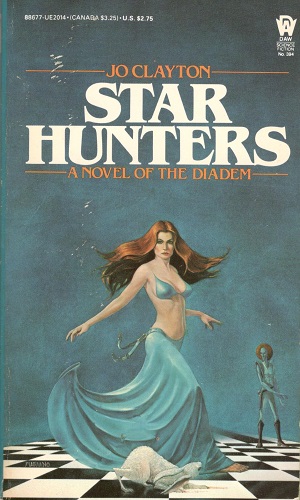
star_huntersStar Hunters, Jo Clayton (1980). This is the fifth of the seven books from the nine-book Diadem series that I bought at Fantastika in Stockholm back in 2013. I’ve been slowly working my way through them for SF Mistressworks. The first couple were a bit hard to take – the series heroine is a super-special snowflake who is subjected to an almost-constant barrage of sexual violence, but there’s an abrupt swerve in tone in the fourth book and Aleytys is presented as a much more typical competent space opera protagonist with agency. Her wardrobe, if the cover art is anything to go by, doesn’t improve, however. My review of Star Hunters is here.

louisianaLouisiana Breakdown, Lucius Shepard (2003). I went through a phase several years ago of buying Lucius Shepard books. And he produced quite a few, including many short novels and novellas from small presses. Such as Louisiana Breakdown, which was originally published by Golden Gryphon. There’s is not much, to be honest, in this short novel which makes it stand out, other than Shepard’s writing. The story feels like a well-used cliché, a story that’s been told far too often about Louisiana. A musician en route from California to Florida, well, breaks down in Louisiana, just outside some small backwards town. The local cop tries to strong-arm but is stopped by the timely arrival of the town’s Big Man, descendant of the town’s founder and rich playboy. There’s also a woman who is in magic thrall to another man – although he’s not in the town itself – and she decides that the musician is the man to break her free. It’s a story that almost writes itself, and if it weren’t by Shepard I’d not have bothered going past by the first couple of pages. Even so, it’s not one of his best.

balastIn Ballast to the White Sea, Malcolm Lowry (2014). The story goes that, after Lowry’s first novel, Ultramarine, was published, he submitted In Ballast to the White Sea, but his publisher decided not to take it. So Lowry continued to work on it. He was a notorious fiddler, forever editing and polishing his work, so it’s no real surprise he published so little. But before he could finish the next version of In Ballast to the White Sea, the wooden shack in which he and his second wife, Margerie Bonner, lived in Vancouver caught fire. The ms of In Ballast to the White Sea was almost entirely destroyed. However, a couple of years earlier, Lowry had left a copy with his mother-in-law (a copy of the earlier, rejected version, that is), but Lowry had either forgotten about it or chose not to remember its existence. In any event, he gave up on In Ballast to the White Sea and moved onto something else – and Lowry’s second novel was considered “lost”… But the ms put away for safe-keeping turned up in the 1970s and Lowry’s first wife, Jan Gabrial, set about editing it for publication (as she had done in the 1960s with Lowry’s forever-being-worked-on novella, Lunar Caustic). But In Ballast to the White Sea never saw print – until now, in this “scholarly edition” from the University of Ottawa Press. And… it’s plain it needed more work. Some chapters are entirely dialogue. The character of the captain, the father of the protagonist, Sigbjørn, doesn’t feel quite settled; and Nina, Sigbjørn’s ex-girlfriend, swoops in from nowhere, takes up a couple of intense chapters, and then vanishes. Like Ultramarine, In Ballast to the White Sea is partly autobiographical, and is based both on Lowry’s time at Cambridge and at sea – in fact, the suicide of Sigbjørn’s brother, which occurs off-stage between chapters II and IV, was based on the suicide of a friend and fellow student. And Sigbjørn’s fascination with the author of a Norwegian novel which, in broad shape, is similiar to the novel Sigbjørn is planning to write echoes Lowry’s own fascination with Skibet gaar videre (The Ship Sails On) by Nordahl Grieg, a novel he felt had “written” his life up to that point. The “A Scholarly Edition” on the cover of In Ballast to the White Sea refers to the fact the novel is copiously annotated – not just the references and allusions with which Lowry larded his prose, but also some aspects of British life and geography which may not be familiar to non-Brit readers. There’s also a couple of essays on the provenance and history of the manuscript, and on the editing undertaken by Lowry scholar Chris Ackerly. If you’re a fan of Lowry’s fiction, it’s a fascinating, perhaps even necessary, read.

invadersInvaders, Jacob Weisman, ed. (2016). You know when lit fic writers try their hand at genre, although of course their story appears in a lit fic venue not a genre one, and everyone goes on how astonishlingly inventive it is but genre fans just shake their heads sadly because they’ve seen it all before… Well, if that ever happened, and I suspect it hasn’t done for a number of decades, there’s enough proof in Invaders to demonstrate that science fiction and fantasy are now so prevalent that an author doesn’t need to be steeped in genre from the age of thirteen in order to write good genre. Which is not say every story in Invaders works, either as lit fic or as genre fic. But the anthology sets out to prove a point, and it does that pretty well. I read the book to review for Interzone.

1001 Books You Must Read Before You Die count: 122


3 Comments

Moving pictures, #12

You do realise I’m never going to manage to see all of the films on the 1001 Movies You Must See Before You Die list. Some of them are no longer available – not just in the UK, but anywhere (I’ve had to purchase some from the US already, just to see them). Sadly, this doesn’t mean I will never die. But if I can say I’ve seen over 950 of them – with dates – then I’ll be happy. And, oh look, there’s another three from the list in this installment…

boyznthehoodBoyz N the Hood*, John Singleton (1991, USA). This was not a film on my radar but, as the asterisk indicates. it’s on the 1001 Movies You Must See Before You Die list… so I bunged it on (one of) my rental list(s), and lo it duly arrived. And, to be honest, I can remember very little about the film. I seem to recall expecting some sort of gangsta movie with a rap soundtrack, and being surprised to discover it was actually about growing up in South Central LA. At least, the first part of the film is… And then it’s about the Crips and the Bloods, and Cuba Gooding Jr trying to avoid becoming a gang member even though most of his friends are in the Crips. While I was watching it, I tweeted “A+ for social commentary, D for direction” and “oh, and D for casting Cuba Gooding Jr”. Later, I added “the Kenny G soundtrack is not helping this film”. I can see how Boyz N the Hood belongs belongs on the 1001 Movies You Must See Before You Die list for its cultural impact, but it wasn’t a film I found especially interesting or impressive. But at least I can cross it off.

clerksClerks*, Kevin Smith (1994, USA). It seems to me Kevin Smith trades on his geek credentials, but has actually proven relatively successful because he is sophomoric. I’ve seen a number of his films over the years, and never been much impressed – but I’d somehow managed to miss the film which made his career, Clerks. I’ve now seen it… and all those years, well, I don’t think I’ve missed much. Two whinging slackers work in neighbouring stores, a mini-mart and a video rental. Their conversation is either prattish or sophomoric. The attempts at humour are not actually that funny, and the continual whinging tone gets annoying very quickly. I can sort of understand how the film would appeal to a particular demographic – but I’m not in that demographic, and so Clerks simply doesn’t work for me, and I can think of no good reason why it belongs on the 1001 Movies You Must See Before You Die list.

busbyFootlight Parade*, Lloyd Bacon (1933, USA). I tweeted while watching this film that Busby Berkeley had made a career out of jumping the shark. And this film provides as much evidence as any in which he was involved. James Cagney plays a fast-talking director of musical theatre, but audiences are declining thanks to that new-fangled cinema. So Cagney comes up with the idea of “prologues”, short musical numbers performed on stage in a cinema prior to the main feature being shown. Much of Footlight Parade is a sort of like Chorus Line, as Cagney tries to stage his numbers while a rival steals his ideas. Dick Powell grins his way through the proceedings as usual, Joan Blondell plays Cagney’s secretary who’s secretly in love with him, and Ruby Keeler removes her glasses and goes from secretary to my-gosh-you’re-beautiful star dancer… But it’s Berkeley’s staging of the musical numbers which is the main draw. And with good reason. ‘By A Waterfall’ is jaw-dropping. I suspect it’s what invented synchronised swimming. One hundred chorus girls dive into a glass pool and form shapes like a giant human kaleidoscope – and all allegedly taking place on a tiny cinema stage! I had to buy a Region 1 Busby Berkeley DVD collection in order to watch this film – the set also includes 42nd Street, Gold Diggers of 1933, Gold Diggers of 1935 and Dames – and I’m quite glad I did. I knew who Berkeley was, of course, and in the past I’ve seen some of the muscial numbers he’s famous for – although don’t ask me which films, because I’ve no idea – so I pretty much knew what to expect. But even if it’s easy to see why Cagney switched to playing gangsters, and all five films in the collection follow the same Chorus Line-like plot, they were worth the money because of the Berkeley numbers alone. Footlight Parade is one of three films in the set on the 1001 Movies You Must See Before You Die list – and yes, I can understand why they’re on it.

storyofwomenStory of Women, Claude Chabrol (1988, France). This film does not appear on the 2013 edition of the 1001 Movies You Must See Before You Die list, which is the one I’m using, but does appear on the amalgamated version on listchallenges.com – so at some point it was, or will be, on the list. Given that it was released in 1988, I suspect it was on an earlier version – and, if so, it’s a shame it was dropped. Because it’s a damn sight better than many films which remained. And I say that as someone who has yet to really click with Chabrol’s oeuvre. But then, perhaps it’s the subject matter of Story of Women, which is based on a true story. During the German occupation of France in WWII, in a small town in Normandy, a middle-class mother played by Isabelle Huppert (one of the best actresses currently making movies) helps a pregnant friend abort (husband away at a German work camp, Nazi lover…). This becomes a lucrative business. She also rents out a room to a prostitute friend. Her husband, an injured war veteran, returns home, but she is no longer in love with him. Eventually, he grasses her up to the authorities. They arrest her, and decide that performing abortions is treasonous – so they sentence Huppert to death, and guillotine her. It’s an offensively male argument – that France needs to regain its moral strength after its defeat by the Nazis, and Huppert’s death will do this. Yet, for much of the film, during the period before she is arrested, Huppert’s character is resolutely pragmatic – she betters the lot of her family by providing a much-needed service, for which she charges. She has an affair with a collaborator, because she is focused on herself and her children, and her husband is inconsequential. I find Chabrol a mixed bag, but this was a strong film, undoubtedly carried by Huppert’s performance. I suspect it deserves to be back on the list – and I can think of at least a dozen movies whose place it can take…

showgirls2Showgirls 2: Penny’s from Heaven, Rena Riffel (2011, USA). Several years ago, I went through a phase of enjoying “so bad they’re good” films, despite being all too sadly aware that the films were “so bad, they’re actually really bad”. You know, stuff like the “mockbusters” released by The Global Asylum, or those shitty straght-to-video sf films you find on 4-movie sets sold in Poundland… Happily, I grew out of it. Or at least, I thought I had. Now, I like Paul Verhoeven’s movies, and I have a lot of time for him as a director, and though his Showgirls has a lot of problems and is clearly his worst film, it is sort of watchable. But the moment I discovered there was a sequel to it… I decided I had to watch it. And now I have. And I sincerely wish I hadn’t. Rena Riffel played a minor character in Showgirls and, after a couple of decades in Europe making soft porn films, she realised that what the world really needed was a sequel to Showgirls – and not just any sequel, it needed a parody sequel. Argh. “Parody”. If you see that word in the description of a film, avoid the film. Showgirls 2 spoofs scenes from Showgirls, but on a budget of $30,000 and with a cast that can’t act to save their lives. A few of the original cast do make appearances – not the main stars, of course – but the film is very much about Riffel’s lap-dancer Penny Slot, and her attempt to become the lead on a cheap TV show called ‘Star Dancer’. It’s not funny, and it’s certainly not clever. It is, however, embarrassingly, cringe-inducingly, bad. Words cannot express quite how awful this film is. One to avoid, if you value your sanity.

terminatorTerminator Genisys, Alan Taylor (2015, USA). And from the sublimely stupid to, er, this one. Which, on paper, should not be the hot mess it proved to be. On paper, the idea has merit – let’s tell the Terminator story from the point of view of Kyle Reese, the man sent back in time to protect Sarah Connor, and who becomes John Connor’s father… but let’s mix it up a bit and have the T-80 arrive earlier and so be a fixture in Sarah’s life when Kyle arrives. And let’s mix it up EVEN MOAR and make John Connor a villain – the going-back-in-time thing is all a plot to enable Skynet not disable it. And, you know, it could have worked. But they recast all the leads (because, let’s be honest, they’re getting on a bit, and CGI-ing them back to their 1984 appearance would be very weird), except Arnold Schwarzenegger, and while they wrote in a reason for his ageing, the years have not been kind to him or his minimal acting ability… And while a new cast is not in and of itself a reason for failure – recast reboots have been successful, although no example springs readily to mind – and when you add in the self-referentiality of the project… so why did it turn out be so crap? Well, itt’s completely lifeless. I don’t know if it’s because the lead characters are charisma-free zones, or if Schwarzenegger sucks in their charisma to power his own over-written role. Or maybe it’s that the plot sheds sense as it progresses. I’m not really sure. All I can say for certain is that this was a dreadful film and my expectations were not especially high to begin with. A proper review of it would be more analytical, but these posts are not intended to analytical and to be analytical of this film would require I watch it with a great deal more attention than it actually deserved. A film to be avoided, at all costs.

1001 Movies You Must See Before You Die count: 734