In this post, a new nation joins the roster of countries from which I’ve now seen films: Burkina Faso. I really need to get more of those Great African Films DVDs, as I do like films from African countries – as much for the variety as for what they reveal of life in the various nations on the continent. Other than the Burkina Faso movie, only the two US directors were unknown to me (and one of them turned out to be a Brit, anyway).
Precious, Lee Daniels (2009, USA). This is on another list, rather than the one I’ve been using for the past two years. And it wouldn’t otherwise be the sort of film that would interest me. The title refers to the central character, an overweight black teenage girl with learning difficulties, a physically abusive mother, and a child with Down Syndrome (who actually lives with the girl’s grandmother) fathered by her own father. The film is adaptation of a novel, Push, by Sapphire, and it’s pretty grim stuff. The mother is especially horrible, subjecting Precious to a litany of verbal and mental abuse, and the occasional moment of violence, throughout the film. Precious herself is an innocent, completely unable to see a way out of her circumstances. But then she’s given a place at an alternative school, and she begins to open up… in the process revealing her mother’s behaviour toward her and that her child is the product of incest (oh, and she’s pregnant once again, also incestuous, when the movie opens). The book’s prose apparently reflects Precious’s improved command of language as she attends the alternative school, but the voiceover narrative doesn’t make this especially clear. The film has been accused of throwing a bit too much at the protagonist, and although there’s a clear arc toward some sort of happy ending, it is pretty heavy-handed. Still, that’s what drama does…
American History X, Tony Kaye (2009, USA). Another film that’s on another list, but this one was also free to watch on Amazon Prime so… To be honest, the story of the making of the film is more interesting than the story of the film. In American History X, Edward Norton plays a neo-Nazi who goes to prison after viciously murdering two black guys, sees the errors of his ways after being sexually assaulted by another neo-Nazi in the showers and spending time working alongside a black guy who was imprisoned for six years for stealing a TV. On his release, Norton tries to prevent his younger brother, who has fallen under the spell of the same neo-Nazi guru Norton had, from following in his footsteps. These days, neo-Nazis get upset when they’re called neo-Nazis, or even just straight Nazis, but fuck ’em. They’re neo-Nazis. “Alt-right” is just as much a bullshit right-wing propaganda term as “political correctness”. Ignore anyone who uses either. But, American History X… Apparently, the studio were unhappy with Kaye’s first cut. And his second cut.’Then Norton hired an editor to cut the film to his taste. So Kaye played the prima donna, famously hiring a rabbi, a RC priest and a Buddhist monk to sit in on a meeting with studio bosses. Um, yes. The film has its moments, but Norton is too weedy to convince in his role (just compare him to the meatheads Nazis he meets in prison), and the whole thing over-inflates the success of neo-Nazism so much it dangerously normalises it. I’m all for rehabilitation narratives, but they need to be stronger than this to justify their existence. It doesn’t help that every black character in American History X is a gang banger, except for Avery Brooks’s mentor, which only just feeds into the whole neo-Nazi white supremacy thing. Seriously, films about Nazism and neo-Nazism should make the politics so unpalatable – as they are in real life – that no one would want to have anything to do with them; they should not leave enough wiggle room for an intellectually-challenged viewer to start giving brainspace to the toxic shit they peddle. We all know the dangers of “post-truth”, which is another word for “lie” or “fiction”. After all, 52% of Republicans believe Trump won the popular vote even though the actual facts show Clinton won it by nearly three million votes. And don’t get me started on the lies put out by the Leave campaign…
The Son’s Room, Nanni Moretti (2001, Italy). And from the “look at my award-winning turn playing a toxic character in a toxic film”American History X to a drama that has a cast of human beings and deals with a very real situation. Moretti himself plays the father in a middle-class Italian family. Teenage boy and teenage girl cause the usual familial disruptions. Moretti’s job as a practicing psychiatrist means he has his patients’ problems as well as his family’s to deal with. Nonetheless, the family are generally easy-going, centred, good-natured, although attractive in a sort of lifestyle magazine advert way. And then the son dies in a diving accident, and the surviving three members of the family have trouble dealing with their grief. Moretti’s character replays over and over his last day with his son, when he cried off from the promised jog together because a patient had called him and asked for his help (the patient had just been diagnosed with cancer, it transpired). My only previous experience to Moretti’s films was his Caro diario, which I thought pretty good. That was a more personal film, although The Son’s Room covers such an emotive topic it feels a much more personal movie. I should probably watch more Moretti – he’s very good. Recommended.
Haramuya, Drissa Toure (1995, Burkina Faso). As mentioned earlier, and evident from the DVD cover art, this is the second film in the Great African Films Volume 1 DVD I bought on eBay. This is pretty much a slice-of-life drama set in Ougadougou, the capital of Burkina Faso. A teenager gets a job in a shop, but worried that his parents cannot affort to eat, he steals some flip-flops to sell, but is caught and fired. There’s a long-running plot-thread about stolen mopeds. And also a police investigation into drug dealing – which one dealer manages to evade by feeding his marijuana to an uncle’s goats… who promptly start butting each other and everything in sight. Haramuya is light on plot, but it’s also an excellent window onto a world I would not otherwise be likely to see. Toure’s direction is effective, but workmanlike more than anything else. The film comes across as a social drama, but structured as a series of interlinked narratives. The cast are natural, with only one or two moments where it feels a little amateur. Of the two films in Great African Films Volume 1, Faraw! is clearly the better, but Haramuya is still worth seeing. There are, to date, a further three volumes – 2 Tasuma and Sia, The Dream of the Python (both Burkina Faso), 3 Daratt and Desert Ark (Chad and Algeria), and 4 The Pirogue, Colobane Express and The Silent Monologue (all three Senegal). I plan to buy them (although I’ve already seen Daratt).
Sonatine, Kitano Takeshi (1993, Japan). I stumbled across this in a local charity shop, and since I know Takeshi’s name, it was an obvious decision to buy it. Only later did I discover it’s the film which brought him international attention. And having now seen it, I can understand why. A Yakuza enforcer and his team are sent to Okinawa to sort out a dispute between two gangster plans but the enforcer realises it is all a plot to remove him. So he hides out with his team at a beach house, where they play games and tricks on each other… before it all comes to a violent end when the Yakuza boss turns up looking to resolve the situation. And, er, that’s sort of it. When the enforcers are hiding out at the beach, they act like kids. Takeshi, who plays the lead role, plays it totally deadpan, so the humnour is even funnier because it bounces off him completely. Of course, being a Takeshi, it’s also pretty violent, with lots of gun battles and violent murders. But there’s also a strong thread of black humour running throughout the film. For example, when the enforcers first arrive in Okinawa, they’re taken to an office building used by the clan. They’ve not been there five minutes when someone shoots at a window. What’s that? asks one of the Okinawa team. That’s just the other clan, they’re always shooting at us… This DVD only cost me a quid, and I fully expected to drop it off in a random charity shop after I’d watched it… But I think I’ll be keeping it. Worth seeing.
Gabbeh*, Mohsen Makhmalbaf (1996, Iran). Iran, despite its theocratic regime, perhaps even in spite of it, has a strong presence internationally in the cinema world, and has produced a number of excellent directors and films. Some have worked within the system, some have worked around it. I’m not sure which group Makhmalbaf belongs to, although the fact his name is important to the plot of Kiarostami’s Close-up suggests he has the approval of the authorities. And, to be fair, there’s nothing in Gabbeh that might offend them. It’s an Iranian fairy-tale, based around the style of rug from which the film takes its name. An old couple make their way to a stream to wash their gabbeh, and a young woman, who answers to the name of Gabbeh, magically appears out of the picture wiven into the rug. Gabbeh’s story is also depicted in the rug, which changes as the film progresses. She is betrothed to a young man, but each time they try to set a wedding date something happens to put it off. She tells this story to the old couple. As should be evident from the DVD cover, this is a gorgeous-looking movie. Recommended. And no, I didn’t pay the price show on Amazon, I bought my copy on eBay for considerably less.
1001 Movies You Must See Before You Die count: 834
Another mixed bag of films. I seem to be sticking to my plan of seeing more world cinema than Hollywood cinema, however…
The Bow, Kim Ki-duk (2005, South Korea). David Tallerman had recommended Ki-duk’s 3-Iron and it was very good, but he also pointed out that not all of Ki-duk’s movies would be to my taste… although this one might be. Yes, it was to my taste; no, it wasn’t as good as 3-Iron. An old man and a teenage girl live on a boat, which they hire out to people wanting to deep sea fish. The old man plans to marry the girl when she is seventeen. He also has a bow, which he sometimes uses to keep unruly cusotmers in line. The girl says nothing. She also helps him with his party trick, in which she sits on a swing before a target painted on the hull of their boat, while he stands on another boat and shoots arrows at the target. And, er, that’s about it. Well, there’s a romance plot, when a student falls in love with the girl. And the old man sometimes turns his bow into a musical instrument and plays it. But this is not a film which makes an effort to ensure the viewer knows what’s going on. But then, the film works mostly because Ki-duk keeps things enigmatic. Worth seeing.
Prelude: Dog Star Man*, Stan Brakhage (1961, USA). Avant garde cinema has been around as along as, well, cinema, and yet the 1001 Movies You Must See Before You Die list features only a handful of examples – early Buñuel, who probably doesn’t count anyway, Meshes of the Afternoon from the 1940s, Baillie and Brakhage from the 1960s, Benning from the 1990s… and all but Buñuel from the US, as if no one but Americans made experimental or avant garde films. Which is nonsense. (Not that I know enough about avant garde film to name directors from other countries, but there are plenty of books on the subject available from a large online retailer…) Having said that, Dog Star Man is apparently highly regarded and considered a watershed work in American avant garde cinema. It’s a sequence of six short films made between 1961 and 1964, but only the first, Prelude, is on the 1001 Movies You Must See Before You Die list. I found a copy of it on Youtube, I think the entire series is on there. Prelude: Dog Man Star is a montage of soundless moving images, many superimposed: prominences on the sun, clouds, a city at night, trees, washes of colour, scratches, even some bubble-bath. It’s not as mesmerising as the static shots in Benning’s films, but there’s definitely a poetry to the play of images. I guess I should watch the rest of the sequence sometime.
I Clowns, Federico Fellini (1970, Italy). I have become a fan of Fellini’s films after many years of only knowing La Dolce Vita and, later, 8½. It was Satyricon and Casanova that did it, of course. They’re so bonkers, how could I not want to see more films by their director? And Roma was good too. But it’s not like I rushed out and bought every Fellini film available on DVD or Blu-ray, and, in fact, I only bought I Clowns because it was going cheap in a Black Friday sale. (I did have it on my rental list, however.) The title is not a veiled reference to Graves or Asimov but simply the Italian for The Clowns. And the title pretty much describes the film. It opens with an extended performance of a group of clowns in a circus, before showing those clowns out and about out of costume. It’s part documentary and part fiction. Wikipedia claims it was “incorrectly referred as the first mockumentary”, although, to be honest, it doesn’t come across as a mockumentary. Clowns are strange creatures, their personas and appearance deliberately designed to generate laughter, but they can also be creepy as fuck. The ones in I Clowns are pretty typical in that regard.
Star Trek Beyond, Justin Lin (2016, USA). The original Star Trek movies were pretty bland, and turned blander as the series progressed, but at least they weren’t stupid films. And if there’s one thing the rebooted Trek films are, it’s stupid. The first two films made no sense and had plot holes you could fly the Enterprise through. Star Trek Beyond is slightly better than the previous two, but that’s a pretty low bar to clear. It opens with Kirk bored after three years of his five-year mission and applying for a promotion to vice-admiral. This is the cadet who failed to graduate from Starfleet Academy, but they put him in command of their best ship anyway, and now he expects to make vice-admiral three years after not graduating? WTF? Anyway, before Kirk can be leapfrogged over all those Starfleet officers with the decades of experience necessary for the job, the Enterprise is sent to retrieve an escape pod, which results in them trying to rescue a lost crew on a world hidden behind one of those asteroid belts you only ever see in bad sf, you know, the ones where the rocks are metres apart instead thousands of kilometres. And then a villain makes mincemeat of the Enterprise, and I sort of lost the plot around then, or probably the film did, as it turned into the usual bollocks with the hardy upright folk of Starfleet completely out of their depth against a super-powerful alien but they still manage to win the day anyway. Not that the asteroid belt was the only bollocks in the film. I noted at one point that the Enterprise’s artificial gravity worked fine except when it looked cool if everyone was thrown about the ship when it crashed. Other than that, villain Idris Elba was under so much much alien make-up you have to wonder why they bothered casting a marquee name, the Enterprise’s crash totally ripped off the same thing from the previous franchise, Karl Urban still does a mean Bones but the rest of the cast are rubbish, and the whole thing feels like an over-extended episode from a crap TV show.
The Puppetmaster*, Hou Hsiao Hsien (1993, Taiwan). One thing that following the 1001 Movies You Must See Before you Die list has shown me is how piss-poor the UK is at making films available on DVD. The latest Hollywood shit, no problem; but world cinema, or even classic Hollywood, and it’s absolutely useless. Most of Satyajit Ray’s oeuvre is available – no doubt because he was championed by Merchant Ivory – but only two of Ritwik Ghatak’s films (and the remastered edition of one is available in the US but not here). There’s plenty of wu xia and Chinese historical epics available on DVD in the UK, but only a handful by Taiwanese director Hou Hsiao Hsien… so I ended up buying a box set of five Hou films on eBay from South Korea (and the “box set” proved to be five DVDs in the cardboard box in which they were sent…). The Puppetmaster is one of Hou’s best-known films, and is essentially a sort of dramatised reminiscence by a, er, puppeteer who was forced to propagandize for the Japanese during their occupation of the country in World War II. The film opens with the puppetmaster discussing his birth, and how he came to be registered twice under two names. At intervals, as an old man, he talks directly to camera, as if being interviewed. Hou has two films on the 1001 Movies You Must See Before you Die list I’m using, although others by him regularly crop up on other lists. The Puppetmaster certainly belongs on the list, and I’m now looking forward to watching the rest of my “box set”.
Heroes, Samir Karnik (2008, India). Bollywood is not all 3-hour-long rom coms with songs and dances, it tackles other genres and subjects too. In fact, but for the inclusion of song and dance routines, it pretty much covers the same bases as Hollywood. In Hollywood, Heroes would be a serious drama, with a po-faced cast all gunning for an award. In Bollywood, it’s just as serious, but it also features broad comedy and dance routines. A war reporter interviews three soldiers in the Indian Army fighting in, I think, the Kargil War. The soldiers each give the reporter a letter to post on his return to civilisation, but the reporter later learns all three were killed in action. Three years later, a pair of slacker student fail to graduate from film school and need to make a graduation film. A friend in the army prompts them to make their topic “why you shouldn’t join the armed forces”, and the girlfriend of one of the pair puts them in touch with someone who could help… the war reporter from earlier. He gives them the three letters he was given by the dead soldiers – throughout the film they’re referred to as “martyred”, which is just… odd – and suggests they deliver them by hand and make that the subject of their graduation film. So the two load up their motorcycle, and head off to the Punjab to deliver the first letter, written by a Sikh soldier. They discover that the widow and young son are extremely proud of the soldier, as indeed is the whole village. The second letter, they deliver to the wheelchair-using brother of the dead soldier, who used to be a fighter pilot. The ex-pilot now teaches kids to stand up for themselves, but is proud of his brother’s sacrifice. There’s also a jaw-dropping action sequence in a bar when the ex-pilot takes on a gang of rowdies and beats the crap out of them, and pretty much demolishes the bar, first from his wheelchair, and then from the floor after they’ve managed to tip him over. The final letter is addressed to the dead soldier’s colonel and proves to be a request for leave. There’s an unposted card in the soldier’s file, so the colonel gives it to the film students for them to deliver to the family. But the family don’t seem especially bothered, and one of the film students accuses the dead soldier of cowardice for wanting leave during the height of the war. The dead soldier’s mother plays them a tape of her son, proving he was a hero. Heroes is all a bit jingoistic, deliberately so, but it’s palatable because the film is based on the Bollywood model, with songs and dances and daft comedy. Entertaining, but it did lay its “love your country” message on a bit thick.
1001 Movies you Must See Before You Die count: 833
It’s been a funny old year. Not only have we hit that time when the icons of our youth are in their (late) sixties, seventies and eighties, and so coming to the end of their lives… but some of the British people had a fit of madness and voted to leave the EU in the dumbest referendum in British political history… And then the US went one better, as it always has to, and voted in as president Donald Trump, an orange-skinned baboon, a man who makes Nigel Farage look like a mostly-harmless over-educated clown. Trump doesn’t even have his arse officially in the Oval Office yet, and he’s already abusing his powers. We’ve had ten years of damaging and unnecessary austerity here in the UK, and we’re looking down the barrel of a deeper recession, thanks to the morons and racists who voted Leave. But I think the next four years in the US might well be worse than anything we experience…
On the personal front, the day job got really busy around March, when a colleague left the company and a major project he was working on was dumped on my desk. As a result, I’ve not had much energy or enthusiasm for anything other than just consuming culture… which has meant lots of blog posts on films I’ve watched, books I’ve read, and, er, films I’ve watched. I did manage to publish a whole four stories in 2016, however; ‘Geologic’ appeared in Interzone in January; ‘Red Desert’ and ‘Our Glorious Socialist Future Among the Stars!’ appeared in Dreams of the Space Age, a collection of my alt space stories; and Coda: A Visit to the National Air and Space Museum I published as a pendant to the Apollo Quartet… but only the last was actually written in 2016. I also worked on the third book in my space opera trilogy, A Want of Reason, in fits and starts. So, overall, not a very productive year.
Fortunately, some of the films I watched and some of the books I read made up for it. A new favourite writer and two new favourite films is not bad going for a single year. And a number of other “discoveries”, both writers and directors new to me in 2016, I thought so good I will be further exploring their oeuvres. But. There can only be, er, five. In each category. Yes, it’s that time of the year – ie, pretty close to the end – when I look back over the aforementioned consumed culture – of which there has been quite a bit, particularly on the movie front – and pick my top five in books, films and albums. And they look something like this…
books
Not a very good year for genre fiction, it seems. Not a single category science fiction novel makes it into my top five. And one gets bumped from the half-year top five (those are the numbers in square brackets) to the honourable mentions. Four other genre writers also make my honourable mentions – Charnock, Whiteley, Duchamp and Park – although I’ve been a fan of Duchamp’s and Park’s writing for many years.
1The End of Days, Jenny Erpenbeck (2012) [1]. Erpenbeck was my discovery of the year. I forget who recommended The End of Days, but I loved it… and then later bought everything else by Erpenbeck translated into English (she’s German). The End of Days re-imagines the life of a Jewish woman born in the early years of the twentieth century in Galicia, and follows her through several variations on her life, as she variously moves to Vienna, becomes a communist, moves to Austria, then settles in East Germany. Erpenbeck’s prose is distant and factual, a style that appeals greatly to me, and I especially like the “facticity” of her protagonist’s many lives. The End of Days is not as readable, or as immersive, a novel as Kate Atkinson’s Life After Life, a book it resembles in broad conceit, but I much prefer Erpenbeck’s novel because I love the authority of its reportage-like prose, and I find the life of its protagonist much more interesting than that of Atkinson’s. I think The End of Days is a superb novel – I’ve already bought everything by Erpenbeck published in the UK, and I eagerly await whatever new works might appear.
2Vertigo, WG Sebald (1990) [2]. Sebald is a genre all to himself, and his novels defy easy summary. They also – particularly in this case – tread that fine line between fact and fiction which I find so appealing, even more so when the fact is autobiography. (In hindsight, I could have included Vertigo as an inspiration for Coda: A Visit to the National Air and Space Museum, but then Austerlitz had partly inspired Adrift on the Sea of Rains, so…) The novel is divided into four parts, all first person narratives – the first is by Stendahl and describes his entry into Italy with Napoleon’s army, the second is by an unnamed narrator presumed to be Sebald and covers two trips he makes to a village in the Alps, the third is about Kafka, and the final section recounts the narrator’s return to his home village and his reflections on the changes, and lack of change, he sees there. Despite its discursive nature, there’s a deceptive simplicity to Sebald’s prose, which tricks the reader into thinking the story carries a smaller intellectual payload than it actually does. I don’t know of another author who writes at such length, and so indirectly, on a topic and yet still manages to make it all about the topic. Sebald did not write many novels – only four, in fact – but I suspect by the end of 2017 I will have read all of them.
3Nocilla Dream, Agustín Fernández Mallo (2006). I’m pretty sure it was David Hebblethwaite who mentioned this, and the description sounded intriguing enough I decided to give it a go. It was almost as if it had been written for me – a fractured narrative, split into 113 sections, some of which are factual, some of which hint at further stories. There’s a sense the novel is a work in progress, inasmuch as it’s an approach to narrative that has not been tried and tested – indeed, it led to a “Nocilla Generation” of writers in Spain. I suspect Mallo is guilty of over-selling his concept, but then narrative structure is one of my interests and I should think most writers – including myself, of course! – often think they’re being much cleverer than they actually are… What Mallo has created here may not be wholly new, but it is different enough to be worth keeping an eye on. And yes, I still find it a little disappointing that “Nocilla” is just a Spanish brand-name for a Nutella-like spread. It’s like when I thought Nirvana’s ‘Smells like Teen Spirit’ was a really poetic title until I learnt Teen Spirit is just the brand name of a deodorant…
4Rites of Passage, William Golding (1980). I found this in a local charity shop and bought it on the strength of Golding’s reputation and a half-remembered reading of Lord of the Flies from my school days… In other words, I went into Rites of Passage pretty much blind. I will happily admit I’m not over-fond of journal narratives, and the early nineteenth century is not a period that really interests me (especially in British history), but… this novel was so superbly put together, its control of voice, its management of story, so stunningly good, that after reading it I immediately decided I’d like to read not only the rest of the trilogy, of which this book is the first, the others are Close Quarters and Fire Down Below, but also anything else by Golding. Fortunately, I’d also bought The Inheritors and The Spire when I bought Rites of Passage, so I have those two books on the TBR to look forward to…
5The Golden Notebook, Doris Lessing (1962). I’d bought this a couple of years ago on the strength of its reputation – and having read several Lessing novels… but it sat there on my bookshelves unread for quite a while because, well, partly because of its reputation, but also because of its size… But I took it with me on a train journey to Scarborough… and discovered it was a great deal less polemical than I’d expected, hugely readable, and fascinating in its depiction of the life of protagonist Anna Wulf (and her fictional/meta-fictional counterparts). The nested fictional/meta-fictional narratives are no longer as excitingly experimental as they were in 1962, so in one respect the book’s impact has been somewhat blunted by time – although, to be honest, I much prefer literature which plays such narrative tricks. Having said that, this diminution in shock factor solely from structure shows how readable and coherent the various narratives actually are. It is slightly sad and frightening that The Golden Notebook enjoys the reputation it does when you think what a reader must be like, and believe, in order to be shocked and horrified by the novel’s content. Even more worryingly, I suspect more people these days will reject the novel due to its politics – Wulf is a member of the Communist Party – and so completely miss its commentary on sexual politics. But I thought it was bloody great.
Quite a few books from my best of the half-year got bumped down to honourable mentions, but I suspect their authors will not be too upset given what replaced them. Three of the honourable mentions are from small presses – Unsung Stories, Aqueduct Press and PS Publishing – and it’s about fifty-fifty category sf versus mainstream. The gender balance is 2:3 in the top five for female:male, but 8:7 including the honourable mentions. That’s not too shabby. All books mentioned above are, of course, recommended.
films
A bit of a change in this list from July, but then I’ve watched a lot of films this year. Some of the ones in the top five below have even become favourites, which makes 2016 an especially good year in that respect. Of course, my taste in movies has changed a lot over the last couple of years, but even so…
1A River Called Titas, Ritwik Ghatak (1973, India). I watched Ghatak’s A Cloud-Capped Star back in 2014, after, I think, seeing it mentioned in Sight & Sound, but it wasn’t until this year I saw the only other film by him available on DVD in the UK, A River Called Titas. (Ghatak’s Subarnarekha is on the 1001 Movies you Must See Before You Die list, but I had to source a copy via alternative means in order to see it.) I have no idea why I love A River Called Titas as much as I do. It tells the story of a young woman during the 1930s in a village on the bank of the eponymous river, who is married against her will, then kidnapped, rescued by strangers, and subsequently builds a life for herself and her new child in another village not knowing who her husband ever was… until she one day stumbles across him. But he has lost his mind. Then they die, and the film follows their son and the woman who adopted him. It’s based on a novel by Adwaita Mallabarman, which I now really want to read. The BFI DVD is not a brilliant transfer, which is a shame as the composition of some of the shots is beautiful. I’ve watched this film five times already this year – and the final watch was of the Criterion remastered edition, which is such a huge improvement over the BFI print – so much so that it was almost like watching a new, and much better, movie.
2Lucía, Humberto Solás (1968, Cuba). I watched this because it was on the 1001 Movies You Must See Before You Die list (something of a familiar refrain, I admit), and I knew nothing about it when I put it in the DVD player – indeed, I knew nothing about Cuban cinema. But I loved it. It tells the stories of three women, all called Lucía – the first in the 1860s, the second in the 1930s and the third in the 1960s. It’s a long film and it covers a lot of ground, but it’s a wonderfully human movie. The Mr Bongo transfer is pretty poor – but it’s the only DVD of the film I can find, so can someone please remaster it? – and the film is black-and-white, so the poor quality is not as noticeable as it might otherwise be… The acting feels appropriate to each of the historical periods, although it does tend to drift into melodrama at times… but when I started watching this I’d never have guessed I’d love it, so much so that Lucía has, like A River Called Titas, become a favourite film.
3An Autumn Afternoon, Yasujiro Ozu (1962, Japan) [1]. I’d seen Ozu’s Tokyo Story back in 2009, but it wasn’t until this year that I really started to explore Ozu’s oeuvre. I admit it, I bought An Autumn Afternoon because the cover of the Criterion edition (although I actually bought the BFI edition pictured) reminded me of Antonioni’s Red Desert, a favourite film. And while An Autumn Afternoon was nothing like Red Desert, it is a beautifully observed domestic drama. Ozu had a tendency to use the same actors in different roles, which did intially confuse – Chishu Ryu is playing the patriarch of which family in this film? – but I also think An Autumn Afternoon has the clearest illustration of inside and outside in Japanese culture of all of Ozu’s films I’ve so far seen. There’s a lovely matter-of-fact courtesy among the characters, despite the fact it’s obvious they know each so well they’re extremely comfortable in each other’s company; and it’s the interactions between the characters which are the true joy of Ozu’s movies. The plot, when you think about it, is almost incidental. There’s an effective scene in An Autumn Afternoon, in which Ryu encounters a petty officer from a ship he captained during WWII. It is not, in and of itself, a particularly shocking discovery about Ryu’s character, but it is a powerful reminder that for much of the twentieth century WWII defined a great many peoples’ lives, on both sides of the conflict… and that is something we should not forget.
4Robinson in Ruins, Patrick Keiller (2010, UK). I forget who mentioned Keiller to me, but I received his London as a Christmas present last year and, having thought it was very good, bought myself Robinson in Ruins, a belated sequel, in 2016. The central conceit, that the films are narrated by a friend of the titular Robinson as secondhand reportage, still occurs in Robinson in Ruins – the original narrator, Paul Scofield, died in 2008, and Vanessa Redgrave takes his place in Robinson in Ruins, and, I thought, she actually worked better. The idea that Robinson had spent the intervening years in prison gave the film a freshness, because we’re seeing what it depicts through Robinson’s eyes. But, more than that, its commentary on Tory politics and finances, at an almost Adam-Curtis-like level of detail and interconnectedness, gave the film an added bite Keiller’s earlier films had lacked. This is not the bite of a Great White, it must be admitted, more the savaging of a tenacious spaniel, but the fact it exists only illustrates how much more of this type of cinema we need. Having said that, Redgrave’s narration is erudite, interesting and perfectly played; and Keiller’s imagery is often beautifully shot. More, please.
5Entranced Earth, Glauber Rocha (1967, Brazil) [2]. I watched this because it was on the 1001 Movies You Must See Before You Die list (where have we heard that before?), although I knew nothing about Rocha’s movies – or indeed about Brazilian cinema. I loved it. So much so I bought all three of Rocha’s films available on DVD in the UK – Entranced Earth, Black God White Devil and Antonio das Mortes. Rocha was a leading light of Brazil’s Cinema Novo movement, which sought to bring realism and social conscience into Brazilian films. Entranced Earth has bags of the latter, but not so much of the former. It’s an often hallucinogenic account of an election in an invented South American country, between an established candidate and a populist candidate (back when “populist” didn’t mean orange-faced fascist or goose-stepping Mr Blobby), but neither candidate is ideal – as an investigating journalist discovers. The narrative is non-linear, some of the photography is brilliant (a shot from the top of a TV aerial stands out), and the films wears its politics proudly on its sleeve. Kudos to Mr Bongo for distributing these films in the UK – even if the transfers are not of the best quality – but Rocha made four feature films and five documentaries, so it would be nice to see those too… not to mention actual UK releases of films by another Brazilian Cinema Novo director, Nelson Pereira dos Santos… or indeed any other Cinema Novo director…
Only a single US film in the lot, which I consider an achievement – although I’ve been accused of “going too far in the opposite direction”. But I do like classic Hollywood movies, and I love me some 1950s Rock Hudson melodramas, but… that doesn’t necessarily mean I think they’re good films. The above is a pretty eclectic mix, from 13 different countries, of which India manages three entries (which came as a surprise, although I do really like the work of those three Indian directors). If anything, I’m hoping 2017 will be even more of a world cinema year, and I’ll find interesting films from countries whose cinemas I have yet to explore.
Oh, and for the record, my top ten favourite films, as of this post, currently looks like this: 1All That Heaven Allows, Douglas Sirk (1955, USA) 2A River Called Titas, Ritwik Ghatak (1973, India); 3Alien, Ridley Scott (1979, UK/USA); 4Red Desert, Michelangelo Antonioni (1964, Italy); 5Lucía, Humbert Solás (1968, Cuba); 6The Second Circle, Aleksandr Sokurov (1990, Russia); 7Mięso (Ironica), Piotr Szulkin (1993, Poland); 8The White Ribbon, Michael Haneke (2009, Austria/Germany); 9Divine Intervention, Elia Suleiman (2002, Palestine); 10Fahrenheit 451, François Truffaut (1966, USA).
music
It’s been a, er, quiet year for music for me. I went to Bloodstock Open Air, as I have done since 2007 (minus 2009 and 2010), and enjoyed it a great deal. It was excellent to see Akercocke back together again (and I saw them a second time a couple of months later in Sheffield), but I think the stand-out performance of the weekend for me was Shining, who I’d never even heard of until I saw them at Bloodstock in 2014. That was pretty much it, gig-wise, for 2016. I also saw Arch Enemy, who I’d last seen at Bloodstock in 2007, but their set felt a bit lacklustre. Akercocke were better second time around, playing a small nightclub rather than a giant field in Derbyshire. And then there was a one-off gig by Anathema in Holmfirth, and they were as bloody good as they ever are (and yes, they played my two favourite songs, ‘Closer’ and ‘Fragile Dreams’).
I’ve not bought that many albums this year, either as MP3 downloads or olde stylee silver discs, although a couple of my favourite bands have had new releases out. Partly because I used to listen to music a lot at work, but I’ve been so busy there I’ve sort of got out of the habit. I’ve also been carded once too often by couriers because I didn’t hear the doorbell over the music when I’ve been at home. But the year has not been a total dead loss, because I did actually buy some music, and a lot of it was very good indeed. And, amazingly, my top five are all 2016 albums…
1A Year with No Summer, Obsidian Kingdom (2016) [1]. I discovered this group when I saw them play live at Bloodstock in 2014, and I enjoyed their set so much I bought their album. This second album has been long-awaited, and it’s particularly good because it’s not more of the same. It is, if anything, even more progressive than the band’s debut, Mantiis. There must be something about the Spanish metal scene that leads to bands which generate these complex soundscapes from drums, bass, guitars and synth, more so than the metal of any other nation – not just Obsidian Kingdom, at the progressive end of the scale, but NahemaH, a favourite and now sadly defunct band, from the death metal end of the scale, not to mention Apocynthion somewhere in between. Whatever it is, I welcome it: A Year with No Summer is a listening adventure from start to finish, and never gets tiring.
2On Strange Loops, Mithras (2016). And speaking of long-awaited albums… Mithras’s last album, Behind the Shadows Lie Madness, was released in 2007. There was an EP, Time Never Lasts, in 2011, but it’s been a long wait for a new album-length work from this favourite band. This is pretty much down to the band’s perfectionism, a trait with which I can certainly empathise – and releasing on your own label, or self-publishing, as least gives you the freedom to release when and only when you feel the work is fit for release. Happily, and after all this time, On Strange Loops is definitely worth the wait. It is, of course, more of the same – massively intense and intricate death metal with ambient interludes. It works because of the contrasts and because the muscianship is of such a high level. Mithras toured this year, but I didn’t get the chance to see them perform, which I regret. Maybe next year.
3Rooms, Todtgelichter (2016) [3]. A friend had this on their wishlist on Bandcamp, so I gave it a listen as we often like a lot of the same stuff. I liked it. A lot. Back in June, I described Todtgelichter’s music as “a sort of guitar-heavy post-black metal”, and I still think that’s the best description because, well, it doesn’t sound at all like black metal but it does sound like the band were at some point a black metal band. If that makes sense. I don’t know; perhaps it’s the sensibility with which they construct their songs. It’s not particularly heavy, inasmuch as the guitar sound is more like heavy rock turned up to eleven than your actual metal guitar, but the whole is metal. Frank Zappa once said that writing about music is like dancing about architecture (Googles quickly, discover Zappa didn’t coin it, oh well). But the point remains – there is something in Todtgelichter’s music which appeals to me, and I can’t quite identify what it is. But they made my top five for the year.
4Vessels, Be’lakor (2016). I’ve been a fan of Australian melodic death metallers Be’lakor since first hearing their 2012 album Of Breath and Bone. It taken four years for a sequel – happily not so long for me, as I found their earlier works, The Frail Tide (2007) and Stone’s Reach (2009) during the years in-between – but Vessels is easily as good as, if not better than, Of Breath and Bone. It’s not just that Be’lakor create polished melodic death metal, as there as many varieties of that as there are bands who profess to play it (not to mention bands who profess not to play it but do), but more that they create layered songs with intricate but melodic guitar parts, with strong melody lines carried by the vocals. It’s a winning combination.
5Atoma, Dark Tranquillity (2016). A new album by a favourite band, so it’s no surprise to find it here – but it’s at number five because it’s a recent release and I’ve not listened to it as much I’d have liked to. It sounds very much like a Dark Tranquillity album, of course, although nothing on the few listens I’ve had struck me as “anthemicly” stand-out in the way tracks on earlier albums have done, like ‘The Wonders At Your Feet’, ‘Lost to Apathy’, or ‘Shadow in Our Blood’, but, still, this is Dark Tranquillity. They’ve been creating excellent death metal since 1989, and they’ve never stood still, which is one reason why I treasure them so much. Dark Tranquillity are the moving line which defines melodic death metal.
Honourable mentions:Afterglow, In Mourning (2016) [2]; Eidos, Kingcrow (2015) [4]; Changing Tides, Trauma Field (2016) [5]; Departe, Clouds (2016); and Pure, In the Woods (2016).
An odd year for music. A few favourite bands released new albums, not all of which I bought. I went to very few gigs – ten years of Austerity has noticeably reduced the number of bands I’d like to see performing in Sheffield, now they just play Leeds or Manchester. Even the local metal scene seems to have been affected: some of the bigger bands have called it a day, others have not performed as often as in previous years. I’ve certainly listened to less music, and less new music, and bought less music, in 2016 than in previous years. Partly that’s because I’ve spent less time exploring metal on Bandcamp and other sites, but also because I’ve spent less time listening to music than in other years. And partly because fewer bands I want to see have performed locally. Let’s hope 2017 proves a better year musically…
I’m not sure what’s been going on with my reading recently. I usually alternate genders in my fiction reading, but I seem to have had a run of male authors. I’ll probably make up for it before the end of the year.
The Hollow Man, John Dickson Carr (1935). Whenever I spot one of these Crime Masterworks in a charity shop, I pick it up. I’m not a big fan of crime fiction, although it does seem many sf fans are, and when I do read crime I tend to stick to a handful of favourite authors, like Sara Paretsky or Sue Grafton. But some of the classic stuff makes for an easy light read, along with the sf, amongst all the literary fiction I seem to mostly read these days… I’ve read Dickson Carr before – I seem to remember buying one of his books at a remainder book shop in Abu Dhabi during the 1990s – but I couldn’t tell you anything about him or his oeuvre. The Hollow Man was apparently voted the “best locked room mystery of all time”, so it comes as no surprise to discover its one of those completely contrived murder mysteries which are set up in order to make the protagonist – eccentric detective Gideon Fell, who is based on London – appear enormously clever. The Hollow Man is split into three sections. In the first, an emigré professor is threatened in a pub, and then is later murdered in his room after admitting a stranger – but when the locked door is forced, the stranger has vanished and there’s no other exit. In the second section, the chief suspect is then shot in the middle of an empty street, with no visible assassin, by witnesses. The final section reveals the back-history of the two dead men (they were brothers) and Fell explains, with diagrams, how both murders were committed. The first was deliberately contrived to be a locked room mystery, the second only became a mystery through a sequence of unlikely events. Although set in London, Dickson Carr completely fails to evoke time or place, and most of the characters are painted very broadly. It’s a mildly entertaining, but slight, intellectual exercise, and requires about as much suspension of disbelief as your average space opera.
The Sign in the Moonlight, David Tallerman (2016). I was given a copy of this by the author, and I’ll freely admit horror, or dark fantasy, is not really my thing. Even so, if there was one thing which jumped out at me about the stories in this collection, it’s that they pastiched their inspirations a little too effectively. In fact, for much of the collection, it felt like the author had no voice of their own. Granted, it takes good craft to pastiche so effectively, and in an individual story read in, say, a magazine or anthology, it wouldn’t present a problem… but in a collection of such stories, you start to wonder who has actually written them… I wasn’t as taken with the Lovecraft-kiddie story, ‘My Friend Fish Finger By Daisy, Aged 7’, which I first heard at a York pub meet, as much as I know others have been; and I thought the title story, an Aleister Crowley story, suffered from a lack of, well, Aleister Crowley… although I thought it quite effective otherwise. The stories are, on the whole, well-crafted and polished, and wouldn’t look out of place in any random Weird Tales sort of anthology or magazine. The collection is also very nicely illustrated, with a page of art introducing each story. But for me, that lack of a voice felt like a deal-breaker, and it all seemed somewhat too polished, so your attention tended to slide from the prose. It has occurred to me that short stories succeed when they contain a high concept conceit that resonates with readers or a strong voice – and the best stories have both. In terms of strong conceits, some of the stories in The Sign in the Moonlight get close, and in isolation those conceits might have seemed stronger. I’ve always liked collections, I much prefer them, in fact, to anthologies… but reading this one made me think about why I prefer them, and why some are more successful than others.
A Game of Authors, Frank Herbert (2013). Of course, Frank Herbert didn’t write this novel in 2013. WordFire Press – better known as Kevin J Anderson – has been publishing Herbert’s previously unpublished work, and this mainstream thriller is one of those. And I can see why it never saw print back in the day. A journalist is sent a letter in broken English which reveals that a long-missing Pulitzer Prize-winning author is hiding out in Mexico. The journalist persuades his paper to let him check it out… but it’s all a plot by the missing author, who has been imprisoned in a hacienda, with his nubile daughter, by the head of the local communist cell, because the author has been writing propaganda stories for them and selling them under pseudonyms to US slicks. The writing in A Game of Authors is definitely Herbert’s, but it’s much cruder than his later work and some of the dialogue is embarrassingly bad. The Mexican characters are all stereotypes, and the communist conspiracy plot is too weak to justify the violent showdown which results. If you’re interested in Herbert’s career, A Game of Authors might be worth a read; but letting it see the light of day will not do his reputation all that much good.
One, David Karp (1953). This was from my father’s collection of Penguin paperbacks and, despite being a literary dystopia, it wasn’t a novel I’d heard of until I came across his copy. I mean, I’ve read Nineteen Eighty-four and Brave New World and I’m aware of We and ‘When the Machine Stops’… but I don’t recall ever seeing mention of One in discussions of dystopian fiction. Has it dropped out of favour? Is it considered not sfnal enough to mention in discussions of dystopias? Because it’s a damn sight more science-fictional than Nineteen Eighty-four. (And is no longer in print, I see.) A couple of centuries from now, the “benevolent State” rules the entire planet. A college professor is a secret informer for the State and writes regular reports on his colleagues and students. But then he is called in for a random check, mistakes his interview with the Department of Internal Examination as an indication the department is about to reward him for his diligence, and so reveals himself to be a “heretic”. But a senior member of the department believes heretics such as the professor are curable, and tries to do so. (Normally, they’re simply executed.) The professor is brainwashed and rejoins society under a different name and with an entirely different personality. But his subsequent behaviour, although he appears to be a model citizen, reveals that his heresy has not been completely eradicated… Clearly, the 1950s US fear of communism is the driving force behind the world and plot of One, but such novels reveal more about the flaws of the writer’s society than they do those of their invented dystopia (hello there, Fahrenheit 451). The benevolent State is crime-free and the vast majority of its citizens are happy. Why is this a bad thing? A handful of malcontents who believe their dissatisfaction is a result of their “individualism” being curtailed is no reason to write off the entire society. But, of course, that’s how dystopian fiction works. It reinforces present-day values by valourising one single aspect of the writer’s society that a “dystopia” might diminish, while ignoring all the social problems said dystopia might actually fix. Obviously, the USSR was far from a utopia, but at least it tried to become one – which is more than can be said for the US (or indeed most nations). One has its flaws – it’s simplistic, it’s all a bit men-in-hats sf, and its prose is functional rather than evocative (although better than most sf novels of the time). It also makes a meal of the whole “individualism” thing, when it actually does a better job of disproving the need for it. It’s still worth reading.
Mars 1999, Brian O’Leary (1987). I bought this a few years ago when I was collecting books on missions to Mars, and while its title alone indicated it was now alternate history, I hadn’t expected it to posit such a, well, utopian vision of the early twenty-first century. It’s all very well imagining NASA will expand their space programme and put together a mission to Mars. It’s even plausible such a mission might be a joint mission with the USSR (because, of course, in 1987, everyone thought the Soviet Union was still in rude health). But it’s a frankly bizarre stretch to think that a US-USSR mission to Mars might lead to a world government two decades later… O’Leary covers some of the necessary science in basic fashion, then documents the design of spacecraft which would be used in his preferred mission plan (including some not very good illustrations of the spacecraft), and even intersperses his discussion of his topic with short chapters of a fictionalised mission featuring an international crew. Well, not precisely international – there’s a Soviet spacecraft and a US spacecraft travelling in formation, but the US crew is not entirely American. The commander is, however. And another American in the crew gets to be the first human being to step onto the Martian surface. I didn’t read Mars 1999 looking for a fictional treatment of the first mission to Mars, but I was expecting something a little heavier on the science and engineering that what I found. I suspect the book was among the first on its topic to be published, so all due credit to the author, but thirty years later it reads like, er, science fiction, or alternate history. And not particulary good science fiction or alternate history. One for those interested in the topic, I suspect.
Labyrinths*, Jorge Luis Borges (1962). I had a copy of this years ago but it seems to have gone missing at some point, and I’d never got around to reading it. So I bought a replacement copy, and ended up reading it a couple of weeks after it had arrived. There’s not much you can say about Borges or this collection – either you know what he writes, or you don’t, because explaining it is pretty difficult. Labyrinths contains some of Borges’s best-known stories, such as ‘The Library of Babel’, which describes an infinite library and those who live in it; or ‘Funes the Memorious’, about a boy who falls from a horse, injures his head, and develops a perfectly eidetic memory; or ‘Tlön, Uqbar, Orbius Tertius’, about an encylopaedia which includes an article on a country which does not exist and triggers an obsessive search for more information by the narrator; or ‘Pierre Menard, author of the Quixote‘, which discusses an author who plans to become Cervantes in order to write a word-for-word copy of Don Quixote… The stories have a sort of dry, academic tone, almost reportage in places, but certainly a demonstration, much like I found Blixen’s Anecdotes of Destiny to be, that “show, don’t tell” is a relatively recent writing fad. I particularly liked ‘The Immortal’, but ‘Three Versions of Judas’ read like uninteresting biblical scholarship. Labyrinths also includes ten essays and eight “Parables”. This is erudite, intelligent stuff, and while Borges is fully deserving of his reputation, I can’t see anyone writing anything like it today – at least, writing it and being published… Every self-respecting literature fan should have a copy of Labyrinths on their book shelves, real or virtual.
1001 Books You Must Read Before You Die count: 129
Still trying to to catch up… Half of the films in this post’s half-dozen are from the US, but only one of them is an actual feature film per se. Both Benning’s and Baillie’s work are better considered art, or video installations – a form of art I especially like. The remaining films are an odd mix – one I expected to like but didn’t, one turned out to be a lot better than expected, and one wasn’t quite as interesting as I’d hope although still quite good.
Gangs of New York*, Martin Scorsese (2002, USA). If Terrence Malick is the nearest Hollywood has produced to an actual auteur, then Scorsese, although a resolutely commercial director, is perhaps closest in Hollywood to him. Personally, I find Scorsese’s films well-made but over-rated; but he has the advantage of a career pretty much explicitly laid out in the films he’s directed, all of which are still readily available in a format of your choice. Gangs of New York was a commercial success, and a critical one too – not just appearing on the 1001 Movies You Must See Before You Die list, but also nominated for a shedload of Oscars, BAFTAs, Gold Globes and assorted other film awards (although it won no Oscars, Day-Lewis got best actor BAFTA, and Scorsese won best director Golden Globe). The story is set in New York during the 1840s to the 1860s. The film opens with a pitched – and gory – battle between the Irish immigrants and the native New Yorkers (of course, they’re all immigrants, the so-called “natives” arrived a couple of generations earlier). The movie then follows Amsterdam, son of the murdered leader of the Irish faction, and played by Leonardo di Caprio, as he returns to New York as a young man and goes to work for leader of the natives, Cutting, played by Daniel Day-Lewis. The film is apparently historically accurate, even down to the accent used by Day-Lewis and others, and it’s pretty gruesome stuff. Quite how the US built a reputation as the Land of the Free and the Land of Opportunity when its biggest city was a cesspit of violence and corruption is a mystery. But then you have the myth of the wide open spaces of the Wild West, when it was all land stolen from the Native Americans, and those who stole it were mostly as violent and venal as the worst criminals. That was all pretty much around the same time. And not so long ago. Mind you, Dickens’s England was no less grim a place. Although it does seem a little like the new governments of both the UK and USA are determined to return us to those days…
Holy Motors, Leos Carax (2012, France). This film had all the ingredients which should have led to me loving it, but for some reason it never quite worked for me. The story is enigmatic, very little is explained, in fact it’s more of an anthology than a single plot, the cinematography is excellent, and the cast are very good too… But the whole thing felt like a film-making exercise to me, and only more so when I learnt that one of the longest segments is based on a short film made by Carax four years earlier. I’ve heard Holy Motors described as an anthology film, deliberately broken down into more easily-digestible chunks to prove a point about art house cinema, but I’m not sure I buy it. The celebrity cameos seem to suggest a personal project from a director with more of a reputation than his oeuvre suggests. Eve Mendes, for example, plays a model abudcted by Mr Merde and says nothing during her part in the film. Kylie Minogue plays a colleague of the main character, and ends up singing a really quite awful song that can’t decide if it belongs in a Broadway musical or a rock jukebox musical. The framing narrative doesn’t explain the individual segments, only links them. And while the cinematography is excellent, as is the cast, the story is enigmatic to the point of nonsense – the segment in which the protagonist – well, a cleverly-disguised stunt double – does a motion-capture sequence for an ugly CGI sequence of two great wyrms mating is entirely meaningless. That this is later followed by a sequence in which a father picks up his teenage daughter from a party, only to learn she hid in the bathroom because she’s afraid of not being popular… it shows only that the guiding principle here is directorial whim. There’s no pattern, no story-arc, no point. There’s only a director who feels like he’s not in control of his creative process – and, though I’m only going on the one film I’ve seen by Carax, he strikes me as someone who may one day make a great movie… but Holy Motors is not it.
The Travelling Players*, Theodoros Angelopoulos (1975, Greece). I’ve been aware of Angelopoulos for a couple of years, although I’ve never previously seen any of his films nor had much of an idea what his films were like. But The Travelling Players eventually worked its way to the top of the rental list and was duly sent to me and… One thing I hadn’t known about Angelopoulos is that his films tick a lot of my boxes: long static shots, declamatory dialogue, plots that cover decades… This is stuff that I love in films, and apparently The Travelling Players is not unique in Angelopoulos’s oeuvre in doing so. The Travelling Players is currently available as a part of a box set, so I think I’ll be getting the box set. But, The Travelling Players… It’s about a troupe of actors, who travel the country with a play about Golfo the Shepherdess, between 1939 and 1952. As well as the covering the events in Greece during that time – the invasion by the Nazis, the war between the fascists and the communists, the British and US occupations, the Regime of the Colonels… – but the troupe’s internal dynamics are all based on the story of the House of Atreus. There are parts of the the film where a character talks directly to camera. There are some frankly bizarre scenes, like the British platoon forcing the troupe to perform on a beach, only to end up dancing with each other, or the dance hall where the fascists and communists clash like the Jets and the Sharks… The Travelling Players is also a very long film, clocking in at 230 minutes; but it’s fascinating throughout. Angelopoulos’s name was not unknown to me, but until now I’d not seen any of his films. Having seen The Travelling Players, I plan to explore his oeuvre. Recommended.
Volume 1: Five Collected Films by Bruce Baillie (1964-1968, USA). I stumbled across mention of Baillie’s All My Life on a list of best films somewhere, and found a copy of it on Youtube (it’s only 2 minutes and 45 seconds long, but it is quite excellent – see here). So I did a little more research, and learnt that Baillie is best-remembered for Castro Street, a short film from 1966. Canyon Cinema, a collective he helped found, released some of his films on DVD, but they appear to have sold out. Fortunately, they’re available on Youtube in HD, including this collection, which contains Tung, Mass (for the Lakota Sioux), Valentin de las Sierras, Castro Street and All My Life. The first three are experimental/avant garde cinema, and middling successful, but Castro Street, a montage of industrial plants on the titular street, is fully deserving of its high reputation; and even In My Life, which is 3 minutes of Ella Fitzgerald singing as Baillie pans a camera along a fence, hs a beauty all its own. I discovered Baillie by accident, but it turns out to have been a happy one. I won’t be forgetting him.
13 Lakes, small roads and Easy Rider, James Benning (2004/2011/2012, USA). I’ve made no secret of my admiration for James Benning’s work, and while I have everything he has so far released on DVD through the Österreichesches Filmmuseum, one of his best-known works, 13 Lakes, is still unavailable from them. Fortunately, someone has loaded it up onto Youtube, although it’s not a brilliant transfer. And since I’d figured out how to watch Youtube using the app on on my telly via Amazon Prime, I used it to watch 13 Lakes. Benning’s titles tend to the literal, so 13 Lakes is indeed about thirteen lakes, each of which is filmed from a static position for ten minutes. That’s it. The shots are framed such that water fills the bottom half of the screen and sky the top half. Whatever happens while the camera is running, is captured; and the soundtrack is entirely ambient sound. I happen to think Benning is a genius, and while he does really interesting things with narrative in Deseret, American Dreams (lost and found) and Landscape Suicide, other films such as RR and the California Trilogy are more in the nature of video installations. As is 13 Lakes. So he presses lots of buttons for me. Small roads is more of the same, static shots of minor roads in the US, each shot a couple of minutes long and the soundtrack composed entirely of ambient sound. Unlike in 13 Lakes, the screen is not split in two, in fact the proportion of land to sky increases as the film progresses. It is mesmerising, despite the lack of narrative. Easy Rider, however, is something different. Benning retraced the route taken by the actors in Dennis Hopper’s Easy Rider, but focused his camera on the landscape. He uses the soundtrack of the film – some music, some dialogue – but other times relies on ambient sound. What I especially like about Benning is that he’s mythologizing the landscape of the North American continent using the artefacts of its current colonising culture. Not entirely, of course – Four Corners covers Native American cave art, after all. But Deseret explicitly charts the impact of people on the Utah landscape, and while 13 Lakes shows the transient nature of the marks humanity makes on a body of water (the wake of a boat or jetski, soon erased), small roads documents a more permanent marker on the landscape: tarmac. And Easy Rider ties the landscape directly to a cultural object, the story of a feature film, a fiction. I would dearly love to have copies of all of Benning’s films, but sadly only a few have been released on DVD. Equally sadly, I do not live in a city with a world-renowned modern art museum that is likely to exhibit his work. (I do, however, live in a city with Curzon cinema, but even that means nothing – as Curzon, in all their wisdom, have so far chosen not to show Sokurov’s Francofonia here, but only in their London venues. Bah.)
Let’s Wash Our Brains: RoGoPaG, Rossellini, Godard, Pasolini, Gregoretti (1963, Italy). Alfredo Bini apparently had the bright idea of putting together an anthology film comprising four shorts from well-known directors, although I’ve no idea if the concept was as commerically viable back then as it is now – ie, not at all. It’s not like this was the only example – there’s films such as Le Bambole from 1965, for example. Certainly RoGoPaG had a better line-up of directors… but given how little your average audience cares about who directs a film – many lists of best films don’t even name the director, for instance – it’s arguable how relevant that is. In the event, we get four short films that are emblematic – perhaps too much so – of the four directors’ works, without being their best work. Roberto Rossellini provides a story about an air stewardess who attracts the unwelcome attentions of an American who flies her route – to Bangkok – and who she decides to repel by acting more seucally-liberated than she actually is. It’s a thin piece, and it hard to work out what the point of it all is. Godard provides the second part, a five-finger exercise based on the thinnest of plots: a nuclear bomb has exploded near Paris, and two young actors get to practice acting exercises as a response to the explosion. The third film is by Pier Paolo Pasolini and is easily the best of the four. Orson Welles is making afilm about the Crucifixion, although he actually appears to be re-staging in real life famous paintings of the Crucifuxion. One of the extras has not eaten for a while and spends the entire film trying to find something to eat – to his eventual detriment. The humour is broad, the acting broader, Welles looks the part but is dubbed so he doesn’t sound it, and the re-enactments of the Crucifixion are quite astonishingly effective. The final film is the most traditional, and tells a straightforward story of a middle-class Italian family looking to upgrade their home by buying a plot of land on a future development. The kids spout advertising slogans, the family are clearly victims of consumer culture, and their final realisation of their situation is rewarded with an undeserved death. Despite the names attached to RoGoPaG, I suspect Bini thought he had something weightier on his hands than he actually had. The Pasolini apparently caused a bit of a fuss on release, though it seems tame stuff these days to non-Catholic eyes. I’m still not entirely sure what purpose anthology films served, or why anyone ever bothered to make them. I suspect they were mostly vanity projects for producers – “hey, I got to work with Rossellini, Godard, Pasolini and, er, Gregoretti!” – but they’re certainly an odd fit in the world of twenty-first century cinema.
1001 Movies You Must See Before You Die count: 831
These posts are starting to back up, so I’m going to have to get a few of them out. But hey, you like reading about films, right? It can’t be science fiction all the time, after all. Er, not that it has been this year. Anyway, movies… The US keeps on creeping back in – although in this case it’s two classic Hollywood movies. I’d like to keep my viewing on a 2:1 basis – ie, two non-Hollywood for every one Hollywood… but it doesn’t always work out that way. Oh well.
Rome, Open City*, Roberto Rossellini (1945, Italy). I thought I’d seen several of Rossellini’s films, but it seems this is only the second – the first was Journey to Italy, back in 2014. Rome, Open City was apparently financed by a wealthy old lady, as the war had pretty much destroyed the Italian film industry. She wanted Rossellini to make a documentary about a Roman Catholic priest who’d helped the partisans against the Nazi occupiers. Rossellini then persuaded her to fund another documentary about Italian children who had planted bombs and fought against the Germans. Fellini’s screenwriter suggested combining the two documentaries into a single feature film, and work began on that two months after the Allies had driven the Nazis from Rome. Rome, Open City pretty much tells the stories of those two documentaries in Neorealist style, and it does it quite effectively. A lot of the cast were non-professionals, and that, and the black white photography, actually gives the film a documentary feel. I’m still not a big fan of Italian neorealism, at least not of the films under that label I’ve seen so far, although I like them enough to want to continue to explore the genre; but Rome, Open City was pretty good. Interestingly, some of the stock Rossellini used was supplied by a US Army private called Geiger stationed in Rome. Geiger claimed to have contacts in the US film industry and some have credited him with the global success of post-war Italian cinema. Fellini, however, called him a “half-drunk nobody” who claimed to be a producer. Geiger sued Fellini for defamation in 1983 but lost the case.
Nostalgia, Andrei Tarkovsky (1983, Russia). And so the Tarkovsky rewatch continues, with this, his next to last film, made in Italy but starring a cast from various countries. A Russian writer is travelling about Italy, researching the life of an eighteenth-century Russian who lived in Italy but committed suicide after returning to Russia. The writer is accompanied by an Italian interpreter; and during their travels about Tuscany, they hear of a man who repeatedly tries to cross a mineral pool while carry a lit candle, and his story fascinates the writer. The old man (played by Swede Erland Josephson) had been in an asylum, but was released when the state closed them all. He’d been committed because he had imprisoned his family inside his house for seven years. (There’s more than an echo, and not just from the casting, with Tarkovsky’s next film, The Sacrifice.) I love Tarkovsky’s films, but I think Nostalgia might be the least satisfying. It looks lovely, of course; and the glacial pacing is pure Tarkovsky from the first frame. But it suffers because it has two male centres of attraction. Tarkovsky’s films are typically told from a single male viewpoint (he didn’t do female characters, more’s the pity). Ivan’s Childhood and Andrei Rublev are about the title character, Solaris is about Kris Kelvin, Mirror is about the director, The Sacrifice is about Erland Josephson’s character… the nearest he gets to more than one is in Stalker, but it’s still the title character who provides the real focus. But in Nostalgia, you have the focus bouncing from the Russian writer to Josephson’s character, and it makes the movie feel unbalanced. The final scene, in which Josephson lectures a crowd and then self-immolates, also comes across as a weird change in tone, and though it feeds back into the emotional and narrative closure of the Russian writer’s story, it results in an ending that provides only a limited resolution. I think every self-respecting film fan should have Tarkovsky’s movies in their collection, but that doesn’t mean all Tarkovsky films are equal. Or indeed that I will feel the same way about each and everyone of them if I rewatch them all five years from now.
Gunga Din*, George Stevens (1939, USA). Despite the title, the film is not just based on Kipling’s poem but also some of the stories from his collection Soldiers Three. In the film, the three are Douglas Fairbanks Jr, Cary Grant and Victor McLaglen, and they’re NCOs in the Royal Engineers on the Northwest Frontier of India in the 1880s. In the first half of the movie, the three are sent with a company of sepoys to a British outpost which had ceased transmitting on the telegraph mid-message. They find the outpost deserted, but are then set upon by Thuggee bandits. They manage to fight them off, and return to their garrison. Fairbanks is all set to leave the army, marry Joan Fontaine and become a tea planter. But his old buddies still need him, especially when they learn the Thuggee guru is holed up in a gold temple. Their plan to capture him (and steal the gold) goes wrong, and they’re taken prisoner… but they turn the tables and capture the guru. But they can’t escape. And when the British army comes marching toward the temple, the guru reveals the whole thing is a trap and he has an army of his own hidden in the hills. He gives an angry speech about British imperialism and Indian self-rule, but it means nothing because the title character, a humble water carrier played by a US actor in blackface, manages to warn the British army. The poem’s race relations are pretty shit to start with, and the film only amplifies them. And yet there’s that bizarre speech by the Thuggee guru – an Italian actor in blackface, incidentally – which riffs on some pretty unpleasant truths about the British empire, and you have to wonder about sentiments more common now in the twenty-first century (except perhaps among Trump voters and Leave voters) appearing in a seventy-seven-year-old American film…
The Grapes of Wrath*, John Ford (1940, USA). Hollywood has a long history of churning out worthy adaptations of classic American novels, much like the BBC does for dramatising English nineteenth-century literary classics, although by the 1980s I suspect Hollywood had managed to cover all the major works. The Grapes of Wrath is John Steinbeck’s 1939 novel about Oklahoma migrant workers in California during the Great Depression. To be honest, I’d not expected much of this film, and I’d probably taken onboard a few too many stereotypes about the story, and the period of history it covers, over the years; and I’m fairly sure I read a Steinbeck novel back in my early teens but I can’t recall whether it was The Grapes of Wrath or Of Mice and Men… Anyway, I had relatively low expectations for The Grapes of the Wrath movie, and so the selfishness of US society it depicted came as little surprise… but the story also showed a side to the Okies – intentionally, obviously – in which they displayed a lot more human kindness and fellow feeling than those most at that time, and certainly more than those who were exploiting them. There’s even a government camp which looks after the migrant workers, provides them with shelter, hygiene and safety. Of course, all the local growers try to close down the government camp, because they want the Okies as desperate as possible so they will accept their rock-bottom wages. Despite a long history of films like this which show the dirty underbelly of capitalism (actually, more like the unvarnished reality of capitalism), US audiences still seem to revere the sociopaths who succeed materially in their flawed system – hell, they even make them president. Trump is not fit material for a folk hero. Tom Joad, the character played by Henry Fonda in this film, who is an ex-con returning home when the film opens, after being sent down for killing a man in a bar fight… well, Tom Joad would make a much better folk hero. And probably a better president too.
Hijack, Kunal Shivdasani (2008, India). Until watching this, I’d forgotten how shamelessly entertaining Bollywood movies are. I’ve been watching a lot of art house/world cinema this year, more so than in previous years certainly, and though I like such films as much because they show other parts of the world, as well as telling stories I find more appealing, it had slipped my mind how brain-switched-off entertaining some films can be. Hollywood does it well. But Bollywood does it better. With songs. Seriously, there’s no comparison. I can’t even remember what Hijack was about – a plane hijack, I guess – but I do remember starting to grin at the ludicrously cheesy opening credits, and the lyrics to the song played over the credits, and not stopping until the film had finished. I don’t even remember the song and dance numbers, and you’d think they at least would be memorable. But I don’t think it matters all that much – in the same way it doesn’t matter when you see a tentpole blockbuster: you’re there for the two to three hours of experience, and why should it matter if you can remember nothing five minutes after leaving the auditorium? Except, well, cinema – or at least film – is an artform, and it succeeds as an artform when it is memorable. Nothing happens in James Benning’s movies but they are memorable, they are art. Hijack punches all the buttons for mindless entertainment, but will probably be ignored by those most likely to enjoy it because it’s in Hindi. And has songs. But it was fun, it was dumb, and it was entertaining. And if that’s all you’re looking for then Bollywood is as valid a source as Hollywood.
Bande à part, Jean-Luc Godard (1964, France). I’m slowly working my way through Godard’s oeuvre, and while I have a lot of time for what he tried to achieve I do tend to find his films a bit hit and miss. This one, despite being highly regarded, I found a miss. The plot is nominally based on that of an American noir novel. Two men and a woman, all in their twenties, decide to rob the woman’s aunt, who has a large stash of cash. But one of the men’s uncle finds out, so they bring the robbery forward a day. It goes wrong – they kill the aunt and cannot find the money. So they leave. One of the men goes back, as he thinks he knows where the cash might be hidden. His uncle follows him. They find the money and kill each other. The aunt reappears, not dead after all. She, and her lodger, take the money. The young woman and the surviving young man ride off in disgust. It’s all filmed in black-and-white, and very Godard-seque – he was married to the film’s star, Anna Karenina, at the time, and I find his films suffer when he’s more interested in his stars than in his movie – although Bande à part is not as consciously Nouvelle Vague as, say, Truffaut’s Tirez le pianiste (which I suspect is going to be my yardstick for New Wave-ness from now on). Worth seeing, but only middling Nouvelle Vague and slightly-above-middle Godard.
1001 Movies You Must See Before you Die count: 829
The USA has crept back into this post, although I think I’m currently watching on average more non-Anglophone movies than Anglophone ones. Mind you, I did recently re-organise my LoveFilm rental lists, so I now receive two non-Anglophone movies and one Anglophone movies each week.
Midnight in Paris, Woody Allen (2011, USA). I am really not a fan of Woody Allen and tend to avoid his films as much as possible. But David Tallerman spoke approvingly of this one, it was free to watch on Amazon Prime, and it didn’t actually star Allen himself… Also, the story sounded sort of interesting. Owen Wilson – who turned out to be Woody Allen in all but name – is a successful Hollywood scriptwriter holidaying in Paris with his fiancée and future in-laws. They don’t seem well matched – he to his fiancée or to his in-laws. While wandering the streets of Paris one night, an old-fashioned car stops and offers him a lift. He’s taken to a party, where he meets F Scott and Zelda Fitzgerald and Cole Porter. And from the party, they move onto a bar, where he meets Ernest Hemingway… and so on, to Gertrude Stein, Pabo Picasso, Man, Ray, Luis Buñuel, Salvador Dali… And the next morning, he’s back in twenty-first century Paris. And so it goes: he spends his nights with the literati of 1920s Paris, falls in love with a young woman, and slowly realises his fiancée is not for him. But neither is the woman from the 1920s, as the two of them travel back to 1890s Paris and she decides to stay there. Wilson is Allen in all but appearance, and he’s one of the things I find most annoying about Allen’s films. Michael Sheen plays a hugely irritating and patronising friend, and the fact fiancée Rachel McAdams likes him tells you how unsuitable she is for Wilson. Midnight in Paris is by no means a subtle film. The big names of the 1920s and 1890s who make an appearance are little more than caricatures, and the whole edifice is plainly meant to be carried by Allen Wilson. It’s entertaining enough, I guess, and the central conceit has its charm. But it hasn’t caused me to reassess my opinion of Woody Allen’s films.
The King’s Speech*, Tom Hooper (2010, UK). I’d managed to avoid watching this, despite the fact it was on the 1001 Movies You Must See Before You Die list, because I really don’t want to watch films about the British royal family which don’t treat them as anything other than the historical embarrassment they are. (I have nothing against the Windsors per se, but “divine right” is primitive nonsense and the whole concept of royalty has no place in the modern world.) Anyway, The King’s Speech popped up for free on Amazon Prime, so I went for it since it was going to cost me nowt. And… it was entirely as I expected: a super-entitled twonk seeks help for his speech impediment, and ends up turning to an untrained Australian therapist with a pet theory. Which apparently works. One of the conditions of the treatment is that the therapist treats his patient as an equal and vice versa – but King George VI (as will be) seems to have real trouble with that. He hides it well, but he’s better than everyone else on the planet because’s a King Emperor. Of course. For all that, the film was pretty innocuous. I wasn’t entirely convinced by the mise en scène, and while the movie had a first-rate cast most of them looked they were going through the motions. How it ended up on 1001 Movies You Must See Before You Die list is a complete mystery, as it’s little more than a competent historical drama about an uninteresting topic. Meh.
So Close to Life, Ingmar Bergman (1958, Sweden). Three women are in a ward at a Swedish hospital to deliver babies. One is in a loveless marriage, another isn’t ready for a child, and the third is eagerly awaiting motherhood. Bergman keeps the story confined to the ward – and a few other rooms in the hospital – but it’s all about the three women, and their visiting partners; and fortunately Bergman’s cast have chops to spare in delivering the story. In fact, the three female leads – Eva Dahlbeck, Ingrid Thulin and Bibi Andersson – all won the Best Actress Award at Cannes that year; Bergman walked away with the Best Director Award. So despite being his first work after the critically-acclaimed The Seventh Seal and Wild Strawberries, released the previous year and still considered among his best works (and possibly the two of the best-known films made by Bergman), So Close to Life manages not to embarrass. It has that theatrical atmosphere many of his films never quite managed to avoid, although in this case it’s heightened by the restricted sets. This sort of film-making does throw a lot of onto the cast’s shoulders, but one thing youn can say about Bergman’s films is that he was never let down by his actors. I can’t say So Close to Life was especially memorable, but it was a superior piece of intense and up-close drama, and certainly worth watching.
Stranger than Paradise*, Jim Jarmusch (1984, USA). I think this is the last of the Jarmusch’s on the 1001 Movies You Must See Before You Die list, which is a relief. Perhaps I saw his films in the wrong place at the wrong time, ie, not the USA in the mid-1980s. Because I don’t get the appeal at all. In this one, which in parts feels like a complete rip-off of Cassavetes, a pair of musicians play lowlifes in New York who befriend a young Hungarian woman, and later drive to Cleveland to visit her after she has moved there to be with her mother. And, er, that’s it. Oh, they drive to Florida as well. But it’s basically jazz musician John Lurie and Sonic Youth drummer Richard Edson, who look confusingly alike, ad libbing at each other. The cinematography is black and white, and pleasingly clean; but I can’t see the appeal of the supposed plot, which I have seen described as both surreal and minimalist – and while I’m in no way chained to the necessity of plot (I love video installations, for a start), I think a feature film has to offer something more if it’s going to skimp on plot – and Stranger than Paradise doesn’t really. Some similar films shift their emphasis to their soundtrack, and use that to carry the film – but Stranger than Paradise didn’t. It just felt meandering, dull, its appearance on the 1001 Movies You Must See Before Yoyu Die list is baffling, and Jarmusch’s appeal still escapes me.
The Shop on the High Street*, Ján Kadár & Elmar Klos (1965, Slovakia). In occupied Slovakia, a man is told to take over a sewing shop owned by a senile old Jewish woman, because Jews cannot own property or businesses. But the old woman’s shop has been doing badly for years and is only kept afloat by donations. The Jewish community persuade the man to keep the shop going and they will pay him a weekly payment. So he stays on… but the old woman has got it into her head he’s her nephew and he’s only there to help her out, and he doesn’t disabuse her. But then authorities round up all the town’s Jewish population, and the man can’t decide if he should turn in the old woman… There’s nothing particularly special about The Shop on the High Street. It’s a blackly comic film was about one of WWII’s lesser known aspects, played well by its cast and well-shot by its directors. Its story, however, is one that certainly should not be forgotten – now more than ever. How long in Trump’s USA before businesses owned by Muslims are handed to “Christians”? (I use quote marks because there’s fuck-all that’s Christian about most of the stuff done by the US Christian Right.) Anyway, Second Run have an excellent eye for good films – I don’t think they’ve released a dud yet – and this is no exception. Definitely worth seeing.
Les cowboys, Thomas Bidegain (2015, France). An odd film, this. I wasn’t entirely sure how to take it, and as it progressed I found myself changing my perspective on its central premise. In the 1990s, a French family at a local country & western festival discover their teenage daughter has disappeared. They spend several days searching for her, before receiving a letter from her: she has run away with her Muslim boyfriend and plans to live in Pakistan with him. The father is convinced his daughter was kidnapped by white slavers, and spends years tracking down clues to her location. To no avail. It costs him his life in a traffic accident. The son takes over, and even ends up as a relief worker in Pakistan, where he tracks down hs sister’s husband. Except they’re not married anymore, and in a struggle, the son accidentally shoots the husband. He is caught by the police and imprisoned. The French authorities arrange for his release. He buys the release of the dead man’s wife and takes her back to France with him. She would have been killed had she remained in Pakistan, but she’s an outsider in France – indeed, she’s the subject of racial abuse during a visit to the country & western festival. The son marries her, they settle down and have a kid… and then he hears from someone who has seen his missing sister… A good film that manages to remain objective, despite its emotive content, but allows the viewer to see that the behaviour of the characters is often not acceptable, no matter what provocation. Worth seeing.
1001 Movies You Must See Before You Die count: 826
Look at that! Another group of films without a single one from the US. And not a bad film in the lot, either. I’m getting better at this.
Au revoir les enfants*, Louis Malle (1987, France). The Malle films I’ve watched so far – all of which were a result of following the 1001 Movies You Must See Before You Die list – I’ve not found that impressive. Which is not to say I’d totally written him off – after all, I might well have said the same of Claude Chabrol, but then I watched A Story of Women and Le boucher, and revised my opinion – but let’s just say my expectations were not especially high when I put Au revoir les enfants into the player. Malle appears three times on the 1001 Movies You Must See Before You Die list, but there was always a possiblity one of his films might strike my fancy, and… Au revoir les enfants did: I thought it a well-shot and well-played French movie. The story is apparently semi-autobiographical. Set at a boys’ boarding-school in 1943 in occupied France, a class tough, who wets his bed at night, wakes up and discovers one of the school’s three new pupils praying in Hebrew. The priest who runs the school is hiding Jewish children from the Germans. The two boys become friends, but then the Gestapo raid the school and take away the three boys and the priest. They were denounced by the kitchen hand, who had been fired for selling school food supplies on the black market. There’s nothing in particular about Au revoir les enfants that stands out, it’s just a well-made drama, its cast are good, and it tells a story that – in these times more than ever – needs to be told. It’s not a film that deserves to be forgotten or ignored. Recommended.
Black Coal, Thin Ice, Diao Yinan (2014, China). Streaming is apparently not a total dead loss. I was looking for something to watch one night and spotted this on Amazon Prime: a recent Chinese thriller. So I gave it a go. It was excellent. When I lived in the UAE, I watched a lot of Hong Kong action films, especially Jackie Chan ones, on VCD (who remembers VCD?), but I watched very little, if anything, from mainland China. And then Crouching Tiger, Hidden Dragon made wu xia commercially successful internationally, and it was followed by a raft of historical Chinese epics / wu xia movies, the bulk of which looked absolutely gorgeous. But, of course, China’s film industry produces more than just historical epics and wu xia, and in the last couple of years I’ve seen several such films – for example, I thought Jia Zhangke’s A Touch of Sin so good, I stuck all his other films on my rental list. Black Coal, Thin Ice reminded me a little Zhangke’s film, but it also reminded me a little of a French thriller from 2000, Les rivières pourpres (The Crimson Rivers). Black Coal, Thin Ice opens with the discovery of a dismembered body at a coal plant. ID found nearby identifies the body as that of Liang, a coal worker. While apprehending a suspect, there’s a shootout and only detective Zhang and his partner Wang survive. The case is closed. The film skips ahead five years. Zhang is now a drunk, and working as a security guard. He bumps into Wang, who is still a detective, and learns that two further murders have occurred since that first one, both with the bodies dismembered. All three victims were linked to Liang’s widow Wu. Serial killer movies are nothing new, of course, and in recent years many have moved from focusing on the drama of the chase, and eventual arrest, onto the psychological effects of the investigation on those hunting the serial killer. Black Ice, Thin Ice falls firmly into the latter category, but it scores by not sensationalising its story, and by characterising Zhang as a failure from the start – it’s not the investigation which traumatises him, it was the shoot-out before they even knew they had a serial killer, when they thought they had closed the case. The cinematography is lovely, although the settings are wholly urban or industrial, and the performances low-key. Recommended.
Tokyo Story*, Yasujiro Ozu (1953, Japan). Watching Ozu’s films is a bit like watching a long-running family drama series, except the actors play different parts, although in broad outline their characters are the same. And it’s all set within the same generation, over a fifteen year period beginning in the early 1950s. So, in Tokyo Story, Chishu Ryu, who also plays the lead in Ozu’s An Autumn Afternoon, plays one half of a retired couple, with Chieko Higashiyama, who plays the mother in Early Summer (and in which Chishu Ryu plays, er, her oldest son), visit Tokyo to stay with their adult children. One of whom is a widow (she’s actually a daughter-in-law). Single women seem to feature heavily in Ozu’s films. It’s the daughter-in-law who spends the most time with the old couple. On their return to their home in Onomichi, they stop off to see another of their children in Osaka, where Higashiyama takes ill. When the two get back to Onomichi, Higashiyama’s illness worsens and she dies. The family gather for the funeral, but again it’s the widowed daughter-in-law who provides the most support. She points out she is less busy than the others as she has no family of her own, and so Ryu tells her she should remarry as soon as possible. If it’s not a familiar plot, it’s a familiar refrain. I’ve remarked before that Ozu’s films are very domestic, very inside, and the fact they’re chiefly family dramas is a reflection of this. And at the time Ozu was making films, it seems one of the issues which exercised family patriarchs was making good marriages for their daughters. True, this is a Japanese film, but it’s also more than sixty years old, and I suspect “the past is a foreign country, they do things differently there” is more of an explanation of its concerns than any differences in Japanese and British culture. It also possesses bags of charm, but not because – he says, trying desperately hard to think of UK and US examples – it presents a charming lifestyle, as in, say, All That Heaven Allows (extra points for shoe-horning my favourite film into the post), or any random Rock Hudson rom com from the fifties, or The Man Who Loved Redheads, or Josephine and Men… in which the lifestyle defines the characters. In Ozu’s films, the lifestyle remains essentially unchanged from film to film, and the characters are defined by their relationships (which is good, given Ozu’s penchant for using the same actors in different roles). I first watched Tokyo Story back in 2009, long before I started using the 1001 Movies you Must See Before You Die list, and I likely did so after seeing it praised somewhere, perhaps in Sight & Sound… At the time, I enjoyed it, but didn’t bother furhter exploring Ozu’s films. Now, however, I’m getting quite hooked on them. I don’t think I’d count Tokyo Story among my favourites by him, but it is, of course, recommended.
Faraw! (une mère de sable), Abdoulaye Ascofaré (1997, Mali). Somewhere or other I’d come across mention of ArtMattan Productions’ DVD series Great African Films, in four volumes so far, and I immediately wanted copies. But their website design seems stuck in the 1990s, and when I emailed them to ask if they’d sell copies to a buyer in the UK I never received a reply. So I ended up purchasing a copy of their first volume – which includes Faraw! (une mère de sable), from Mali, and Harumbaya, from Burkina Faso – off someone on eBay. Annoyingly, it proved to be ex-rental, but I went back and checked the seller’s description and, yes, they did mention that, I’d just missed it. Oh well. The two discs played fine, anyway. Faraw! is set in north east Mali, a desert region, where the twentieth century has made few inroads. A mother, apparently based on Ascofaré’s mother, has trouble making ends meet – her husband is an invalid and his pension is all the income they have, her daughter is rebellious, and the two young sons are more likely to cause trouble than help. In desperation, she approaches the handful of Europeans living in the village, offering the services of herself and her daughter as cleaners. But the Europeans want more from the daughter than just washing and sweeping, so the mother turns them down in disgust. She visits an ex-suitor, and he gives her a donkey. She uses this to fetch water from a spring, and then sells the water to women in and around the village, so earning enough to feed her family. The film ends with a bizarre dream sequence, in which the title character makes a triumphant entry to the village. There’s a freshness and honesty to Faraw! you no longer see in Anglophone movies. While it was obviously made on the cheap, the cast are entirely convincing in their roles (except, perhaps, the Europeans), and Aminata Ousmane – this is apparently her only film appearance – fills the screen with a fierce maternal determination that pretty much defines the movie. It was totally worth hunting down this DVD. Recommended.
12:08 East of Bucharest, Corneliu Porumboiu (2006, Romania). I mentioned to a Romanian friend I’d been watching lots of films from various countries, so he said, of course you’ve watched some Romanian films… and I was a little bit embarrassed to realise I hadn’t. I immediately added a bunch to my rental list and this was the first one to arrive. I’ve certainly watched a film made in Romanian – East Germany’s Im Staub der Sterne was filmed partly in the country – but never an actual Romanian film. And the fact it proved to be 12:08 East of Bucharest was pure chance. It starts out a bit grim, following the life a drunk in the town of Vaslui, who can barely remember what he gets up to each night, and spends the following morning begging for a drink from his regular bar. Then he makes his way to a television studio to appear in a programme about the day 16 years before when a revolution overthrew Ceauşescu’s brutal regime. He was a teacher at the time, and he claims to have been present in the square when Ceauşescu fled the town hall. Except not everyone remembers it like that. And during the live celebration, people ring in and disagree with the teacher, and the other two panel members, over their claims to involvement in the revolution. So what starts out as grim turns blackly comic before becoming a weird sort of farce in which the three on the TV panel argue back against those who call into the television studio, insisting that the role they played during that year is true. The end result is a black comedy that is really quite funny, makes pointed commentary on Romania’s history, and remains very Romanian (I was unaccountably amused by the many mentions of Timişoreana beer). Recommended.
A Flickering Truth, Pietra Brettkelly (2015, New Zealand). And yet another gem found on Amazon Prime. I’m not sure what possessed me to start watching it, but I’m glad I did. It documents the attempt to rescue the Afghan Film Archives in Kabul after the depradations of the Taliban. The films are in poor condition, and not all have survived – but there are some historically important documents in there. A Flickering Truth is ambivalent toward its protagonist, Ibrehim Arif, who had been imprisoned by the Mujahideen but had fled Afghanistan to settle in Germany – and there’s a suggestion throughout the film that his projects are as much selfish as they are altruistic. It’s true that he does a great deal to rescue the archive, but he also has his critics – although whether they are motivated by the fact he fled to Germany is left to the viewer’s own interpretation. It’s fascinating stuff, and the footage shown from the archives is even more fascinating. I’ve seen Osama, which gives a good indication of what life was like under the Taliban; but many people seem to have forgotten what life was like in that part of the world before Islamism rose in response to Western interference. Egypt, Iran, Iraq, Afghanistan… these were all secular states. – until the Cold War ended and the USA decided to try its hand at foreign affairs in the Middle East. (Which is not to ignore their previous meddling, and how successful it was…) (Nor am I absolving the UK of blame, although it tended not to fuck things up as badly as the US.) (Not that that is anything to boast about…). A Flickering Truth was excellent stuff and reminded me a little of both Kandahar and the aforementioned Osama. Recommended.
Reading that massive Vargas Llosa tome derailed my reading timetable somewhat, and I’m currently ten books behind on my Goodreads reading challenge of 150 books read in 2016. So I’m going to have to do some intensive reading to catch up. Meanwhile…
Valerian and Laureline 13: On the Frontiers, Jean-Claude Mézières & Pierre Christin (1988). The previous two volumes in this series saw Galaxity, the organisation for which Valerian and Laureline work, wiped out of history, and now the pair are trapped on 1980s Earth. The frontiers in the title refer to those on our planet. The story opens with Valerian helping the Soviets to determine the cause of a nuclear accident – it’s sabotage, but it’s not clear who was responsible, or why they did it. The story then abruptly shifts to a galactic space liner, and a pair of aliens who wear golden armour. There are apparently so few of the Wûûm left, that a meeting between them is exceedingly rare… and so leads to a shipboard romance. Except the male Wûûm is really a human, and he kills the woman and steals her psychic power so he can use it to kick off a nuclear war on Earth, by, for example, sabotaging nuclear power plants, and so bring about the creation of Galaxity earlier than in now-disappeared timeline. I’ve said all along the Valerian and Laureline series is superior space opera, but it’s also a clever commentary on the world at the time of publishing. It’s easy enough to deride France’s tradition of science fiction as bandes dessinée – they’re comics! – but many of them are a damn sight more intelligent than actual written-words novels published at that time in the US. I mean, seriously, do you think Larry Niven wrote more intelligent sf than Moebius?
In the Valley of the Statues, Robert Holdstock (1982). These days, Holdstock is best known for his Mythago Wood sequence of novels, beginning with the novel of that name. But he originally started out writing science fiction – in fact, his sf novel Where Time Winds Below is still one of my favourites, and I’m glad I had the opportunity to tell him as much at a con way back in the early 1990s. The 1970s were an especially strong period in British sf. It’s mostly forgotten, or ignored, now, of course, but you had writers like DG Compton, Richard Cowper, Josephine Saxton, Keith Roberts, churning out some blinding stuff; and even into the early 1980s, with Gwyneth Jones, Robert Holdstock, Christopher Evans… But the so-called history of science fiction has wiped them all from the narrative, preferring to focus on the best-selling shit produced by US writers like Niven, Asimov, Heinlein. In the Valley of the Statues is very much a short story collection of its time, containing eight well-written and thoughtful science fiction stories, including the original ‘Mythago Wood’ novella. The considered prose would probably be thought dated in some quarters, but it’s actually better than the bulk of award-winning genre fiction being produced today. I enjoyed Mythago Wood, and its sequel Lavondyss, but when Holdstock continued working that – commercially successful – vein, fantasy’s gain was science fiction’s loss.
The Old Child, Jenny Erpenbeck (1999). I’ve seen this desccribed as a difficult read, and I wonder that there is such a thing. Because it’s not a quality of the book, it’s a consequence of the effort put in by the reader. Which is not to say that everyone wants to put that effort into reading, or indeed that every book deserves such an effort (either deliberately or not). The Old Child is the story of an orphan accepted into a children’s home, who is either wise beyond her years or far too innocent for her purported age. She spends much of the story as a tabula rasa, and deliberately so from her perspective, and only begins to engage with the other kids when her ability to keep silent becomes of use to them. It’s a bleak tale and told in a distant tone, which really appeals to me. It’s a way of looking at East Germany and its fate, but it’s not a point that’s belaboured or even made explicitly. Erpenbeck is a supremely clever writer, and the way she uses prose is both interesting and expertly done. I’ve made no secret of the fact I consider Erpenbeck my “discovery” of 2016. This is the third book by her I’ve read so far this year, and I have one more on the TBR which I plan to get to shortly. Then it’ll be a little harder to track down the rest of her oeuvre, as it’s only been intermittently translated from German to English. (I’m tempted to try the German, but my skill in that language is a bit rusty these days.) Anway, read Erpenbeck; she is quite brilliant.
Dream Dancer, Janet Morris (1980). Back in the mid-1980s, I picked up a copy of Cruiser Dreams, the middle book in Morris’s Kerrion Consortium trilogy, in, I seem to remember, a junk shop in C oventry. I read it and enjoyed it enough to want to read the rest of the trilogy. Eventually, I tracked down copies of the first book, Dream Dancer, and the third, Earth Dreams. I’ve no idea where and when I found this particular book, Dream Dancer, but I apparently bought Earth Dreams at a Novacon in 2007. And yes, it’s taken me since then to get around to actually reading the trilogy. Although I’m seriously starting to doubt my memories of Cruiser Dreams as Dream Dancer is one of the worst-written books I’ve come across in a long time. I don’t think it was even edited. If it was, the editor should hang their head in shame. “Irregardless” is not a word. There are also lots of malapropisms. And the prose is so over-written most of it makes no sense. Now, I like lush prose, I’m a huge fan of Lawrence Durrell, after all; but the writing in this book is complete nonsense. Anway, a more detailed review appears on SF Mistressworks here.
Dan Dare: The 2000AD Years Vol 2, Lowder, Finley-Day & Gibbons (2016). My first memory of the 2000AD Dare is a Bellardinelli centre-spread depicting Dan Dare arriving in London and being shocked at the changes while he had been frozen. But I also remember Dave Gibbon’s cleanly-drawn lines in a story in which Dare had the “Cosmic Claw”, a mystical alien weapon which had “chosen” Dare as its wielder. I’d missed much of the story of Dare’s acquisition of the Cosmic Claw, so it was good to read that in this volume, except… Well, the artwork is nice, but the stories really were shit. Hoary old crap any sf magazine editor would have bounced without a second thought. But for comics it was considered acceptable. I don’t understand this. Of course, at the time, I was a kid and I gleefully swallowed whatever crap was fed me. It’s true, I marvelled at the artwork and let the story wash over me… but I can’t do that now. I have to consider both. And the 2000AD Dan Dare stories were shit. I’m not saying the Eagle ones were any better, because many of them were also complete bollocks. But some of Hampson’s work was actually amazing – ‘Safari on Venus’, for example – whereas the 2000AD Dare was never even close to mediocre, never mind good. I bought this book out of nostalgia; by reading it I promptly set fire to said nostalgia. Be wise, readers, do not do as I have. Leave your childhood illusions as they were, let the memories comfort you in your dotage.
Sleeping Embers of an Ordinary Mind, Anne Charnock (2015). When someone names half a dozen writers, and includes both myself and another couple of writers whose fiction I like, then it stands to reason I’ll probably like the others I’d not previously read. So I bought a couple of Aliya Whiteley novellas, and read them and thought them very good (although one more so than the other – see here). And now to Anne Charnock… and I have to admit I’d not otherwise have given the book a second look given that title – and yes, I know my own stuff has long and none-too-informative titles. But I’d have missed out. Sleeping Embers of an Ordinary Mind comprises three stories, set in 2013, 2113 and 1469. The links between the three are tenuous (yes, it does remind me a bit of my own writing). In 2113, Toniah has returned to London, is living with her parthogenetic sister (they’re third-generation partho) and has taken up a position as an art history researcher at the Academy of Restitution, which seeks to promote women in history whose contributions were unfairly forgotten, and likewise reassess those of men whose reputation is undeserved (a lovely idea, we should have one of these now). Toniah begins researching the career of… Antonia Uccello, the daughter of Paolo Uccello, a fifteenth-century Italian known for having introduced perspective into Italian Renaissance painting. Although there are a small handful of women painters, it is a male career. Those women were only permitted to paint because they are nuns – and so Antonia, who is talented, must join a convent. By the twenty-second century only her name survives, and only a single painting found in a provincial museum’s archive. The third story follows Toni, a thirteen-year-old Brit, whose father is a professional copyist and whose mother died in a freak accident before the story opens. After a visit to meet a client in China, Toni is inspired to ask her friends and online acquaintances to contribute to her history homework, and so she learns of a great-uncle who died in the Great War before he could marry his betrothed. So Toni and her father go on holiday to France to visit his grave. There’s no neat resolution to the three narratives, to the novel in fact. It tells its stories and lets the reader draw their own conclusions. In some respects, it reminds me of Katie Ward’s excellent Girl Reading (and still no follow-up novel from her, which I would really love to see). I think Ward’s prose style is more to my taste than Charnock’s, which is not to say the latter is bad: it’s unadorned and straightforward, with an enviable clarity. Whoever called out Charnock has done me a favour, and I’ve already put her other two novels (one due in January next year) on my wishlist.
1001 Books You Must Read Before You Die count: 128
It’s not all about the US, although you’d be forgiven everything was always about the US – but there’s only one American film in this post. Two from France, however, despite my previously-stated lack of enthusiasm for much French cinema (although I do prefer it to US and UK cinema).
Labyrinth of Lies, Giulio Ricciarelli (2014, Germany). Someone mentioned this film to me, and then I promptly forgot about it until stumbling across it on Amazon Prime. It’s set in the late 1950s in Germany, and is about a federal prosecutor’s attempt to prosecute surviving SS guards at Auschwitz under state criminal law (rather than international crimes against humanity). He’s hampered by the fact that the German establishment is packed to the gills with ex-Nazis, all of whom are invested in ensuring that the crimes committed during WWII are forgotten. The German public also believe the Allied films taken when liberating Auschwitz and the other death camps were propaganda. When the prosecutor learns Mengele freely travels back to Germany to visit his family, he is horrifed. He does a deal with the Israelis for Eichmann and Mengele, but once they have Eichmann they renege. Mengele is never bought to justice. The prosecutor has the blessing of the state prosecutor-general, and battles through the resistance of his colleagues, the local police, and members of the German public. It’s all based on a true story, but the ending is not especially happy. The German government decreed that a murder committed while following orders was not murder, but accessory to murder; for a death-camp guard to be charged with murder, he would have to kill someone on his own provable initiative. Of the 6,500 surviving soldiers who served at Auschwitz, only 789 were charged, and only 750 were sentenced. Most served only a few years. Worth seeing.
Deadpool, Tim Miller (2016, USA). I don’t why I bothered. I knew going in this would probably annoy me more than it would entertain. Admittedly, from what I’d read, it seemed quite different to your average superhero movie and a lot was made of its irreverent tone… Basically, you have Ryan Reynolds in the title role cracking jokes throughout, sometimes in dialogue, sometimes in voiceover, and sometimes breaking the fourth wall (gosh, how innovative). Reynolds is some sort of ex-special forces mercenary, who joins a programme which is supposed to give him super mutant powers. Which it does. But it also makes him really ugly. Which is unfortunate, because he’s in a relationship and he’s afraid his girlfriend will be horrified by his new appearance (hence the mask). But Reynolds wants the bloke who ran the programme because he thinks he can restore his previous good looks. Essentially, Deadpool is one big series of flashbacks. It opens with a fight on a freeway, in which Deadpool attacks a conovy, and then a series of flashbacks, and voiceovers, explain how Deadpool ended up in that situation. Every now and again, it cuts back to the fight on the freeway. Which Deadpool isn’t exactly winning, but one of his super mutant powers is the ability to heal almost immediately from any wound. I suppose if you were to judge Deadpool against other MCU movies, then it looks quite good. But that’s a really low bar. It was entertaining, in a marginally more than brainless way, but it’s once-watched-completely-forgotten.
Tirez sur le pianiste*, François Truffaut (1960, France). This was a rental and only watched because it was on the 1001 Movies You Must See Before You Die list. After all, much as I love Truffaut’s Fahrenheit 451, I’d thought The 400 Blows a bit meh, and besides I’d found the Nouvelle Vague more miss than hit… Anyway, I bunged Shoot the Pianist (I prefer the French title, tbh) into the player one Saturday night after I’d had some wine… and, well, I wasn’t really following the film and it all looked a bit, well, New Wave and black-and-white and French and full of itself. But the next morning it occurred to me I’d not given the film a fair crack, so a couple of days later I sat down and watched it again – and this time I watched it properly. And was surprised to find myself both enjoying it and appreciating Truffaut’s film-making. Charles Azanvour plays a concert pianist who lives his life behind after his wife commits suicide, and is now playing the piano in a bar. His brother appears one day, on the run from a pair of crooks, with whom he’d committed a crime. While helping out his brother, Aznavour meets one of the bar’s waitresses, the two enter into a relationship. There’s an extended flashback to Aznavour’s days as a feted concert pianist, and a third act that is almost pure noir. But I think what appeals about Tirez sur le pianiste is that for mit really brought into focus the elements of the Nouvelle Vague – the extreme close-ups, the voiceovers, the fascination with US cinema, especially noir, the free-wheeling plotting… There’s a scene where Aznavour and the waitress, Marie Dubois, are walking along a street and night-time, and he tries to take her hand, and it was like peak Nouvelle Vague – the only missing was a jazz score. Truffaut has gone up a little in my estimation, so I might stick more of his films on my rental list.
Walkabout*, Nicolas Roeg (1971, Australia). A teenage girl and her younger brother are driven out into the Outback their father, ostensibly for a picnic, but he goes mental, then shoots himself. So, the two of them hike off into the bush, as you do, in an attempt to find help. Neither knows how to survive in the desert and both are woefully naive about a great number of things. Fortunately, they’re discovered by a Yolngu young man on his walkabout, and he helps them and shows them how to survive in the bush. They make their way to a town, where the Yolngu man dances a courtship dance for the girl, which she fails to understand. The next day, the Yolngu man is dead. It’s not stated how he died. Roeg has said he started filming without much of a plan and pretty much filmed whatever took his fancy. It worked. The camera is forever drifting about the bush, filming the various creatures which inhabit it. There’s also an artlessness and plotlessness to the trio’s wanderings, which makes of their journey something of a fairy tale. It has an entirely appropriate dream-logic to it, and though it clearly wasn’t intentional, it makes the film much better than it might have been. I’ve not seen all that much by Roeg – the two obvious ones, of course: Don’t Look Now and The Man Who Fell to Earth – but I think I’ll try more by him. Recommended.
A Screaming Man, Mahamat-Saleh Haroun (2010, Chad). I’ve seen two of Haroun’s early films, Abouna and Daratt, and thought them very good, so it was a no-brainer to put this on the rental list… although it took a while before I was eventually sent it. The eponymous figure is an ex-Olympic swimmer, now many years later the attendant at a hotel swimming-pool. His son is the other poll attendant. But when a new company takes over the hotel, they do the usual and start “rationalising” the staff. So the old man is demoted to gate guard, and his son remains the sole pool attendant. So the father “volunteers” his son for the army, to fight against rebel forces. They take him away and the old man gets his position back as poool attendant. Some time later, a pregnant young woman turns up and says she is the son’s wife. They take her in. The man reconsiders what he’s done, and heads off on his motorcycleand sidecar to fetch his son from the front line. He finds him badly wounded, puts him in the sidecar and heads for home. The story of a A Screaming Man seems strung on two poles: a matter-of-factness in the telling and dark humour. It’s something I noticed in Daratt, but it seems especially prevalent in this film, although it’s a more laidback affair than that earlier movie. It’s in the small scenes, like the title character dashing back and forth to open the hotel entry and exit gates as cars keep appearing. There doesn’t seem to be anything else by Haroun other than the three films I’ve named currently available, which is a shame as he’s definitely worth seeing.
L’important c’est d’aimer, Andrzej Żuławski (1975, France). This was a lucky find on eBay – after all, now that I know these Mondo Vision Signature Edition DVDs of Żuławski’s films exist, how could I not want them? Of course, by the time I did learn of them, only the two most recent of the five so far released were still available – although I’d learnt of them by buying one of the deleted titles on eBay. And now the only one I’m missing it arguably Żuławski’s most famous film, Possession, but L’important c’est d’aimer, or The Most Important Thing is to Love, is perhaps Żuławski’s least batty film. Romy Schneider plays a pornographic actress whom photographer Fabio Testi falls for. So he decides to boost her career, and gets her cast in a production of Richard III. But Schneider has a husband, and as she falls for Testi, she’s conflicted between the two. As Żuławski films go, this one is almost laidback. The performances are toned down considerably more than in his other films, and while it relies a great deal on the cast’s sexuality – as all of Żuławski’s French films seem to do – there’s definitely more drama here than melodrama. Unfortunately, it does make it a deal less memorable than Żuławski’s other films. Mondo Vision, incidentally, have another impressive job on this release, and I really need to get hold of their limited edition of Possession so I’ll have the set. They’re releasing a limited edition of The Blue Note soon. It’s on my wishlist.
1001 Movies You Must See Before You Die count: 822

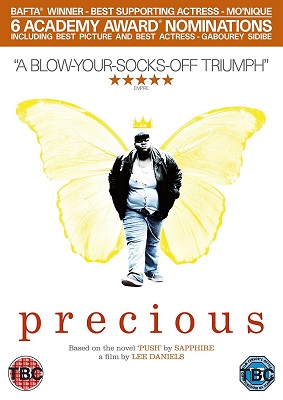 Precious, Lee Daniels (2009, USA). This is on another list, rather than the one I’ve been using for the past two years. And it wouldn’t otherwise be the sort of film that would interest me. The title refers to the central character, an overweight black teenage girl with learning difficulties, a physically abusive mother, and a child with Down Syndrome (who actually lives with the girl’s grandmother) fathered by her own father. The film is adaptation of a novel, Push, by Sapphire, and it’s pretty grim stuff. The mother is especially horrible, subjecting Precious to a litany of verbal and mental abuse, and the occasional moment of violence, throughout the film. Precious herself is an innocent, completely unable to see a way out of her circumstances. But then she’s given a place at an alternative school, and she begins to open up… in the process revealing her mother’s behaviour toward her and that her child is the product of incest (oh, and she’s pregnant once again, also incestuous, when the movie opens). The book’s prose apparently reflects Precious’s improved command of language as she attends the alternative school, but the voiceover narrative doesn’t make this especially clear. The film has been accused of throwing a bit too much at the protagonist, and although there’s a clear arc toward some sort of happy ending, it is pretty heavy-handed. Still, that’s what drama does…
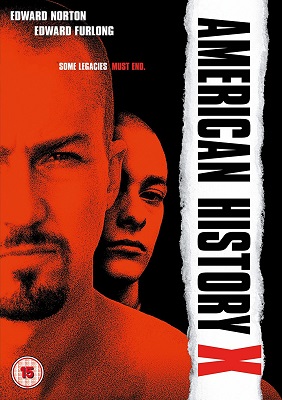 American History X, Tony Kaye (2009, USA). Another film that’s on another list, but this one was also free to watch on Amazon Prime so… To be honest, the story of the making of the film is more interesting than the story of the film. In American History X, Edward Norton plays a neo-Nazi who goes to prison after viciously murdering two black guys, sees the errors of his ways after being sexually assaulted by another neo-Nazi in the showers and spending time working alongside a black guy who was imprisoned for six years for stealing a TV. On his release, Norton tries to prevent his younger brother, who has fallen under the spell of the same neo-Nazi guru Norton had, from following in his footsteps. These days, neo-Nazis get upset when they’re called neo-Nazis, or even just straight Nazis, but fuck ’em. They’re neo-Nazis. “Alt-right” is just as much a bullshit right-wing propaganda term as “political correctness”. Ignore anyone who uses either. But, American History X… Apparently, the studio were unhappy with Kaye’s first cut. And his second cut.’Then Norton hired an editor to cut the film to his taste. So Kaye played the prima donna, famously hiring a rabbi, a RC priest and a Buddhist monk to sit in on a meeting with studio bosses. Um, yes. The film has its moments, but Norton is too weedy to convince in his role (just compare him to the meatheads Nazis he meets in prison), and the whole thing over-inflates the success of neo-Nazism so much it dangerously normalises it. I’m all for rehabilitation narratives, but they need to be stronger than this to justify their existence. It doesn’t help that every black character in American History X is a gang banger, except for Avery Brooks’s mentor, which only just feeds into the whole neo-Nazi white supremacy thing. Seriously, films about Nazism and neo-Nazism should make the politics so unpalatable – as they are in real life – that no one would want to have anything to do with them; they should not leave enough wiggle room for an intellectually-challenged viewer to start giving brainspace to the toxic shit they peddle. We all know the dangers of “post-truth”, which is another word for “lie” or “fiction”. After all, 52% of Republicans believe Trump won the popular vote even though the actual facts show Clinton won it by nearly three million votes. And don’t get me started on the lies put out by the Leave campaign…
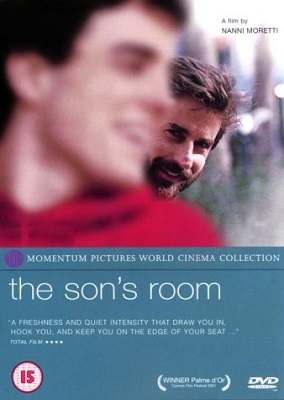 The Son’s Room, Nanni Moretti (2001, Italy). And from the “look at my award-winning turn playing a toxic character in a toxic film” American History X to a drama that has a cast of human beings and deals with a very real situation. Moretti himself plays the father in a middle-class Italian family. Teenage boy and teenage girl cause the usual familial disruptions. Moretti’s job as a practicing psychiatrist means he has his patients’ problems as well as his family’s to deal with. Nonetheless, the family are generally easy-going, centred, good-natured, although attractive in a sort of lifestyle magazine advert way. And then the son dies in a diving accident, and the surviving three members of the family have trouble dealing with their grief. Moretti’s character replays over and over his last day with his son, when he cried off from the promised jog together because a patient had called him and asked for his help (the patient had just been diagnosed with cancer, it transpired). My only previous experience to Moretti’s films was his Caro diario, which I thought pretty good. That was a more personal film, although The Son’s Room covers such an emotive topic it feels a much more personal movie. I should probably watch more Moretti – he’s very good. Recommended.
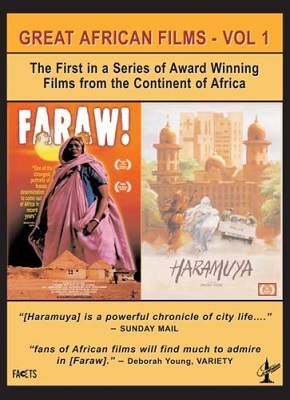 Haramuya, Drissa Toure (1995, Burkina Faso). As mentioned earlier, and evident from the DVD cover art, this is the second film in the Great African Films Volume 1 DVD I bought on eBay. This is pretty much a slice-of-life drama set in Ougadougou, the capital of Burkina Faso. A teenager gets a job in a shop, but worried that his parents cannot affort to eat, he steals some flip-flops to sell, but is caught and fired. There’s a long-running plot-thread about stolen mopeds. And also a police investigation into drug dealing – which one dealer manages to evade by feeding his marijuana to an uncle’s goats… who promptly start butting each other and everything in sight. Haramuya is light on plot, but it’s also an excellent window onto a world I would not otherwise be likely to see. Toure’s direction is effective, but workmanlike more than anything else. The film comes across as a social drama, but structured as a series of interlinked narratives. The cast are natural, with only one or two moments where it feels a little amateur. Of the two films in Great African Films Volume 1, Faraw! is clearly the better, but Haramuya is still worth seeing. There are, to date, a further three volumes – 2 Tasuma and Sia, The Dream of the Python (both Burkina Faso), 3 Daratt and Desert Ark (Chad and Algeria), and 4 The Pirogue, Colobane Express and The Silent Monologue (all three Senegal). I plan to buy them (although I’ve already seen Daratt).
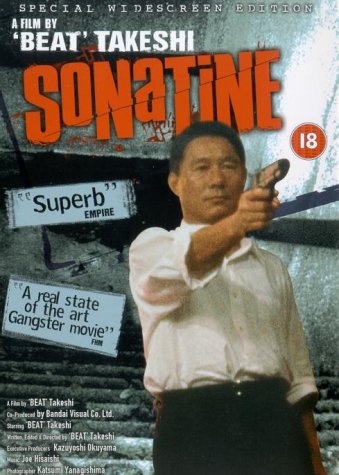 Sonatine, Kitano Takeshi (1993, Japan). I stumbled across this in a local charity shop, and since I know Takeshi’s name, it was an obvious decision to buy it. Only later did I discover it’s the film which brought him international attention. And having now seen it, I can understand why. A Yakuza enforcer and his team are sent to Okinawa to sort out a dispute between two gangster plans but the enforcer realises it is all a plot to remove him. So he hides out with his team at a beach house, where they play games and tricks on each other… before it all comes to a violent end when the Yakuza boss turns up looking to resolve the situation. And, er, that’s sort of it. When the enforcers are hiding out at the beach, they act like kids. Takeshi, who plays the lead role, plays it totally deadpan, so the humnour is even funnier because it bounces off him completely. Of course, being a Takeshi, it’s also pretty violent, with lots of gun battles and violent murders. But there’s also a strong thread of black humour running throughout the film. For example, when the enforcers first arrive in Okinawa, they’re taken to an office building used by the clan. They’ve not been there five minutes when someone shoots at a window. What’s that? asks one of the Okinawa team. That’s just the other clan, they’re always shooting at us… This DVD only cost me a quid, and I fully expected to drop it off in a random charity shop after I’d watched it… But I think I’ll be keeping it. Worth seeing.
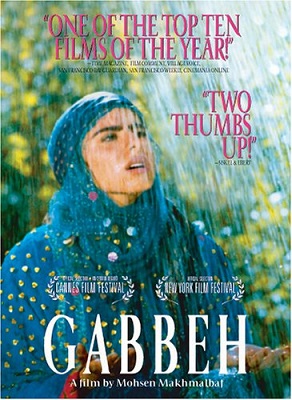 Gabbeh*, Mohsen Makhmalbaf (1996, Iran). Iran, despite its theocratic regime, perhaps even in spite of it, has a strong presence internationally in the cinema world, and has produced a number of excellent directors and films. Some have worked within the system, some have worked around it. I’m not sure which group Makhmalbaf belongs to, although the fact his name is important to the plot of Kiarostami’s Close-up suggests he has the approval of the authorities. And, to be fair, there’s nothing in Gabbeh that might offend them. It’s an Iranian fairy-tale, based around the style of rug from which the film takes its name. An old couple make their way to a stream to wash their gabbeh, and a young woman, who answers to the name of Gabbeh, magically appears out of the picture wiven into the rug. Gabbeh’s story is also depicted in the rug, which changes as the film progresses. She is betrothed to a young man, but each time they try to set a wedding date something happens to put it off. She tells this story to the old couple. As should be evident from the DVD cover, this is a gorgeous-looking movie. Recommended. And no, I didn’t pay the price show on Amazon, I bought my copy on eBay for considerably less.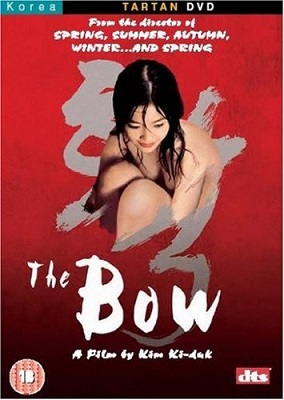

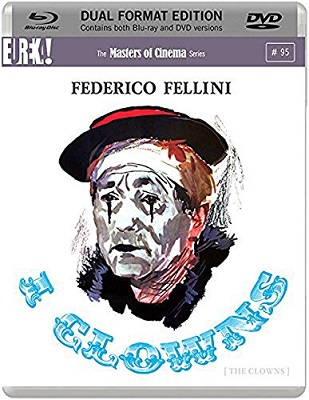
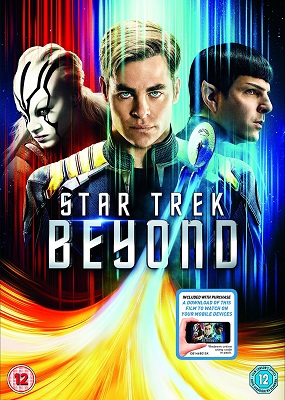
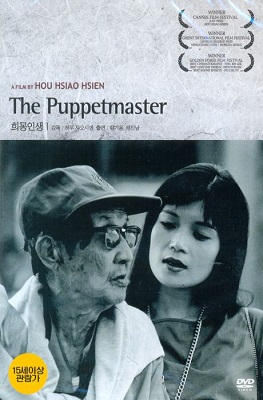
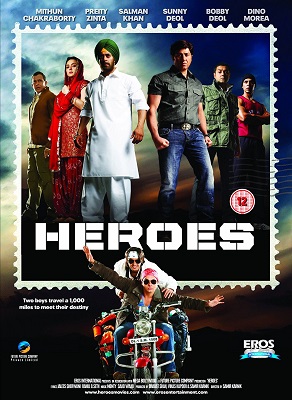
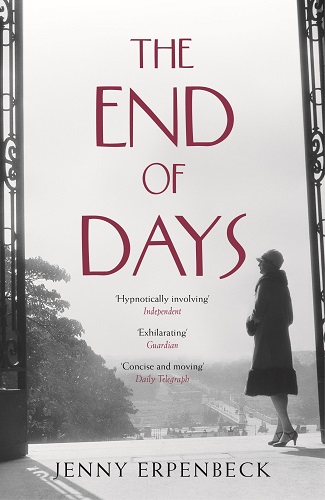
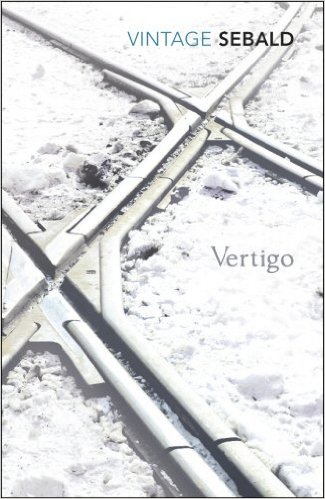
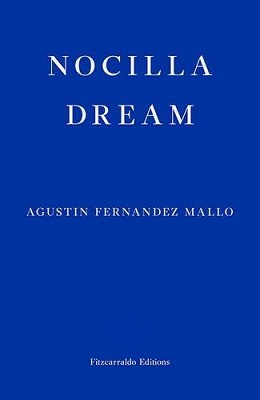
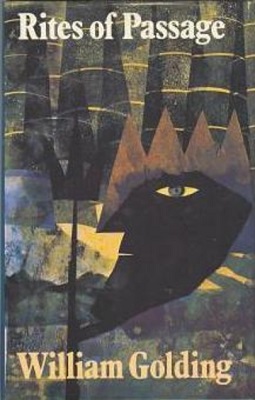
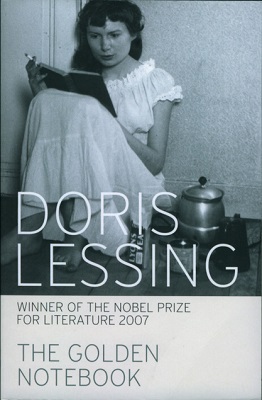
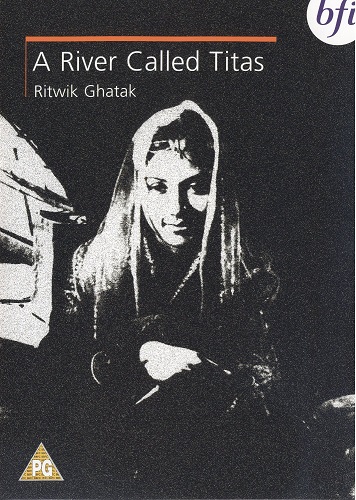
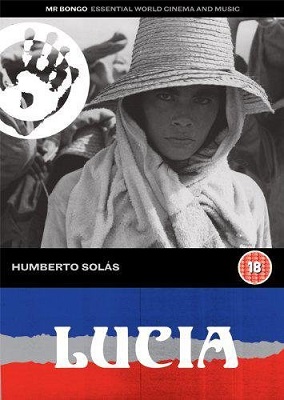
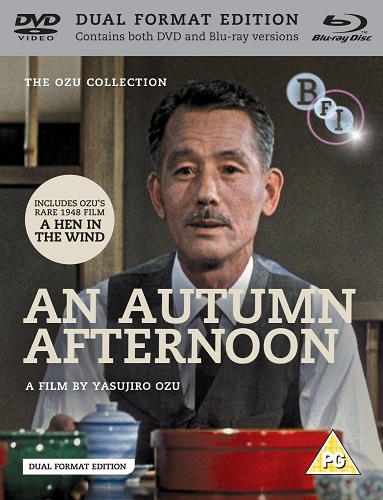
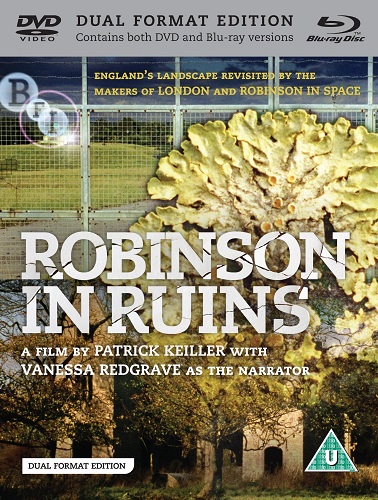
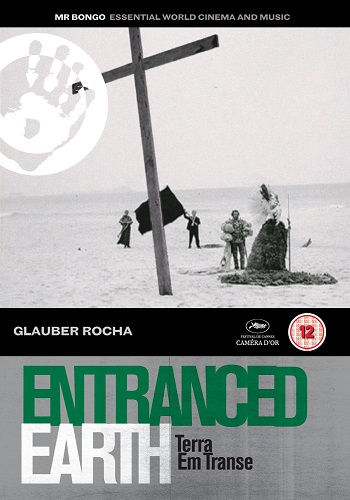
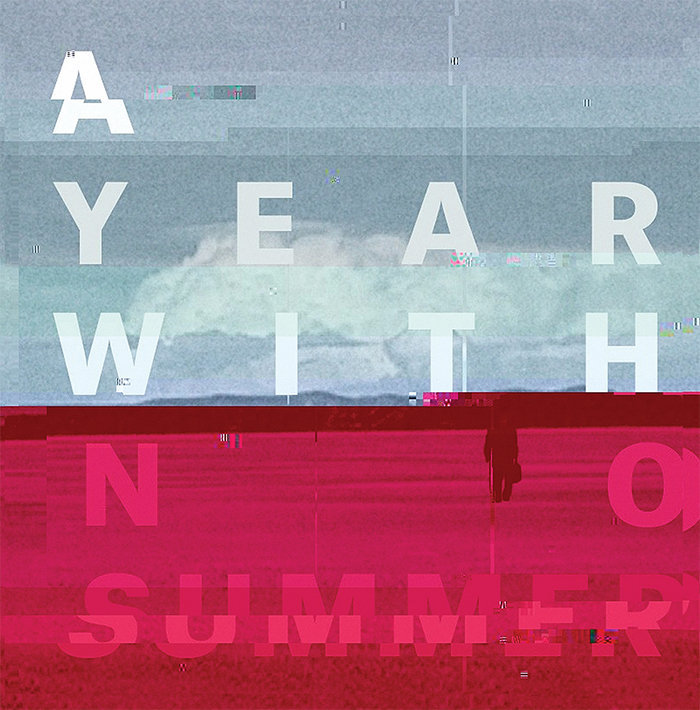



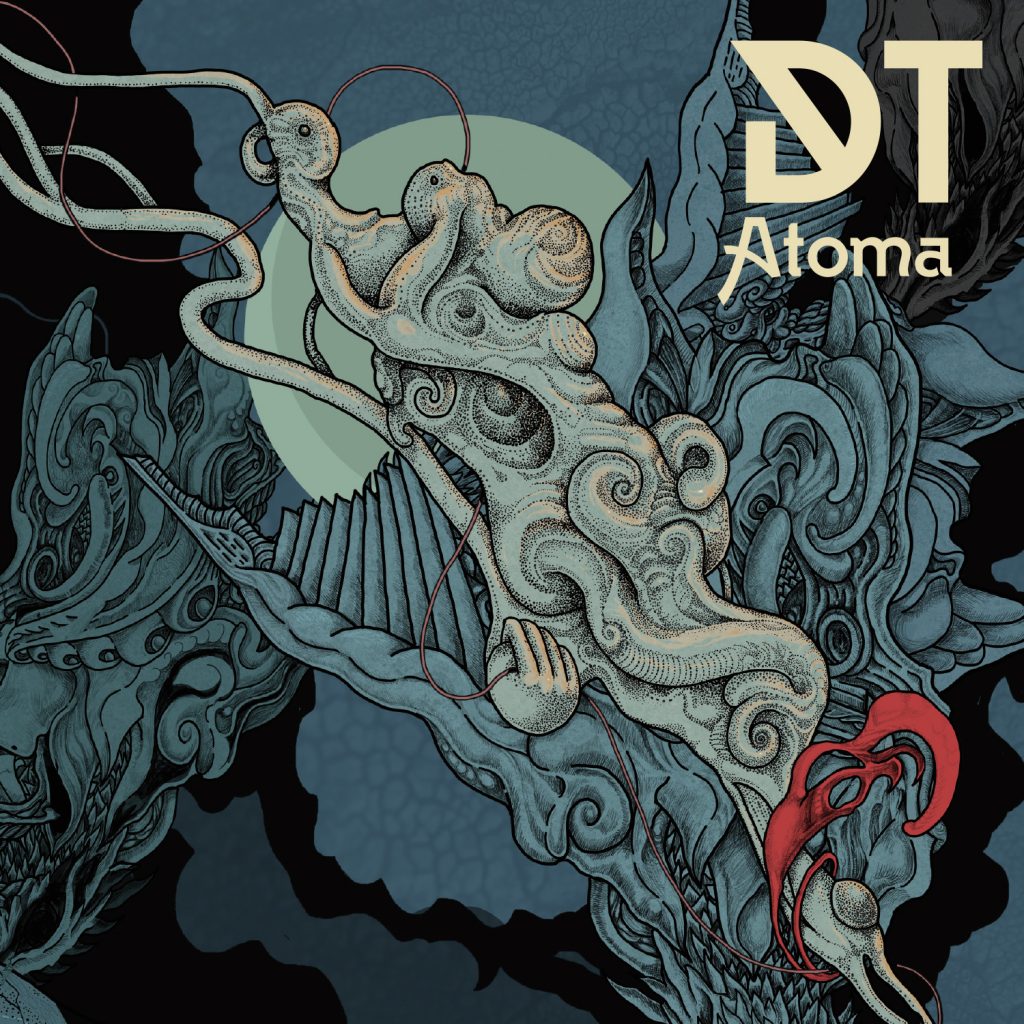
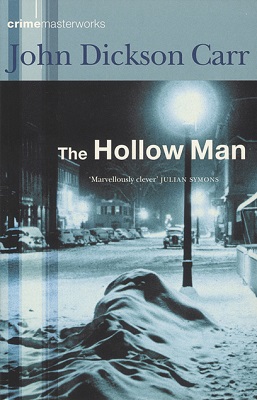
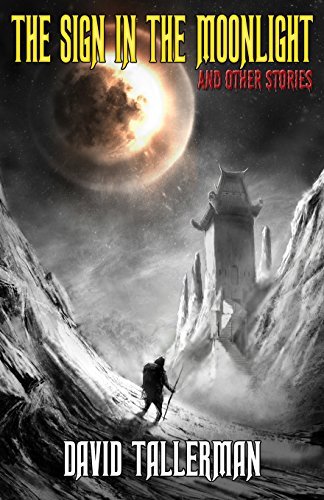
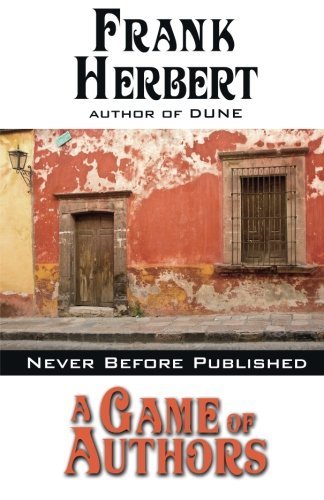
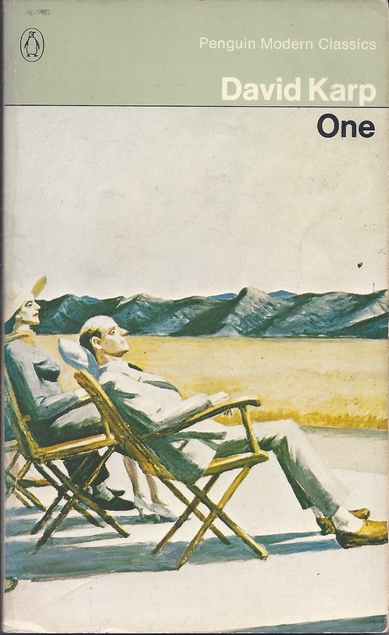
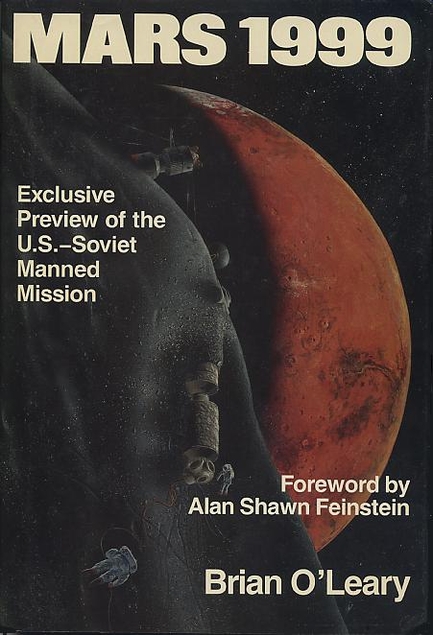
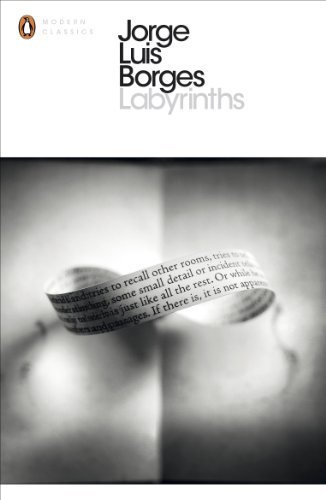
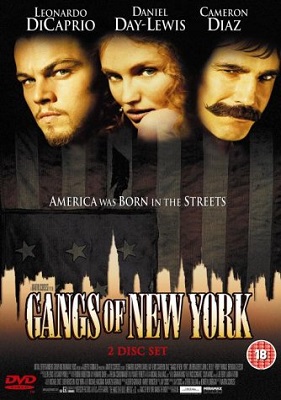
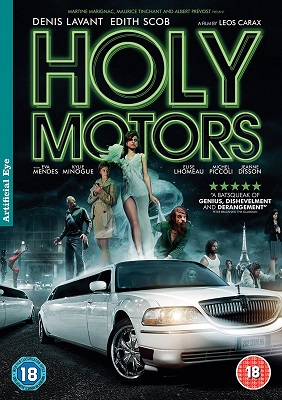
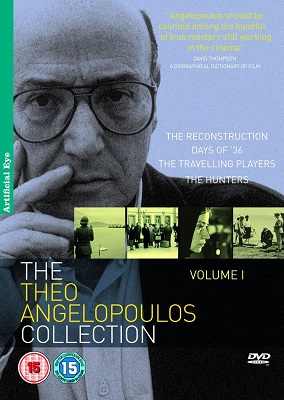

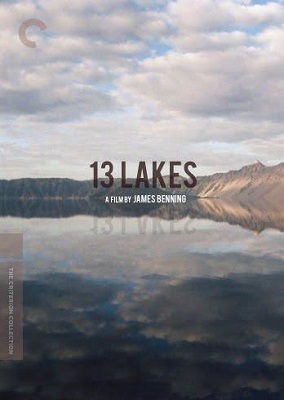
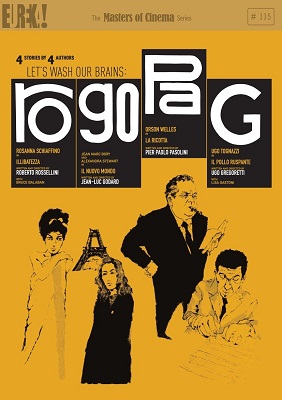
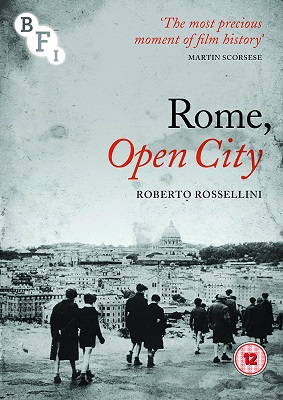
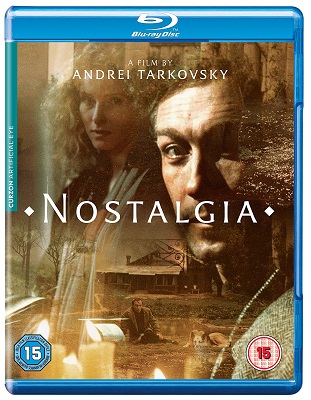
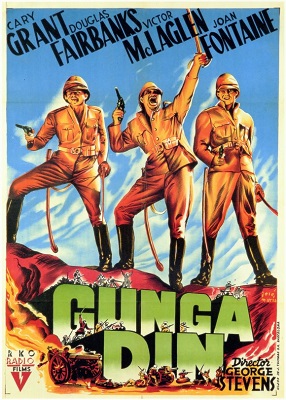
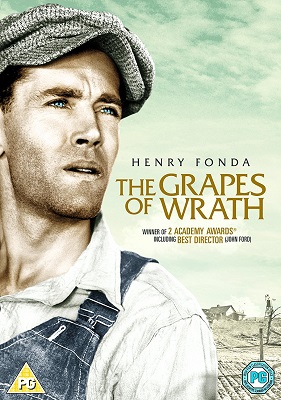
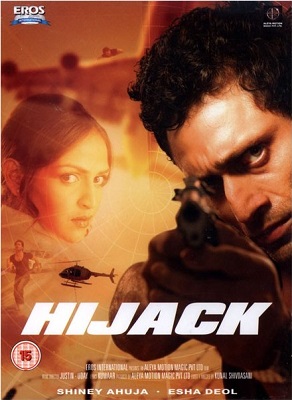
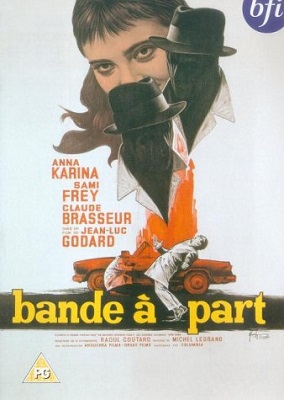
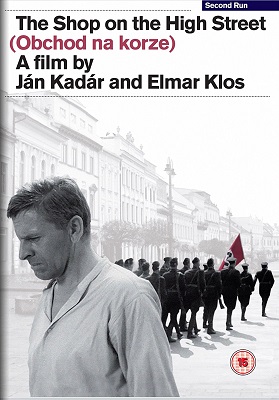
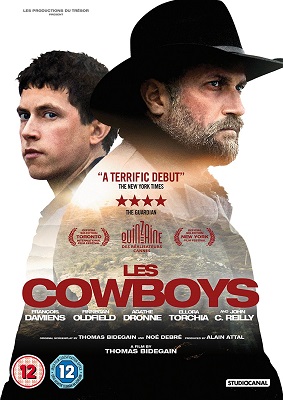
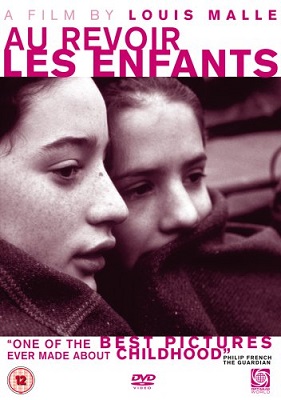
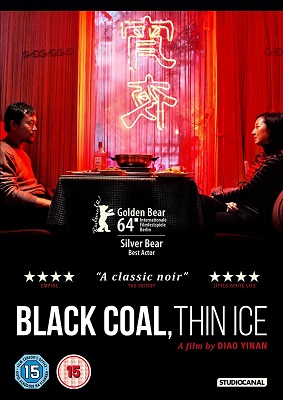
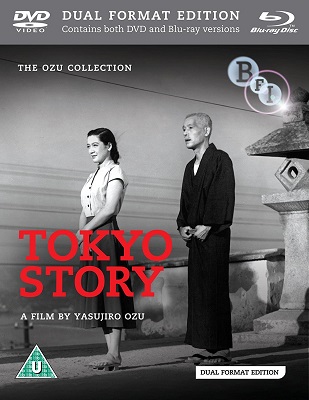

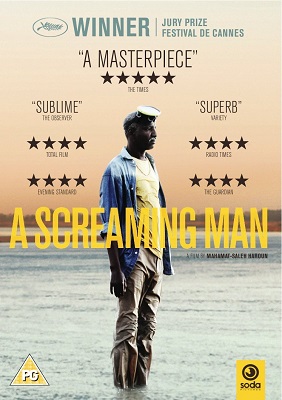
 It Doesn't Have To Be Right...