It Doesn't Have To Be Right…

… it just has to sound plausible


1 Comment

Moving pictures 2018, #13

It’s been one of those months where I’ve not felt like being too choosy of a night when I get home from work and plop myself down in front of the telly. The advantage of rental DVDs is that I’ve thought about what to rent, and when it arrives I’ve no choice but to watch it. Which is not true of streaming. Then, it’s usually watch ten minutes of a film, decides it’s shit, do the same to another, and another, and another… and eventually end up watching something that is only a degree above shit. Or watching something that won’t be too taxing brain-wise. Which usually ends up generating ire, and so taxing the brain anyway…
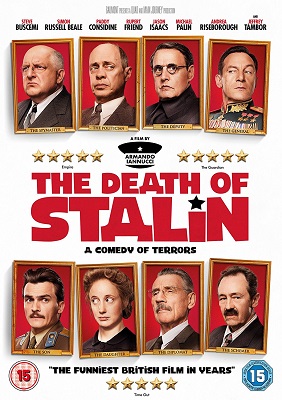
The Death of Stalin, Armando Ianucci (2017, UK). If Ianucci’s comedy has usually been amusing, his targets have also been a bit, well, obvious. And who is the most obvious target for political satire on the planet? Er, after Trump, that is. And, er, Putin. And maybe Thatcher. And maybe the last half-dozen US presidents. Okay, historical political figures. That are not Hitler. Well, that would be Stalin. Obviously. A figure who was praised, then revered, then feared (most right-wingers think this is the same thing), and in recent years is becoming bafflingly revered again. The Death of Stalin covers the days up to  Stalin’s death, the handover of power to Malenkov, and the subsequent struggle for supremacy among the Central Committe members, which eventually saw Khrushchev prevail. The committee members – Beria, Molotov, Mikoyan, Kaganovich, as well as those previously mentioned – are played like foul-mouthed, well, children, almost. And General Zhukov comes across like a cross between Flashheart and Roy Chubby Brown. Which means that in among the back-stabbing and brutality, there’s some good humour. Admittedly, most of it you’re embarrassed to be amused by, because, well, there’s political satire and then there’s depicting politics as schoolyard bullying games. Although, to be fair, that’s pretty much what Tory politics in the UK is these days. And the difference between the Central Committee as shown in this film and the Tories are little more than: better suits, a lack of firing squads, and plummy accents. Worth seeing.
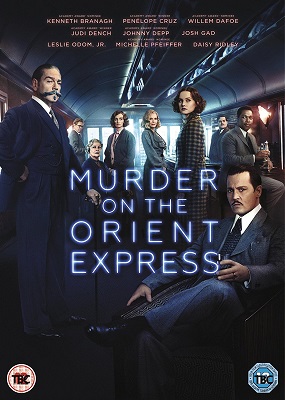
Murder on the Orient Express, Kenneth Branagh (2017, UK). Of all the things the world needed, another remake of Murder on the Orient Express was not at the top of the list, or indeed anywhere on the list. It’s a hugely contrived novel, in which racist caricature Belgian Hercule Poirot, tries to solve a murder on a train with a limited cast of suspects, only to discover they were all guilty. It’s by no means Christie’s best novel, and the story is so well-known it’s impossible to ring changes on it without destroying it. But director Kenneth Branagh found a way to make it different. CGI! He creates an Orient Express that is almost cartoonish in its hyper-reality. The train on which Poirot is travelling is derailed by an avalanche in a giant mountain range in Croatia. While waiting to be rescued, a first-class passenger is brutally murdered, and Poirot is persuaded to solve the crime. Everyone else in first class has a secret, and it all links to the kidnap and murder of an American industrialist’s daughter years before – a crime plainly modelled on the Lindbergh kidnapping. Branagh has trouble playing a Poirot distinctive from Suchet’s, and plumps for a Kaiser moustache to distinguish his take on the character. The rest of the cast are drawn broadly, which is no real surprise as they’re just mannequins to pin motivations for the crime onto. And everywhere there is CGI. Lashings of it. More CGI than the remastered Star Wars trilogy. And it ruins the entire film. A plot so ludicrously contrived needs realism to anchor it and lend it plausibility, not Middle-Earth scenery  and a Belgian detective with the martial skills of Captain America. One to avoid.
The Battle of San Pietro*, John Huston (1945, USA). As the asterisk indicates, this is on the 1001 Movies you Must See Before You Die list. It’s a wartime documentary, made by a famous Hollywood director, which may be surprisingly honest for a wartime documentary… but I can think of no good reason why this one should lauded above others. Is it fair to overlook other directors for creating wartime propaganda, no matter how well made – such as the Archers’ The Volunteer (starring Ralph Richardson!), or however many WWII propaganda films Frank Capra made – or must they be brutally honest to be acclaimed? On the other hand, you have films like Rossellini’s Paisà, which is a dramatic retelling, but no doubt far more accurate than any government documentary film. Not to mention the likes of Vittorio De Sica’s Two Women (see here), in which a mother attempts to save her child in war-torn Italy. The Battle of San Pietro comprises battle footage, interviews with soldiers, fly-on-the-wall footage of soldiers relaxing, and crude animation intended to explain the course of the battle. Despite being real, it was all a bit dull, to be honest. I much preferred The Volunteer, even if it was shot to recruit people for the Fleet Air Arm…
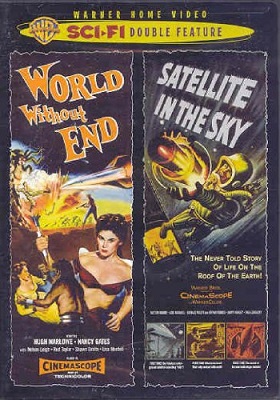
World without End, Edward Bernds (1956. USA). After Satellite in the Sky (see here), I had expected similar of this film which shares the same disc. It shares only its year of release, and its, er, science-fiction-ness. It’s a US film, for one thing. A trip to Mars, the first every spaceflight (yeah right). goes awry when the rocket is accelerated to great velocity, but not apparently at sufficiently high G to squish them, and the crew blackout and wake up in… the future. The year 2508, to be precise. Two hundred years after a nuclear war devastated the earth and mutated spiders so they’re now huge monsters. The astronauts stumble across an underground city of human survivors – if this sounds a little familar, Beneath the Planet of the apes was released 14 years after this one. The underground men are all impotent wimps, but the women are attractive and more than happy to find themselves being visited by real men. Satellite in the Sky had its flaws, but it was so much better than World without End. True, World without End is a B-movie, and quality sort of didn’t go with the territory. I’ve seen a bunch of them in my time, and while this one was better made than most, it was just as rubbish. Bad science fiction, with no Avro Vulcans.
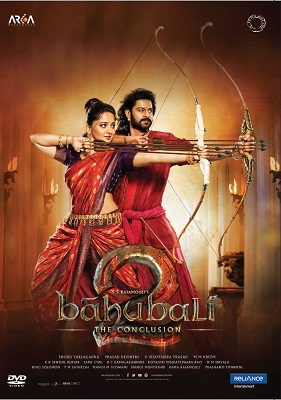
Baahubali 2: The Conclusion, SS Rajamouli (2017, India). Baahubali was an experience. The film was so epic it was released in two parts, and it makes Lord of the Rings looks like a soap opera. There is twisting the material to suit the refashioned story, or even the director’s agenda, but Baahubali provides more moments of laugh-out-loud OTT action for the sake of sheer action than any other film I have ever come across. There’s the scene where the cows with their horns on fire stamped through the bandit army. Or the scene where Baahubali’s army is catapulted over the walls of Mahishmati using palm trees. I kid you not. The title character has been named heir apparent to Mahismati, a declaration that is unpopular with his stepbrother, Bhallaladeva, and his mother, the Rajamata Sivagami. Baahubali is sent off to tour the kingdom undercover with master-at-arms slave Kattappa. They witness an attack by the princess of a neighbouring kingdom. Baahubali falls in love with her, and follows her back to her kingdom of Kuntala. He pretends to be mentally challenged, although his cover is blown when bandits attack the kingdom and he fights to defend it. Then there’s the confusion over which prince of Mahismati will marry the princess of Kuntala… which leads to Baahubali being demoted from heir apparent, and then exiled. Which is why he and Bhallaladeva end up going to war. The ending neatly leads back into the beginning of the film – ie, the framing narrative in which Baahubali’s son, played by the same actor, defeats Bhallaldeva – by having Sivagami see the error of her ways and run from Mahishmati, but dies saving the life of the son. Both Baahubali films were entertainment turned up to eleven. I’ve never seen aything like them. But then, when you take the OTT action of a fantasy film and marry it with the OTT drama of a Bollywood film – well, Tollywood film, in this case – well, then you’ve got… something like this. I thoroughly enjoyed it. I’m tempted to get my own copy.
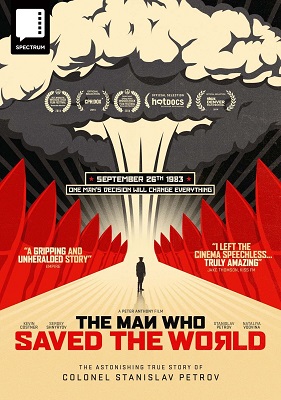
The Man Who Saved the World, Peter Anthony (2014, Denmark). Back in the twentieth century, there was this thing called the Cold War. The USSR and the USA wanted to bomb the shit out of each other with nuclear bombs, but never did because it was all a plot to keep their military-industrial (or, in the case of the USSR, military-political) complexes in profit. But the technology was clunky and not entirely reliable. Which is not surprising. What is surprising, however, is that the system should break in such a way that it appeared to be displaying a US nuclear missile attack on the USSR. Fortunately, the military officer in charge disbelieved the evidence presented by all the high technology of which he was in charge, and chose to disregard the indicated attack. Which proved to be a glitch. And so WWIII was averted and, post-glasnost, said officer travelled to the US and met a bunch of celebs – including Kevin Costner! – as “the man who save the world”. I don’t believe a word of it. It’s not how computer systems operate. The documentary includes a re-enactment of the fake nuclear missile attack, and you have to wonder how a bogus signal from one, or more, radar stations translated into such a convincing report of an attack that a Soviet officer had to actively distrust the systems for which he was responsible. The film is not helped by the feeling that the bulk of the encounters in the US are set up. The man who allegedly saved the world is probably really no more than a footnote in the history books, and what is most interesting is how it happened rather the man who made the right decision, or his subsequent attempts – or attempts by others – to capitalise on his one moment of common sense. I wanted to like The Man Who Saved the World more than I did, but it never quite convinced me.

1001 Movies You Must See Before You Die count: 896


2 Comments

Moving pictures 2018, #12

I’ve finally managed to reduce the number of US films seen since 2001 to less than half. Okay, so it’s currently around 49.6%, but that’s still less than 50%. Also true, the nation from which I’ve seen the next highest number of films is the UK (14%), followed by France (8%), Germany (3%), Italy (3%) and Japan (3%). Out of a total of 4130 movies. I’m still keen on seeing films from countries I’ve not seen films from before, especially African nations. I mean, Nigeria has the third largest film industry on the planet but Nollywood films are really hard to find in the UK. Sadly, no new nations here – it’s my third Icelandic film, my sixth and seventh Senegalese films, and my thirteenth Argentinean.

Colobane Express, Khady Sylla (1999, Senegal) No sign of any volume 5 from ArtMattan’s Great African Films, but given that their website was very much 1990s, I’m not holding my breath. (I once came across a website which included the United Arab Republic in its address dropdown list – the UAR lasted from 1958 to 1961, so it even predates the Internet.) Which is a shame, as there are few enough channels for films made in African nations to make it through to Western audiences. I’m a big fan of what cinema I’ve seen from there and would welcome seeing more. But it’s getting difficult to find anything other than films by names known on the festival circuits. I’ve said before that Nollywood, Nigeria’s film industry is the third biggest on the planet, but none of its output is readily available on DVD in the UK (at least not in the obvious places – and while I recognise that the ready availabilty of Bollywood films is likely a result of the size of the Anglo-Indian market, and that many of the companies servicing it are Indian… I don’t understand why the same arguments don’t seem to hold true for Nollywood). Anyway, Colobane Express is Senegalese and set in the capital, Dakar. Aboard a bus. It’s a documentary about the service offered by the bus, which is a typical example of its type in the city – privately operated minibuses covering express routes, in old but brightly-decorated vehicles – but using actors as passengers, to tell stories about their lives and their use of the bus. It’s an effective piece of film-making, deeply rooted in its setting and yet universal in its concerns. It’s an easy film to like.

La Boleta, Andrés Paternostro (2013, Argentina). This was on Amazon Prime as The Lottery Ticket, but I looked it up and it wasn’t a US film so I stuck it on my watchlist. It was, I discovered, Argentinean. And Argentina has produced some excellent thrillers. La Boleta, however, is more of a comedy-thriller. A man is in a dead-end job and about to be demoted, his wife has left him and taken the kids and is demanding support… and there’s no way out, so he attempts suicide, which fails. But he hallucinates that he goes to heaven and is given a winning lottery ticket number by God. So once he’s been released from hospital, he buys a ticket with that exact number… but is mugged on his way home by two not-very-clever youths. He tracks them down to a barrio, and discovers they’d mugged him against orders on their way back from delivering a message to the rich father of a young woman they had kidnapped. And it all sort of escalates from there. It’s all completely implausible and daft, but it was also fun. And it played clever with the lottery ticket – an obvious maguffin – which drove the plot but didn’t resolve it. This is no Nine Queens, but from the poster alone it’s not trying to be. But it was a fun film, with a feel-good ending that still managed to take you by surprise. Worth seeing.

Searching for Sugar Man, Malik Bendjelloul (2012, Sweden). In the late sixties/early seventies, a US folk singer called Rodriguez released two albums which pretty much sank without trace. Except in South Africa. For some reason, his first album, Cold Fact, hit a chord with Afrikaner youth, and when the albums were pressed under licence in the country, they went on to outsell Elvis Presley. But no one knew anything about Rodriguez – South Africa was under sanctions, and since in the US Rodriguez was blindingly obscure, visitors from there were no help. There were rumours he had committed suicide on stage because of his poor sales – either shooting himself or setting fire to himself. When his two albums were rereleased on CD in South Africa, it prompted a journalist to investigate Rodriguez’s past… only to learn that he was alive and well and living in Detroit and working demolishing houses. As a result, he toured South Africa several times very successfully, although his life never actually changed. The big stumbling block in Searching for Sugar Man is understanding why Rodriguez became so huge in South Africa. He was not a great artist – very Dylanesque, although a better singer, but I can think of several artists or groups from around the same time who I personally might have thought better, such as Fat Mattress or Eire Apparent. But something about Rodriguez’s material struck a chord in South Africa’s youth, and as they grew older so they carried that love through into the twenty-first century. A love of which he was completely unaware. Which tells you more about the music industry than it does Rodriguez’s music or South Africa’s taste in music. It all felt a bit too good to be true – as, in fact, did Rodriguez himself – and critics have pointed out he had a successful career in Australia during the 1970s, not that the South Africans knew… but the film does it part feel like it’s playing up the story to South Africa’s advantage, rather than giving an honest account of a 1960s folk singer whose career unexpectedly developed second wind in the early 2000s. Still worth seeing, nonetheless.

The Silent Monologue, Khady Sylla (2008, Senegal). The DVD cover explicitly likens this to Ousmane Sembène’s Black Girl (see here), in which a young Senegalese woman is taken back to the France with the family she works for as a nanny, only to discover she is effectively a domestic slave, trotted out to bolster her employers’ liberal credentials. The Silent Monologue is that of a servant girl, but she remains in Dakar, and her employers are Senegalese. But she is from the country, and they are affluent middle-class city-dwellers. Sembène’s film was explicit in its commentary, condemning the French exploitation of Senegal and its people, and white people’s dehumanising of black people. Sylla’s target is closer to home, and more nuanced – although to be fair, it’s unlikely nuance would have worked on Sembène’s target audience. But certainly with both this film and Colobane Express Sylla is directly addressing Sembène’s Black Girl, by both updating his story and turning the focus on women. Sylla, who was also a novelist and known in France for Le jeu de la mer, made only four films, none of which are much more than an hour in length. If her cinematography was nothing to shout about, her viewpoint certainly needs to be more widely disseminated.

The Oath, Baltasar Kormakúr (2016, Iceland). After giving up on three or four movies I’d found on Amazon Prime – some of the stuff on there is so bad I doubt it would even be shown on US television! – I stumbled across this Icelandic thriller, written, directed and starring Baltasar Kormakúr. It’s by no means an original story, but it’s handled well, and Kormakúr makes sure all the details add up. The eighteen-year-old daughter of an eminent surgeon has moved in with her boyfriend. Who is a drug dealer. When the surgeon realises her daughter is on drugs, he tries to separate her from her boyfriend, but neither are having it. So he spies on the boyfriend, witnesses him taking a shipment of drugs, later breaks uinto his apartment, leaves the drugs on display and calls the police. But they won’t arrest the boyfriend because anyone could have left the drugs. And now the boyfriend is after the surgeon to pay for the money lost because the drugs were seized by the police. (The one logical flaw in the story: the dealers would demand the money from the boyfriend, they wouldn’t care about the surgeon.) The surgeon decides to retaliate, but it all goes horribly wrong. Kormakúr plays a man convincingly driven to extreme measures, although the ease with which the characters resort to violence feels contrived. Yes, people – no, not “people”, men – will throw punches outside the pub of a Saturday night, but contriving for someone to be arrested, resorting to kidnap and murder… It’s stuff that only happens in films. Even in Iceland. But if you’re going to watch it happen, then why not in Iceland instead of some random US city? Worth seeing.

Satellite in the Sky, Paul Dickson (1956, UK). I wasn’t sure if this was a US B-movie or a spaghetti sci-fi when I bought the DVD from a seller on eBay. So when it opened with a shot of an Avro Vulcan prototype taking off, followed by some aerial footage, I sat up and took notice. For one thing, it meant the film was British; for another, the Vulcan was a pretty damn cool aeroplane. And then the Folland Midge makes an appearance as a prototpye supersonic fighter… Sadly, those opening shots are it, as the film is actually about a flight to space, in a rocket that probably owes little too much to the one in When Worlds Collide. The spaceflight is intended to be scientific only, but at the last minute the MoD (although it was probably still the Ministry of War in 1956) takes over and the mission is slightly changed: the rocket will now deposit a nuclear satellite in orbit. So, of course, that’s the bit that goes wrong. Well, other than the female journalist – Lois Maxwell! Miss Moneypenny!- stowing away. Anyway, the nuclear satellite’s retro rockets fail and it ends up stuck to the rocket by natural magnetism (um, yes). So they have to go out in the spacesuits and push it away from the rocket before they can return to earth. True, 1956 was half a decade before the first actual man in space, but you’d have thought by then they’d have got the science sorted out. For most  films of the period, I’d not consider that an issue, but this is one that makes of point of opening with shots of an Avro Vulcan and a Folland Midge. It’s saying it’s up there with the latest British aviation engineering. So it’s a disappointment it turns into standard 1950s space bollocks. It hits all the obvious plot points, although it does have the stowaway – Lois Maxwell! Miss Moneypenny! – instrumental in saving the rocket, despite her intitial hostility to the programme. This is a film very much of its time, and though it makes a good fist of its story, it’s still enormously dated. One for fans, I suspect. Or fans of the Vulcan.

1001 Movies You Must See Before You Die count: 895


1 Comment

Reading diary 2018, #4

A mixed bag this time around, although I’ve used that excuse before. I read what interests me. If I’m swayed by fads, it’s for one book or two. I read books by friends – but I have a lot of friends who write a variety of types of fiction. Which doesn’t always mean that I automatically like it. The one thing I demand is quality of prose, and I’m happy to read books from any genre that is well-written. The only problem is that different genres seem to rate prose differently. Which is bollocks. I’ve seen reviews of YA novels rate the writing as “excellent” when it’s barely functional. If it’s not up there with the classics, then it’s hardly good. If your book is still admired for its prose 100 years later, then it might be considered excellent. Otherwise, shut the fuck up.

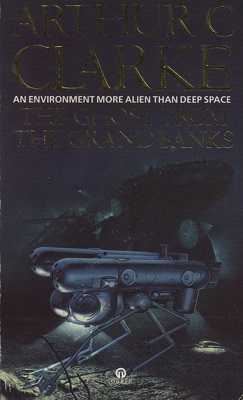
The Ghost from the Grand Banks, Arthur C Clarke (1990, UK). Of the Big Three sf writers of the last century, I read more Heinlein than I did Clarke or Asimov. The last I always thought a piss-poor writer, and for some reason Clarke never clicked with me. You’d have thought he would, given he tackles the sort of subjects I enjoy in my sf, and he was very much the hardest, in sf terms, of the three. So you’d also think The Ghost from the Grand Banks, which is about something that has interested me for the past few years, would go down well. It didn’t. The title refers to the wreck of the Titanic, and the novel is basically a rewrite of Cliver Cussler’s Raise the Titanic!, without the implausible thriller-type histrionics, or exclamation mark, and with a series of lectures on, er, Mandelbrot Sets instead. Clarke even has a dig at the film adaptation of Cussler’s novel. The centenary of the sinking of the Titanic is rapidly approaching, and two groups of people decide to raise the wreck to mark it. Since the wreck is in two parts, they’ll each raise one part using different methods. A British consortium plans to use glass spheres to float the forward part of the wreck, and a Japanese-American group will freeze the stern part in an iceberg, which they will then shoot to the surface using rockets. This is a book that revels in its use of future technology, and yet manages to get most of it wrong. It’s an occupational hazard of near-future sf, I admit, but most such novels are written such that they’re readable years later. Clarke didn’t appear to care. And perhaps with good reason: he’d sell boatloads, and if the book was out of print 12 months later, he had plenty of other properties pulling in the cash. It’s not that Clarke stinted on his research, more that it all feels re-used – as if he’d done it for another project and decided to get extra mileage out of it by writing this novel. Which is pretty bad. The characterisation is paper-thin, the plot is obvious, the science is mostly incidental, and the computer technology described is completely off-base… Not one of Clarke”s best. Missable.

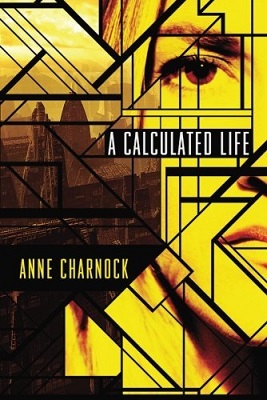
A Calculated Life, Anne Charnock (2013, UK). This was Charnock’s debut novel, but I’ve jumped about a bit in reading her books, having read her latest most recently. However, she doesn’t stray from her shtick, so I’d a good idea what to expect. A Calculated Life provides the setting of Charnock’s novella, The Enclave, which is good, but suffers from not knowing the setting, as revealed in A Calculated Life. A flaw I have now rectified. In the near-future of A Calculated Life, which seems to be set after some sort of climate crash as Lancashire now has a Mediterranean climate, “simulated humans” are relatively common in the workplace. They’re force-grown, and genetically-engineered for certain traits. The main character of A Calculated Life is Jayna, one such simulated human. She works for a private company in Manchester, predicting economic and social trends based on seemingly unconnected events. She is very good at it – much better than “bios” and earlier models of simulants. But driving her ability is an obsession to learn as much as possible about people… and so she begins to secretly break out of her carefully prescribed life. This involves several trips to an enclave, as sort of working class suburb of Manchester which the government has pretty much abandoned – a sort of a cross between a ghetto and a barrio. Charnock paints a convincing portrait of a late-twenty-first century Britain which has responded to a drop in population due to climate change (rather than due to Brexit, although climate change will inevitably follow). The world-building is very low-key – and if only more sf writers did it so – to the extent it takes a while to figure out what is what. There’s enough that is the same, and enough that’s very different, to keep the reader comfortable as they slowly learn what’s what. The writing is good, clear and neither showy nor flashy, but this is not a long novel, only 208 pages. It does make it feel a little insubstantial. It’s good, but, happily, each new book by Charnock is better than the last. Her most recent, Dreams Before the Start of Time, will be getting the #1 slot on my ballot at the BSFA Awards (I’m especially happy it made the shortlist). Charnock is proving to be a name to watch, although I think she has something much more substantial than what  she was written so far yet to deliver. If you’ve not read her yet, why not?

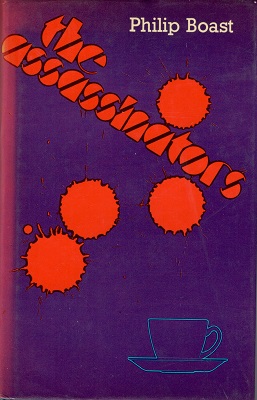
The Assassinators, Philip Boast (1976, UK). Back in the late 1990s/early 2000s, I read four books by Boast that were sort of deep history occult/religious thrillers set in and around London: Resurrection, Deus, Sion and Era. I really enjoyed them. But as far as I could discover, they were the only four books like that Boast had written (and Era, published in 2000, was his last). His other novels appeared to be historical fiction, also set in and around London. But recently I stumbled across mention of his first novel, The Assassinators, described as a straight-up thriller. So I found a cheap copy on eBay, bought it, and… Um, it’s not very good. The writing is pretty poor, in fact. A self-made millionaire decides the world is over-populated and it will lead to catastrophe in a decade or two. So there needs to be a cull – in fact, the UK’s population needs to be reduced to around thirty million. So he arranges to poison the water supply in Merton Regis, a south coast town mostly populated by OAPs (I think I’ve been there, but it was called Eastbourne; horrible place). The plan, of course, does not go as, er, planned. The thugs he hired to poison the water tank screw it up. They put the poison in successfully enough, but leave clues which lead back to the industrialist. Whose wife has also learnt of the plan and is against it, straining their already-strained marriage. Meanwhile, the industrialist has vivid dreams about a post-apocalyptic wasteland caused by a nucealr war brought on by his plans to cull the world population. The Assassinator is not a great book, and in places reads like it’s set much earlier than its publication date – by at least a decade or two. I still like Boast’s last four novels – and I ought to reread them one of these days – but this was an inauspicious start.

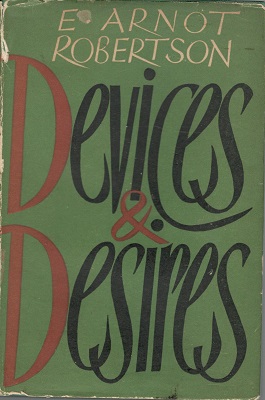
Devices and Desires, E Arnot Robertson (1954, UK). I already have a novel by a British postwar novelist titled Devices and Desires. That’s by Susan Ertz and it was published in 1972 (see here). Robertson’s book predates it by almost two decades… but it’s also the sort of story that would have been told two decades earlier. Hebe is a thirteen-year-old girl who, with her father, helps refugees cross Europe post-WWII. The book opens in Bulgaria, where they are helping a group of four refugees cross through Macedonia into Greece – during the Greek civil war – and so onto France and Spain. But Hebe’s father is accidentally shot by andartes – Greek resistance fighters – and so she is forced to lead the group on by herself. After entering Macedonia, they stop for food at a remote farm, and end up staying for several days. In fact, it gets easier to stay than to continue on. But when a “helobowie” – a Greek expat returning to his home village to show off his new-found affluence – turns up, it attracts the attentions of the andartes, and only Hebe and one of her refugees escape. Hebe is reluctant to accept help, because any well-meaning aid agency will immediately send her to a “displaced persons” camp, and she has her own plans. I had no real idea what to expect when I bought Devices and Desires. Robertson was a name on a list of postwar British women writers I planned to work my way through – I’m already a fan of a few, such as Olivia Manning and Elzabeth Taylor – and I admit I picked Devices and Desires because it shared its title with that Ertz novel. But. I liked it. It paints a vivid portrait of the Balkans, it’s careful to set out all the various factions as objectively possible, and it shows a pragmatic, but compassionate, attitude to the problem of refugees. Though it’s set in the decade following WWII, in lands still suffering from the war’s effects, both politically and economically, there’s little in it that dioes not apply today. Refugees deserve our compassion – and ours more than anyone else’s, since we’re the ones causing the refugee crisis in the first place. It’s quite simple: if you don’t want brown people flowing across your borders, don’t bomb the shit out of their homes or keep the various factions in their wars supplied with weaponry and ammunition. It’s a problem with a very simple solution. Unfortunately, that solution means multinational companies foregoing profits. Which will never happen. Devices and Desires is at least set post WWII, and during a civil war precipitated byt the invasion of Greece, and the withdrawal of the invading forces. Robertson’s prose is very much of her time, but I like that style of prose. Hebe is a likeable and sympathetic protagonist. Devices and Desires is not the most gripping novel ever written – it can be slow in places, and the interiority occasionally overwhelms the plot – but the characterisation is assured and the setting is described well. I’m tempted to try more by Robertson. Which was the whole point of reading postwar British women writers in the first place.

Dun da de Sewolawen, Christina Scholz (21018, Austria). I was completely clueless reading this until I later discovered that it was based on the language invented by French prog rock band Magma. When I looked them up, I had a brief moment of déjà vu… and I wondered if it had all been explained to me beforehand but I’d forgotten. If so, I had, er, forgotten. But my ignorance actually enahnced the reading. I found out about it afterwards, and that was interesting. Anyway. the story is a sort of Le Guin-esque coming-of-age piece, which partly uses the world and language of Magma. It’s set on a world colonised by humans, but which had previously be inhabited by a long-dead race. And the humans are slowly integrating some of the culture ofthat long-dead race – through the artefacts they discovered – into their own culture, most noticeably words from Magma’s made-up language, Kobaïan. The writing is polished – had I not known, I’d never have guessed English was not the author’s first language – and most of the unfamiliar terms are parseable from context. It’s a simple enough story, told in first person, that uses unfamiliar vocabulary to add a gloss of strangeness… but what makes it for me is that the strangeness exists independently of the story’s world. It is googleable. It was something I used when writing the Apollo Quartet, that as much as possible “invented” in the three novellas and one novel had an independent existence outside the story. You could look them up in Wikipedia. And that’s true here of Kobaïan and its concepts. For me, it gives an added dimension to the prose. And that pushed Dun da de Sewolawen from a nicely-written Le Guin-esque sf story to something a bit more than that. It also made me want to listen to anything by Magma. Which I have yet to do.

1001 Books You Must Read Before You Die count: 131


Leave a comment

You can never have too many books…

… but you can have not enough space for them. I’m going to have to have another clear out soon to free up some room. I’ve already boxed up some books, but I think more will have to join them… None of this is helped by me continuing to buy books, of course – although some of those below I won’t keep once I’ve read them… well, one of them, at least.

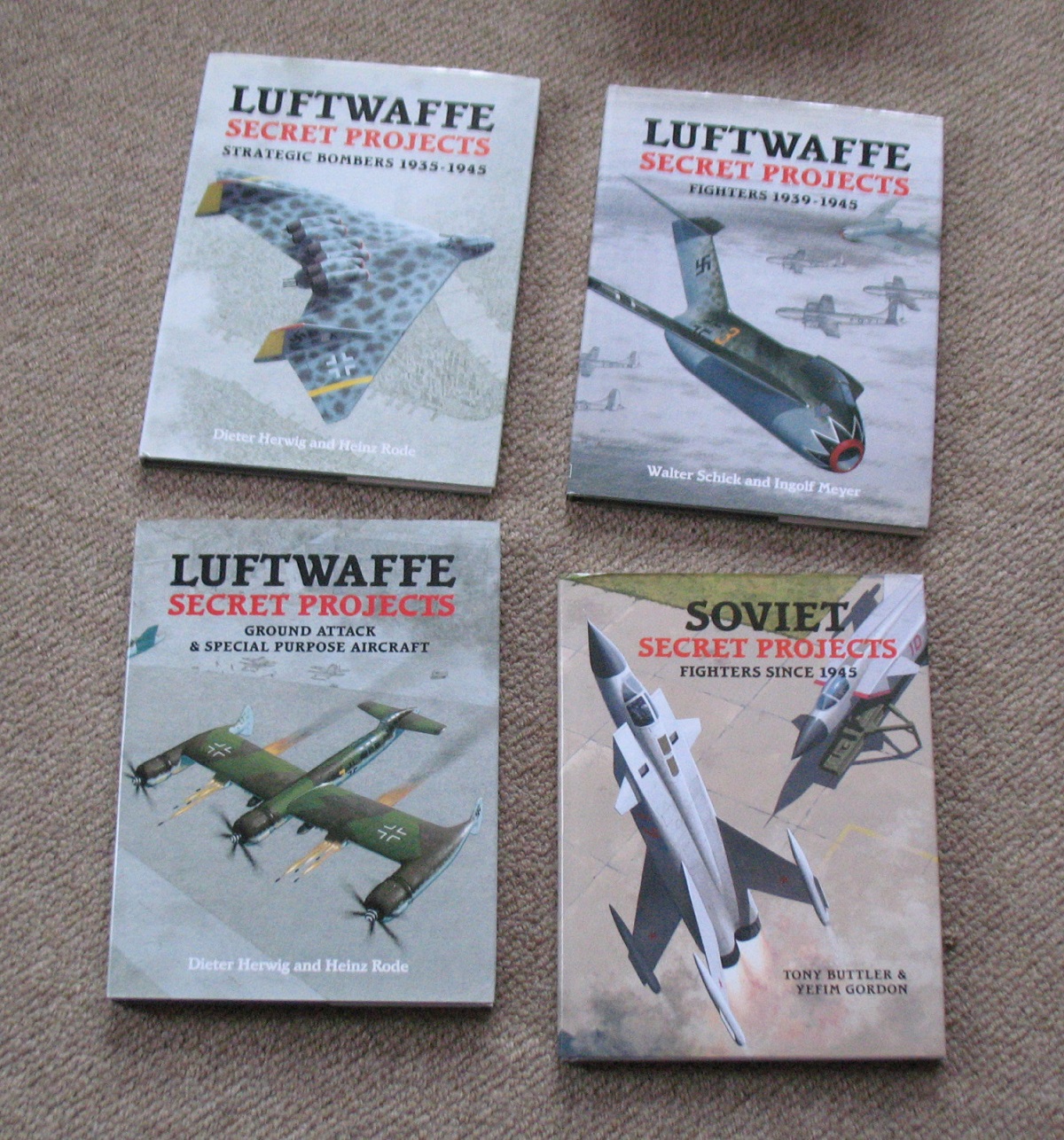
It might be time to write a sequel to ‘Wunderwaffe’… Luftwaffe Secret Projects: Strategic Bombers 1935 – 1945Luftwaffe Secret Projects: Fighters 1939 – 1945 and  Luftwaffe Secret Projects: Ground Attack & Special Purpose Aircraft I bought on eBay as a job lot for a really good price. Soviet Secret Projects: Fighters Since 1945 means I’ve now got both of the Soviet books. Um, perhaps I could write a sequel to ‘Our Glorious Socialist Future Among the Stars!’…

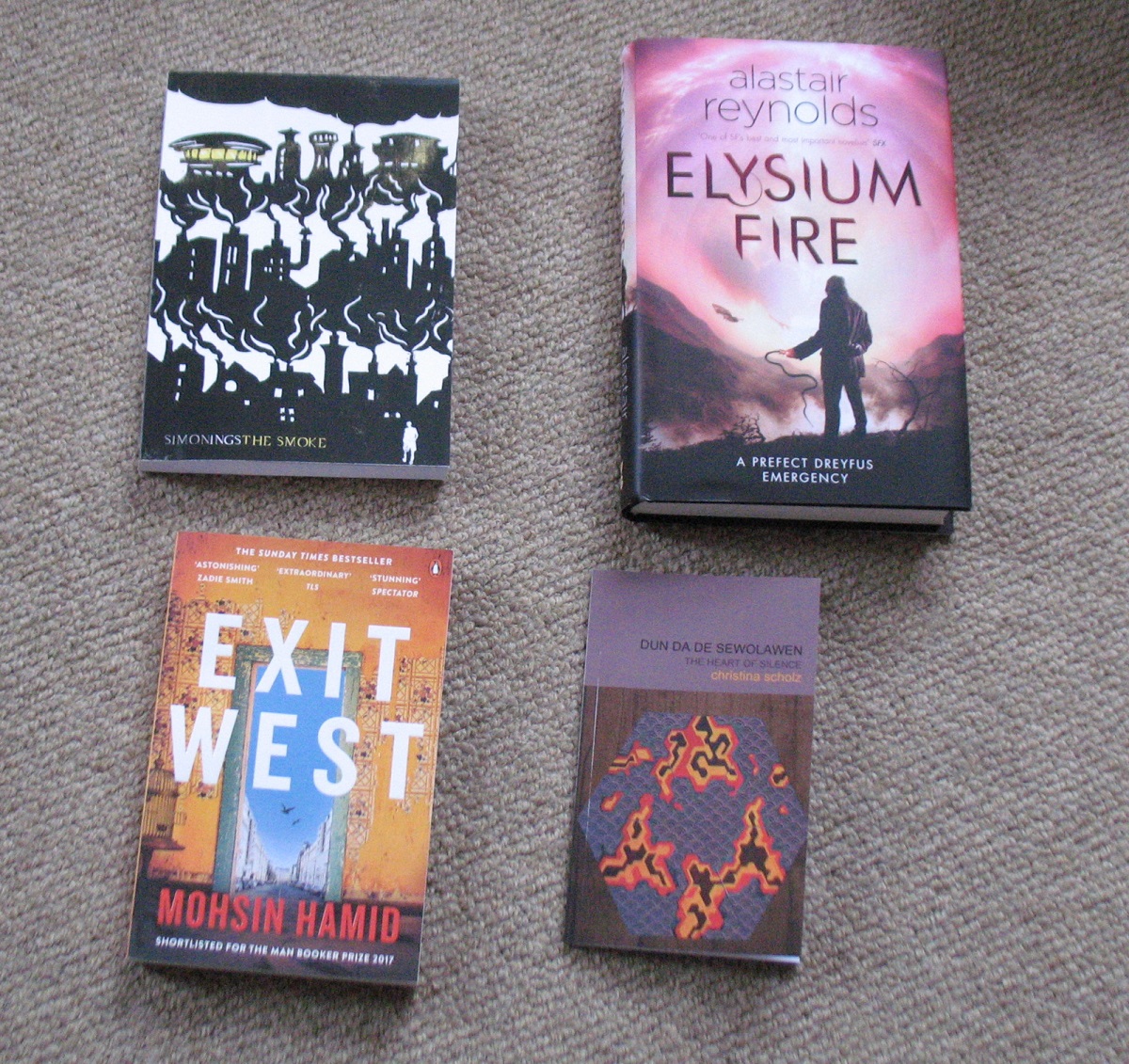
Some new genre fiction – well, Exit West isn’t category genre, but has somehow managed to make the shortlist for the BSFA Award. Oh, and the Man Booker too. Elysium Fire is a sort of follow-up to 2007’s The Prefect, which has now been republished under the title Aurora Rising, because. I liked The Prefect, it’s probably my favourite of Reynolds’s novels, so I’m looking forward to this new one. The Smoke I reviewed for Interzone; it’s excellent and one of my books of the year so far. Finally, Dun da de Sewolawen is by a friend, and it sounded interesting.

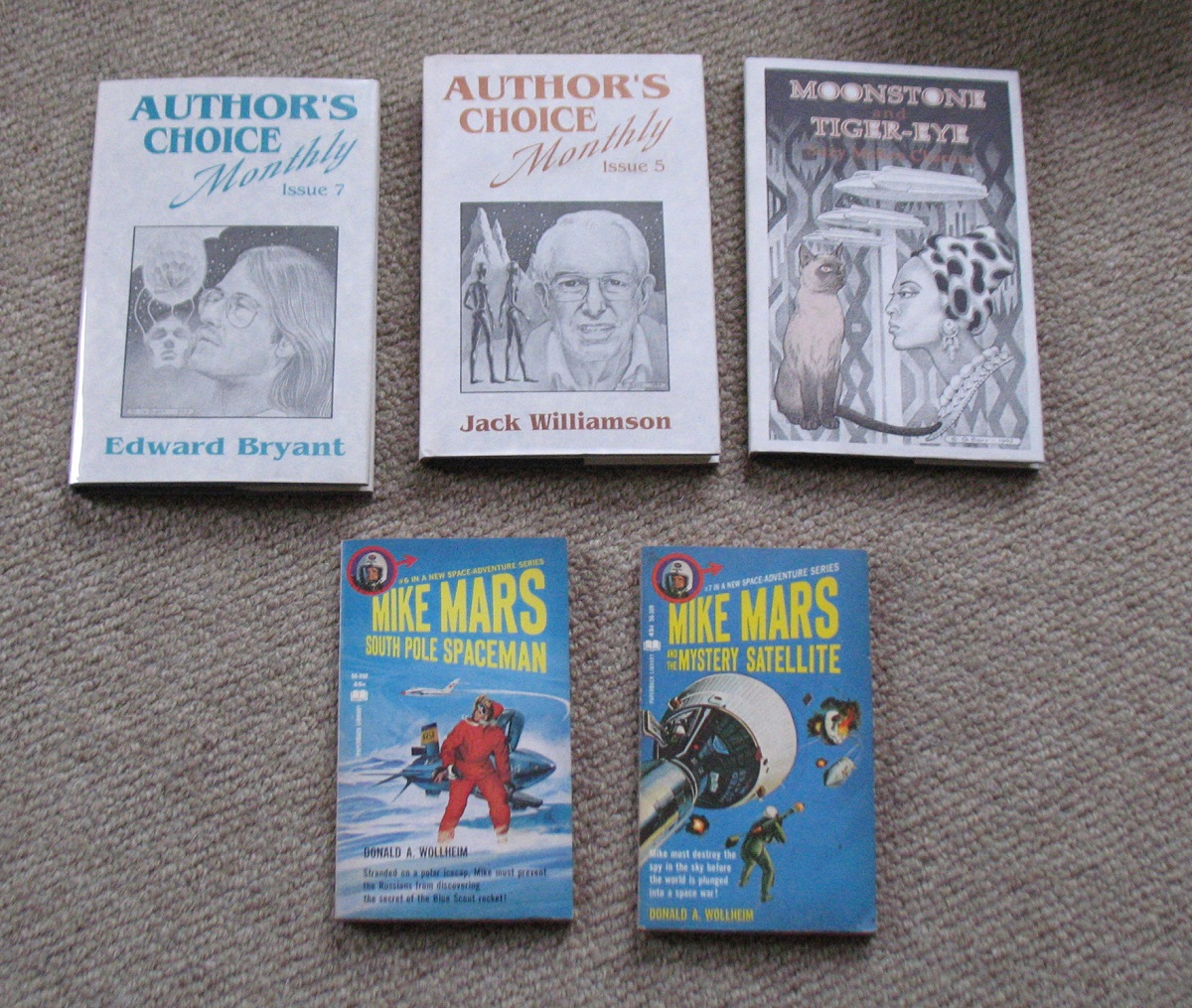
I bought some of the Author’s Choice Monthly books a while ago, and I’ve always been annoyed that I don’t have a complete set, because, well, sets are for completing, of course. Moonstone and Tiger-Eye (Charnas) I wanted to read, not so much Neon Twilight (Bryant) or Into the Eighth Decade (Williamson). But, well, sets. The same is sort of true for the two Mike Mars books: #6 South Pole Spaceman and #7 Mystery Satellite. I have a couple of them already, but I want to complete the set. But I’m also interested in the topic they cover: early space flight.

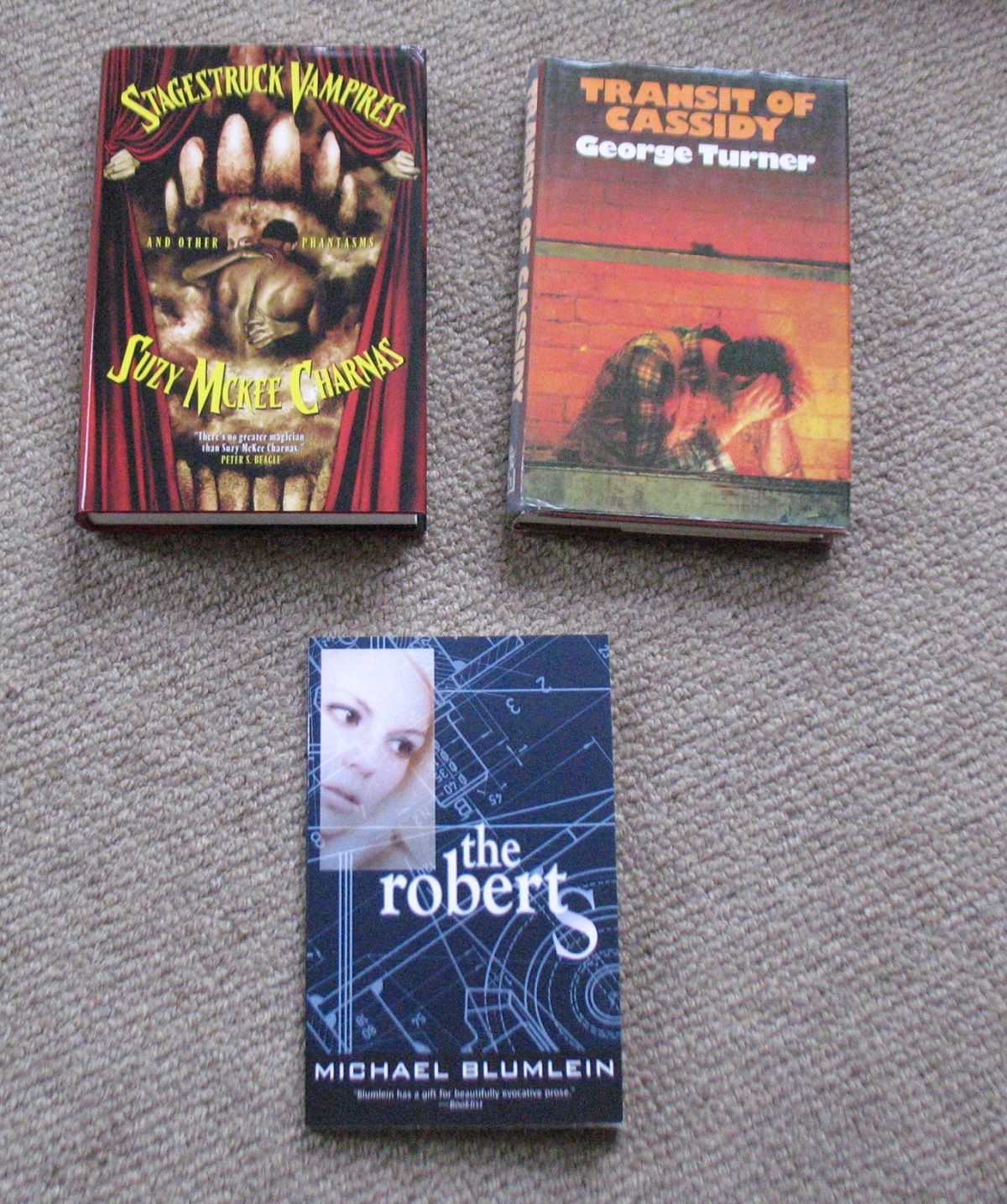
Some other books by, er, authors I collect. I’ve been a big fan of Blumlein since first reading one of hs stories in Interzone back in the 1980s. Charnas’s ‘Beauty and the Opera, or the Phantom Beast’ is one of my favourite genre stories and it appears in Stagestruck Vampires and Other Phantasms. It and The Roberts I ordered direct from Tachyon Publications… and was delighted to discover on arrival they were both signed. Transit of Cassidy is one of George Turner’s mainstream novels. I think it’s the only one that was published outside Australia. (All of his science fiction, however, was published in both the UK and US.)

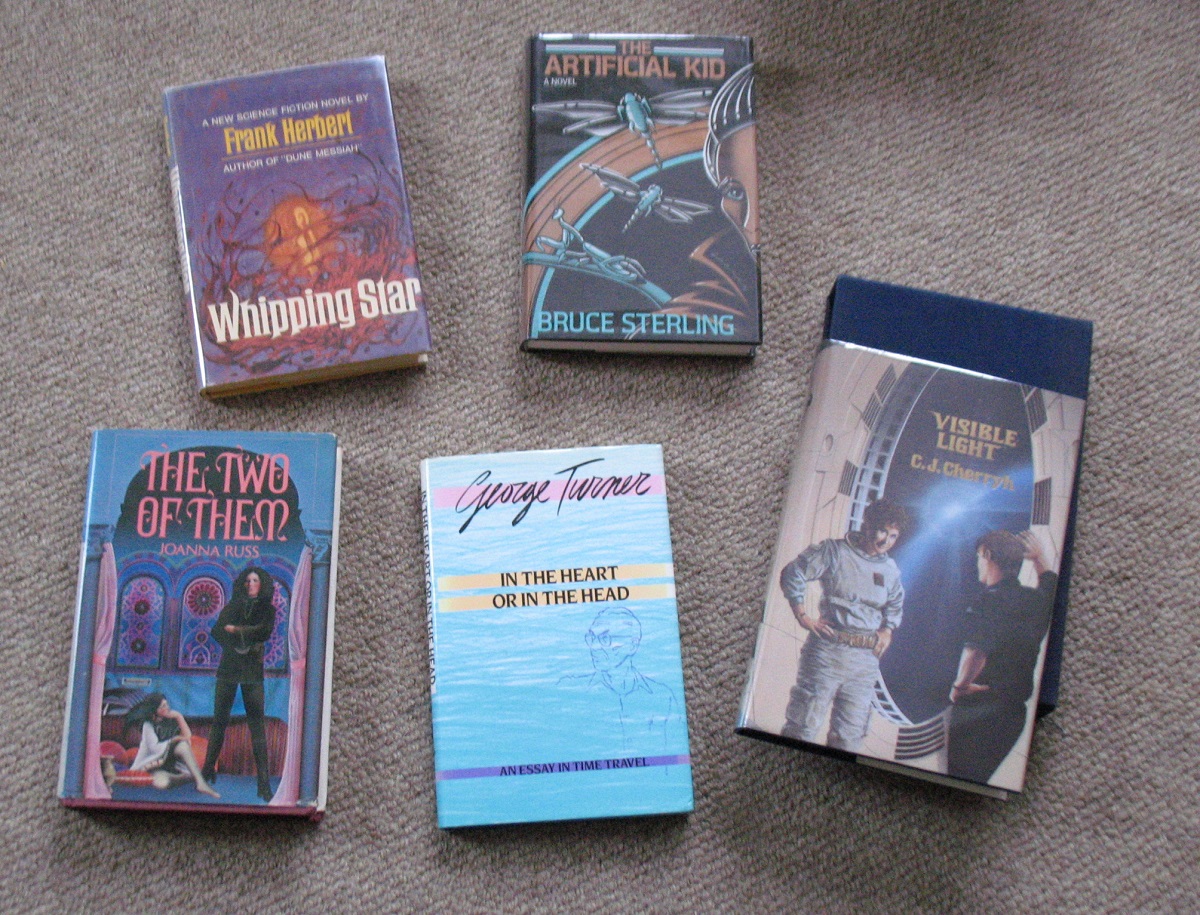
Finally, some books for the collection… US first editions of Whipping Star are usually really expensive, so this one was a really lucky find. I hadn’t known The Artificial Kid, Sterling’s second novel, had been published in hardback until I stumbled across a copy on eBay. I have The Women’s Press edition of The Two of Them, but I found this hardback for a couple of quid. In the Heart or in in the Head is a literary memoir, published by Norstrilia Press. Copies are hard to find. And, last of all, a signed slipcased edition of Visible Light, which a UK-based seller had up on eBay for a very reasonable price. I have the contents already in The Collected Short Fiction of CJ Cherryh, but, you know, sets


Leave a comment

Moving pictures 2018, #11

I know I have a very broad taste in movies, but this half-dozen seems to be taking the piss a little. A Japanese tokusatsu, a spaghetti sci-fi (based on German pulp sf), the last of Jancsó’s self-referential Hungarian meta-comedies, three Children’s Film Foundation movies, a Bollywood film, and a Chinese romcom…

Cutie Honey, Hideaki Anno (2004, Japan). So I was looking for films to add to my Cinema Paradiso rental list when I saw this one and was surprised to recognise the director’s name – whose name I knew from the Evangelion films, of course. So I texted David Tallerman and asked him if he’d seen it. He’d never even heard of it. He immediately looked it up (and discovered the US special edition DVD came with a Cutie Honey lunch box) and bought the (vanilla edition) DVD. Meanwhile, I added it to my rental list and moved it to #1. And it arrived a few days later. And… Well, it makes MTV look like slow cinema. And there’s zero exposition. It is completely bonkers. In a way that Japanese films can only be. Cutie Honey is some sort of heroine, powered by a badge, or something, which was invented by her father, who makes only a couple of of fleeting appearances. And there’s a villain, who is now a tree (really) who wants to take over Japan, or something. And, okay, I’ve no real idea what was going on in this film. The opening scenes have Cutie Honey preventing the Golden Claw from kidnapping a scientist, in some of the most ridiculous fight scenes I’ve ver seen, but none of its seems to make much difference as halfway through a tower grows under the Tokyo Tower and lifts its several hundred feet in the air. And then Cutie Honey battles the villain’s minions, but is captured by swordsman who is half-white and half-black, like a yin-yang symbol, and can fly…. I suppose in many respects, Cutie Honey is not unlike some of the anime films I’ve seen, but having had no previous experience of tokusatsu, I’ve no idea if that’s typical. It was fun, in a mad sort of way. I’d add a couple to my rental list, but I’ve no way of knowing which are the good ones and which are the bad ones – and I’m only assuming Cutie Honey is good because of Anno’s name (because the Evangelion films are very good).

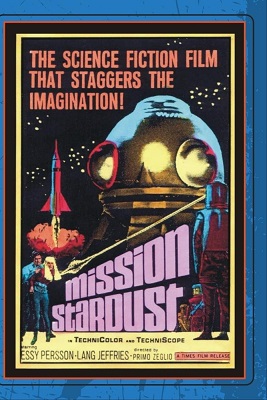
Mission Stardust, Primo Zeglio (1967, Italy). I have a sort of love-hate relationship with spaghetti sci-fi films, which is an awful label for science fiction films made during the the 1970s in Italy to cash in on a post-2001 market, but I can’t think of anything better. Some of them transcended their origins and are now considered cult films. Some vanished into obscurity. Rightfully so. Some are being rediscovered – thanks to releases on DVD by Shameless and Arrow. I have even bought some of them. Mission Stardust is loosely based on the Perry Rhodan series of books, the most successful science fiction series of all time, with more than 3000 volumes published since 1961. I seem to vaguely recall reading a couple of English translations back in the 1980s. Despite its success, there are few film adaptations. It’s claimed it influenced Eolomea, and other DEFA sf films, but only in as much as it was the public face of German sf. The DEFA sf films, incidentally, are good. Well, perhaps not Signale – ein Weltrainabenteuer (see here). Anyway, Mission Stardust has a mission to the Moon encounter a stranded alien spacecraft. A senior member of the crew is dying of leukaemia, but there is a cure on Earth. So the female commander of the alien spacecraft – who gratuitously changes her clothing in front of Perry Rhodan before leaving the spaceship – pilots the shuttle down to a small African nation. Where a crime lord sees a chance to seize power by kidnapping the alien commander. So there’s this weird mix of styles – what starts out as mid-sixties Italian sci-fi turns into a colonoial thriller, but one in which the good guys have super-advanced technology. One of the appeals of spaghetti sci-fi was always the design, that characteristic 1960s Italian design you see in some films of the period from the country. Sadly, it doesn’t seem to be much in evidence in Mission Stardust. The alien shuttle looks more like a giant bathysphere than a spacecraft. And the model work is all a bit pants. I found this free on Amazon Prime, so it’s not like I’m out of pocket for having watched it. But it was rubbish, and in no way did it encourage me to read any of the Perry Rhodan books.

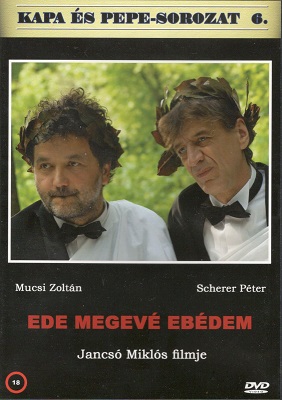
Ede megevé ebédem, Miklós Jancsó (2006, Hungary). I have now seen all six of Jancsó’s Kapa and Pepé films and I’m no wiser as to what they’re about. The two title characters play so many roles – including themselves! – throughout the series, and often within a single film. Not to mention Jancsó’s own appearances as himself, sometimes as the actual director of the film. And Gyula Hernádi, who wrote a number of Jancsó’s films, including co-writing credits on these, also pops up every now and again. In this one, Kapa and Pepé meditate on Hungarian capitalism. But not even using Google translate on Hungarian reviews helps explain what’s going on. One review machine-translates as: “Small house in the woods. Mucsi and Scherer are in it. They refused. A puppy protects them. Mucsi is dealing with something of a mystery. Maybe with escorts.” Um, yes. Pepé joins a mafia family who run a prison… but then the film flashes back to the reign of Marcus Aurelius, also starring Peter Scherer and Zoltán Mucsi, and it all has something to do with voluntary execution, both in the mafia-run privatised prison and in Ancient Rome. I’m going to have to watch these six films again, probably several times, but I suspect I’ll never really understand what’s going on in them. But that can be a good thing too.

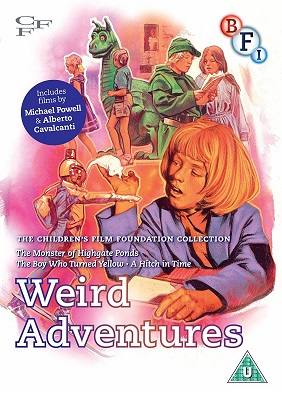
The Monster of Highgate Ponds / The Boy Who Turned Yellow / A Hitch in Time, Cavalcanti / Michael Powell / Jan Darnley-Smith (1961/1972/1978, UK). I added this collection of Children’s Film Foundation films to my rental wishlist because of the Michael Powell one. I’m a fan of the Archers – that’s Pressburger and Powell, not the radio serial – but I’d never seen The Boy Who Turned Yellow (although directed solely by Powell, the story and script was by Pressburger). I remember the CFF from my own childhood, short films that would play before the main feature at cinemas. I couldn’t tell you which ones I saw, and I’ve no real desire to plough all half-dozen CFF DVD collections the BFI have published. But the CFF was an excellent institution – although it does still exist, as the Children’s Media Foundation, but it hasn’t made films since 1985 after its chief source of funds, the Eady Levy, was abolished. That’s the thing about taxes, you see, they help pay for good things. And when governments cut taxes to win votes, those good things go away – not just the CFF, but the NHS, the welfare state, a proper public transport infrastructure, affordable utilities… Fuck the Tories. But, Weird Adventures… Each of the BFI collections is titled – there’s an Outer Space one (must add that one to my rental list), Runaways, Scary Stories, and so on. The three in this collection are science fiction, although hardly rigorous. In The Monster of Highgate Ponds, a travelling uncle leaves an egg for some sort of dragon with his young nephew and niece in Highgate. The egg hatches and the baby dragon imprints on the two kids. When it gets too big to hide at home, they hide it in Highgate Ponds, but discovery is inevitable – as are the bumbling crooks who try to kidnap the dragon in order to sell it to a zoo. Sadly, what charm the film has is spoiled by the really crappy stop-motion and man-in-a-suit dragon. The Boy Who Turned Yellow is better, although cringingly dated, and the lecturing is a bit heavy. A boy falls asleep in class during a lesson on electricity. On his way home, something weird happens and everyone within a small area in London turns bright yellow. The boy is visited by an alien from a planet of electrical beings, who is responsible for turning him yellow. The alien helps the boy find his pet mouse, who he had lost during a school trip to the Tower of London the previous day. It’s all very, well, CFF. In the final film, Patrick Troughton plays a time traveller. But he’s not Dr Who. And, in fact, it’s not him who does the travelling in time, but two schoolkids, who rescued him when his time machine collapsed on its unsuccessful trial run. Unfortunately, the time machine isn’t that effective and it never sends them to the intended time, meaning they’re usually inappropriately dressed. There’s a nice touch in that a teacher they hate, Sniffy Kemp, keeps on turning up in the different historical periods as a dramatic foil. This one more than the others reminded me of the CFF films I remembered from my childhood, probably because in 1978 I was a child. But they also feel much like the kids’ TV of the time I recall. However, nostalgia only has so much appeal – I mean, much as we complain about how bad things are now, and remember fondly life from previous decades, the 1970s were no utopia. I was insulated from a lot of bad stuff, of course – I was a kid. And though I admire some of the culture produced during that period, and am singularly unimpressed by some of today’s, I am inordinately fond of many of the things we take for granted in 2018, such as smartphones, streaming, cheap international travel (and free movement throughout the EU – while we’ve got it, anyway), or Google translate… (Not to mention a society that is way more equal in terms of LGBT or race relations… if considerably worse in terms of economic equality.) While I sometimes wish times were simpler, as they had been forty-odd years ago, I also know they really weren’t that simple back then, and likely no better than now in many respects, but with nylon sheets and drip-dry shirts, both of which the mere thought of having to suffer make my skin crawl… So I guess nostalgia has a part to play, just perhaps not that big a part. I suspect I’ll add a couple more of these CFF collections from the BFI to my rental list, and nostalgia will play a small part in that, but then I’ve no problem with wearing rose-tinted glasses providing you know you’re wearing them

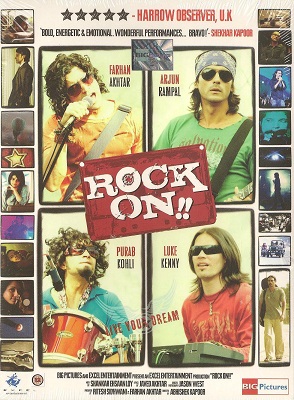
Rock On!!, Abhishek Kapoor (2008, India). I recently upgraded my Fire TV Stick, and sold my old one to a friend. I forgot to factory-reset it before handing it over, and thought I’d better double-check my watchlist before he had a chance to plug it in. Because, well, you know… And while doing this using the Amazon website, I discovered that a shitload of Bollywood films had been added. So I bunged half a dozen on my watchlist. Including this one. I think this the first movie I’ve ever watched with two exclamation marks in the title. Four young guys in Mumbai in the 1990s formed a rock band, sort of MTV-friendly grunge, won a battle of the bands and were signed by a label. But the label’s plans and the band’s plans were not the same – the label-owner wasn’t interested in them playing their own instruments, for example. Things come to a head during the filming of the first promo video, when the director seems interested only in filming the lead singer. The guitarist kicks off, the lead singer walks out, and the band folds. Cut to ten years later. The lead singer is a successful executive in his father’s investment bank, the keyboard player now writes advertising jingles, the drummer works in his family’s jewellery shop, and the guitarist gives occasional music lessons while his wife runs a fishing business which barely manages to, er, put food on the table. The lead singer’s wife visits the drummer’s shop, unaware of who he is, discovers their connection, and decides to invite the band members to an upcoming birthday party. Which naturally leads into “we’re getting the band back together” (no prizes for spotting that reference), which ends up resetting wrongs from a decade before. Okay, the music was part of the product, a commercial movie, and for all that they were trying to be musos it sounded massively commercial, but it’s baked into the story. And this is merely a Bollywood take on well-used Hollywood material. There’s probably a 1940s version of it. In fact, I suspect one or two of the Gold Diggers movies from the 1930s might be progenitors. But, despite the US grunge rock, this was still very much a Bollywood film and I enjoyed it. Not a great movie, by any means, but a fun one. And currently free on Amazon Prime.

Zero Point Five Love, GengXiao (2014, China). I’m a big fan of China’s Sixth Generation directors and I’ve watched a lot of the more populist stuff in my time – like Jackie Chan – but the Chinese film industry is as broad as Hollywood, and probably nearly as old – see The Goddess, see here – so I’m always keen to see films from other countries that haven’t in some way been “curated”. And Zero Point Five Love appeared on Amazon Prime with no commentary so I put it on my watchlist. A Chinese girl newly returned to China after time spent in the UK falls in love with an upcoming young executive. They meet cute: she’s a dancer at a corporate event, slags off the CEO for being cheap to a young man who buys her a drink, only to discover he’s the CEO… It’s been a couple of weeks since I watched the film – and I really should write these sooner after watching them – and all I can remember is a fairly standard rom com plot played out in modern-day China with a pair of attractive and likeable leads and a number of English subtitles that really did not make much sense, like “Not as far as the slutty peacock” or “I can’t water your time seflishly anymore” or “I should be wayward for my love”. But, for all that, it’s a nice film. It’s a feel-good rom com and it does the job admirably. It’s no Jia Zhangke or Fei Mu, but neither does it claim to be. Had it been a Hollywood film itwould have been a tenth as interesting. Being Chinese, and a product of modern China, lent it some interest, but it was fairly standard romantic drama for all that. I don’t regret spending the time watching it.

1001 Movies You Must See Before You Die count: 895


1 Comment

Moving pictures 2018, #10

I’m trying to get up to date with these. Despite spending a couple of weeks watching mostly television series – including Agent Carter, Star Trek: Discovery, The Expanse and, er, Silent Witness – I still seem to have built up a backlog.

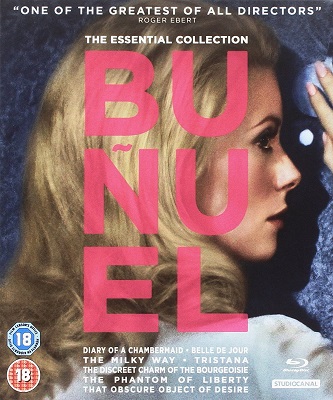
Diary of a Chambermaid, Luis Buñuel (1964, France). This film saw a change in pace for Buñuel, and a change in fortunes. It was his most realistic film to date, and based on a popular 1900 novel of the same title by Octave Mirbeau, which had been adapted in Hollywood in 1946 by, of all people, Jean Renoir, and before that in Russia in 1916. The Mexican star of Buñuel’s Viridiana, Silvia Pinal, was originally intended for the title role, and even learnt French to play it, but the part went to Jeanne Moreau. Who plays a young woman who is hired as a maid at a country house in the 1930s that seems to be populated by oddballs and eccentrics. Her name is Célestine but they all call her Marie. The groom is an anti-semitic right-winger, the husband chases anything in skirts and takes out his frustrations on small game, the father-in-law is a shoe fetishist with a cabinet full of women’s shoes, and the next-door neighbour is fond of throwing rubbish over the fence. But then the father is found dead in bed, and a young girl who visited the house is found raped and murdered. The chambermaid suspects the groom, and promises to marry him in an effort to make him confess… The film plays like a farce set in an upper-class home, with a mix of belowstairs and abovestairs scenes and characters from several classes. For Buñuel, it’s also played straight. Moreau is precisely what her character seems to be, a chambermaid, although as the focus of the film she displays more character than the rest of the cast. Having said that, this is closer to La Règle du jeu than it is Downton Abbey (hack spit), and not just because of the language. There’s a slightly mocking tone to it all and, watching it, it’s easy to see how Buñuel, and screenwriter Jean-Claude Carrière, began re-introducing surreal elements into “straight” dramas, as in The Discreet Charm of the Bourgeoisie and The Phantom of Liberty. I will admit to preferring the latter films, but this is still excellent stuff. A box set worth owning.

Die Finanzen des Großherzogs, FW Murnau (1924, Germany). I still think David Tallerman is being unfair in his characterisation of Murnau as an uninteresting director, although to be honest I’ve yet to get a handle on what makes a good director of silent films. True, Dreyer’s The Passion of Joan of Arc is really quite astonishing, but I don’t see much difference between the silent films of Murnau, Lubitsch or Lang, since all three were working in the same country around the same time. And yet… Murnau’s Die Finanzen des GroßherzogsThe Finances of the Grand Duke – was mostly filmed on location in Montenegro and Croatia – whch is not typical of German silent films. And it’s a gentle comedy too, where other silent comedies from Germany I’ve seen have tended to be broad – although certainly not like slapstick like Hollywood silent comedies. Die Finanzen des Großherzogs is set in an invented Mediterranean duchy, whose finances have pretty much given up the ghost. A US industrialist offers a large payment to mine the island’s sulphur deposits, but the grand duke turns it down as he rightly thinks it will affect the quality of life of his subjects… And that’s pretty much the plot: impoverished grand duke in danger of losing duchy to predatory capitalist interests because of lack of cash, but is saved at last minute through unlikely series of events. These events are in the person of a loaded Russian princess whom the grand duke doesn’t want to marry, but she ends up pretending to be the wife of a travelling salesman, or something, and gets to meet the grand duke in that guise, and they fall in love, and everyone lives happily ever after. The end. There’s a few other bits and pieces going on in there, like the finance minister aiming to seize the duchy for himself. It’s all very, well, Ruritanian. Fun.

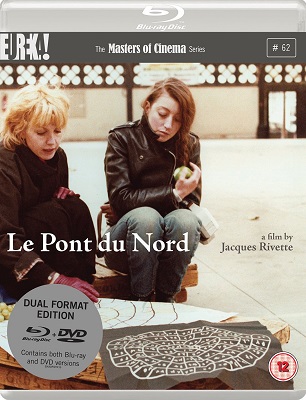
Le Pont du Nord, Jacques Rivette (1981, France). I’m not quite sure what to make of Rivette, as he tells fantastical stories in real-life settings, but the fantasy is all in the minds of the characters – with the occasional bit of help from the director. In other words, he finds games and conspiracies and quests in the ordinary, in such a way that the games and conspiracies and quests seems perfectly real without in any way upsetting the ordinary. And so too in Le Pont du Nord, in which two two young women meet up and follow a quest involving several different men called Max, which leads to a dragon, which is actually a playground slide, which one of them then defeats by loudly challenging it. Everything happens in and around Paris, in the quotidian world, and some of it you suspect was guerilla-filmed, even though the two women plainly don’t entirely occupy it, and there is enough strangeness in the events which befall them to suggest something other than the ordinary world. And yet the bulk of the strangeness is supplied by the two main characters, who seem to be operating in a world that doesn’t entirely exist on screen. Rivette has form in this: Merry-Go-Round is a conspiracy story with no real conspiracy in sight; Noroît is a fantasy presented with such a light touch, it might as well be mainstream. I’m not entirely sure what to make of it all, and the lack of reviews seems to suggest others feel the same way. At 129 minutes, it’s short for a Rivette film. (And no, I still have not tackled Out 1, all 760 minutes of it, despite owning a copy for two years.) I came to Rivette through La belle noiseuse, which is on the 1001 Movies you Must See Before you Die list (2013 edition), and that inspired me to seek out more of his work. At which point I found myself watching films that were not like the one that had inspired me to seek out that director’s films… And yet, I find myself drawn to Rivette’s films, that are unlike La belle noiseuse, and more inclined to put in the time to watch the really long ones… Which I really must do, one of these days.

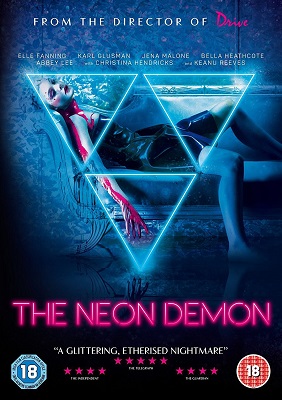
The Neon Demon, Nicolas Winding Refn (2016, France). Refn is lauded as a talent in Hollywood, although apparently not so much after all, since he needed French money to make this film. His movies certainly look very pretty, and this one is no exception. But the stories he tells really aren’t very nice. In this one, an ingenue moves to LA, is picked up by an agency, and becomes a a successful model. Which does not go down with the two models she spends her time with. One has had a number of cosmetic surgeries to improve her looks and career, but is castigated for it. For all that it’s about a beautiful woman, this is not a film that treats women well. They are pretty much all victims. Even the young model who is the central character – she has zero agency, and her only act is to walk away from it all at the end. The other models are driven by their obsession to be admired by men, even though the men in the film are just as much ciphers as the women are. The Neon Demon is a film that’s all about how it looks, which seems apposite given it’s about the modelling industry… but it also seems to be based on misconceptions and clichés about modelling. It has its central cast of three models, including the ingenue, and it uses them to tell a story of excess, and the cannibalistic nature of the industry, making the latter real rather than metaphorical, to no good end. A film best avoided.

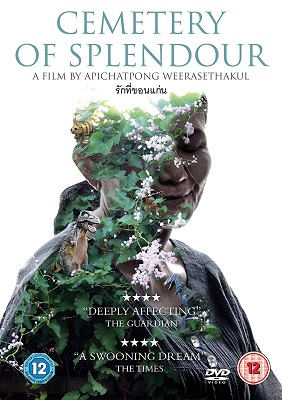
Cemetery of Splendour, Apichatpong Weerasethakul (2015, Thailand). I have no idea what these films are about, but I really like them. They’re sort of slow cinema, in as much as very little happens in them. But they also exhibit little in the way of plot – and nothing in the way of a three-act structure (hack spit) – and yet… things happen. Weerasethakul also has a tendency to use the same stable of actors, so the more of these you watch the more faces you recognise. And there are other commonalities: the military seems to always play a major part, as do hospitals or clinics; some of the cast are disabled; there’s always mention of Isan province, usually self-deprecratingly; and there’s always an element of the strange, or supernatural. Weerasethaskul has a shtick. Which does not detract from his films, I hasten to add. There is an oddness to his movies that I don’t think any other director quite manages, a sort of New Weird sensibility I’m not sure any other director is currently using. In Cemetery of Splendour, a sickness is causing soldiers to suddenly fall asleep, and there is a clinic with a ward full of sleeping soldiers, all lying in beds under weird blue lights. But then one soldier wakes, but can remember nothing of the time he was asleep. There’s also the cemetery of the title, which is a wood in which people have left mythic objects… It’s one of those films that, when it’s finished, you’re not entirely sure what you’ve watched. I’ve now seen five of Weerasethakul’s and I’m no closer to understanding them. He’s a singular talent and his movies, for all their glacial pace and enigmatic stories, are fascinating. If someone released a Weerasethakul box set, I’d buy it like a shot. I only own a copy of his first film, Mysterious Object at Noon, but all of them bear, if not demand, rewatching.

The Milky Way, Luis Buñuel (1969, France). And speaking of shtick, I sort of feel like I have a handle on Buñuel’s, except… have I really? I mean, he was making films way back in the 1930s, all the way through to the 1970s, in a number of countries, and in a variety of styles. That’s one hell of a career. But The Milky Way feels like a Buñuel film. Even based on my limited exposure to his oeuvre. The title refers to the route taken by pilgrims from France to the Santiago de Compostela in Spain, the Wat of St James. Two travellers follow the route and, en route, witness events which map onto the history of Christianity, especially its so-called heresies. It is very much the product of a Catholic mind, and I say that inasmuch as Catholicism is much more embedded in its followers’ lives that Protestantism, which is what I was nominally brought up as, but I’m completely atheist, and neither hold a candle to the integration of Islam in daily life… All of which means that not only do I not have a dog in this fight but I have a dog-free worldview (which pleases me, as a cat owner), and I suspect Buñuel, for all his mockery, was considerably more religious than I am, as it takes a certain degree of familiarity with the material to mock as much as is the case in The Milky Way. But for all that, religion is, to me, a soft target. I don’t believe a single bit of it. It’s also a completely pointless target. We l;ive in a world in which truth and facts and experts are routinely attacked because they don’t match the narrative of the authorities. There is no such thing as “fake news”. There is propaganda, which is unsupported by facts; and there is news, which is supported by facts. And the least trustworthy sources are those who are quickest to label something as “fake news”. Religion, and all the fucking tragedy it’s caused over the centuries, feels lightweight in comparison. Although, to be fair, The Milky Way does a good job in pointing out how shortsighted that view is. It’s not the best film in the box set, but, like Diary of a Chambermaid (see above), its presence is welcome. The box set doesn’t include some of Buñuel’s best films, but what it does include is bloody good. Worth getting.

1001 Movies you Must See Before you Die count: 895


2 Comments

Reading diary 2018, #3

Another half a dozen books read. So far, I’m staying on track with my reading challenge.

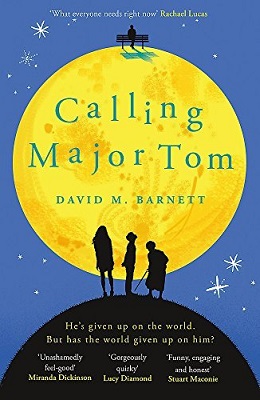
Calling Major Tom, David M Barnett (2017, UK). I know the author and had previously enjoyed his popCult! (see here), and Calling Major Tom sounded like it might appeal and was getting a big push from its publisher… And, okay, “feel-good” is not a term likely to draw me to a book, nor is “quirky” for that matter. But I trusted Barnett not to be horribly sentimental… and I’m glad I did. Major Tom is a British astronaut on his way to Mars. He wasn’t the original choice for the mission, he was actually a chemist working at the British Space Agency, who had been tasked with looking after the real astronaut. But the real astronaut keeled over and died of a heart attack – no one said this novel was especially plausible; it has a UK with a space programme instead of one on a headlong rush to economic catastrophe, after all – and Thomas Major, a complete misanthrope, took his place. But when his spacecraft’s communications gear goes offline after something strikes the antenna, he has to use a mobile phone to contact Earth. And he decides to use it to contact his ex-wife. Except the number now belongs to a dysfunctional family in Wigan, the Ormerods: Gladys (Nan), teenager Ellie and eight-year-old James. Their father is in prison, their mother died years before, Gladys is suffering from the onset of dementia, Ellie is holding down two jobs to bring money into the household after Nan was 419’d, and James is being bullied at school. And somehow, Major Tom, a complete curmudgeon, who wants nothing to do with people anymore, helps them turn their lives around. Calling Major Tom is, scarily, clearly “feel-good”. But it’s also funny… and I was surprised to find myself enjoying it. Frankly, I’m not surprised it’s doing so well because it ticks a lot of the boxes that successful commercial fiction – that isn’t thriller fiction with plots generated by a very small shell script – ticks. Worth reading. (And yes, the central premise of a lone astronaut travelling away from Earth did remind me a little of a short story which appeared in Postscripts, but never mind…)

Love’s Body, Dancing in Time, L Timmel Duchamp (2004, USA). Duchamp is possibly best-known as the owner of Aqueduct Press, an excellent US small press which focuses on feminist genre fiction, but she is also an accomplished science fiction and fantasy writer in her own right. In fact, her ‘The Forbidden Words of Margaret A.’ I would count as one of the ten best science fiction stories ever written and her Marq’ssan Cycle one of the best sf series about first contact. Love’s Body, Dancing in Time is her first collection, and contains a short story, two novelettes and two novellas. ‘Dance at the Edge’ takes place on a world where some people – or so the narrator believes – can see a border into another world, but they lose the facility when they turn adult. In ‘The Gift’, a travel writer returns to a world famous for its culture, falls in love with a famous singer, but then discovers the price he paid for his voice (think The Alteration). ‘The Apprenticeship of Isabetta di Pietro Cavazzi’ is something Duchamp has done before – a well-researched, and convincing, historical story that slowly drifts into genre territory. In this case, the title character is a young woman confined to a convent to keep her away from a young man whose father wants him to marry well. This is very much a story which takes place in the world of women. The shortest peice in the collection is ‘Lord Enoch’s Revels’, which describes a party hosted by the eponymous peer, during some indefinable period, which may or may not be supernatural. The last story in Love’s Body, Dancing in Time is also the longest: ‘The Héloïse Archive’. It is worth the price of entry alone. A framing narrative describes the main text as a series of undiscovered letters between famous historical romance lovers Héloïse and Abelard, but as the letters progress so things begin to diverge from known history. It’s hardly an original idea, although showing the effects of time travellers’ interference in this secondary manner is quite original – the only other example I can think of is Mary Gentle’s Ash: A Secret History. And like that humungous novel, Duchamp’s novella displays an impressive amount of research. The story of Héloïse and Abelard is fascinating in its own right – the real story, that is, as it unfolds here, before gradually swerving off the rails. Every time I read something by Duchamp, I’m surprised she’s not better known. I suspect the fact that much of her output these days is published through Aqueduct Press, her own press – and that’s not a criticism, by any means – which is a proudly feminist genre press, and Duchamp herself is a very feminist writer… and I’m all too sadly aware how many Neanderthals there are in sf fandom who think “feminism” is a dirty word… Love’s Body, Dancing in Time is not an especially strong collection – although that last novella is a killer – but there are works I would demand be read in Duchamp’s oeuvre – both mentioned earlier (and I’m not the only one to think so about ‘The Forbidden Words of Margaret A.’ as it opens Sisters of the Revolution, an excellent anthology of feminist sf). Seek out her work – especially the Marq’ssan Cycle or a more recent collection, Never at Home (see here).

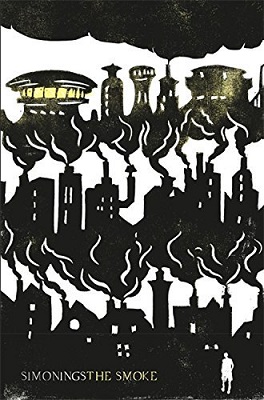
The Smoke, Simon Ings (2018, UK). I’m trying to get things back on track in 2018 that I’d let slide in 2016 and 2017. Such as SF Mistressworks, which now has two new reviews up after a nine-month hiatus – Emma Bull’s Falcon (see here) and Sydney J Van Scyoc’s Darkchild (see here). And reviewing books for Interzone. The last book I reviewed for the magazine was The Sand Men, which appeared in the Jan/Feb 2016 issue (and the author was extremely unhappy with the review, but so fucking what). Anyway, it had always been my intention to return to reviewing for the magazine, and when I saw Simon Ings’s latest, The Smoke, was available, I thought it the perfect book to get me back into it. I’m not going to say too much about the novel here – you’ll have to buy the copy of Interzone for that – but I’ll admit I’m not really sure what to make of it. It’s either bloody brilliant, or merely very good. It does so many things I’ve not seen a category sf novel do before, and it does them very effectively. I really liked Ings’s Wolves (see here) and it made my best of the year list. I suspect The Smoke will too.

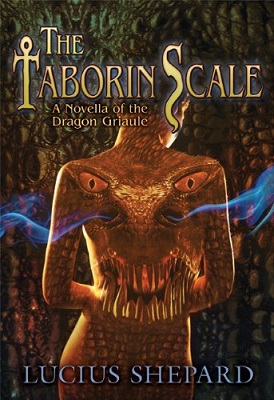
The Taborin Scale, Lucius Shepard (2010, USA). I probably have this novella in The Dragon Griaule collection, but since I bought Shepard novellas as they were published (mostly by Subterranean Press, who these days seem happier publishing limited editions of best-selling genre novels – like Andy Weir’s Artemis, WTF?), so I also have The Taborin Scale as a standalone. In fact, I might well have all of the contents of The Dragon Griaule as either standalone novellas or in other collections, unless there was a story original to the collection, of course. Anyway, The Taborin Scale… A numismatist, George Taborin, comes across a dragon scale in among a collection he bought, and travels to Teocinte, the town that has grown up beside the vast corpse of Griaule. There he consorts with a prostitute, to whom he gives the name Sylvia (not her real name). But something happens, and the two find themselves transported to another time, where Teocinte does not exist and Griaule is young and active and seems to have some purpose in drawing people to that time, although what it is remains unknowable. Taborin rescues a young girl from a group of transportees who had been abusing her, and the three eke out a precarious existence. But then Griaule dies – following the events of The Man Who Painted The Dragon Griaule – and Taborin and Sylvia and the girl find themselves abruptly back in Teocinte… And, to be honest, I’m not entirely sure where this novella was intended to go. It felt like a story in search of a plot, spiced up by the use of footnotes, and carried on the back of earlier Griaule stories. Shepard was a bloody good writer, but he was often sloppy and some of his work often felt half-baked. He was widely-admired, and notoriously cranky, which may be why publishers accepted his stuff when it really needed another go around. And yet, having said that, Shepard’s prose was usually top-notch. It was a bit magpie-like, with a tendency to borrow styles, but it was always put together well. Which is why The Taborin Scale feels so much like a curate’s egg: a well-established prose style, a milieu Shepard had explored in other works (all based around a humungous metaphor)… but then there are the footnotes… and the general vagueness of the story. The Taborin Scale reads like a cross between an experiment and a contractual obligation. I guess I shall have to read the collection to see how it all fits together…

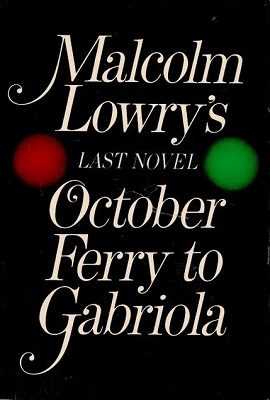
October Ferry to Gabriola, Malcolm Lowry (1970, Canada). I came to Lowry’s fiction sort of accidentally. I knew of him, of course, and of his most famous novel, Under the Volcano; but I’d never read him, nor had any real desire to do so. But after my father died, my mother was clearing out some stuff, including a collection of Penguin paperbacks my dad had bought in the late 1960s (the receipts were still in the books), and which included, among many other authors, three books by Lowry. I took about two dozen of the paperbacks, including the Lowrys, and the first of the Lowrys I read was his collection, Hear Us O Lord from Heaven Thy Dwelling Place. I was hugely impressed by the novella, ‘Through the Panama’. So I read the other two paperbacks, Ultramarine (see here) and Under the Volcano (see here). And then I wanted to read more… So I started collecting first editions of his books. And I have now read them all. October Ferry to Gabriola was his last, not published until thirteen years after his death. (In fact, only Ultramarine and Under the Volcano, and some of the contents of his collection, were published during his lifetime.) Ethan Llewellyn and his wife, Jacqueline, have been evicted from their shack on the Eridanus river and, after some time spent in Vancouver, have chosen to head for the small island of Gabriola to buy an advertised property. The novel opens on the bus to the seaside town where they will catch the ferry, but pretty much heads straight into flashback, beginning with their home in Niagara-on-the-lake. But their home there burns down in a freak lightning strike. Leading to their move to Eridanus. October Ferry to Gabriola is a hit of the pure Lowry – from the plot recycling parts of Lowry’s own life, never mind parts of his other works (their neighbours in Eridanus are Sigbjørn and Primrose Wilderness, Lowry analogues in Dark is the Grave Wherein My Friend is Laid, ‘Through the Panama’ and a handful of stories), the long discursive sentences, the detailed self-reflective and self-analytical prose, the self-deprecating humour, and, of course, the copious amount of alcohol. This is great stuff, it’s just so good. I went slightly mad when I decided to collect Lowry, but I’ve yet to read anything by him that has caused me to question that madness. I’m only sorry I’ve run out of novels by him to read. I guess I’ll just have to start re-reading them…

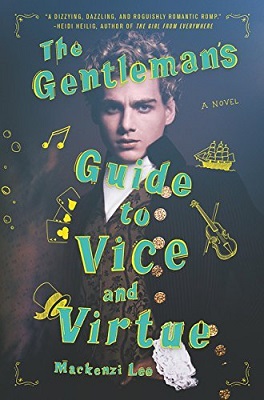
The Gentleman’s Guide to Vice and Virtue, Mackenzi Lee (2017, USA). At Sledge-Lit last year, I was talking to Jeannette Ng, author of Under the Pendulum Sun, and we were discussing the novels of Georgette Heyer, and Jeannette recommended The Gentleman’s Guide to Vice and Virtue (she was clearly a fan as she’d decorated her nails in homage to the book). When I got home that evening, sat watching telly and having a drink or two, as you do, I found myself visiting the website of a well-known online retailer and ordering myself a copy of the book, as you, er, do… And now I have read it. Well, I complained earlier in this post that “feel-good” and “quirky” are not descriptors that draw me to a book, and there’s a lot in The Gentleman’s Guide to Vice and Virtue that would normally mean I wouldn’t touch it with a bargepole. For one, it’s YA. The narrator, Monty, is a bisexual teenager, the son of an earl. In eighteenth century England. In a novel written by an American woman. His sister, Felicity, is a bluestocking who wants to study medicine, and Percy, his best friend (for whom he’s burning a torch), is the adopted mixed parentage son of a family of Quality. The two guys are off on a Grand Tour, delivering the sister to a finishing school en route in Marseilles. In Paris, they’re invited to a party at Versailles, where Monty, who is a complete rake, upsets the the king’s ex-PM, the Duke of Bourbon, steals something from him, and then makes a complete tool of himself by running around the famous garden stark bollock naked after being caught in flagrante delicto… Except the item he stole proves to be important, especially to the Duke of Bourbon. It’s a box with a combination lock, and it contains a key to a tomb in which can be found an alchemical pancea. So Monty, Percy and Felicity are forced to go undercover and travel incognito to Barcelona to find the original owner of the box… The novel is told entirely from Monty’s point of view and he’s not at all convincing as an eighteenth-century teenager – and did they allow children out of the schoolroom before the age of twenty-one in the 1700s? The prose tries for British, but a quarter of the way in gives up, then it’s all “goddamn” this  and “goddamn” that. But pretty much everything Monty does or says results in a lecture from the other characters. Percy lectures him on his white privilege; Felicity lectures him on his male privilege; yet’s he’s bisexual and there’s little discussion of that, other than a generic condemnation by society (the author says in an afterword she researched “mollies”, but Monty doesn’t feel like a person who would be part of molly culture). The Gentleman’s Guide to Vice and Virtue reads like contemporary characters in an historical setting. Lee is quite good at plotting, and she is generally good at setting the scene. But the characters do not convince. And the frequent lectures feel contemporary. When I compare a book like this to, say, William Golding’s Rites of Passage, then there’s no comparison. Golding’s novel does more, and more convincingly, in half the pages than The Gentleman’s Guide to Vice and Virtue. True, it doesn’t include the lectures on privilege, and there’s certainly a place for that, and I rue that fiction has to include such explicit lectures – but that says more about modern society and fandom than it does an individual novel. All told, The Gentleman’s Guide to Vice and Virtue was not for me. The lessons it was teaching, I have been taught elsewhere (not that it isn’t an ongoing process)… which meant I looked at other elements of the story. And there, it failed. I can’t fault its objectives, but I wasn’t impressed.

1001 Books You Must Read Before You Die count: 131


1 Comment

Moving pictures 2018, #9

Only five films this time, for some reason. Two of them are recent Hollywood blockbusters – one I thought over-rated, the other was terrible. You can probably guess which is which…

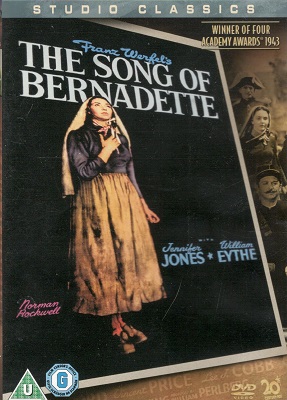
The Song of Bernadette, Henry King (1943, USA). I found this in a charity shop, and thought: classic Hollywood, probably worth a punt. It wasn’t. It’s an adaptation of a novel by Franz Werfel, which tells the story of the woman who “discovered” the “miraculous” spring at Lourdes. In the late 1850s, Bernadette, a schoolgirl, reported eighteen visions of the Madonna, and discovered a spring, following the instructions in one of those visions, which subsequently proved to have healing properties. Put that in a work of fiction and you’d find yourself on the sf and fantasy shelves. I mean, seriously? Lourdes is big business now, of course, with over 200 million visitors since 1860, despite the waters being repeatedly examined by scientists and displaying no unusual characteristics whatsoever. The Song of Bernadette comes across as a star vehicle for Jennifer Jones, who was married to producer David O Selznick, although she did win an Oscar for her role in this film…. despite playing a fourteen-year-old even though she was a decade older. (Another Jennifer Jones vehicle, Indiscretion of an American Wife – see here – is, despite the awful title, much much better.) The Song of Bernadette is all played very earnestly, with the sort of gravitas that suggests it’s based on historical sources, when it’s actually adapted from a novel which took a number of liberties with the life of the real St Bernadette. It’s all so fucking po-faced and serious despite the ridiculousness of its premise. The Song of Bernadette actually won four Oscars – best actress, best art direction, best cinematography, best music – but then it’s not like the Academy Awards have displayed all that much critical acumen over the decades… Not worth hunting down.

Inversion, Behnam Behzadi (2016, Iran). I have to date seen twenty-two films from Iran, a number of them by Abbas Kiarostami and Asghar Farhadi, two excellent directors. Iran has a strong film-making tradition and a number of brilliant films have come out of the country. Pretty much all of them have been deeply-rooted in Iranian society and the situation as it pertains in Iran. Inversion is a case in point. Niloofar lives with her mother and helps look after her. But when her mother collapses and is taken to hospital, and the only cure is to move her out of Tehran and its polluted air… Her brother assumes Niloofar will give up her life and move to the north with their mother. Niloofar doesn’t want to go – she has a successful business and she’s just started seeing an old flame who has returned to Tehran and is single once again. But her brother says he can’t go, and he’s not willing to shoulder part of the burden – why should he? He’s male. Since he owns the lease on Niloofar’s busines premises, he sells it under her so she’s forced to find new premises, and generally makes life difficult for her until she agrees to give up her life and move north to look after their mother. But she won’t budge. Even though it means refusing the role Iranian society expects her to play. All of the Iranian films I’ve seen have, to some degree, been critical of Iranian society, and mostly in regard to the role of women. In some it has been explicit, as it is in Inversion; in others, it is less obvious, such as in Kiarostami’s The Wind Will Carry Us. When your cinema is overwhelmingly negative, you have to wonder if there’s something about your country you need to change. So… how has the UK film industry reacted to Brexit? With fucking propaganda. Films about Churchill and Dunkirk. FFS. The man was not the greatest Briton who ever lived, he was a war criminal many times over, responsible for millions of deaths around the world. His leadership during WWII does not excuse his crimes, although it would not be fair to judge him without taking it into account. But. Iran under the shah was a repressive regime propped up by the West, Iran as an Islamic state is no utopia and the films it produces show as much – although the fact they exist shows an openness to criticism the shah was unlikely to allow. Inversion is definitely worth seeing. I will not be watching the Churchill ones.

Osaka Elegy, Kenji Mizoguchi (1936, Japan). I told David Tallerman, who gave me this box set, that I preferred Japanese films set in the twentieth century to historical films, and he pointed out that half of the films in this Mizoguchi collection are actually set in the twentieth century. Including this one. It’s an early film – released in 1936 – and its story is contemporary. I’ve seen enough films by Yasujiro Ozu (well, I’ve seen pretty much all his feature films from the 1950s onwards), so I think I have a good handle on the shape of his movies. Like Mizoguchi, he tended to use a stable of actors, and his films were very similar in the stories they tell. But I haven’t got to that stage with Mizoguchi yet, although I do find myself appreciating his films much more than I did when I first started watching them. In Osaka Elegy, a young woman is pressured into becoming the mistress of her employer. But hat affair ends when the wife finds out. She finds herself in a position where she needs money, and borrows it from her new sugar daddy. But when he demands it back, she has no one to turn to, not even her boyfriend, who had asked her to marry him. You would think, given the plot and my love of 1950s melodramas, Osaka Elegy would be right up my street, And it’s true that most of the Mizoguchi films I’ve seen so far have told women’s stories – The Story of the Late Chrysanthemums, Sansho Dayu and Utamaro and His Five Women being exceptions – but Osaka Elegy didn’t feel as centred on its female lead as, say, The Life of Oharu or The Lady of Musashino. But it’s not just that. Ozu’s films are really good illustrations of uchi-soto, inside-outside, but I don’t get that same feeling from Mizoguchi’s films. Yes, they’re more melodramatic, and the stories are based around the trials and tribulations of the central character – in this case, it’s telephone operator Ayako – and as such provide a dramatic commentary on Japanese society, and women’s role in it… But… I don’t know; perhaps they have too much plot for a melodrama. These are good films – although I could wish for better transfers – but so far they’ve yet to grab me the way Ozu’s films have done, or keep me entertained the way classic Hollywood melodramas have done. But they’re at least good for rewatches, so we shall see…

Atomic Blonde, David Leitch (2017, USA). This is based on a graphic novel, which I have not read; and I do wonder at the recent popularity of graphic novels as sources for movies. Okay, cinema is not an especially sophisticated form of entertainment – in story-telling terms, that is, rather than technically – and neither is the graphic novel, and their stories map out at around the same sort of time-lengths… But if you take a medium that has a tendency to simplify, which is partly baked in, and adapt it to another medium that has a tendency to simplify, which is also baked in… It’s not going to do much for your original story, is it? And when said story is a twisty-turny Cold War thriller that likes to think it can match Le Carré or Deighton for, er, twisty-turniness… Put it this way: there’s a cunning plot twist in Atomic Blonde and it was blindingly fucking obvious about ten minutes in. Charlize Theron, in what smells overpoweringly like a star vehicle or vanity project, plays an MI5 agent sent to Berlin in 1989 to clean up a failed attempt to hand over a stolen Stasi list of all foreign operatives in East Berlin. It’s supposed to be an easy job. But Berlin resident (the technical term for a spy undercover in a city) James MacAvoy seems to be playing his own game. So there’s lots of shooting, lots of fist fights, lots of bloody violence, in which Theron gives as good as she gets, and a plot that thinks it’s a hell of a lot clever than it actually is. And a film that looks really quite nice. The DVD cover should tell you that much, that this is a film which revels in its look. And in that respect, it succeeds really well. It looks great. But the story is pants, and has that blithe disregard to killing off characters graphic novels so often exhibit (because graphic novels don’t do characterisation), but which can be a real flaw in a movie. Even a Cold War thriller. Atomic Blonde looked very nice, but it really wasn’t very good. A shame.

Justice League, Zack Snyder (2017, USA). When the current generation of superhero films first appeared, I quite liked them. Even the bad ones. I liked that CGI had reached the point where it could show superpowers onscreen and they actually looked, well, real. At the time, of course, I still read comics – or rather, I read the trade paperback omnibuses of various superhero titles. So I was sort of into fascist violence enacted via Spandex-clad goons. But in an ironic way, of course. (Who am I kidding? I would read superhero comics like a thirteen-year-old, and watched the films with the same sensibilities; it could never last.) After all, for all that Superman is called “the last boy scout”, like that’s an insult, he’s still judge, jury and executioner much of the time. And he’s one of the least objectionable ones. But it’s not the concept of superheroes which makes Justice League a bad film. It’s not even Zack Snyder, who does some things really well – and there a lot of those sort of things in Justice League. To be honest, I can’t think of another director who could have done anything with Justice League that would not have been unrecognisable. And yet, it’s a shit film. It has to pull together six superheroes, while also presenting the origin story of three of them. Although one of them had an origin story in a TV series but they decided to retcon that. We know Superman and Batman, although both have been rebooted that many times it’s hard to be sure which is which; and of course we know Wonder Woman from last year’s successful film. But the Flash is not the Flash of the television series – more than one, IIRC – and Aquaman and Cyborg are complete unknowns. Of course, when you have superheroes, you can’t have them beating up muggers and bank robbers – well, not unless they’re Batman – which means you need a global threat that only superpowered dudes can fight, and then only if certain things happen, including them actually agreeing to work together. Because when the planet is in peril, superhero egos need to be tamed first. But never mind. Apparently, evil supervillain Steppenwolf – the only supervillain named after a novel, unless I’ve missed one called Oliver Twist – failed to gain control of four Mother Boxes on a previous visit to Earth because the Amazons, gods and Atlanteans all managed to fight him off. But the death of Superman has made Earth an easy target, so he’s back. And there are no gods anymore, so the Mother Boxes safeguarded by the Amazons and Atlanteans are easy grabs. So much for that cunning defence plan then. The problem with writing stories based around Mother Boxes – sorry, plot tokens – is that the story totally depends on them being picked up one by one, and as soon as the enemy has one, well, there’s your conflict and your conflict’s resolution all in one easy-to-understand package. Except real fiction – real life – is not like that, not that fiction has any requirement to be like real life. I’m not a fan of story templates or three-act structures and the like, and I’ve seen many excellent films which make a point of not using them, but if it’s going to be used it needs to be done so with rigour and consistency. And Justice League doesn’t. It flails all over the place. Introducing heroes, only to have them write themselves out of the story, but then re-appear and help save the day. The Flash is completely re-invented as a twentysomethihg nerd so Joss Whedon has a character he can actually write dialogue for, because if there’s one thing his career since Buffy has prove it’s that he’s a one-trick pony. Amd then there’s Affleck’s Batman and Cavill’s Superman… And Affleck is actually not bad as Batman, probably slightly better than his precursors. Which sounds like heresy. Maybe it’s the grey hair at the temples that does it. Cavill just looks too chiselled to be Superman – an actual human being who looks to be good to play a superhero, who would have believed it? Wonder Woman is underused; the other three superheroes are paper-thin, perhaps because they have no origin film of their own. The end result is a movie that has a threat and a defence to that threat which don’t stand up to a second’s scrutiny. But it has lots of nice visuals, most of which are implausible, and some character beats that don’t seem to follow the same rhythm track as the main plot. One day, superhero films will grow up; Justice League suggests there’s a way to go yet.

1001 Movies You Must See Before You Die count: 895


1 Comment

Moving pictures 2018, #8

A nice geographic spread of films, which is the sort of viewing I’d like to be normal for me.

Salyut-7, Klim Shipenko (2017, Russia). At the time I watched this, Salyut-7 had not been released on sell-through and was only available for streaming – I watched it on Amazon Prime, inexplicably as a three-episode series: they split the feature film in two, and then added a making of featurette as a “third episode”. Which is bonkers. Happily, Salyut-7 – stupidly marketed as “the Soviet ‘Apollo 13′” – is excellent. The previous mission to Salyut – the USSR’s space station during the 1980s – had had a few problems, but when the space station completely shut down after its solar panels were hit by micrometeoroids, and resisted efforts to be restarted from the ground, the only solution was to send up a pair of cosmonauts to fix it. The mission is generally considered one of the toughtest ever attempted – although, of course, the West knew nothing of it publicly until after glasnost. In some respects, Salyut-7 is clearly a Russian attempt to outdo Gravity – at which it happily succeeds. The bulk of the action is set aboard Salyut 7, and the presentation of micro-gravity is just as convincing, if not more so, than in Gravity. True, there’s not much in the way of drama – I mean, even though the mission’s details were kept from the public, the death of the cosmonauts could never have been covered up. So it’s obvious they succeeded – well, to anyone who knows anything about the Space Race. But it was far from easy, and the film makes a meal of the difficulty. But it is, above all, really convincing in its presentation of microgravity and the hardware involved, Soyuz and Salyut. Much as I’m fascinated by the Apollo programme, I do find the Soyuz spacecraft an interesting piece of hardware, and it was good to see it in detail on the big screen (so to speak). If Salyut-7 set out to beat Gravity at its own game, then it succeeded admirably: the effects were as good, if not better; but it was also a true story. I can’t wait for it to be released on Blu-ray. Recommended.

Waltz with Bashir, Ari Folman (2008, Israel). Do I classify this is a documentary or an animated film, because, well, it’s both. And it’s not like there are that many animated documentaries they can form a genre of their own. Folman served in the Israeli Defense Force (hah) during the invasion of Lebanon, but it’s not until he’s contacted by a friend from those days that he realises his own memories of his army service are suspiciously free of trauma. So he investigates, and discovers that he was present during a massacre of Lebanese prisoners of war by Falangists but had wiped it from his memory. The film implies the IDF was not complicit in the massacre but allowed it to happen – not because it had been unaware of what might occur, but because the consequences suited them. Years later, Folman has to make sense of memories he has suppressed for nearly thirty years. He travels to the Netherlands to talk to another survivor from his tank squadron, who has made a comfortable living from selling falafel. His friend too has been happy to forget what occurred during the war, although he has not actually blocked the memories. As Folman talks to people who were involved in the circumstances which led to the massacre, so he starts to remember himself what happened. Because the film is animated – it’s a sort of Rotascoped animation, unique to Waltz with Bashir – so it’s easy to tell the flashbacks and present day narratives apart. The film pulls no punches, it depicts the IDF conscripts as ill-trained and clueless, happier having barbecues on the beach than fighting… and completely unprepared for the brutality they encounter. This is not news… but it was suppressed by the Israeli authorities. Not that any other country would not have done the same. All nations did it repeatedly during WWII. The UK and US continues to do it in regard to the Middle East. I remember reading once about a first-hand account by an Israeli soldier in Lebanon and because he described soldiers stealing cars it was not published in Western newspapers as that would undermine the the reputation of Israel. Wars happen; but wars would not continue without a continual supply of weapons… and the same nations who publicly condemn those wars are happy to sell weapons to the combatants. To my mind, that makes them war criminals. They need to be prosecuted. And yes, if that means people like Folman are tried for war crimes – because they were certainly involved in them, whether they remember it or not – then so be it. I would hope the sentencing would reflect their level of involvement and culpability. That’s the proper way to do it.

Wittgenstein, Derek Jarman (1993, UK). I have, over the years, watched several of Jarman’s films, and have often wondered why his reputation was so high in certain circles. I remember thinking Caravaggio was quite good, but The Tempest felt a bit amateur-ish, and Blue was pretty much unwatchable. So I’m not sure what prompted me to put Wittgenstein on my rental list – perhaps a desire to give Jarman a more serious look? If so, I picked a good one for it. Because I actually thought Wittgenstein pretty good. The entire film is filmed against a black background. It’s not black box theatre staging because it doesn’t even make an effort to suggest scenery. It’s actors in front of a black screen. And it works really well. Wittgenstein is shown as a young boy and as a young man, played by two different actors. I know very little about philosophy, I never studied it at school and certainly not at university. And, to be honest, I’ve never felt inspired to explore the subject in the decades since I left full-time education. But Jarman’s Wittgenstein had some choice dialogue on philosophy, like “philosophy is just a by-product of misunderstanding language” and “Professor Wittgenstein, I recommend you read more Hegel”. The script was actually written by Terry Eagleton, although Jarman apparently heavily rewrote it. I’m not especially interested in how films are made, at least not as much as I’m interested in the final product. Sometimes, the genesis of a film can be as interesting as the film itself, but in most cases… Movie-making is a collaborative venture in which various creative types apply their vision to the project… and it’s a toss-up as to which vision finally makes it to the released product. At least with auteur cinema you can be fairly sure it’s the director’s vision. But in Wittgenstein alone, there’s that gap between script and film, between what Eagleton wrote and what Jarman has his cast say. As a film, I liked Wittgenstein – I found it informative and enjoyable. The black background totally worked. If I had wondered about Jarman’s reputation before seeing it, the film at least suggested he deserved his reputation. I plan to watch more Jarman, although I suspect I may have seen the best… (Gah, I now see the BFI are releasing a limited edition box set of his first six films on Blu-ray next month.)

Sumurun, Ernst Lubitsch (1920, Germany). Described as an “Oriental pantomime in six acts”, and also known as One Arabian Night, Sumurun is actually based on a play by Friedrich Freksa (do they have pantomimes in Germany?). A travelling group of performers arrive at an unnamed city. A slave trader wants to sell the troupe’s dancer to the sheikh for his harem. Meanwhile, the sheikh’s favourite from his harem, Sumurun, has fallen in love with a cloth merchant. The sheikh wants the dancer, Sumurun wants the cloth merchant. And then it turns out the dancer falls in love with the sheikh’s son. It’s all very tangled and frenetic and, er, tinted. I’ve no idea why they tinted early films. It doesn’t seem to add anything to the experience. Nor does there seem to be any reason for the tint – sometimes it’s blue, sometimes yellow, sometimes red… Sumurun was apparently filmed entirely in Berlin, using sets, which makes the external shots of the city an impressive achievement – and the desert even more so. Pola Negri is good as the dancer, and Paul Wegener makes a menacing sheikh, but the rest of the cast gurn at the camera like, er, championship gurners. Lubitsch himself, who plays the hunchbacked member of the troupe, is one of the worst. He was apparently so disappointed by his performance he swore never to act again. I’ve now seen four of the six films in this box set, and I must admit the first two were easily the best. Still, there are two films to go – Anna Boleyn and Die Bergkatze– so we shall see…

Mammon (2014, Norway). My mother, who is a big Nordic Noir fan, lent me this. She’d found it in a charity shop. It’s one of those television series where you’re not sure where it’s going for much of its length, which can be an advantage, inasmuch as it promises much. But, of course, it has to make good on that mystery in the finale. And Mammon didn’t quite pull that off. A newspaper publishes allegations of fiscal malfeasance at an investment company, and the CFO resigns under a cloud. It turns out he’s the brother of the journalist who broke the story. A few days later, the CFO commits suicide. The narrative jumps ahead five years. The journalist has dug deeper, with the help of a police officer from the financial crimes unit (they were together for a while during those five years but it’s over now). Their research leads them to a conspiracy centred around a class at a prestigious business school in Bergen twenty years earlier. Then two more important businessmen commit suicide when their finances are questioned… It’s all to do with that group at the business school – and the journalist’s brother was the leader – who decided to use insider trading to create fortunes and so beat the old boy network. And when one of their number decided to grass them up, they murdered him by tying him to a chair and setting fire to his house, also killing the man’s young son in the process… And so creating the creating the defining philosophy of the group – that they would not, like Abraham, sacrifice their sons but would sooner commit suicide. Helping the journalist is a billionaire who gained his wealth suspiciously, and he’s trailed several times before the viewer as a possible villain. But. And it’s why Mammon ultimately dissatisfied – there’s a good conspiracy at the heart of the story, and an excellent mystery… but it over-eggs the cake. We never learn the source of the billionaire’s fortune, for example – and then turns implausibly violent in the final episodes, with men in black SUVs murdering people with impunity. For four of its six episodes, Mammon was good telly. Then it threw it away. There is a second series, broadcast in 2016, and the show has been renewed for a third series.

The Pirogue, Moussa Touré (2012, Senegal). The title refers to a type of open boat used by the Senagalese to travel up the west coast of Africa to land illegally in Spain, and so make a better life for themselves in Europe. Some are realistic about their chances, some imagine Europe as a land of gold. The captain of the pirogue knows he is responsible for all those on the boat – about thirty people all told. He had initially refused the job, but he needed the money. At first, all goes well during the journey. They come across another pirogue whose engines (main and spare) have both failed, but decide they cannot stop to render assistance without jeopardising their own survival. But then there’s a big storm, and one of the men is swept into the sea. Unfortunately, he had the GPS on him. So they continue on, navigating by blind reckoning… but they’re as likely to be heading for Brazil as they are Spain. Fortunately, they’re picked up by the Spanish coast guard a day or so after their water runs out. After a couple of weeks in a camp in Spain, they’re repatriated to Senegal, none the worse for their ordeal. Except for the two who died, that is. The bulk of the film takes place in the boat, and it does an excellent job of setting out the characters, their reasons for being in the pirogue and their hopes for the future. There’s a tribal element to it, with the passengers coming from two tribes, one of which seems predominantly muslim, but it doesn’t generate conflict. There’s also a stowaway, a young woman, who causes some tension when she’s discovered – there is only so much food and water, after all. For all that The Pirogue is set on a boat in the open sea, it’s convincingly done. And the storm is especially convincing. I’m surprised this film isn’t better know, it’s a solid piece of drama and it is hugely relevant as an antidote to the racist scaremongering over immigration and refugees put out by the right. (A country without immigrants is a stagnant country. Easiest way to stop the refugee problem? Stop bombing the shit out of their homes. It’s very simple. Refutations that “it’s complex” are just excuses to not do anything.) Anyway, The Pirogue is very good, and there are two more films on this Great African Films Volume 4 DVD. It’s a shame the series is so hard to find, as it contains some excellent films (only one, Daratt, from Chad, was independently released on DVD in the UK). More films like this should be released in the UK.

1001 Movies You Must See Before You Die count: 895


Leave a comment

The BSFA Award

I’ve been a member of the British Science Fiction Association since the late 1980s, and attending Eastercons, on and off, since 1990. So the BSFA Award is the one genre award I’ve been most involved with as a voter. They’ve changed its workings over the years and, to be honest, I’ve yet to be convinced the current system works all that well. But then I’m not convinced popular vote awards are especially useful. I think the British Fantasy Society has it almost right – a popular vote to pick the shortlists, and then a jury to decide on the winner (and they can pull in an extra nominee if they feel a work deserves it). On the other hand, The BFS Awards have way too many categories. At least the BSFA Award keeps it nice and simple: best novel (published in the UK), best “shorter fiction” (novellas to flash fiction, published anywhere), best non-fiction (from blog posts to academic tomes, published anywhere) and best artwork (no geographic restriction either). This year, the shortlists look as follows:

Best Novel

I’ve read the first two, and in fact nominated them for the longlist. The Charnock was initially ruled ineligible as 47North is Amazon’s publishing imprint, but I argued the point on Twitter and the committee decided 47North was actually transatlantic and so the book qualified after all. I’m pleased about that. I’m in no rush to read the Leckie, as it’s apparently more of the same. The Hamid is a surprise. It’s also been shortlisted for the Man Booker, and I’ve not heard anyone in sf circles talking about it on social media. I guesss I’ll have to get me a copy.

Best Shorter Fiction

I’ve read the Charnock, and I thought it very good. There’s nothing from Interzone here, which is a surprise… Or maybe not. The most active voters these days seem to be those who use social media, and both Strange Horizons and tor.com are popular among them – but not Interzone, which is old school tech, ie paper. The Thompson I’ve seen praised a lot. The others I’ve heard nothing about.

Best Non-Fiction

I like the grab-bag nature of this category, but it can end up a bit of a dog’s breakfast at times. Here we have a book of criticism, two series of blog posts, a critical article in a book and a review in an online magazine. I’ve read the Banks book, and it’s very good (I might well have nominated it for the long list; I don’t remember). Adam Roberts is a frighteningly intelligent and witty critic (and writer), but to be honest I really couldn’t give a shit about HG Wells and all the books he wrote. I followed the Shadow Clarke (and was much amused at US fans’ mystification at the concept of a shadow jury), and I plan to follow it again this year. The final nominee… well, the only article published by Strange Horizons that I’ve seen mentioned several times is ‘Freshly Remember’d: Kirk Drift’ by Erin Horáková, so I’d have thought that more likely to have been chosen. I’ve not read the Ghosh book reviewed by Singh – my mother is a big fan of Ghosh’s fiction, but the only novel by him I’ve read is his 1996 Clarke Award winner The Calcutta Chromosome – but Singh’s review does look like an excellent piece of criticism.
Best Artwork

  • Geneva Benton: Sundown Towns (cover for Fiyah Magazine #3)
  • Jim Burns: cover for The Ion Raider by Ian Whates (NewCon Press)
  • Galen Dara: illustration for ‘These Constellations Will Be Yours’ by Elaine Cuyegkeng (Strange Horizons)
  • Chris Moore: cover for The Memoirist by Neil Williamson (NewCon Press)
  • Victo Ngai: illustration for ‘Waiting on a Bright Moon’ by JY Yang (Tor.com)
  • Marcin Wolski: cover for 2084 edited by George Sandison (Unsung Stories)

There’s not much you can say about Best Artwork – you either like the nominated piece, or you don’t. But another Jim Burns cover for an Ian Whates novel? Really? Burns does great work, he’s one of the best genre cover artists this country has produced, but I’d sooner see more adventurous art in this category. We also have a short story, and the art illustrating it, on two shortlists. It’s a lovely piece of art, but… I have a lot of trouble myself thinking of candidates to nominate for this category, so I guess it’s unsurprising the people who voted for a story would also vote for its accompanying art. And voting on the long list requires hunting down each piece in order to decide whether or not it’s worth a vote… Perhaps in future, the BSFA can provide a page with thumbnails of all the longlisted art?

So there you have it… Four shortlists, the winners to be decided at Follycon in Harrogate at the beginning of April. I’m going to have a go at calling the winners. I think The Rift will take best novel, Greg Egan best short fiction, the Shadow Clarke jury best non-fiction, and… okay, I’ve no idea who’ll win Best Artwork. Probably Jim Burns. Again.