It Doesn't Have To Be Right…

… it just has to sound plausible


Leave a comment

Moving pictures 2019, #22

Well, that’s five seasons of Elementary binge-watched. I liked the set-up, and the series had its moments, but it also had a tendency to jump the shark every now and again. And the fifth season was basically a serial with  a not particularly interesting story arc. But here are some films…

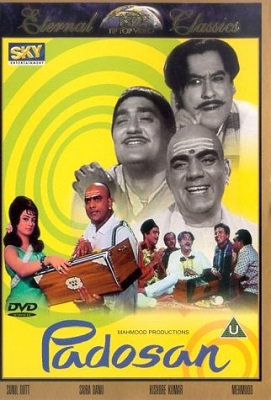
Padosan, Jyoti Swaroop (1968, India). Given how many films Bollywood has made, and given that pretty much all of them follow the pattern boy meets girl, boy loses girl, boy gets girl back, sooner or later one of the ones I watched was going to “borrow” the plot from Cyrano de Bergerac. The difference here is that the suitor uses song to charm his beloved – or rather, he lipsynchs to a friend singing out of sight of his beloved (who loves in the house next-door, and they’re conducting their love affair from the window of one house to a window of the other. There’s an unintended irony here, given that the vast majority of Bollywood stars don’t sing their own songs but mime to playback singers, and some of the playback singers are as famous as the Bollywood stars whose singing voices they provide. This, of course, is only the first part of the formula. The girl discovers the fakery and retaliates by agreeing to a marriage proposal from the boy’s uncle (although they’re not “boy” and “girl” as he’s in his late thirties and she’s in her mid-twenties). In an effort to win back his love, the boy goes all Romeo & Juliet and fakes his suicide. This is not a good idea, in fact it’s a really bad idea. But it appears to work, and the two are finally reunited. Despite some dodgy bits, this is a fun film, chiefly because its cast looks like they’re having fun. It’s considered “one of the best comedy films made in Hindi film history”, according to Wikipedia, and it’s not hard to see why.

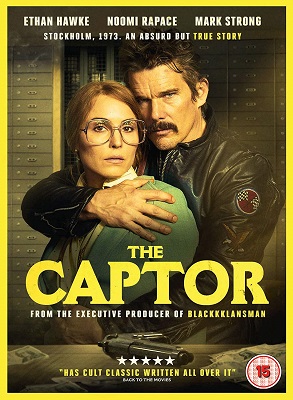
Stockholm, Robert Budreau (2018, USA). When I saw this film, it was titled Stockholm, after Stockholm Syndrome, which was named for the bank robbery depicted in this film. But apparently the UK DVD distributors are preparing for Brexit by removing the name of an EU capital from the cover. Because The Captor is a really dumb title, and pretty much ignores the whole point of the film. Although it is, to be fair, not a great movie. Its cast is predominantly British or American, but they all put on bad Swedish accents. Except they pronounce all the Swedish names incorrectly. Anyway, habitual criminal and his accomplices rob bank, end up in hostage situation, and it all escalates quickly, with the prime minister involved and all sorts of demands and promises made. Oh, and one of the hostages started to identify with the bank robbers. Dodgy Swedish accents aside, Stockholm fails dismally because it makes a bank robbery boring. I mean, hostage situations should be tense and dramatic, even if nothing is actually happening, but Stockholm is just Ethan Hawke stomping about the place like a television cowboy. Avoid.

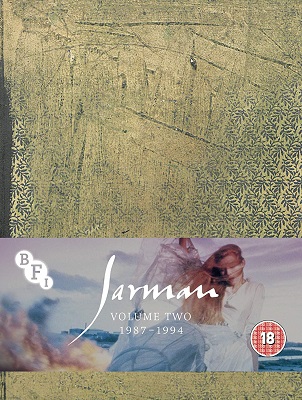
The Last of England, Derek Jarman (1988, UK). If you had asked me twenty years ago what I thought of Derek Jarman’s films, I might have mentioned being impressed in my teens by Caravaggio but otherwise thinking his work pretentious tosh. But a few years I watched Wittgenstein and thought it really good, and then the BFI released the Derek Jarman Volume 1: 1972 – 1986 Blu-ray collection, and I bought it on a whim… and now I’m a bit of a fan of his movies and I have Volume 2: 1987 – 1994. Part of the reason I’ve become a fan is because Jarman was an experimental film-maker, and while I’ve re-evaluated those of his movies I’d seen before, it’s his experimental films I find myself liking the most. Such as The Last of England. It’s almost impossible to describe, a series of images and scenes set in a post-apocalyptic UK, inspired by Thatcher’s Britain (we didn’t know when we were well off, not that we were: but compared to now? If Thatcher was still alive, this Brexshit would probably see even her rehabilitated. Ugh. What a horrible thought), a painting by Ford Madox Brown, whose title the film takes, and a number of poems. It’s surprisingly effective, both chilling and elegiac. More so, I think, because I remember the late 1980s, and I remember Thatcher’s Britain and Clause 28 and all the things that fed into The Last of England. Good stuff.

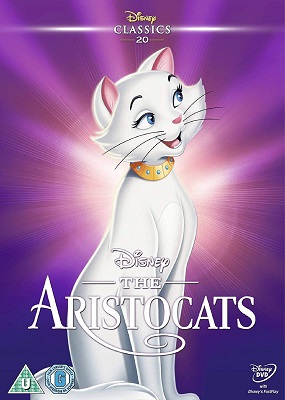
The Aristocats, Wolfgang Reitherman (1970, USA). One of many informal film projects I’ve been running – if that’s not too, well, organised a way to describe it – is working my way through all the Disney films. The classic animated films, of course; but even the obscure live action ones, if I can find them. Some of the animated films I obviously saw as a kid (many of them are older than me; yes, hard to believe); but my memories of them are spotty at best. I think I saw The Aristocats back then. I’ve certainly been aware of the movie since I was a child. But then we had a LP of songs from Disney films when I was young and perhaps it was appearing about the film from listening to that… Stereotypical rich old cat woman plans to leave her riches to her cat, but greedy butler overhears and kidnaps the felines – it should be “catnap”, shouldn’t it, but that means something different… Anyway, he dumps the cats in the country (this is early twentieth century France), but they are rescued by a streetwise alley cat, who helps them return home. For some reason, I remembered the characters from this film, but not the story, nor quite how, well, charming it is. It’s been a mixed bag watching these classic Disney animated films, and I’ve been surprised by which ones I’ve really liked and which I’ve found disappointing.The Aristocats definitely goes in the first group.

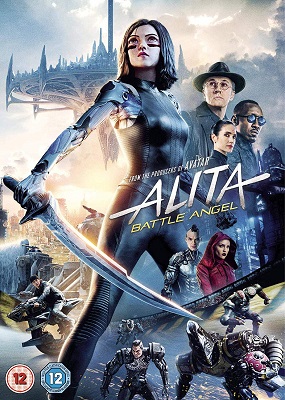
Alita: Battle Angel, Robert Rodriguez (2019,USA). So where my childhood was Disney cartoons and surreal British kids’ TV series and bad US TV shows like The Incredible Hulk, people much younger than myself grew up with Japanese properties mangled for the US market. And this film is a US adaptation of an early 1990s Japanese manga/anime series that is apparently quite well-known among a certain age-group. Which si not me. So I knew nothing about it when I sat down to watch the film… and I know just as little having watched it. Christophe Waltz plays a scientist who runs a sort of street clinic for robots and cyborgs, and who discovers a cyborg head on a rubbish heap. He builds a body for the head, a teenage girl’s body, of course, because he lost his daughter years before. And the cyborg turns out to be some sort of super-soldier or something and there’s a powerplay between various people in a floating city of ultra-rich people and I really couldn’t give a toss abut an hour into the movie… and those eyes. They were… offputting. Yes, there is a style of anime which features over-sized eyes, and in the original manga on which Alita: Battle Angel Alita’s eyes were indeed larger than normal, if not as large as in other manga… But it looks weird in a live-action film, sort of like it’s gone through the uncanny valley and come out the other side. I didn’t like this film, and I’m really tired of cyberpunk dystopian futures (although I recognise the original property on which this film is based is thirty years old). Meh.

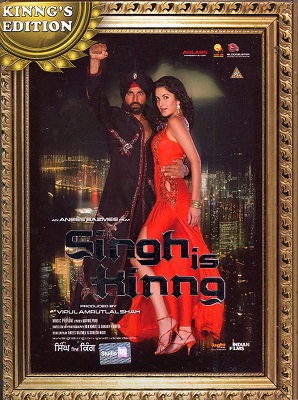
Singh is Kinng, Anees Bazmee (2008, India). Amazon Prime is proving really good for Indian films. Not just Bollywood, but also Tollywood and Kollywood. And classic movies as well as more recent fare. Singh is Kinng opens with a remarkable comedy sequence in which the title character, Happy Singh, attempts to catch a chicken and manages to demolish his village. Actually, it opens with a piece of OTT gangster violence in Australia. But the chicken sequence is really good. Anyway, the gangster, Lucky Singh, is Happy’s cousin and someone is out to kill him, and the village wants to get rid of Happy… so they send him to Australia to help out his cousin. After a detour via Egypt, where Happy meets the love of his life, he ends up in Australia, where he inadvertently puts Lucky into a coma. And everyone persuades themselves that Happy is the perfect person to run Lucky’s huge criminal empire while Lucky is indisposed. This was a lot of fun. The humour’s broad, and the characters a bit stereotypical, but the set-pieces are good and the film is genuinely funny in places. Worth seeing.

1001 Movies You Must See Before You Die count: 940


2 Comments

A Tale of three cons

In the past four months I’ve attended three science fiction conventions in three different countries. Three con reports in one post would be a bit much, however, so I’ll keep these short.

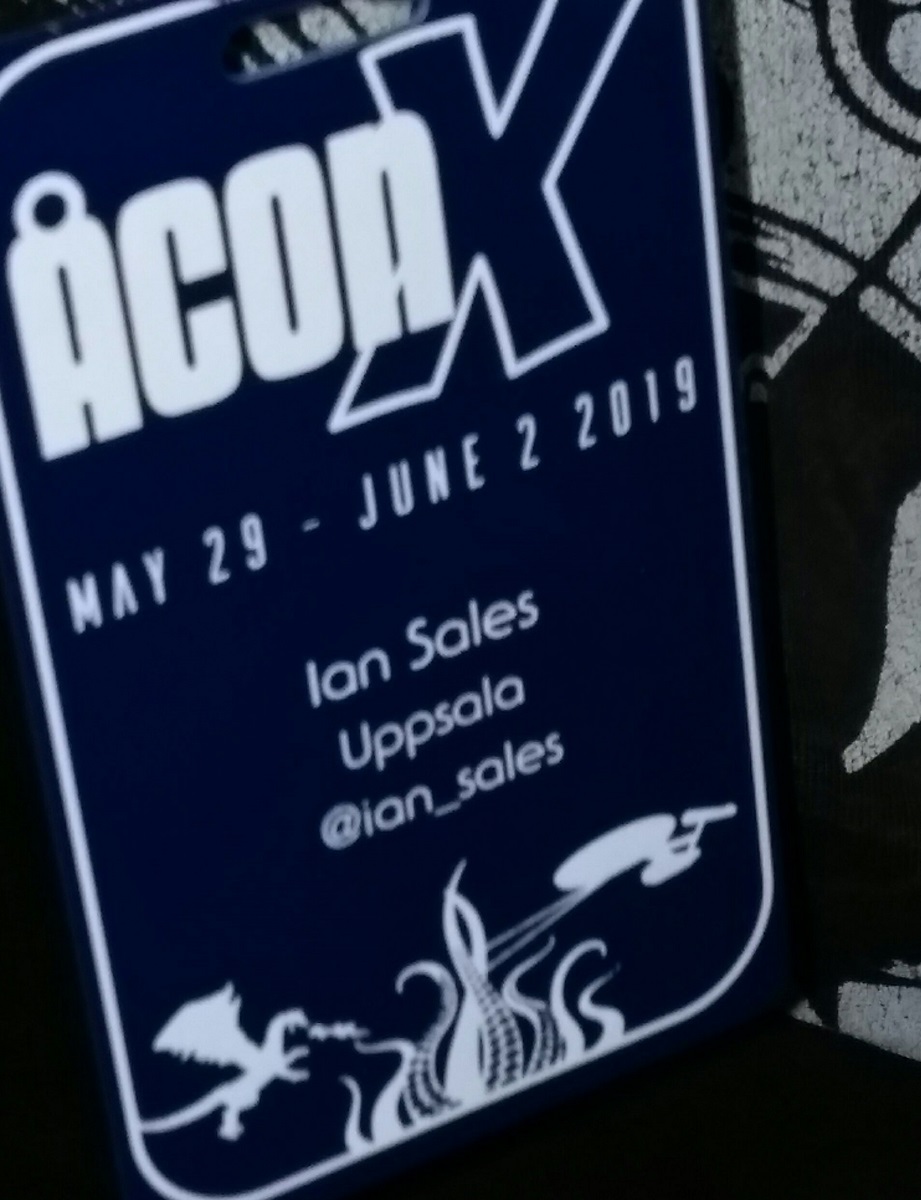
The first was Åcon, in Mariehamn in the Åland Islands, a part of Finland. I hadn’t initially planned to attend a con so soon after my move north, but was persuaded to go by members of Uppsala fandom – well, one member: Johan Anglemark. And I’m glad I bowed to the pressure. The trip to Mariehamn was ridiculously easy – and the first time I’ve travelled to another country with liquids for many years. A group of fans from Malmö and Copenhagen came up to Uppsala by train the night before, and the following morning we all caught a coach to Grisslehamn on the coast. It takes about 45 minutes. Then it’s two hours on a ferry to Eckerö in the Åland Islands, followed by another 45-minutes coach-ride. It’s been many many years since I was last on a ferry, but they don’t appear to have changed much: a bar with a band murdering hits of the late twentieth century, a huge duty-free store (and, in fact, the chief reason why people take the ferry), and gently shifting motion that had me thinking I was a fraction of a degree away from falling over most of the time.

Åcon takes place in the Hotel Adlon, which may share its name with the Berlin hotel which appears in Philip Kerr’s excellent Bernie Gunther novels set in Nazi Germany, but is entirely the opposite. Sort of. It’s perhaps a bit tired these days, but it’s only a year or two past needing refurbishment and, to be honest, being a little behind the times seems entirely fitting in Mariehamn. While I was there, I actually saw someone delivering newspapers to people’s doors. I didn’t see a milk float, although I don’t think they’re a Finnish or Swedish thing, but if they were, they’d be still be using them in Mariehamn. It’s a bit like time travel. Which is, of course, entirely fitting for a science fiction convention.

Åcon is characterised as a relaxacon, with a single Guest of Honour. This year, the GoH was Amal El-Mohtar, a Canadian writer of Lebanese extraction who used to live in Glasgow, and who I last met in 2013 when she had a quite pronounced Scottish accent. To be honest, I’d thought then she was a Scottish writer. The Åcon way is to schedule 60-minute programme items 90 minutes apart. Everything is in English.

On the first night, I accompanied the GoH and several others to Dino’s, an upmarket burger/steak place. I like eating in Finland. Finns suffer from lactose intolerance, as I do, to such an extent that pretty much all eateries cater to both lactose- and gluten-intolerant diners to a massively better degree than any other country on the planet. The sports bar attached to the Hotel Adlon, for example, served only pizzas, but they were all made with lactose-free cheese… because it’s easier to do that than cater for those tolerant to it and those who aren’t. I love Finland for that.

I was put on two programme items at Åcon, one on how the genre treats the six senses, which I moderated. Yes, six. Because proprioreception is generally considered a sense now. That went so well, it overran its spot and I had trouble bringing it to a close. My second panel was about fairytales and I was probably the least-qualified person on the panel to discuss the topic. Oh well. I attended a couple of items I was not on. I do that at Nordic cons. I find their programmes more interesting because they scratch more itches as a science fiction fan. I was also chosen as a team captain for Jukka’s infamous quiz, but we lost by a single point.

On the Saturday, myself and a Finnish fan called Orjo visited the nearby Sjöfart Museum (Maritime Museum), which includes one of the last sailing ships used in trade by the Åland Islands. That was interesting. In the afternoon was a con-arranged trip to a craft brewery, Open Water Brewery on Lemland, one of the other Åland Islands. There we were given a quick lecture on brewing, and tried several of the breweries beers. Including its cider, new that year. And, I think, the first ever made in the Åland Islands (which actually provides 80% of Finland’s apples).

The final programme item – other than the “gripe session” – was a William Shatner karaoke. This turned out to be performing songs in the style of William Shatner. So, no actual singing. Which I cannot do. I have often said I could not carry a tune even if it came in a bucket. William Shatner karaoke sounds like something worth running from. In fact, it’s the exact opposite. It was definitely one of the funniest things I’ve seen at a con for years. Shout out to Regina from Shanghai, who not only travelled all the way from China to Åcon but also performed a jaw-dropping Mandarin song in William Shatner style.

My second convention was Replicon, the annual Swedish national con, Swecon, this year held in Västerås. Which is west of Stockholm and 80 minutes by coach from Uppsala. The con took place in the CuLTUREN, an old copper foundry (hence “Cu”) converted into function space. Replicon occupied the central foyer and made use of three function rooms – two for the programme, and one for the Fantikvariat, a charity that sells secondhand genre books, mostly UK or US. There were a couple of smaller rooms used for other programme items. The venue boasted a small coffee shop and a restaurant – which normally serves Lebanese food but for some bizarre reason decided for the con to become a pizzeria. I’d jokingly said the year before that eating Lebanese on the first night of Swecon had almost become a tradition (we did it in both 2017 and 2018). And this year, while I didn’t have Lebanese food on the Friday evening, I ate in what is normally a Lebanese restaurant. So I think that counts.

Anyway, I arrived at CuLTUREN and immediately bumped into the Anders. Who I’d not seen for over a year, and who was unaware I was now living in Uppsala. He took me to the Bishops Arms for a few beers. The Västerås Bishop Arms is the original one. There are now over 40 scattered around Sweden. After a couple of beers, we headed back to the venue for the Opening Ceremony. Which introduced the two Guests of Honour, Annalee Newitz and Charlie Jane Anders, both names known to me but I’ve not read anything by either. I didn’t attend that many programme items – there seemed to be more Swedish-language ones than in previous years; hopefully, by next year’s Swecon, that will make no difference to me. I spent both Friday and Saturday evenings in BierKeller with some Swedish and Finnish fans. This did entail the drinking of a couple of beers that cost 199 crowns each (in 500 ml bottles), although myself and Anders split both the cost and the beers.

While I may not have attended every programme item – although the ones I saw were good, particularly Anna Bark Persson’s talk on “Female masculinity in SF” – I did better in the Fantikvariat than I’ve done recently in dealers’ room: I bought eight books, two were in Swedish and four were books I already owned (but in storage in the UK). For the past couple of years, I’ve bought more second-hand books at Nordic cons than I have at UK cons. Go figure.

Replicon was a smaller affair than other Swecons I’ve attended, but it was well-organised, the venue worked, and Västerås is a pleasant town. In Swedish terms, I think Västerås fandom well and truly put themselves on the map in terms of con-running. Should they ever plan to run another Swecon, they’ll likely get more attendees.

The big con this year was, of course, the Worldcon, which took place at the Convention Centre in Dublin. I last visited the city when I was two years old so I remember nothing of the trip. And it’s undoubtedly changed a great deal since then. (I mentioned this to the cab driver taking me to the airport after the con. The area where my hotel was sited has been extensively redeveloped, and for all of the buildings we passed he pointed out what had been there before.) I’d booked rooms in the Grand Canal Hotel, a ten-minute walk from the Convention Centre, which no doubt contributed to my 10-km a day average for walking (when I normally average 8 km a day). But then there were a lot of floors in the Convention Centre and a lot of walking required between the various rooms. There were not, in fact, many chairs. Seriously, given the greying of fandom, cons need to provide more areas where people can sit down and relax.

The other notable aspect of this particular Worldcon was the queuing. I didn’t actually attend any programme items other than those I was on (more on them below), but I was told it was almost impossible to leave one panel and then get into the next because of the queues. Several people told me during the weekend that high levels of attendance for the programme seemed to be a new thing. Dublin2019 was only my third Worldcon, and while I remember lots of queues at Worldcon75 in Helsinki, I don’t remember any at Interaction in Glasgow in 2005. Fandom really has changed over the past decade; and for the better. There seems to be far more engagement, and it’s less of a private club.

But. My panels. The first was Apollo at 50, first thing on the Friday, with Dr Jeanette Epps, Mary Robinette Kowal, Dr David Stephens and Geoff Landis. When we arrived in the room – the 600-seat room – only two of the microphones were working, those in front of Epps and Kowal. So they suggested they talk while tech fixed the other mikes. And the subject they chose was… going to the toilet in space. It became a bit of theme during the panel. I thought the discussion went really well. The panellists were excellent, especially Dr Epps. Later that same day, I was on Artemis: Apollo’s Big Sister, again with Dr Epps and Geoff Landis, but also Becky Chambers and moderator Alan Smale. The panel went reasonably well, but I would have enjoyed it more if Becky Chambers had not sat with her back to me for its entire length.

My next panel was early afternoon on the Saturday. It was about Alternate Apollos. It came very close to becoming the Panel from Hell. It is my practice when moderating panels at cons to contact the panellists by email a week or so before. So we can introduce ourselves to each other and get some discussion going, and no one is ambushed during the actual panel. One member of the panel managed to offend another. The day before the panel. I demanded the person send out an apology. They objected, but sent the apology (which was, to be honest, pretty much a non-apology apology, you know the sort). The next morning I get an email asking me to visit Programme Ops. I’m told one member of the panel has dropped out (the offeendee, so to speak), and the offender has been removed from the panel. They’re looking for replacements, but not having much success. I spend half an hour running around the con, trying to find replacements of my own, before making my way up to the green room to break the news to the remaining panellist. Except, it turns out her partner is just as qualified for the panel and is downstairs queuing for it. “Get him up here,” I tell her. He joins us. And when we get to the room, it transpires Programme Ops has managed to get one of their alternates to volunteer – and my preferred choice, too. After all that, the panel went pretty well. I hadn’t wanted to get too space-geeky, but we had an audience of space geeks, and they seemed to enjoy the panel. But I didn’t enjoy running around trying to rescue the panel in the hour before it started.

Happily, my final panel, on the Monday morning, went reasonably smoothly. Admittedly, after four days of Worldcon, my ability to brain was badly impaired. The topic was lunar depictions in science fiction and fantasy, and I didn’t want it to turn into fifty minutes of recommendations of books, films or TV set on the Moon from popular and genre culture. Panellists Joey Yu, Hester J Rook, Jeffrey Reynolds and GoH Ian McDonald, however, managed to get some intelligent discussion going about depictions of the Moon in historical and mythological texts around the globe… and then we ended up recommending books, films or TV set on the Moon from popular and genre culture. Ah well.

The highlight of the con for me was being approached by Dr Jeanette Epps on the Sunday evening as I was heading out for a meal. she told me I was her favourite moderator. It’s not every day an actual astronaut says something like that to you. (To be fair, the  Apollo at 50 panel was good. It was informative and entertaining, and it stayed on topic. But I had excellent panellists and, even if I say so myself, it was probably one of the best jobs at moderation I’ve done in twenty years of appearing on panels at cons.)

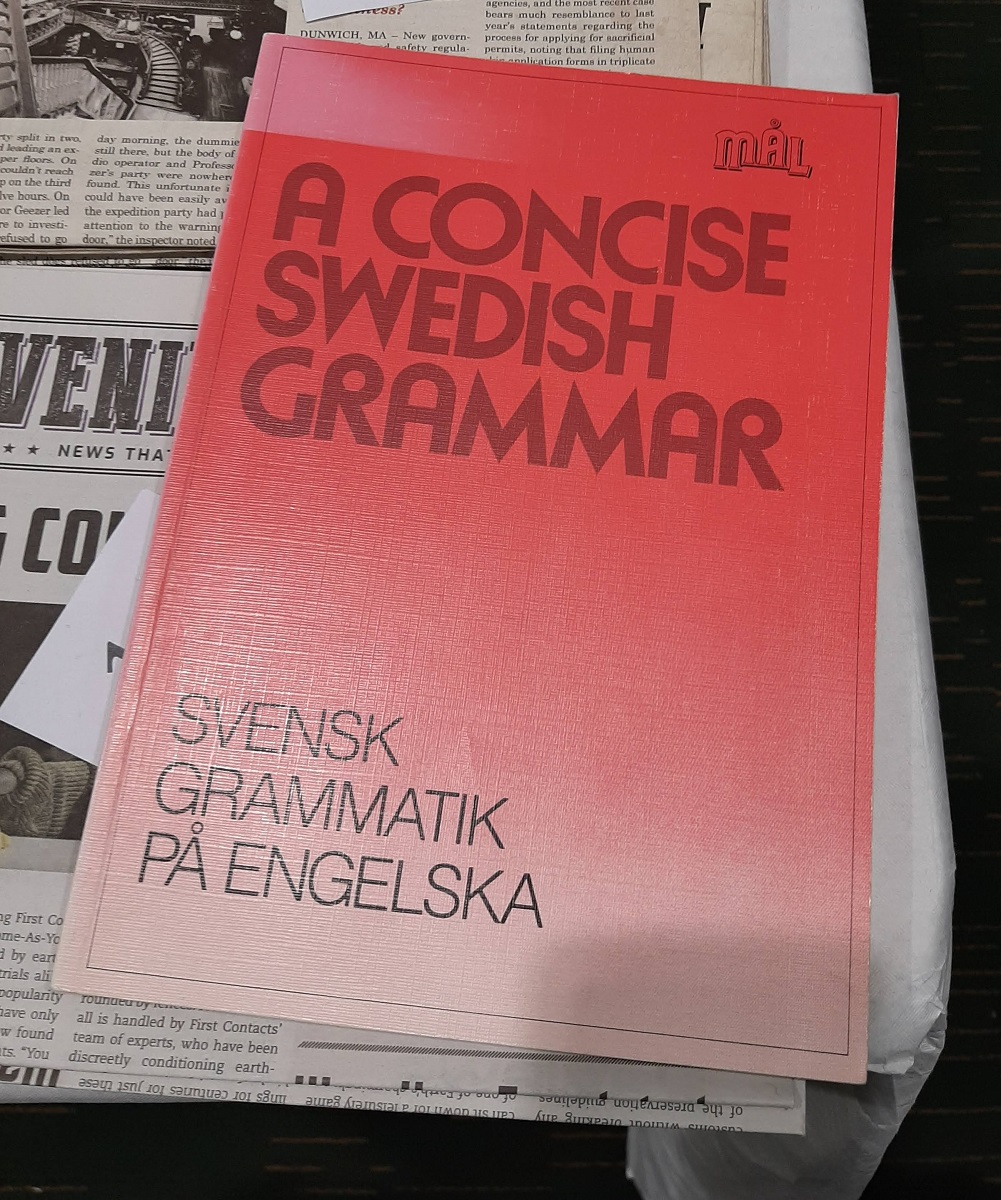
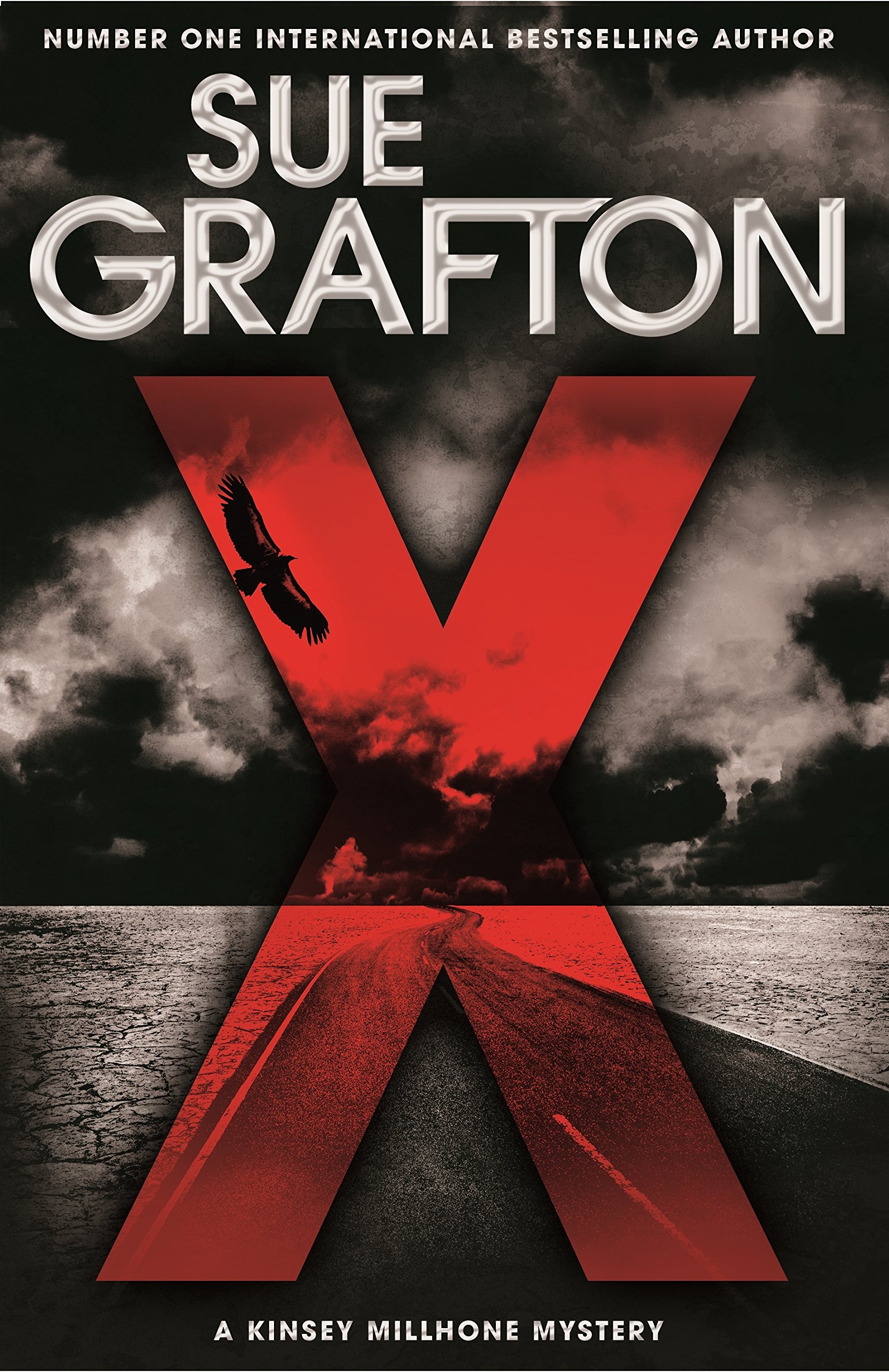
I suppose I should mention the dealers room. It was big. But, unfortunately, the only books available were either brand new or self-published. No second-hand book dealers. I returned home with a single book purchased at the con:

My next convention this year will be held in a fourth country: Fantasticon in Copenhagen, Denmark. Maybe I’ll see you there.


Leave a comment

Moving pictures 2019, #21

Slowly getting up to date with these. Chiefly by bingeing on box sets.

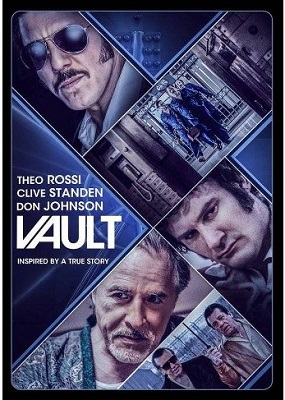
Vault, Tom DeNucci (2019, USA). Hollywood has been glamourising crime – more than that, violent crime – since its beginnings, and while there’s no causal link between violence on the screen and violence in the real world, it doesn’t take a genius to spot that a constant diet of violent entertainment both normalises it and helps desensitise the audience. People will happily consume crime drama, and perhaps even admire the criminals it depicts… up until the moment they’re mugged or burgled. Vault is another film in that long line of gangster dramas Hollywood has churned out. A pair of small-time crooks decide to hold up two banks on the same day, but it goes awry and they end up in prison. Where they come into the orbit of Don Johnson, who has a bone to pick with a mafia don also incarcerated in the same prison. Once Johnson and the two crooks are released, they put together a plan to rob a mafia vault hidden in a fur storage facility. This is all based on a true story. Vault is one of those 1970s-set films, and it’s not the first like it I’ve seen, that makes its depiction of the decade seem more like a parody than a realistic depiction. I was around in the 1970s and although my memories of that time may not be all that sharp – I was a kid during the decade – I remember it as a lot more, well, ordinary than Hollywood has depicted it in movies this century. Which is only one of many things about Vault that doesn’t work. The characters are too dim to be sympathetic, the whole escapade is clearly doomed to failure, and the direction is flat at best. Vault can’t decide if it’s a “smart” thriller or just an action thriller, and fails at both. Not worth it.

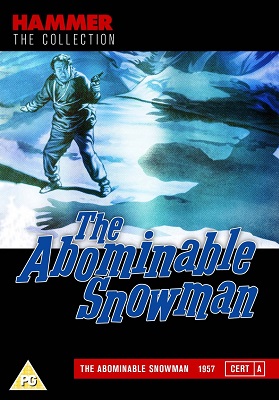
The Abominable Snowman, Val Guest (1957, UK). I’m not a horror fan – too squeamish. I don’t find it entertaining to see people chopped up into bits, especially in modern films with realistic-looking CGI. I don’t mind films with monsters, providing the movies are old enough that it all looks fake. Like Hammer films. Amazon Prime has added a bunch of 1950s horror movies – not all Hammer, but mostly British – so I’ve watched a few of them. The Abominable Snowman is about, well, the Abominable Snowman. Like other Hammer films, such as the Quatermass ones, it was written by Nigel Kneale, based on a television play broadcast by the BBC in 1955 and also written by Neale. Rather than present the Yeti as a mindless creature, or even a primitive subspecies of human, The Abominable Snowman shows them to be advanced beings living hidden in the Himalayas. Peter Cushing is in Tibet to search for botanical specimens but joins an expedition to capture a Yeti led by an American, Forrest Tucker (most Hammer films feature US actors in lead roles to help sell them to the parochial US market). The expedition meets with a degree of success, but there are consequences. The film doesn’t do a very good job of presenting its setting – obviously it wasn’t filmed on location, but the sets are pretty unconvincing. It’s all very, well, British. Particularly British of the 1950s. The accents are all cut-glass, except the American, and the acting is that sort of stiff, stage-like acting you see in many UK films of the period. But it’s all kind of hokey fun, and Kneale’s take on the Yeti is notable.

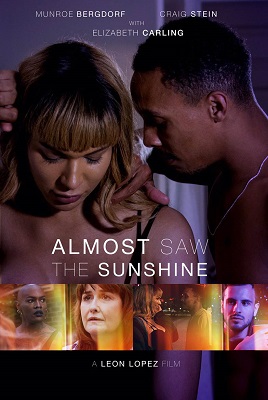
Almost Saw the Sunshine, Leon Lopez (2016, UK). This is a thirty-minute drama starring Munroe Bergdorf, a transgender model and activist probably best-known for being dropped by L’Oréal after pointing out on social media, quite rightly, that white people are racist. Bergdorf is outspoken, which has made her a target for certain groups, and most of the British media, and that’s meant she’s lost a number of positions on trumped-up excuses. Almost Saw the Sunshine is a relatively straightforward drama short, filmed on the cheap in London, in which girl meets boy, girl decides to drop boy for reasons, and things happen. Bergdorf has real screen presence. The acting is perhaps a bit rough and ready in places, but Bergdorf seems assured in front of the camera, so much so she casts the rest of the cast into the shade. Worth seeking out.

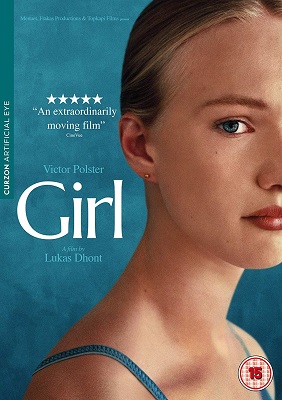
Girl, Lukas Dhont (2018, Belgium). Another film based on a true story, although it has received heavy criticism from the community to which its protagonist belongs. The title refers to a teenage transgender girl who has joined a ballet school but is suffering because of the demands the dancing is having on her body and the changes her body is undergoing as part of her treatment. It’s all very low-key, and well, Belgian. Lara is fifteen years old and transgender. She also wants to be a ballet dancer and has been accepted by a good school. But her gender reassignment is not progressing fast enough for her, and the punishing regime she puts herself through in order to qualify for the school has consequences. The damage she does to her body results in her surgery being delayed, and while she secures a place at the school she is too ill to dance in a class performance. The rest of her class treat her as just another member of the class… until at a pyjama party one of the girls eggs the others on to demand Lara show them her genitals. The next day, Lara takes matters into her own hand… I’m in no position to validate Girl‘s presentation of its subject, but it is based on a true story, and the person who inspired the film has said it’s a fairly true depiction of what happened to her. But, again, I don’t have the background to praise or criticise that aspect of the film. I enjoyed it, and I thought it well acted and well shot. But it may also be problematical.

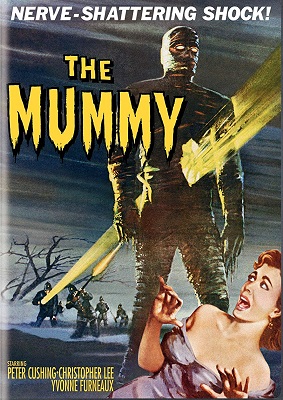
The Mummy, Terence Fisher (1959, UK). another Hammer film, also starring Peter Cushing. And this time, also Christopher Lee. In the title role. I don’t know if this film originated many of the tropes now associated with mummies – there are plenty of earlier appearances by mummies, in film, on stage, and in serial magazines – but it follows the template we all know and love. Archaeologists break into new tomb, find sarcophogus. They come down with mysterious ailment. Years pass. They come out of their coma, and reveal that an evil high priest had been mummified for trying to bring the princess in the tomb back to life, and he’s now a mummy and bent on killing everyone who desecrated the princess’s tomb. It’s all pure hokum, but the cast are far too professional – and British – to reveal they’re having fun, or actually despise the material. Some Hammer films are better than others. This was definitely one of the cheesiest ones.

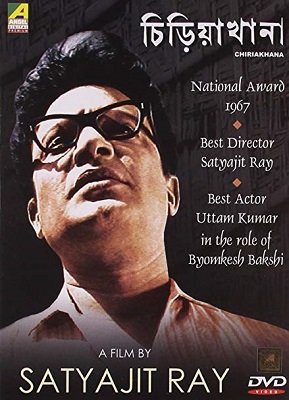
Chiriakhana, Satyajit Ray (1967, India). Ray is probably the best known of India’s “parallel cinema” directors, a movement chiefly based in Kolkata which made realist films in opposition to the song and dance extravaganzas of Bollywood. Ritwik Ghatak, a favourite director, and Mrinal Sen were also parallel cinema, but the ready availability of Ray’s films in the Anglophone world is likely a result of his championing by Ismail Merchant, who he had helped early in his career. Which is not to say that Ray’s films are not good – but I’d like to see Ghatak get the same treatment. (And as for his Sen, his films are only available from Indian DVD labels, and few of them at that.) Chiriakhana was not well received on release as it’s a complex thriller, almost a pulp story in fact. A retired judge has opened his nursery to a group of misfits, criminals and social outcasts. He hires a detective to search among them for an actress who disappeared years before. The detective, disguised as a Japanese horticulturalist (not every convincingly, it must be said), is given a guided tour of the nursery. Soon after, the judge is murdered… Unfortunately, on the copy of this I watched the subtitles ran about 10 seconds ahead of the dialogue. To male matters worse, the cast occasionally code-switched into English. So it made things a bit difficult to follow. The convoluted plot didn’t help either. I’ve watched a  number of Ray’s films, and some I found more engrossing than others. Chiriakhana is one of the better ones, and manages to be especially atmospheric in places. If Indian noir were a thing, this would be the exemplar. Worth seeing.

1001 Movies You Must See Before You Die count: 940


Leave a comment

Reading diary 2019, #8

After cracking through a bunch of novels, I hit the last book of the half-dozen below and ground almost to a halt. Possibly a result of its size as much as its extremely poor writing. Not to mention that the main characters are annoying as hell. Why on earth did I decide to reread the series?

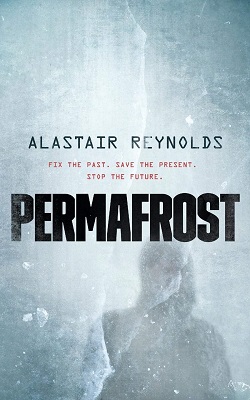
Permafrost, Alastair Reynolds (2019, UK). I picked up a copy of this at the SF-Bokhandeln in Stockholm while meeting up with family over on a visit to Sweden. It’s not Reynold’s usual fare, but a near-future time travel story. The human race is pretty much over, killed off by its appalling lack of husbandry of its environment (that’s pollution, Global Warming, germ warfare, hunting to extinction, etc, etc), but a group in Russia have perfected time travel and send someone back into the past to make enough of a change to allow humanity a small chance at survival. It’s not actual physical time travel – which means it’s at least free of the risible technobollocks in Avengers: Endgame – but the consciousness of the tempunaut is sent back to occupy the mind of a person of the target period. (A similar conceit, I believe to Michael Bishop’s No Enemy But Time.) Of course, as is ever the way, nothing goes as planned, and protagonist Valentina must race across Russia to deliver the maguffin, only to learn how the future has changed when she returns to it. I thought Permafrost pretty good, but I wasn’t entirely sure why it was set in Russia, or what the setting brought to the story, other than, well, the title. Reynolds has never had much luck with the Hugos, but given that Permafrost was published by Hugo darlings Tor.com then perhaps he stands a chance next year.

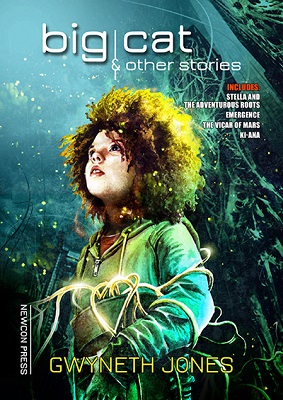
Big Cat and Other Stories, Gwyneth Jones (2019, UK). A new book by Gwyneth Jones, whether a novel, novella or collection, is cause for celebration in this house. She’s been my favourite sf writer since reading Kairos in the early 1990s, and I’d even go so far as to say sheäs the best science fiction writer who is still writing the UK has produced. Big Cat and Other Stories collects eleven stories originally published between 2007 and 2016 (and one original to this volume), only two of which I’d  previously read. Three of the stories are set in worlds from Jones’s novels, although one of those novels was published under Jones’s YA pseudonym, Ann Halam. This does mean for those three that you get more out of them if you know the original novels, more so for the story which lends the collection its title as it’s set in the universe of the Bold As Love quintet and features its central triumvirate of characters. The stories are chiefly science fiction but spread  widely across the genre, from the slightly off-kilter pulp adventure on Venus of ‘A Planet Called Desire’ and the Leigh Brackett/Lovecraft mashup of ‘The Vicar of Mars’ to the near-future of ‘Stella and the Adventurous Roots’, ‘Emergence’ and ‘Bricks, Stick, Straws’, although they depict worlds not quite the same as our own. All of the stories are a hit of the pure Jones, and if you appreciate her science fiction then Big Cat and Other Stories is as good a selection as any other. Recommended.

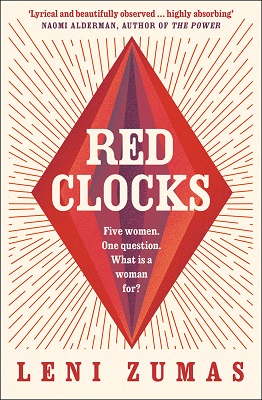
Red Clocks, Leni Zumas (2018, USA). I’m not sure why I bought this. I guess the blurb must have caught my fancy or something. Although that doesn’t seem right, because, well, “near-future dystopia”. I mean, who reads them anymore? With the actual shit that’s going down in Trump’s US and Brexit Britain, literary dystopias are starting to look like weak sauce. In Red Clocks, the Republican Christian nutjobs are firmly in charge, abortion is illegal, and only families of one father and one mother can adopt kids. Which is unfortunate for a couple of the characters in Red Clocks, a pregnant schoolgirl and a single teacher desperate for a child (and whose numerous tries at IVF have all been unsuccessful). Zumi chooses to tell her story from the viewpoints of each of her characters, but in their viewpoint chapters they’re not identified by name, only by their role in the story – so “the biographer”, “the wife”, and so on. It doesn’t work. It’s an unnecessary hurdle – although it does successfully disguise for at least the first quarter of the book quite how ordinary its story is. I was also annoyed by the attempt at found documents pertaining to the historical figure who is the subject of the biographer’s unfinished, er, biography, a female polar explorer from the turn of the twentieth century. She’s named Eivør Minurvasdottír – and  the first time I saw it I thought, there’s no ø in Icelandic. But there is in Faroese. Which is where she’s from. But the accent on the surname is in the wrong place. It should be -dóttir. The name is misspelt throughout the novel. Didn’t the author check? Didn’t the editor? The publisher? It’s not like it’s hard to find out. It’s a minor complaint – and from someone who chiefly reads science fiction! But for all that Red Clocks was shortlisted for the Orwell Prize for Political Fiction, the first time an Orwell Prize has been offered for fiction, there didn’t seem much to me that stood out. (The Orwell Prize is probably best remembered for giving an award to Johann Hari, only to demand it back when it transpired Hari had plagiarised and misrepresented facts in his articles. He returned the prize but has never returned the prize money.) But Red Clocks. Dull and unoriginal. Not worth reading.

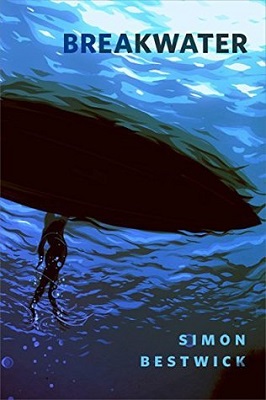
Breakwater, Simon Bestwick (2018, UK). A Facebook friend has been working his way through the works shortlisted for the British Fantasy Award, and I saw this novella in my timeline and since it’s set in an underwater base, something I find fascinating, and was extremely cheap on Kindle, I decided to give it a go. And… oh dear. The title refers to an underwater complex just off the the coast of the UK. Originally built for research, it has been taken over by the military as a first line of defence against a mysterious underwater race who, we are told in an infodump, are now at war with humanity because of humanity’s history of polluting the oceans. The widow of the man with whom she co-designed Breakwater still works there. With the Royal Navy. And, wouldn’t you know it, the underwater people decide to attack a couple of pages into the novella, and this time it’s the biggest attack ever. The woman manages to escape, with the help of a female petty officer. They run through an empty complex, staying just ahead being drowned. But then the petty officer lets slip she’s one of the underwater people – or rather, one engineered to look human – and she belongs to a faction that wants to open dialogue with humanity… And, well, that’s it. The author doesn’t seem to understand how depth works – there’s a few mentions of airlocks and ears popping; oh, and the woman’s husband died of the bends – otherwise, changes in pressure are blithely skated over. There’s a bit of authorial prurience over the two female leads, which reads a bit old-fashioned. And something I’ve not seen in a book for years: a detailed description of the protagonist’s appearance. Who still does that? The British Fantasy Awards are, like the Hugos and Nebulas, prone to logrolling, and it’s not unusual for people well-known and well-liked among the voters to have their works find their way onto the shortlist irrespective of the quality of the work. The voting pool for the BFA is very small, probably even smaller than the average attendance of the annual Fantasycon (ie, a couple of hundred).

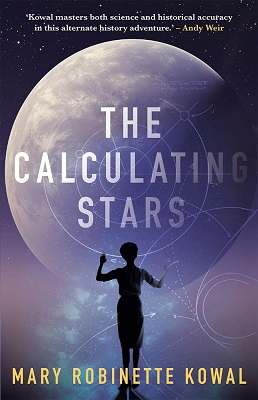
The Calculating Stars, Mary Robinette Kowal (2018, USA). I had sort of avoided reading this as I’d covered similar material myself, although with a considerably lower profile and less commercial success. But then it was nominated for the Hugo, and so was made available in the Hugo Voter Pack, and a quick look persuaded me that there’s actual very little overlap between The Calculating Stars and Then Will The Great Ocean Wash Deep Above. In Kowal’s novel, a large meteorite strikes the earth in the early 1950s, crashing down somewhere in the north Atlantic and so kicking off an accelerated greenhouse effect. Elma York is a gifted mathematician and a pilot. She and her husband, a rocket engineer at NACA, survive the meteorite and are instrumental in the creation of an international space agency to lead the quest to settle another world so humanity survives once the earth as become uninhabitable. So this is the very early days of the Space Race, more Hidden Figures than The Right Stuff. But Elma also wants to be an astronaut, so there’s also a lot of the Mercury 13 in the story (and several names familiar to me from my research; but, strangely, not Jerrie Cobb). There’s much to like in the novel: the swing about halfway through to a Mercury 13 narrative (although Kowal characterises Jackie Cochran as a much nicer person than she was – it was Cochran who famously said that women shouldn’t be taking jobs from men but should “follow after and pick up the slack”). I liked Kowal’s stand-in for Al Shepard, Stetson Parker, although the narrative seemed curiously ambivalent about him, feeling like at times it was trying to make him sympathetic. I thought the anxiety aspect overdone, but I’ve been told by sufferers they thought it accurate and found it welcome. On the other hand, I’ve heard there has been grumbling about the presentation of Judaism in the novel (York and her husband are Jews). In hindsight, The Calculating Stars is a novel that wants to tell a story about a space programme created in response to an extinction-level meteorite strike, but it also wants to be Hidden Figures and feature women computers… Which gives it a slightly anachronistic feel despite the very good period detail. In the real world, women went on to become programmers, too, but were then supplanted by men – in many cases, the female programmers were moved to assistant positions despite being better qualified and more experienced. That, I think, might have made for a more interesting story, and would not have meant pulling the start of the space programme back to the early 1950s. (On the other hand, having it when Kowal set it meant there were lots of ex-WASP female pilots around, as well as the women computers.) The Calculating Stars won the Hugo last weekend. Should it have done? I’m told Naomi Novik’s Spinning Silver is the better novel, although I’ve not read it yet, but The Calculating Stars was certainly my choice to take the award.

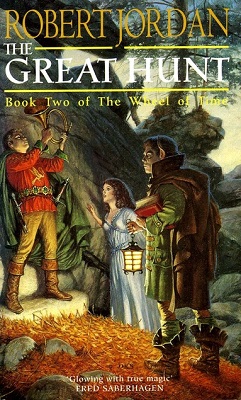
The Great Hunt, Robert Jordan (1990, USA). I’ve been told the Wheel of Time was originally pitched as a trilogy but then cut down to a single novel, but proved so successful the trilogy was reinstated, before mutating into the bloated fourteen-volume beast it eventually became. Certainly the pacing in The Eye of the World is so bad it’s entirely plausible its story was intended to stretch over several books. You have ten percent introduction to the world and characters, then 80% travelogue, and everything gets wrapped up in the last ten percent. The Great Hunt has slightly better pacing, and a great deal more happens in it, but there’s still a lot of travelogue. And padding. Reams and reams of padding. There’s even three or four pages where Rand experiences the same thing over and over again. It makes for a dull read. The one thing I’m noticing about these books during my rereads – other than the derision of friends when I tell them I’m rereading the Wheel of Time – is that the world-building is a strange mix of identikit sword-and-sorcery and weird but interesting original touches. It also feels strangely “lived-in”, with its various parts slotting together in a way that doesn’t feel entirely the result of authorial fiat. Having said that… the characters are still as annoying as shit. Rand al’Thor reads like a thirteen year old and his friends are no better. An important minor character turns out to be a Darkfriend (ie, agents of the the Dark Lord) but it comes totally out of left-field. The actual Darkfriend the protagonists spend the entire book chasing is far too pantomime. And another character do be talking like this all the time and it do be fucking irritating. The Great Hunt is a great improvement on The Eye of the World, but that’s not exactly a high bar to clear. There are some enjoyable set-pieces and some good hooks set for later in the series. But the praise this series received back in the 1990s still astonishes me. It’s a poor piece of work – and that in genre not known for the high quality of its prose or plotting.

1001 Books You Must Read Before You Die count: 135


Leave a comment

Moving pictures 2019, #20

Some more movies…

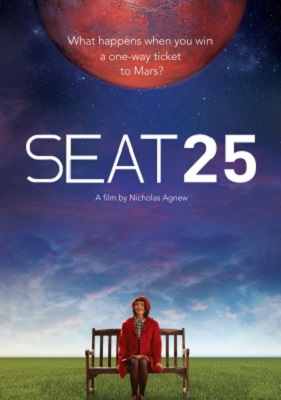
Seat 25, Nicholas Agnew (2017, UK). There’s an international mission to Mars, but it’s one-way. Twenty-four trained astronauts will be sent to settle the Red Planet, But there is room for one more, and that position will be taken by the winner of a lottery. A young woman in the UK wins the ticket, but is given time to break the news to her family – assuming, that is, she accepts – before it is announced publicly. It’s a neat idea and a good hook from which to hang a low-key drama. The world-building is very light, and mostly concerned with infomercials about the mission to Mars. The story stays entirely focused on the young woman who has won the seat: her life, her husband, her friends, her parents and in-laws, her colleagues… She keeps her win secret from them all, but kicks off a few “hypothetical” discussions to see how they would react if she told them she was going on a one-way trip to Mars. If this were all there were to the film, then it would be a neat little drama. Unfortunately, whoever wrote the script doesn’t seem to have advanced socially since the 1970s. Not only is the young woman brow-beaten by her husband, but the dynamics between the couple are a good thirty years old. And her in-laws crack jokes about people in Africa living in mud huts. Who does that? I heard shit like that when I was at school. And that was many decades ago. It wasn’t funny then either. Seat 25 could have been a good indie film, but it was ruined by gender politics and race relations from the 1970s.

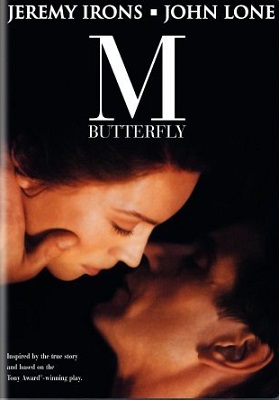
M. Butterfly, David Cronenberg (1993, USA). This is based on a true story. A French accountant at the French embassy in Beijing was seduced by, and entered into long a relationship with, a Chinese opera singer who specialised in playing female roles. The accountant believed the singer was female and never learnt his true gender, even believing an adopted son presented by the singer was his natural son. Even though the Frenchman didn’t realise he was actually in a relationship with a man, and it was never revealed to him, the fact he was in a relationship with a Chinese national was enough leverage to “persuade” him to pass secrets to the Chinese authorities. This went on for two decades. And the Frenchman only learned the true gender of his lover when they were both arrested for spying in 1983. Cronenberg’s film is adapted from a 1988 play by David Henry Hwang, which takes some liberties with the actual story – mostly by compacting the chronology, as far as I could tell. When Cronenberg makes mainstream movies, I can’t honestly tell the difference between his work and any other director’s. The body horror stuff is obviously so signature that any film that doesn’t feature it doesn’t seem like a Cronenberg film. Which is a shame, as he’s an excellent director, and M. Butterfly tells its story entirely convincingly, more so, I think, because Jeremy Irons is perfect as the Frenchman. It works as a slightly off-kilter drama, but it’s off-kilter, I think, more because of the story than because of anything Cronenberg brings to it. Nonetheless, worth seeing.

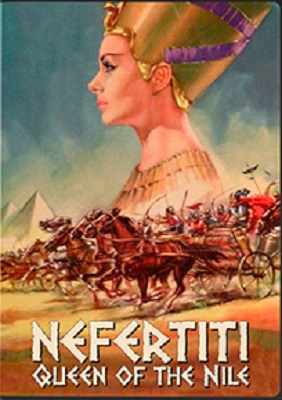
Nefertiti, Queen of the Nile, Fernando Cerchio (1961, Italy). I wonder how many people don’t realise Italy had a huge film industry and churned out movies by the metre. It wasn’t all Antonioni, Fellini, Rossellini, De Sica or Visconti. There was a long series of Hercules films, for example. Not to mention all those “spaghetti westerns”, the sf movies, giallo films, and loads of international thrillers. Some had US stars in lead roles (usually ones whose careers were on the slide). Nefertiti, Queen of the Nile is, of course, an historical film, a swords-and-sandals movie, starring Jeanne Crain (who plays Nefertiti), Edmund Purdom and… Vincent Price. Purdom and Crain are in love, but high priest Price marries Crain off to the new pharaoh. Who happens to be best mates with Purdom. The romantic triangle is tangled up with the overthrow of the state religion, and the institution of a new monotheistic religion. But this is all standard fare: a mid-sixties mangling of history presented as melodrama. It just happens to be from Italy instead of Hollywood. The film also features several really fake-looking fights between Purdom and a lion. Avoid.

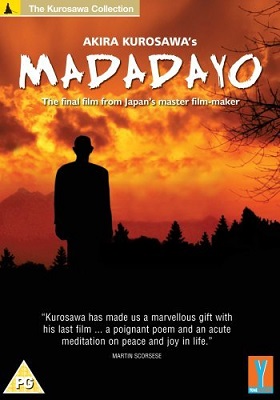
Madadayo, Akira Kurosawa (1993, Japan). This was Kurosawa’s last film and while not one of his signature samurai historical films it was definitely an historical film. It’s set in the late nineteenth century and concerns a retired teacher and those of his pupils he stayed in touch with. It’s immediately obvious from the first five minutes of this movie that Japanese teachers and pupils have a different relationship to those in the West. I mean, most of what I know about pupil-teacher relations has been gleaned from films; as indeed for UK schools, since I went to a public school (not a prestigious one) and it wasn’t unusual for pupils of that school to stay in touch with teachers on an irregular basis for a few years after they’d graduated. But in Madadayo, the “pupils” are young men starting their careers, and yet they visit their old professor, throw a party for him, and ensure his retirement is as intellectually rich as his career was. And they did this every year, for decades. Which unfortunately means Madadayo is not exactly heavy on plot. It’s an elegiac piece, the handing over from one generation to the next, embodied in a teacher and his pupils, which feels like the most obvious of metaphors, but… Madadayo is a nice film. It’s well-played, extremely well-filmed… but ultimately its story is so slight it’s a wonder it lasts 134 minutes. One for fans of Kurosawa, I suspect, although I did enjoy it.

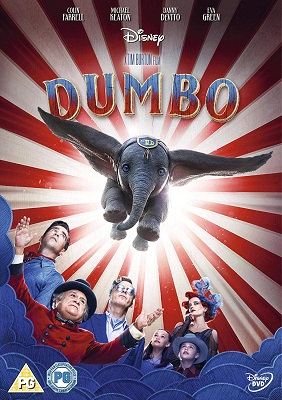
Dumbo, Tim Burton (2019, USA). Disney seems to be on a mission to rebuild its brand in the twenty-first century, and it’s chosen to do so by creating “live-action” versions of its classic films, so kids can enjoy cutting-edge versions of old school animations their parents loved as children. As a strategy, it makes sense… but it’s resulted in some odd films. I can’t really see how a piece of Tim Burton whimsy is intended to appeal to the same market as the original Dumbo back in the 1940s. Sure, tastes have changed considerably since then, as have sensibilities. But this new Dumbo is a great deal darker than the original. For a start, it opens with a  soldier returning home from WWI, minus an arm. His home is a travelling circus, owned by Danny DeVito, and he left his two children there while he was away fighting. The story more or less follows the original – as far as I know, as it’s been decades since I saw it – but all with that Tim Burton heightened reality look and feel. DeVito’s circus is failing financially and a successful rival wants to buy him out. But then his single elephant gives birth to a new calf, initially considered a freak because of his over-sized ears. Turns out the baby elephant can fly. And he’s a big draw. The circus’s fortunes begin to improve. But then millionaire Michael Keaton turns up and proposes a partnership between the circus and his New York amusement park. But all is not well at the amusement park, which does bear some resemblance to some sort of twisted Disney World, but the good guys triumph, there’s a a nice environmentally-friendly message, and even a somewhat perverse dig at corporatised entertainment. I’ve never been a Tim Burton fan, but this is the second one by him I’ve seen recently that stars Eva Green and, well, I sort of quite enjoyed it too.

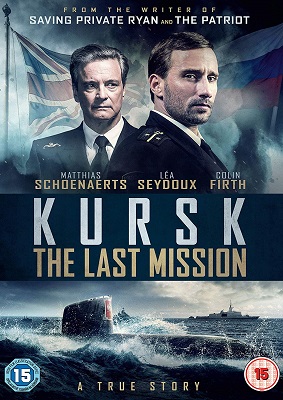
Kursk, Thomas Vinterberg (2018, France). Back in the day, disasters such as the sinking of the Kursk, a Russian nuclear-powered Oscar Class submarine, would have been the a natural subject for a made-for-television movie, with a cast of nobodies all speaking English with bad Russian accents. Instead, we get a French film with a Belgian star and a Danish director who co-founded the Dogme 95 movement with Lars von Trier. Needless to say, the Dogme 95 rules were not in force in Kursk. The story is well-known – submarine sinks after unexplained interior explosion, men are trapped, no rescue is made in time – but the film is very good on the Russian authorities’ poor response to the incident. Initially, they denied the sinking, then they delayed releasing details… The Royal Navy had already offered help but was rebuffed. Perhaps they could have saved some of the crew if given permission early enough, but it seems like pointless speculation. The rich and powerful will always protect their own interests first, whether they’re oligarchs or admirals. Kursk does an excellent job of presenting the  interior of the submarine, both before and after the disaster, but it does all feel a bit like a CGI-fest. We have perhaps became too used to disasters from disaster movies, or just straight-up thrillers, such that we no longer feel compassion, or fear, for those in real peril. Kursk is a good film and worth seeing, for all that it’s framed as a disaster movie and they’re generally best avoided.

1001 Movies You Must See Before They Die count: 940


1 Comment

Reading diary 2019, #7

I was never much of a fan of ebooks, but circumstances forced me to use them. Because of my move, I got a Kindle and, since it took a while for me to find somewhere reasonably permanent to live, I was reluctant to buy hardbacks or paperbacks due to the hassle of shifting them from one address to another. So the Kindle has proved extremely useful. In the last three months, my reading has been around 80% ebook. There are some books I would like to keep as physical copies, which means I’m not going to buy them as ebooks. I have some catching up to do there, however.

Meanwhile, below are: a paperback I brought with me to Sweden, and five ebooks I bought once I was here, two of which I actually have as physical copies, but in storage back in the UK.
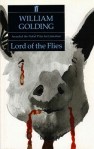
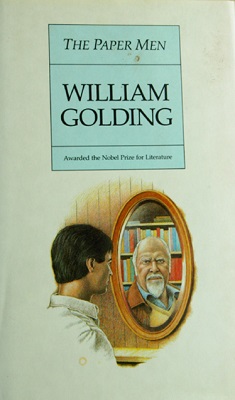
Lord of the Flies*, William Golding (1954, UK). This was Golding’s debut novel, and probably the only book for which he is known by most people. Which must have rankled. I have a feeling I read this at school, perhaps when I was eleven or twelve, although the only novels I remember reading at that time as part of my schooling are Cider with Rosie and The Cruel Sea. But I did read a lot then. In fact, it was around that time I was introduced to science fiction when a lad in my class lent me a copy of Starman Jones. Another boy in the year below me then lent me some EE ‘Doc’ Smith Lensman novels… and the rest, as they say, is history. Lord of the Flies has sort of entered British culture and its central conceit is part of the country’s popular consciousness. That conceit is, of course, schoolboys marooned on a desert island who start behaving like, well, children. Everyone remembers Piggy and his glasses, but he’s not the focus of the story. (I’ve not seen the film adaptation, from 1963 or 1990, so I don’t know if either made changes.) There is Ralph, mysterious and charismatic (and reads like Golding recalling a school boycrush), who is more or less dragooned into leadership. And there is Jack, leader of a choir, who fancies himself a leader (so is the Boris Johnson of the group). Ralph rightly insists on a signal fire to attract the attention of any passing ship. But Jack is more interested in hunting wild pigs. The conflict splits the group of schoolboys, and Piggy is accidentally killed. It has been said that Lord of the Flies is not as universal as it’s proclaimed to be, because its cast consists entirely of white British schoolboys (mostly) from the middle classes and above. This is only a problem if you think Lord of the Flies was intended to be, well, universal. I don’t think it is. It’s about public schoolboys (well, mostly; I think a few are not). If Golding was making a point that might be applicable to a much wider group then he wouldn’t have been so careful about the make-up of the marooned boys and their group dynamics. I know very little, I admit, about Golding’s life, or his thoughts on writing, so I may be projecting. But Lord of the Flies strikes me as too carefully staged and cast to be chiefly allegorical – an assumption based on a reading of only third of his oeuvre, I admit. But careful writers are careful writers, and careful writing is a good indicator of a habit of carefulness, much as a history of stupid decisions is a good indicator of stupidity (hello, Boris Johnson). I finished Lord of the Flies surprised it was Golding’s best-known work as it felt too slight. And this after reading The Pyramid (see here) and The Paper Men (see here). Perversely, though they felt too much like what they were, they also felt more… considered than Lord of the Flies. This is not to say it’s a bad book, but it is more of an historical document than its reputation would suggest. Read it by all means, but Golding wrote more interesting novels and they would be better reads.
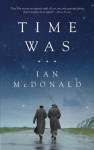
Time Was, Ian McDonald (2018, UK). I’d heard a number of good things about this novella, and while I’m usually sceptical about recommendations, and, to be honest, I’ve bounced out of McDonald’s novels on a number of occasions, but… it’s a novella, and it was on offer on Kindle. So I went for it. And I’m glad I did. The purported Nazi invasion of Shingle Street, Suffolk, has pretty much entered WWII mythology. McDonald posits it as a Project Rainbow-like experiment (AKA The Philadelphia Experiment), which actually results in sending two men careering independently through time. Unfortunately, they happen to be in a relationship. Fortunately – and this provides the entry to the story – they communicate using a collection by an obscure poet, left in antiquarian bookshops scattered throughout Europe. (Reading this novella, I was reminded of the Italian publisher who published a pirate edition of DH Lawrence’s Lady Chatterley’s Lover, banned in the UK at the time, and was so embarrassed at how it successful it was he sent royalties to Lawrence.) So Time Was is sort of a literary detective novel because the obscure collection is really obscure. But it also hints at a relationship between two men that leaves evidence scattered throughout the twentieth century. It’s cleverly done. And, I must admit, it did remind me of something, or perhaps several somethings – but I couldn’t think what. Which is not presented as a criticism. If anything, those echoes of other half-remembered stories added to Time Was. I liked this novella a lot, and I’m surprised it didn’t make more award shortlists. It won the BSFA Award, and was shortlisted for the Campbell and Dick, but didn’t even warrant mention for the Hugo or Nebula. A shame. This is an excellent novella.

Dune Messiah, Frank Herbert (1969, USA). The Dune series reread continues, although perhaps not as quickly as I’d hoped. It’s all down to me, of course; there’s nothing stopping me reading the books one after the other. Except I have a habit choosing something different to my last read for my next one. Probably not a great strategy when reading a series – but given this year I also decided to have a go at rereading the Wheel of Time series, and I’m pretty sure I wouldn’t survive reading those books in quick succession… Anyway, Dune Messiah. Popular wisdom would have it that Dune Messiah is the best of the original Dune trilogy – or, as some would day it, the best of the Dune sequels. Which tells you how wrong popular wisdom is. Dune Messiah is not a sequel – Herbert conceived of the trilogy as a whole, although perhaps not in detail. It’s also not the best of the three. Neither, to be honest, is the first book, Dune. Which means it must be the third one… but I’ve yet to reread it. Dune Messiah is set some years after the end of Dune. Paul Atreides is now emperor and has become increasingly disenchanted with the institution he has created. Meanwhile, there is a plot to kill him, led by some Fremen who fought with him and are unhappy with the changes to Arrakis. There are also a series of sub-plots. Princess Irulan, Paul’s wife, is angling for an heir, and has joined a conspiracy with a Guild navigator, a Tleilaxu Face-Dancer and a Bene Gesserit. It’s clear they all have different objectives, and it’s a marriage of convenience, so to speak (marriages of convenience pop up a lot in the Dune books). Meanwhile, Chani is pregnant and Paul knows she will die in childbirth. Which she does. She has twins, which Paul had not foreseen. And it turns out the Tleilaxu are more interested in finding a trigger for the ghola Hayt, a clone of Duncan Idaho, to recover Idaho’s memories. While rooting out the plot to kill him, Paul was permanently blinded by a “stoneburner”, a type of nuclear weapon. It’s Fremen tradition to abandon blind people in the desert, and eventually that’s what Paul does: walks out into the desert. Some years later, a blind Fremen called the Preacher appears in Arrakeen, the capital city of Arrakis, and rants against the regency that has taken over from Paul. Is Dune Messiah better than Dune? Yes. The prose is much better-written. But then it improves as the series progresses, so that’s no surprise. But where Dune had the fifteen-year-old Paul Atriedes as its focus, a character readers, especially male teen ones, can glom onto, Dune Messiah has no one. Which means it reads as a more distanced narrative. Paul is presented as a tragic figure – in fact, no one in the book is all that sympathetic, except perhaps, perversely, Princess Irulan. (Since first reading the book in my teens, I’ve always been fascinated the most by Skytale, the Tleilaxu Face-Dancer.) Dune was definitely a book of two halves: ‘Dune World’ and ‘The Prophet of Dune’. But Dune Messiah also feels like a book of parts, perhaps because its sub-plots don’t gel especially well. To some extent, that’s down to Herbert’s decision to have a cabal of four plotters all pursuing different aims, and a plot to kill Paul on top of that. It makes for a busy narrative, and yet Dune Messiah is only 256 pages. So the plot jumps around and Herbert skimps on some of the detail. Dune Messiah reads like Herbert stringing together his favourite scenes from the story he had planned. It works – better than Dune does, to be honest – but it does feel more like a best-of than a coherent narrative. The Dune series is a science fiction institution, and is likely to be even more so in the future. After decades of trying to raise the profile of the Dune series, leading to the questionable decision to publish a series of shit novels by Kevin J Anderson, Herbert Limited Partnership have finally got their wish, with a two-movie adaptation of the Dune directed by Denis Villeneuve and a supporting TV series. Dune is going to be up there with Lord of the Rings and Game of Thrones. The good news is the books are just as capable of supporting the cross-platform media giant Dune will become as Tolkien and GRRM. This is not necessarily a compliment. However, the Dune series reread continues and perhaps I will surprise myself with my re-evaluation of the following books…

Lethal White, Robert Galbraith (2018, UK). Speaking of series, my mother lent me the first Cormoran Strike novel, The Cuckoo’s Calling, and, while I wasn’t overly impressed, it did strike me as interesting enough to continue with the series. Not because Galbraith was really JK Rowling (to be honest, I’ve only read Harry Potter and the Philosopher’s Stone) but because The Cuckoo’s Calling sort of fell between the stools of crime fiction and literary fiction without actually being good examples of either, and yet still managed to present a pair of sympathetic characters more than capable of carrying a number of novels. And so I read The Silkworm and Career of Evil… and now Lethal White. The continuity between novels is good, even if the individual novels continue to suffer from that unfortunate fall between two stools. However, Galbraith does at least choose interesting subjects around which to base her novels (okay, so yes, Career of Evil was structured around the songs of Blue Oyster Cult, and I’ve been a fan of the band since my schooldays). Lethal White is, to be honest, more of the same. A politician somewhere between Boris Johnson and Jacob Rees-Mogg (AKA between arsehole and scumbag; or vice versa), is murdered. He had been the subject of a Strike investigation, which proves embarrassing. And so Cormoran and sidekick Robin Ellacott (Robin, get it?) have to solve the murder – initially thought to be suicide under weird circumstances (a time-honoured Tory tradition) – and clear the wife and estranged son of blame. But everyone seems to have an alibi. As mentioned previously, Lethal White does well as a follow-on from the previous book, and its central crime is sufficiently puzzling to drive the plot. But there’s a strange whiff of approval for the central Tory character, and I’m not sure if I misread the novel because this is JK Rowling and even vast riches wouldn’t turn her into a fan of Boris Johnson. Although, to be fair, Michael Heseltine might be a better model, and the extremism of the current Conservative Party has helped rehabilitate him and he’s now seen as almost moderate. I’m not saying the Galbraith novels are good – either as novels qua novels or as crime novels. But they’re certainly very readable and they do seem to have a somewhat sideways approach to crime… and this is in a genre which doesn’t necessarily prize originality.
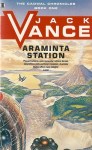
Araminta Station, Jack Vance (1987, USA). I first read this many years ago, probably soon after it was published in 1989 (the edition pictured, the NEL A-format paperback, is the one I own), which was a few years before I started recording the books I read. For some reason, I never got around to picking up copies of the two sequels, Ecce and Old Earth and Throy, until many, many years later… Then I never got around to actually reading them. And now, of course, they’re in storage. Happily, all three books of the trilogy are available as ebooks from the SF Gateway, so I picked up the first as a reread. The planet of Cadwal has been declared off-limits to development and is ostensibly policed by a group based at the eponymous station. Which has existed so long its workings have come to define its society. Glawen Clattuc is a teenager likely to take a middling position in the Araminta bureaucracy. But enemies of his father arrange for him to be given a much lower ranking than he deserves. He goes to work for the station’s police force. At a festival, Glawen’s girlfriend disappears, believed murdered and her body shipped off-world in a wine cask. There’s a suspect, but no evidence to charge him. There’s also a plot brewing in Yipton, an offshore community composed entirely of Yips, a human subspecies used as temporary labour at Araminta Station. All of which results in Glawen being sent on a mission to another world, where he ends up imprisoned in a monastery. And that, and the plot in Yipton, seems to link into mutterings about opening up Cadwal for development… I remember reading Vance’s last couple of sf novels in the late 1990s and early 2000s, and being disappointed by them. And the Cadwal Chronicles trilogy were the novels published prior to those. So my expectations weren’t especially high. Happily, Araminta Station proved to be Vance on fine form. It’s busier than most of his other novels, but it’s also better plotted. The characterisation also seemed less arbitrary than I recalled in other novels. And the comic lines were good too.

The Battle to the Weak, Hilda Vaughan (1925, UK). A few years ago, I put together a list of postwar British women writers. Some of them were already known to me – Olivia Manning, Naomi Mitchison, Elizabeth Taylor – and not all of them began their careers after WWII, but there were undoubtedly some particularly big names from the period I chose to ignore… Not, I hasten to add, that I considered my list in any way complete. It was a selection. And I did indeed track down books by some of the names on the list – Katherine Burdekin, Susan Ertz, Pamela Frankau, Storm Jameson, E Arnot Robertson, GB Stern… and Hilda Vaughan. Who, it turns out, probably didn’t really fit on the list, although her last novel was published in 1954, as she was chiefly active between the wars and is probably better considered a contemporary of DH Lawrence than a postwar writer. And, in fact, The Battle to the Weak, her first novel, has much in common with Lawrence’s novels. A young woman from a poor farming family in mid-Wales is sent to stay with an aunt at a seaside town. There she meets a young man, and the two fall in love. Unfortunately, it turns out he’s the son of her father’s mortal enemy, a neighbouring farmer he’s been violently clashing with for years. The son was given to his aunt at a very young age and more or less adopted, so he’s not at all involved in the feud. When the young woman’s father learns the identity of her fiancé, he forbids the wedding. As does the fiancé’s father. So the fiancé goes off to Canada to make his fortune. The young woman prepares to join him, but her father fights with her sister, who falls down the stairs and is paralysed from the waist down. The woman puts her plans on hold to look after her sister. Years pass. The sister dies. The young woman prepares to move to Canada. Then the father dies, so the young woman stays on to help her mother. The man in Canada writes and tells the young woman he couldn’t wait and has married. Years pass. The man returns to Wales, and the two eventually reconnect. In its depiction of rural life in the 1920s, The Battle to the Weak is very Lawrentian. There’s also a cross-generational aspect. But Vaughan’s novel is much more grim than anything Lawrence wrote. The lives she documents are hard, and the men – bar a couple of exceptions, one of which is the fiancé – are monsters. Especially the father. The prose is typical of the period, but it’s good. If you like fiction from the early part of the twentieth century, then Vaughan is definitely worth a go.

1001 Books You Must Read Before You Die count: 135


Leave a comment

Moving pictures 2019, #19

Yet more films. Getting closer to being up to date. The last week or two I’ve been mostly watching TV series, which I don’t blog about, which should help me get my movie-watching fully documented.

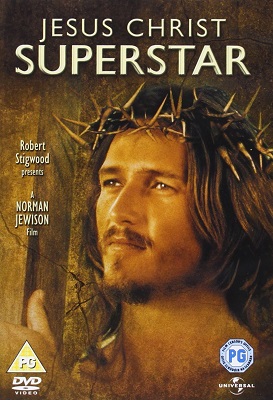
Jesus Christ Superstar, Norman Jewison (1974, USA). I have a vague memory of my parents owning the original soundtrack to this – the original stage musical, rather than this film adaptation – many many years ago. Or it might have been Hair. In fact, now I think about it, perhaps it wasn’t Jesus Christ Superstar because it’s a Lloyd Webber/Rice musical and I don’t remember ever owning any of those on vinyl (actually, it was a rock opera first). Although we did go to see Cats once at some West End theatre in the early 1980s. But Jesus Christ Superstar is, er, about a certain prince of the House of David, a deposed ruling dynasty in occupied Judea and who, two thousand years later, has probably been responsible for more than deaths than Stalin, Mao, Hitler, Pol Pot and the Black Death combined. And it’s a musical. Of course. The story mostly focuses on the relationship between Jesus and Judas. The latter thinks Jesus is not practising what he preaches, an attitude present-day televangelists seem to share, and so leaving himself vulnerable to the Roman authorities. But, of course, Judas is a Bad One, and gives up Jesus to the Romans. Who is then strung up on a cross. And his followers adopt the cross as his symbol. You’d think that would be the last thing he’d want to see if he ever came back. Jesus Christ Superstar is actually framed as a group of actors and musicians staging the original play in an Israeli desert (cunningly suggesting that all of Israel is an inhospitable desert; but that’s a discussion for another day). The framing narrative works really well as a conceit, and the deliberate use of anachronisms throughout the film is very effective. But it’s a musical, so the music… The opening track is really good, as is the one sung by the Pharisees, but a lot of the other songs were less memorable. It’s all sing-through, like Jacques Demy, with only one or two lines of spoken dialogue. Which has the advantage of making the segues into the songs feel like a natural part of the narrative, rather than imposed by the format. I had no idea what to expect when I started watching Jesus Christ Superstar – a not uncommon occurrence for me when watching films, it must be said – but I kind of liked it? I’m by no mean a Lloyd Webber/Rice fan, or indeed a fan of musicals in general; but I do like 1970s rock and I do like idiosyncratic approaches to narrative cinema.

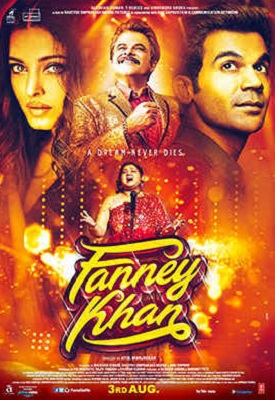
Fanney Khan, Atul Manjrekar (2018, India). And from one musical to another. Although calling a Bollywood film a musical is a bit tautological. The title refers to the singer in a band who never makes the big time. Instead he ends up working in a factory and brings up his daughter with dreams of stardom. She enters a singing competition but doesn’t win because of her weight. So her father kidnaps the latest star, Baby Singh, in order to use blackmail to give his daughter a singing career. This is hardly the most original plot on the planet. But then Bollywood has never used original plots, preferring to put its own spin on well-known stories. And so it does here. The friend asked to look after the kidnapped singer falls in love with her and the two end up in a relationship. The kidnapper becomes a folk hero. And the daughter, despite several setbacks, ends up as a successful singer. This a big-time feel-good film, and does it really well. I mean, I don’t put on a Bollywood film expecting to be depressed, but some do feel-good bit better than others, and Fanney Khan certainly excelled at it. Worth seeing.
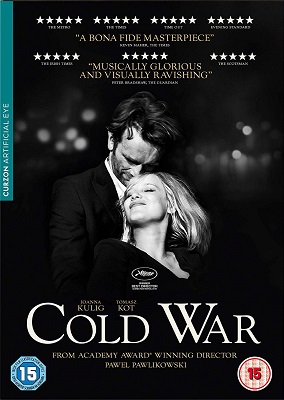
Cold War, Pawel Pawlikowski (2018, Poland). I’m not sure what to make of Pawlikowski, a Polish film-maker who is not Polish, in as much as he grew up and is based in the UK, but nevertheless makes Polish films. Mostly. He started out in documentaries, before making several British features films. But his last two have been Polish. They have also been very good. Cold War is filmed in black and white and is set in the years following World War II. A man and woman fall in love. He’s older than her. She’s a singer and he’s a music teacher. The film takes place over several years, both in Poland and in France, after they’ve managed to leave Poland. Most reviews of this film have rightly pointed out that the cinematography is gorgeous. But the music around which the story is structured is also good, and the two leads do an excellent job of carrying the movie. This is a quality piece of film-making and Pawlikowski is definitely a name worth noting.

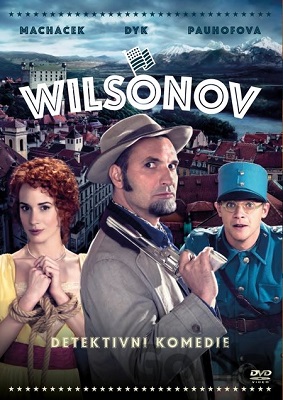
Wilson City, Tomás Masín (2015, Czechia). This much is actual history: the city of Bratislava, now capital of Slovakia, was chiefly known as Pressburg, since it had a large German-speaking population. Other names included Prešporok (Slovak), Prešpurk (Czech) and Pozsony (Hungarian). But after the First World War, the city was briefly named Wilsonov after President Woodrow Wilson of the US, in an attempt to encourage US protection when the city declared itself a free city in order to resist annexation by the newly-formed Czechoslovakian state. It didn’t work, the city became part of Czechoslovakia and was renamed Bratislava. The film Wilson City is set during the years just before that name change. A demon is loose and the US sends an FBI agent to help catch it. The mayor assigns a police cadet to assist the agent. But there are other things also happening – the mayor wants to cede the city to the US, which is why he plans to rename it Wilsonov, or Wilson City. For all that it tackles a serious bit of history, Wilson City is definitely a comedy. But a slightly off-kilter one. And the FBI agent, Food, is a really oddball character. Worth seeing.

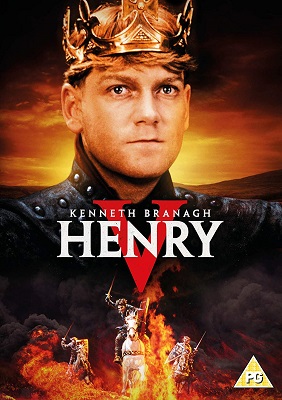
Henry V, Kenneth Branagh (1989, UK). There is a certain type of thespian-turned-director, almost always male, who seems to feel a need to prove, well, something by directing themselves in a movie adaptation of a play by Shakespeare. And it’s pretty much always one of the history plays. To be honest, this isn’t actually a bad thing. Laurence Olivier’s 1944 film of this same play is actually pretty good; and Orson Welles made three films of Shakespeare’s plays (sort of: Chimes at Midnight was cobbled together from several plays, including Henry V) and they were pretty damn good. But Branagh. He’s so young in this film. I mean, he’s six years older than me and he’s been there on television and in films since the early to mid-1980s, so about as long as I’ve been a consumer of popular culture. He plays King Henry as soft-spoken but very much aware of his power, which does seem a bit weird to modern sensibilities since we would expect there to be something more underpinning that awareness than “divine right”. The battle scenes reminded me a great deal of both Olivier’s and Welles’s takes, in the use of close-in camera work to hide how few actors and extras were actually involved. Plus lots of mud. The other notable thing about Branagh’s adaptation is the number of faces recognisable to anyone who grew up on British TV during the 1980s. It’s almost a who’s who. Olivier’s version used some interesting cinematic techniques and some clever staging. Welles relied on his acting chops and some clever script-writing. I’m not sure what Branagh brings to the table. There’s a very 1980s brashness to his adaptation: a contemporary and un-theatrical presentation of violence, and a development of the characters which owes more to the language of cinema than the language of the theatre. It’s not entirely successful. Emma Thompson plays her role as Katharine, daughter of the French king, but isn’t very convincing. Some of the actors’ accents are a bit wobbly. And Branagh’s king sometimes seem more Godfather than noblesse oblige. But it’s worth seeing. And now I wish I hadn’t put my box set of BBC adaptations of Shakespeare’s plays into storage and brought it to Sweden with me. Ah well.

Pan Jinlian’s Revenge, Wu Shuang (2016, China). Pan Jinlian is a famous figure in classical Chinese literature. She is the central character of The Plum in the Golden Vase and also appears in Water Margin. She is effectively an archetypal character in ancient Chinese literature. She was considered beautiful but was married to a man most thought ugly. She had an affair with a handsome warrior, and she and the warrior poisoned her husband. The husband’s brother, however, investigates and discovers the truth. In Pan Jinlian’s Revenge a young man from the present is accidentally set back in time to the seventeenth century. He is familiar with the story of Pan Jinlian, and so very surprised when he actually meets her and her husband. She is, after all, a fictional character. The film is pretty much the young man trying to prevent Pan Jinlian’s husband from being murdered by his wife. It’s a conceit that clearly works best for viewers familiar with the source material. I have not, I admit, read any classical Chinese literature, although I would like to. But a bit of Googling helped while I was watching Pan Jinlian’s Revenge, although the film could certainly be enjoyed without it as a straightforward timeslip romance (sort of). I mean, it’s not an especially well-made film, more the polished output of a studio that churns out movies, possibly for TV, to a tight schedule. It looks like it was filmed in a heritage village, the cast are good without having any noticeable screen presence, and the story moved on well-oiled rails to its finish. I enjoyed it, and was interested to learn of Pan Jinlian, but that’s about all I could say.

1001 Movies You Must See Before You Die count: 940


Leave a comment

Me at Worldcon, with Apollo

So it’s the Worldcon in two and a bit weeks, and this year it’s in Dublin. And I’m going to be there. Last time I was in Ireland was around fifty years ago, so my memories of the trip are pretty much non-existent. Something else that happened fifty years is the Apollo 11 moon landing. And, somehow or other, I seem to have been put on a bunch of panels on that very subject…

My schedule looks like this:

Apollo at 50
16 Aug 2019, Friday 10:00 – 10:50, Second Stage (Liffey-B) (CCD)
Getting men on the Moon was certainly an achievement, but it is nearly 50 years since anyone was there and the Apollo launchers, unlike Soyuz, have been abandoned for years. Beyond the obvious spectacle, was Apollo all for nothing? Was the spectacle itself enough? Panellists consider the legacy of Apollo.
Jeanette Epps, Ian Sales (M), Dr David Stephenson, Geoffrey A Landis , Mary Robinette Kowal

Artemis: Apollo’s big sister
17 Aug 2019, Saturday 11:00 – 11:50, Second Stage (Liffey-B) (CCD)
Recently NASA selected three lunar landers for taking scientific instruments to the Moon. This is the start of many steps towards the goal of returning to the Moon in 2024. What needs to be done, what is planned, and how does this compare with initiatives from other countries?
Jeanette Epps, Becky Chambers, Alan Smale (M), Ian Sales, Geoffrey A Landis

Alternate Apollos
17 Aug 2019, Saturday 13:00 – 13:50, Wicklow Hall-1 (CCD)
We know how the Apollo landings turned out, but it could have gone quite differently. Armstrong and Aldrin could have crashed, or landed safely but been unable to take off again. What might have happened if Apollo 18 and the Apollo Applications programme hadn’t failed? If the Soviet N1 launcher had succeeded, could they have reached the Moon first? Panellists consider alternate histories of Apollo.
Henry Spencer, Ian Sales (M), Dr Laura Woodney, Gillian Clinton

Shoot for the moon: lunar depictions in SFF
19 Aug 2019, Monday 11:00 – 11:50, Liffey Hall-2 (CCD)
For as long as there has been science fiction there has been a fascination with the moon. What role does the moon play in cultures around the world and how do those cultures incorporate it into their speculative fiction? Our panel will discuss why the moon holds such a powerful allure as a subject for writers and whether the discovery of more distant heavenly bodies has had an impact on lunar fiction.
Ian Sales (M), Ian McDonald, Joey Yu, Hester J Rook, Jeffery Reynolds

The good news – sort of – is I’m moderating three of the panels, which means I don’t have to say anything intelligent, just keep the discussion moving. Which is just as well since most of the other panellists are actual rocket scientists. On the one hand, the above are good meaty topics, ones that interest me – one of the reasons, of course, why I wrote the Apollo Quartet. On the other, actual rocket scientists.

The more observant among you will have spotted the names of some successful sf authors above, including a Hugo Award finalist. And, er, also a Guest of Honour. Coincidentally, I’ve read some of their books, although not necessarily the ones appropriate to any of the panels.


Leave a comment

Moving pictures 2019, #18

I still have a bunch of these before I’m up to date. These films are from early June.

A Date for Mad Mary, Darren Thornton (2016, Ireland). Mary has just been released from prison and returns to her home in Drogheda. Her best friend Charlene is about to be married and Mary is one of the bridesmaids. And she needs a date. She also has to run a number of errands for the bride-to-be, such as arranging a hen party. And sorting out the wedding photographer. But Charlene’s friends, and the other bridesmaids, were never really Mary’s friends, and though Charlene insists nothing changed while Mary was inside they are clearly drifting apart. So Mary tries to find herself a boyfriend for the wedding, while trying to ignore that things have changed in Drogheda. Mary bumps into the wedding photographer, the two begin seeing each other, despite neither considering themselves gay. But it’s the wedding photographer Mary takes the wedding. I didn’t know what to expect when I started watching A Date for Mad Mary, but it turned out to be a well-played girl-meets-girl movie, with a good cast, a plausibly story and a realistic setting. Worth seeing.
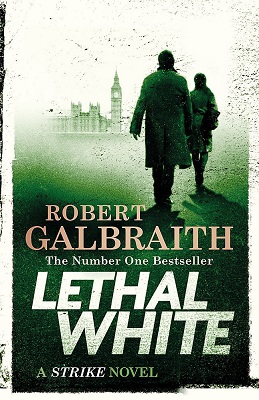
Captain Marvel, Anna Boden & Ryan Fleck (2019, USA). This has been one of the most divisive films of the year, if not the most divisive film so far in the MCU. And, typically, all the fuss had nothing to do with its quality. There is a type of fan out there, of comics and of films, who simply can’t accept a story in which a woman is the hero. They are of course male. And intellectually-challenged and immature. Not only upset with a tentpole MCU movie being about a female superhero, they flew into a frenzy when they saw a deleted scene from the sell-through release showed Captain Marvel subduing a biker who’d made a sexist advance to her. It’s not a good scene, and adds little to the film (which is probably why it was cut), but what Marvel did is trivial when you consider that fridging is so prevalent in movies it’s an actual trope. That’s fucked up. I am, as I’ve said before many times, not a fan of the MCU films, or indeed of superheroes in general. One or two of the films I’ve found entertaining, but they’re only really impressive as showcases of the state of the art in CGI, and not always then. Captain Marvel made some odd story choices, likely a result of a difficult production, with far too many throwaways that added little or nothing. The use of de-ageing on Samuel R Jackson and Clark Gregg was weird and distracting. And the plot jumped around all over the place, with the final big reveal being obvious from about ten minutes in and so it pretty much fizzled. But there was a lot to like. Marvel is the most interesting superhero to carry a film, and as an origin story Captain Marvel beats being bitten by a radioactive spider, but the power Marvel has by the end of the film… Why are there zillions of superheroes when you have one that’s so powerful no one can stand against her? It’s like everyone has sticks and there’s one person walking around with a chain-gun. Star Trek used to do it all the time, with its god-like aliens like Q. Despite all that, Captain Marvel was one of the better MCU movies I’ve seen.
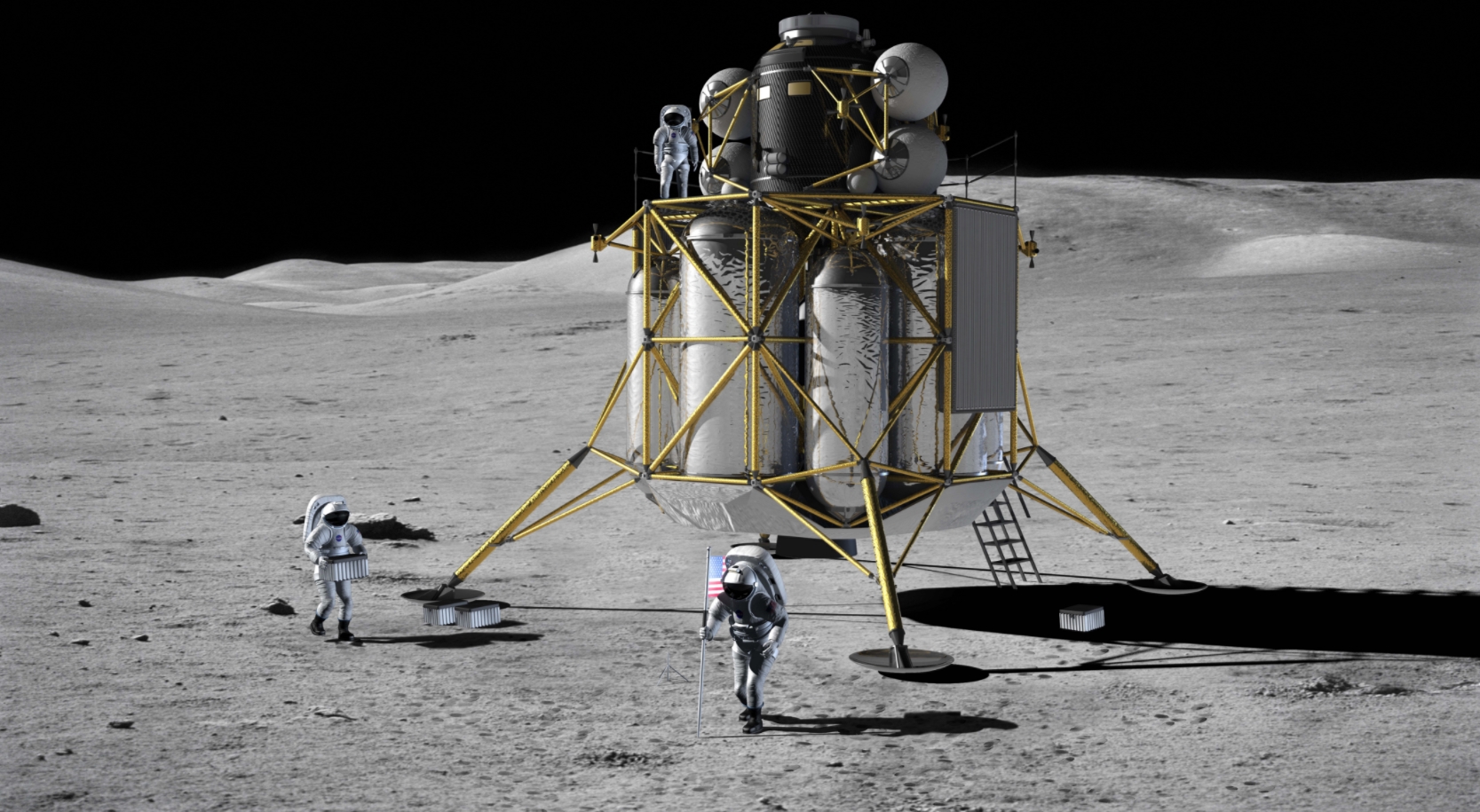
The Nugget, Bill Bennett (2002, Australia). Like most of the films in this post, I stumbled across The Nugget on Amazon Prime. It’s a low-budget Australian movie, although star Eric Bana has appeared in several Hollywood movies and even played a memorable villain in the first of the execrable Star Trek reboots. I say “memorable” but just about the only things that were memorable in that film were its egregious ignorance of the laws of physics and lack of rigour. Oh, and its plot, which didn’t make the slightest bit of sense. Happily, none of those are accusations that can be levelled at The Nugget. Three layabout road workers own a plot of land in the bush where they hope to find gold. And then, purely by accident, they discover a massive nugget, the biggest ever found. The story then follows a typical path – it was also used in Ousmane Sembène’s Mandabi (see here) – in which the three men and their wives spend they money they will get from the nugget before they’ve even sold. And they don’t even know how to sell it. And then it goes missing, but they figure out who has stolen it. You can pretty much guess the ending. A fun light comedy. And very Australian.
Images, Robert Altman (1972, UK). This is one of those films that reminds you of other films. The obvious reference is Don’t Look Now, although that was released a year after this one. But critics at the time thought it resembled Polanski’s Repulsion from 1965. A successful author of children’s books, Susannah York, is told her husband is having an affair, although she finds no evidence of it. Every now and again, however, her husband appears to be an entirely different man. So they move to a small cottage in the Irish countryside, in the hopes York will have the peace and quiet to work and recover. But her husband still keeps on changing into that stranger, and she even spots a doppelganger of herself at various times. Little in this film made sense, but I don’t think it was intended to. Perhaps it was supposed to represent York’s decaying mental state, but the ending scotches that reading. When you finish watching a film, you like to think it was worth the two hours it took. Not just the quality, but also the story. And that’s where Images failed. It seemed relatively straightforward, but by the end you had no idea what it was supposed to be about. Avoidable.

Aladdin, Ron Clements & John Musker (1992, USA). I’ve been slowly working my way through the Disney animated films, not to any plan or timetable it must be said, and it’s often surprises me how few of them I’ve seen. Especially those originally released in the 1980s and 1990s. Which includes Aladdin. I know the story, of course – I’ve read 1001 Nights (various versions), but I knew it even before then, from… the pantomime? I’ve no idea – and I had some sort of vague recollection of some details of the film from back when it was released… Aladdin is a humble, but attractive, street urchin. An evil vizier uses him to break into a cave of riches (this part of the film didn’t seem to follow the original story much) but leaves him trapped inside. He manages to escape, thanks to a genie (voiced by Robin Williams). He returns to the city, disguised as a rich prince, and woos the sultan’s daughter. But the evil vizier plans to marry Princess Jasmine himself and so take the throne. The rest of the story was pretty much by the numbers. With songs. The chief draw here is Williams as the genie, and that’s going to totally depend on how much you enjoy Williams doing the Williams shtick. Which, for me, is not that much. The animation was clean, the character designs were, well, nice, and it all seemed a bit, well, bland. It felt like Disney Product. Meh.

Snow White and the Seven Dwarfs*, David Hand (1937, USA). I’m pretty sure I’ve seen this before, although it must have been when I was a kid because I have no specific recollection of it. But, like a lot of early Disney films, much if its contents have become cultural memory, so it’s hard to know what’s personal memory and what’s learned second-hand.  It’s even harder when you have a story as well-known as Snow White. You know how it goes. Evil queen is told Snow White will eclipse her in beauty, so she has the huntsman take Snow White into the forest and kill her. Which is what you would totally do if someone a couple of decades younger than you turned out to be prettier. The huntsman does not kill Snow White, who runs away and stumbles across a cute cottage occupied seven dwarfs. And so on. It’s all very 1930s, but then classic Disney films were very much products of the decade in which they were made… and I suppose that might also hold true for more recent Disney animated movies, except everything the studio does these seems way more productivised. Snow White and the Seven Dwarfs is generally considered one of Disney’s best films, if not its absolute best one. It’s definitely top ten, perhaps even top five. Unlike Aladdin (see above), it has bags of charm so it seem churlish to complain Snow White herself is completely insipid. But the dwarfs, happily, are anything but. Still, I wanted to put it at number one, or perhaps even in the top three. It’s very good. But there are a few that are better.

1001 Movies You Must See Before You Die count: 940


6 Comments

Reading diary 2019, #6

My reading seems to be all over the place of late. Mostly it’s because I’ve been limiting myself to buying ebooks, and only when they’re cheap. I did bring some books with me, and I bought a few at the recent Swecon, but I put a lot of unread books into storage. So with less to choose from, my reading has proven less planned. Ah well.

X, Sue Grafton (2015, USA). I’ve been a fan of Grafton’s Kinsey Millhone novels since discovering them back in the mid-nineties. As well as being good crime novels with an engaging narrator, Grafton’s decision to keep the internal chronology consistent irrespective of how long it took her to produce a novel has meant each book has slipped further and further back into the past. Even now, thirty-seven years after the series began – or rather, thirty-three years from A to X – and X is still set in the 1980s, albeit towards the end of the decade. Millhone is hired by a local rich woman to check up on the son she gave up for adoption decades before, and who has just been released from prison after committing a string of burglaries. She does as asked but then discovers the man was no relation… and that the rich woman is the estranged wife of millionaire, and the two are trying to screw as much money out of each other as possible. Throw in a string of missing women and the man responsible for their deaths, identified by Milhone, and who then begins stalk her. Plus an elderly couple who have moved into Milhone’s neighbourhood but do not prove to be who they claim… It’s a bit busier than most of the Milhone novels, and the millionaire man and wife plot actually has a happy end; but these are good books and definitely worth reading.

Embers of War, Gareth L Powell (2018, UK). This won the BSFA Award earlier this year, although I don’t chose the books I read because they won awards (ha!). I’d sort of gone off space opera in recent years as none of the stuff being published really appealed – and, to be honest, most of it seems to resemble military sf more than it does space opera. But UK space opera is a different beast to US space opera, and closer to my sensibilities. I’d also heard a few good things about Embers of War… But, well, having now read it, I’m not entirely convinced. Powell’s decision to tell his story using a number of different points of view in short chapters, I think, worked against it. It didn’t help that so many of the voices were similar, including that of the ship’s AI whose story the novel ostensibly is (in fact, Embers of War is the first in a series about the ship; the sequel is Fleet of Knives). Anyway, the ship Trouble Dog used to be a warship but is now a de-armed rescue ship with your typical space opera crew of misfits. A spaceliner is attacked by a mysterious enemy while visiting a planetary system whose planets were all reshaped into giant sculptures by a powerful and long-dead alien race. Trouble Dog goes to the rescue. Meanwhile, the target of the spaceliner attack – and why do sf novels think it’s acceptable to murder thousands in pursuit of just one person? It needs to stop – has managed to survive and finds herself on the surface of the planet known as the Brain (because, er, it looks like one). She discovers a labyrinth inside the planet – this part of the novel reminded me a great deal of a favourite sf short story, ‘A Map of the Mines of Barnath’ by Sean Williams – and so discovers its secret. The real identity of the woman was not hard to figure out, and it’s the reason why people want her dead – although given she was following orders at the time, it did seem a bit like they were going after the wrong person. The last Powell novel I read was The Recollection back in 2011 (see here), and I thought that started well but then turned boringly generic. Embers of War suffers from the latter as well. The world-building is all a bit too identikit and the ideas feel somewhat second-hand (cf my mention of the Williams story earlier). The characterisation is either bland or relies on quirks, and the prose is readable without being memorable. Readers who like BDOs and alien puzzles will find something to their taste here, but for me this is just Extruded Space Opera Product, with little or nothing that makes it stand out.

The Paper Men, William Golding (1984, UK). I’m having trouble making up my mind about Golding. Until a couple of years ago, I knew him only as the author of Lord of the Flies – his debut novel and his most famous, which must have really hurt – but then I read Rites of Passage and was very impressed. I picked up several of his books in a charity shop, so I had more to read. But… I’m reminded of John Fowles’s oeuvre: he wrote a couple of novels that were stunning pieces of work, but also a number that were almost emblematic of the output of a British white middle-class middle-brow male writer and so not so good. I think Golding was a better writer than Fowles, although none of his books, other than his debut, were as successful as either The Magus or The French Lieutenant’s Woman (and while the latter is an excellent piece of work, the former is very much the sort of book that’s admired only by people in their early twenties). So too with Golding: a handful of beautifully-written but quite strange novels, and then some that are pretty much emblematic of the output of a British white middle class male writer, although perhaps never middle-brow. And The Paper Men falls into the latter category. It’s a first-person narrative by a famous writer who has managed to build a successful career out of a critically-acclaimed and commercially-successful novel and a series of much less successful follow-on works. But he’s seen as an important man of letters, and a US academic turns up on his doorstep asking to be his official biographer. The writer refuses. Shortly afterwards, the writer’s marriage breaks up and he heads off to foreign parts. There’s then a sort of hallucinatory chase around the world, with the biographer trying, and failing, to gain permission to access the writer’s papers. There’s something more going on there, or at least it feels like there should be, but if it’s a reference to anything it pass me by. There’s some very male-gazey – well, pretty lecherous – depictions of the biographer’s young wife, and a number of situations with border on farce. In fact, at times The Paper Men feels like it’s supposed to be a comic novel, even though it’s not at all humorous for most of its length. I’ll certainly read more Golding, but the last two books by him I’ve read have been somewhat disappointing.

The Bitter Twins, Jen Williams (2018, UK). I read the first book in this trilogy earlier this year (see here), and only did so because some friends were extremely effusive with their praise of it… I mean, I’m not a fan of heroic fantasy, although I’ve read a lot of it in the past, and I’m pretty sure there’s very little overlap between my taste in genre fiction and that of the one friend who praised these books the most… But I’m happy to read outside my comfort zone because how else would I discover new authors to like and admire? While bits of the first book, The Ninth Rain, didn’t entirely work for me, I do like fantasy worlds that are couched as science-fictional – and vice versa, of course – so there were definitely things to appreciate there. Enough, at least, to read the second book. Which is, I think, better than the first. And middle books of trilogies generally are not that. It’s better because it introduces a mystery in one of its narratives, gives it a satisfying conclusion, and also uses it to reveal some deeper background about the world. On the other hand… there was something about the writing style which didn’t quite click with me. It wasn’t until a chat at a con with the aforementioned friend where she mentioned “cock-blocking” and quoted a particular line from The Bitter Twins that I figured out what it was about the prose that was giving me trouble: it was written like fan fiction. The author was having far too much fun with their characters, to the extent that “having fun with characters” was driving the story rather than the plot. I’m not saying this is a bad thing. That friend? She’s a big fan of fan fiction, so it’s an approach and style of narrative that appeals to her. I don’t have that background – she had to explain what “cock-blocking” was to me – and I prefer my narrative voice distanced (see pretty much every Reading diary post on this blog). Despite that, the world-building in this trilogy remains very good – in many respects, it reminds me of Jemisin’s award-winning Broken Earth trilogy – and while the good guys tend to be a bit too good to be true at times, the villains of the piece are interesting. Worth a go.

Air Force!, Frank Harvey (1959, USA). I think it was the cover art which prompted me to buy this. I do like books about the Space Race, and while a cherry-picker was never used to deliver astronauts to their space capsule – whatever capsule that’s supposed to be on the cover – it all looked close enough to reality to appeal. If you know what I mean. The contents turned out to be somewhat different to what I’d expected. For a start, I’d thought it was non-fiction, a series of essays written for the popular press about the Space Race, or extrapolations of its future. It turned out to be entirely fictional, albeit based on extrapolations of the state of aviation and space technology in the US at the time.  There are eight stories, originally published chiefly in the Saturday Evening Post. One story is about the first X-15 flight to achieve orbit (the X-15 never did), another is about a pilot whose wife is pressurising him to leave USAF and go into business but his successful prevention of a disaster on a flight persuades him to say. Another story has a fighter pilot “demoted” to transport planes but he manages to prevent a fatal crash during a catastrophic failure of his plane’s systems and that persuades his superiors he should be back flying fighters. It’s all very gung-ho and USAF rah rah rah, and while the technical details are spot-on, the extrapolations are closer to the military’s wishful thinking than what actually happened. This is Man In Space Soonest rather than Skylab, if you know what I mean. The prose is not even serviceable, it’s “journalese” and presents each story as a cross between fiction and a personal account. It’s fun, if you’re into mid-twentieth century US aviation fiction, but its appeal these days, ie sixty years later, is going to be limited pretty much to fans of that. Like, er, me.

A Big Ship at the End of the Universe, Alex White (2018, USA). I should have known from the title… and its sequels’ titles (currently A Bad Deal for the Whole Galaxy and The Worst of All Possible Worlds). This is the Becky Chambers school of titling books, and I’m not a fan of Becky Chambers’s novels. Although to be fair, I was unimpressed with A Big Ship at the End of the Universe for a number of reasons, of which its terrible title was probably the least objectionable. The bad news starts pretty much on the first page. This is a far-future space opera universe… and it has magic. There’s no sense to it, clearly it was added because the author it was a cool idea. Half the stuff magic does in the book is also done by technology. Why would they do that, build a technological solution to a problem already solved by magic? It’s like that throughout the story. But, you know, some people like tech and magic; the fact it makes no sense, that it destroys any rigour the universe might claim to possess, is not a deal-breaker for them. It’s certainly a hurdle more easily scaled by some readers than others. Had that been my only issue with A Big Ship at the End of the Universe, then I’d have simply written it off as “not for me”. But… The novel opens with car race on a space station and it’s clear this is a sport all worlds enjoy and follow, and there’s a lot of money and prestige invested in it, much like Formula 1 in the real world. During the race, one of the drivers, the favourite to win the championship, witnesses the murder of her rival by a strange masked magical figure who seems to have EVEN MOAR magical powers than is known to be possible. The driver is charged with the murder, fears for her life, and does a runner (despite belonging to one of the richest families in the galaxy). Meanwhile, a woman who makes a living selling fake treasure maps to gullible treasure hunters finds herself being hunted by unknown assailants. And she is one of those rare people who have no magical ability whatsoever. Both end up being kidnapped by, and then dragooned into, the crew of the Capricious, an ex-warship from the losing side of an earlier war. The map-seller was once a member of the crew but walked away when the war ended. Bad feelings remain. The plot is all about a super-warship that disappeared during the war, and somehow the super-magic assassin is associated with it. After some internal tensions, the crew of the Capricious track down the ship with authorially imposed ease, but then find themselves the targets of a group of super-powerful magicians, including the aforementioned assassin, who seem to have no trouble razing rich and powerful galactic institutions to the ground. And that is this novel’s biggest problem. The villains are super-powerful, and their strategy of slash and burn is at complete odds with the conspiracy’s previous actions, and it all seems EVEN MOAR implausible than having random magic powers in a technological space opera universe. And if that weren’t enough, the hardy band of adventures otherwise known as the crew of the Capricious still manage to win the day. They are massively outgunned, hugely outgunned… But they win. A battle, not the war – as indicated by the presence of sequels. I mean, there’s suspension of disbelief and there’s suspension of disbelief. The presence of magic is stretching it, but I’m willing to go with it. The rest? No! Dial it back, FFS. It’s nonsense. Super-villains taken down by hardy adventurers with no special powers? There’s no rigour here, no attempt at it. It’s like the author just threw “cool” ideas at the page with no regard for what fitted. It’s not like the plot is super original, because it’s not, in fact it’s a pretty standard one for RPGs (and “ordinary” player-characters overcoming super-powered NPCs is also pretty common in RPGs). Anyway, A Big Ship at the End of the Universe is not a good book. I will not be continuing with the series.