I have decided on my challenge for 2012. It will be world fiction. Each month, I will read a book written by an author who is a native of a country whose literature I’ve not read before. Unfortunately, these will have to be books published in English. While I might be able to puzzle my way through novels written in some languages, that would a) take me more than a month per book, and b) limit my choices to fiction from countries many of whom I’ve already read…
To date, I’ve read fiction from the following countries:
Australia
Canada
Chile
Czech Republic
Denmark
Egypt
Finland
France
Germany
India
Ireland
Italy
Japan
Lebanon
Netherlands
New Zealand
Norway
Palestine
Poland
Russia
South Africa
Sudan
Sweden
UAE
UK
US
Yemen
I’m now looking for suggestions for novels from authors from countries not listed above. Any genre. But not books that are too huge. Fortunately, I’ve already at least one Chilean author, so while I do own a copy of Robert Bolaño’s 2666, I can read it at my leisure and not for this challenge.
So, get suggesting away. It would be nice if the books were readily available in the UK – either new or second-hand. And I’d probably sooner they weren’t from Anglophone countries. I’d also like a diverse list, covering as much of the globe as possible.
Every now and again, a news story pops up about cameras in public – or even private – places. The latest is Aldwych Tube Station, which has been opened to the public as a museum. The owners of the museum have banned the use of DSLRs inside. They claim this is due to the cameras’ “combination of high quality sensor and high resolution”, which is patently stupid.
But then it doesn’t matter what is the reason for the ban.
It’s the same as concerts refusing entry to people with “professional” cameras or video-cameras. The owners of the event are trying to preserve their revenue stream. If someone with a camera is going to make money from the sale of photographs or video, then they want a slice of it. Or they want to make money from the sale of photographs they’ve taken themselves.
Unfortunately, that’s a horse that has long since bolted.
The technology now exists to take high-quality photographs using compact cameras, or even mobile phones. The distinction between “professional” and “own use” no longer exists, and hasn’t done for many years. Money-makers, of course, refuse to recognise this. Their inability to understand the technology, or how it is changing, and how it is changing the way people use it, is making them look increasingly dumb.
So how long before someone somewhere decides to roll back that technology?
Yes, there’s money to be made in the new shiny tech toys. But when those same toys impact on the revenue-generating ability of intellectual property – as they currently do – then someone somewhere is going to realise they were better off without them. I am not, I hasten to add, a photographer, not even as a hobby. I prefer words to pictures. But the same argument also applies to book piracy and music piracy. DRM is plainly ineffective. Each year new tools appear which make the ability of intellectual property to generate revenue more problematical.
The world this will create is already an established fact. I’m not especially interested in extrapolating how the world will change as that technology becomes more pervasive, more sophisticated and more ubiquitous. But imagine a world where the plutocrats and oligarchs introduced technological regression, a world where each new generation of a gadget had less functionality than the preceding one.
Even now, it’s easier to write stories set in earlier decades simply because some plots fail if set at the present time. Many crime stories, for example, don’t work when everyone has mobile phones, or when DNA profiling can identify a perpetrator from the tiniest amount of trace evidence. But a story about a world in which the functionality of technology, rather than technology itself, was tightly constrained… That might make for an interesting read. I mean, it’s not enough that plutocrats are gradually reducing our financial stability and purchasing power, but what if they also did the same to the uses to which we could put things? It’s not entirely implausible. While the technology can’t be un-invented, it does require expensive and sophisticated manufacturing facilities, and closing those down would do the job quite effectively.
Fortunately, it’s an arms race. Everyone is too afraid to give the advantage to a competitor. But if you believed in all those conspiracies theories – not so much the Gnomes of Zürich as the Bilderberg Group – then you could quite happily believe a technological rollback might be agreed upon.
Assuming, of course, the rate of technological progress has not been cleverly controlled for centuries…
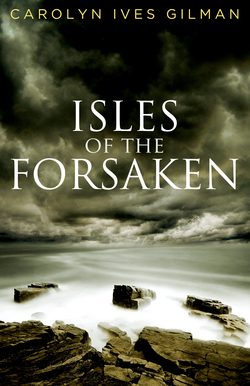
I remember reading Carolyn Ives Gilman’s Halfway Human back in 1998, thinking it very good, and then being somewhat disappointed when no further novels appeared from her. I later discovered she’d had a number of short stories published – chiefly in F&SF – and even a novella, ‘Arkfall’ (now available from Phoenix Pick here). There are also a pair of chapbooks from Aqueduct Press.
Last year, I learnt Gilman would have a new fantasy novel published by ChiZine Publications. I am not, it has to be said, a huge fan of fantasy. Too many strike me as too similar. Ripping off a different culture for the background, or implementing a new magic system, is not enough. But the description of Isles of the Forsaken seemed to me it might appeal. So I pre-ordered a copy.
I have now read it. And I was not disappointed.
The Inning Empire has just won a years-long war, and has decided to turn its attention to its colonial possessions, the Forsaken Isles. The empire is a lexarchy, which means it is ruled entirely by its Courts and legal system. Despite this, it’s not especially enlightened – in fact, the Innings as a race are arrogant and racist, and their colonial policies reflect this.
Harg Ismol is an Adaina, the lesser of the two races which inhabit the Forsaken Isles. The others, the Torna, are the dominant race and administer the islands in the name of the Innings. Also relevant are the Lashnura, or Grey Folk, semi-magical healers who can take away the pain and injuries of the islanders. The Innings do not understand this relationship, imagining the voluntary empathic bondage the Grey Folk undergo is little more than slavery. Harg had a good war, and rose to the rank of captain, the only Adaina to do so. Though he is offered the command of the Native Navy by Admiral Corbin Talley, head of the Inning Navy, he turns it down and returns home to Yora, an island in the South Chain of the Forsakens.
At which point, things start to go horribly wrong.
Isles of the Forsaken moves smoothly from a story about a disaffected hero returning home from war into a story about an archipelago-wide rebellion. This is driven by veterans having seen the rest of the empire, and by the Innings’ desire to finally “sort out” the islands. Harg is, of course, caught up in this, if not partly instrumental. Also important is Nathaway Talley, the youngest son of the Inning Chief Justice (and brother of Corbin), who is on Yora because he wants to introduce the Adaina to the benefits of Inning law. And there is also Spaeth, who was created as a companion by Yora’s lone Lashnura, but has yet to take on her healing responsibilites.
There are, however, one or two set-pieces in the book which feel a little contrived. Harg’s first run-in with the Tornan authorities, for example, seems a bit too well-designed to put him on the path the plot demands. Which is not to say Harg is not a well-rounded character. He’s a reluctant hero – while acknowledging that he’s best-placed, and has the necessary skills, to lead the islanders’ fight, he doesn’t want the responsibility of leading them into a war they would probably lose. And which would doubtless result in bloody reprisals. Further, there is an island myth about a leader, the Ison, who appears in times of need to lead the islanders to victory. Harg doesn’t believe he is the Ison, nor does he want to be him – part of the myth involves a “cleansing” by one of the Lashnura, which Harg refuses to undergo.
Nathaway’s transformation from idealistic naïf is better-handled, though it takes a while to get going. The Grey Folk, and the mythology which they represent, provide an interesting backdrop to the story, one which becomes increasingly important and relevant as the plot progresses. In parts, this mythology reminded me a little of Le Guin’s Earthsea books, particularly when Spaeth takes Nathaway to the “circles”, where the opposing balances which “rule” the islands manifest. The character of Tiarch, the Tornan governer of the Forsaken Islands, struck me as the sort of character Gwyneth Jones would write.
One section of the story which stands out takes place when Spaeth and Nathaway escape from Admiral Talley’s custody. They flee into the sewers beneath the city, but soon get lost and, somehow, cross over into another “circle”. This is one not even Spaeth recognises. It manifests as a series of mezzanine floors about a great well many many levels deep. Each level contains vast rooms in which are stored books and scrolls and other forms of document. The section is genuinely creepy, and the writing – which is good throughout the novel – is especially effective at getting this across.
Isles of the Forsaken is a post-colonial fantasy. Though the Inning Empire won its war, and is governed by what we would consider a fair and impartial system, the story’s sympathies plainly lie with the Forsaken Islanders. Of course, the Innings are far from the noble people their technology and political system would suggest. Nor are they the only ones who are racist – the Torna consider the Adaina to be nothing more than feckless and ignorant peasants. There are different ways of life on display in Isles of the Forsaken, and its ignorance about these among and between each group which is partly the fuel which drives the plot. The Innings’ lexarchy also comes under scrutiny. Theoretically an impartial and impersonal system with no real leadership, it is in practice dominated by the Talley family, and Corbin’s campaign in the Forsaken Islands is partly phrased as a launchpad for a bid for power by him back in the Inning homeland.
I read Isles of the Forsaken pretty much in two sittings. It may only be 312 pages long – definitely a point in its favour, given that it is a fantasy – but even so, I’ve not read many books in recent years which have dragged me into their story and kept me there quite so effectively. I’ve already pre-ordered the sequel, Ison of the Isles.
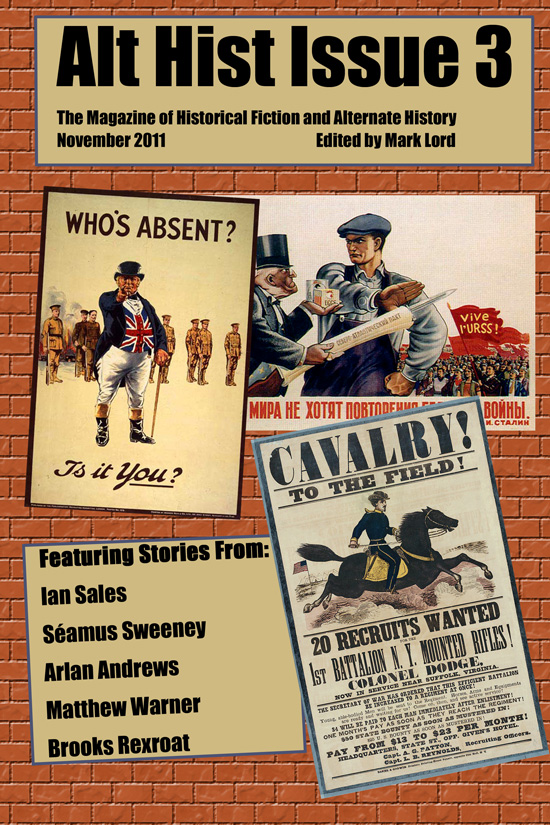
Yesterday, Locus posted Lois Tilton’s early December short fiction reviews, and among the magazines she covers is Alt Hist 3 – see here. Which includes my story, ‘A Light in the Darkness’. She writes that, “The author successfully captures the eccentric genius of Tesla, and his scenes on the front in WWI France are effective, using Wilfred Owen as the focal character.” But she doesn’t like the third narrative thread, in which a nameless prisoner reflects on the book he was writing before his arrest, a book about WWI poets.
To be honest, I couldn’t guarantee that readers would know enough about Wilfred Owen to understand that the story kills him off before he wrote the poetry for which he is famous. An afterword explaining as much would have been a far less satisfactory method of getting this information across. I could have, I supposed, included some found text on the history of WWI poetry (suitably edited, of course). But even that felt too clumsy. A commentator within the story was a compromise, and sometimes that’s what you have to do. Either that, or bin the story. And doing the latter can really hurt…
I learnt today that Hollywood is planning to remake Paul Verhoeven’s Starship Troopers. And, in fact, there’s a remake of his Total Recall due next year (starring Kate Beckinsale and Colin Farrell). We all know of Hollywood’s recent penchant for remakes and reboots. It’s allegedly financially safer to trade on a known name than to try something new. The only person losing out in this strategy, of course, is us. Because we’ll see well-loved films completely ruined. Starship Troopers was a pitch-perfect satire of Heinlein’s right-wing novel, but who wants to bet the new version will keep the book’s odious politics intact? I will not go and see such a film; I will stay at home and watch my DVD of Verhoeven’s version again.
It might well be that the Starship Troopers remake isn’t so bad. But the odds are against it. Not only is there the online vocal hatred of Verhoeven’s film by conservative and libertarian sf fans (they’re totally wrong, of course), there’s also the US’s slow drift to the right over the past three decades, and… well, and there’s 2009’s Star Trek, a monumentally dumb sf film. And there was 2008’s The Day The Earth Stood Still. And this year’s The Thing. And… need I go on? This is what reboots do: they put the boot into well-loved and well-regarded films.
To be honest, I gave up on Hollywood’s output years ago. The best films these days are made elsewhere. And that’s not just genre films. But then, Hollywood chases that 15 – 25 male demographic and, let’s face it, focusing on the stupidest sector of society is not going to be good for your creativity. The superhero tentpole blockbuster is a case in point. Such films are all spectacle – they are like their titular heroes, all pumped-up muscles and no brains.
The best sf film I have seen in recent years, Cargo, was made in Switzerland. The only time I visited the cinema this year was to see Apollo 18, an independent Russo-American production. The bulk of my DVD viewing in 2011 has been foreign-language films, and 1950s and 1960s Hollywood films (made long before the rot set in). I’m planning to see John Carter next year, which has been produced by Disney, but I suspect that will be the last Hollywood film I go to the cinema to see. Given that the success of films is judged by their cinema takings, that seems a sensible way to express my disappointment and displeasure at Hollywood’s output.
There is an interview with me posted on the Alt Hist website here, as I have story in the current issue. I talk about Wilfred Owen, Nikola Tesla, where the idea for my story came from, and other stories I have in the pipeline.
And now, of course, you’re dying to buy a copy of Alt Hist issue 3…
The Ancient Greeks attempted to explain the world about them by applying human agency to it. Why does the sun cross the sky? Because some bloke in a chariot is pulling it. And since such feats required abilities above and beyond those normally attributable to humans, so those who performed them were deemed gods. Over time, the use of these gods as explanations became a narrative and so accreted history, politics, romance, symbolism, etc. But they still didn’t really explain what caused the sun to rise and set.
And so for fantasy. It does not seek to explain, it applies agency to something which does not, in the real world, possess it. Sometimes that agency cannot be wielded by humans – the supernatural, demons, gods and demi-gods. Or it gives humans agency over things not normally open to their use, via magic systems or supernatural talents. And those magic systems may be as structured and fractal as the laws of physics.
Science fiction, however, assumes the real world is explainable. The sun crosses the sky because the earth is turning, and the earth turns due to the action of its core. The universe operates according to a structure of interlocking principles and rules, which are not only parsable but fractal.
The worlds in science fiction stories are implicitly reachable, either by traversing time or space or both. This is not true for fantasy worlds. Yes, there are those where people from our world find themselves in the world of the story – The Chronicles of Narnia, The Fionavar Tapestry, or The Chronicles of Thomas Covenant, for example – but those are not journeys, they are magic portals. To some extent, it might be argued that similar travel to alternate dimensions, worlds or histories in science fiction might well treat such methods as magic portals, but the possibility of an explanation still underlies it. More than that, it is driven by an element of a rule-set which underlies the entire universe. The same cannot be said of fantasy.
That, I think, is the fundamental difference between science fiction and fantasy. That is why they are different modes of fiction, for all that they may share similar trappings or often use a shared toolkit. In sf, the universe is a rational and impersonal place, which operates independently of, and with no regard for, those who inhabit it (though they may engineer it for their own uses). In fantasy, everything has motivation because everything has some degree of agency, and the world exists for the benefit of its inhabitants. Their existence is part of the same act of creation which created the world. Without inhabitants, there would be no world. And everything in it is open to use by at least some of the inhabitants.
By the same token, neither genre is a subset of the other. Though they may be lumped together for marketing purposes and because the fanbases have traditionally overlapped, they have entirely different histories. The first science fiction came from electronics magazines in the 1920s; the first fantasies are a great deal older, perhaps even as old as civilisation itself. The current situation is an accident of the creative and production process for fantasy and science fiction. This doesn’t mean, of course, that they two should be sundered. Each benefits from its supposed relationship to the other. But there is a distinction, and to discuss either, or both, without recognising that benefits neither.
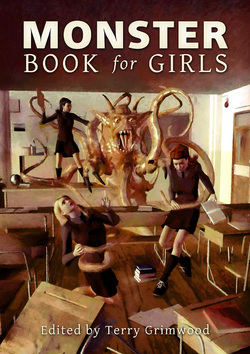
The Exaggerated Press’s The Monster Book for Girls in only a matter of weeks away from publication, and the cover art has now been posted on their website here. Pretty cool, eh?
I’m looking forward to this one, and not just because it contains my story about the ATA pilot. There looks to be some good names on the TOC, so it should be an excellent anthology.
Despite making a compulsion of reading every day, the TBR pile looks no smaller – and, in fact, might well have grown. If I was smart I’d institute a policy of only buying a new book if I’ve read one from the TBR. Sadly, I’m not. Maybe I should get a Kindle or something – at least then the books wouldn’t take up as much space. Mind you, it would make my book haul posts look a bit silly…
Anyway, here are the books I have read in the past month or so; here are the films I’ve watched in the past month or so. Some were good, some were bad, some were meh. And so it goes. Apologies for the length of this post; I really should do these more frequently.
Books Hardball, Sara Paretsky (2009). I’ve been a fan of Paretsky’s novels since first reading one back in the early 1990s. Perhaps their chief appeal is that Paretsky wears her politics on her sleeve, and VI Warshawski’s investigations always end up uncovering something interesting about Chicago’s political landscape and history – and often as commentary on the US as a whole. Hardball, a slight return to form after the disappointing Fire Sale, is no different in that respect. Warshawski is asked to track down a young black man who disappeared during Martin Luther King’s visit, and the subsequent riot, in 1968… and discovers some unwelcome facts about the city’s police department of the time. Of which her late father was a member. There are a lot of angry men in Hardball – in fact, it often seems like the entire male cast are angry at Warshawski, and not always for good reason.
Shadow Man, Melissa Scott (1995), was September’s book for my reading challenge and I wrote about it here.
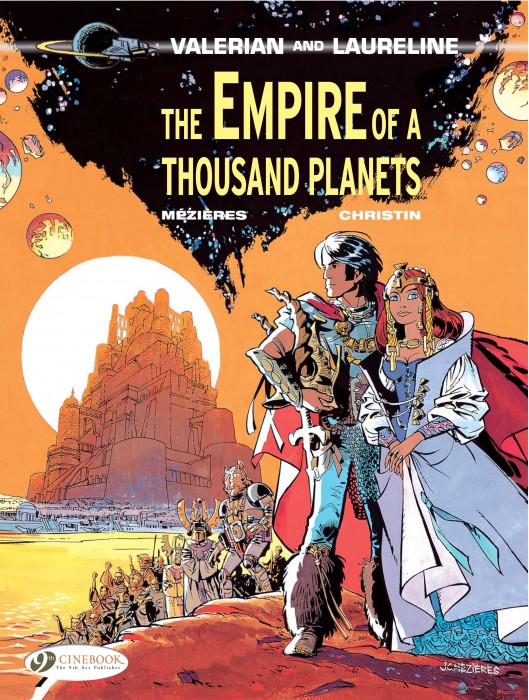
Valerian 1: The City of Shifting Waters (1970) and Valerian 2: The Empire of a Thousand Planets, Jean-Claude Mézières & Pierre Christin (1971), are the first two English translations by Cinebook of a well-known sf bande dessinée series. Valerian is a spatio-temporal agent and, with his sidekick Laureline, gets involved in various adventures throughout the universe and history. In The City of Shifting Waters, he’s sent back to 1980s New York, which is flooded after a global environmental disaster, to prevent an evil villain from a nefarious plot to prevent the creation of the agency for which Valerian works. In The Empire of a Thousand Planets, Valerian and Laureline are sent as diplomats to a thousand-world planetary system (!), but discover that some strange group controls all the planets and seems determined to wage war on Earth. These books are not entirely serious – there’s a gentle humour running throughout them, though it’s not very subtle. Laureline, the sidekick, for example, is the clever one, who always gets Valerian out of his scrapes. There’s some inelegant info-dumping, and some of the story and art of The Empire of a Thousand Planets looks suspiciously like a direct inspiration for Star Wars (as an afterword points out tongue-in-cheek). Fun, though.
On Green Dolphin Street, Sebastian Faulks (2001), I’m fairly sure I tried reading when I was living in Abu Dhabi, but gave up a couple of chapters in because nothing seemed to be happening. This time, I ploughed on and… nothing happened. The van Lindens are a diplomatic couple in 1959 USA. Charlie is an analyst at the British Embassy, and was something of a wunderkind. But his star is now waning, mostly as a result of his drinking. When Frank Renzo, an acquaintance from Charlie’s visit to Vietname years before, re-introduces himself at a party, it results in an affair between Renzo and Mary van Linden. This comes to a head when Charlie has a breakdown during a trip to Moscow, and Mary has to go and fetch him. I was expecting a final section like that in Charlotte Gray – another Faulks novel which ambles along at a geriatric pace – but there isn’t one in On Green Dolphin Street. Charlie has a breakdown, Mary rescues him. That’s it. There’s some nice writing, but it’s not really enough to keep you reading. Disappointing. I’ve got four more novels by Faulks on the TBR. I hope they’re better than this one…
The Adventures of Blake & Mortimer 11: The Gondwana Shrine, Yves Sente & André Juillard (2011), is another addition to Edgar P Jacob’s series, and follows on directly from the two The Sarcophagi of the Sixth Continent volumes. It’s drawn in Hergé’s ligne claire style, but is very talky with great speech balloons filling up many panels. The plot is completely bonkers, as Blake & Mortimer stumble across evidence of a secret base in Africa of a civilisation which existed on Gondwana millions of years before the first humans left the Rift Valley. Sometimes, you get the impression Yves Sente is a bit too clever for his own good…
Ascent, Jed Mercurio & Wesley Robins (2011), is a graphic novel adaptation of Mercurio’s excellent novel of the same title. The hardware is well drawn, but the rest looks a bit rubbish and amateur. Disappointing.
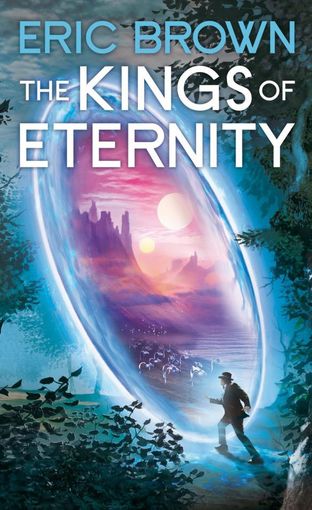
The Kings of Eternity, Eric Brown (2011), has been receiving lots of positive notices, though I think it’s unlikely to bounce Brown’s career to the next level. It’s very good, but it’s far too considered a novel to have broad genre appeal. It’s also not space opera. A reclusive writer living on a Greek island in 1999 falls in love with the painter who has moved in next to him, but only reluctantly opens himself to her. Four friends in 1935 meet at the country home of one of them, and in the woods nearby witness the opening of a portal from another world and rescue the creature which comes through it. The link between the two narratives is not difficult to guess, but that doesn’t spoil any enjoyment this novel might have. The narrative set on the Greek island has a somewhat Fowlesian feel to it, though it’s perhaps more sentimental than anything Fowles ever wrote. The other narrative is very Wellsian, though it uses Wellsian-type tropes with the sophistication of a twenty-first century sf writer. Is this Brown’s best novel? Hard to say. I still like Kéthani a lot, though The Kings of Eternity is certainly a very good novel. Perhaps my reading of it was spoiled slightly as a result of reading the novella on which it was based, ‘The Blue Portal’, some years ago.
Silicon Embrace, John Shirley (1996), however, is not a good novel. I like Shirley’s fiction, but he can be very slapdash. And Silicon Embrace is one of the slapdash ones. It’s a post-apocalyptic US crossed with UFO mythology, featuring a Damnation Alley-style journey across California and Nevada, with a secret underground base staffed by a military in league with the Greys. Then the story heads for New York, and turns into something slightly different. This book was poorly edited, with far too many ellipses left in the dialogue, and a number of silly mistakes, like mention of “Neil Stephenson” (sic). Disappointing.
It Was the War of the Trenches, Jacques Tardi (1993), is a bande dessinée treatment of WWI from the point of view of the soldiers. Tardi has picked out some of the worst and most horrific stories, and given them a graphic novel treatment. Such as the one about the Sicilian soldier who could not speak French and so didn’t go over the top when ordered, and was subsequently tried and shot as a deserter. Or the officer who ordered machine-guns to open fire on his own men because they were being mowed down by the Germans and were trying to get back to their trenches. The more you learn about the First World War, the more you realise the wrong people were killed. Anyone who reads this and continues to glorify war and the military is clearly an idiot.
Maul, Tricia Sullivan (2003), was October’s book for my reading challenge and I’m still working on a blog post about it.
The Joy of Technology, Roy Gray (2011), is a chapbook published by Pendragon Press. The author is a friend of mine. The technology in question is that used in sex clubs in Germany in order to better titillate customers. The customers, in this case, are a coach-load of football fans from the UK, visiting Germany as their team is playing away. A father introduces his son to the joys of travelling onto the Continent to see a footy match, and also to the delights to be had before and after the match. Gray pulls no punches, and if his story dehumanises its characters I suspect that was its intent. It does trail off a bit towards the end, and perhaps would have been improved by a punchier finale.
Synthajoy, DG Compton (1968). A blinding novel by a much-underappreciated writer. I wrote about it here.
Dead Girls: Act 1 – The Last of England, Richard Calder & Leonardo M Giron (2011), is a graphic novel of part of Calder’s novel of the same title. I’ve read that novel – in fact, I’ve read the trilogy – and it’s very good. The graphic novel is also very good. The style of art suits the material perfectly. The story is actually the flashback from the novel, which actually makes the world of the book easier to understand. I’m looking forward to seeing the next installment.
The Unit, Ninni Holmqvist (2006), has lots of praise on the covers of my paperback copy of this book, and I’m not entirely sure why. In a near-future, or alternate present, Sweden, anyone over the age of fifty without children, or who has not made a significant contribution to culture or industry, is deemed “dispensable”. They are taken to luxurious centres – such as the “unit” of the title – where they have free housing, food and healthcare, and are encouraged to use the copious leisure facilities. While there, they must volunteer for medical experiments and, over a period of years, donate whenever necessary their organs. Dorrit is one such woman. Something of a loner, inside the unit she finds friendship, and then love. At which point, of course, she no longer wants to be dispensable. The concept of the unit is, I admit, quite neat, though it doesn’t hold up to scrutiny. From the description, it would cost far more to run than it returns in the form of drug testing or donated organs. The rules on who is dispensable are also open to abuse, especially for those who are childless but have contributed in some highly-recognised fashion. Also, the fact that survival is predicated on having children will also push women back into their traditional roles, undoing decades of feminism. None of this seems to have occurred to Holmqvist. She makes Dorrit a bit mannish, but has her enjoy being passive and feminine as if it were something to aspire to. I also thought the writing was very clumsy in places, though that may be more the translator’s fault than the author’s. I suspect this is one of those books where people can see little beyond the central conceit – like Oscar Wilde’s The Picture of Dorian Gray, for example, which has a brilliant central idea but is appallingly written. And yet those same people will sneer at science fiction because so many of its fans look only at its ideas and ignore all else in a text.
Warlord of Mars Vol 1, Arvid Nelson, Stephen Sadowski & Lui Antonio (2011). I have a love-hate relationship with John Carter. Or rather, with the books in which he features. Barsoom is a great invented land, but the prose is often quite painful to read – not only is the style horribly dated, but Edgar Rice Burroughs was a hack. But there’s something in John Carter and Barsoom which fires the imagination… even if every incarnation of it to date has yet to match expectation. This miniseries is an attempt at a more faithful comic adaptation of the first book of the series, A Princess of Mars. However, like all such it stands or falls on the quality of its art… and here it’s not too bad. Okay, so Dejah Thoris is improbably bosomed and near naked – though, to be fair, in ERB’s novel all the character are naked all the time. And the Tharks do bear a suspicious resemblance to the Tharks in Marvel’s 1978 John Carter, Warlord of Mars comic. Overall, this is quite a good adaptation, though it does make the source material appear more shallow than it actually is. Meanwhile, I’ll have to wait until Pixar’s film adaptation is released in March 2012…
The Uncensored Man, Arthur Sellings (1964), I read as part of my British sf Masterworks investigation, and I wrote about it here.
Warlord of Mars, Dejah Thoris Vol 1: Colossus of Mars, Arvid Nelson & Carlos Rafael (2011), is much better than the adaptation of A Princess of Mars by the same writer mentioned above. The artwork is lovely, though Dejah Thoris is still implausibly pneumatic. And mostly naked. But Dejah Thoris is certainly the heroine and drives the plot from start to finish. The story is set hundreds of years before John Carter appears on Mars, when Greater and Lesser Helium were at war and both owed allegiance to another city-state. The jeddak of that state finds an ancient colossus and goes on a rampage, but Dejah Thoris manages to ally the two Heliums and leads a force to defeat him. I’ll be keeping an eye open for the next book in the series.
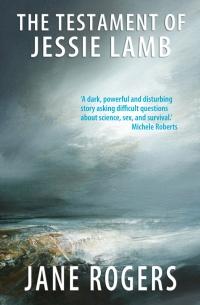
The Testament of Jessie Lamb, Jane Rogers (2011), was, I believe, longlisted for the Booker, but since the plot summary made it clear it was sf-written-by-a-mainstream-author I picked up a copy just before Waterstone’s abolished their 3-for-2 promotion. And it’s certainly sf, in the same way The Handmaid’s Tale or The Children of Men are. Or even Nineteen Eighty-four. At some point in the near-future, a virus is released which infects everyone. But when women become pregnant, it turns into full-blown Creuzfeld-Jakob Syndrome and is always fatal. In other words, women can’t have children anymore – or they die. And it’s a particularly horrible death, as their brain dissolves in their skulls over a period of weeks and sometimes days. Jessie Lamb is 16-year-old whose father works at a clinic attempting to find a cure to Maternal Death Syndrome. While around them the world slowly falls apart. The first section of the novel, in which Jessie tries to come to terms with the world, and in which the role of women in society slowly erodes, is very good indeed. But about halfway through Jessie volunteers to become as “Sleeping Beauty” – she joins a programme which will keep the mothers in comas so the babies can be born safely, though, of course, the mothers will not survive. At which point, the novel turns into YA story and is all about Jessie trying to convince her parents that her choice is the right one. Yet the trigger for that choice doesn’t seem especially obvious. The Testament of Jessie Lamb is a pretty good book, but it’s also half of what could have been an excellent one.
The Garments of Caean, Barrington Bayley (1978). Bayley’s fiction was always slightly odd, and this one’s no exception. It’s 1970s hackwork, but it starts from a point, with a conceit, that no self-respecting sf hack would ever have tried. But Bayley makes it work. Sort of. In the Tzist Arm of the galaxy there are two major cultures, the Ziode cluster and Caean. The Ziodeans are just like contemporary Anglophone Westerners, but with spaceships and few other sf trappings of the day. The Caeanites, however, are entirely different. They have developed tailoring to such a degree – they call it the Art of Attire – that clothes do indeed maketh the man. So when a black marketeer liberates a cargo of Caeanic clothing from a crashed spaceship, it threatens the already minimal relations between the two groups. The prose veers from serviceable to the odd piece of fairly good writing. About two-thirds of the way through, the plot takes a turn that makes a nonsense of the book’s set-up up until that point. And there’s a casual mention of rape which is really quite offensive in this day and age. Not one of Bayley’s best. There were much better books written by British sf authors during the 1970s. Don’t bother with this one.
Films The Big Heat, Fritz Lang (1953), is one of Lang’s noir films from his Hollywood period. Glenn Ford plays the white knight, an honest cop, who tries to bring down the mob boss who runs the city. While the film is generally considered a classic of the genre, it does suffer heavily from simplistic morality, the righteousness of its hero, and the characterisation of women as either duplicitous or victims (Lang’s While the City Sleeps has a woman beat the shit out of a serial killer who attacks her). The Big Heat is especially brutal in this last regard, when mobster lieutenant Lee Marvin throws boiling hot coffee into the face of his girlfriend because she was seen talking to Ford. And she’s not the only victim of Ford’s relentlessness. He continues to harrass the mobster – ignoring due process, evidence, etc. – despite being told not to by his lieutenant, and as a result is suspended. But still he carries on. And he gets his man in the end, no matter who suffers or perishes in the process. Of the Lang noir films I’ve seen, The Big Heat is the least interesting – it’s too formulaic, has little or no ambiguity, and, let’s face it, Marvin’s brutality is no reason to celebrate a film.
Winter’s Bone, Debra Granik (2010), I vaguely recall hearing good things about, though I think I kept on getting it confused with Hanna. I’ve no idea why – the only thing the two films have in common are a teenage girl as protagonist. Anyway, I put it on the rental list, several weeks later it dropped through the letter box, I picked it up and looked at it and thought “meh”. One weekend night I stuck it in the DVD-player… and it proved to be one of the best films I’ve seen so far this year. A teenage girl is visited by the local sheriff, who tells her that her father, whom she has not seen for weeks, is due in court soon. He has put up his house as surety for his bail and if he doesn’t appear, then the girl, her young brother, and their mentally ill mother will be put out on the street when the bail bonds company seizes the property. So she goes looking for her errant pa. The film is set in the Ozarks, among poor families who live on subsistence farming and cooking methamphetamine. It’s an insular society, ruled by the threat of violence, in which women live in fear and even kin asking questions is unwelcome – and punished by threats and then violence. Jennifer Lawrence is excellent as the girl. Winter’s Bone is a scary film, set among very scary people. I now want to read the novel by Daniel Woodrell on which it’s based. In fact, I’d like to read all of his books. This is not always a good move: for example, Hitchcock’s Marnie is greatly superior to Winston Graham’s, and the film of Roddy Doyle’s The Commitments is much better than the book. But I’d still like to read them.
Black Heaven, Gilles Marchand (2010), I reviewed for The Zone and it was meh. See here.
The Wedding Song (Le chant des mariées), Karin Albou (2008), is one of those films that occasionally appears on my rental list but I forget why I put it there. Perhaps it was because it’s set in Tunisia, and I’ve seen many excellent North African films. The Wedding Song is set during WWII after the invasion of Tunisia by the Nazis. Two teenage girls, one an Arab Muslim, the other Jewish, are friends, but the Germans’ demands on the population soon push them apart. Not helping this are the Arab girl’s fiancé, who goes to work for the Germans identifying the local Jews, or the Jewish girl’s mother who marries her off to a wealthy doctor much older than her. This is not a pacey film, it’s far more about developing the characters in order to better understand their responses to the Nazi depradations. I’ve seen the film presented as a lesbian film, which it isn’t. The two girls are childhood friends, though that doesn’t prevent one from betraying the other – and later saving her. The Wedding Song is as much about the Nazi invasion’s effect on Tunisia as it is about the effect on the two girls. An excellent film.
Summer Storm, Douglas Sirk (1944). I’ve always thought that Sirk was to the melodrama what Hitchcock was to the thriller. But while Hitchcock never made a film that wasn’t entertaining, Sirk’s oeuvre is not so consistent. It’s not just later-period fluff like 1957’s Battle Hymn, but even earlier works such as this adaptation of Chekov’s novella, ‘The Shooting Party’. It just seems… weird. It’s melodramatic, and very much a mid-1940s melodrama. But everyone is dressed in nineteenth-century Russian costumes, and they all have Russian names. It makes for a weird disconnect between story and presentation. George Sanders plays a provincial judge ensnared by a scheming peasant beauty (Linda Darnell). First she marries the local aristocrat’s estate manager – and the aristocrat throws a party and invites all his effete peers as a joke – but Darnell’s sights are set higher. There’s probably a good script hiding in Summer Storm, but I kept on getting thrown by the fake scenery and American jocularity.
Thor, Kenneth Branagh (2011). Of all the heroes in Marvel’s stable, you have to wonder why they chose Thor for a movie adaptation. He’s one of the least interesting. He’s a Norse god with a big hammer, and in his secret identity he works as a doctor. The Thor from Norse mythology had much more interesting adventures. Of course, Thor is one of the Avengers, and The Avengers is next year’s Marvel tentpole release (the preview trailer actually looks quite boring). In order to introduce Thor, Branagh ripped off the plot of Superman II, but flipped it so that the good guy is exiled to Earth rather than the baddies. Thor’s brother Loki schemes for Odin’s throne, and big dumb Thor falls for his dastardly tricks, and a sa result is exiled to Earth. Where he happens to land in the lap of scientist Natalie Portman. For much of the film, Thor’s superpower appears to be stupidity, though he quickly learns to be a nice person, which not only gets him back to Asgard and allows him to defeat evil Loki, but also returns him to the loving bosom of his father. Because, of course, Thor is a father-son film. Admittedly, the film looks good – especially the bits set in Asgard, though it seems to have ditched the whole Norse mythology thing and implies that Asgard is an alien world / alternate dimension sort of place that just happens to be populated by humanoid Viking-types. I can’t see much point in trying to rationalise superheroes – it can’t be done. They are nonsense, their powers are magic. And the comics industry has never understood what rigour is, anyway.
Tron Legacy, Joseph Kosinski (2010). Perhaps the desire to update Tron, given the current state of special effects, is understandable. I mean, the original Tron had some good ideas, and an interesting look, but it wasn’t very good. Unfortunately, it was still a damn sight better than Tron Legacy. Yes, the special effects are much improved. But the story is rubbish. And it makes no sense. Jeff Bridges’ son accidentally gets himself digitised and ends up in the virtual world where his father has been trapped for the past umpteen years. In order to escape, they both need to defeat the evil copy of Bridges he created to run the virtual world. This is all supposed to have something to do with microprocessor architecture and programming, but I work in IT and it made no sense to me. anyway, Bridges, as creator, has special powers. But he only uses them in the last ten minutes of the film to save his son. He could have used them at any time. And the only way he can save him is to commit total genocide. Despite the fact he has been fighting his evil copy because said copy committed genocide on some virtual life that spontaneously appeared in the virtual world. Who writes this crap? Oh, and did I mention it’s a father-son film? Well, obviously.
Almighty Thor, Christopher Ray (2011), is the Asylum’s take on Thor. Except it’s completely different. Sort of. Odin and his two sons live in generic semi-mediaeval fantasyland (one of the greener parts of California, by the look of it, with a poor CGI rendering of a castle). Baldir is Odin’s heir, a powerful warrior. Thor, however, is a weakling and not very bright. He doesn’t know how to fight with a sword, either. Then Loki – Richard Grieco, looking like he’s spent the last decade shooting up – invades Asgard, and kills both Odin and Baldir. It’s up to Thor to save the day. Except he’s useless. Happily, Valkyrie Jarnsaxa appears and agrees to train him up. This involves hiding out in present-day Los Angeles – well, those back-streets where filming permits are evidently quite cheap. If the sections set in Asgard looked cheap, the ones set in LA resemble something from public access television. The Asylum are rightly known for making shit films, and the only astonishing things about them are the levels of shitness those film actually reach. Yes, some films are so bad they’re good, but that’s one trick the Asylum has yet to master.
Bonjour Tristesse, Otto Preminger (1958). When I think of Preminger I think of classy noir films from the 1940s, but Bonjour Tristesse, adapted from the novel by Françoise Sagan, is a 1950s melodrama. It opens in black and white, with Jean Seberg describing her ennui in voice-over as she flits from one Parisian night-club to the next, from one wealthy young playboy to the next… The action then shifts to the previous summer, on the French Riviera, and in colour. Seberg is holidaying there with her father, shallow playboy David Niven. Staying with them is a bouncy Swedish blonde playmate… but then Deborah Kerr, an old flame, unexpectedly accepts an invitation to visit. and she manages to tame the playboy father. This unfortunately puts the kaibosh on Seberg’s plans for a life of profligate leisure, so she hatches a cunning ploy. Which has a somewhat unfortunate consequence. It’s all very high-society and irresponsible wealth, and you can’t feel much sympathy for the characters. But it’s an excellently-made film, and both Niven and Kerr are very good in it. Seberg I found too gamine and empty-headed to really convince, and as a result the film for me never quite managed the charm of Hitchcock’s To Catch A Thief or the cool sophistication of Antonioni’s L’Avventura.
Princess of Mars, Mark Atkins (2009), I stumbled across one night on Movies 24, but only managed to catch part of it. So I made a note of its next showing, and sat down to watch it from start to finish. It is, of course, an Asylum film, and while it’s currently titled Princess of Mars to cash in on Pixar’s release of John Carter of Mars next March, it was originally titled Avatar of Mars after James Cameron’s blue-peopled epic. In fact, Princess of Mars follows ERB’s novel quite closely – though, like every adaptation ever made, it ditches the nudity. Carter himself is updated to a Special Forces soldier in Afghanistan, and the mechanism which sends him to Barsoom is a military experiment performed on him since he’s at death’s door. But once on the Red Planet, he runs into the Tharks, joins them, captures Dejah Thoris, falls in love with her, and goes on to save the planet and unite the Red and Green Men. Mars itself resembles an Arizona desert, most of the special effects are cheap and nasty, as are the make-up and prosthetics, and Traci Lords as Dejah Thoris is astonishingly bad. But for an Asylum film, this one is actually almost watchable.
Ricky, François Ozon (2009). There’s something about Ozon’s films I find appealing – though, it’s not true of all of them. Angel is garish and amusing, Water Drops On Burning Rocks has that astonishing dance scene in it, Under The Sand is beautifully played… but Le Refuge is a bit dull, as is Swimming Pool, and 8 Women I find a little too OTT. Certainly he’s a director whose films I seek out, however. And happily, Ricky is one of the good ones. A working-class French woman falls in love with a spaniard who works at the same factory. He moves in with her, the woman’s young daughter is upset at having her world altered but gradually comes to accept him… then the woman becomes pregnant. The family dynamic immediately changes. That is until the baby – rickey – is born and when several months old develops bruises on his shoulder blades. The woman accuses the father of hurting Ricky. Hurt and disgusted, he leaves her. The bruises grow worse… and sprout into a pair of wings. Ricky can fly. Mother and father are reconciled. At first they try to keep Ricky’s ability a secret, but he escapes during a trip to the local supermarket, so they reluctantly call in the media. Perhaps Ricky with his angel’s wings feels a little too much like over-egging the new-family-new-baby cake – it’s perhaps a cliché that families always see their new babies as “little angels”. And there’s the daughter to consider too – she goes through the typical cycle of jealousy to acceptance to pride.
X-Men: First Class, Matthew Vaughn (2011), has been much praised as an intelligent addition to the (typically dumb) corpus of superhero films. Which is to forget that the first two men X-Men films directed by Bryan Singer were actually pretty smart movies. In X-Men: First Class – which is, of course, a cunning pun – the action is set in the 1960s and shows the X-Men helping the CIA prevent a conspiracy by evil mutants to use the blockade of Cuba to trigger nuclear Armageddon. Along the way, we get to discover how the above-the-title mutants discovered their powers, and the use they put them to before deciding the patriotic thing to do was work for a bunch of interfering types like the CIA. While X-Men: First Class is a pretty smart film for a superhero film, and it marches along at an energetic pace, look too closely and things start to look less shiny. It’s not just Kevin Bacon’s really bad German accent – which he thankfully drops when he reappears as Sebastian Shaw… or the over-preponderance of semi-naked women throughout the film… or that Banshee, an Irishman in the comic, has been recast as American in the film… or that Angel is now female, though he was male in the comic and earlier films… or that the Soviet villain uses a Bell 47 helicopter to visit his dacha (which looks more like a stately home left to wrack and ruin, anyway)… or why the villains always win in their fights against the good guys until the last reel of the film… or that the X-Men supersonic jet, which has always been modelled on a Lockheed SR-71, apparently has no room in its interior for jet fuel… or that Magneto introduces himself to Nazi refugees in South America by offering to buy them a Bitburger, but no one says “bitte, ein Bit”… But perhaps I’m asking too much of what is essentially pure entertainment. Except, if it’s “pure entertainment”, why try to position it as an intelligent film which comments on real life geopolitical events? Why not just admit it’s men – and women – in tights with logic-defying superpowers trying to remould the planet to fit in with US preconceptions of what Earth should be?
Green Lantern, Martin Campbell (2011). You’d think a story about a man with a magic ring that allows him to defeat evil, and who wears magic tights, wouldn’t be science fiction. But Green Lantern has aliens in it, and lots of lovely shots of galaxies and other celestial objects, and apparently the Green Lantern Corps are the guardians of galactic civilisation. If there’s a genre this film belongs to it’s the genre of tosh. I am a science fiction fan, but even I couldn’t swallow the central premise of Green Lantern. Still, it is a Marvel film. It’s also a Hollywood film, so it’s all about a son and the father he could never live up to. Because all Hollywood films are father-son films. I suspect some powerful studio executive has done way too much therapy. Anyway, Green Lantern was entertaining in a “nice visuals” sort of way, providing you turn off your higher cognitive functions. The story didn’t make much sense, and was filled with pointless scenes. For example, the commander of the Green Lantern Corps beats the crap out of Green Lantern and then tells him he’s rubbish. Well, of course he is. He only put the ring on twenty minutes ago, and no one’s trained him how to use it. And then the super-powerful villain that no one can beat only be defeated by that self-same rookie who has, um, oh hours of experience in the job. Then you have lines such as “The bigger you are, the faster you burn.” Er, no. But why expect accurate physics in a film about a man with a magic ring?
51, Jason Connery (2011), I reviewed for The Zone, and it was shit. See here.
Dr Who: The Ribos Operation, The Pirate Planet, The Stones of Blood, The Androids of Tara, The Power of Kroll and The Armageddon Factor (1978 – 1979), are the six stories which make up the Key to Time sequence, which introduced fellow Time Lord Romana as the Doctor’s companion. The final story also revealed the Doctor’s real name, which is apparently Theta Sigma, so I’m not surprised he insists on being called the Doctor. (According to the mythology, this is a “known alias”, though why someone would use an alias at an academy is never explained. It also transpires that ΘΣ was used in the New Testament as an abbreviation for God, so it’s most likely a case of a scriptwriter having a small joke…). The Key to Time is some sort of magic thingummy which, er, safeguards time or the universe or something. The White Guardian tasks the Doctor with gathering the six pieces, which have been hidden throughout time and space, and giving him the completed Key. Because then it would be safer than being hidden in six pieces throughout time and space. Apparently.
The Ribos Operation is a straightforward sting story. A pair of interstellar conmen try to sell a planet – without the knowledge of its semi-mediaeval natives – to a deposed noble by planting a sample of a valuable mineral and pretending not to understand its worth. The Doctor puts a stop to their con, but also prevents the nasty noble from furthering his own nasty plan.
The Pirate Planet is Douglas Adams’ first Dr Who script, and so is held in high regard. I can’t see why myself. The story has a neat idea but it doesn’t stand up to scrutiny. The titular world is hollow and hyperjumps to enclose other planets. Which it then strips of their resources. These worlds are generally inhabited, except… if the pirate planet was only after the natural resources of a world, then populated ones would probably already be mined out. Uninhabited ones would be a much better prospect. Unless it’s the fruits of their societies – technology, artworks, jewellery, etc – the pirates are after… The Pirate Planet is also infamous for a fight between K-9 and a robot parrot. Which is exactly as silly as it sounds. Incidentally, the hidden segment in this story proves to be latest planetary victim of the pirates. So even if they hadn’t committed genocide, the Doctor would have done so when he transformed the planet into a segment of the Key to Time.
The Stones of Blood feels a little like a return to a slightly older Dr Who story. It’s set on Earth around the time of filming (ie, late 1970s). Two women are researching a local stone circle, but there’s funny stuff going on at the manor, which is now owned by the oily leader of a druidic sect. It’s all to do with some alien that looks like a standing stone – well, which is meant to look like a standing stone, but actually looks a bit crap – an immortal alien, and a spaceship hidden in hyperspace somewhere over the stone circle. It’s one of the better stories.
As is The Androids of Tara, in which Dr Who rips off The Prisoner of Zenda, only with androids impersonating various members of the rival factions for the throne of Tara. It was filmed in and around Leeds Castle, and certainly looks good. It’s Dr Who at its frothiest.
The Power of Kroll, on the other hand, is Dr Who at its wettest. It’s set in a swamp – well, an estuary. With green-skinned humans, who worship a semi-mythical giant squid; and a really crap model of an oil rig, which is supposedly a facility for converting methane into “protein”. Their drilling has woken the giant squid, Kroll, which is actually a couple of miles across. Terror ensues. There’s a lot of really offensive racism against the green-skinned people in this, and while it’s plainly intended to make a point, the writers seem to forget what that point is halfway through.
The final episode, The Armageddon Factor, is perhaps the worst of the six. The story reminded me of one from the classic Star Trek series. Or maybe it was from Star Trek: The Next Generation. Anyway, there are two planets engaged in nuclear war, and it’s all going very badly. The Marshal of one talks to a mirror and refuses to accept the possibility of negotiation. But then the Doctor arrives, and it turns out there’s no one left alive on the other planet and their military machine is all being run by a computer. And there’s this toad-like evil villain called the Shadow who has manufactured the entire situation because he wants the Key to Time. At one point, the Doctor ends up running around some caves in a secret planet, miniaturised. But I think my eyes had started to glaze by that point.
I never saw the Key to Time stories when they were first broadcast (1978 – 1979), though I was in the UK at the time. At boarding-school. So there was no rosy tint watching these, though I admit to being a very small fan of Dr Who, inasmuch as it was an on-and-off part of my childhood. While the six stories in the sequence are not especially good – some of Tom Baker’s other adventures are much, much better – they are interesting because of the presence of Romana (played by Mary Tamm). For the first couple of stories, she actually runs things. Yes, she’s portrayed as a somewhat clichéd bossy, interfering female, but at least she’s not just running around and screaming. Sadly, as the sequence progresses she becomes less of an equal, and more like a typical companion. But perhaps she went on to better things. There’s only one way to find out…
Oh well. The nanowrimo novel stalled at 15,715 words a week or so ago. It was the wrong month for it. Not only was I putting together the TOC for Rocket Science, but I also had a 650-page anthology to read for review. Plus spending a weekend in Nottingham at Novacon. And November seems to be an especially good month for gigs, with four bands I want to see playing locally during the four weeks.
Also, the novel needed structure and, well, a bit more of a plot. I still think Into The Dark is a workable prospect, but writing it from the top of your head is not the way to go about creating it. Too many people – and nanowrimo fosters this attitude – think writing is about words. It’s not: it’s about the right word. I like to live with my story and my characters during the writing process – and “writing process” doesn’t always mean sitting in front of the computer and banging on the keys. If you know what you’re doing, if you have it all plotted out, if you’ve done your research, if you’ve got your notes ready… then yes, bashing out the words is what you need to do. And should I attempt nanowrimo again, I’ll make sure I’m clear in my head what I’m writing.
For the time-being, those 15,715 words of Into The Dark will go into the bottom-drawer while I think about how I want to structure the story. And, given that it was intended to be the first in a series, I shall also think about the next book and the series’ story-arc. Meanwhile, I have plenty of other stuff to be getting on with – not just the aforementioned review, or line-editing the contributions to Rocket Science, but also some other writing projects I’ve been working on for considerably longer than a month. And I really need to get those finished.





 It Doesn't Have To Be Right...