
A right proper mix this time around. I have recently simplified my lists on LoveFilm. Previously, I was running three lists – one for Hollywood blockbusters, one for classic movies, and one for world cinema. I’ve now combined them into one for English-language films and one for non-Anglophone movies. I am not in the slightest bit desperate to see the latest films released by Hollywood as soon as I can and am happy to wait before eventually watching them. Besides, there’s always Amazon Prime if I want to watch crap US films…
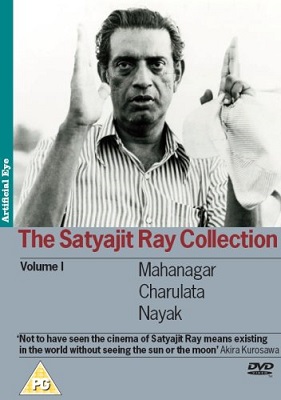 Charulata, Satyajit Ray (1964, India). This is the second film in the Satyajit Ray collection I bought, but unlike the first it is an historical piece. The title is the name of a young woman in 1870s Kolkata, whose husband asks a friend to keep her company. It’s based on a novella by Rabindranath Tagore. Her husband is rich and publishes a newspaper called The Sentinel. Determined not to be a member of the “idle rich”, he involves himself in every aspect of running his newspaper. To keep his wife company, he invites his cousin to stay. The cousin, Amal, is a bit of a waster but claims to be a writer, and Bhupati hopes Amal will help Charu with her stated intention to write. But the two’s relationship soon moves beyond mentor and pupil – especially after the pupil demonstrates more talent than the master. The film takes place almost entirely within the large house occupied by Bhupati and Charu, and even features a couple of musical numbers. There’s a scene set on s beach which features some nice photography, although Ray is not above using clichés (a camera moving from the foot of a table up to its surface to reveal a letter, for example). Madhabi Mukherjee totally shines in the title role, outdoing many a Hollywood star. It’s an odd film in that it feels complete ahistorical, despite its carefully presented period – not just the set dressing and costumes, but also several mentions that India is still governed by Britain. It’s the first film I’ve seen that has persuaded me Ray is as good as Ghatak, although they each had a very different approach to cinema. For most of its length, Charulata feels like a cross between a light social comedy and drawing-room farce, with a strong thread of rom com and social drama, but there’s an astonishing daydream sequence in the middle, in which Charu has a blinding moment of inspiration and writes a story which is then published in a magazine. Good stuff.
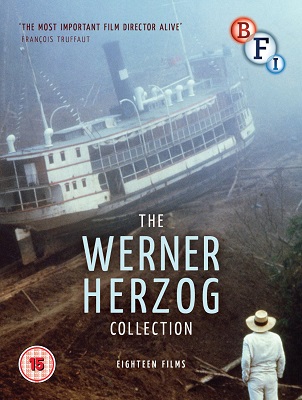 Stroszek, Werner Herzog (1977, Germany). Herzog had stumbled across Bruno S and cast him in the lead in The Enigma of Kaspar Hausar, but was so taken with the busker, that he wrote this film specifially with Bruno S in mind as the title character. Of course, there are other of Herzog’s interests paraded before the camera, such as a livestock auctioneer, as in How Much Wood Would A Woodchuck Chuck, auctioning off the title character’s possessions toward the end of the film. Stroszek is a Berlin street performer who has fled Germany with his girlfriend after running afoul of gangsters, They decide to settle in “Railroad Flats”, a dead-end town in middle America. Things initially go well, but their natures will out and the pair end up badly in debt. she does a runner and he turns to drink. A friend persuades him to help in a bank robbery. It goes badly wrong. It’s hard to know what to make of Stroszek. It is, on the surface, a straightforward drama about a hard-luck protagonist. But, on the one had, it’s so clearly tailored to Bruno S that it wouldn’t work without him; but on the other hand, some of the elements of the plot simply don’t ring true as something Bruno S would do. But then Herzog was always more about the philosophy than he was such bourgeois ideas as narrative, plot and structure. Stroszek is not a film about a man who makes a fresh start only to see it turn to shit, it’s about an implacable universe and the way stories too often manipulate that indifference in order to provide the ending the audience desires. Most movies are commercial constructs and so formalising their design – creating a “formula” – helps the industry maximise their effectiveness. But there’s no truth in that, and art is about truth. Hollywood delivers product, Herzog can never be accused of doing the same. He has built a career out of presenting naivety, but doing it in such a way that it not only entertains but also reveals truth. Stroszek is big on naivety – it’s Bruno S’s biggest selling-point – but low on truth. And while the film is entertaining, I can’t help thinking Herzog’s instincts led him astray. There is nothing new in Stroszek, and the film suffers as a result.
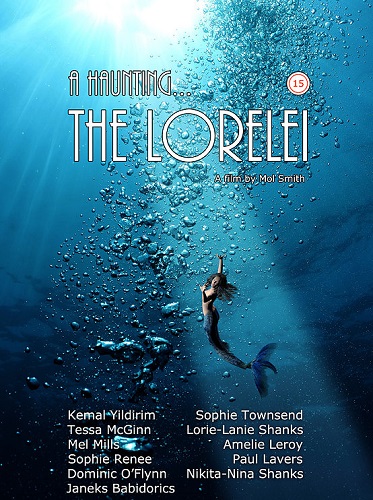 The Lorelei, Mol Smith (2016, UK). I found this on Amazon Prime, and was sufficiently misled by the description to watch it. The Lorelei is a British independent film, which means it has production values on a par with a double-glazing advert. A young woman hires a private investigator to investigate the death of her step-father in Oxford under mysterious circumstances. He involves his house-mate, a student who moonlights as an escort. The police then become involved when some of the escorts run by the same woman who runs the student are found dead in mysterious circumstances. We’re meant to believe the deaths are the work of a lorelei, a creature living in the Isis who takes the form of a young woman. Who pours water into their mouth from her own mouth and so drowns them. But The Lorelei is not framed as a horror film, but as a mystery. And as a mystery it fails because it can’t keep its central idea secret until the third act. There’s one twist in the story, but it’s a weak one – because it doesn’t really matter, the story has focused so much on other things that the mystery it resolves is secondary. I’ve no idea why I bothered watching this all the way to the end, it was pretty bad.
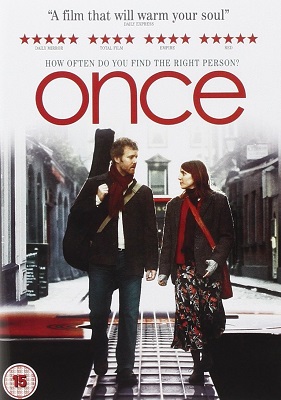 Once, John Carney (2007, Ireland). This is not my usual viewing, as you no doubt have realised, but Once is on one of the other 1001 Movies You Must See Before you Die lists and it was free to watch on Amazon Prime and it was a Sunday afternoon, so… Sadly, Once has a more interesting genesis than it does a plot. A busker in Dublin becomes friends with a young Czech woman, the two perform together, eventually record a demo of his songs, before returning to their separate loves. Initially, Cillian Murphy was going to play the lead role, but he pulled out and the part was taken by Glen Hansard, who had written the songs, and who is probably best-known for playing Outspan in The Commitments. The initial financing for the film pretty much collapsed, and it was eventually made on the cheap for $150,000, only to earn considerably more than that at the box office. That I find heartening. The story itself is packed full of clichés from start to finish, but happily is carried by the charm of its cast and the verisimilitude of its musical performances. It’s not precisely a feelgood movie, although it definitely heads in that direction – but no one is going to walk away from seeing it depressed. I can’t call myself a fan, but I sort of enjoyed it.
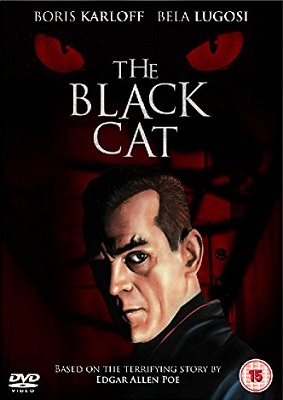 The Black Cat*, Edward G Ulmer (1934, USA). I’ve noticed that some film critics seem to revere monster movies out of all proportion to their quality. They even talk of a “Golden Age”. I’m not sure that The Black Cat fits in that period, but it’s on the 1001 Movies You Must See Before You Die list, so clearly the makers of the list held it in’some regard. I have no idea why. A young married couple are travelling through Hungary when their train breaks down. They have made the acqauntaince of Béla Lugosi, who is returning to the area after many years away (most of which were spent in a POW camp). There’s a bus accident, and they all end up at the home of Boris Karloff, a renowned Austrian architect, whose house in built on the ruins of a castle whose garrison he betrayed during the war. Lugosi was at that garrison and he’s out for vengeance. Karloff also collects the corpses of young women, er, because. One of which is Lugosi’s wife. There’s also Lugosi’s daughter, who is being kept by Karloff. And it’s all to do with some secret Satanic cult which Karloff leads. The sets aren’t bad, although Lang did much better, and the film generally looks quite good for a movie of its period and genre. But Lugosi is absolutely terrible, he gurns and grimaces like a prime hock of ham. The Black Cat is one of those films whose presence on the 1001 Movies You Must See Before You Die list I find completely baffling.
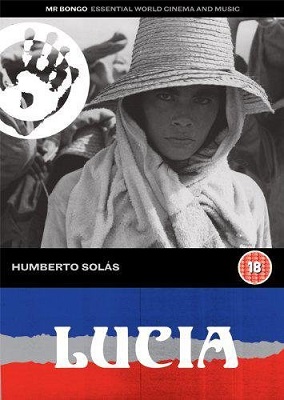 Lucía*, Humberto Solás (1968, Cuba). I watched this film purely because it was on the 1001 Movies You Must See Before you Die list. I knew nothing about it before putting it into the DVD player. But having now seen it… I’m reminded of my response to Black God White Devil. I watched it… and then went and bought all three films available on DVD by Glauber Rocha. Coincidentally, also released by Mr Bongo. And also piss-poor transfers. While I didn’t dash out and buy all of Solás’s films after seeing Lucía, I did buy myself a copy of Lucía. Because it’s a film that is just so good. Which came as a surprise to me as, much like the Rocha one, I had not expecting to find myself so taken by it. It tells the story of three women called Lucía, in 1895, 1933 and 196-. The first is an historical conflict piece, the second a doomed romance, and the third more of a cinema verité movie. Lucía in 1895 elopes with a dashing young man, only to learn she has been used to discover the location of the nationalists’ headquarters. It’s all completely over-the-top, but in a gloriously historical way. Lucía 1933 is a more sedate affair, in which the eponymous young woman leaves her middle-class family to live with a young revolutionary, and ends up working in a cigar factory. The section marks a cusp between the first and last sections, and contrasts the two social classes. The final section shows Lucía living in a hearty communist utopia, which is couched in terms of her relationship with her new husband. It’s handled with a light, even comedic, touch, and the cast are uniformly good – in fact they are in all three sections. Something about Lucía immediately appealed to me, so I went and bought myself a copy. I shall no doubt now discover there’s a much better, and correspondingly expensive, transfer of the film available from Criterion… Recommended.
1001 Movies you Must See Before you Die count: 812




 It Doesn't Have To Be Right...