Some fast reads and short books have helped me catch up on my Goodreads reading challenge, which is perhaps not the best way to choose books to read, but never mind.
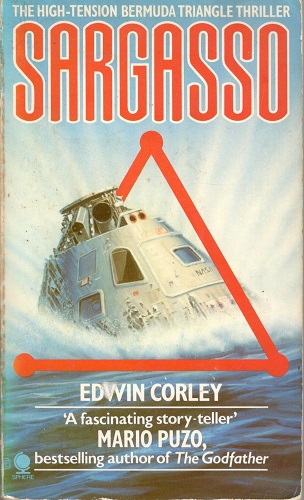 Sargasso, Edwin Corley (1977). A 1970s technothriller is not my normal reading, but since this one features both an Apollo space mission and underwater exploration… The initial set-up is intriguing: the command module for Apollo 19 splashes down in the Atlantic after its crew have spent time aboard a Soviet spacestation in an ASTP detente-in-orbit type exercise… but when the CM is opened, it’s empty. No astronauts. And yet Mission Control was communicating with them as they left orbit and fell to Earth. After much guff about the Bermuda Triangle – as that’s where the splashdown occurs – and an ocean survey ship with a submersible which experiences a total power failure seconds before the splashdown… Not to mention a re-enactment of Flight 19, and a man who has been alive for more than a hundred years… It all turns out to be payback for a dastardly plot by those evil communistic Soviets. A back-cover quote praises the book’s research, but I thought it pretty slipshod. Not that the book made much of an effort at detail anyway. The prose barely rose to workmanlike, the cast were the usual stereotypes, and sometimes I wonder why I bother reading some books…
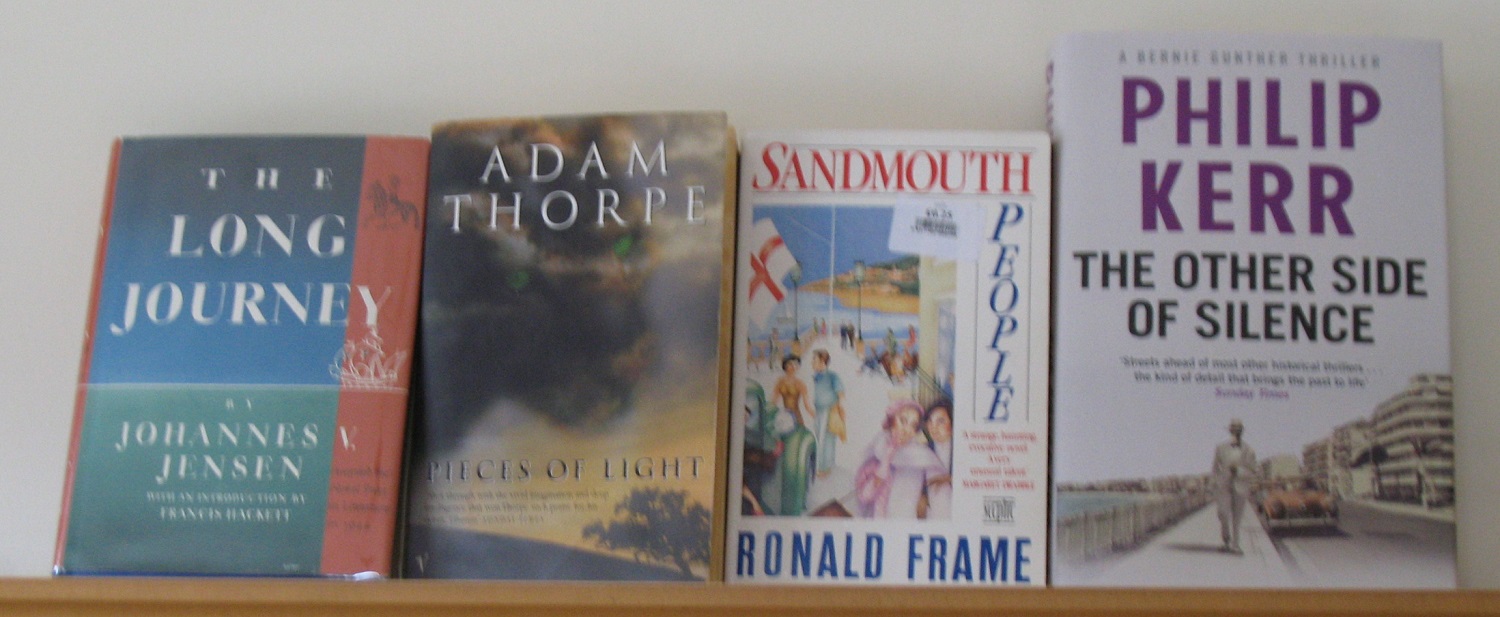
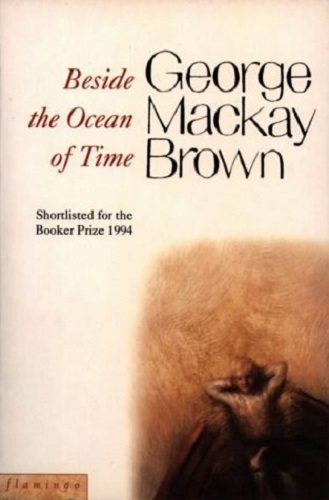 Beside the Ocean of Time, George Mackay Brown (1994). Thorfinn Ragnarson is an idle dreamer, the schoolboy son of a subsistence farmer on the invented Orcadian island of Norday, and considered mostly useless by all who know him. Various incidents set off daydreams, in which Thorfinn imagines himself in assorted historical roles – aboard a Viking ship which makes for Byzantium, the squire of a knight on his way to Bannockburn, a member of the people who built the brochs, press-ganged into the English fleet to fight the French republicans… But there is also a section which describes life on Norday at the time the novel is set, the 1930s, and centres around the mysterious young woman who comes to stay with the local reverend. This was my first experience of reading Mackay Brown, and I’m sure it’s my thing. I found the prose very simple and declarative, and while there were occasional moments of lovely imagery, much of it struck me as quite sketchy. The setting, of course, had its own fascination, and I actually spent an hour or so looking up brochs after reading about them in Beside the Ocean of Time (and even considered buying a book on the topic). There are some authors, you only need to read one novel or novella, and you want to explore their oeuvre further. While I liked Beside the Ocean of Time, and may well pick up copies of Mackay Brown’s books if I see them in charity shops, I’m not minded to actively seek out his other works.
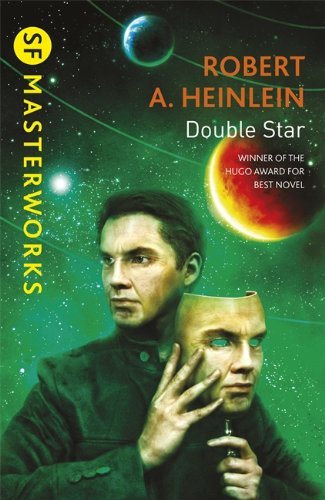 Double Star, Robert Heinlein (1956). As far as I was aware, this was one of the less objectionable novels in Heinlein’s oeuvre, and I’ve seen much praise for it which was careful to make that point. And yet I have to wonder if those people had actually bothered reading it recently. I can understand a thirteen-year-old lapping it up, and nostalgia putting even more of a shine on the book many decades later… but there’s no way Double Star stands up to scrutiny for anyone with a modicum of intelligence, taste or sensitivity. What else to think of a novel that contains the line “a woman will forgive any action, up to and including assault with violence, but is easily insulted by language”? And there is only one female named character in the entire book. And she’s the hero’s personal assistant. The world-building is also piss-poor, something at which Heinlein is normally quite good. It’s not just the idea of a Solar System-wide empire ruled by a member of the House of Orange, or Mars, Venus and Jupiter having native intelligent life, or the really clunky technology (much of which is behind the state of the art for 1955)… Everything just feels weirdly anachronistic and old-fashioned, even for sf of the 1950s – no, especially for sf of the 1950s. Then there’s the lectures on free trade, all of which are patent bollocks. (Free trade does not generate wealth, it concentrates wealth. In the hands of those who already possess wealth. History has been telling us this for centuries.) An actor is asked to impersonate an important politican who has been kidnapped, but is desperately needed at a ceremony which will result in a treaty with the Martians. The actor does so, the politician is rescued but proves too ill to return to his job, and so the impersonation continues… As far as I know, Double Star was never published as a juvenile, but it’s hard to believe it was aimed at an adult audience.
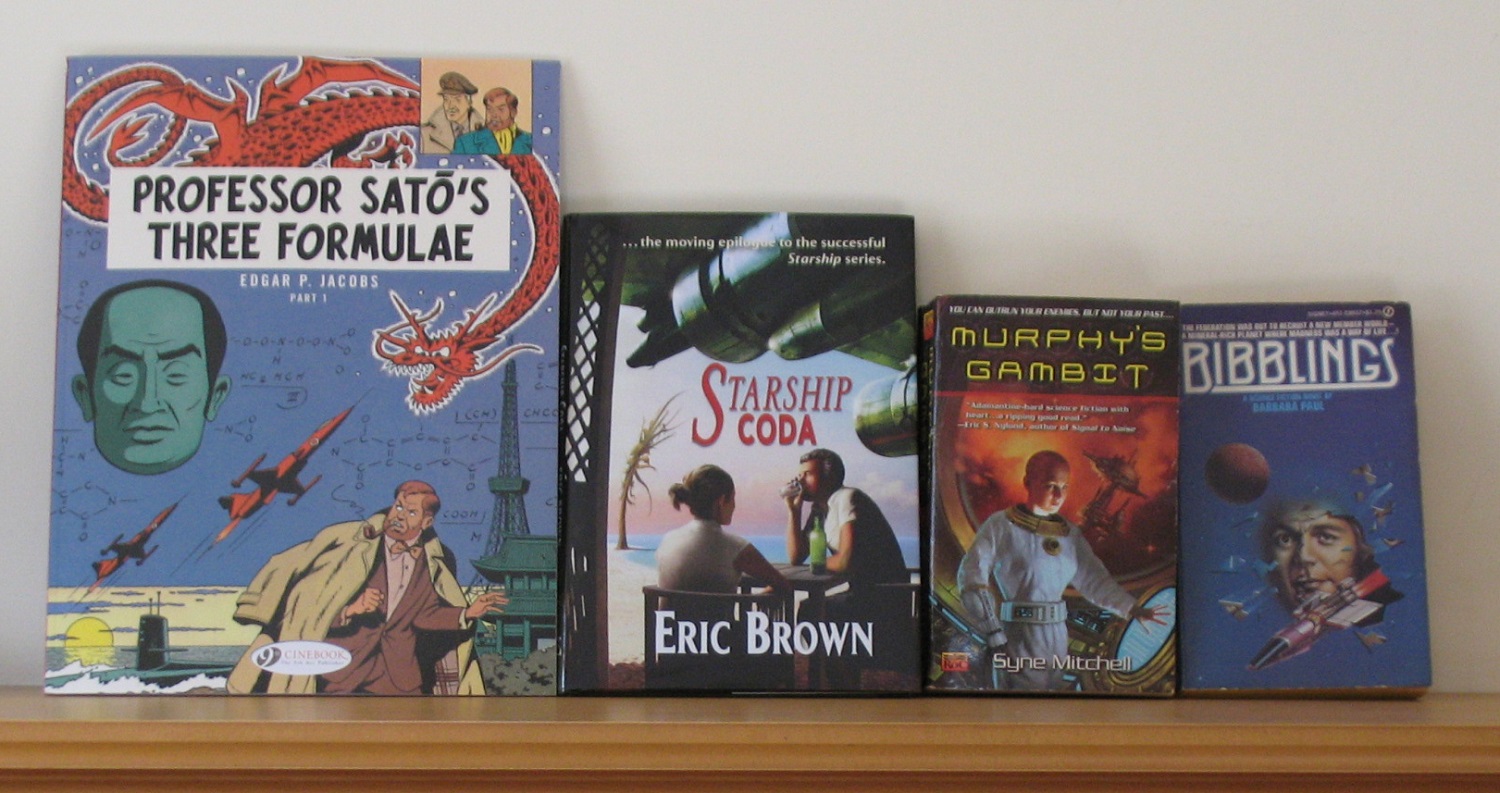
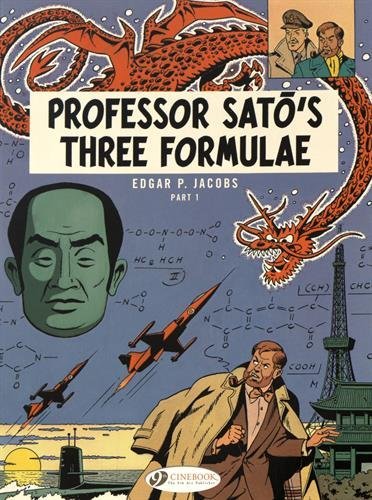 The Adventures of Blake & Mortimer 22: Professor Satō’s Three Formulae, Part 1, Edgar P Jacobs (1971). I first stumbled across Blake & Mortimer back in the 1990s when I lived in Abu Dhabi. If I remember correctly, it was upstairs in Card Zone, where the shop sold books – and some of their stock went back a decade or more. I found a bunch of English-language editions of some bandes dessinée from the late 1980s, one of which was Atlantis Mystery, the seventh in the Blake & Mortimer series. For whatever reason, only half a dozen of the Blake & Mortimer books where published in English… until 2007, when Cinebook began publishing the entire series in English, both Jacobs’s originals and those produced after his death by the Edgar P Jacobs Studio. However, they’ve not been following the original publication order, which is why Professor Satō’s Three Formulae, books 11 and 12 in French, has been published as books 22 and 23 in English (the latter due in May this year). I have to admit I prefer the ones written after Jacobs’s death. While Jacobs was careful to get his details right – in this one, for example, set in the early 1970s, the aircraft and cars are all shown accurately – but the science-fictional aspects are often quite silly. Those written by other hands seem to me to be more careful at making their stories plausible – even going so far as to integrate them into real history. In Professor Satō’s Three Formulae, Part 1, the eponymous scientist has invented a type of robot, which he has built in the form of a ryū. But it somehow escapes his secret laboratory and destroys two fighter jets from the Japanese Air Defence Force. Convinced there is a conspiracy afoot to steal his ideas for nefarious pruposes (there is, of course), Satō calls for his old friend Mortimer for help. Satō has also distilled his research into three formulae, which he plans to give to Mortimer for safe-keeping. Of course, it all goes wrong. Not one of the better books in the series, although I admit I’ve enjoyed reading them and have no plans to stop.
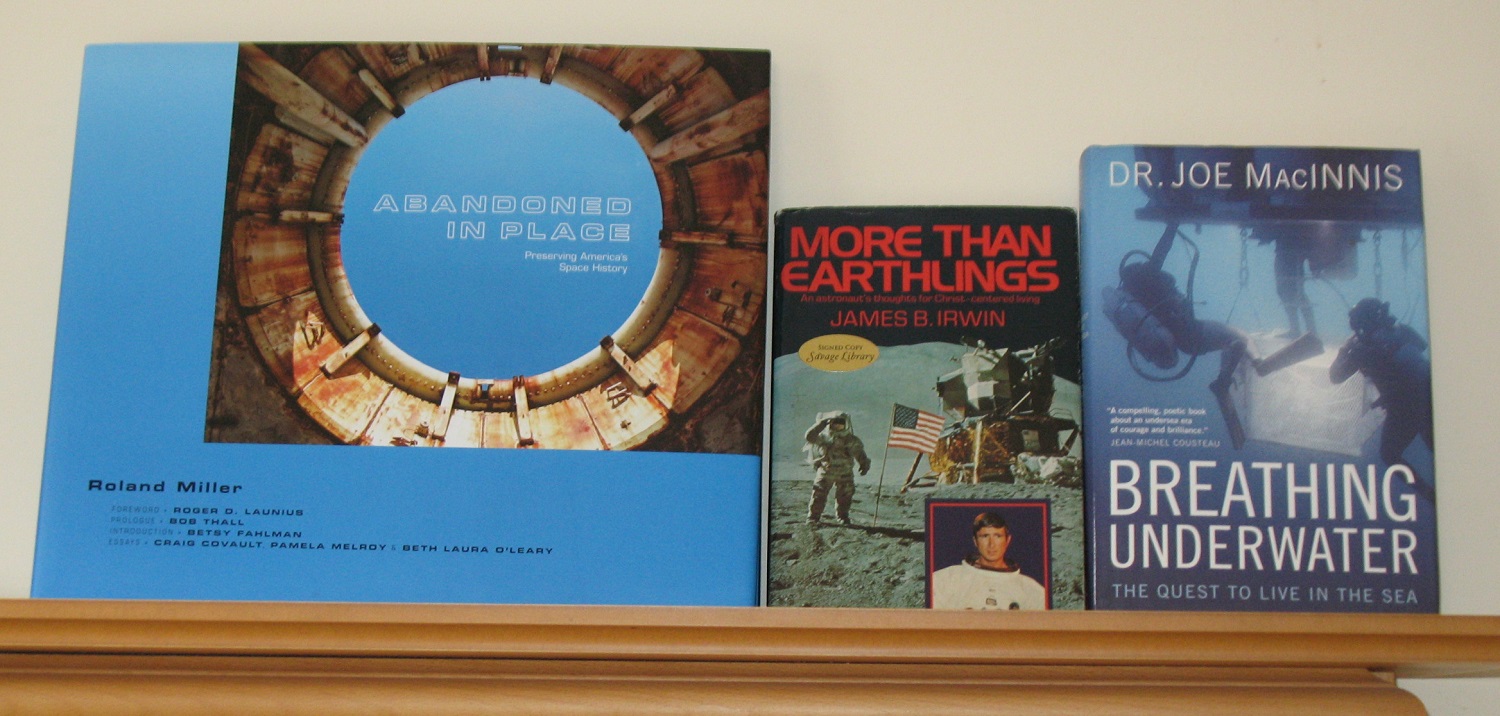
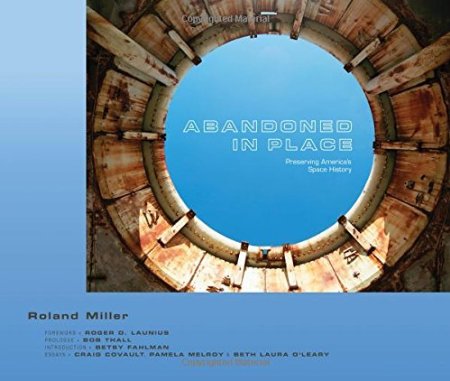 Abandoned in Place, Roland Miller (2016). Rockets, of course, need somewhere to launch from, and such structures need to be pretty damn sturdy given the beating they will take. So fifty years later, it’s no surprise to discover there are relics and ruins still scattered about the US: block houses, test stands, launch complexes… Some have been demolished since Miller photographed them, some have been repurposed, but many are simply too difficult to destroy. There’s something sadly emblematic about the photos in this book, the fact that the structures they document are all that’s left of the optimism which put twelve men on the surface of the Moon. And they’re in a state of abandonment. It has been argued that NASA’s space programme was the nearest to a socialist economic policy the USA has ever implemented, and I can see how the argument has merit – by spreading the bounty throughout the country in order to win political support, it uplifted towns and states both financially and technologically. There’s a certain level of irony in that. And yet, like the USSR, the only evidence of its existence are ruins – and the world was a better place when both were thriving.
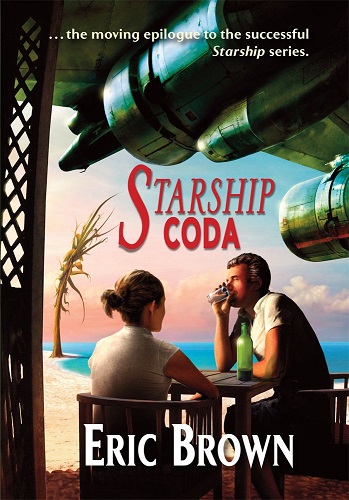 Starship Coda, Eric Brown (2016). Ten years after the events of the Starship Quartet, narrator David Conway is mysteriously contacted by his ex-wife, whom he left before the events of the first novella in the sequence, Starship Spring. She wants to know how he managed to get past the death of their daughter in a drowning accident – the event which drove them apart, and drove Conway from Earth to Chalcedony. The answer, of course, lies in the events of the preceding four novellas. But Conway’s ex-wife duly appears, and it seems she has undergone a drastic procedure in search of closure: Age Reversal Therapy. Which is exactly what the name says. Starship Coda successfully matches the tone of the earlier novellas, although at less than 40 pages it’s a thin book. There’s a sort of comfortable languidness to the world and story, although the focus of the prose is very much on the narrator’s emotional landscape. In fact, there’s something very relaxing about the story – it’s sort of affirming, without being cosy. And while the road to the conclusion may not be smooth, you know there’s happiness at the end of it. And I’m not embarrassed to admit I’d sooner read books like that than I would dystopias, post-apocalypses or anything which professes to be “grimdark”.
1001 Books You Must Read Before You Die count: 122

 It Doesn't Have To Be Right...