It Doesn't Have To Be Right…

… it just has to sound plausible


10 Comments

A fine fantasy

I remember reading Carolyn Ives Gilman’s Halfway Human back in 1998, thinking it very good, and then being somewhat disappointed when no further novels appeared from her. I later discovered she’d had a number of short stories published – chiefly in F&SF – and even a novella, ‘Arkfall’ (now available from Phoenix Pick here). There are also a pair of chapbooks from Aqueduct Press.

Last year, I learnt Gilman would have a new fantasy novel published by ChiZine Publications. I am not, it has to be said, a huge fan of fantasy. Too many strike me as too similar. Ripping off a different culture for the background, or implementing a new magic system, is not enough. But the description of Isles of the Forsaken seemed to me it might appeal. So I pre-ordered a copy.

I have now read it. And I was not disappointed.
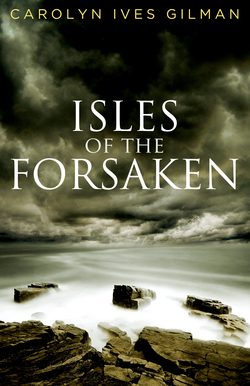
The Inning Empire has just won a years-long war, and has decided to turn its attention to its colonial possessions, the Forsaken Isles. The empire is a lexarchy, which means it is ruled entirely by its Courts and legal system. Despite this, it’s not especially enlightened – in fact, the Innings as a race are arrogant and racist, and their colonial policies reflect this.

Harg Ismol is an Adaina, the lesser of the two races which inhabit the Forsaken Isles. The others, the Torna, are the dominant race and administer the islands in the name of the Innings. Also relevant are the Lashnura, or Grey Folk, semi-magical healers who can take away the pain and injuries of the islanders. The Innings do not understand this relationship, imagining the voluntary empathic bondage the Grey Folk undergo is little more than slavery. Harg had a good war, and rose to the rank of captain, the only Adaina to do so. Though he is offered the command of the Native Navy by Admiral Corbin Talley, head of the Inning Navy, he turns it down and returns home to Yora, an island in the South Chain of the Forsakens.

At which point, things start to go horribly wrong.

Isles of the Forsaken moves smoothly from a story about a disaffected hero returning home from war into a story about an archipelago-wide rebellion. This is driven by veterans having seen the rest of the empire, and by the Innings’ desire to finally “sort out” the islands. Harg is, of course, caught up in this, if not partly instrumental. Also important is Nathaway Talley, the youngest son of the Inning Chief Justice (and brother of Corbin), who is on Yora because he wants to introduce the Adaina to the benefits of Inning law. And there is also Spaeth, who was created as a companion by Yora’s lone Lashnura, but has yet to take on her healing responsibilites.

There are, however, one or two set-pieces in the book which feel a little contrived. Harg’s first run-in with the Tornan authorities, for example, seems a bit too well-designed to put him on the path the plot demands. Which is not to say Harg is not a well-rounded character. He’s a reluctant hero – while acknowledging that he’s best-placed, and has the necessary skills, to lead the islanders’ fight, he doesn’t want the responsibility of leading them into a war they would probably lose. And which would doubtless result in bloody reprisals. Further, there is an island myth about a leader, the Ison, who appears in times of need to lead the islanders to victory. Harg doesn’t believe he is the Ison, nor does he want to be him – part of the myth involves a “cleansing” by one of the Lashnura, which Harg refuses to undergo.

Nathaway’s transformation from idealistic naïf is better-handled, though it takes a while to get going. The Grey Folk, and the mythology which they represent, provide an interesting backdrop to the story, one which becomes increasingly important and relevant as the plot progresses. In parts, this mythology reminded me a little of Le Guin’s Earthsea books, particularly when Spaeth takes Nathaway to the “circles”, where the opposing balances which “rule” the islands manifest. The character of Tiarch, the Tornan governer of the Forsaken Islands, struck me as the sort of character Gwyneth Jones would write.

One section of the story which stands out takes place when Spaeth and Nathaway escape from Admiral Talley’s custody. They flee into the sewers beneath the city, but soon get lost and, somehow, cross over into another “circle”. This is one not even Spaeth recognises. It manifests as a series of mezzanine floors about a great well many many levels deep. Each level contains vast rooms in which are stored books and scrolls and other forms of document. The section is genuinely creepy, and the writing – which is good throughout the novel – is especially effective at getting this across.

Isles of the Forsaken is a post-colonial fantasy. Though the Inning Empire won its war, and is governed by what we would consider a fair and impartial system, the story’s sympathies plainly lie with the Forsaken Islanders. Of course, the Innings are far from the noble people their technology and political system would suggest. Nor are they the only ones who are racist – the Torna consider the Adaina to be nothing more than feckless and ignorant peasants. There are different ways of life on display in Isles of the Forsaken, and its ignorance about these among and between each group which is partly the fuel which drives the plot. The Innings’ lexarchy also comes under scrutiny. Theoretically an impartial and impersonal system with no real leadership, it is in practice dominated by the Talley family, and Corbin’s campaign in the Forsaken Islands is partly phrased as a launchpad for a bid for power by him back in the Inning homeland.

I read Isles of the Forsaken pretty much in two sittings. It may only be 312 pages long – definitely a point in its favour, given that it is a fantasy – but even so, I’ve not read many books in recent years which have dragged me into their story and kept me there quite so effectively. I’ve already pre-ordered the sequel, Ison of the Isles.


Leave a comment

Alt review

Yesterday, Locus posted Lois Tilton’s early December short fiction reviews, and among the magazines she covers is Alt Hist 3 – see here. Which includes my story, ‘A Light in the Darkness’. She writes that, “The author successfully captures the eccentric genius of Tesla, and his scenes on the front in WWI France are effective, using Wilfred Owen as the focal character.” But she doesn’t like the third narrative thread, in which a nameless prisoner reflects on the book he was writing before his arrest, a book about WWI poets.

To be honest, I couldn’t guarantee that readers would know enough about Wilfred Owen to understand that the story kills him off before he wrote the poetry for which he is famous. An afterword explaining as much would have been a far less satisfactory method of getting this information across. I could have, I supposed, included some found text on the history of WWI poetry (suitably edited, of course). But even that felt too clumsy. A commentator within the story was a compromise, and sometimes that’s what you have to do. Either that, or bin the story. And doing the latter can really hurt…


3 Comments

Creatively bankrupt

I learnt today that Hollywood is planning to remake Paul Verhoeven’s Starship Troopers. And, in fact, there’s a remake of his Total Recall due next year (starring Kate Beckinsale and Colin Farrell). We all know of Hollywood’s recent penchant for remakes and reboots. It’s allegedly financially safer to trade on a known name than to try something new. The only person losing out in this strategy, of course, is us. Because we’ll see well-loved films completely ruined. Starship Troopers was a pitch-perfect satire of Heinlein’s right-wing novel, but who wants to bet the new version will keep the book’s odious politics intact? I will not go and see such a film; I will stay at home and watch my DVD of Verhoeven’s version again.

It might well be that the Starship Troopers remake isn’t so bad. But the odds are against it. Not only is there the online vocal hatred of Verhoeven’s film by conservative and libertarian sf fans (they’re totally wrong, of course), there’s also the US’s slow drift to the right over the past three decades, and… well, and there’s 2009’s Star Trek, a monumentally dumb sf film. And there was 2008’s The Day The Earth Stood Still. And this year’s The Thing. And… need I go on? This is what reboots do: they put the boot into well-loved and well-regarded films.

To be honest, I gave up on Hollywood’s output years ago. The best films these days are made elsewhere. And that’s not just genre films. But then, Hollywood chases that 15 – 25 male demographic and, let’s face it, focusing on the stupidest sector of society is not going to be good for your creativity. The superhero tentpole blockbuster is a case in point. Such films are all spectacle – they are like their titular heroes, all pumped-up muscles and no brains.

The best sf film I have seen in recent years, Cargo, was made in Switzerland. The only time I visited the cinema this year was to see Apollo 18, an independent Russo-American production. The bulk of my DVD viewing in 2011 has been foreign-language films, and 1950s and 1960s Hollywood films (made long before the rot set in). I’m planning to see John Carter next year, which has been produced by Disney, but I suspect that will be the last Hollywood film I go to the cinema to see. Given that the success of films is judged by their cinema takings, that seems a sensible way to express my disappointment and displeasure at Hollywood’s output.


6 Comments

The agency model of genre

The Ancient Greeks attempted to explain the world about them by applying human agency to it. Why does the sun cross the sky? Because some bloke in a chariot is pulling it. And since such feats required abilities above and beyond those normally attributable to humans, so those who performed them were deemed gods. Over time, the use of these gods as explanations became a narrative and so accreted history, politics, romance, symbolism, etc. But they still didn’t really explain what caused the sun to rise and set.

And so for fantasy. It does not seek to explain, it applies agency to something which does not, in the real world, possess it. Sometimes that agency cannot be wielded by humans – the supernatural, demons, gods and demi-gods. Or it gives humans agency over things not normally open to their use, via magic systems or supernatural talents. And those magic systems may be as structured and fractal as the laws of physics.

Science fiction, however, assumes the real world is explainable. The sun crosses the sky because the earth is turning, and the earth turns due to the action of its core. The universe operates according to a structure of interlocking principles and rules, which are not only parsable but fractal.

The worlds in science fiction stories are implicitly reachable, either by traversing time or space or both. This is not true for fantasy worlds. Yes, there are those where people from our world find themselves in the world of the story – The Chronicles of Narnia, The Fionavar Tapestry, or The Chronicles of Thomas Covenant, for example – but those are not journeys, they are magic portals. To some extent, it might be argued that similar travel to alternate dimensions, worlds or histories in science fiction might well treat such methods as magic portals, but the possibility of an explanation still underlies it. More than that, it is driven by an element of a rule-set which underlies the entire universe. The same cannot be said of fantasy.

That, I think, is the fundamental difference between science fiction and fantasy. That is why they are different modes of fiction, for all that they may share similar trappings or often use a shared toolkit. In sf, the universe is a rational and impersonal place, which operates independently of, and with no regard for, those who inhabit it (though they may engineer it for their own uses). In fantasy, everything has motivation because everything has some degree of agency, and the world exists for the benefit of its inhabitants. Their existence is part of the same act of creation which created the world. Without inhabitants, there would be no world. And everything in it is open to use by at least some of the inhabitants.

By the same token, neither genre is a subset of the other. Though they may be lumped together for marketing purposes and because the fanbases have traditionally overlapped, they have entirely different histories. The first science fiction came from electronics magazines in the 1920s; the first fantasies are a great deal older, perhaps even as old as civilisation itself. The current situation is an accident of the creative and production process for fantasy and science fiction. This doesn’t mean, of course, that they two should be sundered. Each benefits from its supposed relationship to the other. But there is a distinction, and to discuss either, or both, without recognising that benefits neither.